 "Entre Elas" Educational Project: building bonds, recovering self-esteem and practicing sorority in basic education
ABSTRACT
The Entre Elas Educational Project emerged from the demand for safe and welcoming spaces for debates on self-esteem, beauty, acceptance, body, puberty, violence and sorority. These themes have guided extracurricular meetings, enabling the speech and encouraging active listening since 2017. In 2018 and 2019, three biannual editions were held, with the participation of 45 adolescents from basic education. The purpose of this article is to explore the effects of the project on the subjectivity of the participants, the creation of bonds and the way of coping with violence. This is a participatory action-research that uses the action-reflection-action methodological triad. Among the main results is an increase in self-esteem, the creation of a support network beyond the meetings and the denaturalization of the rape culture. The actions strengthen the Protection Network and can impact the creation of public policies.
Keywords:
Sex Education; Protection Network; Bonds; Sorority; Self-Ssteem
RESUMO
O projeto educacional Entre Elas nasce da demanda por espaços seguros e acolhedores para debates sobre autoestima, beleza, aceitação, corpo, puberdade, violências e sororidade. Estas temáticas orientam encontros extracurriculares, habilitando a palavra e fomentando a escuta ativa desde 2017. Em 2018 e 2019 foram realizadas três edições semestrais, com a participação de 45 adolescentes da educação básica no total. O objetivo do presente artigo é explorar os efeitos do projeto na subjetividade das participantes, na criação de vínculos e no enfrentamento das violências. Trata-se de uma investigação-ação participativa que utiliza da tríade metodológica ação-reflexão-ação. Entre os principais resultados está o aumento da autoestima, a criação de uma rede de apoio para além dos encontros e a desnaturalização da cultura do estupro. As ações tonificam a Rede de Proteção e podem impactar a criação de políticas públicas.
Palavras-chave:
Educação Sexual; Rede de Proteção; Vínculos; Sororidade; Autoestima
RESUMEN
El Proyecto Educativo Entre Ellas nació de la demanda por espacios seguros y acogedores para conversaciones sobre autoestima, belleza, aceptación, cuerpo, pubertad, violencia y sororidad. Estos temas han orientado encuentros extracurriculares, habilitando la palabra y la escucha activa desde 2017. En 2018 y 2019 se realizaron tres ediciones semestrales, con la participación de 45 adolescentes de educación básica. El propósito de este artículo es explorar los efectos del Proyecto en la subjetividad de las participantes, en la creación de vínculos y en el enfrentamiento de la violencia. Se trata de una investigación-acción participativa que utiliza la tríada metodológica acción-reflexión-acción. Entre los principales resultados está el aumento de la autoestima, la creación de una red de apoyo y cuidado más allá de las reuniones y la desnaturalización de la cultura de la violación. Las acciones fortalecen la Red de Protección y pueden impactar en la creación de políticas públicas.
Palabras clave:
Educación Sexual; Red de Protección; Vínculos; Sororidad; Autoestima
I was going to die, if not sooner then later, whether or not I had ever spoken myself. My silences had not protected me. Your silence will not protect you. But for every real word spoken, for every attempt I had ever made to speak those truths for which I am still seeking, I had made contact with other women while we examined the words to fit a world in which we all believed, bridging our differences. And it was the concern and caring of all those women which gave me the strength and enabled me to scrutinize the essentials of my living. (Audre Lorde, 1977)1
PICKING NEEDLES AND THREAD: THE BEGINNING OF THE WEAVE2
Despite significant progress in gender and sexuality agendas — especially after the second wave of feminism — violence against women remains prevalent across various contexts. Every day, thousands of women worldwide are affected. This persistence is rooted in power structures of cis-heteropatriarchy, capitalism, racism, and fatphobia. Under this framework, women and men are commonly perceived as opposing poles related by an invariable logic of domination-submission, in which gender relations are often framed as unilateral power dynamics between a dominant and a subordinate pole.
Studies by Guacira Louro (1997), Graciela Morgade (2011), Joan3 Scott (2017), among others, highlight the need to break the binary logic and perceive social power as a more complex entanglement, exercised in multiple directions. Addressing gender-based violence requires attention to the interwoven webs and the real field of correlated forces that is established. The domestic sphere can be an aggravating factor, particularly in situations of unequal power dynamics. Greater proximity to aggressors can make it difficult for children and adolescents to perceive certain events as violent.
This configuration reinforces the role of schools as privileged spaces that traverse the entire social field and can provide a safe and reliable environment for reporting these cases. By demarcating a territory of protection where students feel comfortable asking for help, the school makes it possible to establish bonds of trust, acting as an important gateway for welcoming and referral to the local Protection Network.4 Challenging the normalization of emotional abuse and mistreatment requires a deeper understanding of the phenomenon. This includes recognizing that seemingly innocuous touches, caresses, and even words can be violent. Sex education is this dimension, capable of enabling people to speak and act in these situations.
In this context, Lorde's words echo the importance of breaking the silence. As the author wisely observed, silence does not protect us and is, in fact, one of the greatest enemies in combating gender-based abuse. In this unjust society, where rape culture is rampant, we daily experience the normalization of these acts of violence and the blaming of victims. The school environment, as a microcosm of society, often reinforces hegemonic cultural norms, shaping gender identities to fit heteronormative logic. In the name of a supposed educational neutrality, there is connivance with homogenizing discourses and practices, even revictimizing children and adolescents, by those who should be protecting them. It becomes, therefore, fundamental to investigate and improve how schools — and committed educators – can play a role in face of this scenario.
Raising awareness, welcoming victims, and referring them to the tutelary councils when necessary are fundamental pillars in this effort. The initial and continuing education of these professionals is essential for specialized and integrated care among the various actors of the Protection Network. It is based on the assumption that invisibilizing, normalizing, and interdicting are also ways of discussing sexuality. The educational community must recognize that silence, normalization, and prohibition are also powerful forms of teaching about sexuality. Changes in education and in the institutional mechanisms responsible for promoting and maintaining the rights of children and adolescents involve the recognition of these dimensions and the various forms of power relations that exist in the school, in the family, and in the social spheres in which we relate, also a product of the social markers involved.
From an intersectional perspective, we consider our interconnected identities and markers as articulated with each other and inseparable, conceiving people as complex beings produced from the crossroads of their multiple dimensions and relationships. These intersecting factors create both risks and protective mechanisms. To develop effective protection strategies, we must first recognize the oppressions and privileges embedded in these structures. The educational project Entre Elas5 is founded on these reflections in relation to sex education, seeking to transmute interdictions that have been with us since childhood and break free from suffocating and sickening social impositions.
Actions rooted in specific territorial contexts highlight the educational space as a key site for new social constructions. Critical and emancipatory education is essential for shaping students as protagonists of their own narratives — individuals who are aware of human rights, social inequalities, and capable of transforming their realities. The role of education is paramount due to its capacity to scrutinize diverse events, bringing new meanings to situations already experienced and other possibilities for daily and future actions. In addition to the educational space, the construction of exclusive environments for women has proven extremely potent for recognition of emotional maltreatment, recovery of self-esteem, and cultivation of sorority — essential pillars for the paradigm shifts we are discussing.
The main purpose of the initiative presented here is to foster the creation of bonds between women, with a view to preventing violence, respecting diversity and eliminating all forms of oppression. The project seeks to provide a safe and welcoming space exclusively for women for debate about social relations, enabling speech and providing opportunities for active listening. The extracurricular meetings with adolescents in basic education in Brasília fostered an exchange of experiences and promoted empathy among the participants. By recognizing ourselves as women in this society so violent towards us, we build ways to fight and resist together, denaturalizing violence in favor of a more just and equitable society. We become allies in this daily struggle.
The objective of this article is to explore the effects of the meetings held within the project, investigating its role in strengthening the bond between the participants — between us —, in establishing a support network, in addition to possible impacts on consolidating the Protection Network. In light of the theoretical and practical references, it investigates how the practice was perceived from the pedagogical device designed and its implications for the subjectivity of the participants and in confronting violence. This is a participatory action research (PAR) that uses the methodological triad action-reflection-action (ARA) to analyze the productions resulting from the meetings.
This initiative takes place within the scope of the Secretariat of Education of the Federal District (SEEDF6), responsible for public schools in the Federal District. Currently, efforts are being made for its institutionalization and expansion. Founded in 2017, more than 300 students from different levels of basic education have already attended the meetings in person and virtually in three schools. In this article, after a general presentation of the actions, we focus on analyzing the productions of the first three editions, held in 2018 and 2019, with the participation of approximately 45 adolescents from the 8th and 9th grades of elementary school. The editions will be referred to as 2018/1, 2018/2, and 2019/1. In order to investigate and construct effective protection tools, and girls and women being the main victims, the actions are focused on women in the broadest sense. The work with boys and men is also urgent and more than necessary, but it is not the proposed focus.
WEAVING KNOTS, BUILDING NETWORKS: THE ENTRE ELAS PROJECT
The Entre Elas Project emerges from critical reflections on science and sexuality education, particularly in relation to the role of education in addressing violence. This work is grounded in analyses of social relations, questioning gender, sexual, and socioeconomic inequalities, as well as highlighting the need to construct a new world-sense. The proposal stems from both personal and collective experiences — mine and those of others who have participated, reflected, and reshaped our existences and practices. This ongoing spiral of transformation is informed by bibliographic reviews, continuing education, academic discussions, and other political and social constructions.
As a researcher, I acknowledge my positionality: woman, white, cisgender, feminist, doctoral student, and youngest child, among other possible markers. Naming these markers is a decolonial strategy aimed at making explicit the origins of this research — who speaks, about whom, and why — while challenging the notion of science as an absolute truth. This approach recognizes the inherent political intentionality in all knowledge production (Longhini, 2022).
Adopting a decolonial perspective, we draw on anthropologist Oyèrónkè Oyẽwùmí's (2017) critique of Western thought, particularly its reliance on biological determinism. She introduces the concept of "body-reasoning," a framework through which Western societies interpret social identities, often reducing them to biological traits through the lens of heritability. This perspective, which assumes a universal biologization of social constructions, is not shared by all cultures. Oyẽwùmí (2017) demonstrates that in Yoruba society, for example, social organization is not based on anatomical and physiological attributes, particularly not in a binary, oppositional construction of masculinity and femininity.
Oyẽwùmí argues that Western societies prioritize visual perception, which leads to differentiating bodies in anatomical terms and fosters the notion that society is constituted "by bodies and as bodies" (Oyěwùmí, 2017, p. 38). This emphasis on visual observation is a key factor in this "body-reasoning" and reinforces the idea that an individual's social standing and beliefs can be inferred solely from physical characteristics. To challenge this Eurocentric perspective, Oyẽwùmí proposes the term "world-sense" (2017, p. 37) as a more holistic alternative to "worldview," emphasizing that not all cultures privilege sight as the primary means of understanding the world.
In this sense, we recognize our sexed, educated, and normalized bodies, and the fact that we are embodied people inserted in a historical and cultural time. Recognizing our embodied experiences within historical and cultural contexts, we understand that sex education cannot be reduced to biology alone, nor can it ignore the broader social and cultural forces shaping our lives. This integral and comprehensive perspective assumes that education must address multiple dimensions of human existence, with sexuality as a fundamental aspect.
We align with the idea that all education is sexual, a phrase borrowed from the title of Graciela Morgade's (2011) book. This notion is central to our research group, which has been studying sexuality in education for over two decades. Our work emphasizes sexuality as integral to subjectivity, transcending mere genitality and intimacy. Sexuality cannot be ignored or suppressed; even when repressed or silenced, sexuality remains an inseparable part of who we are and how we express ourselves. Therefore, access to sex education is essential and serves as:
the gateway for the school's coordination in situations of rights violations, such as violence, abuse, and mistreatment against children, guiding the search for necessary protection and reparation measures. Additionally, sexual education contributes to eliminating any concept, prejudice, stereotype, or practice based on the idea of superiority or inferiority of any sex (Morgade, 2011, p. 14, my translation).
The author differentiates between purely informative approaches and more formative ones in sexuality education. Informational approaches alone do not lead to behavioral change (Morgade, 2011), nor is there a universal model or pre-established formula for non-sexist education. However, as Louro (1997) suggests, one common factor may be the "sharpening" of sensitivity to inequalities:
If there is something common to these initiatives, it may be the attitude of observation and questioning — both toward signs of inequality and toward the destabilizations that may be occurring. This ‘sharpening’ of sensitivity (to observe and question) is perhaps the fundamental achievement to which each of us should strive. Such sensitivity requires information, knowledge, and also political desire and willingness. Inequalities can only be perceived — and destabilized and subverted — to the extent that we remain attentive to their mechanisms of production and reproduction (Louro, 1997, p. 121, emphasis added, my translation).
The Entre Elas project emerged from a process of critical reflection on my own educational practice. As I ‘sharpened’ my understanding of these issues, I reassessed how related topics were taught in formal education at both basic and higher levels. This reflection led to an investigation of existing pedagogical approaches and the development of potential interdisciplinary interventions aimed at eliminating violence, avoiding the reproduction of biologizing discourses, and promoting comprehensive sex education. Entre Elas is one of the first concrete outcomes of this reflective process. My ongoing doctoral research examines the potential of women-centered spaces to foster support networks, strengthen participant bonds, and enhance protective and self-empowerment mechanisms.
The methodological and epistemological choices of PAR and ARA, employed in the project's development and subsequent investigations, highlight the political nature of all involved, from researchers to collaborators, recognizing that we are all political actors with desires and intentions, capable of shaping our reality. These scientific, pedagogical, and political practices converge on the construction of scientific knowledge about reality, while simultaneously developing tools for its transformation. María Teresa Sirvent and Luis Rigal (2012) identify three key characteristics of PAR: the production of knowledge with transformative intent, the recognition of participants’ practical experiences, and collective knowledge construction within a democratic framework.
This approach aims to produce knowledge through practice, integrating theory and praxis while reinterpreting actions based on collective experiences, as proposed by the ARA triad. This methodology asserts that all action involves reflection, and all reflection informs action. ARA's cyclical process involves an initial action, followed by a revised, reformulated practice, continuously building knowledge by evaluating progress and challenges (Freitas, 2018).
Guided by the inseparability of theory and practice, this work is also informed by my decade-long experience teaching science and biology in both public and private schools. Over the years, I observed students’ keen interest in sexuality-related topics and the persistence of taboos surrounding them. Beyond biological mechanics, students were particularly eager to discuss the multifaceted dimensions of puberty, rather than simply understanding its anatomical and physiological aspects, including — and especially — its social and collective aspects.
Students sought discussions on topics such as love, identity, acceptance, knowledge, pleasure, group dynamics, and relationships. While all students showed great interest, notable gender differences emerged in classroom participation: boys often sought attention through jokes or performative confidence, claiming a supposed familiarity with the topic; girls, on the other hand, participated less actively in class discussions, often preferring to ask questions privately after class or seeking individual time to discuss personal concerns.
A striking and painful observation was the widespread exposure to violence. Nearly all students had a personal experience with violence to share, either their own or that of someone close to them. Regardless of the specific circumstances, the overwhelming majority of accounts identified men as aggressors and women as survivors. The students’ critical need to share these experiences was palpable. Sensing an attentive and trustworthy adult, they spontaneously shared their stories, seeking support and guidance. Classroom interactions underscored the urgent need for safe spaces, particularly for adolescent girls. This compelling demand was the main catalyst for the practices that culminated in the Entre Elas project.
The project officially began in 2017, initially as a series of girls-only conversation circles7 during ‘Education for Life Week’ (Federal Law 11.998/2009 [Brasil, 2009]). These activities involved six one-hour meetings over two days, engaging approximately 120 girls from the 7th and 8th grades. The enthusiastic response and repeated requests for further discussions led to the development of a more structured initiative. This evolution involved collaboration with colleagues, teachers, psychologists, and family members. Inspired by established programs such as ‘Inspiring Women,’ ‘Maria da Penha Goes to School,’ (SEEDF, 2021) and Chile's ‘De-Princessing Workshop,’ (Escuela de Desaprendizajes Socioculturales, 2016) the Entre Elas project took shape, adapting their principles to its own context.
In response to ongoing interest and demand, the project introduced its pilot version in 2017. Students from the afternoon shift were invited to attend morning meetings. Participation was open to any interested girl. Initially, the goal was simply to create a space for girls to connect and share experiences. Although some materials and activities were prepared, the meetings had no fixed schedule or long-term plan. Attendance fluctuated significantly, ranging from zero to ten students, often due to factors beyond their control.
Irregular attendance made it difficult to foster a sense of belonging and group cohesion. The constantly shifting group dynamic required frequent adjustments, preventing the girls from developing shared connections and trust — both essential for deeper conversations. Additionally, scheduling meetings outside regular school hours introduced logistical challenges such as travel distances, transportation issues, and the need for meals and snacks, all of which further affected participation.
This work is guided by the principles of ARA and PAR, the project's practices were iteratively developed, shaped, adapted, and refined at each meeting, creating a spiral of knowledge. These initial actions laid the groundwork for the project's restructuring, which involved continuous reflection aimed at overcoming obstacles and developing new practices. Due to an institutional transfer at the end of 2017, the project was relocated to a different school. The relocation was accompanied by the full support of the school administration and the dedicated involvement of numerous teaching colleagues. This ongoing support is vital for continuing educational initiatives that challenge the prevailing hegemonic logic, especially in the face of rising conservatisms that often question their legitimacy. Administrative support reinforces the collective ownership of these activities, transforming them into a shared school responsibility and underscoring the institution's commitment to child and adolescent protection.
After analyzing the initial results, significant structural changes were introduced. With internal support from the school, we began providing lunch for students, which improved attendance and engagement. The project evolved from a single open meeting to a more structured format, guiding future iterations. In 2018, it adopted a semi-annual mini-course model with a pre-planned pedagogical sequence and a fixed group of participants per session. This new structure also introduced a registration process and Free and Informed Consent Forms, strengthening family connections and enhancing participant commitment.
The 2018/1 edition introduced this mini-course format, consisting of eight weekly 90-minute meetings. However, the nearly two-month duration proved excessive, as tests, holidays, and other school events frequently disrupted the schedule. Even with meetings outside of regular class time, it was difficult to maintain eight consecutive sessions. To improve continuity, the number of meetings was reduced to five, aligned with the school calendar. Additionally, participants felt 90 minutes was too short, so sessions were extended to approximately 150 minutes. The 2018/2 and 2019/1 editions implemented this revised format, each with around 15 participants. These refinements strengthened the project's practices, reinforcing its commitment to collective knowledge-building in line with ARA principles.
By the end of these trials, the project's structure had solidified into a five-session format, which became the standard model. While maintaining this structure, activities were tailored to each group's specific needs and interests, based on the following thematic areas: 1) initial dynamics; feminism; gender relations; 2) beauty standards; relationships; self-esteem; autonomy; 3) sexualities; bodies; 4) harassment; sorority; and 5) evaluations/final dynamics and closing. The project's development also benefited from the ARA methodology, which emphasizes continuous re-evaluation and improvement. For instance, student feedback led to the addition of the ‘bodies’ theme. These thematic areas formed the foundation for the meetings, with various materials — texts, images, music, videos, websites, social media, and more — used to foster discussion and activities tailored to each group's context. Various forms of expression, such as student work (drawings, questionnaires, written pieces, posters, videos, etc.), were collected into narrative diaries, which are analyzed in the following section as part of the project's evaluation.
The project's history is deeply intertwined with the personal narratives of numerous young women and adults who have shaped and sustained the initiative. Across three public school settings, the project has engaged over eight educators and 300 students. Originally named Entre Garotas8 (a name chosen by its first participants), the project later expanded and was renamed Entre Elas, accompanied by a logo (Figure 1) designed by Luísa Melo. The results presented below outline the findings from the 2018/1, 2018/2, and 2019/1 editions, all of which were conducted in the same school. During these editions and initial activities, I facilitated the meetings and was primarily responsible for planning and implementation.

Subsequently, as part of the Human Rights and Diversity Education Management, I worked to expand and institutionalize the project within the Public Policy for the Valorization of Girls and Women and the Confronting Violence initiative. My role involved supporting and advising subsequent iterations, as well as participating in some sessions. Another school9 unit began implementing the project for high school and youth and adult education students. Due to social isolation measures resulting from the COVID-19 pandemic, the 2020 edition was canceled, and the 2021 edition was held virtually. In 2023, the Centro de Ensino Médio 04 de Sobradinho continued to implement, adapt, and expand the project (Pontevedra, 2023).
STITCHING THE FABRIC: WEAVING STORIES, STRENGTHENING BONDS
The results reveal the diversity of the groups formed and how they develop a shared identity, which becomes evident in the progression of the meetings, the directions of the debates, and the issues they choose to discuss — ultimately shaping the narratives they construct. Despite these differences, all editions share fundamental similarities, particularly in the common challenges faced by these young women, such as social pressures, self-esteem difficulties, and experiences of violence. A key area of concern is gender stereotypes and societal expectations for men and women, including behaviors deemed acceptable for one gender but not the other, unequal expectations, and other inconsistencies.
Discussions on gendered social constructions were central to the participants’ critiques of what it means to be a woman. During the initial meeting, we explored both the positive and negative aspects of their experiences, identifying commonalities and differences. Participants expressed anxiety about being judged based on their appearance and behavior, particularly highlighting how girls are often labeled and stigmatized for actions that are considered acceptable — or even desirable — in boys. For instance, they pointed to the double standard surrounding sexual activity, where girls are frequently subjected to derogatory labels, while boys are praised for similar behavior.
The unequal distribution of household chores based on gender was another frequent topic of discussion. A questionnaire administered during the second meeting of the 2018/1 and 2018/2 editions, though not specifically designed for this purpose, brought these perceptions to light. The questionnaire included yes/no questions to assess agreement with various feminist principles, such as equal pay for equal work, freedom from gender-based violence, and reproductive rights. Additionally, three open-ended questions explored participants’ understanding of sexism,10 feminism, and the relationship between the two. While most participants demonstrated some familiarity with these concepts, their responses revealed imprecise definitions and difficulty in articulating the connections between them.
Sexism was primarily associated with actions and behaviors attributed exclusively to men, while feminism was linked to the fight for women's rights. Among the definitions of sexism were: "where a woman can't be heard, can't give her opinion"; "machismo for me is a man being bigger than a woman and being able to do things that a woman can't simply because she's a woman"; "it's a man wanting to be better than a woman, thinking he's more capable of doing certain jobs than a woman". On the other hand, definitions of feminism were more complete, largely emphasizing the fight for equality. Participants described feminism as "women's fight for gender equality"; "feminism is fighting for equality and welcoming women who suffer from sexism"; "it's the defense of women, not to be superior to men, but to have equal rights".11
The final question, which asked how the concepts of sexism and feminism related to the participants’ daily lives, proved to be the most challenging. Nine out of 24 questionnaires (37.5%) were left blank or contained vague responses such as ‘I don't know’ or ‘in everything.’ Among the responses, some participants explicitly noted unequal relationships between men and women, both within and beyond the family environment. Others emphasized feminism's transformative potential. However, a direct connection between sexism and gender-based violence — or an understanding of sexism as a structural social phenomenon — was not evident. Instead, individuals were often held accountable for isolated actions. Some examples include: "Ever since I was little I was brought up to be sexist, even because my father is sexist, but after I grew up I understood that this has to change"; "in my house, I'm the only woman, so I ‘can't’ do anything because I'm a woman, and I always have to walk with my brother, because he must be immortal to have to be my bodyguard"; "because sexism exists, I want to change that with feminism" and "sexism gets in the way, because, since I'm a woman, they think I'm incapable of doing many things. Feminism strengthens me, it makes me believe that I am capable of many things" (emphasis added).
Despite the positive responses to the agendas, a generalized apprehension about identifying as feminist was evident, suggesting a stigma surrounding the term. Notably, participants associated the masculine gender with greater opportunities for being and doing, while women's possibilities were restricted by social constructs. This reluctance to embrace a feminist identity aligns with Sara Ahmed's (2020) concept of the ‘killjoy feminist’, which relates to the idea that gender entails losses.
In critiquing the model of the ‘happy housewife’ and other happiness scripts imposed on women, Ahmed (2019) also examines how feminists have historically been labeled as killjoys precisely for challenging pre-established models that fail to meet the needs of real women. By problematizing the imperative of joy, the author argues that feminism creates a space and a moment for women as desiring beings — whose desires extend beyond the reproduction of the traditional family model. There are other agendas, other meanings, which is why feminists have been — and continue to be — portrayed as those who ruin family dinners and other celebrations by ‘causing problems over anything’ (Ahmed, 2020).
While questioning the limitations imposed by the racist cis-heteropatriarchal model, and acknowledging the sadness of recognizing these inequalities, Ahmed (2019) reinforces — as does Lorde — the power of this union of killjoys and the infinite meanings of the world that can be built through the feminist movement. In her words:
Not only is there sadness in recognizing gender as the loss of possibility but there is also the sadness of realizing that recognizing such loss does not necessarily make things possible. (…) What lies behind this adjustment is the loss of other possible ways of living, a loss that must remain unmourned if you are to stay well-adjusted. To even recognize such loss is to mourn, which is why it can be easier to avoid recognition. Feminist subjects in refusing to be welladjusted not only mourn the losses but in mourning open up other possibilities for living, as openings that we inherit over generations. (Ahmed, 2019, p. 89)
Awareness of these losses and a desire to create new possibilities are central to these practices. This is evident in the definitions presented earlier, which exemplify an awareness of gender-based loss, as proposed by Ahmed (2019). These definitions also illustrate the process of resignification through the collective construction of new possibilities. Recognizing sexism and the restrictions imposed on women — whether at home, in school, or in other spaces — sparked indignation among participants. Following a cathartic moment of sharing and expressing frustrations, they engaged in deeper reflection and collective organization to promote the changes they deemed necessary. One example of this collective action was the students’ successful demand for the inclusion of women's soccer in the institution's annual intramural games — a sport that had never been included before.
A key lesson learned in building these new possibilities was the inclusion of menstruation and its physiological aspects, which were not initially planned. We had assumed that the topic was adequately covered in the regular classes and therefore did not include it. However, many questions about the topic consistently arose. It was also unanimously identified as a negative aspect of being a woman, with the girls collectively describing it as ‘horrible’. Given that most of the girls were newly menstruating, this strong initial aversion likely reflects social constructions that often associate menstruation with negative connotations, such as shame and impurity. This aversion is probably reinforced by cultural taboos and a lack of open discussion surrounding menstruation.
Using the principles of ARA, after introducing this topic in subsequent sessions, we began exploring new ways of thinking about menstruation. We aimed to understand it more positively, addressing not only the physiological aspects and their impact on daily life but also embracing, rather than denying, our cyclical nature. While a full discussion of this topic is beyond the scope of this paper, it is important to acknowledge the societal mechanisms of bodily control and the ways in which self-hatred is instilled, starting in childhood, that emerged from these discussions.
In this context, we highlighted, from the initial meetings, the harmful aesthetic pressures on the appearance of girls and women — pressures that contribute to the construction of unattainable beauty standards tied to white and Eurocentric models. This concern with appearance was frequently observed, and on several occasions we noted how being considered deviant from the norm can lead to self-esteem issues and suffering. To explore societal ideals of beauty, we analyzed magazines, films, and other forms of social representation, observing the recurring unattainable patterns presented in various advertisements and portrayals.
Our analysis included beauty standards and the representation of women in the media. We observed instances of racism, sexism, and fatphobia in films, television series, and advertisements. Through these activities, our goal was to highlight the importance of diverse representation in redefining these patterns, celebrating the beauty and validity of all bodies — Black, Indigenous, disabled, fat, and everything in between. Recognizing the lack of such representation in these media, we created posters with cutouts and illustrations to promote self-esteem and self-acceptance. Fostering self-acceptance and self-love became a central strength of this work.
In 2019, during an external evaluation for the Maria da Penha Goes to School Award, promoted by the Federal District Women's Justice Center, some participants were asked about the project's greatest impact. Without hesitation, all of them responded: increased self-esteem! They gestured to show the change, lowering their hands to indicate their self-esteem before the meetings and then raising their hands high to show a significant increase afterward. They smiled broadly as they shared this. Participants also mentioned specific aspects of their bodies they had previously disliked but were learning to accept.
Of the examples provided by the participants, the illustration in Figure 2 stands out as a particularly striking representation of increased self-esteem. It is a self-portrait, created in 2018/1 by a Black student, depicting her transformation before and after the project. On the right, the ‘before’ is represented by a drawing of a blonde girl with straight hair against a gray background with a sad sun and clouds. On the left, the ‘after’ is illustrated by a Black girl with curly hair in a more joyful setting, surrounded by hearts, with a large, brightly colored sun and smiling clouds, all set against a green landscape.
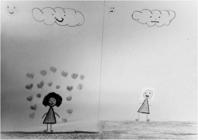
Self-portrait representing the before (on the right) and after (on the left) of the Project.
Aesthetic pressures are a powerful sexist force in shaping women's subjectivity, contributing to feelings of insecurity, low self-esteem, and dependence on external validation. Standard beauty ideals are unattainable. While these ideals are out of reach for everyone, the further individuals deviate from this ‘norm’, the greater the risk of displacement, exclusion, or rejection. Intersectionality reveals how various social categories can intersect to further distance some bodies from this ‘supposed’ ideal of beauty, leading to profound consequences for individuals’ sense of self and their relationships. These issues were evident in the presentation activities.
In one activity, participants drew their own hand on a white sheet and filled the spaces between the fingers with their strengths. The drawings were then connected to create a chain of ‘holding hands.’ Throughout the first and second semesters of 2018, physical appearance was the most frequently cited strength, appearing in 22 of the 26 drawings. Cheerfulness was the second most common response, appearing in 11 drawings. Other qualities mentioned included being good, caring, friendly, companionable, and sensitive. Over half of the girls were unable to list five positive characteristics about themselves, as indicated by the 14 of 26 drawings that contained one or two blank spaces.
The difficulty in identifying positive self-attributes was also evident in the participants’ comments and behaviors during the activities. When directly asked about this, many stated they ‘didn't know what to put,’ revealing a common struggle to name their strengths. This prompted us to reflect on how these mechanisms of subjectivation develop, particularly for women. From an early age, women are pressured to meet socially imposed standards and often feel compelled to downplay their positive qualities to avoid being perceived as arrogant.
In 2018/1, five of the 13 girls present identified being a ‘believer’ as a positive quality. Intrigued by this term, I asked for further explanation. From what they shared, I understood that the characteristic of being a ‘believer’ (in this context, trouxa12) was associated with trusting people, particularly in romantic relationships, having that trust broken at some point, and yet continuing to believe in the relationship, the person, or even ‘love’ in general. While this topic warrants further exploration, we initially observed how this notion reinforces the stereotype of women as ‘good girls.’ It also suggests a higher prevalence of betrayal or disappointing behavior on the part of boys, which is deeply troubling. This raises concerns about the double standard applied to young women and men in the context of relationships and emotional vulnerability. This double standard, along with the pressure on women to be trusting and forgiving even in the face of betrayal, is something Chimamanda Adichie (2017) touches upon in her ‘Feminist Manifesto in Fifteen Suggestions’, particularly in her eighth suggestion, which directly relates to the ‘believer’ (trouxa) concept the girls identified:
We teach girls to be likeable, to be nice, to be false. And we do not teach boys the same. This is dangerous. Many sexual predators have capitalized on this. Many girls remain silent when abused because they want to be nice. Many girls spend too much time trying to be ‘nice’ to people who do them harm. Many girls think of the ‘feelings’ of those who are hurting them. This is the catastrophic consequence of likeability. We have a world full of women who are unable to exhale fully because they have for so long been conditioned to fold themselves into shapes to make themselves likeable. So instead of teaching Chizalum to be likeable, teach her to be honest. And kind. And brave. (Adichie, 2017, p. 14)
In addition to these oppressions, we also identified a shared concern: the numerous violent situations the girls experienced. These included abusive relationships within their families or among acquaintances, unhealthy relationship dynamics among peers, and countless reports of harassment and violence committed by individuals outside of intimate partnerships — harassment in the street, on public transportation, or in other locations outside the home, including at school. As awareness and sensitivity to these issues were ‘sharpened’, the girls’ eagerness to share their experiences became increasingly evident. The safe and supportive environment fostered spontaneous sharing of lived experiences, often triggered by even the slightest mention of the topic and the assurance of a listening ear.
As the project developed, it became increasingly clear that addressing gender-based violence was essential. Each edition included a dedicated meeting, typically the penultimate session, focused exclusively on this critical issue. This scheduling decision aimed to foster greater trust and connection, encouraging open discussions about these sensitive topic. On these occasions, prompts such as social media campaigns and educational materials stimulated reflection and created opportunities for the girls to share their stories. These moments were often cathartic. A safe space for listening and support was established, allowing the girls to feel comfortable sharing both their silences and their experiences, which resulted in accounts of diverse forms of violence.
Despite notable differences between each group, the dynamics of this dedicated meeting followed a similar pattern. Initially, participants exhibited some hesitation and shyness in commenting and participating. However, a sense of openness gradually developed, and, at a certain point, there were so many stories and requests to share that it became necessary to facilitate participation to ensure everyone had an opportunity to speak. These experiences were often deeply emotional and were frequently accompanied by comments such as, "This is the first time I've talked about this," or "I've never told anyone this before."
Establishing these relationships allowed us to denaturalize everyday abuse and critique the culture of rape. Sharing these experiences and having trusted individuals to talk to whenever needed proved highly beneficial for many girls, helping to alleviate feelings of loneliness and isolation, especially for survivors. The accounts shared encompassed a broad spectrum of experiences. While some situations might be considered more or less violent by society, only those who lived through them can truly understand their impact. These narratives underscore that any act of abuse or violence leaves profound scars that demand attention and compassionate support. Psychological help is essential, and none of the activities described here were intended to replace it. The primary goal was to facilitate sharing and recognition of these situations, offering a moment of sensitive listening and support, and subsequently encouraging the search for specialized help, including referral to the Protection Network when necessary.
Giving voice to previously silenced experiences, allowing these stories to emerge and challenge barriers, was also a key finding in the investigations conducted by Jane Felipe and Carmen Gallet (2016). The authors used a questionnaire with pedagogy students in training to explore concepts such as emotional abuse and romantic love. Although their initial aim was simply to present and analyze the instrument, the results revealed that "the students not only answered the questionnaire but also began sharing their difficulties and humiliations suffered at the hands of their romantic partners" (Felipe and Gallet, 2016, p. 91, my translation). These findings underscore the importance of further research on this topic and the need to develop strategies for initial and ongoing teacher training through a gender lens, using these materials reflectively. The study also highlighted the impact of violence on these women's lives and its potential consequences for their educational and professional trajectories, with many women leaving their education and/or careers due to abusive relationships and harassment by ex-partners. According to the authors:
When we recall our life history, we most likely come across some episodes in which we were victims or perpetrators of emotional maltreatment, both in childhood and in other phases of life and in diverse cultural spaces: at school, in the neighborhood, in the family, in dating or marital relationships. It is quite possible that we were not able to perceive that this or that behavior on the part of parents, older siblings, teachers, school or work colleagues could be considered as emotional maltreatment. However, it is crucial to understand how such behaviors, often considered harmless and naturalized, can significantly affect our lives, when we suffer this type of violence. (Felipe and Gallet, 2016, p. 92, my translation)
Given the troubling reality of violence in our society, where girls as young as 13 and 14 already have alarming histories of abuse, we also identified several shortcomings in the Protection Network's response to these cases. The challenge of recognizing and referring complaints is further complicated by the absence of long-term psychological support. Even when schools recognize and promptly address these cases, taking all necessary protection measures, children and adolescents often lack ongoing psychological support from the State beyond the initial stages of specialized listening, recognition, and legal referral. While some isolated initiatives and projects exist, a comprehensive and consistent psychological support system within the Protection Network is absent. This gap represents an essential need for the well-being of these young people.
The Final Report of the Governmental Transition Office documented a significant erosion of resources and capacity across various sectors during Brazil's previous presidential administration. This included budget cuts, institutional dismantling, and the discontinuation of public policies, among other profound setbacks. In women's policies, this erosion is described as "the expression of a political project of invisibility and subjugation of women" (Brasil, 2022, p. 25, my translation). The report illustrates how even well-established rights and policies were vulnerable to the whims of the management team, leading to their dismantling and subversion in multiple ways. While initiatives like the ones described here are insufficient to fully counter the rise of neoconservatism, they serve to mitigate the resulting regressions. Along with Jesica Baez, we examine how such experiences within feminist pedagogies act as forms of political resistance against the growing conservatism (Baez and Freitas de Oliveira, 2024). These emancipatory pedagogies highlight the significance of ‘political will and commitment,’ as emphasized by Louro (1997).
We are engaged in an open debate about the inclusion of sexuality issues in public education policies, as Baez (2019) highlights. In investigating various contemporary sex education scenarios in Latin America and the Caribbean, Baez (2019) identifies specific laws, programs, and diverse curricular documents aimed at supporting the integration of this theme into such policies. Despite growing recognition of its importance, the field still faces significant challenges in effectively reaching schools. Bianca Guizzo and Jane Felipe (2016), whose study also focuses on Brazilian public policies addressing gender and sexuality, arrive at similar conclusions: there is a pressing need for investment in initial and ongoing teacher training to foster more effective work in basic education — work that can challenge prejudice and discrimination.
Drawing once again from the work of Paulo Freire (2003), we insist on the importance of a reflective and liberating pedagogical practice. Teaching cannot be separated from its political nature, which seeks to create a transformative and emancipatory educational experience. Just as all education is sexual, even when this aspect is not acknowledged, teaching practice is inherently political and conveys far more than the prescribed material. Attention to discourse — both explicit and implicit — along with the curriculum, including the hidden curriculum, and the implications of our praxis beyond the school context must be a constant concern, both inside and outside the classroom. This requires ongoing evaluation and reflection, regardless of the specific subject or content being taught.
Referring again to Guizzo and Felipe (2016), it is highly likely that our opinions and positions as educators, even when unintentional, influence student learning, communicating messages about gender, sexuality, diversity, respect, and education. The authors argue, furthermore, that these positions and opinions often contradict official guidelines on the topic and may inadvertently contribute to sexism, racism, LGBTphobia, and misogyny. This study, like the project as a whole, aims to "respond to the challenges and needs of young people and children who feel the lack of space for discussions about issues of gender, sexuality, racial prejudice, and social class inequality" (Guizzo and Felipe, 2016, p. 487).
Just as the school community can be complicit in situations of violence and perpetuate oppression, it can also challenge social norms and actively work to transform its own environment, as advocated by PAR and ARA. The use of these methodologies fostered shared reflection, which led to the identification of evolving needs and their integration into the project. This ongoing process of action-reflection-action demonstrates that planning alone cannot account for all factors, emphasizing the importance of lived experience in education. Freire (2003) teaches us key principles through his dialogical approach to knowledge. These actions highlight the critical importance of educators, counselors, and administrators being attentive to and recognizing situations of violence. This understanding is essential for the effectiveness of the Protection Network.
In addition to the sharing that took place during each meeting, we observed the development of a support network aimed at the early identification of harassment and emotional maltreatment, which led to several formal complaints. These shared experiences deeply resonated with us and prompted ongoing reflection on our own practices. My commitment to confronting violence positioned me as a resource for many students, who frequently approached me outside of the meetings to share their experiences informally. One such situation involved a teacher from the institution who was suspended after collaborating with the families — a process that required navigating significant systemic barriers within the educational system.
Following these initiatives, a significant increase in awareness was observed, with the girls showing a greater ability to resist certain forms of mistreatment. These positive changes highlighted the need for stronger collaboration between the school and child protective services, the agencies responsible for referring such cases. Improved coordination between the Ministries of Education, Justice, and Health is crucial to ensure that the care pathway for children and adolescents experiencing violence is effectively managed. This requires a comprehensive and coordinated approach to meet the complex needs of these young people.
The participants themselves also underwent transformations, creating a ripple effect that extended beyond the meetings and reached an increasingly broader audience, leading to changes in the school's daily life. In 2019, the exploration of gender and sexuality manifested in various ways, with gender violence being the theme of half of the presentations at the Cultural Fair and two classes addressing related issues at the Science Fair. One group focused on the participation of women in science, while the other promoted LGBTQIA+ pride and respect for differences. These significant achievements, all unprecedented for the institution, were driven by groups composed of members of the project Entre Elas.
The program's positive impact was also apparent in the narratives generated during the meetings. As a final assessment task in 2018/1, participants were asked to freely write a text or letter reflecting on their experience. Below is an excerpt from one of these letters:
It was a wonderful experience to be able to participate in this project, in which we meet once a week and discuss issues that directly involve us as women and we perceive several things that are imposed on us simply because of our gender.
I really believe in this project, I think it adds a lot of knowledge to us.
We debated topics like self-esteem, harassment, differences between men and women, feminism, beauty standards, sorority and it was wonderful!
I think the themes that marked me the most were beauty standards, harassment and sorority. And I confess that I was very surprised to hear other girls talking about situations they've been through, and that I have also been through, to understand that we are all wonderful women and how good it is to share experiences, and to hear experiences from people who understand, simply because they go through the same things, to understand that we are different, we have different appearances, and there is no problem with that, and that we have to try to unite ourselves more and more, and not compete to belong to someone, or anything like that, especially because we are SELF-SUFFICIENT, and we should not associate our happiness with someone… Anyway, there were so many things concluded, so many things clarified, I lack words to describe how good it was to participate in this project. And now I want to dedicate my thanks to the teacher Isadora, for having reserved a space of her time, providing us with a comfortable place and for being so wonderful! (A. Participant, 2018/1, my translation).
From the very first meetings, participant evaluations were consistently positive. The project also garnered significant support from school communities, including educators, administrative staff, students, and families. This recognition was demonstrated through awards such as the Maria da Penha Goes to School Award and the Connecting Good Practices: Inspiring Pedagogical Projects award. Furthermore, the project participated in live streams and professional development opportunities organized by SEEDF, which showcased inspiring practices. The project Entre Elas is also featured in the Catalog with References and Pedagogical Materials: Valorization of Girls and Women and Confrontation of Violence 2021 (SEEDF, 2021).13 This material compiles key legislation and regulations related to gender and sexuality, several successful programs and projects, and suggests films, music, and other materials for various learning experiences.
While the awards serve as significant recognition of the project's progress, many of its most impactful results are difficult to measure. These results are rooted in singular experiences, each complete with its own infinite possibilities of meaning, arising from the unique ways of being and existing in the world. These are the experiences we hold most valuable within the project. Jorge Larrosa-Bondía's (2002) work invites us to view education through the lens of experience and meaning. For him, experience is not just what we encounter, but what resonates with us and moves us. In the process of experiencing, we are both formed and transformed.
From this perspective, lived experiences are seen as shaping how we narrate and understand ourselves, enabling us to view ourselves as beings in constant transition — sensitive individuals affected and transformed by the events we encounter. The aim of this project has been to celebrate these experiences and the knowledge derived from them, as Larrosa-Bondía encourages us to do, emphasizing the small personal revolutions that contribute to a broader struggle for change. As Manuela d’Ávila aptly puts it, this project is, in fact, "a journey of learning and welcoming. About public space. About subverting the rules of spaces of power. And about privilege. It's about fighting so that privileges no longer exist" (d’Ávila, 2019, p. 26, my translation).
EXPANDING THE TAPESTRY: WEAVING THE FUTURE
While progress has been made in addressing gender and sexuality across many sectors, education remains a contested terrain. Advocates for comprehensive inclusion face growing opposition from conservative factions attempting to restrict discourse on these topics within educational institutions. These intense and multifaceted debates continue to be central to political progress, with the development of public policies reflecting the commitment and priorities of those driving the agenda. This highlights the need for establishing and implementing enduring mechanisms to safeguard both established rights and those yet to be achieved.
Schools must actively confront abuse and violence, rather than perpetuating the colonial, sexist, and patriarchal systems that sustain them. Despite existing legal frameworks, the Protection Network remains insufficient and requires stronger intra and intersectoral collaboration to develop effective public policies. Professionals often lack the training necessary to support children and adolescents experiencing mistreatment and are unaware of available resources. In addition to institutional reorganization, high-quality sex education, both initial and ongoing, is crucial for the entire school community. This training should focus on providing appropriate support and referrals for affected students, while preventing further revictimization.
Sex education is crucial for supporting students and preventing violence, particularly gender-based violence. It plays a vital role in building self-esteem and fostering acceptance of differences. Expanding discussions both within and beyond schools, along with further research on the topic, is essential for effectively combating violence and developing preventative strategies. Schools must actively promote practices that ensure social markers do not perpetuate inequalities and prejudices, which limit learning opportunities and hinder (re)existence. Institutional silence denies students the fullness of their being. Creating open spaces for discussions about bodies and sexualities, and moving beyond purely biological and biomedical approaches to sex education, is urgently needed.
In addition to fostering new interpretations, creating this type of environment provides tools for these new analyses, enabling fresh perspectives on experiences. Establishing a safe space for these connections is a crucial step in building support networks, seeking specialized help, and developing interventions to recognize, accept, and resignify these experiences. This underscores the importance of giving voice to issues of emotional abuse in the lives of girls and women in a society that normalizes such everyday violence.
Self-esteem issues are widespread and often lifelong. The construction of hegemonic and unattainable beauty standards for most women is a devastating tool of subjugation, perpetuating self-hatred from an early age. We are forced to internalize these standards, and those who are considered to ‘deviate from the norm’ experience aesthetic pressures that lead to prejudice, exclusion, and discrimination. Therefore, decolonial and intersectional perspectives are essential. We must recognize the lasting impact of our history of slavery and work to redress the historical injustices perpetuated by privileged whiteness.
Strengthening the Protection Network, including frequent, continuous, and free psychological support — particularly for children and adolescents exposed to violence — should be a government priority, as it ensures accessibility for all affected individuals, regardless of their socio-economic status. We cannot expect meaningful structural change from representatives who oppose scientific consensus and fundamental Human Rights principles, as such opposition undermines efforts for equity and justice. Education, like politics, is not neutral. No one is. Nothing is. The choices made in education — whether in curriculum, policy, or practice — are deeply political and reflect underlying power dynamics. Public policy development requires the participation of technical teams, whose work is shaped by the political struggles and ideals of those leading the agendas. Significant, lasting changes will not occur until individuals who are genuinely committed to social justice occupy these spaces of power.
As the feminist adage goes, the personal is political. Until we acknowledge that education is inherently gendered and recognize schools as crucial spaces for identifying and referring cases of violence, we will continue to produce professionals who are ill-equipped to address these issues. This oversight puts students at risk of revictimization and significant emotional harm. Addressing these traumas is essential not only to break the cycle of violence but also to enhance the self-esteem and overall well-being of survivors.
This work holds immense potential for growth and replication. The flexible structure of the meetings makes them easily adaptable to various contexts. Such initiatives are urgent and necessary for the entire school community. The sharing and active listening provided by a trusted adult in a supportive environment helped break down an invisible barrier to these adolescents’ emotional expression. This led to the disclosure of numerous instances of emotional abuse and other forms of violence, as well as expressions of dissatisfaction and struggles with self-acceptance. Acknowledging the existence of physical and psychological abuse is essential for seeking specialized support and beginning the process of reframing these experiences. While the presence of professionals attuned to these issues in schools does not replace psychological care, it fosters spontaneous reporting and strengthens primary and secondary prevention efforts in educational settings.
-
1
Originally delivered as a speech at the "Lesbians and Literature" panel of the Modern Language Association in 1977 and subsequently published in various formats. The version is found in Lorde (2019). Available at: https://www.geledes.org.br/a-transformacao-do-silencio-em-linguagem-e-acao/. Accessed on: Mar. 20, 2023.
-
2
This article was developed as the final product of the Specialization in Basic Education and Human Rights in the International Perspective offered by the University of Brasília under the guidance of Dr. Urânia Flores da Cruz Freitas, to whom I am deeply grateful.
-
3
We chose to include the first names of the references used in a decolonial stance of resistance to bibliographic norms that reinforce hegemonic logics of women's invisibility and contribute to the construction of an imaginary academic corpus inhabited only by men of a certain age, class, and race.
-
4
The Protection Network is understood to be the specialized intersectoral action (a network of government agencies, NGOs, and other organizations) committed to guaranteeing comprehensive protection for children and adolescents, in accordance with Resolution No. 113 of April 19, 2006, of the National Council for the Rights of Children and Adolescents of the Special Secretariat for Human Rights.
-
5
"Entre Elas" is a Portuguese phrase that conveys a sense of community and shared experience among the girls involved in the project. A literal translation such as "Between Girls" or "Among Girls" does not fully capture these nuances. Therefore, the original title has been retained.
-
6
The acronym SEEDF stands for ‘Secretaria de Estado de Educação do Distrito Federal,’ the official name in Portuguese.
-
7
Understood here as a space for free dialog with the teacher as facilitator.
-
8
"Garotas" is a Portuguese word meaning "girls." The project's initial name, "Entre Garotas" (Among Girls), reflected the age of its first participants. The subsequent renaming to "Entre Elas" (Among Them/Within Their Circle) reflects the project's expansion, as "elas" (them) is a more inclusive term, encompassing women of different ages.
-
9
At this stage of expansion and collective construction, we thank professors Simone Delgado, Eliane Costa, Maria da Paz, and Jesine Falcão for their fundamental contributions.
-
10
In Brazil and Latin America, the concepts of machismo and sexism, although related, have distinct nuances. Machismo, often associated with the exaltation of masculinity and behaviors of male domination, is a culturally specific term. Sexism, in turn, encompasses a broader spectrum of prejudices and discriminations based on gender. In the present work, we chose to use the term "sexism" instead of "machismo" used in the original version due to its greater acceptance and frequency of use in academic publications in English.
-
11
From the original: "aonde a mulher não pode ser escutada, não pode dar sua opinião"; "machismo para mim é o homem ser maior que a mulher e poder fazer coisas que a mulher não pode pelo simples fato dela ser mulher"; "é o homem querer ser melhor que a mulher, se achar mais capaz de fazer certos serviços do que a mulher". "A luta das mulheres pela igualdade de gênero"; "o feminismo é lutar pela igualdade e acolher as mulheres que sofrem com o machismo"; "é a defesa das mulheres, não para ser superiores aos homens, mas sim, ter direitos iguais".
-
12
‘Believer’ serves as a translation of the Portuguese word trouxa. Trouxa is a complex term that encompasses several nuances not fully captured by a single English word. It suggests someone who is naive or gullible, especially in matters of love and trust, and who persists in believing even after experiencing betrayal or disappointment. It also seems connected to societal pressures on women to be agreeable and accommodating, even when it means being taken advantage of. The term can carry a slightly negative connotation, suggesting that this trust is misplaced or excessive, but it can also be used with a degree of affection or understanding.
-
13
Secretaria de Estado de Educação do Distrito Federal (2021), ref. 4, p. 6.
-
Funding:
This study did not receive any funding.
References
- ADICHIE, Chimamanda Ngozi. Para educar crianças feministas: um manifesto. São Paulo: Companhia das Letras, 2017.
- AHMED, Sara. La promesa de la felicidad Una crítica cultural al imperativo de la alegría. Buenos Aires: Caja Negra, 2019.
-
AHMED, Sara. Estraga-prazeres feministas (e outras sujeitas voluntariosas). Revista Eco-Pós, v. 23, n. 3, p. 82-102, 2020. Disponível em: https://revistaecopos.eco.ufrj.br/eco_pos/article/view/27642 Acesso em: 31 jul. 2023.
» https://revistaecopos.eco.ufrj.br/eco_pos/article/view/27642 -
BAEZ, Jesica. Escenas contemporáneas de la educación sexual en Latinoamérica: una lectura en clave feminista. Mora, v. 25, p. 219-226, 2020. Disponível em: http://revistascientificas.filo.uba.ar/index.php/mora/article/view/8533 Acesso em: 28 jul. 2023.
» http://revistascientificas.filo.uba.ar/index.php/mora/article/view/8533 -
BAEZ, Jesica; FREITAS DE OLIVEIRA, Isadora. Pedagogias Feministas: entre experiências e reflexões de amparo político frente ao avanço dos conservadorismos. Revista Brasileira de Estudos da Homocultura, v. 7, n. 22, 2024. Disponível em: https://periodicoscientificos.ufmt.br/ojs/index.php/rebeh/article/view/16171 Acesso em: 25 abr. 2024.
» https://periodicoscientificos.ufmt.br/ojs/index.php/rebeh/article/view/16171 -
BRASIL. Lei nº 11.988, de 27 de julho de 2009 Cria a Semana de Educação para a Vida, nas escolas públicas de ensino fundamental e médio de todo o País, e dá outras providências. Disponível em: https://www.planalto.gov.br/ccivil_03/_ato2007-2010/2009/lei/l11988.htm Acesso em: 27 abr. 2023.
» https://www.planalto.gov.br/ccivil_03/_ato2007-2010/2009/lei/l11988.htm - BRASIL. Relatório Final do Gabinete de Transição Governamental Brasília: Comissão de Transição Governamental, 2022.
- D’ÁVILA, Manuela. Revolução Laura: Reflexões sobre maternidade e resistência Osasco: Belas Letras. 2019.
-
ESCUELA DE DESAPRENDIZAJES SOCIOCULTURALES. Desprincesamiento [S.l.: s.n.], 2016. Blogspot. Disponível em: http://desaprendernos.blogspot.com/2016/03/desprincesamiento.html?m=1 Acesso em 10 jun. 2023.
» http://desaprendernos.blogspot.com/2016/03/desprincesamiento.html?m=1 -
FELIPE, Jane; GALlET, Carmen. Maus-tratos emocionais e formação docente. In: LUZ, Nanci Stancki da; CASAGRANDE, Lindamir Salete. Entrelaçando gênero e sexualidade: violência em debate. Curitiba: Ed. UTFPR, 2016. Disponível em: https://repositorio.utfpr.edu.br/jspui/bitstream/1/2070/8/generodiversidadeviolencia.pdf Acesso em: 31 jul. 2023.
» https://repositorio.utfpr.edu.br/jspui/bitstream/1/2070/8/generodiversidadeviolencia.pdf - FREIRE, Paulo. Pedagogia da Esperança: um reencontro com a Pedagogia do Oprimido. São Paulo: Paz e Terra, 2003.
-
FREITAS, Urânia Flores da Cruz. Ação-reflexão-ação: trabalho, formação docente e aprendizagens. Revista Com Censo: Estudos Educacionais do Distrito Federal, v. 5, n. 3, p. 80-89, 2018. Disponível em: https://periodicos.se.df.gov.br/index.php/comcenso/article/view/265/310 Acesso em: 15 jun. 2023.
» https://periodicos.se.df.gov.br/index.php/comcenso/article/view/265/310 -
GUIZZO, Bianca; FELIPE, Jane. Gênero e sexualidade em políticas contemporâneas: entrelaces com a educação. Roteiro, v. 41. n. 2. p. 475-490, 2016. Disponível em: https://repositorio.utfpr.edu.br/jspui/bitstream/1/2070/8/generodiversidadeviolencia.pdf Acesso em: 25 jun. 2023.
» https://repositorio.utfpr.edu.br/jspui/bitstream/1/2070/8/generodiversidadeviolencia.pdf -
LARROSA-BONDÍA, Jorge. Notas sobre a experiência e o conhecimento da experiência. Revista Brasileira de Educação, n. 19, pág. 20-28, jan./fev./mar./abr. 2002. Disponível em: https://www.scielo.br/j/rbedu/a/Ycc5QDzZKcYVspCNspZVDxC/?format=pdf⟨=pt Acesso em: 28 mar. 2023.
» https://www.scielo.br/j/rbedu/a/Ycc5QDzZKcYVspCNspZVDxC/?format=pdf⟨=pt -
LONGHINI, Geni Daniela Núñez. Nhande ayvu é da cor da terra: perspectivas indígenas guarani sobre etnogenocídio, raça, etnia e branquitude. Florianópolis: UFSC, 2022. 132 p. Disponível em: https://repositorio.ufsc.br/handle/123456789/241036 Acesso em: 15 jun. 2023.
» https://repositorio.ufsc.br/handle/123456789/241036 - LORDE, Audrey. Sister outsider [S.l.]: Penguin Classics, 2019.
- LOURO, Guacira Lopes. Gênero, sexualidade e educação Uma perspectiva pós-estruturalista. 6. ed. Petrópolis: Vozes, 1997.
-
MORGADE, Graciela. Toda educación es sexual Hacia una educación sexuada justa. Buenos Aires, Argentina: Crujía Ediciones, 2011. Disponível em: https://www.bba.unlp.edu.ar/old/bba.unlp.edu.ar/uploads/docs/esi_18_morgade___toda_educacion_es_sexual.pdf Acesso em: 31 jul. 2023.
» https://www.bba.unlp.edu.ar/old/bba.unlp.edu.ar/uploads/docs/esi_18_morgade___toda_educacion_es_sexual.pdf -
OYĚWÙMÍ, Oyèrónkẹ. La invención de las mujeres Una perspectiva africana sobre los discursos occidentales del género. Bogotá: En la Frontera, 2017. Disponível em: https://ayalaboratorio.wordpress.com/wp-content/uploads/2019/06/a-invencao-das-mulheres-oyc3a8ronke-oyewumi.pdf Acesso em: 31 jul. 2023.
» https://ayalaboratorio.wordpress.com/wp-content/uploads/2019/06/a-invencao-das-mulheres-oyc3a8ronke-oyewumi.pdf -
PONTEVEDRA, Jacqueline. Valorização feminina e enfrentamento à violência em escola pública de Sobradinho. Projeto Entre Elas é selecionado em processo seletivo da Eape como prática exitosa da educação. Secretaria de Estado de Educação, Brasília, 28 jul. 2023. Disponível em: https://www.educacao.df.gov.br/valorizacao-feminina-e-enfrentamento-a-violencia-em-escola-publica-de-sobradinho/ Acesso em: 31 jul. 2023.
» https://www.educacao.df.gov.br/valorizacao-feminina-e-enfrentamento-a-violencia-em-escola-publica-de-sobradinho/ -
SCOTT, Joan. Gênero: uma categoria útil de análise histórica. Educação & Realidade, v. 20, n. 2, 2017. Disponível em: https://seer.ufrgs.br/index.php/educacaoerealidade/article/view/71721 Acesso em: 31 jul. 2023.
» https://seer.ufrgs.br/index.php/educacaoerealidade/article/view/71721 -
SECRETARIA DE ESTADO DE EDUCAÇÃO DO DISTRITO FEDERAL. Catálogo com referências e materiais pedagógicos: valorização das meninas e mulheres e enfrentamento às violências. Brasília: Secretaria de Estado de Educação, 2021 Disponível em https://www.educacao.df.gov.br/wp-conteudo/uploads/2021/05/catalogo_com_referencias_e_materiais_pedagogicos_valorizacao_das_meninas_e_mulheres_enfrentamento_violencias_2021.pdf Acesso em: 17 jun. 2023.
» https://www.educacao.df.gov.br/wp-conteudo/uploads/2021/05/catalogo_com_referencias_e_materiais_pedagogicos_valorizacao_das_meninas_e_mulheres_enfrentamento_violencias_2021.pdf -
SIRVENT, María Teresa; RIGAL, Laura. Investigación acción participativa: un desafío de nuestros tiempos para la construcción de una sociedad democrática. Quito: Proyecto Páramo Andino, 2012. 73 p. Disponível em: https://biblio.flacsoandes.edu.ec/libros/144869-opac Acesso em: 9 abr. 2023.
» https://biblio.flacsoandes.edu.ec/libros/144869-opac

 Source: personal collection. Logo designed by graphic designer Luísa Melo.
 Source: Entre Elas Project Archive - 1st/2018.