 Sexual education from the perspective of abuse prevention: a systematic literature review
ABSTRACT
This article focuses on conducting a systematic literature review centered on scientific productions in the area of education, aiming to verify how sexual education has been discussed in research about and for basic education in the Brazilian context. A systematic literature review was used as a research methodology. For this purpose, scientific articles were analyzed to understand the educational context, composing a qualitative-quantitative analysis of this production. The text concludes by highlighting the evident silence concerning sexual education from the perspective of abuse prevention, as evidenced by the results of the systematic review undertaken.
Keywords:
Sexual Education; Sexual Abuse Prevention; Systematic Literature Review
RESUMO
Este artigo se concentra em realizar uma revisão sistemática da literatura com foco em produções científicas na área de educação, a fim de verificar como a educação sexual tem sido discutida em pesquisas sobre e para a educação básica no cenário brasileiro. Utilizou-se como metodologia de pesquisa a revisão sistemática da literatura. Para isso, artigos científicos foram analisados com o propósito de compreender o contexto educacional, compondo uma análise qualiquantitativa dessa produção. O texto se encerra expondo o silenciamento com relação ao tema educação sexual da perspectiva da prevenção ao abuso, o que é verificado pelos resultados da revisão sistemática empreendida.
Palavras-chave:
Educação Sexual; Prevenção ao Abuso Sexual; Revisão Sistemática da Literatura
RESUMEN
Este artículo se centra en realizar una revisión sistemática de la literatura, enfocándose en producciones científicas en el área de Educación, con el objetivo de verificar cómo se ha discutido la Educación Sexual en investigaciones sobre y para la Educación Básica en el contexto brasileño. Como metodología de investigación se utilizó una revisión sistemática de la literatura. Para ello, se analizaron artículos científicos con el fin de comprender el contexto educativo, componiendo un análisis cuali-cuantitativo de esta producción. El texto concluye exponiendo el evidente silencio con respecto al tema de la Educación Sexual desde la perspectiva de la Prevención del Abuso, como se verifica en los resultados de la revisión sistemática emprendida.
Palabras clave:
Educación Sexual; Prevención del Abuso Sexual; Revisión Sistemática de la Literatura
INTRODUCTION
Sexuality, education, school, university... Along which paths do these concepts intersect? The points of contact and possibilities for intertwining are manifold. However, what interests us in this article is understanding how sexuality has been addressed in basic education classrooms.
We understand sexuality in its social and political dimensions - beyond the personal ones (Louro, 2000) - as something that inevitably permeates historical and cultural issues. Sexuality, defined as a dispositif by Foucault (1993), denotes a network within which discourses, architectures, scientific statements, decision-making processes, institutions, and philosophical and moral propositions are established. In the preface to Educação Sexual: novas ideias, novas conquistas [Sexual Education: New Ideas, New Conquists], Paulo Freire (1993, p. 12) states the following:
Sexuality - as a potential path and extension of ourselves, as a production of life and existence, of pleasure and beauty - demands of us this critical, yet loving, return: the quest to understand our own bodies. We cannot exist authentically - in the world and with the world - if, out of fear and hypocrisy, we close ourselves off to the mysteries of our bodies, or if we treat those mysteries cynically and irresponsibly.
With a view to providing a foundation for this research, we undertook a systematic literature review focusing on scholarly works in the field of education, aiming to examine how sex education (henceforth SE) has been discussed in research concerning and intended for basic education within the Brazilian context. To this end, we searched for scientific articles in the freely accessible database provided by the Journals Portal of the Coordination for the Improvement of Higher Education Personnel (CAPES), with the objective of understanding the national landscape, establishing a theoretical foundation, and engaging in a dialogue with research published between 2018 and 2023. We recognize that specific parameters are necessary, given the myriad possibilities for organizing texts and the controversies they often generate. Consequently, we established 2018 as our starting point, as it marked the year of the official ratification of the National Common Curricular Base (BNCC) (Brasil, 2018). This document revisits the National Curricular Parameters in the form of “Contemporary Transversal Themes” (Brasil, 2019) - content that facilitates the development of robust initiatives in the field of SE, particularly through themes such as the rights of children and adolescents; human rights education; family and social life; and health and Cultural diversity.
This article is grounded not only in established literature within the field but, above all, in relevant legislation and studies addressing the dimension of sexual abuse prevention; we proceed from the understanding that legal texts serve to reinforce scientific inquiry, providing a form of reciprocal support for ideas and arguments advocating for the protection of children and adolescents.
Before proceeding further, two important questions must be raised:
-
• What exactly does SE encompass?;
-
• Who is to be held responsible for providing SE to children and adolescents?1
With a view to grounding this research, we undertook a systematic literature review focusing on scientific productions in the field of education, in order to examine how SE has been discussed in research on and for basic education in the Brazilian context.
To address the first of these questions, we clarify that it is possible to encompass at least five aspects of major importance within SE. These are: human reproduction, gender-related issues, sexually transmitted infections (STIs), adolescent pregnancy, and sexual abuse prevention (henceforth SAP). Of these five, the one we will prioritize in this article is SAP; throughout the text, we will explain the reasons for making SAP our central focus. To understand it, it is necessary to define what constitutes sexual abuse - a practice characterized by a power dynamic that, in many instances, is independent of age. It can occur with or without physical contact - for example, through caresses, eroticized speech, exhibitionism, voyeurism, the production of pornographic material, and/or sexual acts involving penetration or otherwise (ABRAPIA, 2002).
Regarding the second question, we follow the same line of reasoning as Egypto (2003), arguing that the family plays a pivotal role in providing SE to children. However, statistics reveal the risks of leaving the responsibility of SE solely to family - due, among other reasons, to the number of cases of intrafamilial abuse. According to the Brazilian Yearbook of Public Security (FBSP, 2024), for victims aged zero to 13, 64% of the perpetrators are family members; for those 14 or older, the figure stands at 31.2%.
Barros (2005, p. 72) points out that violence claims victims both within families and throughout society at large. Moreover, since the family is organized and structured within the broader social fabric, it bears the imprint of its specific era and context; this leads us to understand family as something real, demystified, and non-romanticized - in other words, not the family we may dream of having, but rather “concrete, contradictory families, within which violence, affection, protection, and rejection all occur, depending on the various arrangements and rearrangements that constitute these families.”
Furthermore, we underscore here the responsibility of the State regarding children’s and adolescent’s rights, as set forth in Article 3 of Law No. 13,257 (Brasil, 2016), which addresses public policies for early childhood:
[T]he absolute priority of ensuring the rights of children, adolescents, and young people - pursuant to Article 227 of the Federal Constitution and Article 4 of Law No. 8.069, of July 13, 1990 - entails a duty on the part of the State to establish policies, plans, programs, and services for early childhood that address the specific needs of this age group, with the aim of guaranteeing their holistic development (Brasil, 2016, emphasis added).
Sanderson (2005) clarifies that, contrary to popular belief, providing sex education to children does not stimulate their sexual activity. This attitude of omission gives voice to the silence that conceals abuse. When parents, teachers, and other education professionals - namely, the school community - are equipped with information and knowledge such as signs that may indicate sexual abuse, i.e.: the motivations of abusers, and the methods used to groom family members, children, and adolescents, it becomes possible to take action to protect victims (both actual and potential).
Wth the objective of organizing the reflective inquiry proposed in this article, we have arranged the text in five sections, following the introduction. In the first section, we reflect on the possibility of interfering with reality; in the second, we present legal arguments and foundational principles for implementing SAP initiatives within schools; in the third, we conduct a systematic review and identify a current gap in basic education; subsequently, we analyze the articles drawn from this systematic literature review; and we conclude the article with some final reflections, highlighting the efforts being made to address the gaps currently existing in basic education regarding work dedicated to SAP.
POSSIBLE INTERVENTIONS
The current landscape is even more alarming than in previous years, given the number of registered cases of rape, and rape of the vulnerable.2 Data released in the 2024 edition of the Brazilian Public Security Yearbook reveal the highest figure ever recorded, with 83,988 victims - compared to 74,930 in the 2023 Yearbook: “These figures correspond to cases reported to police authorities and therefore represent only a fraction of the sexual violence experienced by women and men, girls and boys of all ages”3 (Bueno et al., 2023, p. 154).
Rape is the type of crime with the highest number of registered cases against children and adolescents in Brazil:
In 2022, there were nearly 41,000 victims aged 0 to 13, among whom nearly 7,000 were between 0 and 4 years old, more than 11,000 between 5 and 9, over 22,000 between 10 and 13, and approximately 11,000 between 14 and 17. Among female victims, there is a peak between ages 3 and 4; starting at age 9, the number of cases rises, reaching its highest value among 13-year-old victims. Among male victims, [...] the peak occurs at age 4 (Reinach and Barros, 2023, p. 190-191).
The high incidence of abuse among school-aged boys and girls underscores the urgency with which this issue must be addressed. Immersed in this reality, we affirm that the role of scientific research in education is to generate knowledge - creating insights into a field that, we believe, enables a certain degree of intervention in social practices. Such intervention can take place through regular activities within basic education; however, we recognize that for teachers to carry out this work effectively - in a manner that is both responsible and scientifically grounded, and while possessing the capacity to handle students’ disclosures - SE must be integrated into teacher training programs, whether through mandatory or elective courses, or via extension and specialization programs.
The very act of being a teacher is constituted within the pedagogical process and is inevitably permeated by decisions, competing forms of knowledge, and shifting meanings. Political action is inherent to education; consequently, its role in the protection of children and adolescents is decisive.
Recent research conducted by Bordignon, Santos and Souza (2024) investigated the production of knowledge regarding sexuality and SE over a specific period, drawing upon publications available in the Scientific Electronic Library Online (SciELO) database. Based on the analyzed data, the study revealed that the production of knowledge in the field of SE remains relatively low, particularly within the specific domain of education and schooling. The authors highlight the significant challenges facing SE within basic education in Brazil, noting the persistent silencing of this topic within school environments - despite it constituting a clear socio-educational imperative, as evidenced by data presented in the Brazilian Yearbook of Public Security over the past 18 years.
The authors assert that “[this] challenge spans from the development of a knowledge base regarding sexuality and sex education to the implementation of educational norms, laws, policies, and extends to school practices themselves - which need to be redefined and rediscover its place of Brazilian sex education” (Bordignon, Santos and Souza, 2024, p. 10). Finally, the researchers raise a pertinent question regarding how educational initiatives concerning sexuality have been carried out within the field of education.
At school, it is possible to identify, combat, and carry out abuse prevention work. For this reason, we insist that the school is a strategic element in safeguarding children’s rights. However, for this to be achieved, it is essential that teachers, coordinators, principals, educational counselors, supervisors, kitchen staff, cleaning staff, and others be aligned with this purpose. Often, it is a corridor conversation, or the discreet observation of the cleaning attendant, that sheds light on something that has long been occurring but went unnoticed. It is in the exchange of information during one break or another that the puzzle begins to take shape, and situations come to the surface. It is therefore fundamental that everyone in the school knows what characterizes sexual abuse, the possible ways of identifying it, how to prevent it, and so on, so that they may collectively act in favor of a student who is a victim of abuse. In an environment where educators possess relevant knowledge on the subject and remain attentive, it becomes possible to provide a safe space in which the student feels able to disclose something, whether through words, drawings, or behaviors.
We align ourselves with researchers in the field of SE - Azevedo and Guerra (2000), Egypto (2003), Maté (2003), Sanderson (2005), Figueiró (2009), Rangel (2009), Salter (2009), Souza (2009), Fortes (2015), Ribeiro (2020; 2021), and Anciães and Agulhas (2022) - in affirming that, yes, it is possible to intervene: by identifying, providing care, and preventing, with the latter being the most reliable and effective approach in the universe of sexual abuse cases.
In addition to embracing and providing support to the survivor of abuse, the school can take the initiative to analyze the repercussions of such abuse - repercussions that ultimately manifest as obstacles to learning. This support from the school has the capacity, to some extent, to shield these children and adolescents from emotional devastation, thereby allowing them to discover, within the learning process, an opportunity to reframe their self-image and to build their knowledge base (Silva, 2019).
Furlani (2009) emphasizes the importance of SE beginning in childhood, and consequently the necessity of its inclusion in the school curriculum, since the themes addressed in SE constitute essential knowledge for the integral formation of both children and adolescents.
Sexuality manifests itself from childhood, extending through adolescence and adulthood, and into old age. Bypassing childhood to address this subject only during adolescence reflects a “limited pedagogical perspective” (Furlani, 2009). Furthermore, according to this author, it is essential to consider the diverse ways in which sexuality manifests itself, the process of bodily discovery, and the values that sex education can explore - such as responsibility, solidarity, tolerance, and many others - which foster, among other benefits, a critical examination of existing prejudices.
LEGAL ARGUMENTS: GROUNDS FOR IMPLEMENTING SEXUAL ABUSE PREVENTION IN SCHOOLS
Current legislation - ranging from the Federal Constitution (Brasil, 1988) to the Statute of the Child and Adolescent - ECA (Brasil, 1990), and other educational documents - guarantees children and adolescents priority regarding their right to safety, particularly concerning sexual abuse-related issues, with the school serving as a strategic component of protection (FBSP, 2022).
According to Article 227 of the Federal Constitution (Brasil, 1988):
[I]t is the duty of the family, society, and the State to ensure, with absolute priority, the right to life, health, food, education, leisure, vocational training, culture, dignity, respect, freedom, and family and community coexistence for children, adolescents, and young people, as well as to protect them from all forms of neglect, discrimination, exploitation, violence, cruelty, and oppression. (Constitutional Amendment No. 65/2010)
[I]t is the duty of the family, society, and the State to guarantee the child, the adolescent, and the youth - with absolute priority - the right to life, health, food, education, leisure, vocational training, culture, dignity, respect, freedom, and family and community life, as well as to safeguard them from every form of negligence, discrimination, exploitation, violence, cruelty, and oppression. (Constitutional Amendment No. 65/2010)
[...]
§ 4. The law shall severely punish abuse, violence, and sexual exploitation of children and adolescents.
The ECA (Brasil, 1990) - Brazil’s primary normative instrument regarding the rights of children and adolescents - paves the way for the realization of Article 227 of the Federal Constitution (Brasil, 1988), which established fundamental rights and guarantees for children and adolescents; this also relates to Article 3 of Law No. 13,257 (Brasil, 2016), which addresses public policies for early childhood and amends the Statute:
[T]he absolute priority of ensuring the rights of children, adolescents, and young people - pursuant to Article 227 of the Federal Constitution and Article 4 of Law No. 8,069, of July 13, 1990 - entails a duty on the part of the State to establish policies, plans, programs, and services for early childhood that meet the specific needs of this age group, with the aim of guaranteeing their holistic development (Brasil, 2016, emphasis added).
Within the ECA, Articles 13, 56, 130, 240, 241, 244, and 245 address the issue of mistreatment and the school’s accountability:
Art. 13. Cases of suspected or confirmed mistreatment of a child or adolescent shall be mandatorily reported to the Local Guardianship Council, without prejudice to other legal measures.
[...]
Art. 56. Directors of elementary education institutions shall report to the Guardianship Council cases of: I - mistreatment involving their students; II - repeated unjustified absences and school dropout, after all available school resources have been exhausted; III - high levels of grade retention.
[...]
Art. 130. Where there is evidence of mistreatment, oppression, or sexual abuse imposed by the parents or guardian, the judicial authority may order, as a precautionary measure, the removal of the perpetrator from the shared residence.
[...]
Art. 240. Producing, reproducing, directing, photographing, filming, or recording, by any means, explicit sexual or pornographic material involving a child or adolescent. (Wording given by Law No. 11,829 of 2008)
Art. 241-A. Offering, exchanging, making available, transmitting, distributing, publishing, or disseminating, by any means, including through computer or telematic systems, photographs, videos, or other recordings containing explicit sexual or pornographic material involving a child or adolescent. (Added by Law No. 11,829 of 2008)
Art. 241-B. Acquiring, possessing, or storing, by any means, photographs, videos, or other recordings containing explicit sexual or pornographic material involving a child or adolescent.
Art. 241-C. Simulating the participation of a child or adolescent in an explicit sexual or pornographic scene through the alteration, composition, or modification of photographs, videos, or any other form of visual representation. (Added by Law No. 11,829 of 2008)
Art. 244-A. Submitting a child or adolescent, as defined in the heading of Article 2 of this Law, to prostitution or sexual exploitation. (Added by Law No. 9,975 of June 23, 2000)
[...]
Art. 245. Failure by a physician, teacher, or person responsible for a health care establishment, primary school, pre-school, or daycare center to report to the competent authority cases of which they have knowledge involving suspected or confirmed mistreatment of a child or adolescent (Brasil, 1990, emphasis added).
Law No. 13,431 (Brasil, 2017) regulates, organizes, and reinforces - in its Articles 1, 4, 11, and 14 - the system for guaranteeing the rights of children and adolescents who are victims of or witnesses to violence:
Art. 1. This Law regulates and organizes the system of rights protection for children and adolescents who are victims or witnesses of violence, creates mechanisms to prevent and curb violence, pursuant to Article 227 of the Federal Constitution, the Convention on the Rights of the Child and its Optional Protocols, Economic and Social Council Resolution No. 20/2005 of the United Nations, and other international instruments, and establishes measures of assistance and protection for children and adolescents in situations of violence.
[...]
Art. 4. For the purposes of this Law, without prejudice to the criminal characterization of such conduct, the following constitute forms of violence:
a) sexual abuse, understood as any action that uses the child or adolescent for sexual purposes, whether intercourse or another lewd act, carried out in person or electronically, for the sexual stimulation of the perpetrator or a third party;
b) commercial sexual exploitation, understood as the use of a child or adolescent in sexual activity in exchange for remuneration or any other form of compensation - whether independently or under the sponsorship, support, or inducement of a third party - carried out in person or by electronic means;
[...]
Art. 11. Special testimony shall be governed by established protocols and, whenever possible, shall be conducted on a single occasion, as part of anticipatory judicial evidence proceedings, ensuring the broad right of defense of the investigated party.
§ 1. Special testimony shall follow precautionary anticipatory evidence proceedings:
I - when the child or adolescent is under seven years of age;
II - in cases of sexual violence.
[...]
Art. 14. Policies implemented in the systems of justice, public security, social assistance, education, and health shall adopt coordinated and effective actions aimed at the reception and comprehensive care of victims of violence.
§ 2. In cases of sexual violence, it is the responsibility of the protection network coordinator to ensure the urgency and expediency required for health care and the production of evidence, with confidentiality preserved (Brasil, 2017, emphasis added).
More recently, Law No. 14,432 of August 3, 2022 (Brasil, 2022a) established the “Orange May Campaign,” aimed at implementing actions to combat the sexual abuse and exploitation of children and adolescents:
Art. 1. This law establishes the “Orange May Campaign,” to be held in the month of May each year across the entire national territory, with the implementation of actions related to combating the sexual abuse and exploitation of children and adolescents, in accordance with regulations.
Art. 2. During the “Orange May Campaign,” activities shall be conducted to raise awareness about the prevention of sexual abuse and exploitation of children and adolescents.
Sole Paragraph. At the discretion of administrators, the following activities, among others, shall be developed during the “Orange May Campaign”: I - illumination of public buildings in orange; II - promotion of lectures, events, and educational activities; III - dissemination of media campaigns and provision of information to the public through banners, flyers, and other illustrative and explanatory materials on the prevention and combating of sexual abuse and exploitation of children and adolescents covering the breadth of the issue.
Sole Paragraph. At the discretion of the administrators, the following activities - among others - shall be carried out during the “Orange May” campaign:
I - the illumination of public buildings with orange-colored lights;
II - the promotion of lectures, events, and educational activities;
III - the dissemination of media campaigns and the provision of information to the public - via banners, brochures, and other illustrative and explanatory materials - regarding the prevention of and fight against the sexual abuse and exploitation of children and adolescents, covering the full scope of the subject (Brasil, 2022a, emphasis added).
In April 2023, Law No. 14,540 (Brasil, 2023) was enacted. It originated from Provisional Measure No. 1,140 (Brasil, 2022b), which originally provided for the creation of a campaign to address sexual harassment in schools. This law - which establishes the Program for the Prevention and Combat of Sexual Harassment, Sexual Violence, and Other Crimes Against Sexual Dignity - mandates the implementation of the program across all federal, state, and municipal public agencies, high schools, universities, and private companies that provide public services.
In accordance with the legislation presented thus far - the Federal Constitution (Brasil, 1988), the ECA (Brasil, 1990), Law No. 13,257 (Brasil, 2016), Law No. 13,431 (Brasil, 2017), Law No. 14,432 (Brasil, 2022a), and Law No. 14,540 (Brasil, 2023) - we affirm that there are legal grounds for conducting social work focused on SAP within the school environment, given that the school serves as a setting capable of providing support to children and adolescents who are victims of or witnesses to abuse, and considering that the majority of such abuse occurs within the domestic environment, perpetrated by members of the victim’s own family.
According to Temer (2023, p. 206), “the home remains the most dangerous location, where 72.2% of cases occur. The setting of the crime is easily understood when one considers that, in 71.5% of instances, rape is committed by a family member,” with 44.4% of abuses being committed by fathers or stepfathers (of this percentage, 1.8% are committed by mothers or stepmothers). In the 2024 Brazilian Yearbook of Public Security, Martins (2024, p. 196) highlights that, regarding the victimization of children and adolescents, an analysis of criminal incidents recorded in 2023 indicates an “escalation of violence perpetrated by those who bear the primary duty to care for, support, and educate: their own families.”
Temer (2024) identifies the home as the most dangerous place for children and adolescents regarding the perpetration of sexual violence. According to records, 65.1% of crimes occurred within the home, while public streets account for 9.9% of cases (FBSP, 2024). “Regarding the perpetrator, it can be stated that 63.3% of crimes were committed by family members and 22.2% by other acquaintances. The precise degree of kinship is very difficult to determine this year, given the poor quality of data entry in police reports” (FBSP, 2024, p. 217).
This data demonstrates just how crucial it is for schools to fulfill their role as guarantors of student safety; for if children and adolescents cannot identify a safe space to confide in others about what they are enduring, the violence persists - thereby further emboldening the abuser and inflicting even more devastating damage upon the emotional (and, often, physical) well-being of the abuse survivor.
In her ongoing research on adolescent sexuality, Altmann (2006) highlights, in one of her studies, the dimension of the social problem currently prevailing within the national context. According to the author, the school stands out as a prime setting for the implementation of policies that foster the health of children and adolescents, thereby corroborating the perspective adopted in this article regarding the fundamental and strategic role the school plays in promoting the safety of every student within its walls, through the provision of information and intentional preventive efforts.
Campos and Urnau (2021) introduce significant data regarding the discussion of sexuality with children and adolescents, emphasizing that it constitutes a human right already guaranteed under international norms, while nonetheless facing considerable opposition.
As Alberto (2022, p. 114) states, “[i]t is vital that research, professionals, and the community at large change the discourse and practices surrounding sexual abuse so that every child may feel increasingly less that,” in the words of poet Alice Ruiz, “the drawer of joy is fed up with being empty.” This applies not only to children, but also to adolescents and adults who are survivors of sexual abuse.
It is, therefore, essential that the entire school community be able to recognize signs indicating the occurrence of sexual abuse, as well as that they understand what motivates individuals to sexually abuse children and adolescents, how these individuals present themselves as seemingly friendly and trustworthy figures, and how manipulation takes place. Armed with this knowledge, it becomes possible to teach children and adolescents how to respond.
Consequently, parents and teachers - by recognizing the signs of possible sexual abuse, and by seeking information regarding the methods employed by perpetrators - will contribute to helping victims, and potential victims, become less vulnerable and even removed from cycles of sexual violence (Sanderson, 2005).
SYSTEMATIC REVIEW AND GAPS IN BASIC EDUCATION
From the perspective of academic scientific inquiry, we sought - through a systematic review - to identify existing publications within the field of education regarding abuse prevention in sex education. In doing so, we aimed to contribute both by synthesizing the available material and by offering an academic critique of the work already conducted in this area (Okoli, 2019). Upon undertaking this investigation, we searched for scientific articles within the CAPES Journals Portal4 open-access database, using the search criteria “sex education;” these articles were subsequently analyzed using a mixed-method approach (qualitative-quantitative). Critical decisions regarding which works to include or exclude were based on prioritizing articles that addressed some aspect of SE, whether in their title or summary. Conversely, we excluded topics that, despite being of extreme importance, fell outside the specific scope of this research - such as human reproduction, gender-related issues, STIs, and adolescent pregnancy. Additional exclusion criteria included the removal of duplicate articles, dissertations, monographs, theses, and paywalled publications. The filters applied are described in Chart 1.
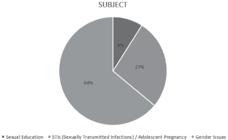
Based on the search with the filters described above, we identified the total number of entries and, subsequently, applied additional criteria to arrive at what is, in fact, relevant to our analysis - that is, SE without a focus on gender issues, STIs, or adolescent pregnancy.
We observed that, even though “gender” was not included as a search filter, the highest concentration of articles falls within this content area. We also excluded articles that might involve some form of intersection - for instance, SE from a psychological perspective. For the scope established here, we considered valid only those articles whose research focus lies on SE through the lens of education. Organizing the entries by subject, we present Figure 1.
Based on the inclusion and exclusion criteria described in Chart 2, we obtained four articles, organized in Chart 3.
Although the titles and abstracts met the selection criteria, two of these pre-selected articles, upon further reading of their full text, placed emphasis on discussions regarding gender, STIs, and adolescent pregnancy. Consequently, from the four articles, we were left with only two: “Sex education in Brazilian schools: a systematic literature review” (Furlanetto et al., 2018) and “Sex education in the early years: a study based on dissertations and theses” (Fernandes and Lorenzetti, 2019).
From this systematic survey, conducted through a quantitative methodology, we observed that, besides having begun the search from 2018 onward, only one article mentioned the BNCC, but without addressing the contemporary transversal themes. The attempt to historicize the debate within the field of education - albeit within it a five-year timeframe, counting from the year of the BNCC’s publication - stems from a desire to understand what is being done, and what is not, within basic education regarding the content in question: ES.
The practical selection process we conducted allowed us to exclude 71 articles without even assessing their quality, in order to ensure that only articles relevant to the research were considered. Once the potentially eligible articles have been gathered, and we will examine each of them more closely. We consider that, given the reduced number of studies, it is already possible to satisfactorily answer the research question: namely, that the work currently being conducted in SE remains, in fact, detached from SAP.
We thus reaffirm the objective of this research, which is dedicated to highlighting the need to delve deeper into theoretical questions regarding the introduction of SE content - viewed through the lens of - into basic education.
The relevance of this article is substantiated both by an examination of data recorded in the Brazilian Public Security Yearbook (FBSP, 2024) and by research concerning the attention - or lack thereof - devoted to the PAS within basic education, as revealed through a systematic literature review. Our objective is to demonstrate, based on the records of the aforementioned yearbook (FBSP, 2024) - particularly regarding cases of intra-familial sexual abuse involving school-aged victims - as well as on the systematic survey and relevant legal texts, the urgent need for an intervention within basic education. Such intervention aims to ensure the provision of SE through the lens of SAP, thereby equipping children with the tools to combat sexual violence.
As we draw toward the conclusion of this article, we include data from a study conducted by Gosling and Abdo (2011), in which psychiatrists outline the consequences resulting from childhood sexual abuse - ranging from psychological damage to functional alterations and changes in brain anatomical structure. According to the researchers, one such consequence is the onset of psychopathological conditions in adulthood, as is the case with pedophilia.
We observe that, in the field of education, the academic output of publications on the topic of SE converges on issues that are distant from SAP. We encountered numerous studies aligned with the lines of inquiry explored by bell hooks, Judith Butler, and many others - scholars who prioritize important issues, yet whose work does not intersect with the central concerns of this article.
Furthermore, teachers who lack adequate knowledge on the subject, particularly regarding the reception and listening to accounts from abuse victims, fail to inform their students about prevention and are unable to assist children and adolescents in moving toward the end of sexual violence cycles, which, in the great majority of cases, are intrafamilial, as previously noted.
Furthermore, teachers operate under unfavorable conditions regarding knowledge of the subject, particularly concerning the support and attentive listening necessary for victims of sexual abuse, to report their stories. Therefore they fail to instruct students on prevention and consequently, are unable to assist children and adolescents in bringing an end to the cycle of sexual violence - which, as previously mentioned, is in most cases intrafamilial.
ANALYSIS OF THE ARTICLES
Continuing with the analysis of the articles, we proceeded to repeatedly read selected studies in their entirety until we achieved familiarity with the data, aiming to identify themes for analysis - specifically seeking to identify, directly or indirectly, the topic of sexual abuse and forms of prevention. It is interesting to note that both studies set out to analyze scientific output: one is a systematic literature review, while the other involves an analysis of dissertations and theses.
Article 1, titled “Sex education in Brazilian schools: a systematic literature review,” was constructed based on a systematic review of the literature regarding sex education in Brazilian schools, aimed at identifying its main characteristics, the themes addressed, and the professionals responsible for these initiatives (Furlanetto et al., 2018). The initial search across databases resulted in the identification of 586 articles, which was narrowed down to 295 studies following the first round of selection. After reading the abstracts, an additional 190 articles were excluded because they did not pertain to sex education or guidance within a school setting. The remaining 101 articles were analyzed in full, and upon applying the inclusion and exclusion criteria, 24 texts remained for final evaluation.
These 24 empirical articles, published between 2010 and 2016, were retrieved from the Educ@, Science Direct, Medical Literature Analysis and Retrieval System Online (MEDLINE), Latin American and Caribbean Health Sciences Literature (LILACS), and SciELO databases based on the following criteria: nationally focused databases; and articles related to the health sciences and education, using the following descriptors:
-
• “sex education” AND school;
-
• “sexual orientation” AND school;
-
• sexuality AND education.
Based on this search, the characteristics of sex education in schools were identified, the objectives of which are described below:
It is evident that the majority of the studies found sought to report or describe a sexual orientation/education intervention [...]. The remaining articles sought to evaluate sexual orientation/education in schools from the perspective of students and teaching practices [...], to assess students’ learning and perceptions based on educational interventions [...], and to investigate the knowledge needs of school-age adolescents regarding sexuality, following educational interventions (Furlanetto et al., 2018, p. 559).
In Article 1, there is no direct reference to sexual violence or SAP. Regarding these topics, we observed the predominance of those
that adhered to a medical-informational approach, strictly related to the prevention of sexually transmitted diseases and pregnancy [...]. These works focused on providing information regarding the biology of sex, secondary sexual characteristics, and the attitudes necessary for maintaining health. Other studies addressed diverse themes, involving not only reproduction and physiology but also discussions concerning gender norms and identity, prejudice, diversity, and cultural and familial aspects [...]. Many interventions continued to emphasize themes related to the field of sexual and reproductive health, and did not address sexuality as a social and historical construct - including discussions on gender roles and identities -, contents proposed by the National Curriculum Parameters (Furlanetto et al., 2018, p. 560).
It was further observed that, within the school environment, science and biology teachers have been primarily responsible for SE, whereas in external interventions - characterized by temporary actions within the school - nursing professionals are more prominent.
Article 2, titled “Sex education in the early years: a study based on dissertations and theses,” follows in the footsteps of Article 1, analyzing research on SE for the early years of elementary school conducted within graduate programs. Focusing on publications from January to June 2018, the study involved a search of the CAPES Dissertation and Thesis Database using the term “sex education” (Fernandes and Lorenzetti, 2019). A total of 616 results were retrieved, comprising works from major fields of knowledge such as nursing, psychology, and education. Based on a review of the abstracts, 37 dissertations and theses specifically addressing the early years of elementary school were identified - representing approximately 6% of the total of 616 works located.
This article mentions the expression “sexual violence” 19 times and “sexual abuse” once, indicating a close estimate to the topic we are researching. Drawing on Sayão (1997), the authors present a historical overview of the emergence of SE, marking the year 1920 as a milestone for discussions on the subject in Brazil. The article reviews national and international documents addressing SE, such as the Declaration of Sexual Rights (WAS, 1997), organized by the World Association for Sexual Health, and the International Technical Guidance on Sexuality Education: An Evidence-Informed Approach, published in 2018 by the United Nations Educational, Scientific and Cultural Organization (UNESCO, 2019). A parallel is also drawn between the National Curricular Parameters (PCNs) and the BNCC, with particular emphasis on the removal of the term “sexual orientation” from the latter.
Regarding the work undertaken by universities, the authors highlight the scientific output of the Graduate Program in Sexual Education at the Universidade Estadual Paulista - UNESP (Araraquara), and drawing on studies by Silva and Megid Neto (2006), state “the importance of teacher education for the implementation of pedagogical practices that promote Sexual Education” (Fernandes and Lorenzetti, 2019, p. 511), given that: “Higher Education lacks research concerning the training of future professionals and the participation of university faculty in continuing education and in the development of extension and specialization programs.”
Both articles analyzed here indicate the absence of works in the field of education that are dedicated to disseminating knowledge on SAP.
Thus, in view of the results of the systematic literature review, we reaffirm the indispensability of initial (and continuing) teacher education programs with a focus on SAP, given that papers adopting this SE perspective appear in reduced numbers - a situation that contributes to keeping children and adolescents within cycles of sexual abuse.
In this regard, these articles corroborate and confirms our hypotheses regarding the scarcity of academic material on SAP in the field of education.
SOME CONSIDERATIONS AND EFFORTS TOWARD ADDRESSING GAPS IN BASIC EDUCATION
The Federal Constitution (Brasil, 1988), the ECA (Brasil, 1990), various laws, and the BNCC itself (Brasil, 2018) - undoubtedly deserving of numerous critiques - all point toward the priority of the right to protection and safety for children and adolescents with regard to sexual abuse-related issues. However, the legal grounds for engaging in SAP work at school have not proven sufficient to mobilize education professionals. The systematic review conducted enabled us to identify significant gaps in the field of education.
Addressing sexual abuse equips the school community to identify signs that may be indicative of sexual abuse, as well as to act with awareness of the different behavior patterns of abusers - thereby contributing to the removal of victims (and potential victims) from the vulnerability that keeps them in cycles of violence. For this reason, it is essential that schools fulfill their role as guarantors of student safety.
The school must be understood - and must understand itself - as a space that fulfills social functions, being responsible for the intellectual, physical, social, and cultural development of individuals. This development is inevitably associated with the characteristics of the education received, and the various models encountered within the family and at school through teachers and staff - permeated by the complexity inherent in different perceptions, cultural and social patterns, and worldviews. Herein lies the importance of SE being approached through guiding principles, delivered by qualified professionals, with the intent to support and instruct, rather than to perpetuate conflicts and personal viewpoints (Furlanetto et al., 2018).
We conclude this text - far from claiming any sense of finality - with the desire to provoke reflection and critique regarding the silencing that reveals an enormous gap in the field of education. The results of the systematic review expose the absence of works addressing the theme of SAP within SE. We fully recognize the importance of addressing other aspects related to SE, such as human reproduction, gender-related issues, STIs, and adolescent pregnancy. However, the survey of academic works conducted through the search for scientific articles in the CAPES Periodicals Portal reveals the existence of research and available materials linked to all of these dimensions. The scarcity of research is concentrated precisely in content directed toward abuse prevention - which leads us to recognize the need for scholars, researchers, and teachers to commit to bringing this theme into education through undergraduate teacher-training programs.
Veering in a direction slightly distinct from the scientific article genre, we venture to take a different step and offer here a few questions intended to stimulate new studies and generate curiosity in those who will read this article: Why does the subject of SE - from the perspective of abuse prevention - find no entry or space within academia? What does this culture of silencing the topic mean?
References
- ALBERTO, Isabel Marques. Crianças e adolescentes vítimas de abuso e exploração sexual. In: ANCIÃES, Alexandra; AGULHAS, Rute (org.). Grande livro sobre a violência sexual: compreensão, prevenção, avaliação e intervenção. Lisboa: Sílabo, 2022. p. 98-114.
-
ALTMANN, Helena. Sobre a educação sexual como um problema escolar. Linhas, Florianópolis, v. 7, n. 1, p. 1-12, 2006. Disponível em: http://www.periodicos.udesc.br/index.php/linhas/article/view/1324 Acesso em: 18 dez. 2024.
» http://www.periodicos.udesc.br/index.php/linhas/article/view/1324 - ANCIÃES, Alexandra; AGULHAS, Rute (org.). Grande livro sobre a violência sexual: compreensão, prevenção, avaliação e intervenção. Lisboa: Sílabo, 2022.
- ASSOCIAÇÃO BRASILEIRA MULTIPROFISSIONAL DE PROTEÇÃO À INFÂNCIA E ADOLESCÊNCIA (ABRAPIA). Abuso sexual contra crianças e adolescentes proteção e prevenção - guia de orientação para educadores. Petrópolis: Autores & Agentes Associados, 2002.
- AZEVEDO, Maria Amélia; GUERRA, Viviane Nogueira de Azevedo. Infância e violência doméstica: fronteiras do conhecimento. São Paulo: Cortez, 2000.
- BARROS, Nívia Valença. Violência intrafamiliar contra criança e adolescente. Trajetória histórica, políticas sociais, práticas e proteção social. Rio de Janeiro: PUC-Rio, 2005.
-
BORDIGNON, Luna Filipak; SANTOS, Claudiene; SOUZA, Elaine de Jesus. A educação sexual em artigos científicos publicados no SciELO (2018 a 2022): uma revisão integrativa. In: SEMINÁRIO INTERNACIONAL FAZENDO GÊNERO, 13., 2024, Florianópolis. Anais Eletrônicos [...]. Florianópolis, 2024. p. 10. Disponível em: https://www.fg2024.eventos.dype.com.br/anais/trabalhos/lista#C Acesso em: 16 dez. 2024.
» https://www.fg2024.eventos.dype.com.br/anais/trabalhos/lista#C -
BRASIL. Constituição da República Federativa do Brasil. Brasília, DF: Presidência da República, 1988. Disponível em: https://www.planalto.gov.br/ccivil_03/constituicao/constituicao.htm Acesso em: 24 maio 2024.
» https://www.planalto.gov.br/ccivil_03/constituicao/constituicao.htm - BRASIL. Lei n. 8.069, de 13 de julho de 1990. Dispõe sobre o Estatuto da Criança e do Adolescente e dá outras providências. Brasília, DF: Presidência da República, 1990. Disponível em: https://www.planalto.gov.br/ccivil_03/leis/l8069.htm. Acesso em: 14 out. 2024.
-
BRASIL. Lei n. 13.257, de 8 de março de 2016. Dispõe sobre as políticas públicas para a primeira infância e altera a Lei n. 8.069, de 13 de julho de 1990 (Estatuto da Criança e do Adolescente), o Decreto-Lei n. 3.689, de 3 de outubro de 1941 (Código de Processo Penal), a Consolidação das Leis do Trabalho (CLT), aprovada pelo Decreto-Lei n. 5.452, de 1º de maio de 1943, a Lei n. 11.770, de 9 de setembro de 2008, e a Lei n. 12.662, de 5 de junho de 2012. Brasília, DF: Presidência da República, 2016. Disponível em: https://www.planalto.gov.br/ccivil_03/_ato2015-2018/2016/lei/l13257.htm Acesso em: 14 out. 2024.
» https://www.planalto.gov.br/ccivil_03/_ato2015-2018/2016/lei/l13257.htm -
BRASIL. Lei n. 13.431, de 4 de abril de 2017. Estabelece o sistema de garantia de direitos da criança e do adolescente vítima ou testemunha de violência e altera a Lei n. 8.069, de 13 de julho de 1990 (Estatuto da Criança e do Adolescente). Brasília, DF: Presidência da República, 2017. Disponível em: https://www.planalto.gov.br/ccivil_03/_ato2015-2018/2017/lei/l13431.htm Acesso em: 14 out. 2024.
» https://www.planalto.gov.br/ccivil_03/_ato2015-2018/2017/lei/l13431.htm - BRASIL. Base Nacional Comum Curricular. Brasília, DF: Ministério da Educação, 2018.
- BRASIL. Temas contemporâneos transversais na BNCC: contexto histórico e pressupostos. Brasília: Ministério da Educação; Secretaria de Educação Básica, 2019.
-
BRASIL. Lei n. 14.432, de 3 de agosto de 2022. Institui a Campanha Maio Laranja, a ser realizada no mês de maio de cada ano, em todo o território nacional, com ações efetivas de combate ao abuso e à exploração sexual de crianças e adolescentes. Brasília, DF: Presidência da República, 2022a. Disponível em: https://www.planalto.gov.br/ccivil_03/_ato2019-2022/2022/lei/L14432.htm Acesso em: 14 out. 2024.
» https://www.planalto.gov.br/ccivil_03/_ato2019-2022/2022/lei/L14432.htm -
BRASIL. Medida Provisória n. 1.140, de 27 de outubro de 2022. Institui o Programa de Prevenção e Combate ao Assédio Sexual no âmbito dos sistemas de ensino federal, estadual, municipal e distrital. Brasília, DF: Presidência da República, 2022b. Disponível em: https://www.planalto.gov.br/ccivil_03/_Ato2019-2022/2022/Mpv/mpv1140.htm Acesso em: 14 out. 2024.
» https://www.planalto.gov.br/ccivil_03/_Ato2019-2022/2022/Mpv/mpv1140.htm -
BRASIL. Lei n. 14.540, de 3 de abril de 2023. Conversão da Medida Provisória n. 1.140, de 2022. Institui o Programa de Prevenção e Enfrentamento ao Assédio Sexual e demais Crimes contra a Dignidade Sexual e à Violência Sexual no âmbito da administração pública, direta e indireta, federal, estadual, distrital e municipal. Brasília, DF: Presidência da República, 2023. Disponível em: https://www.planalto.gov.br/ccivil_03/_ato2023-2026/2023/lei/l14540.htm Acesso em: 14 out. 2024.
» https://www.planalto.gov.br/ccivil_03/_ato2023-2026/2023/lei/l14540.htm -
BUENO, Samira; BOHNENBERGER, Marina; MARTINS, Juliana; SOBRAL, Isabela. A explosão da violência sexual no Brasil. In: FÓRUM BRASILEIRO DE SEGURANÇA PÚBLICA. 17º Anuário Brasileiro de Segurança Pública. São Paulo: Fórum Brasileiro de Segurança Pública, 2023. p. 154-160. Disponível em: https://forumseguranca.org.br/anuario-brasileiro-seguranca-publica/ Acesso em: 31 jul. 2023.
» https://forumseguranca.org.br/anuario-brasileiro-seguranca-publica/ -
CAMPOS, Denise de Carvalho; URNAU, Lilian Caroline. Exploração sexual de crianças e adolescentes: reflexão sobre o papel da escola. Psicologia Escolar e Educacional, São Paulo, v. 25, p. 1-9, 2021. https://doi.org/10.1590/2175-35392021221612
» https://doi.org/https://doi.org/10.1590/2175-35392021221612 - EGYPTO, Carlos (org.). Orientação sexual na escola: um projeto apaixonante. São Paulo: Cortez, 2003.
-
FERNANDES, Fernanda; LORENZETTI, Leonir. A educação sexual nos anos iniciais: um estudo a partir de dissertações e teses. Revista Brasileira de Ensino de Ciência e Tecnologia, Ponta Grossa, v. 12, n. 1, p. 507-522, jan./abr. 2019. Disponível em: https://periodicos.utfpr.edu.br/rbect/article/view/9705/pdf Acesso em: 14 out. 2024.
» https://periodicos.utfpr.edu.br/rbect/article/view/9705/pdf - FIGUEIRÓ, Mary Neide Damico. Educação sexual: em busca de mudanças. Londrina: UEL, 2009.
- FORTES, Casé. Todos contra a pedofilia. Belo Horizonte: Arraes, 2015.
-
FÓRUM BRASILEIRO DE SEGURANÇA PÚBLICA (FBSP). 16º Anuário Brasileiro de Segurança Pública. São Paulo: FBSP, 2022. Disponível em: https://forumseguranca.org.br/wp-content/uploads/2022/06/anuario-2022.pdf?v=4 Acesso em: 13 fev. 2023.
» https://forumseguranca.org.br/wp-content/uploads/2022/06/anuario-2022.pdf?v=4 -
FÓRUM BRASILEIRO DE SEGURANÇA PÚBLICA (FBSP). 17º Anuário Brasileiro de Segurança Pública. São Paulo: FBSP, 2023. Disponível em: https://forumseguranca.org.br/anuario-brasileiro-seguranca-publica/ Acesso em: 31 jul. 2023.
» https://forumseguranca.org.br/anuario-brasileiro-seguranca-publica/ -
FÓRUM BRASILEIRO DE SEGURANÇA PÚBLICA (FBSP). 18º Anuário Brasileiro de Segurança Pública. São Paulo: FBSP, 2024. Disponível em: https://forumseguranca.org.br/wp-content/uploads/2024/07/anuario-2024.pdf Acesso em: 19 set. 2024.
» https://forumseguranca.org.br/wp-content/uploads/2024/07/anuario-2024.pdf - FOUCAULT, Michel. Microfísica do poder. 11. ed. Rio de Janeiro: Graal, 1993.
- FREIRE, Paulo. Prefácio. In: RIBEIRO, Marcos (org.). Educação sexual: novas ideias, novas conquistas. São Paulo: Gente, 1993.
-
FURLANETTO, Milene Fontana; LAUERMANN, Franciele; COSTA, Cristofer Batista da; MARIN, Angela Helena. Educação sexual em escolas brasileiras: revisão sistemática da literatura. Cadernos de Pesquisa, São Paulo, v. 48, n. 168, p. 550-571, abr./jun. 2018. https://doi.org/10.1590/198053145084
» https://doi.org/https://doi.org/10.1590/198053145084 - FURLANI, Jimena. Encarar o desafio da educação sexual na escola. In: SECRETARIA DE ESTADO DA EDUCAÇÃO. Sexualidade. Curitiba: Secretaria de Estado da Educação-PR, Superintendência de Educação, Departamento de Diversidades, Núcleo de Gênero e Diversidade Sexual, 2009. p. 37-48.
-
GOSLING, Flávio José; ABDO, Carmita Helena Najjar. Abuso sexual na infância e desenvolvimento da pedofilia: revisão narrativa da literatura. Diagnóstico e Tratamento, São Paulo, v. 16, n. 3, p. 128-131, 2011. Disponível em: https://docs.bvsalud.org/upload/S/1413-9979/2011/v16n3/a2414.pdf Acesso em: 16 dez. 2024.
» https://docs.bvsalud.org/upload/S/1413-9979/2011/v16n3/a2414.pdf -
LOURO, Guacira Lopes. Pedagogias da sexualidade. In: LOURO, Guacira Lopes (org.). O corpo educado: pedagogias da sexualidade. Autêntica: Belo Horizonte, 2000. Disponível em: https://core.ac.uk/download/pdf/30353576.pdf Acesso em: 16 dez. 2024.
» https://core.ac.uk/download/pdf/30353576.pdf -
MARTINS, Cauê. O rosto familiar da violência contra crianças e adolescentes. In: FÓRUM BRASILEIRO DE SEGURANÇA PÚBLICA (FBSP). 18º Anuário Brasileiro de Segurança Pública. São Paulo: FBSP, 2024. p. 196-213. Disponível em: https://forumseguranca.org.br/wp-content/uploads/2024/07/anuario-2024.pdf Acesso em: 20 set. 2024.
» https://forumseguranca.org.br/wp-content/uploads/2024/07/anuario-2024.pdf - MATÉ, Gabor. Quando o corpo diz não. Porto: Ideias de Ler, 2003.
-
MOURA, Francisco Nunes de Sousa; LEITE, Raquel Crosara Maia. O conservadorismo e a formação cidadã: a abordagem da sexualidade no ensino fundamental diante do discurso em documentos oficiais. Revista de Educação, Ciência e Cultura, Canoas, v. 24, n. 3, p. 61-77, 2019. https://doi.org/10.18316/recc.v24i3.5468
» https://doi.org/https://doi.org/10.18316/recc.v24i3.5468 -
OKOLI, C. Guia para realizar uma revisão sistemática de literatura. Tradução: David Wesley Amado Duarte e João Mattar. EaD em Foco, Rio de Janeiro, v. 9, n. 1, p. 1-40, 2019. https://doi.org/10.18264/eadf.v9i1.748
» https://doi.org/https://doi.org/10.18264/eadf.v9i1.748 -
ORGANIZAÇÃO DAS NAÇÕES UNIDAS PARA A EDUCAÇÃO, CIÊNCIA E CULTURA (UNESCO). Orientações técnicas internacionais de educação em sexualidade: uma abordagem baseada em evidências. 2. ed. Paris: Unesco, 2019. Disponível em: https://www.unfpa.org/sites/default/files/pub-pdf/369308por.pdf Acesso em: 19 mar. 2023.
» https://www.unfpa.org/sites/default/files/pub-pdf/369308por.pdf -
POLIZEL, Alexandre Luiz; GOMES, Fabiana; OLIVEIRA, Moisés Alves de. Ninguém é contra a educação sexual? Considerações acerca de uma educação reativa para as sexualidades. Revista da Faculdade de Educação da Universidade do Estado de Mato Grosso, Cuiabá, v. 35, ano 20, n. 1, p. 175-193, jan./jun. 2021. https://doi.org/10.30681/21787476.2021.35.175193
» https://doi.org/https://doi.org/10.30681/21787476.2021.35.175193 - RANGEL, Patrícia Calmon. Abuso sexual intrafamiliar recorrente. Curitiba: Juruá, 2009.
-
REINACH, Sofia; BARROS, Betina Warmling. O aumento da violência contra crianças e adolescentes no Brasil em 2022. In: FÓRUM BRASILEIRO DE SEGURANÇA PÚBLICA (FBSP). 17º Anuário Brasileiro de Segurança Pública. São Paulo: FBSP, 2023. p. 188-203. Disponível em: https://forumseguranca.org.br/anuario-brasileiro-seguranca-publica/ Acesso em: 31 jul. 2023.
» https://forumseguranca.org.br/anuario-brasileiro-seguranca-publica/ - RIBEIRO, Marcos. Educação em sexualidade: conteúdos, metodologias, entraves. Rio de Janeiro: Wak, 2020.
- RIBEIRO, Marcos. A conversa sobre sexualidade na escola: da educação infantil ao ensino médio. Rio de Janeiro: Wak, 2021.
- SALTER, Anna C. Predadores: pedófilos, estupradores e outros agressores sexuais. Quem são, como agem e como podemos proteger a nós mesmos e a nossos filhos. São Paulo: M. Books, 2009.
- SANDERSON, Christiane. O abuso sexual em crianças. São Paulo: M. Books, 2005.
- SAYÃO, Rosely. Saber o sexo: os problemas da informação sexual e o papel da escola. In: AQUINO, Julio Roberto Groppa (org.). Sexualidade na escola: alternativas teóricas e práticas. São Paulo: Summus, 1997. p. 97-105.
-
SILVA, Regina Célia Pinheiro da; MEGID NETO, Jorge. Formação de professores e educadores para abordagem da educação sexual na escola: o que mostram as pesquisas. Ciência e Educação, Bauru, v. 12, n. 2, p. 185-197, 2006. https://doi.org/10.1590/S1516-73132006000200006
» https://doi.org/https://doi.org/10.1590/S1516-73132006000200006 - SILVA, Régisson da. Abuso sexual infantil: guia de orientação ao professor. Vitória: IFES, 2019.
- SOUZA, Hália Pauliv de. Orientação sexual: conscientização, necessidade, realidade. Curitiba: Juruá, 2009.
-
TEMER, Luciana. Violência sexual infantil: aumentaram os casos ou as denúncias? In: FÓRUM BRASILEIRO DE SEGURANÇA PÚBLICA (FBSP). 17º Anuário Brasileiro de Segurança Pública. São Paulo: FBSP, 2023. p. 204-212. Disponível em: https://forumseguranca.org.br/anuario-brasileiro-seguranca-publica/ Acesso em: 31 jul. 2023.
» https://forumseguranca.org.br/anuario-brasileiro-seguranca-publica/ -
TEMER, Luciana. Da importância dos dados de violência sexual contra crianças e adolescentes. In: FÓRUM BRASILEIRO DE SEGURANÇA PÚBLICA (FSBP). 18º Anuário Brasileiro de Segurança Pública. São Paulo: FBSP, 2024. p. 196-213. Disponível em: https://forumseguranca.org.br/wp-content/uploads/2024/07/anuario-2024.pdf Acesso em: 20 set. 2024.
» https://forumseguranca.org.br/wp-content/uploads/2024/07/anuario-2024.pdf -
WORLD ASSOCIATION FOR SEXOLOGY (WAS). Declaração dos direitos sexuais. Hong Kong: WAS, 1997. Disponível em: https://www.dhnet.org.br/direitos/sos/gays/direitossexuais.html Acesso em: 15 out. 2024.
» https://www.dhnet.org.br/direitos/sos/gays/direitossexuais.html
-
1
According to Article 2 of the Statute of the Child and Adolescent (ECA), “For the purposes of this Law, a child is considered to be a person up to twelve years of age incomplete, and an adolescent a person between twelve and eighteen years of age” (Brasil, 1990).
-
2
“Rape of a vulnerable person classifies any act of sexual intercourse or libidinous act involving victims under 14 years of age or those unable to consent for any reason, such as disability or illness” (FBSP, 2024, p. 162).
-
3
“A recent study released by researchers from the Institute of Applied Economic Research (IPEA) indicated that only 8.5% of rapes in Brazil are reported to the police, and 4.2% to health information systems” (FBSP, 2023, p. 155).
-
4
Available at: https://www-periodicos-capes-gov-br.ezl.periodicos.capes.gov.br/. Accessed: 14 Oct. 2024.
-
How to cite this article:
LOPES, Shayane França; ALMEIDA, Fábio Sampaio de. Sexual education from the perspective of abuse prevention: a systematic literature review. Revista Brasileira de Educação, v. 31, e310074, 2026. https://doi.org/10.1590/S1413-24782026310075
-
Funding:
The study received no funding.
-
Data availability statement:
The research data are available in the body of the article.
Edited by
-
Responsible Editor:
Edla Eggert https://orcid.org/0000-0002-1980-7053
The research data are available in the body of the article.

 Source: Author’s own elaboration (2024).