
 YouTube: exploring the coexistence of entertainment and learning
ABSTRACT
This article aims to understand how the conceptions of high school students influence social representations of YouTube as a means of acquiring knowledge in educational environments. The qualitative research involved 31 students, who answered a Word-Association Test (WAT) and a questionnaire about the use of YouTube in education. Data were analyzed using prototypical analysis, similitude analysis and descending hierarchical classification (DHC). The results revealed that students mainly associate YouTube with entertainment, with music, videos and gameplay. Although they also perceive its potential as a study tool, this view is secondary. The channels most accessed by students are adapted to the young public, facilitating the understanding of contents. In summary, students see YouTube as an entertainment platform where learning can happen incidentally, due to the language of the videos.
Keywords:
Video; Communication; Education; Social Representations
RESUMO
Este artigo busca compreender como as concepções dos estudantes do ensino médio influenciam as representações sociais sobre o YouTube como meio de aquisição de conhecimento em ambientes educacionais. A pesquisa qualitativa envolveu 31 estudantes, que responderam a um teste de associação livre de palavras (TALP) e a um questionário sobre o uso do YouTube na educação. Os dados foram analisados por meio de análise prototípica, análise de similitude e classificação hierárquica descendente (CHD). Os resultados revelaram que os estudantes associam o YouTube principalmente ao entretenimento, com música, vídeos e gameplay. Embora também percebam seu potencial como ferramenta de estudo, essa visão é secundária. Os canais mais acessados pelos estudantes adaptam-se ao público jovem, facilitando a compreensão dos conteúdos. Em resumo, os estudantes veem o YouTube como uma plataforma de entretenimento em que a aprendizagem pode ocorrer incidentalmente, dada a linguagem dos vídeos.
Palavras-chave:
Vídeo; Comunicação; Educação; Representações Sociais
RESUMEN
Este artículo busca comprender cómo las concepciones de los estudiantes influyen en las representaciones sociales de YouTube como medio de adquisición de conocimientos en entornos educativos. La investigación cualitativa involucró a 31 estudiantes, quienes respondieron a un Test de Asociación de Palabras (TAP) y a un cuestionario sobre el uso de YouTube en la Educación. Los datos se analizaron mediante Análisis Prototípico, Análisis de Similitud y Clasificación Jerárquica Descendente (CJD). Los resultados revelaron que los estudiantes asocian principalmente YouTube con entretenimiento, con música, videos y juegos. Aunque perciben su potencial como herramienta de estudio, esta visión es secundaria. Los canales más visitados por los estudiantes están adaptados al público joven, facilitando la comprensión de los contenidos. Los estudiantes ven a YouTube como una plataforma de entretenimiento donde el aprendizaje puede ocurrir de manera incidental, debido al lenguaje de los videos.
Palabras clave:
Video; Comunicación; Educación; Representaciones Sociales
INTRODUCTION
"Content is often presented specifically for teenagers, so instructors try to make it sound fun or present content as simply as possible."
This statement reflects the perspective of one of the students participating in this study regarding the information presented in the videos he watches on YouTube. His viewpoint allows us to examine how students legitimize the use of YouTube videos in formal educational settings. However, it is essential to understand what drives students to think this way. When the semiotic codes in a video message employ more sophisticated language or a serious narrative, the student must possess a sufficient conceptual repertoire to interpret these codes and validate the video as a source of knowledge. Understanding the underlying reasons for this student's response, however, necessitates a more detailed analysis, including an exploration of the influence of his social group on his interpretation of the world.
The meanings students attribute to school situations and tasks are influenced by the various social groups to which they belong and the representations of school and functions that they share. However, it is important to consider the ongoing processes of re-contextualization and de-contextualization in how information is accessed. For example, a teacher resistant to technology might find it "acceptable" for a student to copy text from a printed encyclopedia but reject the text if it is sourced from an electronic encyclopedia. This behavior reflects the teacher's representation of the encyclopedia through an erudite cultural perspective shaped by his/her social group (Santaella, 1996; Paulino, 2009). In this context, students’ legitimization of YouTube videos as educational tools involves reconstructing these videos as educational objects. This process is shaped by conceptual limitations or expansions arising from the social representations they encounter within the school environment. Gilly (2001, p. 336) observes that students do not approach most educational objects, including videos, with a blank slate. Instead, they come equipped with "initial" or "naive" representations that influence their engagement and interpretation.
Accordingly, to support an investigation in this context, this study explores how high school students’ conceptions shape social representations of YouTube and its legitimacy as a tool for acquiring knowledge in formal educational settings. To this end, 31 high school students participated, completing a free word association test and a questionnaire.
In the post-COVID-19 pandemic context, characterized by the increased use of videos in classrooms, this study highlights the importance of an educational approach attuned to the social representations of digital video culture (Mion and Lopes, 2021; Pattier and Ferreira, 2022). This perspective, shaped by the dual role of videos as tools for both learning and leisure, aligns with the realities of contemporary society. It underscores the need to recognize and leverage the multifaceted potential of videos and their representations, particularly those available on YouTube.
AUDIOVISUAL LANGUAGE AND SCHOOL
Although this study focuses on exploring the social representations students assign to YouTube videos as tools for acquiring knowledge, it is essential first to address television — not as an object but as a conception of mass-accessible audiovisual media. Burgess and Green (2018, p. 33) state, "YouTube represents not so much the collision as the co-evolution and uneasy co-existence of ‘old’ and ‘new’ media industries, forms, and practices." According to Ramírez, Travesedo-Rojas and Almansa-Martínez (2020), YouTube serves as a repository for conventional media systems, acting as a secondary source of information that hosts content originally produced by traditional offline media. YouTube redefines the concept of television; even the term "channel" is used to describe a user who uploads videos, metaphorically referencing traditional TV channels. However, on the web, the relationship between channel and user is fundamentally different. YouTube empowers individuals to control the production, broadcasting, and selection of audiovisual content, granting them agency over these processes in ways traditional television does not (Montaño, 2017).
As a technological product, television is commonly associated with affordable and accessible leisure and entertainment. In many households, it functions as a source of distraction and representation, often taking precedence over experiential activities (Belloni, 2009). Aligned with this perspective, Moran (1995) observes that, due to television's association with leisure and the inherent connection between video and this medium, students may perceive classroom videos as more closely related to entertainment than learning. This perception can shape their attitudes and expectations regarding its use. De Lima Velho Junges and Gatti (2019) argue that media resources, particularly YouTube, remain underutilized in the school environment. When employed, they are often regarded as merely supplementary to content already presented by the teacher, thereby undervaluing YouTube's potential as a transformative educational tool.
This representation is often perpetuated by more conservative educators who emphasize the functional distinction between school and YouTube: for many, YouTube entertains while school educates. By underscoring the difference between the functions of television and school, these educators assume that the concepts of television as an object and a conception — with its distinct codes and signs — are clearly understood by students. They hope this understanding prevents conceptual confusion in legitimizing video as an educational resource. However, audiovisual media heavily influences the way individuals perceive the world and process information. As such, television culture exerts a long-term educational impact, even in its absence. Upon entering school, students are already immersed in a sensory, affective, and ethical universe shaped by the mass messages inherent in television (Moran, 2005). The challenge for educators is harnessing this highly visual universe — rich in images, sounds, colors, movements, and engaging narratives — to enhance school learning experiences (Rohrer and Oliveira, 2017). To achieve this objective, one must recognize that, like school, television is a socializing phenomenon. Its significance cannot be dismissed, as it provides myths, symbols, and representations (Belloni, 2009). M. Egbon (1982 apud Santaella, 1996) argues that television has transformed people's thoughts and attitudes about cognitive experiences. However, disentangling the complex interplay of variables influencing the relationship between media exposure and knowledge remains challenging.
Mass messages, whether on television or video, are often dismissed as poor and overly standardized. This perspective stems from an overemphasis on a single code, typically the verbal one, at the expense of many signals and codes within these messages, reflecting a tendency to evaluate messages from one medium using criteria suited to another. For instance, a video presenting educational content is often judged based on the standards of a different medium: the printed book (Santaella, 1996). In such cases, the video is evaluated for its ability to systematize concepts based on the expectations set for books, which are assumed to be free from conceptual errors or gaps in knowledge. This assumption grants books an air of absolute erudition, ignoring that they may also contain inaccuracies or omissions (Rosado, 1998; Paulino, 2009).
The value attributed to television or video depends mainly on how receivers interpret the message intended for them. Communication occurs only when the sender and receiver share, at least partially, the code by which the information is structured into a message (Santaella, 1996). According to Binda, Ulbricht and Fadel (2018), audiovisual language is a communication system that encodes signs to describe and represent situations within a scene. This encoding is strategically implemented through expressive techniques, some of which take the form of figures of speech that establish visual and verbal patterns. Even when a video's message is superficial, its semiotic complexity remains high due to the intricate processes involved in generating meaning and facilitating communication. Videos primarily engage sight and hearing, combining visual, musical, spoken, and written languages to create a form of multilingual communication that integrates overlapping codes and meanings (Moran, 1995; Binda, Ulbricht and Fadel, 2018). In this context, Santaella (1996) argues that the true merit of videos may lie in their anthropophagic nature: their ability to assimilate elements from other forms of media or culture. This assimilation can range from trivial texts, captions, and quotes to sophisticated ones such as cinema, theater, and newspapers. Each medium adopts television's organizational rhythm and aesthetic qualities in this process. Ziller (2012, p. 743) observes that many YouTube videos "create, from videos published by others, new narratives that, at times and in certain aspects, are closer to their daily lives than those produced by broadcasters and audiovisual content producers" (free translation). This concept of anthropophagy reflects one being influenced by something admired, to transform and re-contextualize the message.
By articulating and integrating various media, the strength of audiovisual content lies in its ability to transmit meanings that extend beyond students’ initial perceptions as video consumers. Audiovisual messages resonate deeply with students, often reflecting aspects with which they identify or relate (Moran, 2005). Through the projected message, a communicative relationship is established between the student and the content represented by the audiovisual medium. Students use the implicit codes within the message to interpret the message itself and the broader context in which it is presented. Such context includes the setting where the experience takes place and the purpose of the video, among other elements (Rosado, 1998). In synchronous communication, such as person-to-person interactions, differences in cultural codes are gradually adjusted, enabling control over the transmitted information within the communicative act. However, in mass communication, mainly through asynchronous videos, a significant amount of uncontrolled information can reach receivers, beyond the sender's original intent (Santaella, 1996). Despite this, both sender and receiver play crucial roles in the communicative process, alternating their positions and contributing to the construction of the message. While the sender is responsible for selecting strategies to encode it, the receiver's sociocultural perspective influences this process. In this sense, students act as active participants, equipped with a cultural repertoire that informs their interpretation of the messages according to their experiences, values, and the culture of their social group (Binda, Ulbricht and Fadel, 2018). Moreover, the reception of the message is not confined to the moment of watching the video; it extends into daily life and subsequent interactions, becoming a resource for generating meanings and knowledge (Carneiro, 2005).
The interpretation of a message by a student depends not only on the characteristics of the message itself but also on the student's individual attributes. Students continuously strive to comprehend and derive meaning from the presented material. Factors such as their prior knowledge of the subject, previous experiences with the content, and the specific context in which they engage with the video significantly influence how they process and respond to audiovisual messages (Rosado, 1998).
SOCIAL AND AUDIOVISUAL REPRESENTATION
Social psychology suggests that the influence of the collective on an individual's thoughts and actions must be considered, mainly through the role of social representations in shaping one's interpretation of the world. When analyzing a phenomenon, the brain searches for mental schemas within its cognitive framework. These schemas, often shaped by the social group, serve as links between perception and memory, referencing past situations to guide behavior in the present. Consequently, individuals tend to seek information that validates their social group's viewpoints while disregarding conflicting information (Moscovici, 1986). In this context, Rosado (1998) emphasizes the collective's impact on how individuals, especially students, interpret audiovisual content in educational settings, considering students may process only the portions of a video message that align with their existing mental schemas. Hence, new information may be dismissed, or its significance minimized if it conflicts with these schemas. Thus, even if an audiovisual message contains knowledge-transformative information and the student possesses schemas to support this transformation, the message will likely be rejected if it contradicts the social group's norms or beliefs, as though it did not exist.
Since social representations shape individuals’ behavior, they can also hinder the recipient's careful consideration of a message. For instance, using animation to explain a concept in a didactic video may undermine the credibility of the information if the recipient is an adult with a more conservative social perspective. Even if the sender intends to simplify and facilitate understanding, the message may be perceived as overly simplistic because "cartoons are for children." Conversely, a video featuring a person "lecturing" may not always resonate with contemporary students, as their social representations often associate videos with enhanced features, such as animation, music, and other engaging elements, exceeding what is typically found in a classroom (Rosado, 1998).
From this perspective, identifying the collective representations surrounding the use of a given technology or object in a school environment enables more informed and deliberate teaching practices. Incorporating YouTube into the classroom requires consideration of students’ preexisting knowledge and their ability to apply appropriate frameworks to convert the information in video messages into meaningful and enduring knowledge. Therefore, analyzing the influence of students’ social groups on their schemas is a critical factor in understanding and optimizing the interaction between students and the educational tools used.
Therefore, it is essential to understand the structure and dynamics of social representations. In this regard, Jean-Claude Abric (1993) builds on Moscovici's theory by proposing the "Central Core Theory," which posits that a representation comprises two systems: the central and the peripheral. The interaction between these systems reveals two seemingly contradictory characteristics: "social representations are both stable and unstable, rigid and flexible", and at the same time "consensual but also marked by strong inter-individual differences" (Abric, 1993, p. 75).
According to Abric's theory (1993), social representations are structured into central and peripheral systems. The central system comprises the representation's core, ensuring its stability and rooted in historical, social, and ideological origins. This core is heavily influenced by the collective memory of a group and the system of norms it upholds, forming the socially shared foundation of social representations. Its primary function is to promote consensus, as the homogeneity of a social group is achieved and defined through shared representations. The central system is highly resistant to change, maintaining the continuity and consistency of the representation regardless of the immediate social and material context in which it is expressed.
The peripheral system is essential to the functioning of the central system. While the central system is predominantly normative, suggesting behaviors, the peripheral system is functional, anchoring representations in everyday reality. Hence, the latter is more sensitive to and shaped by the characteristics of the immediate context, serving as the interface between concrete reality and the central system. Consequently, the peripheral system is closely tied to an individual's context, enabling the development of individualized social representations. Because it is more flexible, the peripheral system plays a protective role for the central system, absorbing new information or events that might challenge the central core of a representation. Hence, it acts as a buffer to safeguard the stability of social representations, at least temporarily (Abric, 1993).
In summary, this dual system reveals an apparent contradiction: social representations are stable and rigid because they are grounded in a group's shared values. At the same time, they are mobile and flexible because they are influenced by individual experiences (Abric, 1998). Therefore, considering that social representations originate from a reality shared by a social group, it is logical to infer that their transformation must also begin within a socially shared environment. In other words, any update, evolution, or transformation occurs through new and contradictory practices initiated by individuals, progressing from the peripheral system of representations toward the central system (Sousa, 2010). Abric (1993) presents three main types of possible transformation:
-
When the peripheral system operates autonomously, "strange schemes" emerge, suggesting alternative practices and behaviors that, at least initially, do not challenge the central system of representation. This allows for individualized transformations within the peripheral system. As these "strange schemes" multiply, they eventually induce a transformation of the central core of the representation. This modification type is called "resistant transformation" (Abric, 1998, p. 35-36).
-
The "progressive transformation" of representation occurs when new practices do not significantly contradict the central core. The patterns associated with these new practices are gradually integrated into the central core, merging with its existing elements to form a new core and, ultimately, a new representation (Abric, 1993).
-
"Brutal transformation" occurs when new practices directly challenge the central meaning of a representation, bypassing the peripheral system's buffer mechanism. In such cases, these new practices’ significance, permanence, and irreversible nature provoke a direct and comprehensive response from the central core, resulting in a complete transformation of the entire representation (Abric, 1993).
Social representations are understood to emerge from a recursive process that perpetuates itself within the socialization process. The behavioral models and practices individuals adopt to navigate reality are primarily shaped by the representations they share with their social group. Conversely, individuals’ unique characteristics influence, to varying extents, the transformation of these shared representations.
MATERIAL AND METHODS
This qualitative study seeks to explore how high school students’ conceptions shape social representations of YouTube and its perceived legitimacy as a source of knowledge in formal educational settings.
A survey was conducted with 31 high school students from a state technological education institution. Participants completed a free word association test (FWAT) and responded to a questionnaire with nine open-ended questions about the use of YouTube in education. The FWAT aimed to gather data on the order in which words associated with the trigger term "YouTube" were recalled. This technique involves prompting individuals to write terms, adjectives, or phrases that immediately come to mind in response to a specific term. As a projective technique, FWAT operates under the hypothesis that an individual's psychological structure becomes evident through behavioral manifestations, reactions, evocations, choices, and creations, which in turn produce elements that reveal aspects of their personality (Coutinho and Do Bú, 2017). In this study, participants provided five words they associated with the trigger term "YouTube," a process referred to as evocation. The data collection instruments, including the FWAT and the questionnaire on YouTube in educational settings, were administered online using Google Forms.1
Prototypical analysis, also referred to as quadrant analysis, was used to identify the fundamental structure of the students’ social representation of YouTube. This technique is widely adopted in studies on social representations and serves as a key tool in supporting the "Central Core Theory," which is used to determine the structures of the central and peripheral systems within a representation (Wachelke and Wolter, 2011).
Data obtained from the FWAT were organized using the framework proposed by Vergès, Tyszka and Vergès (1994), based on the frequency and order of evocation of the words, to identify elements within the central core and peripheral system. Words with a lower mean order of evocation (MOE) and higher frequency (f) are considered more representative within the social representation of the group under study. A model of the Vergès framework supporting the prototypical analysis is presented in Table 1, illustrating the cut-off criteria for each quadrant. This model also outlines the thresholds for the variables MOE and f, determined by the overall mean rank of evocations (MOEmean) and the mean frequency of evoked words (fmean). As emphasized by Wachelke, Wolter and Matos (2016), while various criteria can be applied to classify high or low values for MOE and f, descriptive research employing prototypical analysis typically adopts the sample mean. This approach reflects the central core zone, which is characterized by high-frequency terms and low-order evocations.
The first quadrant (top left) represents words with the highest frequency of evocations and a MOE lower than the general mean. In this case, a low MOE corresponds to words that participants readily recalled. These words are likely indicators of the central core of a representation. The second quadrant (top right) reflects the first periphery, comprising words with high frequency but low readiness of evocation, meaning they were not immediately recalled. The third quadrant (bottom left), known as the contrast zone, includes words readily evoked but occurring less frequently than the mean. Finally, the fourth quadrant (bottom right) represents the second periphery, containing words with lower frequency and a higher MOE. A high MOE indicates words rarely recalled by participants, making them less relevant to the representation (Pereira, 2001).
Vergès’ framework, presented in the next section, was created using the Interface de R pour les Analyses Multidimensionnelles de Textes et de Questionnaires (Iramuteq)2 software (Camargo and Justo, 2016) based on data collected through the FWAT, enabling a prototypical analysis of word evocations. Similarity analysis was also conducted using Iramuteq, both for the evocations obtained from the FWAT and the qualitative responses from the questionnaire on the role of YouTube in education.
The qualitative responses to the questionnaire on YouTube in education were also analyzed using the descending hierarchical classification (DHC) technique available in the Iramuteq software to ensure greater scientific rigor. As proposed by Reinert (1990), DHC identifies semantic relationships within the textual corpus and groups words into clusters with specific vocabularies. In addition to clustering semantically related words, Iramuteq supported the organization of the clusters into a dendrogram, allowing for a graphical representation of the levels of similarity or distance among the clusters.
RESULTS AND DISCUSSION
The criterion for analyzing the data collected from students focused on identifying relationships, or the absence thereof, between their conceptions of YouTube use in schools and their understanding of the concept of learning. Validation of this relationship from a psychosocial perspective is critical in revealing the students’ collective representation of YouTube as a resource for promoting learning. The students are identified by the letter "S," followed by a number from 1 to 31 to ensure their identities remain confidential.
In this sense, Figure 1 shows that students consider learning essential and relevant for acquiring knowledge. In other words, they consider "learning" to be conceived from a positivist perspective of causality. Note that external situations trigger the act of learning and generally do not occur spontaneously; there is an intentionality of the stimulus acting on the individual from a unilateral perspective. Conversely, knowledge occurs bilaterally, meaning that, while the stimulus acts on the individual, the individual simultaneously acts on the stimulus (Piaget, 2003). Thus, this study and the following analyses focus on understanding the variables employed by individuals in response to a stimulus.
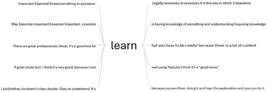
Understanding the stimuli that drive student learning requires considering the influence of social, cultural, and educational contexts. In this regard, social representations establish a consensual relationship among individuals involved in learning, shaping their conduct and behavior. The social representation theory, grounded in communication, interaction, and common-sense knowledge, offers an alternative approach to understanding learning. The central question lies in how to address and negotiate the functions of representations within the instructional process, taking into account not only teachers’ attention to the students’ prior knowledge but also their cultural and subcultural differences, as well as the diverse beliefs that comprise their social representations (Chaib and Loureiro, 2015).
For example, how students represent YouTube might significantly impact its educational use; that is, the students’ representation will influence pedagogical practices and learning dynamics. Therefore, an in-depth analysis of YouTube's social representations is paramount to understanding its implications and potential transformations in contemporary education.
CHARACTERIZATION OF THE CENTRAL CORE AND PERIPHERAL ZONE OF SOCIAL REPRESENTATIONS
Table 2 presents the central core and peripheral system of social representations of YouTube from the students’ perspectives, facilitating a prototypical analysis of the evocations. Two criteria are analyzed within Vergès’ framework: frequency and MOE. Frequency, a collective criterion, reflects how many times the group of students evoked the term "YouTube". The second criterion, MOE, is individual and pertains to the order in which each participant included the term in his/her set of evocations.
The prototypical analysis of Vergès four quadrants reveals that YouTube's social representation in the central core zone consists of music, videos, entertainment, and gameplay.
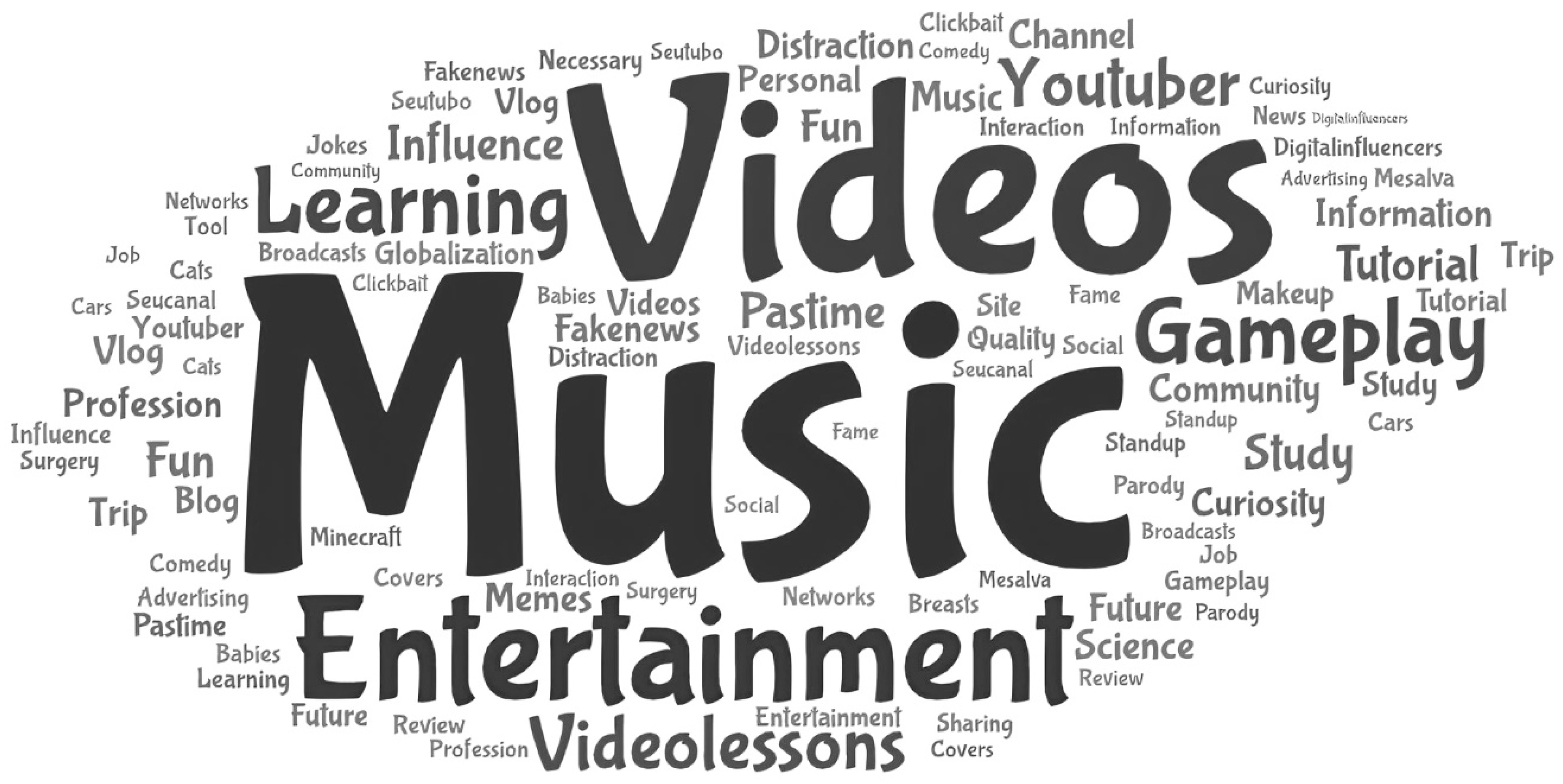
The prototypical analysis indicates that the students’ social representation of YouTube emphasizes entertainment, particularly in the form of music videos, as illustrated by the word cloud in Figure 2.
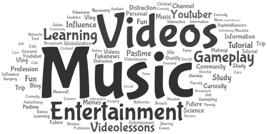
The word cloud and Verges’ framework suggest that YouTube is predominantly used as a platform for consuming music and entertainment. Music has always played a significant role in human culture, but the advent of the Internet — first with music-sharing programs and later with YouTube — transformed it in unprecedented ways, reshaping the entertainment industry and influencing music production. From Carvalho Junior's (2016, p. 35) perspective, which aligns with this study's findings, YouTube facilitates a collective yet individualized reception of music, functioning as a "virtual device" and a "machine for making events appear." Consequently, the association of entertainment with YouTube highlights its potential as a space for incidental learning, enabling individuals to acquire knowledge unintentionally while engaging with entertainment content (Lange, 2018).
The peripheral system was highly sensitive and shaped by the tangible characteristics of the immediate context, strongly influenced by the concrete reality in which students are immersed. For instance, the frequent appearance of the words "learning" and "video classes," despite not being immediately recalled, can be attributed to the FWAT conducted in a school setting. Although students completed the test individually, they were seated in a collective environment, next to one another. It is likely that in different contexts, such as churches or clubs, the peripheral zone of the representation would yield different results, as the social context significantly influences how meaning is interpreted and attributed beyond the central focus of the representation. Consequently, peripheral elements may be unstable and quickly fade from the group's shared thinking (Wolter, 2018). Another noteworthy aspect of the peripheral system in this study is the evocation of the term "YouTuber," which refers to digital influencers who publish videos on YouTube. These influencers typically focus on entertainment topics such as games, movies, curiosities, humor, or controversial subjects related to politics or daily events. In this context, the word "YouTuber," identified in the first peripheral zone, connects to the entertainment elements that reinforce and stabilize the beliefs embedded in the central core.
The first peripheral zone acts as a protective layer for the legitimacy of social representation. According to Abric (1993), it is a buffer for the central core representation. In this study, words such as "learning" and "video classes," which are associated with education, have the potential to challenge the social representation of YouTube as an entertainment platform. However, these elements are absorbed by the peripheral system, effectively shielding the social representation. It is important to note that, in this study, the peripheral system does not oppose the core system of representation. This is evidenced by the evocation of the word "YouTuber," which enables an individualized transformation through strange schemes such as "learning" and "video classes." Over time, these elements can potentially influence and alter the social representation of YouTube.
According to Abric (2003), the contrasting elements zone consists of evocations that are not part of the central core but remain connected to the object or theme under analysis. This zone suggests two possibilities: either the elements complement those in the first periphery, or they indicate the presence of a subgroup that prioritizes elements differing from those emphasized in the central core. The evocations in the contrasting elements zone are associated with personal satisfaction, communication, and the pursuit of moments of escapism or detachment from everyday concerns. Consequently, the elements in this zone can be viewed as complements to the first periphery, providing additional information without challenging the representation's central core.
The second peripheral zone is more distant from the central core and includes evocations that are less frequently shared and less stable than those in the first. These elements often conflict with the central core, representing divergent views within the social group and highlighting more specific or individualized aspects (Wachelke and Wolter, 2011). This study's second peripheral zone reflects individual aspects related to interests, influence, and future perspectives.
SIMILARITY ANALYSIS
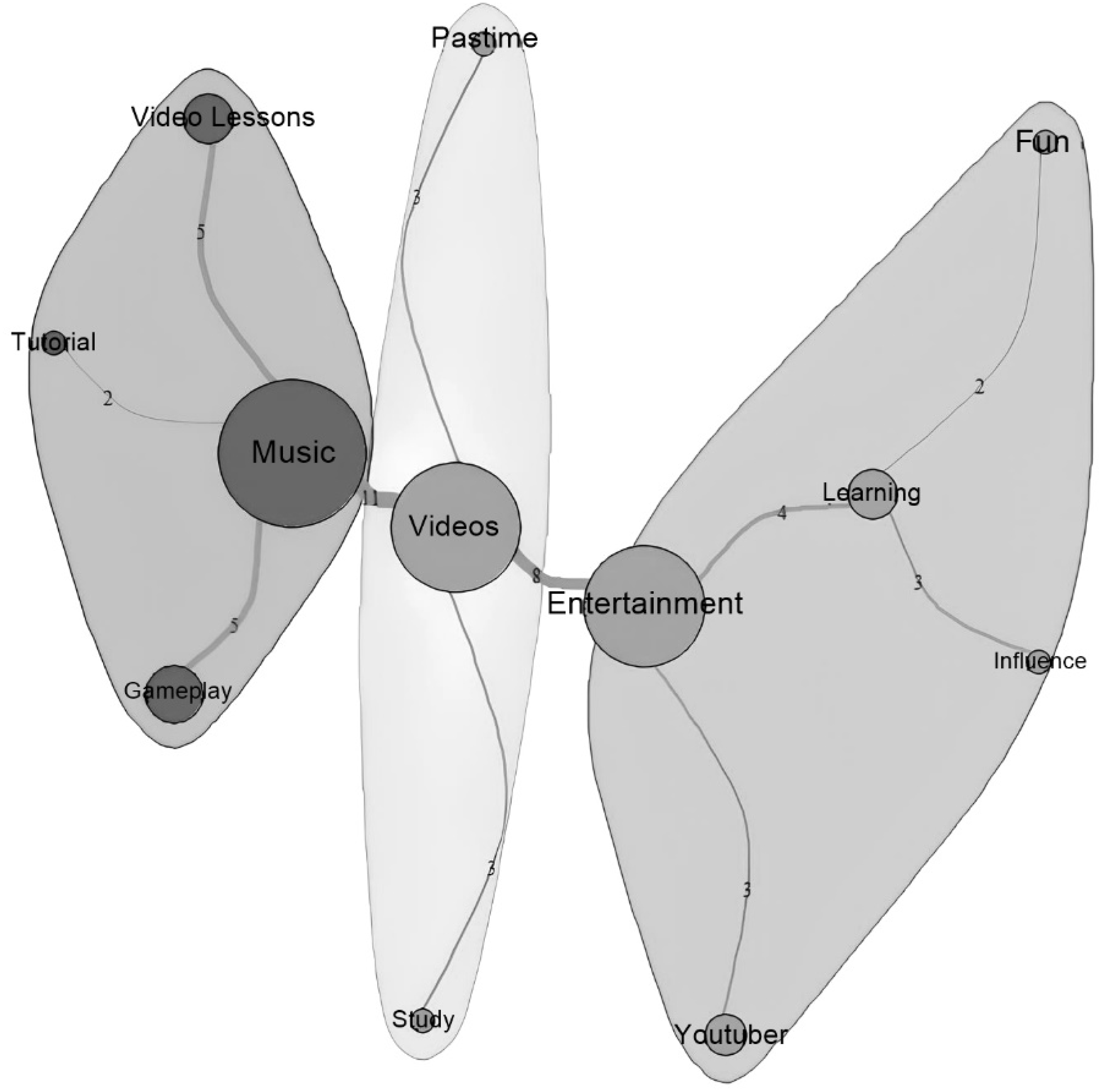
Similarity analysis, represented by a graph (Figure 3), illustrates the connections between the evocations obtained through the FWAT instrument, highlighting the co-occurrence of words and their grouping based on similarity. Words with a minimum frequency of three evocations were selected for this analysis. Three prominent groups of evocations emerge: "music," "videos," and "entertainment." From these central groups, other evocations branch out with greater semantic relevance, such as "video classes" and "gameplay," "pastime" and "study," as well as "learning" and "YouTuber." Figure 3 demonstrates no opposition between the main groups of evocations and their branches. Instead, the analysis emphasizes how the primary groups — "music," "videos," and "entertainment" — complement one another and expand into related evocations, such as video lectures, study, and learning. This suggests an expansion of traditional social representations of entertainment to include an educational dimension. For the participants in this study, YouTube, as a central representation of entertainment, is also perceived as a learning opportunity that blends elements of fun and knowledge.
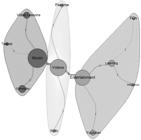
Therefore, as the theory suggests, the evocations uncover additional nuances contributing to a broader understanding of the subject. Among these is the connection students made between entertainment and learning, highlighting that, for this generation, learning often occurs incidentally, beginning with an experience of fun. The transition from "music" to "video classes" occurs at a similar rate as the transition from "music" to "gameplay," indicating that conventional video classes may not be appealing. Supporting this interpretation, "tutorial" and "fun" are positioned at opposite ends of the graph, requiring intermediary elements such as music and entertainment to bridge the association.
Although tutorials are abundant on YouTube, limited information exists for those seeking to analyze the intentionality behind videos offering step-by-step explanations. Tutorial creators typically distribute content in a one-to-many model. However, the social group's interpretation within its sociocultural context determines the message's legitimacy, leaving the question of how effectively a student appropriates specific knowledge or acquires a technique or skill open (Carneiro, 2005; Lange, 2018).
Figure 4 presents the similarity graph generated from students’ responses to the questionnaire on YouTube in education. The graph reveals that students perceive YouTube videos as a valuable resource for clarifying doubts, and such content is considered to complement classroom subjects. Additionally, the creators of the videos consider the adolescent perspective, making them particularly useful in subjects such as mathematics, physics, and chemistry. Students report that they often understand the information presented in YouTube videos better than that provided by teachers in face-to-face classes. They attribute this to the diverse presentation styles and examples offered in the videos, which facilitate comprehension, characterizing YouTube as a supportive tool for classroom learning.
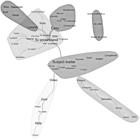
Figure 4 highlights an isolated group containing the words "Ferreto Matemática," [Ferreto Mathematics], "Me Salva" [Save Me], and "Manual do Mundo" [World Manual]. These terms refer to YouTube channels commonly watched by students and indicate a less direct or weaker relationship with the main branches of the similarity graph regarding YouTube's content. This suggests that, while these channels may share some characteristics or similarities with the elements in the main branches, their association is less evident or less frequent. The content broadcast by these channels reflects the primary conceptions of YouTube among the students, as represented in the graph. This article specifically addresses the relevance of these channels to students’ viewing preferences.
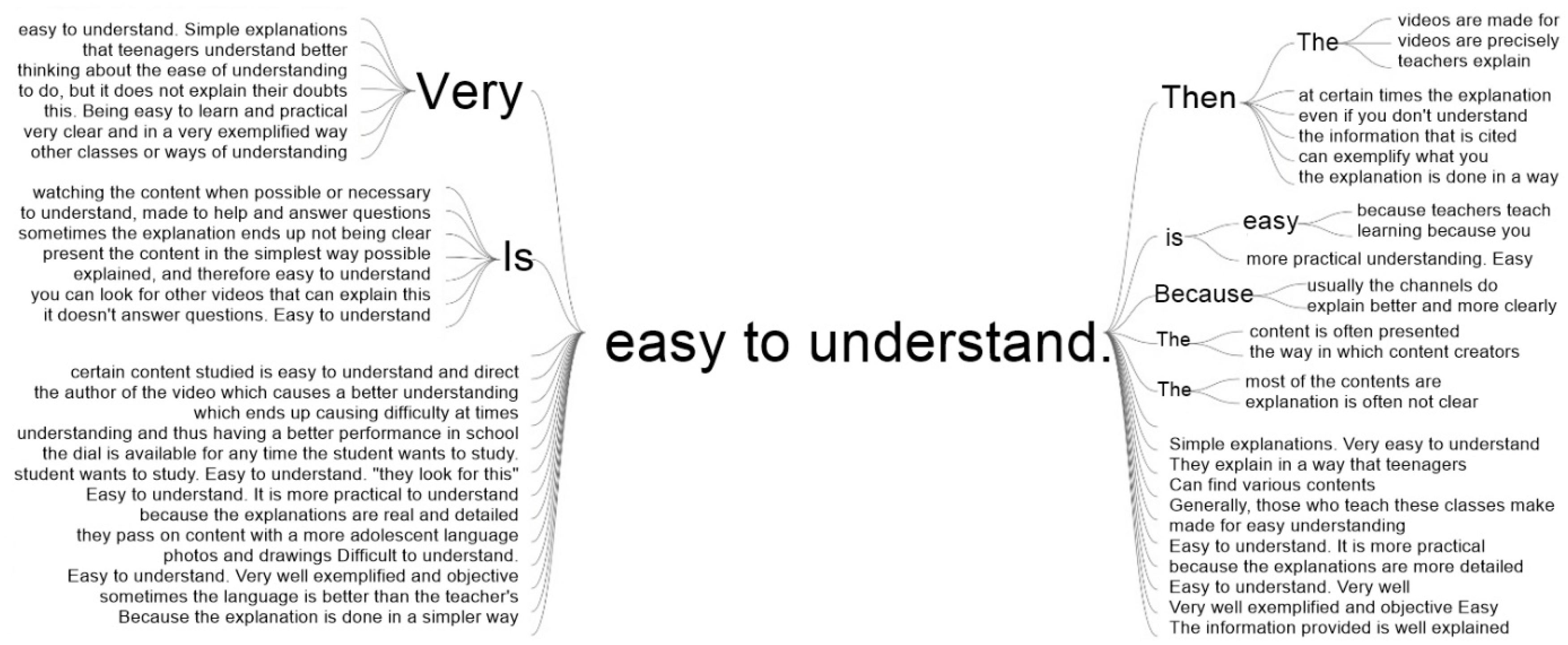
Complementing the similarity graph, Figure 5 emphasizes that the key factor influencing students’ inclination to legitimize YouTube as a tool for promoting learning is the perception that its video content is "easy to understand."

Lange (2018) suggests that the degree of self-directed learning on YouTube varies. In some cases, videos, particularly tutorials, facilitate targeted and intentional acquisition of knowledge and skills. At other times, students learn passively by being exposed to content they might not typically encounter in their daily lives. YouTube's open structure and the diversity of its content promote self-directed exploration and a sense of unexpected discovery, fostering learning driven by shared interests and passions.
THE CHANNELS THE STUDENTS MOST FREQUENTLY ACCESS
Three channels stand out among the YouTube channels the students most frequently access: "Me Salva!"3 [Save Me!], "Ferreto Matemática"4 [Ferreto Mathematics] and "Manual do Mundo" [World Manual].5
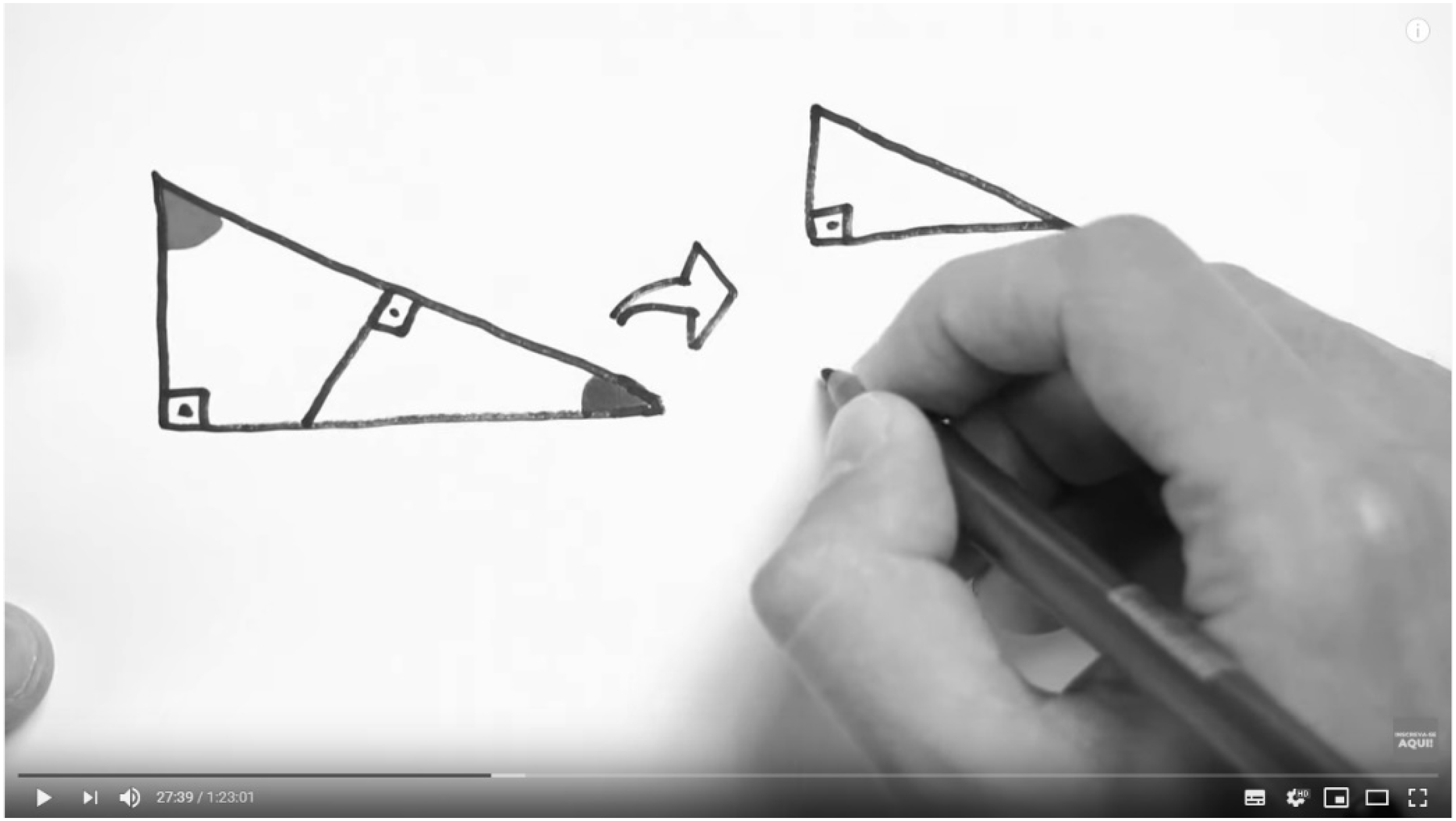
A company with a team of employees and presenters manages the "Me Salva!" channel. Its communication style is highly student-oriented, addressing not only academic content but also the emotional challenges students face when preparing for competition exams such as the National High School Exam (Enem) and college entrance exams. In the videos, teachers are typically seated at a desk and, after introducing the topic, proceed to solve exercises or explain subjects using a blank sheet of paper (Figure 6). The channel emphasizes that its teaching methodology is designed by students for students, aiming to create a sense of identification with viewers through audio, visual, and textual elements.

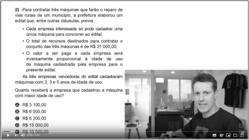
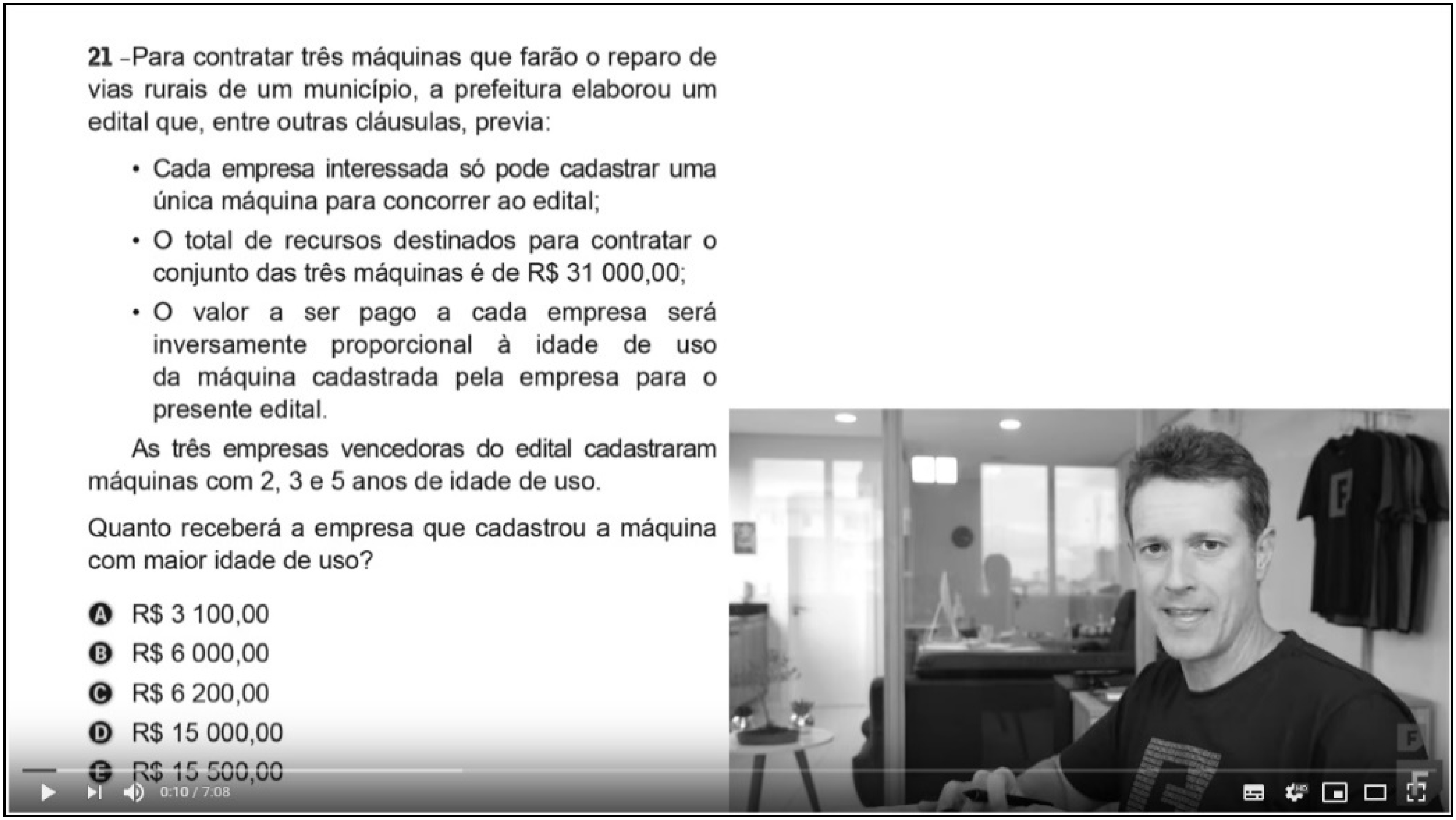
Daniel Ferretto created the "Ferreto Matemática" channel, which adopts a more conventional language style and focuses exclusively on mathematics content. The channel offers explanations of formulas, axioms, and problem-solving exercises tailored to college entrance exams and the Enem. Initially, the channel used animations without the presence of the teacher's image; the content was delivered solely through voice narration and written equations displayed on the screen. Over time, the teacher's figure began to appear in the videos. The content is now explained, and exercises are solved in a setting resembling an office. At times, the exercise or explanation takes center stage, accompanied by the teacher's voice, or his image appears in a small frame in the corner of the screen (Figure 7). In some videos, the teacher is shown explaining the material with a pen and a flipchart, framed from the chest up. This approach creates a sense of dialogue, giving viewers the impression that they are actively participating in the explanation, as if they were students engaging with the teacher directly.
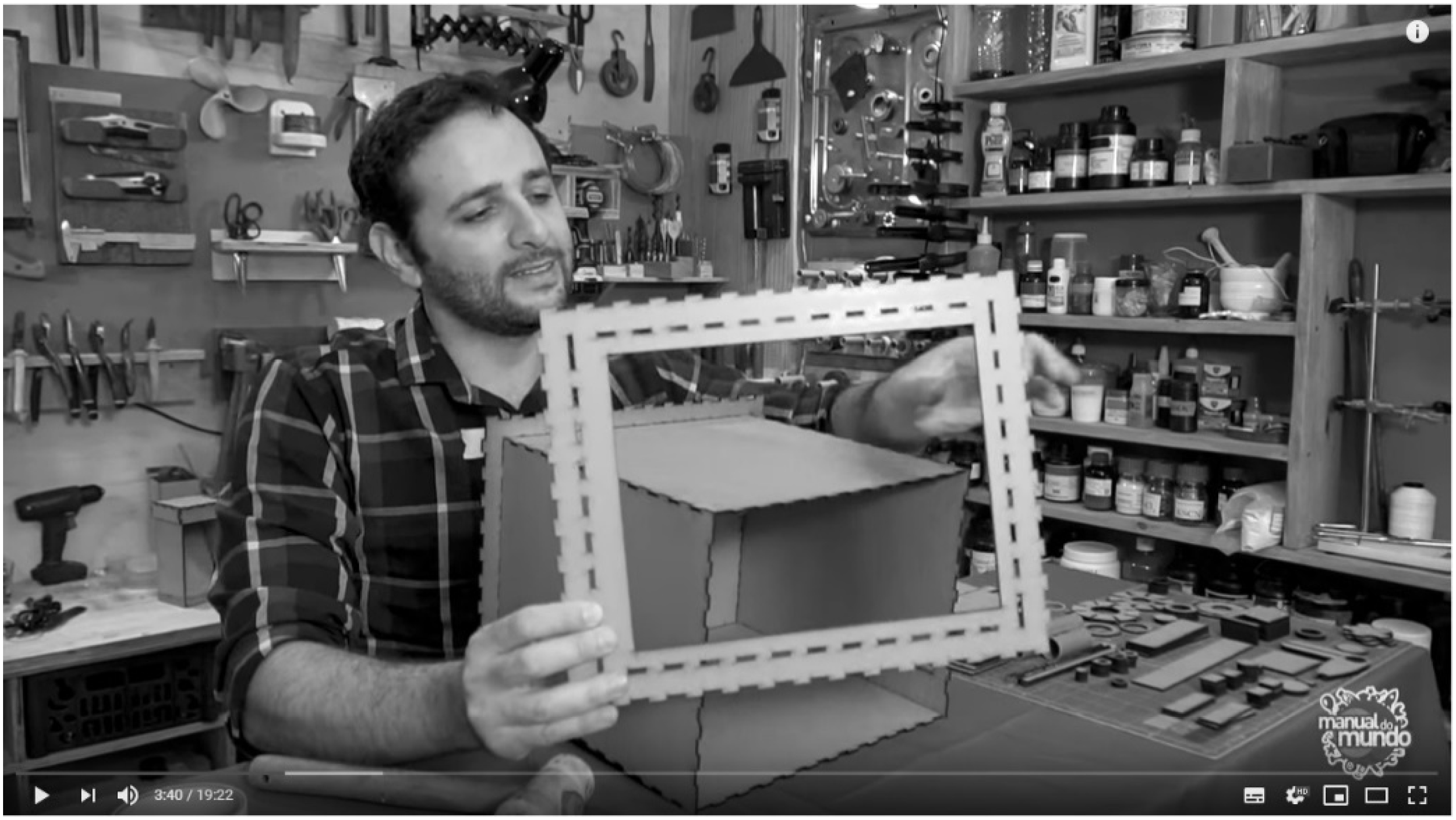
Another frequently mentioned channel was "Manual do Mundo," created by journalist Iberê Thenório and his wife, occupational therapist Mariana Fulfaro. This channel offers a mix of educational and entertaining content featuring experiments, explanations of how things work, and interesting facts. The language is lighthearted and humorous, with videos ranging from recipes like "How to prepare a corn brigadeiro6" to "How are magnets made?", where the presenter introduces scientific concepts encountered in daily life inspired by Maker culture. The standard setting is typically a workshop, though sometimes videos are recorded outdoors (Figure 8). The framing often employs a medium shot, capturing a significant portion of the environment and allowing for movement and positioning within the frame. Close-ups are used to create a sense of intimacy with objects or the presenter and to emphasize expressions and details of the human figure. The video production demonstrates a strong command of television language, utilizing techniques such as framing, slow motion, quick cuts, image distortions, and dynamic editing, among others, to engage and captivate viewers.

In summary, students engage with two primarily content-focused and, in some respects, even conservative channels that address specific topics required for exams such as the Enem and university entrance exams. Conversely, they also watch a more daring and unconventional channel, where the content or topics are presented in a way that intersects with everyday situations.
The evocations related to formal education ("learning," "video classes") that appear in the peripheral zone are exemplified by the channels "Me Salva!" and "Ferreto Matemática." Students’ preference for channels with a more content-driven approach was heavily influenced by the immediate context in which these students operated, albeit utilizing linguistic and aesthetic codes they deemed legitimate. The individuals focused on succeeding in exams such as the Enem and university entrance exams expressed this preference within a school environment. This phenomenon stemmed from the students’ daily experiences, which shaped personal manifestations that allowed for some heterogeneity in content and behavior relative to the common central core, which legitimizes YouTube as a platform for entertainment. From this perspective, Parreira et al. (2018) argue that the peripheral system is significantly more flexible than the central system, as it protects the core of representation ("music," "video," "entertainment") by absorbing concepts derived from varied practices that might otherwise conflict with the central elements. Notably, the "Manual do Mundo" channel, also mentioned by the students, reflects YouTube's central representation as an entertainment platform while integrating scientific content aligned with the peripheral system. Thus, the peripheral system should not be considered secondary within the representational framework. Instead, it facilitates the inclusion of novel or divergent elements into representational reality and suggests that representations may evolve (Parreira et al., 2018).
THE HIERARCHICAL CORRELATION BETWEEN STUDENTS’ PERCEPTIONS
Finally, we analyze the students’ questionnaire responses using DHC, which involves generating clusters from the total set of student responses. Table 3 presents six clusters along with their respective percentage contributions to the total text: Cluster 1 - Learning Resource; Cluster 2 - Video Language; Cluster 3 - Videos as a Complement; Cluster 4 - YouTube is Not Enough; Cluster 5 - Content Meaning; Cluster 6 - Subjects. Cluster 5 is the most representative, accounting for 20% of the valid terms, followed by Clusters 2, 3, 4, and 6, each contributing 16.7%. Cluster 1 has the smallest share, with 13.33%. Overall, the terms are distributed relatively evenly across the clusters.
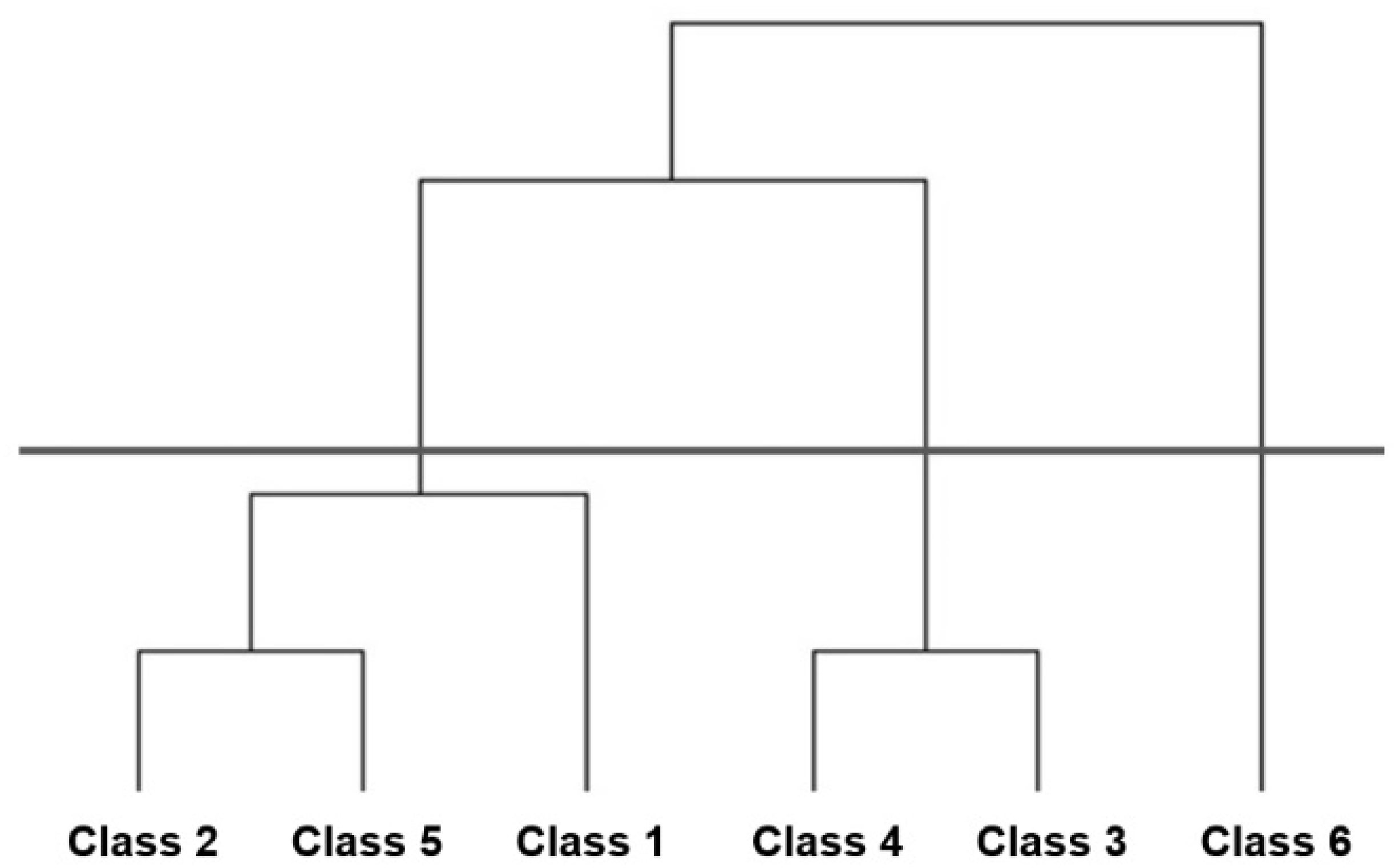
Figure 9 illustrates the dendrogram displaying the hierarchical organization of terms within the six clusters. The analysis of the dendrogram underscores the perception that YouTube complements face-to-face classes but cannot substitute the linguistic and communicative interactions inherent in the school environment. Considering this observation, students’ perceptions of YouTube as an educational resource become more apparent when a horizontal line is drawn to examine the cluster distribution. Clusters 2, 5, and 1 (Video Language, Content Meaning, and Learning Resource) form a group on the left, while Clusters 4 and 3 (YouTube is Not Enough and Videos as a Complement) form a group on the right.

The relationship between clusters 2 and 5 reveals a deep interconnection between language and meaning. All language inherently presupposes communication; for language to exist, both the sender and receiver must share codes to which some level of meaning is attributed. These two clusters are also linked to cluster 1, whose terms are associated with high quality, effectiveness, and positive outcomes. This relationship indicates that, for YouTube to be perceived as a resource that facilitates learning, it must align with the linguistic and communicative codes recognized and valued by the students who engage with it. Supporting the notion that linguistic codes shape representations, the connection between clusters 4 and 3 suggests that YouTube videos are viewed as complementary resources. In other words, they are insufficient for thoroughly learning content, as the linguistic and communicative codes legitimized by students are more prominent in face-to-face classroom settings. Beyond these similarities, it is essential to consider the distances from the horizontal line in the dendrogram. For example, cluster 6, which pertains to school subjects such as mathematics, chemistry, physics, biology, and Portuguese, does not show a strong relationship with the other clusters that specifically address the representation of YouTube videos. This indicates that, while participants reported using YouTube to study school subjects, its content is perceived as external or fragmented rather than being integrated into the broader representation of YouTube as an educational tool.
In summary, the results highlight the need to reflect on pedagogical practices to account for the numerous variables in the educational process, particularly when YouTube videos are employed as tools to promote learning. Analyzing the relationships between receiver, sender, and audiovisual messages allows a deeper understanding of the contributions and limitations of using digital information and communication technologies in education. It also sheds light on how students (re)construct knowledge through the information conveyed in video messages based on their social representations. The use of video in formal education exists between two poles. On the one hand, it requires acknowledging that individual student variables can influence their comprehension of the messages within the video. On the other hand, social groups significantly influence the symbolic representations between students and audiovisual media.
FINAL CONSIDERATIONS
This article presents an investigation into high school students’ conceptions of YouTube and how these perceptions influence their social representations of the platform as a tool for acquiring knowledge in formal education contexts. The findings revealed significant insights into students’ views on using YouTube in school settings and their understanding of the concept of learning. The data analysis identified the central core and peripheral zone of social representations related to YouTube and explored the relationships between these representations.
Regarding the central core, students primarily associated YouTube with music, videos, entertainment, and gameplay. It is perceived as a platform for fun and entertainment, particularly through music videos. However, elements related to learning, such as video classes, were also present in the peripheral zone of students’ social representations.
The similarity analysis revealed an interconnection between the main groups of evocations— such as music, videos, and entertainment — and their extensions related to video classes, study, and learning. Students acknowledge that YouTube provides learning opportunities by blending elements of fun and knowledge. This perception suggests that learning can occur incidentally for the participants in this study, following an approach that begins with entertainment.
However, it is important to emphasize that the peripheral zone safeguards the social representation of YouTube as an entertainment platform, acting as a buffer for the central core. Terms like "learning" and "video classes" are absorbed into the peripheral zone, preserving YouTube's representation as a stable source of entertainment. This protective function of the central representation suggests that changes in students’ conceptions of YouTube as an educational resource may develop over time, influenced by strange schemes that challenge the dominant social representation.
The results also revealed that students highly value the potential of YouTube videos to facilitate content comprehension, considering this a key factor in legitimizing the platform as a learning tool. YouTube's open structure and diverse content foster self-directed exploration, enabling learning driven by individual interests and passions.
In summary, this study underscores students’ collective representation of YouTube as a resource for promoting learning, illustrating how conceptions of entertainment and learning are interconnected. The findings highlight the significance of recognizing YouTube's potential as an educational platform capable of offering students an engaging and personalized learning experience. However, further in-depth discussions are necessary to explore how YouTube can be effectively integrated into the classroom, addressing both its potential and limitations to maximize its educational impact.
Another noteworthy point is that social representations of YouTube extend beyond students’ evaluation of the technical quality and relevance of the presented content. The social environment plays a crucial role in equipping students with the skills to understand video messages’ semiotic nature and produce knowledge through a critical analysis of audiovisual material. This study highlights the YouTube channels most accessed by students, such as "Me Salva!" and "Manual do Mundo", which adopt a student-focused language, address emotional aspects, and aim for immediate identification with their audience, as well as "Ferreto Matemática", which provides explanations and solutions to mathematics exercises targeted at college entrance exams and Enem. Despite their differing approaches, these channels share a common goal: to communicate content in an accessible and appropriate manner for their student audience.
Despite these results, some limitations regarding generalization and temporal focus should be acknowledged. The conclusions are based on data collected from a limited number of high school students, which restricts the generalizability of the findings and prevents a comprehensive understanding of the phenomenon. While the results are valid within the studied context, caution is advised when extrapolating them to other age groups, educational levels, or similar contexts, as the specific characteristics of the investigated group may differ. Furthermore, as a cross-sectional study conducted during a specific period, it captures the students’ conceptions at that time. Changes in YouTube trends and student perceptions over time may not be fully represented. These limitations highlight opportunities for future studies to deepen the understanding of this topic.
Future studies are encouraged to adopt a longitudinal design and expand the number of participants, complemented by additional data collection strategies to enable more in-depth analyses of individuals’ social relationships across different contexts. Clinical interviews are particularly valuable as they uncover implicit aspects that other research methods might overlook. In interviews, the responses can guide subsequent questions, prompting interviewees to reflect on their conceptions. Additionally, we propose a more extensive investigation into the role of YouTubers and influencers from the students’ perspective. This could include analyzing how students perceive YouTubers and influencers as sources of knowledge, their influence on shaping attitudes and beliefs, and the impact of their communication strategies on teaching and learning. Such investigations would provide further insights into the educational potential of these figures within digital platforms.
Overall, the students in this study perceive the use of YouTube in schools as a resource that promotes learning, with no entirely opposing opinions noted regarding this purpose. This study aims to enhance the understanding of YouTube's role in education and students’ perceptions of its use as a tool for fostering intellectual development.
-
1
A Google email account (Gmail) enables the creation of online questionnaires: https://www.google.com/forms/about. Access on: Aug. 18, 2022.
-
2
The free Iramuteq software is associated with the R statistical package for text analysis.
-
3
Me Salva! [Save Me!]. Available at: https://www.YouTube.com/user/migandorffy. Access on: Jan. 12, 2023.
-
4
Ferreto Matemática [Ferreto Mathematics]. Available at: https://www.YouTube.com/user/professorferretto. Access on: Jan. 12, 2023.
-
5
Manual do Mundo [World's Manual]. Available at: https://www.YouTube.com/user/iberethenorio. Access on: Jan. 12, 2023.
-
6
Brigadeiro is a typical Brazilian bonbon-like chocolate dessert.
-
Funding:
The study didn't receive funding.
References
-
ABRIC, Jean-Claude. Central system, peripheral system: their functions and roles in the dynamics of social representations. Papers on Social Representations, v. 2, n. 2, 75-78. 1993. Disponível em: http://psr.iscte-iul.pt/index.php/PSR/article/view/126 Acesso em: 29 jun. 2022.
» http://psr.iscte-iul.pt/index.php/PSR/article/view/126 - ABRIC, Jean-Claude. A abordagem estrutural das representações sociais. In: MOREIRA, Antonia Silva Paredes; OLIVEIRA, Denise Cristina de (orgs.). Estudos interdisciplinares de representação social Goiânia: AB, 1998. p. 27-38.
- ABRIC, Jean-Claude. Abordagem estrutural das representações sociais: desenvolvimentos recentes. In: CAMPOS, Pedro Humberto Fafria; LOUREIRO, Marcos Corrêa da Silva (ed.). Representações sociais e práticas educativas Goiânia: UCG, 2003. p. 37-57.
- BELLONI, Maria Luiza. O que é mídia-educação 3. ed. Campinas: Autores Associados, 2009.
-
BINDA, Renan P.; ULBRICHT, Vânia R.; FADEL, Luciane M. Experiência do espectador: o audiovisual como ativador de possibilidades experienciais. In: CONGRESSO INTERNACIONAL DE DESIGN DA INFORMAÇÃO, 8./CONGRESSO NACIONAL DE INICIAÇÃO CIENTÍFICA EM DESIGN DA INFORMAÇÃO, 8., Proceedings… [S.l.]: Blucher Design, 2018, p. 94-104. v. 4. Disponível em: http://pdf.blucher.com.br.s3-sa-east-1.amazonaws.com/designproceedings/cidi2017/009.pdf Acesso em: 30 mai. 2023.
» http://pdf.blucher.com.br.s3-sa-east-1.amazonaws.com/designproceedings/cidi2017/009.pdf - BURGESS, Jean; GREEN, Joshua. YouTube: online video and participatory culture. 2. ed. Cambridge: Polity Press, 2018.
-
CAMARGO, Brigido Vizeu; JUSTO, Ana Maria. Tutorial para uso do software Iramuteq [S.l.]: Laboratório de Psicologia Social da Comunicação e Cognição - UFSC - Brasil, 2016. Disponível em: http://iramuteq.org/documentation/fichiers/Tutorial%20IRaMuTeQ%20em%20portugues_17.03.2016.pdf Acesso em: 26 jun. 2022.
» http://iramuteq.org/documentation/fichiers/Tutorial%20IRaMuTeQ%20em%20portugues_17.03.2016.pdf -
CARNEIRO, Vânia Lúcia Quintão. Televisão e Educação: Aproximações. In: ALMEIDA, Maria Elizabeth Bianconcini; MORAN, José Manuel (org.). Integração das tecnologias na educação Brasília: MEC; Seed, 2005. p. 102-105. Disponível em: http://portal.mec.gov.br/seed/arquivos/pdf/iniciaissf.pdf Acesso em: 12 mar. 2023.
» http://portal.mec.gov.br/seed/arquivos/pdf/iniciaissf.pdf -
CARVALHO JÚNIOR, Luiz Espíndola de. Música e YouTube no cenário brasileiro atual: um enfoque de suas implicações com a indústria cultural. 2016. 155 f. Dissertação (Mestrado em Música) - Universidade Federal de Goiás, Goiânia, 2016. Disponível em: https://repositorio.bc.ufg.br/tede/handle/tede/6184 Acesso em: 21 jun. 2022.
» https://repositorio.bc.ufg.br/tede/handle/tede/6184 -
CHAIB, Mohamed; LOUREIRO, Laura. Representações sociais, subjetividade e aprendizagem. Cadernos de Pesquisa, São Paulo, v. 45, n. 156, p. 358-372, abr. 2015. Disponível em: http://educa.fcc.org.br/scielo.php?pid=S0100-15742015000200358&script=sci_abstract. Acesso em: 19 jun. 2023.
» http://educa.fcc.org.br/scielo.php?pid=S0100-15742015000200358&script=sci_abstract -
COUTINHO, Maria da Penha de Lima; DO BÚ, Emerson. A técnica de associação livre de palavras sobre o prisma do software tri-deuxmots (version 5.2). Revista Campo do Saber, v. 3. n. 1. jan./jun. 2017. Disponível em: http://periodicos.iesp.edu.br/index.php/campodosaber/article/view/72/58 Acesso em: 04 jul. 2022.
» http://periodicos.iesp.edu.br/index.php/campodosaber/article/view/72/58 -
DE LIMA VELHO JUNGES, Débora; GATTI, Amanda. Estudando por vídeos: o YouTube como ferramenta de aprendizagem. Informática na Educação: Teoria & Prática, Porto Alegre, v. 22, n. 2, 2019. Disponível em: https://www.seer.ufrgs.br/index.php/InfEducTeoriaPratica/article/view/88586 Acesso em: 30 maio 2023.
» https://www.seer.ufrgs.br/index.php/InfEducTeoriaPratica/article/view/88586 - GILLY, Michel. As representações sociais no Campo da Educação. In JODELET, Denise (org.). As representações sociais Rio de Janeiro: EdUERJ, 2001. P. 321-341.
-
LANGE, Patricia G. Informal learning on YouTube The International Encyclopedia of Media Literacy, p. 1-11, 2018. Disponível em: https://onlinelibrary.wiley.com/doi/full/10.1002/9781118978238.ieml0090 Acesso em: 02 fev. 2022.
» https://onlinelibrary.wiley.com/doi/full/10.1002/9781118978238.ieml0090 -
MION, Mirian Raquel Buiz; LOPES, Daniel de Queiroz. Youtube e Educação: uma revisão da pesquisa brasileira no período de 2014 a 2021. Revista Novas Tecnologias na Educação, Porto Alegre, v. 19, n. 2, p. 526-536, 2021. Disponível em: https://seer.ufrgs.br/index.php/renote/article/view/121376 Acesso em: 18 fev. 2024.
» https://seer.ufrgs.br/index.php/renote/article/view/121376 -
MONTAÑO, Sonia. A construção do usuário na cultura audiovisual do YouTube Revista FAMECOS: Mídia, Cultura e Tecnologia, v. 24, n. 2, maio/ago., 2017. Disponível em: http://revistaseletronicas.pucrs.br/ojs/index.php/revistafamecos/article/view/25256 Acesso em: 15 fev. 2022.
» http://revistaseletronicas.pucrs.br/ojs/index.php/revistafamecos/article/view/25256 -
MORAN, José Manuel. O vídeo na sala de aula. Comunicação & Educação, São Paulo, n. 2, p. 27-35. 1995. Disponível em: http://www.revistas.usp.br/comueduc/article/view/36131/38851 Acesso em: 29 jun. 2022.
» http://www.revistas.usp.br/comueduc/article/view/36131/38851 - MORAN, José Manuel. Desafios da televisão e do vídeo à escola. In: ALMEIDA, Maria E. B.; MORAN, José Manuel (org.). Integração das tecnologias na educação Brasília: MEC; Seed, 2005.
- MOSCOVICI, Serge. A era das representações sociais. Tradução: Maria Helena Fávero. In: PALMONARI, Augusto; DOISE, Willem (eps.). L'etudes des representations sociales Neuchatel. Paris: Delachaux et Nietlé, 1986. p 334-380.
-
PATTIER, Daniel; FERREIRA, Pedro Daniel. El vídeo como recurso educativo en educación superior durante la pandemia de la COVID-19. Pixel-Bit. Revista de Medios y Educación, v. 65, p. 183-208, 2022. Disponível em: https://recyt.fecyt.es/index.php/pixel/article/view/93511 Acesso em: 18 fev. 2024.
» https://recyt.fecyt.es/index.php/pixel/article/view/93511 -
PARREIRA, Pedro; MÓNICO, Lisete; OLIVEIRA, Denise; CAVALEIRO, José; GRAVETO, João. Abordagem estrutural das representações sociais. In: PARREIRA, Pedro; SAMPAIO, Jorge Humberto; MÓNICO, Lisete; PAIVA, Teresa; ALVES, Maria Leopoldina (orgs.). Análise das representações sociais e do impacto da aquisição de competências em empreendedorismo nos estudantes do Ensino Superior Politécnico Guarda: IPG/PIN. 2018. p. 55-68. Disponível em: https://repositorio.ipl.pt/handle/10400.21/10578 Acesso em: 20 mar. 2022.
» https://repositorio.ipl.pt/handle/10400.21/10578 - PAULINO, Suzana Ferreira. Livro tradicional x livro eletrônico: a revolução do livro ou uma ruptura definitiva? Hipertextus, n. 3, jun. 2009.
-
PEREIRA, Costa. Análise de dados qualitativos aplicados às representações sociais. Psicologia, v. 15, n. 1, p. 177-204, 2001. Disponível em: https://revista.appsicologia.org/index.php/rpsicologia/article/view/495 Acesso em: 2 jul. 2022.
» https://revista.appsicologia.org/index.php/rpsicologia/article/view/495 - PIAGET, Jean. Biologia e Conhecimento: ensaio sobre as relações entre as regulações orgânicas e os processos cognoscitivos 4. ed. Petrópolis: Vozes, 2003.
-
RAMÍREZ, Marta Gil; TRAVESEDO-ROJAS, Ruth Gómez de; ALMANSA-MARTÍNEZ, Ana. YouTube y coronavirus: análisis del consumo de vídeos sobre la pandemia COVID-19. Revista Latina de Comunicación Social, v. 78, p. 121-153, 2020. Disponível em: https://nuevaepoca.revistalatinacs.org/index.php/revista/article/view/313 Acesso em: 18 fev. 2024.
» https://nuevaepoca.revistalatinacs.org/index.php/revista/article/view/313 -
REINERT, Max. Alceste, une méthodologie d'analyse des données textuelles et une application: Aurélia de Gérard de Nerval. Bulletin de Méthodologie Sociologique, v. 26, n. 1, p. 24-54. 1990. https://doi.org/10.1177/075910639002600103
» https://doi.org/10.1177/075910639002600103 -
ROHRER, Cleber Vanderlei; OLIVEIRA, Cesar Augusto Alencar. A utilização dos recursos audiovisuais em sala de aula. Revista da Universidade Ibirapuera, n. 14, p. 49-50. Jul./dez. 2017. Disponível em: https://www.ibirapuera.br/seer/index.php/rev/article/view/118 Acesso em: 30 mai. 2023.
» https://www.ibirapuera.br/seer/index.php/rev/article/view/118 - ROSADO, Eliana Martins da Silva. Contribuições da psicologia para uso da mídia no ensino-aprendizagem. In: ENCONTRO NACIONAL DE DIDÁTICA E PRÁTICA DE ENSINO, 2., 1998. Anais… Águas de Lindóia, SP. [S. l.]: [s.n.], 1998. p. 217-237.
- SANTAELLA, Lucia. Cultura das mídias São Paulo: Experimento, 1996.
-
SOUSA, Sidinei de Oliveira. Aprendizagem baseada em problemas como estratégia para promover a inserção transformadora na sociedade. Acta Scientiarum. Education, v. 32, n. 2, p. 237-245, dez. 2010. disponível em: https://periodicos.uem.br/ojs/index.php/ActaSciEduc/article/view/11170 Acesso em: 03 jul. 2022.
» https://periodicos.uem.br/ojs/index.php/ActaSciEduc/article/view/11170 -
WACHELKE, João; WOLTER, Rafael. Critérios de construção e relato da análise prototípica para representações sociais. Psicologia: Teoria e Pesquisa, Brasília, v. 27, n. 4, p. 521-526, 2011. Disponível em: http://www.scielo.br/pdf/ptp/v27n4/17.pdf Acesso em: 2 jan. 2023.
» http://www.scielo.br/pdf/ptp/v27n4/17.pdf -
WACHELKE, João; WOLTER, Rafael; MATOS, Fabiola Rodrigues. Efeito do tamanho da amostra na análise de evocações para representações sociais. LIBERABIT, Lima, Peru, v. 22, n. 2, p. 153-160, 2016. Disponível em: http://www.scielo.org.pe/pdf/liber/v22n2/a03v22n2.pdf Acesso em: 2 jul. 2022.
» http://www.scielo.org.pe/pdf/liber/v22n2/a03v22n2.pdf -
WOLTER, Rafael. The Structural Approach to Social Representations: Bridges between Theory and Methods. Psico-USF, v. 23, n. 4, dez 2018. Disponível em: https://doi.org/10.1590/1413-82712018230403 Acesso em: 18 mai. 2022.
» https://doi.org/10.1590/1413-82712018230403 -
VERGÈS, Pierre; TYSZKA, Tadeusz, VERGÈS, Pierrette. Noyau central, saillance et propriétés structurales. Papers on Social Representations, v. 3, p. 3-12. 1994. Disponível em: https://psr.iscte-iul.pt/index.php/PSR/article/view/187 Acesso em: 2 jul. 2022.
» https://psr.iscte-iul.pt/index.php/PSR/article/view/187 -
ZILLER, Joana. Expressões antropofágicas: apropriação e recriação de vídeos no YouTube. Revista Contemporânea, Salvador, v. 10, n. 3, p. 741-758, set-dez. 2012. Disponível em: https://periodicos.ufba.br/index.php/contemporaneaposcom/article/view/6436 Acesso em: 10 nov. 2022.
» https://periodicos.ufba.br/index.php/contemporaneaposcom/article/view/6436

 Source: study's data (2023).
 Source: study data (2023).
 Source: study data (2023).
 Source: study data (2023).
 Source: developed by the author (2023).
 Source: Me Salva! (2023).
 Source: Ferretto Matemática (2023).
 Source: Manual do Mundo (2023).
 Source: developed by the author (2023).