 Salicylic acid mitigates water deficit and improves the recovery of Hymenaea courbaril seedlings
ABSTRACT
The potential of salicylic acid (SA) to mitigate water stress in Hymenaea courbaril was evaluated, analyzing the photosynthetic physiology, defense by antioxidant agents, the quality of seedlings, and the potential for recovery of seedlings after irrigation. Seedlings received foliar application of five concentrations of SA (0, 100, 200, 300, and 400 mg L-1). Seedlings were grown under two water regimes: continuous irrigation (control), and water deficit (SI), characterized by irrigation suspension, associated with the following evaluation periods: P0 (when the photosynthetic rate of seedlings submitted to irrigation restriction reached values close to zero) and Rec (after P0, irrigation was resumed until the photosynthetic rate of seedlings previously submitted to water deficit reached values close to that of control plants), composing four treatments of association of water regime with evaluation periods (RHP): control I, P0 SI, control II and Rec SI. H. courbaril seedlings negatively responded to water deficit, with significant reduction in photosynthetic rate, stomatal conductance and growth, and with an increase in antioxidant and protective activity, after re-irrigation only. Foliar SA application of 400 mg L-1 mitigated the effect of water restriction on gas exchange, leaf area, and seedling quality, also favoring their recovery after irrigation resumption by increasing the activity of antioxidant enzymes.
Key words:
Jatoba; abiotic stress; gas exchange; antioxidant enzymes; seedling quality
HIGHLIGHTS
Hymenaea courbaril seedlings are sensitive to water restriction.
The foliar application of salicylic acid mitigated water deficit effects in gas exchange. The foliar application of salicylic acid improved seedling recovery after re-irrigation.
RESUMO
Avaliou-se o potencial do ácido salicílico (AS) para mitigar o estresse hídrico em Hymenaea courbaril, analisando a fisiologia fotossintética, a defesa por agentes antioxidantes, a qualidade das mudas e o potencial de recuperação das mudas após irrigação. As mudas receberam aplicação foliar de cinco concentrações de AS (0, 100, 200, 300 e 400 mg L-1). As mudas foram cultivadas sob dois regimes hídricos: Irrigação continua (controle) e Déficit hídrico (SI), caracterizado pela suspensão da irrigação, associados aos seguintes tempos de avaliação: P0 (quando a taxa fotossintética das mudas submetidas à suspensão da irrigação alcançou valores próximos a zero) e Rec (após a P0, a irrigação foi retomada até que a taxa fotossintética das mudas previamente submetidas à restrição hídrica atingisse valores próximos ao das plantas controle), compondo quatro tratamentos da associação regime hídrico com período de avaliação (RHP): controle I, P0 SI, controle II e Rec SI. As mudas de H. courbaril responderam negativamente à restrição hídrica, com redução significativa na taxa fotossintetética, condutância estomática e crescimento e com aumento da atividade antioxidante e de proteção, após a re-irrigação. A aplicação foliar de 400 mg L-1 de AS mitigou o efeito da restrição hídrica sobre as trocas gasosas, área foliar, qualidade das mudas, favorecendo também sua recuperação após o reinício da irrigação por meio do aumento da atividade de enzimas antioxidantes.
Palavras-chave:
Jatobá; estresse abiótico; trocas gasosas; enzima antioxidante; qualidade das mudas
Introduction
Hymenaea courbaril L. (Fabaceae jatobá), is a tree species indicated for forest restoration and stands out for being tolerant to various environmental conditions, being found throughout Brazil (Nascimento et al., 2015). Due to climate change, several regions are subject to droughts for an indefinite period, which represents a threat to agroecosystems (Dobhal et al., 2024).
Low water availability can cause cell damage, injuring the photosynthetic apparatus, and reducing transpiration and photosynthesis, which affects species survival (Melo et al., 2019; Reis et al., 2020; Xia et al., 2022). However, plants invest in adjustment mechanisms that can induce tolerance, such as the synthesis of protective compounds, such as superoxide dismutase, peroxidase, and protein (Guirra et al., 2022; Figueiredo et al., 2023).
Species behave differently after re-irrigation, with their responses being related to the intensity of exposure and phenotypic plasticity (Araújo et al., 2020; Rosa et al., 2021). Previous studies have been developed to mitigate the impacts of stress on plants and understand the mechanisms of responses to this condition (Rosa et al., 2021; Figueiredo et al., 2023).
Among the promising alternatives in ecophysiology, foliar salicylic acid (SA) application can mitigate the effects of abiotic stresses and contribute to the antioxidant system and metabolic regulation (Jini & Joseph, 2017; Hou et al., 2019; Saracho et al., 2021; Foresti et al., 2022; Santos et al., 2023). According to these authors, SA contributes to the accumulation of osmolytes, which are essential for the preservation of turgecencia, favoring the water relations during the period of water restriction. In addition, SA activates antioxidant enzymes, mitigates functional damage to photosystem II, and improves the production of adenosine triphosphate (ATP).
However, although the effect of water stress on H. courbaril has already been evaluated in the literature (Cardoso et al., 2017; Reis et al., 2023; Santos et al., 2023), information on the effect of SA in mitigating water deficit in H. courbaril has not yet been reported. Therefore, it is crucial to understand these responses as an alternative resource that can help in the future implementation of this species in degraded areas.
Thus, it was hypothesized that H. courbaril seedlings negatively respond to water restriction and that exogenous SA application can mitigate the stressful effect on the photosynthetic and antioxidant metabolism of seedlings, inducing tolerance. Therefore, this study aimed to evaluate the responses of H. courbaril seedlings treated with SA doses and grown under water restriction and their recovery potential after irrigation resumption.
Material and Methods
The experiment was conducted in an agricultural nursery covered with black netting with 50% shading and additional upper and lateral protection with plastic covering to prevent precipitation at the Faculty of Agricultural Sciences (22º 11’ 43.7” S and 54º 56’ 08.5” W, 452 m a.s.l.), Universidade Federal da Grande Dourados (UFGD), Dourados, MS, Brazil.
Ripe H. courbaril fruits were collected from ten matrices in the Grande Dourados region. Subsequently, seeds were extracted, selected, and cleaned, and selected for their integrity and submitted to dormancy overcoming with mechanical scarification using sandpaper (Costa et al., 2017).
Sowing was performed in a 128-cell expanded polystyrene tray filled with commercial Tropstrato® substrate. At 30 days after sowing (DAS), seedlings were transplanted into 7.0 L pots previously filled with Oxisols (USDA, 2022) + coarse sand (3:1, v/v). Pots remained under daily irrigation of 75% of the water holding capacity for 40 days, at which time, seedlings had an average height of 24 cm. After this period, the experiment was initiated with the application of SA concentrations and irrigation suspension in plants corresponding to this water regime.
When seedlings reached 24 cm in height, they received applications of SA concentrations: 0, 100, 200, 300, and 400 mg L-1. Salicylic acid was dissolved in 10 mL of ethyl alcohol and subsequently diluted in distilled water. The doses were established based on the results of the study conducted by Saracho et al. (2021). In the solution, 2.0 mL L-1 of LI700 adjuvant was added to facilitate the adhesion of the product to the leaf. The application was performed in the morning via foliar spray on the abaxial and adaxial surfaces to the drip point (10 mL per seedling), 10 days before they were submitted to stress.
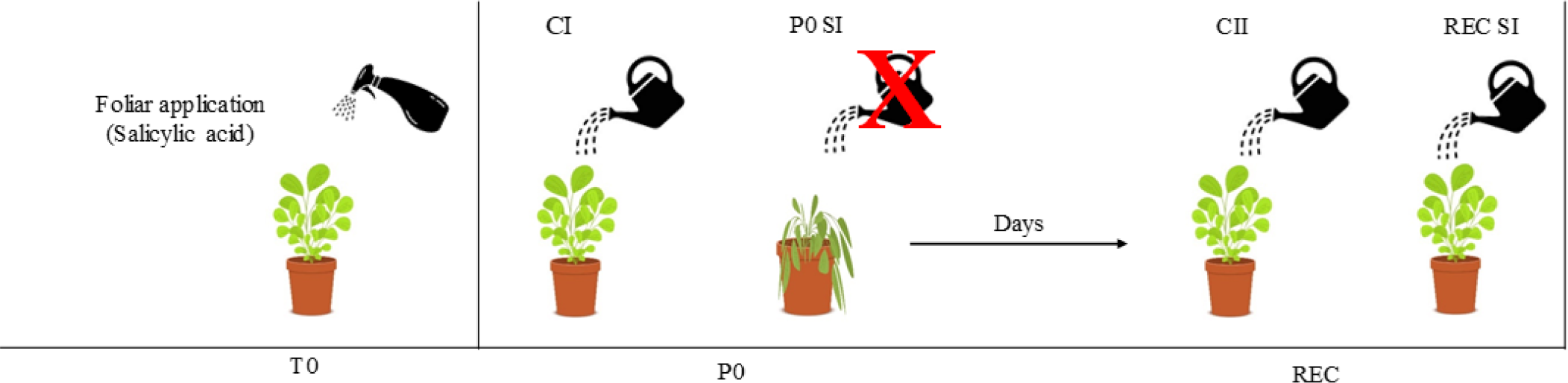
Subsequently, seedlings were separated into four groups corresponding to two water regimes associated with evaluation periods. Water regimes were: continuous irrigation, maintaining 75% of the water holding capacity in the substrate by the gravimetric method (Souza et al., 2000), considered the control treatment; and water deficit - SI, characterized by irrigation suspension. Evaluation periods were: P0 SI: when the photosynthetic rate of seedlings submitted to irrigation suspension reached values close to zero, when seedlings were evaluated and irrigation was resumed; Rec SI: when the photosynthetic rate of seedlings previously submitted to each water restriction condition with or without SA reached values close to those of control plants.
Control plants were evaluated in the same periods as seedlings under stress, and the association of water regimes with periods constituted four treatments (RHP): control I, P0 SI, control II, and Rec SI. The scheme illustrating the experiment is shown in Figure 1.
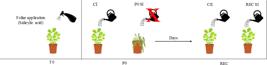
Experimental scheme with H. courbaril seedlings cultivated with different concentrations of salicylic acid, under the water regimes continuous irrigation (control) and suspended irrigation (SI), evaluated in the P0 and Rec periods
The experimental design was completely randomized, with treatments arranged in a split-plot scheme, with SA doses allocated in plots and the combination of water regimes + evaluation periods in subplots, with three replicates. Each experimental unit consisted of a pot with two seedlings each.
Photosynthetic physiology characteristics, antioxidant agents, relative leaf water content, leaf area, and seedling quality were evaluated. Gas exchange and chlorophyll a fluorescence were evaluated on fully expanded leaves located in the middle third of plants the morning.
Gas exchanges were evaluated using a portable photosynthesis meter (LCIPro-SD ADC BioScientific Ltd.), the photosynthetic rate (A - μmol CO2 m-2 s-1), intrinsic water use efficiency (A/gs - (μmol CO2) (mol H2O m-2 s-1)-1), intercellular CO2 concentration (Ci -μmol CO2 mol-1 air), Rubisco carboxylation efficiency (A/Ci - (μmol CO2 m-2 s-1) (μmol CO2 mol-1 air)) water use efficiency (A/E - (μmol CO2) (mmol H2O m-2 s-1)-1), and transpiration (E - mmol H2O m-2 s-1) were evaluated.
Chlorophyll a fluorescence was determined in leaves submitted to a 30-minute dark adaptation period with the aid of adapter clips. Subsequently, using a portable fluorometer model OS-30p (Opti-Sciences Chlorophyll Fluorometer, Hudson, USA), the potential quantum efficiency of photosystem II (Fv/Fm) was evaluated. From measurements of initial fluorescence (F0) and maximum fluorescence (Fm), the effective conversion efficiency of absorbed energy (Fv/F0) and the basal quantum production of non-photochemical processes (F0/Fm) were calculated.
Chlorophyll total and carotenoid contents were determined in fully expanded leaves, with 1 g of fresh leaf sample macerated in 8 mL of acetone (80%) according to Barbieri Junior et al. (2010). Subsequently, solutions were centrifuged at a speed of 1,500 rpm for 10 minutes. Then, the absorbance was read at wavelengths of 470, 645, and 663 nm, using a spectrophotometer (SP-220, Biospectro). The chlorophyll and carotenoid contents were calculated according to the methodology by Arnon (1949) and Lichtenthaler & Buschman (2001), respectively.
Total protein was quantitatively determined by the method of Bradford (1976), and fresh material frozen in liquid nitrogen was used for extract preparation. Using 0.300 g of the macerated material, 6.0 mL of the stock solution (phosphate buffer) was added. Subsequently, samples were centrifuged, and the supernatant was used to perform absorbance readings, which were performed in triplicate and read in 595 nm. The protein was expressed in mg of protein per g of FW.
The proline content of leaves was determined by spectrophotometry according to the extraction proposed by Bates et al. (1973), in which 400 mg of the material was macerated with 10 mL of 3% sulfosalicylic acid and subsequently centrifuged to obtain the supernatant. The determination was performed according to the method of Colton-Gagnon et al. (2014), with readings at 520 nm, being expressed in μg of proline g-1.
Antioxidant enzyme activity was determined in leaves and roots of each treatment, which were frozen separately in liquid nitrogen. One gram of each sample was macerated in a 6 mL solution containing 0.3 g of polyvinylpyrrolidone (PVP) diluted in 100 mL of potassium phosphate buffer (0.2 M) (Costa et al., 2020). Subsequently, samples were centrifuged at 4,000 rpm for 10 min and the supernatant was used as an enzymatic extract to determine the superoxide dismutase (SOD, μg FW ) and peroxidase activity (POX, μmol mg- 1 protein min- 1), according to Giannopolitis & Reis (1977) and Broetto (2014), respectively.
Relative leaf water content (RWC) was determined from four leaves of each treatment according to Slavick (1979). For this purpose, leaf blade discs of known area were cut, the fresh mass was weighed, and placed in distilled water for 24 hours to saturate. The saturated discs were dried in an oven with air circulation to determine the dry mass. The RWC calculation was performed based on Eq. 1 below:
Leaf area and seedling quality: The leaf area was determined using an area integrator (LI-COR 3100 C - Area Meter), and the results were expressed in cm2. Seedling quality was evaluated based on Eq. 2 of Dickson et al. (1960):
where:
DQI - Dickson‘s quality index;
TDM - total dry mass of the seedling;
HDR - height/diameter ratio; and,
APRR - ratio of shoot dry mass weight to root dry mass of the seedling.
Data were submitted to analysis of variance (ANOVA). When results were significant (F test, p ≤ 0.05), means were compared by the Tukey‘s test for the combination of water regimes and evaluation periods, and by regression analysis (p ≤ 0.05) for SA doses using the SISVAR software version 5.7 (Ferreira, 2019). A significant adjustment was considered R2 ≥ 0.50.
Results and Discussion
It was observed that there was an interaction between water regime associated with evaluation periods (RHP) and SA doses for the photosynthesis rate (A), Rubisco carboxylation efficiency (A/Ci) and water use efficiency (A/E), carotenoids, antioxidant enzymes, and leaf proteins. Chlorophyll a fluorescence, chlorophyll total content, and seedling quality (DQI) were influenced by SA doses, and, finally, the other gas exchange characteristics such as E, Ci, and A/gs, relative water content (RWC), leaf area, and DQI were influenced only by the RHP association.
Seedlings grown under irrigation suspension without treatment with SA or SA 100 mg L-1 took 12 days to show a photosynthesis rate close to zero. After irrigation resumption, recovery occurred in 9 and 7 days, respectively (Table 1). For seedlings under other SA doses, although there was a slight reduction in the photosynthetic rate, they did not reach a photosynthetic rate close to zero. After irrigation resumption, recovery of values occurred after 2 to 4 days. Seedlings treated with a dose of 200 mg L-1 maintained photosynthesis rate similar to those of seedlings treated with a dose of 100 mg L-1 during all periods (Table 1).
Number of days after irrigation was suspended that Hymenaea courbaril seedlings reached photosynthesis close to zero (P0), and number of days after irrigation was resumed that the seedlings recovered values close to the control plants (REC)
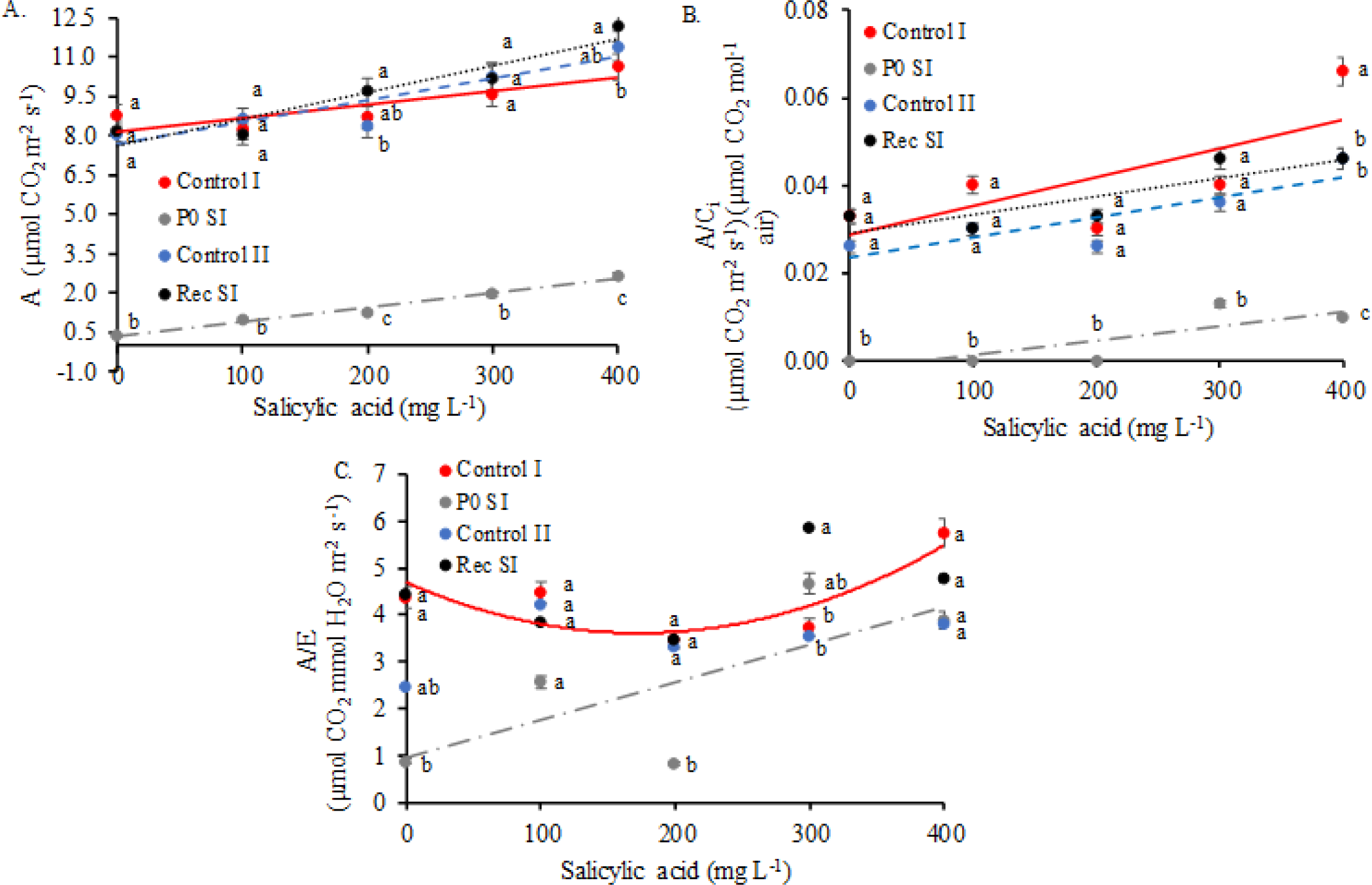
H. courbaril seedlings negatively responded to irrigation suspension, and the exogenous SA application alleviated the effect of water restriction on photosynthetic metabolism, antioxidant activity, and seedling growth, inducing adjustments that favored recovery after irrigation resumption. The photosynthetic rate (A) and the Rubisco carboxylation efficiency (A/Ci) increased with the increase in SA doses in all irrigation treatments evaluated, with the highest values observed in seedlings that received a SA dose of 400 mg L-1 (Figures 2A, B, and Table 2).
Equations and coefficients of determination (R2) of the photosynthetic rate - A, Rubisco carboxylation efficiency - A/Ci, water use efficiency - A/E, carotenoids, protein - POT, superoxide dismutase - SOD, and peroxidase - POX in leaves H. courbaril cultivated under RHP: water regimes continuous irrigation (control I and II) and SI - (suspended irrigation), and evaluated at P0 and Rec
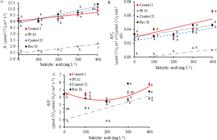
Photosynthetic rate - A (A), Rubisco carboxylation efficiency - A/Ci (B), and water use efficiency - A/E (C) in H. courbaril leaves cultivated with different concentrations of salicylic acid, under the water regimes continuous irrigation (Control I) and suspended irrigation (SI) evaluated in the P0 and Rec periods
However, in Rec, previously stressed seedlings showed an increase in A, reaching values higher than those of control II seedlings, daily irrigated, reaching values of 11.706 μmol CO2 m-2 s-1 and 10.996 μmol CO2 m-2 s-1, respectively (Figure 2A and Table 2). A/Ci remained higher in control I seedlings; however, Rec SI seedlings had higher value than control II seedlings. The lowest values of both variables were observed in P0 SI seedlings, although there was also a tendency to increase with increasing SA doses (Figure 2B).
The water use efficiency (A/E) in control I seedlings decreased, reaching a lower value with SA concentration of 172.22 mg L-1, with values of 3.62 (μmol CO2) (mmol H2O m-2 s-1)-1. Salicylic acid application of 400 mg L-1 promoted the highest A/E in control I seedlings and those stressed in P0 SI. The average A/E values of control II seedlings and those previously stressed by water restriction did not adjust satisfactorily to the tested models (Figure 2C and Table 2).
It is noteworthy that although the lowest values occurred at P0 SI, at doses of 100 and 400 mg L-1 SA, there was no difference among treatments. Seedlings treated with 300 mg L-1 SA showed higher A/E in REC SI compared to control seedlings I and II. For the other SA doses, there were no significant differences.
Regardless of SA doses, seedlings stressed in P0 SI showed lower transpiration (E) and intrinsic water use efficiency (A/Gs) and higher intercellular CO2 concentration (Ci) (Table 3). After irrigation resumption, seedlings did not recover their E or Ci, but they recovered their A/gs compared to control II seedlings.
Transpiration rate - E, intercellular CO2 concentration - Ci, intrinsic water use efficiency - A/gs, initial fluorescence - F0, potential quantum efficiency in photosystem II - Fv/Fm, conversion of absorbed energy - Fv/F0, and maximum basal yield of non-photochemical processes - F0/Fm, in H. courbaril cultivated under RHP: water regimes continuous irrigation (control I and II) and SI - suspended irrigation) and evaluated at P0 and Rec
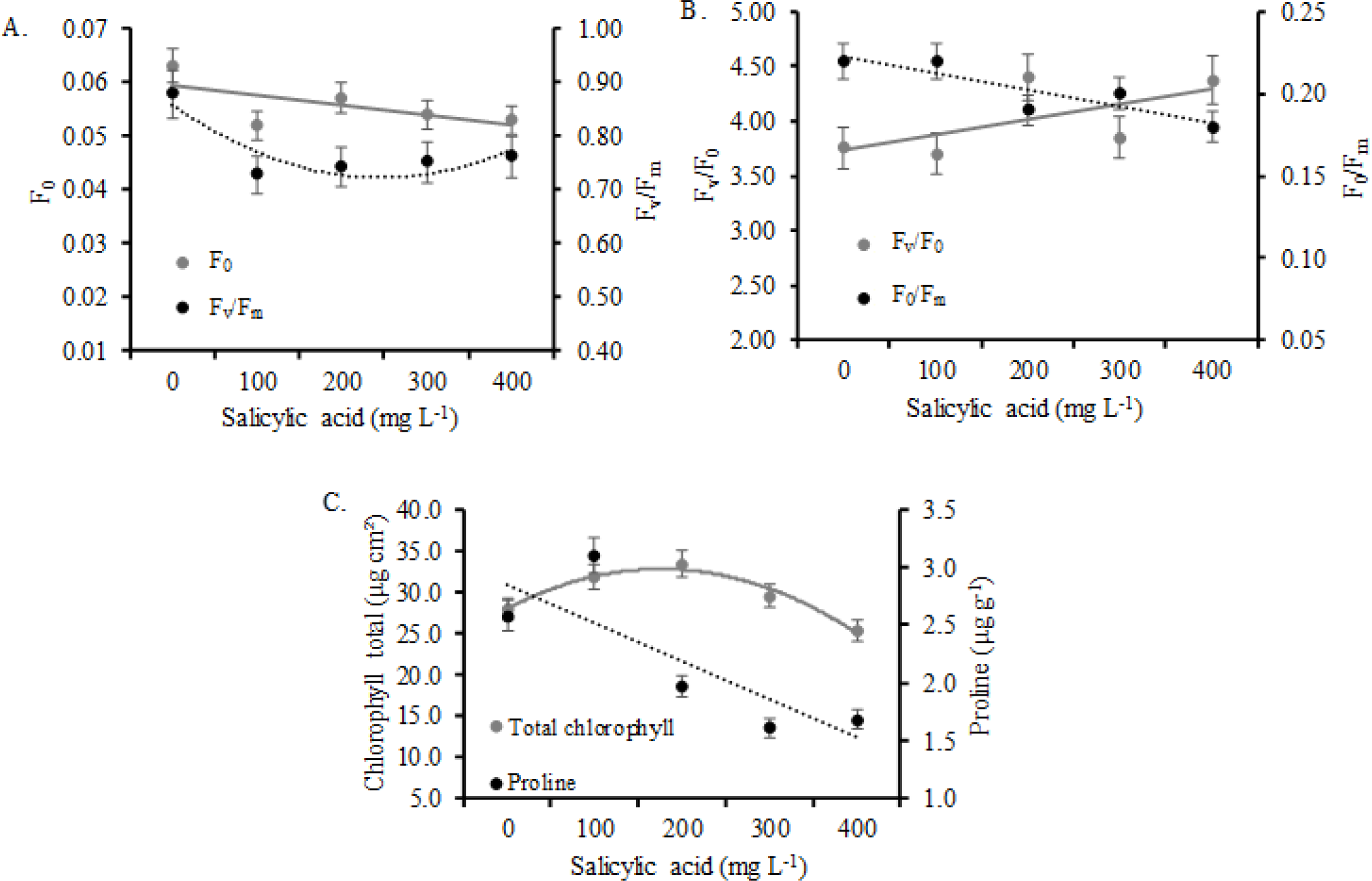
Regardless of SA doses, F0 and F0/Fm increased, and Fv/Fm and Fv/F0 decreased in plants stressed in P0 (Table 3). Regardless of water regime and evaluation period (RHP), the highest F0, Fv/Fm, and F0/Fm values occurred in seedlings that did not receive SA, decreasing with increasing SA doses. However, Fv/F0 increased with increasing SA doses, and Fv/Fm increased from the SA concentration of 200 mg L-1 (Figures 3A, B, and Table 4).
Equations and coefficients of determination (R2) of initial fluorescence - F0 and potential quantum efficiency in photosystem II - Fv/Fm, conversion of absorbed energy - Fv/F0, and maximum basal yield of non-photochemical processes - F0/ Fm, chlorophyll total, proline, leaf area, and DQI in H. courbaril seedlings grown with different concentrations of salicylic acid
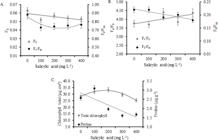
Initial fluorescence - F0 and potential quantum efficiency in photosystem II - Fv/Fm (A), absorbed energy conversion - Fv/F0 and maximum basal yield of non-photochemical processes - F0/Fm (B), and chlorophyll total and proline (C) in H. courbaril seedlings grown with different concentrations of salicylic acid
The maximum chlorophyll total content of seedlings was observed at the SA dose of 272.5 mg L-1. At the same time, proline showed a higher value (2.79 μg g-1) without SA application and decreased with the increase in SA doses (Figure 3C and Table 4).
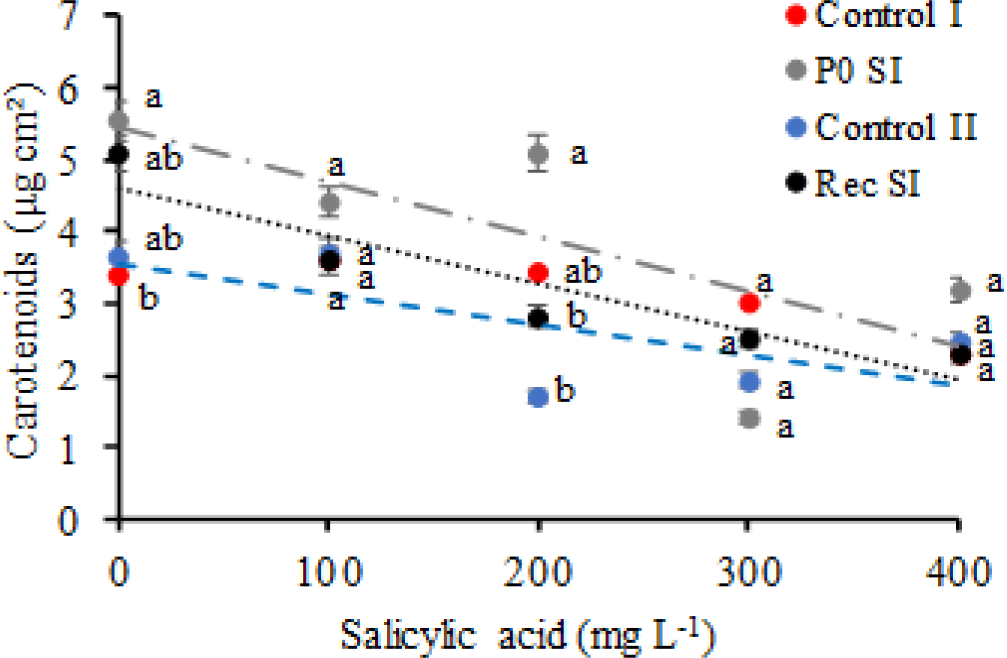
The carotenoid content was higher in seedlings in P0 SI, control II, and Rec SI without SA application, with values of 5.44, 3.53, and 4.58 μg cm-2, respectively. There was no satisfactory adjustment to the regression models tested, regardless of SA concentrations, for control I seedlings. Although the lowest carotenoid values in seedlings occurred in P0 SI, there were no differences between treatments at doses of 100, 300, and 400 mg L-1 of SA (Figure 4 and Table 2).

Carotenoids in H. courbaril leaves cultivated with different concentrations of salicylic acid, under the water regimes continuous irrigation (control) and suspended irrigation (SI) evaluated in the P0 and Rec periods
Water restriction reduced the values of photosynthetic variables such as A, A/Ci, E, A/E, A/gs, Fv/Fm, Fv/F0, and increased the Ci, F0, and F0/Fm values of plants. However, recovery or a tendency to recover these characteristics after irrigation resumption was observed, showing that the damage was not permanent.
The mitigating effect of salicylic acid on water restriction in H. courbaril seedlings was highlighted, since seedlings that received no SA or only 100 mg L-1 reached photosynthesis close to zero at 12 days and took 7 to 9 days to recover after irrigation resumption. However, seedlings that received the highest SA doses did not show a significant reduction in the A. Previous studies have shown that water restriction can cause damage to the photosynthetic system of plants, decreasing the photochemical efficiency of photosystems and the mesophyll metabolism, which causes a decrease in the Rubisco carboxylase activity and stomatal closure, thus restricting the CO2 uptake in chloroplasts and increasing the Rubisco oxygenase activity, increasing photorespiration (Junglos et al., 2016; Figueiredo et al., 2023).
Chlorophyll a fluorescence parameters have been used to evaluate stressful conditions in seedlings. In this study, Fv/Fm and Fv/F0 values were lower under water restriction conditions, reaching values lower than those considered as reference in favorable conditions for cultivation, which would be 0.75-0.85 for Fv/Fm and 4-6 for Fv/F0 (Reis et al., 2020; Rosa et al., 2021). Similar results were verified in other studies for tree species such as H. courbaril (Reis et al., 2023), Copaifera langsdorffii Desf. (Rosa et al., 2021), and Dipteryx alata Vogel. (Linné et al., 2021).
It should be emphasized that the beneficial effect of SA can also be demonstrated in photochemical metabolism, as it reduced Fv/Fm at the lowest SA doses. However, from a dose of 200 mg L-1, Fv/Fm began to increase. Furthermore, at all SA doses, F0 and Fv/Fm were reduced, and Fv/F0 increased.
The beneficial effect of SA on Fv/F0 have been associated with the attenuation of the D1 protein degradation and the functional damage to PSII, improving the production of adenosine triphosphate (ATP) and the activity of antioxidant enzymes, including superoxide dismutase and other agents that play an essential role in preventing damage to lipoprotein membranes through the elimination of reactive oxygen species (Jini & Joseph, 2017; Hou et al., 2019). In our study, plants that received 200 and 400 mg L-1 SA for POX and SOD, respectively, had lower enzyme activities, demonstrating that under this cultivation condition, there was a mitigation of the effects of stressful condition.
The protein values were lower in the roots of stressed plants, with values that did not vary between RHP of P0 and Rec evaluation (Table 5).
Protein - POT, superoxide dismutase - SOD, peroxidase - POX in roots of H. courbaril cultivated under RHP: water regimes, continuous irrigation (control I and II), and SI - suspended irrigation) and evaluated at P0 and Rec
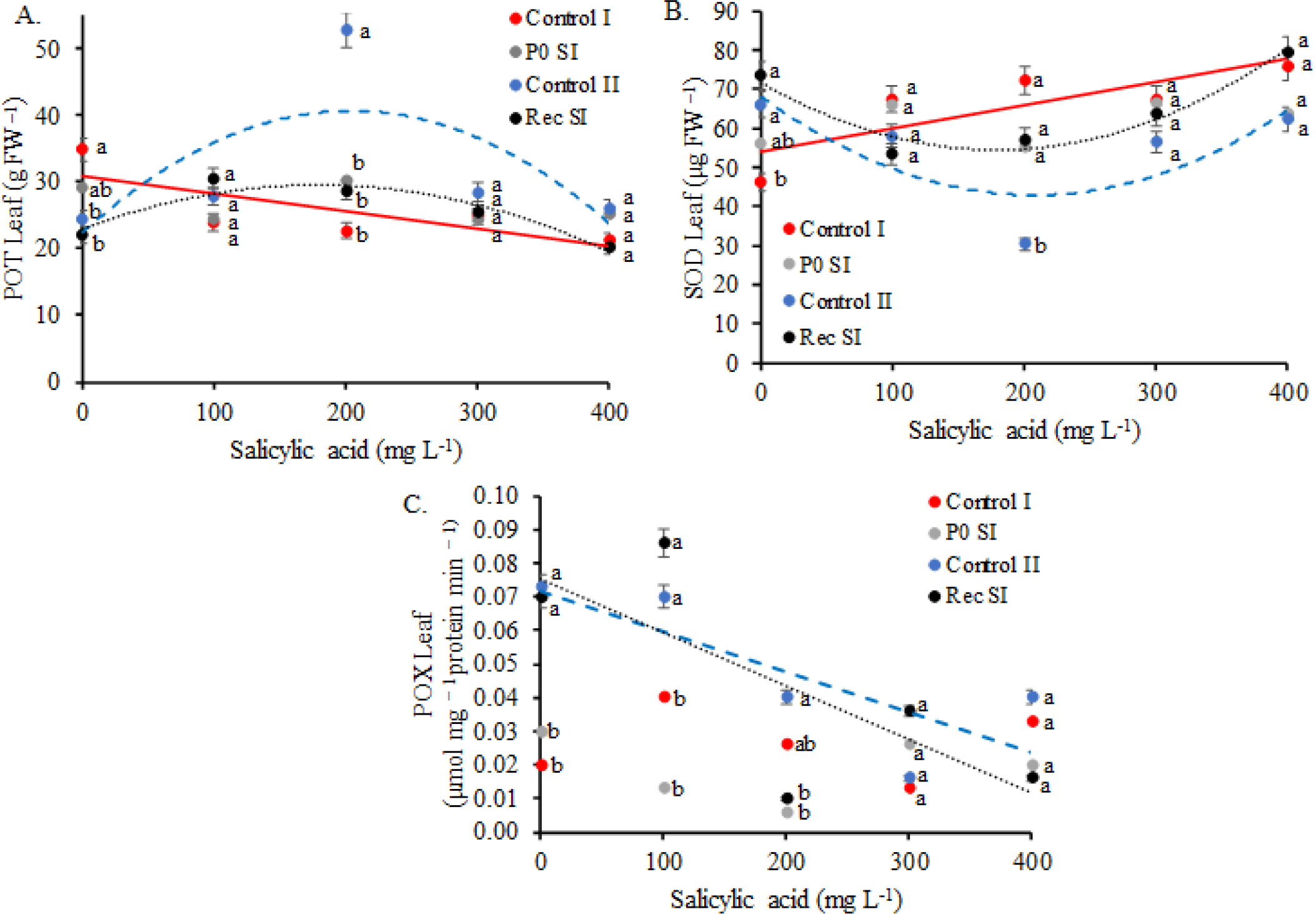
There was no adjustment for the leaf protein means as a function of SA concentrations in seedlings stressed in P0 SI; however, in control I plants, leaf protein values decreased with increasing SA doses, being lower with SA application of 400 mg L-1 (Figure 5A and Table 2). In control II and previously stressed recovering seedlings, leaf protein values increased when treated with SA up to 223 and 183 mg L-1, respectively, and reduced at higher doses.
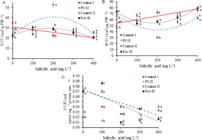
Protein - POT (A), superoxide dismutase - SOD (B), and peroxidase -POX (C) in leaves of H. courbaril cultivated with different concentrations of salicylic acid, under the irrigated water regimes - I (control) and suspended irrigation (SI), and evaluated in the P0 and Rec periods
The highest superoxide dismutase and peroxidase activity values were observed in the roots of previously stressed plants and Rec, with values that did not vary significantly between them (Table 5).
The average superoxide dismutase activity in the leaves of control I seedlings increased with increasing SA doses, being highest at 400 mg L-1. The activity in the leaves of control II seedlings and those previously stressed in Rec decreased at doses up to 242 and 191 mg L-1, respectively, increasing at the other doses (Figure 5B and Table 2). Regarding seedlings stressed in P0, there was no satisfactory adjustment to the regression models tested, regardless of SA concentrations.
There was no adjustment for peroxidase in the leaves of control I and stressed seedlings in P0, and the activity decreased in control II and previously stressed seedlings in Rec (Rec SI) (Figure 5C and Table 2). In the leaves of control II and Rec SI seedlings, there was a decrease in peroxidase with increasing SA concentration. In general, there was no difference between the SOD and POT variables between treatments at doses of 100, 300, and 400 mg L-1 of SA, while for POX, this response was observed at doses of 300 and 400 mg L-1 of AS.
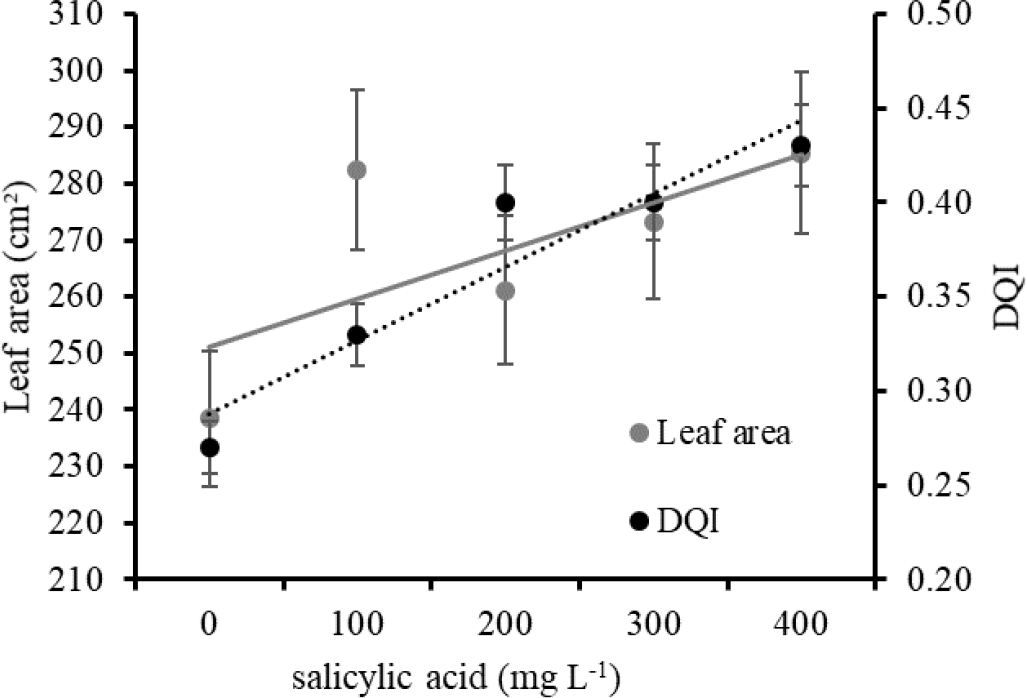
Leaf area, seedling quality index (DQI), and relative leaf water content decreased with water restriction. After irrigation resumption in the Rec SI phase, only relative water content recovered, reaching values similar to those of control II seedlings (Table 6). Both leaf area and DQI increased with increasing SA doses, presenting higher values (285.06 cm2 and 0.4145) in seedlings that received a SA dose of 400 mg L-1 (Figure 6 and Table 4).
Leaf area - LA, Dickson quality index - DQI, and relative water content - RWC in leaves of H. courbaril grown under RHP: two water regimes: control (I and II) - continuous irrigation and SI - suspended irrigation, evaluated in the periods P0: photosynthesis close to zero, and Rec: recovery
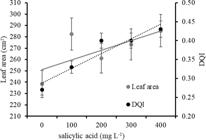
Leaf area and Dickson‘s quality index of seedlings (DQI) in H. courbaril leaves grown with different concentrations of salicylic acid
The higher proline content in seedlings without SA application and the reduction with increasing SA doses, regardless of water regimes and evaluation periods (RHP), indicates that the increase in SA doses acted on other antistress mechanisms, since peroxidase activity also reduced. These mechanisms favored seedling recovery with an increase in the photosynthetic rate and Rubisco efficiency, leaf area growth, and DQI.
In this context, the increase in the activity of the foliar SOD enzyme, involved in the antioxidant metabolism, is highlighted, which acted as a protective mechanism against reactive oxygen species. However, its effect on peroxidase was not proven in this study, although recovering seedlings showed reduced peroxidase activity; SA may have induced other antioxidant protection pathways that were effective in mitigating stress, allowing plant recovery without the need for high peroxidase activity.
The increase in the carotenoid content in seedlings submitted to water restriction in P0 is also highlighted, and this increase indicates a strategic mechanism for protecting the species‘ metabolic processes. Carotenoids are accessory pigments that protect the chlorophylls of plants under stress (Mibei et al., 2017). Thus, their reduction in Rec shows that after the irrigation resumption, seedlings were recovering their physiological balance. It was observed that the increase in the SA dose applied to seedlings decreased both carotenoid and proline contents, which may prove the mitigating potential of SA on the stressful effects of water restriction; in other words, the plant did not need to invest so much in enzymatic and non-enzymatic defense mechanisms.
Regarding chlorophyll content, foliar SA application of 272.5 mg L-1 favored the maintenance of photosynthetic pigment synthesis. However, high SA concentrations can compromise the chloroplast structure and can cause lumen deformation, which directly impacts chlorophyll concentration (Poor et al., 2019). Furthermore, the dissipated energy of Fv/Fm may be transferred to other plant defense pathways under stressful conditions, which were not determined in our study.
Although previous studies have shown that proline accumulation are associated with mechanisms for preventing abiotic stress in plants and are related to several cellular processes, such as nutrient availability, osmotic adjustment, energy status, changes in redox balance, and antioxidant and anti-pathogen defenses (Furlan et al., 2020; Alvarez et al., 2022), in the present study with H. courbaril seedlings, the participation of proline as a mechanism for mitigating stress due to water restriction was not evident.
Reinforcing the initial hypothesis of this study that H. courbaril seedlings are sensitive to water restriction, a reduction in LA and DQI during P0 was observed. Although seedlings showed an increase in LA in Rec, the average values were lower than those of the daily irrigated control II seedlings.
However, it is noteworthy that seedlings treated with 400 mg L-1 SA had a higher photosynthetic rate (A) and, consequently, higher LA, indicating an increase in the production of photoassimilates, which resulted in higher DQI, especially for seedlings in Rec. Thus, the beneficial effect of SA for growth even under water deficit conditions is highlighted (Foresti et al., 2022).
Conclusions
-
1. Hymenaea courbaril seedlings responded to water deficit, with significant reduction in photosynthetic metabolism and growth during photosynthesis close to zero, and with an increase in superoxide dismutase as a protective antioxidant activity in recovery.
-
2. Foliar salicylic acid application of 400 mg L-1 mitigated the effect of water restriction on photosynthetic metabolism, leaf area, and seedling quality, favoring seedling recovery after irrigation resumption by increasing the superoxide dismutase activity.
Data availability statement:
The authors declare that there are no data underlying the text.
Acknowledgments:
The authors thank Coordenação de Aperfeiçoamento de Pessoal de Nível Superior (CAPES) and Conselho Nacional de Desenvolvimento Científico e Tecnológico (CNPq), for granting the scholarships, and the Fundação de Apoio ao Desenvolvimento do Ensino, Ciência e Tecnologia do Estado de Mato Grosso do Sul (FUNDECT), for financial support.
Literature Cited
-
Alvarez, M. E.; Savouré, A.; Szabados, L. Proline metabolism as regulatory hub. Trends in Plant Science, v.27, p.39-55, 2022. https://doi.org/10.1016/j.tplants.2021.07.009
» https://doi.org/10.1016/j.tplants.2021.07.009 -
Araújo, L. F. B.; Scalon, S. P. Q.; Dresch, D. M.; Junglos, M. S.; Mussury, R. M.; Junglos, F. S. Water deficit alters morpho-anatomical and antioxidant responses in seedlings of Campomanesia xanthocarpa enabling their recovery. International Journal of Agriculture and Biology, v.24, p.1431-1438, 2020. https://doi.org/10.1590/15196984.244718
» https://doi.org/10.1590/15196984.244718 -
Arnon, D. I. Copper enzymes in isolated chloroplasts: polyphenoloxidases in Beta vulgaris Plant Physiology, v.24, p.115, 1949. https://doi.org/10.1104/pp.24.1.1
» https://doi.org/10.1104/pp.24.1.1 -
Barbieri Junior, É.; Rossiello, R. O. P.; Morenz, M. J. F.; Ribeiro, R. C. Comparação de métodos diretos de extração e quantificação dos teores de clorofilas em folhas do capim-Tifton 85. Ciência Rural, v.40, p.633-636, 2010. https://doi.org/10.1590/S0103-84782010000300022
» https://doi.org/10.1590/S0103-84782010000300022 -
Bates, L. S.; Waldren, R. P.; Teare, I. D. Rapid determination of free proline for water‑stress studies. Plant and Soil, v.39, p.205‑207, 1973. https://doi.org/10.1007/BF00018060
» https://doi.org/10.1007/BF00018060 -
Bradford, M. M. A rapid and sensitive method for the quantitation of microgram quantities of protein utilizing the principle of protein-dye binding. Analytical Biochemistry, v.72, p.248-254, 1976. https://doi.org/10.1016/0003-2697(76)90527-3
» https://doi.org/10.1016/0003-2697(76)90527-3 - Broetto, F. Métodos de trabalho em bioquímica vegetal e tecnologia de enzimas. Botucatu: IBB, Cultura. São Paulo: Acadêmica, UNESP, 2014. 92p.
-
Cardoso, K. P.; Palheta, J. G.; Sousa, J. C. M. de; Nascimento, V. R.; Nogueira, G. A. D. S.; Machado, L. C.; Martins, J. T. S.; Costa, T. C.; Andrade Júnior, W. V.; Oliveira Neto, C. F.; Santos Filho, B. G. dos. Physiological and biochemical metabolism in jatoba plants (‘Hymenaea courbaril’ L.) affected by water stress and flooding. Australian Journal of Crop Science, v.11, p.844-852, 2017. https://doi.org/10.21475/ajcs.17.11.07.pne498
» https://doi.org/10.21475/ajcs.17.11.07.pne498 -
Colton-Gagnon, K.; Ali-Benali, M. A.; Mayer, B. F.; Dionne, R.; Bertrand, A.; Carmo, S.; Charron, J. B. Comparative analysis of the cold acclimation and freezing tolerance capacities of seven diploid Brachypodium distachyon accessions. Annals of Botany, v.113, p.681-693, 2014. https://doi.org/10.1093/aob/mct283
» https://doi.org/10.1093/aob/mct283 - Costa, C. D.; Diaris, K. B.; Guimarães, T. M. Métodos de escarificação para superação de dormência de sementes de jatobá. Revista Científica Eletrônica de Engenharia Florestal, v. 30, p. 44-52, 2017.
-
Costa, E. N.; Martins, L. O.; Reis, L. C.; Fernandes, M. G.; Scalon, S. P. Q. Resistance of Cowpea genotypes to Spodoptera frugiperda (Lepidoptera: Noctuidae) and its relationship to resistance-related enzymes. Journal of Economic Entomology, v.113, p.2521-2529, 2020. https://doi.org/10.1093/jee/toaa179
» https://doi.org/10.1093/jee/toaa179 -
Dickson, A.; Leaf, A. L.; Hosner, J. F. Quality appraisal of white spruce and white pine seedling stock in nurseries. Forest Chronicle, v.36, p.10-13, 1960. https://doi.org/10.5558/tfc36010-1
» https://doi.org/10.5558/tfc36010-1 -
Dobhal, S.; Kumar, R.; Bhardwaj, A. K.; Chavan, S. B.; Uthappa, A. R.; Kumar, M.; Singh, A.; Jinger, D.; Rawat, P.; Handa, A. K.; Ramawat, N. Global assessment of production benefits and risk reduction in agroforestry during extreme weather events under climate change scenarios. Frontiers in Forests and Global Change, v.7, e1379741, 2024. https://doi.org/10.3389/ffgc.2024.1379741
» https://doi.org/10.3389/ffgc.2024.1379741 -
Figueiredo, V. M. A.; Scalon, S. P. Q.; Santos, C. C.; Linné, J. A.; Silverio, J. M.; Cerqueira, W. M.; Almeida, J. L. D. C. S. Do silicon and salicylic acid attenuate water deficit damage in Talisia esculenta Radlk seedlings?. Plants, v.12, e3183, 2023. https://doi.org/10.3390/plants12183183
» https://doi.org/10.3390/plants12183183 -
Ferreira, D. F. Sisvar: a computer analysis system to fixed effects Split plot type designs. Brazilian Journal of Biometrics, v.37, p.529-535, 2019. https://doi.org/10.28951/rbb.v37i4.450
» https://doi.org/10.28951/rbb.v37i4.450 -
Foresti, A. C.; Reis, L. C.; Scalon, S. P. Q.; Dresch, D. M.; Santos, C. C.; Jesus, M.V. Salicylic acid mitigating damage to the photosynthetic apparatus and quality of Eugenia myrcianthes seedlings under water deficit. Rodriguésia, v.73, e00872021, 2022. https://doi.org/10.1590/2175-7860202273052
» https://doi.org/10.1590/2175-7860202273052 -
Furlan, A. L.; Bianucci, E.; Giordano, W.; Castro, S.; Becker, D. F. Proline metabolic dynamics and implications in drought tolerance of peanut plants. Plant Physiology and Biochemistry, v.151, p.566-578, 2020. https://doi.org/10.1016/j.plaphy.2020.04.010
» https://doi.org/10.1016/j.plaphy.2020.04.010 -
Giannopolitis, C. N.; Ries, S. K. Superoxide dismutases: I Occurrence in higher plants. Plant Physiology, v.59, p.309-314, 1977. https://doi.org/10.1104/pp.59.2.309
» https://doi.org/10.1104/pp.59.2.309 -
Guirra, B. S.; Silva, J. A.; Leal, C. C. P.; Torres, S. B.; Silva, J. E. S. B.; Guirra, K. S.; Pereira, K. T. O. Growth and metabolism of Pityrocarpa moniliformis Benth. seedlings under water deficit. Ciência. Florestal, v.32, p.923-938, 2022. https://doi.org/10.5902/1980509863444
» https://doi.org/10.5902/1980509863444 -
Hou, Q. Z.; Pang, X.; Sun, K.; Liang, J. Y.; Jia, L. Y.; Feng, H. Q.; Zhang, T. S.; Zheng, Y. D.; Wang, Y. P. Depletion of extracellular ATP affects the photosystem II photochemistry and the role of salicylic acid in this process. Photosynthetica, v.57, p.533-539, 2019. https://doi.org/10.32615/ps.2019.077
» https://doi.org/10.32615/ps.2019.077 -
Jini, D.; Joseph, B. Physiological mechanism of salicylic acid for alleviation of salt stress in rice. Rice Science, v.24, p.97-108, 2017. https://doi.org/10.1016/j.rsci.2016.07.007
» https://doi.org/10.1016/j.rsci.2016.07.007 -
Junglos, F. S.; Junglos, M. S.; Dresch, D. M.; Pereira, N. S.; Kodama, F. M.; Scalon, S. P. Q. Recovery of the photosynthetic capacity of Campomanesia adamantium (Myrtaceae) after water deficit. Brazilian Journal of Botany, v.39, p.541-546, 2016. https://doi.org/10.1007/s40415-016-0275-x
» https://doi.org/10.1007/s40415-016-0275-x -
Lichtenthaler, H. K. Chlorophylls and carotenoids: pigments of photosynthetic biomembranes. In: Packer, L., Douce, R. (eds.). Methods in enzymology. v. 148. Bad Honnef: Academic, 1987. p.350-382. https://doi.org/10.1016/0076-6879(87)48036-1
» https://doi.org/10.1016/0076-6879(87)48036-1 -
Linné, J. A.; Jesus, M. V.; Lima, V. T.; Reis, L. C.; Santos, C. C.; Scalon, S. D. P.; Dresch, D. M. Do Dipteryx alata Vogel seedlings recover the quality and the photosynthetic and antioxidant responses in the post-flooding? Brazilian Journal of Biology, v.83, e246451, 2021. https://doi.org/10.1590/1519-6984.246451
» https://doi.org/10.1590/1519-6984.246451 -
Melo, H. C.; Rodrigues, F. J.; Queirós, S. F.; Portes, T. A. A aplicação exógena foliar de ácido abscísico desencadeia mecanismos de tolerância à deficiência hídrica em seringueira. Ciência Florestal, v.29, p.40-49, 2019. https://doi.org/10.5902/1980509825824
» https://doi.org/10.5902/1980509825824 -
Mibei, E. K.; Ambuko, J.; Giovannoni, J. J.; Onyango, A. N.; Owino, W. Carotenoid profiling of the leaves of selected African eggplant accessions subjected to drought stress. Food Science & Nutrition, v.5, p.113-122, 2017. https://doi.org/10.1002/fsn3.370
» https://doi.org/10.1002/fsn3.370 -
Nascimento, H. H. C. do; Santos, C. A. dos; Freire, C. S.; Silva, M. A. da; Nogueira, R. J. M. C. Ajustamento osmótico em mudas de jatobá submetidas à salinidade em meio hidropônico. Revista Árvore, v.39, p.641-653, 2015. https://doi.org/10.1590/0100-67622015000400006
» https://doi.org/10.1590/0100-67622015000400006 -
Poor, P.; Borbély, P.; Bódi, N.; Bagyánszki, M.; Tari, I. Effects of salicylic acid on photosynthetic activity and chloroplast morphology under light and prolonged darkness. Photosynthetica, v.57, p.367-376, 2019. https://doi.org/10.32615/ps.2019.040
» https://doi.org/10.32615/ps.2019.040 -
Reis, L. C.; Scalon, S. P. Q.; Dresch, D., Foresti, A. C., Santos, C. C.; Pereira, Z. V. Chlorophyll a fluorescence as an indicator of water stress in Calophyllum brasiliense Notulae Botanicae Horti Agrobotanici Cluj-Napoca, v.48, p.210-220, 2020. https://doi.org/10.15835/nbha48111757
» https://doi.org/10.15835/nbha48111757 -
Reis, L. C.; Scalon, S. P.; Foresti, A. C.; Dresch, D. M.; Santos, C. C.; Lima, V. T. How does shading mitigates the water deficit in young Hymenaea courbaril L. plants? Frontiers in Plant Science, v.14, e1235234, 2023. https://doi.org/10.3389/fpls.2023.1235234
» https://doi.org/10.3389/fpls.2023.1235234 -
Rosa, D. B. C. J.; Scalon, S. P. Q.; Dresch, D. M. Shading for water stress mitigation in Copaifera langsdorffii Desf. Seedlings. South African Journal of Botany, v.140, p.240-248, 2021. https://doi.org/10.1016/j.sajb.2021.04.020
» https://doi.org/10.1016/j.sajb.2021.04.020 -
Santos, C. C.; Silva, L. F.; Piesanti, M.; Scalon, S. D. P.; Goelzer, A.; Silverio, J. M.; Reis, L. C. Salicylic acid on gas exchange and growth of Hymenaea courbaril L. seedlings under flooding. Revista Brasileira de Engenharia Agrícola e Ambiental, v.27, p.327-334, 2023. https://doi.org/10.1590/1807-1929/agriambi.v27n5p327-334
» https://doi.org/10.1590/1807-1929/agriambi.v27n5p327-334 -
Saracho, L. C. S.; Lima, N. M.; Santos, C. C.; Scalon, S. P. Q.; Vieira, M. C. Salicylic acid increases growth of Schinus terebinthifolia seedlings subjected to varyng irrigation intervals. Floresta e Ambiente, v.28, p.1-10, 2021. https://doi.org/10.1590/2179-8087-FLORAM-2020-0004
» https://doi.org/10.1590/2179-8087-FLORAM-2020-0004 - Slavick, B. Métodos de estudo das relações hídricas das plantas v.9. Berlin - Heidelberg: Springer-Verlag. 1979, 470p.
-
Souza, C. C.; Oliveira, F. A.; Silva, I. F.; Amorim-Neto, M. S. Avaliação de métodos de determinação de água disponível e manejo da irrigação em terra roxa sob cultivo de algodoeiro herbáceo. Revista Brasileira de Engenharia Agrícola e Ambiental, v.4, p.338-342, 2000. https://doi.org/10.1590/S1415-43662000000300006
» https://doi.org/10.1590/S1415-43662000000300006 - USDA - United States Department of Agriculture. Soil Survey Staff. Keys to soil taxonomy. 13.ed. Washington: USDA, 2022. 401p.
-
Xia, Q.; Fu, L. J.; Tang, H.; Song, L.; Tan, J. L.; Guo, Y. Sensing and classification of rice (Oryza sativa L.) drought stress levels based on chlorophyll fluorescence. Photosynthetica, v.60, p.100-107, 2022. https://doi.org/10.32615/ps.2022.005
» https://doi.org/10.32615/ps.2022.005
Edited by
-
Editors:
Toshik Iarley da Silva & Hans Raj Gheyi

 * - Significant at p ≤ 0.05 by Tukey test; Same letters in each dose of SA do not differ statistically from each other
 * - Significant at p ≤ 0.05 by Tukey test; Same letters in each dose of SA do not differ statistically from each other
 *- Significant at p ≤ 0.05 by Tukey test; Same letters in each dose of SA do not differ statistically from each other
 * - Significant at p ≤ 0.05 by Tukey test; Same letters in each dose of SA do not differ statistically from each other