
 Relativization of Summary 593/STJ in cases of rape of vulnerable persons: an empirical analysis of the statement of material facts mobilized by the STJ for distinguishing
The article examines the application of the distinguishing technique by the Superior Court of Justice (STJ) in the relativization of Binding Precedent 593/STJ in cases of statutory rape (art. 217-A of the Brazilian Penal Code), in light of Theme 918/STJ. Based on an empirical investigation – quantitative, qualitative, observational, and retrospective in nature – the study analyzed 136 collegiate judgments issued between 2015 and 2025. The research employed the Decision-Making Analysis (DMA) methodology to map the factual premises invoked by the Court as distinguishing factors, namely: (i) the victim’s age, (ii) the defendant’s age, (iii) the existence of an affective relationship, (iv) cohabitation, (v) the presence of children, (vi) the family’s consent, and (vii) the victim’s consent. The findings show that family consent, the existence of children, and the age group of the defendant are statistically significant determinants for the outcome of cases (acquittal or conviction). It can be concluded that the STJ’s actions, although not provided for by law, conform to minimally consistent empirical criteria, the analysis of which contributes to the debate on the stability, predictability, and legitimacy of the system of precedents in criminal matters.
Keywords
Precedent Summary 593/STJ; Theme 918/STJ; Rape of vulnerable persons; Distinguishing; Empirical research
 Thumbnail
 Thumbnail
 Thumbnail
 Thumbnail
 Thumbnail
 Fonte: Elaboração própria.
 Fonte: Elaboração própria.
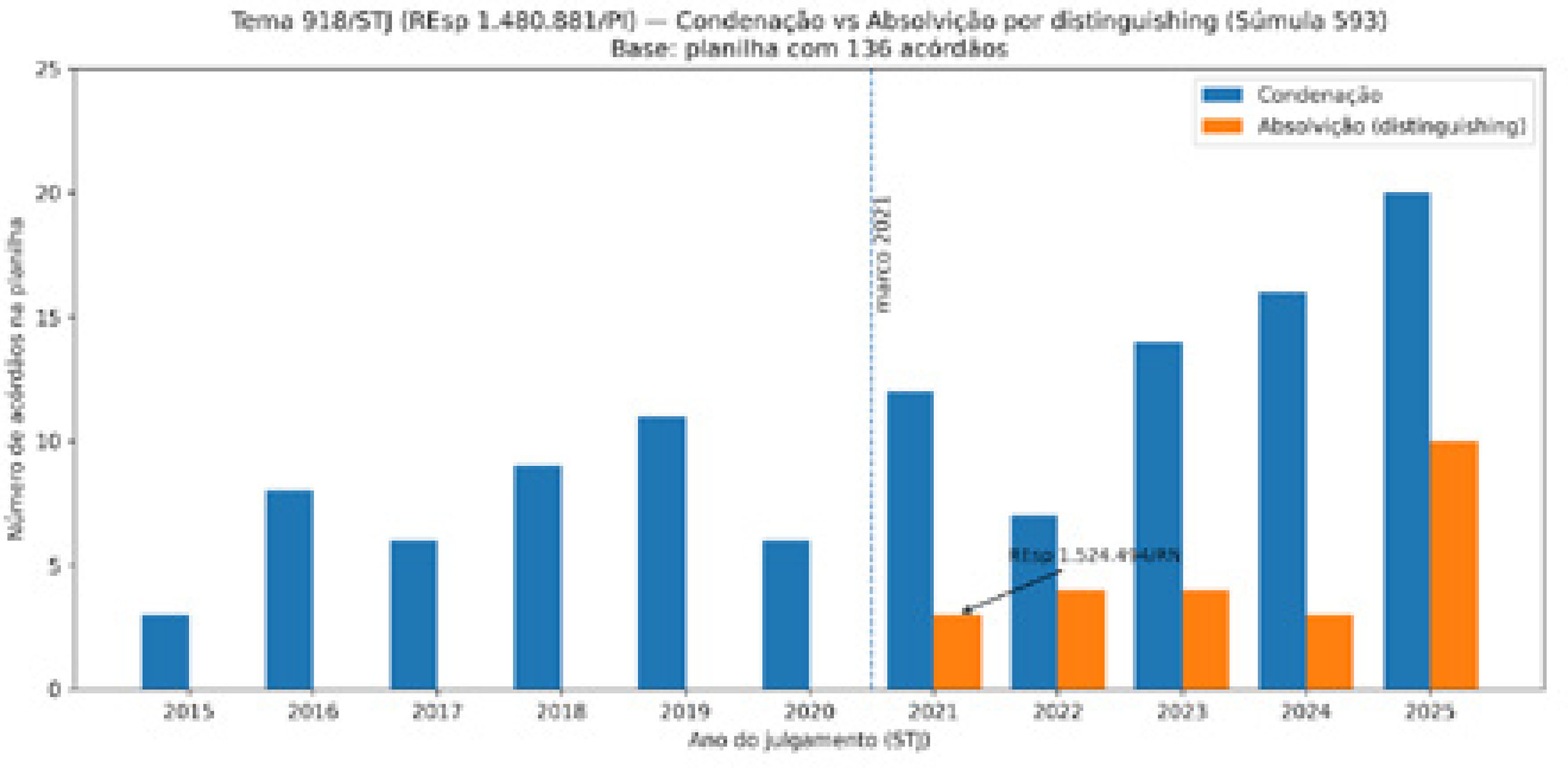 Fonte: Elaboração própria.
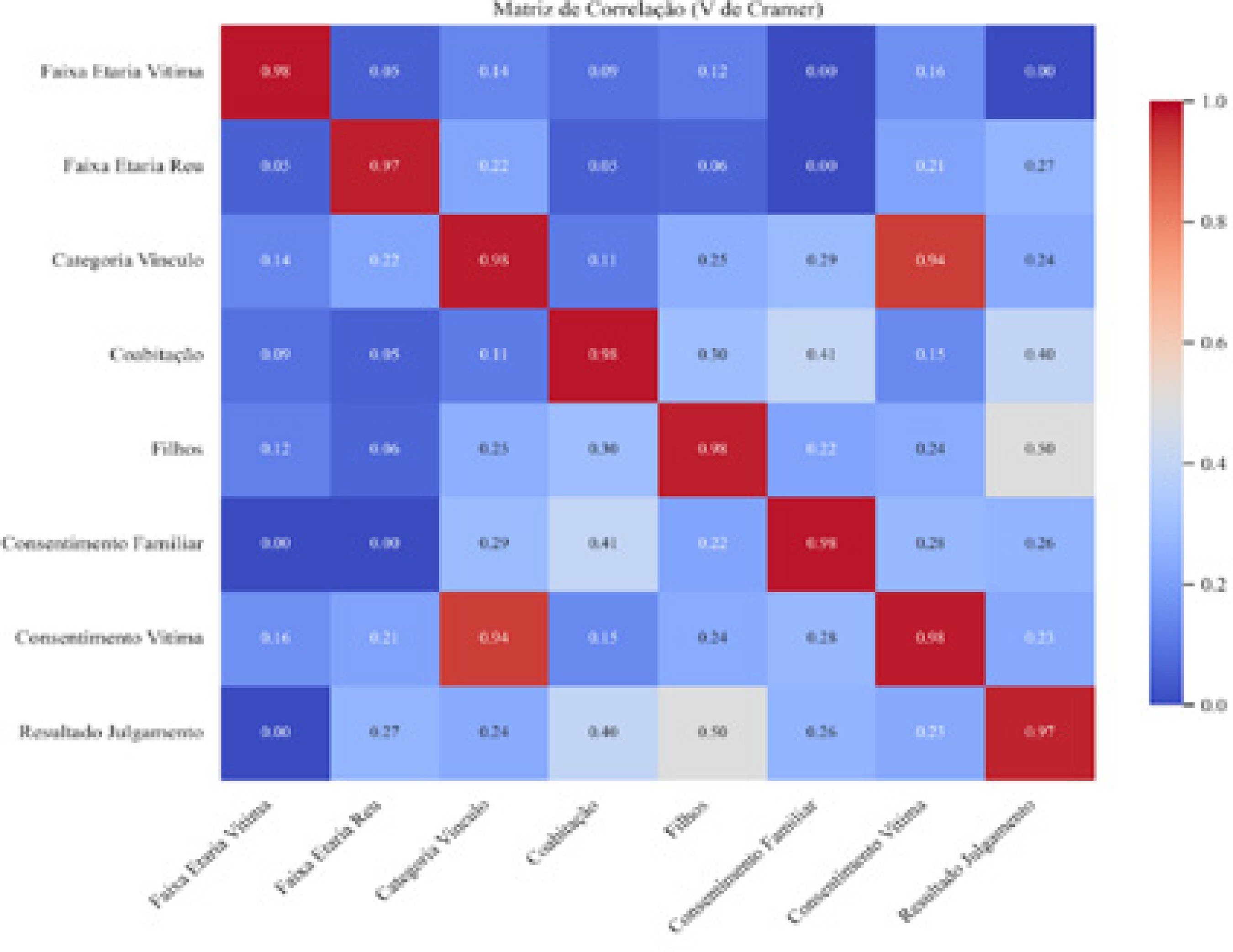 Fonte: Elaboração própria.
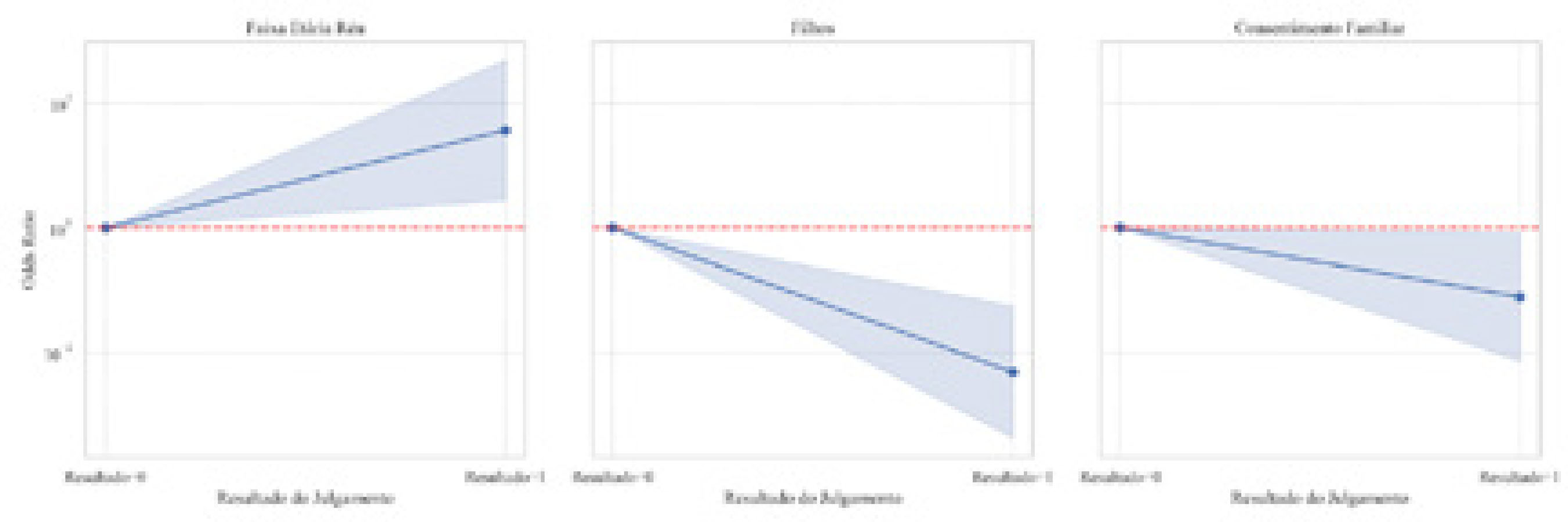 Fonte: Elaboração própria.