 Phosphorus fractionation in soils of the Paraguayan Chaco under pristine and anthropogenic conditions
ABSTRACT
Land use changes profoundly impact the natural dynamics of soil phosphorus (P), potentially leading to decreased P concentrations. This study aimed to evaluate the different P fractions in soils from Paraguay Central Chaco under pristine and anthropogenic conditions. A randomized complete block design was utilized with two treatments (pristine and anthropogenic usage). Thirty-four composite soil samples were collected from the region at the layer of 0.00-0.20 m, followed by chemical fractionation of P into labile, moderately labile, and non-labile categories, further classified into inorganic and organic types. Collected data were analyzed using general and mixed linear models. Significant differences (p<0.05) were explored using Fisher’s least significant difference test for mean comparisons. Pristine soils consistently exhibited higher P levels across most evaluated fractions (labile, moderately labile, non-labile, and inorganic) compared to those affected by anthropogenic activities. Organic P fraction showed no significant differences. These findings highlight that converting pristine areas to agricultural use reduces soil P levels, posing significant implications for environmental management and agricultural productivity.
Keywords
chemistry; fertility; labile; land use
INTRODUCTION
Current food production relies heavily on applying phosphate fertilizers to maintain and enhance crop yields. These fertilizers are primarily derived from phosphate rock, which faces significant challenges. Besides being a finite and non-renewable resource, phosphate rock is a critical fertilizer source (Cordell et al., 2009; Yu et al., 2021). Some of its deposits are contaminated or are situated in geopolitically unstable regions. This presents an imminent crisis for the continued supply of phosphate fertilizers, which are fundamental to global food production (Blackwell et al., 2019). It is projected that phosphate resources may be exhausted within 20–100 years if the current extraction rate persists (Wierzbowska et al., 2020).
Phosphorus (P) plays a crucial role in crop nutrition but is mainly characterized by its low availability in soils due to its slow diffusion and high tendency to bind within soils (Smil, 2000; Pavinato et al., 2010; Shen et al., 2011). These characteristics often render this nutrient a limiting factor in crop growth (Smil, 2000; Giannini et al., 2022).
Furthermore, P availability in soil is a complex phenomenon (Shen et al., 2011), as various factors influence its accessibility, including soil mineralogy, acidity, the concentration of elements in the soil solution, as well as the source and amount of applied fertilizers, all of which can impact the biogeochemical cycle of P and its adsorption to soil colloids (Guera and da Fonseca, 2022).
Different land use systems can induce changes in soil P (Bezerra et al., 2015), primarily affecting the way it accumulates (Nunes et al., 2020), leading to variations in P deposits into different degrees of lability and, consequently, its availability for crops (Assis et al., 2022). Thus, understanding the distribution and transformation of different P fractions in the soil is essential (Wang et al., 2023).
Research assessing soil P availability has mainly focused on indices reflecting its immediate supply (Richter et al., 2006). Nonetheless, evaluations often overlook the other soil P fractions, and identifying and quantifying these fractions is pivotal for enhancing agricultural productivity and developing sustainable management practices for agricultural soils under long-term cultivation (Tang et al., 2023).
In this regard, P fractionation using various extractors, as developed by Hedley et al. (1982), has proven to be an invaluable method for assessing the availability and total solubility of P in the soil. This approach is based on extracting organic and inorganic P fractions, starting with the most labile P fraction and progressing toward the less available forms (Pavinato et al., 2009).
The most labile fractions of P are those that constantly supply P to the soil solution for uptake by plants and soil microorganisms. These fractions are replenished through mineral dissolution, desorption, and organic mineralization processes (Richter et al., 2006). Conversely, the less labile fractions act as a P reservoir in the soil, gradually releasing this nutrient as the P in the solution is utilized (Subero et al., 2016).
In the productive systems of the Paraguayan Chaco, soils are not fertilized as they possess high P contents (Candia-Díaz et al., 2023). Medium- and long-term research based on sequential P extractions has shown that agricultural practices with low or no P inputs deplete nutrient fractions, especially more labile ones (De Oliveira et al., 2015). Therefore, comprehending how current production systems in the Paraguayan Chaco affect P dynamics in these soils is crucial, as it could dictate the need for phosphate fertilizer application in the medium to long term.
This study aimed to compare different P fractions in pristine and anthropogenic systems through P chemical fractionation in soils of the Paraguayan Chaco. It is hypothesized that soils with anthropogenic use exhibit a decrease in P content across its various fractions, with a more pronounced effect in the labile fraction, when compared with pristine soils.
MATERIALS AND METHODS
Soil sampling
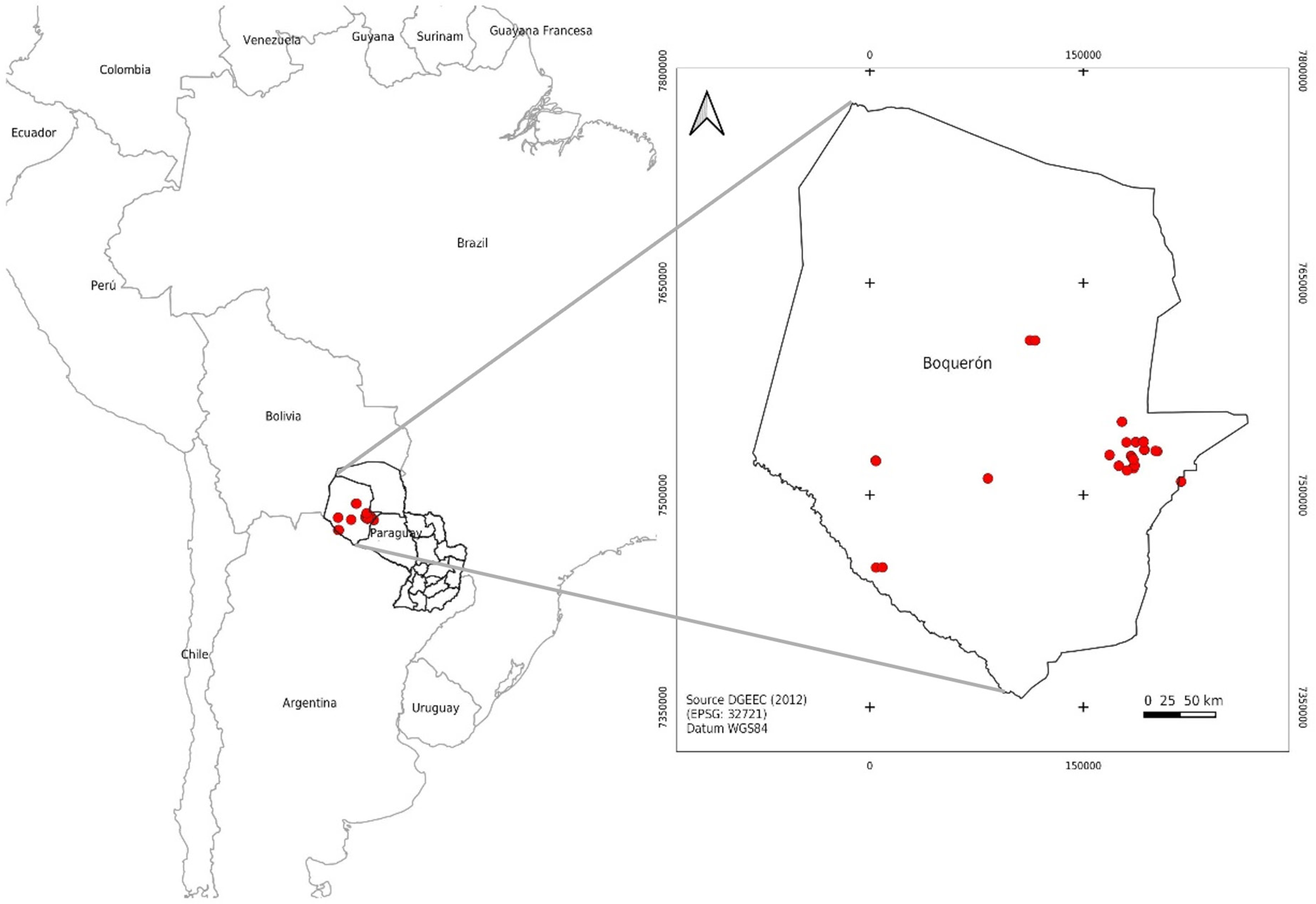
Soil samples were collected at thirty-four locations in the Central Chaco of Western Paraguay in June and July 2020 (Figure 1); the sampled soils were classified as Luvisols (Wolfgang et al., 1998). Composite soil samples were taken from pristine areas (i.e., the pristine system) and adjacent plots with human intervention for anthropogenic uses (i.e., the anthropogenic system). Each sample consisted of five subsamples collected in a zigzag pattern at layer of 0.00-0.20 m (Candia-Díaz et al., 2023). Coordinates of each sampling point were recorded using a GPS, and each sampled point was identified and georeferenced (Table 1). Collected soil samples were labeled, georeferenced, and sent to the Soil Laboratory of the Facultad de Ciencias Agrarias at the Universidad Nacional de Asunción (San Lorenzo, Paraguay) for chemical analysis.

Phosphorus fractionation
After air-dried and sieved with a 2 mm sieve, the samples were analyzed in triplicate. Phosphorus fractionation was carried out according to the method proposed by Hedley et al. (1982), with modifications suggested by Condron et al. (1985) and Rheinheimer et al. (2008). The fractionation process consisted of a series of sequential extractions using different chemical agents: anion exchange resin (AR 103 QDP 434) (Pi-AER), sodium bicarbonate 0.5 mol L-1 with pH at 8.5 (NaHCO3-P), sodium hydroxide 0.1 mol L-1 (NaOH 0.1-P), hydrochloric acid (HCl) 1.0 mol L-1 (Pi-HCl), and NaOH 0.5 mol L-1 (NaOH 0.5-P). Each extraction was conducted for 16 h in an orbital shaker at 33 rpm, followed by centrifugation for 20 min.
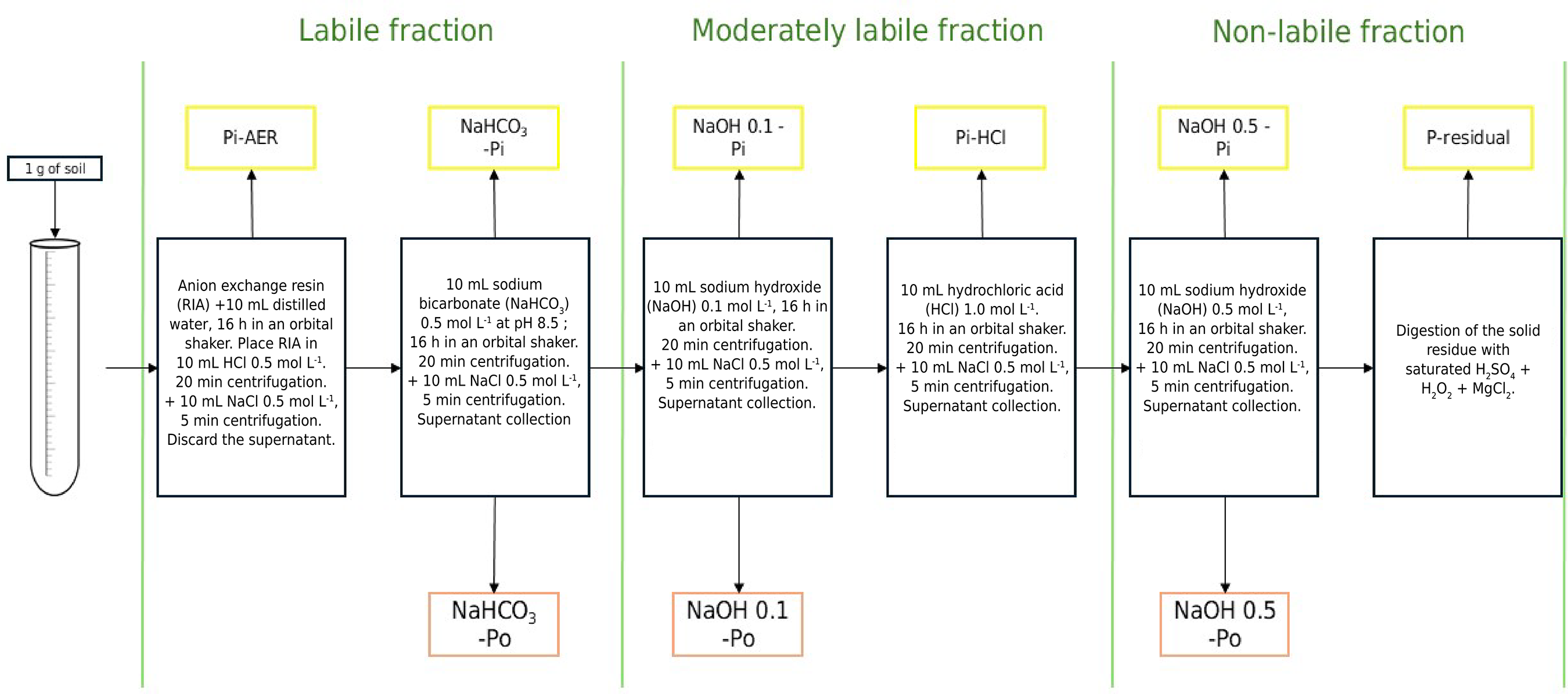
Subsequently, the solid residue was dried, ground, and subjected to digestion with H2SO4 + H2O2 + saturated MgCl2 to extract residual P (P-residual) (Brookes and Powlson, 1981). In the alkaline extracts (NaHCO3 and NaOH), inorganic P was determined by the method of Dick and Tabatabai (1977), and the total P of this fraction was determined by digestion with ammonium persulfate (NH4)2S2O8 and sulfuric acid (H2SO4) in an autoclave at 121 °C (USEPA, 1971). Organic P was calculated by the difference between total P and the inorganic fractions in each extractor. The P of the acid extracts was determined using the method of Murphy and Riley (1962). Total P was calculated by adding all the fractions obtained (Cross and Schlesinger, 1995). The different P fractions were grouped into three categories: Pi-AER + NaHCO3-P as labile P, NaOH 0.1 and 0.5-P + Pi-HCl as moderately labile P, and P-residual as non-labile P. Figure 2 shows the step-by-step process of the P fractionation.
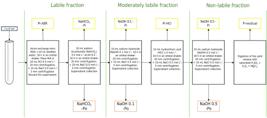
Diagram of phosphorus fractionation in soils of the Paraguayan Chaco under pristine and anthropogenic conditions.
Statistical analysis
General linear and mixed models were employed to evaluate the impact of land use type (i.e., pristine or anthropogenic) on the P fractions. The distributional assumptions of the errors were validated through the analysis of diagnostic plots of the model. Whenever signs of deviation from these assumptions were observed, alternative models featuring different error correlation structures and heterogeneous variances were considered. The optimal model was ultimately chosen based on the Akaike and Schwartz information criteria. For variables where significant differences (p<0.05) were identified, the Fisher’s least significant difference test was conducted. All statistical analyses were performed using the InfoStat software version 2017 (Di Rienzo et al., 2017).
RESULTS AND DISCUSSION
Labile phosphorus
Analyses revealed significant differences in labile P content between the systems (F = 6.67; p = 0.0200). This was also observed in the Pi-AER (F = 5.60; p = 0.0309), NaHCO3-Pi (F = 9.84; p = 0.0064) and -Po (F = 5.02; p = 0.0396). In all these fractions, pristine soils showed higher P content than intervened soils (Figures 3a, 3b, 3c, and 3d).
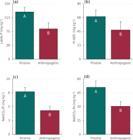
Contents of labile P (a), Pi-AER (b), NaHCO3-Pi (c), and NaHCO3-Po (d) in pristine and anthropogenic soils. Different letters indicate the means of the treatments differ significantly at a 5 % significance level according to Fisher’s least significant difference test.
Labile fraction comprises the sum of the extractions of Pi-AER and NaHCO3-Po and -Pi, constituting the fraction of P available for plants and microorganisms in the short term; this is because they are rapidly desorbed from the soil particle surfaces (Cross and Schlesinger, 1995). In other words, once P is depleted from the solution due to plant uptake, it is replenished into the solution, which occurs through organic and inorganic P (Gatiboni et al., 2005). Research has demonstrated that anthropogenic soil use in the Paraguayan Chaco and the lack of phosphate fertilization lead to a reduction in the initial labile P concentrations (Figure 3a). These results corroborate those of Frizano et al. (2003), who compared variations in initial soil P concentrations in the Pará region of Brazil. The authors noted that during the transition from primary to secondary forest, the labile P levels in the soil decreased compared to those present in the primary forest soil. However, Motavalli and Miles (2002), in plots with 111 years of long-term cropping in Missouri (USA), showed that cropping systems and associated practices such as long-term fertilization significantly alter the quantities and proportions of labile P compared to initial P content in native grasslands.
Moreover, when examining labile P, there is inorganic P extracted by ion exchange resin (Pi-AER) and P extracted by sodium bicarbonate, which subdivides into inorganic (NaHCO3-Pi) and organic (NaHCO3-Po) fractions (Figures 3b, 3c and 3d). According to Cross Schlesinger (1995), the Pi-AER and NaHCO3-Po and -Pi fractions represent the soil P that can be readily exchanged and rapidly mineralized. As a result, the plant-available portion constitutes only a small fraction of the total P in the soil, both in absolute terms and as a percentage of the total P. Inorganic P fraction extracted by RIA is recognized as the short-term available form of P for plants (Cross and Schlesinger, 1995). Therefore, it plays an important role in crop production (Zamuner et al., 2008).
Nevertheless, human intervention for agricultural purposes has led to a progressive depletion of initial P levels in the soils studied, and we also observed that the Pi-AER content was higher in the pristine system compared to the anthropogenic system (Figure 3b). Despite these findings, there are contradictory results. Motavalli and Miles (2002) observed increased Pi-AER concentrations in different cropping systems compared to unfertilized plots or native pastures. This might occur because, in contrast to the situation in the Chaco, phosphate fertilization was applied in those plots. Rheinheimer and Anghinoni (2001) reported that the Pi-AER content may vary depending on soil management. When comparing two Latossolos Vermelho distrófico (Oxisols) and an Argissolo (Ultisol) across different soil preparation methods, they found that Pi-AER concentrations were higher in soils under a no-till system compared to those in a conventional cropping system.
Phosphorus extracted by NaHCO3 represents the fraction weakly adsorbed to soil compounds and, similar to phosphate extracted by the RIA method, is considered rapidly available to plants due to its buffering capacity, which is similar to that of plant-adsorbed P (Gatiboni et al., 2007).
In our study, a reduction in NaHCO3-Pi levels in soils from the anthropogenic system was observed (Figure 3c). Fertilization is proposed as an alternative to counteract this decrease. In productive systems such as integrated crop-livestock, after six years of application of organic and mineral fertilizers, Rigo et al. (2019) found that the successive use of these fertilizers caused an increase in this fraction in soils.
The NaHCO3-Po extracts P associated with organic surfaces and humic and fulvic acids (Blake et al., 2003), and this fraction constitutes a readily available P reserve for plants. Redel et al. (2011) suggest the importance of microbial biomass in soil P availability. As with the other labile P extractions (Pi-AER and NaHCO3-Pi), this fraction decreased due to land use change (Figure 3d).
This result aligns with the study of Frizano et al. (2003), who observed that the labile organic fraction experienced the greatest decrease compared to other fractions during land use change from primary to secondary forests, indicating the importance of this fraction as a source of P for forest regeneration, either directly or indirectly. Similarly, Zamuner et al. (2008), in their comparative study between no-tillage and conventional systems, underline the relationship between these labile inorganic P fractions and the potential contribution of labile organic P to the labile inorganic P fraction. While the inorganic labile fractions increased, the organic fraction simultaneously decreased, suggesting a change in soil P availability and dynamics.
In southern Brazil, a study was conducted on the effect of continuous pine cultivation without fertilization. The findings indicate that, in these soils, the labile organic P likely acted as a buffer for the inorganic forms of phosphate. From the first to the third crop cycle, the concentration of organic P decreased significantly from 70.6 to 39.8 mg kg-1. In contrast, the labile inorganic fractions remained unchanged after different crop periods (Gatiboni et al., 2017).
This P fraction is also influenced by the management system employed during the crop cycle, showing significant interactions between winter crops, soil management systems, and soil depth. In fact, an increase in the concentrations of this fraction was observed in fields with minimum tillage management compared to those subjects to conventional tillage. This phenomenon could be attributed to the replenishment of crop residues and increased microbial activity in the topsoil, including transforming inorganic fertilizers into organic forms (Tiecher et al., 2012a).
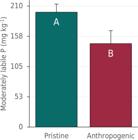
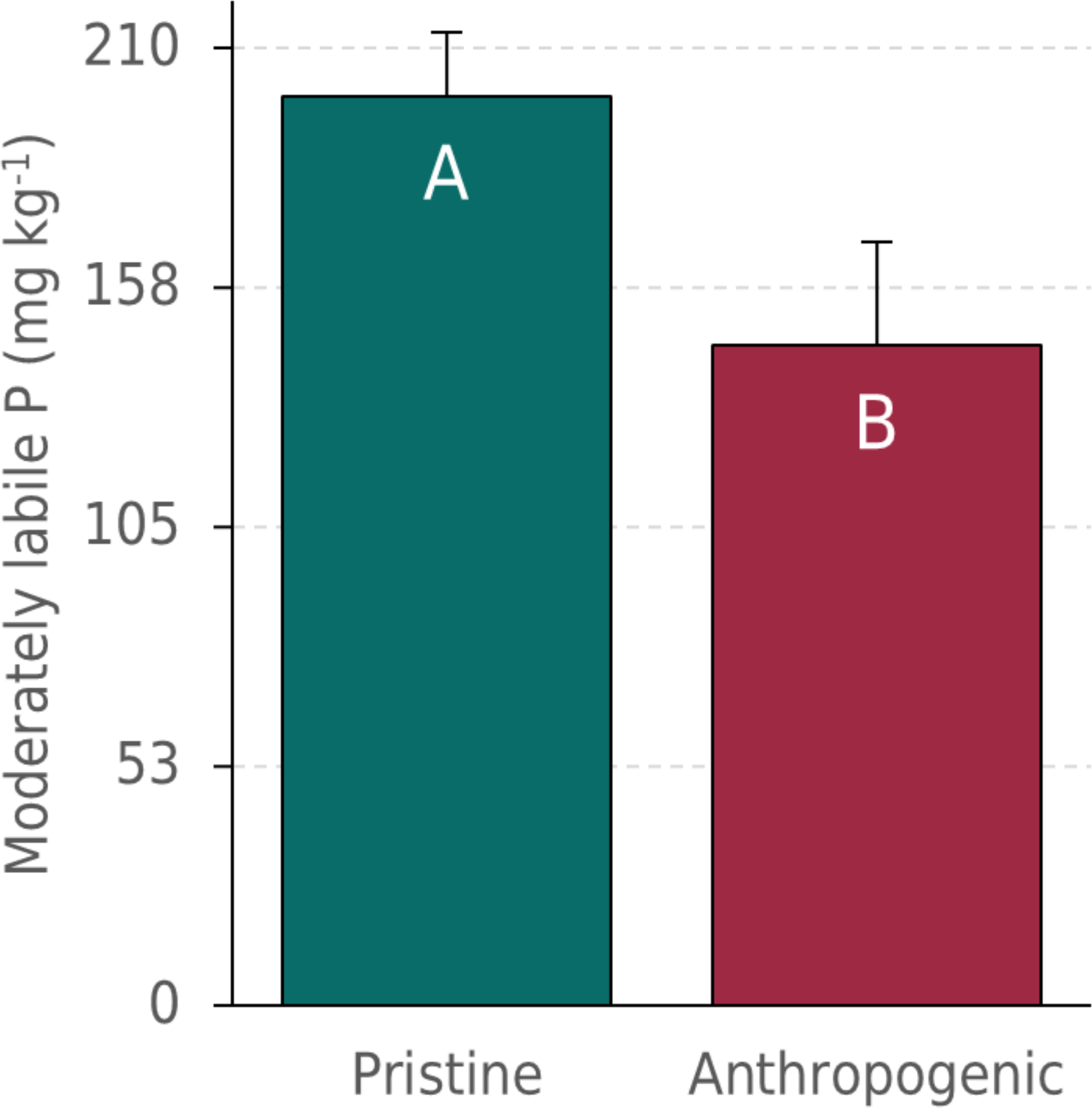
Phosphorus contents of the moderately labile fraction in pristine and anthropogenic soils. Different letters indicate the means of the treatments differ significantly at a 5 % significance level according to Fisher’s least significant difference test.
Moderately labile phosphorus
A significant difference was identified in the content of this P fraction (F = 6.90; p = 0.0157), with lower P content in anthropic systems, showing a variation of approximately 80 mg kg-¹ (Figure 4).
Moderately labile P is composed of the sum of the extractions with NaOH 0.1-P and HCl-Pi. Both Pi and Po from this fraction can act as possible replenishment sources for the more labile fraction. This process takes place after the desorption of the mineral phases of inorganic P and mineralization of organic P (De Oliveira et al., 2015).
Our findings showed that continuous anthropogenic use depletes the P in this fraction. This depletion can be attributed to the lack of replenishment of P extracted by crops in the soil, given that in the productive systems of the Paraguayan Chaco, no phosphate fertilization is carried out since these soils naturally have P levels above the critical level (Peroni Mayans and Rasche Álvarez, 2013). This situation turns this P fraction into a source of P for the labile fraction of the soil.
These findings corroborate the results of Richter et al. (2006), who scrutinized the changes in P due to the growth of a pine forest for 48 years in an Ultisol and observed a significant decrease in slow-release P concentrations. Nonetheless, the authors noted that the labile P fractions (e.g., NaHCO3-Po and -Pi) remained relatively stable, labile P fractions (e.g., Pi-AER and NaHCO3-Po) remained relatively stable, and even the NaHCO3-Pi fraction increased. These results suggest that P removal over decades was compensated for or overcome by P input from slow-release P fractions.
Conversely, some researchers have suggested that the successive use of organic and mineral fertilizers can positively affect soil P availability. For instance, Rigo et al. (2019) observed that, after six years of applying these fertilizers in an integrated crop-livestock system, moderately labile P fractions increased significantly by up to 0.20 m depth.
Phosphate fertilization increases the labile inorganic fractions, especially in the surface layers, contributing to maintaining available P even after the crop cycle. This ability of the soil to desorb a depleted fraction and replace it with another can maintain a constant supply of P for plants in future crop cycles (Pavinato et al., 2009).
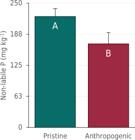
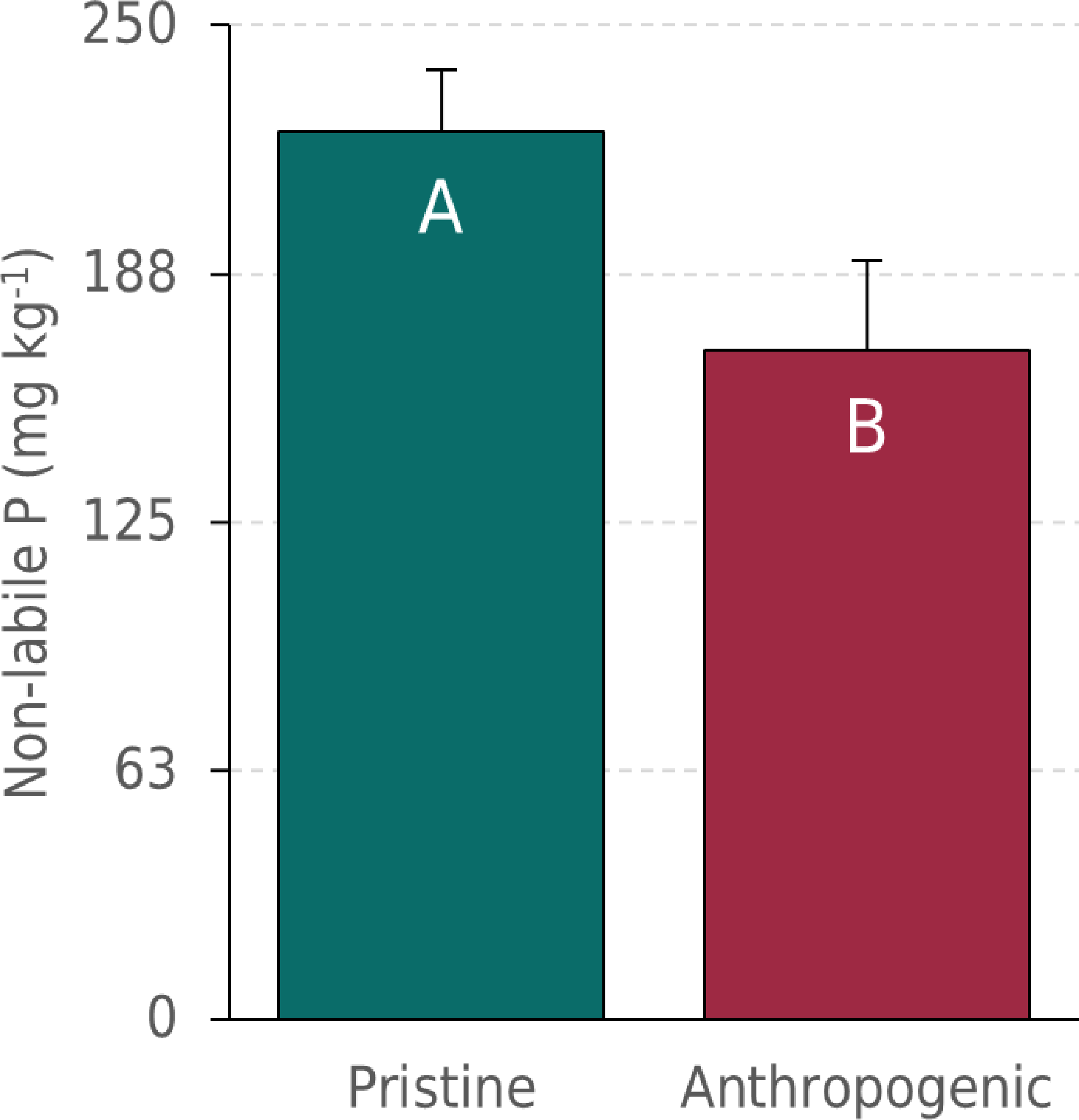
Phosphorus content of the non-labile fraction in pristine and anthropogenic soils. Different letters indicate the means of the treatments differ significantly at a 5 % significance level according to Fisher’s least significant difference test.
Non-labile phosphorus
Non-labile P content was also significantly higher in pristine soils compared to anthropically intervened soils (F = 6.95; p = 0.0154) (Figure 5). This P fraction includes the most stable and insoluble forms that undergo long-term changes (Cross and Schlesinger, 1995). Generally, the release of P from this fraction occurs in quantities and rates insufficient for plant to absorb (Gatiboni et al., 2007). Therefore, this fraction contributes to plant nutrition only in situations of extreme nutrient deficiency in the soil (Gatiboni et al., 2005).
However, it is foreseeable that the soils under study might show a reduction in P content in this fraction. This is because the more labile P fractions have been depleted, and the non-labile fraction has served as a replenishment source of P in anthropically used soils. Guo et al. (2000) indicate that the lability of P progresses over time for all fractions, suggesting that, in the long term, all soil P may become labile.
In this regard, fertilization emerges as a strategy to counteract P losses due to various anthropic uses. In a study on the impact of organic and inorganic fertilizers on P fractions after 6 years of application in an integrated crop-livestock system, Rigo et al. (2019) found that organic fertilization, whether with poultry litter or compost, leads to an increase in all P fractions, including the non-labile fraction. In contrast, chemical fertilization only results in higher levels in the moderately labile fraction. On the other hand, the study of Ciampitti (2009) showed that continuous inorganic fertilization increases the content of this P fraction. Additionally, liming promotes the increase of P in the non-labile fraction; Amarilla et al. (2019) demonstrated that this fraction increased significantly with the increased application doses of CaCO3.
Inorganic and organic phosphorus
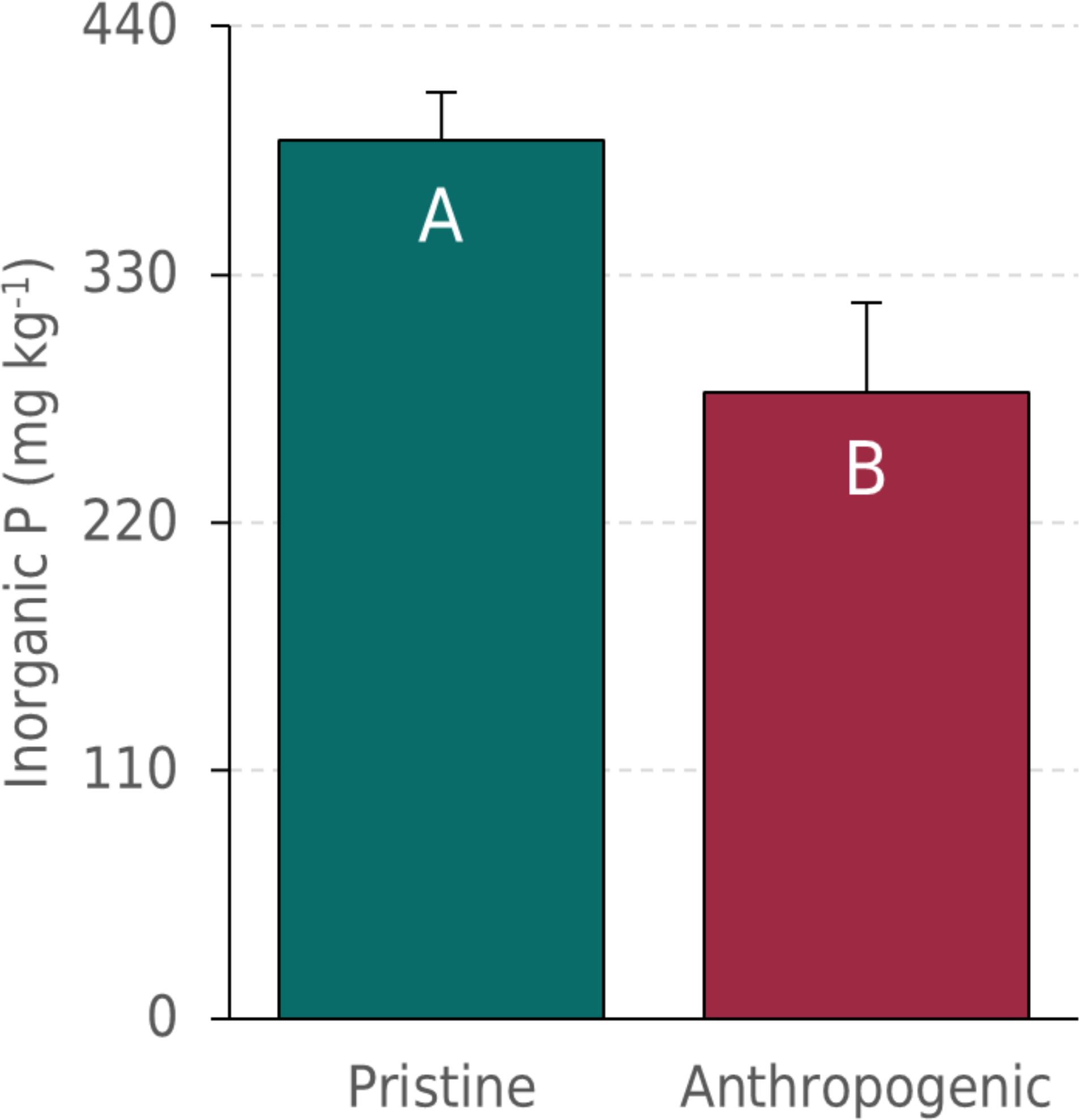
Like other fractions, inorganic P (Pi) showed significant differences between the two systems (F = 9.57; p = 0.0070), with higher content in pristine soils (Figure 6). This decrease in Pi is related to the lack of replenishment of the P extracted by crops due to the absence of fertilization in the soils of Central Chaco. Amorim et al. (2024) argue that, without the application of phosphoric fertilizers, a reduction in the inorganic P fraction is observed, as Pi fractions are the ones that directly contribute to the P available absorbed by plants (PAbs). Their path analysis reveals that all the inorganic fractions evaluated contribute directly to PAbs (p>0.10), with the labile and moderately labile fractions being the most relevant for plant absorption.
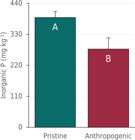
Inorganic P contents in pristine and anthropogenic soils. Different letters indicate the means of the treatments differ significantly at a 5 % significance level according to Fisher’s least significant difference test.
In line with this, Tiecher et al. (2018) found that available P is buffered by inorganic fractions of low and moderate lability in no-till systems. This context reinforces the idea that fertilization is an effective strategy to maintain or increase the inorganic P content in the soil. In their study on fertilization with pig slurry, Tiecher et al. (2017) reported increases of up to 251 % in inorganic P, with the highest accumulation observed in inorganic fractions, especially in the surface layers.
Unlike Pi, the organic P fraction (Po) did not show significant differences between the analyzed systems (F = 2.72; p = 0.1184). Although the P absorbed by plants is replenished through Pi and Po, in soils where there is an accumulation of inorganic orthophosphate, plants predominantly use this inorganic form. Mineralization of Po occurs only when P availability is critical (Gatiboni et al., 2005), suggesting that, in soils with high Pi availability, organic compound mineralization is unnecessary (Rubæk et al., 1999). This is reflected in our findings, indicating the high availability of Pi is related to the lack of differences in the Po fraction.
These results align with those of De Oliveira et al. (2015), who indicated that converting native grasslands to apple orchards resulted in a depletion of Po. Bayuelo Jiménez et al. (2019) corroborated that Po decreased with land use change and reduced organic matter content.
However, some studies contradict these findings. Negassa and Leinweber (2009) reported higher concentrations of Po in agricultural soils compared to forests, attributable to the accumulation of organic matter by pasture roots. Henríquez (2015) also found that, despite contrary expectations, sugarcane and coffee crops presented higher values of biological P compared to forest areas.
Nevertheless, it is crucial to emphasize that organic P plays a fundamental role as a phosphate source for plants, both in natural environments and cultivated soils (Tiecher et al., 2012a). Organic matter acts as a significant reservoir of P that, when decomposed by microbial activity, releases significant amounts of available P in short and prolonged periods (Frizano et al., 2003). Therefore, this P fraction represents a potential P source, especially under deficiency conditions (Chimdi et al., 2014).
Total phosphorus
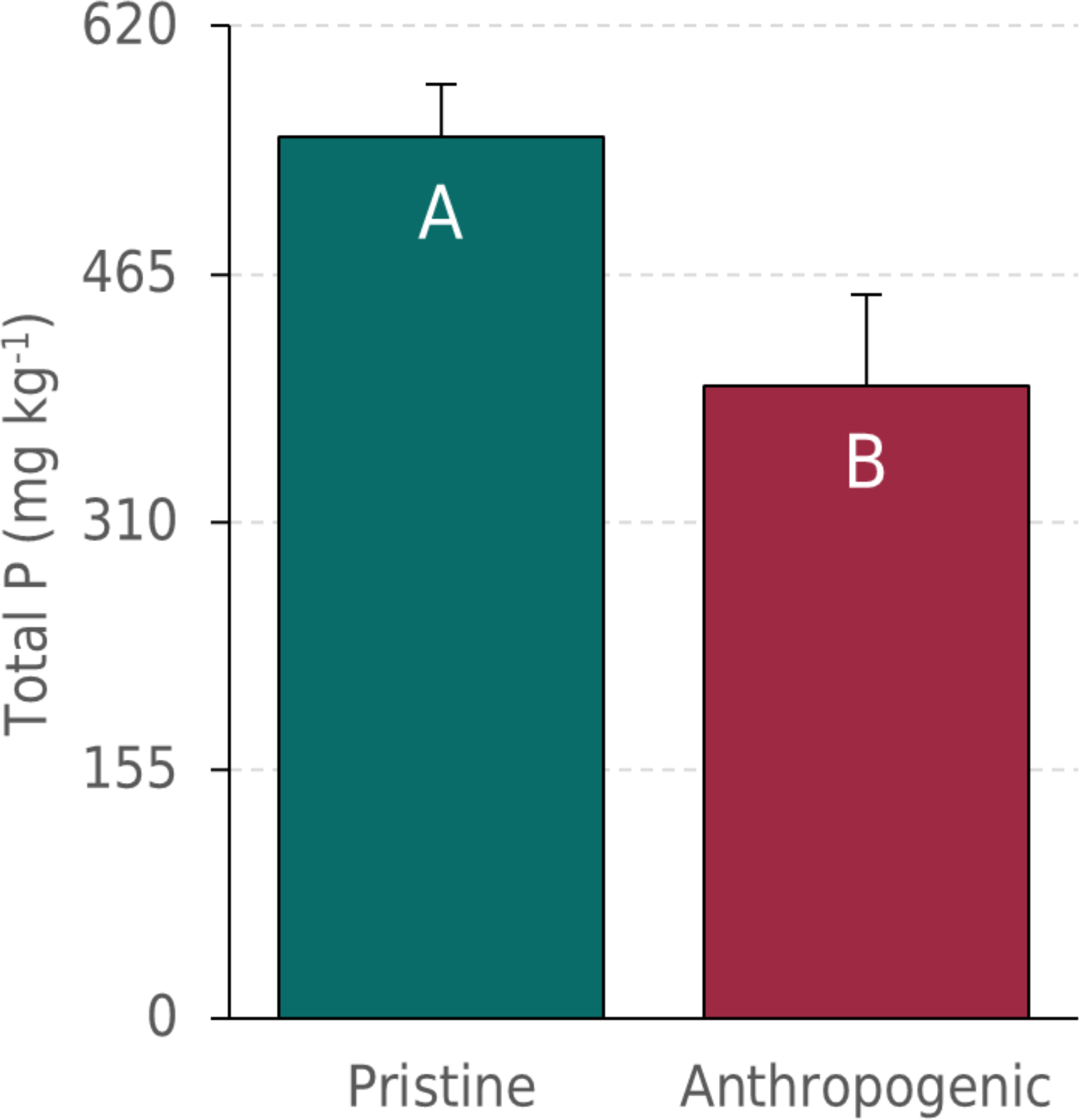
A significant decrease in total P content was observed in intervened systems compared to pristine systems (F = 7.52; p = 0.0145) (Figure 7). Total P comprises the sum of all the sequential extractions mentioned above. A reduction in P content was observed in this fraction due to the various anthropogenic land uses. These results corroborate the findings of Giannini et al. (2022), who evaluated a 35-year-old soybean monoculture system with conventional tillage and a 105-year-old system of continuous agriculture. In both cases, the total P content decreased, reaching 20 and 42 %, respectively, compared to the pristine systems at the depths analyzed.
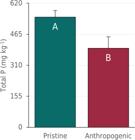
Total P conten in pristine and anthropogenic soils. Different letters indicate the means of the treatments differ significantly at a 5 % significance level according to Fisher’s least significant difference test.
In another study, Frizano et al. (2003) showed that total P in soils decreased after agricultural use compared to that in primary forest soils. In addition, Tiecher et al. (2012b), in their research on the effect of long-term cultivation of different winter species under tillage systems on the distribution of inorganic P in the soil, found that in cultivated soils, the concentration was higher compared to native vegetation at the different depths evaluated, due to the annual application of phosphate fertilizers.
CONCLUSION
Soils of the Paraguayan Chaco under anthropogenic use exhibit a decrease in phosphorus content across its various fractions, with a more pronounced reduction in the labile fraction compared to pristine soils. A significant decrease was observed in the labile, moderately labile, non-labile, and inorganic phosphorus fractions following land use conversion to agricultural activities, while the organic fraction remained unchanged. These results highlight the impact of management practices on soil phosphorus availability, which could affect long-term fertility and necessitate appropriate phosphorus replenishment strategies to sustain agricultural productivity.
ACKNOWLEDGMENTS
The authors would like to kindly thank the Cooperativa Colonizadora Multiactiva Fernheim Ltda. for their collaboration in collecting and shipping soil samples, and Lidia Pérez de Molas for her contributions in the revision of the scientific names used in this work.
-
How to cite: Candia-Díaz AB, Rasche-Álvarez JW, Decoud NCE, Fois DAF, Brenes EC. Phosphorus fractionation in soils of the Paraguayan Chaco under pristine and anthropogenic conditions. Rev Bras Cienc Solo. 2025;49nspe1:e0240119. https://doi.org/10.36783/18069657rbcs20240119
-
FUNDING
This study was supported by the Programa Universitario de Becas para la Investigación Andrés Borgognon Montero (PUBIABM).
DATA AVAILABILITY
The data will be provided upon request.
REFERENCES
- Amarilla AMA. Dosis de carbonato de calcio y su efecto sobre el pH y la labilidad de fosforo en un Ultisol de 3 de mayo, Caazapá [thesis]. San Lorenzo: Universidad Nacional Asunción; 2019.
-
Amorim MB, Fontoura SMV, Tiecher T, Moraes RP, Bayer C. Use and recovery of P reserves in Southern Brazil Oxisols under no-till with low and high P availability. Rev Bras Cienc Solo. 2024;48nesp1:e0230127. https://doi.org/10.36783/18069657rbcs20230127
» https://doi.org/10.36783/18069657rbcs20230127 -
Assis J, Brauwers LP, Duarte LP, Ghisleni G, Tiecher T, Carvalho PCF, Bremm C, Souza ED, Martins AP. Phosphorus lability in a subtropical Acrisol under long-term integrated crop-livestock system: Impacts of grazing management and cropping system. Rev Bras Cienc Solo. 2022;46:e0220066. https://doi.org/10.36783/18069657rbcs20220066
» https://doi.org/10.36783/18069657rbcs20220066 -
Bayuelo Jiménez JS, Ochoa I, de la Cruz Torres E, Muraoka T. Effects of land use on phosphorus fractions and availability in an Andisol from the P’urhépecha Plateau, Michoacán. Terra Latinoam. 2019;37:35-44. https://doi.org/10.28940/terra.v37i1.367
» https://doi.org/10.28940/terra.v37i1.367 -
Bezerra RPM, Loss A, Pereira MG, Perin A. Phosphorus fractions and correlation with soil attributes under notillage and crop-livestock integration systems in Cerrado of Goias. Semin-Cienc Agrar. 2015;36:1287-306. https://doi.org/10.5433/1679-0359.2015v36n3p1287
» https://doi.org/10.5433/1679-0359.2015v36n3p1287 -
Blackwell M, Darch T, Haslam R. Phosphorus use efficiency and fertilizers: Future opportunities for improvements. Front Agric Sci Eng. 2019;6:332-40. https://doi.org/10.15302/J-FASE-2019274
» https://doi.org/10.15302/J-FASE-2019274 -
Blake L, Johnston AE, Poulton PR, Goulding KWT. Changes in soil phosphorus fractions following positive and negative phosphorus balances for long periods. Plant Soil. 2003;254:245-61. https://doi.org/10.1023/A:1025544817872
» https://doi.org/10.1023/A:1025544817872 -
Brookes PC, Powlson DS. Preventing phosphorus losses during perchloric acid digestion of sodium bicarbonate soil extracts. J Sci Food Agric. 1981;32:671-4. https://doi.org/10.1002/jsfa.2740320707
» https://doi.org/10.1002/jsfa.2740320707 -
Candia-Díaz AB, Alvarez JWR, Decoud NCE, Fois DAF. Phosphorus availability in soils of the Central Chaco extracted by different methodologies. Rev Soc Scient Parag. 2023;28:329-51. https://doi.org/10.32480/rscp.2023.28.2.329
» https://doi.org/10.32480/rscp.2023.28.2.329 -
Chimdi A, Esala M, Ylivainio K. Sequential fractionation patterns of soil phosphorus collected from different land use systems of Dire Inchine District, West Shawa Zone, Ethiopia. Am J Sci Res. 2014;9:51-7. https://doi.org/10.5829/idosi.aejsr.2014.9.3.1138
» https://doi.org/10.5829/idosi.aejsr.2014.9.3.1138 - Ciampitti IA. Dinámica del fósforo del suelo en rotaciones agrícolas en ensayos de nutrición a largo plazo. Cdad. Autónoma de Buenos Aires, Argentina: Biblioteca Central FAUBA; 2009.
-
Condron L, Goh K, Newman R. Nature and distribution of soil phosphorus as revealed by a sequential extraction method followed by. J Soil Sci. 1985;36:199-207. https://doi.org/10.1111/j.1365-2389.1985.tb00324.x
» https://doi.org/10.1111/j.1365-2389.1985.tb00324.x -
Cordell D, Drangert JO, White S. The story of phosphorus: Global food security and food for thought. Global Environ Chang. 2009;19:292-305. https://doi.org/10.1016/j.gloenvcha.2008.10.009
» https://doi.org/10.1016/j.gloenvcha.2008.10.009 -
Cross AF, Schlesinger WH. A literature review and evaluation of the. Hedley fractionation: Applications to the biogeochemical cycle of soil phosphorus in natural ecosystems. Geoderma. 1995;64:197-214. https://doi.org/10.1016/0016-7061(94)00023-4
» https://doi.org/10.1016/0016-7061(94)00023-4 -
Dick WA, Tabatabai MA. Determination of orthophosphate in aqueous solutions containing labile organic and inorganic phosphorus compounds. J Environ Qual. 1977;6:82-5. https://doi.org/10.2134/jeq1977.00472425000600010018x
» https://doi.org/10.2134/jeq1977.00472425000600010018x -
Frizano J, Vann DR, Johnson AH, Johnson CM, Vieira ICG, Zarin DJ. Labile phosphorus in soils of forest fallows and primary forest in the Bragantina region, Brazil. Biotropica. 2003;35:2-11. https://doi.org/10.1111/j.1744-7429.2003.tb00256.x
» https://doi.org/10.1111/j.1744-7429.2003.tb00256.x -
Gatiboni LC, Kaminski J, Rheinheimer DS, Flores JPC. Bioavailability of accumulated forms of phosphorus in solo under direct plantation system. Rev Bras Cienc Solo. 2007;31:691-9. https://doi.org/10.1590/s0100-06832007000400010
» https://doi.org/10.1590/s0100-06832007000400010 -
Gatiboni LC, Rheinheimer DS, Flores AFC, Anghinoni I, Kaminski J, Lima MAS. Phosphorus forms and availability assessed by 31P-NMR in successively cropped soil. Commun Soil Sci Plant Anal. 2005;36:2625-40. https://doi.org/10.1080/00103620500301917
» https://doi.org/10.1080/00103620500301917 -
Gatiboni LC, Vargas CO, Albuquerque JA, Almeida JA, Stahl J, Chaves DM, Brunetto G, Dall’Orsoletta DJ, Rauber LP. Phosphorus fractions in soil after successive crops of Pinus taeda L. without fertilization. Cienc Rural. 2017;47:e20160595. https://doi.org/10.1590/0103-8478cr20160595
» https://doi.org/10.1590/0103-8478cr20160595 - Giannini AP, Andriulo AE, Wyngaard N, Irizar AB. Phosphorus fractions under different managements. Cienc Suelo. 2022;40:196-207.
-
Guera KCS, Fonseca AF. Phosphorus fractions and their relationships with soil chemical attributes in an integrated crop-livestock system under annual phosphate fertilization. Front Sustain Food Syst. 2022;6:893525. https://doi.org/10.3389/fsufs.2022.893525
» https://doi.org/10.3389/fsufs.2022.893525 -
Guo F, Yost RS, Hue NV, Evensen CI, Silva JA. Changes in phosphorus fractions in soils under intensive plant growth. Soil Sci Soc Am J. 2000;64:1681-9. https://doi.org/10.2136/sssaj2000.6451681x
» https://doi.org/10.2136/sssaj2000.6451681x -
Hedley MJ, Stewart JWB, Chauhan BS. Changes in inorganic and organic soil phosphorus fractions induced by cultivation practices and by laboratory incubations. Soil Sci Soc Am J. 1982;46:970-6. https://doi.org/10.2136/sssaj1982.03615995004600050017x
» https://doi.org/10.2136/sssaj1982.03615995004600050017x -
Henríquez C. Efecto del uso del suelo sobre las formas de fósforo de un Andisol. Agron Costarricense. 2015;39:79-85. https://doi.org/10.15517/rac.v39i3.21793
» https://doi.org/10.15517/rac.v39i3.21793 -
Motavalli PP, Miles RJ. Soil phosphorus fractions after 111 years of animal manure and fertilizer applications. Biol Fertil Soils. 2002;36:35-42. https://doi.org/10.1007/s00374-002-0500-6
» https://doi.org/10.1007/s00374-002-0500-6 -
Murphy J, Riley JP. A modified single solution method for the determination of phosphate in natural waters. Anal Chim Acta. 1962;27:31-6. https://doi.org/10.1016/S0003-2670(00)88444-5
» https://doi.org/10.1016/S0003-2670(00)88444-5 -
Negassa W, Leinweber P. How does the hedley sequential phosphorus fractionation reflect impacts of land use and management on soil phosphorus: a review. J Plant Nutr Soil Sci. 2009;172:305-25. https://doi.org/10.1002/jpln.200800223
» https://doi.org/10.1002/jpln.200800223 -
Nunes RS, Sousa DMG, Goedert WJ, Oliveira LEZ, Pavinato PS, Pinheiro TD. Distribution of soil phosphorus fractions as a function of long-term soil tillage and phosphate fertilization management. Front Earth Sci. 2020;8:350. https://doi.org/10.3389/feart.2020.00350
» https://doi.org/10.3389/feart.2020.00350 -
Oliveira CMB, Erich MS, Gatiboni LC, Ohno T. Phosphorus fractions and organic matter chemistry under different land use on Humic Cambisols in Southern Brazil. Geoderma Reg. 2015;5:140-9. https://doi.org/10.1016/j.geodrs.2015.06.001.
» https://doi.org/10.1016/j.geodrs.2015.06.001 -
Pavinato PS, Dao TH, Rosolem CA. Tillage and phosphorus management effects on enzyme-labile bioactive phosphorus availability in Cerrado Oxisols. Geoderma. 2010;156:207-15. https://doi.org/10.1016/j.geoderma.2010.02.019
» https://doi.org/10.1016/j.geoderma.2010.02.019 -
Pavinato PS, Merlin A, Rosolem CA. Phosphorus fractions in Brazilian Cerrado soils as affected by tillage. Soil Till Res. 2009;105:149-55. https://doi.org/10.1016/j.still.2009.07.001
» https://doi.org/10.1016/j.still.2009.07.001 - Peroni-Mayans RS, Rasche Álvarez JW. Efecto de la fertillzación fosfatada sobre el tenor de fósforo de cinco suelos del paraguay y el crecimiento del maíz (Zea mays L.). Investig Agrar. 2013;9:46-50.
-
Redel YD, Escudey M, Alvear M, Conrad J, Borie F. Effects of tillage and crop rotation on chemical phosphorus forms and some related biological activities in a Chilean Ultisol. Soil Use Manage. 2011;27:221-8. https://doi.org/10.1111/j.1475-2743.2011.00334.x
» https://doi.org/10.1111/j.1475-2743.2011.00334.x -
Rheinheimer DS, Anghinoni I. Distribution of inorganic phosphorus in solo management systems. Pesq Agropec Bras. 2001;36:151-60. https://doi.org/10.1590/s0100-204x2001000100019
» https://doi.org/10.1590/s0100-204x2001000100019 -
Rheinheimer DS, Gatiboni LC, Kaminski J. Factors affecting phosphorus availability and management of phosphate fertilization in soils under direct plantation system. Cienc Rural. 2008;38:576-86. https://doi.org/10.1590/S0103-84782008000200049
» https://doi.org/10.1590/S0103-84782008000200049 -
Richter DD, Allen HL, Li J, Markewitz D, Raikes J. Bioavailability of slowly cycling soil phosphorus: Major restructuring of soil P fractions over four decades in an aggrading forest. Oecologia. 2006;150:259-71. https://doi.org/10.1007/s00442-006-0510-4
» https://doi.org/10.1007/s00442-006-0510-4 - Di Rienzo JA, Macchiavelli R, Casanoves F. Linear Mixed Models InfoStat; 2017.
-
Rigo AZ, Corrêa JC, Mafra ÁL, Hentz P, Grohskopf MA, Gatiboni LC, Bedendo G. Phosphorus fractions in soil with organic and mineral fertilization in integrated crop-livestock system. Rev Bras Cienc Solo. 2019;43:e0180130. https://doi.org/10.1590/18069657rbcs20180130
» https://doi.org/10.1590/18069657rbcs20180130 -
Rubæk GH, Guggenberger G, Zech W, Christensen BT. Organic phosphorus in soil size separates characterized by phosphorus‐31 nuclear magnetic resonance and resin extraction. Soil Sci Soc Am J. 1999;63:1123-32. https://doi.org/10.2136/sssaj1999.6351123x
» https://doi.org/10.2136/sssaj1999.6351123x -
Shen J, Yuan L, Zhang J, Li H, Bai Z, Chen X, Zhang W, Zhang F. Phosphorus dynamics: From soil to plant. Plant Physiol. 2011;156:997-1005. https://doi.org/10.1104/pp.111.175232.
» https://doi.org/10.1104/pp.111.175232 -
Smil V. Phosphorus in the environment: Natural flows and human interferences. Annu Rev Env Resour. 2000;25:53-88. https://doi.org/10.1146/annurev.energy.25.1.53
» https://doi.org/10.1146/annurev.energy.25.1.53 - Subero N, Ramírez R, Sequera O, Parra JC. Fractions of phosphorus in soils cultivated with rice for long periods: II. Organic-inorganic phosphorus relationship. Bioagro. 2016;28:81-6.
-
Tang X, Liu H, Qin H, Zhao J, Wang H, Li B, Lu Y. Organic/inorganic phosphorus partition and transformation in long-term paddy cultivation in the Pearl River Delta, China. Sci Rep. 2023;13:11122. https://doi.org/10.1038/s41598-023-38369-2
» https://doi.org/10.1038/s41598-023-38369-2 -
Tiecher T, Santos DR, Calegari A. Soil organic phosphorus forms under different soil management systems and winter crops, in a long term experiment. Soil Till Res. 2012a;124:57-67. https://doi.org/10.1016/j.still.2012.05.001
» https://doi.org/10.1016/j.still.2012.05.001 -
Tiecher T, Santos DR, Kaminski J, Calegari A. Forms of inorganic phosphorus in soil under different long term soil tillage systems and winter crops. Rev Bras Cienc Solo. 2012b;36:271-82. https://doi.org/10.1590/s0100-06832012000100028
» https://doi.org/10.1590/s0100-06832012000100028 -
Tiecher T, Gomes MV, Ambrosini VG, Amorim MB, Bayer C. Assessing linkage between soil phosphorus forms in contrasting tillage systems by path analysis. Soil Till Res. 2018;175:276-80. https://doi.org/10.1016/j.still.2017.09.015
» https://doi.org/10.1016/j.still.2017.09.015 -
Tiecher T, Tiecher TL, Mallmann FJK, Zafar M, Ceretta CA, Lourenzi CR, Brunetto G, Gatiboni LC, Santos DR. Chemical, biological, and biochemical parameters of the soil P cycle after long-term pig slurry application in no-tillage system. Rev Bras Cienc Solo. 2017;41:e0170037. https://doi.org/10.1590/18069657rbcs20170037
» https://doi.org/10.1590/18069657rbcs20170037 - United states Environmental Protection Agency - Usepa. Methods for chemical analysis of water and wastes. Ciincinnati, Ohio: Environmental Monitoring and Support Laboratory; 1971.
-
Wang Y, Zhang W, Müller T, Lakshmanan P, Liu Y, Liang T, Wang L, Yang H, Chen X. Soil phosphorus availability and fractionation in response to different phosphorus sources in alkaline and acid soils: a short-term incubation study. Sci Rep. 2023;13:5677. https://doi.org/10.1038/s41598-023-31908-x
» https://doi.org/10.1038/s41598-023-31908-x -
Wierzbowska J, Sienkiewicz S, Zalewska M, Żarczyński P, Krzebietke S. Phosphorus fractions in soil fertilised with organic waste. Environ Monit Assess. 2020;192:192-315. https://doi.org/10.1007/s10661-020-8190-9
» https://doi.org/10.1007/s10661-020-8190-9 - Wolfgang K, Barboza F, Carlini A, Hoffmann R, Medina Netto AMF. CHACO: Protection and Sustainable Use; 1998.
-
Yu W, Li G, Hartmann TE, Xu M, Yang X, Li H, Zhang J, Shen J. Development of a novel model of soil legacy P assessment for calcareous and acidic soils. Front Environ Sci. 2021;8:621833. https://doi.org/10.3389/fenvs.2020.621833
» https://doi.org/10.3389/fenvs.2020.621833 -
Zamuner EC, Picone LI, Echeverria HE. Organic and inorganic phosphorus in Mollisol soil under different tillage practices. Soil Till Res. 2008;99:131-8. https://doi.org/10.1016/j.still.2007.12.006
» https://doi.org/10.1016/j.still.2007.12.006
Edited by
-
Editors:
Tales Tiecher https://orcid.org/0000-0001-5612-2849 and Paulo Sergio Pavinato https://orcid.org/0000-0003-3244-2666