 Rice straw biochar mitigates metal stress in corn and assists in the phytoattenuation of a slag-contaminated soil
ABSTRACT
Soils polluted by potentially toxic elements (PTEs) pose a high risk to human health and must be remediated. Applying biochar to such soils can reduce metal bioavailability and phytotoxicity, improving phytoremediation techniques. This study aimed to assess the effects of rice straw biochar (RSB) on mitigating metal stress and accumulation of Si, Cd, Pb, and Zn in corn plants grown in soil contaminated by metallurgy slag. Soil in pots was amended with RSB rates equivalent to 0, 5, 10, 20, and 30 Mg ha-1 and grown with corn for 45 days. Chlorophyll fluorescence, photosynthetic pigment contents, and gas exchange parameters were evaluated as PTEs toxicity indicators. The RSB rates significantly increased Si uptake while reducing Cd, Pb, and Zn accumulation in corn shoots. The addition of 30 Mg ha-1 RSB promoted 18, 34, and 37 % reductions for Zn, Cd, and Pb in the plants, respectively. Photosynthetic rate, transpiration, and stomatal conductance increased by 68, 67, and 55 %, while chlorophyll a, b, and carotenoid contents increased by 77, 57, and 42 %, correspondingly. Chlorophyll fluorescence measurements showed a linear and positive relationship between photosystem II energy consumption efficiency (Fv/Fm) and RSB rates. The combined use of RSB and corn can effectively phytoattenuate Cd, Pb, and Zn contamination by enhancing biomass and improving maize tolerance to PTE stress. This sustainable and cost-effective strategy offers environmental and health benefits while generating income for stakeholders in resource-limited areas.
Keywords
soil remediation; photosynthesis; abiotic stress; silicon; gas exchange
INTRODUCTION
Anthropogenic input of potentially toxic elements (PTEs) disrupts soil functions, compromises food quality, and threatens human health due to their persistence, phytotoxicity, non-biodegradability, and entry into the food chain (Peng et al., 2017; Zhang et al., 2022). Metallurgy is a key source of PTEs (Silva et al., 2017; Wang et al., 2020), with slag accumulation at abandoned smelters contaminating soils and water (Król et al., 2020; Izydorczyk et al., 2021). In Santo Amaro, Bahia, Pb smelting from the 1960s to 1980s left thousands of tons of slag, resulting in severe Pb contamination and causing neurological, renal, and genotoxic damage to local residents (Lima and Bernardez, 2011; Niemeyer et al., 2015; Santos et al., 2015). Despite 30 years of inactivity, the region soils still contain high PTE levels, especially Pb, Zn and Cd, posing ongoing health risks (Silva et al., 2017).
In this context, reducing PTE availability is essential to protect ecosystems and human health. Phytoattenuation, a phytotechnology for polluted soil remediation, gradually reduces PTE concentrations in soil while generating income from valuable plants (Cundy et al., 2016; Zhu et al., 2016). It offers synergies with energy crops, biodiversity, watershed management, carbon sequestration, and erosion control, making the process economically, socially, and environmentally beneficial (Cundy et al., 2016; Burges et al., 2018). This strategy may involve using plant biomass for energy generation, such as biogas production through anaerobic digestion (Ahmad et al., 2018). Corn (Zea mays L.), a widely grown bioenergy crop, is ideal due to its ease of management, fast growth, high biomass, and extensive root system (Ahmad et al., 2018).
Biochar is an eco-friendly soil amendment that helps retain PTEs and reduce their uptake and toxicity in plants (Cui et al., 2016; Meng et al., 2018). Rich in pyrogenic carbon, biochar is a highly recalcitrant, porous material produced from organic waste pyrolysis (Lu et al., 2014; Meng et al., 2018). It immobilizes labile PTEs in soil by mechanisms such as precipitation, ion exchange, complexation, and chemisorption (Wang et al., 2021). Additionally, biochar can supply nutrients (e.g., K, P, and micronutrients) and silicon (Si) to plants, particularly biochar derived from straw or rice husks (Li et al., 2019; Wang et al., 2019; Amritha and Sankar, 2020; Yao et al., 2022).
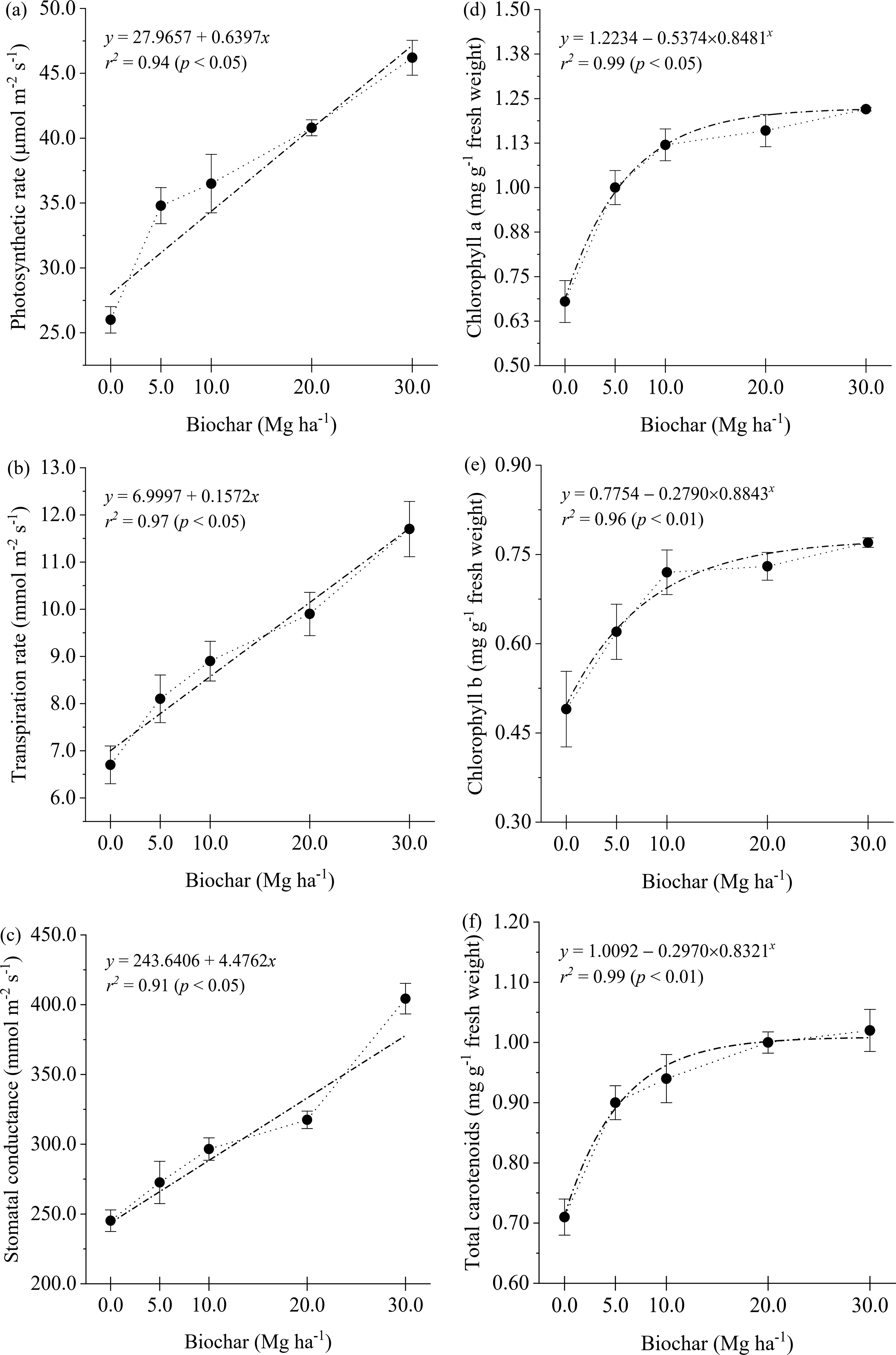
Physiological processes such as photosynthetic pigment production and gas exchange, along with chlorophyll fluorescence measurements, are key indicators of PTE stress in plants (Rusinowski et al., 2019; Zhang et al., 2020; Ren et al., 2021). Chlorophyll fluorescence provides insights into photochemical efficiency, with the Fv/Fm ratio — derived from variable and maximum fluorescence — evaluating the performance of the photosynthetic apparatus and the plant tolerance to PTE stress (Dezhban et al., 2015). Other stress indicators include chlorophyll content and gas exchange parameters. Chlorophyll a and b levels serve as important markers of soil pollution effects (Moradi and Ehsanzadeh, 2015; Chu et al., 2018), alongside changes in stomatal conductance, CO₂ assimilation, and photosynthetic rate (Feng et al., 2010; Gonzaga et al., 2019).
We hypothesize that applying rice straw biochar (RSB) to PTE-polluted soils can mitigate plant toxicity, stabilize PTEs, and support phytoattenuation. This study evaluated the effects of different RSB rates on biomass yield and the accumulation of Si, Cd, Pb, and Zn in corn grown in slag-contaminated soil. Additionally, we assessed the functioning of the photosynthetic apparatus, photosynthetic pigment production, and gas exchange parameters. Our findings may demonstrate the technical feasibility of combining RSB with plants for remediating PTE-polluted soils.
MATERIALS AND METHODS
Soil and biochar characterization
The soil utilized in this research, classified as Acrisol according to the IUSS Working Group WRB (2015), which corresponding to Argissolo Vermelho Eutrófico according to the Brazilian Soil Classification System (Santos et al., 2018), exhibited significant contamination resulting from the deposition of a slag rich in Cd, Pb, and Zn near an abandoned lead smelting facility in Santo Amaro, Brazil (12° 32’ 21.6” S, 38° 43’ 41” W). A composite soil sample, prepared by combining ten subsamples, was air-dried, and sieved through a 2 mm mesh sieve. Subsequently, three subsamples (triplicate analysis) were used for comprehensive chemical and physical characterization, as well as the determination of total, semi-total, and bioavailable concentrations of PTEs in the soil (Table 1). Contents of Pb, Zn, and Cd in the soil exceed the investigation thresholds established by Conama (2009) for permissible PTE levels in soils, set at 180, 450, and 3 mg kg-1, respectively, for these metals.
Soil pH was determined by mixing the soil with a 1:2.5 ratio of soil to CaCl₂ solution (10 mmol L-¹). Soil organic carbon content was measured through the Walkley-Black procedure. Available phosphorus (P) was extracted using Mehlich-1 solution and analyzed by colorimetry. Cation exchange capacity (CEC) was quantified through the sodium acetate/ammonium saturation technique (McGeorge, 1954). For cadmium (Cd), lead (Pb), and zinc (Zn), both total and phytoavailable concentrations were analyzed. Total metal contents were obtained following the method by Alvarez et al. (2001): 0.5 g of finely ground soil (0.15 mm sieve) was digested in a Teflon vessel with an acid mixture (5 mL HF + 5 mL HNO₃ + 3 mL HClO₄ + 5 mL HCl) at 180 °C. Phytoavailable metal fractions were extracted using a DTPA-TEA solution (0.005 mol L-¹ diethylenetriaminepentaacetic acid + 0.1 mol L-1 triethanolamine + 0.01 mol L-¹ CaCl₂) at pH 7.3, based on Lindsay and Norvell (1978).
The biochar tested in this study was a commercially available product obtained from pyrolysis of rice straw at 400 °C. This biochar was selected for its Si content and pyrolysis temperature, as previous studies have shown that RSB pyrolyzed at 400 °C exhibits superior PTEs adsorption in comparison to other temperatures (Jiang et al., 2012; Ding et al., 2014). The biochar was characterized (Table 2) following the procedures described by Singh et al. (2017). The pH and electrical conductivity (EC) of the biochar were determined using an electrometric approach. These parameters were measured in a biochar suspension prepared by mixing biochar and deionized water at a 1:10 ratio, followed by agitation for one hour in an orbital shaker. For the porosity evaluation, images were obtained using scanning electron microscopy (SEM), and the contents of C, H, and O, were determined through energy-dispersive X-ray spectroscopy (EDS). Imaging and analysis are provided in Veloso et al. (2022). Specific surface area, bulk density, ash content, moisture, and cation exchange capacity (CEC) were provided by the manufacturer. Total concentrations of P, K, Si, Ca, Mg Fe, Mn, Cu, Zn, Cd, and Pb were obtained from the extract of the biochar digestion using the 3051A method (Usepa, 2007) followed by PTE measurements by ICP-OES (Optima 7000 Perkin Elmer, USA).
Pot experiment
The soil in the pots was fertilized with the following nutrients and sources (mg kg-1): 250 N (Urea), 240 P (MAP), 150 K (KCl), 160 S (K2SO4), 2 Fe (FeSO4.7H2O), 4 Mn (MnCl2.4H2O), 1.3 Cu (CuSO4), 1 B (H3BO3), and 0.2 Mo (Na2MoO4.2H2O) (Silva et al. 2017). The RSB was applied to 5 kg pots at five rates (equivalents to 0.0, 5.0, 10.0, 20.0, and 30.0 Mg ha-1) replicated four times in a randomized block design. In each pot, five corn seeds were initially planted, and post-germination, only two plants were kept for biomass collection. Corn was selected for testing due to its potential for bioenergy production through harvest. Throughout the experiment, control was maintained to sustain the soil at 80 % of its maximum water retention capacity.
Plant physiological analyses
Leaf gas exchange (photosynthetic rate, transpiration, and stomatal conductance) was evaluated at 45 days of cultivation using a portable gas exchange system (model LI–6400XT, LI–COR Bioscences, Lincoln, NE, USA). Measurements were carried out on two leaves of the upper third of the plant. All parameters were measured between 9 am and 11 am, when the plants were physiologically functional. During the measurements, the intensity of the photosynthetic photon flux was maintained in 1800 μmol m2 s-1 (Dourado et al., 2022).
Initial fluorescence (Fo), variable fluorescence (Fv), maximum fluorescence (Fm), and maximum quantum yield index (Fv/Fm) were determined simultaneously, immediately following the gas exchange measurements, using a portable fluorometer (FluorPen, model F100, Photon Systems Instruments). Measurements were carried out on two leaves of the upper third of the plant, which previously had a leaf blade section kept in the dark for 30’ (Souza et al., 2021).
To analyze chlorophyll a and b (Chl a and Chl b) and carotenoid contents, 0.1 g of fresh material from two leaves was extracted with 8 mL of 95 % acetone solution for 24 h at 4 °C in the dark. Subsequently, the extracts were measured in a spectrophotometer at 663.2 nm (Chl a), 646.8 nm (Chl b), and 470 nm (carotenoids); the contents of each pigment were estimated according to Lichtenthaler and Buschmann (2001) and expressed in mg g-1 of fresh mass. After these analyses, the plants were collected. The shoots were washed with tap and distilled water, dried at 60 °C, and weighed, obtaining the shoots biomass; then, the samples were ground in a knife mill.
Chemical analyses and quality control
Concentration of Cd, Pb, and Zn were determined in the extracts of corn shoots after digestion in a microwave system (Usepa, 1996) in an acid solution with HNO3 + H2O2 at 180 °C for 10 min. Silicon concentration in shoots was obtained according to Elliott and Snyder (1991). The PTEs (Cd, Pb, and Zn) and Si contents in corn shoots were obtained by multiplying the elemental concentrations and the shoots dry biomass.
Blank samples and plant reference material (SRM 1570a Spinach leaves) with multielement concentrations certified by the National Institute of Standards and Technology (NIST) were analyzed. The element concentrations recovered in the certified sample varied between 90 and 110 %. All analyses were carried out in duplicate.
Statistical analyses
Mean and standard deviation values were computed for all variables subjected to analysis. Normality of the data was assessed using the Shapiro–Wilk test, and, when necessary, logarithmic or square root transformations were applied to the dataset. Each variable under scrutiny underwent analysis of variance (ANOVA) at a significance level of p<0.05. Regression models (p<0.05) were then tailored to the dependent variables based on the biochar rates applied to the soil, with the goodness of fit determined by the regression coefficient (r2). Additionally, Pearsonlinear correlation analysis (p<0.05) was conducted to explore relationships between physiological parameters and the concentrations of Si and PTEs in the plant shoots. All statistical analyses were executed using STATISTICA (v. 10) and OriginPro 2022b software.
RESULTS AND DISCUSSION
Corn biomass production
Applying biochar led to a significant increase in biomass production. Biochar rates of 5, 10, 20, and 30 Mg ha-¹ resulted in shoot biomass increases of 4.6, 8.4, 14.2, and 18.2 %, respectively. Similarly, root biomass increased by 3.8, 7.6, 15.2, and 22.8 % (Figure 1). The improvement in biomass production is likely due to the enhanced soil fertility and PTE immobilization effects of biochar. These results are consistent with previous studies that have reported significant increases in plant biomass in both agricultural soils (Naeem et al., 2017) and polluted soils amended with biochar (Ahmad et al., 2018; Zhang et al., 2022).

Average biomass production (± standard deviation) from shots (a) and roots (b) of corn plants cultivated for 45 days in the polluted soil by slag of a Pb metallurgy and subjected to doses of rice straw biochar. p<0.001 significant at 0.1 % probability (ANOVA).
Silicon, cadmium, lead, and zinc uptake by corn plants
Addition of RSB significantly increased Si accumulation in the plant (Figure 2). At the rate of 30.0 Mg ha-1, the Si content in the shoots was 98 % higher than in control. Yao et al. (2022) observed that the Si concentration in the rice shoots increased, on average, by 105 % with the application of 0.3 % RSB compared to the control (–Si). Silicon concentration can vary between 55 and 185 mg kg-1; therefore, RSB can increase the Si bioavailability in the soil and the accumulation of this element in crops (Li et al., 2019; Wang et al., 2019; Amritha and Sankar, 2020).

Mean values (± standard deviation) silicon content of the shoot of corn plants cut for 45 days in the polluted soil by slag from Pb metallurgy and subjected to doses of rice straw biochar. p<0.01 significant at 1 % probability (ANOVA).
Application of RSB significantly reduced the contents of Cd, Pb and Zn in the corn shoots (Figures 3a, 3b and 3c). Cadmium accumulation ranged from 0.29 mg pot-1 (control) to 0.27 (-7 %), 0.25 (-14 %), 0.22 (-24 %) and 0.19 (-34 %) mg pot-1; for Pb, the reduction was from 0.38 mg pot-1 (control) to 0.35 (-8 %), 0.33 (-13 %), 0.28 (-26 %) and 0.24 (-37 %) mg pot-1; while Zn reduced 3, 6, 12 and 18 % in the treatments 5, 10, 20, and 30 Mg ha-1 RSB, respectively. Other studies also reported that applying biochar in soils polluted by PTEs reduced their contents in plants (Ahmad et al., 2018; Nie et al., 2018; Nzediegwu et al., 2019; Wang et al., 2019; Mansoor et al., 2021). A meta-analysis with 1,298 data demonstrated that biochar applied to soils contaminated by PTEs was able to promote a reduction of 38, 39 and 17 % in the concentrations of Cd, Pb and Zn, respectively, in several crops (Chen et al., 2018); these results were similar to the 30.0 Mg ha-1 RSB rate tested here.

Mean content (± standard deviation) of Cd, Pb and Zn in the shoot of corn plants cultivated for 45 days in a soil polluted by slag from a Pb metallurgy and submitted to doses of rice straw biochar (a–c); cause–effect relationship between Si and heavy metal contentes in the shoot of corn plants (d–f). p<0.01 and p<0.05 significant at 1 and 5 % probability by ANOVA, respectively.
The lower Cd, Pb, and Zn contents in corn are likely related to reduced bioavailability in the soil amended with biochar. Veloso et al. (2022) found that applying 30 Mg ha-1 RSB, in the same soil used in this experiment, promoted a reduction of 34, 32 and 33 % in the bioavailability of Cd, Pb, and Zn assessed by DTPA, respectively. The immobilization of PTEs in the soil by biochar can take place through direct mechanisms (e.g., adsorption, ion exchange, complexation, and precipitation reactions) and indirect (increases in pH, organic matter, electrical conductivity, and cation exchange capacity) that will inhibit the absorption of PTEs by plants (Cao et al., 2009; Lu et al., 2012; Ding et al., 2014; Chen et al., 2018; Qiu et al., 2021).
Biochar effects on available cadmium, lead, and zinc in soil
Applying biochar at a rate of 30 Mg ha-¹ lowered the DTPA-extractable contents of Cd, Pb, and Zn from 15 to 10 mg kg-¹ (-33.1 %), 680 to 465 mg kg-¹ (-31.6 %), and 50 to 33 mg kg-¹ (–32.7 %), respectively, in comparison to untreated soil. These reductions in Cd, Pb, and Zn availability align with previous studies on biochar-amended soils, which attribute such decreases to metal interactions with the biochar surface charges and functional groups (Lu et al., 2014; Yin et al., 2016; Chen et al., 2018; Bashir et al., 2018). For example, Lu et al. (2017) documented that applying 5 % (w/w) RSB to soils contaminated by Cu smelting activities led to a notable reduction in DTPA-extractable Cd, Pb, and Zn by 44.5, 91.7, and 67.7 %, respectively. Similarly, Zhang et al. (2017) observed a 45-62 % decrease in Cd availability in soils contaminated with metals and treated with RSB.
Leaf photochemical traits, pigment profile and gas exchange
Plants treated with RSB showed a better physiological status due to reduced PTE accumulation and possibly lower oxidative stress. In the 30 Mg ha-1 RSB treatment, photosynthetic rate, transpiration, and stomatal conductance increased by 68, 67, and 55 % compared to the control (Figures 4a, 4b and 4c). Regarding photosynthetic pigments, Chla contents rose from 0.69 to 1.22 mg g-1 (+77 %); for Chlb, the increase was from 0.49 to 0.77 mg g-1 (+57 %); for total carotenoids, there was an increase from 0.71 to 1.01 mg g-1 (+42 %) when the results between control (no Si) and 30 Mg ha-1 were compared. Studies have confirmed that the addition of biochar in soils polluted by PTEs can have a positive effect on the content of photosynthetic pigments and, consequently, on the photosynthetic capacity of plants (García et al., 2020; Kamran et al., 2020; Haider et al., 2022; Zhen et al., 2022).

Mean values (± standard deviation) of physiological parameters (a–c) and of photosynthetic pigment contente (d–f) of corn plants cultivated for 45 days in a soil polluted by slag from a Pb metallurgy and submitted to doses of rice straw biochar. p<0.01 and p<0.05 significant at 1 and 5 % probability by ANOVA, respectively.
Ren et al. (2021) found improvements in gas exchange parameters and a significant increase in the photosynthetic pigments in tobacco grown in soil contaminated with 20.0 mg kg-1 of Cd and treated with 1 % peanut shell biochar. The authors reported that in biochar-treated plants, Chla, Chlb, and carotenoid contents were 9.9, 12.6, and 10.3 % higher than in the treatment without adding biochar, respectively. There was also an increase of 11 % in the photosynthetic rate and stomatal conductance in the treatment with biochar. The authors suggested that biochar can mitigate the Cd phytotoxic effects by protecting the chloroplast structure in leaves and increasing the levels of photosynthetic pigments.
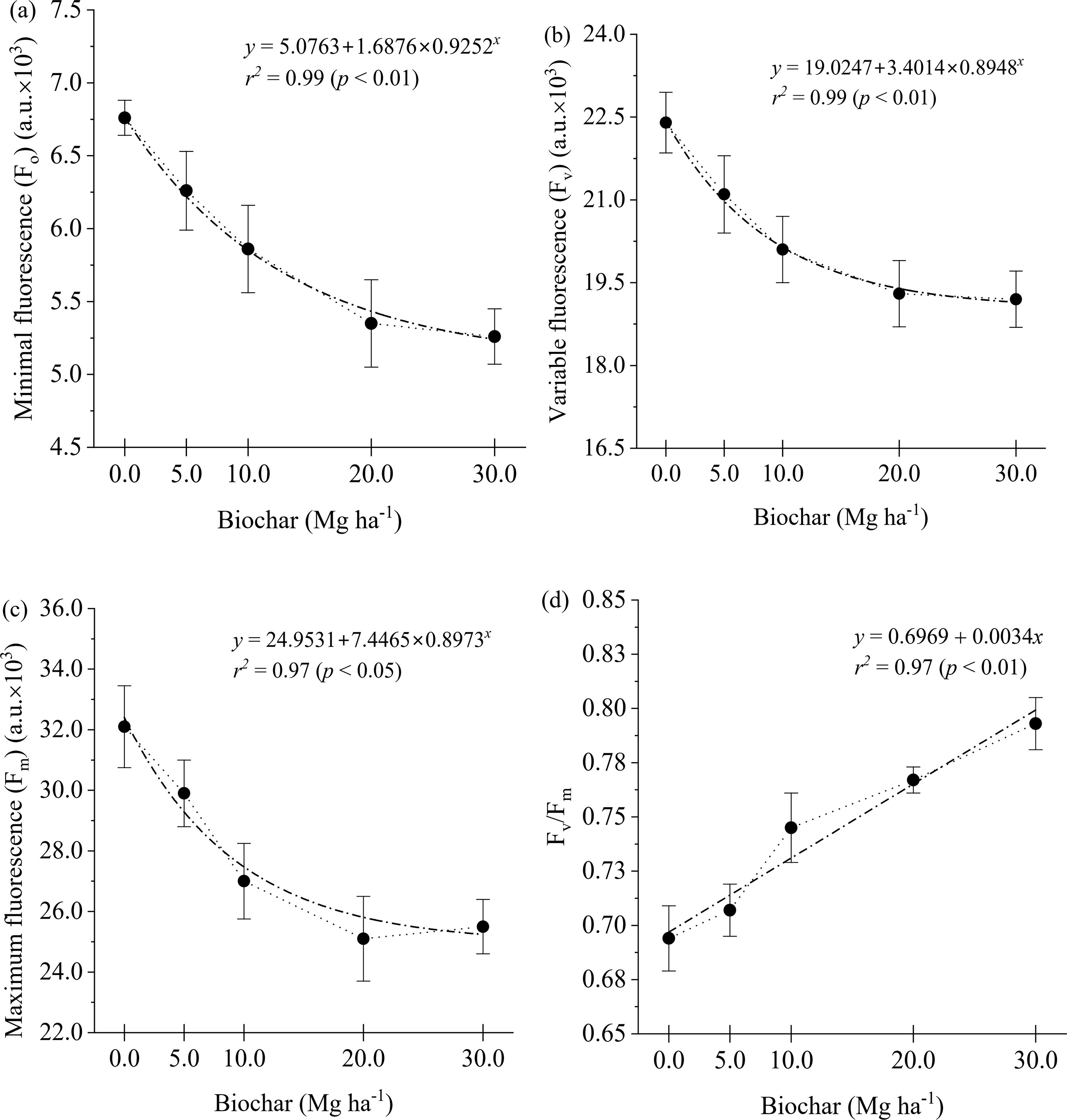
Chlorophyll fluorescence is a physiological parameter that reflects photoinhibition (Kalaji et al., 2018; Zhang et al., 2020). Various studies found significant inhibition in the photosystem II (PSII) (e.g., decrease in maximum quantum yield values - Fv/Fm) in PTE-stressed plants (Chu et al., 2018; Hou et al., 2018; Paunov et al., 2018; Rajput et al., 2021). In this study, initial, variable and maximum fluorescence in corn leaves decreased by 23, 15 and 22 % at the rate of 30.0 Mg ha-1 RSB (Figures 5a, 5b and 5c); on the other hand, Fv/Fm varied from 0.69 (control) to 0.71 (+3 %), 0.73 (+6 %), 0.76 (+10 %) and 0.80 (+ 16 %) at doses of 5, 10, 20 and 30 Mg ha-1 RSB, respectively (Figure 4d). This behavior is similar to that reported by Rajput et al. (2021), where the maximum quantum yield of barley leaves increased from 0.68 to 0.71 (+4 %) by applying 2.5 % biochar in soil polluted by PTEs. The reduction in fluorescence intensity (Fo, Fv, and Fm) and the increase in maximum quantum yield in plants treated with RSB indicate a lower energy expenditure in electron transport in photosystem II and, therefore, greater photosynthetic activity (Zhang et al., 2020). It can be observed that there is maximum efficiency in the conversion of luminous energy into chemical energy in PSII when the Fv/Fm ratio results in values close to 0.8. In this state, PSII is absorbing enough light for energy transfer to occur to produce energy compounds, essential for the synthesis of carbohydrates (Bjorkman and Demmig, 1987; Martins et al., 2020).

Mean values (± standard deviation) of (minimal chlorophyll a fluorescence), Fv (variable chlorophyll a fluorescence), Fm (maximum chlorophyll a fluorescence) and Fv/Fm (photosystem II photochemical efficiency) of corn plants cultivated for 45 days in a soil polluted by slag from a Pb metallurgy and submitted to doses of rice straw biochar. p<0.01 and p<0.05 significant at 1 and 5 % probability by ANOVA, respectively.
The supply of Si to corn in the RSB treatments likely contributed, along with the biochar itself, to alleviating physiological stress. The highest RSB rate (30 Mg ha-¹) added 1.1 Mg ha-¹ of Si to the soil (Table 2), resulting in a doubling of Si content in corn shoots (Figure 2). The addition of 30.0 Mg ha-¹ RSB reduced Cd, Pb, and Zn accumulation in corn by 39, 39, and 22 %, respectively, as evidenced by the linear and negative correlations between Si and PTE accumulation in corn shoots (Figures 3d, 3e and 3f). These findings align with other studies showing that Si nutrition reduces PTE uptake in plants (Cunha and Nascimento, 2009; Imtiaz et al., 2016; Debona et al., 2017; Etesami and Jeong, 2018; Pereira et al., 2018; Bhat et al., 2019; Vaculík et al., 2020; El-Saadony et al., 2021; Silva et al., 2021). These results emphasize the key role of biochar in mitigating physiological stress and reducing heavy metal accumulation in plants, with Si acting as a supportive element.

Pearson’s correlation coefficients (p<0.05) of the contents of silicon and physiological parameters of corn plants cultivated for 45 days in a soil polluted by slag from a Pb metallurgy and submitted to doses of rice straw biochar. Chl a chlorophyll a, Chl b chlorophyll b, TC total carotenoids, PR photosynthetic rate, TR transpiration rate, SC stomatal conductance, Fo minimal chlorophyll a fluorescence, Fv variable chlorophyll a fluorescence, Fm maximum chlorophyll a fluorescence and Fv/Fm (photosystem II photochemical efficiency).
CONCLUSION
Application of rice straw biochar (RSB) to Cd, Pb, and Zn-contaminated soils effectively mitigated PTE stress in corn. The 30 Mg ha-¹ rate not only supplied significant amounts of Si to the plants but also substantially reduced PTE accumulation in corn shoots. Additionally, RSB improved the functioning of the photosynthetic apparatus, enhancing gas exchange efficiency, increasing photosynthetic pigment production, and optimizing energy use in photosystem II (PSII). The combined use of RSB and corn cultivation can effectively phytoattenuate Cd, Pb, and Zn contamination by increasing biomass production and improving corn tolerance to PTE stress. This phytotechnology offers a sustainable and cost-effective remediation strategy for areas with limited resources, providing environmental and human health benefits while generating potential income for stakeholders.
-
How to cite: Veloso VL, Silva FBV, Araújo PRM, Paraizo TS, Souza ER, Nascimento CWA. Rice straw biochar mitigates metal stress in maize and assists in the phytoattenuation of a slag-contaminated soil. Rev Bras Cienc Solo. 2025;49:e0240171. https://doi.org/10.36783/18069657rbcs20240171
DATA AVAILABILITY
The data supporting this study findings are available from the corresponding author, C.W.A.N., upon reasonable request.
REFERENCES
-
Ahmad M, Usman ARA, Al-Faraj AS, Ahmad M, Sallam A, Al-Wabel MI. Phosphorus-loaded biochar changes soil heavy metals availability and uptake potential of maize (Zea mays L.) plants. Chemosphere. 2018;194:327-39. https://doi.org/10.1016/j.chemosphere.2017.11.156
» https://doi.org/10.1016/j.chemosphere.2017.11.156 -
Alvarez JRE, Montero AA, Jiménez NH, Muñiz UO, Padilla AR, Molina RJ, Quicute SV. Nuclear and related analytical methods applied to the determination of Cr, Ni, Cu, Zn, Cd and Pb in a red ferralitic soil and Sorghum samples. J Radioanal Nucl Chem. 2002;247:479-86. https://doi.org/10.1023/A:1010640009301
» https://doi.org/10.1023/A:1010640009301 -
Amritha K, Sankar SJ. Production and characterization of vermicompost and biochar from rice straw. J Pharmacogn Phytochem. 2020;9:1556-62. https://doi.org/10.22271/phyto.2020.v9.i5v.12557
» https://doi.org/10.22271/phyto.2020.v9.i5v.12557 -
Bashir S, Rizwan MS, Salam A, Fu Q, Zhu J, Shaaban M, Hu H. Cadmium immobilization potential of rice straw-derived biochar, zeolite and rock phosphate: Extraction techniques and adsorption mechanism. Bull Environ Contam Toxicol. 2018;100:727-32. https://doi.org/10.1007/s00128-018-2310-z
» https://doi.org/10.1007/s00128-018-2310-z -
Bhat JA, Shivaraj SM, Singh P, Navadagi DB, Tripathi DK, Dash PK, Solanke AU, Sonah H, Deshmukh R. Role of silicon in mitigation of heavy metal stresses in crop plants. Plants. 2019;8:71. https://doi.org/10.3390/plants8030071
» https://doi.org/10.3390/plants8030071 -
Bjorkman O, Demmig B. Photon yield of O2 evolution and chlorophyll fluorescence characteristics at 77 K among vascular plants of diverse origins. Planta. 1987;170:489-504. https://doi.org/10.1007/BF00402983
» https://doi.org/10.1007/BF00402983 -
Burges A, Alkorta I, Epelde L, Garbisu C. From phytoremediation of soil contaminants to phytomanagement of ecosystem services in metal contaminated sites. Int J Phytoremediat. 2018;20:384-97. https://doi.org/10.1080/15226514.2017.1365340
» https://doi.org/10.1080/15226514.2017.1365340 -
Cao X, Ma L, Gao B, Harris W. Dairy-manure derived biochar effectively sorbs lead and atrazine. Environ Sci Technol. 2009;43:3285-91. https://doi.org/10.1021/es803092k
» https://doi.org/10.1021/es803092k -
Chen D, Liu X, Bian R, Cheng K, Zhang X, Zheng J, Joseph S, Crowley D, Pan G, Li L. Effects of biochar on availability and plant uptake of heavy metals – A meta-analysis. J Environ Manage. 2018;222:76-85. https://doi.org/10.1016/j.jenvman.2018.05.004
» https://doi.org/10.1016/j.jenvman.2018.05.004 -
Chu J, Zhu F, Chen X, Liang H, Wang R, Wang X, Huang X. Effects of cadmium on photosynthesis of Schima superba young plant detected by chlorophyll fluorescence. Environ Sci Pollut Res. 2018;25:10679-87. https://doi.org/10.1007/s11356-018-1294-x
» https://doi.org/10.1007/s11356-018-1294-x -
Conselho Nacional do Meio Ambiente - Conama. Resolução No. 420, de 28 de dezembro de 2009. Dispõe sobre critérios e valores orientadores de qualidade do solo quanto à presença de substâncias químicas e estabelece diretrizes para o gerenciamento ambiental de áreas contaminadas por essas substâncias em decorrência de atividades antrópicas. Brasília, DF: Ministério do Meio Ambiente e Mudança do Clima; 2009 [cited 18 Jan 2024]. Available from: http://www.mma.gov.br/port/conama/legiabre.cfm?codlegi=620
» http://www.mma.gov.br/port/conama/legiabre.cfm?codlegi=620 -
Cui L, Pan G, Li L, Bian R, Liu X, Yan J, Quan G, Ding C, Chen T, Liu Y, Liu Y, Yin C, Wei C, Yang Y, Hussain Q. Continuous immobilization of cadmium and lead in biochar amended contaminated paddy soil: A five-year field experiment. Ecol Eng. 2016;93:1-8. https://doi.org/10.1016/j.ecoleng.2016.05.007
» https://doi.org/10.1016/j.ecoleng.2016.05.007 -
Cundy AB, Bardos RP, Puschenreiter M, Mench M, Bert V, Friesl-Hanl W, Müller I, Li XN, Weyens N, Witters N, Vangronsveld J. Brownfields to green fields: Realising wider benefits from practical contaminant phytomanagement strategies. J Environ Manage. 2016;184:67-77. https://doi.org/10.1016/j.jenvman.2016.03.028
» https://doi.org/10.1016/j.jenvman.2016.03.028 -
Cunha KPV, Nascimento CWA. Silicon effects on metal tolerance and structural changes in maize (Zea mays L.) grown on a cadmium and zinc enriched soil. Water Air Soil Pollut. 2009;197:323-30. https://doi.org/10.1007/s11270-008-9814-9
» https://doi.org/10.1007/s11270-008-9814-9 -
Debona D, Rodrigues FA, Datnoff LE. silicon’s role in abiotic and biotic plant stresses. Annu Rev Phytopathol. 2017;55:85-107. https://doi.org/10.1146/annurev-phyto-080516-035312
» https://doi.org/10.1146/annurev-phyto-080516-035312 -
Dezhban A, Shirvany A, Attarod P, Delshad M, Matinizadeh M, Khoshnevis M. Cadmium and lead effects on chlorophyll fluorescence, chlorophyll pigments and proline of Robinia pseudoacacia J For Res. 2015;26:323-9. https://doi.org/10.1007/s11676-015-0045-9
» https://doi.org/10.1007/s11676-015-0045-9 -
Ding W, Dong X, Ime IM, Gao B, Ma LQ. Pyrolytic temperatures impact lead sorption mechanisms by bagasse biochars. Chemosphere. 2014;105:68-74. https://doi.org/10.1016/j.chemosphere.2013.12.042
» https://doi.org/10.1016/j.chemosphere.2013.12.042 -
Dourado PRM, Souza ER, Santos MA, Lins CMT, Monteiro DR, Paulino MKSS, Schaffer B. Stomatal regulation and osmotic adjustment in sorghum in response to salinity. Agriculture. 2022;12:658. https://doi.org/10.3390/agriculture12050658
» https://doi.org/10.3390/agriculture12050658 -
Elliott CL, Snyder GH. Autoclave-induced digestion for the colorimetric determination of silicon in rice straw. J Agr Food Chem. 1991;39:1118-9. https://doi.org/10.1021/jf00006a024
» https://doi.org/10.1021/jf00006a024 -
El-Saadony MT, Desoky E-SM, Saad AM, Eid RSM, Selem E, Elrys AS. Biological silicon nanoparticles improve Phaseolus vulgaris L. yield and minimize its contaminant contents on a heavy metals-contaminated saline soil. J Environ. Sci. 2021;106:1-14. https://doi.org/10.1016/j.jes.2021.01.012
» https://doi.org/10.1016/j.jes.2021.01.012 -
Etesami H, Jeong BR. Silicon (Si): Review and future prospects on the action mechanisms in alleviating biotic and abiotic stresses in plants. Ecotox Environ Safe. 2018;147:881-96. https://doi.org/10.1016/j.ecoenv.2017.09.063
» https://doi.org/10.1016/j.ecoenv.2017.09.063 -
Feng J, Shi Q, Wang X, Wei M, Yang F, Xu H. Silicon supplementation ameliorated the inhibition of photosynthesis and nitrate metabolism by cadmium (Cd) toxicity in Cucumis sativus L. Sci Hortic. 2010;123:521-30. https://doi.org/10.1016/j.scienta.2009.10.013
» https://doi.org/10.1016/j.scienta.2009.10.013 -
García AC, Tavares OCH, Oliveira DF. Biochar as agricultural alternative to protect the rice plant growth in fragile sandy soil contaminated with cadmium. Biocatal Agric Biotechnol. 2020;29:101829. https://doi.org/10.1016/j.bcab.2020.101829
» https://doi.org/10.1016/j.bcab.2020.101829 -
Gonzaga MIS, Silva PSO, Santos JCJ, Oliveira Junior LFG. Biochar increases plant water use efficiency and biomass production while reducing Cu concentration in Brassica juncea L. in a Cu-contaminated soil. Ecotox Environ Safe. 2019;183:109557. https://doi.org/10.1016/j.ecoenv.2019.109557
» https://doi.org/10.1016/j.ecoenv.2019.109557 -
Haider FU, Wang X, Farooq M, Hussain S, Cheema SA, Ain N, Virk AL, Ejaz M, Janyshova U, Liqun C. Biochar application for the remediation of trace metals in contaminated soils: Implications for stress tolerance and crop production. Ecotox Environ Safe. 2022;230:113165. https://doi.org/10.1016/j.ecoenv.2022.113165
» https://doi.org/10.1016/j.ecoenv.2022.113165 -
Hou X, Han H, Cai L, Liu A, Ma X, Zhou C, Wang G, Meng F. Pb stress effects on leaf chlorophyll fluorescence, antioxidative enzyme activities, and organic acid contents of Pogonatherum crinitum seedlings. Flora. 2018;240:82-8. https://doi.org/10.1016/j.flora.2018.01.006
» https://doi.org/10.1016/j.flora.2018.01.006 -
Imtiaz M, Rizwan MS, Mushtaq MA, Ashraf M, Shahzad SM, Yousaf B, Saeed DA, Rizwan M, Nawaz MA, Mehmood S, Tu S. Silicon occurrence, uptake, transport and mechanisms of heavy metals, minerals and salinity enhanced tolerance in plants with future prospects: A review. J Environ Manage. 2016;183:521-9. https://doi.org/10.1016/j.jenvman.2016.09.009
» https://doi.org/10.1016/j.jenvman.2016.09.009 - IUSS Working Group WRB. World reference base for soil resources 2014, update 2015: International soil classification system for naming soils and creating legends for soil maps. Rome: Food and Agriculture Organization of the United Nations; 2015. (World Soil Resources Reports, 106).
-
Izydorczyk G, Mikula K, Skrzypczak D, Moustakas K, Witek-Krowiak A, Chojnacka K. Potential environmental pollution from copper metallurgy and methods of management. Environ Res. 2021;197:111050. https://doi.org/10.1016/j.envres.2021.111050
» https://doi.org/10.1016/j.envres.2021.111050 -
Jiang J, Xu R, Jiang T, Li Z. Immobilization of Cu(II), Pb(II) and Cd(II) by the addition of rice straw derived biochar to a simulated polluted Ultisol. J Hazard Mater. 2012;229-230:145-50. https://doi.org/10.1016/j.jhazmat.2012.05.086
» https://doi.org/10.1016/j.jhazmat.2012.05.086 -
Kalaji HM, Bąba W, Gediga K, Goltsev V, Samborska IA, Cetner MD, Dimitrova S, Piszcz U, Bielecki K, Karmowska K, Dankov K, Kompała-Bąba A. Chlorophyll fluorescence as a tool for nutrient status identification in rapeseed plants. Photosynth Res. 2018;136:329-43. https://doi.org/10.1007/s11120-017-0467-7
» https://doi.org/10.1007/s11120-017-0467-7 -
Kamran M, Malik Z, Parveen A, Huang L, Riaz M, Bashir S, Mustafa A, Abbasi GH, Xue B, Ali U. Ameliorative effects of biochar on rapeseed (Brassica napus L.) growth and heavy metal immobilization in soil irrigated with untreated wastewater. J Plant Growth Regul. 2020;39:266-81. https://doi.org/10.1007/s00344-019-09980-3
» https://doi.org/10.1007/s00344-019-09980-3 -
Król A, Mizerna K, Bożym M. An assessment of pH-dependent release and mobility of heavy metals from metallurgical slag. J Hazard Mater. 2020;384:121502. https://doi.org/10.1016/j.jhazmat.2019.121502
» https://doi.org/10.1016/j.jhazmat.2019.121502 -
Li Z, Song Z, Singh BP, Wang H. The impact of crop residue biochars on silicon and nutrient cycles in croplands. Sci Total Environ. 2019;659:673-80. https://doi.org/10.1016/j.scitotenv.2018.12.381
» https://doi.org/10.1016/j.scitotenv.2018.12.381 -
Lichtenthaler HK, Buschmann C. Chlorophylls and carotenoids: Measurement and characterization by UV‐VIS spectroscopy. Curr Protoc Food Anal Chem. 2001;1:F43.1-8. https://doi.org/10.1002/0471142913.faf0403s01
» https://doi.org/10.1002/0471142913.faf0403s01 -
Lima LRPA, Bernardez LA. Characterization of the lead smelter slag in Santo Amaro, Bahia, Brazil. J Hazard Mater. 2011;189:692-9. https://doi.org/10.1016/j.jhazmat.2011.02.091
» https://doi.org/10.1016/j.jhazmat.2011.02.091 -
Lindsay WL, Norvell WA. Development of a DTPA soil test for zinc, iron, manganese, and copper. Soil Sci Soc Am J. 1978;42:421-8. https://doi.org/10.2136/sssaj1978.03615995004200030009x
» https://doi.org/10.2136/sssaj1978.03615995004200030009x -
Lu H, Zhang W, Yang Y, Huang X, Wang S, Qiu R. Relative distribution of Pb2+ sorption mechanisms by sludge-derived biochar. Water Res. 2012;46:854-62. https://doi.org/10.1016/j.watres.2011.11.058
» https://doi.org/10.1016/j.watres.2011.11.058 -
Lu K, Yang X, Gielen G, Bolan N, Ok YS, Niazi NK, Xu S, Yuan G, Chen X, Zhang X, Liu D, Song Z, Liu X, Wang H. Effect of bamboo and rice straw biochars on the mobility and redistribution of heavy metals (Cd, Cu, Pb and Zn) in contaminated soil. J Environ Manage. 2017;186:285-92. https://doi.org/10.1016/j.jenvman.2016.05.068
» https://doi.org/10.1016/j.jenvman.2016.05.068 -
Lu K, Yang X, Shen J, Robinson B, Huang H, Liu D, Bolan N, Pei J, Wang H. Effect of bamboo and rice straw biochars on the bioavailability of Cd, Cu, Pb and Zn to Sedum plumbizincicola. Agr Ecosyst Environ. 2014;191:124-32. https://doi.org/10.1016/j.agee.2014.04.010
» https://doi.org/10.1016/j.agee.2014.04.010 -
Mansoor S, Kour N, Manhas S, Zahid S, Wani OA, Sharma V, Wijaya L, Alyemeni MN, Alsahli AA, El-Serehy HA, Paray BA, Ahmad P. Biochar as a tool for effective management of drought and heavy metal toxicity. Chemosphere. 2021;271:129458. https://doi.org/10.1016/j.chemosphere.2020.129458
» https://doi.org/10.1016/j.chemosphere.2020.129458 -
Martins JB, Santos Júnior JA, Leal LC, Paulino MKSS, Souza ER, Gheyi HR. Fluorescence emission and photochemical yield of parsley under saline waters of different cationic nature. Sci Hortic. 2020;273:109574. https://doi.org/10.1016/j.scienta.2020.109574
» https://doi.org/10.1016/j.scienta.2020.109574 - McGeorge WT. Diagnosis and improvement of saline and alkaline soils. Soil Sci Am J. 1954;18:348-54.
-
Meng J, Tao M, Wang L, Liu X, Xu J. Changes in heavy metal bioavailability and speciation from a Pb-Zn mining soil amended with biochars from co-pyrolysis of rice straw and swine manure. Sci Total Environ. 2018;633:300-7. https://doi.org/10.1016/j.scitotenv.2018.03.199
» https://doi.org/10.1016/j.scitotenv.2018.03.199 -
Moradi L, Ehsanzadeh P. Effects of Cd on photosynthesis and growth of safflower (Carthamus tinctorius L.) genotypes. Photosynthetica. 2015;53:506-18. https://doi.org/10.1007/s11099-015-0150-1
» https://doi.org/10.1007/s11099-015-0150-1 -
Naeem MA, Khalid M, Aon M, Abbas G, Amjad M, Murtaza B, Ahmad N. Combined application of biochar with compost and fertilizer improves soil properties and grain yield of maize. J Plant Nutr. 2017;41:112-22. https://doi.org/10.1080/01904167.2017.1381734
» https://doi.org/10.1080/01904167.2017.1381734 -
Nie C, Yang X, Niazi NK, Xu X, Wen Y, Rinklebe J, Ok YS, Xu S, Wang H. Impact of sugarcane bagasse-derived biochar on heavy metal availability and microbial activity: A field study. Chemosphere. 2018;200:274-82. https://doi.org/10.1016/j.chemosphere.2018.02.134
» https://doi.org/10.1016/j.chemosphere.2018.02.134 -
Niemeyer JC, Moreira-Santos M, Ribeiro R, Rutgers M, Nogueira MA, Silva EM, Sousa JP. Ecological risk assessment of a metal-contaminated area in the tropics. Tier II: Detailed assessment. PLoS ONE. 2015;10:e0141772. https://doi.org/10.1371/journal.pone.0141772
» https://doi.org/10.1371/journal.pone.0141772 -
Nzediegwu C, Prasher S, Elsayed E, Dhiman J, Mawof A, Patel R. Effect of biochar on heavy metal accumulation in potatoes from wastewater irrigation. J Environ Manage. 2019;232:153-64. https://doi.org/10.1016/j.jenvman.2018.11.013
» https://doi.org/10.1016/j.jenvman.2018.11.013 -
Paunov M, Koleva L, Vassilev A, Vangronsveld J, Goltsev V. Effects of different metals on photosynthesis: Cadmium and zinc affect chlorophyll fluorescence in durum wheat. Int J Mol Sci. 2018;19:787. https://doi.org/10.3390/ijms19030787
» https://doi.org/10.3390/ijms19030787 -
Peng X, Shi G, Liu G, Xu J, Tian Y, Zhang Y, Feng Y, Russell AG. Source apportionment and heavy metal health risk (HMHR) quantification from sources in a southern city in China, using an ME2-HMHR model. Environ Pollut. 2017;221:335-42. https://doi.org/10.1016/j.envpol.2016.11.083
» https://doi.org/10.1016/j.envpol.2016.11.083 -
Pereira TS, Pereira TS, Souza CLFC, Lima EJA, Batista BL, Lobato AKS. Silicon deposition in roots minimizes the cadmium accumulation and oxidative stress in leaves of cowpea plants. Physiol Mol Biol Plants. 2018;24:99-114. https://doi.org/10.1007/s12298-017-0494-z
» https://doi.org/10.1007/s12298-017-0494-z -
Qiu B, Tao X, Wang H, Li W, Ding X, Chu H. Biochar as a low-cost adsorbent for aqueous heavy metal removal: A review. J Anal Appl Pyrolysis. 2021;155:105081. https://doi.org/10.1016/j.jaap.2021.105081
» https://doi.org/10.1016/j.jaap.2021.105081 -
Rajput VD, Gorovtsov AV, Fedorenko GM, Minkina TM, Fedorenko AG, Lysenko VS, Sushkova SS, Mandzhieva SS, Elinson MA. The influence of application of biochar and metal-tolerant bacteria in polluted soil on morpho-physiological and anatomical parameters of spring barley. Environ Geochem Health. 2021;43:1477-89. https://doi.org/10.1007/s10653-019-00505-1
» https://doi.org/10.1007/s10653-019-00505-1 -
Ren T, Chen N, Wan Mahari WA, Xu C, Feng H, Ji X, Yin Q, Chen P, Zhu S, Liu H, Liu G, Li L, Lam SS. Biochar for cadmium pollution mitigation and stress resistance in tobacco growth. Environ Res. 2021;192:110273. https://doi.org/10.1016/j.envres.2020.110273
» https://doi.org/10.1016/j.envres.2020.110273 -
Rusinowski S, Krzyżak J, Sitko K, Kalaji HM, Jensen E, Pogrzeba M. Cultivation of C4 perennial energy grasses on heavy metal contaminated arable land: Impact on soil, biomass, and photosynthetic traits. Environ Pollut. 2019;250:300-11. https://doi.org/10.1016/j.envpol.2019.04.048
» https://doi.org/10.1016/j.envpol.2019.04.048 - Santos HG, Jacomine PKT, Anjos LHC, Oliveira VA, Lumbreras JF, Coelho MR, Almeida JA, Araújo Filho JC, Oliveira JB, Cunha TJF. Sistema brasileiro de classificação de solos. 5. ed. rev. ampl. Brasília, DF: Embrapa; 2018.
-
Santos NM, Accioly AMA, Nascimento CWA, Silva IR, Santos JAG. Bioavailability of lead using chemical extractants in soil treated with humic acids and activated carbon. Rev Cienc Agron. 2015;46:663-8. https://doi.org/10.5935/1806-6690.20150052
» https://doi.org/10.5935/1806-6690.20150052 -
Silva JR, Veloso VL, Silva FBV, Nascimento CWA. Cadmium, silicon and nutrient accumulation by maize plants grown on a contaminated soil amended with a diatomaceous Earth fertilizer. Cienc Rural. 2021;51:e20190804. https://doi.org/10.1590/0103-8478cr20190804
» https://doi.org/10.1590/0103-8478cr20190804 -
Silva WR, Silva FBV, Araújo PRM, Nascimento CWA. Assessing human health risks and strategies for phytoremediation in soils contaminated with As, Cd, Pb, and Zn by slag disposal. Ecotox Environ Safe. 2017;144:522-30. https://doi.org/10.1016/j.ecoenv.2017.06.068
» https://doi.org/10.1016/j.ecoenv.2017.06.068 - Singh B, Camps-Arbestain M, Lehmann J. Biochar: A guide to analytical methods. Australia: Csiro Publishing; 2017.
-
Souza AAB, Nascimento CWA, Souza ER. Mineral composition, chlorophyll fluorescence and zinc biofortification in Vigna unguiculata fertilized with bulk and nanoparticulate zinc oxides. Acta Physiol Plant. 2021;43:159. https://doi.org/10.1007/s11738-021-03333-y
» https://doi.org/10.1007/s11738-021-03333-y -
United States Environmental Protection Agency - Usepa. Method 3051A: Microwave assisted acid digestion of sediments, sludges, soils, and oils. Washington, DC: Usepa; 2007. Available from: https://www.epa.gov/sites/default/files/2015-12/documents/3051a.pdf
» https://www.epa.gov/sites/default/files/2015-12/documents/3051a.pdf -
United States Environmental Protection Agency - Usepa. Method 3050B: Acid digestion of sediments, sludges, and soils. Washington, DC: Usepa; 1996. Available from: http://www.greenrivertech.com.tw/stand-method-pdf/rohs/EPA3050b.pdf
» http://www.greenrivertech.com.tw/stand-method-pdf/rohs/EPA3050b.pdf -
Vaculík M, Lukačová Z, Bokor B, Martinka M, Tripathi DK, Lux A. Alleviation mechanisms of metal(loid) stress in plants by silicon: A review. J Exp Bot. 2020;71:6744-57. https://doi.org/10.1093/jxb/eraa288
» https://doi.org/10.1093/jxb/eraa288 -
Veloso VL, Silva FBV, Santos NM, Nascimento CWA. Phytoattenuation of Cd, Pb, and Zn in a slag-contaminated soil amended with rice straw biochar and grown with energy maize. Environ Manage. 2022;69:196-212. https://doi.org/10.1007/s00267-021-01530-6
» https://doi.org/10.1007/s00267-021-01530-6 -
Wang J, Wang L, Wang Y, Tsang DCW, Yang X, Beiyuan J, Yin M, Xiao T, Jiang Y, Lin W, Zhou Y, Liu J, Wang L, Zhao M. Emerging risks of toxic metal(loid)s in soil-vegetables influenced by steel-making activities and isotopic source apportionment. Environ Int. 2021;146:106207. https://doi.org/10.1016/j.envint.2020.106207
» https://doi.org/10.1016/j.envint.2020.106207 -
Wang M, Wang JJ, Tafti ND, Hollier CA, Myers G, Wang X. Effect of alkali-enhanced biochar on silicon uptake and suppression of gray leaf spot development in perennial ryegrass. Crop Prot. 2019;119:9-16. https://doi.org/10.1016/j.cropro.2019.01.013
» https://doi.org/10.1016/j.cropro.2019.01.013 -
Wang Y, Duan X, Wang L. Spatial distribution and source analysis of heavy metals in soils influenced by industrial enterprise distribution: Case study in Jiangsu Province. Sci Total Environ. 2020;710:134953. https://doi.org/10.1016/j.scitotenv.2019.134953
» https://doi.org/10.1016/j.scitotenv.2019.134953 -
Yao D, Wu J, Gao H, Wu D, Wei Z. Changes in soil silicon forms and availability as affected by rice straw and its biochar. Eur J Soil Sci. 2022;73:e13316. https://doi.org/10.1111/ejss.13316
» https://doi.org/10.1111/ejss.13316 -
Yin D, Wang X, Chen C, Peng B, Tan C, Li H. Varying effect of biochar on Cd, Pb and As mobility in a multi-metal contaminated paddy soil. Chemosphere. 2016;152:196-206. https://doi.org/10.1016/j.chemosphere.2016.01.044
» https://doi.org/10.1016/j.chemosphere.2016.01.044 -
Zhang H, Xu Z, Guo K, Huo Y, He G, Sun H, Guan Y, Xu N, Yang W, Sun G. Toxic effects of heavy metal Cd and Zn on chlorophyll, carotenoid metabolism and photosynthetic function in tobacco leaves revealed by physiological and proteomics analysis. Ecotox Environ Safe. 2020;202:110856. https://doi.org/10.1016/j.ecoenv.2020.110856
» https://doi.org/10.1016/j.ecoenv.2020.110856 -
Zhang R-H, Li Z-G, Liu X-D, Wang B, Zhou G-L, Huang X-X, Lin C-F, Wang A, Brooks M. Immobilization and bioavailability of heavy metals in greenhouse soils amended with rice straw-derived biochar. Ecol Eng. 2017;98:183-8. https://doi.org/10.1016/j.ecoleng.2016.10.057
» https://doi.org/10.1016/j.ecoleng.2016.10.057 -
Zhang R-H, Xie Y, Zhou G, Li Z, Ye A, Huang X, Xie Y, Shi L, Cao X, Zhang J, Lin C. The effects of short-term, long-term, and reapplication of biochar on the remediation of heavy metal-contaminated soil. Ecotox Environ Safe. 2022;248:114316. https://doi.org/10.1016/j.ecoenv.2022.114316
» https://doi.org/10.1016/j.ecoenv.2022.114316 -
Zhen K, Zhu Q, Zhai S, Gao Y, Cao H, Tang X, Wang C, Li J, Tian L, Sun H. PPCPs and heavy metals from hydrothermal sewage sludge-derived biochar: migration in wheat and physiological response. Environ Sci Pollut Res. 2022;29:83234-46. https://doi.org/10.1007/s11356-022-21432-2
» https://doi.org/10.1007/s11356-022-21432-2 -
Zhu S, Ma X, Guo R, Ai S, Liu B, Zhang W, Zhang Y. A field study on heavy metals phytoattenuation potential of monocropping and intercropping of maize and/or legumes in weakly alkaline soils. Int J Phytoremediat. 2016;18:1014-21. https://doi.org/10.1080/15226514.2016.1183570
» https://doi.org/10.1080/15226514.2016.1183570
Edited by
-
Editors:
José Miguel Reichert https://orcid.org/0000-0001-9943-2898 and Leônidas Azevedo Carrijo Melo https://orcid.org/0000-0002-4034-4209