 Exercise dependence, low energy availability, and musculoskeletal injuries in women involved in extreme conditioning programs: a cross-sectional study
ABSTRACT
The aim of the study was to investigate the risk of low energy availability (LEA), exercise dependence, and their relationship with the injury history of women involved in extreme conditioning programs (ECPs). A total of 77 women enrolled in ECPs were assessed for exercise dependence, LEA risk, and history of musculoskeletal injuries. Data were collected electronically or at training centers. The prevalence of LEA risk was 18.2%, while exercise dependence was 20.8%. There was a very low association between these variables (r = 0.23; p = 0.04). Exercise dependence and LEA are related variables, although the relationship is weak, suggesting the existence of other factors influencing these variables.
Keywords:
Relative energy deficiency in sport; Human physical conditioning; Compulsive exercise; Female athlete triad syndrome
RESUMO
O objetivo do estudo foi investigar o risco de baixa disponibilidade energética (BDE), dependência do exercício físico e sua relação com o histórico de lesões em mulheres envolvidas em programas de condicionamento extremo (PCE). Foram avaliadas 77 mulheres praticantes de PCE em relação à dependência do exercício físico, risco de BDE e histórico de lesões musculoesqueléticas. A coleta de dados ocorreu em centros de treinamento ou por meio eletrônico. A prevalência de risco de BDE foi de 18,2% e de dependência do exercício de 20,8%. Existe uma associação muito baixa entre essas variáveis (r= 0,23; p= 0,04). Dependência do exercício físico e BDE são variáveis que se relacionam, embora essa relação seja fraca, sugerindo a existência de outros fatores influenciando nessas variáveis.
Palavras-chave:
Deficiência energética relativa no esporte; Condicionamento físico humano; Exercício compulsivo; Síndrome da tríade da mulher atleta
RESUMEN
El objetivo del estudio fue investigar el riesgo de baja disponibilidad de energía (BDE), dependencia del ejercicio físico (DEF) y su relación con el historial de lesiones en mujeres involucradas en programas de acondicionamiento extremo (PAE). Se evaluó a 77 mujeres que practicaban PAE en cuanto a su DEF, riesgo de BDE y antecedentes de lesiones musculoesqueléticas. La recogida de datos se realizó en centros de formación o de forma electrónica. La prevalencia de riesgo de BDE fue del 18,2% y de DEF fue del 20,8%. Existe una asociación muy baja entre estas variables (r= 0,23; p= 0,04). La DEF y el BDE son variables que están relacionadas, aunque esta relación es débil, lo que sugiere la existencia de otros factores que influyen en estas variables.
Palabras clave:
Deficiencia relativa de energía en el deporte; Acondicionamiento físico humano; Ejercicio compulsivo; Síndrome de la tríada de la atleta femenina
INTRODUCTION
Extreme conditioning programs (ECPs), such as CrossFit® and Cross Training, are increasingly popular in Brazil. These programs involve high-intensity repetitive rapid movements, with little or no rest between sets (Elkin et al., 2019; Tibana and Sousa, 2018). These programs use elements of gymnastics, weightlifting, and exercises aimed at improving cardiovascular conditioning (Claudino et al., 2018). Due to their ability to produce short-term results (Moreau and Chou, 2019), ECPs have become popular among women (Álvarez-García and Doğanay, 2022). However, excessive training can lead to early fatigue, greater perceived exertion, and risky positioning during movements (Rodríguez et al., 2021). This high-intensity training context, when combined with inadequate load progression, may increase the risk of musculoskeletal injuries (Costa et al., 2019).
Excessive concern about esthetics, the pursuit of low body weight, and eating disorders are common among women and contribute to an imbalance between energy intake and expenditure (Sharps et al., 2022). This can result in low energy availability (LEA), a state in which the energy remaining after exercise is insufficient to support normal physiological functions and health maintenance (Gallant et al., 2025). LEA may lead to a syndrome known as Relative Energy Deficiency in Sport (RED-S) (Mountjoy et al., 2018), a condition that may result in physiological disturbances, diminished athletic performance, and an increased risk of injuries (Wang et al., 2024). The term RED-S was proposed by the International Olympic Committee (IOC) in 2014 to broaden the concept of the previously used "Female Athlete Triad," which referred to a clinical condition characterized by LEA, menstrual dysfunction, and reduced bone mineral density (Mountjoy et al., 2014).
Eating disorders account for a large number of LEA cases (Fahrenholtz et al., 2022). However, factors such as poorly managed training programs designed to rapidly reduce body fat, the inability to adjust the amount of energy intake, and extreme commitment to exercise can also cause LEA, even without an associated eating disorder (Loucks, 2004).
Exercise dependence, defined as a compulsive and uncontrollable urge to exercise despite negative consequences, occurs when individuals train excessively and exhibit withdrawal symptoms such as irritability, anxiety, guilt, or restlessness when they are unable to exercise (Levit et al., 2018). Exercise-dependent individuals are more likely to train for intrinsic rewards and experience negative emotions when abstaining (Quraishi and Chahal, 2021). In addition, exercise dependence can interfere with family and social life and increase the risk of injuries due to excessive stress on the musculoskeletal system (Alchieri et al., 2015).
It is important to emphasize the multifactorial and complex nature of injuries, given that they do not result from a linear combination of isolated predictive factors but from interactions between these factors (Bittencourt et al., 2016). Thus, an increased risk of injury may be related to exercise dependence and low energy intake, which predisposes women to LEA, a contributing factor in RED-S.
Screening questionnaires can be used to assess women participating in ECPs for LEA risk and exercise dependence (Alchieri et al., 2015; Maria and Juzwiak, 2021). These instruments are easy to administer and allow for early identification of these conditions, enabling the development of strategies to minimize possible adverse effects (Loucks, 2004). As such, this study aimed to investigate the prevalence of exercise dependence and LEA risk in women enrolled in ECPs, assess the relationship between these two factors, and compare exercise dependence of these individuals with and without a history of injury in the past year. It is hypothesized that exercise dependence is directly associated with LEA risk, and that women with a history of injury demonstrate greater exercise dependence compared to those without a history of injury.
METHODS
Design
This is a cross-sectional exploratory study conducted at ECP training centers in Divinópolis, Minas Gerais state, and other cities in the region, using an electronic form accessible via a link.
Participants and ethics
The study included 77 women aged 18 to 40 who had been involved in ECPs for at least 12 months with a minimum weekly training time of five hours. The sample was selected by convenience based on the inclusion criteria described above. Exclusion criteria included pregnancy, lactation, use of hormonal contraceptive, absence of menarche, postmenopausal status, and incomplete questionnaires.
This study followed ethical guidelines for research involving human beings, as regulated by Resolutions No. 466/2012 and 510/2016 of the Brazilian National Health Council. It was approved by the Research Ethics Committee under protocol number 5.922.840.
Data collection
A form was used to collect sociodemographic, anthropometric, and exercise-related information. The Revised Exercise Dependence Scale (EDS-R), translated and adapted for the Brazilian population, was used to assess symptoms of exercise dependence. The scale consists of seven factors: intention effects, continuance, tolerance/resistance, reduction in other activities, lack of control, withdrawal, and time, with each factor containing three items. Each item is scored from 1 (never) to 5 (always), with a minimum and maximum score of 21 and 105, respectively, the latter indicating maximum dependence. The result can also be interpreted categorically, classifying individuals into three groups: (1) at risk for exercise dependence, with average scores above 4 in at least three of the seven factors; (2) non-dependent symptomatic, with average scores between 3 and 4 or a combination between 3 and 4 and above 4 in at least three factors without meeting the criteria for category 1; (3) non-dependent asymptomatic, where average scores are below 3 in at least three factors without meeting the requirements for categories 1 or 2 (Alchieri et al., 2015).
The Low Energy Availability in Females Questionnaire (LEAF-Q), also translated and adapted to Portuguese, is a self-administered tool with 25 items relating to injuries, and gastrointestinal and menstrual function to assess LEA risk. Scores of 8 or higher indicate LEA risk. Additionally, dysfunctions in each domain can be identified using the following cutoff points: ≥2 for injuries, ≥2 for gastrointestinal function, and ≥4 for menstrual function (Maria and Juzwiak, 2021).
The injury-related item in the LEAF-Q addresses the history of ECP-related injuries in the past year. This time is considered sufficient for accurate self-reporting (Quirino et al., 2021). The information of this item was used to divide the sample into two groups: with and without a history of musculoskeletal injuries.
Data were collected in person at the training centers and through online forms for participants who were not available on site. After signing the Informed Consent Form, participants completed the assessment form, and EDS-R and LEAF-Q questionnaires. The assessment form contained information about age, marital status, education, occupation, self-reported weight and height, weekly training frequency and duration, use of medication, smoking, alcohol consumption, number of pregnancies, use of supplementation, and whether they were receiving nutritional monitoring. A trained researcher was available in person or online for questions during form completion. The estimated data collection time was between 20 and 30 minutes.
Statistical analysis
Quantitative variables were described using means and standard deviations, while categorical variables were presented as frequencies and percentages. The Shapiro-Wilk test was used to verify data normality, indicating the use of parametric statistics. Pearson correlation tests were applied to analyze the relationship between EDS-R and LEAF-Q scores and between weekly training time and EDS-R scores. Correlation values of ≤0.25 were considered very low; 0.26–0.49 low; 0.50–0.69 moderate; 0.70–0.89 high; and 0.90–1.00 very high (Munro et al., 2005). An independent t-test was used to compare EDS-R classification between women with and without a history of musculoskeletal injury. Statistical significance was set at p < 0.05, and analyses were conducted using SPSS 23.0 software (Statistical Package for the Social Sciences Inc., Chicago, IL, USA).
RESULTS
The study had 194 responses in the forms, 117 of which did not meet the inclusion criteria. The final sample consisted of 77 participants. Table 1 presents the descriptive statistics for the quantitative variables.
Descriptive characteristics of women participating in extreme conditioning programs (n = 77).
A majority of the women were competitors, used supplementation and received nutritional monitoring. Categorical variables data are presented in Table 2.
Behavioral and lifestyle characteristics of women participating in extreme conditioning programs (n = 77).
The average score on the EDS-R was 62.45 points, with a minimum and maximum score of 37 and 93, respectively. The classification of exercise-dependent women is presented in Figure 1.
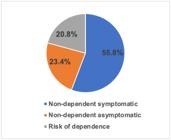
EDS-R classification of women participating in extreme conditioning programs (n = 77). EDS-R: Revised Exercise Dependence Scale.
The results of the LEAF-Q analysis indicate an average score of 5.36 points, ranging from 0 to 22. Table 3 presents the LEAF-Q data.
Prevalence of risk indicators according to the Low Energy Availability in Females Questionnaire (LEAF-Q) in women participating in extreme conditioning programs (n = 77).
A very low and positive association was observed between the EDS-R and LEAF-Q results (r = 0.230; p = 0.044). No significant correlation was found between weekly training time and the EDS-R score (r = 0.163; p = 0.156). The average score (± standard deviation) on the EDS-R for women with (n=24) and without (n=53) a history of injury was 65.38 (± 13.68) and 61.13 (± 11.12) points, respectively. Thus, no significant difference in exercise dependence was observed between women with and without a history of injury in the past year (p = 0.191).
DISCUSSION
The present study aimed to investigate the prevalence and to test the correlation between exercise dependence and the risk of LEA in women enrolled in ECPs, as well as to compare exercise dependence between women with and without a history of musculoskeletal injury in the past year. As such, the prevalence values of LEA risk and exercise dependence observed in this study require attention from health professionals working with this population. However, although the results demonstrated that the association between LEA and exercise dependence is significant, it is very low, providing limited support for the first hypothesis of the study. Furthermore, no difference in exercise dependence was observed between women with and without a history of injury in the past year, indicating that the second hypothesis was not confirmed.
Slightly more than one-fifth of the women (20.8%) exhibited a risk of exercise dependence; however, more than half of the sample was classified as non-dependent symptomatic (55.8%). These values are higher than those found by Remilly et al. (2023) in ultra-resistance athletes, where only 10.52% of the women had a risk of exercise dependence. Another study, conducted by Krzyżak-Szymańska and Szymański (2023) aimed at adapting the EDS-R to the Polish context and assessing the exercise dependence rate of individuals attending fitness centers, showed that of the 133 women who participated in the study, 3.75% were classified as at risk for exercise dependence, and 71.4% as non-symptomatic dependents. When considering the total number of women exhibiting symptoms of exercise dependence in both the previously mentioned and present study, these values are 75.1% and 76.6% respectively (Krzyżak-Szymańska and Szymański, 2023), showing a high similarity in the prevalence of dependence symptoms, even in two different sports.
With respect to the association between weekly training time and the risk of exercise dependence, no significant association was found in this study. However, Freire et al. (2021) reported that training frequency was significantly and positively associated with exercise dependence in ECP athletes, marathon runners, and weight trainers. A possible explanation for the discrepancy in these results is that training time is not the only factor associated with exercise dependence, but also the existence of physical or psychological damage resulting from this compulsive and uncontrollable desire to exercise (Szabo et al., 2018).
In the present study, 18.2% of the athletes showed a risk of LEA. This result is similar to that reported by Karlsson et al. (2023), who found a 19% prevalence of LEA risk in runners with an average training time of five hours per week (Karlsson et al., 2023). In terms of injury history, 31.2% of the sample in the present study had this condition, a lower number than the 48% found in the aforementioned study (Karlsson et al., 2023). Conversely, Dambacher et al. (2025) reported a higher prevalence of LEA risk, reaching 54.4% among female collegiate runners. The prevalence of gastrointestinal dysfunction in the present study was 49.4%, and 21% in a study conducted with female runners (Karlsson et al., 2023). About 22% of our sample showed menstrual dysfunction, a result within the range reported in earlier studies (15-28%) (Karlsson et al., 2023; Witkoś et al., 2022), although more recent research has reported substantially higher rates, up to 56.5% (Dambacher et al., 2025).
A significant and direct association between the LEAF-Q and EDS-R questionnaire scores was observed in the present study, albeit of very low magnitude. This result demonstrates that exercise dependence and LEA are mutually influencing factors. Thus, knowing that LEA is triggered by an imbalance between calorie intake and expenditure, it is more likely that exercise dependence contributes to LEA, and not vice versa. However, it is not possible to determine the temporal sequence of this association due to the cross-sectional design of the study. In addition, this finding likely reflects that LEA risk and exercise dependence are closely linked to psychological, nutritional, social, and training-related factors (Henninger et al., 2024). Psychological aspects, such as perfectionism, body image concerns, and emotional regulation through exercise, may mediate this relationship, as dependence on exercise does not necessarily imply inadequate dietary intake (Scharmer et al., 2020). Nutritional factors, including access to professional guidance and knowledge about energy requirements, can attenuate the impact of excessive training on energy availability (Jagim et al., 2022). Moreover, social influences, such as cultural pressures related to body image, as well as support from coaches and health professionals, may act as protective or aggravating factors (Wasserfurth et al., 2020). Finally, training characteristics, including load, intensity, and recovery strategies, can differentially affect the energy balance, contributing to individual variability and explaining the low magnitude of the correlation observed (Ihalainen et al., 2021).
Another result shows that 66.2% of the athletes were receiving nutritional monitoring, and the same percentage were using dietary supplements prescribed by a specialized professional. A cross-sectional study conducted with 112 individuals involved in ECPs, 55 of whom were women, found 77.67% supplementation use for the total sample and 67.27% for women (Quaresma et al., 2023), a value similar to that found in this study. These findings may be explained by the fact that athletes who aim to reduce nutritional deficits in their diet, increase performance, improve body composition, or enhance specific health outcomes, commonly use dietary supplements (Garthe and Maughan, 2018).
In the present study, no difference in exercise dependence was observed between women with and without a history of injury, with an average score on the EDS-R scale of 65.38 and 61.13 points, respectively. No literature studies were found that conducted a similar analysis; however, there is evidence that poor adaptation of training volume and intensity, elements that are part of exercise dependence symptoms, are risk factors for injuries (Soligard et al., 2016). Given the multifactorial nature of musculoskeletal injuries (Bittencourt et al., 2016), variables related to sleep duration and quality, training load, psychological stress, nutrition, and recovery strategies may have a greater ability to differentiate between women with and without an injury history (Fullagar et al., 2015; Kellmann et al., 2018; Soligard et al., 2016). An example is a study carried out with young athletes from various sports, which demonstrated that when sleep duration was ≥8 hours per night, there was a lower risk of injuries and illnesses (Odds Ratio = 0.8) (Hamlin et al., 2021).
It is important to emphasize that, since this study relied solely on self-reported questionnaires, the results depend on the participants' understanding of the questions, and some degree of underreporting of injury occurrences or other variables may have occurred, which constitutes a limitation. The small sample size and the use of a convenience sampling method also limit the generalizability of the findings. Nevertheless, the study results fill a gap in the literature regarding the correlation between exercise dependence and LEA in women enrolled in ECPs. The findings allow health professionals to understand the topic and may contribute to the prevention of these disorders and musculoskeletal injuries in women involved in ECPs.
CONCLUSION
Exercise dependence and LEA are related but weakly associated variables, and the temporal sequence of this relationship cannot be determined. Additionally, no difference in exercise dependence was found between women with and without a history of injury, suggesting that other factors may play a greater role in differentiating these groups.
These findings reinforce the need for a multidisciplinary approach involving coaches, nutritionists, physiotherapists, physicians and psychologists to identify and manage early signs of energy imbalance and compulsive exercise behaviors. Practical strategies are needed to promote safe participation in ECPs. Continuous monitoring of training load and adequate recovery periods is also essential to prevent excessive exercise that may contribute to exercise dependence and LEA. Furthermore, incorporating education on nutrition and healthy exercise behaviors can enhance awareness of the physical and psychological risks associated with overtraining and energy deficiency.
ACKNOWLEDGEMENTS
The authors thank the Research Support Foundation of Minas Gerais State (FAPEMIG) for funding the scientific initiation scholarships for the execution of the project.
FUNDING
DATA AVAILABILITY
The entire dataset supporting the results of this study is available upon request to the corresponding author.
REFERENCES
-
Alchieri JC, Gouveia VV, Oliveira ICV, Medeiros ED, Grangeiro ASM, Silva CFLS. Exercise Dependence Scale: adaptação e evidências de validade e precisão. J Bras Psiquiatr. 2015;64(4):280-7. https://doi.org/10.1590/0047-2085000000090
» https://doi.org/10.1590/0047-2085000000090 - Álvarez-García C, Doğanay M. The prevalence of urinary incontinence in female CrossFit practitioners: A systematic review and meta-analysis. Arch Esp Urol. 2022;75(1):48-59. PMid:35173077.
-
Bittencourt NFN, Meeuwisse WH, Mendonça LD, Nettel-Aguirre A, Ocarino JM, Fonseca ST. Complex systems approach for sports injuries: moving from risk factor identification to injury pattern recognition—narrative review and new concept. Br J Sports Med. 2016;50(21):1309-14. https://doi.org/10.1136/bjsports-2015-095850 PMid:27445362.
» https://doi.org/10.1136/bjsports-2015-095850 -
Claudino JG, Gabbett TJ, Bourgeois F, Souza HS, Miranda RC, Mezêncio B, et al. CrossFit overview: systematic review and meta-analysis. Sports Med Open. 2018;4(1):11. https://doi.org/10.1186/s40798-018-0124-5 PMid:29484512.
» https://doi.org/10.1186/s40798-018-0124-5 -
Costa TS, Louzada CTN, Miyashita GK, Silva PHJ, Sungaila HYF, Lara PHS, et al. CrossFit®: Injury prevalence and main risk factors. Clinics (Sao Paulo). 2019;74:e1402. https://doi.org/10.6061/clinics/2019/e1402 PMid:31778434.
» https://doi.org/10.6061/clinics/2019/e1402 -
Dambacher L, Pritchett K, Pritchett R, Larson A. Risk of low energy availability, disordered eating, and menstrual dysfunction in female collegiate runners. J Athl Train. 2025;60(2):177-84. https://doi.org/10.4085/1062-6050-0454.23 PMid:38116873.
» https://doi.org/10.4085/1062-6050-0454.23 -
Elkin JL, Kammerman JS, Kunselman AR, Gallo RA. Likelihood of injury and medical care between crossfit and traditional weightlifting participants. Orthop J Sports Med. 2019;7(5):2325967119843348. https://doi.org/10.1177/2325967119843348 PMid:31106222.
» https://doi.org/10.1177/2325967119843348 -
Fahrenholtz IL, Melin AK, Wasserfurth P, Stenling A, Logue D, Garthe I, et al. Risk of low energy availability, disordered eating, exercise addiction, and food intolerances in female endurance athletes. Front Sports Act Living. 2022;4:869594. https://doi.org/10.3389/fspor.2022.869594 PMid:35592590.
» https://doi.org/10.3389/fspor.2022.869594 -
Freire GLM, Fortes LS, Moreira JAGLF, Alves JFN, Souza MF, Nascimento JRA Jr. Frequência semanal de treino como um fator associado a dependência ao exercício em atletas recreacionais. Cuad Psicol Deporte. 2021;21(2):1-12. https://doi.org/10.6018/cpd.427221
» https://doi.org/10.6018/cpd.427221 -
Fullagar HH, Skorski S, Duffield R, Hammes D, Coutts AJ, Meyer T. Sleep and athletic performance: the effects of sleep loss on exercise performance, and physiological and cognitive responses to exercise. Sports Med. 2015;45(2):161-86. https://doi.org/10.1007/s40279-014-0260-0 PMid:25315456.
» https://doi.org/10.1007/s40279-014-0260-0 -
Gallant TL, Ong LF, Wong L, Sparks M, Wilson E, Puglisi JL, et al. Low energy availability and relative energy deficiency in sport: a systematic review and meta-analysis. Sports Med. 2025;55(2):325-39. https://doi.org/10.1007/s40279-024-02130-0 PMid:39485653.
» https://doi.org/10.1007/s40279-024-02130-0 -
Garthe I, Maughan RJ. Athletes and supplements: Prevalence and perspectives. Int J Sport Nutr Exerc Metab. 2018;28(2):126-38. https://doi.org/10.1123/ijsnem.2017-0429 PMid:29580114.
» https://doi.org/10.1123/ijsnem.2017-0429 -
Hamlin MJ, Deuchrass RW, Olsen PD, Choukri MA, Marshall HC, Lizamore CA, et al. The effect of sleep quality and quantity on athlete’s health and perceived training quality. Front Sports Act Living. 2021;3:705650. https://doi.org/10.3389/fspor.2021.705650 PMid:34568820.
» https://doi.org/10.3389/fspor.2021.705650 -
Henninger K, Pritchett K, Brooke NK, Dambacher L. Low energy availability, disordered eating, exercise dependence, and fueling strategies in trail runners. Int J Exerc Sci. 2024;16(2):1471-86. https://doi.org/10.70252/FFDK5934 PMid:38288400.
» https://doi.org/10.70252/FFDK5934 -
Ihalainen JK, Kettunen O, McGawley K, Solli GS, Hackney AC, Mero AA, et al. Body composition, energy availability, training, and menstrual status in female runners. Int J Sports Physiol Perform. 2021;16(7):1043-48. https://doi.org/10.1123/ijspp.2020-0276 PMid:33690163.
» https://doi.org/10.1123/ijspp.2020-0276 -
Jagim AR, Zabriskie HA, Currier BS, Harty PS. Contributing factors to low energy availability in female athletes: A narrative review of energy availability, training demands, nutrition barriers, body image, and disordered eating. Nutrients. 2022;14(5):986. https://doi.org/10.3390/nu14050986 PMid:35267961.
» https://doi.org/10.3390/nu14050986 -
Karlsson E, Alricsson M, Melin A. Symptoms of eating disorders and low energy availability in recreational active female runners. BMJ Open Sport Exerc Med. 2023;9(3):e001623. https://doi.org/10.1136/bmjsem-2023-001623 PMid:37485001.
» https://doi.org/10.1136/bmjsem-2023-001623 -
Kellmann M, Bertollo M, Bosquet L, Brink M, Coutts AJ, Duffield R, et al. Recovery and Performance in Sport: Consensus Statement. Int J Sports Physiol Perform. 2018;13(2):240-5. https://doi.org/10.1123/ijspp.2017-0759 PMid:29345524.
» https://doi.org/10.1123/ijspp.2017-0759 -
Krzyżak-Szymańska E, Szymański A. Physical exercise addiction among students based on the EDS-R scale adapted for Poland. Studia Paedagogica Ignatiana. 2023;26(2):125-44. https://doi.org/10.12775/SPI.2023.2.006
» https://doi.org/10.12775/SPI.2023.2.006 -
Levit M, Weinstein A, Weinstein Y, Tzur-Bitan D, Weinstein A. A study on the relationship between exercise addiction, abnormal eating attitudes, anxiety and depression among athletes in Israel. J Behav Addict. 2018;7(3):800-5. https://doi.org/10.1556/2006.7.2018.83 PMid:30238779.
» https://doi.org/10.1556/2006.7.2018.83 -
Loucks AB. Energy balance and body composition in sports and exercise. J Sports Sci. 2004;22(1):1-14. https://doi.org/10.1080/0264041031000140518 PMid:14974441.
» https://doi.org/10.1080/0264041031000140518 -
Maria UP, Juzwiak CR. Cultural adaptation and validation of the Low Energy Availability in Females Questionnaire (LEAF-Q). Rev Bras Med Esporte. 2021;27(2):184-8. https://doi.org/10.1590/1517-869220212702223889
» https://doi.org/10.1590/1517-869220212702223889 -
Moreau D, Chou E. The acute effect of high-intensity exercise on executive function: A meta-analysis. Perspect Psychol Sci. 2019;14(5):734-64. https://doi.org/10.1177/1745691619850568 PMid:31365839.
» https://doi.org/10.1177/1745691619850568 -
Mountjoy M, Sundgot-Borgen J, Burke L, Carter S, Constantini N, Lebrun C, et al. The IOC consensus statement: beyond the Female Athlete Triad - Relative Energy Deficiency in Sport (RED-S). Br J Sports Med. 2014;48(7):491-7. https://doi.org/10.1136/bjsports-2014-093502 PMid:24620037.
» https://doi.org/10.1136/bjsports-2014-093502 -
Mountjoy M, Sundgot-Borgen JK, Burke LM, Ackerman KE, Blauwet C, Constantini N, et al. IOC consensus statement on relative energy deficiency in sport (RED-S): 2018 update. Br J Sports Med. 2018;52(11):687-97. https://doi.org/10.1136/bjsports-2018-099193 PMid:29773536.
» https://doi.org/10.1136/bjsports-2018-099193 - Munro BH, Plichta SB, Kelvin EA. Statistical methods for health care research. 6th ed. Philadelphia: Lippincott Williams & Wilkins; 2005.
-
Quaresma MVLS, Marques CG, Magalhães ACO, Cirillo L, Ciudi RB, Oliveira LS, et al. Prevalence of dietary supplement consumption among CrossFit practitioners. Nutrire. 2023;48(1):9. https://doi.org/10.1186/s41110-023-00193-z PMid:38625281.
» https://doi.org/10.1186/s41110-023-00193-z -
Quirino J, Santos TRT, Okai-Nóbrega LA, Araújo PA, Carvalho R, Ocarino JM, et al. Runners with a history of injury have greater lower limb movement regularity than runners without a history of injury. Sports Biomech. 2021;23(9):1147-59. https://doi.org/10.1080/14763141.2021.1929435 PMid:34121609.
» https://doi.org/10.1080/14763141.2021.1929435 -
Quraishi S, Chahal A. The role of sports physiotherapist in confronting exercise addiction. J Lifestyle Med. 2021;11(2):47-51. https://doi.org/10.15280/jlm.2021.11.2.47 PMid:34549025.
» https://doi.org/10.15280/jlm.2021.11.2.47 -
Remilly M, Mauvieux B, Drigny J. Personality traits associated with the risk of exercise dependence in ultraendurance athletes: A cross-sectional study. Int J Environ Res Public Health. 2023;20(2):1042. https://doi.org/10.3390/ijerph20021042 PMid:36673797.
» https://doi.org/10.3390/ijerph20021042 -
Rodríguez MA, García-Calleja P, Terrados N, Crespo I, Del Valle M, Olmedillas H. Injury in CrossFit®: A systematic review of epidemiology and risk factors. Phys Sportsmed. 2021;50(1):3-10. https://doi.org/10.1080/00913847.2020.1864675 PMid:33322981.
» https://doi.org/10.1080/00913847.2020.1864675 -
Scharmer C, Gorrell S, Schaumberg MA, Anderson DA. Compulsive exercise or exercise dependence? Clarifying conceptualisations of non-healthy exercise in the context of eating disorders. Psychol Sport Exerc. 2020;46:101586. https://doi.org/10.1016/j.psychsport.2019.101586 PMid:34093941.
» https://doi.org/10.1016/j.psychsport.2019.101586 -
Sharps FRJ, Wilson LJ, Graham CA-M, Curtis C. Prevalence of disordered eating, eating disorders and risk of low energy availability in professional, competitive and recreational female athletes based in the United Kingdom. Eur J Sport Sci. 2022;22(9):1445-51. https://doi.org/10.1080/17461391.2021.1943712 PMid:34121611.
» https://doi.org/10.1080/17461391.2021.1943712 -
Soligard T, Schwellnus M, Alonso J-M, Bahr R, Clarsen B, Dijkstra HP, et al. How much is too much? (Part 1) International Olympic Committee consensus statement on load in sport and risk of injury. Br J Sports Med. 2016;50(17):1030-41. https://doi.org/10.1136/bjsports-2016-096581 PMid:27535989.
» https://doi.org/10.1136/bjsports-2016-096581 - Szabo A, Demetrovics Z, Griffiths MD. The exercise effect on mental health: Neurobiological mechanisms. New York: Routledge; 2018.
-
Tibana RA, Sousa NMF. Are extreme conditioning programs effective and safe? A narrative review of high-intensity functional training methods research paradigms and findings. BMJ Open Sport Exerc Med. 2018;4(1):e000435. https://doi.org/10.1136/bmjsem-2018-000435 PMid:30498574.
» https://doi.org/10.1136/bmjsem-2018-000435 -
Wang M, Chee J, Tanaka MJ, Lee YHD. Relative Energy Deficiency in Sport (REDs) and knee injuries: current concepts for female athletes. J ISAKOS. 2024;9(4):781-7. https://doi.org/10.1016/j.jisako.2024.05.012 PMid:38795863.
» https://doi.org/10.1016/j.jisako.2024.05.012 -
Wasserfurth P, Palmowski J, Hahn A, Krüger K. Reasons for and consequences of low energy availability in female and male athletes: social environment, adaptations, and prevention. Sports Med Open. 2020;6(1):44. https://doi.org/10.1186/s40798-020-00275-6 PMid:32910256.
» https://doi.org/10.1186/s40798-020-00275-6 -
Witkoś J, Błażejewski G, Gierach M. An assessment of the early symptoms of energy deficiency as a female athlete triad risk among the Polish national kayaking team using LEAF-Q. Int J Environ Res Public Health. 2022;19(10):5965. https://doi.org/10.3390/ijerph19105965 PMid:35627502.
» https://doi.org/10.3390/ijerph19105965
*
Corresponding author: Cecília Ferreira Aquino E-mail: ceciliafaquino@gmail.comResponsible Editors:
CONFLICTS OF INTEREST

