 Prevalence of Hearing Loss After Open-Heart Surgery: A Systematic Review
ABSTRACT
Introduction: Today, due to the increase in the incidence of heart problems in people, we see an increase in the number of heart surgeries worldwide. Hearing disorders in the form of hearing loss have been reported as one of the side effects of this kind of surgery in some studies. Considering the evidence of the effect of open-heart surgery on patients’ hearing loss, this systematic review study was conducted to determine the frequency of hearing loss after open-heart surgery.
Methods: To carry out this systematic review, studies that investigated hearing loss after open-heart surgery in Iran and the rest of world, published in Persian or English, and various international electronic databases including PubMed®, Web of Science, Scopus®, and authentic Persian sources (e.g., Irandoc and Scientific Information Database) until the end of 2021 have been indexed.
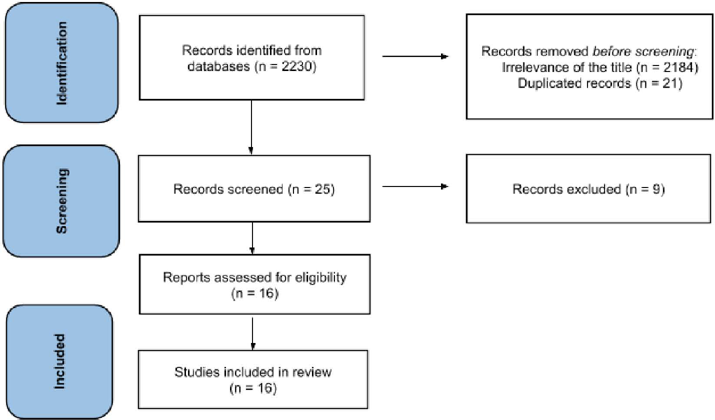
Results: In the initial review, 46 of the 2230 initially searched articles had the conditions for further review. After checking the articles’ title and abstract and the working method of the studies and removing duplicates and incomplete articles, a total of 16 articles were included in the study. Then, their results were analyzed as the frequency of hearing loss after open-heart surgery by age and sex.
Conclusion: The review of various studies confirms the fact that after open-heart surgery, the existence of evidence of hearing changes is not far from expected.
Keywords:
Hearing Loss; Deafness; Cardiac Surgical Procedures; Systematic Review Study
INTRODUCTION
Hearing is one of the most important senses in humans, and any change in it will cause changes in health and quality of life. Six point eight million people in the world face hearing problems every year[1]. Normal hearing depends on the proper functioning of the conductive transmission system of the middle ear, the health of the biochemical and bioelectrical environment of the inner ear, and the proper functioning of the central nervous system and nuclei, and all of these depend on the normal functioning of the vascular, hematological, and endocrine systems and metabolic status, so any diseases affecting the mentioned systems can affect the hearing system of a person[2]. In general, hearing disorders are divided into two types: conductive hearing loss and sensorineural hearing loss (SNHL). SNHL is a set of common hearing disorders caused by dysfunction of the inner ear, auditory nerve, or auditory processing pathway in the central nervous system[3]. One of the complications after surgery is SNHL, which according to previous studies has a prevalence of one in every thousand people[4,5,6,7], and often this hearing loss is sudden. The created hearing loss is not completely reversible and can cause problems for the patients[8,9]. This disorder is uncommonly observed after open-heart surgery when patients are placed under heart and lung bypass pumps[5,10]. Some sources believe that the cause of hearing disorders after admitting to the heart and lung bypass pump is caused by emboli originating from the cardiopulmonary pump device[9,11]. Therefore, the use of a heart and lung bypass pump, which is necessary to perform open-heart surgery, may be one of the vascular reasons for SNHL following the use of cardiopulmonary bypass, which increases the risk of sensorineural compromise[11,12]. As hearing loss after open- heart surgery is an uncommon complication, Walsted et al.[13], in their study, mentioned only four cases of hearing loss, three right after the surgery and one a week later. Some researchers believe that the cause of hearing loss is the formation of an embolus or a decrease in inner ear blood supply[13,14,15,16,17]. In some studies, the incidence of severe hearing loss after open-heart surgery has been reported as 0.1%[9,18]. Also, studies have shown that factors such as the patient’s age, the decrease in central and peripheral body temperature while using the heart and lung pumps, as well as the drop in blood pressure while on these pumps, and the duration of pump usage can affect hearing after open-heart surgery[4,11]. Of course, some studies show that the role of open- heart surgery on hearing loss is weak. In his study, conducted on patients undergoing open-heart surgery in Turkey, Iriz concluded that performing coronary artery bypass does not bring the risk of hearing loss[19]. The lack of agreement in this field indicates the need for further investigations. Considering the increasing number of coronary artery bypass grafting in Iran and the world and the existence of evidence based on the effect of open-heart surgery on the hearing loss of patients, as well as studies based on the lack of effect of this surgery on the hearing status of patients, very limited research has been conducted in this field. Therefore, this review study was conducted to determine the frequency of hearing loss based on audiometric data after open-heart surgery.
METHODS
Approval, Data Sources, String, and Inclusion Criteria
The current research project has been approved by the Research Vice-Chancellor of Guilan University of Medical Sciences (IR.GUMS. REC.1401.191).
A systematic review was performed, in accordance with the Preferred Reporting Items for Systematic Reviews and Meta- Analyses (or PRISMA) guidelines.
The first step in this process was to search the following electronic databases: MEDLINE, PsycINFO®, CINAHL, ISI Web of Science, and Scopus®. Persian article databases (Scientific Information Database, Irandoc, and Iran Mag) were also examined. The string used was “Hearing Loss* OR Deafness AND Cardiopulmonary Bypasses”. No restrictions were used on the publication date or sample size. All articles that met the inclusion criteria were included. The second step was to examine and assess all the studies and reviews obtained on this topic, and finally, to perform the same operation for all the references cited in these studies. This stage was carried out in such a way that at first the title and summary of the article and the method of the study as well as the results were examined by two researchers, and the selection of articles was done with agreement.
The following inclusion criteria were applied: (a) published studies without a time limit until 2021; (b) studies that reported the percentage of hearing loss after open-heart surgery; (c) observational and interventional studies with hearing loss criteria based on audiometry; (d) the language used in the document (English, Persian, and studies from other countries that had English abstracts).
Studies in the form of case reports, letters to the editor, studies presented in congresses, qualitative studies, news, as well as studies whose results were not fully stated and articles that were not complete were excluded from the study. The studies found were listed and their compatibility with the criteria of this study was examined by two researchers separately.
Coding of Results
The data collection form was designed and used for data extraction electronically. In case of not having access to the full text of the study, a request was made to receive the study from the central library of the university, and if it was not available, it was removed from the study. Two members of the team, independently, performed the search, selection, and detailed reading of the publications. In cases of disagreement, other researchers of the group were consulted as well.
The following variables were considered and recorded (Table 1): (a) authors; (b) year of publication; (c) country of publication; (d) language; (e) sample size; (f ) percentage of hearing loss after open-heart surgery; (g) sex and age of the sample population (mean, standard deviation, median or range). Methodological variables: (a) hearing loss measurement instrument; (b) design of the studies. Main outcomes of hearing loss after open-heart surgery: (a) results; (b) type of surgery; (c) time of connection to the pump and studies quality score.
Quality Appraisal
A descriptive analysis was made of the study variables thus included, concerning the quality of each publication selected; to check the quality of observational articles, a modified Strengthening the Reporting of Observational Studies in Epidemiology (STROBE) tool was used. For interventional studies, a modified Consolidated Standards of Reporting Trials (CONSORT) tool was used.
RESULTS
During the initial search, 2230 articles were found with the investigated keywords. After reviewing the titles of the studies and their abstracts, 46 articles entered the next stage of review. Of these, 21 articles were removed due to duplication. The text of 25 articles was read completely, and five articles were excluded due to lack of inclusion criteria (study design or lack of access to its full text, which included a thesis and three article abstracts). Finally, 16 articles were selected for data analysis. The characteristics of these studies are presented in Table 1. Out of 16 articles, three were related to children undergoing open-heart surgery, which included 1211 children aged between two and five years. There were 13 articles related to adults, which included 7712 patients with an age range of 20 to 81 years in terms of hearing loss after open-heart surgery (Figure 1). In nine articles, the samples were analyzed by sex. In these nine studies, 434 patients were male, and 156 patients were female. In a total of 8923 patients undergoing open-heart surgery, hearing loss was reported in 431 (4.8%) patients.

The minimum duration of surgeries reported in these studies was 21 minutes, and the maximum was 289 minutes.
DISCUSSION
In order to review the results of studies that investigated the changes in hearing levels after open-heart surgery and answer the question of whether open-heart surgery can affect the hearing of patients, 7712 patients in the age range 20-81 years and 1211 patients in the age range 2-5 years were included in this systematic review study. In 12 out of 16 articles, the findings indicated a significant difference in hearing before and after open- heart surgery. In general, in a total of 8923 children and adults undergoing open-heart surgery, hearing loss was reported in about 5% of these patients. Considering this issue, it seems that hearing loss after open-heart surgery can be a worrying issue. Therefore, special attention should be paid to hearing status and its possible changes as one of the complications of open-heart surgery. The results of some studies showed that increasing the duration of the patient’s stay on the cardiopulmonary bypass pump can affect the occurrence of hearing loss in these patients[2,4]. Some studies have also pointed to factors such as the duration of aortic cross-clamping, the presence of some underlying diseases, simultaneous coronary artery transplant surgery, and heart structural surgery in the occurrence of more hearing changes following heart surgery[17,20,21].
Also, the frequency of hearing loss in children aged two to five years after open-heart surgery is estimated to be about 21.6% in this study, which is very high in a population with a high life expectancy. Special attention and follow-up of this complication in this group are required. Human hearing is in the frequency range of 20 to 20,000 Hz, and in most cases, hearing loss after open- heart surgery affects the maximum hearing range, thus reducing the patient’s ability to hear sounds with frequencies higher than 1,000 Hz[2]. In the case of patients who have been under the heart bypass pump for a longer period of time, a greater decrease in hearing range has been observed[2,22]. During the period when patients undergo cardiac bypass for open-heart surgery, using a heart and lung pump bypass, the blood pressure is maintained at about 60 mmHg or even less[23]. Despite the decrease in body temperature and in the metabolism affected by it, the decrease in blood pressure may be associated with the decrease in blood supply to some areas of the central nervous system, and the change in senses after heart surgery is affected by the decrease in blood supply to these areas. Since the inner ear needs an oxygen-rich blood supply to function normally, insufficient blood flow in the inner ear can contribute to hearing loss. The function of auditory cilia in the cochlea requires proper blood circulation, and the decrease in oxygen supply following the decrease in blood pressure may affect their function. These conditions may be associated with hearing loss after open-heart surgery[24,25,26,27,28]. For this reason, using a cardiopulmonary bypass pump for a long period of time during open-heart surgery can provide the conditions for the hearing loss of patients. Hearing loss can be classified as SNHL, conductive hearing loss, or a combination of the two. SNHL is more common than other types and occurs when the auditory nerve or the cilia inside the cochlea do not receive adequate blood supply[25,29]. In a study written about the effect of open-heart surgery on patients' hearing, it is emphasized that the decrease in sensorineural hearing in patients undergoing open-heart surgery is not complete or severe[11].
Although the change in hearing level after open-heart surgery does not happen in all patients, it should be considered even in a small percentage of patients because hearing is one of the main senses, and the change in this ability can cause patients to face many problems after surgery. Due to the lack of available studies on this condition, it seems that the information about it is also insufficient. Perhaps it is for the same reason that the necessary assessments on the comparison of hearing before and after surgery are not carried out in almost any cardiac surgery center. Another important finding in the present study is the difference in the change of hearing ability according to sex; in most studies, the change of hearing threshold in all frequencies and both ears is more usual in men than in women. The results of the study by Wang et al.[31] also showed that after men and women were exposed to noise, the hearing loss of men was four times more than that of women. Some studies have suggested a possible reason for this difference in the protective role of estrogen in women[2,32,33].
The findings of this study have confirmed hearing changes in some patients undergoing open-heart surgery. Based on this, it can be suggested that one of the preoperative cares before open- heart surgery is to check the hearing level of patients. In addition, many patients undergoing coronary artery transplant surgery suffer from diabetes, which can be associated with the destruction of the end vessels that supply blood to the central and peripheral nerves.
Limitations
Because the number of studies conducted on hearing changes following open-heart surgery is minimal, and underlying diseases such as diabetes, which seems to affect the results of surgeries, are not mentioned in these studies, it was not possible to investigate the effect and draw conclusions about it in the present study, which can be a limitation. In addition, due to the dispersion of the methods used in the studies included in the current research and their scattered results, meta-analysis was not possible, which could be another limitation of the current study.
CONCLUSION
The review of various studies confirms the fact that after open- heart surgery, the existence of evidence of hearing changes in patients is not far from expected, and based on this, it can be suggested that one of the cares in patients who are candidates for open-heart surgery is to check their hearing levels before the operation.
-
This study was carried out at the Department of Nursing, School of Nursing and Midwifery, Guilan University of Medical Sciences, Rasht, Iran.
-
No financial support.
-
Abbreviations, Acronyms & Symbols
- CABG Coronary artery bypass grafting
- CI Confidence interval
- CPB Cardiopulmonary bypass
- DPOAE Distortion product otoacoustic emissions
- HFHL High-frequency hearing loss
- HL Hearing loss
- PHL Pediatric hearing loss
- PTA Pure tone audiometry
- SD Standard deviation
- SNHL Sensorineural hearing loss
- SNR Signal to noise ratio
- SRT Speech reception threshold
- TOAE Transient evoked otoacoustic emission
ACKNOWLEDGMENTS
We would like to thank the Vice-Chancellor of Research & Technology of Guilan University of Medical Sciences.
REFERENCES
-
1 Wilson BS,Tucci DL, Merson MH, O'Donoghue GM. Global hearing health care: new findings and perspectives. Lancet. 2017;390(10111):2503-15. doi:10.1016/S0140-6736(17)31073-5.
» https://doi.org/10.1016/S0140-6736(17)31073-5. - 2 Damghani M, Khodarahmi M, Shahidi A. Correlation between coronary artery bypass graft surgery and hearing threshold changes. J Kerman Univ Med Sci. 2008;15(2):104-10.
-
3 Mousavi A, Salehi N, Faraji L. Effects of exposure to an augmented acoustic environment on the auditory system. J Rehab Med. 2017;6:210-25. doi:10.22037/jrm.2017.1100249.
» https://doi.org/10.22037/jrm.2017.1100249 -
4 Phillipps JJ, Thornton AR. Audiometric changes in patients undergoing coronary artery bypass surgery. Br J Audiol. 1996;30(1):19-25. doi:10.3109/03005369609077926.
» https://doi.org/10.3109/03005369609077926 -
5 Ashraf O. Coronary artery bypass grafting and sensorineural hearing loss, a cohort study. BMC Ear Nose Throat Disord. 2005;5:12. doi:10.1186/1472-6815-5-12.
» https://doi.org/10.1186/1472-6815-5-12 - 6 Aw ST. Vestibular, Canal Testing: The Head Impulse Test. Encyclopedia Computational Neuroscience: Springer; 2022. p 3520-4.
-
7 Millen SJ, Toohill RJ, Lehman RH. Sudden sensorineural hearing loss: operative complication in non-otologic surgery. Laryngoscope. 1982;92(6 Pt 1):613-7. doi:10.1002/lary.1982.92.6.613.
» https://doi.org/10.1002/lary.1982.92.6.613 -
8 Wright JL, Saunders SH. Sudden deafness following cardio-pulmonary bypass surgery. J Laryngol Otol. 1975;89(7):757-9. doi:10.1017/ s0022215100080956.
» https://doi.org/10.1017/ s0022215100080956 -
9 Plasse HM, Mittleman M, Frost JO. Unilateral sudden hearing loss after open heart surgery: a detailed study of seven cases. Laryngoscope. 1981;91(1):101-9. doi:10.1288/00005537-198101000-00015.
» https://doi.org/10.1288/00005537-198101000-00015 -
10 Son HJ, Joh JH, Kim WJ, Chin JH, Choi DK, Lee EH, et al. Temporary bilateral sensorineural hearing loss following cardiopulmonary bypass -A case report-. Korean J Anesthesiol. 2011;61(2):162-5. doi:10.4097/kjae.2011.61.2.162.
» https://doi.org/10.4097/kjae.2011.61.2.162 - 11 Khorsandi M, Mohammadi M, Mandegar M, Yoosefnia M, Sabetazad B. Audiometric changes after coronary artery bypass graft. Tehran Univ Med J. 2007;65(7):64-7.
- 12 Aytacoglu BN, Ozcan C, Sucu N, Gorur K, Doven O, Camdeviren H, et al. Hearing loss in patients undergoing coronary artery bypass grafting with or without extracorporeal circulation. Med Sci Monit. 2006;12(6):CR253-9.
-
13 Walsted A, Andreassen UK, Berthelsen PG, Olesen A. Hearing loss after cardiopulmonary bypass surgery. Eur Arch Otorhinolaryngol. 2000;257(3):124-7. doi:10.1007/s004050050207.
» https://doi.org/10.1007/s004050050207 -
14 Donne AJ, Waterman P, Crawford L, Balaji HP, Nigam A. A single-blinded case controlled study on effects of cardiopulmonary circulation on hearing during coronary artery bypass grafting. Clin Otolaryngol. 2006;31(5):381-5. doi:10.1111/j.1749-4486.2006.01312.x.
» https://doi.org/10.1111/j.1749-4486.2006.01312.x -
15 Irvin SM. Sensorineural hearing loss after select procedures. J Perianesth Nurs. 2002;17(2):89-98; quiz 98-100. doi:10.1053/ jpan.2002.31683.
» https://doi.org/10.1053/ jpan.2002.31683 -
16 Sadeghi MM, Radman M, Bidaki R, Sonbolestan M. Sensorineural hearing loss in patients with coronary artery bypass surgery. Adv Biomed Res. 2013;2:5. doi:10.4103/2277-9175.107966.
» https://doi.org/10.4103/2277-9175.107966 -
17 Munjal SK, Malik P, Sharma A, Panda NK, Thingnum SK. Effects of cardiopulmonary bypass surgery on auditory function: a preliminary study. ISRN Otolaryngol. 2013;2013:453920. doi:10.1155/2013/453920.
» https://doi.org/10.1155/2013/453920 - 18 Plasse HM, Spencer FC, Mittleman M, Frost JO. Unilateral sudden loss of hearing: an unusual complication of cardiac operation. J Thorac Cardiovasc Surg. 1980;79(6):822-6.
- 19 İriz E, Yilmaz M, Gündüz B, Iriz A, Ereren E, Bayazit Y, etc al. Cardiopulmonary bypass circulation does not have adverse effects on ear functions: a study of otoacoustic emissions. Turkish J Thorac Cardiovasc Surg. 2009;17(2):83-6.
- 20 Casale M, Potena M, Rinaldi V, Lusini M, Vesperini E, Chello M, et al. Evaluation of ear function after cardiopulmonary bypass with otoacoustic emissions: a pilot study. Eur Rev Med Pharmacol Sci. 2011;15(9):1096-100.
-
21 Iriz A, Cagli K, Gocer C, Dursun E, Korkmaz H, Eryilmaz A. Effects of open heart surgery on hearing thresholds measured by high frequency audiometry. J Laryngol Otol. 2008;122(8):795-8. doi:10.1017/S0022215107000916.
» https://doi.org/10.1017/S0022215107000916 -
22 Brownson RJ, Stroud MH, Carver WF. Extracorporeal cardiopulmonary bypass and hearing. Arch Otolaryngol. 1971;93(2):179-82. doi:10.1001/archotol.1971.00770060265012.
» https://doi.org/10.1001/archotol.1971.00770060265012 -
23 Gopineti L, Paulpillai M, Rosenquist A, Van Bergen AH. Prevalence of sensorineural hearing loss in children with palliated or repaired congenital heart disease. Cureus. 2020;12(1):e6566. doi:10.7759/ cureus.6566.
» https://doi.org/10.7759/ cureus.6566 -
24 Grasty MA, Ittenbach RF, Knightly C, Solot CB, Gerdes M, Bernbaum JC, et al. Hearing loss after cardiac surgery in infancy: an unintended consequence of life-saving care. J Pediatr. 2018;192:144-51.e1. doi:10.1016/j.jpeds.2017.09.049.
» https://doi.org/10.1016/j.jpeds.2017.09.049 -
25 Jalaeian taghadomi, R., Majidi, M. R., Abbasi, H., Mirzaee, A., Bahadorzadeh, L., Azari, A. The effect of cardiopulmonary pump on hearing loss after cardiopulmonary bypass graft. Med J Mashad Univ Med Sci. 2011;54(1):50-7. doi:10.22038/mjms.2011.5363.
» https://doi.org/10.22038/mjms.2011.5363 -
26 Bork KT, To BP, Leonard NJ, Douglas CM, Dinon DA, Leonard EE, et al. Prevalence of childhood permanent hearing loss after early complex cardiac surgery. J Pediatr. 2018;198:104-9. doi:10.1016/j.jpeds.2018.02.037.
» https://doi.org/10.1016/j.jpeds.2018.02.037 -
27 Berger M, Terrando N, Smith SK, Browndyke JN, Newman MF, Mathew JP. Neurocognitive function after cardiac surgery: from phenotypes to mechanisms. Anesthesiology. 2018;129(4):829-51. doi:10.1097/ALN.0000000000002194.
» https://doi.org/10.1097/ALN.0000000000002194 -
28 Sarkar M, Prabhu V. Basics of cardiopulmonary bypass. Indian J Anaesth. 2017;61(9):760-7. doi:10.4103/ija.IJA_379_17.
» https://doi.org/10.4103/ija.IJA_379_17 - 29 White HJ, Helwany M, Peterson DC. Anatomy, head and neck, ear organ of corti. StatPearls [Internet]: StatPearls Publishing; 2022.
- 30 Tanna RJ, Lin JW, De Jesus O. Sensorineural hearing loss. 2023. In: StatPearls [Internet]. Treasure Island (FL): StatPearls Publishing; 2024 Jan–. PMID: 33351419.
-
31 Wang Q, Wang X, Yang L, Han K, Huang Z, Wu H. Sex differences in noise-induced hearing loss: a cross-sectional study in China. Biol Sex Differ. 2021;12(1):24. doi:10.1186/s13293-021-00369-0.
» https://doi.org/10.1186/s13293-021-00369-0 -
32 Delhez A, Lefebvre P, Péqueux C, Malgrange B, Delacroix L. Auditory function and dysfunction: estrogen makes a difference. Cell Mol Life Sci. 2020;77(4):619-35. doi:10.1007/s00018-019-03295-y.
» https://doi.org/10.1007/s00018-019-03295-y -
33 Hu X, Wang Y, Lau CC. Effects of noise exposure on the auditory function of ovariectomized rats with estrogen deficiency. J Int Adv Otol. 2016;12(3):261-5. doi:10.5152/iao.2016.2842.
» https://doi.org/10.5152/iao.2016.2842