
 Neoplasms’ Mortality Trends in Pediatric Patients: a Temporal Evaluation
ABSTRACT
Introduction: Neoplasms remain a significant cause of pediatric mortality globally, with notable regional and demographic disparities.
Objective: To evaluate temporal trends in pediatric neoplasm mortality.
Method: This ecological study utilized mortality data from the Global Burden of Disease platform spanning 1980 to 2021. Data were stratified by year, sex, age group (0-4, 5-9, 10-14, 15-19), neoplasm type, and WHO world region. Joinpoint regression models were used to estimate the annual percentage change in mortality rates, with 95% confidence intervals to assess statistical significance.
Results: A global decline in pediatric neoplasm mortality was observed from 1980 to 2021, although variations by region, age, and neoplasm type persisted. Mortality rates were consistently higher in males, with all age groups showing reductions — most notably in children aged 0-4 years. North America exhibited the lowest mortality, while South Asia demonstrated the steepest decline. Most neoplasm types showed decreasing trends; however, temporary increases were observed in bone neoplasms, neuroblastomas, and retinoblastomas. Acute lymphoblastic leukemia consistently had the highest burden but also the most pronounced reduction.
Conclusion: Despite encouraging global progress in reducing pediatric neoplasm mortality, disparities remain — especially in low-and middle-income regions. These differences may partly reflect underreporting, misclassification, and limitations in data quality. Strengthening surveillance systems, improving access to timely diagnosis and treatment, and investing in equitable neoplasm care remain essential steps toward reducing the global burden of childhood neoplasm.
Key words:
Neoplasms/mortality; Minors/statistics & numerical data; Young Adult/statistics & numerical data; Mortality; Global Health/trends
RESUMO
Introdução: As neoplasias persistem como uma causa significativa de mortalidade pediátrica em todo o mundo, com significativas disparidades regionais e demográficas.
Objetivo: Avaliar as tendências temporais da mortalidade pediátrica por neoplasias.
Método: Estudo ecológico que utilizou dados de mortalidade da plataforma Global Burden of Disease, entre os anos de 1980 e 2021. Os dados foram estratificados por ano, sexo, faixa etária (0-4, 5-9, 10-14, 15-19), tipo de neoplasia e Região da OMS. As tendências foram analisadas por regressão Joinpoint, estimando-se a variação percentual anual com intervalos de confiança de 95%.
Resultados: Observou-se uma redução global da mortalidade por neoplasia pediátrica entre 1980 e 2021, embora persistam variações conforme a Região, idade e tipo de neoplasia. As taxas de mortalidade foram consistentemente maiores em meninos. Todas as faixas etárias apresentaram declínio, com destaque para o grupo de 0-4 anos. A América do Norte teve as menores taxas, enquanto o Sul da Ásia apresentou a queda mais acentuada. A maioria dos tipos de neoplasia mostrou tendência de redução, embora tenha havido aumentos temporários em neoplasias ósseas, neuroblastomas e retinoblastomas. A leucemia linfoblástica aguda apresentou as maiores taxas de mortalidade, mas também apresentou o declínio mais expressivo.
Conclusão: Apesar dos avanços significativos na redução da mortalidade por neoplasia pediátrica em nível global, ainda persistem desigualdades importantes, especialmente em Regiões de baixa e média rendas. Tais disparidades podem refletir limitações na qualidade dos dados, subnotificação e classificações incorretas. Fortalecer os sistemas de vigilância, melhorar o acesso ao diagnóstico e ao tratamento oportunos e promover políticas públicas equitativas são passos fundamentais para reduzir a carga global da neoplasia infantil.
Palavras-chave:
Neoplasias/mortalidade; Menores de Idade/estatística & dados numéricos; Adulto Jovem/estatística & dados numéricos; Mortalidade; Saúde Global/tendências
RESUMEN
Introducción: Las neoplasias persisten como una causa importante de mortalidad pediátrica en todo el mundo, con importantes disparidades regionales y demográficas.
Objetivo: Evaluar las tendencias temporales de la mortalidad pediátrica por neoplasias.
Método: Estudio ecológico que utilizó datos de mortalidad de la plataforma Global Burden of Disease entre 1980 y 2021. Los datos se estratificaron por año, sexo, grupo de edad (0-4, 5-9, 10-14, 15-19), tipo de neoplasia y región de la OMS. Las tendencias se analizaron mediante regresión Joinpoint, estimando la variación porcentual anual con intervalos de confianza del 95%.
Resultados: Se observó una reducción global de la mortalidad por neoplasia pediátrica entre 1980 y 2021, aunque persisten variaciones por región, edad y tipo de neoplasia. Las tasas de mortalidad fueron consistentemente más altas en los niños. Todos los grupos de edad mostraron descensos, siendo el grupo de 0 a 4 años el que mostró un descenso notable. América del Norte tuvo las tasas más bajas, mientras que el sur de Asia mostró el descenso más pronunciado. La mayoría de los tipos de cáncer mostraron una tendencia a la baja, aunque se observaron aumentos temporales en neoplasias óseas, neuroblastomas y retinoblastomas. La leucemia linfoblástica aguda presentó las tasas de mortalidad más altas, pero también mostró el descenso más significativo.
Conclusión: A pesar del progreso significativo en la reducción de la mortalidad por cáncer pediátrico a nivel mundial, todavía persisten desigualdades significativas, especialmente en las regiones de ingresos bajos y medios. Estas disparidades pueden reflejar limitaciones en la calidad de los datos, el subregistro y la clasificación errónea. Fortalecer los sistemas de vigilancia, mejorar el acceso al diagnóstico y tratamiento oportunos, y promover políticas públicas equitativas son pasos fundamentales para reducir la carga mundial del cáncer infantil.
Palabras clave:
Neoplasias/mortalidad; Menores/estadística & datos numéricos; Mortalidad; Salud Global/tendencias
INTRODUCTION
Neoplasms can be defined as medical conditions resulting from the uncontrolled and abnormal cell growth, which may acquire the ability to invade other tissues locally and at a distance1. Although they occur more frequently in older adults, childhood neoplasms represent a significant global burden1.
In fact, some studies estimate the occurrence of approximately 140 annual cases of neoplasms in children aged between 0 and 14 years for every 1 million people, with leukemias, central nervous system tumors, and lymphomas being the main observed types2. This scenario generates a direct and indirect economic impact of approximately $35,000 to $130,000 dollars, encompassing the treatment costs for each case at 5 years of its post-diagnosis3.
These figures underscore the multifaceted burden imposed not only on health systems but also on affected families and society4,5. In this context, assessing temporal trends in pediatric cancer mortality becomes fundamental to identifying disparities, guiding resource allocation, and supporting evidence-based public health interventions2–5. A clearer understanding of these patterns can inform targeted strategies for early detection, treatment optimization, and survivorship planning, thereby contributing to improved outcomes across different pediatric age groups3,4.
Thus, this study was designed to evaluate the temporal trends in mortality from neoplasms among pediatric patients.
METHOD
This ecological study aimed to evaluate the temporal trends of neoplasms’ mortality in pediatric patients using a temporal approach. All data were provided from the Global Burden of Disease (GBD). In this case, GBD is a comprehensive research initiative led by the Institute for Health Metrics and Evaluation (IHME) that systematically quantifies health data by employing a standardized methodology6.
Data collection was carried out manually by the author of this research by downloading the data and converting them into Excel® spreadsheets. After that, they were stratified by year, sex, age group (0-4 years, 5-9 years, 10-14 years and 15-19 years as available in the original database), World Health Organization region (North America, Latin America and Caribbean; sub-Saharan Africa; Middle East and North Africa; Europe and Central Asia; South Asia as well as East Asia and Pacific), and, finally, by neoplasms type (Acute Lymphoblastic Leukemia, Acute Myeloid Leukemia, Hodgkin's Lymphoma, Non-Hodgkin's lymphoma, Malignant neoplasm of bone and articular cartilage, Neuroblastoma and other peripheral nerve cell tumors and Retinoblastoma, as available in the original database). Data categorization followed the selection options displayed in the GBD platform. Neoplasms’ mortality data were given in the total number of deaths registered by 1,000 children.
Data analysis were performed using the Joinpoint software 5.0®7. It was possible to estimate an annual percentage change (APC) by a logarithm regression model. The APC quantifies the average percentage change per year of the analyzed variable, that is, in the present study, whether mortality from neoplasms in children is decreasing (APC < 0 and p < 0.05), increasing (APC > 0 and p < 0.05) or stable (p ≥ 0.05).
The review and approval by an ethics committee was waived because only public and deidentified data have been utilized in compliance with Directive 510/2016 of the National Health Council (CNS)8.
RESULTS
Across all evaluated categories, a general downward trend in pediatric neoplasm mortality was observed. Detailed data tables displaying neoplasm-specific mortality rates by neoplasm type, sex, geographic region, and age group from 1980 to 2021 are available as Supplementary Material 1 (mortality data spreadsheet) and Supplementary Material 2 (trend analysis spreadsheet).
Sex-disaggregated analyses revealed that both males and females experienced statistically significant reductions in mortality rates, with only minor fluctuations in their trajectories, being male mortality higher than the female overtime (Figure 1).

All pediatric age groups demonstrated statistically significant declines. Children aged 0-4 years consistently exhibited the highest mortality rates but also showed the most pronounced declines, especially between 1996 and 2005. By 2021, mortality in this age group had nearly converged with that of adolescents aged 15-19 years. Mortality trends in the 10-14 and 15-19 age groups progressed in a nearly parallel manner. Of particular note, the 5-9 age group experienced a marked decline from 1996 to 2021, with an accelerated reduction observed from 2017 onward. These reductions resulted in the 5-9 age group nearly matching the mortality levels of the 10-14 group from 2017 forward (Figure 2).

Notably, temporary periods of mortality stability were seen in several regions: Sub-Saharan Africa (1980-1983), North America (1998-2003), East Asia and the Pacific (1984-1992), Middle East and North Africa (2001-2009), and South Asia (2003-2006 and 2010-2016). North America consistently recorded the lowest mortality rates across the entire period. The most substantial declines occurred in South Asia and the Pacific, especially between 1992 and 2006. Significant reductions were also noted in in the Middle East and North Africa (1984-2001). Latin America and the Caribbean, as well as Europe and Central Asia showed a statistically significant reduction over the entire period (Figure 3).

Nearly all neoplasm types exhibited statistically significant decreases in age-standardized mortality rates over the period analyzed. However, certain neoplasms displayed intervals of stability: Acute myeloid leukemia (1983-1992), Hodgkin's lymphoma (1980-1997), Non-Hodgkin's lymphoma (1980-1987), Neuroblastoma (1990-2001), and Retinoblastoma (1980-1991). Notably, malignant neoplasms of bone and articular cartilage showed an increasing trend between 1991 and 2004, as did neuroblastomas between 2011 and 2014, and retinoblastomas from 2004 to 2010. Acute lymphoblastic leukemia had the highest mortality rates throughout the study period but also exhibited the most substantial reductions, particularly between 1993–2006 and again between 2018-2021 (Figure 4).
DISCUSSION
Between 1980 and 2021, pediatric neoplasm mortality tended to decline across sexes, age groups, world regions, and most neoplasm types. Mortality in males remained consistently higher than in females, though both experienced significant reductions. Children aged 0–4 years had the highest mortality rates but also the steepest declines. Regional analyses showed widespread improvement, with North America having the lowest rates and South Asia achieving the most dramatic reductions. While most neoplasm types followed this positive trend, some, including neuroblastoma and bone/cartilage neoplasms, showed temporary increases or stable phases. Acute lymphoblastic leukemia stood out for both its high burden and remarkable decline in mortality.
The downward trend in mortality has also been noted in other studies9, which observed, for example, annual decreases of 1.5% to 3%, possibly explained by improvements in therapeutic regimens, supportive care infrastructure, as well as by international cooperative clinical trials that standardized treatment protocols, increasing cure rates9. However, this reduction scenario is not constant in all places and periods around the globe. In fact, a US study detected declines between 2002 and 2016, particularly between 2002 and 200910. Furthermore, it also noted trends of stabilization in mortality rates since 201610. In this case, it is hypothesized that advances in diagnosis and treatment have not necessarily become equally accessible to all groups, and those marginalized may not have benefited from all of their potential beneficial effects10.
As observed in the present investigation, a North-American study revealed that boys presented higher mortality than girls. In fact, their increased mortality risk were even 225% higher for some cancer types, which may be associated with a multifactorial context, driven by genetic expression, androgens levels, and higher inflammatory interleukin profile in boys11. Meanwhile, another study indicated that sex is not the only determining factor in mortality from neoplasms in pediatric patients12. Actually, some differences between boys and girls were drastically reduced or even reversed when other individual characteristics were taken into account, such as ethnic group, age range, and tumor type11,12.
Significant differences in mortality from neoplasms in children according to the age group evaluated have been noticed. An international study published in the mid-2010s concluded that mortality rates for cancer in general were higher in the group of children aged 15 to 19 years, when compared to those under 14 years of age13. In parallel, other studies point to higher mortality in infants, although they emphasize that these findings should take into account, notably, the type of tumor involved14. This divergence in findings can be attributed to a number of factors. From an immunological perspective, infants present an immature immune response with lower efficiency in tumor immunosurveillance, which can contribute to worse outcomes in certain malignancies13. Conversely, adolescents undergo endocrine and pubertal transitions that influence tumor biology through sex steroids, growth factors and changes in inflammatory signaling, potentially altering prognosis in specific tumor types14.
As observed in this study, other analyses have also noted differences in the temporal trends presented by different types of pediatric neoplasms. In this case, a European study and an American study noted significant reductions in mortality from leukemia, but reported modest reductions for tumors of the central nervous system15,16. In parallel, another international study observed a reduction in mortality rates for Hodgkin's lymphoma and liver cancer, but not for other types of cancer, which even showed increased rates in some regions17. These divergent trends reflect heterogeneity in treatment advances, biological behavior and therapeutic responsiveness among tumor types15,16. Leukemias, for example, have benefited from major improvements in risk stratification, targeted therapies and supportive care, leading to substantial survival gains. In contrast, central nervous system tumors remain limited by biological aggressiveness, and therapeutic resistance15,16,18.
Significant regional differences in pediatric cancer mortality were observed not only in this study. In fact, one study reported that the downward trends observed in Latin American countries were smaller compared to those observed in the United States and Canada16. In parallel, intraregional differences are also noted; a European study observed that countries in the central and eastern regions experienced steeper declines than others15. A study noted that, in 2019, middle socioeconomic index (SI) regions presented higher cancer incidence and prevalence ratios while low SI regions tended to show the highest mortality rates17. These disparities arise from multiple structural and systemic factors. In low-SI settings, delays in diagnosis, inadequate infrastructure, and financial barriers significantly hinder treatment completion and survival improvements17,19. Conversely, high-SI regions tend to benefit from robust cancer registries, clinical trial participation, advanced therapeutic protocols and comprehensive supportive care, which collectively accelerate declines in mortality15,19.
This study has several strengths. By utilizing data from the GBD, it ensures a robust and standardized dataset covering multiple variables over an extended period. The categorization and exploration of some variables as age groups, global regions, sex, as well as neoplasm types allow for a comprehensive evaluation of global trends in pediatric neoplasm mortality, offering valuable insights for public health policies. However, it also has limitations. The data are aggregated regionally, which may mask intra-regional variations and disparities in mortality rates. Furthermore, since this study relied on officially reported mortality estimates, potential underreporting and misclassification of neoplasm-related deaths remain important limitations, especially in low-resource settings.
CONCLUSION
This study highlights the substantial progress made in reducing pediatric neoplasm mortality over the last four decades. Nevertheless, the persistence of geographic, demographic, and disease-specific disparities — compounded by variations in data quality and potential underreporting — underscores the need for robust global surveillance systems. Improving neoplasm registries, enhancing healthcare infrastructure, and expanding equitable access to early diagnosis and treatment, particularly in resource-limited settings, are essential strategies to sustain and accelerate gains in pediatric oncology worldwide.
DATA AVAILABILITY STATEMENT
All the contents associated with the article are included in the manuscript.
REFERENCES
-
1 Kattner P, Strobel H, Khoshnevis N, et al. Compare and contrast: pediatric neoplasms versus adult malignancies. Cancer Metastasis Rev. 2019;38(4):673-82. doi: https://doi.org/10.1007/s10555-019-09836-y
» https://doi.org/10.1007/s10555-019-09836-y -
2 Wang M, Bi Y, Fan Y, et al. Global incidence of childhood cancer by subtype in 2022: a population-based registry study. eClinicalMedicine. 2024;89:103571. doi: https://doi.org/10.1016/j.eclinm.2025.103571
» https://doi.org/10.1016/j.eclinm.2025.103571 -
3 Steliarova-Foucher E, Colombet M, Ries LAG, et al. International incidence of childhood cancer, 2001–10: a population-based registry study. Lancet Oncol. 2017;18(6):719-31. doi: https://doi.org/10.1016/s1470-2045(17)30186-9
» https://doi.org/10.1016/s1470-2045(17)30186-9 - 4 Sultan I, Alfaar AS, Sultan Y, et al. Pediatric neoplasm burden: a global perspective. PLoS One. 2025;20(1):e0314592.
- 5 Huang J, Chan SC, Ngai CH, et al. Global incidence, mortality and temporal trends of cancer in children: a joinpoint regression analysis. Cancer Med. 2023;12(2):1903-11. doi: https://doi.org/
-
6 Global Burden of Disease Estimative [Internet]. Seattle: Institute for Health Metrics and Evaluation; ©2026 [access 2025 jun 25]. Available from: https://vizhub.healthdata.org/gbd-results/
» https://vizhub.healthdata.org/gbd-results/ -
7 Joinpoint Trend Analysis [Internet]. Version 5.4.0. Bethesda: National Cancer Institute. 2020 Apr 22 – [access 2025 Apr 25]. Available from: https://surveillance.cancer.gov/joinpoint/
» https://surveillance.cancer.gov/joinpoint/ -
8 Conselho Nacional de Saúde (BR). Resolução n° 510, de 7 de abril de 2016. Dispõe sobre as normas aplicáveis a pesquisas em Ciências Humanas e Sociais cujos procedimentos metodológicos envolvam a utilização de dados diretamente obtidos com os participantes ou de informações identificáveis ou que possam acarretar riscos maiores do que os existentes na vida cotidiana, na forma definida nesta Resolução [Internet]. Diário Oficial da União, Brasília, DF. 2016 maio 24 [access 2025 Dec 7]; Seção 1:44. Available from: http://bvsms.saude.gov.br/bvs/saudelegis/cns/2016/res0510_07_04_2016.html
» http://bvsms.saude.gov.br/bvs/saudelegis/cns/2016/res0510_07_04_2016.html -
9 Smith MA, Altekruse SF, Adamson PC, et al. Declining childhood and adolescent cancer mortality. Cancer. 2014;120(16):2497-506. doi: https://doi.org/10.1002/cncr.28748
» https://doi.org/10.1002/cncr.28748 -
10 Siegel DA, Richardson LC, Henley SJ, et al. Pediatric cancer mortality and survival in the United States, 2001-2016. Cancer. 2020;126(19):4379-89. doi: https://doi.org/10.1002/cncr.33080
» https://doi.org/10.1002/cncr.33080 -
11 Williams LA, Spector LG. Survival differences between males and females diagnosed with childhood cancer. JNCI Cancer Spectr. 2019;3(2):pkz032. doi: https://doi.org/10.1093/jncics/pkz032
» https://doi.org/10.1093/jncics/pkz032 -
12 Tang XW, Jiang J, Huang S, et al. Long-term trends in cancer incidence and mortality among US children and adolescents: a SEER database analysis from 1975 to 2018. Front Pediatr. 2024;12:1357093. doi: https://doi.org/10.3389/fped.2024.1357093
» https://doi.org/10.3389/fped.2024.1357093 -
13 Steliarova-Foucher E, Colombet M, Ries LAG, et al. International incidence of childhood cancer, 2001-10: a population-based registry study. Lancet Oncol. 2017;18(6):719-31. doi: https://doi.org/10.1016/S1470-2045(17)30186-9
» https://doi.org/10.1016/S1470-2045(17)30186-9 - 14 Birch JM, Blair V. The epidemiology of infant cancers. Br J Cancer Suppl. 1992;18:S2-4.
-
15 Bertuccio P, Alicandro G, Malvezzi M, et al. Childhood cancer mortality trends in Europe, 1990–2017, with focus on geographic differences. Cancer Epidemiol. 2020;67:101768. doi: https://doi.org/10.1016/j.canep.2020.101768
» https://doi.org/10.1016/j.canep.2020.101768 -
16 Malvezzi M, Santucci C, Alicandro G, et al. Childhood cancer mortality trends in the Americas and Australasia: an update to 2017. Cancer. 2021;127(18):3445-56. doi: https://doi.org/10.1002/cncr.33642
» https://doi.org/10.1002/cncr.33642 - 17 Ren HM, Liao MQ, Tan SX, et al. Global, regional, and national burden of cancer in children younger than 5 years, 1990-2019: analysis of the Global Burden of Disease Study 2019. Front Public Health. 2022;10:910641. doi: https://doi.org/
-
18 Egan G, Tasian SK. Relapsed pediatric acute myeloid leukaemia: state-of-the-art in 2023. Haematologica. 2023;108(9):2275-88. doi: https://doi.org/10.3324/haematol.2022.281106
» https://doi.org/10.3324/haematol.2022.281106 -
19 Magrath I, Steliarova-Foucher E, Epelman S, et al. Paediatric cancer in low-income and middle-income countries. Lancet Oncol. 2013;14(3):e104-16. doi: https://doi.org/10.1016/S1470-2045(13)70008-1
» https://doi.org/10.1016/S1470-2045(13)70008-1
Edited by
-
Associate editor:
Jeane Tomazelli. Orcid iD: https://orcid.org/0000-0002-2472-3444
-
Scientific-editor:
Anke Bergmann. Orcid iD: https://orcid.org/0000-0002-1972-8777

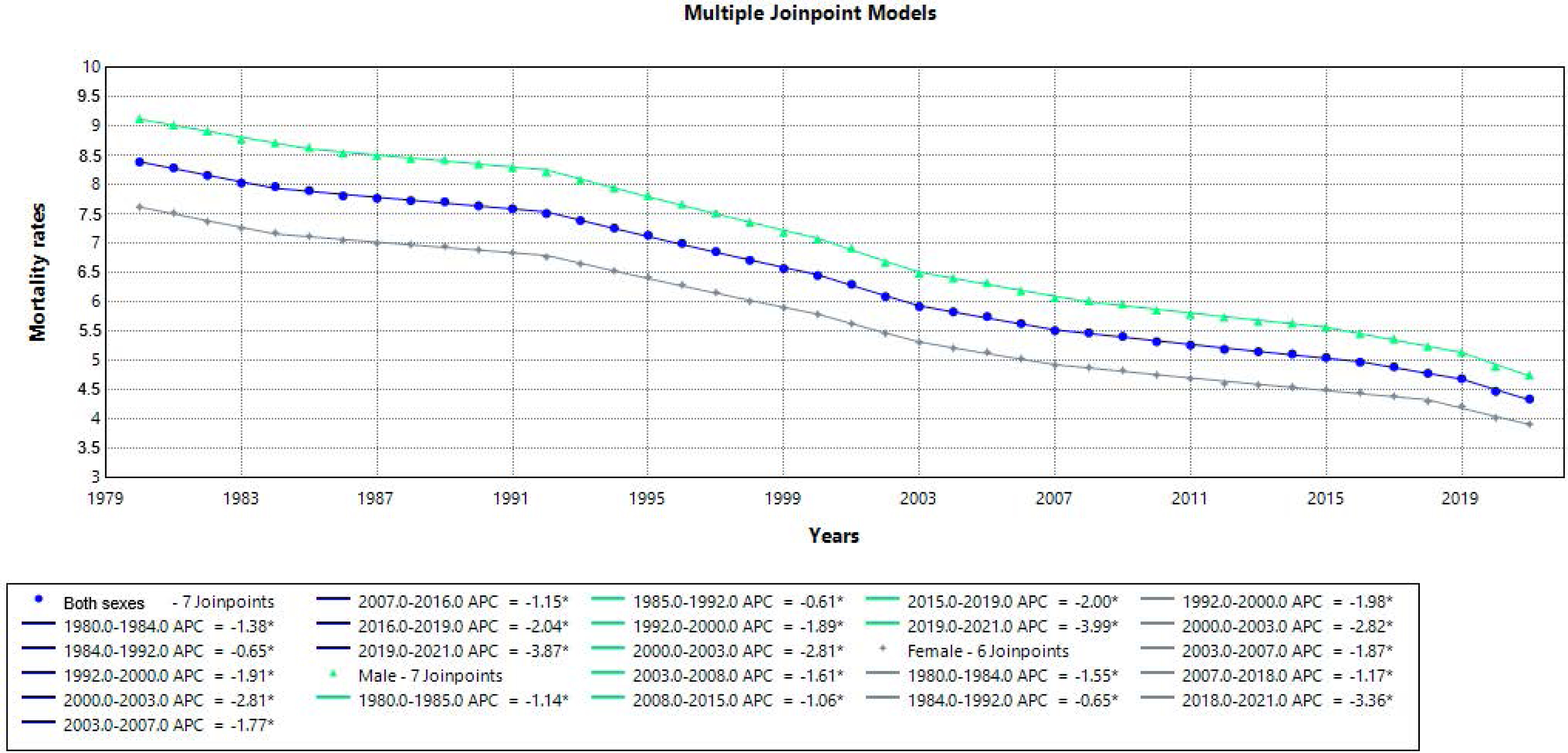 Note: The figure presents the years in the X-axis and the mortality rates – deaths by 1,000 children – in the Y-axis. The points indicate the mortality rates for a year and the lines, the observed trends, being that the APC indicates the magnitude of the trend; *statistical significance (p < 0.05); Source: Global Burden of Disease, 1980-2021
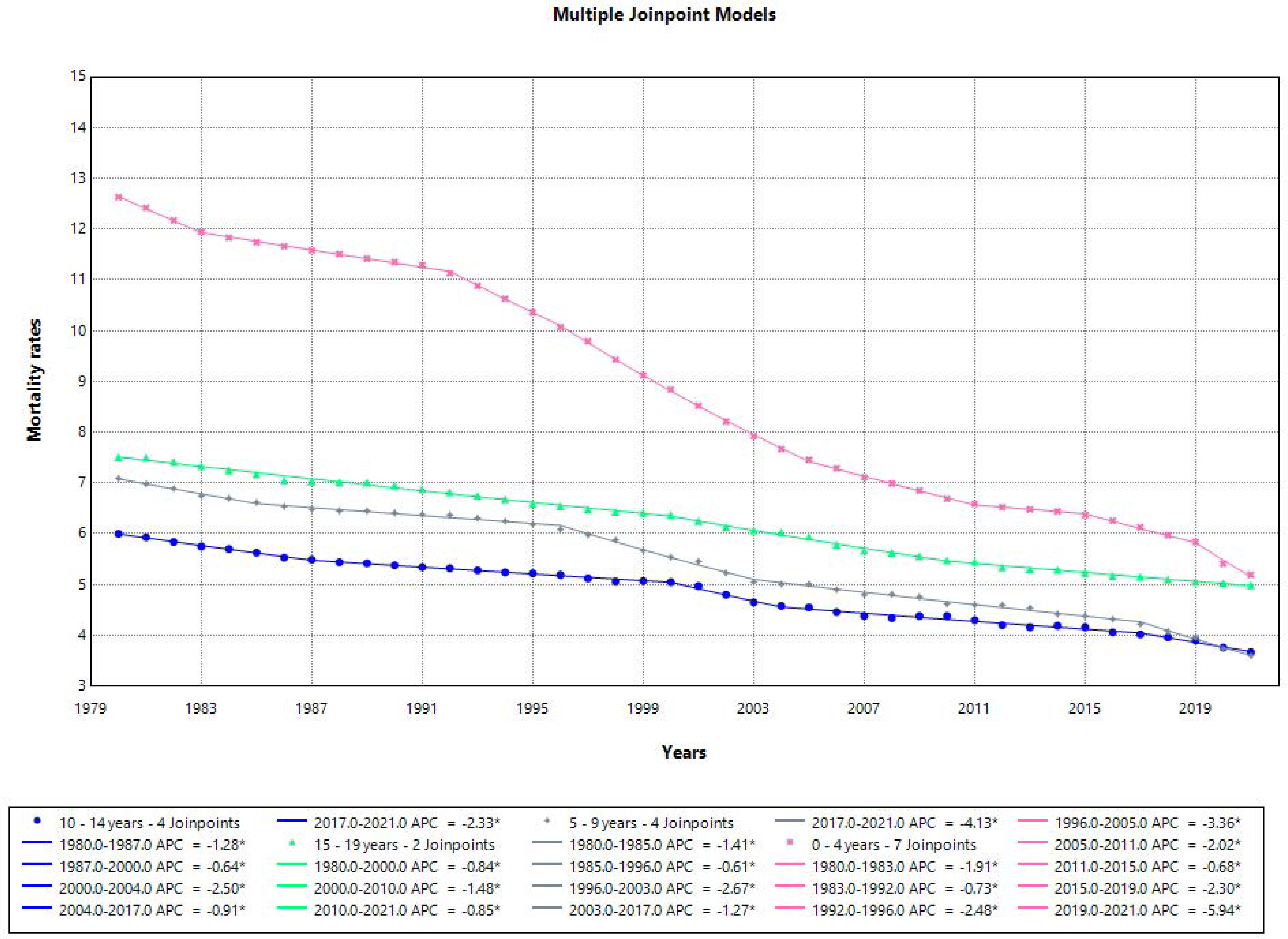 Note: The figure presents the years in the X-axis and the mortality rates in the Y-axis. The points indicate the mortality rates for a year and the lines, the observed trends, being that the APC indicates the magnitude of the trend; *statistical significance (p < 0.05); Source: Global Burden of Disease, 1980-2021
 Note: The figure presents the years in the X-axis and the mortality rates in the Y-axis. The points indicate the mortality rates for a year and the lines, the observed trends, and APC indicates the magnitude of the trend; *statistical significance (p < 0.05); Source: Global Burden of Disease, 1980-2021
 Note: The figure presents the years in the X-axis and the mortality rates in the Y-axis. The points indicate the mortality rates for a year and the lines, the observed trends, and the APC indicates the magnitude of the trend; *statistical significance (p < 0.05); Source: Global Burden of Disease, 1980-2021