 Physiotherapeutic Modalities in the Management of Neuropathic Pain Induced by Breast Cancer Treatment: Systematic Review
ABSTRACT
Introduction: Women's survival after breast cancer treatment has increased due to advances in early detection and available therapies. However, great physical and psychological burden are the result of adverse effects that survivors commonly face. In addition to fatigue, pain is the most common persistent symptom after cancer treatment.
Objective: Systematize the results of randomized clinical trials on physiotherapeutic intervention in peripheral neuropathic pain induced by breast cancer treatments.
Method: The search was carried out on the MEDLINE databases via PubMed and Cochrane portals. Randomized clinical trials published since 2017 in English, that addressed physiotherapeutic modalities as intervention and peripheral neuropathic pain induced by oncological treatments as outcome were selected, the population of interest were women surviving breast cancer. The Cochrane-risk-of-bias tool was applied to evaluate the methodological quality of the studies.
Results: Four studies were fully reviewed. Most of the adverse effects of cancer treatment are due to taxane-based chemotherapy regimens. The outcomes assessed include, in addition to pain, other neuropathic signs and influence on activities of daily living. The studies varied in terms of intervention and treatment phase. Only one of the studies demonstrated a significantly positive result in favor of the intervention group.
Conclusion: Randomized clinical studies provide scant evidence regarding the positive effects of physiotherapeutic intervention on peripheral neuropathic pain induced by breast cancer treatments.
Key words:
Pain Management/methods; Polyneuropathy; Breast Neoplasms; Antineoplastics/pharmacology; Physical Therapy Modalities
RESUMO
Introdução: A sobrevida de mulheres após o tratamento do câncer de mama tem aumentado em virtude de avanços na detecção precoce e terapias disponíveis. Porém, as sobreviventes comumente enfrentam efeitos adversos após o tratamento que representam grande carga física e psicológica. Além da fadiga, a dor é o sintoma persistente mais frequente após o tratamento.
Objetivo: Sistematizar os resultados de ensaios clínicos randomizados sobre a intervenção fisioterapêutica na dor neuropática periférica induzida pelos tratamentos para o câncer de mama.
Método: Busca realizada nas bases de dados MEDLINE via portal PubMed e Cochrane. Foram selecionados ensaios clínicos randomizados publicados a partir de 2017, em língua inglesa, que abordassem as modalidades fisioterapêuticas como intervenção, a dor neuropática periférica induzida por tratamentos oncológicos como desfecho, e mulheres sobreviventes ao câncer de mama como população de interesse. A qualidade metodológica dos estudos foi avaliada pela ferramenta Cochrane para o risco de viés.
Resultados: Quatro estudos foram revisados na íntegra. Majoritariamente, os efeitos adversos do tratamento oncológico se devem a regimes quimioterápicos à base de taxanos. Os desfechos avaliados incluem, além da dor, demais sinais neuropáticos e influência nas atividades de vida diária. Os estudos variaram quanto à intervenção e fase de tratamento. Apenas um dos estudos demonstrou resultado significativamente positivo a favor do grupo intervenção.
Conclusão: Estudos clínicos randomizados disponibilizam evidências escassas quanto aos efeitos positivos da intervenção fisioterapêutica na dor neuropática periférica induzida pelos tratamentos para o câncer de mama.
Palavras-chave:
Manejo da Dor/métodos; Polineuropatia; Neoplasias da Mama; Antineoplásicos/farmacologia; Modalidades de Fisioterapia
RESUMEN
Introducción: La supervivencia de las mujeres después del tratamiento del cáncer de mama ha aumentado debido a los avances en la detección temprana y las terapias disponibles. Sin embargo, los supervivientes suelen enfrentarse a efectos adversos después del tratamiento que representan una gran carga física y psicológica. Además de la fatiga, el dolor es el síntoma persistente más común después del tratamiento del cáncer.
Objetivo: Sistematizar los resultados de ensayos clínicos aleatorizados sobre intervención fisioterapéutica en el dolor neuropático periférico inducido por tratamientos para el cáncer de mama.
Método: La búsqueda se realizó en las bases de datos MEDLINE a través de los portales PubMed y Cochrane. Se seleccionaron ensayos clínicos aleatorizados publicados desde 2017, en inglés, que abordaron modalidades fisioterapéuticas como intervención, dolor neuropático periférico inducido por tratamientos oncológicos como resultado y mujeres sobrevivientes de cáncer de mama como población de interés. La calidad metodológica de los estudios se evaluó mediante la herramienta Cochrane de Riesgo de Sesgo.
Resultados: Se revisaron en su totalidad cuatro estudios. La mayoría de los efectos adversos del tratamiento del cáncer se deben a los regímenes de quimioterapia basados en taxanos. Los resultados evaluados incluyen, además del dolor, otros signos neuropáticos y su influencia en las actividades de la vida diaria. Los estudios variaron en términos de intervención y fase de tratamiento. Sólo uno de los estudios demostró un resultado significativamente positivo a favor del grupo de intervención.
Conclusión: Los estudios clínicos aleatorizados aportan escasa evidencia sobre los efectos positivos de la intervención fisioterapéutica sobre el dolor neuropático periférico inducido por los tratamientos del cáncer de mama.
Palabras clave:
Manejo del Dolor/ métodos; Polineuropatía; Neoplasias de la Mama; Antineoplásicos/farmacología; Modalidades de Fisioterapia
INTRODUCTION
Cancer is a worldwide public health problem and breast cancer, particularly, is the most prevalent in women of all ages1. In Brazil, the incidence in the female population is high still and is the first among the most frequent for every Brazilian region2.
Significant advances of oncologic diagnostic techniques and care have been noticed in the last years, nevertheless, despite the increase of survival, health systems are dealing with new challenges of long-term ideal rehabilitation and full support to these patients.
Cancer survival is construed as the condition that starts at the day of the diagnostic and extends through the end of life divided in three phases: (1) acute survival – initial stage or time from treatment to cure; (2) permanent survival – living with cancer and (3) extended survival – cured but not suffering-free. On that last phase, symptoms that appear and/or persist beyond the conclusion of the treatment have been continuously reported for this population who needs rehabilitation3.
Breast cancer treatments are multimodal, either neoadjuvant or adjuvant, combining local therapies as surgeries and radiation, with systemic therapies including a wide range of drugs, chemotherapy and molecular targettherapy administered isolate or in multiple drugs regimens4.
Therapeutic conducts aim primarily to eradicate the disease and/or increase the odds of survival, however, concurrently with evolution of the diagnosis, treatment and care, the heterogeneous and aggressive characteristics of cancer treatments cause important adverse effects bringing new challenges to the health systems.
Long-term rehabilitation is essential as the patients submitted to the treatment complain constantly about chronic pain, lymphedema, fatigue and depression, and eventually a negative impact on the health-related quality of life (HRQoL)3.
Most likely, up to 50% of the patients submitted to these therapies will suffer chronic pain with neuropathic component induced by intraoperative damages to the structures of the nervous system or after radiotherapy and/or chemotherapy5.
Neuropathic syndromes are divided into three subdivisions which will be addressed herein: chemotherapy-induced chronic peripheral neuropathic pain (CIPN); radiation-induced chronic neuropathic pain (RINP); chronic postoperative pain (CPP)6. CIPN is found in 90% of the patients exposed to chemotherapeutic neurotoxic agents. Concurrently, neuropathic chronic pain is predominant post breast cancer surgery7.
Many guidelines to manage chronic pain have been defined globally and the discussion of this theme is challenging and increasingly debated within the context of cancer. Nevertheless, chronic pain remains scarcely acknowledged and undertreated along the extended cancer survival phase.
Some factors can be connected with this reality, among them, the patients’ belief that pain is inevitable, often unreported by health professionals, poor evaluation, patients’ non-adherence to treatment due to possible failed drug intervention or yet mistrust of the health professional in applying the guidelines of chronic pain management.
Not less important is subnotification and health illiteracy impeding survivors to seek support when necessary and being aware of the existing possibilities for pain relief.
The present article aims to investigate the effects of physiotherapeutic modalities as an alternative intervention for neuropathic pain resulting from breast cancer therapies, further to the physiotherapist performance and its role in oncologic rehabilitation and management of chronic pain. In addition, review which physiotherapeutic modalities are applied to manage pain and its effects on peripheral neuropathic pain resulting from integrative therapies utilized to treat breast cancer.
METHOD
The research question followed the strategy PICO (population, intervention, comparison, outcome) according to the guidelines of Preferred Reporting Items for Systematic review and Meta-Analysis Protocols (PRISMA-P)8 and further steps to elaborate the protocol followed the same guidelines. This study was registered at the database of systematic reviews of the International Prospective Register of Systematic Reviews (PROSPERO), ID CRD42023382715.
The following combination of descriptors was utilized as search strategy: "chronic cancer treatment pain AND neuralgia OR neuropathic pain OR painful peripheral neuropathy AND breast cancer OR breast neoplasms AND pain management AND physical therapy" at the databases MEDLINE via portal PubMed and Cochrane Library. Concomitantly to the search, methodological filters were applied reducing the search to clinical trials and timeframe for articles published since 2017. The period investigated was from September 2022 to July 2023.
Randomized blind and double-blind clinical trials published in English targeted to therapists and patients according to the nature and schedule of the interventions were included. The study population consisted in adult women who were or are being treated for breast cancer with surgery, neoadjuvant or adjuvant chemotherapy or radiotherapy who reported treatment-induced neuropathic pain. Women with pain provoked by the disease itself, by compression or infiltration into the central or peripheral nervous systems or comorbidities were excluded.
Studies which evaluated specific modalities of interventions of physiotherapy techniques approved by the national council of physiotherapy or occupational therapy (Coffito) to manage neuropathic pain resulting from breast cancer treatment were included.
In addition, studies addressing prevention or management symptoms prior, during and after the cancer treatment in regard to the intervention were included, but studies with other than concomitant therapies to the intervention were excluded.
One reviewer collected the data through a standard form with the following information of each study: (a) investigator who collected the data; (b) date when the collection was made; (c) identification; (d) objectives; (e) study design; (f) eligibility criteria; (g) participants; (h) intervention utilized; (i) results. Cochrane risk-of-bias tool for randomized trials - RoB 29 was applied and described in the topic Results.
The synthesis involved the combination and summary of the results of each study with evaluation of the methodology, consistencies and inconsistencies and correlation with the literature attempting to respond to the research question.
RESULTS
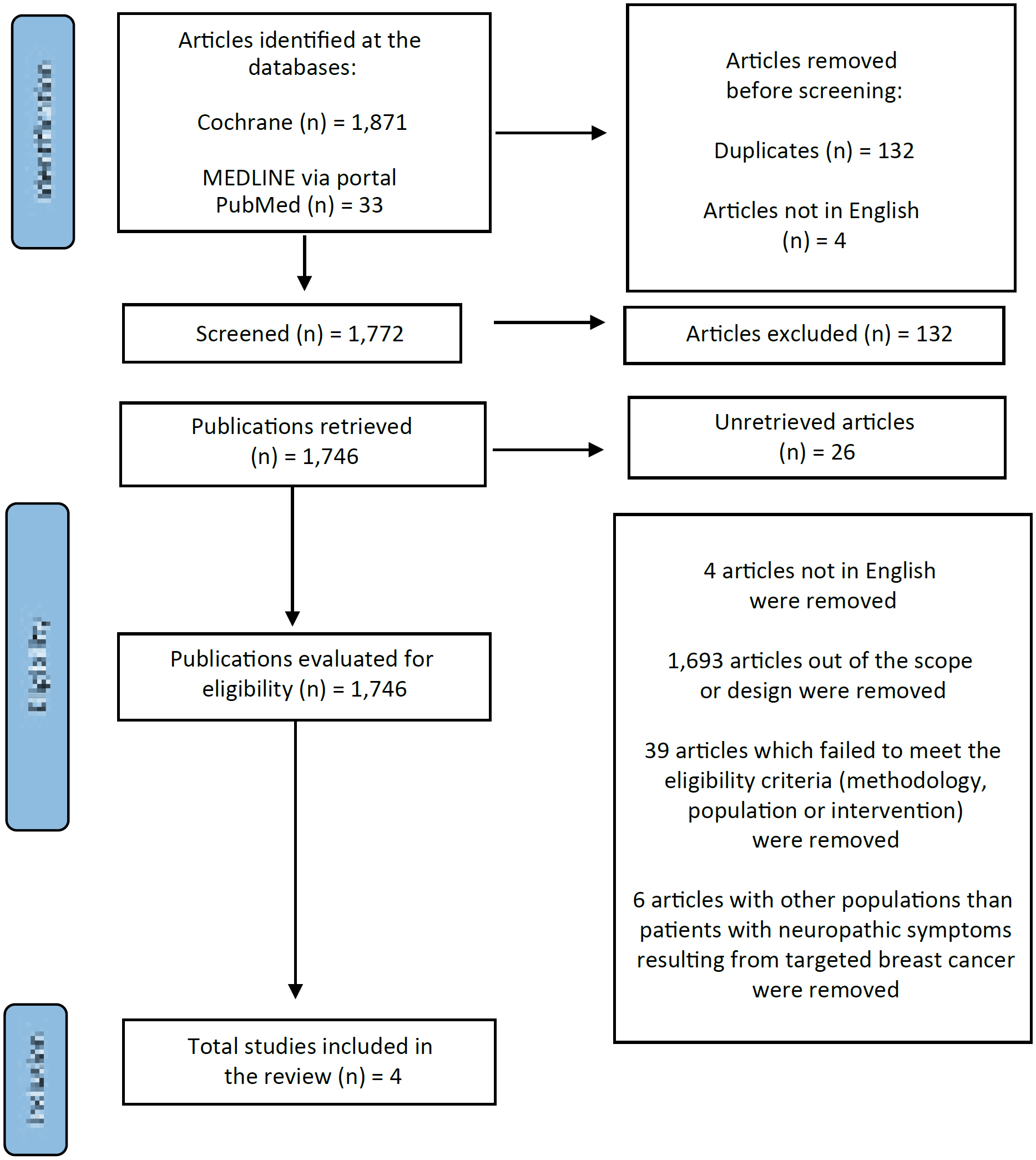
1,871 articles were found at the database Cochrane Library and 33 at the portal PubMed, totaling 1,904 studies of which 132 duplicates were excluded, remaining 1,772 studies to be reviewed.
Four articles not published in English were removed and also 1,693 articles after reading the title and abstract for failing to meet the study scope or methodology; 39 articles did not meet the characterization of the population, intervention or outcomes and 26 were not fully available and did not present the corresponding author. Ten full text articles were analyzed, six of which failed to meet the inclusion criteria and eventually, four studies were eligible for the review. Figure 1 describes the selection process.

Chart 1 portrays the summary of the information from the four studies which met all the inclusion criteria.
The interventions, respective time of application, preventive or curative vary among the studies, only one study addresses other oncologic therapies than surgery and chemotherapy. All the studies describe adverse effects from neoadjuvant or adjuvant chemotherapy regimens with taxanes and evaluation in the course of the intervention and all the interventions included some modality of physiotherapy, including kinesiology, thermotherapy and manual therapy.
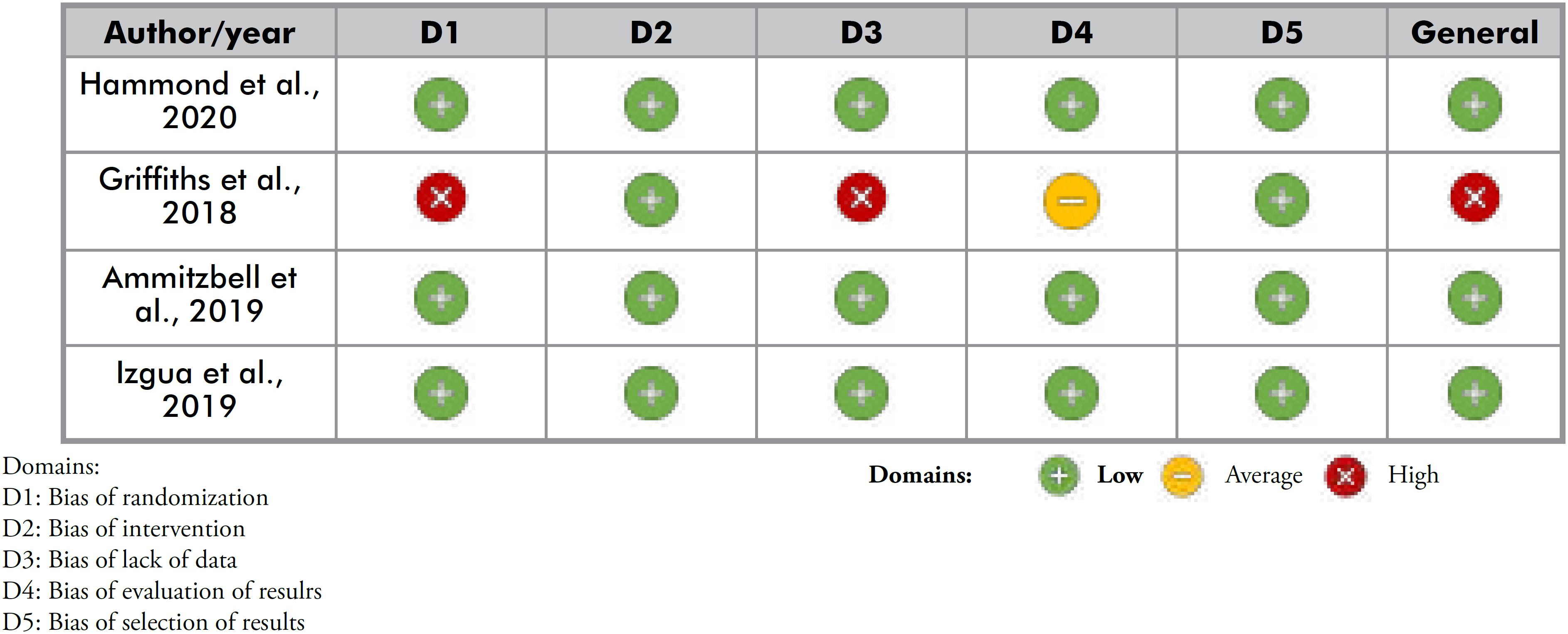
Cochrane risk-of-bias tool for randomized trials -RoB 29 was applied. Two reviewers analyzed the items subjectively to gather all literature-based evidences. The nature of the interventions blocked double-blind studies and occasional disagreements were resolved by consensus. Figure 2 presents the risk of biases of the studies included.
DISCUSSION
This study aimed to gather scientific evidences to support the action of a multiprofessional team with physiotherapists to manage the pain of these patients after reviewing the mechanisms and methods to detect breast cancer treatment induced pain and effects of physiotherapy modalities.
Four randomized clinical trials with different interventions utilized as physiotherapeutic techniques, among them kinesiotherapy included in a household program, resistance training with progression of loads, thermotherapy through cryotherapy and manual therapy with classic massage as preventive methods have been included. Different interventions can bring benefits to improve pain and HRQoL as a feasible alternative to oncologic treatment induced neuropathic pain. So far, this is the first literature systematic review to report the intervention of physiotherapy for peripheral neuropathy in women with breast cancer.
Taxane-based regimens (paclitaxel and docetaxel) were predominant in the studies, which is the current first line chemotherapy regimen applied for breast cancer either at initial or metastatic or advanced stages, preventing tumor growth through stabilization of cellular microtubules.
However, high neurotoxicity is associated with reduction of the dose, and some times, discontinuation of the treatment, increasing the risk of morbimortality.
A common dose-limiting side effect is chemotherapy-induced peripheral neuropathy (CIPN) with estimated prevalence of up to 81%10. It develops in hands and feet, affecting Aβ, Aδ nervous fibers and fibers C, involving sensitiveness and sensory touch, vibration, hot or cold sensation and pain, leading to classic neuropathic symptoms as hypoesthesia, hyperalgesia, allodynia and neuropathic pain11.
Hammond et al.11 evaluated the effects of a physiotherapy program to prevent and post chemotherapy-regimen management of CIPN with no statistically significant results. But all the results indicated an unilateral improvement of the scores in the intervention group and association of moderate physical activity (120 minutes/ week) and sensory preservation.
Although the results were not controlled and randomized, it corroborates other studies describing the effects of physical exercises for neuromodulation of the pain by neural damage.
A systematic review by Zhang et al.12 collected eight systematic reviews and 21 clinical trials evaluating different modalities of exercises as stretching, resistance, aerobic, aquatic and proprioceptive applied to manage neuropathies of different etiologies including chemotherapy-induced and concluded that physical exercises can be a viable and effective alternative to treat peripheral neuropathy; neural mobilization of upper limbs was the physiotherapeutic utilized.
Neural mobilization is a non-invasive clinically effective technique to reduce pain and is aimed to restore the mobility and elasticity of the peripheral nervous system and ensure better homeostatic conditions in case of neural damage. But more studies are necessary to strengthen the database and trials with humans.
Santos et al.13 in a study with animal models suggested the activation of endogenous pathways by neural modulation of the pain with the technique, confirming the initial hypothesis that analgesia with non-invasive techniques occurs with central neuronal mechanisms, the most recognized are endogenous opioids and descending inhibiting mechanism.
Currently, the management of peripheral neuropathic pain, especially neuropathic pain, aims to control or minimize the symptoms due to the difficulty in treating the neural damage directly. Many pharmacological options as treatment are available but are still of low effect and many adverse effects, anticholinergic or related to opioid-dependent. Therapeutic physical exercises as alternative approach are drawing the attention of health teams and physiotherapy can be applied in many therapeutic options associated with mobilization, stretching, resisted and aerobic exercises14.
Consistent with this scenario, Ammitzbel et al.15 investigated the effect of progressive assisted training on postoperative pain, considering that different methods, intensities and frequency of exercises can produce different effects. Earlier, the action of resisted training was evaluated for other outcomes being useful to restore post-surgery strength and function for certain breast cancers.
The results of the present study were not statistically significant, however, the evaluations indicated an effect of pain control, favoring the intervention group for all continuous outcomes analyzed: pain, neuropathic pain and influence of pain on six aspects of daily life.
The authors hypothesize the existence of an unidentified subgroup where resisted training is more effective, for instance, sedentary women reporting postoperative pain. In addition, it was not possible to detect enough differences in pain evaluation as pain and neuropathic pain were not the primary outcomes analyzed, which is a limitation of the study.
A randomized clinical trial conducted by Dhawan et al.14 with 45 patients with cancer receiving adjuvant therapy with paclitaxel noticed that strength and balance training at home is able to reduce neuropathic pain by CIPN and improve HRQoL. Scores of neuropathic pain evaluated by Leeds assessment of neuropathic symptoms and signs (S-LANSS) were utilized in the present study.
Both studies addressing the effects of physical exercise to manage neuropathic pain had limitations of the number of variables investigated and priority of the outcome pain that may have statistically influenced the results.
Nevertheless, in studies with sample and intervention, similar results were found with statistical relevance. Another aspect is the method of administration of the exercises program and health literacy the health professional facilitates, and despite being self-administered, is evaluated by the skilled professional.
Provide clear guidance and information about the patient condition is essential. Instruction on pain management goes beyond, it includes promoting behavioral changes and challenge restraining beliefs.
These actions do not help only to alleviate anguish, fear and anxiety16, important for most of cancer patients but that also help best quality-of-life. Autonomy and safety can positively interfere on the action of the limbic system on the pain pathway and, as seen in clinical practice, the patient positive behavior may help its commitment with the treatment.
Cryotherapy is one of the techniques widely utilized in physiotherapy as part of thermotherapy according to the studies reviewed, it is the superficial application of cold as therapeutic agent to alleviate specific areas through local application or more broadly through non-local application.
Chronic inflammation mediated by chemical and mechanic stimulation of the nerve endings plays an important role in these pain syndromes, including neural damage, which justifies its use to reduce inflammation in chronic pains.
Evidences have suggested that cryotherapy decreases inflammation by reducing pro-inflammatory cytokines and increasing anti-inflammatory action mediated by interleukin-10 (IL-10) and interleukin-6 (IL-6), and recently new evidences suggests IL-6 may also possess anti-inflammatory properties.
Another proposed mechanism of cryotherapy as therapeutic mean is reducing the nerve transmission velocity in pain fibers, some studies found considerable decreased reduction in latency of transmission and sensory and motor pathways, increasing pain threshold; it is also associated with reduction of oxidative stress17.
Griffiths18 conducted a randomized clinical trial to evaluate the efficacy of paclitaxel-induced peripheral neuropathy cryotherapy but with important methodological limitations. The sample had significant variations in different time-points, initially with n = 29 and after 22 withdrawals, only seven participants remained, impacting the statistical evaluations and the impossibility of demonstrating the benefit of cryotherapy for this type of neuropathy.
The authors justified the results at least partially to the high rate of withdrawals but also to the impossibility of blinding the participants due to the nature of the equipment utilized (bags of HistoGel), which can affect the responses to self-reported questionnaires NPSI, BPI and QST.
Withdrawals resulting from discomfort with the intervention, necessity of additional investments as freezers and persons to control the time and temperature of the bags raised the question of the feasibility of the therapy concomitantly with the sample size making the understanding of the potential benefits of the therapy difficult. The reduction of the time to apply this type of intervention may minimize participants’ withdrawals.
Izgua et al.19 investigated the effect of classic massage as preventive of chemotherapy-induced-neuropathy in patients with breast cancer receiving paclitaxel. The massage contributed to control the neuropathic symptoms and after 12-sessions, the patients with neuropathic peripheral pain have risen the scores of the control group while the intervention had no basal alterations with statistically significant results.
More randomized and controlled trials with humans are necessary to support the findings and contribute to the literature, however, evidences of analgesia mechanisms were found in animal models.
According to Chimenti, Frey-Law, Sluka16, animal modelbased studies showed that manual therapy for neuropathic pain creates favorable conditions for healing, increasing the thickness of the myelin hem in damaged peripheral nerves in addition to reducing the nerve compression.
Similarly, also with animal models, Wang et al.20 presented benefits of massage on toll-like receptor 4 (TLR4), a type of receptor that acts in the transduction of the immune response and identifies pathogen-related pattern molecules with important performance in mediating neuropathic pain; the massage can inhibit TLR4 signalling and reduce inflammatory factors, a potential mechanism to relief neuropathic pain.
Swedish classical massage is one of the techniques utilized by the nursing team according to Izgua et al.19. The skilled oncologic physiotherapist can be assigned to apply this technique that meets clinical-kinesiologic-functional requirements of the cancer patient, particularly those suffering treatment related adverse effects.
Physiotherapy proposes comprehensive non-pharmacological alternatives for prevention and management of peripheral neuropathy. Remarkably, therapeutic physical exercise with kinesiotherapy causes important effects on neuromodulation of the neuropathic pain, in addition to other psychosocial aspects of chronic pain specially regarding HRQoL.
Few studies addressing the potential contribution of the physiotherapist to the well-being of this population were eligible. One of the challenges during screening is the restriction of analysis of the results for women treated for breast cancer because great part of the studies were unable to be included due to the mixed characteristics of the population.
Basically, the sample with breast cancer patients only was preferred due to the high incidence and prevalence of malignancy in females and ensuring a more accurate analysis of the effects of the interventions selected, considering the specific antineoplastic agents utilized.
No manual search was performed nor investigation of reference lists that could identify potentially eligible studies for the review. Because of possible language bias, four non-English articles were excluded due to difficulty of understanding and analysis.
CONCLUSION
The results of the effect physiotherapy in managing induced-peripheral neuropathy by breast cancer treatments are scarce and in most of the studies investigated, no significant differences between treatment and control groups have been found. This can be related to the reduced number of studies investigated due to the difficulty of finding clinical trials for this population.
Weighing the singularity of the intervention conducts for each type of cancer, it is suggested more randomized clinical trials evaluating specific oncologic populations. Concomitantly, the necessity of constant updates of physiopathology, protocols and randomized clinical trials-based interventions and evaluation of adherence and adverse effects for future patient-centered decisiontaking grounded in sound evidences are quite important as well.
References
-
1 Hauth F, De-Colle C, Weidner N, et al. Quality of life and fatigue before and after radiotherapy in breast cancer patients. Strahlenther Onkol. 2021;197(4):281-7. doi: https://doi.org/10.1007/s00066-020-01700-1
» https://doi.org/10.1007/s00066-020-01700-1 -
2 Santos MO, Lima FCS, Martins LFL, et al. Estimativa de incidência de câncer no brasil, 2023-2025. Rev. Bras. Cancerol. 2023;69(1):e-213700. doi: https://doi.org/10.32635/2176-9745.RBC.2023v69n1.3700
» https://doi.org/10.32635/2176-9745.RBC.2023v69n1.3700 -
3 Olsson Möller U, Beck I, Rydén L, et al. A comprehensive approach to rehabilitation interventions following breast cancer treatment - a systematic review of systematic reviews. BMC Cancer. 2019;19(1):472. doi: https://doi.org/10.1186%2Fs12885-019-5648-7
» https://doi.org/10.1186%2Fs12885-019-5648-7 -
4 Shien T, Iwata H. Adjuvant and neoadjuvant therapy for breast cancer. JPN J Clin Oncol. 2020;50(3):225-9. doi: https://doi.org/10.1093/jjco/hyz213
» https://doi.org/10.1093/jjco/hyz213 -
5 Fontes F, Gonçalves M, Pereira S, et al. Neuropathic pain after breast cancer treatment and its impact on sleep quality one year after cancer diagnosis. Breast. 2017;33:125-31. doi https://doi.org/10.1016/j.breast.2017.03.013
» https://doi.org/10.1016/j.breast.2017.03.013 -
6 Ilhan E, Chee E, Hush J, et al. The prevalence of neuropathic pain is high after treatment for breast cancer: a systematic review. Pain. 2017;158(11):2082-91. doi: https://doi.org/10.1097/j.pain.0000000000001004
» https://doi.org/10.1097/j.pain.0000000000001004 -
7 Leysen L, Adriaenssens N, Nijs J, et al. Chronic pain in breast cancer survivors: nociceptive, neuropathic, or central sensitization pain? Pain Pract. 2019;19(2):1983-5. doi: https://doi.org/10.1111/papr.12732
» https://doi.org/10.1111/papr.12732 -
8 Page MJ, McKenzie JE, Bossuyt PM, et al. A declaração PRISMA 2020: diretriz atualizada para relatar revisões sistemáticas. Rev Panam Salud Publica. 2022;46:e112. doi: https://doi.org/10.26633%2FRPSP.2022.112
» https://doi.org/10.26633%2FRPSP.2022.112 -
9 University of York. Centre for Reviews and Dissemination. York: University of York; 2019. PROSPERO - International prospective register of systematic reviews. 2023. [acesso 2023 ago 31]. Disponível em: https://www.crd.york.ac.uk/PROSPERO/
» https://www.crd.york.ac.uk/PROSPERO/ -
10 RoB 2: Risk of Bias 2 [Internet]. Versão 5. [Copenhagen]: Cochrane Denmark; 2011. [acesso 2023 mar 9]. Disponível em: https://www.riskofbias.info/
» https://www.riskofbias.info/ -
11 Guijosa A, Freyria A, Espinosa-Fernandez Jr, et al. Pharmacogenetics of taxane-induced neurotoxicity in breast cancer: systematic review and meta-analysis. Clin Transl Sci. 2022;15(10):2403-36. doi: https://doi.org/10.1111%2Fcts.13370
» https://doi.org/10.1111%2Fcts.13370 -
12 Hammond EA, Pitz M, Shay B. Neuropathic pain in taxane-induced peripheral neuropathy: evidence for exercise in treatment. Neurorehabil Neural Repair. 2019;33(10):792-9. doi: https://doi.org/10.1177/1545968319860486
» https://doi.org/10.1177/1545968319860486 -
13 Zhang YH, Hu HY, Xiong YC, et al. Exercise for neuropathic pain: a systematic review and expert consensus. Front Med (Lausanne). 2021;24(8). doi: https://doi.org/10.3389%2Ffmed.2021.756940
» https://doi.org/10.3389%2Ffmed.2021.756940 -
14 Santos FM, Grecco LH, Pereira MG, et al. The neural mobilization technique modulates the expression of endogenous opioids in the periaqueductal gray and improves muscle strength and mobility in rats with neuropathic pain. Behav Brain Funct. 2014;19(19). doi: https://doi.org/10.1186%2F1744-9081-10-19
» https://doi.org/10.1186%2F1744-9081-10-19 -
15 Dhawan S, Andrews R, Kumar L, et al. A randomized controlled trial to assess the effectiveness of muscle strengthening and balancing exercises on chemotherapy-induced peripheral neuropathic pain and quality of life among cancer patients. Cancer Nurs. 2020;43(4):269-80. doi: https://doi.org/10.1097/ncc.0000000000000693
» https://doi.org/10.1097/ncc.0000000000000693 -
16 Ammitzbel G, Andersen KG, Bidstrup PE, et al. Effect of progressive resistance training on persistent pain after axillary dissection in breast cancer: a randomized controlled trial. Breast Cancer Res Treat. 2019;179(1):173-83. doi: https://doi.org/10.1007/s10549-019-05461-z
» https://doi.org/10.1007/s10549-019-05461-z -
17 Chimenti RL, Frey-Law LA, Sluka KA. A mechanism-based approach to physical therapist management of pain. Phys Ther. 2018;98(5):302-14. doi: https://doi.org/10.1093%2Fptj%2Fpzy030
» https://doi.org/10.1093%2Fptj%2Fpzy030 -
18 Garcia C, Karri J, Zacharias NA, et al. Use of cryotherapy for managing chronic pain: an evidence-based narrative. Pain Ther. 2021;10(1):81-100. doi: https://doi.org/10.1007%2Fs40122-020-00225-w
» https://doi.org/10.1007%2Fs40122-020-00225-w -
19 Griffiths C, Kwon N, Beaumont JL, et al. Cold therapy to prevent paclitaxel-induced peripheral neuropathy. Support Care Cancer. 2018;26:3461-9. doi: https://doi.org/10.1007/s00520-018-4199-9
» https://doi.org/10.1007/s00520-018-4199-9 -
20 Izgua N, Metin ZG, Karadas C, et al. "Prevention of chemotherapy-Induced peripheral neuropathy with classical massage in breast cancer patients receiving paclitaxel: an assessor-blinded randomized controlled trial." Eur. j. oncol. nurs. 2019;40:36-43, doi: https://doi.org/10.1016/j.ejon.2019.03.002
» https://doi.org/10.1016/j.ejon.2019.03.002 -
21 Wang Q, Lin J, Yang P, et al. Effect of massage on the tlr4 signalling pathway in rats with neuropathic pain. Pain Res Manag. 2020;2020:8309745. doi: https://doi.org/10.1155%2F2020%2F8309745
» https://doi.org/10.1155%2F2020%2F8309745
Edited by
-
Associate-Edutor:
Fernando Lopes Tavares de Lima. Orcid iD: https://orcid.org/0000-0002-8618-7608
-
Scientific-Editor:
Anke Bergmann. Orcid iD: https://orcid.org/0000-0002-1972-8777

 Source: Adapted from PRISMA