 From Diagnosis to the Beginning of Cancer Treatment: Waiting Time for Patients and Associated Factors in Brazil Southern States
ABSTRACT
Introduction: Cancer poses a significant threat to human health, being considered the second leading cause of mortality worldwide. Although cancer patients in Brazil have the right to access quality healthcare, early diagnosis, and treatment within a 60-day period, as established by Federal Law number 12,732/2012, the data available from PAINEL-Oncologia highlights a significant disparity between this mandate and the reality faced by the oncology population. In light of this, the Southern Region was selected to assess its compliance with the 60-day Law requirements.
Objective: To identify the profile of oncology patients and the time from diagnosis to the beginning of the treatment in Brazil Southern Region from 2013 to 2023.
Method: A descriptive cross-sectional study based on PAINEL-Oncologia. The variables of interest included: a) treatment time or timely treatment; b) sex; c) age; d) detailed diagnosis; e) staging; f) treatment modality; g) state where the diagnostic was made.
Results: There was a significant increase in the proportion of timely treatments from 2013 to 2023; however, the rate of delayed treatments remains high, particularly among men, patients over 50, and cases requiring radiotherapy. Santa Catarina had the lowest rate of on-time treatments, while Paraná showed the highest rate of timely treatment.
Conclusion: Demographic and disease-related factors influence treatment delay, indicating the need for public policies focused to improve access and efficiency of oncology services in the region.
Key words
Neoplasms/epidemiology; Time-to-Treatment/statistics & numerical data; Health Services Accessibility/statistics & numerical data; Unified Health System; Healthcare Disparities/statistics & numerical data
RESUMO
Introdução O câncer representa significativa ameaça à saúde humana, sendo considerado a segunda principal causa de mortalidade no mundo. Apesar de os pacientes oncológicos no Brasil possuírem, por direito, acesso à saúde de qualidade, diagnóstico precoce e tratamento dentro do prazo de 60 dias, por intermédio da Lei Federal n.º 12.732/2012, os dados disponíveis no PAINEL-Oncologia evidenciam a significativa disparidade entre essa norma e a realidade enfrentada pela população oncológica. Diante do exposto, a Região Sul foi selecionada para verificar sua conformidade com os requisitos da Lei dos 60 dias.
Objetivo Identificar o perfil do paciente oncológico e o tempo do diagnóstico até o início do tratamento, na Região Sul do Brasil, no período de 2013 a 2023.
Método Estudo transversal descritivo, com dados do PAINEL-Oncologia. As variáveis de interesse elencadas foram: a) tempo de tratamento ou tratamento oportuno; b) sexo; c) idade; d) diagnóstico detalhado; e) estadiamento; f) modalidade terapêutica g) estado de diagnóstico.
Resultados Ocorreu aumento significativo na proporção de tratamentos oportunos de 2013 a 2023, porém a taxa de tratamentos inoportunos ainda é alta, especialmente entre homens, pacientes acima de 50 anos, e em casos que requerem radioterapia. Santa Catarina foi o Estado com a menor taxa de tratamentos dentro do prazo, já o Paraná apresentou-se com a maior taxa de tratamento oportuno.
Conclusão Fatores demográficos e relacionados à doença influenciam o atraso no início do tratamento, indicando a necessidade de políticas públicas focadas em melhorar o acesso e a eficiência dos serviços oncológicos na Região.
Palavras-chave
Neoplasias/epidemiologia; Tempo para o Tratamento/estatística & dados numéricos; Acessibilidade aos Serviços de Saúde/estatística & dados numéricos; Sistema Único de Saúde; Disparidades em Assistência à Saúde/estatística & dados numéricos
RESUMEN
Introducción: El cáncer representa una amenaza significativa para la salud humana, siendo considerado la segunda causa principal de mortalidad en el mundo. A pesar de que los pacientes oncológicos en el Brasil tengan, por derecho, acceso a la atención de salud de calidad, diagnóstico precoz y tratamiento dentro del plazo de 60 días, por medio de la Ley Federal n.º 12.732/2012, los datos disponibles en el PAINEL-Oncología evidencian una disparidad significativa entre esta norma y la realidad enfrentada por la población oncológica. Ante esto, se seleccionó la región Sur para verificar su conformidad con los requisitos de la Ley de los 60 días.
Objetivo: Identificar el perfil del paciente oncológico y el tiempo desde el diagnóstico hasta el inicio del tratamiento en la región Sur del Brasil, en el período de 2013 a 2023.
Método: Estudio transversal descriptivo, con datos del PAINEL-Oncología. Las variables de interés incluidas fueron: a) tiempo de tratamiento o tratamiento oportuno; b) sexo; c) edad; d) diagnóstico detallado; e) estadificación; f) modalidad terapéutica; g) estado de diagnóstico.
Resultados: Hubo un aumento significativo en la proporción de tratamientos oportunos de 2013 a 2023; sin embargo, la tasa de tratamientos inoportunos sigue siendo alta, especialmente entre hombres, pacientes mayores de 50 años y casos que requieren radioterapia. Santa Catarina fue el estado con la menor tasa de tratamientos dentro del plazo, mientras que Paraná presentó la mayor tasa de tratamiento oportuno.
Conclusión: Los factores demográficos y relacionados con la enfermedad influyen en el retraso en el inicio del tratamiento, lo que indica la necesidad de políticas públicas enfocadas en mejorar el acceso y la eficiencia de los servicios oncológicos en la región.
Palabras clave
Neoplasias/epidemiología; Tiempo de Tratamiento/estadística & datos numéricos; Accesibilidad a los Servicios de Salud/estadística & datos numéricos; Sistema Único de Salud; Disparidades en Atención de Salud/estadística & datos numéricos
INTRODUCTION
Cancer encompasses more than 100 pathologies characterized by uncontrolled cell growth and potential spread to adjacent tissues and organs, resulting in physiologic disorders1. It is a non-communicable and significant life-threatening disease, the second cause of global mortality, behind only cardiovascular diseases. It is estimated that cancer related deaths will exceed cardiovascular diseases globally in the upcoming decades2.
Survival improves when cancer is detected earlier3. According to the World Health Organization (WHO), nearly one in six deaths is caused by cancer. Nearly 50% of the cancers are diagnosed at advanced stages, which is one of the causes of high mortality, making many of them to lose the opportunity of cure3,4. In addition, mortality by cancer is higher in low Human Development Index (HDI) countries, exposing the disparity of access to health as the great challenge for early diagnosis and timely treatment5,6.
The Federal Constitution of 19887 ensured the right to health and the National Health System (SUS)8 was structured according to the principles of universal access and integrality. Within this legal frame, the Federal Law 12,732/20129 determined that patients with malignant neoplasms have the right to begin treatment at SUS within 60 days after the diagnostic pathological confirmation and proper treatment – surgery, radiotherapy or chemotherapy. This guideline was strengthened by Directive GM/MS 3,896/202210 that regulates the national policy of cancer prevention and control in SUS, defining responsibilities and actions to organize the attention network to the individual with cancer and ensure timely access to treatment.
In October 2019, Federal Law 13,89611 revised Law 12,732, dated November 22, 2012, and determined the maximum time of 30 days to perform the required confirmatory diagnostic tests if the main assumption is malignant neoplasm11. PAINEL-Oncologia is a tool developed to monitor the compliance with the law and record the date of the diagnosis and beginning of the treatment based on data consolidated by the computer department of SUS (DATASUS)12. Although the panel does not reflect the totality of the cases of cancer in the country, this tool helps to manage and reorganize the assistance network by monitoring the time until the first oncologic treatment.
Given that the majority of the population affected by the disease relies on SUS to be diagnosed and treated, it is important to ensure a positive outcome for the patients as fast and effectively as possible to allow timely treatment. In despite of the legal frame, data provided by PAINEL-Oncologia exhibits how the reality is far from the actual access to health. According to a study conducted by "Universidade Federal de Sergipe (UFS)", certain neoplasms, sex, and age range receive treatment after the law-mandated time, affecting the survival of these patients13.
The incidence of cancer varies according to genetic, environmental and social factors14. The most frequent types of cancer in Brazil are non-melanoma skin cancer, breast, prostate, colorectal and lung cancer. According to the National Cancer Institute (INCA), South and Southeast regions concentrate nearly 70% of all the cases in the country, standing out non-melanoma skin cancer, prostate, lung and colorectal cancer that impose a heavy burden to health services at these regions15. This scenario justifies the regional analysis of complying with the 60-day law, given the volume of cases and complexity of access to treatment.
Further to the high incidence of cancer, the South region faces important challenges related to access to oncologic treatment. Notwithstanding the high health indicators above the national average with the highest primary attention coverage in 2024, the region still lives with significant local inequalities16. Among the main bottlenecks, are the concentration of high complexity services in urban centers, which contributed to the difficulty of access in rural areas, in addition to logistic hurdles17. This paradox makes the region a particularly relevant scenario to evaluate the efficacy of the 60-day law.
The objective of the study is to analyze the prevalence of oncologic patients treated out of the 60-day law mandated period – law law 12,732/20129 – and identify the demographic, clinical and therapeutic factors associated with delay to begin the treatment in the Southern states between 2013 and 2023.
METHOD
Descriptive, cross-sectional study to identify the variables involved in late beginning of oncologic treatment. Public data of PAINEL-Oncologia available through DATASUS of the Ministry of Health which provides online information at TABNET18 were collected.
The determination of cases through the database met the criteria of PAINEL-Oncologia since the integration of the national health ID with chapter II of the corresponding International Statistical Classification of Diseases and Related Health Problems 10th revision (ICD-10)19. Therefore, the same ID with different ICD codes will be considered as distinct cases20.
The data were fully collected in August 2024. The dependent variable was defined as "Time of Treatment", which represents the amount of time since diagnosis up to the beginning of the treatment. This measure was categorized in two different ranges for the analysis of law 12,732/129: timely treatment (0-60 days) and late treatment (more than 60 days). The time to begin the treatment is calculated by PAINEL-Oncologia from the dates of diagnostic and treatment registered at the outpatient information system (SIA)21 through the record of care provided to the individual (BPA-I) and authorization of high complexity procedure (Apac) of the hospital information system (SIH)22 and cancer information system (Siscan)23.
The following independent variables have been defined: a) age range – below 19 years, 20-49 years, 50-69 years and 70 years of more; b) sex – male and female; c) detailed diagnosis – group of neoplasm and respective ICD-10; d) staging – 0, I, II, III, IV and "not applicable" (cases treated with surgery); e) therapeutic modality – surgery, chemotherapy, radiotherapy and both (chemotherapy and radiotherapy); f) study period – 2013 to 2023; g) year of diagnosis – 2013-2015, 2016-2018, 2019-2021 and 2022-2023; h) state where the diagnosis was made – Paraná, Santa Catarina and Rio Grande do Sul.
The variable "detailed diagnosis" refers to the neoplasm reported in the anatomopathological exam (ICD-10)19 which is listed in codes ICD C00 to C97. The data extracted for this variable were categorized in groups according to the topography and function of the organ affected.
The exclusion criteria utilized were: non-melanoma skin neoplasms (C44); "in situ" neoplasms (D00-D09); "neoplasms of uncertain or unknown behavior" (D37-D48). Empty ICD codes have been excluded: C27, C28, C29, C35, C36, C42, C59, C86 and C87. In addition, C97 (malignant neoplasms of independent multiple sites) was excluded due to lack of cases at the database analyzed.
Cases classified as "unknown" and "not informed" were not utilized in the calculation of the prevalence of timely and late treatments nor included in the total population analyzed because they hindered the measurement of the main outcome. However, the absolute values were collected to evaluate the incompleteness of the data. According to the technical note of PAINEL-Oncologia, "unknown" refers to records without any information about the date of the beginning of the treatment, while "not reported" corresponds to blank fields in the origin system23.
A descriptive analysis of the variables was performed, presenting absolute and relative frequency distributions (%) to characterize the population investigated. For comparisons among categorical groups, Pearson chi-square test was utilized24. Given the cross-sectional design of the study and high prevalence of the outcome (late treatment >10%), it was chosen the prevalence ratio (PR)24 instead of odds ratio (OR), because the latter overestimates the magnitude of the association with frequent outcomes. Poisson regression24 with robust variance was utilized to estimate PR, considering its fit in cross-sectional studies24. This method is widely utilized due to its accuracy in the analysis of subgroups and common outcomes. The measures of association were reported with confidence intervals of 95% (CI95%), and statistical significance was evaluated by Wald test, adopting p < 0.05 as threshold. The software SPSS25 (IBM Corp., version 20.0) was utilized for all the analyzes according to the guidelines for health-related secondary data.
For the categorical variables, it was necessary to define reference categories for groups comparison. In case of the variable "year of diagnosis", it was decided to use 2013 as reference because it is the first year of the time series analyzed allowing to evaluate the evolution of the prevalence of timely treatment along the period. The mandatory record of the individual health ID and ICD on the anatomopathological exams implemented in May 2018 has significantly improved the quality of the data from 2019 on, but the decision of maintaining the initial year favors the longitudinal and comparative analysis.
The review by the ethics committee was waived because only secondary, public, deidentified data were utilized in compliance with Directive 510/201626 of the National Health Council (CNS).
RESULTS
PAINEL-Oncologia reached a total of 1,003,318 cases of cancer diagnosis notified. 288,260 cases of non-melanoma skin cancer (C44), neoplasms in situ (D00-D09) and neoplasms of uncertain or unknown behavior (D37-D48) have been excluded. In addition, 182,351 cases classified as "unknown" or "ignored" for failing to present data to calculate the time until the beginning of the treatment have also been excluded. Therefore, the final sample consisted in 532,707 cases (53.09%) that met the criteria of Law 12,732/129.
The proportional distribution of cases treated timely (until 60 days) remained practically stable and higher than those treated later than 60 days until 2017. Since then, this favorable relation of timely treatment was 2.12-fold higher (timely/late) in 2023 (Graph 1).

Proportional distribution of cases of malignant neoplasms treated timely (until 60 days) and late (beyond 60 days) in the South region registered in PAINEL-Oncologia, 2013 to 2023, Brazil
The analysis of Table 1 revealed that male patients had high prevalence of timely treatment than female patients. Patients aged 50 years or older presented higher late treatments rates, especially when compared to younger than 49 years, standing out patients below 19 years of age who had lower proportion of late beginning of treatment.
Variables related to the treatment of patients with malignant neoplasms. PAINEL-Oncologia, 2013 to 2023, Brazil
Higher prevalence of beginning of first timely treatment for patients submitted to surgery was observed, of which only 8.47% were treated late. In contrast, the therapeutic modality with low proportion of timely treatment was single radiotherapy with 64.4%% of late treatments, followed by a combination of chemotherapy and radiotherapy. Stages I and II exhibited the higher rates of timely treatment with 54.03% and 60.0%, respectively. Staging IV, on the other hand, presented the highest rate of treatment within 60 days.
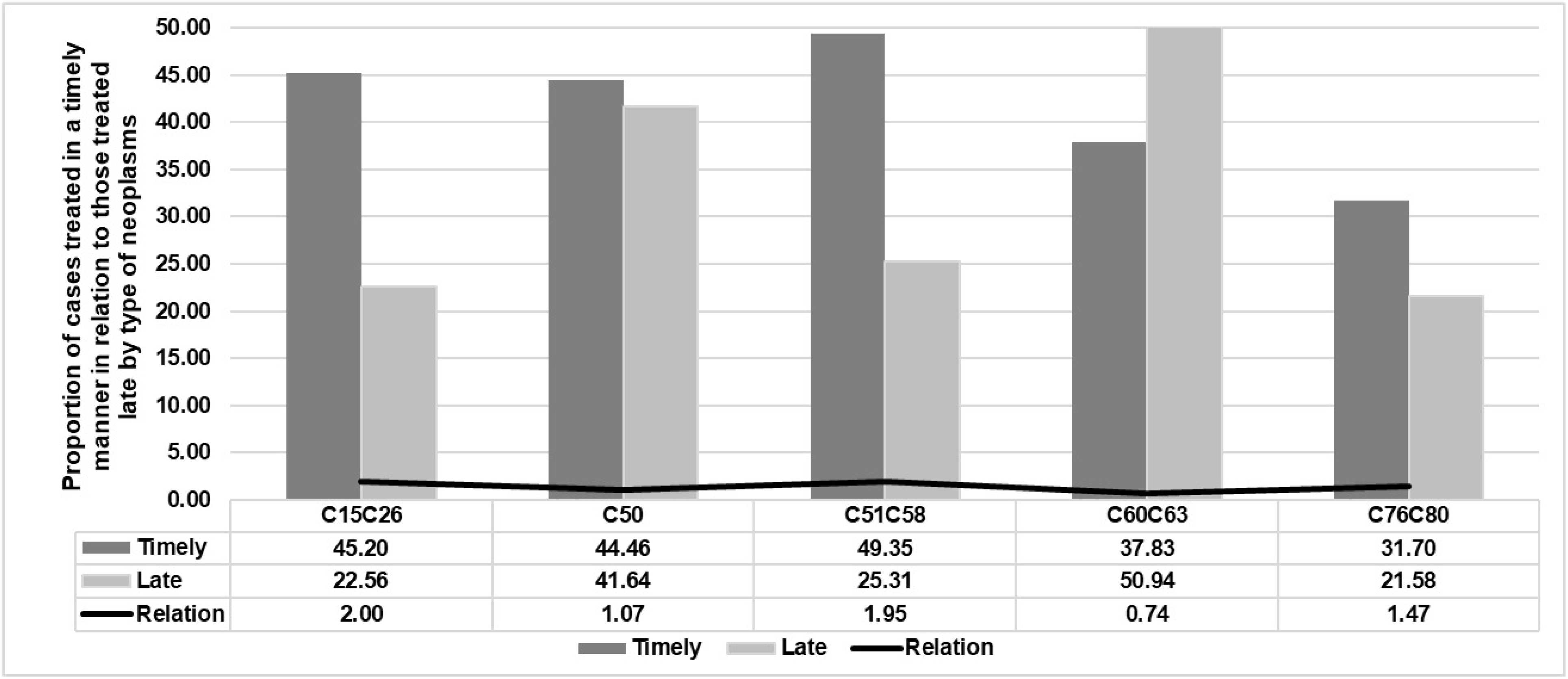
Of the most frequent diagnoses at the South region, neoplasms of digestive organs (C15-C26), breast (C50), female genital organs (C51-C58), male genital organs (C60-C63) and malignant neoplasms of ill-defined, other secondary and unspecified sites (C76-C80) stand out. Of these, malignant neoplasms of female genital organs (C51-C58) presented the best rate between timely and late treatment, with performance significantly better than others (Graph 2). In counterpart, malignant neoplasms of male genital organs (C60-C63) registered the higher proportion of treatments initiated after the law-mandated time as shown in Table 1.
Proportional distribution of cases treated timely (until 60 days) and late (beyond 60 days) according to most prevalent groups of neoplasms registered at PAINEL-Oncologia, 2013 to 2023, Brazil
Paraná stood out among the Southern states with the best performance, presenting the highest proportion of timely treatments (up to 60 days), a rate of 2.26 of timely and late cases. On the other hand, Santa Catarina exhibited the lowest adhesion to the 60-day law as shown in Graph 3. Rio Grande do Sul presented intermediate performance between the two states at a reason of 1.50.

Proportional distribution of cases treated timely (until 60 days) and late (beyond 60 days) according to the Southern states registered at PAINEL-Oncologia, 2013 to 2023, Brazil
DISCUSSION
The analysis of the data from 2013 to 2023 revealed that 62.34% of oncologic patients of the South regions initiated treatment within 60 days as determined by Law 12,732/128. The prevalence of timely treatments was relatively stable until 2017 and increased progressively from 2018 on, which can be associated with the implementation of Directive 643/201827 that determined the mandatory report of ICD-10 and individual health ID and improvements of the information and monitoring systems as PAINEL-Oncologia.
The highest percent of adherence was observed in 2023 where 67.99% of the patients were treated timely at a ratio of 2.12 for timely and late cases (Graph 1). This finding can be partially attributed to the efforts to readjust health services post COVID-19 pandemic because of a relevant decline of diagnostic and therapeutic procedures for neoplasms, overload of the health systems and reassignment of resources to fight the coronavirus28. However, even at the peak of the pandemic, 2020 registered the second best rate of timely treatment, possibly due to the reduction of seeking for health services and decline of cancer diagnoses, which may have overestimated the proportion of timely treatments in that year29,30.
Despite the implementation of Directive 643/201827 that determined the mandatory report of ICD-10 and individual health ID, PAINEL-Oncologia still presents more than 180 thousand cases without sufficient data to measure the time until the beginning of the treatment. The elevated incompleteness compromises the appraisal of the efficacy of the law and reduces the monitoring of health services. Reporting gaps hinder the accurate measurement of the adherence to the legal frame, damage the improvement of oncologic care and prompt the necessity of identifying urgently why these information are not reported in the official systems31.
While comparing the Southern states, Paraná stood out with the best adherence rate of timely treatment, while Santa Catarina presented the worst results. This disparity can be explained by the differences of health infrastructure, investments in oncology and regional public policies. Paraná, for instance, has adopted decentralization strategies and intermunicipal cooperation that expanded the access to high complexity services32,33. Therefore, the regional attention network facilitates the referral and treatment of oncologic patients, especially in high demand areas34. In contrast, Santa Catarina faces logistic and structural challenges as concentration of services in great urban centers and poor offer of specialized services in rural and remote areas, which negatively impacts the possibility of beginning treatment within the law-mandated 60-day window35,36. Rio Grande do Sul, with satisfactory results, exhibits significant variations within the state. The literature indicates that the regionalization in the state is affected by decentralized governance where regional differences and interaction among the different government layers directly impact the access to health services37.
There was prevalence of late treatment in patients older than 50 years of age. Although populational ageing is associated with increased incidence of oncologic diseases38,39, many health professionals may underestimate the urgency to treat older patients, reflecting an undesired bias that prioritizes younger patients40,41. The patients, because of multiple comorbidities, have a reduced perception of the severity of their clinical condition and fear of what lies ahead, a potential cancer diagnosis42,43.
Male patients present higher rates of late treatment, 38.54% (Table 1). This pattern is aligned with studies that indicate that men tend to postpone seeking for medical care, usually influenced by sociocultural aspects that associate masculinity with resistance and denial of vulnerability, which is corroborated by evidences that show how seeking care is seen as a weakness44. This attitude is evident for neoplasms with initial modest symptoms as prostate cancer, with strategies of ‘active surveillance’ usually adopted. Although active surveillance is a safe approach for low risk cancers, lack of strict follow-up and cultural barriers can lead to postponement of the treatment when necessary.
Male genital organs were more prevalent for late treatment among specific diagnoses. A study conducted in Australia45 analyzed the preparedness of medical students on male health, most of them reported minimum or poor preparation in their curricula during their graduation, suggesting a learning gap that can negatively impact the early recognition and proper management of these neoplasms.
However, a slight difference of the prevalence of timely treatment for breast cancer (ICD C50) in the present study has been observed, approximately 3% between timely and late treatment. This can occur because of the detailed and multidisciplinary pre-operative evaluation of breast cancer, being necessary to define the best therapeutic modality and, in some cases, genetic tests to guide the therapeutic plan. Therefore, the global time from diagnosis to the beginning of the treatment is affected46,47.
Neoplasms of the digestive organs presented one of the highest prevalence of timely treatment with 66.70% of the cases beginning treatment within the law-mandated time (Table 1). As these neoplasms usually exhibit important symptoms, it reflects on fastest seek for medical care48. In addition, patients who have gastrointestinal problems are usually followed up by their doctors with frequent diagnostic exams, and prompting the early identification of malignant neoplasms49.
Surgery is the most prevalent among the modalities of first timely treatment with 91.53% (Table 1), possibly because of easy access to this therapeutic and preparedness of some general hospitals to perform oncologic surgery50. Some diagnoses are determined after the histopathological analysis post-surgery excision51-53. In counterpart, timely radiotherapy alone is less prevalent, followed by radiotherapy associated with chemotherapy because of poor infrastructure and lack of skilled professionals which compromises the assistance causing delays to begin and continue the treatment54,55.
These factors can help the patients to be followed-up at more advanced stages of the disease. According to Table 1, staging IV presented high prevalence of timely treatment than staging II and I, respectively. Due to the overload of SUS and the impossibility of accepting all the cases, there is a regulation system which prioritizes neoplasms at more advanced stages and clear symptomatology56. This condition is associated with worst prognosis, high morbimortality rates and more aggressive treatments3,4.
The overload is caused by several factors, among them, poor access to health basic units that usually close at 6PM at the most; it is a challenging situation for workers who have to complete their work shifts and the entrance door to SUS is not available57,58. In addition, there are administrative and logistic barriers as long waiting lines due to lack of skilled professionals and excessive bureaucracy that delay the processes of authorization of essential exams59, similarly to communication gaps among the levels of attention that hamper the patient understanding, contributing to the postponement of or missed visits59,60.
Patients who live in rural areas or small cities need to travel long distances to reach the reference centers, especially in cases of irregular or absence of shuttle services61. Other factors potentially influence the delay of timely treatment as race, ethnicity, socioeconomic status, private health insurance and living in rural areas31. Nevertheless, these information are unavailable in PAINEL-Oncologia, hindering the evaluation of these factors in the present study and a more comprehensive and thorough analysis of the disparities of access and quality of the oncologic treatment. These aspects expose structural and planning flaws of the oncologic attention network that compromise the access and equity of the offer of treatment.
To reverse this scenario, law 14,758/2023 created the National Policy of Cancer Prevention and Control (PNPCC) that defines principles of full and timely access to reduce the mortality and impairment caused by cancer62. In complementation, Directives GM/MS 6,59010, 6,59163 and 6,592/202564 came into force comprehending strategic actions to organize SUS oncologic attention network as: the strengthening of primary attention as gateway and coordination of the care63, the implementation of Cancer Prevention and Control Network (RPCC) with standardized regulatory flows, the program of navigation of the patient aimed to reduce barriers of access and to ensure continuous follow-up of oncologic patients and regulation of access based on staging and clinical severity.
The emphasis on health primary attention is critical for early screening, identification of suspicious signs and agile referral to reduce the time from diagnosis to beginning of the treatment. In addition, the Directives encouraged the regionalization of the offer of specialized services, qualification of professionals of the network and integration with information systems for effective monitoring. These structuring measures guide how the access to cancer treatment at SUS should be, contributing to reduce delays and improve the clinical outcomes of oncologic patients.
However, regardless of recent normative advances, the practical implementation is still challenging which impacts the effective access to treatment. Therefore, the real-time analysis from diagnosis to treatment, as the present study did, is pivotal to understand the gaps and support public policies that improve oncologic care in SUS.
CONCLUSION
While analyzing the time from diagnosis to first treatment in Brazil Southern states, an expressive increase of timely treatment between 2013 and 2023 has been observed. Oncologic patients with low prevalence of timely treatment include males, older than 50 years, specific diagnosis of neoplasms of male genital organs and single radiotherapy as the treatment modality of choice. Santa Catarina, one of the three states of that region, presented the lowest rate of timely treatment. The present study exposed the disparities of timely beginning of oncologic treatment according to age-range, type of neoplasm, staging and geographic location, being possible to identify structural gaps of SUS oncologic attention network.
Based on these results, it is recommended the strengthening of the intermunicipal regulation, prioritizing the screening and early referral of patients with low rates of timely treatment, especially in critical performance regions. In addition, it seems to be essential to invest in professional training to screen neoplasms, identification of early signs and implementation of Directive GM/MS 6,592/202564 that determined the beginning of the navigation program since the diagnostic suspicion with integrated action of the management nuclei, regulation teams and governance committees. Given the variations among the three states, it is important that the strategies to face this scenario are adjusted to local realities with critical analysis of public policies and organization of oncologic services.
The limitations of the present study are the incompleteness and inconsistencies of the data available, further to lack of important variables to determine the time until the beginning of the treatment in PAINEL-Oncologia. Therefore, it is suggested to prioritize strategies to improve the quality and completeness of the registers, strengthening monitoring and management of oncologic treatments in Brazil. These initiatives will not only contribute for more robust future studies but also guide more effective and timely interventions, ensuring the achievement of the main principles of SUS: universality of access and integrality of healthcare.
DATA AVAILABILITY STATEMENT
All content underlying the text is contained in the manuscript.
ACKNOWLEDGMENT
To Dr. Sidney Pereira Dachi and Dr. Gilberto Sadin for their valuable contributions to the methodology and critical appraisal of the article.
References
-
1 Instituto Nacional de Câncer José Alencar Gomes da Silva. ABC do câncer: abordagens básicas para o controle do câncer [Internet]. 6. ed. Rio de Janeiro: INCA; 2020. [acesso em 2023 set 5]. Disponível em: https://www.inca.gov.br/sites/ufu.sti.inca.local/files/media/document/livro-abc-6-edicao-2020.pdf
» https://www.inca.gov.br/sites/ufu.sti.inca.local/files/media/document/livro-abc-6-edicao-2020.pdf -
2 Bray F, Laversanne M, Weiderpass E, et al. The ever-increasing importance of cancer as a leading cause of premature death worldwide. Cancer. 2021;127(16):3029-30. doi: https://doi.org/10.1002/cncr.33587
» https://doi.org/10.1002/cncr.33587 -
3 Crosby D, Bhatia S, Brindle KM, et al. Early detection of cancer. Science. 2022;375(6586):eaay9040. doi: https://doi.org/10.1126/science.aay9040
» https://doi.org/10.1126/science.aay9040 -
4 World Health Organization. Cancer [Internet]. Geneva: WHO; 2022; [acesso em 2023 set 5]. Disponível em: https://www.who.int/news-room/fact-sheets/detail/cancer
» https://www.who.int/news-room/fact-sheets/detail/cancer -
5 Jedy-Agba E, McCormack V, Olaomi O, et al. Determinants of stage at diagnosis of breast cancer in Nigerian women: sociodemographic, breast cancer awareness, health care access and clinical factors. Cancer Causes Control. 2017;28(7):685-97. doi: https://doi.org/10.1007/s10552-017-0894-y
» https://doi.org/10.1007/s10552-017-0894-y -
6 Nelson AE, Milner DA, Rebbeck TR, et al. Oncologic care and pathology resources in Africa: survey and recommendations. J Clin Oncol. 2016;34(1):20-6. doi: https://doi.org/10.1200/JCO.2015.61.9767
» https://doi.org/10.1200/JCO.2015.61.9767 -
7 Presidência da República (BR). [Constituição 1988]. Constituição da República Federativa do Brasil de 1988 [Internet]. Diário Oficial da União, Brasília, DF. 1988 out 5 [acesso 2021 mar 7]; Seção I:1. Disponível em: http://www.planalto.gov.br/ccivil_03/constituicao/constituicao.htm
» http://www.planalto.gov.br/ccivil_03/constituicao/constituicao.htm -
8 Presidência da República (BR). Lei nº 8.080, de 19 de setembro de 1990. Dispõe sobre as condições para a promoção, proteção e recuperação da saúde, a organização e o funcionamento dos serviços correspondentes e dá outras providências [Internet]. Diário Oficial da União, Brasília, DF. 1990 set 20 [acesso em 2023 set 5]; Edição 182; Seção 1:18055-6. Disponível em: http://www.planalto.gov.br/ccivil_03/leis/l8080.htm
» http://www.planalto.gov.br/ccivil_03/leis/l8080.htm -
9 Presidência da República (BR). Lei nº 12.732, de 22 de novembro de 2012. Dispõe sobre o primeiro tratamento de paciente com neoplasia maligna comprovada e estabelece prazo para seu início [Internet]. Diário Oficial da União, Brasília, DF. 2012 nov 23 [acesso em 2023 set 5]; Edição 226; Seção 1:1. Disponível em: http://www.planalto.gov.br/ccivil_03/_ato2011-2014/2012/lei/l12732.htm
» http://www.planalto.gov.br/ccivil_03/_ato2011-2014/2012/lei/l12732.htm -
10 Ministério da Saúde (BR). Portaria GM/MS nº 6.590, de 3 de fevereiro de 2025. Altera a Portaria de Consolidação GM/MS nº 2, de 28 de setembro de 2017, para regulamentar a Política Nacional de Prevenção e Controle do Câncer - PNPCC, no âmbito do Sistema Único de Saúde - SUS. Diário Oficial da União [Internet], Brasília, DF. 2025 fev 6 [acesso em 2025 jun 30]; Edição 26; Seção 1:63. Disponível em: https://www.in.gov.br/web/dou/-/portaria-gm/ms-n-6.590-de-3-de-fevereiro-de-2025-611094415
» https://www.in.gov.br/web/dou/-/portaria-gm/ms-n-6.590-de-3-de-fevereiro-de-2025-611094415 -
11 Presidência da República (BR). Lei nº 13.896, de 30 de outubro de 2019. Altera a Lei nº 12.732, de 22 de novembro de 2012, para que os exames relacionados ao diagnóstico de neoplasia maligna sejam realizados no prazo de 30 dias. Diário Oficial da União [Internet], Brasília, DF. 2019 out 31 [acesso em 2023 set 5]; Edição 2011; Seção 1:1. Disponível em: http://www.planalto.gov.br/ccivil_03/_Ato2019-2022/2019/Lei/L13896.htm
» http://www.planalto.gov.br/ccivil_03/_Ato2019-2022/2019/Lei/L13896.htm -
12 Atty ATM, Jardim BC, Dias MBK, et al. PAINEL-Oncologia: uma ferramenta de gestão. Rev Bras Cancerol. 2020;66(2):e-04827. doi: https://doi.org/10.32635/2176-9745.RBC.2020v66n2.827
» https://doi.org/10.32635/2176-9745.RBC.2020v66n2.827 -
13 Sobral GS, Araújo YB, Kameo SY, et al. Análise do tempo para início do tratamento oncológico no Brasil: fatores demográficos e relacionados à neoplasia. Rev Bras Cancerol. 2022;68(3):e-2354. doi: https://doi.org/10.32635/2176-9745.RBC.2022v68n3.2354
» https://doi.org/10.32635/2176-9745.RBC.2022v68n3.2354 -
14 Zavala VA, Bracci PM, Carethers JM, et al. Cancer health disparities in racial/ethnic minorities in the United States. Br J Cancer. 2021;124(2):315-32. doi: https://doi.org/10.1038/s41416-020-01038-6
» https://doi.org/10.1038/s41416-020-01038-6 -
15 Instituto Nacional de Câncer José Alencar Gomes da Silva. Estimativa 2023: incidência de câncer no Brasil [Internet]. Rio de Janeiro: INCA; 2022. [acesso em 2023 set 5]. Disponível em: https://www.inca.gov.br/sites/ufu.sti.inca.local/files/media/document/estimativa-2023.pdf
» https://www.inca.gov.br/sites/ufu.sti.inca.local/files/media/document/estimativa-2023.pdf -
16 Fundação Amazônia de Amparo a Estudos e Pesquisas. Taxa de cobertura populacional da atenção básica (2021–2024) [Internet]. Belém: FAAEP; 2024. [acesso em 2025 jun 7]. Disponível em: https://fapespa.pa.gov.br/sistemas/pcn2024/tabelas/4-saude/22-taxa-de-cobertura-populacional-da-atencao-basica-2021-2024.htm
» https://fapespa.pa.gov.br/sistemas/pcn2024/tabelas/4-saude/22-taxa-de-cobertura-populacional-da-atencao-basica-2021-2024.htm -
17 Oliveira Friestino JK, Rossetto M, Conceição VM et al. Organização dos serviços de saúde para assistência de crianças, adolescentes e adultos jovens com câncer: região Oeste de Santa Catarina. Rev Bras Cancerol. 2022;68(3):e-092277. doi: https://doi.org/10.32635/2176-9745.RBC.2022v68n3.2277
» https://doi.org/10.32635/2176-9745.RBC.2022v68n3.2277 -
18 TABNET [Internet]. Brasília, DF: DATASUS; ©2008. [acesso em 2023 set 5]. Disponível em: https://datasus.saude.gov.br/informacoes-de-saude-tabnet/ http://tabnet.datasus.gov.br/cgi/dhdat.exe?PAINEL_ONCO/PAINEL_ONCOLOGIABR.def/
» https://datasus.saude.gov.br/informacoes-de-saude-tabnet/» http://tabnet.datasus.gov.br/cgi/dhdat.exe?PAINEL_ONCO/PAINEL_ONCOLOGIABR.def/ - 19 Organização Mundial da Saúde. CID-10: Classificação Estatística Internacional de Doenças e problemas relacionados à saúde. São Paulo: Edusp; 2008.
-
20 Ministério da Saúde (BR). Nota técnica: Painel de monitoramento de tratamento oncológico: PAINEL-Oncologia [Internet]. Brasília, DF: DATASUS; 2013. [acesso em 2023 set 5]. Disponível em: http://tabnet.datasus.gov.br/cgi/painel_onco/doc/painel_oncologia.pdf
» http://tabnet.datasus.gov.br/cgi/painel_onco/doc/painel_oncologia.pdf -
21 SIA/SUS: Sistema de Informações Ambulatoriais do SUS [Internet]. Brasília (DF): DATASUS. [data desconhecida] – [acesso 2025 jan 25]. Disponível em: http://sia.datasus.gov.br/principal/index.php
» http://sia.datasus.gov.br/principal/index.php -
22 SIH: Sistema de Informações Hospitalares [Internet]. Brasília (DF): DATASUS. [data desconhecida] – [acesso 2025 jan 25]. Disponível em: https://datasus.saude.gov.br/acesso-a-informacao/producao-hospitalar-sih-sus/
» https://datasus.saude.gov.br/acesso-a-informacao/producao-hospitalar-sih-sus/ -
23 SISCAN: Sistema de Informação do Câncer [Internet]. Brasília (DF): DATASUS. [data desconhecida] – [acesso 2025 jan 25]. Disponível em: https://datasus.saude.gov.br/acesso-a-informacao/sistema-de-informacao-do-cancer-siscan-colo-do-utero-e-mama/
» https://datasus.saude.gov.br/acesso-a-informacao/sistema-de-informacao-do-cancer-siscan-colo-do-utero-e-mama/ -
24 Barros AJ, Hirakata VN. Alternatives for logistic regression in cross-sectional studies: an empirical comparison of models that directly estimate the prevalence ratio. BMC Med Res Methodol. 2003;3:21. doi: https://doi.org/10.1186/1471-2288-3-21
» https://doi.org/10.1186/1471-2288-3-21 -
25 SPSS®: Statistical Package for Social Science (SPSS) [Internet]. Versão 20.0. [Nova York]. International Business Machines Corporation. [acesso 2023 mar 9]. Disponível em: https://www.ibm.com/br-pt/spss?utm_content=SRCWW&p1=Search&p4=43700077515785492&p5=p&gclid=CjwKCAjwgZCoBhBnEiwAz35Rwiltb7s14pOSLocnooMOQh9qAL59IHVc9WP4ixhNTVMjenRp3-aEgxoCubsQAvD_BwE&gclsrc=aw.ds
» https://www.ibm.com/br-pt/spss?utm_content=SRCWW&p1=Search&p4=43700077515785492&p5=p&gclid=CjwKCAjwgZCoBhBnEiwAz35Rwiltb7s14pOSLocnooMOQh9qAL59IHVc9WP4ixhNTVMjenRp3-aEgxoCubsQAvD_BwE&gclsrc=aw.ds -
26 Conselho Nacional de Saúde (BR). Resolução n° 510, de 7 de abril de 2016. Dispõe sobre as normas aplicáveis a pesquisas em Ciências Humanas e Sociais cujos procedimentos metodológicos envolvam a utilização de dados diretamente obtidos com os participantes ou de informações identificáveis ou que possam acarretar riscos maiores do que os existentes na vida cotidiana, na forma definida nesta Resolução [Internet]. Diário Oficial da União, Brasília, DF. 2016 maio 24 [acesso 2025 abr 7]; Seção 1:44. Disponível em: http://bvsms.saude.gov.br/bvs/saudelegis/cns/2016/res0510_07_04_2016.html
» http://bvsms.saude.gov.br/bvs/saudelegis/cns/2016/res0510_07_04_2016.html -
27 Ministério da Saúde (BR). Secretaria de Atenção à Saúde. Portaria nº 643, de 17 de maio de 2018. Altera atributos do procedimento da Tabela de Procedimentos, Medicamentos, Órteses/Próteses e Materiais Especiais do SUS. Diário Oficial da União[Internet], Brasília, DF; 2018 maio 21 [acesso em 2024 out 20]; Edição 96; Seção 1:71. Disponível em: https://pesquisa.in.gov.br/imprensa/jsp/visualiza/index.jsp?data=21/05/2018&jornal=515&pagina=71
» https://pesquisa.in.gov.br/imprensa/jsp/visualiza/index.jsp?data=21/05/2018&jornal=515&pagina=71 -
28 Porto LR, Costa VD, Bandeira LG, et al. Impacto da pandemia do COVID-19 no diagnóstico e tratamento do câncer de colo de útero: um estudo retrospectivo brasileiro. Rev Med (São Paulo). 2024;103(esp):e-222670. doi: https://doi.org/10.11606/issn.1679-9836.v103iesp.e-222670
» https://doi.org/10.11606/issn.1679-9836.v103iesp.e-222670 -
29 Shah R, Loo CE, Hanna NM, et al. Global review of COVID-19 mitigation strategies and their impact on cancer service disruptions. J Cancer Policy. 2024;41:100486. doi: https://doi.org/10.1016/j.jcpo.2024.100486
» https://doi.org/10.1016/j.jcpo.2024.100486 -
30 Patel TA, Orav EJ, Phelan J, et al. Impact of the COVID-19 pandemic on timely treatment among patients with breast, lung, and colorectal cancer. J Clin Oncol. 2024;42(16_suppl):e23147. doi: https://doi.org/10.1200/JCO.2024.42.16_suppl.e23147
» https://doi.org/10.1200/JCO.2024.42.16_suppl.e23147 -
31 Attalla K, Paulucci DJ, Blum K, et al. Demographic and socioeconomic predictors of treatment delays, pathologic stage, and survival among patients with penile cancer: a report from the National Cancer Database. Urol Oncol. 2018;36(1):14.e1724. doi: https://doi.org/10.1016/j.urolonc.2017.09.014
» https://doi.org/10.1016/j.urolonc.2017.09.014 -
32 Rocha CV. A cooperação federativa e a política de saúde: o caso dos Consórcios Intermunicipais de Saúde no estado do Paraná. Cad Metróp. 2016;18(36):377-99. doi: https://doi.org/10.1590/2236-9996.2016-3604
» https://doi.org/10.1590/2236-9996.2016-3604 -
33 Bordin GM, Melanda VS, Oliveira SC, et al. Panorama do câncer bucal no estado do Paraná, Brasil: uma análise epidemiológica do período 2008–2019. Rev Fam Ciclos Vida Saúde Contexto Soc. 2022;10(3):463-74. doi: https://doi.org/10.18554/pacs.v10i3.6008
» https://doi.org/10.18554/pacs.v10i3.6008 -
34 Rocha-Brischiliari SC, Andrade L, Nihei OK, et al. Spatial distribution of breast cancer mortality: socioeconomic disparities and access to treatment in the state of Parana, Brazil. PLoS One. 2018; 13(10):e0205253. doi: https://doi.org/10.1371/journal.pone.0205253
» https://doi.org/10.1371/journal.pone.0205253 -
35 Oliveira Friestino JK, Rossetto M, Conceição VM, et al. Organização dos serviços de saúde para assistência de crianças, adolescentes e adultos jovens com câncer: Região Oeste de Santa Catarina. Rev Bras Cancerol. 2022;68(3):e-092277. doi: https://doi.org/10.32635/2176-9745.RBC.2022v68n3.2277
» https://doi.org/10.32635/2176-9745.RBC.2022v68n3.2277 -
36 Secretaria de Estado da Saúde (SC). Plano de ação da Rede de Atenção à Saúde das Pessoas com Câncer em Santa Catarina [Internet]. Florianópolis: Secretaria Estadual de Saúde; 2016. [acesso em 2024 nov 1]. Disponível em: http://www.saude.sc.gov.br/index.php/documentos/legislacao-principal/anexos-de-deliberacoes-cib/anexo-de-liberacoes-2016/10183-anexo-del-15/file
» http://www.saude.sc.gov.br/index.php/documentos/legislacao-principal/anexos-de-deliberacoes-cib/anexo-de-liberacoes-2016/10183-anexo-del-15/file -
37 Dornelles R, Areosa SC. A governança como instrumento de ampliação da regionalização da saúde no Rio Grande do Sul. Saúde Transform Soc [Internet]. 2020 [acesso em 2024 nov 1];11(2):27-46. Disponível em: https://incubadora.periodicos.ufsc.br/index.php/saudeetransformacao/article/view/5557/5675
» https://incubadora.periodicos.ufsc.br/index.php/saudeetransformacao/article/view/5557/5675 -
38 Berben L, Floris G, Wildiers H, et al. Cancer and aging: two tightly interconnected biological processes. Cancers (Basel). 2021;13(6):1400. doi: https://doi.org/10.3390/cancers13061400
» https://doi.org/10.3390/cancers13061400 -
39 Ju W, Zheng R, Wang W, et al. The occurrence of cancer in ageing populations at global and regional levels, 1990 to 2019. Age Ageing. 2023;52(3):1-10. doi: https://doi.org/10.1093/ageing/afad043
» https://doi.org/10.1093/ageing/afad043 -
40 Laryionava K, Heubner P, Hiddemann W, et al. "Rather one more chemo than one less": oncologists and oncology nurses’ reasons for aggressive treatment of young adults with advanced cancer. Oncologist. 2018;23(2):256-62. doi: https://doi.org/10.1634/theoncologist.2017-0094
» https://doi.org/10.1634/theoncologist.2017-0094 -
41 Foster JA, Salina GD, Mansell D, et al. How does older age influence oncologists’ cancer management? Oncologist. 2010;15(6):584-92. doi: https://doi.org/10.1634/theoncologist.2009-0198
» https://doi.org/10.1634/theoncologist.2009-0198 -
42 Whitaker KL, Cromme S, Winstanley K, et al. Emotional responses to the experience of cancer ‘alarm’ symptoms. Psychooncology. 2016;25(5):567-73. doi: https://doi.org/10.1002/pon.3964
» https://doi.org/10.1002/pon.3964 -
43 Renzi C, Kaushal A, Emery J, et al. Comorbid chronic diseases and cancer diagnosis: disease-specific effects and underlying mechanisms. Nat Rev Clin Oncol. 2019;16(12):746-61. doi: https://doi.org/10.1038/s41571-019-0249-6
» https://doi.org/10.1038/s41571-019-0249-6 -
44 Palmer R, Smith BJ, Kite J, et al. The socio-ecological determinants of help-seeking practices and healthcare access among young men: a systematic review. Health Promot Int. 2024;39(2):daae024. doi: https://doi.org/10.1093/heapro/daae024
» https://doi.org/10.1093/heapro/daae024 -
45 Seidler ZE, Benakovic R, Wilson MJ, et al. "I'd have no idea how to go about this" - a survey of Australian medical students’ perspectives on their men's health education. BMC Med Educ. 2024;24(1):260. doi: https://doi.org/10.1186/s12909-024-05045-6
» https://doi.org/10.1186/s12909-024-05045-6 -
46 Cordeiro E, Dixon M, Coburn N, et al. A patient-centered approach to wait times in the surgical management of breast cancer in the province of Ontario. Ann Surg Oncol. 2015;22(8):2509-16. doi: https://doi.org/10.1245/s10434-014-4320-3
» https://doi.org/10.1245/s10434-014-4320-3 -
47 Hulvat M, Sandalow N, Rademaker A, et al. Time from diagnosis to definitive operative treatment of operable breast cancer in the era of multimodal imaging. Surgery. 2010;148(4):746-51. doi: https://doi.org/10.1016/j.surg.2010.07.012
» https://doi.org/10.1016/j.surg.2010.07.012 -
48 Fritz CDL, Otegbeye EE, Zong X, et al. Red-flag signs and symptoms for earlier diagnosis of early-onset colorectal cancer. J Natl Cancer Inst. 2023;115(8):909-16. doi: https://doi.org/10.1093/jnci/djad068
» https://doi.org/10.1093/jnci/djad068 -
49 Noguchi T, Ishihara S, Uchino M, et al. Clinical features and oncological outcomes of intestinal cancers associated with ulcerative colitis and Crohn's disease. J Gastroenterol. 2023;58(1):14-24. doi: https://doi.org/10.1007/s00535-022-01927-y
» https://doi.org/10.1007/s00535-022-01927-y -
50 Ministério da Saúde (BR), Secretaria de Atenção Especializada à Saúde. Portaria nº 1.399, de 19 de dezembro de 2019. Institui a Rede de Atenção às Pessoas com Doenças Crônicas no âmbito do SUS [Internet]. Brasília (DF): Diário Oficial da União; 2019 dez 19 [acesso em 2025 jun 7]. Disponível em: https://bvsms.saude.gov.br/bvs/saudelegis/saes/2019/prt1399_19_12_2019.html
» https://bvsms.saude.gov.br/bvs/saudelegis/saes/2019/prt1399_19_12_2019.html -
51 Bassiri A, Badrinathan A, Alvarado CE, et al. Evaluating the optimal time between diagnosis and surgical intervention for early-stage lung cancer. J Surg Res. 2023;292:297-306. doi: https://doi.org/10.1016/j.jss.2023.08.003
» https://doi.org/10.1016/j.jss.2023.08.003 -
52 Mateo AM, Mazor AM, Obeid E, et al. Time to surgery and the impact of delay in the non-neoadjuvant setting on triple-negative breast cancers and other phenotypes. Ann Surg Oncol. 2020;27(5):1679-92. doi: https://doi.org/10.1245/s10434-019-08050-y
» https://doi.org/10.1245/s10434-019-08050-y -
53 Bible KC, Kebebew E, Brierley J, et al. 2021 American Thyroid Association guidelines for management of patients with anaplastic thyroid cancer. Thyroid. 2021;31(3):337-86. doi: https://doi.org/10.1089/thy.2020.0944
» https://doi.org/10.1089/thy.2020.0944 -
54 Bese NS, Hendry J, Jeremic B. Effects of prolongation of overall treatment time due to unplanned interruptions during radiotherapy of different tumor sites and practical methods for compensation. Int J Radiat Oncol Biol Phys. 2007;68(3):654-61. doi: https://doi.org/10.1016/j.ijrobp.2007.03.010
» https://doi.org/10.1016/j.ijrobp.2007.03.010 -
55 Slevin NJ, Hendry JH, Roberts SA, et al. The effect of increasing the treatment time beyond three weeks on the control of T2 and T3 laryngeal cancer using radiotherapy. Radiother Oncol. 1992;24(4):215-20. doi: https://doi.org/10.1016/0167-8140(92)90226-k
» https://doi.org/10.1016/0167-8140(92)90226-k -
56 Abrao FC, Abreu IRL, Rocha RO, et al. Impact of the delay to start treatment in patients with lung cancer treated in a densely populated area of Brazil. Clinics. 2017;72(11):676-81. doi: https://doi.org/10.6061/clinics/2017(11)05
» https://doi.org/10.6061/clinics/2017(11)05 -
57 Cunha ABO, Vieira-da-Silva LM. Health services accessibility in a city of Northeast Brazil. Cad Saude Publica. 2010;26(4):725-37. doi: https://doi.org/10.1590/s0102-311x2010000400015
» https://doi.org/10.1590/s0102-311x2010000400015 -
58 Almeida PF, Santos AM, Cabral LMS, et al. Context and organization of primary health care in remote rural communities in Northern Minas Gerais State, Brazil. Cad Saude Publica. 2021;37(11):e00255020. doi: https://doi.org/10.1590/0102-311X00255020
» https://doi.org/10.1590/0102-311X00255020 -
59 Rahman AS, Shi S, Meza PK, et al. Waiting it out: consultation delays prolong in-patient length of stay. Postgrad Med J. 2019;95(1119):1-5. doi: https://doi.org/10.1136/postgradmedj-2018-136269
» https://doi.org/10.1136/postgradmedj-2018-136269 -
60 Fefferman ML, Stump TK, Thompson D, et al. Patient-reported observations on medical procedure timeliness (PROMPT) in breast cancer: a qualitative study. Breast Cancer Res Treat. 2024;208(1):123-32. doi: https://doi.org/10.1007/s10549-024-07406-7
» https://doi.org/10.1007/s10549-024-07406-7 -
61 Spees LP, Brewster WR, Varia MA, et al. Examining urban and rural differences in how distance to care influences the initiation and completion of treatment among insured cervical cancer patients. Cancer Epidemiol Biomarkers Prev. 2019;28(5):882-9. doi: https://doi.org/10.1158/1055-9965.EPI-18-0945
» https://doi.org/10.1158/1055-9965.EPI-18-0945 -
62 Presidência da República (BR). Lei nº 14.758, de 22 de dezembro de 2023. Institui a Política Nacional de Prevenção e Controle do Câncer no âmbito do SUS e altera a Lei nº 8.080, de 19 de setembro de 1990. Diário Oficial da União [Internet] Brasília, DF. 2023 dez 20 [acesso 2025 jun 13]; Edição 241; Seção 1:1-3. Disponível em: https://pesquisa.in.gov.br/imprensa/jsp/visualiza/index.jsp?data=20/12/2023&jornal=515&pagina=1&totalArquivos=212
» https://pesquisa.in.gov.br/imprensa/jsp/visualiza/index.jsp?data=20/12/2023&jornal=515&pagina=1&totalArquivos=212 -
63 Ministério da Saúde (BR). Ministério da Saúde. Portaria GM/MS nº 6.591, de 4 de fevereiro de 2025. Altera a Portaria de Consolidação GM/MS nº 3, de 28 de setembro de 2017, e institui, no âmbito da política Nacional de Prevenção e Controle do Câncer- PNPCC, a Rede de Prevenção e Controle do Câncer-RPCC. Diário Oficial da União [Internet], Brasília, DF. 2025 fev 7 [acesso em 2025 jun 13]; Edição 27; Seção 1:87. Disponível em: https://www.in.gov.br/web/dou/-/portaria-gm/ms-n-6.591-de-4-de-fevereiro-de-2025-611336496
» https://www.in.gov.br/web/dou/-/portaria-gm/ms-n-6.591-de-4-de-fevereiro-de-2025-611336496 -
64 Ministério da Saúde (BR). Portaria GM/MS nº 6.592, de 4 de fevereiro de 2025. Altera a Portaria de Consolidação nº 5, de 28 de setembro de 2017, para instituir o Programa de navegação da pessoa com diagnóstico de câncer, no âmbito do Sistema Único de Saúde - SUS Diário Oficial da União [Internet], Brasília, DF. 2025 fev 7 [acesso em 2025 jun 30]; Edição 27; Seção 1:90. Disponível em: https://www.in.gov.br/en/web/dou/-/portaria-gm/ms-n-6.592-de-4-de-fevereiro-de-2025-611349153
» https://www.in.gov.br/en/web/dou/-/portaria-gm/ms-n-6.592-de-4-de-fevereiro-de-2025-611349153
Edited by
-
Associate-editor:
Jeane Tomazelli. Orcid iD: https://orcid.org/0000-0002-2472-3444
-
Scientific-editor:
Anke Bergmann. Orcid iD: https://orcid.org/0000-0002-1972-8777