
 Profile of Chemotherapeutic Treatment of Patients with Colorectal Cancer in a Hospital in Rio de Janeiro, Brazil
ABSTRACT
Introduction: Colorectal cancer is one of the leading causes of cancer-related death. Differences can be observed in relation to chemotherapy treatment when comparing guidelines from the Brazilian Ministry of Health with those of scientific societies. In this context, real-world data studies may provide evidences regarding the necessity of adjustments of the currently used regimens.
Objective: To identify the chemotherapy treatment profile of patients with colorectal cancer in an oncology hospital.
Method: The study was conducted with data obtained from physical or electronic charts, histopathological test results, and chemotherapy prescriptions. The variables were grouped into three categories: sociodemographic, clinical, and treatment. Overall survival at 24 months was estimated using the Kaplan-Meier method.
Results: The combined regimen of capecitabine and oxaliplatin was the most prescribed, being used for all therapeutic purposes. Neoadjuvant regimens associated with radiotherapy were exclusively for rectal cancer. The combination of fluorouracil and folinic acid was used as adjuvant therapy, and regimens containing irinotecan had palliative purpose. The overall survival at 24 months was 83.8% for neoadjuvant treatment, 86.8% for adjuvant treatment, and 44.3% for palliative treatment.
Conclusion: The therapeutic regimens identified are aligned with those recommended by the guidelines of the Brazilian Ministry of Health. Most patients were diagnosed at advanced stages, which had a significant impact on survival. This highlights the necessity to access more effective therapies, further to actions focused to screening and monitoring current and future trends.
Key words:
Colorectal Neoplasms/drug therapy; Drug Therapy; Drug Use; Survival Analysis
RESUMO
Introdução: O câncer colorretal é uma das principais causas de morte por câncer. É possível observar diferenças em relação ao tratamento quimioterápico ao comparar as diretrizes do Ministério da Saúde com as de sociedades científicas. Nesse contexto, estudos com dados de mundo real podem fornecer evidências quanto à necessidade de ajustes dos esquemas em uso.
Objetivo: Identificar o perfil do tratamento quimioterápico de pacientes com câncer colorretal em um hospital especializado em oncologia.
Método: Estudo de utilização de medicamentos a partir dos dados registrados em prontuário físico ou eletrônico, resultados de exames histopatológicos e prescrições de quimioterapia. As variáveis foram agrupadas em três categorias: sociodemográfica, clínica e tratamento. Estimou-se a sobrevida global em 24 meses pelo método de Kaplan-Meier.
Resultados: O esquema de associação de capecitabina e oxaliplatina foi o mais prescrito, com uso em todas as finalidades terapêuticas. Os esquemas neoadjuvantes associados à radioterapia foram exclusivamente para o câncer retal. O esquema de associação de fluoruracila e ácido folínico foi utilizado como adjuvante e os esquemas contendo irinotecano tiveram finalidade paliativa. A sobrevida global em 24 meses foi de 83,8% para o tratamento neoadjuvante, 86,8% para o adjuvante e 44,3% para o paliativo.
Conclusão: Os esquemas terapêuticos identificados estão alinhados com o preconizado nas diretrizes do Ministério da Saúde. A maioria dos pacientes foi diagnosticada em estádios avançados, causando impacto significativo na sobrevida. Isso evidencia a necessidade de acesso a terapias mais eficazes, além de ações voltadas para o rastreamento e o acompanhamento das tendências atuais e futuras.
Palavras-chave:
Neoplasias Colorretais/tratamento farmacológico; Tratamento Farmacológico; Uso de Medicamentos; Análise de Sobrevida
RESUMEN
Introducción: El cáncer colorrectal es una de las principales causas de muerte por cáncer. Existen diferencias en los tratamientos quimioterapéuticos cuando se comparan las directrices del Ministerio de Salud del Brasil con las de sociedades científicas. Los estudios con datos del mundo real pueden ayudar a identificar la necesidad de ajustes en los esquemas terapéuticos actuales.
Objetivo: Identificar el perfil del tratamiento quimioterapéutico de pacientes con cáncer colorrectal en un hospital especializado en oncología.
Método: Estudio del uso de medicamentos a partir de datos registrados en la historia clínica física o electrónica, resultados de análisis histopatológicos y prescripciones de quimioterapia. Las variables han sido agrupadas en tres categorías: sociodemográficas, clínicas y de tratamiento. La supervivencia global a 24 meses fue estimada mediante el método de Kaplan-Meier.
Resultados: El esquema de asociación de capecitabina y oxaliplatino fue el más prescrito, utilizado para todas las finalidades terapéuticas. Los esquemas neoadyuvantes asociados con radioterapia fueron exclusivos para el cáncer rectal. El esquema de asociación de fluorouracilo y ácido folínico se utilizó como tratamiento adyuvante, mientras que los esquemas que contenían irinotecán han tenido objetivo paliativo. La supervivencia global a 24 meses fue del 83,8% para el tratamiento neoadyuvante, 86,8% para el adyuvante y 44,3% para el paliativo.
Conclusión: Los esquemas terapéuticos identificados coinciden con los recomendados en las directrices del Ministerio de Salud del Brasil. La mayoría de los pacientes fue diagnosticada en estadios avanzados, lo que impactó significativamente en la supervivencia. Esto destaca la necesidad de acceder a terapias más efectivas, además de tomar acciones enfocadas en el rastreo y el seguimiento de las tendencias actuales y futuras.
Palabras clave:
Neoplasias Colorrectales/tratamiento farmacológico; Quimioterapia; Uso de Medicamentos; Análisis de Supervivencia
INTRODUCTION
Colorectal cancer (CRC) refers to tumors that develops in the large intestine, mostly in the colon and rectum, it is the third most incident globally (9.6% of new cases in 2022, 1,926,118 cases), the third most incident in men (10.4% of new cases in 2022) and in women (8.9% of new cases in 2022). This type of cancer was the second major cause of death by cancer in 2022 (9.3%, 903,859 deaths)1.
According to data of the National Cancer Institute (INCA), 45,630 new cases are estimated annually in Brazil for the triennium 2023-2025, accounting for 9.4% of new cases, 21,970 cases in men (9.2% of the cases) and 23,660 cases in women (9.7% of the cases)2. The Mortality Information System (SIM) reports that colorectal cancer caused 23,953 deaths in 20233.
CRC treatment involves three recommended therapeutic approaches: surgery, radiotherapy and chemotherapy. Surgery is the standard treatment for this type of cancer. Radiotherapy can be neoadjuvant or adjuvant for rectal cancer, in addition to being palliative for colorectal metastatic disease. Adjuvant or neoadjuvant chemotherapy is a systemic approach complementing surgery. For patients with metastatic disease or inoperable relapse, chemotherapy can be utilized as palliative4.
Diagnostic and therapeutic guidelines (DTG) of colorectal cancer4 recommend neoadjuvant chemotherapy for staging 2 and 3 rectal cancer alone. Adjuvant treatment, on its turn, is focused to some staging 2 (lesion T4, unsatisfactory lymph node resection or ill-differentiated tumor) and stage 3 cases. In this scenario, fluorouracil (stage 2) or fluorouracil and oxaliplatin (stage 3)-based therapeutic regimens can be utilized both for colon and rectum cancer. In addition, in case of rectum cancer, adjuvant chemoradiotherapy can be an option. For stage 4 patients, chemotherapy is palliative for both types of cancer and palliative chemoradiotherapy can be an alternative for patients with rectum cancer.
While comparing DTG of the Ministry of Health with guidelines of scientific societies5–8, some differences may appear, mainly in relation to metastatic CRC treatment. While scientific societies recommend molecular tests to identify biomarkers at diagnosis and use of target-therapy for specific molecular subgroups since first-line palliative treatment5–8, there are no DTG guidelines for these tests or use of target-therapies for the first therapeutic regimen4. These discrepancies may impact the access to more current therapies by users of the public health network, most of all.
Therefore, real-word studies addressing therapeutic regimens in use are critical because they can provide local data-based effectiveness evidences that can be utilized for future updates of protocols and guidelines. Given this scenario, studies of utilization of medications allow to analyze patterns of use and clinical outcomes in actual practice, with evaluation of adequacy, safety and effectiveness of therapeutic regimens that can reveal the necessity of adopting new practices in health services9,10.
The objective of this study is to identify the profile of chemotherapy treatment of patients with CRC in an oncology hospital.
METHOD
Study of utilization of medications in an oncology hospital in Rio de Janeiro, a high-complexity public institution with approximately 200 beds that can offer the oncologic patient all therapeutic approaches (surgery, chemotherapy, radiotherapy and palliative care).
Data of patients’ charts diagnosed with CRC according to codes C18 (malignant neoplasm of colon), C19 (malignant neoplasm of the rectosigmoid junction) and C20 (malignant neoplasm of rectum) of the International Classification of Diseases and Related Health Problems 10th revision (ICD-10) who submitted to IV and oral chemotherapy have been obtained.
Patients of both sexes, aged 18 years or older, whose first chemotherapy treatment was initiated between January 2021 and December 2022 and completed until December 2023 have been enrolled.
Exclusion criteria were patients diagnosed with non-primary colorectal tumors or concomitant primary tumors, those who initiated the treatment without primary focus defined, participants of pharmaceutical-sponsored clinical trials in addition to patients who have already submitted to any oncologic treatment or who initiated treatment in a different health institution.
Data collection was obtained from clinical evolution of health professionals of the multiprofessional team registered in physical and electronic charts, results of lab tests and chemotherapy prescriptions. The sources of the data were the institution's electronic systems and patients’ physical charts.
The variables collected were grouped in three categories: sociodemographics (sex, age, color/race and education), clinical data (presence and number of comorbidities, ICD-10-based diagnosis, date of the diagnosis, histological differentiation, presence of genetic mutations, staging and presence and number of metastases), and characterization of the treatment (therapeutic regimen, objective of the treatment, surgery and radiotherapy, date when the chemotherapy treatment initiated, status of the treatment). In case of loss to follow-up, the cases were censored by the institution's multiprofessional team in the last day of register in the follow-up chart.
Microsoft Excel® 365 and R®12 version 4.4.3 were utilized for data analyses. Absolute (n) and relative (%) frequencies were calculated for categorical variables, in addition to measures of central tendency (mean with standard deviation and variables with normal distribution; median with interquartile ranges in the other cases) for numerical variables. Quantitative variables (nominal and ordinal) were categorized from the results obtained and, next, were analyzed after the calculation of absolute and relative frequencies. Chi-square test was applied to check the statistical difference among groups. 24-month survival was estimated by Kaplan-Meier, level of significance 5% (p < 0.05) through Mantel-Cox test (log rank)13.
The institutional Ethics Committee approved the study, report number 6,758,635 (CAAE submission for ethical review: 78297524.9.0000.5274) in compliance with ethical principles of the Declaration of Helsinki and Directives 466/201214 and 510/201615 of the National Health Council.
RESULTS
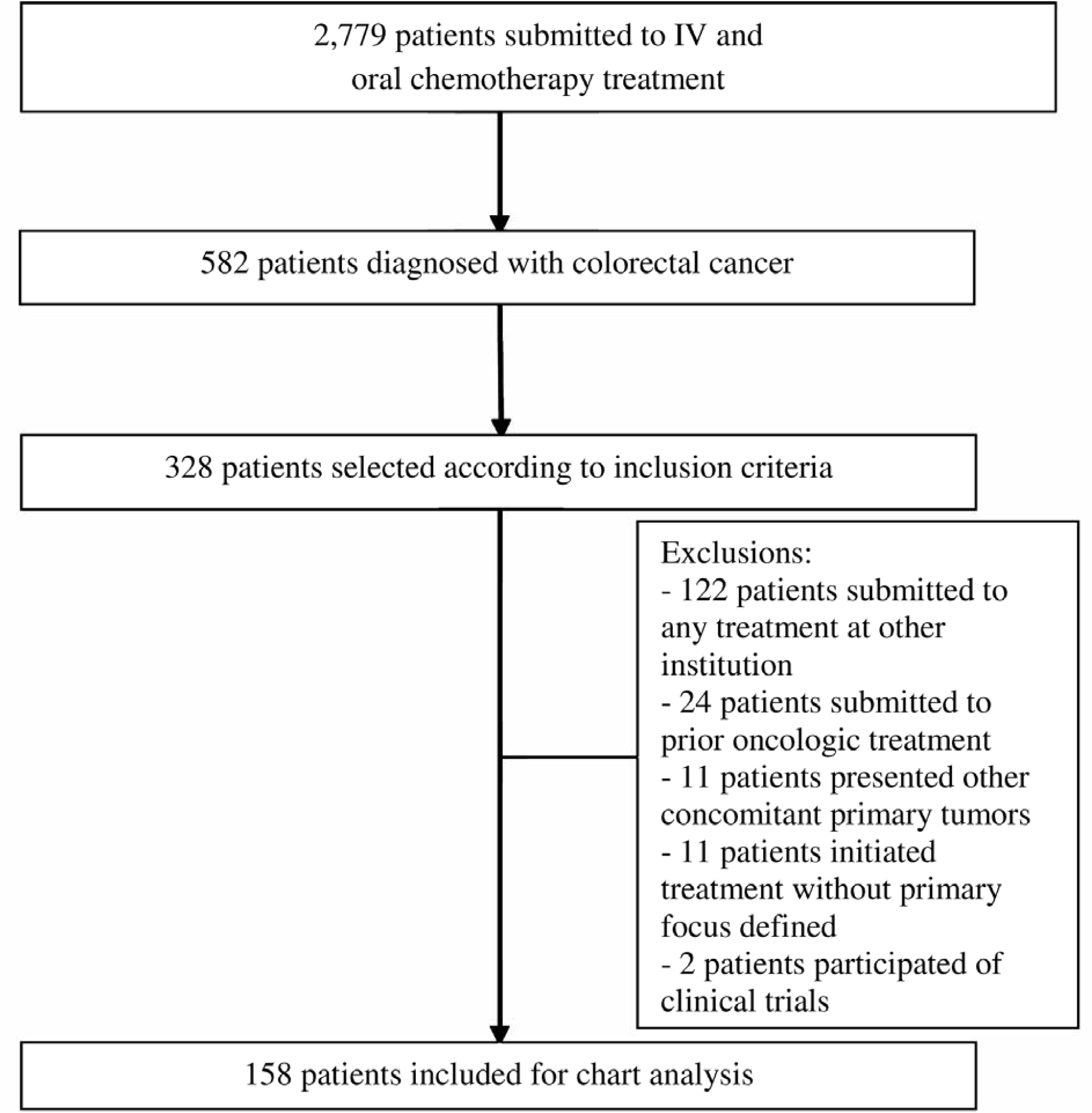
Among the 2,779 patients who submitted to IV and oral chemotherapy treatment in 2021 and 2022, 582 were diagnosed with CRC and upon application of eligibility criteria, 328 patients were selected, of which 158 have been included in the analysis (Figure 1).

Table 1 summarizes the sociodemographic, clinical and therapeutic profiles.
Sociodemographic, clinical and therapeutic profile of patients with colorectal cancer treated with chemotherapy at an oncology hospital between January 2021 and December 2022 (n = 158)
Most of the patients were men (51.3% versus 48.7% women). Median age at diagnosis was 59.5 years ranging from 21 to 88 years, predominant age-range from 50 to 59 years (37.3%). 58.9% of the patients self-reported as non-White (58.9%) and 40.5% completed high-school.
Regarding the clinical profile, 61.4% of these patients presented some type of morbidity at diagnosis, the most common was systemic arterial hypertension (80 patients), followed by diabetes mellitus (24 patients), hypothyroidism (7 patients) and obesity (5 patients). Nearly half of the diagnoses was malignant neoplasm of the colon (48.1%) and the majority of the tumors was moderately differentiated (84.8%). Most common genetic mutation occurred on gene KRAS (18.3% of the patients), although 100 patients (63.3% of the total) had no information about genetic mutation survey. For staging, 46.8% were diagnosed at stage 4, among them, the majority was metastatic (44 patients). Liver (53 patients), lung (26 patients), nodal (12 patients) and peritoneal (9 patients) were the most frequent metastases.
In relation to treatment, 80.3% of the patients underwent some type of surgical procedure, while 12.7% were submitted to chemotherapy alone. The most utilized first-line therapeutic chemotherapy regimens were fluorouracil and oxaliplatin-based, the most prescribed (50.6%) was capecitabin associated with oxaliplatin (CAPOX) followed by regimens oxaliplatin + folinic acid + fluorouracil in bolus and continuous infusion (FOLFOX, 18.3%) and fluorouracil + folinic acid (QUASAR, 7.0%). Irinotecan-based regimens were prescribed as first-line for 12 patients (7.6% of the total). Predominantly, the finality was palliative (45.6%), but for only one patient (0.6%) it was curative.
The median interval between diagnosis and beginning of chemotherapy was 124.5 days, palliative treatment was 83.5 days while neoadjuvant and adjuvant were 147 and 137.5 days, respectively. Dose reduction was applied for 44 patients (27.8%) due to adverse events (30 patients) and clinical status (7 patients). Therapeutic regimen prescribed was completed for most of the patients (50.6%), however, none of the treatments was interrupted (27.2%) or modified (22.2%), with statistically significant difference among the groups (χ² = 21.89; p < 0.001). The leading causes of interruption were adverse events (17 patients), clinical status (7 patients) and referral to exclusive palliative care (6 patients). The main causes for modification of the prescribed regimen were adverse events (16 patients) and change of the protocol (7 patients).
The main first-line therapeutic regimens found in the present study are described in Table 2 according to the therapeutic finality proposed. CAPOX regimen was utilized for all finalities, being more utilized in adjuvant (58.3%) and palliative (54.3%) treatments. Regimen FOLFOX was also adopted for all finalities, being more utilized as palliative (24.3% of the cases). Radiotherapy-associated regimens were utilized for neoadjuvancy, accounting for 59.3% of this type of treatment. Regimen QUASAR was utilized exclusively as adjuvant. There was five irinotecan-based palliative regimens.
Main first-line chemotherapy regimens for patients with colorectal cancer in an oncology hospital between January 2021 and December 2022 per type of cancer and therapeutic finality (n = 158)
For the subsequent lines of treatment, a progressive reduction of the number of patients was noticed: 71 in second line, 31 in third line, 10 in fourth line, 5 in fifth line and only 1 in sixth line. The distribution of chemotherapy regimens among the different lines of treatment is depicted in Figure 2. Despite being the most utilized as first-line, CAPOX use was reduced in the subsequent lines, moving from 50% to 9.9% for second-line treatments. Radiotherapy and QUASAR associated regimens were barely adopted in other lines of treatment and were not utilized from the third line henceforward. How these regimens are predominantly curative, its use becomes restricted in cases of metastatic diseases. In counterpart, irinotecan-based regimens started to be more utilized, accounting for 46.4% of the second-line treatment. Immunotherapy with combinations of panitumumab and bevacizumab have also started to be adopted from the second line onwards.

Distribution of the chemotherapy regimens for colorectal cancer at an oncology hospital between January 2021 and December 2022, according to lines of treatment
Mantel-Cox log-rank test showed that patients submitted to palliative care presented 6.14-fold higher risk of death than patients who received adjuvant treatment (HR: 6.14; CI 95%: 2.98-12.64; p < 0.001). However, while comparing neoadjuvant treatment with adjuvant, no significative difference was found (HR: 1.55; CI 95%: 0.55 – 4.36; p = 0.408). 24-month global survival estimate was 83.8% (CI 95%: 70.5%-99.7%) for those who submitted to neoadjuvant treatment, 86.8% (CI 95%: 78.1%-96.5%) for those who submitted to adjuvant treatment and 44.3% (CI 95%: 33.7%-58.3%) for palliative care. Kaplan-Meier plot for data described is portrayed in Figure 3.

24-month survival analysis of patients with colorectal cancer at an oncology hospital from January 2021 to December 2022 stratified according to the finality of the chemotherapy treatment
DISCUSSION
CAPOX regimen was the most first-line treatment prescribed for the study patients utilized for all finalities. Radiotherapy associated regimens were utilized as neoadjuvant treatment exclusively for rectal cancer. Regimen QUASAR was adopted as adjuvant, while irinotecan-based regimens were utilized as palliative. Most of the chemotherapy treatments were palliative, which may have significantly influenced the patients survival, since the patients who were submitted to palliative treatment had a 6.21-fold higher risk of death than patients who received adjuvant treatment.
The patients diagnosed with CRC submitted to chemotherapy treatment at the study hospital were predominantly males, median age of 59.5 years, self-reported non-White and complete high school. Stage 4 single-site metastasis at the diagnosis was predominant, liver and lung were the most frequent metastatic sites. The sociodemographic profile is similar to a study conducted at a hospital in Rio Grande do Sul16, particularly in regard to sex and age. However, discrepancies of race/color and education were found, the majority of the patients self-reported as Whites with low level of education (lower than complete elementary school), which mirrors the regional differences and access to health services in the same country.
Another study17 conducted at the same oncology hospital in Rio de Janeiro with adult patients with CRC admitted between 2016 and 2018 showed a majority of self-reported White patients. This information may reveal a racial change of the patients assisted with possible impact since the beginning of the registration process to have access to the institution.
Carethers18 discussed the racial and ethnic disparities in colorectal incidence of the USA population. The Black population overall incidence is 41.9 per 100 thousand inhabitants for this type of cancer and Black-White incidence ratio for CRC is 1.13. Black patients were less diagnosed with localized or regional disease (37% and 32%, respectively) than White patients (38% and 36%), in addition to higher frequency of metastatic disease at the diagnosis (26% versus 22%). This shows the impact of social disparities in health outcomes and reinforce the importance of screening and early diagnosis measures, particularly for vulnerable populations.
The clinical results were consistent with former studies16,17, where most part of the patients presented tumors moderately differentiated diagnosed at advanced stages (3 and 4), with most frequent liver and lung metastases, similar to the current investigation. These data may hold relation with survival since survival of patients diagnosed with colorectal cancer is directly connected with disease staging at the diagnosis. Early detection of tumors at initial stages may lead to an increase of 90% of the estimate of 5-year survival. Due to its slow development, nearly 10-15 years to change from benign to malignant lesion, this type of cancer can be screened and earlier diagnosed19,20.
The fact that most of the tumors are diagnosed at more advanced stages can indicate flawed screening, making early diagnosis difficult. Toledo et al.21 showed that the lack of a national screening policy may lead to a high prevalence of late diagnosis for the population, impacting the mortality by the disease. This data can be the base to propose screening measures and guidelines for public policies for that matter.
In regard to chemotherapy treatment, the most utilized was CAPOX, an effective regimen but associated with toxicities requiring monitoring. A study conducted in India to determine the efficacy and safety of this regimen in real-world setting concluded that global 24-month survival was 80% and 83% for adjuvant treatment and 64% and 67% for palliative treatment of colon and rectum cancer, respectively19. The survival data are similar to the present study, although in palliative context, global survival rates were lower.
According to the literature, adverse events impacted the continuation of the treatment of patients with CRC, requiring dose reduction, interruption or modification of first-line treatments. Hand-foot syndrome, a dermatologic event associated with capecitabine, and peripheral neuropathy are among the main causes of dose reduction, delay and discontinuation of the treatment with CAPOX22,23. An outpatient follow-up specialized in this syndrome for patients in use of oral capecitabine with dispensation of moisturizing cream and multiprofessional counseling for management of this adverse event is available at the institution where the present study was conducted. Apparently, these measures have positively impacted the continuation of the treatment at the institution since this syndrome and peripheral neuropathy were barely reported in the charts and is not a reason to suspend the treatment.
One of the reasons for dose reduction in older patients (70 years or more) receiving adjuvant therapy with CAPOX for CRC, is the hematologic toxicity for this population23 based in the literature. These data indicate that the efficacy of this regimen can be limited by the adverse events, affecting the continuity of the treatment. In the present study, however, adverse events with probable dose reduction have not been observed, but monitoring and proper management are essential to ensure the conclusion of the treatment and its efficacy.
The data have also shown a diversity of therapeutic regimens utilized in metastatic scenario, which makes the choice of protocols a unique challenge in clinical routine. A study24 conducted in USA utilizing the linked database Surveillance, Epidemiology, and End Results (SEER) – Medicare investigated the patterns and predictors of use for FOLFOX and FOLFIRI as first line treatment of metastasis in patients older than 65 years. Most of the patients received FOLFOX as first line therapy. The lowest number of adverse events, lowest cost per year of life and efficacy on stage 3 colon cancer may influence the decision of the physician.
However, patients with multiple comorbidities had high likelihood of receiving FOLFIRI, despite poor survival, most likely because of the difference of toxicity profiles. Physicians may resist to prescribe oxaliplatin-based protocols for patients with comorbidities as diabetes, that have high risk of developing neuropathy. However, for women, it was observed a preference in prescribing FOLFOX, because of high frequency of nausea and vomits during the treatment with FOLFIRI24.
A study conducted in the same institution of the present study investigated the occurrence of adverse events in patients with CRC in use of FOLFOX and FOLFIRI. It has been observed a frequency of toxicity higher than 90% for both groups, the most frequent were gastrointestinal and neurologic. In addition, patients who utilized the regimen FOLFOX presented higher frequency of severe or life-threatening manifestations25. However, it is necessary to consider the individual factors when the treatment regimen has to be defined for optimization and minimization of treatment-associated risks.
Another issue to be considered in metastatic CRC is the dismal prognosis with unsatisfactory 5-year survival rate26. Although chemotherapy with fluorouracil, oxaliplatin and irinotecan continues to play a significant role, the occurrence of adverse events is still challenging, for instance27. In this context, new approaches are being investigated for optimization of therapeutic efficacy.
One of these approaches is the combination of monoclonal antibodies with chemotherapy medications that have brought clinical benefits, although the ideal choice of initial biological therapies in treatment-naive patients is unknown. A study evaluated whether adding cetuximab or bevacizumab to the regimen FOLFOX or FOLFIRI was better as first line therapy for metastatic or wild-type KRAS colorectal cancer, where there was no significant difference in the overall survival of the group with biological medications and with initial chemotherapy28. This shows that, notwithstanding the benefits according to the literature, the use of monoclonal antibodies associated with chemotherapy as first-line therapeutic option is yet uncertain.
Another topic addressed is the use of biomarkers that can help to predict the likelihood of clinical benefits and risk of adverse events of certain treatments, which allows the customization of the treatment29,30. Mutations of the gene KRAS, for example, are important events of colorectal carcinogenesis and may have negative impact on overall survival and prognosis when mutated31,32. Even with the rising number of prognostic/predictive molecular biomarkers, few reliable markers are available to identify patients at high risk of CRC at initial stages of the disease29,33. Currently, only microsatellites instability status (MSI), RAS mutation and possibly the status of BRAF mutation influence the clinical decision-making33. However, these tests are not routinely conducted at the institution of the study, since more than half of the patients have not been submitted to the genetic mutation surveys, for example.
This study was conducted in a specialized oncology hospital assisting patients referred through the regulation process which may have impacted the number of the patients at more advanced stages. Because it is a public hospital, it is possible that the mode of funding has directly interfered on the available therapeutic options and performance of lab tests. In addition, the study comprehends patients who initiated chemotherapy between 2021 and 2022, most likely impacted by the COVID-19 toll, potential delays of diagnostic and beginning of the treatment with clear repercussions on patients prognosis.
CONCLUSION
The therapeutic regimens of the present study are aligned with the DGT of the Ministry of Health and no medications other than those described in the guidelines have been utilized. Regimen CAPOX was the most prescribed among first line treatments, followed by FOLFOX and QUASAR. From the second line henceforward, there was a significant increase of the use of irinotecan-based protocols and associations with monoclonal antibodies (bevacizumab and panitumumab).
It has also been identified that most of the patients were at advanced stages of the disease and for that reason, the palliative treatment is the most utilized. This has a significant impact on survival and patients in palliative treatment are at higher risk of death than those in neoadjuvancy and adjuvancy; in addition to the necessity of access to more effective therapies, the importance of screening actions is quite evident as CRC can be earlier diagnosed.
Furthermore, it is essential to follow up the current and future tendencies as the discovery of new medications and use of biomarkers in clinical practice but in the context of public health, it is also important to discuss the access to these new technologies for users of public health network.
ACKNOWLEDGMENT
To "Central de Quimioterapia" and to "Dispensação Ambulatorial do Serviço de Farmácia do Hospital do Câncer I (HC I)/INCA" for the support to conduct the study.
DATA AVAILABILITY STATEMENT
Given ethical and anonymity restraints, data can be requested to the corresponding author with justification.
References
-
1 Bray F, Laversanne M, Sung H, et al. Global cancer statistics 2022: GLOBOCAN estimates of incidence and mortality worldwide for 36 cancers in 185 countries. CA Cancer J Clin. 2024;74(3):229-63. doi: https://doi.org/10.3322/caac.21834
» https://doi.org/10.3322/caac.21834 -
2 Santos MO, Lima FCS, Martins LFL, et al. Estimativa de incidência de câncer no Brasil, 2023-2025. Rev Bras Cancerol. 2023;69(1):e-213700. doi: https://doi.org/10.32635/2176-9745.RBC.2023v69n1.3700
» https://doi.org/10.32635/2176-9745.RBC.2023v69n1.3700 -
3 SIM: Sistema de Informação sobre Mortalidade [Internet]. Versão 3.2.1.2. Brasília (DF): DATASUS. [data desconhecida] - [acesso 2025 jan 25]. Disponível em: http://tabnet.datasus.gov.br/cgi/tabcgi.exe?sim/cnv/obt10br.def
» http://tabnet.datasus.gov.br/cgi/tabcgi.exe?sim/cnv/obt10br.def -
4 Ministério da Saúde(BR). Portaria n° 958, de 26 de setembro de 2014. Aprova as Diretrizes Diagnósticas e Terapêuticas do Câncer de Cólon e Reto. Diário Oficial da União [Internet], Brasília, DF. 2014 set 29 [acesso 2025 jan 5]; Edição 187; Seção 1:59. Disponível em: https://pesquisa.in.gov.br/imprensa/jsp/visualiza/index.jsp?data=29/09/2014&jornal=1&pagina=59&totalArquivos=192
» https://pesquisa.in.gov.br/imprensa/jsp/visualiza/index.jsp?data=29/09/2014&jornal=1&pagina=59&totalArquivos=192 -
5 Benson AB, Venook AP, Adam M, et al. Colon cancer, version 3.2024. J Natl Compr Cancer Netw. 2024;22(2D):240029. doi: https://doi.org/10.6004/jnccn.2024.0029
» https://doi.org/10.6004/jnccn.2024.0029 -
6 Benson AB, Venook AP, Adam M, et al. Rectal cancer, version 3.2024: featured updates to the NCCN Guidelines. J Natl Compr Cancer Netw. 2024;22(6):366-75. doi: https://doi.org/10.6004/jnccn.2024.0041
» https://doi.org/10.6004/jnccn.2024.0041 -
7 Argilés G, Tabernero J, Labianca R, et al. Localised colon cancer: ESMO clinical practice guidelines for diagnosis, treatment and follow-up. Ann Oncol. 2020;31(10):1291-305. doi: https://doi.org/10.1016/j.annonc.2020.06.022
» https://doi.org/10.1016/j.annonc.2020.06.022 -
8 Cervantes A, Adam R, Roselló S, et al. Metastatic colorectal cancer: ESMO clinical practice guideline for diagnosis, treatment and follow-up. Ann Oncol. 2023;34(1):10-32. doi: https://doi.org/10.1016/j.annonc.2022.10.003
» https://doi.org/10.1016/j.annonc.2022.10.003 -
9 Afanasjeva J, Burk M, Cunningham F, et al. ASHP Guidelines on medication-use evaluation. Am J Heal Pharm. 2021;78(2):168-75. doi: https://doi.org/10.1093/ajhp/zxaa393
» https://doi.org/10.1093/ajhp/zxaa393 - 10 Wettermark B, Elseviers M, Almarsdóttir AB, et al. Introduction to drug utilization research. In: Elseviers M, Wettermark B, Almarsdóttir AB, et al., organizadores. Drug utilization research. Wiley; 2016. p. 3-12.
- 11 Organização Mundial da Saúde. CID-10: Classificação Estatística Internacional de Doenças com disquete. Vol. 3, Índice Alfabético. São Paulo: Edusp; 2008.
-
12 R: The R Project for Statistical Computing [Internet]. Version 4.4.3. [sem local]: The R foundation. [sem data] - [acesso 2017 jul 15]. Disponível em: https://www.R-project.org
» https://www.R-project.org -
13 Kleinbaum DG, Klein M. Kaplan-Meier survival curves and the log-rank test. In: Kleinbaum DG, Klein M, editors. Survival analysis. Statistics for biology and health. New York: Springer; 2012. p. 19-41. doi: https://doi.org/10.1007/978-1-4419-6646-9_2
» https://doi.org/10.1007/978-1-4419-6646-9_2 - 14 Conselho Nacional de Saúde (BR). Resolução n° 466, de 12 de dezembro de 2012. Aprova as diretrizes e normas regulamentadoras de pesquisas envolvendo seres humanos. Diário Oficial da União, Brasília, DF. 2013 jun 13; Seção I:59.
- 15 Conselho Nacional de Saúde (BR). Resolução n° 510, de 7 de abril de 2016. Dispõe sobre as normas aplicáveis a pesquisas em Ciências Humanas e Sociais. Diário Oficial da União, Brasília, DF. 2016 maio 24; Seção I:44.
-
16 Rohenkohl CA, Pastorello J, Costa NR, et al. Epidemiological profile of patients with colorectal cancer from a hospital in Rio Grande do Sul, Brazil. J Coloproctology. 2021;41(1):001-7. doi: https://doi.org/10.1055/s-0041-1725048
» https://doi.org/10.1055/s-0041-1725048 -
17 Mello MRSP, Moura SF, Muzi CD, et al. Clinical evaluation and pattern of symptoms in colorectal cancer patients. Arq Gastroenterol. 2020;57(2):131-6. doi: https://doi.org/10.1590/S0004-2803.202000000-24
» https://doi.org/10.1590/S0004-2803.202000000-24 -
18 Carethers JM. Racial and ethnic disparities in colorectal cancer incidence and mortality. Adv Cancer Res. 2021;151:197-229. doi: https://doi.org/10.1016/bs.acr.2021.02.007
» https://doi.org/10.1016/bs.acr.2021.02.007 - 19 Ministério da Saúde (BR). Rastreamento. Cadernos de atenção primária. Brasilia, DF: MS; 2010. v. 29.
- 20 Instituto Nacional de Câncer. Detecção precoce do câncer. Rio de Janeiro: INCA; 2021.
-
21 Toledo CM, Almeida LMPR, Averbach M, et al. Analysis of the tracking initiatives of colorectal cancer in Brazil. Arq Gastroenterol. 2023;60(4):450-62. doi: https://doi.org/10.1590/S0004-2803.230402023-93
» https://doi.org/10.1590/S0004-2803.230402023-93 -
22 Kalidindi AV, Dubashi B, Jayanthi M, et al. Efficacy and safety of capecitabine and oxaliplatin (CAPOX) treatment in colorectal cancer. Indian J Cancer. 2022;59(1):73-9. doi: https://doi.org/10.4103/ijc.IJC_618_19
» https://doi.org/10.4103/ijc.IJC_618_19 -
23 Tsuchiya A, Ogawa C, Kondo N, et al. Exploratory study on relative dose intensity and reasons for dose reduction of adjuvant CAPOX therapy in elderly patients with colorectal cancer. Glob Heal Med. 2022;4(3):2021.01018. doi: https://doi.org/10.35772/ghm.2021.01018
» https://doi.org/10.35772/ghm.2021.01018 -
24 Neugut AI, Lin A, Raab GT, et al. FOLFOX and FOLFIRI use in stage IV colon cancer: analysis of SEER-medicare data. Clin Colorectal Cancer. 2019;18(2):133-40. doi: https://doi.org/10.1016/j.clcc.2019.01.005
» https://doi.org/10.1016/j.clcc.2019.01.005 -
25 Melo MM, Cardoso RM, Silva MJS. Reação adversa a medicamento: uma análise comparativa de protocolos utilizados para o tratamento do câncer colorretal. Medicina (Ribeirão Preto). 2017;50(4);245-54. https://doi.org/10.11606/issn.2176-7262.v50i4p245-254
» https://doi.org/10.11606/issn.2176-7262.v50i4p245-254 -
26 Yang W, Zheng H, Lv W, et al. Current status and prospect of immunotherapy for colorectal cancer. Int J Colorectal Dis. 2023;38(1):266. doi: https://doi.org/10.1007/s00384-023-04553-z
» https://doi.org/10.1007/s00384-023-04553-z -
27 Adebayo AS, Agbaje K, Adesina SK, et al. Colorectal cancer: disease process, current treatment options, and future perspectives. Pharmaceutics. 2023;15(11):2620. doi: https://doi.org/10.3390/pharmaceutics15112620
» https://doi.org/10.3390/pharmaceutics15112620 -
28 Venook AP, Niedzwiecki D, Lenz H-J, et al. Effect of first-line chemotherapy combined with cetuximab or bevacizumab on overall survival in patients with KRAS wild-type advanced or metastatic colorectal cancer. JAMA. 2017;317(23):2392. doi: https://doi.org/10.1001/jama.2017.7105
» https://doi.org/10.1001/jama.2017.7105 -
29 Miyamoto Y, Hiyoshi Y, Sawayama H, et el. Precision medicine for adjuvant chemotherapy of resected colorectal cancer. Ann Gastroenterol Surg. 2020;4(6):635-45. doi: https://doi.org/10.1002/ags3.12397
» https://doi.org/10.1002/ags3.12397 -
30 Yang L, Yang J, Kleppe A, et al. Personalizing adjuvant therapy for patients with colorectal cancer. Nat Rev Clin Oncol. 2024;21(1):67-79. doi: https://doi.org/10.1038/s41571-023-00834-2
» https://doi.org/10.1038/s41571-023-00834-2 -
31 Zanatto RM, Santos G, Oliveira JC, et al. Impact of KRAS mutations in clinical features in colorectal cancer. ABCD Arq Bras Cir Dig (São Paulo). 2020;33(3):e1524. doi: https://doi.org/10.1590/0102-672020200003e1524
» https://doi.org/10.1590/0102-672020200003e1524 -
32 Carvalho LEW, Sarraf JS, Oliveira ACM, et al. What is different in the population of the brazilian Amazon region so that they have a low frequency of KRAS gene mutations. Case Rep Oncol. 2017;10(2):777-82. doi: https://doi.org/10.1159/000479733
» https://doi.org/10.1159/000479733 -
33 Tomasello G, Ghidini M, Galassi B, et al. Survival benefit with adjuvant chemotherapy in stage III microsatellite-high/deficient mismatch repair colon cancer: a systematic review and meta-analysis. Sci Rep. 2022;12(1):1055. doi: https://doi.org/10.1038/s41598-022-05065-6
» https://doi.org/10.1038/s41598-022-05065-6
Edited by
-
Scientific-editor:
Anke Bergmann. Orcid iD: https://orcid.org/0000-0002-1972-8777

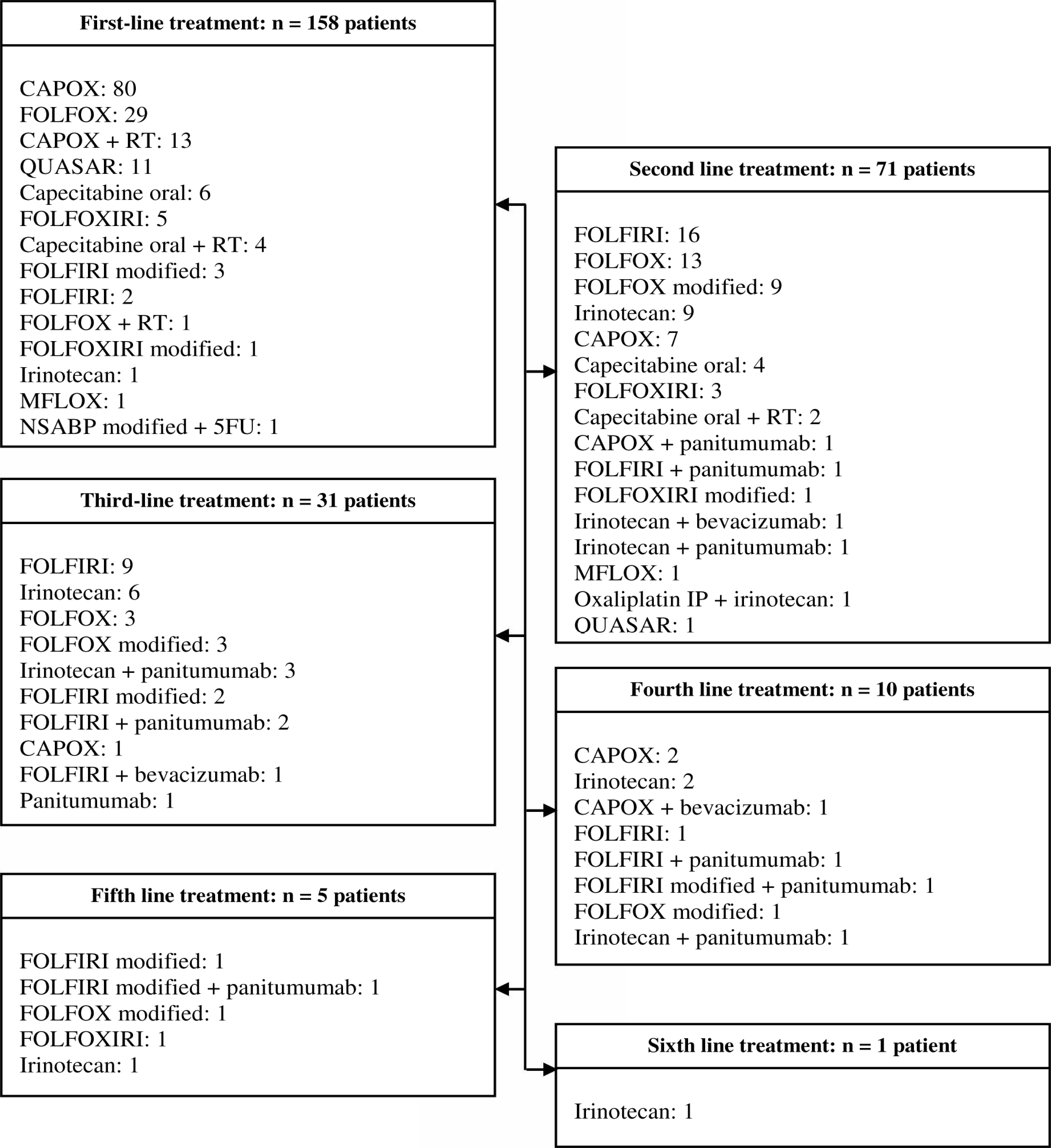 Captions: CAPOX: combination of oxaliplatin and capecitabine; CAPOX + RT: combination of oxaliplatin and capecitabine associated with radiotherapy; capecitabine + RT: capecitabine associated with radiotherapy; FOLFOX: combination of oxaliplatin, fluorouracil and folinic acid; FOLFOX + RT: combination of oxaliplatin, fluorouracil and folinic acid associated with radiotherapy; FOLFOXIRI: combination of oxaliplatin, fluorouracil and folinic acid with irinotecan; FOLFIRI: combination of irinotecan, fluorouracil and folinic acid; MFLOX: combination of oxaliplatin, fluorouracil and folinic acid, variant regimen of FOLFOX; IP: intraperitoneal; NSABP modified + 5FU: modified regimen of the studies of the National Surgical Adjuvant Breast and Bowel Project (NSABP) in association with fluorouracil; QUASAR: combination of fluorouracil and folinic acid.
