
 Oncological Care for the LGBTQIAPN+ Population: Professional Knowledge, Care Barriers and Strategies for Comprehensive Attention
ABSTRACT
Introduction: Studies indicate that LGBTQIAPN+ individuals face prejudice in healthcare, especially in oncology, which undermines patient-centered care and the therapeutic bond.
Objective: To analyze the available evidence in the literature on how healthcare professionals understand and deliver care to the LGBTQIAPN+ population, identifying barriers, educational gaps, and strategies to ensure humanized, equitable, and comprehensive care with emphasis on the oncological context.
Method: Integrative literature review conducted in 2023 at the databases PubMed, CINAHL, Embase, Web of Science, and LILACS.
Results: The final sample consisted of 14 studies. The findings revealed that, compared to cisgender and heterosexual individuals, sexual and gender minorities with cancer or in palliative care face barriers exacerbated by institutional prejudice, reduced family support, and shortcomings in professional training.
Conclusion: It is necessary to incorporate content on sexual and gender diversity into health curricula and to promote inclusive policies and practices that ensure the right to health with dignity, equity, and respect for the singularities of the LGBTQIAPN+ population.
Key words:
Sexual and Gender Minorities; Sexism/statistics & numerical data; Health Equity/statistics & numerical data; Public Health; Health Personnel/statistics & numerical data
RESUMO
Introdução: Estudos apontam que pessoas LGBTQIAPN+ enfrentam preconceitos na assistência em saúde, sobretudo na oncologia, comprometendo o acolhimento e o vínculo terapêutico.
Objetivo: Analisar as evidências disponíveis na literatura sobre como os profissionais de saúde compreendem e exercem o cuidado voltado à população LGBTQIAPN+, identificando barreiras, lacunas formativas e estratégias apontadas para assegurar uma assistência humanizada, equitativa e integral, com destaque para o contexto oncológico.
Método: Revisão integrativa da literatura realizada em 2023, com buscas nas bases PubMed, CINAHL, Embase, Web of Science e LILACS.
Resultados: A amostra final foi composta por 14 estudos. Os achados revelaram que, em comparação com pessoas cisgênero e heterossexuais, minorias sexuais e de gênero com câncer ou em cuidados paliativos enfrentam barreiras agravadas pelo preconceito institucional, menor suporte familiar e deficiências na formação dos profissionais.
Conclusão: É necessário incorporar conteúdos sobre diversidade sexual e de gênero nos currículos da área da saúde e fomentar políticas e práticas inclusivas que assegurem o direito à saúde com dignidade, equidade e respeito às singularidades da população LGBTQIAPN+.
Palavras-chave:
Minorias Sexuais e de Gênero; Sexismo/estatística & dados numéricos; Equidade em Saúde/estatística & dados numéricos; Saúde Pública; Pessoal de Saúde/estatística & dados numéricos
RESUMEN
Introducción: Los estudios señalan que las personas LGBTQIAPN+ enfrentan prejuicios en la atención sanitaria, especialmente en oncología, lo que compromete la acogida y el vínculo terapéutico.
Objetivo: Analizar la evidencia disponible en la literatura sobre cómo los profesionales de la salud comprenden y ejercen el cuidado dirigido a la población LGBTQIAPN+, identificando barreras, vacíos formativos y estrategias señaladas para garantizar una atención humanizada, equitativa e integral, con énfasis en el contexto oncológico.
Método: Revisión integradora de la literatura realizada en 2023, con búsquedas en las bases de datos PubMed, CINAHL, Embase, Web of Science y LILACS.
Resultados: La muestra final estuvo compuesta por 14 estudios. Los hallazgos revelaron que, en comparación con las personas cisgénero y heterosexuales, las minorías sexuales y de género con cáncer o en cuidados paliativos enfrentan barreras agravadas por el prejuicio institucional, menor apoyo familiar y deficiencias en la formación de los profesionales.
Conclusión: Es necesario incorporar contenidos sobre diversidad sexual y de género en los currículos del área de la salud y fomentar políticas y prácticas inclusivas que garanticen el derecho a la salud con dignidad, equidad y respeto a las singularidades de la población LGBTQIAPN+.
Palabras clave:
Minorías Sexuales y de Género; Sexismo/estadística & datos numéricos; Equidad en Salud/estadística & datos numéricos; Salud Pública; Personal de Salud/estadística & datos numéricos
INTRODUCTION
The integrity of oncological care requires acknowledgment of the biopsychosocial specificities of historically invisibilized populations in the healthcare system, such as lesbians, gays, bisexuals, transvestites, transsexuals, queer, intersex, asexuals, pansexuals, non-binaries, and other non-hegemonic gender identities and sexual orientations (LGBTQIAPN+)1. This population faces structural, communication, and behavioral barriers that compromise equity in access, quality, and effectiveness of care, mainly in high-complexity contexts such as oncological treatment1,2.
The World Health Organization (WHO) emphasizes that sexual health and respect for gender identity are fundamental components of integral health, which must be ensured for all people, without discrimination3. However, evidence shows that LGBTQIAPN+ people face prejudice, institutional discrimination, and education gaps from health professionals that hinder hospitality and compromise the therapeutic bond4–6. These difficulties are heightened in the oncology field, which requires not only technical knowledge but cultural sensitivity and qualified listening in view of the multifaceted suffering7,8.
Cancer imposes particular challenges to LGBTQIAPN+ people, as it affects not only the biological body, but the identity construction, the sexuality exercise, and the sense of belonging, frequently silenced dimensions in conventional approaches9,10. The invisibilization of their experiences aggravates the psychic suffering and compromises integral care, making it urgent to include these dimensions in professional practice and education.
Despite advancements in public policies in Brazil, such as the National Policy of Integral Health for Lesbians, Gays, Bisexuals, Transvestites, and Transsexuals11, the national scientific production on the knowledge and practices of health professionals towards the LGBTQIAPN+ population in oncology contexts is still scarce. There is a gap between policies’ normative principles and the reality of care, which reinforces the importance of investigations that problematize hegemonic practices and lead the way to inclusive oncology12.
Additionally, international studies have shown that ignorance and inappropriate attitudes from health professionals are associated with evasion from services, delayed diagnoses, and dehumanization experiences lived by LGBTQIAPN+ cancer patients13,14. These data justify the need for studies that critically analyze how care is provided and what strategies can be implemented to overcome inequalities.
In view of this scenario, this study aims to analyze the available evidence in the literature on how healthcare professionals understand and deliver care to the LGBTQIAPN+ population, identifying barriers, educational gaps, and strategies to ensure humanized, equitable, and comprehensive care with emphasis on the oncological context.
METHOD
Integrative literature review developed with the objective of analyzing how health professionals understand and deliver oncological care to the LGBTQIAPN+ population, in addition to identifying barriers, education gaps, and institutional strategies targeted at promoting integral, inclusive, and equitable care. The review was elaborated following these steps: 1) elaboration of the research questions; 2) definition of inclusion and exclusion criteria; 3) identification of studies in the databases; 4) assessment of the included studies; 5) analysis and interpretation of results; and 6) review presentation15.
The research question, developed using the PICO (Population, Interest, and Context)16,17 strategy (Chart 1), is: "How do healthcare professionals understand and deliver oncological care to the LGBTQIAPN+ population, and what are the barriers, education gaps, and suggested strategies to ensure integral care?".
The search was conducted in May 2023, with the support of a specialized librarian. We used controlled and non-controlled descriptors, extracted from MeSH (Medical Subject Headings), CINAHL Headings, and DeCS (Descritores em Ciências da Saúde) vocabularies, combined with Boolean operators AND and OR. The databases consulted were: PubMed/Medline, Embase, LILACS, CINAHL, and Web of Science (WOS).
The standardized search strategy was: ("Cancer" OR "Cancer Care" OR "Neoplasms" OR "Oncology") AND ("LGBTQ" OR "Sexual and Gender Minorities) AND ("Healthcare Providers" OR "Health Personnel" OR "Professional"). There was no restriction regarding language or year of publication.
The review included studies that presented an empirical design (quantitative, qualitative, or mixed); investigated knowledge, attitudes, preparedness, or healthcare workers’ practices in the delivery of oncological care to the LGBTQIAPN+ population; and were available for full reading with access to the complete text.
Review studies (systematic, integrative, narrative, or scope); dissertations and theses; event summaries and editorials were excluded.
In the studies assessment and categorization step, a standardized extraction sheet was used, containing: study identification (ID), title, authors, country, year of publication, objective, design type, main conclusions, and evidence level. The evidence level was classified according to the proposal by Polit and Beck18, which establishes a hierarchy based on methodological rigor, ranging from more robust studies to randomized clinical trials and systematic reviews, and even lower-level designs, like descriptive studies or case reports. This classification allowed for the uniformization of the analysis and enabled critical comparison between the different studies included in the review.
The studies were organized in thematic analysis axes, defined from the critical reading of the findings. The figures were created using the Canva virtual design tool.
Since this was a literature review, there was no need for approval by a Research Ethics Committee, in compliance with Resolution N. 510/2016, item VI of the National Health Council19. All the studies analyzed were properly cited and referenced.
RESULTS
The search strategies performed in the selected information sources resulted in the initial identification of 357 records. Of those, 81 duplicates were excluded using the EndNote Web20 reference manager. The remaining 283 records were, then, imported to the Rayyan CQRI21, platform, where another 72 duplicated records were identified and removed. The following step consisted of screening titles and abstracts, conducted independently by two reviewers, with the participation of a third reviewer in case of divergences. As a result, 41 studies were selected for full reading.
After full reading and rigorously applying the previously established eligibility criteria, 14 studies were included in the final sample of this integrative review. All the studies presented primary methodological design and approached aspects related to education, training, or perception of healthcare professionals regarding inclusive care delivered to the LGBTQIAPN+ population in the context of oncological care. Figure 122 presents a flowchart detailing the steps in the process of identification, screening, eligibility, and inclusion of studies.

Chart 223–36 presents the synthesis of the 14 studies selected for the integrative review, organized based on the following information: ID, article title, author, year of publication, country of origin, used method, and evidence level. This systematization enables an encompassing and comparative visualization of the main methodological characteristics of the analyzed studies, contributing to an understanding of the diversity of approaches adopted in scientific production on the subject. Moreover, it facilitates the critical analysis regarding methodological robustness and applicability of findings in the contexts of oncological care delivered to the LGBTQIAPN+ population.
Intersectionality between social, demographic, institutional, and clinical factors is determinant for the experience of the health-disease process lived by LGBTQIAPN+ people. Studies revealed that, compared to cisgender and heterosexual individuals, sexual and gender minorities with cancer or in palliative care face barriers exacerbated by institutional prejudice, reduced family support, and shortcomings in the training of professionals who assist them.
The studies included in this review highlight that, despite the growing acknowledgment of the importance of inclusive practices, professional training is still insufficient to counter the vulnerabilities of this population, especially in medium and high-complexity services.
The analysis of the sample revealed that most studies were conducted in countries in the Global North, mainly the United States, which accounted for ten publications (66.7%). Next, the United Kingdom contributed with three studies (20%), while Australia and Canada accounted for one study each (6.7%). There is, therefore, an expressive predominance of productions coming from English-speaking contexts, with an absence of Brazilian studies that highlights an important geographical gap in the scientific production towards the oncological care of the LGBTQIAPN+ population.
Observational quantitative studies predominated (n=6), mostly cross-sectional ones, and including one case report, aimed at measuring perceptions, experiences, and care practices of LGBTQIAPN+ professionals and/or patients. Qualitative studies corresponded to four publications, exploring the meanings, knowledge, attitudes, and behaviors of healthcare professionals in the oncological care of this population. The four remaining studies were intervention ones, mainly of quasi-experimental design, describing strategies implemented in oncological services.
Of the total analyzed studies, 12 directly addressed healthcare professionals, including doctors, nurses, and social workers, while only two included undergraduate students from healthcare courses, highlighting the scarcity of investigations aimed at initial training. The predominant clinical scenario was the specialized oncological context, followed by palliative care and hospital assistance environments. It is worth highlighting that only four studies reported the implementation of formal educational interventions, such as interprofessional workshops, curricula updates, or continuous education programs, revealing an even more restricted number of structured initiatives targeted at qualifying the healthcare team.
Most studies address the oncological care provided to the LGBTQIAPN+ population very broadly, with no segmentation between the diverse groups that make up the acronym. Four other studies focused specifically on the transgender population, mainly in the context of heightened vulnerability, like cancer diagnosis and treatment. Although the studies acknowledge the existing diversity within the LGBTQIAPN+ community, most did not differentiate educational strategies according to the gender identity or sexual orientation specificities, which limits the effectiveness of more sensitive and customized pedagogical approaches.
DISCUSSION
This review's findings reveal multiple dimensions of the existing gap between the principles of equity in healthcare and oncological practice directed at the LGBTQIAPN+ population. The analysis of the 14 studies enabled the identification of four thematic axes that not only synthesize the analyzed studies but also highlight the persistence of structural, educational, and relational barriers for providing care to this population. Next, each axis is discussed based on the studies included and articulated with the national and international scientific literature, to broaden the understanding of challenges and potentials for constructing truly inclusive oncological assistance.
CATEGORY I. GAPS IN TECHNICAL PREPAREDNESS AND ATTITUDES OF PROFESSIONALS IN THE FACE OF SEXUAL AND GENDER DIVERSITY IN THE ONCOLOGICAL CONTEXT
The analysis of the studies shows that there is a critical hiatus between the demand for culturally sensitive oncological care and the level of preparedness of professionals to welcome LGBTQIAPN+ people with equality and competency27,29,30,33,34.
One study identified that 44% of the interviewed professionals had not received any type of formal training on sexual and gender diversity, despite acknowledging the importance of this knowledge for oncological care29. Educational insufficiency directly impacts the quality of the care provided, as also reported in research conducted in 201833, in which many professionals reported difficulties in clinical communication with LGBTQIAPN+ patients, especially transgender persons33.
Some authors added that, even in institutions that have established protocols for promoting diversity, the professionals were still insecure and afraid of "wrongly" approaching patients, which often resulted in avoiding essential dialogue with LGBTQIAPN+ patients30. This behavior was also identified by researchers who observed that many professionals still consider gender identity as a "personal issue" and not a relevant clinical component. This leads to omission of information collection on sexual orientation and gender identity during anamnesis, compromising the integrity of care27.
Such findings converge with the results found in the literature35, which reveal that most North American oncologists felt unprepared to address issues related to sexuality and gender identity, even though they acknowledged the relevance of these themes in the clinical context. Researchers reinforce this limitation by showing the frequent silence regarding emotional and identity aspects during the therapeutic approach of LGBTQIAPN+ patients, which causes feelings of invisibility and embarrassment34.
CATEGORY II. CURRICULAR EXCLUSION AND FORMATIVE SILENCES IN THE PREPARATION OF PROFESSIONALS FOR CARING FOR LGBTQIAPN+ PEOPLE
The analysis of the studies indicates that the deficit in oncological care provided to the LGBTQIAPN+ population is deeply rooted in the education of healthcare professionals23, 25,28,35,36. Researchers showed that most medical residents in Gynecology and Obstetrics in the United States received no curricular content whatsoever on the health of trans people25. Brazilian researchers, on the other hand, revealed that Nursing students acknowledge the importance of the subject, but reported that it is superficially treated and out of context in their education36.
In the teaching context, a study published in 2021 highlights that themes related to sexual orientation and gender identity are often avoided in classrooms28. This negligence reflects a broader scenario of invisibility and discrimination faced by the LGBTQIAPN+ population, especially regarding access to healthcare. The lack of preparedness among health and education professionals contributes to the perpetuation of stigmas, thereby impairing the creation of safe and welcoming spaces28. The silence around these questions, as suggested by the authors, not only limits the critical debate, but also compromises citizenship and the promotion of equality28.
When investigating higher education institutions, scientists demonstrated that content targeted to the LGBTQIAPN+ population is seldom incorporated into Course Pedagogic Projects (PPCs) in a structured form, being generally treated as optional or peripheral topics23. This curricular exclusion reveals a worrying pattern: by neglecting essential themes of human diversity, we lose the opportunity to educate more conscious, empathetic professionals, prepared to deal with society's plurality23. This gap reinforces inequalities and contributes to maintaining discriminatory practices, including in the healthcare field, in which recognizing the specificities of this population is crucial to offer qualified and humanized care.
Moreover, the gap in professional education is not only restricted to theoretical content. The structural dimension of this problem was highlighted by the scarcity of internships and supervised practices targeted at caring for LGBTQIAPN+ people, which compromises the development of technical and ethical competencies and weakens the practical experience of equity principles36. The absence of concrete formative experiences contributes to the reproduction of invisibilities in healthcare services, perpetuating a model that fails to integrally include this population.
The omission of content on sexual diversity and gender identity also supports normative and stigmatizing clinical practices. A study published in 2012 already pointed out this phenomenon by affirming that cisheteronormativity is the regime that structures health knowledge and practices, making the existence of dissidents invisible2. This logic compromises not only clinical practice, but also the ethical commitment of future professionals with National Health System (SUS) principles, especially those regarding universality, integrity, and equity.
Given this scenario, it becomes urgent to rethink the curricular structure of health courses, ensuring the effective inclusion of content that contemplates human diversity in all its dimensions. Only through critical, ethical, and inclusive education will it be possible to prepare professionals capable of promoting truly equitable care, aligned to the real needs of the LGBTQIAPN+ population and SUS’ principles.
CATEGORY III. COMMUNICATION OBSTACLES AND FRAGILITY IN THE INSTITUTIONAL ONCOLOGICAL CARE PROVIDED TO THE LGBTQIAPN+ POPULATION
The literature discussion reveals the absence of a proper education, which translates into communication barriers and institutional fragility of care26,28,31,34,36.
Clinical communication is one of the main pillars of quality of care, especially in oncological care, in which hospitality, qualified listening, and acknowledgment of the patient's identity are fundamental26,28,31,34,36. However, the studies included in this review have demonstrated that there are significant communication and institutional barriers that compromise the construction of a safe therapeutic bond with people from the LGBTQIAPN+ community26,28,31,34,36.
Oncological LGBTQIAPN+ patients frequently face embarrassment when sharing aspects of their affective and sexual life with healthcare professionals, due to the perception of judgment and the absence of a welcoming and open space for dialogue. This communication barrier compromises the integrity of care, negatively impacting the essential dimensions like treatment adherence, therapeutic bond, and psychosocial support; key elements for success in oncological care34.
This difficulty in clinical communication also reflects a limitation in the education of healthcare professionals. Students and professors often demonstrate insecurity when addressing issues related to gender identity and sexual orientation in clinical contexts36. This resistance is fostered by the fear of using inappropriate terms and by a lack of preparedness for dealing with situations of institutional discrimination36. As a result, these identities end up being invisibilized in clinical interactions, compromising an ethical, hospitable care centered on the real needs of LGBTQIAPN+ people.
However, these limitations are not restricted to individual competencies. Evidence broadens this understanding by showing the lack of institutional support, underlining the absence of clear curricular guidelines and clinical protocols that guide inclusive communication free of prejudice23,28. Such an institutional gap directly impacts the education of future professionals, who see themselves underprepared to work with sensitivity and respect to diversity28.
Even in institutions that consider themselves inclusive, difficulties persist. Professionals often adopt defensive postures when caring for trans and non-binary patients, omitting the collection of data on gender identity for fear of being perceived as invasive26. This omission, however, is interpreted by patients as indifference or neglect, generating distrust and emotional detachment from the care team, which compromises even more the quality of assistance26.
In view of these challenges, some institutional initiatives have been seeking to promote significant changes. Pratt-Chapman highlights the successful experience of including the fields "sexual orientation" and "gender identity" in electronic records31. Although the multiprofessional team resisted at first, due to a lack of preparedness and fear of embarrassment during anamnesis, educational actions, sensitivity campaigns, and managerial support were fundamental to the incorporation of a new system31. As a result, there was an increase in the visibility of specific requirements of the LGBTQIAPN+ population, improvements in clinical communication, and better user satisfaction31.
These findings confront the literature findings that show that only a minority of oncological professionals feel comfortable addressing sensitive themes like sexuality, gender identity, and intimate relationships7. Complementing this perspective, researchers emphasize that institutional communication is still permeated by cis-heteronormative codes that exclude and silence dissident experiences, contributing to evasion or underutilization of healthcare services by part of the LGBTQIAPN+ population14.
Communication and institutional barriers highlighted in the literature indicate that, in addition to individual disposition of professionals, the existence of a structured organizational environment that promotes dialogue is indispensable. Such an environment must be supported by clear institutional policies, continuous education programs, and organizational structures that acknowledge and integrate diversity as a fundamental component of integral care.
CATEGORY IV. PROMISING INSTITUTIONAL PRACTICES AND COMMUNITY PARTICIPATION IN THE CONSTRUCTION OF INCLUSIVE ONCOLOGICAL CARE
Despite the innumerable challenges presented throughout the studies, initiatives that point to promising paths in the direction of more equitable, ethical care, sensitive to the needs of the LGBTQIAPN+ population have emerged24,32.
A recent study showed that strategies like interprofessional training, qualified listening, and explicit hospitality policies contribute to a more inclusive clinical environment24. In this study, professionals reported more confidence in addressing themes related to sexual and gender diversity after the implementation of educational workshops and mentoring conducted by representatives of the LGBTQIAPN+ community24. As a result, they observed an increase in treatment adherence, lower consultation evasion, and improvement in the user satisfaction indices.
In an equally relevant way, a study by the same author presented an institutional innovation centered on the creation of advisory boards with the direct participation of the LGBTQIAPN+ community13. These democratic spaces enabled the revision of assistance protocols, elaboration of educational materials, and monitoring of discriminatory situations in healthcare services13. This strategy was considered essential to ensure qualified listening of the real demands of this population to build policies based on actual experiences, not just institutional-technical projections.
Some authors emphasize that the direct involvement of LGBTQIAPN+ people in the management and assessment of healthcare services is an essential practice for equality13. Others underline that successful interventions occur when institutional leadership is committed to diversity, combined with continuous educational practices, and formal listening and social control mechanisms10.
However, it is important to acknowledge that many of these experiences were initially developed in the Global North context, mainly in the United States, which historically presents more institutional stability and funding for affirmative actions. Over the past years, however, this situation has changed, with cuts and discontinuity of diversity, equality, and inclusion initiatives in the USA healthcare system37. When considering the Brazilian context, marked by structural inequalities and SUS's funding limitations, it becomes indispensable that strategies targeted at the LGBTQIAPN+ communities are adapted to the local context. To that end, it is fundamental to ensure not only the active participation of the community and support from national integral health policies, but also consistent funding for research and scientific production that provide evidence to support affirmative actions, guide inclusive assistance practices, and support the formulation of durable public policies.
Thus, studies show that advancements are possible when care is understood as a political, relational, and situated practice21,30. The creation of welcoming, inclusive, and safe clinical environments does not depend solely on the individual disposition of professionals, but requires organizational transformations supported by continuous institutional commitments built in conjunction with historically marginalized subjects.
In view of the evidence analyzed in this review, Figure 2 presents a synthesis of the main institutional strategies that emerged from the included studies and demonstrated to be effective or promising for improving oncological care provided to the LGBTQIAPN+ population.

Strategies for promoting inclusive oncological care to the LGBTQIAPN+ population. Alfenas, MG, Brazil
Despite offering an encompassing view of the knowledge of healthcare professionals regarding oncological care of the LGBTQIAPN+ population, the results from this integrative review must be interpreted with caution. The predominance of international studies, mainly from North America and Europe, limits the direct applicability of evidence to the Brazilian context, whose socioeconomic reality, service structure, and public policies differ significantly.
Another relevant aspect is the scarcity of studies that exclusively address the trans population, a group with heightened vulnerabilities in the oncology context. Most of the studies analyzed contemplate the LGBTQIAPN+ population as an aggregated group, which can make important specificities invisible. Furthermore, many studies lack validation instruments to measure knowledge, attitudes, and practices, weakening the reliability of findings.
These limitations do not invalidate the results, but reinforce the need to increase national scientific production, with more robust designs and a specific focus on the showcased gaps. The construction of locally and culturally sensitive evidence is fundamental to support public policies, strengthen clinical guidelines, and improve professional education towards equity in the oncological care of LGBTQIAPN+ people.
Based on the analysis of the 14 studies included in this review, it was possible to identify a robust set of factors that contribute to the fragility of oncological care provided to the LGBTQIAPN+ population. These factors are not only restricted to the technical education of professionals, but also cross over communication, structural, political, and epistemological dimensions. To organize and visualize these inter-relations in a didactic way, an Ishikawa38 diagram was elaborated to synthesize the main causes that emerged from the literature (Figure 3).

Ishikawa diagram of the causes of fragility in the oncological care provided to the LGBTQIAPN+ population. Alfenas, MG, Brazil
Figure 3 highlights six main axes of causality: professional education, attitudes from professionals, communication barriers, institutional structure, public policies, scientific production, and evidence. Each axis is associated with specific causes, like the absence of context on diversity in curricula, insecurity in the clinical approach, the inexistence of inclusive protocols, institutional resistance, lack of intersectional policies, and scarcity of Brazilian research focused on subgroups like the trans population. This graphic representation reinforces the multifactorial nature of the challenges faced and points to the urgency of systemic intervention that articulates education, management, policies, and knowledge production.
CONCLUSION
The present integrative review enabled us to show that the oncological care provided to the LGBTQIAPN+ population is still permeated by important gaps in the knowledge of healthcare professionals, which compromises the effectiveness and integrity of assistance. The analysis revealed a scenario marked by education fragilities, communication barriers, the absence of institutionalized guidelines, and clinical practices that do not address the specific needs of this population.
Despite some professionals acknowledging the importance of a more humanized and inclusive approach, most studies revealed the absence of content targeted at sexual and gender diversity in undergraduate courses and continuing education curricula. This negatively affects professionals’ technical and ethical ability to identify specific demands, welcome subjectivities, and respect identities in a safe and qualified manner.
The identified institutional barriers, like the lack of specific protocols, discriminatory or neglectful language, and unpreparedness of teams, are also obstacles to equitable care. Moreover, the perceptions of the LGBTQIAPN+ users highlight sentiments of invisibility, insecurities, and fear regarding oncological service care.
In contrast, some studies emphasized promising initiatives, like the use of inclusive diagnostic tools, interdisciplinary training, and strengthening active listening and empathetic communication as means for transforming clinical practice. These strategies, although punctual and incipient, point to a model of care that acknowledges the complexity of LGBTQIAPN+ experiences in the process of falling ill with cancer.
We therefore consider that promoting the qualification of healthcare professionals, incorporating content on sexual and gender diversity into training, and stimulating the development of inclusive policies and practices are fundamental steps to ensuring the right to health with dignity, equity, and respect for the singularities of the LGBTQIAPN+ population. This review reaffirms the urgency of educational actions, committed public policies, and scientific production that support truly inclusive oncology.
DATA AVAILABILITY STATEMENT
All the contents associated with the article are included in the manuscript.
References
-
1 Quinn GP, Sanchez JA, Sutton SK, et al. Cancer and lesbian, gay, bisexual, transgender/transsexual, and queer/questioning populations (LGBTQ). CA Cancer J Clin. 2015;65(5):384-400. doi: doi: https://doi.org/10.3322/caac.21288
» https://doi.org/10.3322/caac.21288 -
2 Bento B. Sexualidade e experiências trans: do hospital à alcova. Ciênc Saúde Colet. 2012;17(10):2655-64. doi: https://doi.org/10.1590/S1413-81232012001000015
» https://doi.org/10.1590/S1413-81232012001000015 -
3 World Health Organization. Sexual health [Internet]. Geneva: WHO; 2023. [acesso 2025 abr 5]. Disponível em: https://www.who.int/health-topics/sexual-health#tab=tab_2
» https://www.who.int/health-topics/sexual-health#tab=tab_2 -
4 Shetty G, Sanchez JA, Lancaster JM, et al. Oncology healthcare providers’ kn2owledge, attitudes, and practice behaviors regarding LGBT health. Patient Educ Couns. 2016;99(10):1676-84. doi: https://doi.org/10.1016/j.pec.2016.05.004
» https://doi.org/10.1016/j.pec.2016.05.004 -
5 Tamargo CL, Quinn GP, Sanchez JA, et al. Cancer and the LGBTQ population: quantitative and qualitative results from an oncology providers’ survey on knowledge, attitudes, and practice behaviors. J Clin Med. 2017;6(10):93. doi: https://doi.org/10.3390/jcm6100093
» https://doi.org/10.3390/jcm6100093 -
6 Spizzirri G, Eufrásio R, Lima MCP, et al. Proportion of people identified as transgender and non-binary gender in Brazil. Sci Rep. 2021;11(1):2240. doi: https://doi.org/10.1038/s41598-021-81411-4
» https://doi.org/10.1038/s41598-021-81411-4 -
7 Almont T, Farsi F, Krakowski I, et al. Sexual health in cancer: the results of a survey exploring practices, attitudes, knowledge, communication, and professional interactions in oncology healthcare providers. Support Care Cancer. 2019;27(3):887-94. doi: https://doi.org/10.1007/s00520-018-4376-x
» https://doi.org/10.1007/s00520-018-4376-x -
8 Ussher JM, Perz J, Allison K, et al. Attitudes, knowledge and practice behaviours of oncology health care professionals towards lesbian, gay, bisexual, transgender, queer and intersex (LGBTQI) patients and their carers: a mixed-methods study. Patient Educ Couns. 2022;105(7):2512-23. doi: https://doi.org/10.1016/j.pec.2021.12.008
» https://doi.org/10.1016/j.pec.2021.12.008 -
9 Sant’Ana RSE, Zerbinati JP, Faria ME, et al. The sexual and emotional life experiences reported by Brazilian men with head and neck cancer at a public university hospital: a qualitative study. Sex Disabil. 2022;40:539-54. doi: https://doi.org/10.1007/s11195-022-09732-4
» https://doi.org/10.1007/s11195-022-09732-4 -
10 Griggs KM, Waddill CB, Bice A, et al. Care during pregnancy, childbirth, postpartum, and human milk feeding for individuals who identify as LGBTQ. MCN Am J Matern Child Nurs. 2021;46(1):43-53. doi: https://doi.org/10.1097/nmc.0000000000000675
» https://doi.org/10.1097/nmc.0000000000000675 -
11 Ministério da Saúde (BR). Secretaria de Gestão Estratégica e Participativa. Departamento de Apoio à Gestão Participativa. Política Nacional de Saúde Integral de Lésbicas, Gays, Bissexuais, Travestis e Transexuais [Internet]. Brasília: Ministério da Saúde; 2013 [acesso 2025 jul 17]. Disponível em: https://bvsms.saude.gov.br/bvs/publicacoes/politica_nacional_saude_lesbicas_gays.pdf
» https://bvsms.saude.gov.br/bvs/publicacoes/politica_nacional_saude_lesbicas_gays.pdf -
12 Ferreira BO, Nascimento M. A construção de políticas de saúde para as populações LGBT no Brasil: perspectivas históricas e desafios contemporâneos. Ciênc Sau Col. 2022;27(10):3825-34. doi: https://doi.org/10.1590/1413-812320222710.06422022
» https://doi.org/10.1590/1413-812320222710.06422022 -
13 Pratt-Chapman ML, Potter J. Cancer care considerations for sexual and gender minority patients. Oncol Issues. 2019;34(6):26-36. doi: https://doi.org/10.1080/10463356.2019.1667673
» https://doi.org/10.1080/10463356.2019.1667673 -
14 Rice D. LGBTQ: the communities within a community. Clin J Oncol Nurs. 2019;23(6):668-71. doi: https://doi.org/10.1188/19.cjon.668-671
» https://doi.org/10.1188/19.cjon.668-671 -
15 Mendes KDS, Silveira RCCP, Galvão CM. Revisão integrativa: método de pesquisa para a incorporação de evidências na saúde e na enfermagem. Texto Contexto Enferm. 2008;17(4):758-64. doi: https://doi.org/10.1590/S0104-07072008000400018
» https://doi.org/10.1590/S0104-07072008000400018 -
16 Stern C, Jordan Z, McArthur A. Developing the review question and inclusion criteria. Am J Nurs. 2014;114(4):53-6. doi: https://doi.org/10.1097/01.naj.0000445689.67800.86
» https://doi.org/10.1097/01.naj.0000445689.67800.86 -
17 Peters MDJ, Godfrey C, McInerney P, et al. Scoping reviews. In: Aromataris E, Lockwood C, Porritt K, et al, editores. JBI manual for evidence synthesis. Adelaide: JBI; 2020. doi: https://doi.org/10.46658/JBIMES-24-09
» https://doi.org/10.46658/JBIMES-24-09 - 18 Polit DF, Beck CT. Essentials of nursing research: appraising evidence for nursing practice. 9. ed. Filadelfia: Wolters Kluwer Health; 2018.
-
19 Conselho Nacional de Saúde (BR). Resolução n° 510, de 7 de abril de 2016. Dispõe sobre as normas aplicáveis a pesquisas em Ciências Humanas e Sociais cujos procedimentos metodológicos envolvam a utilização de dados diretamente obtidos com os participantes ou de informações identificáveis ou que possam acarretar riscos maiores do que os existentes na vida cotidiana, na forma definida nesta Resolução [Internet]. Diário Oficial da União, Brasília, DF. 2016 maio 24 [acesso 2025 jul 7]; Seção 1:44. Disponível em: http://bvsms.saude.gov.br/bvs/saudelegis/cns/2016/res0510_07_04_2016.html
» http://bvsms.saude.gov.br/bvs/saudelegis/cns/2016/res0510_07_04_2016.html -
20 EndNote [Internet]. Filadélfia: Clarivate; c2025. [acesso 2025 jul 07]. Disponível em: https://endnote.com/
» https://endnote.com/ -
21 Ouzzani M, Hammady H, Fedorowicz Z, et al. Rayyan-a web and mobile app for systematic reviews. Syst Rev. 2016;5(210). doi: https://doi.org/10.1186/s13643-016-0384-4
» https://doi.org/10.1186/s13643-016-0384-4 -
22 Page MJ, Moher D, Bossuyt PM, et al. Prisma 2020 explanation and elaboration: updated guidance and exemplars for reporting systematic reviews. BMJ. 2021;372:n160. doi: https://doi.org/10.1136/bmj.n160
» https://doi.org/10.1136/bmj.n160 - 23 Habib L, Shirima S, Wang Y, et al. Cognitive testing of healthcare professional and patient scales to assess affirming care for lesbian, gay, bisexual, transgender, queer, and intersex persons: the QUeering Individual and Relational Knowledge Scales (QUIRKS). J Oncol Navig Surviv. 2023;14(3):1-8.
-
24 Pratt-Chapman ML, Astorino J, Goyal S, et al. Radiology and radiation oncology considerations for transgender and intersex patients: a qualitative study. J Med Imaging Radiat Oncol. 2023;67(2):185-92. doi: https://doi.org/10.1111/1754-9485.13516
» https://doi.org/10.1111/1754-9485.13516 -
25 Burgart JM, Walters RW, Shanahan M. Transgender education experiences among obstetrics and gynecology residents: a national survey. Transgend Health. 2022;7(1):30-5. doi: https://doi.org/10.1089/trgh.2020.0018
» https://doi.org/10.1089/trgh.2020.0018 -
26 Pratt-Chapman ML. Learning outcomes of diverse oncology professionals after the TEAM cultural competency training. J Cancer Educ. 2022;37(3):662-7. doi: https://doi.org/10.1007/s13187-020-01865-4
» https://doi.org/10.1007/s13187-020-01865-4 -
27 Ussher JM, Perz J, Allison K, et al. Attitudes, knowledge and practice behaviours of oncology health care professionals towards lesbian, gay, bisexual, transgender, queer and intersex (LGBTQI) patients and their carers: a mixed-methods study. Patient Educ Couns. 2022;105(7):2512-23. doi: https://doi.org/10.1016/j.pec.2021.12.008
» https://doi.org/10.1016/j.pec.2021.12.008 -
28 Chidiac C, Grayson K, Almack K. Development and evaluation of an LGBT+ education programme for palliative care interdisciplinary teams. Palliat Care Soc Pract. 2021;15:26323524211051388. doi: https://doi.org/10.1177/26323524211051388
» https://doi.org/10.1177/26323524211051388 -
29 Berner AM, Hughes DJ, Tharmalingam H, et al. An evaluation of self-perceived knowledge, attitudes and behaviours of UK oncologists about LGBTQ+ patients with cancer. ESMO Open. 2020;5(6):e000906. doi: https://doi.org/10.1136/esmoopen-2020-000906
» https://doi.org/10.1136/esmoopen-2020-000906 -
30 Floyd MJ, Martin O, Eckloff KJ. A qualitative study of transgender individuals’ experiences of healthcare including radiology. Radiography (Lond). 2020;26(2):e38-e44. doi: https://doi.org/10.1016/j.radi.2019.10.008
» https://doi.org/10.1016/j.radi.2019.10.008 -
31 Pratt-Chapman ML. Efficacy of LGBTQI cultural competency training for oncology social workers. J Psychosoc Oncol. 2020;39(1):135-42. doi: https://doi.org/10.1080/07347332.2020.1821862
» https://doi.org/10.1080/07347332.2020.1821862 -
32 Pratt-Chapman ML, Phillips S. Health professional student preparedness to care for sexual and gender minorities: efficacy of an elective interprofessional educational intervention. J Interprof Care. 2020;34(3):418-21. doi: https://doi.org/10.1080/13561820.2019.1665502
» https://doi.org/10.1080/13561820.2019.1665502 -
33 Banerjee SC, Walters CB, Staley JM, et al. Knowledge, beliefs, and communication behavior of oncology health-care providers (HCPs) regarding lesbian, gay, bisexual, and transgender (LGBT) patient health care. J Health Commun. 2018;23(4):329-39. doi: https://doi.org/10.1080/10810730.2018.1443527
» https://doi.org/10.1080/10810730.2018.1443527 -
34 Bristowe K, Hodson M, Wee B, et al. Recommendations to reduce inequalities for LGBT people facing advanced illness: ACCESSCare national qualitative interview study. Palliat Med. 2018;32(1):23-35. doi: https://doi.org/10.1177/0269216317705102
» https://doi.org/10.1177/0269216317705102 -
35 Shetty G, Sanchez JA, Lancaster JM, et al. Oncology healthcare providers’ knowledge, attitudes, and practice behaviors regarding LGBT health. Patient Educ Couns. 2016;99(10):1676-84. doi: https://doi.org/10.1016/j.pec.2016.05.004
» https://doi.org/10.1016/j.pec.2016.05.004 -
36 Callahan EJ, Sitkin N, Ton H, et al. Introducing sexual orientation and gender identity into the electronic health record: one academic health center's experience. Acad Med. 2015;90(2):154-60. doi: https://doi.org/10.1097/acm.0000000000000467
» https://doi.org/10.1097/acm.0000000000000467 -
37 Aaron DG, Stanford FC, Emery A. Law and policy efforts to dismantle diversity, equity, and inclusion. Am J Public Health. 2025;115(8):1008-13. doi: https://doi.org/10.2105/ajph.2025.308081
» https://doi.org/10.2105/ajph.2025.308081 - 38 Ishikawa K. Guide to quality control. 2 ed. Tokyo: Asian Productivity Organization; 1986.
Edited by
-
Associate editor:
Fernando Lopes Tavares de Lima. Orcid iD: https://orcid.org/0000-0002-8618-7608
-
Scientific-editor:
Anke Bergmann. Orcid iD: https://orcid.org/0000-0002-1972-8777

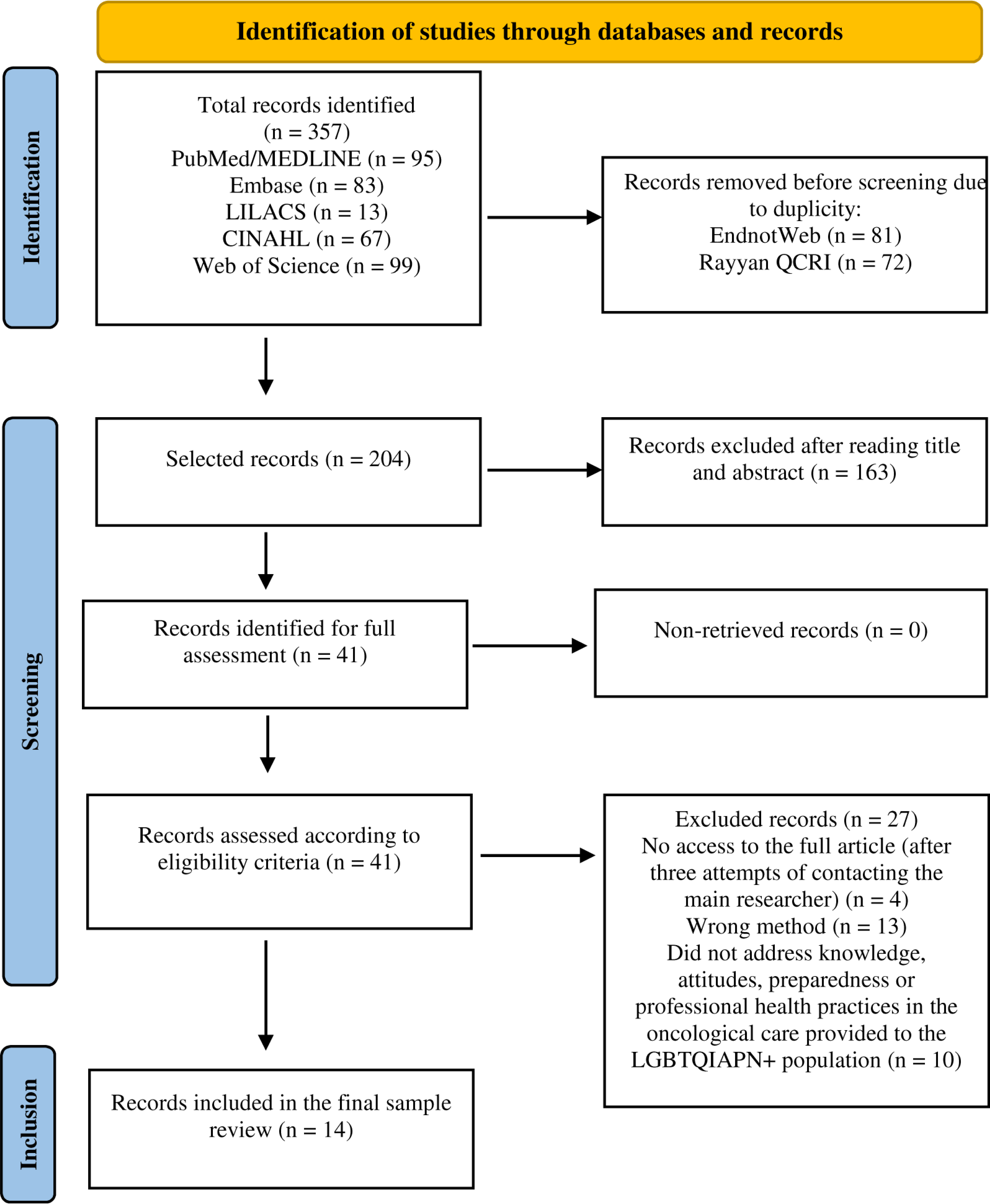 Source: Adapted from PRISMA, 2020
 Source: Based on Pratt-Chapman et al.
 Source: Adapted from Ishikawa