 Cross-sectional Descriptive Study of the Cognitive Assessment of Children at a Pediatric Oncology Outpatient Clinic in Rio de Janeiro, Brazil, 2022-2023
ABSTRACT
Introduction: Cancer diagnosis during childhood can negatively impact cognitive and emotional development.
Objective: To investigate the cognitive performance of children undergoing diagnostic evaluation or beginning oncological treatment at a pediatric oncology outpatient clinic of the Brazilian National Health System.
Method: Cross-sectional descriptive study with 43 children aged 6 to 11 years, using a neuropsychological test battery to assess executive functions, memory, attention, and behavioral changes, as well as questionnaires to collect sociodemographic, developmental, behavioral, and disease-related information.
Results: Most children (90.8%) were undergoing diagnostic investigation, and in many cases neoplasia was not confirmed. Nonetheless, most showed below-average performance compared to normative data, with significant difficulties in working memory, inhibitory control, and cognitive flexibility. Additionally, approximately 64% of children reported behavioral changes, with anxiety being the most prevalent.
Conclusion: The study revealed overall cognitive performance below normative standards regardless of diagnostic or treatment phase, along with behavioral changes, particularly anxiety. It highlights the importance of studies in specific subgroups, adapted evaluations, and interventions addressing cognitive and emotional aspects. Despite competing with patient activities and the lack of appropriate space, it was possible to administer the tests at the outpatient setting. Socioeconomic, educational, emotional, and illness-related factors may have negatively influenced cognition. Adapting evaluations to the outpatient/hospital setting, creating a safe and welcoming environment, is essential to facilitate the assessment process. The development of specific tools for this population is necessary.
Key words:
Mental Status and Dementia Tests/statistics & numerical data; Neoplasms/psychology; Neuropsychological Tests; Executive Function; Child Development
RESUMO
Introdução: O diagnóstico de câncer durante a infância pode impactar negativamente o desenvolvimento cognitivo e emocional.
Objetivo: Investigar o desempenho cognitivo de crianças em investigação diagnóstica ou início de tratamento oncológico atendidas em um ambulatório de oncologia pediátrica do Sistema Único de Saúde.
Método: Estudo descritivo transversal com 43 crianças de 6 a 11 anos, utilizando uma bateria de testes neuropsicológicos para avaliar funções executivas, memória, atenção e mudanças comportamentais, assim como questionários para coletar informações sociodemográficas, de desenvolvimento, comportamentais e relacionadas à doença.
Resultados: A maioria das crianças (90,8%) estava em investigação diagnóstica e, em muitas, a neoplasia não foi confirmada. Mesmo assim, a maioria apresentou desempenho abaixo da média normativa, com dificuldades significativas em memória operacional, controle inibitório e flexibilidade cognitiva. Além disso, cerca de 64% das crianças relataram mudanças comportamentais, sendo o comportamento ansioso o mais prevalente.
Conclusão: O estudo evidenciou desempenho cognitivo, no geral, inferior às normas, independentemente da fase diagnóstica ou tratamento, e alterações comportamentais, sobretudo ansiedade. Ressalta-se a importância de estudos em subgrupos específicos, avaliações adaptadas e intervenções integrando aspectos cognitivos e emocionais. Foi possível aplicar os testes no ambulatório, apesar de concorrer com atividades dos pacientes e falta de espaço apropriado. Fatores socioeconômicos, educacionais, emocionais e do adoecimento podem ter influenciado negativamente a cognição. É essencial adaptar as avaliações às condições do ambiente ambulatorial/hospitalar, promovendo um espaço seguro e acolhedor favorecendo o processo avaliativo. Faz-se necessário o desenvolvimento de instrumentos específicos para essa população.
Palavras-chave:
Testes de Estado Mental e Demência/estatística & dados numéricos; Neoplasias/psicologia; Testes Neuropsicológicos; Função Executiva; Desenvolvimento Infantil
RESUMEN
Introducción: Un diagnóstico de cáncer durante la infancia puede impactar negativamente el desarrollo cognitivo y emocional.
Objetivo: Investigar el desempeño cognitivo de niños en evaluación diagnóstica o al inicio del tratamiento oncológico en un servicio ambulatorio de oncología pediátrica del Sistema Único de Salud del Brasil.
Método: Estudio descriptivo transversal con 43 niños de 6 a 11 años, utilizando una batería de pruebas neuropsicológicas para evaluar funciones ejecutivas, memoria, atención y cambios conductuales, además de cuestionarios para recopilar información sociodemográfica, del desarrollo, conductual y relacionada con la enfermedad.
Resultados: La mayoría de los niños (90,8%) fue sometida a investigación diagnóstica y en muchos casos no se confirmó la neoplasia. A pesar de ello, la mayoría presentó un desempeño inferior al promedio normativo, con dificultades significativas en memoria de trabajo, control inhibitorio y flexibilidad cognitiva. Además, alrededor del 64% reportó cambios conductuales, siendo la ansiedad la conducta más prevalente.
Conclusión: El estudio evidenció un desempeño cognitivo, en general, inferior a las normas independientemente de la fase diagnóstica o del tratamiento, junto con alteraciones conductuales, especialmente ansiedad. Se subraya la importancia de estudios en subgrupos específicos, evaluaciones adaptadas e intervenciones que integren aspectos cognitivos y emocionales. Aunque hubo competencia con las actividades de los pacientes y falta de espacio adecuado, fue posible aplicar las pruebas en el servicio ambulatorio. Factores socioeconómicos, educativos, emocionales y relacionados con la enfermedad pudieron influir negativamente en la cognición. Es esencial adaptar las evaluaciones al entorno ambulatorio/hospitalario, promoviendo un espacio seguro y acogedor que favorezca el proceso de evaluación. Es necesario el desarrollo de instrumentos específicos para esta población.
Palabras clave:
Pruebas de Estado Mental y Demencia/estadística & datos numéricos; Neoplasias/psicología; Pruebas Neuropsicológicas; Función Ejecutiva; Desarrollo Infantil
INTRODUCTION
Mental health and development issues can be compromised due to events that occur in the development phase of the child. In terms of biological evolution, the human brain develops and establishes most of the neuronal connections during the first infancy1. The context, the intensity of the damage, biological, environmental, genetic, psychosocial factors, education or income can determine the appearance of child development disorders2.
The development of the pre-frontal cortex occurs from infancy through the end of adolescence, a brain region related to the gradual acquisition of important skills for the adaptive behavior. These skills, called executive functions, encompass planning, judgement and decision-making, including the control over some behaviors, divided into a coordinating component of the executive process and the product resulting from cognitive processes3.
Although the executive functions are anatomically related to frontal lobes, it is understood nowadays that the executive control and executive functions are located in different areas of the pre-frontal lobe and that these are related to the emotional modulation of behavior. The paucity of studies addressing the influence of the frontal lobe over these behaviors hampers the understanding of the relation among executive functions and affectionate and emotional aspects3.
Miyake et al.4 indicated that the ability to update and monitor the working memory, inhibition of prepotent responses and shifting mental operations are essential executive functions to understand the execution of complex tasks, frequently associated with the frontal lobe. Complex executive functions would be the result of cognitive flexibility, working memory and inhibitory control5.
Cognitive performance refers to the domains of hierarchical functioning since basic sensory and perceptual processes through more complex executive functions of execution and cognitive control related to the brain area where they are processed. Cognitive abilities are organized in attention and concentration, memory, executive functions, processing speed and language in addition to sensory, perception and motor. The domains can present subdomains as verbal and spatial working memories, selective attention and sustained attention6.
Patients with cancer experience physical and psychological suffering7. Pediatric cancer is a rare disease, 7,930 new cases of cancer are estimated annually in Brazil for the triennium 2023-20258 for children and adolescents up to 19 years of age. Early diagnosis and multidisciplinary treatment conducted in specialized centers increase the possibility of cure. Nearly 80% of pediatric oncologic patients initiate treatment within 30 days after the diagnoses9, however, suffering is experienced during diagnostic investigation and treatment. Children survivors of cancer usually present cognitive and emotional alterations as irritability, aggressiveness, sleep disorders, attentional deficits, frequent crying10,11 and damages in social interaction12.
Cognitive evaluation facilitates the identification of cognitive impairment and guide rehabilitation. Early interventions in cognitive deficits present positive results. A model of preventive and scaled monitoring of neuropsychological care for pediatric patients has been proposed as part of clinical assistance in oncologic centers, revealing the importance of this approach13.
Given the changes that occur in children's evolution and the potential impact of sickening on their development, it is relevant to evaluate the cognitive development to detect cognitive damages that may require rehabilitation for social adaptation.
The objective of this study is to evaluate the cognitive performance of children in diagnostic investigation or in oncologic treatment assisted at a pediatric oncology outpatient clinic of the Brazilian National Health System (SUS) in the city of Rio de Janeiro, Brazil.
METHOD
Descriptive, cross-sectional study about cognitive performance of children assisted at an outpatient pediatric oncology unit at a reference pediatric cancer center of SUS.
The list of children scheduled for other than cognitive evaluation at the outpatient pediatric oncologic unit was checked on a daily bases. Children aged 6-11 who attended the outpatient unit between September 2022 and October 2023 in diagnostic investigation or beginning the treatment have been invited. The age-range was defined given the age determination of the evaluation instruments utilized. Children under investigation were at strong suspicion of cancer, not always with confirmed diagnosis and enrolled because of the celerity between diagnosis and beginning of the treatment. At the end of the study, the diagnoses were updated based on the charts.
After the parents or legal guardians signed the informed consent form (ICF) they filled out a questionnaire to collect sociodemographic information, development and behavior of the child, list of pediatric symptoms (LPS)14 that is a 35-item questionnaire to screen emotional and psychosocial problems perceived by them. For each item, the frequency of occurrence was assigned a score: 0 (never), 1 (sometimes) and 2 (frequently). Total score ≥ 28 indicates possible emotional and psychosocial issues14,15.
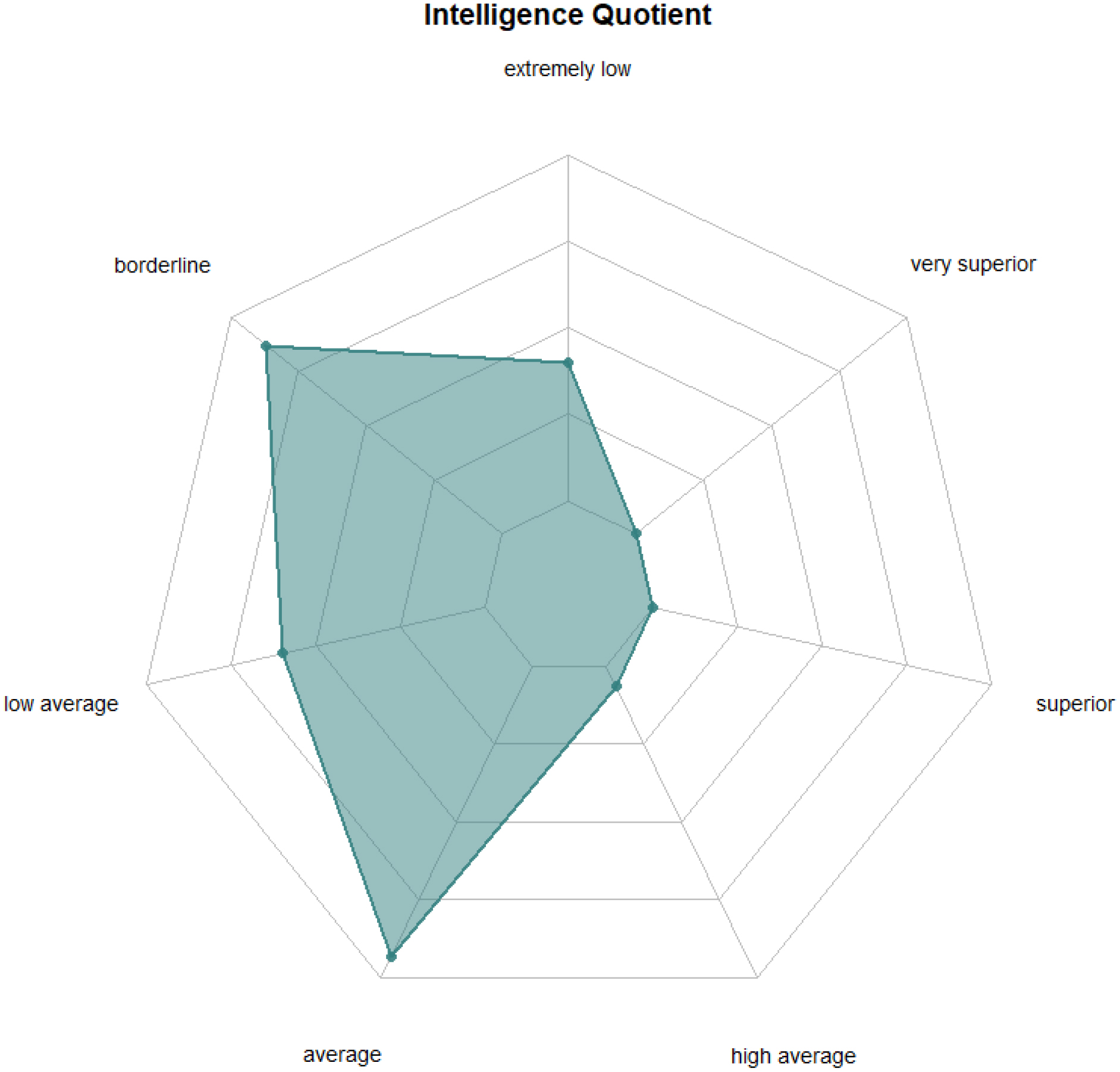
Cognitive evaluation is made through neuropsychological tests utilized to measure cognitive domains and subdomains. A seven-test battery has been utilized. Global intelligence (IQ) was measured by the Wechsler Abbreviated Scale Intelligence (WASI)16, indicated for research environments, whose parameter is a mean of 100 and standard deviation (SD) ± 15. The results were presented as categories of performance: < 69 very low; 70-79 borderline; 80-89 low average; 90-109 average; 110-119 high average; 120-129 superior; ≥ 130: highly superior.
Rey Auditory Verbal Learning Test (RAVLT)17 consists in a list of words and a second list of interference words to evaluate the ability to learn, retain, recall and recognize the information. The participants should try four times to repeat the words they recall from the first list after the evaluator reads them. Next, the evaluator reads the list of interference and the participant should repeat those they recall. Later, they should repeat the words they recall from the first list and after a certain time, repeat them. At the end, they should recognize the words of the first list after the evaluator reads them. The time to perform the task is measured in minutes17.
The executive function was evaluated by tests that assess the working memory, inhibition, flexibility and planning. Rey Complex Figure Test18 evaluates organizational strategies, planning, visuospatial abilities and late memory. The test can use two figures A and B and is divided into two parts: copy and reproduction of the copy of the figure. Drawing and minutes to perform the task are evaluated. Figure A evaluated the interference of time over learning and 20-minute interval between copy and recall of the figure17,18 for late memory19,20.
Working memory was evaluated with the subtests digit span (DG), recalling numbers in forward and backward order and sequence of numbers and letters (SNL) that are part of the Working Memory Index (WMI) of the Weschler Intelligence Scales for Children 4th edition21. The subtest DG consists in the evaluator speaking a sequence of digits, whose number increases progressively and the individual repeats in forward order; after the reading, the individual repeats the sequence in backward order22,23. Regarding SNL, the evaluator presents verbally a series of number and letters and the individual should organize orally the numbers in ascending order and the letters in alphabetic order22. The sum of the raw points of DG and SNL was converted in scores and WMI (mean 100; SD ± 15) according to the tests norms. Performance categories were presented as: < 69 very low; 70-79 borderline; 80-89 low average; 90-109 average; 110-119 high average; 120-129 superior; ≥ 130: highly superior.
Visuospatial working memory was evaluated with subtest DG (inverse order) of Neupsilin-inf24, which consists in the presentation of eight squares the evaluator indicates in a certain order and repeated by the children in inverse order25. The results were presented as "Score Z" and classified as low, low average, average, high average and superior.
The Five Digit Test – FDT26 evaluated the cognitive processing speed, cognitive flexibility and inhibitory control, addressing reading or counting tasks from visual stimuli represented in a rectangle with digits or signs that range between 1 and 526. The FDT results were presented in percentiles (P) and performance categories: low, low average, average, high average and superior.
Attention was evaluated with the Trail Making Test (TMT)17,27, containing part "A numbers" and "A letters" (TMT-A) and another part "B numbers/letters" (TMT-B). The trajectory in ascending order of the numbers 1 to 12 should be drawn in part "A" and the letters from A to L as well. The alternate trajectory among numbers 1 to 12 and letters A to L28 should be drawn in part "B"
TMT-A evaluates attention, visual search, information processing, speed of the coordination between motor function and vision, while TMT-B, additionally, evaluates the executive functions, including working memory and ability to switch between sets of stimuli (divided attention). There is still TMT-I, a score calculated by the subtraction of the results of parts A and B (B-A) which minimizes the impact of the individual variation of TMT-B, representing purer measure of the executive functions29. The time of performance of each part is one minute or three errors. The standard score is evaluated according to raw scores and interpreted according to the classification: < 70: very low; 70 and 84: low; 85 and 114: average; 115 and 129: high; ≥ 130: very high28.
Sociodemographic, development and behavioral variables investigated were: sex (male, female), race/color (white, black), type of childbirth (normal, C-section), weight at birth (low or insufficient, satisfactory, excess weight), age when started to walk (before 12 months, at 12 months or more), age when spoke the first words (before 12 months, between 12 and 18 months, after 18 months), education of the child (literacy 1st year, 2nd-4th year, 5th-7th year), type of school (public, private), attended school (yes, no), behavioral changes (yes, no), type of behavioral change (anxious, crying more, more forgetful, playing less, nightmares, more inattentive, aggressiveness, insomnia, sleeping more), COVID-infected (yes, no), been hospitalized (yes, no), use of continuous medication (yes, no), parents live together (yes, no), parent's education (illiterate, elementary school, high school or more, does not know), grade of kinship of whom provided the information (mother, father, uncle, aunt, grandmother, grandfather etc.).
Disease-related variables were type of tumor (benign disease, benign neoplasm, malignant neoplasm of the central nervous system and other malignant neoplasms) and phase of the treatment (diagnostic investigation, surgery, chemotherapy) referenced to the date when the child underwent cognitive evaluation.
Elementary and high-school education were categorized as complete and incomplete and race/color grouped Brown and Black in Black race. There was no claimed Yellow or indigenous race/color. Weight at birth was classified according to the World Health Organization (WHO)30. The categories low weight and insufficient weight were grouped (low weight or insufficient weight).
The complete battery was not finalized by all the children and tests results were presented according to the number of children who completed them, with simple frequency and proportion of the variables. The mean performance of the group by sex for IQ and WMI was compared. Shapiro-Wilk3 test evaluated the normality and Lavene31 test for homoscedasticity of the variances. When normality was met, Student31 t test was applied, otherwise, the Mann-Whitney's31.
The information were stored and processed through the Research Electronic Data Capture (RedCap)32. The analyzes were performed with software R, version 4.3.333, utilizing the packages tidyverse, fmsb RVAideMemoire, car and rstatix.
The Ethics Committee of the National Cancer Institute (INCA) approved the study, report number 5724693 (CAAE (submission for ethical review): 56884422.7.0000.5274) in compliance with Directive 466/201234 of the National Health Council (CNS) and conducted within the scope of the Cognition and Neuroscience Research Group of Epidemiology of Cancer (GP-CONEPC), whose main focus is to understand the effect of oncologic treatment over cognition.
RESULTS
43 children have been evaluated with mean age of 9.2 years, 58.1% females, 76.7% Blacks, 5.8% born by C-section, 71.8% with satisfactory weight at birth, 58.1% who walked after 12 months and 48.8% spoke their first words before 12 months. 48.8% were between 5th and 7th school grades, 72% in public schools and 25.6% were not attending school when they were evaluated. Most of them have already been hospitalized (65.1%), 13.5% were COVID-infected and 20.9% were in continuous use medication. The majority were in diagnostic investigation (90.8%) and 34.9% were malignant tumors (Table 1). Proportionally, more children in private schools (27.3%) were not attending school when they were evaluated compared to those in public schools (22.6%).
Characteristics of children and adolescents aged 6-11 years assisted at the pediatric oncology outpatient clinic. INCA, September 2022-October 2023
The mother was the main responsible for providing the information (78.0%) followed by the father (9.3%). More than half of the parents (55.8%) did not live together, 54.5% of the mothers and 41.9% of the fathers completed high school or university.
The LPS was responded by 33 parents or legal guardians and 12.1% presented score ≥ 28. The full seven tests battery was applied to 23 children (53.5%), of which 60.9% were females.
Behavioral changes recorded in the questionnaire were reported by 21 children (49%), anxiety, crying more, more forgetful and playing less were more frequent (Figure 1).

Behavioral changes reported by parents of children assisted at the pediatric oncology outpatient clinic. INCA, September 2022-October 2023
The results of the Shapiro-Wilk tests indicated that the assumption of normality was preserved only for IQ (p = 0.159); these tests were applied to all children, performance mean of the group was 83 and SD, 14.7, equivalent to the low average of the normative group, the females’ mean (mean 86.4; SD = 12.1) was higher than males’ mean (mean 78.2; SD = 16.8), but without statistical significance (p = 0.071). The performance of the group was more frequent in the categories average and borderline (Figure 2).

Performance of the intelligence quotient of children assisted at the pediatric oncology outpatient clinic. INCA, September 2022-October 2023
Phonological working memory evaluated for 34 children presented mean 85.6 (SD = 10.7). Performance by sex was higher in females (mean 87.0, SD = 9.7) than in males (mean 84.0, SD = 11.8), but not significant (p = 0.203). The mean of the visuospatial working memory (n = 31) was −0.7 with SD of 1.2, higher in females (mean −0,7, SD = 1.3), than in males (mean −0.8, SD = 1.2). Average and low average performance were more frequent for both types of memory (Figure 3).

Performance of executive functions of children assisted at the pediatric oncology outpatient clinic. INCA, September 2022-October 2023
The average standardized performance score of the group according to RAVLT (n=29) in Rey Complex Figure-recall (n=28) was, respectively, mean −0.9 (SD = 1.1) and mean −2.4 (SD = 2.1). In RAVLT and Rey Figure-memory, the most frequent results were average and low average; and Rey Figure-copy, low category occurred more frequently. The mean time of Rey Figure-copy was 0.5 minute and SD = 2.0.
FDT was applied in 24 children, of which, 14 were females, and lower p values for performance. Regarding flexibility, two children failed to reach similar performance of the normative group (P0); nine children presented performance above 5% of the group (P5); six, presented performance above 25% of the group (P25) and five presented average performance (P50). For inhibitory control, two children presented P0, ten, P5 and seven, P25. Performance according to categories, cognitive flexibility and inhibitory control of the group reflected more frequent performance in low average and low (Figure 4).

Performance in inhibitory control and attention tests in children assisted at the pediatric oncology outpatient clinic. INCA, September 2022-October 2023
TMT, cognitive flexibility and inhibitory control were applied in 25 children, 15 females. The standard mean obtained in TMT-A was 73.4 (SD = 43.6), in TMT-B, 94.3 (SD = 25.8) and in TMT-I, 104.6 (SD = 25.8). The performance of the group in TMT indicated that in TMT-A the categories average and low were the most frequent, while in TMT-B it was in the category average. In TMT-I, the most frequent performance was in the category average or superior (Figure 4).
DISCUSSION
The utilization of the tests battery in the cognitive evaluation of oncologic pediatric patients allowed the assessment of different cognitive processes and, overall, indicated low average scores compared to the reference norms. However, the tests were standardized for children in school and not hospital environment.
The group of children was mostly formed by public school students born by C-section, with adequate weight who began walking at 12 months of age. Lima et al.35 did not find association between birth by C-section and intelligence quotient and Espírito Santo et al.36 identified that premature low-weight 4-5 years old children presented high prevalence of cognitive and behavioral impairments.
A study with 6-9 years old children revealed that public school students presented worse performance than private schools students37, similar to the reported in the study of Engel de Abreu38. Regarding the moment when they started to walk, there is relation between motricity and cognition, the first can be a predictor of cognition39. Despite the singularities among the groups, the type of school can influence the cognitive performance and there is biological plausibility between the age when they started to walk and cognitive performance.
Cognition precedes the first words and represents a mental structure based on which the linguistic schema is presented40. More than half of the children spoke the first words after 12 months. It is possible that the environment where the children lived had not enough stimuli to foster cognitive maturity, causing delays in verbal language initiation.
The influence of the socioeconomic environment on cognitive performance is addressed in some studies35,38. The fact that children are predominantly public schools students, users of SUS and high proportion of parents who have only completed elementary school, suggests low socioeconomic level, a potential cause for lack of stimuli and explain the low average performance compared to the reference for children in diagnostic investigation or beginning treatment.
Cognition alterations are symptoms post-COVID-19 that can be associated with the severity of the infection41, however, only five children were affected, with unlikely impact on the results.
Nearly 50% of the children were 5th to 7th grade students and one quarter were not attending school when evaluated. Absenteeism involves social issues as physical changes, bureaucratic barriers of the school42 that increase in face of emotional destabilization of the families, socioeconomic pressure caused by the costs of the treatment and sequelae43. A study conducted in California44 with elementary and high-school students identified that school absenteeism is higher in Black students, academic performance is more affected by absenteeism of vulnerable students, and impacting school grades differently, leading to unsatisfactory tests results in addition to socioemotional aspects.
Emotional and psychosocial difficulties were identified in 12.1% of the children. However, international studies suggest differences for economically disadvantaged families45,46 and recommend to modify the cutoff to 2446, that potentially would increase the proportion of children identified in the present study.
Anxiety and other mood disorders negatively impact cognitive functioning, damaging memory, inhibition, planning, decision-making and cognitive flexibility47. The referenced study showed high proportion of behavioral changes, mainly anxiety. A study with children and adolescents with cancer identified episodes of severe depression (69%), anxiety (61%), depression (58%) and anger (33%) as the most common negative experiences48. In addition, 76% of the parents reported social isolation as the most damaging factor.
According to Castro and Lima49, children with anxiety disorders have difficulties to plan and organize the ideas. These authors present three models related to the occurrence of cognitive dysfunction: cognitive processes, self-regulation deficits and difficulties of motivation or arousal. Therefore, cognitive dysfunction is associated with executive functions that can be grouped in cold (logic, reasoning, problems planning and resolution) and hot (emotional, desires, theory of mind and personal interpretations)50,51. Hot executive functions related to emotional regulation and impulsivity control52 may impact the functioning of cold executive functions. This model allows to understand how emotional behavioral changes can influence cognitive performance and contribute to understand performance below average of some tests.
Notwithstanding the positive effect of oncologic treatment, there are side effects on physical health and cognitive disturbances that can be long lasting53. An integrative review about the interference of chemotherapy on cognition54 showed that poor standardization of methodological designs and choice of instruments of cognitive evaluation may impede the comparison of the results. The authors highlight how different mechanisms of action of chemotherapy agents cause cognitive impairments. According to Ahles and Saykin55, cognitive deficits in oncologic patients can be explained by different mechanisms that cause cellular death and decreased cell division in the subventricular zone of the hippocampus, oxidative stress, cytokine-induced inflammation, low plasticity, elevation of hormones estrogen and testosterone and genetic changes of neurotransmitters.
Nearly 21% of the children evaluated in this study were in use of continuous medication but were at different moments of the diagnostic process and it was not possible to determine the relation between treatment and cognitive impairment.
The children exhibited predominantly average or below the standard average performance of working memory, either phonologically or visuospatial and planning skills. Performance was slightly superior for women tested for working memory while more intense difficulties were observed in tasks requiring memory and visuospatial memory. The analysis of visuospatial skills, comparing with results in Neupsilin-inf with Rey Complex Figure, suggests that children were challenged in tasks requiring mental manipulation of visuospatial information. In relation to Rey Complex Figure, which measures visuospatial skills, planning and memory, difficulties in organization and precise reproduction of visual elements have been found. The average time of copy of the group, 0.5 minute, may imply an impulsive or less careful approach to the task with limitations in the effectiveness of planning and execution of complex tasks.
The result of the FDT indicated difficulties in cognitive flexibility and inhibitory control with significant limitations in executive functions of the group. The result of the TMT-A suggested attention and processing speed below average and of the TMT-B and moderate executive functions, but TMT-I suggested relatively good cognitive flexibility. It is possible that FDT is more specific and sensitive to detect difficulties of cognitive flexibility and inhibitory control compared to TMT, especially in groups with limitations in executive functions.
However, this hypothesis requires confirmatory studies. Additionally, this discrepancy may suggest that the group presents variability of the cognitive abilities due to the nature and complexity of the tests’ tasks, indicating, that, although some children successfully handled simple sequencing and alternance tasks quite well (TMT), they had more difficulties in tasks requiring thorough inhibitory control and flexibility in challenging conditions (FDT).
A research with children in chemotherapy treatment, assisted through classes within a hospital pedagogic context56, presented similar results of this study, indicating expressive deficits in executive functions, particularly in tasks demanding working memory, planning and visuospatial abilities.
The present study showed performance predominantly below the normative average on working memory (phonologic and visuospatial), with intense difficulties in visual organization and reproduction of complex stimuli as shown in Rey Complex Figure. In addition, the impulsivity observed in the average time of copy (0.5 min) may reflect a similar pattern described in the study of Lima et al.56, which suggests impairments in cognitive self-regulation and strategy of tasks resolution. In relation to superior executive functions, both investigations detected limitations in cognitive flexibility and inhibitory control. Although some children have presented preserved performance in simple tasks, they face obstacles in challenging tasks, showing the necessity of more focused evaluations for educational and hospital contexts.
Despite the diversified context, it is important to draw attention to the binomial emotion-executive functions. Average IQ below the normative group can be the result of emotional changes acting on executive functions, the effect of treatment on the brain and a joint action of both.
The study findings indicate the necessity of evaluation of subgroups. Studies in specific stages will allow to separate the components that can act negatively on the cognition, either emotional, environmental or treatment-related. A prospective study of a cohort of pediatric patients with confirmed malignant neoplasm in different moments of the treatment or even in follow up off-therapy will be important to guide measures of rehabilitation of these patients.
The implementation of the Cancer Prevention and Control Network57 in 2025 reinforces the necessity of organization of integral care across every level of attention, incorporating actions from promotion and prevention through rehabilitation. In the context of pediatric oncology, it is indispensable to consider the cognitive aspects in the therapeutic planning, recognizing its importance in rehabilitation and quality of life of children and adolescents.
The study limitation refers to the conditions of application of the tests, which in an outpatient assistance routine have their own dynamics, competing with the ideal conditions recommended for neuropsychological evaluation. The necessity of ensuring ideal conditions for tests application, adequate physical structure matched to the children, parents and health professionals demands and needs is challenging and raises topics for reflection about how to make the evaluative process adjusted to an institutional health environment that has its own logic of care.
Furthermore, the context of sickening and anxiety involving the hospital environment brings reflections about the challenge of integrating tests results into this scenario. The lack of specific tests for cognitive evaluation of patients in the context outpatient/hospital and paucity of national studies to discuss the results are simultaneously challenges and limitations for studies of this nature.
CONCLUSION
This study showed that children in diagnostic investigation or oncologic treatment at a SUS facility presented, overall, low cognitive performance compared to the normative group, possibly influenced by socioeconomic, educational, emotional factors and by the context of sickening. Anxiety and emotional demands appear to negatively impact cognition, standing out the binomial emotion-executive functions.
The findings reinforce the importance of cognitive assessments adapted to the outpatient/hospital context and suggest future studies to discern the effects of the treatment from emotional and environmental factors, in addition to intervention strategies that integrate cognitive and emotional aspects in pediatric oncologic care.
-
FUNDING SOURCES
Nina Hanewald was awarded a scholarship of Improvement I; Ana Luiza Baptista Salmistraro was awarded scholarship of scientific initiation of "Conselho Nacional de Desenvolvimento Científico e Tecnológico (CNPq)" and Andréia Dumas and Cristina Campos were awarded scholarships of institutional development by INCA for the elaboration of the article. The study is part of a project funded by "Fundação de Amparo à Pesquisa do Estado do Rio de Janeiro (Faperj)", process SEI 260003/000542/2022.
DATA AVAILABILITY STATEMENT
All content underlying the text is contained in the article.
References
-
1 Liang X, Sun L, Liao X, et al. Structural connectome architecture shapes the maturation of cortical morphology from childhood to adolescence. Nat Commun. 2024;15(784):1-18. doi: https://doi.org/10.1038/s41467-024-44863-6
» https://doi.org/10.1038/s41467-024-44863-6 - 2 Zimmermann N. Como escrever um laudo neuropsicológico? São Paulo: Pearson Education; 2021
-
3 Hamdan AC, Pereira APA. Avaliação neuropsicológica das funções executivas: considerações metodológicas. Psicol Reflex Crit. 2009;22(3):386-93. doi: https://doi.org/10.1590/S0102-79722009000300009
» https://doi.org/10.1590/S0102-79722009000300009 -
4 Miyake A, Friedman NP, Emerson MJ, et al. The unity and diversity of executive functions and their contributions to complex "frontal lobe" tasks: a latent variable analysis. Cogn Psychol. 2000;41(1):49-100. doi: https://doi.org/10.1006/cogp.1999.0734
» https://doi.org/10.1006/cogp.1999.0734 -
5 Santos IMS, Roazzi A, Melo MRA. Consciência fonológica e funções executivas: Associações com escolaridade e idade. Psicol Esc Educ. 2020;24:e212628. doi: https://doi.org/10.1590/2175-35392020212628
» https://doi.org/10.1590/2175-35392020212628 -
6 Harvey PD. Domains of cognition and their assessment. Dialogues Clin Neurosci. 2019;21(3):227-37. doi: https://doi.org/10.31887/DCNS.2019.21.3/pharvey
» https://doi.org/10.31887/DCNS.2019.21.3/pharvey -
7 Iskandar AC, Rochmawati E, Wiechula R. Experiences and perspectives of suffering in cancer: a qualitative systematic review. Eur J Oncol Nurs. 2021;54:102041. doi: https://doi.org/10.1016/j.ejon.2021.102041
» https://doi.org/10.1016/j.ejon.2021.102041 -
8 Santos M, Lima F, Martins L, et al. Estimativa de incidência de câncer no Brasil, 2023-2025. Rev Bras Cancerol. 2023;69(1):e-213700. doi: https://doi.org/10.32635/2176-9745.RBC.2023v69n1.3700
» https://doi.org/10.32635/2176-9745.RBC.2023v69n1.3700 -
9 Santos DKC, Castro MEPC, Araújo YB, et al. Tempo até o início do tratamento oncológico em crianças e adolescentes no Brasil. Rev Bras Cancerol. 2023;69(3):e-043938. doi: https://doi.org/10.32635/2176-9745.RBC.2023v69n3.3938
» https://doi.org/10.32635/2176-9745.RBC.2023v69n3.3938 -
10 Jia H, Zhang P, Gu G, et al. Brainstem tumors may increase the impairment of behavioral emotional cognition in children. J Neurooncol. 2022;160(2):423-32. doi: https://doi.org/10.1007/s11060-022-04161-x
» https://doi.org/10.1007/s11060-022-04161-x -
11 Alias H, Morthy SK, Zakaria SZS, et al. Behavioral outcome among survivors of childhood brain tumor: a case control study. BMC Pediatr. 2020;20(1):53. doi: https://doi.org/10.1186/s12887-020-1951-3
» https://doi.org/10.1186/s12887-020-1951-3 -
12 Pereira GS, Nascimento ASSD, Lago VCALPD. Assistência pedagógica aplicada a crianças hospitalizadas com o ensino-aprendizagem interrompido. RAE. 2023;5:e13976. doi: https://doi.org/10.25248/rae.e13976.2023
» https://doi.org/10.25248/rae.e13976.2023 -
13 Jacola LM, Partanen M, Lemiere J, et al. Avaliação e monitoramento da função neurocognitiva no câncer pediátrico. J Clin Oncol. 2021;39(16):1696-704. doi: https://doi.org/10.1200/JCO.20.02444
» https://doi.org/10.1200/JCO.20.02444 -
14 Muzzolon SRB, Cat MNL, Santos LHCD. Evaluation of the pediatric symptom checklist as a screening tool for the identification of emotional and psychosocial problems. Rev Paul Pediatr. 2013;31(3):359-65. doi: https://doi.org/10.1590/S0103-05822013000300013
» https://doi.org/10.1590/S0103-05822013000300013 -
15 Jellinek MS, Murphy JM, Robinson J, et al. Pediatric symptom checklist: screening school-age children for psychosocial dysfunction. J Pediatr. 1988;112(2):201-9. doi: https://doi.org/10.1016/s0022-3476(88)80056-8
» https://doi.org/10.1016/s0022-3476(88)80056-8 -
16 Yates DB, Trentini CM, Tosi SD, et al. Apresentação da Escala de Inteligência Wechsler abreviada: (WASI). Aval Psicol [Internet]. 2006[acesso 2025 jan 30];5(2):227-33. Disponível em: https://pepsic.bvsalud.org/pdf/avp/v5n2/v5n2a12.pdf
» https://pepsic.bvsalud.org/pdf/avp/v5n2/v5n2a12.pdf - 17 Strauss E, Sherman EMS, Spreen O. A compendium of neuropsychological tests: administration, norms, and commentary. 3. ed. New York: Oxford University Press; 2006.
- 18 Oliveira M, Rigoni M. Figuras complexas de rey: teste de cópia e de reprodução de memória de figuras geométricas complexas. São Paulo: Pearson Education; 2021
-
19 Peçanha E, Charchat-Fichman H, Oliveira R, et al. Estratégias de evocação tardia na Figura Complexa de Rey por crianças. Rev Neuropsicol Latinoam. 2019;11(1):48-57. doi: https://doi.org/10.5579/rnl.2016.0431
» https://doi.org/10.5579/rnl.2016.0431 -
20 Berry DTR, Carpenter GS. Effect of four different delay periods on recall of the rey-osterrieth complex figure by older persons. Clin Neuropsychol. 1992;6(1):80-4. doi: https://doi.org/10.1080/13854049208404119
» https://doi.org/10.1080/13854049208404119 - 21 Wechsler D, Rueda F, Noronha A, et al. WISC-IV: Escala de inteligência Wechsler para crianças. São Paulo: Hogrefe; 2010.
-
22 Teodoro N. Memória operacional e alfabetização de crianças e adolescentes em risco de transtornos do neurodesenvolvimento [dissertação na Internet]. Uberlândia: Universidade Federal de Uberlândia; 2021. [acesso 2025 jan 30]. Disponível em: https://repositorio.ufu.br/handle/123456789/34091
» https://repositorio.ufu.br/handle/123456789/34091 -
23 Schoen T, Fonseca A, Marteleto MRF. Memória de trabalho e subteste dígitos WISC-III (Capítulo 8). In: Fonseca A, Marteleto MRF, Schoen TH, organizadores. Processos neuropsicológicos: uma abordagem do desenvolvimento. Belo Horizonte: Editora Científica Digital; 2022. v. 2. p. 142-61. doi: https://doi.org/10.37885/220910342
» https://doi.org/10.37885/220910342 - 24 Salles J, Fonseca R, Parente M, et al. Neupsilin-infantil: instrumento de avaliação neuropsicológica breve infantil. São Paulo: Editora Vetor; 2016.
-
25 Medina GBK, Portes C, Pereira NS, et al. Desempenho de leitores com dislexia no instrumento Neupsilin-inf em comparação a leitores sem transtorno de leitura. Rev PsicoFAE [Internet]. 2018[acesso 2025 jan 30];7(2):87-98. Disponível em: https://revistapsicofae.fae.edu/psico/article/view/186/134
» https://revistapsicofae.fae.edu/psico/article/view/186/134 - 26 Sedó M, Paula J, Malloy-Diniz L. FDT: teste dos cinco dígitos: manual de aplicação. São Paulo: Cetepp; 2014.
- 27 Lezak MD, Howieson DB, Bigler ED, et al. Neuropsychological assessment. 5. ed. Oxford: Oxford University Press; 2012.
- 28 Seabra A, Dias N, organizadores. Avaliação neuropsicológica cognitiva: atenção e funções executivas. São Paulo: Memnon Edições Científicas; 2012. v. 1
-
29 Cavaco S, Gonçalves A, Pinto C, et al. Trail making test: regression-based norms for the portuguese population. Arch Clin Neuropsychol. 2013;28(2):189-98. doi: https://doi.org/10.1093/arclin/acs115
» https://doi.org/10.1093/arclin/acs115 -
30 Puffer RR, Serrano C. Caracteristicas del peso al nacer [Internet]. Washington, DC: OPAS; 1987. [acesso 2025 jul 16]. Disponível em: https://iris.paho.org/bitstream/handle/10665.2/17933/v103n5p496.pdf?sequence=1&isAllowed=y
» https://iris.paho.org/bitstream/handle/10665.2/17933/v103n5p496.pdf?sequence=1&isAllowed=y - 31 Fávero LP, Belfiore P. Manual de análise de dados: estatística e machine learning com Excel®, SPSS®, Stata®, R® e Python® 2. ed. Rio de Janeiro: GEN LTC; 2024.
-
32 Harris PA, Taylor R, Thielke R, et al. Research electronic data capture (REDCap) a metadata-driven methodology and workflow process for providing translational research informatics support. J Biomed Inform. 2009;42(2):377-81. doi: https://doi.org/10.1016/j.jbi.2008.08.010
» https://doi.org/10.1016/j.jbi.2008.08.010 -
33 R: The R Project for Statistical Computing [Internet]. Versão 4.3.3. [sem local]: The R foundation. [sem data] - [acesso 2017 jul 15]. Disponível em: https://www.R-project.org
» https://www.R-project.org - 34 Conselho Nacional de Saúde (BR). Resolução n° 466, de 12 de dezembro de 2012. Aprova as diretrizes e normas regulamentadoras de pesquisas envolvendo seres humanos. Diário Oficial da União, Brasília, DF. 2013 jun 13; Seção I:59.
-
35 Lima ABS, Martins Neto C, Ferraro AA, et al. Nascer de cesariana e associação com quociente de inteligência em adolescentes: contribuição do Consórcio de Coortes RPS (Ribeirão Preto, Pelotas e São Luís), Brasil. Cad Saúde Pública. 2023;39(3):e00064422. doi: https://doi.org/10.1590/0102-311XPT064422
» https://doi.org/10.1590/0102-311XPT064422 -
36 Espírito Santo JLD, Portuguez MW, Nunes ML. Status cognitivo-comportamental de prematuros de baixo peso ao nascimento em idade pré-escolar que vivem em país em desenvolvimento. J Pediatr (Rio J). 2009;85(1):35-41. doi: https://doi.org/10.1590/S0021-75572009000100007
» https://doi.org/10.1590/S0021-75572009000100007 -
37 Cavalini SFS, Mecca TP, Pinheiro C, et al. Inteligência: efeito do tipo de escola e implicações na normatização das escalas Wechsler para crianças. Temas Psicol. 2015;23(2):493-505. doi: https://doi.org/10.9788/TP2015.2-19
» https://doi.org/10.9788/TP2015.2-19 -
38 Abreu PE, Tourinho C, Puglisi M, et al. A pobreza e a mente: perspectiva da ciência cognitiva. Poverty and the mind: a cognitive science perspective [Internet]. 2015 [acesso 2025 jul 16]. Disponível em: https://orbilu.uni.lu/handle/10993/20933
» https://orbilu.uni.lu/handle/10993/20933 -
39 Pereira KRG, Saccani R, Valentini NC. Cognição e ambiente são preditores do desenvolvimento motor de bebês ao longo do tempo. Fisioter Pesqui. 2016;23(1):59-67. doi: https://doi.org/10.1590/1809-2950/14685223012016
» https://doi.org/10.1590/1809-2950/14685223012016 -
40 Almeida RL. Os aspectos cognitivos e a linguagem verbal: uma interação dos esquemas simbólicos. Rev Língua Literat. 2008;10(15):42-62. Disponível em: https://revistas.fw.uri.br/revistalinguaeliteratura/article/view/85
» https://revistas.fw.uri.br/revistalinguaeliteratura/article/view/85 -
41 Santana AJ, Pereira CB, Andrade FT, et al. Os efeitos cognitivos apresentados pela síndrome pós-COVID-19: uma revisão sistemática. Res Soc Dev. 2023;12(6):e13312640043. doi: https://doi.org/10.33448/rsd-v12i6.40043
» https://doi.org/10.33448/rsd-v12i6.40043 -
42 Gonçalves CF, Valle ERM. O significado do abandono escolar para a criança com câncer. Acta Oncológica [Internet]. 1998-99[acesso 2025 jul 16];19(1):273-9. Disponível em: https://accamargo.phlnet.com.br/Acta/AOB199919(1)p.273-9.pdf
» https://accamargo.phlnet.com.br/Acta/AOB199919(1)p.273-9.pdf -
43 Silva VMG, Hora SS. Impactos do câncer na vida escolar de crianças e adolescentes: a importância da classe hospitalar. Rev Bras Cancerol. 2018;64(3):401-4. doi: https://doi.org/10.32635/2176-9745.RBC.2018v64n3.47
» https://doi.org/10.32635/2176-9745.RBC.2018v64n3.47 -
44 Santibañez L, Guarino C. The effects of absenteeism on academic and social-emotional outcomes. PACE [Internet]. 2020 [acesso 2024 dez 3]. Disponível em: https://edpolicyinca.org/publications/effects-absenteeism-academic-and-social-emotional-outcomes
» https://edpolicyinca.org/publications/effects-absenteeism-academic-and-social-emotional-outcomes - 45 Murphy JM, Reede J, Jellinek MS. Screening for psychosocial dysfunction in inner-city children: further validation of the pediatric symptom checklist. Pediatrics. 1992;89(2):336-43.
- 46 Simonian SJ, Tarnowski KJ. Utility of the pediatric symptom checklist for behavioral screening of disadvantaged children. J Clin Child Psychol. 2001;30(3):409-15.
-
47 Toassi DGF, Carvalho CF. O impacto do transtorno de ansiedade generalizada nas funções executivas dos adolescentes. Rev Iberoam Humanid Ciênc Educ. 2021;7(11):68-80. doi: https://doi.org/10.51891/rease.v7i11.2994
» https://doi.org/10.51891/rease.v7i11.2994 -
48 Lewandowska A, Zych B, Papp K, et al. Problems, stressors and needs of children and adolescents with cancer. Children. 2021;8(12):1173. doi: https://doi.org/10.3390/children8121173
» https://doi.org/10.3390/children8121173 -
49 Castro CXL, Lima RF. Consequências do transtorno do déficit de atenção e hiperatividade (TDAH) na idade adulta. Rev Psicopedag [Internet]. 2018[acesso 2023 jan 30];35(106):61-72. Disponível em: http://pepsic.bvsalud.org/scielo.php?script=sci_arttext&pid=S0103-84862018000100008
» http://pepsic.bvsalud.org/scielo.php?script=sci_arttext&pid=S0103-84862018000100008 - 50 Malloy-Diniz LF, Fuentes D, Mattos P, et al. Avaliação neuropsicológica. Porto Alegre: Artmed; 2021.
-
51 Uehara E, Charchat-Fichman H, Landeira-Fernandez J. Funções executivas: um retrato integrativo dos principais modelos e teorias desse conceito. Neuropsicol Lat Am [Internet]. 2013 [acesso 2024 dez 3];5(3):25-37. Disponível em: https://neuropsicolatina.org/index.php/Neuropsicologia_Latinoamericana/article/view/145
» https://neuropsicolatina.org/index.php/Neuropsicologia_Latinoamericana/article/view/145 - 52 Charchat-Fichman H. Neuropsicologia clínica. Barueri: Manole; 2021. 400 p.
-
53 Quimet LA, Stewart A, Collins B, et al. Measuring neuropsychological change following breast cancer treatment: an analysis of statistical models. J Clin Exp Neuropsychol. 2009;31(1):73-89. doi: https://doi.org/10.1080/13803390801992725
» https://doi.org/10.1080/13803390801992725 -
54 Untura LP, Rezende LFD. A função cognitiva em pacientes submetidos à quimioterapia: uma revisão integrativa. Rev Bras Cancerol. 2012;58(2):257-65. doi: https://doi.org/10.32635/2176-9745.RBC.2012v58n2.628
» https://doi.org/10.32635/2176-9745.RBC.2012v58n2.628 -
55 Ahles TA, Saykin AJ. Candidate mechanisms for chemotherapy-induced cognitive changes. Nat Rev Cancer. 2007;7(3):192-201. doi: https://doi.org/10.1038/nrc2073
» https://doi.org/10.1038/nrc2073 -
56 Lima PS, Silva MB, Fonseca RP, et al. Estudo neuropsicológico preliminar de crianças com câncer em atendimento pedagógico hospitalar. Rev Psicopedagogia. 2024;41(125):251-76. doi: https://doi.org/10.51207/2179-4057.20240024
» https://doi.org/10.51207/2179-4057.20240024 -
57 Ministério da Saúde (BR). Ministério da Saúde. Portaria GM/MS nº 6.591, de 4 de fevereiro de 2025. Altera a Portaria de Consolidação GM/MS nº 3, de 28 de setembro de 2017, e institui, no âmbito da política Nacional de Prevenção e Controle do Câncer- PNPCC, a Rede de Prevenção e Controle do Câncer-RPCC. Diário Oficial da União [Internet], Brasília, DF. 2025 fev 7 [acesso em 2025 jun 13]; Edição 27; Seção 1:87. Disponível em: https://www.in.gov.br/web/dou/-/portaria-gm/ms-n-6.591-de-4-de-fevereiro-de-2025-611336496
» https://www.in.gov.br/web/dou/-/portaria-gm/ms-n-6.591-de-4-de-fevereiro-de-2025-611336496
Edited by
-
Scientific-editor:
Anke Bergmann. Orcid iD: https://orcid.org/0000-0002-1972-8777