 From Manure to Megawatts: Assessing Animal-Waste-Based Biogas for Cooling Applications in Northwestern Türkiye
ABSTRACT
Manure generated from livestock farming is one of the most abundant forms of biomass. In Türkiye, livestock is categorized into sixteen distinct animal types, and the distribution of these types across districts is published online via the Biomass Energy Potential Atlas (BEPA). This study first calculates the biomass potential associated with Türkiye’s animal types. Subsequently, the animal species with the highest biomass potential are identified. To conduct a more detailed analysis, the contribution of each province to the national biomass potential was evaluated. Since a detailed analysis covering the entire country would significantly expand the scope of the study, the focus was narrowed to the Marmara Region. The Marmara Region, one of Türkiye’s seven geographical regions, is located in the northwest, comprises 11 provinces, and is home to the country’s most densely populated and industrialized cities. The compatibility of the methodology employed by BEPA with the existing literature was assessed, and the potential energy value obtainable from the region was calculated. Finally, the study investigated how many biomass-powered absorption cooling facilities, each with a 10 kW cooling capacity, could be supplied by the biogas produced from the manure of the four dominant species-broiler chickens, laying hens, purebred cattle, and crossbred cattle. As a result, it was found that the poultry population in Türkiye numbers approximately 360 million, of which around 355 million consist of broiler and laying hens. The Marmara Region, particularly the provinces of Sakarya and Balıkesir, stands out in poultry farming, hosting 93.5 million chickens. If the biomass from the four identified species in the region were converted into energy, it would be possible to establish approximately 38,510 facilities.
Keywords:
Poultry; cattle; manure; biogas; absorption cooling systems
INTRODUCTION
Türkiye surpasses many European countries in poultry farming in terms of its chicken population. According to 2018 data, Poland raised approximately 180 million chickens, accounting for 16.8% of Europe’s poultry farming industry (Dróżdż et al., 2020 ). The annual amount of manure produced from poultry farming in Poland is estimated at 4.49 million tons (Tańczuk et al., 2019). In comparison, Türkiye’s total poultry population in 2016 was recorded at 333 million, comprising 220 million broilers and 108 million laying hens. Additionally, there are 6.5 million cattle raised on farms specializing in purebred breeds, accounting for 67.2% of the country’s total manure biomass potential (Saka et al., 2018).
According to Turzyński et al. (2022), mixing chicken manure with sawdust or straw enables its combustion to meet the heating needs of farms. In their experimental study, the researchers successfully generated 65 kW of net power from burning chicken manure. Sevinchan et al. (2019) proposed using a biomass mixture composed of 70% chicken manure and 30% corn silage for biogas production, achieving a biomass-based system with an electricity output of 1078 kW. Sorgulu et al. (2021) reported that in Türkiye’s Manisa province, the manure from 4 million chickens supplies a system with a capacity of 2.3 MWe, where the required heat is provided through the combustion of chicken manure.
Since the carbon and moisture contents of chicken manure vary across different studies, the reported energy values also differ. According to Chen et al. (2021), converting one ton of dry chicken manure into biogas can yield 1350 MJ of energy. If a small amount of wheat straw is added during the biogas production process, this figure can increase to 3996 MJ. Tańczuk et al. (2019) experimentally reported the lower heating value of combustible gas obtained from chicken manure as approximately 2.0 MJ/m³ or higher. The Biomass Energy Potential Atlas (BEPA) also provides information on the distribution of five poultry types and nine cattle types across Türkiye (WEB 1). Billen et al. (2015) reported that the heating value of poultry manure for electricity generation ranges between 6-8 MJ/kg. In contrast, Quiroga et al. (2010) attributed lower reported values to the high moisture content of poultry manure, noting a lower heating value between 1639 kJ/kg and 4923 kJ/kg, with an average of 2664 kJ/kg.
According to Balcioglu et al. (2022), Türkiye, the world’s seventh-largest agricultural producer, generates substantial agricultural and livestock waste, much of which is either underutilized or managed unsustainably, causing environmental impacts. In their study examining the environmental and economic sustainability of four different biomass-powered plants, they assumed a methane content of 57% in biogas produced from chicken manure. They also calculated cattle manure solid content at three different rates: 20%, 12%, and 10%. Varol et al. (2023) have suggested co-firing chicken manure with lignite to reduce dependency on fossil fuels and mitigate environmental impacts. Meanwhile, Ersoy & Uğurlu (2020), based on 2015 statistics from the Turkish Statistical Institute, reported a poultry population of 316 million, with 31 million in Balıkesir and 21 million in Sakarya. In the same year, Türkiye’s total cattle population was 14.13 million, with 0.53 million raised in Balıkesir.
Several systems have been proposed to harness biomass potential in different regions, among which absorption cooling systems stand out. Absorption cooling systems utilize various waste heat sources for cooling applications, prompting researchers to analyze the regional biomass potential from this perspective. Velázquez et al. (2022) found that geothermal resources in Mexico could provide a cooling capacity of 70,939 GW using single-effect systems. Saka (2023) conducted a potential energy analysis based on livestock raised in Bursa, Türkiye. The results indicated that converting poultry manure into biogas could support the installation of 100 kW absorption cooling systems. Based on the manure potential, the broiler chicken population could support approximately 111 systems, while the laying hen population could support approximately 301 systems. Additionally, the number of systems that could be supported by the purebred cattle and crossbred cattle populations was calculated as 284 and 76, respectively. Triple-effect absorption cooling systems offer higher efficiency compared to single- and double-effect systems (Saka, 2019; Saka & Orhan, 2025). Another study evaluating the animal-based biomass energy potential of Bursa found that 40% of the total potential came from poultry production and 56% from cattle farming (Saka, 2018). In a more focused analysis within Bursa’s Yenişehir district, considering smaller system capacities, it was found that manure from broiler chickens could supply 135 single-effect 10 kW cooling systems, while manure from laying hens could support 91 systems. Additionally, biomass from purebred cattle could sustain another 250 systems (Saka & Orhan, 2025). Another study emphasized that although laying hen farming exists in every Turkish province, broiler chicken farming is absent in 30 provinces (Saka, 2025). Regional analyses have become a popular approach among researchers; for instance, Yılmaz & Saka (2018) found that Gaziantep had the highest poultry production in the Southeastern Anatolia region.
Based on the analyses and studies presented so far, it is evident that cattle and poultry manure constitute abundant and valuable energy resources. Research efforts continue to focus on converting these sources into useful energy, whether at the scale of a power plant, a farm, a district, a province, or the entire country. In this study, Türkiye’s animal population was first investigated by species using current data, and dominant species were identified. Subsequently, the contribution of Marmara Region provinces to the overall population was analyzed. The energy potential of provinces was then calculated based on the direct combustion or biomethanization of the resulting manure. Finally, the study examined how many biomass-powered absorption cooling plants could be established based on the biogas obtained from biomass conversion.
MATERIALS AND METHODS
Biomass Potential
The methodology employed in this study consists of two main components. First, current data regarding Türkiye’s biomass potential were obtained from the Biomass Energy Potential Atlas (BEPA). This online platform provides updated information on biomass generated from both agricultural and livestock production for any district in Türkiye. The atlas, which is periodically updated, enables analyses based on sixteen different animal types, including five types of poultry and nine types of cattle. The poultry categories considered are broiler chickens, laying hens, turkeys, geese, and ducks. In research focusing on animal-based biomass, one of the critical factors for achieving consistent results is the use of accurate coefficients defining manure production. The amount of manure produced by an animal varies depending on its species and body weight. Similarly, the energy content of manure fluctuates based on its moisture and carbon content. Table 1 presents the daily wet manure production per animal as accepted by BEPA, categorized by species. These values align closely with those reported in other studies found in the literature (Avcıoğlu & Türker, 2012). The adopted unit energy values will also be provided later in this study.
In analyses conducted using BEPA, it is possible to either query the theoretical biomass potential or calculate the economic energy potential. For economic energy calculations, the biomethanization method was preferred for cattle-based energy potential, while the direct combustion method was chosen for poultry-based energy potential. To effectively utilize the biomass potential, it is more practical to perform analyses at the farm level, establishing biomass recovery facilities directly at the source, that is, the farm itself. This strategy helps avoid the logistical challenges and transportation costs associated with biomass collection. However, not every farm may have the investment capacity or sufficient scale to support a biomass-based recovery system. In such cases, it is advisable to aggregate biomass waste from multiple farms within the same province or district and establish a centralized recovery facility. Various reports have been prepared to explore strategies for converting Türkiye’s biomass potential into usable energy (WEB 2).
As the geographical scope of analysis expands, the overall energy potential increases, but so does the organizational cost of collecting dispersed biomass across the area. Analyses conducted at the provincial, regional, and national levels can reveal Türkiye’s biomass wealth and attract the attention of investors in the energy sector. Pilot projects established through these analyses can also serve as models for future investments.
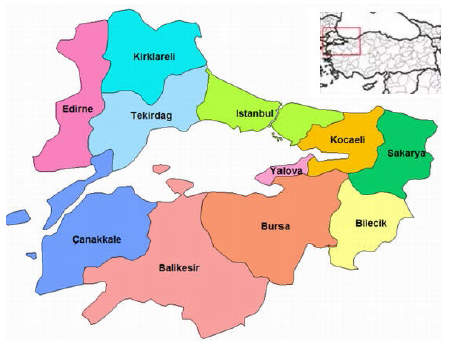
Given that Türkiye is notably rich in livestock resources, a comprehensive study covering all seven geographical regions, 81 provinces, and 922 districts would require a significantly broader scope. Therefore, this study focuses specifically on evaluating the biomass potential associated with poultry and cattle farming in the Marmara Region. The Marmara Region, located in northwestern Türkiye, is one of the country’s seven geographical regions and includes 11 provinces, notably İstanbul, the nation’s most populous city. The location of the Marmara Region and its constituent provinces are shown in Figure 1.

The annual livestock production figures for the Marmara Region reveal the quantity of manure generated and the corresponding biomass energy potential. Converting the dispersed biomass into usable energy not only contributes to energy production but also helps mitigate the environmental problems associated with manure waste. Establishing direct-combustion-based power plants is among the prominent methods proposed to achieve this goal. In fact, an Organic Rankine Cycle (ORC) system that generates electricity by combusting chicken manure has already been established in Türkiye (Sorgulu et al., 2021).
Absorption Chiller
The demand for cold storage facilities, particularly for the extended preservation of food products, continues to grow. To address this need, this study proposes the use of absorption cooling systems operating with a water/lithium bromide (H2O/LiBr) solution and a cooling capacity of 10 kW. The thermal energy required by these systems can be supplied by combusting biogas produced from cattle and poultry manure. By selecting systems with lower capacities, it becomes possible to include farms with relatively modest biomass potentials in the analysis.
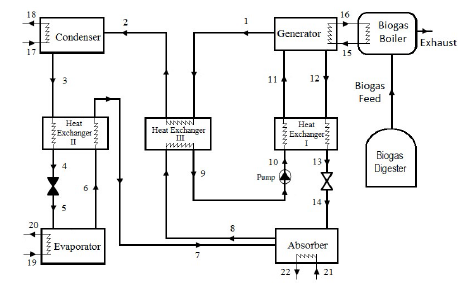
Figure 2 illustrates a schematic diagram of a single-effect absorption cooling system utilizing three internal heat exchangers and operating with an H2O/LiBr solution. The mathematical model of the system has been presented in a previous study (Saka & Orhan, 2025).

A single-effect absorption cooling system features a simple structure composed of fundamental system components (Yılmaz et al., 2019). While absorption cooling systems can also be designed as double- or triple-effect configurations to improve thermal efficiency (Yılmaz et al., 2016), single-effect systems are more commonly manufactured, widely preferred, and generally more accessible than their counterparts. Due to this widespread acceptance, the present study focuses on estimating the number of single-effect systems that could potentially be installed. According to manufacturers, more than 100,000 units of such systems have been installed worldwide (WEB 3).
To conduct a thermodynamic analysis of an absorption cooling system, a sufficiently detailed mathematical model must be established. Such a model should incorporate mass balance equations, concentration balance equations, energy balance equations, and efficiency equations. The general forms of these equations are provided below. The operating parameters of an absorption cooling system significantly influence its thermal efficiency and, consequently, the amount of biogas consumed. Previous thermodynamic analyses have observed that selecting lower absorber and condenser temperatures enhances system performance.
Mass balance equation:
Concentration balance equation:
Mass and energy balance equation:
Generator capacity equation:
Efficiency equation:
Exergetic Efficiency equation:
Additionally, increasing the generator temperature and maintaining high effectiveness coefficients for the internal heat exchangers positively impact the system’s performance. Taking all these factors into account, the operational parameters designed to minimize the biogas flow rate required by the system are presented in the table below.
The evaporator temperature also affects system performance. However, since the system under consideration is a cooling system designed to produce chilled water, a low and constant evaporator temperature was chosen to achieve optimal cooling performance. The hot water supplied to the generator via the boiler enters at 100 °C and exits at 90 °C. Furthermore, a 5 K temperature difference was defined for the heat exchanges between the system components and the environment.
Based on the operating parameters outlined in Table 2, installing an absorption cooling system with a 10 kW capacity on a farm raising purebred cattle would require at least 63 animals. For a farm with crossbred cattle, the minimum number needed rises to 87. In the case of a biogas-powered cooling system designed for poultry, approximately 9,096 broiler chickens or 4,446 laying hens would be required to meet the energy demand (Saka & Orhan, 2025).
Considering all these parameters, the next section analyzes the total number of facilities that could be established to utilize and convert the biomass potential associated with the four dominant animal species across the 11 provinces of the Marmara Region into useful energy.
RESULTS AND DISCUSSION
Among the sixteen animal species raised in Türkiye, the majority of the cattle population consists of three main types: domestic cattle, crossbred cattle, and purebred cattle. Other species such as buffalo, horse, mule, donkey, camel, and pig are also present, but purebred and crossbred cattle are the most prominent among these nine types. Given that the population of the other species is significantly smaller in comparison to these, they were excluded from the energy analysis.
Similarly, energy analysis related to small ruminants, such as sheep and goats, was excluded. Although the population numbers of sheep and goats are known and the biomass potential could theoretically be calculated, small ruminant farming in Türkiye is predominantly pasture-based, leading to a widely dispersed biomass potential across rural areas. This dispersion makes the practical utilization of their biomass far more challenging compared to other types; thus, they were left out of the scope of this study.
Regarding poultry species, five types are raised in Türkiye: broiler chickens, laying hens, geese, ducks, and turkeys. However, given the very small populations of geese, ducks, and turkeys compared to broiler and laying hens, only the latter two were included in the analysis.
Considering this classification, only four species-purebred cattle, crossbred cattle, laying hens, and broiler chickens-were included in the scope of the study, as the populations of the other species are relatively low and the practical conversion of their biomass potential is much more difficult.
Two methods are mainly considered for converting biomass potential into usable energy: one is the combustion of biogas produced from biomass, and the other is the direct combustion of the biomass itself. This study presents results based on both methods.
Türkiye is notably rich in poultry farming. Table 3 below presents the most recent data on poultry farming across the country. The energy values in the table are expressed in tons of oil equivalent (toe) and correspond to the energy that could be generated via direct combustion, based on economic energy calculation criteria. A careful examination of Table 3 reveals that the poultry population in Türkiye continues to grow, with broiler and laying hen populations standing out. The populations of other poultry species are negligible by comparison; thus, the focus on broiler and laying hens for assessing biomass energy potential is considered the most accurate approach.
An examination of Table 3 reveals that the poultry population in Türkiye is approximately 360 million. The manure generated from this poultry population exceeds 13 million tons. The associated biomass energy potential is 803,000 toe, which corresponds to approximately 9.3 TWh annually.
BEPA enables two types of energy analyses: one calculates the potential energy value, and the other estimates the economic energy value, both based on the same waste mass. A comparison between the economic and potential energy values presented in Table 3 suggests that approximately 24% of the theoretical potential can be utilized through direct combustion. It is assumed that the energy yield from direct combustion is the same across all poultry types.
In the literature, it is reported that the direct combustion of 1 ton of chicken manure can generate approximately 984 kWh of heat. However, after accounting for the energy required to dry the manure before combustion, the net heat output is reported to decrease to 803 kWh (Chen et al., 2021). In BEPA’s economic energy analyses, the energy yield from the direct combustion of 1 ton of chicken manure is considered to be 706.65 kWh, a figure that aligns closely with values reported in the literature.
Figure 3 shows the distribution of poultry farming activities across the provinces of the Marmara Region. Based on the previously discussed findings, species other than broiler and laying hens were excluded from the analysis due to their comparatively negligible populations.

According to Figure 3, the number of broiler chickens raised in the Marmara Region exceeds 75 million. This figure accounts for 32.7% of all broiler chickens raised across Türkiye. Within the region, 28 million broilers are raised in Sakarya and 26 million in Balıkesir. Additionally, Figure 3 shows that the total number of laying hens in the region approaches 18.5 million, representing 14.8% of the national laying hen population. Approximately 7 million of these laying hens are raised in Balıkesir, and 6 million in Bursa.
When broiler and laying hens are considered together, the total poultry population in the Marmara Region surpasses 93.5 million. The manure produced by this population amounts to approximately 3 million tons annually, presenting a significant biomass potential worth addressing and developing recycling projects around. Table 4 presents the distribution of poultry-farming-related biomass across the provinces of the Marmara Region.
The numbers of broiler and laying hens raised across the 11 provinces of the Marmara Region are presented in Table 4. Notably, the table shows that there is no broiler chicken farming in Tekirdağ and Yalova provinces. This phenomenon is also observed in other provinces across the country. While laying hen farming is conducted nationwide, broiler chicken farming is absent in 30 provinces (Saka, 2025).
Based on the data in Table 4, the potential economic energy yield resulting from the direct combustion of manure produced by broiler and laying hens in the Marmara Region is calculated at 184,520 toe/year, equivalent to approximately 2146 GWh per year. Furthermore, 72% of the biomass energy derived from broiler chicken farming in the region is concentrated in Sakarya and Balıkesir provinces. Similarly, 71.4% of the biomass energy from laying hen farming is concentrated in Balıkesir and Bursa. Therefore, it is evident that investments aimed at utilizing the biomass energy potential of poultry farming in the Marmara Region would find an ample supply of raw material, particularly in the Balıkesir, Sakarya, and Bursa provinces.
Thus far, an analysis of the poultry-related biomass energy potential has been conducted based on BEPA data for both Türkiye as a whole and the Marmara Region in specific. It is observed that the majority of the national poultry population belongs to the broiler and laying hen categories. Moreover, the values used in BEPA for manure production per animal and the corresponding energy content are consistent with figures reported in the literature. The resulting annual biomass energy potential is remarkably high.
The following section will present a similar analysis of the biomass energy potential arising from cattle farming activities in Türkiye and the Marmara Region.
Table 5 presents the changes in the population of cattle species over the past decade, along with the current population figures for each species. According to the table, a slight decline has been observed in the population of native breeds. In contrast, there has been an increase in the populations of purebred cattle and crossbred cattle. Given that the total population of native cattle and non-cattle species such as buffalo and others remains relatively low, prioritizing farms that raise purebred and crossbred cattle would be a more effective strategy for converting the available biomass potential into usable energy.
The total number of cattle in Türkiye is approximately 17.5 million. The biomass energy potential from cattle exceeds that of poultry-based biomass.
Furthermore, the energy values presented in the table reflect the potential energy. The usable energy from Türkiye’s cattle-based biomass production has been estimated based on the biomethanization method. However, compared to other references in the literature, it can be said that the energy calculations here have been conducted conservatively.
To obtain usable energy from biomass, a multi-step process must be followed. This process includes the collection of biomass at dedicated facilities, the production of biogas, or the direct combustion of the material. At each step, certain losses inevitably occur. These losses are accounted for in energy potential calculations through specific correction coefficients. A more detailed explanation will be provided in the following section; however, in short, it is generally accepted that 1 ton of wet cattle manure can produce about 30 m³ of biogas. Considering that 1 m³ of biogas can yield 22.7 MJ of energy, the theoretical energy content of 1 ton of wet manure would be 681 MJ. Nevertheless, for the table above, the unit energy value for purebred cattle was conservatively taken as 336 MJ. This indicates that a 50% prudence margin has been applied.
Moreover, in the economic energy calculations, this value was further reduced, and only 28% of the potential was considered. The use of lower coefficients in BEPA’s potential energy calculations is intended to account for losses that occur during the various stages of the energy conversion process.
For this reason, in this study, only the potential energy values are presented, rather than the economic energy values.
Figure 4 presents the distribution of cattle across the provinces of the Marmara Region. Since the populations of purebred and crossbred cattle overwhelmingly surpass those of other cattle types, only these two categories were considered. According to the data, there are approximately 1.3 million purebred cattle and 475,000 crossbred cattle raised in the region.

In terms of population size, the Balıkesir, Bursa, and Çanakkale provinces stand out. Balıkesir in particular hosts about 400,000 purebred cattle and 100,000 crossbred cattle. The detailed distribution of the cattle population across the Marmara Region’s provinces is presented in Table 6 below.
As shown in Table 6, there is an enormous biomass distribution across the region. In Balıkesir province alone, over 3.5 million tons of manure are produced annually, while the total manure production for the entire Marmara Region approaches approximately 12 million tons per year. The region’s annual potential biomass energy amounts to 115,000 toe, which corresponds to approximately 1342 GWh of energy per year derived from cattle manure.
Finally, based on the number of cattle raised in the region, the number of single-effect absorption cooling systems capable of meeting a 10 kW cooling load that could be established by converting this biomass into biogas will be calculated. However, this energy calculation will be based on standard values from the literature rather than BEPA data. The commonly accepted assumptions are: 1 ton of wet cattle manure contains approximately 15% dry matter; 1 ton of dry manure can yield 200 m³ of biogas; and 1 m³ of biogas provides about 23.2 MJ of energy. The absorption cooling system model based on these energy inputs was previously detailed in Table 2.
While the coefficient of performance for single-effect absorption cooling systems is generally accepted to be around 0.7 under appropriate operating conditions (as shown in Table 7), the theoretical coefficient of performance can exceed 0.8. When operating the system with a cooling capacity of 10 kW, the total exergy loss across all components of the system is calculated to be 1.91 kW.
Single-effect absorption cooling systems continue to be developed with the aid of energy and exergy analyses specific to such configurations (Kaynakli & Kilic, 2007). The energy and exergy analysis results for the system operating under the conditions specified in Table 2 are presented in Table 7.
Based on the general energy and exergy characteristics previously outlined, Table 8 presents the number of plants that could be established in each city of the Marmara Region if the manure from purebred cattle, crossbred cattle, broiler chickens, and laying hens were converted into biogas to operate the absorption cooling systems.
Upon examining the values presented in Table 8, it is evident that if the biogas obtained from purebred cattle manure alone were utilized, it would be possible to supply more than 20,000 single-effect absorption cooling systems, each with a 10 kW capacity. When the biomass contributions of all four animal types considered in the table are combined, it is estimated that the annual biomass potential in the Marmara Region could supply the energy needs of approximately 38,510 such plants.
CONCLUSION
This study conducted a potential energy assessment focusing on cattle and poultry farming activities in Türkiye. In addition to the nationwide analysis, a detailed examination was specifically carried out for the Marmara Region. The analyses were performed with the aid of Türkiye’s Biomass Energy Potential Atlas (BEPA), while also evaluating the atlas’s consistency with the existing literature. The key findings obtained from the analyses are as follows:
-
The poultry population in Türkiye is approximately 360 million.
-
The amount of manure produced annually from the poultry population exceeds 13 million tons.
-
The biomass energy potential associated with the poultry population is approximately 9.3 TWh per year.
-
The unit energy values used by BEPA for direct combustion analyses of poultry manure are closely aligned with values reported in the literature.
-
The number of broiler chickens raised in the Marmara Region exceeds 75 million.
-
When considering both broiler and laying hens together, the poultry population in the Marmara Region surpasses 93.5 million, generating around 3 million tons of manure annually.
-
The total cattle population in Türkiye is approximately 17.5 million.
-
The biomass energy potential derived from cattle exceeds that from poultry.
-
In the Marmara Region, there are approximately 1.3 million purebred cattle and 475,000 crossbred cattle.
-
The biomass energy potential associated with purebred cattle farming in the Marmara Region could supply the energy needs of more than 20,000 single-effect absorption cooling systems, each with a 10 kW capacity.
-
When considering the combined energy potential of the four dominant livestock species, the total potential number of facilities that could be supported in the region exceeds 38,000.
ACKNOWLEDGEMENTS
This paper represents the opinions of the author(s) and does not mean to represent the position or opinions of the American University of Sharjah.
REFERENCES
-
Avcioglu AO, Türker UFUK. Status and potential of biogas energy from animal wastes in Turkey. Renewable and Sustainable Energy Reviews 2012;16(3):1557-61. https://doi.org/10.1016/j.rser.2011.11.006
» https://doi.org/10.1016/j.rser.2011.11.006 -
Balcioglu G, Jeswani HK, Azapagic A. Evaluating the environmental and economic sustainability of energy from anaerobic digestion of different feedstocks in Turkey. Sustainable Production and Consumption 2022;32:924-41. https://doi.org/10.1016/j.spc.2022.06.011
» https://doi.org/10.1016/j.spc.2022.06.011 -
Billen P, Costa J, Van der AL, et al. Electricity from poultry manure:a cleaner alternative to direct land application. Journal of Cleaner Production 2015;96:467-475. https://doi.org/10.1016/j.jclepro.2014.04.016
» https://doi.org/10.1016/j.jclepro.2014.04.016 -
Chen J, Li J, Ye B, et al. Energy balance assessment on chicken manure for biogas production in Rabat-Salé-Zemmour-Zaïr of Morocco. Journal of Environmental Management 2021;299:113656. https://doi.org/10.1016/j.jenvman.2021.113656
» https://doi.org/10.1016/j.jenvman.2021.113656 -
Drózdz D, Wystalska K, Malinska K, et al. Management of poultry manure in Poland-Current state and future perspectives. Journal of Environmental Management 2020;264:110327. https://doi.org/10.1016/j.jenvman.2020.110327
» https://doi.org/10.1016/j.jenvman.2020.110327 -
Ersoy E, Ugurlu A. The potential of Turkey's province-based livestock sector to mitigate GHG emissions through biogas production. Journal of Environmental Management 2020;255:109858. https://doi.org/10.1016/j.jenvman.2019.109858
» https://doi.org/10.1016/j.jenvman.2019.109858 -
Kaynakli O, Kilic M. Theoretical study on the effect of operating conditions on performance of absorption refrigeration system. Energy Conversion and Management 2007;48(2):599-607. https://doi.org/10.1016/j.enconman.2006.06.005
» https://doi.org/10.1016/j.enconman.2006.06.005 -
Quiroga G, Castrillón L, Fernández-Nava Y, et al. Physico-chemical analysis and calorific values of poultry manure. Waste Management 2010;30(5):880-884. https://doi.org/10.1016/j.wasman.2009.12.016
» https://doi.org/10.1016/j.wasman.2009.12.016 -
Saka K. A quantitative examination of the efficiency of a biogas-based cooling system in rural regions. Processes 2023;11(7):1983. https://doi.org/10.3390/pr11071983
» https://doi.org/10.3390/pr11071983 -
Saka K. Assessment of the energy potential of chicken manure in türkiye. International Journal of Advanced Natural Sciences and Engineering Researches 2025;9(2):240-7. https://doi.org/10.5281/zenodo.14897871
» https://doi.org/10.5281/zenodo.14897871 -
Saka K. Bursa'nin hayvansal biyokütle enerji potansiyeli üzerine bir Inceleme. Afyon Kocatepe Üniversitesi Fen ve Mühendislik Bilimleri Dergisi 2018;18(3):1167-73. https://doi.org/10.5578/fmbd.67652
» https://doi.org/10.5578/fmbd.67652 -
Saka K. Üç Kademeli sogurmali sogutma sisteminin enerji ve ekserji analizi. Bitlis Eren Üniversitesi Fen Bilimleri Dergisi 2019;8(3):1075-85. https://doi.org/10.17798/bitlisfen.536431
» https://doi.org/10.17798/bitlisfen.536431 -
Saka K, Orhan MF. Assessment of biogas-powered absorption cooling systems and biomass potential for sustainable rural development:A case study in Yenisehir, Turkiye. Case Studies in Thermal Engineering 2025;66:105784. https://doi.org/10.1016/j.csite.2025.105784
» https://doi.org/10.1016/j.csite.2025.105784 -
Saka K, Orhan MF. Parametric study and thermal sensitivity analysis of a triple effect absorption refrigeration system. Case Studies in Thermal Engineering 2025;:106030. https://doi.org/10.1016/j.csite.2025.106030
» https://doi.org/10.1016/j.csite.2025.106030 -
Saka K, Yilmaz IH, Canbolat AS, et al. Energy potential of animal biomass in Turkey. European Journal of Technique (EJT) 2018;8(2):160-7. https://doi.org/10.36222/ejt.499863
» https://doi.org/10.36222/ejt.499863 -
Saucedo-Velázquez J, Gutiérrez-Urueta G, Wong-Loya JA, et al. Cooling potential for single and advanced absorption cooling systems in a geothermal field in Mexico. Processes 2022;10(3):583. https://doi.org/10.3390/pr10030583
» https://doi.org/10.3390/pr10030583 -
Sevinchan E, Dincer I, Lang H. Energy and exergy analyses of a biogas driven multigenerational system. Energy 2019;166:715-23. https://doi.org/10.1016/j.energy.2018.10.085
» https://doi.org/10.1016/j.energy.2018.10.085 -
Sorgulu F, Akgul MB, Cebeci E, et al. A new experimentally developed integrated organic Rankine cycle plant. Applied Thermal Engineering 2021;187:116561. https://doi.org/10.1016/j.applthermaleng.2021.116561
» https://doi.org/10.1016/j.applthermaleng.2021.116561 -
Tanczuk M, Junga R, Kolasa-Wiecek A, et al. Assessment of the energy potential of chicken manure in Poland. Energies 2019;12(7):1244. https://doi.org/10.3390/en12071244
» https://doi.org/10.3390/en12071244 -
Tanczuk M, Junga R, Werle S, et al. Experimental analysis of the fixed bed gasification process of the mixtures of the chicken manure with biomass. Renewable Energy 2019;136:1055-63. https://doi.org/10.1016/j.renene.2017.05.074
» https://doi.org/10.1016/j.renene.2017.05.074 -
Turzynski T, Kluska J, Kardas D. Study on chicken manure combustion and heat production in terms of thermal self-sufficiency of a poultry farm. Renewable Energy 2022;191:84-91. https://doi.org/10.1016/j.renene.2022.04.034
» https://doi.org/10.1016/j.renene.2022.04.034 -
Varol M, Gürel B, Yurdakul S, et al. PCDD/Fs, PAHs and HCl emissions from co-combustion of lignite and chicken manure in a circulating fluidized bed boiler with compact refractory casting. Waste Management 2023;168:423-430. https://doi.org/10.1016/j.wasman.2023.06.029
» https://doi.org/10.1016/j.wasman.2023.06.029 -
WEB 1. Available from: https://bepa.enerji.gov.tr/. Cited in: 2025 Dec 11.
» https://bepa.enerji.gov.tr -
WEB 2. Available from: https://www.kalkinmakutuphanesi.gov.tr/. Cited in: 2025 Dec 11.
» https://www.kalkinmakutuphanesi.gov.tr -
WEB3. Available from: https://www.yazakienergy.com Cited in: 2025 Dec16.
» https://www.yazakienergy.com -
Yilmaz IH, Saka K. Exploitable biomass status and potential of the Southeastern Anatolia Region, Turkey. Energy Sources, Part B: Economics, Planning, and Policy 2018;13(1):46-52. https://doi.org/10.1080/15567249.2017.1403498
» https://doi.org/10.1080/15567249.2017.1403498 -
Yilmaz IH, Saka K, Kaynakli O. A thermodynamic evaluation on high pressure condenser of double effect absorption refrigeration system. Energy 2016;113:1031-41. https://doi.org/10.1016/j.energy.2016.07.133
» https://doi.org/10.1016/j.energy.2016.07.133 -
Yilmaz IH, Saka K, Kaynakl O, Kaska Ö. Performance Assessment and solution procedure for series flow double-effect absorption refrigeration systems under critical operating constraints. Arabian Journal for Science and Engineering 2019;44:5997-6011. https://doi.org/10.1007/s13369-019-03805-x
» https://doi.org/10.1007/s13369-019-03805-x
-
FUNDING
This research did not receive any specific grant from funding agencies in the public, commercial, or not-for-profit sectors.
-
DATA AVAILABILITY STATEMENT
The data supporting the findings of this study were obtained from publicly available sources, primarily the Biomass Energy Potential Atlas (BEPA) of the Republic of Türkiye’s Ministry of Energy and Natural Resources and the Turkish Statistical Institute (TÜİK). Additional processed datasets and calculations are available from the corresponding author (M.F.O.) upon reasonable request.
-
DISCLAIMER/PUBLISHER’S NOTE
The published papers’ statements, opinions, and data are those of the individual author(s) and contributor(s). The editor(s) disclaim responsibility for any injury to people or property resulting from any ideas, methods, instructions, or products referred to in the content.
The data supporting the findings of this study were obtained from publicly available sources, primarily the Biomass Energy Potential Atlas (BEPA) of the Republic of Türkiye’s Ministry of Energy and Natural Resources and the Turkish Statistical Institute (TÜİK). Additional processed datasets and calculations are available from the corresponding author (M.F.O.) upon reasonable request.