
 Translation, cross-cultural adaptation, and psychometric properties of the screen-based media use Questionnaire (ScreenQ) for Brazilian toddlers and preschoolers
ABSTRACT
Introduction: Beyond the time spent on screen-based devices, understanding the context, the content, and patterns of use among children is crucial for developing specific guidance for families, caregivers, and childcare providers. Recently, a questionnaire (i.e., ScreenQ) incorporating these contexts and patterns of use was developed and validated.
Objetive: To translate, cross-culturally adapt, and test the psychometric properties of the ScreenQ for Brazilian toddlers and preschoolers.
Methods: The ScreenQquestionnaire consists of 16 items across four dimensions: access to screens, frequency of use, content, and co-viewing. The validation process included the translation, adaptation, and back-translation, involving experts (n = 5) and a target subgroup of parents (n = 10); and psychometric analyses, including exploratory and confirmatory factor analysis, with a sample of 328 parents of children aged 0 to 5 years from all regions of Brazil.
Results: The semantic, idiomatic, and conceptual equivalence of the final version were satisfactory. The psychometric analysis demonstrated acceptable results, with Cronbach’s alpha values ranging from 0.836 to 0.849 and fit indices for the confirmatory factor analysis model being acceptable (Comparative Fit Index = 0.912; Root Mean Squared Error of Approximation = 0.062; 95% CI: 0.051 - 0.073).
Conclusion: This is the first validated questionnaire for screen-based media use among Brazilian toddlers and preschoolers. Future research in Brazil can utilize the Brazilian version of the ScreenQ to explore the implications of screen-based device use patterns on child outcomes.
Keywords:
Validation; Questionnaire; Children; Screen-based media
RESUMO
Introdução: Para além do tempo gasto em dispositivos com telas, compreender o contexto, o conteúdo e os padrões de uso entre crianças é fundamental para desenvolver orientações específicas para famílias, cuidadores eprofissionais da educação infantil. Recentemente, um questionário (ScreenQ) que incorpora esses contextos e padrões de uso foi desenvolvido e validado.
Objetivo: Traduzir, adaptar transculturalmente e testar as propriedades psicométricas do ScreenQ para crianças brasileiras de 0 a 5 anos.
Métodos: O questionário ScreenQ é composto por 16 itens distribuídos em quatro dimensões: acesso às telas, frequência de uso, conteúdo e co-visualização. O processo de validação incluiu tradução, adaptação e retrotradução, com a participação de especialistas (n = 5) e de um subgrupo-alvo de pais (n = 10); e análises psicométricas, incluindo análise fatorial exploratória e confirmatória, com uma amostra de 328 pais de crianças de 0 a 5 anos de todas as regiões do Brasil.
Resultados: A equivalência semântica, idiomática e conceitual da versão final foi satisfatória. A análise psicométrica demonstrou resultados aceitáveis, com valores de alfa de Cronbach variando entre 0,836 e 0,849, e índices de ajuste do modelo de análise fatorial confirmatória considerados aceitáveis (Índice de Ajuste Comparativo = 0,912; raiz do Erro Quadrático Médio = 0,062; IC 95%: 0,051 — 0,073).
Conclusão: Este é o primeiro questionário validado para avaliar o uso de mídias com telas entre crianças brasileiras na primeira infância. Pesquisas futuras no Brasil podem utilizar a versão brasileira do ScreenQ para explorar as implicações dos padrões de uso de dispositivos com telas nos desfechos infantis.
Palavras-chave
Validação; Questionário; Crianças; Mídia com telas
Introduction
The technological transition observed in recent decades is leading to global changes in social, structural, and cultural norms. The widespread adoption of emerging screen-based media has transformed the way people interact, access information, and learn. For instance, mobile technology with internet-enabled devices, such as smartphones and tablets, is present in at least 71% of families around the world1. Unlike previous generations, today’s children are born into families and societies where several types of screen-based media are accessible daily from an early age. According to the World Health Organization guidelines, sedentary screen time is not recommended for infants, and children under five years old should not accumulate more than one hour per day2. In a systematic review of 95 studies comprising 89,163 children from all continents, MacArthur et al.3 found that only 24.7% of infants, and 35.6% of children aged 2 to 5 years old met the World Health Organization guidelines2. The American Academy of Pediatrics released a policy statement review addressing the existing literature on the impact of both mobile and non-mobile screen media on the potential for educational benefits, as well as their negative effects on developmental and health concerns4. In addition of the exposed time, the statement involves recommendations regarding the access to screens, frequency, content and parenting and caregivers co-viewing4.
Considering both the potential risks and benefits of screen exposure in preschoolers, and taking into account the current digital ecosystem, it is essential to better understand the context, content, and usage patterns in order to provide specific guidance for families, caregivers, and childcare providers. This is reinforced by the American Academy of Pediatrics, which provides recommendations regarding screen access, frequency, content, parental guidance, and co-viewing with caregivers4.
Considering the importance of recommendations other than amount of time on screens, it is pivotal to have data on these different characteristics of screen time that are based on validated instruments. Perez et al.5 systematically review the validation of a tool to measure screen-based media that have been reported in the literature. For preschoolers, three studies were included reporting general settings (i.e., preschool, childcare, and home), and type of media (i.e., TV, mobile phone and tablet)5, however, there is a gap on reflecting the context, the content, and patterns of using. Recently, Hutton et al.6 proposed and validated a composed parent report measure of screen-based media use (ScreenQ) for preschoolers. The conceptual model has four domains (i.e., access to screens, frequency of use, content, and caregiver-child co-view) divided in 15 questions and is based on the American Academy of Pediatrics recommendation. The validation process involved the test of the psychometric properties and four validated standard criteria of child expressive vocabulary, phonological processing ability, predicting of reading, and cognitive simulation outcome7.
This instrument has been previously translated and validated for the Portuguese from Portugal8. Nonetheless, cultural, linguistic, and semantic variations between Portuguese-speaking countries make difficult its application in other contexts outside from Portugal. Moreover, one in 4 children younger than 2 years meet screen time guidelines, what justifies the necessity of understanding the context, the content, and patterns of screen use among toddlers. Thus, it is essential to have high-quality data based on validated instruments in diverse settings and contexts. This validation will allow researchers and practitioners in Brazil to reliably assess not only the amount of screen exposure but also its context, content, and patterns of use, supporting evidence-based guidance for families, caregivers, and early childhood educators. The present study aimed to translate, cross-culturally adapt, and test the psychometric properties of the ScreenQfor Brazilian (ScreenQ-Br) toddlers and preschoolers.
Methods
This study is a cross-cultural translation, adaptation, and validation of the ScreenQquestionnaire for use in the Brazilian context. The procedures included seven steps, as follows: 1) instrument analysis and conceptual foundation; 2) translation; 3) experts’ analysis; 4) item adjustment, 5) item intelligibility analysis and readjustments, 6) back-translation to the original language and 7) psychometric analysis based on classical and contemporary theories9. The study was conducted from July 2023 to September 2023, and involved 328 parents or primary caregivers of toddlers (< 1 year old) and preschoolers ranging 1-to-5-years from all five Brazilian regions (i.e., South, Southeast, Midwest, Northeast, and North) who agreed and consent to participate. The exclusion criterion was those who reported their child’s psychiatric, neurological, and/or neuropsychological diagnoses in the last two months from the date of response to the questionnaire. The parents or primary caregivers were recruited through social media and flyers distributed at the university and in communities, using snowball sampling, in which the first participants were encouraged to identify and share the research with other potential participants10. In addition to the ScreenQitems, demographic information such as the child’s age, gender, parents’ and/or caregivers’ age, education level, and household income was collected online using a self-reported questionnaire on Google Forms. Approval was obtained from the Research Ethics Committee of the Health Science Center at Universidade Federal do Vale do São Francisco - UNIVASF (IRB protocol no. 4.933.29).
Translation and adaptation procedures
Firstly, the research team identified the ScreenQas an instrument widely used to assess screen-based media use in toddlers and children ages one to five. Then, the first author of the original questionnaire publication6 was contacted with a request for authorization to adapt the questionnaire to the Brazilian context including toddlers’ population. After granting authorization, the English version was independently translated into Portuguese by two bilingual researchers (i.e., one from a related area, and one who was not involved in the study). The summary of translations was performed by three other researchers (i.e., CM, PB, JM), and through consensus, they defined the Portuguese version of the items.
Then, a committee of experts formed by five researchers with expertise in the sedentary behavior area was defined to analyze the preliminary translated version of ScreenQ-Br, considering the following criteria: 1) semantic equivalence (i.e., evaluate grammatical aspects and meaning of the item); 2) idiomatic equivalence (i.e., adjust the item without detriment to the original meaning), and 3) conceptual equivalence (i.e., assess whether the adapted item evaluates the same quality in different cultures). Each of these criteria was applied to all ScreenQ-Br items using a Likert scale from “1” (inadequate) to “5” (very adequate). The items were adjusted after analysis by the expert committee and then subjected to intelligibility analysis in a target subgroup of respondents (n = 6), aged between 26 and 41 years (mean = 36.8 ± 3.1). Items were assessed for age-appropriateness which represents whether understanding (i.e., the item can be understood by people of the same age from different backgrounds), clarity (i.e., the item is grammatically correct and can be understood by people of the same culture), and language comprehension (i.e., the meaning of the item has been understood), considering: “1” agree; “2” I have questions about it; or “3” not agree. For each item, researchers and subgroup respondents were asked to consider the item and express whether the specific items should be reviewed if necessary. After the items' adjustments, the back-translation into English was carried out by a native English speaker researcher who did not have previous access to ScreenQ. Then, the research team analyzed the back-translated items and, through consensus, defined the English version of the items. Finally, the translation process was forwarded to the author of the questionnaire, as summarized in Figure 1.

Data analysis
The content validity and the homogeneity of the evaluation of an item between the judges for the intelligibility of the scale were performed using Aiken’s V and H, respectively11. The results allowed us to verification of the raters’ agreement on the items’ content validity for five or more judges12. Aiken’s V was calculated from each item (j), considering the evaluation of five judges and six respondents (Vj), as follows:
Where: c = the highest valid value (5), r = score given by an expert (between 1 and 5), and m = total number of items (n = 15). The V index varies between 0 and 1, and a value close to 1 indicates a high content validity, and a significant pattern (p < 0.05) assumes that the experts agreed that the item has content validity. The level of evaluation homogeneity was calculated by the Aiken H index for each item j (Hj), from the following formula:
Where: Hj = value of agreement between raters regarding how a particular item (j) should be measured, n = number of raters (N = 5 and 21, respectively), c = highest valid value (4), k = is a dummy variable, where k = 0 if n is even, k = 1 if n is odd and Sj = sum of absolute values between the differences in the classification assigned by two evaluators. The H index varies between 0 and 1. A value close to 1 indicates high reliability and a significant value (p < 0.05) of good internal consistency between observations. The results for both Aiken’s V and H that do not present significant values must contemplate a qualitative analysis of the items or exclude them. However, for each of these decisions, the theoretical framework must be considered13.
Before running the confirmatory factorial analysis (CFA), the multicollinearity (high correlation, r > 0.80) and singularity (perfect correlation, r = 1.0) were examined using a correlation matrix among items within each construct. After that, exploratory factor analysis was conducted to identify the underlying factor structure of the instrument. The normality of the data was tested based on the assumption of non-normality, and the weighted least square mean and variance-adjusted estimator was used in all the analysis procedures14. To evaluate the quality of the adjustments of the models, we used the comparative fit index (CFI)15, the Tucker-Lewis index (TLI)16, the mean square error of approximation (RMSEA)17, and the residual standardized mean square root – SRMR18. An adequate adjustment was considered when CFI and TLI values were > 0.90, while values of > 0.95 indicate a good adjustment18. RMSEA and SRMR values between 0.05 and 0.08 indicated an acceptable fit, while values <0.05 indicated a good fit 18. Internal consistency was evaluated by considering the composite reliability.
Mplus 8.0 and Rstudio (Version 4.3) software were used for the analysis. The reliability analysis was calculated through Composite Reliability (CR). The CR is an indicator of the structural quality of a psychometric instrument19. To calculate the CR, the parameters estimated by the structural equations modeling of the CFA are used. The CR values can be altered by the number of items in the dimension and by the homogeneity of the factorial loadings, so the cut-off point for this indicator may be questionable in dimensions with few items20. An acceptable value for CR is 0.6021.
Results
The committee experts’ average rates on semantic, idiomatic, and conceptual equivalence were 4.43 (range 2 – 5), 4.98 (range: 4-5), and 5 (range 5-5), respectively. Only one question “Pace of most media used: slow more talking or singing (0), fast more action (1)" needed to be reviewed in terms of semantic equivalence during the adaptation process. The subgroup analysis with parents/caregivers indicates that all items and dimensions were well understood for our target population. The final version is available in Table 1.
For the psychometric analysis, a total of328 parents and caregivers participated, with their demographic characteristics available in Table 2. The average time to fulfill the questionnaire was five minutes. For all items and constructs, the correlation matrix results were satisfactory (r < 0.80), indicating no issues with multicollinearity or singularity (Table 3).
Mean and standard deviation of each item, Cronbach’s alpha, Spearman’s inter-correlation matrix of ScreenQ-Br items
The Cronbach's alpha was calculated for the set of items, which values ranged between 0.836 and 0.849, assuming the reliability of the scale in the exploratory factor analysis. The Kaiser-Meyer-Olkin measure of sampling adequacy showed a positive diagnosis (0.861) for conducting the CFA.
The factor structure of the scale obtained by principal components (Table 4), and all items were retained for subsequent confirmatory factorial analysis (Figure 2). Fit statistics were analyzed to confirm the model fit. The following indicators were examined: Root Mean Squared Error of Approximation, RMSEA = 0.062, given that the value is close to 0.05, suggesting a good fit, with a confidence interval of (0.051; 0.073). Concerning the Comparative Fit Index, CFI = 0.912, values close to 1 indicate an adequate fit.
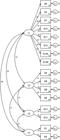
Confirmatory factor analysis of the model.
Legend: L represents the latent factors (i.e., dimensions) of the questionnaire, where L1 = Access, L2 = Frequency, L3 = Content, and L4 = Interactivity. Qinside the rectangles (i.e., observed variables) represents the items (i.e., questions) for each dimension, and the numbers correspond to the question number in the questionnaire. ε = represents the error terms.
Discussion
The purpose of this study was to translate, cross-culturally adapt, and test the psychometric properties of the ScreenQ. The ScreenQ-Br is the first validated questionnaire in Brazil addressing screen-based devices frequency (i.e., hours/day of use, context of use), content (i.e., type and pace of content), interactivity (i.e., co-viewing, and co-use), and access (i.e., school night, home, meals, bedroom) for toddlers (< 1 year old) and preschool children aged between 1 and 5 years. Important to note that the ScreenQ_goes beyond the World Health Organization guidelines, which focus solely on the amount of sedentary screen time. The data captured, based on various forms of screen time, can improve future guidelines in different aspects.
Overall, the translation process, adaptation, and testing of psychometric properties followed well-established scientific procedures, and the results showed it to be adequate. The initial translation from the original language to Portuguese was independently conducted, and consensus on the Portuguese version was reached by three researchers. As expected, due to the inclusion of toddlers and the Brazilian context, the committee of experts indicated semantic adaptations for a better understand, particularly related to question 12. One important aspect to consider when interpreting the psychometric results is that not all items adhered to the original proposed four domains (i.e., access, frequency, content, and co-viewing) in the best fit model of the CFA. The inclusion of toddlers and the Brazilian context could explain this, rather than the conceptual and methodological approach adopted in the validation process. The original questionnaire was initially proposed for preschoolers in a high-income country. It is important to note that, despite Brazil being classified as a middle-income country, there is high socioeconomic disparities between and within regions22. Socioeconomic status influences resource availability, parental attitudes and practices, and home environment23, all of which play crucial roles in determining the amount and type of screen-based device children experience. For instance, low-income families are less likely to afford multiple and newer screen-based devices (i.e., smartphones, tablets, computers, gaming consoles) with Wi-Fi service, impacting access, frequency, and cultural attitudes (i.e., parental supervision and control, and purpose of use) towards screen time. In addition, overcrowded living spaces, where rooms serve multiple functions, may negatively impact family routines, children’s health behaviors, and overall well-being24.
The present study has several strengths. First, we conducted a comprehensive translation into Portuguese and adaptation for the Brazilian context, including toddlers. The process involved experts and the target population. It is important to note that the concept and validation process of the original ScreenQis based on an evidence-based conceptual model linked to American Academy of Pediatrics recommendations4. Second, we included experts and target population during the adaptation process, tested content validity, evaluation homogeneity, and conducted confirmatory factor analysis using a large sample size. This study also has limitations. Parents’ recruitment via social media and snowball sampling introduced selection bias. Most of our sampling is from low socioeconomic levels families and concentrated in a region with one of the lowest Human Development Index in Brazil. Therefore, this might affect interpretation, but not use, of the questionnaire in terms of dimension across different cultural contexts in Brazil, since there are no statistically significant differences between regions and sociodemographic variables in our sample. Another limitation is that our study did not assess the temporal stability and test-retest reliability of the instrument. Future studies could address this gap by evaluating test-retest reliability, as well as exploring other psychometric properties such as convergent and discriminant validity, and invariance across subgroups.
Finally, the availability of the Brazilian version has practical implications for researchers, educators, and healthcare professionals in Brazil for several reasons: (a) it provides a standardized method to measure and monitor screen use among toddlers and preschoolers, crucial for developing targeted interventions and guidelines; (b) it provides contextual, content, and pattern information in addition to screen frequency of use; and (c) understanding how screen time is utilized can better address potential developmental and health outcomes associated with screen devices. Future studies using ScreenQ-Br can provide empirical evidence on the context, the content, and patterns of screen-media device use and its impact on health among toddlers and children aged one to five years old.
In conclusion, the Brazilian ScreenQ version is a valid adult-reported instrument to assess contexts and patterns of children's screen-based media use in Brazilian toddlers and preschoolers. It is expected that the Brazilian version of the ScreenQis useful for parents, caregivers, and Brazilian researchers to access children’s screen-based media use.
-
Declaration regarding the use of artificial intelligence tools in the article writing process
The authors did not use artificial intelligence tools for preparation of the manuscript.
Availability of research data and other materials
After publication the data will be available on demand to authors.
References
-
1 UNICEF. The state of the world’s children 2017: children in a digital world. New York (NY): United Nations Children’s Fund; 2017. Available from: <https://www.unicef.org/media/48581/file/SOWC_2017_ENG.pdf> [2024 May].
» https://www.unicef.org/media/48581/file/SOWC_2017_ENG.pdf -
2 World Health Organization. Guidelines on physical activity, sedentary behaviour and sleep for children under 5 years of age. Geneva: WHO; 2020. Available from: <https://apps.who.int/iris/handle/10665/311664> [2024 May].
» https://apps.who.int/iris/handle/10665/311664 -
3 McArthur BA, Volkova V, Tomopoulos S, Madigan S. Global prevalence of meeting screen time guidelines among children 5 years and younger: a systematic review and meta-analysis. JAMA Pediatr. 2022;176(4):373-83. doi: https://doi.org/10.1001/jamapediatrics.2021.6386
» https://doi.org/10.1001/jamapediatrics.2021.6386 -
4 AAP Council on Communications and Media. Media and young minds. Pediatrics. 2016;138(5):e20162591. doi: https://doi.org/10.1542/peds.2016-2591
» https://doi.org/10.1542/peds.2016-2591 -
5 Perez O, Garza T, Hindera O, Beltran A, Musaad SM, Dibbs T, et al. Validated assessment tools for screen media use: a systematic review. PLoS One. 2023;18(4):e0283714. doi: https://doi.org/10.1371/journal.pone.0283714
» https://doi.org/10.1371/journal.pone.0283714 -
6 Hutton JS, Huang G, Sahay RD, DeWitt T, Ittenbach RF. A novel, composite measure of screen-based media use in young children (ScreenQ) and associations with parenting practices and cognitive abilities. Pediatr Res. 2020;87(7):1211-8. doi: https://doi.org/10.1038/s41390-020-0765-1
» https://doi.org/10.1038/s41390-020-0765-1 - 7 Williams KT. Expressive Vocabulary Test. 2nd ed. Minneapolis (MN): Pearson Assessments; 2007.
-
8 Monteiro R, Fernandes S, Hutton JS, Huang G, Ittenbach RF, Rocha NB. Psychometric properties of the ScreenQfor measuring digital media use in Portuguese young children. Acta Paediatr. 2022;111(10):1950-5. doi: https://doi.org/10.1111/apa.16434
» https://doi.org/10.1111/apa.16434 - 9 Mertens DM. Research and evaluation in education and psychology: integrating diversity with quantitative, qualitative, and mixed methods. 5th ed. Thousand Oaks (CA): Sage Publications; 2019.
-
10 Leighton K, Kardong-Edgren S, Schneidereith T, Foisy-Doll C. Using social media and snowball sampling as an alternative recruitment strategy for research. Clin Simul Nurs. 2021;55:37-42. doi: https://doi.org/10.1016/j.ecns.2021.03.006
» https://doi.org/10.1016/j.ecns.2021.03.006 - 11 Aiken LR, Groth-Marnat G. Psychological testing and assessment. 12th ed. Boston (MA): Pearson; 2005.
- 12 Popping R. Introduction to interrater agreement for nominal data. Cham: Springer; 2019.
- 13 Lai SK, Chang CM. The application of Aiken content validity coefficient and homogeneity reliability coefficient in enterprise business risks scale for hot-spring hotel industries. J Manag Pract Princ. 2007;1(2):64-75.
-
14 Asparouhov T, Muthén B. Exploratory structural equation modeling. Struct Equ Model. 2009;16(3):397-438. doi: https://doi.org/10.1080/10705510903008204
» https://doi.org/10.1080/10705510903008204 - 15 Bentler P. Quantitative methods in psychology. Psychol Bull. 1990;107(2):238-46.
- 16 Tucker RL, Lewis C. A reliability coefficient for maximum likelihood factor analysis. Psychometrika. 1973;38(1):1-10.
- 17 Sorbom D, Joreskog KG. The use of structural equation models in evaluation research. Uppsala: Univ., Department of Statistics; 1981.
- 18 Hu LT, Bentler PM. Cutoff criteria for fit indexes in covariance structure analysis: conventional criteria versus new alternatives. Struct Equ Model. 1999;6(1):1—55.
- 19 Hair JF, Black WC, Babin BJ, Anderson RE, Tatham RL. Análise multivariada de dados. Porto Alegre: Bookman Editora; 2009.
-
20 Valentini F, Damásio BF. Average variance extracted and composite reliability: reliability coefficients. Psicol Teor Pesqui. 2016;32(2):1-7. doi: https://doi.org/10.1590/0102-3772e32222
» https://doi.org/10.1590/0102-3772e32222 -
21 Bagozzi RP, Yi Y. On the evaluation of structural equation models. J Acad Mark Sci. 1988;16:74-94. doi: https://doi.org/10.1007/BF02723327
» https://doi.org/10.1007/BF02723327 -
22 Bandeira Morais M, Swart J, Jordaan JA. Economic complexity and inequality: does regional productive structure affect income inequality in Brazilian states? Sustainability. 2021;13(2):1006. doi: https://doi.org/10.3390/su13021006
» https://doi.org/10.3390/su13021006 -
23 Kumar S, Kroon J, Lalloo R. A systematic review of the impact of parental socio-economic status and home environment characteristics on children’s oral health-related quality of life. Health Qual Life Outcomes. 2014;12:41. doi: https://doi.org/10.1186/1477-7525-12-41
» https://doi.org/10.1186/1477-7525-12-41 -
24 Lorentzen JC, Georgellis A, Albin M, Jonsson M. Residential overcrowding in relation to children’s health, environment and schooling: a qualitative study. Scand J Public Health. 2023;51(6):653-61. doi: https://doi.org/10.1177/14034948231198285
» https://doi.org/10.1177/14034948231198285
Edited by
-
Editor in Chief
Raphael Ritti-Dias © Universidade Nove de Julho, São Paulo, São Paulo, Brazil.
-
Section editor
Christianne de Faria Coelho Ravagnani Universidade Federal de Mato Grosso do Sul, Campo Grande, Mato Grosso do Sul, Brazil.
Reviewers’ assessment
The reviews of this article were originally conducted in Portuguese. This version has been translated using ChatGPT and subsequently reviewed by the Chief Editors.About the reviewerSCIMAGO INSTITUTIONS RANKINGSReviewer A
Dear Authors,
Thank you for the opportunity to review this manuscript, Translation, Cross-Cultural Adaptation, and Psychometric Properties of the ScreenQfor Brazilian Toddlers and Preschoolers. The study addresses an important and timely issue, providing the first validated tool to assess screen-based media use among young children in Brazil. The methodological approach is generally sound, and the psychometric analyses are appropriate. However, some revisions are required to enhance clarity, methodological transparency, and external validity. Below, I provide detailed comments for your consideration.
1. Inclusion of Regional Data
-
While the manuscript states that participants were recruited from all five Brazilian regions, the results section does not present a clear breakdown of responses by region. Given Brazil’s well-documented socioeconomic and cultural disparities, regional data are crucial for interpreting the generalizability of the questionnaire. I recommend including descriptive statistics (e.g., frequency tables, sociodemographic distribution) and, if possible, basic comparative analyses across regions. This would substantially strengthen the external validity of the findings.
2. Clarity of Methods and Results Presentation:
-
The methodology is clearly described overall, but the recruitment process via social media and snowball sampling should be further discussed in terms of limitations (e.g., potential bias toward certain socioeconomic groups).
-
Tables should be revised for clarity and conciseness. For example, some tables contain excessive detail that could be streamlined, while others would benefit from clearer labels or explanatory notes.
-
Figures (e.g., confirmatory factor analysis model) should be formatted for readability and include all necessary legends to support interpretation.
3. Discussion and Limitations:
-
The discussion would benefit from a deeper integration with existing literature on cross-cultural validation studies of pediatric screen-time instruments. Comparisons with similar tools validated in Latin American or other middle-income countries would be particularly valuable.
-
Limitations regarding regional disparities, socioeconomic status, and online recruitment strategies should be discussed more explicitly, as these factors may affect representativeness and generalizability.
4. Language and Style:
-
Minor grammatical and stylistic revisions are needed to improve readability in English. For instance, some sentences in the introduction and discussion are lengthy and could be restructured for clarity.
-
Example 1 - Original version: “Given the mixed potential negative and positive effect of screen time exposure on developmental outcomes among preschoolers, and considering the current digital ecosystem, a better understand of the context, the content, and the pattern of using is critical to offer specific guidance to families, caregivers, and childcare setting”
-
Example 1 - Revised version: “Considering both the potential risks and benefits of screen exposure in preschoolers, it is essential to better understand context, content, and usage patterns to provide specific guidance for families, caregivers, and childcare providers.”
-
Example 2 - Original version: “Additionally, limited living space due to overcrowding family’s members and rooms serving as multiple functions may affect family routines and children health behaviors, and well-being.
-
Example 2 - Revised version: “Overcrowded living spaces, where rooms serve multiple functions, may negatively impact family routines, children’s health behaviors, and overall well-being.”
Kind regards
Final Decision
-
Substantial revisions required
Reviewer B
Did not authorize publication.
- peer review recommendation: major-revision


