
 Acute effects of breaking up sitting time with isometric exercise on cognition in healthy adults
ABSTRACT
The aim of this study was to analyze the acute effects of different sitting break strategies on cognition in healthy adults. Twelve physically inactive adults (8 women, 28 ± 9 years; 25.10 ± 4.90 kg/m2) randomly completed three 3-hour conditions: 2-min isometric leg extension exercise sitting breaks at 30% of maximal voluntary contraction every 30-min; 2-min light-intensity walking sitting breaks every 30-min; sitting without breaks. Stroop and Eriksen-Flanker tests were used to measure cognition before and after conditions. Generalized estimated equations were used to analyze cognition responses. Data are presented as mean ± standard deviation. Stroop congruent phase decreased for all conditions (Isometric: 1.56 ± 0.20s Pre vs 1.49 ± 0.12s Post; Walking: 1.67 ± 0.22s Pre vs 1.54 ± 0.19s Post; Control: 1.69 ± 0.24s Pre vs 1.59 ± 0.26s Post; p = 0.044). There were no significant effects on Stroop incongruent phase, Stroop effect, or Eriksen-Flanker (p > 0.05 for all). In conclusion, walking or isometric exercise sitting breaks do not acutely improve cognition in healthy adults.
Keywords:
Cognitive function; Sedentary behavior; Exercise.
RESUMO
Este estudo teve como objetivo analisar os efeitos agudos de diferentes estratégias de interrupções do tempo sentado na cognição de adultos saudáveis. Doze adultos jovens e fisicamente inativos (8 mulheres, 28 ± 9 anos; 25,10 ± 4,90 kg/m2) realizaram três sessões de 3 horas de duração em ordem randomizada: 2-min de interrupção com exercício isométrico de extensão de joelho a 30% a contração voluntária máxima a cada 30 min; 2-min de interrupções com caminhada de leve intensidade a cada 30 min; tempo sentado sem interrupções. Os testes de Stroop e Eriksen-Flanker foram utilizados para medir a cognição antes e depois das sessões experimentais. Equações estimadas generalizadas foram utilizadas para analisar as respostas da cognição. Os dados estão apresentados em média ± desvio padrão. O tempo de reação da fase congruente do teste de Stroop diminuiu após todas as sessões (Isométrico: 1,56 ± 0,20s Pré vs 1,49 ± 0,12s Pós; Caminhada: 1,67 ± 0,22s Pré vs 1,54 ± 0,19s Pós; Controle: 1,69 ± 0,24s Pré vs 1,59 ± 0,26s Pós; p = 0,044). Não houve efeitos significantes para a fase incongruente do teste de Stroop, para o efeito Stroop ou para o teste de Eriksen-Flanker (p > 0,05 para todos). Em conclusão, interrupções do tempo sentado com caminhada ou exercício isométrico não melhoram agudamente a cognição de adultos saudáveis.
Palavras-chave
Função cognitiva; Comportamento sedentário; Exercício.
Introduction
Prolonged time in the sitting position leads to adverse health outcomes associated with increased morbidity and mortality risk1. Thus, frequent interruptions (breaks) of prolonged sitting have been recommended, mainly by walking of light-intensity and short-duration1. Studies have reported beneficial effects in different cardiometabolic parameters after walking sitting breaks2,3. Other modalities of exercise, such as isometric exercise have increased the interest of investigatorsbecause of their positive effects on different health parameters such as muscle strength and blood pressure4,5. Indeed, different meta-analyses have indicated that isometric exercise is an effective exercise strategy to decrease blood pressure in normotensive and hypertensive subjects5,6, serving as an adjunct exercise modality. It is known that hypertension can cause alterations in cerebral artery structure and function7, which can impair cerebral blood flow and consequently impair cognition8. Thus, isometric exercise could be proposed not only as an adjunct exercise modality, but also as an alternative sitting break strategy to counteract sedentary behaviour.
In this context, recent studies have also indicated that prolonged sitting may lead to a deterioration in cognition9,10. Although some studies have observed attenuation of deleterious effects on cognition or even positive effects on cognition after breaking up sitting with walking11-13, recent reviews9,14 demonstrated that a conclusion cannot be taken due to the heterogeneity of sitting break protocols performed among the studies. Thus, it is still relevant to verify whether the sitting break strategies (i.e., walking and isometric exercise) could prevent or attenuate a possible deleterious effect of prolonged sitting on cognition.
Based on this evidence, it can be proposed that both walking and isometric exercise could be useful sitting break strategies to minimize possible deleterious effects of prolonged sitting on cognition. Thus, the aim of this study was to verify the acute effects of breaking up prolonged sitting with walking or isometric exercise on cognition in healthy adults.
Methodological Procedures
Experimental design
This study is a randomized crossover trial about a subset of variables of a study that was published earlier in which healthy and sedentary individuals were recruited to participate between May 2019 and December 202015. This manuscript was prepared following the Consolidated Standars of Reporting Trials (CONSORT) guidelines16.
Participants
As previously described15, participants were recruited on the surroundings of the University and in social media platforms. The inclusion criteria, determined by selfdeclaration,were: a) do not present high cardiovascular risk (i.e., signs or symptoms and/or cardiovascular, metabolic, renal, or pulmonary disease), b) do not participate in an exercise program for at least six months, c) occupational activity that requires more than six hours in the sitting position per day, d) do not be a smoker or be in current use of medication. The study was approved by the Nove de Julho University Research Ethics Committee (CAAE: 01385718.2.1001.5511) and all participants were clarified about the experimental proceedings and signed the written informed consent previously to participation.
Experimental protocol
As previously explained15, before the experimental conditions, the subjects also received instructions that included do not exercise or ingest caffeinated or alcoholic beverages in the 24 hours before the experimental conditions. Also, the subjects were familiarized with cognitive tests up to 24 hours before the performance of the first experimental condition.
The experimental conditions had a duration of approximately five hours, in total. The conditions were performed during the morning, starting between 7:00 and 8:00 h, with at least two days of intervals between them, and the temperature of the laboratory was kept between 20 and 220C.
After the initial measurement period,the subjects were submitted to the experimental conditions, composed of three hours in the sitting position, that were performed in randomized order, as previously described15:
-
Control condition - Three hours in the sitting position with no breaks;
-
Isometric condition - Three hours in the sitting position with two minutes of isometric bilateral leg extension exercise breaks at 30% of the maximal voluntary contraction (MVC) every 30 minutes. The exercise was performed on a leg extension exercise machine located in a room adjacentto the room where the main condition took place (≈ 10-meter distance), at a 60º extension. Before the main experimental condition, the MVC test was performed in three attempts, each lasting five seconds, with a one-minute interval between them. While on the machine, the participants were asked to perform the extension until reaching the angle previously determined, and then hold to their maximal (Five-second MVC) or relative strength (Two minutes at 30% of MVC) during their respective periods. The machine weight was held at maximum capacity so the participants could not perform dynamic movements, serving as the resistance to maintain the isometric contraction. To quantify the strength performed in every contraction, we used a load cell coupled to the leg extension exercise machine, and a specific software was also used for visual and numerical verification of strength (EMGapp by EMG System do Brasil LTDA).
-
Walking condition - Three hours in the sitting position with two minutes of light-intensity walking breaks every 30 minutes. In this condition, participants walked at a normal pace similar to their usual walking velocity during the day, in a corridor just outside the room the condition took place. To ensure the participants performed the walking break on the time determined, the distance needed to walk during the two minutes and return to the room was determined during the first sitting break and maintained on the following breaks.
As previously described15, we have determined three hours in the sitting position for all the conditions because it is shown that periods of prolonged uninterrupted sitting over 1-hour lead to impairments in cognition9,10. The isometric protocol was chosen based on previous evidence that shows that isometric exercise typically consists of contractions lasting two minutes, sustained at 20-50% of MVC17, so we selected this protocol in order to be in accordance with the previous studies. As for the walking condition, we sought to equalize the volume with the isometric condition, and to use a light-intensity walk to simulate normal daily walking, to standardize the sitting break conditions protocol. The 30-minute interval between sitting breaks was chosen as it was a very frequent interval modulation used in previous studies, and also because there is evidence showing beneficial effects on different health parameters when using this interval between sitting breaks12,15.
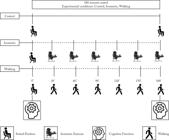
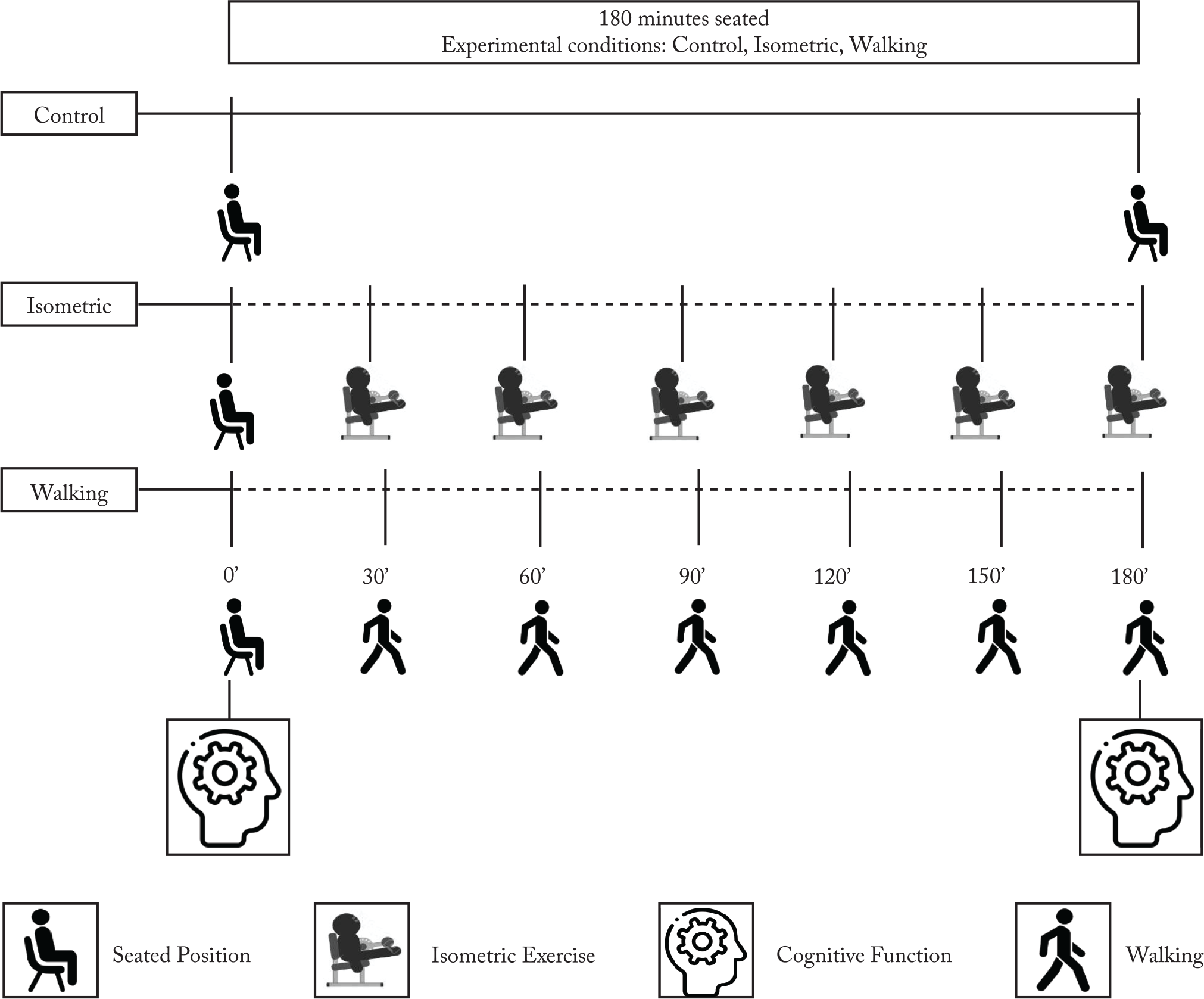
The order of the conditions was determined through simple automatic randomization (www.ran-domizer.org), and there were at least 48 hours between each experimental condition. Cognition was measured at the start (Pre) and end (Post) of every experimental condition. The experimental design of the study is presented in Figure 1.
During the experimental conditions, the participants were allowed to freely move their upper and lower limbs and were also allowed to read anduse the phone or computer during the sitting period. The participants were allowed to go to the bathroom ad libitum but were strongly advised to go before and after the sitting period, especially before the control condition to avoid the need to go to the bathroom during the uninterrupted sitting period. Also, during the conditions under which the participants performed sitting breaks, they were allowed to go to the bathroom after performing the sitting break and then return to the sitting position. All participants performed a total of six interruptions during the sitting break conditions. The participants went to the bathroom walking15.
Cognition
As mentioned above, the participants were familiarized with cognitive tests up to 24 hours before the performance of the first experimental condition. The cognitive tests were performed by the participants during the first and the last 10 minutes of the sitting period, starting with the Stroop test immediately followed by the Eriksen-Flanker test. The tests were performed in an adequately lit room, in an environment free from noise with a controlled temperature to prevent distractions and increase the level of comfort of the participants. The researcher who applied the cognitive tests was not blinded to the experimental conditions, however posterior data extraction was labelled according to the order of the experimental conditions, and the data analysis was performed following this labelling pattern.
Stroop test
The Stroop test18 was administered individually using a computer. The test was composed of three phases:in the first phase, the participants, according to the appearance of one of the colors (i.e., yellow, blue, green, and red), selected the presented color in a square on the computer screen (Congruent); in the second phase, the participants selected the color written on the screen (Congruent); and the third phase, the participants selected the color of the word presented on the screen (Incongruent). The participants were instructed in every phase to select the alternatives as fast and as correctly as they could. If there was no answer in 4000 milliseconds or the answer was incorrect, the score was considered incorrect. Answers below 150 milliseconds were not registered. Also, the Stroop effect was calculated by subtracting the average time taken to complete the second phase minus the average time to complete the third phase of the test.
Eriksen-Flanker test
The Eriksen-Flanker test19 was also performed using a computer. The participants were instructed to answer as fast and as correctly as they could, pressing the corresponding key on the computer. Each of the stimuli was comprised of five letters disposed of horizontally, where the participants had to press the corresponding key according to the letter located on the central part (e.g., BBXBB; VVCVV; XXVXX; CCBCC), ignoring the adjacent letters. As soon as a key was pressed, the next stimulus was presented. If the participants did not answer the stimulus in two seconds, it was omitted, and the next stimulus started. The test was divided into congruent and incongruent phases. In the congruent phase, the target letter was surrounded by identical letters (e.g., XXXXX or CCCCC). In the incongruent phase, the target letter was surrounded by letters corresponding to the same direction (e.g., VVBVV) or of a different direction (e.g., XXBXX).
Statistical analysis
Data are presented as mean ± standard deviation. Data normality was verified through the Shapiro-Wilk test and visual inspection of histograms. The homogeneity of variance between the experimental conditions was analyzed through the Levene test. One-way ANOVA or Kruskall-Wallis tests were used to compare baseline values among experimental conditions, based on data normality. Generalized estimated equations were used to compare the effects of the experimental conditions on the cognitive variables, followed by a post-hoc of pairwise comparisons using the Bonferroni correction for multiple comparisons. Also, net effects were calculated as the difference between the sitting break conditions and the control condition and due to its non-parametric aspect, the independent samples Mann-Whitney U test was used to compare the net effects between the isometric and walking conditions. The degree of agreement of the variables was estimated by the Intraclass Correlation Coefficient (ICC). ICC estimates and their 95% confidence intervals were calculated based on a mean-rating (k = 3), absolute agreement, 2-way mixed-effects model. Values less than 0.5 are indicative of poor reliability, values between 0.5 and 0.75 indicate moderate reliability, values between 0.75 and 0.9 indicate good reliability, and values greater than 0.90 indicate excellent reliability20.
The Statistical Package for the Social Sciences (SPSS Version 20.0 for Windows) was used for the analyses. For all the analyses, a p < 0.050 was considered statistically significant.
Results
The study flowchart is presented in Figure 2. In total, 14 subjects were recruited, with 12 concluding the three experimental conditions. Two participants did not complete the study due to personal reasons.

The sample characteristics are presented in Table 1. The sample was comprised of young adults, with most being women, with incomplete university education, normal weight and waist circumference.
The baseline values of the cognitive variables among the experimental conditions for the Stroop and Eriksen-Flanker tests, along with the normality results for each variable are presented in Table 2. No significant baseline differences were observed among conditions (p > 0.05), and normality was varied.
Baseline values of the cognitive variables among the experimental conditions for the Stroop and Eriksen-Flanker tests
The results of the reaction time for the congruent and incongruent phases of the Stroop test, along with the Stroop effect are presented in Figure 3. The results indicated only a time effect for the congruent phase, with all the conditions presenting a significant reduction in reaction time (Isometric: 1.56 ± 0.20 s Pre vs 1.49 ± 0.12 s Post; Walking: 1.67 ± 0.22 s Pre vs 1.54 ±0.19 s Post; Control: 1.69 ± 0.24 s Pre vs 1.59 ± 0.26 s Post; p = 0.044) [Figure 3A]. There were no condition, time, or interaction effects for the incongruent phase of the Stroop test [Figure 3B] or for the Stroop effect [Figure 3C] (p > 0.050 for all).

Stroop test reaction time responses for the congruent and incongruent phases, along with the Stroop effect among the experimental conditions, analyzed by generalized estimated equations. Values presented in mean ± standard deviation. C - Condition.
No significant effects were found for the numberof correct answers from the congruent phase of the Stroop test (p > 0.050), while there was a significant condition effect for the number of correct answers for the incongruent phase, indicating a higher number of correct answers for the control condition in comparison to the walking condition (Isometric: 11 ± 2 Pre vs. 11 ± 1 Post, Walking: 10 ± 2 Pre vs. 11 ± 3 Post, Control: 11 ± 1 Pre vs. 12 ± 0 Post; p = 0.018) [Table 3].
Response of the Stroop test correct and incorrect answers among the experimental conditions (n = 12).
The net effect results for the Stroop test were also calculated (Figure 4). No significant differences were observed between the sitting break conditions for any of the Stroop test variables (p > 0.050 for all).
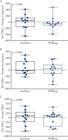
Net effect responses for the congruent and incongruent phases, along with the Stroop effect among the experimental conditions, analyzed by the independent samples Mann-Whitney U test. Values presented in median (interquartile range).
No significant differences were observed between the sitting break conditions for any of the Eriksen-Flanker test variables (p > 0.050 for all) [Table 4].
We also performed reliability analyses for the cognitive test variables in the baseline condition periods (Table 5). The results indicated adequate reliability among the different days on which they were measured (p < 0.050 for all).
Discussion
The main finding of this study was that prolonged uninterrupted time in the sitting position does not lead to an acute impairment in the Stroop and Eriksen-Flanker cognitive performance and that breaking up prolonged sitting with walking or isometric exercise does not modify acute performance in these cognitive tests.
Previous studies that aimed to verify the acute effects of prolonged sitting and sitting breaks with either walking, calf raises, or calisthenics on cognition using the Stroop or Eriksen-Flanker tests have found results somewhat in line with the results of the present study. Regarding the studies that used walking as a sitting break strategy, Chrismas et al.12 showed that breaking up sitting with three minutes of moderate-intensity walking every 30 minutes led to lower values in the incongruent reaction time phase of the Stroop test, but that there was no actual impairment on cognition after the control condition. Other studies that used walking as a sitting break strategy did not find any significant effects for either the Stroop21 or Eriksen-Flanker21,22 tests with either moderate22 or light intensity21 walking every 30 min21 or every hour22. Regarding the studies that used sitting break strategies other than walking, Stoner et al.23 found a lower reaction time for the Stroop test during three hours of uninterrupted sitting in comparison to sitting interrupted by calf raises, however, there was no significant effect after both experimental conditions in this variable. Moreover, Sperlich et al.24 did not find any significant effects for the Stroop test after breaking up prolonged sitting with high-intensity calisthenics24. Most of these previous studies have used walking as a sitting break strategy12,21,22. In this context, the novel aspect of our study was to verify whether the use of isometric exercise as a sitting break strategy would promote additionalbenefitsoncognition as compared to walking and uninterrupted sitting. However, similarly to the studies that used calf raises and calisthenics we did not find any significant effects of breaking up prolonged sitting with isometric exercise on cognition. This demonstrates that there is still a need of investigating which sitting break strategies would be more effective in preventing the impact of prolonged uninterrupted sitting on cognition.
The lack of significant changes observed in our study and in others in terms of prolonged uninterrupted sitting and different sitting break strategies may have been influenced by some factors, such as the cognitive tests employed and the duration of the experimental conditions, along with age, health status and educational level of the participants. In general, the studies that used the Stroop or Eriksen-Flanker tests have exposed the participants only up to seven hours of uninterrupted sitting, which leads to the question of whether longer acute periods of uninterrupted sitting could have led to different results. In addition, these tests evaluate the executive function and inhibitory control, which are different aspects of cognition from other studies that used either a cognitive performance battery (Cogstate) to assess psychomotor function, attention, executive function, visual learning and working memory11,13 or the digit symbol substitution testto assess executive function and working memory25. Most of these other studies observed that breaking up sitting with walking was effective in improving executive function, working memory, and psychomotor function11,13. Further, most of the studies included healthy young adults with high levels of education which may have also influenced the results12,22-24. In this context, previous studies have shown that a measurable decline in cognition occurs with aging26 and in subjects with lower educational levels27. Taken together, this evidence demonstrates that further experimental investigation with longer experimental conditions, older non-healthy populations, and individuals with lower educational levels are needed to further investigate the effects of prolonged sitting and sitting breaks on cognition28.
In our study we found that the reaction time for the congruent phase of the Stroop test significantly decreased after all the experimental conditions, indicating an improvement. It can be argued that a learning effect could have occurred in all the experimental conditions. The learning effect is characterized as a significant improvement in the performance of cognitive tests as the number of repetitions increases until the score cannot change anymore and reaches stability29. Since the congruent phase is the easiest phase of the test, and the sample was comprised of healthy participants mostly with a high level of education, this could have explained a learning effect on the second Stroop trial after all the experimental conditions. In this context, future studies should consider implementing strategies that could prevent the learning effect, such as allowing participants to perform cognitive tests several times before the experimental conditions.
This study has limitations that need to be mentioned, and some of then were already highlighted15. There is no blinding of the assessor during the experimental conditions, which could have impacted the results. Even so, we chose not to label the experimental conditions during data analysis to decrease the influence of the sitting break conditions on the results. The fact that the sample size calculation was initially performed for a different outcome may impact the statistical power and generalizability of the results. This study was comprised of only healthy young subjects and that all participants had a somewhat higher level of education, which limits the generalization of the results to other populations such as patients with cognitive impairment and subjects with lower educational levels. Further, the acute design of the study does not permit us to verify the long-term effects of prolonged sitting and different strategies of sitting breaks on cognition. The three-hour duration of the experimental conditions could be seen as a limitation since adults usually spend longer periods (6-8 hours) in sedentary behavior and could not reflect the average daily sitting time, although a recent study showed that Brazilian adults spent, approximately, 2.5 h in sedentary bouts per day30. Finally, the use of an exercise machine for the isometric exercise limited the ecological validity of the study, as not all environments would have this type of machine. However, we chose to use the exercise machine due to the need to objectively measure the exercise load to determine whether this intensity would be sufficient to lead to significant effects on cognitive function.
Even with these limitations, this study brings novel information regarding the effects of sitting breaks on cognitive function. This is the first study to investigate the effects of breaking up prolonged sitting with isometric exercise on cognitive function, which due to its apparent ineffetiveness could lead to the use of other types of isometric exercises (e.g., isometric free weight exercises, isometric wall squat) as possible alternatives to try to prevent the deleterious effects of prolonged sitting on cognitive function.
In conclusion, prolonged uninterrupted sitting does not seem to lead to an acute impairment in the cognition of healthy adults, while breaking up prolonged sitting with walking or isometric exercise does not lead to an acute improvement in cognition.
-
Funding
This work was carried out with support from the Fundação de Amparo à Pesquisa do Estado de São Paulo (FAPESP) Financing code #2016/16425-9, #2019/05221-1, from the Conselho Nacional de Desenvolvimento Científicoe Tecnológico(CNPq) - Financing Code #310508/2017-7, and the Coordenação de Aperfeiçoamento de Pessoal de Nível Superior - Brazil (CAPES) - Financing Code #88881.133008/2016-01, #88887.612368/2021-00, #88887.818156/2022-00 .
-
Declaration regarding the use of artificial intelligence tools in the article writing process
The manuscript did not use artificial intelligence tools for its preparation.
Acknowledgments
The authors would like to thank the Fundação de Amparo à Pesquisa do Estado de São Paulo, the Conselho Nacional de Desenvolvimento Científico e Tecnológico and the Coordenação de Aperfeiçoamento de Pessoal de Nível Superior for funding, and the volunteers for their participation.
Availability of research data and other materials
The data will be available in the Mendeley Data data repository, under the doi: 10.17632/ynxvnwks7z.1.
References
-
1 Chastin SF, Egerton T, Leask C, Stamatakis E. Metaanalysis of the relationship between breaks in sedentary behavior and cardiometabolic health. Obesity (Silver Spring). 2015;23(9):1800-10. doi: https://doi.org/10.1002/oby.21180
» https://doi.org/10.1002/oby.21180 -
2 Silva GO, Santini LB, Farah BQ, Germano-Soares AH, Correia MA, Ritti-Dias RM. Effects of Breaking Up Prolonged Sitting on Cardiovascular Parameters: A systematic Review. Int J Sports Med. 2022;43(2):97-106. doi: https://doi.org/10.1055/a-1502-6787
» https://doi.org/10.1055/a-1502-6787 -
3 Saunders TJ, Atkinson HF, Burr J, MacEwen B, Skeaff CM, Peddie MC. The Acute Metabolic and Vascular Impact of Interrupting Prolonged Sitting: A Systematic Review and Meta-Analysis. Sports Med. 2018;48(10):2347-66. doi: https://doi.org/10.1007/s40279-018-0963-8
» https://doi.org/10.1007/s40279-018-0963-8 -
4 Anwer S, Alghadir A. Effect of isometric quadriceps exercise on muscle strength, pain, and function in patients with knee osteoarthritis: a randomized controlled study. J Phys Ther Sci. 2014;26(5):745-8. doi: https://doi.org/10.1589/jpts.26.745
» https://doi.org/10.1589/jpts.26.745 -
5 Inder JD, Carlson DJ, Dieberg G, McFarlane JR, Hess NC, Smart NA. Isometric exercise training for blood pressure management: a systematic review and meta-analysis to optimize benefit. Hypertens Res. 2016;39(2):88-94. doi: https://doi.org/10.1038/hr.2015.111
» https://doi.org/10.1038/hr.2015.111 -
6 Baffour-Awuah B, Pearson MJ, Dieberg G, Smart NA. Isometric Resistance Training to Manage Hypertension: Systematic Review and Meta-analysis. Curr Hypertens Rep. 2023;25(4):35-49. doi: https://doi.org/10.1007/s11906-023-01232-w
» https://doi.org/10.1007/s11906-023-01232-w -
7 Pires PW, Dams Ramos CM, Matin N, Dorrance AM. The effects of hypertension on the cerebral circulation. Am J Physiol Heart Circ Physiol. 2013;304(12):H1598-614. doi: https://doi.org/10.1152/ajpheart.00490.2012
» https://doi.org/10.1152/ajpheart.00490.2012 -
8 Ogoh S. Relationship between cognitive function and regulation of cerebral blood flow.J Physiol Sci.2017;67(3):345-51. doi: https://doi.org/10.1007/s12576-017-0525-0
» https://doi.org/10.1007/s12576-017-0525-0 -
9 Chueh TY, Chen YC, Hung TM. Acute effect of breaking up prolonged sitting on cognition: a systematic review. BMJ Open. 2022;12(3):e050458. doi: https://doi.org/10.1136/bmjopen-2021-050458
» https://doi.org/10.1136/bmjopen-2021-050458 -
10 Baker R, Coenen P, Howie E, Williamson A, Straker L. The Short Term Musculoskeletal and Cognitive Effects of Prolonged Sitting During Office Computer Work. Int J Environ Res Public Health. 2018;15(8):1678. doi: https://doi.org/10.3390/ijerph15081678
» https://doi.org/10.3390/ijerph15081678 -
11 Mullane SL, Buman MP, Zeigler ZS, Crespo NC, Gaesser GA. Acute effects on cognitive performance following bouts of standing and light-intensity physical activity in a simulated workplace environment. J Sci Med Sport. 2017;20(5):489-93. doi: https://doi.org/10.1016/j.jsams.2016.09.015
» https://doi.org/10.1016/j.jsams.2016.09.015 -
12 Chrismas BCR, Taylor L, Cherif A, Sayegh S, Bailey DP. Breaking up prolonged sitting with moderate-intensity walking improves attention and executive function in Qatari females. PLoS One. 2019;14(7):e0219565. doi: https://doi.org/10.1371/journal.pone.0219565
» https://doi.org/10.1371/journal.pone.0219565 -
13 Wheeler MJ, Green DJ, Ellis KA, Cerin E, Heinonen I, Naylor LH, et al. Distinct effects of acute exercise and breaks in sitting on working memory and executive function in older adults: a three-arm, randomised cross-over trial to evaluate the effects of exercise with and without breaks in sitting on cognition. Br J Sports Med. 2020;54(13):776-81. doi: https://doi.org/10.1136/bjsports-2018-100168
» https://doi.org/10.1136/bjsports-2018-100168 -
14 Li J, Herold F, Ludyga S, Yu Q, Zhang X, Zou L. The acute effects of physical exercise breaks on cognitive function during prolonged sitting: The first quantitative evidence. Complement Ther Clin Pract. 2022;48101594. doi: https://doi.org/10.1016/j.ctcp.2022.101594
» https://doi.org/10.1016/j.ctcp.2022.101594 -
15 Silva GO, Carvalho JF, Kanegusuku H, Farah BQ, Correia MA, Ritti-Dias RM. Acute effects of breaking up sitting time with isometric exercise on cardiovascular health: Randomized crossover trial. Scand J Med Sci Sports. 2021;31(11):2044-54. doi: https://doi.org/10.1111/sms.14024
» https://doi.org/10.1111/sms.14024 -
16 Schulz KF, Altman DG, Moher D. CONSORT 2010 statement: updated guidelines for reporting parallel group randomised trials. BMJ. 2010;340c332. doi: https://doi.org/10.1136/bmj.c332
» https://doi.org/10.1136/bmj.c332 -
17 Millar PJ, McGowan CL, Cornelissen VA, Araujo CG, Swaine IL. Evidence for the role of isometric exercise training in reducing blood pressure: potential mechanisms and future directions. Sports Med. 2014;44(3):345-56. doi: https://doi.org/10.1007/s40279-013-0118-x
» https://doi.org/10.1007/s40279-013-0118-x -
18 Stroop J. Studies of interference in serial verbal reactions. J Exp Psychol Gen. 1992;121(1):15-23. doi: https://doi.org/10.1037/0096-3445.121.1.15
» https://doi.org/10.1037/0096-3445.121.1.15 -
19 Eriksen BA, Eriksen CW. Effects of noise letters upon the identification of a target letter in a nonsearch task. Percept Psychophys. 1974;16(1):143-9. doi: https://doi.org/10.3758/BF03203267
» https://doi.org/10.3758/BF03203267 -
20 Koo TK, Li MY. A Guideline of Selecting and Reporting Intraclass Correlation Coefficients for Reliability Research. J Chiropr Med. 2016;15(2):155-63. doi: https://doi.org/10.1016/j.jcm.2016.02.012
» https://doi.org/10.1016/j.jcm.2016.02.012 -
21 Wennberg P, Boraxbekk CJ, Wheeler M, Howard B, Dempsey PC, Lambert G, et al. Acute effects of breaking up prolonged sitting on fatigue and cognition: a pilot study. BMJ Open. 2016;6(2):e009630. doi: https://doi.org/10.1136/bmjopen-2015-009630
» https://doi.org/10.1136/bmjopen-2015-009630 -
22 Bergouignan A, Legget KT, De Jong N, Kealey E, Nikolovski J, Groppel JL, et al. Effect of frequent interruptions of prolonged sitting on self-perceived levels of energy, mood, food cravings and cognitive function. Int J Behav Nutr Phys Act. 2016;13(1):113. doi: https://doi.org/10.1186/s12966-016-0437-z
» https://doi.org/10.1186/s12966-016-0437-z -
23 Stoner L, Willey Q, Evans WS, Burnet K, Credeur DP, Fryer S, et al. Effects of acute prolonged sitting on cerebral perfusion and executive function in young adults: A randomized cross-over trial. Psychophysiology. 2019;56(12):e13457. doi: https://doi.org/10.1111/psyp.13457
» https://doi.org/10.1111/psyp.13457 -
24 Sperlich B, De Clerck I, Zinner C, Holmberg HC, Wallmann-Sperlich B. Prolonged Sitting Interrupted by 6-Min of High-Intensity Exercise: Circulatory, Metabolic, Hormonal, Thermal, Cognitive, and Perceptual Responses. Front Physiol. 2018;9:1279. doi: https://doi.org/10.3389/fphys.2018.01279
» https://doi.org/10.3389/fphys.2018.01279 -
25 Vincent GE, Jay SM, Sargent C, Kovac K, Vandelanotte C, Ridgers ND, et al. The impact of breaking up prolonged sitting on glucose metabolism and cognitive function when sleep is restricted. Neurobiol Sleep Circadian Rhythms. 2017;4:17-23. doi: https://doi.org/10.1016/j.nbscr.2017.09.001
» https://doi.org/10.1016/j.nbscr.2017.09.001 -
26 Murman DL. The Impact of Age on Cognition. Semin Hear. 2015;36(3):111-21. doi: https://doi.org/10.1055/s-0035-1555115
» https://doi.org/10.1055/s-0035-1555115 -
27 Zahodne LB, Stern Y, Manly JJ. Differing effects of education on cognitive decline in diverse elders with low versus high educational attainment. Neuropsychology. 2015;29(4):649-57. doi: https://doi.org/10.1037/neu0000141
» https://doi.org/10.1037/neu0000141 -
28 Chandrasekaran B, Pesola AJ, Rao CR, Arumugam AJBmd. Does breaking up prolonged sitting improve cognitive functions in sedentary adults? A mapping review and hypothesis formulation on the potential physiological mechanisms. BMC Musculoskelet Disord. 2021;22(1):274. doi: https://doi.org/10.1186/s12891-021-04136-5
» https://doi.org/10.1186/s12891-021-04136-5 -
29 Tao M, Yang D, Liu WJE, Buildings. Learning effect and its prediction for cognitive tests used in studies on indoor environmental quality. Energy Build. 2019;197:87-98. doi: https://doi.org/10.1016/j.enbuild.2019.05.044
» https://doi.org/10.1016/j.enbuild.2019.05.044 -
30 Silva GO, Cunha PM, Oliveira MD, Christofaro DGD, Tebar WR, Gerage AM, et al. Patterns of sedentary behavior in adults: A cross-sectional study. Front Cardiovasc Med. 2023;10:1116499. doi: https://doi.org/10.3389/fcvm.2023.1116499
» https://doi.org/10.3389/fcvm.2023.1116499
-
Associate editor
Antonio Stabelini Neto https://orcid.org/0000-0003-2931-943XUniversidade Estadual do Norte do Paraná, Jacarezinho, Paraná, Brasil.


 T - Time. CxT - Condition x Time interaction. * - Significantly different from Pre.
