
 Characteristics of effective physical exercise interventions conducted in the workplace: a scoping review
ABSTRACT
The workplace can be considered an environment with potential for developing programs that promote health. Despite positive evidence in the literature on physical exercise interventions in these locations, it becomes relevant to understand the characteristics (type, intensity, duration) of the interventions that positively impact workers’ health. Therefore, this study aims to contribute to tracking down scientific evidence of physical exercise interventions performed in the workplace. This is a scoping review with six databases: PubMed, Lilacs, SciELO, PsycInfo, Web of Science, and Scopus. Using the search strategy: ((Workers OR Worker) AND (Physical Activities OR “Physical Exercise”) AND (Workplace OR Workplaces OR “Work Location”) NOT (leisure-time physical activity). 4,181 articles were found, and 53 articles were selected. Data analysis was performed by calculating frequency and percentage, focusing mainly on the characteristics of physical exercises. All procedures were performed using R software version 4.2.1. Strength training (71.8%) was the most used physical exercise, followed by aerobic training (15.1%), combined (11.2%), and others (1.9%). 56% of the interventions used a progressive approach to intensity, while the volume varied from 10 to 60 minutes. The study demonstrated that strength training with progressive intensity and short duration is the most commonly used interventions. The workplace, with limited time and space, proved to be an excellent moment to include physical exercise in people’s routines.
Keywords:
Exercise; Occupational groups; Workplace.
RESUMO
O local de trabalho pode ser considerado um ambiente com potencialidade para o desenvolvimento de programas que promovam saúde. Apesar das evidências positivas na literatura acerca das intervenções de exercício físico nesse local, torna-se relevante compreender quais são as características (tipo, intensidade, duração) das intervenções que possuem impacto positivo na saúde dos trabalhadores. Dessa forma, este estudo visa contribuir no rastreamento de evidências científicas de intervenções no âmbito do exercício físico realizados no ambiente laboral. Trata-se de uma revisão de escopo, com seis bases de dados: PubMed, Lilacs, SciELO, PsycInfo, Web of Science e Scopus. Utilizando a estratégia de busca: ((Workers OR Worker) AND (Physical Activities OR “Physical Exercise”) AND (Workplace OR Workplaces OR “Work Location”) NOT (leisure-time physical activity). Dos 4.181 artigos encontrados, foram selecionados 53 artigos. A análise dos dados foi realizada através do cálculo da frequência e percentual, tendo como foco principal as características dos exercícios físicos. Todos os procedimentos foram feitos no Software R versão 4.2.1. O treinamento de força (71,8%) foi o exercício físico mais utilizado, seguido pelo treinamento aeróbico (15,1%), combinado (11,2%) e outros (1,9%). 56% das intervenções utilizaram uma abordagem progressiva acerca da intensidade, enquanto o volume variou de 10 a 60 minutos. O estudo demonstrou que o treinamento de força com intensidade progressiva e curta duração são os mais utilizados nas intervenções. O local de trabalho com tempo e espaço reduzido se mostrou um excelente momento para incluir o exercício físico nas rotinas das pessoas.
Palavras-chave:
Exercício; Grupos ocupacionais; Ambiente de trabalho.
Introduction
Work tasks that demand long periods in a sitting or reclining position with low energy expenditure are increasingly common1. These work characteristics can bring deleterious health consequences1,2. Evidence in the literature indicates that sedentary behavior, activities that do not exceed resting levels, is associated with an increased risk of chronic diseases4, obesity5,6, and mental distress7. Furthermore, repetitive tasks and prolonged time in a single posture can lead to musculoskeletal pain, physical discomfort, and low work capacity8. Scientific evidence has shown that a plausible alternative to improving these consequences would be the regular practice of physical exercise9,10.
The workplace can be suitable for executing health promotion programs in order to reduce risk factors such as obesity, diabetes, and cardiovascular diseases in the workforce11,12, among other harmful health outcomes13. According to the Center For Disease Control And Prevention, more physically active workers are more productive, require fewer medical leaves, and have lower health costs14-16. In addition, studies have observed a positive relationship between physical fitness and job performance17-19. Which reinforces the importance of promoting physical exercise in the workplace, achieving positive health impacts for workers20-22.
Various systematic reviews and meta-analyses evaluated interventions that promoted physical exercise in the workplace23-26. One example is a systematic review conducted by Gobbo et al.23 which found that physical exercise programs conducted in the workplace were effective in reducing low back pain symptoms, improving muscle strength, flexibility, and quality of life. Another similar study observed that physical exercise conducted in the workplace could improve cardiorespiratory fitness, endurance, and muscle power25. They are also demonstrated in literature that shows the positive role of physical activity carried out in the workplace concerning mental health outcomes26,27.
A scoping review by Boyette et al.28 sought to identify and evaluate studies describing physical exercise programs for preventing upper limb injuries, focusing on industrial workers. Regarding the type of physical exercise, training and stretching were the most frequent. The intervention period ranged from 4 weeks to 1 year the research did not identify standardization in physical exercise programs. Therefore, it is essential to investigate programs in various work environments in order to map the types of interventions and characteristics28-30. Despite previous reviews having relevant findings, no reviews focused on interventions that effectively generated positive effects on different outcomes were found in the literature. Moreover, many approaches included interventions outside the scope of physical exercise.
Therefore, this study is justified by the need to find systematized evidence regarding the type, frequency, intensity, and duration of physical exercise in the workplace. Relating them to various health outcomes and work environments, as a detailed description of how physical exercises programs can identify a minimum standard of parameters that can serve as a basis for promoting physical exercise in the workplace. Therefore, this study aims to contribute to tracking effective scientific evidence in the field of physical exercise, focusing on interventions applied in the workplace and their respective health benefits for workers health.
Methods
Research Strategies
This is a review of academic literature indexed in international databases in line with the scoping review methodology. Evidence synthesis involves aggregating available information using well-defined resources32. The technique aims to map, synthesize, and disseminate the state of the art in a thematic area through a rigorous and transparent method, providing a descriptive view of the reviewed studies33. The study was based on the guidelines recommended by the Joanna Briggs Institute34 and the specific methodological framework35. The extension for scoping reviews was used through the Transparent Reporting of Systematic Reviews and Meta-Analyses (PRISMA-ScR) guidelines34.
The review was developed based on the following steps: 1. Elaboration of the research question and definition of search descriptors; 2. Literature search in international databases; 3. Reading the titles and abstracts of the articles for selection according to the inclusion and exclusion criteria; 4. Full-text reading of the selected studies and data mapping; 5. Summarizing and critically analyzing the results; and 6. Presentation of the main results.
Information was collected from six databases - PubMed, Lilacs, SciELO, PsycInfo, Web of Science, and Scopus. The following combinations of expressions were used: “Workers” AND “Physical Exercise” AND “Workplace” NOT “leisure-time physical activity”. The final search strategy was as follows: (Workers OR Worker) AND (Physical Activities OR “Physical Exercise”) AND (Workplace OR Workplaces OR “Work Location”) NOT (leisure-time physical activity). The adopted search strategy can be observed in detail in Table 1.
Selection of Studies
The primary selection of articles derived from the digital search process was uploaded into the Endnote online reference management software, first selecting the titles and abstracts. Two reviewers (LF and LG) independently examined and extracted the studies, and any lack of consensus was discussed with a third reviewer (AJO). The articles that met the research criteria were downloaded for full-text reading.
Inclusion/Exclusion Criteria
The studies for the research questions and the eligibility criteria are described in Table 2. In general, the studies were eligible if they applied physical exercise interventions in the workplace, according to the following inclusion criteria: (a) experimental; (b) with workers over the age of 18 years old; and (c) with interventions that had the following outcomes benefits for workers health. However, the following were excluded: (a) studies of protocol or without a specific study design; and (b) studies that did not minimally detail how the intervention was conducted.
Data Extraction
From each selected study, the following information was extracted: author, year, country where the study was conducted, sample, average age of participants, study design, physical exercise intervention, control group intervention, basic characteristics of the intervention (duration, frequency, intensity, and supervision status), follow-up loss, measurement scales, and outcomes.
Data Analysis
The information from the studies was summarized and described with the number of observations and the respective percentage values. Figures were created using the Ggplot2 package of R software version 4.2.1 to relate different characteristics of the selected studies. According to the data analysis, two of these studies presented two interventions with distinct application times. Therefore, they were considered two distinct studies, totaling 55 analyzed interventions.
Results
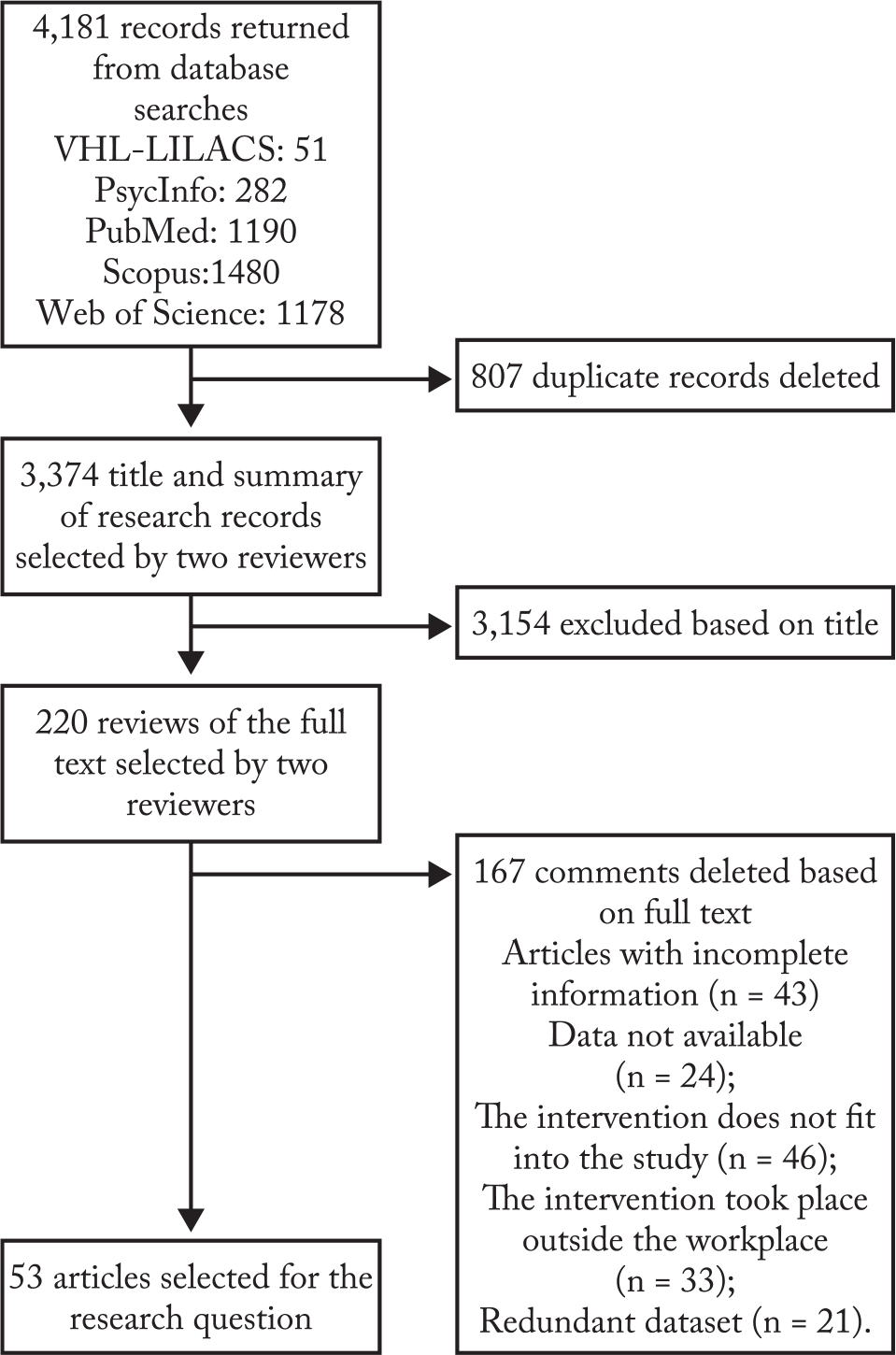
The research resulted in 1,190 studies in PubMed, 51 in BVS - LILACS, 282 in PsycInfo, 1,480 in Scopus, and 1,178 in Web of Science, totaling 4,181 results found. 807 studies were removed due to duplication. Of the remaining 3,374 articles, titles and abstracts were read; by the end of this phase, 3,154 were excluded. Consequently, 220 articles were selected for full reading. After excluding 167 articles, 53 studies were selected. The screening process can be observed in Figure 1.

This scoping review selected 53 studies published between 1999 and 2022. The sample size of the studies ranged from 20 to 1,113 individuals, while the average age was between 26.5 and 56.5 years. Regarding the geographical distribution of the studies, the highest prevalence was conducted in Europe (n = 38; 69.8%), followed by South America (n = 5; 9.4%), Asia (n = 5; 9.4%), and North America (n = 3; 5.7%). Other continents together represented 5.7% of the selected studies.
Regarding the training applied in the interventions, the intensity was predominantly classified as progressive in 31 interventions (56.4%), followed by 13 interventions classified as moderate (23.6%), 7 (12.7%) as low, and 4 (7.3%) as high. Concerning the duration (in days) of the interventions per session, 44 of them (80%) were conducted between 10 and 60 minutes, 4 (7.2%) between 60 and 120 minutes, and 7 (12.7%) over 120 minutes (Figure 2).

In terms of research methodologies, 34 studies employed randomized clinical trials (RCTs), representing 64.1% of the total. This was followed by 11 studies utilizing community-based randomized clinical trials (CRCT - 20.7%), and 8 studies (15.1%) employed other methodological strategies (Figure 3). Strength training (71.8%) was the most commonly used physical exercise, followed by aerobic (15.1%), combined training (11.2%), and sports activities (1.9%).

The study summarized the positive effects promoted by the interventions on the participants. Most of the studies showed more than one positive result in the outcomes described: a large part of the interventions were relevant for reducing musculoskeletal pain (n = 26), improving mental health (n = 6), improving work capacity (n = 6), improving social aspects (n = 6), and other health-related aspects (n = 9), increasing physical activity (n = 17), and aerobic fitness (n = 5) (Table 3).
Discussion
The purpose of this study was to investigate physical exercise interventions performed in the workplace to obtain comprehensive information on the volume, intensity, and types of exercises, as well as the study designs and outcomes used. The scoping review found robust evidence between 1999 and 2022 from 55 interventions. The study observed different positive effects promoted by physical exercise, highlighting the reduction of musculoskeletal pain, improvement in work capacity, and mental health.
Most interventions, influenced by the very nature of the workplace environment, do not allow workers to reach the levels established by the World Health Organization (WHO). It is evident that the promotion of physical exercise in the work context needs to be complemented by additional practices outside this environment. Moreover, interventions that have shown satisfactory results, even with duration and intensity below WHO recommendations for this specific audience, deserve attention21,23,25.
The distribution of studies on physical exercise interventions at work varies between continents and countries, being more prevalent in Europe. This is due to its conception as linked to social well-being and public policies based on the political strand of social democracy, which generally seeks the well-being of all. This context allowed the discussion of labor issues and the focus on worker health, especially in the academic sphere15,16.
Another relevant aspect relates to the types of physical exercises used. They identified strength training, aerobic exercise, combined exercise, whose training consists of a technique that mixes aerobic and anaerobic exercises in one single training session, and team sports. Despite the variation in interventions, the highest prevalence was limited to strength training. A plausible explanation for this prominence lies in the fact that this type of physical exercise is easily adaptable in different workplace environments (with little space and varied workstations) since it does not require large structures and does not necessarily demand the use of equipment, as the individual can use their body weight as a form of resistance16,22,29,30. Most studies using strength training utilized lowor medium-cost and easily transportable materials such as bands and elastic tubes (TheraBand, FlexBar), Wrist Roller, mats, dumbbells, kettlebells, and the body weight itself. For aerobic exercise, stairs or treadmills were used. It is important to note that some studies used modalities like aerobic dance, yoga (asanas and vinyasa), and badminton, which often require structures and/or materials that are difficult for many workers to access in their respective work environments39,51,57,59,67,69.
The studies revealed that implementing physical exercises in the workplace, even at low frequency, can trigger a range of beneficial effects. Among these effects, evidence of the positive impact of physical exercise on social and work aspects was found36-38. Highlights also include the reduction of musculoskeletal pain, improvements in mental health, and work capacity. These findings suggest that simple strategies, such as introducing strength exercises, can contribute to promoting worker health43-46,67-79,71-74.
Our approach identified 11 articles that used an exercise routine characterized by body posture and coordinated movements, breathing and meditation called Qigong. The results of this study showed a positive impact on workers with low back pain23. In view of this, low back pain has a significant impact on workers in an office environment due to back pain resulting from repetitive efforts, inadequate physical conditioning, postural error, and non-ergonomic position during work activities. In this context, it is essential to analyze the effects of a physical exercise program on reducing low back pain in this group23.
The practice of physical exercise can be influenced by various aspects, such as time and frequency, since many workers are limited in their ability to perform these exercises due to their routines. The availability of interventions at this location is more accepted at the beginning of the shift or between the worker’s break/ lunch hour. The spaces for practices in this environment are flexible and can vary from a reserved room, an open space within the company, or the workplace itself, such as stairs for aerobic practice39, as well as the use of dynamic workstations (Oxidesk)61 and in university environments with the use of outdoor spaces or gyms/labs51. Most interventions were conducted through strength training with a duration of 10 to 60 minutes, a frequency of 2 to 3 times per week, and progressive load. These results indicate that short-duration exercises can have positive health impacts, especially in work contexts23.
It is relevant to consider that many studies did not accurately report the locations where physical exercises were conducted. They also did not report if the activities had any impact, even momentarily, on the work environment (moving furniture or using alternative spaces for another purpose, such as a cafeteria). However, it was possible to understand, through the description of the physical exercises, what would initially be the minimum needs for their realization.
This scoping review has a limitation, particularly related to one of the inclusion criteria. Studies whose interventions did not show health benefits for workers were excluded. Thus, this strategy reinforced the confirmation bias contained in the literature. This is because studies with statistically significant results are more likely to be published. Therefore, possible contributions from studies that did not show positive results were disregarded. On the other hand, this strategy allowed the focus to be on effective physical exercises for worker health.
The results of this study show the importance and benefits of physical exercise in the workplace, highlighting the reduction of musculoskeletal pain, improvement in work capacity, and mental health. It is evident that due to the nature of the intervention, many workers face difficulties performing prolonged exercises, and due to workspace restrictions, strength training was the most common approach as it adapts better to the work environment and can be done in a period of 10 to 60 minutes, 2 to 3 times per week, making it more accessible to workers. Additionally, it was found that even with low frequency, physical exercises can trigger a series of beneficial effects, as already mentioned. Therefore, it is crucial to consider the implementation of physical exercise programs in the workplace to promote the well-being and overall health of workers.
Conclusion
The study demonstrated that progressive intensity strength training and short duration were the most commonly used in the selected interventions. It also demonstrated that a minimum intervention time (10 minutes) can be sufficient to generate health benefits for the worker. However, it is important to consider the specificities of the work environment when choosing a physical exercise in order to include it without posing health risks to people.
Our findings show that the workplace proved to be an excellent alternative to including physical exercise in workers’ routines, since positive effects were demonstrated in different outcomes.
-
Funding
Carlos Chagas Filho Foundation for Research Support of the State of Rio de Janeiro (FAPERJ).
-
Declaration regarding the use of artificial intelligence tools in the article writing process
The manuscript did not use artificial intelligence tools for its preparation.
Acknowledgements
We would like to thank all the collaborators who participated in the preparation of this article, directly and indirectly.
Availability of Research Data and Other Materials
After publication, the data will be available upon request from the authors.
References
-
1 Assunção A, Health RC. Characteristics of work and employment related to leisure-time physical activity: results of the National Health Survey, Brazil, 2013. Ann Work Expo Health. 2022;66(1):102-12. doi: https://doi.org/10.1093/annweh/wxab061
» https://doi.org/10.1093/annweh/wxab061 -
2 Ekelund U, Tarp J, Steene-Johannessen J, Hansen BH, Jefferis B, Fagerland MW, et al. Dose-response associations between accelerometry measured physical activity and sedentary time and all cause mortality: systematic review and harmonised meta-analysis. BMJ. 2019;366:l4570. doi: https://doi.org/10.1136/bmj.l4570
» https://doi.org/10.1136/bmj.l4570 -
3 Ku PW, Steptoe A, Liao Y, Hsueh MC, Chen LJ. A cutoff of daily sedentary time and all-cause mortality in adults: A meta-regression analysis involving more than 1 million participants. BMC Med. 2018;16(1):74. doi: https://doi.org/10.1186/s12916-018-1062-2
» https://doi.org/10.1186/s12916-018-1062-2 -
4 Biswas A, Oh PI, Faulkner GE, Bajaj RR, Silver MA, Mitchell MS, et al. Sedentary time and its association with risk for disease incidence, mortality, and hospitalization in adults a systematic review and meta-analysis. Ann Intern Med. 2015;162(2):123-32. doi: https://doi.org/10.7326/M14-1651
» https://doi.org/10.7326/M14-1651 -
5 Gregório MJ, Sousa S, Ferreira B, Figueira I, Taipa M, Bica M, et al. Programa nacional para a promoção da alimentação saudável. Editor Direção-Geral da Saúde (DGS). 2020. Disponível em: https://alimentacaosaudavel.dgs.pt/activeapp2020/wp-content/uploads/2020/11/Relato%CC%81rio-PNPAS-2020.pdf [2023 Dezembro].
» https://alimentacaosaudavel.dgs.pt/activeapp2020/wp-content/uploads/2020/11/Relato%CC%81rio-PNPAS-2020.pdf -
6 Cardiovascular diseases (CVDs). 2021. Disponível em:https://www.who.int/news-room/fact-sheets/detail/cardiovascular-diseases-(cvds). [2023 Dezembro].
» https://www.who.int/news-room/fact-sheets/detail/cardiovascular-diseases-(cvds -
7 Chu AHY, van Dam RM, Biddle SJH, Tan CS, Koh D, Müller-Riemenschneider F. Self-reported domain-specific and accelerometer-based physical activity and sedentary behaviour in relation to psychological distress among an urban Asian population. Int J Behav Nutr Phys Act. 2018;15(1):36. doi: https://doi.org/10.1186/s12966-018-0669-1
» https://doi.org/10.1186/s12966-018-0669-1 -
8 Sundstrup E, Seeberg KGV, Bengtsen E, Andersen LL. a systematic review of workplace interventions to rehabilitate musculoskeletal disorders among employees with physical demanding work. J Occup Rehabil. 2020;30(4):588-612.doi: https://doi.org/10.1007/s10926-020-09879-x
» https://doi.org/10.1007/s10926-020-09879-x -
9 Tynan M, Virzi N, Wooldridge JS, Morse JL, Herbert MS. Examining the association between objective physical activity and momentary pain: a systematic review of studies using ambulatory assessment. J Pain. 2024;25(4):862-74. doi: https://doi.org/10.1016/j.jpain.2023.10.021
» https://doi.org/10.1016/j.jpain.2023.10.021 -
10 Pan F, Byrne KS, Ramakrishnan R, Ferreira M, Dwyer T, Jones G. Association between musculoskeletal pain at multiple sites and objectively measured physical activity and work capacity: Results from UK Biobank study. J Sci Med Sport. 2019;22(4):444-9. doi: https://doi.org/10.1016/j.jsams.2018.10.008
» https://doi.org/10.1016/j.jsams.2018.10.008 -
11 Jirathananuwat A, Health KP. Promoting physical activity in the workplace: A systematic meta-review. J Occup Health. 2017;59(5):385-93. doi: https://doi.org/10.1539/joh.16-0245-RA
» https://doi.org/10.1539/joh.16-0245-RA -
12 Stone CR, Courneya KS, McGregor SE, Li H, Friedenreich CM. Determinants of changes in physical activity from prediagnosis to post-diagnosis in a cohort of prostate cancer survivors. Support Care Cancer. 2019;27(8):2819-28. doi: https://doi.org/10.1007/s00520-018-4578-2
» https://doi.org/10.1007/s00520-018-4578-2 -
13 Mulchandani R, Chandrasekaran AM, Shivashankar R, Kondal D, Agrawal A, Panniyammakal J, et al. Effect of workplace physical activity interventions on the cardiometabolic health of working adults: Systematic review and meta-analysis. Int J Behav Nutr Phys Act. 2019;16(1). doi: https://doi.org/10.1186/s12966-019-0896-0
» https://doi.org/10.1186/s12966-019-0896-0 - 14 Berner R, Kanyama C, Supady A, Bärnighausen T. Cardiovascular Diseases.InGlobalHealth Essentials. Springerplus. 2023. p. 157-62.
- 15 Hillery Patrick J. European Foundation for the Improvement of Living and Working Conditions. 1976.
-
16 Barroso, Martins M. Trabalho e saúde na Europa: um retrato por país e profissão. Forum Sociológico. 2015;2(26):31-42. doi: https://doi.org/10.4000/sociologico.1196
» https://doi.org/10.4000/sociologico.1196 -
17 Matsugaki R, Sakata M, Itoh H, Matsushima Y, Saeki S. Effects of a physical therapist led workplace Personal- Fitness management program for manufacturing industry workers: a randomized controlled trial. J Occup Environ Med. 2019;61(11):e445-e451. doi: https://doi.org/10.1097/JOM.0000000000001712
» https://doi.org/10.1097/JOM.0000000000001712 -
18 Grimani A, Aboagye E, Kwak L. The effectiveness of workplace nutrition and physical activity interventions in improving productivity, work performance and workability: A systematic review. BMC Public Health. 2019;19(1):16-76. doi: https://doi.org/10.1186/s12889-019-8033-1
» https://doi.org/10.1186/s12889-019-8033-1 -
19 Marin-Farrona M, Wipfli B, Thosar SS, Colino E, Garcia- Unanue J, Gallardo L, et al. Effectiveness of worksite wellness programs based on physical activity to improve workers’ health and productivity: a systematic review. Syst Rev. 2023;12(1):87. doi: https://doi.org/10.1186/s13643-023-02258-6
» https://doi.org/10.1186/s13643-023-02258-6 -
20 Hansen G, Marott J, Holtermann A, Gyntelberg F, Lange P, Jensen M. Midlife cardiorespiratory fitness and the long-term risk of chronic obstructive pulmonary disease. Thorax. 74(9):843-48. doi: https://doi.org/10.1136/thoraxjnl-2018-212821
» https://doi.org/10.1136/thoraxjnl-2018-212821 -
21 Gross A, Kay TM, Paquin JP, Blanchette S, Lalonde P, Christie T, et al. Exercises for mechanical neck disorders. Cochrane Database Syst Rev. 2015;1(1):CD004250.doi: https://doi.org/10.1002/14651858.CD004250.pub5
» https://doi.org/10.1002/14651858.CD004250.pub5 -
22 Westcott W. ACSM strength training guidelines: Role in body composition and health enhancement. ACSM’s Health & Fitness Journal. 2009;13(4):14-22. doi: https://doi.org/10.1249/FIT.0b013e3181aaf460
» https://doi.org/10.1249/FIT.0b013e3181aaf460 -
23 Gobbo S, Bullo V, Bergamo M, Duregon F, Vendramin B, Battista F, et al. Physical Exercise Is Confirmed to Reduce Low Back Pain Symptoms in Office Workers: A Systematic Review of the Evidence to Improve Best Practices in the Workplace. J Funct Morphol Kinesiol. 2019;4(3):43. doi: https://doi.org/10.3390/jfmk4030043
» https://doi.org/10.3390/jfmk4030043 -
24 Junior Lima LC, Lima NNF. Atividade física no ambiente de trabalho: um estudo de revisão. Revista Destaques Acadêmicos. 2020;12(3). doi: https://doi.org/10.22410/issn.2176-3070.v12i3a2020.2674
» https://doi.org/10.22410/issn.2176-3070.v12i3a2020.2674 -
25 Prieske O, Dalager T, Herz M, Hortobagyi T, Sjøgaard G, Søgaard K, et al. Effects of physical exercise training in the workplace on physical fitness: A systematic review and metaanalysis. Sports Med. 2019;49(12):1903-21. doi: https://doi.org/10.1007/s40279-019-01179-6
» https://doi.org/10.1007/s40279-019-01179-6 -
26 Proper K, Van O. The effectiveness of workplace health promotion interventions on physical and mental health outcomes-a systematic review of reviews. Scand J Work Environ Health. 2019;45(6):546-59. doi: https://doi.org/10.5271/sjweh.3833
» https://doi.org/10.5271/sjweh.3833 -
27 Watanabe K, Okusa S, Sato M, Miura H, Morimoto M, Tsutsumi A. mHealth intervention to promote physical activity among employees using a deep learning model for passive monitoring of depression and anxiety: Single-arm feasibility trial. JMIR Form Res. 2023;7(1):e51334. doi: https://doi.org/10.2196/51334
» https://doi.org/10.2196/51334 -
28 Boyette J, Bell J. A scoping review of the use of exercise-based upper extremity injury prevention programs for industrial workers. J Hand Ther. 2021;34(2):250-62. doi: https://doi.org/10.1016/j.jht.2021.04.020
» https://doi.org/10.1016/j.jht.2021.04.020 -
29 Lacio M, Vieira JG, Trybulski R, Campos Y, Santana D, Elias Filho J, et al. Effects of resistance training performed with different loads in untrained and trained male adult individuals on maximal strength and muscle hypertrophy: A systematic review. Int J Environ Res Public Health. 2021;18(21):11237. doi: https://doi.org/10.3390/ijerph182111237
» https://doi.org/10.3390/ijerph182111237 - 30 Fleck S, Kraemer W. Fundamentos do treinamento de força muscular. 4ª ed. Porto Alegre: Artmed Ed, 2017.
- 31 Instituto de Pesquisa Econômica Aplicada (IPEA). ODS- Metas Nacionais dos Objetivos de Desenvolvimento Sustentável. 2018.
-
32 Sucharew H, Macaluso M. Methods for Research Evidence Synthesis: The Scoping Review Approach. J Hosp Med. 2019;14(7):416-8. doi: https://doi.org/10.12788/jhm.3248
» https://doi.org/10.12788/jhm.3248 -
33 Peters MDJ, Godfrey CM, Khalil H, McInerney P, Parker D, Soares CB. Guidance for conducting systematic scoping reviews. Int J Evid Based Healthc. 2015;13(3):141-6. doi: https://doi.org/10.1097/XEB.0000000000000050
» https://doi.org/10.1097/XEB.0000000000000050 -
34 Tricco AC, Lillie E, Zarin W, O’Brien KK, Colquhoun H, Levac D, et al. PRISMA Extension for Scoping Reviews (PRISMAScR): Checklist and Explanation. Ann Intern Med. 2018;169:467-73. doi: https://doi.org/10.7326/M18-0850
» https://doi.org/10.7326/M18-0850 -
35 Arksey H, O’Malley L. Scoping studies: towards a methodological framework. Int J Soc Res Methodol. 2005;8(1):19-32. doi: https://doi.org/10.1080/1364557032000119616
» https://doi.org/10.1080/1364557032000119616 -
36 Andersen LL, Kjaer M, Søgaard K, Hansen L, Kryger AI, Sjøgaard G. Effect of two contrasting types of physical exercise on chronic neck muscle pain. Arthritis Rheum. 2008;59(1):84-91. doi: https://doi.org/10.1002/art.23256
» https://doi.org/10.1002/art.23256 -
37 Andersen CH, Andersen LL, Gram B, Pedersen MT, Mortensen OS, Zebis MK, et al. Influence of frequency and duration of strength training for effective management of neck and shoulder pain: a randomised controlled trial.Br J Sports Med. 2012;46(14):1004-10. doi: https://doi.org/10.1136/bjsports-2011-090813
» https://doi.org/10.1136/bjsports-2011-090813 -
38 Andersen CH, Jensen RH, Dalager T, Zebis MK, Sjøgaard G, Andersen LL. Effect of resistance training on headache symptoms in adults: Secondary analysis of a RCT. Musculoskelet Sci Pract. 2017;32:38-43. doi: https://doi.org/10.1016/j.msksp.2017.08.003
» https://doi.org/10.1016/j.msksp.2017.08.003 -
39 Andersen LL, Sundstrup E, Boysen M, Jakobsen MD, Mortensen OS, Persson R. Cardiovascular health effects of internet-based encouragements to do daily workplace stairwalks: randomized controlled trial. J Med Internet Res. 2013;15(6):e127. doi: https://doi.org/10.2196/jmir.2340
» https://doi.org/10.2196/jmir.2340 -
40 Andersen LL, Persson R, Jakobsen MD, Sundstrup E. Psychosocial effects of workplace physical exercise among workers with chronic pain. Medicine (Baltimore). 2017;96(1):e5709. doi: https://doi.org/10.1097/MD.0000000000005709
» https://doi.org/10.1097/MD.0000000000005709 -
41 Andersen LL, Jørgensen MB, Blangsted AK, Pedersen MT, Hansen EA, Sjøgaard G. A randomized controlled intervention trial to relieve and prevent neck/shoulder pain. Med Sci Sports Exerc. 2008;40(6):983-90. doi: https://doi.org/10.1249/MSS.0b013e3181676640
» https://doi.org/10.1249/MSS.0b013e3181676640 -
42 Andersen LL. Influence of Psychosocial Work Environment on Adherence to Workplace Exercise. J Occup Environ Med. 2011;53(2):182-4. doi: https://doi.org/10.1097/JOM.0b013e3181207a01f
» https://doi.org/10.1097/JOM.0b013e3181207a01f -
43 Andersen LL, Zebis MK. Process evaluation of workplace interventions with physical exercise to reduce musculoskeletal disorders. Int J Rheumatol. 2014;2014:761363. doi: https://doi.org/10.1155/2014/761363
» https://doi.org/10.1155/2014/761363 -
44 Atlantis E, Chow CM, Kirby A, Fiatarone Singh MA. Worksite intervention effects on physical health: a randomized controlled trial. Health Promot Int. 2006;21(3):191-200. doi: https://doi.org/10.1093/heapro/dal012
» https://doi.org/10.1093/heapro/dal012 -
45 Barros FC, Cabral AM, Moreira R, Sato T. Does adherence to workplace-based exercises alter physical capacity, pain intensity and productivity? Eur J Physiother. 2019;21(2):83- 90. doi: https://doi.org/10.1080/21679169.2018.1485736
» https://doi.org/10.1080/21679169.2018.1485736 -
46 Bernardelli G, Vigna L, Nava C, Colonna VDG, Andersen LL, Consonni D, et al. Physical activity in healthcare workers with low back pain: effects of the Back-FIT randomized trial. J Occup Environ Med. 2020;62(6):e245-e249. doi: https://doi.org/10.1097/JOM.0000000000001844
» https://doi.org/10.1097/JOM.0000000000001844 -
47 Brinkley A, McDermott H, Grenfell-Essam R, Munir F. It’s time to start changing the game: a 12-week workplace team sport intervention study. Sports Med Open. 2017;3(1):30. doi: https://doi.org/10.1186/s40798-017-0099-7
» https://doi.org/10.1186/s40798-017-0099-7 -
48 Christensen JR, Overgaard K, Hansen K, Søgaard K, Holtermann A. Effects on presenteeism and absenteeism from a 1-year workplace randomized controlled trial among health care workers. J Occup Environ Med. 2013;55(10):1186-90. doi: https://doi.org/10.1097/JOM.0b013e31829b2816
» https://doi.org/10.1097/JOM.0b013e31829b2816 -
49 Christensen JR, Faber A, Ekner D, Overgaard K, Holtermann A, Søgaard K. Diet, physical exercise and cognitive behavioral training as a combined workplace based intervention to reduce body weight and increase physical capacity in health care workers-a randomized controlled trial. BMC Public Health. 2011;11:671. doi: https://doi.org/10.1186/1471-2458-11-671
» https://doi.org/10.1186/1471-2458-11-671 -
50 Chopp-Hurley JN, Brenneman EC, Wiebenga EG, Bulbrook B, Keir PJ, Maly MR. Randomized controlled trial investigating the role of exercise in the workplace to improve work ability, performance, and patient-reported symptoms among older workers with osteoarthritis. J Occup Environ Med. 2017;59(6):550-6. doi: https://doi.org/10.1097/JOM.0000000000001020
» https://doi.org/10.1097/JOM.0000000000001020 -
51 Corbett DB, Fennell C, Peroutky K, Kingsley JD, Glickman EL. The effects of a 12-week worksite physical activity intervention on anthropometric indices, blood pressure indices, and plasma biomarkers of cardiovascular disease risk among university employees. BMC Res Notes. 2018;11(1):80. doi: https://doi.org/10.1186/s13104-018-3151-x
» https://doi.org/10.1186/s13104-018-3151-x -
52 Cheema BS, Houridis A, Busch L, Raschke-Cheema V, Melville GW, Marshall PW, et al. Effect of an office worksitebased yoga program on heart rate variability: outcomes of a randomized controlled trial. BMC Complement Altern Med. 2013;13:82. doi: https://doi.org/10.1186/1472-6882-13-82
» https://doi.org/10.1186/1472-6882-13-82 -
53 Dalager T, Justesen JB, Sjøgaard G. Intelligent physical exercise training in a workplace setting improves muscle strength and musculoskeletal pain: a randomized controlled trial. Biomed Res Int. 2017;2017:7914134. doi: https://doi.org/10.1155/2017/7914134
» https://doi.org/10.1155/2017/7914134 -
54 Dalager T, Bredahl TG V, Pedersen MT, Boyle E, Andersen LL, Sjøgaard G. Does training frequency and supervision affect compliance, performance and muscular health? A cluster randomized controlled trial. Man Ther. 2015;20(5):657-65. doi: https://doi.org/10.1016/j.math.2015.01.016
» https://doi.org/10.1016/j.math.2015.01.016 -
55 del Pozo-Cruz B, del Pozo-Cruz J, Adsuar JC, Parraca J, Gusi N. Reanalysis of a tailored web-based exercise programme for office workers with sub-acute low back pain: assessing the stage of change in behaviour. Psychol Health Med. 2013;18(6):687-97. doi: https://doi.org/10.1080/13548506.2013.765019
» https://doi.org/10.1080/13548506.2013.765019 -
56 Delshad MH, Tavafian SS, Kazemnejad A. Educational intervention for promoting stretching exercise behavior among a sample of Iranian office employees: applying the Health Promotion Model. J Pain Res. 2019;12:733-42. doi: https://doi.org/10.2147/JPR.S183410
» https://doi.org/10.2147/JPR.S183410 -
57 Eriksen HR, Ihlebaek C, Mikkelsen A, Grønningsæter H, Sandal GM, Ursin H. Improving subjective health at the worksite: a randomized controlled trial of stress management training, physical exercise and an integrated health programme. Occup Med (Lond). 2002;52(7):383-91. doi: https://doi.org/10.1093/occmed/52.7.383
» https://doi.org/10.1093/occmed/52.7.383 -
58 Faude O, Donath L, Bopp M, Hofmann S, Erlacher D, Zahner L. Neuromuscular training in construction workers: a longitudinal controlled pilot study. Int Arch Occup Environ Health. 2015;88(6):697-705. doi: https://doi.org/10.1007/s00420-014-0994-x
» https://doi.org/10.1007/s00420-014-0994-x -
59 Fukahori M, Aono H, Saito I, Ikebe T, Ozawa H. Program of exercise training as Total Health Promotion Plan and its evaluation. J Occup Health. 1999;41(2):76-82. doi: https://doi.org/10.1539/joh.41.76
» https://doi.org/10.1539/joh.41.76 -
60 Gram B, Andersen C, Zebis MK, Bredahl T, Pedersen MT, Mortensen OS, et al. Effect of training supervision on effectiveness of strength training for reducing neck/shoulder pain and headache in office workers: cluster randomized controlled trial. Biomed Res Int. 2014;2014:693013. doi: https://doi.org/10.1155/2014/693013
» https://doi.org/10.1155/2014/693013 -
61 Groenesteijn L, Commissaris D, den Berg-Zwetsloot V, Mastrigt HV. Effects of dynamic workstation Oxidesk on acceptance, physical activity, mental fitness and work performance. Work. 2016;54(4):773-8. doi: https://doi.org/10.3233/WOR-162348
» https://doi.org/10.3233/WOR-162348 -
62 Holzgreve F, Maltry L, Hänel J, Schmidt H, Bader A, Frei M, et al. The office work and stretch training (Ost) study: an individualized and standardized approach to improve the quality of life in office workers. Int J Environ Res Public Health. 2020;17(12):4522. doi: https://doi.org/10.3390/ijerph17124522
» https://doi.org/10.3390/ijerph17124522 -
63 Jakobsen MD, Sundstrup E, Brandt M, Jay K, Aagaard P, Andersen LL. Effect of workplace-versus home-based physical exercise on muscle response to sudden trunk perturbation among healthcare workers: a cluster randomized controlled trial. Biomed Res Int. 2015;2015:902896. doi: https://doi.org/10.1155/2015/902896
» https://doi.org/10.1155/2015/902896 -
64 Jakobsen MD, Sundstrup E, Brandt M, Jay K, Aagaard P, Andersen LL. Effect of workplace-versus home-based physical exercise on musculoskeletal pain among healthcare workers: a cluster randomized controlled trial. Scand J Work Environ Health. 2015;41(2):153-63. doi: https://doi.org/10.5271/sjweh.3479
» https://doi.org/10.5271/sjweh.3479 -
65 Karatrantou K, Gerodimos V, Manouras N, Vasilopoulou T, Melissopoulou A, Mesiakaris AF, et al. Health-promoting effects of a concurrent workplace training program in inactive office workers (HealPWorkers): a randomized controlled study. Am J Health Promot. 2020;34(4):376-86. doi: https://doi.org/10.1177/0890117119899781
» https://doi.org/10.1177/0890117119899781 -
66 Korshøj M, Ravn MH, Holtermann A, Hansen ÅM, Krustrup P. Aerobic exercise reduces biomarkers related to cardiovascular risk among cleaners: effects of a worksite intervention RCT. Int Arch Occup Environ Health. 2016;89(2):239-49. doi: https://doi.org/10.1007/s00420-015-1067-5
» https://doi.org/10.1007/s00420-015-1067-5 -
67 Lidegaard M, Søgaard K, Krustrup P, Holtermann A, Korshøj M. Effects of 12 months aerobic exercise intervention on work ability, need for recovery, productivity and rating of exertion among cleaners: a worksite RCT. Int Arch Occup Environ Health. 2018;91(2):225-35. doi: https://doi.org/10.1007/s00420-017-1274-3
» https://doi.org/10.1007/s00420-017-1274-3 -
68 Michishita R, Jiang Y, Ariyoshi D, Yoshida M, Moriyama H, Obata Y, et al. The introduction of an active rest program by workplace units improved the workplace vigor and presenteeism among workers. J Occup Environ Med. 2017;59(12):1140-7. doi: https://doi.org/10.1097/JOM.0000000000001121
» https://doi.org/10.1097/JOM.0000000000001121 -
69 Matsugaki R, Sakata M, Itoh H, Matsushima Y, Saeki S. Effects of a physical therapist led workplace Personal- Fitness management program for manufacturing industry workers: a randomized controlled trial. J Occup Environ Med. 2019;61(11):e445-e451. doi: https://doi.org/10.1097/JOM.0000000000001712
» https://doi.org/10.1097/JOM.0000000000001712 -
70 Metcalfe RS, Atef H, Mackintosh K, McNarry M, Ryde G, Hill DM, et al. Time-efficient and computer-guided sprint interval exercise training for improving health in the workplace: a randomised mixed-methods feasibility study in office-based employees. BMC Public Health. 2020;20:313. doi: https://doi.org/10.1186/s12889-020-8444-z
» https://doi.org/10.1186/s12889-020-8444-z -
71 Bispo LGM, da Silva JMN, Bolis I, dos Santos Leite WK, de Araujo Vieira EM, Colaço GA, et al. Effects of a worksite physical activities program among men and women: An interventional study in a footwear industry. Appl Ergon. 2020;84:103005. doi: https://doi.org/10.1016/j.apergo.2019.103005
» https://doi.org/10.1016/j.apergo.2019.103005 -
72 Michishita R, Jiang Y, Ariyoshi D, Yoshida M, Moriyama H, Yamato H. The practice of active rest by workplace units improves personal relationships, mental health, and physical activity among workers. J Occup Health. 2017;59(2):122-30. doi: https://doi.org/10.1539/joh.16-0182-OA
» https://doi.org/10.1539/joh.16-0182-OA -
73 Montero-Marin J, Asun S, Estrada-Marcen N, Romero R, Asun R. Effectiveness of a stretching program on anxiety levels of workers in a logistic platform: a randomized controlled study. Aten Primaria. 2013;45(7):376-83. doi: https://doi.org/10.1016/j.aprim.2013.03.002
» https://doi.org/10.1016/j.aprim.2013.03.002 -
74 Moreira RFC, Moriguchi CS, Carnaz L, Foltran FA, Silva LCCB, Coury HJCG. Effects of a workplace exercise program on physical capacity and lower back symptoms in hospital nursing assistants: a randomized controlled trial. Int Arch Occup Environ Health. 2021;94:275-84. doi: https://doi.org/10.1007/s00420-020-01572-z
» https://doi.org/10.1007/s00420-020-01572-z -
75 Moreira-Silva I, Teixeira PM, Santos R, Abreu S, Moreira C, Mota J. The effects of workplace physical activity programs on musculoskeletal pain: a systematic review and meta-analysis. Workplace Health Saf. 2016;64(5):210-22. doi: https://doi.org/10.1177/2165079916629688
» https://doi.org/10.1177/2165079916629688 -
76 Mortensen P, Larsen AI, Zebis MK, Pedersen MT, Sjøgaard G, Andersen LL. Lasting effects of workplace strength training for neck/shoulder/arm pain among laboratory technicians: natural experiment with 3-year follow-up. Biomed Res Int. 2014; 2014:845851. doi: https://doi.org/10.1155/2014/845851
» https://doi.org/10.1155/2014/845851 -
77 Muñoz-Poblete C, Bascour-Sandoval C, Inostroza-Quiroz J, Solano-López R, Soto-Rodríguez F. Effectiveness of workplace-based muscle resistance training exercise program in preventing musculoskeletal dysfunction of the upper limbs in manufacturing workers. J Occup Rehabil. 2019;29(4):810- 21. doi: https://doi.org/10.1007/s10926-019-09840-7
» https://doi.org/10.1007/s10926-019-09840-7 -
78 Muyor JM, López-Miñarro PA, Casimiro AJ. Effect of stretching program in an industrial workplace on hamstring flexibility and sagittal spinal posture of adult women workers: a randomized controlled trial. J Back Musculoskelet Rehabil. 2012;25(3):161-9. doi: https://doi.org/10.3233/BMR-2012-0323
» https://doi.org/10.3233/BMR-2012-0323 -
79 Mulla DM, Wiebenga EG, Chopp-Hurley JN, Kaip L, Jarvis RS, Stephens A, et al. The effects of lower extremity strengthening delivered in the workplace on physical function and work-related outcomes among desk-based workers: a randomized controlled trial. J Occup Environ Med. 2018;60(11):1005-14. doi: https://doi.org/10.1097/JOM.0000000000001408
» https://doi.org/10.1097/JOM.0000000000001408 -
80 Nurminen E, Malmivaara A, Ilmarinen J, Ylöstalo P, Mutanen P, Ahonen G, et al. Effectiveness of a worksite exercise program with respect to perceived work ability and sick leaves among women with physical work. Scand J Work Environ Health. 2002;28(2):85-93. doi: https://doi.org/10.5271/sjweh.652
» https://doi.org/10.5271/sjweh.652 -
81 Pedersen MT, Andersen CH, Zebis MK, Sjøgaard G, Andersen LL. Implementation of specific strength training among industrial laboratory technicians: long-term effects on back, neck and upper extremity pain. BMC Musculoskelet Disord. 2013;14:287. doi: https://doi.org/10.1186/1471-2474-14-287
» https://doi.org/10.1186/1471-2474-14-287 -
82 Rasotto C, Bergamin M, Sieverdes JC, Gobbo S, Alberton CL, Neunhaeuserer D, et al. A tailored workplace exercise program for women at risk for neck and upper limb musculoskeletal disorders. J Occup Environ Med. 2015;57(2):178-83. doi: https://doi.org/10.1097/JOM.0000000000000329
» https://doi.org/10.1097/JOM.0000000000000329 -
83 Saracini C, Vásquez-Gómez JA, Castillo-Retamal M. Work-based physical exercise benefits on NCCDs Chilean employees’ mood and emotions: a preliminary study. Int J Sport Exerc Psychol. 2022;20(1):319-36. doi: https://doi.org/10.1080/1612197X.2020.1826997
» https://doi.org/10.1080/1612197X.2020.1826997 -
84 Shariat A, Cleland JA, Danaee M, Kargarfard M, Sangelaji B, Tamrin SBM. Effects of stretching exercise training and ergonomic modifications on musculoskeletal discomforts of office workers: a randomized controlled trial. Braz J Phys Ther. 2018;22(2):144-53. doi: https://doi.org/10.1016/j.bjpt.2017.09.003
» https://doi.org/10.1016/j.bjpt.2017.09.003 -
85 Stenner HT, Eigendorf J, Kerling A, Kueck M, Hanke AA, Boyen J, et al. Effects of six month personalized endurance training on work ability in middle-aged sedentary women: a secondary analysis of a randomized controlled trial. J Occup Med Toxicol. 2020;15:8. doi: https://doi.org/10.1186/s12995-020-00261-4
» https://doi.org/10.1186/s12995-020-00261-4 -
86 Sjögren T, Nissinen KJ, Järvenpää SK, Ojanen MT, Vanharanta H, Mälkiä EA. Effects of a physical exercise intervention on subjective physical well-being, psychosocial functioning and general well-being among office workers: A cluster randomized-controlled cross-over design. Scand J Med Sci Sports. 2006;16(6):381-90. doi: https://doi.org/10.1111/j.1600-0838.2005.00516.x
» https://doi.org/10.1111/j.1600-0838.2005.00516.x -
87 Sjögren T, Nissinen KJ, Järvenpää SK, Ojanen MT, Vanharanta H, Mälkiä EA. Effects of a workplace physical exercise intervention on the intensity of low back symptoms in office workers: a cluster randomized controlled cross-over design. J Back Musculoskelet Rehabil. 2006;19(1):13-24. doi: https://doi.org/10.3233/BMR-2006-19103
» https://doi.org/10.3233/BMR-2006-19103 -
88 Sjögren T, Nissinen KJ, Järvenpää SK, Ojanen MT, Vanharanta H, Mälkiä EA. Effects of a workplace physical exercise intervention on the intensity of headache and neck and shoulder symptoms and upper extremity muscular strength of office workers: a cluster randomized controlled cross-over trial. Pain. 2005;116(1-2):119-28. doi: https://doi.org/10.1016/j.pain.2005.03.031
» https://doi.org/10.1016/j.pain.2005.03.031
-
Associate editor
André Pereira dos Santos https://orcid.org/0000-0003-4239-0716University of Washington, SeattleEstados Unidos.


 Note: CRCT = community randomized clinical trial; RCT = randomized clinical trial.