Physical activity and RE-AIM framework: a bibliometric analysis of scientific production in the Web Of Science
ABSTRACT
Objective: This s tudy u tilized a b ibliometric a nalysis using t he Web o f S cience d atabase a imed t o analyze academic trends related to the intersection between the RE-AIM framework and physical activity (PA).
Methods: Bibliometric productivity indicators included publication patterns, chronological distribution of annual publications, identification of the most relevant journals, the most prolific and cited authors, the most cited documents, as well as network visualization for co-authorship, international collaboration, and co-occurrence of author keywords. The search was conducted in April 2024 using the controlled descriptors “RE-AIM” AND (“physical activity” OR “physical exercise” OR “motor activity”).
Results: A total of 353 articles were included for analysis. Articles were published between 2002 and 2024, distributed across 122 journals. The annual growth rate of articles was 7.6%, with an average of 24.53 citations. The most prolific institutions and authors were from the United States, Australia, and Canada. Factor analysis of keywords indicated the presence of a main cluster encompassing themes such as PA interventions, the impact of the RE-AIM framework, health, exercise, implementation, and health promotion across various population contexts. There was a predominance of studies conducted in the United States, followed by Australia and Canada, with a growing contribution from countries such as Brazil.
Conclusion: This synthesis providedan overview of the global application of the RE-AIM framework in the context of PA. However, further research is suggested to explore the applicability and relationship of this tool in evaluating PA interventions in diverse socio-cultural contexts, including low and middle-income countries.
Keywords:
Physical exercise; Effectiveness-Efficacy evaluation of interventions; Review literature as topic.
RESUMO
Objetivo: Este estudo utilizou uma análise bibliométrica usando a base de dados Web of Science com o objetivo de analisar as tendências acadêmicas relacionadas à interseção entre a estrutura RE-AIM e a atividade física (AF).
Métodos: Os indicadores de produtividade bibliométrica incluíram padrões de publicação, distribuição cronológica das publicações anuais, identificação dos periódicos mais relevantes, os autoresmais prolíficos e citados, os documentos mais citados, bem como visualização em rede para coautoria, colaboração internacional e coocorrência de palavras-chave do autor. A busca foi realizada em abril de 2024 utilizando os descritores controlados “RE-AIM” AND (“atividade física” OR “exercício físico” OR “atividade motora”).
Resultados: Um total de 353 artigos foram incluídos para análise. Os artigos foram publicados entre 2002 e 2024, distribuídos em 122 periódicos. A taxa de crescimento anual dos artigos foi de 7,6%, com média de 24,53 citações. As instituições e autores mais prolíficos eram dos EstadosUnidos, Austrália e Canadá. A análise fatorial das palavras-chave indicou a presença de um cluster principal abrangendo temas como intervenções de AF, o impacto da estrutura RE-AIM, saúde, exercício, implementação e promoção da saúde em vários contextos populacionais. Houve predominância de estudos realizados nos Estados Unidos, seguidos pela Austrália e Canadá, com crescente contribuição de países como o Brasil.
Conclusão: A presente síntese forneceu uma visão geral da aplicação global da estrutura RE-AIM. Sugere-se que mais pesquisas explorem a aplicabilidade e a relação dessa ferramenta na avaliação de intervenções de AF em diversos contextos socioculturais, incluindo países de baixa e média renda.
Palavras-chave
Exercício físico; Avaliação da efetividade-efetividade das intervenções; Literatura de revisão como assunto.
Introduction
Physical inactivity is one of the main risk factors for noncommunicable chronic diseases, including heart disease, stroke, cancer, and diabetes, which are associated with the leading causes of premature death globally1. Recent studies have revealed that approximately 31% of the global adult population does not meet the recommended level of physical activity (PA), which includes at least 150 minutes of moderate aerobic activity or 75 minutes of vigorous intensity weekly. By 2030, approximately 500 million people are estimated to develop chronic conditions, resulting in annual public health costs of 27 billion dollars2-3.
In contrast, regular PA not only reduces the riskof these chronic diseases, but also improves mental health, relieving symptoms of depression and anxiety, besides improving cognitive function and sleep. Staying physically active aids in weight control, strengthens immunological function, and contributes to increasing quality of life and life expectancy1.
The scientific literature proposes a variety of interventions to reduce physical inactivity, including community programs, active transportation policies, counseling practices, and the use of self-monitoring technologies such as mobile health applications4-7. However, the effectiveness of these interventions can vary considerably, depending on individual factors, contextual influences, and the quality of implementation8.
The RE-AIM framework has emerged as a robust and integrative tool for evaluating interventions across different settings. This evaluation approach combines quantitative and qualitative methods to explore the mechanisms and reasons behind the outcomes achieved during or after interventions. The acronym RE-AIM stands for reach, effectiveness/efficacy, adoption, implementation, and maintenance, divided into two levels: individual and organizational. At the individual level, it includes reach, effectiveness, and maintenance, which refer to the direct beneficiaries. The organizational level considers adoption, implementation, and maintenance, focusing on the individuals and settings involved9.
Although the RE-AIM framework is recognized for its applicability and reach, few analyses objectively document the trends and patterns of global research on its use in behavior change projects, PA programs, or both10-13. Therefore, the following question arises: what are the central academic trends in applying the REAIM framework in studies on PA? Based on this set of studies and their theoretical formulations, a bibliometric analysis of the scientific literature emerges as a suitable tool to investigate this scenario. This approach identifies the most influential authors, evaluates the productivity of the topic, maps scientific collaboration networks, and finds future paths for the investigated phenomenon14. Thus, this study aimed to analyze academic trends related to the intersection between the RE-AIM framework and PA.
Methods
This bibliometric review15-16employed a quantitative approach to map evidence and followed these steps to construct the descriptive synthesis: (I) outlining the research problem; (II) objective-based literature review; (III) selecting the database, descriptors, and research sources; (IV) deciding on the bibliometric method and software for data analysis; (V) collecting and filtering data according to the research problem and bibliometric method; (VI) loading data into software and analyzing them; and (VII) viewing and describing the synthesis of outcomes and recommendations17.
The research data were obtained from the Web of Science (WoS) database, chosen for its extensive coverage, quality of indexed journals, advanced search and analysis features, compatibility with bibliometric reviews, and support for the Bibliometrix dataset15. While it is possible to combine other compatible databases, like Scopus, with this approach, doing so may distort the results in terms of identifying metrics and citations, justifying the exclusive use of WoS.
Searches were conducted in April 2024 and included original studies and systematic reviews. The specific descriptors used were “RE-AIM” and (“physical activity” OR “physical exercise” OR “motor activity”), applying the filters “paper” and “review paper” in the WoS database. The papers retrieved were imported in “Bibtex” format and analyzed via the Bibliometrix package15 in the RStudio programming environment version 4.1.0.
A descriptive analysis of the data retrieved was performed, including charts and tables to visualize publication patterns and the chronological distribution of annual publications, identify the most relevant journals and the most prolific and cited authors, and analyze the global scientific production on the subject15.
Additionally, the co-citation network among authors was analyzed to identify interactions between the main contributors to the field. The keyword co-occurrence was also analyzed to find the terms most frequently associated with the RE-AIM framework concerning PA. The variables of the number/average number of publications and number/average number of citations were analyzed based on data from WoS via Excel 2017® jointly with the Biblioshiny graphical interface15.
Results
Types of documents retrieved and publication chronology
A total of 353 documents were found, with 82.4% original papers (n = 291) and 17.6% review papers (n = 62). They were published between 2002 and April 2024 and distributed across 122 journals. The dataset analyzed showed an average of 24.53 citations per paper, with 1,870 authors. Only three works had a single author, resulting in an average of 6.52 coauthors per document. The results show a high level of collaboration among authors, although the collaboration rate between different institutions or countries was 24.1%.
The chronological analysis revealed a steady increase in scientific production over the years, especially since 2015. In the early years, production varied as follows: 2 papers in 2002, 3 in 2003 and 2004, 1 in 2005 and 2006, 4 in 2007, no papers in 2008, 4 in 2009, 12 in 2010, 5 in 2011, 10 in 2012, 15 in 2013, and 16 papers in 2014.
From 2015, there was a more marked increase, with annual production varying from 24 papers in 2015, 21 in 2016, 26 in 2017, 27 in 2018, 34 in 2019, and 35 in 2020, reaching a peak of 36 papers in 2021. In 2022, 35 papers were published. However, after 2022, there was a slight decrease in production, with 29 papers published in 2023 and 10 published in 2024. Despite this slight decrease, the number of publications remained high compared with the early years of the time series, resulting in an annual growth rate of 7.6%.
Journals and affiliations in the author network of the dataset
The journal with the most publications was BMC Public Health, with 44 papers out of 353. Other notable journals included Translational Behavioral Medicine (n = 24), Frontiers in Public Health (n = 22),the International Journal of Behavioral Nutrition and Physical Activity (n = 20), and the International Journal of Environmental Research and Public Health (n = 17). Other relevant journals with publications on the subject included Contemporary Clinical Trials, Journal of Medical Internet Research, American Journal of Preventive Medicine, BMJ Open, and BMC Health Services Research.
Regarding author and coauthor affiliations, the most active institutions in scientific production on the topic were the University of British Columbia (Canada, n = 68), Virginia Tech University (USA, n = 45), and the University of Queensland (Australia, n = 41), among others, spread across different regions of the world.
Most cited documents
Table 1 describes the ten most cited papers in the dataset. The reference with most citations globally in WoS at the time of this synthesis was Glasgow et al.9, with 818 citations.
Most prolific authors over time
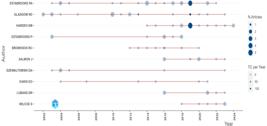
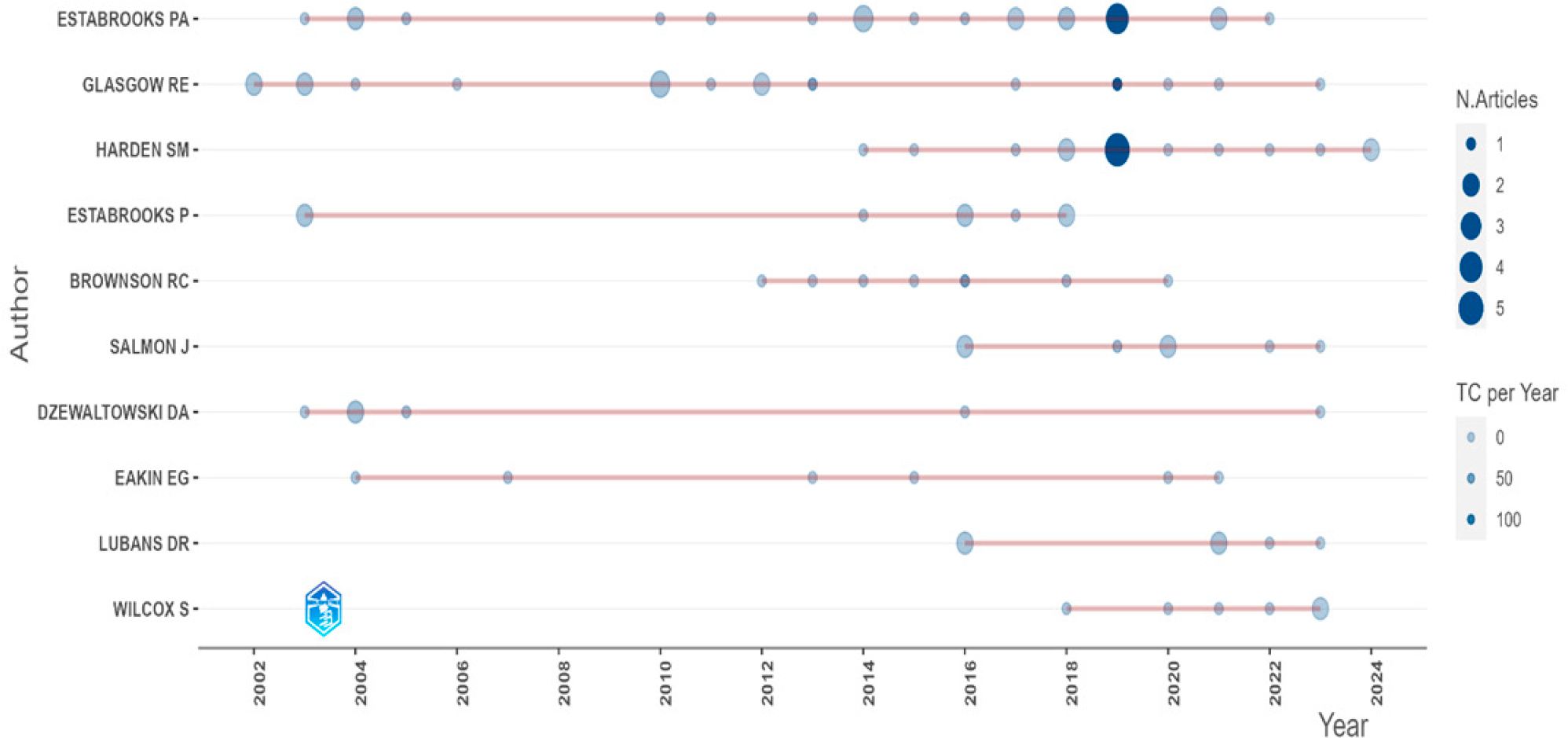
Figure 1 shows the top 10 researchers with the most publications and citations in the dataset over time; darker and larger circles represent more papers published that year and a higher citation coefficient. Paul Andrew Estabrooks was the most prolific in the investigated subject, with 31 publications and an h-index of 75 on Google Scholar, with scientific productions focused on behavioral determinants of health, PA interventions, and public health.
Co-citation analysis of authors
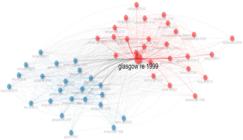
The co-citation analysis revealed that some pairs of documents are frequently co-cited, highlighting the work of Glasgow RE with 11 associated documents. The paper “Evaluating the public health impact of health promotion interventions: the RE-AIM framework”18 pioneers the application of the RE-AIM tool. Other frequently co-cited authors include Dzewaltowski DA (3 documents), Harden SM (2 documents), Estabrooks PA (2 documents), and Klesges LM (2 documents), all coauthors of relevant research on the topic. In Figure 2, larger spheres indicate a higher concentration of co-citations around specific subjects that these works address.
Most Active Countries
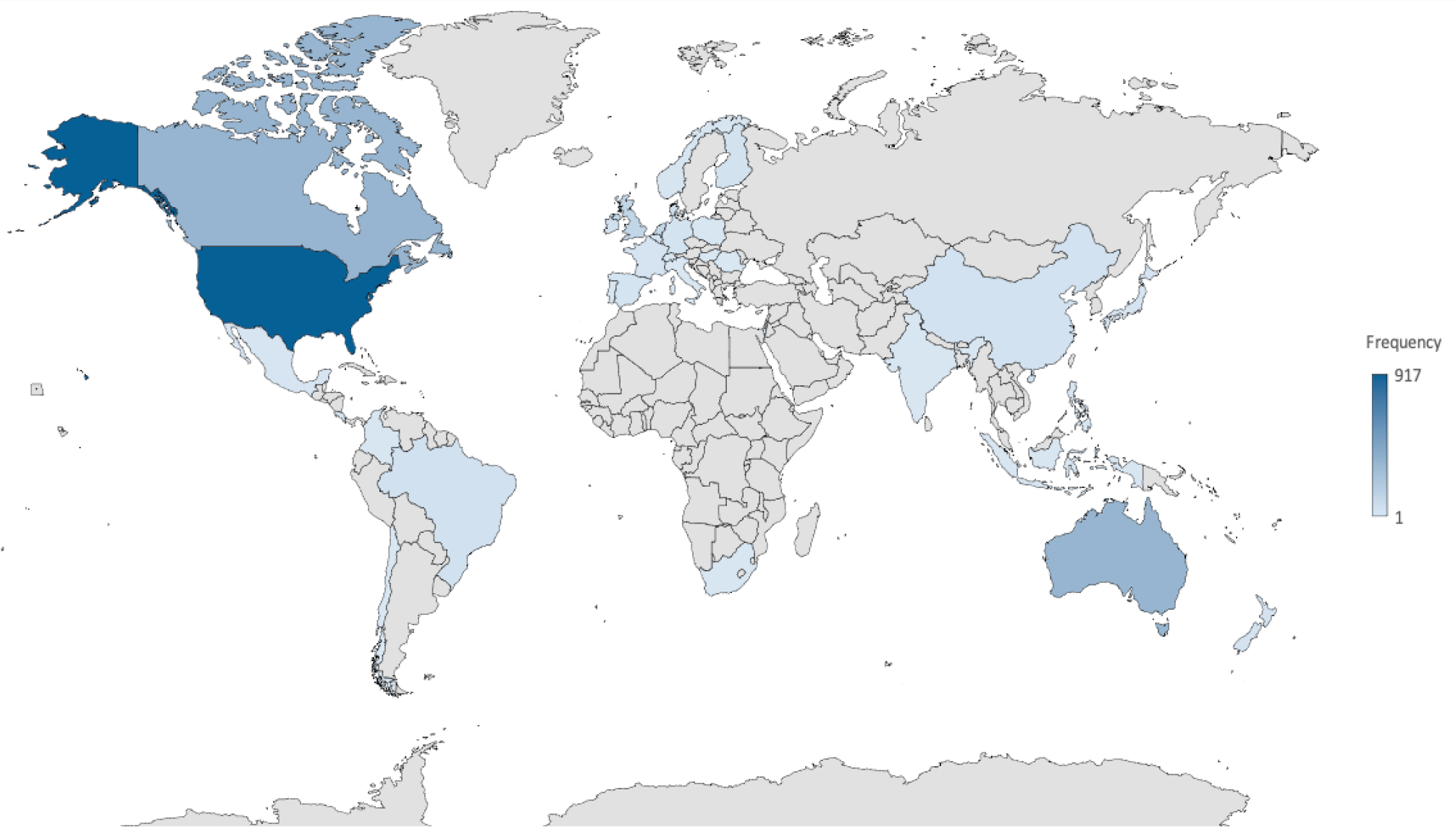
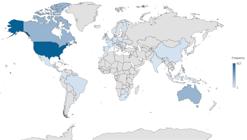
Figure 3 presents the analysis of scientific production by country/region based on the frequency of authors associated with each location. The darker the shade of blue on the map, the greater the number of researchers on the topic in that country. The United States leads with 917 authors, followed by Australia with 339 and Canada with 338 authors. The United Kingdom also contributes significantly, with 115 authors, followed by the Netherlands, with 108. Other countries, such as Brazil, Ireland, Finland, China, and Germany, make significant contributions with fewer authors, ranging from 28 to 39.
Keyword co-occurrence analysis
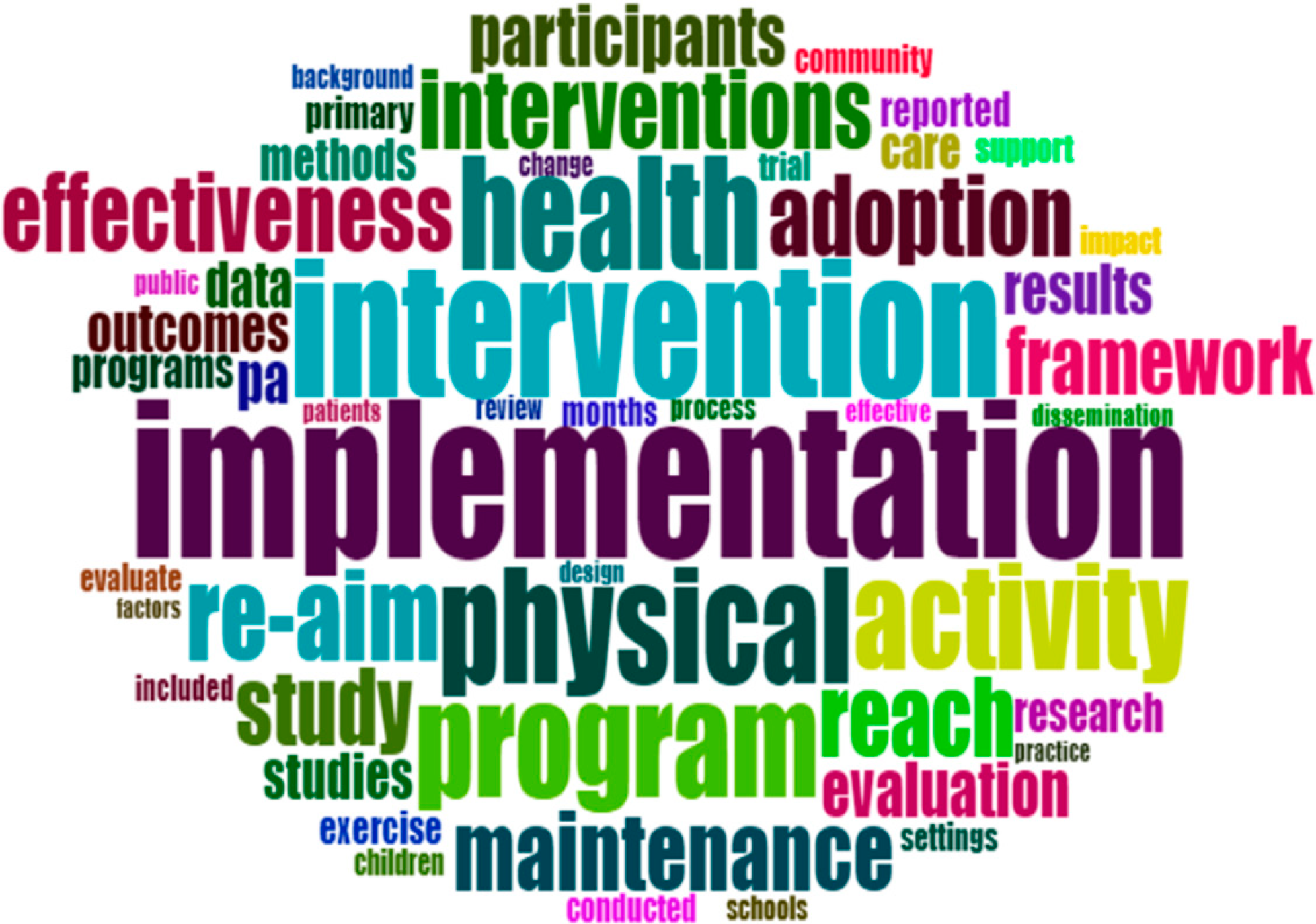
The bibliometric analysis of keywords (Figure 4) highlighted frequent terms in studies on the RE-AIM framework and PA: “implementation” (865 citations), “intervention” (1,222 citations), “health” (615 citations), “program” (613 citations), “PA” (588 citations), and “RE-AIM” (504 citations). These terms help outline the focus of the papers and provide an overview of research trends in this field of investigation.
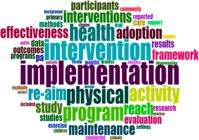
Keywords presented in scientific publications on the RE-AIM framework and evaluation in physical activity and/or exercise interventions.
Factor analysis of research trends and frequently used keywords in the investigated topic revealed the 20 most related terms, including PA, interventions, impact, the RE-AIM framework, health, exercise, implementation, programs, health promotion, children, obesity, adults, randomized controlled trials, prevention, public health, translation, outcomes, and quality of life.
Discussion
Between 2002 and 2024, there was a substantial increase in the number of publications in this area, totaling 353 publications in the WoS database. This growth reflects the scientific community’s interest in understanding the mechanisms and impacts of interventions based on the RE-AIM framework, aligned with the importance of PA for public health.
Most evidence related to the RE-AIM framework and PA has been published in journals such as BMC Public Health, Translational Behavioral Medicine, Frontiers in Public Health, International Journal of Behavioral Nutrition and Physical Activity, and International Journal of Environmental Research and Public Health. These journals are recognized in the academic community for attracting multidisciplinary contributions and reflecting a comprehensive approach to public health, including areas such as epidemiology, environmental health, global health, health promotion, and health policies.
The most influential researchers in this field include Estabrooks PA, Glasgow RE, Gaglio B, Harden SM, Brownson RC, Salmon J, Eakin EG, Lubans DR, Wilcox S, and Dzewaltowski DA. Among these, Paul Andrew Estabrooks, affiliated with the College of Health and Department of Health and Kinesiology at the University of Utah, emerges as the most prominent, followed by Glasgow RE, from the Department of Family Medicine at the University of Colorado.
Gaglio B, from the Patient-Centered Outcomes Research Institute, Harden SM, from the Physical Activity and Community Implementation Research Group at Virginia Tech University, Brownson RC, from the Department of Surgery, Division of Public Health Sciences, and Alvin J, from the Siteman Cancer Center at Washington University School of Medicine, also stand out as influential in this field of study.
The predominance of the United States in knowledge production regarding the RE-AIM framework and PA, both in publications and in the collaboration network among authors, evidences, in part, the disparities in health systems and research priorities between low, middle-, and high-income countries. This trend matches the observations of Lee et al.19, who highlight the predominance of this approach in the United States and other high-income countries compared with those with low and middle income. In this study, among lowand middle-income countries, Brazil stands out as the most prominent, followed by Mexico and India.
In Brazil, the RE-AIM framework has been validated and adapted to Brazilian culture20 and has been widely used to plan and evaluate interventions promoting PA10,21-24. Notable contributions include the works of researcher Tânia Rosane Bertoldo Benedetti, affiliated with the Department of Physical Education at the Federal University of Santa Catarina. Her research focuses on health promotion and active aging, evaluating the effectiveness of PA programs and policies for older populations.
The ten most cited references based on global citation counts9,25-33 provide a comprehensive view of trends in PA intervention research, using the RE-AIM framework as an analytical tool for behavior change programs.
In summary, these works address the following subjects: using the RE-AIM framework in systematic reviews as a protocol for assessing the quality of interventions, the importance of adapting and scaling interventions in different contexts, and the potential use of technology for self-monitoring PA habits and sedentary behaviors across different sample groups.
The manuscript by Glasgow et al.9 was the most cited (818 citations) paper. The authors explored the evolution of RE-AIM over 20 years of application, highlighting lessons learned from its use. In this systematic review, the researchers found that the tool has been frequently employed in research on public health and behavior change in clinical, community, and corporate settings. Although it does not present data directly related to PA research, the evidence provides consistent information on the evolution and applicability of the RE-AIM model in this field of study, making it a relevant reference for other works in the area.
On the other hand, this approach has been widely used by the scientific community in systematic review studies as a methodological strategy for coding and indicating quality in the evaluation of empirical research on PA interventions across different population groups21,34-37.
The scientific literature also widely discusses the need to expand PA interventions within public health policies3,38,40,43. Reports and studies by the WHO highlight challenges such as the lack of resources and infrastructure, which can limit global implementation. They also emphasize the economic cost of physical inactivity, which affects health systems, economic development, and quality of life3,40.
Regarding the effectiveness of online interventions and self-monitoring technologies in reducing physical inactivity, these tools have small to moderate effects on PA when they include features such as real-time feedback via text messages and personalized goals41. Various factors influence these outcomes, such as the duration and intensity of interventions, as well as the individual characteristics of participants42.
Zangger et al.43 argued that digital interventions can improve PA and function but may also increase the risk of minor adverse events such as musculoskeletal pain, physical discomfort, and fatigue. The authors emphasize the need for careful monitoring and adjustments in interventions to minimize risks and maximize positive health outcomes for individuals.
These studies indicate a growing consensus on the effectiveness of mobile apps in promoting PA. However, further robust and long-term research is needed to validate these effects and optimize technological interventions. Large-scale randomized studies, as highlighted by Lewis et al.31, are essential to better clarify the role of technologies in promoting PA.
Examining the papers retrieved in the WoS search on RE-AIM and PA, keywords such as implementation, intervention, health, program, and PA stood out. The analysis of trending topics, illustrated in Figure 4, revealed that “implementation” has been investigated more and more in recent years.
These findings corroborate those of the study by Glasgow et al.9, where the researchers noted that, among all dimensions of RE-AIM, implementation has shown the highest number of indices in studies using this approach. This can be attributed to the focus on ensuring that interventions are effectively executed, involving multiple stakeholders at the environmental, professional, and individual levels.
The limitations of this study include the exclusive use of the WoS database as the data source, which may not fully represent the entire scientific production on the topic. However, WoS is one of the largest and most comprehensive scientific repositories available, providing robustness and representativeness to the findings. Another limitation is only including papers published in English, which may exclude significant research published in other languages. Additionally, there is the potential for citation bias, where older studies or those by more renowned authors may receive greater visibility, regardless of the quality or relevance of the content. Therefore, the data should be analyzed with caution. More detailed review studies could build on these findings and explore other databases, such as PubMed and Scopus, for a more comprehensive understanding of these discoveries.
This study is innovative in its approach in that it explores the intersection between the RE-AIM framework and PA from the perspective of bibliometric analysis. Our findings provide a quantitative overview of the collaboration network and scientific production of the RE-AIM framework and PA over the past two decades. The applicability of this method in lowand middle-income countries remains underexplored, suggesting that public policies and programs aimed at promoting active lifestyles in these contexts could integrate the dimensions of the RE-AIM framework to ensure a more comprehensive and effective evaluation of interventions. Objectively understanding the applicability of this technique in PA interventions through future systematic reviews could be essential for identifying gaps in the literature and proposing new research directions that expand the scope of investigations in this area.
The bibliometric analysis revealed a progressive increase in publications on using the RE-AIM framework in PA interventions. A scientific collaboration network was identified, with principal researcher Paul Estabrooks emerging as a collaborator with many authors who have published extensively on the investigated topic. The United States leads this research area, closely followed by Australia and Canada. Additionally, the growing role of countries such as Brazil, whose contribution is increasing, demonstrates a global and diverse approach to the topic.
Studies investigating the intersection between PA and the RE-AIM framework focus on evaluating and implementing interventions designed to promote PA and improve public health. They seek to understand the effectiveness of interventions and the factors influencing their successful implementation and sustainability over time. The dataset analysis suggests a need for further research on the applicability and relationship of this tool in evaluating interventions across diverse sociocultural contexts, including countries with lowand middle-income per capita.
Declaration regarding the use of artificial intelligence tools in the article writing process
The authors did not use artificial intelligence tools for preparation of the manuscript.
Availability of research data and other materials
The contents will be available at the time of publication of the article.
References
-
1 World Health Organization. Guidelines on physical activity and sedentary behavior [Internet]. Geneva: World Health Organization; 2020; Available from: <https://apps.who.int/iris/handle/10665/336656> [2024 Jul].
» https://apps.who.int/iris/handle/10665/336656 -
2 Strain T, Flaxman S, Guthold R, Semenova E, Cowan M, Riley LM, et al. National, regional, and global trends in insufficient physical activity among adults from 2000 to 2022: a pooled analysis of 507 population-based surveys with 5·7 million participants. Lancet Glob Health. 2024;12(8):e1232-e1243. doi: https://doi.org/10.1016/s2214-109x(24)00150-5
» https://doi.org/10.1016/s2214-109x(24)00150-5 -
3 World Health Organization. Global levels of physical inactivity in adults: Off track for 2030. Summary report on global levels [Internet]. Geneva: World Health Organization; 2024. Available from: <https://www.who.int/publications/i/item/9789240059153> [2024 Jun].
» https://www.who.int/publications/i/item/9789240059153 -
4 Guerra PH, Soares HF, Mafra AB, Czarnobai I, Cruz GA, Weber WV, et al. Educational interventions for physical activity among Brazilian adults: systematic review. Rev Saude Publica. 2021;55:110. doi: https://doi.org/10.11606/s1518-8787.2021055003236
» https://doi.org/10.11606/s1518-8787.2021055003236 -
5 Heath GW, Parra DC, Sarmiento OL, Andersen LB, Owen N, Goenka S,et al. Evidence-based intervention in physical activity: lessons from around the world. Lancet. 2012;380(9838):272-81. doi: https://doi.org/10.1016/s0140-6736(12)60816-2
» https://doi.org/10.1016/s0140-6736(12)60816-2 -
6 Kettle VE, Madigan CD, Coombe A, Graham H, Thomas JJC, Chalkley AE, et al. Effectiveness of physical activity interventions delivered or prompted by health professionals in primary care settings: systematic review and meta-analysis of randomised controlled trials. BMJ. 2022;376:e068465. doi: https://doi.org/10.1136/bmj-2021-068465
» https://doi.org/10.1136/bmj-2021-068465 -
7 Stephenson A, McDonough SM, Murphy MH, Nugent CD, Mair JL. Using computer, mobile and wearable technology enhanced interventions to reduce sedentary behaviour: a systematic review and meta-analysis. Int J Behav Nutr Phys Act. 2017;14(1):105. doi: https://doi.org/10.1186/s12966-017-0561-4
» https://doi.org/10.1186/s12966-017-0561-4 -
8 Gaglio B, Shoup JA, Glasgow RE. The RE-AIM framework: a systematic review of use over time. Am J Public Health. 2013;103(6):e38-e46. doi: https://doi.org/10.2105/ajph.2013.301299
» https://doi.org/10.2105/ajph.2013.301299 -
9 Glasgow RE, Harden SM, Gaglio B, Rabin B, Smith ML, Porter GC, et al. RE-AIM Planning and Evaluation Framework: Adapting to New Science and Practice With a 20-Year Review. Front Public Health. 2019;7:64. doi: https://doi.org/10.3389/fpubh.2019.00064
» https://doi.org/10.3389/fpubh.2019.00064 -
10 Benedetti TRB, Schwingel A, Chodzko-Zajko W, Meurer ST, Brito FA, Almeida FA. RE-AIM: uma proposta de avaliação de programas de atividade física. Kairós-Gerontologia. 2014;17(2):295-314. doi: https://doi.org/10.23925/2176-901X.2014v17i2p295-314
» https://doi.org/10.23925/2176-901X.2014v17i2p295-314 -
11 Estabrooks PA, Gyurcsik, NC. Evaluating the impact of behavioral interventions that target physical activity: issues of generalizability and public health. Psychology of sport and exercise. 2003;4(1):41-55. doi: https://doi.org/10.1016/S1469-0292(02)00016-X
» https://doi.org/10.1016/S1469-0292(02)00016-X -
12 Jauregui E, Pacheco AM, Soltero EG, O’Connor TM, Castro CM, Estabrooks PA, et al. Using the RE-AIM framework to evaluate physical activity public health programs in México. BMC Public Health. 2015;15:162. doi: https://doi.org/10.1186/s12889-015-1474-2
» https://doi.org/10.1186/s12889-015-1474-2 -
13 Koorts H, Gillison F. Mixed method evaluation of a community-based physical activity program using the RE-AIM framework: practical application in a real-world setting. BMC Public Health. 2015;15:1102. doi: https://doi.org/10.1186/s12889-015-2466-y
» https://doi.org/10.1186/s12889-015-2466-y -
14 Donthu N, Kumar S, Mukherjee D, Pandey N, Lim WM. How to conduct a bibliometric analysis: An overview and guidelines. Journal of Business Research. 2021;133:285-96. doi: https://doi.org/10.1016/j.jbusres.2021.04.070
» https://doi.org/10.1016/j.jbusres.2021.04.070 -
15 Aria M, Cuccurullo C. Bibliometria: An R-tool for comprehensive science mapping analysis. J. Informetr. 2017;11(4):959-975. doi: https://doi.org/10.1016/j.joi.2017.08.007
» https://doi.org/10.1016/j.joi.2017.08.007 -
16 Zupic I, Čater T. Bibliometric methods in management and organization. Organ. Res. Methods. 2015;18(3):429-72. doi: https://doi.org/10.1177/1094428114562629
» https://doi.org/10.1177/1094428114562629 -
17 Büyükkidik SA. A bibliometric analysis: A tutorial for the bibliometrix package in R using IRT literature. J. Meas. Eval. Educ. Psychol. 2022;13(3):164-93. doi: https://doi.org/10.21031/epod.1069307
» https://doi.org/10.21031/epod.1069307 -
18 Glasgow RE, Vogt TM, Boles SM. Evaluating the public health impact of health promotion interventions: the REAIM framework. Am J Public Health. 1999;89(9):1322-7. doi: https://doi.org/10.2105/ajph.89.9.1322
» https://doi.org/10.2105/ajph.89.9.1322 -
19 Lee RE, Galavíz KI, Soltero EG, Rosales Chavez J, Jauregui E, Lévesque L, et al. Applying the RE-AIM conceptual framework for the promotion of physical activity in low-and middle-income countries. Rev Latino-Am Enfermagem. 2017;25:e2923. doi: https://doi.org/10.1590/1518-8345.1894.2923
» https://doi.org/10.1590/1518-8345.1894.2923 -
20 Brito FA, Benedetti TRB, Tomicki C, Konrad LM, Sandreschi PF, Manta SW, et al. Tradução e adaptação do Check List RE-AIM para a realidade Brasileira. Rev Bras Ativ Fis Saúde. 2018;23:1-8. doi: https://doi.org/10.12820/rbafs.23e0033
» https://doi.org/10.12820/rbafs.23e0033 -
21 Konrad L, Tomicki C, Silva M, Almeida F, Benedetti T. Avaliação de programas de mudança de comporta-mento usando a ferramenta RE-AIM: um estudo de revisão sistemática. Rev Bras Ativ Fís Saúde. 2018;22(5):439-44. doi: https://doi.org/10.12820/rbafs.v.22n5p439-449
» https://doi.org/10.12820/rbafs.v.22n5p439-449 -
22 Quadros EN, Maciel EC, Konrad LM, Ribeiro CG, Lopes ACS, Meurer ST, et al. Avaliação da efetividade do “VAMOS” no contexto do programa academia da saúde: Um estudo qualitativo. Movimento. 2020;26:e26023. doi: https://doi.org/10.22456/1982-8918.94432
» https://doi.org/10.22456/1982-8918.94432 -
23 Squarcini CFR, Rocha SV, Munaro HLR, Benedetti TRB, Almeida FA. Physical activity programs for elderly persons: An evaluation of Brazilian scientific production using the REAIM framework. Rev bras geriatr geron-tol. 2015;18:909-20. doi: https://doi.org/10.1590/1809-9823.2015.14103
» https://doi.org/10.1590/1809-9823.2015.14103 -
24 Tomicki C, Rech CR, Konrad L, Bezerra JB, Ribeiro CG, Schwingel A, et al. Adoption of an intervention to promote physical activity and healthy eating in Brazilian health care settings. Rev argent cienc comport. 2023;13:35-45. doi: https://doi.org/10.32348/1852.4206.v15.n1.32202
» https://doi.org/10.32348/1852.4206.v15.n1.32202 -
25 Biddle SJH, Batterham AM. High-intensity interval exercise training for public health: a big HIT or shall we HIT it on the head?. Int J Behav Nutr Phys Act. 2015;12:1-8. doi: https://doi.org/10.1186/s12966-015-0254-9
» https://doi.org/10.1186/s12966-015-0254-9 -
26 Dzewaltowski DA, Estabrooks PA, Klesges LM, Bull S, Glasgow RE. Behavior change intervention research in community settings: how generalizable are the results?. Health Promot Int. 2004;19(2):235-45. doi: https://doi.org/10.1093/heapro/dah211
» https://doi.org/10.1093/heapro/dah211 -
27 Gaglio B, Shoup JA, Glasgow RE. The RE-AIM framework: a systematic review of use over time. Am J Public Health. 2013;103(6):e38-e46. doi: https://doi.org/10.2105/ajph.2013.301299
» https://doi.org/10.2105/ajph.2013.301299 -
28 Glasgow RE, Bull SS, Gillette C, Klesges LM, Dzewaltowski DA. Behavior change intervention research in healthcare settings: a review of recent reports with emphasis on external validity. Am J Prev Med. 2002;23(1):62-9. doi: https://doi.org/10.1016/s0749-3797(02)00437-3
» https://doi.org/10.1016/s0749-3797(02)00437-3 -
29 Kohl LF, Crutzen R, de Vries NK. Online prevention aimed at lifestyle behaviors: a systematic review of reviews. J Med Internet Res. 2013;15(7):e146. doi: https://doi.org/10.2196/jmir.2665
» https://doi.org/10.2196/jmir.2665 -
30 Klesges LM, Estabrooks PA, Dzewaltowski DA, Bull SS, Glasgow RE. Beginning with the application in mind: designing and planning health behavior change interventions to enhance dissemination. Ann Behav Med. 2005;29(Suppl):66-75. doi: https://doi.org/10.1207/s15324796abm2902s_10
» https://doi.org/10.1207/s15324796abm2902s_10 -
31 Lewis BA, Napolitano MA, Buman MP, Williams DM, Nigg CR. Future directions in physical activity intervention research: expanding our focus to sedentary behaviors, technology, and dissemination. J Behav Med. 2017;40(1):112-126. doi: https://doi.org/10.1007/s10865-016-9797-8
» https://doi.org/10.1007/s10865-016-9797-8 -
32 Reis RS, Salvo D, Ogilvie D, Lambert EV, Goenka S, Brownson RC. Scaling up physical activity interventions worldwide: stepping up to larger and smarter approaches to get people moving. Lancet. 2016;388(10051):1337-48. doi: https://doi.org/10.1016/s0140-6736(16)30728-0
» https://doi.org/10.1016/s0140-6736(16)30728-0 -
33 Stellefson M, Chaney B, Barry AE, Chavarria E, Tennant B, Walsh-Childers K, et al. Web 2.0 chronic disease selfmanagement for older adults: a systematic review. J Med Internet Res. 2013;15(2):e35. doi: https://doi.org/10.2196/jmir.2439
» https://doi.org/10.2196/jmir.2439 -
34 Bhuiyan N, Singh P, Harden SM, Mama SK. Rural physical activity interventions in the United States: a systematic review and RE-AIM evaluation. Int J Behav Nutr Phys Act. 2019;16(1):140. doi: https://doi.org/10.1186/s12966-019-0903-5
» https://doi.org/10.1186/s12966-019-0903-5 -
35 Galaviz KI, Harden SM, Smith E, Blackman KC, Berrey LM, Mama SK, et al. Physical activity promotion in Latin American populations: a systematic review on issues of internal and external validity. Int J Behav Nutr Phys Act. 2014;11(77). doi: https://doi.org/10.1186/1479-5868-11-77
» https://doi.org/10.1186/1479-5868-11-77 -
36 Silva JAD, Gonçalves ECDA, Silva DAS, Silva KS. Programas de intervenção para atividade física nas escolas brasileiras: Revisão com base no modelo RE-AIM. Ciênc Saúde Colet. 2019;24:3443-56. doi: https://doi.org/10.1590/1413-81232018249.23502017
» https://doi.org/10.1590/1413-81232018249.23502017 -
37 Kennedy SG, Sanders T, Estabrooks PA, Smith JJ, Lonsdale C, Foster C, et al. Implementation at-scale of school-based physical activity interventions: A systematic review utilizing the RE-AIM framework. Obes Rev. 2021;22(7):e13184. doi: https://doi.org/10.1111/obr.13184
» https://doi.org/10.1111/obr.13184 -
38 Kohl HW, Craig CL, Lambert EV, Inoue S, Alkandari JR, Leetongin G, et al. The pandemic of physical inactivity: global action for public health. Lancet. 2012;380(9838):294-305. doi: https://doi.org/10.1016/s0140-6736(12)60898-8
» https://doi.org/10.1016/s0140-6736(12)60898-8 -
39 World Health Organization. Global action plan on physical activity 2018-2030: More active people for a healthier world. World Health Organization: Geneva. 2018; Available from: <https://iris.who.int/handle/10665/272722> [2024 Jul].
» https://iris.who.int/handle/10665/272722 -
40 World Health Organization. Global action plan on physical activity 2018-2030: More active people for a healthier world. World Health Organization: Geneva. 2022; Available from: <https://www.who.int/publications/i/item/9789240059153> [2024 Jul].
» https://www.who.int/publications/i/item/9789240059153 -
41 Laranjo L, Ding D, Heleno B, Kocaballi B, Quiroz JC, Tong HL, et al. Do smartphone applications and activity trackers increase physical activity in adults? Systematic review, metaanalysis and metaregression.Br J Sports Med.2021;55(8):422-32. doi: https://doi.org/10.1136/bjsports-2020-102892
» https://doi.org/10.1136/bjsports-2020-102892 -
42 Pradal-Cano L, Lozano-Ruiz C, Pereyra-Rodríguez JJ, Saigí-Rubió F, Bach-Faig A, Esquius L, et al. Using Mobile Applications to Increase Physical Activity: A Systematic Review. Int J Environ Res Public Health. 2020;17(21):8238. doi: https://doi.org/10.3390/ijerph17218238
» https://doi.org/10.3390/ijerph17218238 -
43 Zangger G, Bricca A, Liaghat B, Juhl CB, Mortensen SR, Andersen RM, et al. Benefits and Harms of Digital Health Interventions Promoting Physical Activity in People With Chronic Conditions: Systematic Review and Meta-Analysis. J Med Internet Res. 2023;25:e46439. doi: https://doi.org/10.2196/46439
» https://doi.org/10.2196/46439
Edited by
-
Editor in Chief
Raphael Ritti-Dias https://orcid.org/0000-0001-7883-6746Universidade Nove de Julho, São Paulo, São Paulo, Brasil.
-
Section editor
Emerson Sebastião https://orcid.org/0000-0002-6320-7784University of Illinois Urbana-Champaign, Urbana, Estados Unidos.
Reviewers’ assessment
The reviews of this article were originally conducted in Portuguese. This version has been translated using ChatGPT and subsequently reviewed by the Chief Editors.About the reviewerReviewer A
Format
-
Does the article comply with the manuscript preparation guidelines for submission to the Revista Brasileira de Atividade Física e Saúde?
Yes
-
Regarding formal aspects, is the manuscript well-structured, containing the following sections: introduction, methods, results, and discussion (with the conclusion as part of the discussion)?
Yes
-
Is the language appropriate, with clear, precise, and objective text?
Yes
-
Was any indication of plagiarism observed in the manuscript?
No
Abstract
-
Are the abstract and resumo appropriate (including: objective, information about study participants, studied variables, main results, and a conclusion) and do they reflect the manuscript content?
Partially
Suggestions/comments:
-
Insert the objective in the abstract as written at the end of the introduction.
Introduction
-
Is the research problem clearly stated and defined?
Partially
-
Is the research problem adequately contextualized in relation to existing knowledge, moving from general to specific?
Partially
-
Are the reasons justifying the need for the study (including the authors’ assumptions about the problem) well-established in the text?
Yes
-
Are the references used to support the presentation of the research problem current and relevant to the topic?
Yes
-
Is the objective clearly presented?
Yes
Suggestions/comments:
-
Include a paragraph on the health benefits of regular physical activity.
-
Clarify the research problem in the introduction to facilitate the reader’s understanding.
Methods
-
Are the methodological procedures generally appropriate for the research problem?
Yes
-
Are the methodological procedures adopted for the study sufficiently detailed?
Yes
-
Was the procedure for selecting or recruiting participants appropriate for the research problem and clearly, sufficiently, and objectively described?
Yes
-
Were details provided on the instruments used for data collection, their psychometric properties (e.g., reproducibility, internal consistency, and validity), and, when relevant, on the operational definition of the variables?
Yes
-
Is the data analysis plan appropriate and adequately described?
Yes
-
Were the inclusion and/or exclusion criteria for study participants described and appropriate?
Yes
-
Did the authors provide details on the ethical procedures adopted for the research?
Yes
Suggestions/comments:
-
The study clearly adopts a quantitative approach; however, corresponding analysis is absent throughout the text. It seems the study better fits a qualitative approach.
Results
-
Is the use of tables and figures appropriate and does it facilitate the proper presentation of the study’s results?
Yes
-
Is the number of illustrations in the article in accordance with the journal’s manuscript submission guidelines?
Yes
-
Is the number of participants at each stage of the study, as well as the number and reasons for losses and refusals, presented in the manuscript?
Yes
-
Are the characteristics of the participants presented and sufficient?
Yes
-
Are the results presented appropriately, highlighting the main findings and avoiding unnecessary repetition?
Yes
Suggestions/comments:
-
Add a column in Table 1 with the article title.
Discussion
-
Are the main findings of the study presented?
Yes
-
Are the study’s limitations and strengths presented and discussed?
Yes
-
Are the results discussed in light of the study’s limitations and the existing knowledge on the topic?
Yes
-
Are the potential contributions of the study’s main findings to scientific development, innovation, or real-world applications discussed by the authors?
Yes
Conclusion
-
Is the study’s conclusion presented appropriately and consistent with the study’s objective?
Yes
-
Is the study’s conclusion original?
Yes
References
-
Are the references current and sufficient?
Yes
-
Are most of them original research articles?
Yes
-
Do the references comply with the journal’s guidelines (quantity and format)?
Yes
-
Are the in-text citations appropriate, meaning that statements are supported by references that substantiate them?
Yes
Comments to the Author
-
The article’s topic is highly relevant in the current scientific landscape, considering the growing use of frameworks such as RE-AIM, especially in the context of physical activity.
Final decision
-
Minor revisions required
- peer review recommendation: minor-revision

 Note: N = Number; TC = Total Citations