 MINI-CUTTING SIZE, MINI-TUNNEL MANAGEMENT AND PHYTOHORMONES IN THE CLONAL PROPAGATION OF Eucalyptus urophylla AND HYBRIDS OF Corymbia spp.
ABSTRACT
The area planted with Corymbia spp. clones is expected to increase in the coming years, despite their propagation challenges. This study aimed to evaluate mini-cutting size, minitunnel opening time, and the use of growth regulators in the clonal propagation of Corymbia spp. Four experiments were conducted using three clones: C. citriodora × C. torelliana, C. torelliana × C. citriodora, and E. urophylla, where E. urophylla was used as a control due to its ease of propagation. The results from each experiment were used to optimize the methodology for the subsequent one. Initially, three mini-cutting sizes were tested: 5, 10, and 15 cm in length. The second experiment evaluated three collection times of mini-cuttings after mini-tunnel opening: 0, 24, and 48 hours. The third experiment tested five concentrations of indole-3-butyric acid (IBA): 0, 500, 1000, 1500, and 2000 mg kg⁻1. Finally, five concentrations of a formulated product containing different plant growth regulators (0, 1, 2, 3, and 4 mL L⁻1) were assessed. All experiments were arranged in a randomized block design in a factorial scheme according to genotype. The following variables were evaluated: final rooted mini-cutting yield, survival, plant height, root length, and root, shoot, and total dry mass. Mini-cuttings of 15 cm performed best in promoting the growth of both hybrids. Regarding mini-tunnel opening time, the 24-hour interval after opening was optimal for C. citriodora × C. torelliana. Applications of 2000 and 1000 mg kg⁻1 IBA promoted rooting in Corymbia spp., and rooted mini-cutting quality was improved with the application of 4 mL L⁻1 of the growth regulator formulation.
Keywords:
Forest nursery; Plant growth regulators; Forestry
RESUMO
A área plantada com clones do gênero Corymbia spp. aumentará nos próximos anos, apesar de sua difícil propagação. O objetivo então foi avaliar o tamanho de miniestacas, tempo de abertura do estufim, e uso de reguladores de crescimento na clonagem de Corymbia spp. Foram montados quatro experimentos com três clones: C. citriodora x C. torelliana, C. torelliana x C. citriodora e E. urophylla, que atuou como controle pela facilidade na propagação, o resultado do experimento anterior otimizou o próximo. Inicialmente foram testados três tamanhos de miniestacas: 5, 10 e 15 cm de comprimento. No segundo três tempos de coletas das miniestacas após abertura do estufim: 0, 24 e 48 horas. Para o terceiro experimento foram testadas cinco concentrações de ácido indolbutírico AIB (0, 500, 1000, 1500 e 2000 mg kg-1) e por fim cinco concentrações de um formulado com diferentes fitorreguladores (0, 1, 2, 3 e 4 mL L-1). Os experimentos foram conduzidos em blocos casualizados em esquema fatorial em função do genótipo. Em cada experimento avaliou-se: aproveitamento final de mudas, sobrevivência, altura de plantas, comprimento de raiz, e massa seca de raízes, parte aérea e total. Miniestacas de 15 cm foram melhores para o crescimento de ambos híbridos, em relação ao tempo de abertura do estufim, verificou-se que o intervalo de 24 horas após a abertura foi o melhor para as miniestacas de C. citriodora x C. torelliana. Aplicações de 2000 e 1000 mg kg-1 de AIB favorecem o enraizamento de Corymbia spp., que pode ter a qualidade de mudas melhorada com aplicação de 4 mL L-1 do formulado com diferentes hormônios.
Palavras-Chave:
Viveiro florestal; Reguladores de Crescimento vegetal; Silvicultura
1. INTRODUCTION
By 2070, it is projected that approximately 66% of roundwood will be supplied by forest plantations (Nepal et al., 2019). The vegetative propagation of superior genotypes is the foundation of clonal forestry, enabling plantations with higher genetic gains (Ouyang et al., 2015). Eucalyptus urophylla and E. grandis are the most widely planted species for energy purposes (Massuque et al., 2023). In addition to Eucalyptus spp. wood, Corymbia spp. wood has also been extensively used for charcoal production.
Interspecific hybrids of Corymbia are considered potential substitutes for eucalyptus wood in the pulp and paper industry (Costa et al., 2022). The features of Corymbia that have attracted attention include higher drought resistance, greater wood density, faster growth, and increased tolerance to pests and diseases (Souza et al., 2020; Costa et al., 2022). Interspecific hybrids have been developed to combine desirable traits for example, C. torelliana is used for its good rooting capacity, while C. citriodora is selected for its higher wood volume increment and adaptability to diverse edaphoclimatic conditions (Reis et al., 2013).
The first step in the production of rooted mini-cuttings through mini-cutting is the collection of mini-cuttings, and their size can influence rooted mini-cutting development. The ideal size varies according to the plant species, which induces variations in the rhizogenic process and in the development of vegetatively propagated plants (Pimentel et al., 2021; Vigl et al., 2014).
Another important factor in rooted minicutting production is the condition of the mini-garden, such as the use of the minitunnel. This technology allows for increased productivity of mini-stumps and rooting of mini-cuttings (Rocha et al., 2023). The plastic prevents transpiration from the vegetative material from directly escaping into the external environment, creating a humid and warm microclimate (Rocha et al., 2022; Lima et al., 2022). However, there is limited literature on studies reporting the optimal timing for mini-tunnel opening before mini-cutting collection.
The use of hormones to enhance adventitious rooting is a common practice in the forestry sector. This has enabled the commercial planting of species/clones with difficult rooting, such as Corymbia genotypes. However, their effectiveness can be highly variable, as adventitious root formation depends on the genotype, age, tissue lignification, and the concentration of endogenous hormones in the mother plant (Pant et al., 2022).
The response of woody species to hormone application and its impact on adventitious root formation is still not fully understood (Zhao et al., 2022). This highlights the need for continued research in this area. Alternatives to overcome rooting recalcitrance have been increasingly explored (Rocha et al., 2022), such as the application of indole-3-butyric acid (IBA) and other regulators that combine plant hormones.
IBA is a synthetic auxin widely used in forest nurseries to promote rooting of cuttings and adventitious root formation (Pant et al., 2022; Zhao et al., 2022). In the production of Corymbia and Eucalyptus rooted mini-cuttings, IBA is used to stimulate rooting, resulting in more vigorous plants (Abiri et al., 2020; Oliveira et al., 2024).
Combinations of growth regulators using different plant hormones, including auxin, gibberellin, and cytokinin, aimed at improving plant growth and development, may also be an alternative (Soares et al., 2023). These regulators have been used to enhance rooting and vegetative growth in various agricultural species. Despite their widespread application, they have not yet been used for treating Eucalyptus or Corymbia cuttings, representing a potential alternative for the forestry sector.
Thus, aiming to optimize the clonal rooted mini-cutting production process, the objective was to determine the mini-cutting size, mini-tunnel opening time, and growth regulator concentrations in the clonal propagation of Corymbia through Minicutting.
2. MATERIAL AND METHODS
2.1 Genotypes and clonal mini-garden formation
The experiments were conducted in a commercial nursery in the municipality of Itamarandiba, Minas Gerais, Brazil, with climatic conditions and mini-garden establishment methodology by Rocha et al. (2023). Three genotypes were used: two Corymbia hybrids, C. citriodora × C. torelliana (C1) and C. torelliana × C. citriodora (C2), and a spontaneous hybrid of E. urophylla (C3) as a control.
The troughs were covered by a minitunnel, which had a tubular structure with dimensions of 0.8 m × 16.3 m × 0.50 m, with a galvanized steel base covered by polyethylene plastic film, 150 μm thick. The first experiment was set up six months after the formation of the mini-garden.
2.2 Experimental Procedure
Four sequential experiments were conducted, with the results of each experiment used to optimize the methodology of the subsequent one. All were established under the same conditions. Mini-cuttings were planted 2 cm deep from the basal end in conical tubes with a capacity of 55 cm3. The substrate consisted of 70% coconut fiber and 30% rice husk, supplemented with: 1.0 kg m⁻3 of single superphosphate, 1.0 kg m⁻3 of MAP, and 2.0 kg m⁻3 of Osmocote® (NPK 19-06-10). The leaves of the mini-cuttings were not trimmed.
After planting each experiment, the trays remained for 30 days in a greenhouse, covered with transparent polyethylene plastic film with a thickness of 150 μm, with an internal temperature of approximately 38 °C and relative humidity maintained between 80% and 90%. Irrigation was performed with a flow rate of 85 L h⁻1 (1.4 L min⁻1), operating for 35 seconds every 40 minutes.
After the 30 days, the rooted minicuttings were transferred to the growth and hardening area. In this environment, weekly top dressing fertilizations were carried out. This fertilization was maintained until the rooted mini-cuttings reached a height of 20 cm, at which point the hardening process was initiated.
Experiment 1 - Mini-cutting Size
The experimental design consisted of a randomized block design with nine treatments arranged in a 3 × 3 factorial scheme, comprising three clones (C1, C2, and C3) and three mini-cutting sizes (5, 10, and 15 cm in length). The mini-cuttings were collected from the clonal mini-garden (MG) 24 hours after the opening of the minitunnels, according to their respective sizes and clones. Four blocks were used, with 44 mini-cutting per plot, totaling 176 per treatment, the other experiments also followed this pattern of mini-cutting quantity.
Experiment 2 - Mini-Tunnel Opening Time
The experimental design followed a randomized block design with nine treatments arranged in a 3 × 3 factorial scheme, consisting of three clones (C1, C2, and C3) and three mini-cutting collection times (0 - immediately after the mini-tunnel opening, 24, and 48 hours after the minitunnel opening). Four blocks, each containing 176 mini-cuttings, were used per treatment. The mini-cutting size for the Corymbia hybrids was 15 cm, while for Eucalyptus urophylla it was 10 cm.
Experiment 3 - Growth Regulator 1 (GR1)
The experiment followed a randomized block design (RBD), arranged in a 3 × 5 factorial scheme corresponding to three genetic materials (C1, C2, and C3) and five concentrations of GR1 (0, 500, 1000, 1500, and 2000 mg kg⁻1).
The mini-cuttings from each genetic material were collected from the clonal minigarden (MG) 24 hours after the opening of the mini-tunnels, with standardized sizes (15 cm for Corymbia genotypes and 10 cm for E. urophylla). They were then subjected to their respective treatments (0, 500, 1000, 1500, and 2000 mg kg⁻1). GR1 was applied in powder form to the basal portion of the minicuttings, which were planted immediately after the application.
Experiment 4 - Growth Regulator 2 (GR2)
The experiment was conducted using a randomized complete block design (RCBD), with a 3 x 5 factorial scheme, consisting of three genetic materials (C1, C2, and C3) and five concentrations of GR2 (0, 1, 2, 3, and 4 mL L⁻1), with four blocks and 176 minicuttings per treatment. The GR2 used was Stimulate® composed of 0.09 g L⁻1 of kinetin, 0.05 g L⁻1 of gibberellic acid, and 0.05 g L⁻1 of 4-indole-3-butyric acid.
The mini-cuttings of each genetic material were collected from the clonal minigarden (MG) 24 hours after the opening of the mini-tunnel, with standardized sizes (15 cm for the Corymbia hybrids and 10 cm for E. urophylla). IBA was applied in powder form to the base of the mini-cuttings, at a concentration of 2000 mg kg⁻1 for C. citriodora x C. torelliana and 1000 mg kg⁻1 for C. torelliana x C. citriodora and E. urophylla. After the application of IBA, the mini-cuttings were planted.
The growth regulator was applied on the first day after the cuttings were planted, with a reapplication after 10 days. The applications were made using a sprayer, aiming to humidify the leaf surface of the mini-cuttings inside the greenhouse.
Data Collection
After 45 days of rooting for the setup of each of the four experiments, survival percentage (SP) was counted, root length (RL) and plant height (PH) were measured using a millimeter ruler. The shoot and root parts were then separated, and the material was dried in a forced ventilation oven at 65 °C until reaching a constant weight, to determine the dry mass of the shoot (SDM), the roots (RDM) and total dry mass (TDM). For the variable survival and height, all plants within each replicate (block) were evaluated. For root length, root dry mass, shoot dry mass, and total dry mass, five rooted mini-cuttings per plot were assessed for each treatment and block.
At 90 days, the final rooted mini-cutting yield (FSY) was calculated, and suitable rooted mini-cuttings were those that: had a height equal to or greater than 20 cm; had good root development, considering the density of the root ball; collar diameter equal to or greater than 2 mm; had at least three pairs of leaves; and were free of diseases. The final rooted mini-cutting yield (FSY) was calculated considering the number of suitable rooted mini-cuttings (NSS) in relation to the total number of cuttings planted (TNMP) (Formula 1).
Statistical Analysis
The data were subjected to verification of statistical assumptions, including error independence (Durbin-Watson Test), normality (Shapiro-Wilk Test), homogeneity of variances (Bartlett's Test). Once these assumptions were met, the data were analyzed using analysis of variance (ANOVA), and when significant, the means of qualitative variables were grouped using the Scott-Knott test (p < 0.05). For quantitative variables, regression analysis was performed (p < 0.05). All analyses were conducted using R software, version 4.3.2 (R Core Team, 2023), using the ExpDes.pt package.
3. RESULTS
Experiment 1 - Mini-cutting Size
The clones and mini-cutting sizes significantly interacted in the survival percentage (SP), final rooted mini-cutting yield (FSY), root dry mass (RDM), shoot dry mass (SDM), and total dry mass (TDM) of Corymbia and Eucalyptus clones. Root length (RL) was the only variable that did not show a significant interaction between clones and mini-cutting sizes, but there was a difference between the clones.
In SP of the rooted mini-cuttings, there was a difference between the clones only at the 5 cm size, where the mini-cuttings of E. urophylla showed a reduction of approximately 3% in survival compared to the average of the Corymbia hybrids. The plants of C. torelliana x C. citriodora showed a reduction of approximately 1% in survival with the use of 15 cm mini-cuttings compared to the other sizes (Table 1).
Survival percentage (SP) and final rooted mini-cutting yield (FSY) in relation to Corymbia and Eucalyptus clones and mini-cutting sizes
Tabela 1
Porcentagem de sobrevivência (SP) e aproveitamento final de mudas (FSY) em relação aos clones de Corymbia e Eucalyptus e tamanhos de miniestacas
Although not differing from the 10 cm length, all three clones had higher FSY with the use of 15 cm mini-cuttings, with the C. citriodora x C. torelliana, C. torelliana x C. citriodora, and E. urophylla clones showing FSY values of approximately 61%, 71%, and 77%, respectively, with the FSY of the C. citriodora x C. torelliana clone being lower than the others (Table 2).
Root (RDM), shoot (SDM), and total dry mass (TDM) in relation to Corymbia and Eucalyptus clones and mini-cutting sizes
Tabela 2
Massa seca de raízes (RDM), parte aérea (SDM) e total (TDM) de em relação aos clones de Corymbia e Eucalyptus e tamanho de miniestacas
The highest RDM, SDM and TDM values for Corymbia clones were obtained using 15 cm minicuttings, without affecting E. urophylla. Although the RDM of the E. urophylla rooted mini-cuttings from 15 cm mini-cuttings did not differ from those from 5 cm and 10 cm mini-cuttings. For 10 cm and 15 cm lengths, the C. torelliana x C. citriodora rooted mini-cuttings had higher RDM, SDM, and TDM than the C. citriodora x C. torelliana and E. urophylla clones (Table 2).
The C. torelliana x C. citriodora rooted mini-cuttings, with an average RL of 27,5 cm, had the highest RL, followed by the C. citriodora x C. torelliana rooted minicuttings, and ultimately, E. urophylla, which reached an average RL of 20,3 and 16,8 cm, respectively (Figure 1).
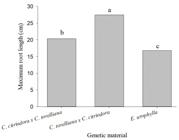
Length of the longest root of Corymbia and Eucalyptus plants. Means followed by the same letter do not differ from each other by the Scott-Knott test at 5% probability
Figura 1
Comprimento máximo da raiz de plantas de Corymbia e Eucalyptus. Médias seguidas pela mesma letra não diferem entre si pelo teste de Scott-Knott a 5% de probabilidade
Experiment 2 - Mini-Tunnel Opening Time
The eucalyptus clones and the minitunnel opening time (MTO) significantly interacted in the SP, FSY, RL, SDM and TDM. In RDM, the factors did not significantly interact, but there were effects from the individual factors, clones and MTO.
The SP of the clones did not differ among each other when the mini-cuttings were collected immediately after the minitunnel opening (0 hours), but when collected 24 and 48 hours after the mini-tunnel opening (AAE), the mini-cuttings of C. citriodora x C. torelliana had lower survival. The MTO only influenced the survival of C. citriodora x C. torelliana plants, with the highest survival rate observed when minicuttings were collected at the time of minitunnel opening (0 hours) and 48 hours AAE (Table 3).
Survival percentage (SP), final rooted mini-cutting yield (FSY), and Length of the longest root (RL) in relation to Corymbia and Eucalyptus clones and mini-tunnel opening times
Tabela 3
Porcentagem de sobrevivência (SP), aproveitamento final (FSY), e comprimento da maior raiz (RL) em relação aos clones de Corymbia e Eucalyptus e tempos de abertura do estufim
Regarding the FSY, with a yield above 71%, the clones of C. torelliana x C. citriodora and E. urophylla at all mini-tunnel opening times had a higher FSY than the C. citriodora x C. torelliana rooted minicuttings, which remained below 57% (Table 3). The MTO again only influenced the FSY of C. citriodora x C. torelliana, with the highest yield (56.38%) observed when the mini-cuttings were collected 24 hours AAE.
The mini-cuttings of C. torelliana x C. citriodora at all mini-tunnel opening times had a higher RL than those of the other clones (Table 3). The mini-tunnel opening time influenced the RL of C. torelliana x C. citriodora and E. urophylla, with the C. torelliana x C. citriodora rooted minicuttings showing higher RL when the minicuttings were collected immediately after opening (AAE), and the E. urophylla rooted mini-cuttings showing higher RL when the mini-cuttings were collected 24 and 48 hours after opening (Table 3).
The SDM and TDM of C. torelliana x C. citriodora and E. urophylla rooted minicuttings at all MTO were higher than those of C. citriodora x C. torelliana (Table 4). At 48 hours after mini-tunnel opening (AAE), the C. torelliana x C. citriodora rooted minicuttings had the highest SDM. The MTO influenced the SDM and TDM of C. torelliana x C. citriodora and E. urophylla, with these clones showing higher TDM when the mini-cuttings were collected 24 hours AAE (Table 4). The C. torelliana x C. citriodora rooted mini-cuttings had their TDM influenced only by the MTO, with the rooted mini-cuttings collected 24 hours AAE having the highest TDM.
Shoot (SDM) and total dry mass (TDM) in relation to Corymbia and Eucalyptus clones and mini-tunnel opening times prior to mini-cutting collection
Tabela 4
Massa seca da parte aérea (SDM) e total (TDM) em relação aos clones de Corymbia e Eucalyptus e tempos de abertura do estufim antes da coleta das miniestacas
The RDM of E. urophylla rooted minicuttings was the highest (0.17 g), followed by C. torelliana x C. citriodora (0.15 g), and then C. citriodora x C. torelliana, which had an average RDM of 0.13 g (Figure 2A). Rooted mini-cuttings from mini-cuttings collected 24 hours after mini-tunnel opening (AAE) had 0.17 g of RDM, which was higher than those collected at 0 and 48 hours AAE, which had RDM values of 0.14 g (Figure 2B).
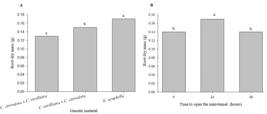
Root dry mass of Corymbia and Eucalyptus as a function of clones (A) and mini-tunnel opening times before mini-cutting collection (B). Means followed by the same letter do not differ significantly from each other according to the Scott-Knott test at a 5% probability level
Figura 2
Massa seca de raízes de Corymbia e Eucalyptus em função dos clones (A) e dos tempos de abertura dos minitúneis antes da coleta das miniestacas (B). Médias seguidas pela mesma letra não diferem significativamente entre si, de acordo com o teste de Scott-Knott a um nível de probabilidade de 5%
Experiment 3 - Growth Regulator 1 (GR1)
The genetic materials differed significantly in survival, FSY, PH, RL, RDM, SDM and TDM. The concentrations of GR1 also influenced the FSY, RDM, SDM, and total dry mass TDM (Table 5). A significant interaction was observed between the genetic materials and GR1 concentrations in RDM, SDM, and TDM.
Percentage of survival (SP), final seedling utilization (FSY), plant height (PH) and root length (RL) of Corymbia and Eucalyptus clones as a function of the general average concentrations of growth regulator 1 (GR1)
Tabela 5
Percentual de sobrevivência (SP), aproveitamento final de mudas (FSY), altura de plantas (PH) e comprimento de raiz (RL) de clones de Corymbia e Eucalyptus em função da média geral das concentrações do regulador de crescimento 1 (GR1)
The cuttings of C. torelliana x C. citriodora and E. urophylla had survival rates of 95.16% and 96.8%, respectively (Table 5), with no significant difference between them but higher than the survival rate of C. citriodora x C. torelliana (90.40%). Despite the lower survival of the C. citriodora x C. torelliana cuttings, the FSY of rooted mini-cuttings (50.66%) was higher than that of C. torelliana x C. citriodora (34.44%). The E. urophylla clone, with 69.23%, had the highest FSY of rooted mini-cuttings (Table 5).
The rooted mini-cuttings of Corymbia clones, with an average height of approximately 38 cm, had a higher average height than E. urophylla, whose average height was 35.87 cm (Table 5). The rooted mini-cuttings of C. torelliana x C. citriodora, with 21.89 cm, had a greater root length (RL) than the other genetic materials used, whose heights were approximately 17 cm (Table 5).
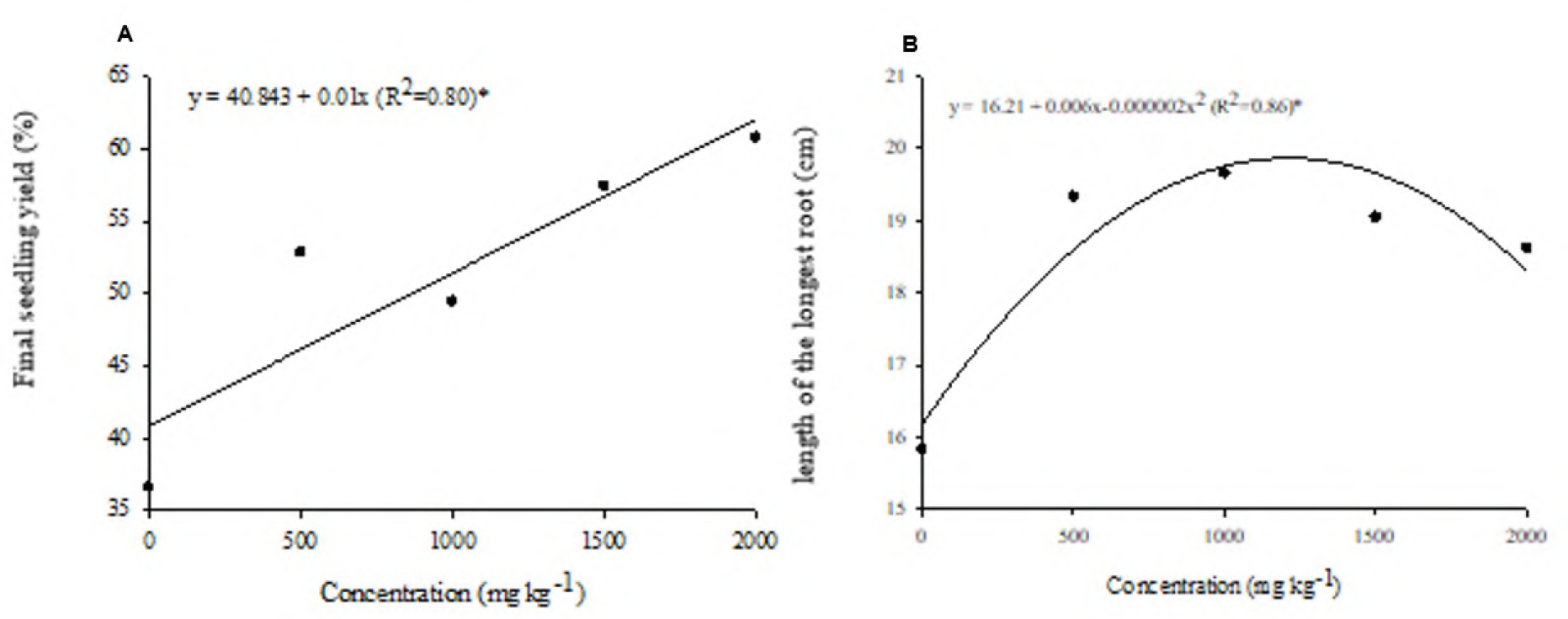
The FSY of rooted mini-cuttings in relation to the concentrations of GR1 followed a linear increasing model, with the maximum dose used (2000 mg kg-1) resulting in an FSY of 60.81% (Figure 3A). On the other hand, the RL followed a quadratic polynomial model, with the maximum response point at a dose of 1220 mg kg-1, which promoted an average root length of approximately 20 cm (Figure 3B).

Final rooted mini-cutting yield (A) and length of the longest root (B) of Eucalyptus plants as a function of growth regulator 1 concentration
Figura 3
Aproveitamento final de mudas (A) e comprimento da maior raiz (B) de plantas de eucalipto em função da concentração do regulador de crescimento 1
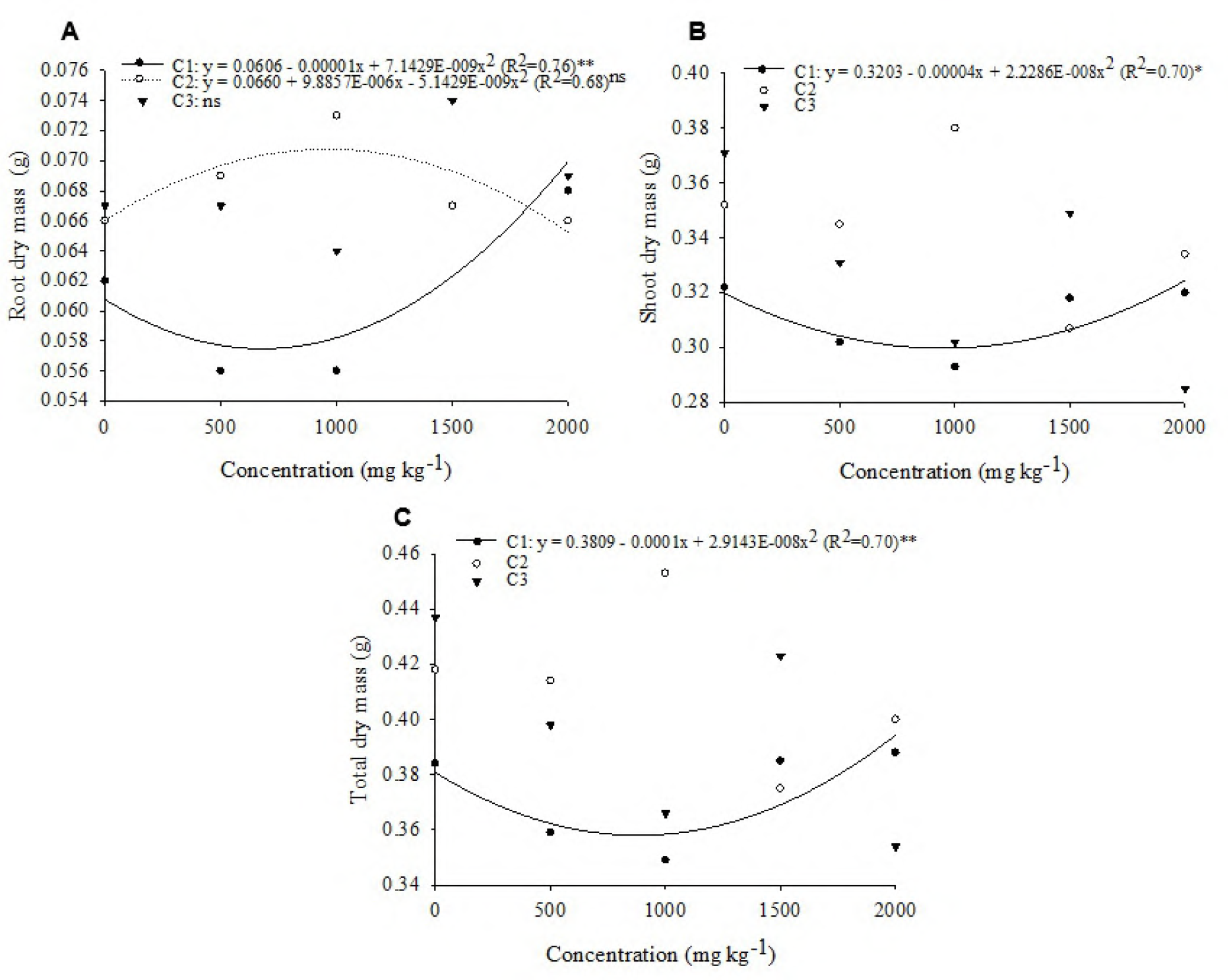
The RDM differed among the genotypes only at the doses of 500 and 1000 mg kg-1 of GR1. At the dose of 500 mg kg-1, the rooted mini-cuttings of C. torelliana x C. citriodora (0.069 g) and E. urophylla (0.067 g) had higher RDM than C. citriodora x C. torelliana (0.056 g), while at the dose of 1000 mg kg-1, the C. torelliana x C. citriodora clone, with 0.073 g, had the highest RDM compared to the others.
The responses of the genetic materials for SDM and TDM were variable across the concentrations of GR1. Without the growth regulator (0 mg kg-1), the rooted minicuttings of E. urophylla had higher SDM and TDM than the Corymbia clones. At the concentration of 500 mg kg-1, the rooted mini-cuttings of C. torelliana x C. citriodora had SDM and TDM similar to those of E. urophylla. At the concentration of 1000 mg kg-1, the rooted mini-cuttings of C. torelliana x C. citriodora had higher SDM and TDM than the other genotypes. At the concentration of 1500 mg kg-1, the cuttings of E. urophylla had the highest average SDM and TDM, at 0.35 and 0.42 g, respectively. At the concentration of 2000 mg kg-1, both Corymbia clones had higher SDM and TDM than the rooted mini-cuttings of E. urophylla.
The concentrations of GR1 significantly differed in the RDM of C. citriodora x C. torelliana, following a quadratic polynomial model, with the best responses at the concentration of 2000 mg kg-1 (Figure 4A). For the plants of C. torelliana x C. citriodora, there was no significant difference between the GR1 concentrations in RDM, and for E. urophylla, no model adjustment nor significant difference was observed between the GR1 concentrations (Figure 4A).

Root (A), shoot (B), and total (C) dry mass of Corymbia citriodora × Corymbia torelliana (C1), C. torelliana × C. citriodora (C2), and Eucalyptus urophylla (C3) plants as a function of growth regulator 1 concentrations. * Significant at 5%, ** Significant at 1%, ns not significant
Figura 4
Massa seca de raízes (A), parte área (B) e total (C) de plantas de Corymbia citriodora × Corymbia torelliana (C1), C. torelliana × C. citriodora (C2), e Eucalyptus urophylla (C3) em função das concentrações do regulador de crescimento 1. * Significativo a 5%, ** Significativo a 1%, ns não significativo
For the rooted mini-cuttings of C. torelliana x C. citriodora and E. urophylla, no model adjustment was observed for the effect of GR1 concentrations on SDM (Figure 4B) and TDM (Figure 4C). However, for the C. citriodora x C. torelliana clone, the concentrations followed a quadratic polynomial model, with the best responses at concentrations of 0 and 2000 mg kg-1 for both variables (SDM and TDM).
Experiment 4 - Growth Regulator 2 (GR2)
The genetic materials used differed in SP, FSY, PH, RL, RDM, SDM and TDM. There was an effect of GR2 concentrations and a significant interaction between the genetic materials and GR2 concentrations for RL, RDM, SDM, and TDM.
The mini-cuttings of C. torelliana × C. citriodora and E. urophylla showed higher SP (86.99% and 79.69%, respectively), with no significant difference between them, but both were superior to the SP of C. citriodora × C. torelliana, which averaged 58.41%. The highest FSY was obtained in E. urophylla, with a mean value of 66.68% (Table 6). The mini-cuttings of C. citriodora × C. torelliana had the lowest FSY (31.22%).
Survival percentage (SP), final rooted mini-cutting yield (FSY) and plant height (PH) of Corymbia and Eucalyptus clones as a function of growth regulator 2 (GR2) concentrations
Tabela 6
Percentual de sobrevivência (SP), aproveitamento final de mudas (FSY) e altura de plantas (PH) de clones de Corymbia e Eucalyptus em função das concentrações do regulador de crescimento 2 (GR2) be due to their greater number of buds and leaves on the vegetative propagules, which enhances the synthesis of soluble sugars responsible for supplying energy (Pimentel et al., 2021; Shao et al., 2018).
The rooted mini-cuttings of C. torelliana × C. citriodora showed the greatest mean PH (42.53 cm), followed by C. citriodora × C. torelliana (40.31 cm) and E. urophylla, which had a mean PH of 37.12 cm (Table 6).
Without the application of the growth regulator (0 mL L⁻1), rooted mini-cuttings of C. torelliana × C. citriodora and E. urophylla exhibited greater root length (RL), with mean values of 23.20 cm and 21.42 cm, respectively. At the concentration of 1 mL L⁻1 of GR2, the RL of the genetic materials did not differ significantly. However, at concentrations of 2, 3, and 4 mL L⁻1, the rooted mini-cuttings of C. torelliana × C. citriodora had the highest mean RL, ranging from 26 to 28 cm.
Rooted mini-cuttings of E. urophylla showed higher RDM than the Corymbia clones at GR2 concentrations of 0, 1, 2, and 3 mL L⁻1. At the concentration of 4 mL L⁻1, the highest mean RDM was observed in rooted mini-cuttings of C. torelliana × C. citriodora. The SDM and TDM were higher in C. torelliana × C. citriodora rooted minicuttings at all tested concentrations.
For RL, it was not possible to fit a model that adequately explained the biological behavior of any of the genetic materials used (Figure 5).

Length of the longest root of Corymbia and Eucalyptus plants as a function of growth regulator 2 concentrations
Figura 5
Comprimento da maior raiz de plantas de Corymbia e Eucalyptus em função das concentrações do regulador de crescimento 2
The RDM of E. urophylla followed a decreasing linear model, declining from 0.13 g in untreated rooted mini-cuttings (0 mL L⁻1 of GR2) to 0.11 g at 4 mL L⁻1, representing a reduction of approximately 20%. For the Corymbia clones, RDM fitted a quadratic polynomial model: in C. citriodora × C. torelliana, the best response was observed without the use of the regulator, with an RDM of approximately 0.10 g; in contrast, C. torelliana × C. citriodora showed a more pronounced response at 4 mL L⁻1 of GR2, reaching a mean RDM of 0.11 g (Figure 6A).
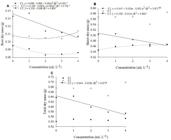
Root (A), shoot (B), and total (C) dry mass of Corymbia citriodora × Corymbia torelliana (C1), C. torelliana × C. citriodora (C2), and Eucalyptus urophylla (C3) plants as a function of growth regulator 2 concentrations. * Significant at 5%, ns not significant
Figura 6
Massa seca de raízes (A), parte área (B) e total (C) de plantas de Corymbia citriodora × Corymbia torelliana (C1), C. torelliana × C. citriodora (C2), e Eucalyptus urophylla (C3) em função das concentrações do regulador de crescimento 2. * Significativo a 5 %, ns não significativo
GR2 concentrations did not significantly affect the SDM of C. citriodora × C. torelliana. In C. torelliana × C. citriodora, no model could be fitted, but the best response was observed at 4 mL L⁻1 of GR2, with an SDM of 0.59 g (Figure 6B). In E. urophylla rooted mini-cuttings, SDM decreased with increasing GR2 concentrations, fitting a decreasing linear model. There was a reduction of approximately 7% in SDM when comparing rooted mini-cuttings treated with 4 mL L⁻1 to those not treated with the growth regulator (Figure 6B).
For TDM, there was no significant difference among GR2 concentrations and no model fit for C. citriodora × C. torelliana. In C. torelliana × C. citriodora, no model could be fitted either, but the best response was obtained with the application of 4 mL L⁻1, resulting in a mean TDM of 0.70 g. In E. urophylla, GR2 concentrations followed a decreasing linear model, leading to a reduction of approximately 10% at the highest concentration compared to the treatment without the growth regulator (Figure 6C).
4. DISCUSSION
The size of the mini-cutting influences the development of the plants, and the ideal size varies according to the species, which leads to variations in the rhizogenic process and the development of vegetatively propagated (Pimentel et al., 2021; Vigl et al., 2014). The superiority of medium and large mini-cuttings compared to smaller ones may
Another factor is that the Corymbia hybrid with C. torelliana as the female parent (C. torelliana × C. citriodora) had a higher FSY than the hybrid with C. citriodora as the female parent (C. citriodora × C. torelliana) (Table 2). This higher FSY is partly attributed to the superior rooting capacity of C. torelliana × C. citriodora, since FSY is determined based on plant height (≥ 20 cm), stem diameter (≥ 2 mm), rooting, plant health, and the exclusion of rooted minicuttings that do not meet the minimum requirements. Given that C. torelliana exhibits greater rooting ability compared to other species of the Corymbia genus, this species has become an important component in hybrid composition for clonal selection purposes, which is currently its main role in forest breeding programs (Miranda et al., 2023).
Overall, the effects of mini-cutting sizes on FSY (Table 2), RDM, SDM, and TDM (Table 3) in E. urophylla rooted mini-cuttings were less pronounced than in Corymbia hybrids. The E. urophylla clone used is already well-established in the market and was used as a control to compare the development of the Corymbia hybrids. Because there was no difference in the final yield of rooted mini-cuttings between 10 and 15 cm, 10 cm mini-cuttings were used for E. urophylla due to their greater abundance in the mini-garden.
The benefits of using a mini-tunnel are attributed to the changes promoted in the production microenvironment, such as carbon dioxide concentration, solar irradiance, temperature, and relative humidity, which increase shoot production (Lima et al., 2022).
The C. citriodora × C. torelliana hybrid was the only one for which FSY was influenced by the opening time, showing the highest FSY when the mini-cuttings were collected 24 hours after opening (AAE) (Table 5). These rooted mini-cuttings also exhibited the highest TDM at the same collection time. Although the clones of C. torelliana × C. citriodora and E. urophylla were not significantly influenced by the minitunnel opening time, they showed higher FSY percentages at 0 and 48 hours AAE, respectively (Table 5). During the experiment, it was observed that at 48 hours AAE, the mini-cuttings of the Corymbia clones were more hardened and had shed their leaves, which is one of the symptoms of powdery mildew caused by Podosphaera pannosa, a cosmopolitan species that affects plants from different families (Fonseca et al., 2017). This attack was more pronounced in the Corymbia clones than in E. urophylla.
The highest FSY was observed in the E. urophylla clone at 48 hours AAE (Table 5). Notably, the clones of C. torelliana × C. citriodora and E. urophylla did not significantly differ in FSY at any of the collection times, despite that hybrids of Corymbia are known for their difficulty in rooting. The Eucalyptus clones have been more extensively studied and utilized (Massuque et al., 2023).
In the same site, Rocha et al. (2023) observed that exposing stock plants to the mini-tunnel for 45 days resulted in higher mini-cutting productivity, increased height and dry biomass, which was advantageous for the management operation of the minigarden. Canguçu et al. (2022) found that the use of the mini-tunnel in the clonal minigarden had different effects on the productivity of the mother plant minicuttings, depending on the season of propagule collection (cold or warm). In beds covered with mini-tunnels, the highest minicutting productivity observed mainly in the cold season may be related to the temperature changes that occur near the canopy of the mother plants (Canguçu et al., 2022).
The C. torelliana × C. citriodora hybrid exhibited the greatest root length (Figure 1 and Table 5). Larger roots can assist plants in water and nutrient absorption, improving rooted mini-cutting development and resulting in better shoot development and TDM. This may make the clone more resistant to water stress and more tolerant to pest and disease attacks, as previously reported (Souza et al., 2020; Costa et al., 2022).
Lima et al. (2022) reported that the benefits of using the mini-tunnel for rooting C. torelliana × C. citriodora are greater during the winter, attributing this to more favorable temperatures. Future studies may explore the relationship between mini-tunnel opening time and seasons of the year, as climatic conditions vary throughout the year. Wetter periods may reduce powdery mildew infestation, allowing the mini-tunnel to remain open for a longer period to favor the hardening of mini-cuttings.
The Corymbia clones showed the highest FSY at 2000 mg kg⁻1. IBA can be rapidly metabolized in eucalyptus plant tissues (Sharma et al., 2023), where it stimulates root formation by modulating the expression of specific genes related to root development (Chen et al., 2024). The use of IBA promotes the formation of a robust root system that is efficient in nutrient absorption, which is essential for the establishment of young plants in the field (Yao et al., 2021).
In RL, the concentration that resulted in the best response was 1500 mg kg⁻1 (Figure 3), with a reduction beyond this dose. Plants also possess endogenous hormones, so the application of higher doses can lead to hormonal imbalance, reducing root development. However, this reduction in RL beyond the 1500 mg kg⁻1 dose was not sufficient to affect plant development, as the FSY was higher at the 2000 mg kg⁻1 dose.
The SDM and TDM of the clones were influenced by IBA concentrations, with E. urophylla exhibiting higher SDM and TDM at lower concentrations. However, at the 2000 mg kg⁻1 concentration, both Corymbia clones had higher SDM and TDM. This demonstrates that the mini-cuttings of Corymbia clones are more dependent on auxins for their development than those of E. urophylla, and furthermore, higher concentrations inhibited the development of E. urophylla. It is worth noting that Eucalyptus clones have been exploited for decades, undergoing various breeding programs (Maciel et al., 2022). It has been shown that the efficacy of IBA in promoting adventitious rooting can be strongly influenced by the genotype. A study with Prunus rootstocks, Garnem and GF 677, demonstrated that root induction by IBA was genotype-dependent (Justamante et al., 2022).
In addition to responses genetic material, they can also be influenced by factors such as the propagation environment and the leaf area of the cuttings (Vallejostorres et al., 2021). Efficacy may also vary depending on the plant's ability to metabolize these auxin compounds and on speciesspecific factors, such as the expression of genes related to auxin transport and biosynthesis (Ludwig-müller, 2000; Sun et al., 2023).
It was observed that the performance of clonal rooted mini-cuttings of E. urophylla and Corymbia hybrids varied significantly due to their genetic and GR1 concentration. While E. urophylla stood out for its higher FSY, due to its superiority for adventitious rooting, Corymbia clones, particularly C. torelliana × C. citriodora, showed higher average height and root length, desirable characteristics. The concentration of 2000 mg kg⁻1 of GR1 was the most efficient for FSY, although higher concentrations inhibited the growth of E. urophylla, indicating a lower dependence of this species on exogenous auxins.
In the experiment with GR2,there was a strong influence of the genetic material (Table 6). GR2 did not influence rooted minicutting survival and FSY (Table 6). The formation of adventitious roots from stems, as used in cutting propagation, is crucial in clonal propagation and is primarily controlled by the balance of endogenous and exogenous hormones (Lakehal & Bellini, 2019). However, the mechanism by which endogenous and environmental factors interact to control adventitious root formation is still poorly understood (Geiss et al., 2018).
The reduction in RL (Figure 5), RDM (Figure 6A), SDM (Figure 6B), and TDM (Figure 6C) of E. urophylla plants with increasing concentrations of GR2 may have occurred due to a hormonal imbalance in the plants. E. urophylla is a species that develops well without the application of hormones. This can be observed by analyzing rooted mini-cutting survival and final rooted minicutting yield, which were only affected by the clone factor, indicating that regardless of the GR2 concentration used, the best responses for these characteristics come from E. urophylla. At the concentration of 1 mL L1, E. urophylla plants show a response similar to or even better than when no growth regulator was applied (0 mL L-1) for RDM, SDM, and TDM.
Negishi et al. (2014), studying the hormonal levels of E. globulus, reported that auxins and cytokinins play an important role in the formation of adventitious roots, and that the interaction between auxin and cytokinin levels and their metabolism for root formation is complex. It can be assumed that the optimal concentrations of these hormones for E. urophylla may be different from those in the product. Auxins generally have a beneficial effect on root formation, but cytokinins can inhibit rooting if applied in excess (Kurepa & Smalle, 2022).
For the Corymbia hybrids used, in general, GR2 tended to benefit RL, SDM and TDM, reinforcing the idea that these clones are more responsive to plant growth regulators. This may be due to rooting recalcitrance, as observed, with low final rooted mini-cutting productivity, below 45% (Table 6). Thus, it is observed that GR2 proved to be more beneficial for the Corymbia hybrids, with optimal concentrations ranging between 3 and 4 mL L⁻1. The GR2 can be a valuable tool to enhance the robustness and quality of Corymbia rooted mini-cuttings, while its use in E. urophylla should be more carefully adjusted.
5. CONCLUSION
Mini-cuttings of 15 cm were better for the growth of Corymbia hybrids. Regarding the time of opening of the mini-tunnel, it was found that the interval of 24 hours after opening was the most suitable for C. citriodora x C. torelliana mini-cuttings, while the other clones did not show significant differences. The use of growth regulators had variable positive effects, with the Corymbia hybrids benefiting more from higher concentrations (2000 and 1000 mg kg⁻1 of IBA). For the compound growth regulator, the use of 4 mL L⁻1 increased rooting and rooted mini-cutting quality for C. torelliana x C. citriodora. This work describes an effective protocol for the clonal propagation of Eucalyptus urophylla and Corymbia hybrids.
6. ACKNOWLEDGEMENTS
This study was financed in part by the Coordenação de Aperfeiçoamento de Pessoal de Nível Superior - Brasil (CAPES) - Finance Code 001. We also thank the Conselho Nacional de Desenvolvimento Científico e Tecnológico (CNPq) and the Fundação de Amparo à Pesquisa do Estado de Minas Gerais (FAPEMIG).
DATA AVAILABILITY
The entire dataset supporting the findings of this study has been published within the article.
7. REFERENCES
-
Abiri, R., Atabaki, N., Abdul-hamid, H., Sanusi, R., Shukor, N. A. A., Shaharuddin, N. A., Ahmad, S. A., Malik, S. (2020). The prospect of physiological events associated with the micropropagation of Eucalyptus sp. Forests, 11 (1), 1211. https://doi.org/10.3390/f11111211
» https://doi.org/10.3390/f11111211 -
Canguçu, V.S., Titon, M., Silva L.F.M., Pena C.A.A., SL Assis Júnior, S.L., Santos P.H.R., Oliveira, M.L.R. (2022) Mini-tunnel models in-fluence the productivity of eucalyptus mini-stumps?. Bosque, 43(3), 211-219. http://dx.doi.org/10.4067/S071792002022000300211
» http://dx.doi.org/10.4067/S071792002022000300211 -
Chen, M., Luo, J., Lin, Y., Huang, A., Liu, G. (2024). Identification and expression profile analysis of WOX family genes in the formation of Eucalyptus adventitious root. Forests, 15(3), 442. https://doi.org/10.3390/f15030442
» https://doi.org/10.3390/f15030442 -
Costa, M. M., Bittencourt, R. C., Nogueira, T. A. P. C., Silva, L. S., Silva, W. H. M., Valverde, S. R., Santos, G. A., Coelho, D. A. F., Pena, C. A. A. (2022). Technical evaluation of hybrid clones of Corymbia spp. to produce market pulp. Paper and Biomaterials, 7(3), 1-6.https://www.sciopen.com/article/10.1213/j.issn.2096-2355.2022.03.001
» https://www.sciopen.com/article/10.1213/j.issn.2096-2355.2022.03.001 -
Fonseca, N. R., Guimarães, L. M., Pires, R. P., Klopfenstein, N. B., Alfenas, A. C. (2017). Eucalypt powdery mildew caused by Podosphaera pannosa in Brazil. Tropical Plant Pathology, 42 , 261-272. https://doi.org/10.1007/s40858-017-0143-7
» https://doi.org/10.1007/s40858-017-0143-7 -
Geiss, G., Gutierrez, L., Bellini, C. (2018). Adventitious root formation: new insights and perspectives. Annual Plant Reviews, 37, 127-156. https://doi.org/10.1002/9781119312994.apr0400
» https://doi.org/10.1002/9781119312994.apr0400 -
Justamante, M. S., Mhimdi, M., MolinaPérez, M., Albacete, A., Moreno, M. Á., Mataix, I., Pérez-Pérez, J. M. (2022). Effects of auxin (Indole-3-butyric Acid) on adventitious root formation in peach-based Prunus rootstocks. Plants, 11(7), 913. https://doi.org/10.3390/plants11070913
» https://doi.org/10.3390/plants11070913 -
Kurepa, J., Smalle, J. A. (2022). Auxin/ cytokinin antagonistic control of the shoot/ root growth ratio and its relevance for adaptation to drought and nutrient deficiency stresses. International Journal of Molecular Sciences, 23(4), 1933. https://doi.org/10.3390/ijms23041933
» https://doi.org/10.3390/ijms23041933 -
Lakehal, A., Bellini, C. (2019). Control of adventitious root formation: insights into synergistic and antagonistic hormonal interactions. Physiologia Plantarum, 165(1), 90-100. https://doi.org/10.1111/ppl.12823
» https://doi.org/10.1111/ppl.12823 -
Lima, M. S., Araujo, M. M., Berghetti, Á. L. P., Aimi, S. C., Costella, C., Griebeler, A. M., Somavilla, L. M., Santos, O. P., Valente, B. M. R. T. (2022). Mini-cutting technique application in Corymbia and Eucalyptus: effects of mini-tunnel use across seasons of the year. New Forests, 53(1), 161179. https://doi.org/10.1007/s11056-021-09851-4
» https://doi.org/10.1007/s11056-021-09851-4 -
Ludwig-Müller, J. (2000). Indole-3butyric acid in plant growth and development. Plant Growth Regulation, 32, 219-230. https://doi.org/10.1023/A:1010746806891
» https://doi.org/10.1023/A:1010746806891 -
Maciel, J. C., Duque, T. S., Ferreira, E. A., Zanuncio, J. C., Plata-Rueda, A., Silva, V. P., Silva, D. V., Fernandes, B. C. C., Barros Júnior, A. P., Santos, J. B. (2022). Growth, Nutrient Accumulation, and Nutritional Efficiency of a Clonal Eucalyptus Hybrid in Competition with Grasses. Forests, 13(8), 1157. https://doi.org/10.3390/f13081157
» https://doi.org/10.3390/f13081157 -
Massuque, J., Sanchez, J. Y. S. C., Loureiro, B. A., Setter, C., Lima, M. D. R., Silva, P. H. M., Protásio, T. P., Hein, P. R. G., Trugilho, P. F. (2023). Evaluating the potential of non-commercial Eucalyptus spp. and Corymbia spp. for bioenergy in Brazil. BioEnergy Research, 16, 1592-1603. https://doi.org/10.1007/s12155-022-10502-5
» https://doi.org/10.1007/s12155-022-10502-5 -
Miranda, L., Estopa, R. A., Paludeto, J. G. Z., Tambarussi, E. V. (2023). Genetic control and early selection of three Corymbia species. Canadian Journal of Forest Research.https://doi.org/10.1139/cjfr-20230038
» https://doi.org/10.1139/cjfr-20230038 -
Negishi, N., Nakahama, K., Urata, N., Kojima, M., Sakakibara, H., Kawaoka, A. (2014). Hormone level analysis on adventitious root formation in Eucalyptus globulus. New Forests, 45, 577-587. https://doi.org/10.1007/s11056-014-9420-1
» https://doi.org/10.1007/s11056-014-9420-1 -
Nepal, P., Korhonen, J., Prestemon, J. P., Cubbage, F. W. (2019). Projecting global planted forest area developments and the associated impacts on global forest product markets. Journal of Environmental Management, 240, 421-430. https://doi.org/10.1016/j.jenvman.2019.03.126
» https://doi.org/10.1016/j.jenvman.2019.03.126 -
Oliveira, A. M., Costa, M. R., Grazziotti, P. H., Abreu, C. M., Avelino, N. R., Reis, L. A. C., Andrade, G. F. P., Menezes, J. F. S. (2024). Initial development of Corymbia citriodora x Corymbia torelliana plants inoculated with endophytic bacteria under indole butyric acid concentrations. New Forests, 55, 1-18. https://doi.org/10.1007/s11056-024-10053-x
» https://doi.org/10.1007/s11056-024-10053-x -
Ouyang, F., Wang, J., Li, Y. (2015). Effects of cutting size and exogenous hormone treatment on rooting of shoot cuttings in Norway spruce [Picea abies (L.) Karst.]. New Forests, 46, 91-105. https://doi.org/10.1007/s11056-014-9449-1
» https://doi.org/10.1007/s11056-014-9449-1 -
Pant, M., BhandarI, A., Husen, A. (2022). Adventitious root formation and clonal propagation of forest-based tree species. In: Environmental, physiological and chemical controls of adventitious rooting in cuttings Academic Press, p. 471-490. https://doi.org/10.1016/B978-0-323-90636-4.00023-4
» https://doi.org/10.1016/B978-0-323-90636-4.00023-4 -
Pimentel, N., Gazzana, D., Spanevello, J. D. F., Lencina, K. H., Bisognin, D. A. (2021). Effect of mini-cutting size on adventitious rooting and morphophysiological quality of Ilex paraguariensis plantlets. Journal of Forestry Research, 32(2), 815-822. https://doi.org/10.1007/s11676-020-01126-6
» https://doi.org/10.1007/s11676-020-01126-6 -
R Core Team. R: A language and environment for statistical computing. Vienna: R Foundation for Statistical Computing, 2023. https://www.Rproject.org/ 10 Nov. 2023.
» https://www.Rproject.org/ - Reis, C. A. F., Assis, T. F., Santos, A. M., Paludzyszyn Filho, E. (2013). Corymbia citriodora: estado da arte de pesquisas no Brasil Embrapa Florestas.
-
Rocha, F. M., Maravilha, L. F., Titon, M., Fernandes, S. J. O., Machado, E. L. M., Martins, N. S. (2023). Productivity of minicuttings of a hybrid clone of Eucalyptus urophylla x Eucalyptus pellita as a function of exposure time of mini-stumps to minitunnel. Bosque, 44(3), 595-603. http://dx.doi.org/10.4067/s0717-92002023000300595
» http://dx.doi.org/10.4067/s0717-92002023000300595 -
Rocha, F. M., Titon, M., Fernandes, S. J. O., Santos, P. H. R., Laia, M. L., Pena, C. A. A. (2022). The use of mini-tunnels and IBA for the adventitious rooting of Eucalyptus urophylla ST Blake × Eucalyptus pellita F. Muell. Ciência Florestal, 32, 1460-1478. https://doi.org/10.5902/1980509865873
» https://doi.org/10.5902/1980509865873 -
Shao, F.; Wang, S.; Huang, W.; Liu, Z. (2018). Effects of IBA on the rooting of branch cuttings of Chinese jujube (Zizyphus jujuba Mill.) and changes to nutrients and endogenous hormones. Journal of Forestry Research, 29, 1557-1567. https://doi.org/10.1007/s11676-017-0557-6
» https://doi.org/10.1007/s11676-017-0557-6 -
Sharma, V., Ankita Karnwal, A, Sharma, S., Kamal, B., Jadon, V. S., Gupta, S., Sivanasen, I. (2023). A comprehensive review uncovering the challenges and advancements in the in vitro propagation of Eucalyptus plantations. Plants, 12(17), 3018. https://doi.org/10.3390/plants12173018
» https://doi.org/10.3390/plants12173018 -
Soares, M. D. A., Charlo, H. C. D. O., Carvalho, M., Paiva, P. E., Coelho, V. P. D. M. (2023). Biostimulants increase the yield of greenhouse-grown tomato plants in summer under a tropical climate. Revista Caatinga, 36(1), 96-105. https://doi.org/10.1590/1983-21252023v36n111rc
» https://doi.org/10.1590/1983-21252023v36n111rc -
Souza, B. M., Freitas, M. L. M., Sebbenn, A. M., Gezan, S. A., Zanatto, B., Zulian, D. F., Lopes, M. T. G., Longui, E. L., Guerrini, E. A., Aguiar, A. V. (2020). Genotype-by-environment interaction in Corymbia citriodora (Hook.) KD Hill, & LAS Johnson progeny test in Luiz Antonio, Brazil. Forest Ecology and Management, 460, 117855. https://doi.org/10.1016/j.foreco.2019.117855
» https://doi.org/10.1016/j.foreco.2019.117855 -
Sun, P., Huang, Y., Yang, X., Liao, A., Wu, J. (2023). The role of indole derivative in the growth of plants: A review. Frontiers in Plant Science, 13, 1120613. https://doi.org/10.3389/fpls.2022.1120613
» https://doi.org/10.3389/fpls.2022.1120613 -
Vallejos-Torres, G., Ríos-Ramírez, O., Corazon-Guivin, M. A., Reátegui, E., Sequeira, F. M., Marín, C. (2021). Effects of leaflets and indole-3-butyric acid in the vegetative propagation by mini-tunnels of rubber tree (Hevea brasiliensis). Journal of Rubber Research, 24, 533-540. https://doi.org/10.1007/s42464-021-00097-5
» https://doi.org/10.1007/s42464-021-00097-5 -
Vigl, F., Rewald, B. (2014). Size matters? The diverging influence of cutting length on growth and allometry of two Salicaceae clones. Biomass and Bioenergy, 60, 130-136. https://doi.org/10.1016/j.biombioe.2013.11.020
» https://doi.org/10.1016/j.biombioe.2013.11.020 -
Yao, X., Liao, L., Huang, Y., Fan, G., Yang, M., Ye, S. (2021). The physiological and molecular mechanisms of N transfer in Eucalyptus and Dalbergia odorifera intercropping systems using root proteomics. BMC Plant Biology, 21, 201. https://doi.org/10.1186/s12870-021-02969-9
» https://doi.org/10.1186/s12870-021-02969-9 -
Zhao, Y., Chen, Y., Jiang, C., Lu, M. Z., Zhang, J. (2022). Exogenous hormones supplementation improve adventitious root formation in woody plants. Frontiers in Bioengineering and Biotechnology, 10, 1009531. https://doi.org/10.3389/fbioe.2022.1009531
» https://doi.org/10.3389/fbioe.2022.1009531