 Network governance of the child and adolescent protection system
Abstract
Access to justice for children and adolescents is a highly relevant social issue, and a set of agencies had been established to promote this access. This article aims to identify categories that influence the child and adolescent protection system in the Brazilian Federal District and describe its functioning. Network governance was used as the theoretical basis for the research, as the analysis of this system from a network perspective remains underexplored. Network governance is understood as a set of rules and behaviors for regulating and coordinating the actions of autonomous entities, aiming to ensure synergy and unity among the actions of these entities. The research methods and techniques included document analysis and 14 interviews with professionals who work at the researched system, including two judges, two public defenders, two prosecutors, four health technicians, two guardians, and two professionals from the psychosocial team of the Public Prosecutor’s Office. The data were analyzed using the content analysis technique, with the following analytical categories defined a priori: cooperation; network structure; participatory governance; and institutional resources and capacity. The results indicate that cooperation between the system’s actors occurs mostly informally; the network presents significant weaknesses in terms of institutional structure and capacity, especially in the most vulnerable regions; the participation of young people in public policies related to access to justice is minimal, highlighting the need for advances in participatory governance practices.
Keywords:
children and adolescents; network governance; access to justice; protection system
Resumo
O acesso de crianças e adolescentes à justiça é tema de alta relevância social e conta com um conjunto de órgãos com o objetivo de promover esse acesso. Este artigo tem como objetivo identificar categorias que influenciam o Sistema de Garantia de Direitos da Criança e do Adolescente no Distrito Federal do Brasil e descrever o seu funcionamento. A governança em rede foi utilizada como base teórica da pesquisa, tendo em vista que a análise desse sistema na perspectiva de uma rede ainda é pouco explorada. A governança em rede é compreendida como um conjunto de regras e comportamentos de regulação e coordenação de ações de entidades autônomas, visando a garantir sinergia e unicidade entre as ações dessas entidades. Os métodos e as técnicas da pesquisa incluíram análise documental e 14 entrevistas com profissionais que compõem o referido sistema, sendo 2 juízes, 2 defensores públicos, 2 promotoras, 4 técnicas da área de saúde, 2 conselheiros tutelares e 2 profissionais da equipe psicossocial da Promotoria Pública. Os dados foram analisados com auxílio da técnica de análise de conteúdo, com as seguintes categorias analíticas definidas a priori: Cooperação; Estrutura da Rede; Governança Participativa; e Recursos e Capacidade Institucional. Os resultados indicam que a cooperação entre os atores do sistema ocorre, majoritariamente, de modo informal; a rede apresenta fragilidades significativas no que tange à estrutura e capacidade institucional, especialmente nas regiões mais vulneráveis; a participação de jovens nas políticas públicas relacionadas ao acesso à justiça é mínima, destacando a necessidade de avanços em práticas de governança participativa.
Palavras-chave:
crianças e adolescentes; governança em rede; acesso à justiça; sistema de garantia de direitos
Resumen
El acceso a la justicia para la infancia y adolescencia es un tema de alta relevancia social, y existe un conjunto de organismos cuyo objetivo es promover dicho acceso. Este artículo se propone identificar las categorías que influyen en el Sistema de Garantía de Derechos de la Infancia y Adolescencia en el Distrito Federal de Brasil y describir su funcionamiento. La gobernanza en red fue utilizada como base teórica de la investigación, dado que el análisis de este sistema desde una perspectiva de red aún está poco explorado. La gobernanza en red se entiende como un conjunto de reglas y comportamientos destinados a regular y coordinar las acciones de entidades autónomas, con el fin de garantizar sinergia y unidad entre sus acciones. Los métodos y técnicas de investigación incluyeron análisis documental y 14 entrevistas con profesionales que integran el sistema estudiado, entre ellos dos jueces, dos defensores públicos, dos fiscales, cuatro técnicas del área de salud, dos consejeros tutelares y dos profesionales del equipo psicosocial del Ministerio Público. Los datos fueron analizados mediante la técnica de análisis de contenido, con las siguientes categorías analíticas definidas a priori: Cooperación; Estructura de la Red; Gobernanza Participativa; y Recursos y Capacidad Institucional. Los resultados indican que la cooperación entre los actores del sistema ocurre, en su mayoría, de manera informal; la red presenta debilidades significativas en términos de estructura y capacidad institucional, especialmente en las regiones más vulnerables; la participación de jóvenes en las políticas públicas relacionadas con el acceso a la justicia es mínima, lo que resalta la necesidad de avances en las prácticas de gobernanza participativa.
Palabras clave:
infancia y adolescencia; gobernanza en red; acceso a la justicia; sistema de garantía de derechos
1. INTRODUCTION
The Brazilian Child and Adolescent Rights Protection System (Sistema de Garantia de Direitos da Criança e do Adolescente - SGDCA) comprises a set of governmental bodies and third-sector organizations that operate interdependently intending to mitigate the problems faced by this population and ensure their access to justice and, consequently, to their rights. Analyzing the functioning of this system requires seeing it as a network with specific governance patterns. From a scientific standpoint, there are gaps in research on access to justice for this population from a network perspective (Zangrando & Guimarães, 2024). From a social perspective, the subject concerns a vulnerable population who requires effective social protection measures. Politically, these individuals represent the future of all societies.
In this context, this article seeks to identify categories that influence the SGDCA in the Federal District, Brazil, and to describe its operational structure. This study is particularly relevant as it provides evidence-based support for improving public policies and management practices related to the system’s functioning, within the theoretical framework of network governance. By adopting this perspective, the research findings aim to contribute to a systemic understanding of how the SGDCA/DF operates, composed of facilities linked to the Government of the Federal District and to the justice system, which are premised on integrated and network-based action. It is also important to emphasize that such improvements may enhance access to justice through the facilities that make up the SGDCA.
For this research, access to justice is understood as a multidisciplinary and multifaceted concept which goes beyond access to the Judiciary, as suggested by Igreja and Rampin (2021) and Sadek (2014). Access to justice, therefore, entails the possibility of resorting to channels responsible for the recognition of rights, and seeking institutions dedicated to the peaceful resolution of threats to rights. In this regard, access to justice is a fundamental right that enables access to various other rights.
2. NETWORK GOVERNANCE
The concept of governance is polysemic. It is related to mechanisms of coordination and structuring of social systems, aimed at fulfilling objectives, and may be studied at different levels - from the broadest, which deals with relationships between countries, to the level of units within an organization. The literature on governance started linked to economic theories of agency and transaction costs. Governance encompasses different ways of coordinating individual and collective actions in favor of organized social systems and refers to the management of relations among various stakeholders, established through formal and informal contractual agreements (Lashgari, 2004).
The growing debate on governance within public administration is linked to a movement promoted by the World Bank in the late 1980s (Banco Mundial, 1989). Until then, the term “governance” had gained little traction in public administration, and that institution referred to the “governance crisis” as one of the main barriers to overcoming persistent poverty in Sub-Saharan Africa, highlighting the need, among other changes, for institutional reforms aimed at making the public sector more effective in the region (Bergamini & Souza, 2022; Santos & Rover, 2019).
Good public governance implies seeking a balance between technical activities of public administration and the legitimacy of procedures for achieving government objectives. This includes the involvement of society in the process of formulating, implementing, and monitoring public policies.However, tensions may arise between the need for public policy effectiveness and procedures that can be legitimized and audited by citizens. Therefore, the formulation of public policies entails this dichotomy and requires a balance in governance to equalize these aspects (Buta & Teixeira, 2020; Rose-Ackerman, 2017).
The governance literature presupposes the interdependence of groups or structures that work toward a common goal: the development of cooperation and the establishment of trust as mechanisms to ensure collective action. Although the term “network governance” encompasses the notion of social overlap, indicating that social and economic relations do not materialize on their own, these theories still fail to adequately address potential asymmetries, as they treat the relationships between network agents in a residual manner. However, it is important to understand that the establishment of rules does not always resolve the tensions that exist among the actors within a network, making it necessary to establish a “political game”, thereby introducing the political dimension of governance (Gobbi et al., 2005).
In the fields of political science and public administration, interest in network governance has been growing - primarily due to the plural participation in the management of public policies - involving various social segments and aiming at the proper regulation of economic and social relations. Another reason is that governance represents a kind of third path, which is not based solely on the market or the State, but rather combines elements of both while also including civil society (Kamp & Nielsen, 2009). Broadly speaking, network governance is understood as a set of rules and regulatory and coordination behaviors among autonomous entities, aimed at ensuring synergy and coherence in their actions - thus creating an order in which the individual behavior of each unit is guided by the rules established for collective action (Gobbi et al., 2005).
Network governance in public administration occurs through the interrelations of different operationally autonomous institutions that interact, through negotiations, to enhance their actions, contributing to the achievement of public policy objectives in the collective sphere, and generating new understandings for the policy formulation process (Kamp & Nielsen, 2009; Lacorte et al., 2013). Networks are therefore understood as institutions endowed with values, conceptions, and norms constructed from the contributions of each network member and from the interactions established among them.
This form of governance materializes in intra-organizational relationships and relationships between organizations. It involves three dimensions: conceptual, measurable, and democratic/political. The conceptual dimension is linked to the polysemy surrounding the term. The word “governance” has often been used as a substitute for other concepts, becoming a euphemism to address problems such as fraud, mismanagement, waste of public resources, and corruption (Rose-Ackerman, 2017). Therefore, it is possible to find different meanings for the term “governance” which becomes problematic when constructing performance indexes for public administration, as many of these indexes do not specify the concept they aim to measure, defining governance solely based on its operationalization (Buta & Teixeira, 2020).
The measurable dimension encompasses the content of governance indexes and is reflected in the analysis of the components included in these measurements and their consistency to the governance concept, as well as the institutional logics associated with the indicators (Buta & Teixeira, 2020).
The democratic/political dimension of network governance emphasizes the creation of an inclusive and participatory environment in which different actors, both public and private, collaborate in the formulation and implementation of public policies. This model seeks to balance the power of the State and civil society, promoting transparency, social participation, and accountability, so that society may monitor and influence governmental decisions. In this context, the State assumes the role of facilitator, encouraging interaction and negotiation among the various stakeholders, so that their contributions may enrich problem-solving processes and strengthen the legitimacy of public policies (Buta, 2016).
Cooperation is a cyclical and non-linear interaction process in which various autonomous actors engage through formal or informal relationships, seeking to establish connections that enable the joint resolution of problems (Cirino et al., 2024). The organization of a governance structure within collaborative networks results from a negotiation process among participants, which requires tolerance for each member’s individuality, while also considering the benefits of participating in cooperation and, thereby, achieving individual goals (Wegner & Padula, 2011).
The topic of network governance still presents specific gaps, particularly with regard to understanding how rules, coordination structures, and other governance instruments can be operationalized and improved to provide effective contributions to the entire network and to encourage the activities necessary to foster a collaborative environment (Cândido et al., 2023).
Wegner and Verschoore (2022) emphasize the importance of further exploring the topic of network governance, as its forms of application still need to be improved to contribute more effectively to the activities carried out within the network aimed at building a more collaborative environment. As suggested by Wegner and Padula (2011), the size of the network is an important factor when considering its governance and assessing its management model, since network size directly affects the relationships among participants as well as the exchange of information regarding what occurs within the system. Therefore, the network must develop practices that foster interaction and prevent the weakening of the group in terms of social capital and trust among its members (Cândido et al., 2023).
Studies on network governance in public administration must take into account the specificities of the network’s field of activity, such as health care, transportation and education. Network governance in the educational sector (Tripodi & Sousa, 2016), for example, focuses on interactions between Civil Society Organizations of Public Interest (Organizações da Sociedade Civil de Interesse Púbico - Oscips), public schools, and the Department of Education, primarily in basic education, demonstrating a state role more related to regulating partnerships with Oscips than to have a proactively role in public education.
When addressing network governance of public services aimed at children and adolescents, the studies by Cirino et al. (2024) and Moreira and Grignani (2020) elucidate how the formation and governance of this network occur at the municipal level. The concepts guiding these interactions are based both on cooperation and collaboration among organizations, as well as on the employees who work in these services, public or private, which form part of the SGDCA.
Understanding the governance of this network is a challenge for research seeking to analyze the Rights Protection System (SGD), as the network’s composition and its governance model influence the implementation of this public policy, producing outcomes that may benefit an entire segment of the vulnerable population of children and adolescents who rely on these services for access to justice and rights (Cirino et al., 2024; Moreira & Grignani, 2020).
Gonsalves and Andion (2019) studied the SGD and highlighted that finding solutions to problems within this system does not occur solely through the sharing of convergent and collaborative opinions among actors. The study addresses the need for dialogue between the public policy on children and adolescents and the individuals involved, as well as for institutional strengthening so that professionals can effectively meet the demands presented to the SGD.
Based on the literature discussed above, a decision was made to analyze the Rights Protection System Network using four analytical categories, which interact recursively and assist in understanding the network governance of this system: Cooperation; Network Structure; Participatory Governance; and Resources and Institutional Capacity (Moreira & Grignani, 2020; Wegner & Verschoore, 2022).
Cooperation is based on the way the network interacts, considering the common objective shared by the different actors that comprise the rights guarantee system and how coordinated action can contribute to the greater effectiveness of the network’s activities. The network structure involves the process of mapping and understanding the actors involved in forming this network (such as guardianship councils, the Public Prosecutor’s Office, non-governmental organizations - NGOs, schools, health units, among others). Within this dimension, the configuration of power and communication relationships among the various actors takes place, as well as their roles and levels of responsibility.
Participatory governance focuses on the level of participation of different actors, including civil society and the children and adolescents themselves, in the network’s decision-making processes. This category involves the degree of inclusion and how the beneficiaries (children and adolescents) can influence the governance of the network. The category Resources and Institutional Capacity analyzes the availability and distribution of financial, human, and technical resources among the network actors, which are essential for the effective implementation of public policies. It also examines how these capacities influence collaboration and governance, as well as assesses the adequacy of institutional infrastructures to support the network’s activities. Efficient management of these resources is crucial to ensure the sustainability and impact of networked actions.
3. METHODS AND TECHNIQUES
The present work is characterized as qualitative research, with an exploratory and descriptive nature, based on the following a priori defined categories: Cooperation; Network Structure; Participatory Governance; and Resources and Institutional Capacity. The techniques employed included document analysis and opinion surveys, supported by a semi-structured interview script (see Appendix) with questions addressing these categories, related to access to justice for children and adolescents, from the perspective of public servants working within this system.
Data were collected in Brasília, Federal District, where operate the Juvenile Court of the Federal District and Territories Court of Justice (TJDFT), the Public Prosecutor’s Office, the Public Defender’s Office, and 184 additional facilities linked to the Unified Social Assistance System (SUAS). These facilities are divided between low/medium and high complexity according to social protection level, with special emphasis on 29 Reference Centre for Social Assistance (CRAS) and 12 Specialized Reference Centres for Social Assistance (CREAS), which are directly managed by the State Executive Power. For the document analysis, documents addressing the workflows and regulations of the bodies involved in the SGDCA were selected.
Interviewee selection followed the “Snowball” sampling method, with interviews initiated with judges working at the TJDFT and new participants indicated at the end of each interview. A total of 14 individuals from 12 different SGDCA facilities were interviewed: 2 judges from the TJDFT; 2 public defenders from the Federal District Public Defender’s Office; 2 prosecutors; 2 health technicians from the Specialized Reference Center for Assistance to Victims of Violence; 2 technicians from the Specialized Nucleus for Assistance to Persons in Situations of Violence; 2 guardianship council members; and 2 professionals from the psychosocial team of the Public Prosecutor’s Office. The group consisted of 8 women and 6 men, with an average age of 43 years.
The SGDCA was established by Federal Law No. 13,431/2017 (Lei nº 13.431, de 4 de abril de 2017). Article 16 of this law provides that the public authorities “may create programs, services, or facilities that provide comprehensive and inter-institutional care and assistance to children and adolescents who are victims or witnesses of violence, composed of specialized multidisciplinary teams”, yet it does not specify which bodies comprise this system. The authors of this research identified, through interviews with judges at the TJDFT, the facilities that make up this system within the Federal District and interviewed professionals from these facilities.
The visited/interviewed facilities are as follows, all located within the Federal District: 1st and 2nd Juvenile Courts of the TJDFT; Juvenile Nucleus of the Public Defender’s Office; Prosecutor’s Offices for the Defense of Children and Adolescents in both civil and criminal areas; Prosecutor’s Office for the Defense of Children and Adolescents (psychosocial care); Nucleus of Studies and Programs in Violence Care and Monitoring; Guardianship Council of the satellite city of Gama; Specialty Center for Care of Persons in Situations of Sexual, Family, and Domestic Violence; Guardianship Council of Asa Sul; and Public Defender’s Offices of the Federal District and the administrative region of São Sebastião.
The interviews were conducted via Microsoft Teams between May 28 and September 12, 2024. After the 12th interview, theoretical saturation was reached with the repetition of answers and absence of new relevant data. All ethical procedures were followed, including free and informed consent from participants, ensuring confidentiality and anonymity.
All 14 interviews were recorded with the permission of the interviewees, and the contents were transcribed with the assistance of Microsoft Teams. The analysis of research data, documents, and interviews was conducted through content analysis, following the three phases suggested by Bardin (2011) and J. W. Creswell and J. D. Creswell (2021): data organization and preparation, floating reading to identify the main emerging themes, and coding based on discussions emerging from the overall data. Content analysis was supported by the use of the software Iramuteq, Atlas.ti, and MAXQDA.
4. DOCUMENT ANALYSIS
The analysis of documents enabled a better understanding of the SGDCA’s operations in the Federal District, through three strategic axes that comprise this system - Defense, Promotion, and Social Oversight - and how these are distributed across the different facilities of the system.
The Defense axis consists of actions to protect the rights of children and adolescents, ensuring access to justice through the use of legal mechanisms for the protection of human rights and public institutions, with the aim of guaranteeing the rights of children and adolescents. Operating within this axis are judicial bodies, especially the Juvenile Courts and their multidisciplinary teams, the specialized Criminal Courts, the Police, the Public Defender’s Offices, the Public Prosecutor’s Office, and the Brazilian Bar Association (OAB) (Agenda Pública; Fundo das Nações Unidas para Infância [UNICEF]; Instituto Camará Calunga; Ministério Público do Trabalho [MPT], 2021).
The Promotion axis is responsible for translating what is established in laws and decrees into practical actions, ranging from the right to education, social assistance, health and all other basic rights that encompass the essential needs of children and adolescents.
Social Oversight is carried out mainly by the Councils for the Rights of Children and Adolescents (CDCAs) and by sectoral councils in related areas, such as health, education, and social assistance councils. These bodies contribute to the formation of public policies, issuing and disseminating technical standards, resolutions, guidelines, plans, and projects. This axis includes actions of monitoring and oversight of both promotion and defense activities. Social oversight is also undertaken by civil society organizations, the Public Prosecutor’s Office, the Legislative Branch, Public Defender’s Offices, Guardianship Councils, civil society, individual citizens, and forums for discussion and social oversight (Ministério Público do Estado do Acre, 2024).
Within the Defense axis (Public Prosecutor’s Office/Public Defender’s Office and Court), there are essentially two areas: civil and criminal proceedings. It is important to emphasize that, in the criminal sphere, socio-educational measures are determined by specialized courts, which require specific facilities for their implementation.
Concerning social promotion, it is important to understand the role of the CREAS centers operating in the Federal District, particularly through the Protection and Specialized Care Service for Families and Individuals (Paefi), within the framework of Specialized Social Protection (PSE) (Cavalcante & Ribeiro, 2012). In 2024, the Federal District has 12 CREAS centers. In 2023, 948 cases of violence were reported in the region, with approximately 68% involving girls and 32% involving boys (Notifiable Diseases Information System [Sinan], 2024). These are official statistics, although it is widely acknowledged that cases of violence, especially those against children and adolescents, are underreported.
The types of violence committed against children were also analyzed using the 2023 data from the Notifiable Diseases Information System (Sinan). There was a prevalence of 41% of sexual violence cases, which accounted for more than 500 reported incidents involving children aged 0 to 9, with most cases occurring among children aged 5 to 9. An analysis was also conducted of reports filed through the “Dial 100” hotline in the Federal District in 2023, which totaled more than 58,000 cases. Of these, approximately 24,000 of the notifications, 41% of the total, involved children and adolescents. Graph 1 presents the ten most common types of violations committed against children and adolescents.
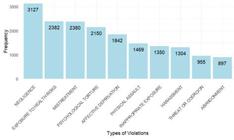
TOP 10 TYPES OF VIOLATIONS REPORTED AGAINST CHILDREN AND ADOLESCENTS VIA DIAL 100 - FEDERAL DISTRICT, 2023
The numerous situations of rights violations that occur throughout the entire development process of children and adolescents demand active and efficient public authority and effective actions with the highest priority given to this type of care. A factor that strongly influences the ineffectiveness of public policies aimed at vulnerable groups, such as children and adolescents, is known in the literature as geographical vulnerability (Moraes et al., 2024). This term refers to the distance between people’s residences and the locations of public facilities responsible for implementing public policies, which hinder access to justice and rights. In the case of the Federal District, the regions of Ceilandia and Sol Nascente, where approximately 390,000 people reside (Brazilian Institute of Geography and Statistics [IBGE], 2023), are served by only one CREAS.
5. INTERVIEW ANALYSIS
The interview material was explored to identify governance categories in the respondents’ statements. Adjustments were made to the interview texts, such as formatting and standardizing acronyms, and grammatical revision was necessary. The texts were edited in Microsoft Word and coded in .txt format so they could be properly imported into the software programs Iramuteq, Atlas.ti, RStudio and MAXQDA. After importing the corpus, various analyses were conducted, including citation frequency and graphical representations across all variables. In total, 50,968 words from the testimonies of 14 interviewees were coded. Figure 1 shows the prominence of the main terms cited.
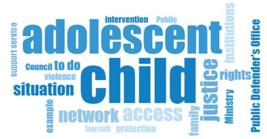
These data indicate a scenario focused on access to justice and the protection of the rights of children and adolescents, with key terms such as “child,” “adolescent,” “justice,” and “access” highlighting an emphasis on guaranteeing rights and access to protection mechanisms for this population. The word “network” suggests a collaborative structure that unites different bodies and institutions to form a support and defense system for the rights of children and adolescents.
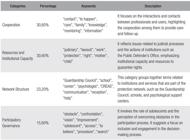
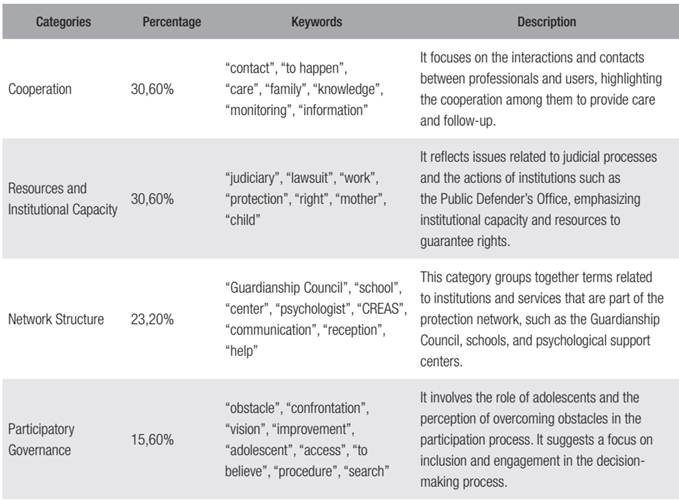
Cluster analyses of the interview data confirmed the four previously selected categories, which represent perceptions about the intersection between network governance and access to justice in the context of protecting the rights of children and adolescents (Table 1).
5.1 Cooperation among the facilities
Cooperation among the facilities is characterized by the interaction between them and their staff, aiming to increase the effectiveness of access to justice and the rights of children and adolescents. This category was one of the most frequently stated in the interviews, with the same prominence as the category Resources and Institutional Capacity, demonstrating its relevance within the network.
I talked a lot about the procedural part [...] but we have a very important aspect, which is [...] this interaction with the protection network; it is a participation in the creation, implementation, and oversight of public policies. And that is extremely important [...] when we deal with rights related to children and adolescents (E3).
The analysis of the interviews allows us to affirm that the interviewees’ concept of access to justice is more closely associated with access to rights in a broader sense than simply access to the justice system. This broader perception of access to justice aligns with the work of Sandefur (2019). It indicates that the public servants working within the rights guarantee network understand that children require special attention from the public authorities and that they can access justice in diverse contexts, ranging from access to a daycare spot (access to education) to receiving adequate treatment in cases of sexual violence. The interaction between agencies was cited by several interviewees as one of the strengths of the Rights Protection Network for Children and Adolescents. The following statement summarizes this finding.
The importance of the judge today is to work within a network, because the solution to a situation of social vulnerability does not depend solely on the judiciary; it involves the Public Prosecutor’s Office, [...] the Public Defender’s Office, [...] protection agencies, [...] the health system, [...] the educational system. Therefore, it is necessary to interact with all these entities [...] to promote work that yields results (E2).
Integration is a fundamental part of the functioning of the researched network and the potential of this organism that operates in the protection and guarantee of the rights of children and adolescents, and it should be increasingly encouraged, since acting in a network ensures greater service reach and enables the State to better understand the demands of this population.
According to Moreira and Grignani (2020), who investigated the operation of the National SGDCA, emphasize the interdependence of the three axes of social protection: Promotion, Defense, and Social Oversight. These axes are interrelated; therefore, the “product” of the system, which is the realization of the rights of children and adolescents, only occurs if all parts function in an orderly and organized manner. The results of this research coincide with findings from other studies that emphasize the importance of cooperation for the SGDCA to be effective in pursuing the rights of children and adolescents. Gonsalves and Andion (2019) suggest that cooperation among the agencies of this system constitutes a relevant factor for its functioning and emphasize an evident difficulty in collective coordination and articulated action among the agencies that comprise the system.
5.2 Resources and Institutional Capacity
The category Resources and Institutional Capacity, with the same weight as the Cooperation category, analyzes the availability and distribution of financial, human, and technical resources among the network actors, which are essential for the effective implementation of public policies. It examines how these capacities influence collaboration and governance, as well as assesses the adequacy of institutional infrastructures to support the network’s activities. Understanding how resource distribution occurs and how capacities affect collaboration and governance itself allows for an assessment of the network’s effectiveness. Efficient management of these resources is crucial to ensuring the sustainability and impact of networked actions (Agranoff & McGuire, 2001).
Human and technical resources were stated by the interviewees as important for the proper functioning of the SGDCA. However, despite a preference for prioritizing a good distribution of facilities and technical staff throughout the network, the reports revealed that many improvements are still necessary for the effective operation of this system. The reality of the Federal District is very similar to that of other municipalities and networks studied by Gonsalves and Andion (2019), Moreira and Grignani (2020), Rodrigues et al. (2018), and Roque et al. (2014), where there are reports of a lack of specific facilities and a shortage of qualified professionals to work within the network.
An important measure that can help address violence against children and adolescents, for example, is an increase in investment in specific public facilities that can centralize notifications, greater mobilization, and training of the professional network across different institutions, thereby providing quality care that prevents the revictimization of these children and adolescents (Barbiani, 2016; Rodrigues et al., 2018; Roque et al., 2014; Santos & Costa, 2011; Silva, 2016). On this matter, Interviewee 10 notes: “Here in the Federal District, we do not have a facility dedicated to adolescents who have committed domestic violence against their caregivers, so we do not have a facility to which to refer these adolescents.”
This feeling of a lack of facilities and a weakened rights guarantee network is also evidenced in the findings of Cirino et al. (2024), who observed a growing demand from the population for government services in the area of children and adolescents.
5.3 Network structure
The analysis of the Network Structure category was conducted based on the elements of centralization and formalization, as proposed by Osborne (2006) and adapted by Cirino et al. (2024). Centralization is related to the sharing of decision-making among network members in the day-to-day management of policies. In the case of the SGDCA, this centralization can occur through an organization designated to administer the network, according to Provan and Kenis (2008). Therefore, the coordination of the network would be the responsibility of this organization, which, in the studied case, could be the CDCA. However, due to the decentralized management model and the autonomy existing among the branches of government, this centralization is not embodied in a single organization. Formalization refers to the agreed terms of relationships, rules, and regulations for different situations among the actors that compose the network.
When analyzing the main themes stressed by the interviewees regarding the organizational structure of the network in the Federal District, it was possible to perceive a plurality of responses indicating that centralization occurs in an organized manner, but without the existence of a single organization that facilitates the flow of information and decision-making. From the reports, it is evident that the SGDCA has a centralization closely linked to the network’s organizational format; however, this does not occur through a single organization but through the sharing of activities among the facilities and actors of the network - who communicate and meet for discussions and necessary alignments to ensure workflow.
Regarding formalization, it was identified that each body within the analyzed network has its own instruments, with a common unifying element being the mandatory use of the Electronic Information System (SEI) for the forwarding of cases among the bodies that compose the SGDCA in the Federal District. Furthermore, concerning formalization, it is also important to highlight that several interviewees mentioned that some actors within the SGDCA network are developing a care flow for children and adolescents who are victims of sexual violations, so that the assistance to these children is more effective and so that the public servants themselves can expedite resolution and support in such cases.
5.4 Participatory governance
Participatory governance presupposes the participation of different social actors in the network's decision-making processes, including civil society and the children and adolescents themselves. This category involves the degree of inclusion and how the beneficiaries (children and adolescents) can influence the governance of the network. Youth participation occurs in two situations: the first relates to hearing and listening to these actors in cases of violations of rights. Such listening is mandated by the Statute of the Child and Adolescent (ECA), but often the wishes or needs of the youth served by the protection system are not met by the government. The second concerns the active participation of these young people in the formulation and evaluation of public policies aimed at youth.
Participatory governance also includes the idea of “Child First,” which presupposes viewing the child as an actor capable of proposing actions to be implemented by public authorities and not only as a user of public services (Case et al., 2020). This role can also be summarized by the hearing and listening of these children, as prescribed by the ECA, but it still lacks greater attention from the public authorities. According to Interviewee 4: “The problem lies in the adult-centric way in which legal operators act [...]. Judges, prosecutors, public defenders [...] have a preconceived mindset about what is best for the child’s interest.”
The more we listen to the adolescent [...] in a systemic way; understanding how they are within their family, […] how they are within the social environment they live in... The more we know about this, the better we will be able to find the best solution for the case (E1).
These results align with findings from other studies that sought to understand the role of hearing and participation of children in the public policies of the SGD. It is also important to emphasize that the listening process, which occurs mainly in cases of rights violations, is often repeated multiple times, causing revictimization of the young person. This is because the professionals working within the child and adolescent protection network generally lack the proper training to handle situations involving, in particular, sexual violations (Ninsiima et al., 2020; Silva, 2016; Villarroel, 2022; Wismayanti et al., 2021).
Regarding participation in the formulation of public policies and the concept of Child First, it was possible to understand that, although mentioned by respondents, in practice the participation of these young people in proposing solutions to the problems faced by the SGDCA remains very limited.
As for the concept of educational justice, or even the perception of rights, it has been a recurring theme in the research developed; however, the focus of the study was on the professionals’ perceptions, which may have hindered a more effective comparison of how these young people might be acting within the studied territory (Liefaard, 2023; Nouri & Karimi, 2019).
6. CONCLUSIONS AND RECOMMENDATIONS
The main objective of this study was to identify categories that influence the SGDCA in the Federal District of Brazil and to describe its functioning, focusing on the categories of network governance: Cooperation; Network Structure; Participatory Governance; and Resources and Institutional Capacity.
The study’s conclusions indicate that the operation of the rights protection network in the Federal District is complex and marked by the unique governmental structure of a federative entity that simultaneously functions as both a municipality and a federal unit, with its entire budget concentrated in one entity. It can be observed that the facilities serving children and adolescents remain concentrated in the more economically favored regions, and that the high demand for services in the more peripheral regions demonstrates the vulnerability of the rights guarantee network for children and adolescents in the Federal District.
The study’s results showed that the performance of public servants aiming to guarantee access to justice for children and adolescents occurs primarily through collective action and through the perceptions of the public servants working within the network. The cooperative relationships between agents take place through meetings and interactions within the network in their daily professional routines, given the challenges inherent to the field of children and adolescents.
The almost unanimous perception among interviewees, that the insufficient number of public servants constitutes one of the main problems of the rights protection network in the Federal District, is supported by the analysis of secondary data from the SUAS Census (2023). According to results found in the “Dial 100” data (2024), the primary situations demanding action from the rights protection system are cases of neglect, physical violence, and sexual violence, as also indicated in the studies by Rodrigues et al. (2018), Santos and Costa (2011), and Silva (2016).
The network governance categories identified in this research align with the findings of Moreira and Grignani (2020), who highlight six main challenges of the Rights Guarantee System: communication, knowledge production, training/capacity building, resource availability, inclusion of children and adolescents, and a genuine ethical-political commitment.
A research agenda can be built based on the results of this study. At least two lines of inquiry are suggested for future studies regarding the rights guarantee network for children and adolescents. The first focuses on studying the network from the perspective of these children and adolescents, aiming to understand how they relate to the rights guarantee network and their access to justice and rights. This represents an effort to propose new ways to evaluate the effectiveness and design of public policies related to access to justice in the Brazilian context.
The second line is more related to expanding studies involving other actors within the rights protection network, such as the police, education, and social assistance sectors. These three areas operate directly within this network and may bring new insights into the different perspectives through which the network can improve.
Theoretically, the study proved to be an important tool that provides a systemic overview of the network governance functioning of the Rights Protection System, offering a diagnostic of the network’s operation that, combined with document analysis, serves as a significant resource for understanding the governance of this SGD.
An additional conclusion drawn from this study is that the rights protection network for children and adolescents in the Federal District is formally constituted and plays a vital role in ensuring the rights of this regional population. However, the mere existence of the network does not guarantee access to justice and rights. The Federal District has mechanisms that facilitate the network’s existence and cooperation among different facilities but still lacks organized actions to encourage the network’s strengthening, with more facilities located closer to the residences of the target population and well-trained staff, aiming at a more effective performance in favor of children and adolescents.
From a practical standpoint, the study also clarifies that for managers operating within the children and adolescents’ rights protection system, an important action to strengthen the governance of this system’s network is to encourage cooperation among the different bodies and constant information exchange, either through clear incentives or even by mandating meetings. This would strengthen the bond among professionals, thereby enhancing the network and, consequently, improving access to justice for children and adolescents.
To enhance access to justice for this population, some actions are suggested, aimed at ensuring children’s and adolescents’ voices are heard, whether in the formulation of public policies through conferences or even debates with their participation about services that impact the daily lives of this social group. Another important measure is the creation of a unified system for collecting and controlling service data concerning childhood and youth, which would reduce the number of times victims are required to retell their experiences. Such an action would also facilitate referrals and the decision-making process by public authorities.
Finally, it is important to mention some limitations of the research. The first limitation concerns the sampling method. As a convenience sample located in the Federal District, its results have limited generalizability. Another factor related to this limitation is that some groups involved in the rights guarantee network were not included, either due to the unavailability of the individuals contacted or lack of responses from relevant bodies. The “Snowball” technique used for selecting interviewees also poses a limitation, as it introduces a selection bias, with most participants being indicated by other respondents. It should be emphasized, however, that despite this limitation, professionals working in different agencies composing the Rights Guarantee System for Children and Adolescents in the Federal District were interviewed, thus providing diverse perspectives on this network.
ACKNOWLEDGMENTS
This research was financially supported by the National Council for Scientific and Technological Development (CNPq), through the project “Public Policies and Management Practices for Access to Justice in Brazil: Analysis of the Policy Formulation and Implementation Process.”
APPENDIX A
INTERVIEW GUIDE FOR PUBLIC SERVANTS WORKING IN THE RIGHTS PROTECTION SYSTEM
INFORMED CONSENT FORM (ICF)
-
You have been invited to participate in this research due to your role within the Rights Protection System (SGD). This study focuses on the central theme of Access to Justice for Children and Adolescents in the Federal District. The average time required to participate in this research is approximately 20 minutes.
-
All information collected in this study is strictly confidential and will not be used, under any circumstances, to the detriment of participants. There will be no mention of your name or any information that could identify you in the resulting publications from this research, only your professional category will be referenced. The data collected will not be used for commercial purposes. Only results, general trends, and aggregated data will be presented. The findings may also be presented at seminars, conferences, and in scientific journals, without identifying any participants.
-
Your participation is voluntary. You may decline to participate or withdraw from the interview process at any time, without any form of penalty or disadvantage.
-
This research is relevant because it studies the relationships and access to justice for children and adolescents who are victims of rights violations, from the perspective of public servants, based on the theoretical framework of network governance.
-
The study complies with the ethical guidelines for research involving human subjects, in accordance with Resolution CNS No. 466, dated December 12, 2012.
-
This research was not submitted for prior approval by a Research Ethics Committee, as it does not involve a vulnerable population, does not require respondent identification, and is focused on understanding processes and routines, without targeting individuals.
-
I kindly request your permission to record the interview, assuring you once again that the information will be used solely for academic purposes and without identifying participants. By proceeding with the questions, you are indicating your consent to participate in this research.
Interview Questions:
-
Please share your general perception regarding access to justice for children and adolescents.
-
How is the care process conducted for a child/adolescent who has experienced a rights violation?
-
In your opinion, what are the main institutions, entities, or groups that operate in the Federal District to ensure access to justice for children and adolescents? How do interactions and dialogues occur among professionals working in these institutions?
-
How do these institutions interact and cooperate to promote access to justice for children and adolescents?
-
What are the positive and negative aspects of the performance of these institutions, in your view?
-
In your opinion, what improvements are needed to increase the effectiveness of these institutions? Is there any institution that deserves to be highlighted?
-
What instruments and procedures do you consider essential to ensure the protection and promotion of the rights of children and adolescents?
-
From your perspective, what are the main obstacles that children and adolescents face when seeking access to justice after suffering rights violations?
-
Do you identify any specific challenges in accessing justice for children and adolescents in situations of vulnerability? If so, please elaborate.
-
We are reaching the end of our interview. Please feel free to share any aspects not addressed in the previous items regarding the rights protection network and access to justice for children and adolescents.
Finally, we would like to record some of your biographical and professional information, solely for the purpose of analyzing perception trends, and never for the identification of respondents.

References
-
Agenda Pública; Fundo das Nações Unidas para Infância; Instituto Camará Calunga; Ministério Público do Trabalho. (2021). Diagnóstico do sistema de garantia de direitos da criança e do adolescente https://www.unicef.org/brazil/media/13601/file/diagnostico-do-sistema-degarantia-de-direitos-da-crianca-e-do-adolescente.pdf
» https://www.unicef.org/brazil/media/13601/file/diagnostico-do-sistema-degarantia-de-direitos-da-crianca-e-do-adolescente.pdf -
Agranoff, R., & McGuire, M. (2001). Big Questions in Public Network Management Research. Journal of Public Administration Research and Theory, 11(3), 295-326. https://doi.org/10.1093/oxfordjournals.jpart.a003504
» https://doi.org/10.1093/oxfordjournals.jpart.a003504 -
Banco Mundial. (1989). Finance & Development, December 1989. Finance & Development, 26(1). https://doi.org/10.5089/9781451951752.022
» https://doi.org/10.5089/9781451951752.022 -
Barbiani, R. (2016). Violação de direitos de crianças e adolescentes no Brasil: interfaces com a política de saúde. Saúde em Debate, 40(109), 200-211. https://doi.org/10.1590/0103-1104201610916
» https://doi.org/10.1590/0103-1104201610916 - Bardin, L. (2011). Análise de Conteúdo Almedina.
-
Bergamini, J. C. L., & Souza, J. A. (2022). Governança do conhecimento e da aprendizagem organizacional: desafios para inclusão de múltiplos atores. Inclusão Social, 15(2), 43-55. https://doi.org/10.18225/inc.soc.v15i2
» https://doi.org/10.18225/inc.soc.v15i2 -
Buta, B. (2016). Governança na Defensoria Pública: construção e validação de escala de medida [Dissertação de mestrado]. Universidade de Brasília, Brasília, DF, Brasil. https://doi.org/10.26512/2016.06.D.21383
» https://doi.org/10.26512/2016.06.D.21383 -
Buta, B., & Teixeira, M. A. C. (2020). Governança pública em três dimensões: conceitual, mensural e democrática. Organizações & Sociedade, 27(94), 370-395. https://doi.org/10.1590/1984-9270941
» https://doi.org/10.1590/1984-9270941 -
Cândido, G. A., Pontes, R. R. M., & Silva, A. M. V. (2023). Micro Governança em Redes Colaborativas: uma aplicação junto a uma Associação de Agricultores Agroecológicos. Redes, 28, 1-25. https://doi.org/10.17058/redes.v28i1.16812
» https://doi.org/10.17058/redes.v28i1.16812 - Case, S., Haines, K., Creaney, S., Coleman, N., Little, R., & Worrall, V. (2020). Trusting children to enhance youth justice policy: The importance and value of children’s voices. Youth Voice Journal, Special Issue, 25-40.
-
Cavalcante, P., & Ribeiro, B. B. (2012). O Sistema Único de Assistência Social: resultados da implementação da política nos municípios brasileiros. Revista de Administração Pública, 46(6), 1459-1477. https://doi.org/10.1590/S0034-76122012000600003
» https://doi.org/10.1590/S0034-76122012000600003 -
Cirino, A. L. C., Pereira, B. A. D., Tavares, B., & Silva, F. C. (2024). Estrutura e mecanismos da governança em rede na implementação de políticas públicas. Cadernos Gestão Pública e Cidadania, 29, e89644. https://doi.org/10.12660/CGPC.V29.89644
» https://doi.org/10.12660/CGPC.V29.89644 - Creswell, J. W., & Creswell, J. D. (2021). Projeto de pesquisa: Métodos qualitativo, quantitativo e misto(5a ed.). Penso.
-
Gobbi, B. C., Cunha, E. P., Brito, M. J., & Senger, I. (2005). Politizando o conceito de redes organizacionais: uma reflexão teórica da governança como jogo de poder. Cadernos EBAPE.BR, 3(1), 1-16. https://doi.org/10.1590/S1679-39512005000100004
» https://doi.org/10.1590/S1679-39512005000100004 -
Gonsalves, A. K. R., & Andion, M. C. M. (2019). Ação pública e inovação social: uma análise do Sistema de Garantia de Direitos da Criança e do Adolescente de Florianópolis-SC. Organizações & Sociedade, 26(89), 221-248. https://doi.org/10.1590/1984-9260892
» https://doi.org/10.1590/1984-9260892 -
Igreja, R. L., & Rampin, T. T. D. (2021). Acesso à justiça: um debate inacabado. Suprema - Revista de Estudos Constitucionais, 1(2), 191-220. https://doi.org/10.53798/suprema.2021.v1.n2.a68
» https://doi.org/10.53798/suprema.2021.v1.n2.a68 -
Instituto Brasileiro de Geografia e Estatística. (2023). Panorama censo 2022 https://censo2022.ibge.gov.br/panorama/
» https://censo2022.ibge.gov.br/panorama/ -
Kamp, A., & Nielsen, K. T. (2009). Regulação em rede do ambiente de trabalho. Revista Brasileira de Saúde Ocupacional, 34(119), 15-27. https://doi.org/10.1590/S0303-76572009000100003
» https://doi.org/10.1590/S0303-76572009000100003 -
Lacorte, L. E. C., Vilela, R. A. G., Silva, R. C., Chiesa, A. M., Tulio, E. S., Franco, R. R., & Bravo, E. S. (2013). Os nós da rede para erradicação do trabalho infanto-juvenil na produção de joias e bijuterias em Limeira - SP. Revista Brasileira de Saúde Ocupacional, 38(128), 199-215. https://doi.org/10.1590/S0303-76572013000200009
» https://doi.org/10.1590/S0303-76572013000200009 -
Lashgari, M. (2004). Corporate Governance: Theory and Practice. The Journal of American Academy of Business, 5(1-2), 46-51. https://www.jaabc.com/jaabcv5n2preview.html
» https://www.jaabc.com/jaabcv5n2preview.html -
Lei nº 13.431, de 4 de abril de 2017 (2017). Estabelece o sistema de garantia de direitos da criança e do adolescente vítima ou testemunha de violência e altera a Lei nº 8.069, de 13 de julho de 1990 (Estatuto da Criança e do Adolescente). https://www.planalto.gov.br/ccivil_03/_ato2015-2018/2017/lei/l13431.htm
» https://www.planalto.gov.br/ccivil_03/_ato2015-2018/2017/lei/l13431.htm -
Liefaard, T. (2023). Children’s rights remedies under international human rights law: How to secure children’s rights compliant outcomes in access to justice? De Jure, 56(1), 486-504. https://doi.org/10.17159/2225-7160/2023/v56a30
» https://doi.org/10.17159/2225-7160/2023/v56a30 -
Ministério da Saúde. (2024). Sistema de Informação de Agravos de Notificação (SINAN) https://portalsinan.saude.gov.br/dados-epidemiologicos-SINAN
» https://portalsinan.saude.gov.br/dados-epidemiologicos-SINAN -
Ministério do Desenvolvimento e Assistência Social, Família e Combate à Fome. (2023). Censo SUAS 2022 https://aplicacoes.mds.gov.br/snas/vigilancia/index2.php
» https://aplicacoes.mds.gov.br/snas/vigilancia/index2.php -
Ministério dos Direitos Humanos e da Cidadania. (2024) Disque Direitos Humanos (Disque 100) https://www.gov.br/mdh/pt-br/acesso-a-informacao/dados-abertos/disque100
» https://www.gov.br/mdh/pt-br/acesso-a-informacao/dados-abertos/disque100 -
Ministério Público do estado do Acre. (2024). Centro de Apoio Operacional de Defesa da Criança e do Adolescente, Educação e Execução de Medida Socioeducativa https://www.mpac.mp.br/caop-crianca-e-adolescente/protecao/
» https://www.mpac.mp.br/caop-crianca-e-adolescente/protecao/ -
Moraes, B. F., Lunardi, F. C., & Correia, P. M. A. R. (2024). Digital Access to Judicial Services in the Brazilian Amazon: Barriers and Potential. Social Sciences, 13(2), 113. https://doi.org/10.3390/socsci13020113
» https://doi.org/10.3390/socsci13020113 -
Moreira, D., & Grignani, J. (2020). Participação e controle social: desafios para o fortalecimento do sistema de garantia de direitos da criança e do adolescente. Humanidades em Perspectivas, 2(4), 291-305. https://www.revistasuninter.com/revista-humanidades/index.php/revista-humanidades/article/view/82
» https://www.revistasuninter.com/revista-humanidades/index.php/revista-humanidades/article/view/82 -
Ninsiima, A. B., Michielsen, K., Kemigisha, E., Nyakato, V. N., Leye, E., & Coene, G. (2020). Poverty, gender and reproductive justice. A qualitative study among adolescent girls in Western Uganda. Culture, Health and Sexuality, 22(sup1), 65-79. https://doi.org/10.1080/13691058.2019.1660406
» https://doi.org/10.1080/13691058.2019.1660406 -
Nouri, A., & Karimi, Y. (2019). A phenomenological study on the meaning of educational justice for street children. Education, Citizenship and Social Justice, 14(1), 57-67. https://doi.org/10.1177/1746197918760083
» https://doi.org/10.1177/1746197918760083 -
Osborne, S. P. (2006). The new public governance? Public Management Review, 8(3), 377-387. https://doi.org/10.1080/14719030600853022/ASSET//CMS/ASSET/BC22BF52-B20C-4FAE-AFB0-CDF055ADE0F7/14719030600853022.FP.PNG
» https://doi.org/10.1080/14719030600853022/ASSET//CMS/ASSET/BC22BF52-B20C-4FAE-AFB0-CDF055ADE0F7/14719030600853022.FP.PNG -
Provan, K. G., & Kenis, P. (2008). Modes of network governance: Structure, management, and effectiveness. Journal of Public Administration Research and Theory, 18(2), 229-252. https://doi.org/10.1093/jopart/mum015
» https://doi.org/10.1093/jopart/mum015 -
Rodrigues, A., Pereira, A. F. L., Oliveira, A. C., Abrantes, C. G., Cardoso, T. H., & Moura, V. A. (2018). As principais violações de direitos de crianças e adolescentes em Heliópolis: São Paulo/Brasil. Desidades, 19, 36-47. https://pepsic.bvsalud.org/scielo.php?script=sci_abstract&pid=S2318-92822018000200004&lng=es&nrm=iso&tlng=pt
» https://pepsic.bvsalud.org/scielo.php?script=sci_abstract&pid=S2318-92822018000200004&lng=es&nrm=iso&tlng=pt -
Roque, E. M. S. T., Ferriani, M. G. C., Gomes, R., Silva, L. M. P., & Carlos, D. M. (2014). Sistemas de justiça e a vitimização secundária de crianças e ou adolescentes acometidas de violência sexual intrafamiliar. Saúde e Sociedade, 23(3), 67-78. https://doi.org/10.1590/S0104-12902014000300006
» https://doi.org/10.1590/S0104-12902014000300006 -
Rose-Ackerman, S. (2017). What Does “Governance” Mean?Governance, 30(1), 23-27. https://doi.org/10.1111/gove.12212
» https://doi.org/10.1111/gove.12212 -
Sadek, M. T. A. (2014). Acesso à justiça: um direito e seus obstáculos. Revista USP, 101, 55-66. https://doi.org/10.11606/issn.2316-9036.v0i101p55-66
» https://doi.org/10.11606/issn.2316-9036.v0i101p55-66 -
Sandefur, R. L. (2019). Access to what? Daedalus, 148(1), 49-55. https://doi.org/10.1162/DAED_a_00534
» https://doi.org/10.1162/DAED_a_00534 -
Santos, R. R., & Rover, S. (2019). Influência da governança pública na eficiência da alocação dos recursos públicos. Revista de Administração Pública, 53(4), 732-752. https://doi.org/10.1590/0034-761220180084
» https://doi.org/10.1590/0034-761220180084 -
Santos, V., & Costa, L. (2011). A violência sexual contra crianças e adolescentes: conhecer a realidade possibilita a ação protetiva. Estudos de Psicologia, 28(4), 529-537. https://doi.org/10.1590/S0103-166X2011000400013
» https://doi.org/10.1590/S0103-166X2011000400013 -
Silva, J. (2016). O processo de revitimização de crianças que vivenciam a violência sexual. Boletim Científico ESMPU, 47, 11-52. https://doi.org/10.63601/bcesmpu.2016.n47.11-52
» https://doi.org/10.63601/bcesmpu.2016.n47.11-52 -
Tripodi, Z. F., & Sousa, S. Z. (2016). A governança em rede na regulação da educação básica mineira: quem governa o quê? Educação em Revista, 32(4), 297-321. https://doi.org/10.1590/0102-4698152412
» https://doi.org/10.1590/0102-4698152412 -
Villarroel, C. M. L. (2022). Acesso à justiça para crianças e adolescentes em casos de abuso sexual: um estudo jurimétrico [Dissertação de mestrado]. Universidade de São Paulo, São Paulo, SP, Brasil. https://doi.org/10.11606/D.107.2022.tde-21082023-141018
» https://doi.org/10.11606/D.107.2022.tde-21082023-141018 -
Wegner, D., & Padula, A. D. (2011). Estratégias de crescimento e a governança de redes horizontais de empresas: o caso da maior rede cooperativa de varejo de alimentos na Alemanha. Revista de Ciências da Administração, 13(30) 220-248. https://doi.org/10.5007/2175-8077.2011v13n30p220
» https://doi.org/10.5007/2175-8077.2011v13n30p220 -
Wegner, D., & Verschoore, J. (2022). Network Governance in Action: Functions and Practices to Foster Collaborative Environments. Administration & Society, 54(3), 479-499. https://doi.org/10.1177/00953997211024580
» https://doi.org/10.1177/00953997211024580 -
Wismayanti, Y. F., O’Leary, P., Tilbury, C., & Tjoe, Y. (2021). The problematization of child sexual abuse in policy and law: The Indonesian example. Child Abuse and Neglect, 118, 105157. https://doi.org/10.1016/j.chiabu.2021.105157
» https://doi.org/10.1016/j.chiabu.2021.105157 -
Zangrando, P. W., & Guimarães, T. A. (2024). O acesso à justiça de crianças e adolescentes. Estado da arte e agenda de pesquisa. In Anais do Encontro de Administração da Justiça (EnAJUS), Natal, RN, Brasil. https://www.enajus.org.br/anais/assets/papers/2024/sessao-3/o-acesso-a-justica-de-criancas-e-adolescentes-estado-da-arte-e-agenda-de-pesquisa.pdf
» https://www.enajus.org.br/anais/assets/papers/2024/sessao-3/o-acesso-a-justica-de-criancas-e-adolescentes-estado-da-arte-e-agenda-de-pesquisa.pdf
-
DATA AVAILABILITY
The complete dataset supporting the findings of this study is available upon request from the corresponding author [Pedro Zangrando]. The dataset is not publicly available as it contains information that could compromise the privacy of the research participants.
-
7
[Translated version] Note: All quotes in English translated by this article’s translator.
-
Reviewers:
The reviewers did not authorize the disclosure of their identities.
-
Peer review report:
The peer review report is available at this link https://periodicos.fgv.br/rap/article/view/94495/88065
Edited by
-
Editor-in-chief:
Alketa Peci (Fundação Getulio Vargas, Rio de Janeiro / RJ - Brazil) https://orcid.org/0000-0002-0488-1744
-
Associate editor:
Gabriela Spanghero Lotta (Fundação Getulio Vargas, São Paulo / SP - Brazil) https://orcid.org/0000-0003-2801-1628
The complete dataset supporting the findings of this study is available upon request from the corresponding author [Pedro Zangrando]. The dataset is not publicly available as it contains information that could compromise the privacy of the research participants.

 Thumbnail
 Source: Ministry of Human Rights and Citizenship (Ministério dos Direitos Humanos e da Cidadania, 2024).
 Source: Research data, with the assistance of RStudio software.
 Source: Research data, with the assistance of Iramuteq software.

