 Variations in the profile of entrants into the Brazilian diplomatic career
Abstract
The profile of diplomats entering the Ministry of Foreign Affairs (Itamaraty) has been investigated by previous scholarship, such as Cheibub (1989) and Lima and Oliveira (2018). However, the beginning of this century saw significant changes in the selection process and the establishment of racial quotas for Black and Mixed-race (pardos) candidates in public examinations. Thus, this study aims to analyze whether there have been transformations in the profile of new diplomats. Data regarding those who entered the career between 2011 and 2024 were requested from the Ministry of Foreign Affairs (MRE). Results show a sharp increase in Black entrants: while previous data did not reach 3%, among recent cohorts, more than 26% identified as Black or Mixed-race. Rio de Janeiro remains the city with the highest number of births, but a notable finding is the high number of diplomats from Belo Horizonte—four times higher than in Northeastern capitals of similar size. Regionally, only 1% of entrants were born in the North. Regarding education, the most frequent degree-university combination is International Relations at the University of Brasília (UnB), which produced fewer entrants only than the University of São Paulo (USP). International Relations is the major of 31% of the entrants analyzed; having expanded across the country only in the last 30 years, it appears to challenge the historical dominance of Law cited in the literature. The average age has risen to 29, and female participation remains on an upward trend, accounting for 28% of new entrants.
Keywords:
diplomats; Ministry of Foreign Affairs; bureaucrats; profile; racial quotas
Resumo
O perfil dos diplomatas ingressantes no Itamaraty foi investigado por trabalhos anteriores, como de Cheibub (1989) e Lima e Oliveira (2018), mas, no começo deste século, ocorreram modificações relevantes no processo seletivo e a instituição de cotas para negros (pretos e pardos) nos concursos. Assim, o objetivo deste estudo é analisar se houve transformações no perfil dos novos diplomatas. Foram solicitados ao Ministério das Relações Exteriores (MRE) dados relativos aos empossados na carreira entre 2011 e 2024. Os resultados demonstraram forte aumento de ingressantes negros. Recortes anteriores não apontavam sequer 3% e, entre os que ingressaram recentemente, mais de 26% se declararam pretos ou pardos. A cidade com mais nascidos é o Rio de Janeiro, mas a novidade é o alto número de oriundos de Belo Horizonte - quatro vezes superior às capitais nordestinas do mesmo porte. Regionalmente, apenas 1% dos ingressantes nasceu no Norte. Em termos educacionais, a combinação de curso e universidade mais frequente é Relações Internacionais na Universidade de Brasília (UnB), instituição que só formou menos novos empossados que a Universidade de São Paulo (USP). Relações Internacionais é a graduação de 31% dos ingressantes analisados e, por ter se expandido pelo país apenas nos últimos 30 anos, parece ameaçar a histórica liderança do Direito apontada pela literatura. A idade média subiu para 29 anos e a participação feminina segue com tendência de alta - 28% dos novos ingressantes.
Palavras-chave
diplomatas; ministério das relações exteriores; burocratas; perfil; cotas raciais
Resumen
El perfil de los diplomáticos que ingresan al Itamaraty fue investigado por trabajos previos, como los de Cheibub (1989) y Lima y Oliveira (2018); sin embargo, a principios de este siglo ocurrieron cambios relevantes en el proceso de selección y la institución de cuotas para negros (negros y pardos) en los concursos públicos. Por lo tanto, el objetivo de este estudio es analizar si hubo transformaciones en el perfil de los nuevos diplomáticos. Se solicitaron al Ministerio de Relaciones Exteriores (MRE) datos relativos a los ingresantes en la carrera entre 2011 y 2024. Los resultados demostraron un fuerte aumento de ingresantes negros: si los registros anteriores no alcanzaban el 3%, entre los que ingresaron recientemente más del 26% se declaró negro o pardo. La ciudad con más nacimientos es Río de Janeiro, pero la novedad es el elevado número de oriundos de Belo Horizonte —cuatro veces superior al de las capitales del noreste del mismo tamaño. Regionalmente, solo el 1% de los ingresantes nació en el Norte. En términos educativos, la combinación de carrera y universidad más frecuente es Relaciones Internacionales en la Universidad de Brasilia (UnB), institución que solo formó a menos ingresantes que la Universidad de São Paulo (USP). Relaciones Internacionales es la titulación del 31% de los analizados y, al haberse expandido por el país solo en los últimos 30 años, parece amenazar el liderazgo histórico del Derecho señalado por la literatura. La edad promedio aumentó a 29 años y la participación femenina sigue una tendencia al alza, representando el 28% de los nuevos ingresantes.
Palabras clave
diplomáticos; ministerio de relaciones exteriores; burócratas; perfil; cuotas raciales
1. INTRODUCTION
Diplomats are responsible for representing, negotiating, informing, and protecting Brazilian interests in the international arena (Lei nº 11.440, 2006). Given the breadth of these responsibilities, the diplomatic corps has attracted the attention of several researchers in recent decades, who have focused on the profiles and educational backgrounds of these key actors in implementing Brazilian foreign policy.
In a seminal work, Cheibub (1985) divided the history of Itamaraty - the colloquial name for Brazil’s Ministry of Foreign Affairs (MRE) - into three periods: 1) the patrimonial period (1822 to the late 19th century); 2) the charismatic period (early 20th century); and 3) the bureaucratic-rational period (late 1910s to the 1980s). In the first, there was no distinction between the MRE and diplomats as part of the state bureaucracy and the elite of the then Empire. In the second, under Baron Rio Branco’s leadership, the MRE’s historical structures were dismantled, ushering in a transition phase shaped by his leadership style. In the third, several major administrative reforms were carried out within the agency, focusing on building a bureaucratic and rational structure in Itamaraty and in the diplomatic career along Weberian lines. For the author, the creation of the Rio Branco Institute in 1945 was a milestone in the professionalization of the diplomatic corps, establishing a well-prepared and cohesive civil service career.
Four years later, Cheibub (1989) examined the educational, social, and economic profiles and geographic origins of Brazilian diplomats throughout history. He showed, for example, that until the end of the 1950s, the civil service entrance examinations for Itamaraty were held exclusively in Rio de Janeiro, which did not favor regional or economic diversity, since only the wealthiest candidates from other parts of the country could afford the associated costs. The author also analyzed the time required to reach the highest levels of the career, considering variables such as place of residence, parents’ occupation, and the diplomat’s educational background.
Until the mid-1990s, according to Faria (2012, p. 312),
Itamaraty, the state agency responsible for implementing the country’s foreign policy and which has also frequently assumed the task of formulating it in recent decades, had been perceived as a strongly insulated institution, lacking transparency and unresponsive to the demands and interests of other political, bureaucratic, and societal actors.
Notwithstanding this until recently hegemonic perception, several more recent analyses have argued that pressures are mounting in the country toward the formation of a more porous, pluralistic, or democratic process of foreign policy production, driven by factors operating both domestically and at the level of the international system.
For Milani and Pinheiro, “assuming that the presence of charismatic leaders or the monopoly of an agency can per se explain the definition of the country’s interests on the international stage has become analytically less convincing” (2013, pp. 11-12). According to the authors, businesspeople, social movements, and governmental and non-governmental entities have been acting internationally in a more organic and coordinated manner, at times even independently of the state, to pursue specific interests.
Within the federal executive branch, several actors have engaged in international activities either in conjunction with Itamaraty or autonomously, as shown by França and Badin (2010) and Silva et al. (2010). For Hirst et al. (2010, p. 38), the presence of a foreign policy agenda across multiple ministries can generate inter-bureaucratic disputes, while “the growing pluralization of divisions within the diplomatic bureaucracy, in an attempt to respond to the diversity of the agenda and the pluralization of actors with coordination objectives,” may also produce intra-bureaucratic tensions and bureaucratic expansion.
From a structural standpoint, the 2023 reorganization of the MRE created, among other bodies, the Secretariat for Climate, Energy and Environment and the Advisory Office for Social Participation and Diversity. The reform was presented as prioritizing the recognition of civil servants and the promotion of diversity and inclusion, as well as “the fight against harassment and the promotion of equal opportunities” (Belém Lopes, 2024, p. 85).
Five years earlier, Lima and Oliveira (2018) sought to assess whether the increasingly complex and demanding environment for state capacity had influenced the profile of the diplomatic corps. Drawing on the 2010 Yearbook of Ministry of Foreign Affairs Personnel: Diplomats (incoming classes until 2009, with updates in 2010), their study compared its findings with those of Cheibub (1989).
The results indicated shifts, including a decline in the dominance of Rio de Janeiro-born diplomats, with São Paulo emerging as the leading state of origin between 2003 and 2010. The study also found that the University of São Paulo (USP) and the University of Brasília (UnB) together accounted for 35% of all career entrants in the 2000s, and that undergraduate degrees in communications and international relations were increasingly common among newly admitted diplomats.
Bodine and Giannattasio (2022) evaluated changes in the Rio Branco Institute’s selection process over recent decades. According to the authors, starting in 2003, there was a discernible trend toward greater social diversity in federal public service careers, including the diplomatic career. One focus was altering the profile of the questions used in the Itamaraty entrance examination. Between 1995 and 2004, the examination favored a form of “cultural heritage” associated with a putatively more refined candidate profile. Between 2004 and 2015, the examinations were reformulated, moving away from questions tied to notions of cultural distinction, thereby modifying the profile of successful candidates.
Because structural changes often take several years to produce observable effects and because some reforms came into force after the periods analyzed in the works cited above - such as the establishment of a 20% quota in federal public service competitive examinations for pretos and pardos (Brazilians self-identifying as Black or Brown under the national racial classification system) in 2014 (Lei nº 12.990, 2014) - the aim of this study is to examine whether and how changes introduced in recent years have affected the profile of those entering the diplomatic career between 2011 and 2024.
2. METHODOLOGY
The following data on diplomats appointed between 2011 and 2024 were requested from the Brazilian Ministry of Foreign Affairs (MRE) in November 2025 through the Integrated Public Information Access Platform (Fala.br):
-
Age at entry into the career;
-
Self-declared race;
-
Gender;
-
Undergraduate degree obtained;
-
University where the degree was obtained;
-
City and state of birth.
The data received were subsequently tabulated. The MRE noted that it held complete information on all 357 appointees during the period for some of the requested items (age, race, and gender), the city of birth for 299 of them, and the state of birth for 296 of the new diplomats (as three had been born abroad), as well as academic data (undergraduate degree and university attended) for 251 of them.
For the purposes of analysis, the findings of this study were compared with those of Cheibub (1989) and of Lima and Oliveira (2018) regarding the profile of Brazilian diplomats across different historical periods.
3. RESULTS
3.1. Race
The table compiled by Lima and Oliveira (2018) on the racial composition of those entering the diplomatic career showed that, across all historical periods analyzed, the percentage of white diplomats never fell below 96%. The slight decline from 98% (1997-2002) to 96% (2003-2010) is attributed by the authors to the implementation of the Affirmative Action Program (PAA) in 2002, which provided scholarships to Afro-descendant candidates preparing for the Itamaraty entrance examination.
However, Law No. 12,990 (Lei nº 12.990, 2014), which reserved 20% of vacancies in federal public administration competitive examinations for candidates who self-declared as preto or pardo at the time of registration, also proved fundamental in beginning to transform a landscape that had persisted for nearly two centuries.
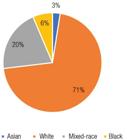
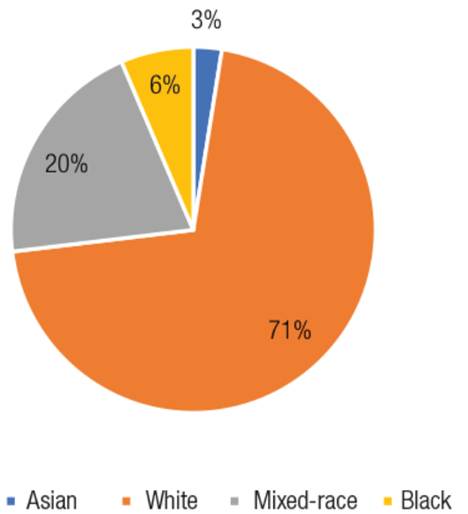
As Figure 1 shows, 71% of those appointed between 2011 and 2024 self-identified as white, while more than 26% self-identified as preto or pardo. This represents a historic shift in the racial composition of the Brazilian diplomatic corps: according to Lima and Oliveira (2018), the share of non-white diplomats had never exceeded 3% in any previously recorded period.
These findings are consistent with those of Silva (2023), who analyzed the impact of racial quotas across various elite careers in the federal public administration up to 2020. It is important to note that Law No. 12,990 (Lei nº 12.990, 2014), recently repealed by Law No. 15,142 of 2025, provided that if there were not enough approved preto or pardo candidates to fill all reserved positions, the remaining reserved positions would revert to the general pool. In other words, the 20% threshold would not necessarily be met in every examination cycle.
3.2. Gender
Balbino (2011) demonstrated that between 1919 and 1938, only 18 women joined Itamaraty, and that after that period, women’s entry into the career was prohibited until 1954. Lima and Oliveira (2018) found that women represented 10% of entrants in the 1960s. Female representation exceeded 20% of those appointed from the early 1970s through the mid-1990s, fell below 20% at the turn of the century, and recovered to nearly one quarter of all newly admitted diplomats in the 2000s.
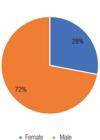
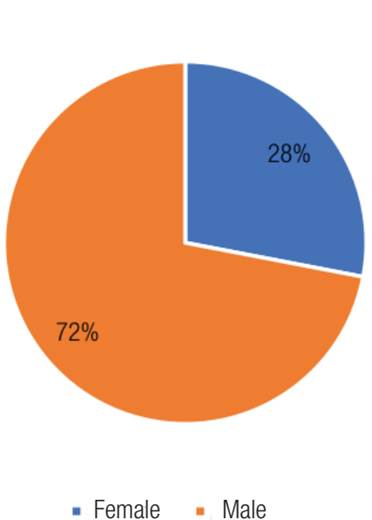
The most recent data indicate an upward trend, as shown in Figure 2. Between 2011 and 2024, women accounted for 28% of all entrants - the highest proportion ever recorded.
3.3. Age
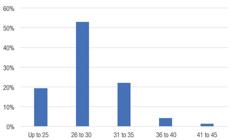
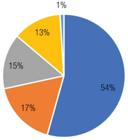
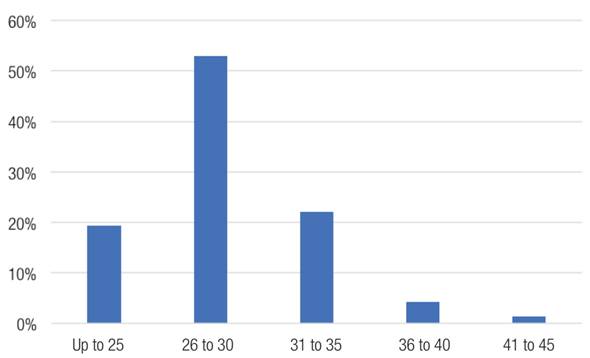
Data indicate that 53% of those appointed between 2011 and 2024 were 26 to 30 years old. The second-largest age group was 31 to 35 years (22%), and 19% of the total were under 25. The youngest entrants were 22 years old, and the oldest were twice that age. The mean age at entry was 29 Figura 3.
The historical comparison with data from Lima and Oliveira (2018) indicates that the mean age of entrants has continued to rise. In the 1960s, this figure was below 22, partly because until 1967, only a completed secondary education was required for admission to the Rio Branco Institute. Lima and Oliveira (2018, p. 803) also documented “an increasing average age of entry of individuals up to around 27 years, which also follows the median age of entrants, with an extension of the segments and [upward] outliers after 1996.”
A more recent development that may also be contributing to this upward trend is the abolition of the maximum age limit for entry into the diplomatic career. According to Balbino (2011), the limit stood at 32 for most of the institution’s history, was raised to 36 in 1996, and was subsequently abolished.
3.4. Birthplace
Cheibub (1989, p. 100) explains that until 1959, “candidates for the diplomatic career were generally residents of the Federal District (city of Rio de Janeiro [at that time]) and surrounding areas, or ‘children of wealthy parents’ from other states who could afford the costs of the entrance examination.” The introduction of a preliminary selection process in other cities, along with subsidies for those selected to complete the final stage in the capital, began to transform this landscape. According to the author, in 1957, only 16.6% of candidates were not from Rio de Janeiro; by 1959, 47.9% of registered candidates were already from outside the state. By the end of the 1970s, partly due to the relocation of the capital to Brasília, only one fifth of candidates were still from Rio de Janeiro. Lima and Oliveira (2018) also noted a decline in the number of Rio de Janeiro-born diplomats, with São Paulo overtaking the city as the leading place of origin in the 2000s.
When broken down by city, MRE’s database for the period 2011-2024 shows Rio de Janeiro in the lead, with 45 of the 299 diplomats whose origins were recorded, followed by São Paulo with 42. The most striking proportional figure, however, is Belo Horizonte, which, despite having a much smaller population than Rio de Janeiro and São Paulo, produced 32 new diplomats, revealing a clear concentration of entrants from the country’s southeastern state capitals. These three cities alone account for 40% of all diplomats recorded in the period, while northeastern capitals of comparable population size, such as Salvador and Fortaleza, produced only a quarter as many new diplomats as Belo Horizonte.
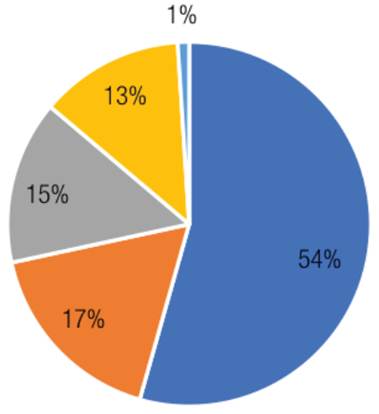
Among the states, the dominance of São Paulo, Rio de Janeiro, and Minas Gerais is even more striking, collectively accounting for 52% of all new entrants during the period. The Federal District and Rio Grande do Sul follow. However, the regional breakdown provides the most striking evidence of unequal geographic representation. As Figure 4 shows, only 1% of new entrants recorded in the database between 2011 and 2024 came from Brazil’s North region. The Central-West region, with a comparable population, accounts for 13%, largely owing to the Federal District.
3.5. Educational Background
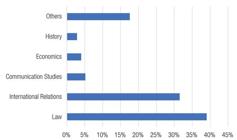
Although a completed undergraduate degree became a requirement for entry into the diplomatic service only in the 1990s, data gathered by Cheibub (1989) documented the long-standing dominance of law graduates and highlighted notable growth among graduates in economics and administration (between 1961 and 1982) and social sciences, mainly between 1961 and 1972. Lima and Oliveira (2018) subsequently identified proportional growth in degrees in communications and international relations among newly admitted diplomats.
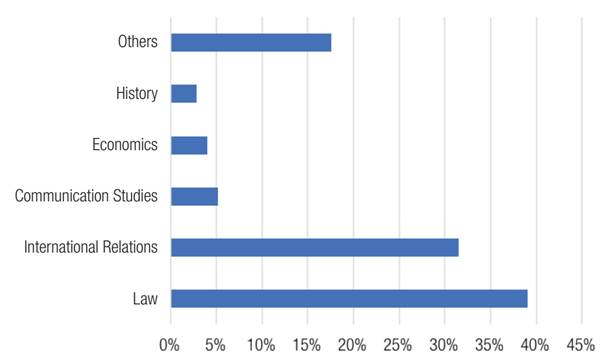
The data provided by the MRE for the period 2011-2024 contradict the previous trend of growth in communications but corroborate the strong expansion of international relations. No previous survey had documented a field of study challenging the historical dominance of law graduates as markedly as this one. International relations graduates now account for 31% of newly admitted diplomats, compared with 39% for law graduates, as shown in Figure 5. From a historical perspective, international relations appears to have displaced economics and social sciences in the preferences of career entrants, partly because it encompasses subject matter central to both fields.
Herz (2002, p. 19) had already noted the growth of the field in Brazil and the “proliferation of undergraduate programs in international relations.” More recently, Pfrimer and Okado (2019) observed that, following the significant expansion of International Relations programs at private institutions from the late 1990s onward, mainly in São Paulo, Rio de Janeiro, and Brasília, the 2000s saw federal public universities begin to offer the degree as well, with provision spreading geographically, particularly toward the South and the Central-West.
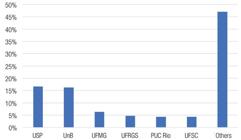
The proportional growth in degrees in international relations among new diplomats is driven by the University of Brasília (UnB), which offers Brazil’s oldest undergraduate program in the field (1974). Among entrants from 2011 to 2024, the most common degree-institution combination is international relations at UnB, closely followed by law at the University of São Paulo (USP).
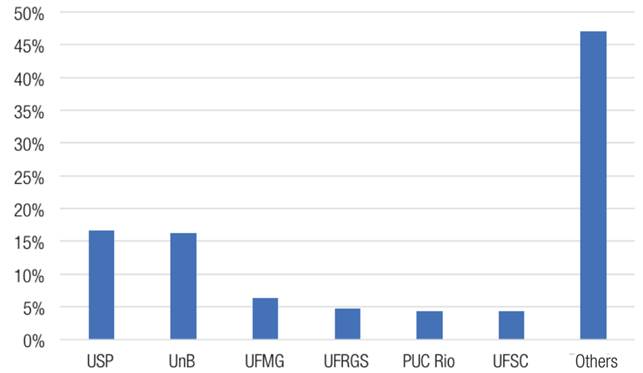
Across all degree programs, USP leads at 17%, virtually tied with UnB at 16%, as shown in Figure 6. Public universities clearly predominate, with the Pontifical Catholic Universities (PUCs) the most notable among private institutions, particularly those in Rio de Janeiro, São Paulo, and Minas Gerais. Among federal universities, the Federal University of Minas Gerais (UFMG) and the Federal University of Rio Grande do Sul (UFRGS) are also noteworthy, alongside UnB.
4. CONCLUSION
This study of the profile of those entering the main diplomatic career in the Brazilian Ministry of Foreign Affairs (MRE) between 2011 and 2024 indicates significant changes in several key characteristics of new diplomats.
Regarding race, the ongoing transformation is evident. Lima and Oliveira (2018), who analyzed historical series from the 1960s to 2010, never recorded a share of even 3% for non-white diplomats. Between 2011 and 2024, the combined share of preto and pardo diplomats - who are grouped together as a single category for examination registration purposes - already exceeded 26% of all newly admitted diplomats. The connection between this shift and the Rio Branco Institute’s Affirmative Action Program, which introduced scholarships for preto and pardo candidates preparing for the entrance examination from 2002 onward, and the introduction of racial quota provisions in federal public administration examinations in 2014, appears clear.
This structural change in the Brazilian diplomatic corps has the potential to reshape, over time, aspects of public policy and the country’s international conduct. According to Silva (2018, p. 152), “the possibility of a high-level bureaucratic body with significant racial representation has greater potential to mobilize this theme in the formulation of government policies and programs,” for example, by identifying racial gaps in the government’s agenda or influencing public policy design.
Regarding age, the recent rise in the mean entry age to 29 appears to reflect the abolition of the maximum age limit, which stood at 32 for most of the institution’s history, was raised to 36 in 1996, and was subsequently eliminated, according to Balbino (2011). This change may have fostered a broader cultural shift, encouraging older candidates to consider a diplomatic career. The data show that more than 27% of those appointed between 2011 and 2024 were already at least 31 years old.
Regarding gender, the data confirm the continuation of the trend toward greater female participation, as documented by Lima and Oliveira (2018). In 2018, Itamaraty launched a campaign to encourage women to pursue diplomatic careers, using the hashtag #maismulheresdiplomatas (more women diplomats).
The increased representation of women in the MRE is crucial, given that the “underrepresentation of women in leadership positions in the public service constrains the incorporation of women’s perspectives and experiences into the formulation, implementation, and evaluation of public policies” (Santos, 2026, p. 147).
The analysis of candidates’ geographic origins confirmed that the Southeast remains the predominant region and that Rio de Janeiro leads among cities of origin, consistent with Cheibub’s (1989) historical findings. A finding not previously documented in the literature is the striking proportional representation of Belo Horizonte, which produced four times as many newly admitted diplomats as northeastern capitals of comparable population size, such as Fortaleza and Salvador. Equally notable is the near absence of entrants from the North region, which accounted for only 1% of the total.
Finally, regarding educational background, the remarkable rise of international relations as the preferred undergraduate degree among newly admitted diplomats warrants particular attention. The program trained nearly a third of all appointees listed in the MRE database between 2011 and 2024. Given that its curriculum aligns more closely with the Rio Branco Institute’s examination requirements and that the degree has expanded significantly only in recent decades, international relations appears well positioned to surpass law - for the first time in recorded history - as the most common undergraduate background among new entrants, as suggested by the time series compiled by Cheibub (1989) and Lima and Oliveira (2018). The most frequent degree-institution combination over the period studied was international relations at UnB - an institution that, alongside USP, leads in the academic training of Brazil’s new diplomats.
References
-
Balbino, V. R. (2011). Diplomata, substantivo comum de dois gêneros: um estudo sobre a presença das mulheres na diplomacia brasileira. Brasília: Fundação Alexandre de Gusmão https://bibliotecadigital.mdh.gov.br/jspui/handle/192/9168
» https://bibliotecadigital.mdh.gov.br/jspui/handle/192/9168 - Bodine, C. S., & Giannattasio, A. R. C. (2022). O papel da herança cultural nos processos de ingresso na carreira diplomática brasileira entre 1995-2015. Revista de Administração Pública, 56(5), 654-682.
- Cheibub, Z. B. (1985). Diplomacia e construção institucional: o Itamaraty em uma perspectiva histórica. Dados - Revista de Ciências Sociais, 28(1), 113-131.
- Cheibub, Z. B. (1989). A carreira diplomática no Brasil: o processo de burocratização do Itamaraty. Revista de Administração Pública, 23(2), 97-128.
- Faria, C. A. P. de. (2012). O Itamaraty e a política externa brasileira: do insulamento à busca de coordenação dos atores governamentais e de cooperação com os agentes societários. Contexto Internacional, 34(1), 311-355.
- França, C. L. da, & Badin, M. R. S. (2010). A inserção internacional do poder executivo federal brasileiro Fundação Friedrich Ebert no Brasil.
- Herz, M. (2002). O crescimento da área de relações internacionais no Brasil. Contexto Internacional, 24(1), 7-40.
- Hirst, M., Lima, M. R. S. de., & Pinheiro, L. (2010). A política externa brasileira em tempos de novos horizontes e desafios. Nueva Sociedad, 12, 22-41.
-
Lei nº 11.440, de 29 de dezembro de 2006 (2006). Institui o Regime Jurídico dos Servidores do Serviço Exterior Brasileiro, altera a Lei nº 8.829, de 22 de dezembro de 1993, que cria, no Serviço Exterior Brasileiro, as Carreiras de Oficial de Chancelaria e de Assistente de Chancelaria, altera a Lei nº 8.829, de 22 de dezembro de 1993, revoga as Leis nos 7.501, de 27 de junho de 1986, 9.888, de 8 de dezembro de 1999, e 10.872, de 25 de maio de 2004, e dispositivos das Leis nos 8.028, de 12 de abril de 1990, 8.745, de 9 de dezembro de 1993, e 8.829, de 22 de dezembro de 1993, e dá outras providências. Brasília, DF. https://www.planalto.gov.br/ccivil_03/_ato2004-2006/2006/lei/l11440.htm
» https://www.planalto.gov.br/ccivil_03/_ato2004-2006/2006/lei/l11440.htm -
Lei nº 12.990, de 9 de junho 2014 (2014). Reserva aos negros 20% (vinte por cento) das vagas oferecidas nos concursos públicos para provimento de cargos efetivos e empregos públicos no âmbito da administração pública federal, das autarquias, das fundações públicas, das empresas públicas e das sociedades de economia mista controladas pela União. https://www.planalto.gov.br/ccivil_03/_ato2011-2014/2014/lei/l12990.htm
» https://www.planalto.gov.br/ccivil_03/_ato2011-2014/2014/lei/l12990.htm - Lima, R. C., & Oliveira, A. J. S. N. (2018). Manutenção e mudanças no Ministério das Relações Exteriores: perfis do corpo diplomático e padrões na carreira. Revista de Administração Pública, 52(5), 797-821.
- Belém Lopes, D. (2024). A política exterior no ano inaugural do governo Lula III. CEBRI-Revista: Brazilian Journal of International Affairs, (9), 80-102.
- Milani, C. R. S., & Pinheiro, L. (2013). Política externa brasileira: os desafios de sua caracterização como política pública. Contexto Internacional, 35(1), 11-41.
-
Ministério das Relações Exteriores. (2025). Dados enviados pelo Ministério das Relações Exteriores para a Plataforma Integrada de Ouvidoria e Acesso à Informação (Fala.BR) https://falabr.cgu.gov.br
» https://falabr.cgu.gov.br - Pfrimer, M. H., & Okado, G. H. C. (2019). Dispersão e concentração espaciais dos cursos de Relações Internacionais no Brasil: contrastes e desafios da expansão da oferta nacional. Carta Internacional, 14(1), 225-249.
- Santos, L. da. R. (2026). Equidade de gênero na administração pública: o papel das ações afirmativas. Revista do Serviço Público, 76(c), 145-166.
- Silva, T. D. (2018). Gestão pública na zona do não ser: políticas públicas, igualdade racial e administração pública no Brasil. Administração Pública e Gestão Social, 10(2), 148-159.
- Silva, E. C. G., Spécie, P., & Vitale, D. (2010). Atual Arranjo Institucional da Política Externa Brasileira (Working Paper nº 1489). Ipea.
- Silva, T. D. (2023). Ingressantes no Executivo civil federal: uma análise no contexto da lei de cotas no serviço público. In F. G. Lopez, & J. C. Cardoso Júnior (Orgs), Trajetórias da burocracia na Nova República: heterogeneidades, desigualdades e perspectivas (1985-2020) (pp. 351-70). Ipea.
-
Reviewers:
Caique Sanches Bodine, Universidade de São Paulo, São Paulo, SP, Brazil
-
Reviewers:
One reviewer did not authorize the disclosure of their identity.
-
Peer review report:
The peer review report is available at https://periodicos.fgv.br/rap/article/view/97069/90457
-
REASEARCH DATA AVAILABILITY
The dataset supporting the results of this study is not publicly available.
-
USE OF ARTIFICIAL INTELLIGENCE
No artificial intelligence tools were used.
The dataset supporting the results of this study is not publicly available.

 Source: Brazilian Ministry of Foreign Affairs (
 Source: Brazilian Ministry of Foreign Affairs (
 Source: Brazilian Ministry of Foreign Affairs (
 Source: Brazilian Ministry of Foreign Affairs (MRE, 2025).
 Source: Brazilian Ministry of Foreign Affairs (
 Source: Brazilian Ministry of Foreign Affairs (