 Health of pregnant adolescents: spatial analysis and public policy
Abstract
This study investigated the health of pregnant adolescents in municipalities of the State of São Paulo from 2017 to 2021, using spatial and predictive analysis to discern patterns related to teenage pregnancy. Data from the Live Birth Information System were analyzed with tools such as Moran’s I Index of spatial dependence, identifying a reduction in the number of births to adolescent mothers, which points to the effectiveness of sexual education policies and access to contraceptives. However, regional inequalities were observed, with concentrations of teenage pregnancy in urban peripheral and rural areas. Low educational attainment and the prevalence of single mothers, particularly those of mixed race or Black, emerged as significant antecedents for explaining the spatial dynamics of the phenomenon and suggest the need for more inclusive and socioculturally adapted public and educational policies. The results emphasize the necessity of holistic approaches in public policies to effectively address teenage pregnancy.
Keywords:
teenage pregnancy; public policies; spatial statistics
Resumo
Este estudo investigou a saúde de adolescentes grávidas nos municípios do estado de São Paulo de 2017 a 2021, utilizando análise espacial e preditiva para discernir padrões relacionados à gravidez na adolescência. Dados do Sistema de Informações sobre Nascidos Vivos foram analisados com ferramentas como o Índice I de Moran de dependência espacial, identificando uma redução no número de nascimentos de mães adolescentes, o que aponta para a eficácia de políticas de educação sexual e acesso a contraceptivos. Entretanto, desigualdades regionais foram observadas, com concentrações de gravidez adolescente em áreas periféricas urbanas e rurais. A baixa escolaridade e a prevalência de mães solteiras, especialmente de cor parda ou preta, se mostraram antecedentes importantes para a explicação da dinâmica espacial do fenômeno e sugerem a necessidade de políticas educacionais e públicas mais inclusivas e adaptadas às realidades socioculturais locais. Os resultados enfatizam a necessidade de abordagens holísticas nas políticas públicas para tratar a gravidez na adolescência efetivamente.
Palavras-chave:
gravidez na adolescência; políticas públicas; estatística espacial
Resumen
Este estudio investigó la salud de adolescentes embarazadas en los municipios del estado de São Paulo entre 2017 y 2021, utilizando análisis espacial y predictivo para discernir patrones relacionados con el embarazo adolescente. Se analizaron datos del Sistema de Informaciones sobre Nacidos Vivos con herramientas como el Índice I de Moran de dependencia espacial, identificando una reducción en el número de nacimientos de madres adolescentes, lo que señala la eficacia de políticas de educación sexual y acceso a anticonceptivos. Sin embargo, se observaron desigualdades regionales, con concentraciones de embarazo adolescente en áreas periféricas urbanas y rurales. La baja escolaridad y la prevalencia de madres solteras, particularmente de raza mestiza o negra, se mostraron como antecedentes importantes para explicar la dinámica espacial del fenómeno y sugieren la necesidad de políticas educativas y públicas más inclusivas y adaptadas a las realidades socioculturales locales. Los resultados enfatizan la necesidad de enfoques holísticos en las políticas públicas para abordar efectivamente el embarazo adolescente.
Palabras clave:
embarazo adolescente; políticas públicas; estadística espacial
1. INTRODUCTION
Teenage pregnancy continues to be a relevant challenge for public health, affecting the physical and mental health of young mothers, especially in São Paulo state. Data from the United Nations indicate that Brazil has a rate of 49 pregnancies per thousand adolescents, above the global average of 40 (United Nations Population Fund [UNFPA], 2022). This phenomenon impacts not only adolescents but also their children, reinforcing the urgent need for effective interventions. The World Health Organization defines adolescence between 10 and 19 years as a critical transition phase, highlighting the need for integrated approaches that ensure healthy development. Early initiation of sexual life is one of the factors that compromise adolescent health, exposing them to high risks of sexually transmitted diseases (Sousa et al., 2018). Pregnancy at this stage is also associated with school dropout, amplifying the socioeconomic disadvantages of these young women. The risk of complications during pregnancy is higher among adolescents aged 15 to 19, being even more severe for girls under 15 years (Taborda et al., 2014). Although teenage pregnancy rates have decreased in Brazil, poverty and barriers to healthcare access persist, necessitating integrated solutions that combine health, education, and socioeconomic support (Brazilian Institute of Geography and Statistics [IBGE], 2021a). Recent legislative debates, such as bill (PL) No. 1,904/2024, which limits legal abortion to 22 weeks, highlight the need for a deeper dialogue about pregnant adolescents that can go beyond pregnancy termination, also addressing the social and economic conditions that contribute to the phenomenon. The restriction on legal abortion may increase inequalities, as adolescents frequently face obstacles in accessing information and reproductive health services, perpetuating cycles of social exclusion.
In São Paulo, socioeconomic and regional disparities contribute significantly to the high incidence of teenage pregnancy, particularly in vulnerable areas. Even with public policies in place, the persistence of these cases suggests that low education, limited access to health services, and adverse socioeconomic conditions are determining factors (Martinez et al., 2011; Castro et al., 2024). The objective of this study is to identify and analyze the factors that influence teenage pregnancy in São Paulo state, seeking to offer insights for preventive strategies. Understanding the biopsychosocial dynamics associated with this phenomenon is important for formulating interventions and public policies that meet the needs of these young women, in addition to the importance of developing preventive strategies that promote healthy and equitable development of adolescents (IBGE, 2021a).
2. THEORETICAL FRAMEWORK
Teenage pregnancy is a multidimensional issue involving public health, sociocultural, and economic aspects, particularly in São Paulo state, where social and educational inequalities are evident (IBGE, 2021b). Although there has been a decline in teenage pregnancy rates between 2019 and 2021, the phenomenon remains complex, requiring an interdisciplinary and integrated approach (Nascimento et al., 2021).
The consequences of early pregnancy go beyond physical health, impacting the psychosocial and economic spheres of young women. Adolescents with lower income and lower education are more susceptible to early pregnancy, perpetuating cycles of poverty and social exclusion (Sousa et al., 2018). These patterns reflect social and economic mechanisms that continue to exist and impact these young women.
Teenage pregnancy is considered an indicator of social disadvantage, and the relationship between low education, poverty, and early pregnancy suggests that public policies should adopt holistic approaches. Programs that combine sexual education with facilitated access to reproductive health services can reduce teenage pregnancy rates (Bruno et al., 2021). Additionally, it is important that educational empowerment strategies be inclusive and adapted to the realities of adolescents, allowing them to continue their education even during pregnancy (Moraes & Vitalle, 2012).
Inadequate access to health services and informational barriers about contraceptive methods are significant challenges. Adolescents often face prejudice and misinformation, hindering effective management of their reproductive health. This scenario is aggravated in contexts of physical and psychological violence, which affect the mental health of young women, highlighting the importance of support networks and psychosocial interventions (Quinlan-Davidson et al., 2021).
Public policies can respond to social needs related to teenage pregnancy. These policies not only help mitigate existing problems but are also fundamental for preventing new occurrences.
The Adolescent Health Program (Prosad), launched in 1989, was pioneering in Brazil by focusing on young people’s reproductive health. However, subsequent evaluations showed that the program could not meet the socioeconomic needs of adolescents, resulting in limited effectiveness in preventing early pregnancy (Pan American Health Organization [PAHO], 2018). This challenge is more pronounced in regions with lower socioeconomic development, where lack of resources aggravates the problem.
Another relevant program is the Health at School Program (PSE), created in 2007, a collaboration between the Ministry of Education and the Ministry of Health to promote comprehensive health for students. Despite regional variations in its implementation, PSE represents an effective interministerial collaboration model, with potential to improve young people’s well-being and education (Ministry of Health, 2024).
Recognizing that teenage pregnancy is a multifaceted issue, more holistic policies were implemented. In 2017, the Ministry of Citizenship coordinated efforts with national secretariats to expand interventions that address individual and contextual determinants of teenage pregnancy (Brazil, 2017). In 2022, a group of ministries developed the National Plan for Primary Prevention of Early Sexual Risk and Teenage Pregnancy, justified by the still high rate of pregnancy in this age group and recognition of distinct target audiences involved to adequately address the theme (Brazil, 2022).
The Plan demonstrates that early initiation of sexual life reflects deep socioeconomic disparities, linked to issues of gender, race, and economic condition. Although some advances have occurred, challenges still exist, such as insufficient coverage and lack of interventions adapted to the cultural specificities of communities (Bruno et al., 2021).
Geolocalized public policies can improve intervention effectiveness, addressing both prevention and mitigation of the consequences of teenage pregnancy. Personalized sexual education programs, which consider the individual circumstances of adolescents, are fundamental for addressing the complexity of the phenomenon (Offiong et al., 2022).
3. METHODOLOGY
This study employs descriptive analysis based on data from the Live Birth Information System (Sinasc), covering the period from 2017 to 2021, to examine the health outcomes of pregnant adolescents in São Paulo. The period was chosen considering the availability of data from other databases, such as IBGE, to allow for an expanded analysis of factors. Through spatial statistics techniques, an exploration of the number of live birth cases was conducted to identify emerging patterns and influencing factors (Yin, 2001). Techniques include choropleth maps and spatial dependence analysis using Moran’s I Index, which detects geographical clusters and dispersions of teenage pregnancy (Melo et al., 2021).
Complementarily, an in-depth evaluation of public policies was conducted in two prominent cities, among the municipalities in the database, representing the group with the lowest and highest teenage pregnancy rates. The objective was to complement the territorial analysis, seeking elements of public policies related to the rates found in the cities.
3.1 Data Selection and Treatment
Data sets on teenage pregnancy were collected for each year from Sinasc, which compulsorily records births in the country, compiled by the Health Data Science Platform. The period collected was from 2017 to 2021, considering the availability of IBGE data.
Data were filtered to include only records of mothers aged 10 to 19 years, focusing on columns of interest that included demographic and geographic variables, such as municipality of residence location, mother’s age, education, marital status, mother’s race/color, among others. For variables about the adolescent population, proportion calculations were performed for independent variables. This calculation considered, for each municipality, the count of live births from adolescent mothers (10-19 years) per year and divided by the total population of female adolescents of the same year in that municipality. The objective was to minimize the effect of large young populations seeking analysis by proportion for each city.
For each year, indicator columns were added to represent live births, allowing longitudinal analyses of aggregated data. These data were then combined into a single database for subsequent analyses. Missing values in newly created columns were filled with zero in a specified column (final code M9), preparing the dataset for integrated analysis throughout the study period. Table 1 details the variables:
Geographic coding data from IBGE were loaded to enrich the analysis with geospatial information, allowing correlation between birth data and geographic location in São Paulo state. The data, enriched with demographic and geographic variables, were analyzed to formulate diagnoses about the health and socioeconomic conditions of these young women.
3.2 Public Policy Analysis
The analysis of public policies for teenage pregnancy prevention was conducted in 20 municipalities in São Paulo, selected based on their incidence of live births from adolescent mothers in 2021. To ensure a representative sample and enable comparison between distinct contexts, 10 municipalities with the highest and 10 with the lowest proportions of this indicator were chosen. The selection of 10 municipalities for each group was based on the search for greater representativeness. The inclusion of a larger number of municipalities enables comparative analyses between contexts of high and low incidence of teenage pregnancy for other municipalities with similar characteristics. The search for information about laws, campaigns, and programs related to prevention was conducted on official city hall websites, using keywords such as “adolescent,” “sexual and reproductive health,” and “pregnancy.”
4. RESULTS AND DISCUSSION
A total of 306,069 live birth occurrences were identified in São Paulo state between 2017 and 2021, from adolescent mothers aged 11 to 19 years. A highlight is that 2 out of every 10 adolescents are mothers. Figure 1 shows the yearly occurrences of live births from adolescent mothers in São Paulo state, according to mother’s age. Age analysis shows that motherhood is more common at the end of adolescence, especially at 19 years. In 2017, the average was 35 adolescent mothers per municipality in this age group, reducing to 25 in 2021.
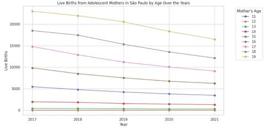
NUMBER OF LIVE BIRTH OCCURRENCES FROM ADOLESCENT MOTHERS IN SÃO PAULO STATE HEALTH NETWORK, BY AGE AND YEAR (2017-2021)
To analyze the spatial distribution of these occurrences among municipalities, the Moran spatial autocorrelation method and LISA maps (Local Indicators of Spatial Association) were used. These maps reveal incidence variations in different regions. In 2017, the yellow race showed almost random dispersion, while the white race was concentrated in the center and east of the state. Mixed race and black races had moderate concentrations, especially in peripheral and rural areas. In 2021, patterns for yellow race remained unchanged, but concentration of whites increased in central areas, while mixed race and blacks continued to expand in urban peripheries (Figure 2).

LISA MAP (QUEEN 1ST ORDER) AND MORAN’S I BY RACE/COLOR OF ADOLESCENT MOTHERS IN SÃO PAULO STATE (2017 AND 2021)
Education also showed spatial patterns (Figure 3). In 2017, Moran’s I values indicated dispersion for low education levels (values of 0.09 and 0.07 between 1 to 7 years) and concentration in urban areas for higher levels (value of 0.13 for 8 years or more). In 2021, there was a slight increase in concentration of low education in rural areas, while medium and high education continued to grow in urban areas.

LISA MAP (QUEEN 1ST ORDER) AND MORAN’S I BY EDUCATION OF ADOLESCENT MOTHERS IN SÃO PAULO STATE (2017 AND 2021)
Regarding marital status (Figure 4), 2017 data indicated dispersion for married and separated women (values of 0.05 and -0.013), and high concentration for single and in stable union (values of 0.21 and 0.38) in urban areas. In 2021, an increase in concentration of married and separated in rural areas was observed, while single and in stable union maintained high concentration in urban areas. The “marital status” variable reveals that, although the majority of adolescent mothers were single in 2017, there was an increase in the “Stable Union” and “Married” categories in 2021. This growth can be attributed to changes in social norms and greater acceptance of stable relationships at young ages. The positive Moran’s I for single mothers indicates strong spatial autocorrelation with urban areas, suggesting that pregnancy among single women is more prevalent in places with low education and limited access to reproductive health services.

LISA MAP (QUEEN 1ST ORDER) AND MORAN’S I BY MARITAL STATUS OF ADOLESCENT MOTHERS IN SÃO PAULO STATE (2017 AND 2021)
The increase in stable unions should not mask the challenges these young women face, such as social pressures or lack of alternatives leading to early marriage. The slight decline in Moran’s I index may reflect the impact of public policies that promote education and reproductive health, helping to disperse these clusters.
Based on the socioeconomic and demographic profile of adolescent mothers, it is suggested that persistent inequalities significantly affect these young women, with pregnancy concentrated in specific regions and related to low levels of education and certain marital statuses. Evidence highlights the need for more targeted public policies sensitive to regional and cultural particularities. These policies should focus on underlying causes of teenage pregnancy, such as insufficient education and limited social support.
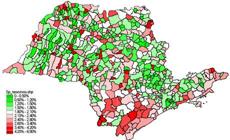
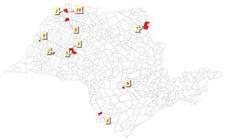
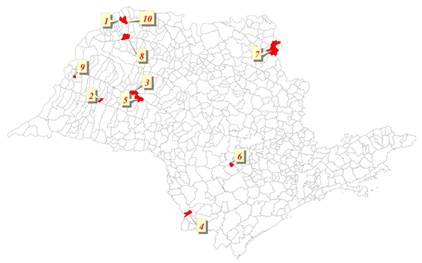
Considering regional differences (Figure 5), an analysis of public policies was conducted in 20 municipalities in São Paulo, 10 with low (Table 2 and Figure 6) and 10 with high (Table 3 and Figure 7) incidence of teenage pregnancy.
The research revealed difficulty in finding specific information about prevention policies, even in municipalities with high incidence of teenage pregnancy. In many cases, keywords “pregnancy” and “prevention” did not lead to relevant results, requiring exploration of each city hall page searching for mentions of “adolescent” theme. Additionally, while 9 of the 10 municipalities with low incidence had some material about prevention policies, only 6 municipalities with high incidence provided this information. This difficulty highlights the need for clearer and more transparent communication by municipalities, ensuring that information about public policies and sexual and reproductive health services are easily accessible to the population (Castro et al., 2024).

Considering birth rates among adolescents, this reality evidences the urgent need to expand dialogue about sexual and reproductive health and ensure that information and services are accessible to all young people, especially in vulnerable areas.
5. FINAL CONSIDERATIONS
This article sought to explore territorial patterns in the incidence of pregnancy among adolescents in São Paulo state, evidencing how demographic, socioeconomic, and educational factors intertwine. The analysis employed spatial statistics techniques and revealed that low education is directly correlated with high rates of pregnancy among adolescents, emphasizing the importance of educational programs aimed at improving school retention to reduce these rates. Furthermore, significant variations in teenage pregnancy were observed among different racial groups and regions, pointing to the need for approaches adapted to cultural and regional realities. The results also evidenced significant regional disparities, indicating that urban peripheral and rural areas still face critical challenges related to teenage pregnancy, reflecting a complex interaction between socioeconomic and cultural factors.
The analysis of municipalities with higher and lower teenage pregnancy rates revealed that there is disparity in production and availability of information about prevention and public policies specifically aimed at this population. Thus, the inequalities identified in the dynamics of teenage pregnancy, especially among single mothers with low education, suggest that, despite advances in existing policies, there is still a need for more adaptive and contextualized approaches. These inequalities not only affect adolescent health but also have long-reaching implications for their families and communities. Therefore, the study emphasizes the importance of public policies that consider the specific sociocultural and economic realities of each region, ensuring that interventions are truly inclusive and effective.
Although the results are significant, some limitations should be recognized. The research was based on data from the Live Birth Information System which, although comprehensive, may not capture all the complexity of teenage pregnancy, such as the nuances of access to health and education.
For future research, we suggest conducting longitudinal studies that follow the trajectory of pregnant adolescents over time, as well as qualitative investigations that seek to understand the barriers faced by these young women in their communities.
References
-
Brasil. (2017). Informativo: Gravidez na Adolescência: impacto na vida das famílias e das adolescentes e jovens mulheres https://www.mds.gov.br/webarquivos/ publicacao/assistencia_social/informe/Informativo%20Gravidez%20adolesc%C3%AAncia%20final.pdf
» https://www.mds.gov.br/webarquivos/ publicacao/assistencia_social/informe/Informativo%20Gravidez%20adolesc%C3%AAncia%20final.pdf -
Brasil. (2022). Plano Nacional de Prevenção Primária do Risco Sexual Precoce e Gravidez na Adolescência https://www.tjes.jus.br/wp-content/uploads/plano-nacional_camp_gov_fed.pdf
» https://www.tjes.jus.br/wp-content/uploads/plano-nacional_camp_gov_fed.pdf -
Bruno, S. K. B., Rocha, H. A. L., Rocha, S. G. M. O., Araújo, D. A. B. S., Campos, J. S., Silva, A. C. E., & Correia, L. L. (2021). Prevalence, socioeconomic factors and obstetric outcomes associated with adolescent motherhood in Ceará, Brazil: a population-based study. BMC pregnancy and childbirth, 21(616), 1-10. https://doi.org/10.1186/s12884-021-04088-7
» https://doi.org/10.1186/s12884-021-04088-7 -
Castro, A. E. S., Tulli, M. C., & Lima, L. D. S. C. (2024). Pregnancy in adolescence, Sectoral public policies and care for pregnant women at SUS: A time series study from 2013 to 2022. Research, Society and Development, 13(10), 1-7. https://doi.org/10.33448/rsd-v13i10.47024
» https://doi.org/10.33448/rsd-v13i10.47024 -
Fundo de População das Nações Unidas. (2022). Relatório Situação da População Mundial 2022 https://brazil.unfpa.org/pt-br/publications/situacao-da-populacao-mundial-2022
» https://brazil.unfpa.org/pt-br/publications/situacao-da-populacao-mundial-2022 -
Instituto Brasileiro de Geografia e Estatística. (2021a). Critério de classificação de classes sociais https://agenciadenoticias.ibge.gov.br/media/com_mediaibge/arquivos/736783717803cba71 ec0b3a6e77fc7e9.pdf
» https://agenciadenoticias.ibge.gov.br/media/com_mediaibge/arquivos/736783717803cba71 ec0b3a6e77fc7e9.pdf -
Instituto Brasileiro de Geografia e Estatística. (2021b). Estatísticas de gênero - indicadores sociais das mulheres no Brasil https://abet-trabalho.org.br/wp-content/uploads/2021/03/liv101784_informativo.pdf
» https://abet-trabalho.org.br/wp-content/uploads/2021/03/liv101784_informativo.pdf -
Martinez, E. Z., Roza, D. L. D., Caccia-Bava, M. D. C. G. G., Achcar, J. A., & Dal-Fabbro, A. L. (2011). Gravidez na adolescência e características socioeconômicas dos municípios do Estado de São Paulo, Brasil: análise espacial. Cadernos de Saúde Pública, 27(5), 855-867. https://doi.org/10.1590/S0102-311X2011000500004
» https://doi.org/10.1590/S0102-311X2011000500004 -
Melo, R. O., Freitas, A. C., Francisco, E. R., & Motokane, M. T. (2021). Impacto das variáveis socioeconômicas no desempenho do Enem: uma análise espacial e sociológica. Revista de Administração Pública, 55(6), 1271-1294. https://doi.org/10.1590/0034-761220200843
» https://doi.org/10.1590/0034-761220200843 -
Ministério da Saúde. (2024). Programa Saúde na Escola https://www.gov.br/saude/pt-br/composicao/saps/pse
» https://www.gov.br/saude/pt-br/composicao/saps/pse -
Moraes, S. P., & Vitalle, M. S. S. (2012). Direitos Sexuais e reprodutivos na adolescência. Revista da Associação Médica Brasileira, 58(1), 48-52. https://doi.org/10.1590/S0104-42302012000100014
» https://doi.org/10.1590/S0104-42302012000100014 -
Nascimento, T. L. C., Teixeira, C. S. S., Anjos, M. S. D., Menezes, G. M. D. S., Costa, M. D. C. N., & Natividade, M. S. D. (2021). Fatores associados à variação espacial da gravidez na adolescência no Brasil, 2014: estudo ecológico de agregados espaciais. Epidemiologia e Serviços de Saúde, 30(1), e201953. https://doi.org/10.1590/s1679-49742021000100003
» https://doi.org/10.1590/s1679-49742021000100003 -
Offiong, A., Powell, T. W., Dangerfield II, D. T., Gemmill, A., & Marcell, A. V. (2022). A latent class analysis: Identifying pregnancy intention classes among US adolescents. Journal of Adolescent Health, 71(4), 466-473. https://doi.org/10.1016/j.jadohealth.2022.04.019
» https://doi.org/10.1016/j.jadohealth.2022.04.019 -
Organização Pan-Americana da Saúde. (2018). Gravidez na Adolescência na América Latina e Caribe: Relatório 2018 https://www.paho.org/pt/noticias /28-2-2018-america-latina-e-caribe-tem-segunda-taxa-mais-alta-gravidez-na-adolescencia-no
» https://www.paho.org/pt/noticias /28-2-2018-america-latina-e-caribe-tem-segunda-taxa-mais-alta-gravidez-na-adolescencia-no -
Quinlan-Davidson, M., Roberts, K. J., Devakumar, D., Sawyer, S. M., Cortez, R., & Kiss, L. (2021). Evaluating quality in adolescent mental health services: A systematic review. BMJ Open, 11(5), e044929. https://doi.org/10.1136/bmjopen-2020-044929
» https://doi.org/10.1136/bmjopen-2020-044929 -
Sousa, C. R. D. O., Gomes, K. R. O., Silva, K. C. D. O., Mascarenhas, M. D. M., Rodrigues, M. T. P., Andrade, J. X., & Leal, M. A. B. F. (2018). Fatores preditores da evasão escolar entre adolescentes com experiência de gravidez. Cadernos Saúde Coletiva, 26(2), 160-169. https://doi.org/10.1590/1414-462x201800020461
» https://doi.org/10.1590/1414-462x201800020461 -
Taborda, J. A., Silva, F. C. D., Ulbricht, L., & Neves, E. B. (2014). Consequências da gravidez na adolescência para as meninas considerando-se as diferenças socioeconômicas entre elas. Cadernos Saúde Coletiva, 22(1), 16-24. https://doi.org/10.1590/1414-462X201400010004
» https://doi.org/10.1590/1414-462X201400010004 - Yin, R. K. (2001). Estudo de caso: Planejamento e métodos Bookman.
-
DATA AVAILABILITY
The complete dataset supporting the results of this study is available upon request to author Erika Alejandra Bellido Alarcon. The dataset is not publicly available by the authors’ choice.
-
8
[Translated version] Note: All quotes in English translated by this article’s translator.
-
Reviewers
Estela Najberg (Universidade Federal de Goiás, Goiânia / GO - Brazil)
-
Reviewers
Ricardo Borges Gama Neto (Universidade Federal de Pernambuco, Recife / PE - Brasil)
-
Reviewers
Ronaldo Bordin (Universidade Federal do Rio Grande do Sul, Porto Alegre / RS - Brasil)
-
Peer review report
Peer review report: the peer review report is available at this https://periodicos.fgv.br/rap/article/view/93503/87514
The complete dataset supporting the results of this study is available upon request to author Erika Alejandra Bellido Alarcon. The dataset is not publicly available by the authors’ choice.

 Source: Research data.
 Note: LISA = Local Indicators of Spatial Association; n = 645.Source: Research Data.
 Note: LISA = Local Indicators of Spatial Association; n = 645.Source: Research Data.
 Note: LISA = Local Indicators of Spatial Association; n = 645.Source: Research Data.
 Source: Research Data.
 Source: Research Data.
 Source: Research Data.