
 Prosecution in Brazilian specialized federal courts: cartography of money laundering, criminal organizations, and crimes against the national financial system trials
Abstract
The paper provides a cartography of money laundering trials and criminal organizations, focusing on the performance of specialized federal courts, demonstrating the effects of institutional design over nearly thirty years. From the analysis of implementation maps of specialized justice, relevant questions emerge: (i) are there contrasting explanations for the creation of courts, justified by the low number of cases reaching federal courts shortly after the first years of the money laundering law’s promulgation, especially due to lack of knowledge and expertise in dealing with such crimes?; (ii) to what extent the creation of structures is related to the increase in money laundering and organized crime cases?; and (iii) what is the trajectory of prosecution in different states over the decades corresponding to the emergence and decline of specialized judicial policy? We adopt a descriptive approach by cross-referencing data on the existence of specialized courts with data on lawsuits. The mapping allowed for the spatialization of Brazilian states from 1996 to 2022 and the effects of criminal lawsuits for each state between 2020 and 2022. We identified a prior demand for specialization in organized crime. In contrast, money laundering lawsuits were nonexistent at the beginning of the specialization process and took time to materialize. On the other hand, crimes against the National Financial System were absorbed by specialized courts to justify the creation of judicial policy. These crimes began to have an expansive trajectory throughout the country, affecting the triad of macro-criminality in the specialized judicial system. Even with the specialization movement, effective money laundering and organized crime convictions are rare.
Keywords:
specialized courts; cartography of the trials; money laundering; criminal organizations; spacialization
Resumo
O artigo oferece uma cartografia dos julgamentos de lavagem de dinheiro e organizações criminosas, com foco na atuação das varas federais especializadas, demonstrando os efeitos do desenho institucional ao longo de quase trinta anos. A partir da análise de mapas de implementação da justiça especializada surgem aspectos relevantes a serem considerados: (i) é possível opor as explicações para a criação das varas, que foram justificadas pelo baixo número de processos que chegam à Justiça Federal logo após os primeiros anos de promulgação da lei de lavagem de dinheiro, especialmente devido à falta de conhecimento e expertise em lidar com tais crimes; (ii) em que medida a criação de estruturas está relacionado ao aumento dos processos de lavagem de dinheiro e crime organizado; e, (iii) qual a trajetória da acusação nos diferentes estados ao longo das décadas correspondentes ao surgimento e declínio da política judicial especializada. Adotamos uma abordagem descritiva cruzando dados sobre a existência de tribunais especializados com dados de ações judiciais. O mapeamento permitiu a espacialização dos estados brasileiros de 1996 a 2022 e dos efeitos das ações criminais para cada estado entre 2020 e 2022. Identificamos uma demanda prévia por especialização em crime organizado. Em contrapartida, ações judiciais sobre lavagem de dinheiro eram inexistentes no início do processo de especialização e demoraram a concretizar-se. Por outro lado, os crimes contra o Sistema Financeiro Nacional foram absorvidos pelos tribunais especializados para justificar a criação de política judicial. Esses crimes passaram a ter trajetória expansionista em todo o país, prejudicando inclusive a tríade da macrocriminalidade no sistema judiciário especializado. Mesmo com o movimento de especialização, é rara a condenação efetiva por crimes de lavagem de dinheiro e crime organizado.
Palavras-chave:
varas especializadas; geografia dos julgamentos; lavagem de dinheiro; organizações criminosas; espacialização
Resumem
El artículo ofrece una cartografía de los juicios por lavado de dinero y organizaciones criminales, centrándose en la actuación de los tribunales federales especializados, demostrando los efectos del diseño institucional a lo largo de casi treinta años. A partir del análisis de mapas de implementación de la justicia especializada surgen aspectos relevantes a considerar: (i) es posible oponerse a las explicaciones para la creación de los juzgados, que se justificaron por el bajo número de procesos que llegan a la justicia federal poco después de los primeros años de promulgación de la ley de lavado de dinero, especialmente debido a la falta de conocimiento y experiencia en el manejo de tales delitos; (ii) en qué medida la creación de estructuras está relacionada con el aumento de los procesos de lavado de dinero y crimen organizado; y (iii) cuál es la trayectoria de la acusación en los diferentes estados a lo largo de las décadas correspondientes al surgimiento y declive de la política judicial especializada. Adoptamos un enfoque descriptivo cruzando datos sobre la existencia de tribunales especializados con datos de acciones judiciales. El mapeo permitió la espacialización de los estados brasileños de 1996 a 2022 y los efectos de las acciones criminales para cada estado entre 2020 y 2022. Identificamos una demanda previa de especialización en crimen organizado. En contrapartida, las acciones judiciales por lavado de dinero fueron inexistentes al inicio del proceso de especialización y tardaron para concretarse. Por otro lado, los crímenes contra el Sistema Financiero Nacional fueron absorbidos por los tribunales especializados para justificar la creación de política judicial. Estos crímenes comenzaron a tener una trayectoria expansionista en todo el país, incluso afectando a la tríada de la macrocriminalidad en el sistema judicial especializado. A pesar del movimiento de especialización, es rara la condena efectiva por delitos de lavado de dinero y crimen organizado.
Palabras clave:
tribunales especializados; geografía de los juicios; lavado de dinero; organizaciones criminales; espacialización
1. INTRODUCTION
Over the past five years, we have studied the phenomenon of specialized courts, focusing on the Brazilian experience of federal courts in money laundering and organized crime (Madeira & Geliski, 2019, 2020, 2021, 2024). Although Brazil does not have a specific court dedicated exclusively to corruption cases, it aligns with countries that have anti-corruption courts (Stephenson & Schütte, 2016, 2022) because it addresses directly related crimes such as money laundering and organized crime.
In this paper, our objective is to offer a cartography of the trials related to money laundering and criminal organizations, focusing on the performance of the specialized federal courts, in contrast with crimes against the National Financial System, which were used to stimulate the specialization process. To this end, we describe the trial profile of these crimes, which began to be judged by specialized courts in waves that began in 2003. Our focus is on all crimes within the jurisdiction of specialized courts, including crimes against the National Financial System.
Despite the importance of the topic in a broad sense, in Brazil, it was too closely linked until then to the phenomenon of Operation Car Wash (Silva, 2020), which undoubtedly constitutes the most emblematic case of the lawsuits of courts specializing in money laundering and organized crime, but which barely addresses this essential institutional construct, whose modus operandi goes beyond what the literature points out as the characteristics and risks of specialization (Baum, 2011).
The literature has focused on institutional changes, identifying the agency and contextual factors and critical junctions that explain the increase in anti-corruption actions that made the Lava Jato phenomenon possible. A sequence of events such as the discovery and trial of Mensalão, the protests of June 2013, and the prioritization given by the media and also by academia to the phenomenon of corruption, together with legal changes and the actions of actors in the accountability network and mainly its judicial tip opened the window of opportunities for the anti-corruption agenda in Brazil (Castro & Ansari, 2017).
Notwithstanding the focus on institutional changes and contextual elements that promoted the opening of this window of opportunities capable of enabling this anti-corruption increase in Brazil, the literature continued to be restricted to Lava Jato.
It is prudent to update and expand the understanding of the general patterns of judgment concerning this macro-criminality (Costa et al., 2016; Levcovitz, 2014), as it was carried out by Madeira and Geliski (2019). The authors examined a corruption trial in the Southern region and the effects of two models: generalist courts and specialized courts.
In addition to concerns about institutional changes in the criminal justice system, questions arise regarding the effectiveness of these specialized structures. Such concerns have been cited as reasons for the dispersion of money laundering cases across nearly all federal courts in São Paulo, as well as for the low effectiveness and performance highlighted in the regionalized handling of these cases by courts in Santa Catarina.
This paper contributes to the research topic of specialized courts examining the development of federal prosecution over the years. Understanding the cartography of lawsuits in federal justice involving crimes associated with the creation of specialized courts also contributes to studies on the spatialization of justice (Branco, 2017). The empirical data and discussion are also relevant and essential to corruption and corruption combat theory because, more than the mapping, the trajectory, and the effects of the trials, our research may contribute to how we understand specialized federal courts and their role in combating corruption in light of the Brazilian case.
In methodological terms, we have adopted a descriptive approach to the cartography of federal criminal prosecution related to money laundering, organized crime, and crimes against the National Financial System, associated with the movements towards specialization in the federal justice system, initiated in 2003 and extending until 2023 (Madeira & Geliski, 2019, 2020, 2021, 2024). To achieve this, we have cross-referenced data on the existence of specialized courts with data on the Federal Public Prosecutors, aiming to portray these specialized courts’ performance over time accurately.
The data from the Federal Public Prosecutor’s Office correspond to the public criminal actions filed in cases involving the crimes of money laundering, organized crime, and crimes against the financial system. Since, in Brazil, the Federal Public Prosecutor’s Office is the only entity authorized to file these lawsuits exclusively, the universe of actions proposed by the Federal Public Prosecutor’s Office corresponds to the universe of actions existing in the specialized courts of the Brazilian Federal Justice system, allowing conclusions about the courts to be drawn from the data provided by the Federal Public Prosecutor’s Office.
The presented data allowed for the spatialization of lawsuits in Brazilian states from 1996 to 2022. Furthermore, based on the premise of the efficiency and expertise of the courts, the article describes the effects of criminal lawsuits for each state between 2020 and 2022. It is noteworthy that the presentation of data in two different time frames is due to its availability.
The article presents the following structure: after this introduction, section two briefly explores the phenomenon of the adoption of specialized federal courts as a movement of judicial policy followed by institutional changes and an expansion of state capacity focused on combating corruption by the Federal Public Prosecutor’s Office. In section three, we present the legislation regarding the triad of crimes that justified specialization: Organized Crime (ORCRIM), Money Laundering, and Financial Crimes, drawing attention to the specificities of the Brazilian context. Section four outlines the research methods, followed by the section five, which presents and discusses the results, mapping specialized crimes: lawsuits in the judicial courts and the effects of prosecuting organized crime and money laundering. Finally, section six offers the conclusions.
2. THE SPECIALIZED LEGAL COMPLEX: ANTI-CORRUPTION COURTS AND FEDERAL PROSECUTION AGENDA
Before properly addressing the phenomenon of anti-corruption prosecution, it is necessary to situate the reader in terms of the structure of the accountability network, whose changes and reinforcements in the fight against corruption date back to the beginning of the 2000s. This network involves the Financial Activities Control Council (COAF), the Court of Accounts of the Union (TCU), the Court of National Accounts, and the Controller General of the Union, in addition to the bodies of the federal criminal justice system, whose trajectory of activity involves the Federal Police, the Brazilian Federal Prosecutors’ Office and at the end of federal justice.
To understand what the literature calls legal accountability (Ros, 2019), it is necessary to describe the design of Brazilian justice, first distinguishing between common justice and specialized justice. In the case of common justice, as a federation, Brazil has a justice system divided between the Union and the states. There are, therefore, courts of justice and auxiliary institutions such as public ministries and public defenders’ offices in each of the 26 states. Our focus in this paper is on federal justice, whose competence is to judge common crimes involving causes in which the Union, autonomous entities or federal public companies are interested as perpetrators, defendants, assistants or opponents; causes involving foreign states or international treaties; political crimes or those committed against Union goods, services or interests; crimes against the organization of work; the dispute over indigenous rights, among others. Although federal justice and auxiliary institutions are present in all states of the federation, corresponding to the first degree of jurisdiction, they are organized around the Federal Regional Courts, responsible for the second degree, that is, as appeals bodies whose coverage, with little exception usually corresponds to Brazilian regions, however each state has a first-degree federal court, which explains why our data uses Brazilian states as the level of analysis. There are currently 6 TRFs: The 1st Region, headquartered in Brasília, has jurisdiction over the states of Acre, Amapá, Amazonas, Bahia, Goiás, Maranhão, Mato Grosso, Minas Gerais, Pará, Piauí, Rondônia, Roraima, Tocantins, and the Federal District. The 2nd Region is headquartered in Rio de Janeiro and covers the States of Rio de Janeiro and Espírito Santo. The 3rd Region is headquartered in São Paulo and has jurisdiction over São Paulo and Mato Grosso do Sul. The 4th Region, headquartered in Porto Alegre, covers the states of the South Region. The 5th Region, whose headquarters is in Recife, covers the states of Ceará, Alagoas, Paraíba, Pernambuco, Rio Grande do Norte and Sergipe. The 6th Region is headquartered in Belo Horizonte and covers the state of Minas Gerais. There is also a specialized court, whose subjects are labor law, electoral law, military law, each with its corresponding court, which are not the subject of this article.
This article focuses on the federal justice system and its role in prosecuting crimes in the so-called macro crime triad, which includes money laundering and organized crime, and corruption in an associated way.
The phenomena we describe in this article, the cartography of the federal prosecution and its effects on money laundering, organized crime, and crimes against the National Financial System related to the institutional changes that happened in the Brazilian judicial system over decades by the effects of judicial policies, and the Brazilian criminal legislation and policy. Since these movements have been portrayed quite exhaustively in the literature (Londero, 2021; Madeira & Geliski, 2019, 2020, 2021; Rodrigues, 2020; Ros, 2014; Ros & Taylor, 2020), it suffices here to return to two aspects directly related to this persecution: the creation and trajectories of specialized federal courts and, in parallel, the movement of prioritization and expansion of the MPF’s capabilities and actions to attack macro-criminality.
Both of these movements, which involved institutional changes with the creation of specialized structures through the actions of the federal justice system bureaucracies, with repercussions on other branches of government, are part of what we have been conceptualizing as judicial policy (Madeira & Geliski, 2019, 2020, 2021, 2024). In other words, it refers to the involvement of courts and other institutions of the justice system in public policy processes. This involvement goes beyond the implementation perspective, where courts make decisions on certain public policies, extending to policy-making itself. This involves the development of policies for the management and organization of the courts and related entities.
Furthermore, the institutional changes described are of the judicial specialization type, characterized as a concentration of individual judges in the judgment of a limited variety of cases or cases in a specific field concentrated among a limited number of judges, indicating either a concentration of cases or a concentration of judges (Baum, 2011, 2014; Gramckow & Walsh, 2013; Stephenson & Schütte, 2016, 2022).
2.1. The anti-corruption courts in the Brazilian Federal Judiciary
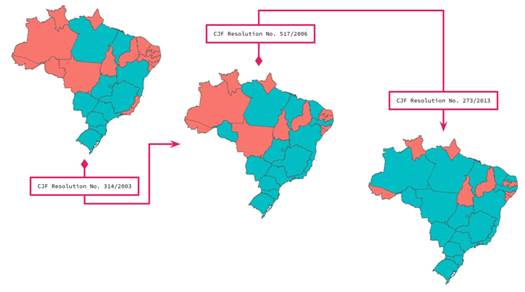
Specifically in relation to federal justice, the waves correspond to the publication of resolutions by the National Council of Justice: the first one corresponds to the publication of the Resolution No. 314/2003, that determine specialization, within 60 days, of federal courts to prosecute and judge crimes against the National Financial System and “money laundering” or concealment of assets, rights, and values within the five regions (art. 1, Resolution No. 314/2003); The second one, corresponds to the publication of the Resolution No. 517/2006, which included in the list of competencies of specialized courts in money laundering the crimes committed by criminal organizations (art. 1, Resolution No. 517/2006), in reflection of the incorporation of the Palermo Convention, internalized in Brazil by Decree No. 5,015/2004, which brought the concept of criminal organization (art. 1, Resolution No. 517/2006). The third wave matched with the advent of Federal Law No. 12,850/2013, known as the Organized Crime Law, when the CJF issued Resolution No. 273/2013, incorporating the concept of organized crime from the new law and redesigning the model for implementing specialized courts in the Regional Federal Courts (Madeira & Geliski, 2024).
It is essential to highlight and explain that crimes against the National Financial System were included in the jurisdiction of specialized money laundering courts to justify their creation, given the scarce or non-existent number, at the time, of criminal complaints or lawsuits in money laundering at that time1.
Starting with the Brazilian Federal Judiciary, the bureaucracies themselves initiated the creation of courts specializing in money laundering after the changes in criminal legislation, such as Federal Law No. 9,613/1998(Anti-money laundering law) and its modification Law No. 12,683/2013and Federal Law No. 12,850/2013 (Anti-organized crime law).
Once directly involved in adjudicating this type of criminal offense and faced with a lack of expertise and infrastructure, they sought to address the newly typified crime, developing a specialized judicial policy. This policy unfolded in three significant waves of expansion and a final wave of dismantling, which is still restricted to a few states and is represented in three of today’s six Brazilian TRFs.
We already demonstrated (Madeira & Geliski, 2024) that the performance of these bureaucrats, whose expertise with the subject was being built at the same time as the promotion of the specialization policy itself, had the support and encouragement of key entrepreneurs, capable of mobilizing the high structures of justice federal, via the Federal Justice Council, promoting a first process of diffusion of the model of specialized courts to all the 5 federal regional courts at the time, resulting in the movement of anti-corruption specialization in federal justice occurring in three main waves, the first, starting in 2003, with the first washing poles in the capitals of the southern regions (TRF4), passing through the Southeast region (TRF2 and TRF3) and some states under TRF1 jurisdiction.
The second wave stems from a second diffusion movement led by the same entrepreneurial actors, whose mobilization in the National Council of Justice extended the specialization to the state courts of justice, creating a new focus of competence and performance of the specialized courts, not only in the state ones but also in the federal ones, which have been involved in the fight against organized crime since 2006.
Finally, the third wave is marked by the criminal organization criminal type’s creation, responsible for the dissemination of specialization in almost all Brazilian states. The waves of specialization in money laundering are illustrated in the maps below, which reveal how much the movement started in the south and southeast regions, first reaching a few states in the Midwest and Northeast, spreading to practically all the states of the country from the third wave.

This movement is quite different when we consider the federal courts specialized in organized crime, whose implementation was later, prioritizing the states of the North and Midwest, passing through the Northeast and only quite recently (2019 onwards), reaching the other regions and costing much longer to spread
2.2. The prosecution structure to fight money laundering and corruption
Concurrently with the identified movement in the federal justice system, specialization also affected the internal organization of the Brazilian Federal Prosecution Office (Londero, 2021), evolving over the years through different models of specialized lawsuits, from task forces to specialized units and later to specialized groups.
The Brazilian Federal Prosecution Office’s structure is divided into thematic areas through the Coordination and Review Chambers (CCR). Currently, the 5th CCR covers the theme of corruption, grouping criminal and civil cases within the theme. The 2nd CCR, on the other hand, covers residual criminal matters, that is, those not covered by another CCR. More precisely, regarding corruption cases, in 2014, the 5th Chamber underwent specialization, gaining criminal and misconduct jurisdiction in corruption cases and the proceedings arising from such acts. This shift took away the jurisdiction previously held by the 2nd CCR, which handled all criminal matters until then. However, it is essential to note that this thematic concentration, rather than a division based on processing and judging spheres (criminal and civil), stemmed from a local experience that initially occurred in 2007: the creation of the first Anti-Corruption Unit (NCC). The main idea behind the NCC was to concentrate efforts based on facts rather than spheres. In other words, the prosecutor in charge of the corrupt act would be the natural advocate for civil and criminal lawsuits and investigations. Building on this experience in Rio Grande do Norte, the model of specialization by factual subject matter was adopted in the 5th CCR, while the establishment of NCCs in all federal units was encouraged, mirroring the new composition of the CCR (Londero, 2021).
Similarly, parallel to the specialization of money laundering courts in the federal justice system, specialization was mirrored in units where the federal justice system had its own court for such cases. Specialized crime offices were thus created in these administrative units.
In terms of specialization, task forces constituted an internal administrative organization of the Brazilian Federal Prosecutors’ Office, intending to allocate institutional efforts and resources to cases, subjects, and matters considered sensitive and prioritized by the high bureaucracy of the administration. Some task forces became known to the public due to the adopted media strategy and the impact of their actions, as was the case with Operation Car Wash (Operação Lava Jato).
With the political and legal unraveling of Operation Car Wash, the Brazilian Federal Prosecutors’ Office sought new formats of internal specialization to replace task forces, aiming to distance itself from the institutional formats that underpinned Operation Car Wash. Among the options considered was the adoption of a National Anti-Corruption Prosecution model, while the alternative option was the adoption of the format of specialized groups in organized crime, the Specialized Groups for Combating Organized Crime (GAECOS). The second option prevailed.
The implementation of this new model from 2021 responds to the decline in the performance of task forces, where the Attorney General’s Office of the Brazilian Federal Prosecutors’ Office gradually began implementing GAECOS, initially in Minas Gerais, Paraná, and other states over the period from 2021 to 2023. As this implementation is recent, the effects on criminal dynamics still need to be matured, whether through the mobilization of these groups by their bureaucrats or through the gain of legitimacy and expertise within the criminal justice system. Unlike some states, the federal GAECO model is auxiliary, depending on requests from prosecutors to handle cases involving organized crime (Geliski, s.d.).
3. THE MONEY LAUNDERING TRIAD OF CRIMES: BETWEEN CORRUPTION AND JUDICIAL SPECIALIZATION
The fight against corruption comes from an international movement (Moroff, 2019) that began in the mid-1990s when the Organization of American States (OAS) adopted the Inter-American Convention against Corruption (IACAC). From this milestone, other conventions were created, including the OECD Convention on Combating Bribery of Foreign Officials in International Transactions (OECD Anti-Bribery Convention or OECD Convention) and the United Nations Convention Against Corruption (UNCAC), in addition to the creation and expansion of international instruments to combat corruption, ranging from regional organizations to multilateral development banks (Grigorescu, 2017; Geliski, s.d.; Seiler & Madir, 2012). Among the institutional creations aimed at attacking this problem are specialized anti-corruption agencies and courts, the latter being created in an ascending manner since the beginning of the 2000s (Sousa, 2010; Stephenson & Schütte, 2016, 2022).
Given that the focus on corruption is directly linked to the growth of concern about international drug trafficking, combining efforts by the international community to combat systemic financial abuses, financial crimes and money laundering, it was established among these crimes (corruption, laundering, and crime organized) a triangular relationship, understood as the triad of macro-crime, justified by the fact that these criminal practices feed each other, generating a symbiotic relationship (Mugarura, 2011; Rose-Ackerman, 2013; Rose-Ackerman & Palifka, 2016).
Although Brazil has ratified the conventions, participates in the international system, and has incorporated these rules domestically, there are specificities in the way in which judicial institutions have conceived of confronting the macro-crime triad in the last two decades following the gradual incorporation of this international agenda by the judicial bureaucracy - which resulted in the judicial policy of specialization focused on money laundering as a way of investigating, prosecuting and prosecuting not only money laundering but also corruption and organized crime.
Therefore, it is maintained, given the similarity in designs and forms of action, that the specialization of the Federal Justice in Brazil characterizes an anti-corruption court model (Madeira & Geliski, 2021, 2024; Stephenson & Schütte, 2016, 2022). However, Brazilian specificities do not stop there since the macro crime triad in the case of the federal justice system not only reproduced the concern and overlap between the three crimes mentioned above but there were arrangements capable of justifying the institutional change in contexts of little demand, considering the youth of the legislation and the low presence of criminal lawsuits in money laundering, which, to motivate specialization, had to be associated with a crime that is more prevalent in federal courts, which was precisely that of crimes against the National Financial System (Federal Law No. 7,492/1986).
The movement described in the previous section of creating specialized courts responded, in the first moment, to laundering crimes in connection with crimes against the National Financial System, later being associated with our Brazilian triad, the crime of criminal organization, when the National Congress approved the specific legislation on Organized Crime.
Given this specificity of Brazilian institutions, the focus of this article falls directly on the crimes of money laundering and organized crime, considering that corruption crimes have their competence claimed due to the other two matters. Another necessary observation is the debate regarding Crimes Against the National Financial System, given that the incorporation of this together with money laundering crimes as a competence of specialized courts was due to the lack of feasibility of creating a specialized structure to attack a criminal type with a very low number of lawsuits. Therefore, the prevalence of lawsuits against the National Financial System explains the decision to create this joint competence2. Throughout the data analysis, we will demonstrate the effects of this choice.
4. METHODS
This article adopts an exploratory approach to federal criminal prosecution data to map the profile of the demands of the Federal Prosecution Service in criminal matters, particularly associated with crimes in the macro-crime triad (Madeira & Geliski, 2024). Thus, the central element explored here is the descriptive statistics of criminal cases involving criminal organizations, money laundering, and crimes against the National Financial System. The choice of these three types of crimes was based on the specialization literature, where the first two are directly associated with the object of judicial policy specialization. The last is an accessory crime, used at the time of the creation of specialized courts as an element of justification for the creation of such structures, given the low number of criminal lawsuits for organized crime and money laundering.
The data were worked exclusively with the association of the total number of criminal lawsuits only for the cases studied in this work, not covering the total universe of criminal lawsuits. In this way, the total universe of criminal cases corresponds to the total number of proceedings per state and year, which is the nominal sum of these three crimes. From this universe, we calculated the proportion of each of these three procedures to compare them with each other. In the descriptive field of this data axis, we first describe the proportion of each procedure by year and state. Secondly, we calculate the differences between these proportions, comparing the demands of one crime to another.
The data about organized crime, money laundering, and crimes against the National Financial System lawsuits were extracted from the internal platform of the “MPF em números”3. Considering that the Public Prosecutor’s Office is the exclusive holder of public criminal lawsuits, the data presented here correspond to all criminal lawsuits filed in the first degree of federal jurisdiction.
Figures 3, 4, and 5 project the data from calculations of the proportion of each criminal action per offense, in which the universe corresponds to the sum of the criminal actions of the three crimes analyzed, expressed in the function below:

Where crime i corresponds to the crime object of the proportion calculation divided by the sum of criminal actions for organized crime (OCRIM), crimes against the National Financial System (SFN), and money laundering (LD). Figures 6 to 8 illustrate the differences in proportion between crimes, indicated in the function below by crimes i and j.

The difference between the proportion of crime i in relation to crime j can be interpreted as follows: if the difference is positive (Crime i > Crime j), it means that there is a prevalence of crimes i in relation to j, so that the value of the difference indicates the excess portion of i; if the difference is negative (Crime i < Crime j), the opposite is projected, so that there is a prevalence of crimes j; and if the difference is equal to zero (Crime i = Crime j), the proportions of the two crimes are equal. These variables consider state and year as units of analysis to calculate proportions and their differences.
The graphs presented in Figures 9 and 10 illustrate the status of organized crime and money laundering convictions in 2023 relative to the period 2020-2022. Because the data are different, replication is not possible, resulting in a qualitative analysis. They were extracted directly from the “MPF em números” statistics panel.
The data’s cartographic dimension is included in the descriptive bias, constituting the spatial projection of data on the proportions of criminal lawsuits on the Brazil map. Choosing this special approach allows for the capillarization of criminal demands in Brazilian territory, as well as visualizing possible state or regional peculiarities. In the final part of this article, we emphasize that the final approach of the article on the results of criminal lawsuits describes the graphs extracted from the MPF’s data platform. It is also worth noting that the data used in this analysis were extracted from the “MPF em números” database and worked on in the R language to generate maps and descriptive insights.
5. RESULTS AND DISCUSSION
In this section, we describe the findings of the exploratory analysis of criminal persecution in the Brazilian Federal Judiciary. The data on lawsuits related to organized crime, money laundering, and crimes against the National Financial System were extracted from the “MPF em números” platform under the category “Manifestações do MPF,” and grouped into categories related to the lawsuits of the respective offenses. The findings of the first part of this analysis focus on the spatialization of lawsuits over time. The second part examines the first-degree results of federal criminal lawsuits related to crimes against the National Financial System and organized crime. Given their limited availability, the data in this last part are limited to 2020 to 20224.
5.1. The mapping of specialized crimes: criminal process in the judicial courts
In recent years, Brazil has gone through different periods marked by the fight against corruption, from the Mensalão case to Operation Car Wash. In the case of specialized courts, the cartography of the federal judiciary underwent significant transformations with the creation of specialized courts in 2003, the Anti-corruption centers by the MPF, and with the evolution of criminal legislation to combat macro-crime. Specifically related to the specialization process, the competence to judge three types of crimes were used to justify the creation of these specialized structures: money laundering, organized crime, and crimes against the National Financial System.
The graph below demonstrates the effects of this movement, expressed in the growth of the prosecution of money laundering crimes due to both legislative changes and specialization, the first wave of actions in organized crime, also starting from specialization in 2006, and the prominence of actions against crimes in the National Financial System, justifying their inclusion within the scope of specialized competence.

Total of lawsuits for money laundering, crimes against the National Financial System, and organized crime per year
Focused on the jurisdiction of these three crimes that constitute the institutional design of specialized courts5, we examine the geographical distribution of criminal proceedings for these three crimes and the proportion of related proceedings6. The exploratory analysis below represents the distribution over time of the proportion of the number of criminal proceedings that have been processed or are still being processed in federal justice per year of distribution of the procedure.
The first criminal proceedings explored here are those related to money laundering crimes, the crime that gave its name to the federal judicial specialization in 2003. Figure 2 below visually represents the movements narrated by bureaucrats and our research findings on the trajectory of specialized money laundering courts (Madeira & Geliski, 2019, 2021), the lack of procedures related to these crimes before 2001, and the growth of criminal lawsuits along with the process of specialization after 2003.
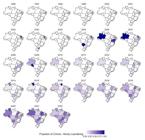
The proportion of money laundering criminal proceedings, considering proceedings related to criminal organizations and crimes against the National Financial
Between 1998 and 2001, we saw the absence of criminal proceedings distributed in Brazilian territory within the scope of federal justice, corroborating the justification for the need for specialization and qualification of the judicial bureaucracy to act in money laundering cases. After 2003, the year that marked the first wave of judicial anti-corruption policy, we saw a gradual growth in the number of proceedings, especially in Paraná, Ceará, São Paulo, and Mato Grosso do Sul. In 2006, there was a gradual growth in the remaining states of the federation, and in subsequent years, mainly from 2011 onwards, the number of proceedings increased proportionally throughout the territory, representing at least 50% of the demands when we consider two other crimes.
When looking at criminal proceedings involving criminal organizations (Figure 3), the findings are more exciting and extrapolate the effects of institutional changes through waves of specialization since the spatial and temporal distribution of criminal proceedings demonstrates a scenario in which the prevalence of cases under the label of “organized crime” or “criminal organizations” precedes the law that typified this crime in Brazil in 2013, Law No. 12,850/2013, known as the law of criminal organizations. Another factor that draws attention is the period from 2005 to 2010, in which there was a prevalence of cases related to criminal organizations, mainly shortly after the internalization of the Palermo Convention in 2004 - International Convention to Combat Transnational Organized Crime - and associated with the period of expansion of the activities of criminal gangs in other regions of the country beyond the southeast.

The proportion of criminal proceedings related to criminal organizations, considering proceedings related to money laundering and crimes against the National Financial System
Concerning Crimes against the National Financial System (Figure 4), the scenario is of the prevalence of procedures involving this type of crime compared to the others. If, at the beginning of the specialization, the idea was to implement a judicial policy to qualify the judgment of cases related to money laundering and organized crime, the inclusion of crimes against the National Financial System overcrowded the judicial structure, dominating the proportion of criminal proceedings over the years.

The proportion of criminal proceedings related to crime against the National Financial System, considering proceedings related to criminal organizations and money laundering
The analysis of criminal proceedings under the jurisdiction of specialized courts - which were primarily focused on money laundering - between the mid-1990s and 2022 reveals that, with the exception of Ceará, these courts rarely dealt with money laundering cases in the early years of this period. However, specialized courts in Bahia, Paraná, Pará, and Ceará were handling cases related to organized crime from the start of the period until the early 2000s, with a significant increase in the years surrounding the expansion of the court specialization process aimed at addressing this type of crime.
As highlighted before, one exciting finding of this cartography is the specialization of the demands of criminal proceedings on organized crime. Despite the lack of criminal legislation, there were cases even before the creation of the criminal type “criminal organization” or “association with organized crime”.
In the case of money laundering, from 2003 onwards, when the first specialized courts were created, Paraná began to stand out as a state with a high proportion of lawsuits. Over the years, this tendency has been dramatically reduced. States like Amazonas, although they have a very high proportion of lawsuits compared to the other three specialized types, reveal this demand; they only implemented specialized courts late in 2019. This phenomenon seems the same for Bahia, whose specialties never occurred.
The analysis of the maps seems to reveal that, despite the setting up of specialized courts in the states of the south and southeast, it was the north and center-west regions that produced the most demands for prosecution of this type of crime, whose intensification is relatively recent, revealed from 2019 onwards.
If it is possible to identify that there was a demand for specialization in organized crime and if the non-existent demand in money laundering was slow to change after the creation of the specialization, the opposite seems to have occurred with crimes against the financial system, whose response seems to have been an expansion and dissemination across the whole country, intensified from 2010 onwards and peaked throughout the 2010s, cooling down a little in the last two years.
When we analyzed the prosecution of the three crimes related to the judicial specialization process - Organized Crime, Money Laundering, and crimes against the National Financial System - we could identify four patterns of judicial behavior. Concerning organized crime, the demand for prosecuting this type of crime was significant from 1999 to 2009, even before the 2013 criminal organizations law itself. In a comparative perspective, the maps below show a concentration of criminal cases related to criminal organizations from 2005 after the Brazilian government incorporated the Palermo convention (a movement that initiated the second wave of specialization of federal justice) in comparison with proceedings on crimes against the National Financial System (Figure 5) or with money laundering cases (Figure 6).
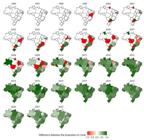
The proportion of criminal proceedings on organized crime compare with proceedings related to crimes against the National Financial System

The proportion of criminal proceedings on organized crime compare with the money laundering cases
Regarding money laundering cases specifically, the spatial distribution of the criminal proceedings data shows that its prosecution is minor compared to other crimes. A peculiar case highlighted in the data is the Amazonas case, where we have the prevalence of money laundering besides the crimes against the National Financial System. Contrary to common sense perceptions and the specialization narrative, money laundering is not a prevalent type of crime prosecuted in the South region; however, it could indicate that the judicial bureaucracy adopts a qualitative approach in that region, which leads to a more complex criminal process, such as the Operation Car Wash. The figure below illustrates this scenario.
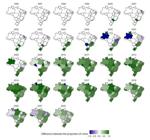
The proportion of criminal proceedings related to crimes against the National Financial System compare with money laundering cases
Related to specialization, all maps show the prevalence of crimes against the National Financial System cases, a crime initially incorporated into the model of specialized courts to justify judicial policy and allocate judicial structures. However, over time, what served to boost specialization seems to harm the courts’ functioning since their focus should be money laundering crimes and crimes committed by criminal organizations. This cartography of these three crimes of the specialization of Federal Justice indicates that the high demand for crimes against the National Financial System overlaps the specialization focus on combating organized crime and money laundering. In the following section, we explore the outcomes of the criminal proceedings related with the main crimes of the specialization, organized crime and money laundering
5.2. The effects of prosecution of organized crime and money laundering
The effects and results of criminal lawsuits in the initial courts involving cases of organized crime and money laundering are poorly known in quantitative numbers. Given this scenario, we explore the Federal Prosecution Service aggregate data in a graph of each state’s total number of federal criminal proceedings from 2020 to 2022. Thus, considering the nature of the data as an aggregation made by MPF, there is no specification of federal courts or anything that allows us to determine which states with specialized courts have different results from those with generalist courts since we do not have a specification by a court that allows such comparison and inferences.
The data was extracted from the MPF’s internal systems and deals with the pattern of results of lawsuits by theme (organized crime and money laundering) by state in Brazil. Thus, they reveal the proportion of convictions, prescription, suspension, agreements, and acquittals in each type of crime by state of the federation, demonstrating whether the structures of specialized courts impact the outcome of criminal proceedings.
It is also worth noting that the analysis of the effects of criminal lawsuits s relies on data after the period of weakening of Lava Jato, concomitant with movements to dismantle specialized courts in the states of São Paulo, Santa Catarina, and Rio Grande do Sul, characterizing what we call it the last wave of specialization (Madeira & Geliski, 2024).
In short, since it has not been possible until now to carry out an analysis capable of illustrating the specific scenario of each specialized branch, also because the data collected requires a more refined treatment that has not yet been possible to do, the turnover scenario that we were able to present is due to court, revealing an interesting pattern in where the first courts appeared, a reflection of the first wave of specialization, low turnover prevails over time, that is, the permanence of judicial actors for enough time to define the directions of judicial policy, specifically for being able to dictate all kinds of rules about the prosecution of crimes of laundering, criminal organization and against the financial system in their jurisdictions.
The Courts of states with old structures condemn a lot (CE, DF, ES, GO, PR, RS, RS, SC), São Paulo being an exception. On the other hand, there seems to be more absolution where there is no specialization (PI, RR, TO) or where there is much more recently; these are the cases of Amazonas and Maranhão, whose specialization is from 2019. Again, the exception is São Paulo and Minas, whose specificity is integrating a new TRF6 court since the 20th century. Prescription is not relevant data, except in Bahia and São Paulo (AM, CE, DF, MG, MT, PA, PR, RN is always less than 10%). We do not know what explains the damaged lawsuits in Pará (58%).

Organized crime judgment patterns in federal justice 2020-2022: convictions, prescription, dismissed/suspended, agreements, acquittals
In the cases of organized crime trials, the prominent characteristic is the acquittals (in red), within the Federal District, Espírito Santo, Maranhão and Pará corresponding to 100% of the lawsuits; in the states of Goiás and Rio Grande do Norte it is more than 90%; and in the states of Amapá, Rio de Janeiro, Roraima, Rio Grande do Sul and São Paulo it was more significant than or equal to 50% of the shares. In the opposite scenario, some states had 100% first-degree convictions, such as Acre, Ceará, Minas Gerais and Tocantins. In Paraná, Amazonas, Mato Grosso do Sul, and Mato Grosso, convinces ranged from 83% to 60%.
When we look at the criminal prosecution of money laundering crimes, the scenario is different, whether due to the time the laundering law has been in force, prior to that of organized crime, or the longitudinal existence of specialized money laundering courts. Concerning convictions, the data shows that courts in states with old structures present more convictions (CE, DF, ES, GO, PR, RS, SC), except for the state of São Paulo. Regarding the prescription of criminal lawsuits, it does not seem to be characteristic of this type of crime, except in Bahia and São Paulo, which had less than 10% of the prescribed lawsuits. In the opposite scenario, the state of Pará has 58% of its lawsuits prescribed.
It is worth noting that when we look at the dynamics of criminal procedures, the judicial structure does not have a monopoly on the explanatory capacity of the phenomenon, and the entire criminal justice complex must be considered, especially the lawsuits of the State Prosecution Service and the Police.

Money laundering judgment patterns in federal justice 2020-2022: convictions, prescription, dismissed/suspended, agreements, acquittals
Regarding non-prosecution agreements, although a recent phenomenon, the pattern of states with the most significant number of instruments formed are those with older specialization (learning), except Paraíba (where there is no specialization). In general, this can point to two phenomena: the effect of the expertise of State Prosecution Service bureaucrats who work to combat money laundering and can adapt the implementation of the recent phenomenon, the MP’s operating strategy to unburden processes, acting selectively in cases of laundering that will be targets of criminal prosecution.
As for acquittals, it is difficult to relate directly to the specialized structure, as there is a risk of falling into the ecological fallacy since they depend on the direct lawsuits of the investigation and prosecution structures. Despite this, there is more acquittal where there is specialization (PI, RR, TO) or where it occurred more recently (AM, MA), again except SP and MG (which, despite the old structure, changed TRF).
6. CONCLUSION
The paper sought to explore the role of specialized federal courts in money laundering and organized crime, mapping the trajectory of lawsuits in correspondence with the implementation waves of the specialized courts. We identified the effects and patterns of the trial concerning these crimes in the different regions of the Federal Judiciary in Brazil. The cartography of crime within the three themes allowed us to understand the spatialization of lawsuits in Brazilian states between 1996 and 2022 and the effects of criminal proceedings for each federative unit between 2020 and 2022.
The first understanding extracted from mapping the proceedings of the macro-crime triad showed the phenomenon of early judicialization of criminal organization crimes. More precisely, the spatial and temporal distribution of criminal cases demonstrates a scenario in which the prevalence of organized crime cases precedes the law that typified this crime in Brazil in 2013, Law No. 12,850/2013, known as the law of criminal organizations, as well as a close relationship with international regulations and the expansion of criminal gang activities in southeastern Brazil. This movement of demands prior to the criminal definition of criminal organizations corresponds to adopting the Palermo Convention (2004) with a rule that internalized the concept of organized crime in Brazil. This movement is interesting because it marks the second half of the 2000s when the applicability of international standards for defining crimes within the country’s criminal legal system was still being discussed. We also note that this movement corresponds to what we indicate in the literature as a movement of the second wave of specialization of specialized courts, which also created structures for processing criminal lawsuits involving organized crime based on the Palermo concept.
The second perception concerns the crushing of the performance of specialized courts for crimes against the National Financial System. The excess of cases involving this issue undermines the court’s performance, distorting its specialized nature in money laundering and organized crime. The proportion of cases involving financial crimes triggers the mass increase in these crimes and the consequent distortion of the specialized court from its judicial “mission.” Another point we can highlight is that crimes against the National Financial System involve many minor crimes, ranging from forgery to company auditing operations and judicial recovery procedures. The point here is the fact that crime against the National Financial System, which was used as an aid to justify the specialization of courts in the past, ends up overwhelming states with demands that do not necessarily involve major criminal cases and the lawsuits of criminal groups. Thus, we may overload the criminal flow with minor or low-complexity crimes that harm the direction of specialized lawsuits in fighting criminal organizations.
The third conclusion concerns the crime of money laundering: despite the installation of specialized courts in the southern and southeastern states (as is the case with the parabolic trajectory of Paraná), it was the northern and central-western regions that required the most prosecution of this type of crime, whose intensification is relatively recent, evidenced from 2019 onwards. This could indicate that different magnitudes of the same type of crime misguide the assumption of the prevalence of the fighting against money laundering occurring in the South. Other interesting issues are that we could be dealing with macro operations that involve a complexity of criminal activities, and in the North region, we are not dealing with the same dynamic. This is one important finding that could be used to deepen the study of law enforcement actions in the North and Northeast regions.
In summary, we identified a prior demand for specialization in organized crime. In contrast, money laundering crimes were non-existent at the beginning of the specialization process and took time to take hold. On the other hand, crimes against the National Financial System were absorbed into specialized courts to justify the creation of judicial policy. Those crimes began to have an expansionist trajectory throughout the country, even undermining other matters of the macro crime triad in the specialized judicial system.
When analyzing the results of cases involving money laundering and organized crime crimes, we found that, as a rule, states with specialized structures have been sentencing for a long time, and acquittals appear with greater intensity where there is no specialization, or they are more recent.
However, the performance of specialized courts is not unequivocal in the comparison between states with and without specialization. This fact is another quite controversial and interesting aspect, since specialized structures are created by the belief in greater efficiency, while reality does not always confirm and in some cases contradict exactly this ability of the concentration of judges and cases to generate better results.
Despite the literature establishing the gains and the permanence of judges for long periods in the courts, the model’s decline in Brazil led to a loss of interest among judges, which may explain the high turnover in some states. Being a phenomenon marked by rise and fall, the requirements and appeals for judicial actors to be interested in participating in specialized courts, given the controversial performance from the point of view of legal guarantees and the consequent abrupt curve of gain and loss of legitimacy, end up discourage new actors, making courts spaces emptied of status and power, soon doomed to dismantling.
Notwithstanding the new institutes of selectivity being mentioned as an explanation for the decline of specialized courts, their use is still much lower and concentrated in a few states, generally those whose specialization is older and with a lower turnover of judges.
Even with the specialization movement, effective conviction for crimes of money laundering and organized crime is rare. The data from 2020 to 2022 indicate this, which may be due to the complexity of the crimes or even the lack of instruments. Between organized crimes and money laundering, organized crime appears with the highest number of acquittals.
By advancing in the analysis of less explored aspects of the literature on specialized courts, which precisely concerns their effectiveness, we contribute to this study topic. We mainly corroborate what is already known, but it is poorly demonstrated. However, understanding judicial policies, especially specialization dynamics, still depends on robust analysis and research, which we continue to explore.
ACKNOWLEDGMENTS
This paper was developed within the scope of a research project funded by CNPq (Conselho Nacional de Desenvolvimento Científico e Tecnológico).
REFERÊNCIAS
- Abramovay, P., & Lotta, G. (2022). A democracia equilibrista: Políticos e burocratas no Brasil Companhia das Letras.
-
Bauer, M. W., & Knill, C. (2012). Understanding policy dismantling: an analytical framework. In M. W. Bauer, A. Jordan, C. Green-Pedersen, & A. Héritier(Eds.), Dismantling public policy: preferences, strategies, and effects Oxford University Press. https://doi.org/10.1093/acprof:oso/9780199656646.003.0002
» https://doi.org/10.1093/acprof:oso/9780199656646.003.0002 - Baum, L. (2011). Specializing the Courts University of Chicago Press.
- Baum, L. (2014). Specialization in the Courts. In R. G. Niemi, & J. J. Dyck (Orgs.), Guide to state politics and policy CQ Press.
- Branco, P. (2019). The geographies of justice in Portugal: redefining the judiciary’s territories. International Journal of Law in Context, 15(4), 442-460.
- Butt, S., & Schütte, S. A. (2014). Assessing judicial performance in Indonesia: the court for corruption crimes. Crime, Law and Social Change, 62(5), 603-619.
- Castro, A., & Ansari, S. (2017). Contextual “Readiness” for Institutional Work. A Study of the Fight Against Corruption in Brazil. Journal of Management Inquiry, 26(4), 351-365.
- Coêlho, D. B. (2021). Determinants of Policy Diffusion in Brazil and the U.S. International Review of Public Policy, 3(2), 194-215.
- Costa, A. T. M., Machado, B. A., & Zackseski, Cr. (Orgs.). (2016). A investigação e a persecução penal da corrupção e dos delitos econômicos: uma pesquisa empírica no sistema de justiça federal (Vol. 2). Escola Superior do Ministério Público da União.
-
Decreto nº 5.015, de 12 de março de 2004 (2004). Promulga a Convenção das Nações Unidas contra o Crime Organizado Transnacional. Brasília, DF. https://www.planalto.gov.br/ccivil_03/_ato2004-2006/2004/decreto/d5015.htm
» https://www.planalto.gov.br/ccivil_03/_ato2004-2006/2004/decreto/d5015.htm - Geliski, L. (s.d.). Brazil in the anti-corruption international system: international anticorruption conventions Transparência Internacional.
- Geliski, L. (s.d.). The politics of prosecution policies: specializing to fight organized crime (Tese de Doutorado). Universidade Federal do Rio Grande do Sul, Porto Alegre, RS, Brasil.
-
Gramckow, H., & Walsh, B. (2013). Developing Specialized Court Services: International Experiences and Lessons Learned (Working Paper Series, No. 24). World Bank. https://openknowledge.worldbank.org/handle/10986/16677
» https://openknowledge.worldbank.org/handle/10986/16677 - Grigorescu, A. (2017). IGO Relations in the Anti-corruption Realm and in Promoting Integrity in Public Procurement. In J. A. Koops, & R. Biermann (Eds.), Palgrave Handbook of Inter-Organizational Relations in World Politics(pp. 627-647). Palgrave Macmillan.
- Langer, M. (2007). Revolution in Latin American Criminal Procedure: Diffusion of Legal Ideas from the Periphery. American Journal of Comparative Law, 55(4), 617-676.
-
Lei nº 7.492, de 16 de julho de 1986 (1986). Define os crimes contra o sistema financeiro nacional, e dá outras providências. Brasília, DF. https://www.planalto.gov.br/ccivil_03/leis/l7492.htm
» https://www.planalto.gov.br/ccivil_03/leis/l7492.htm -
Lei nº 9.613, de 3 de março de 1998 (1998). Dispõe sobre os crimes de “lavagem” ou ocultação de bens, direitos e valores; a prevenção da utilização do sistema financeiro para os ilícitos previstos nesta Lei; cria o Conselho de Controle de Atividades Financeiras - COAF, e dá outras providências. Brasília, DF. https://www.planalto.gov.br/ccivil_03/leis/l9613.htm
» https://www.planalto.gov.br/ccivil_03/leis/l9613.htm -
Lei nº 12.683 , de 9 de julho de 2012 (2012). Altera a Lei nº 9.613, de 3 de março de 1998, para tornar mais eficiente a persecução penal dos crimes de lavagem de dinheiro. Brasília, DF. https://www.planalto.gov.br/ccivil_03/_Ato2011-2014/2012/Lei/L12683.htm#art2
» https://www.planalto.gov.br/ccivil_03/_Ato2011-2014/2012/Lei/L12683.htm#art2 -
Lei nº 12.694, de 24 de julho de 2012 (2012). Dispõe sobre o processo e o julgamento colegiado em primeiro grau de jurisdição de crimes praticados por organizações criminosas; altera o Decreto-Lei nº 2.848, de 7 de dezembro de 1940 - Código Penal, o Decreto-Lei nº 3.689, de 3 de outubro de 1941 - Código de Processo Penal, e as Leis nos 9.503, de 23 de setembro de 1997 - Código de Trânsito Brasileiro, e 10.826, de 22 de dezembro de 2003; e dá outras providências. Brasília, DF. https://www.planalto.gov.br/ccivil_03/_ato2011- 2014/2012/lei/L12694.htm
» https://www.planalto.gov.br/ccivil_03/_ato2011- 2014/2012/lei/L12694.htm -
Lei nº 12.850, de 2 de agosto de 2013 (2013). Define organização criminosa e dispõe sobre a investigação criminal, os meios de obtenção da prova, infrações penais correlatas e o procedimento criminal; altera o Decreto-Lei nº 2.848, de 7 de dezembro de 1940 (Código Penal); revoga a Lei nº 9.034, de 3 de maio de 1995; e dá outras providências. Brasília, DF. https://www.planalto.gov.br/ccivil_03/_ato2011-2014/2013/lei/l12850.htm
» https://www.planalto.gov.br/ccivil_03/_ato2011-2014/2013/lei/l12850.htm -
Levcovitz, S. (2014). A corrupção e a atuação do judiciário federal 1991-2010 (Tese de Doutorado). Universidade Federal de São Carlos, São Paulo, SP, Brasil. https://repositorio.ufscar.br/handle/ufscar/1027
» https://repositorio.ufscar.br/handle/ufscar/1027 -
Londero, D. (2021). O desenvolvimento de capacidades institucionais do Ministério público federal no combate à corrupção (1988-2018) (Tese de Doutorado). Universidade Federal do Rio Grande do Sul, Porto Alegre, RS, Brasil. https://lume.ufrgs.br/handle/10183/225991
» https://lume.ufrgs.br/handle/10183/225991 - Madeira, L. M., & Geliski, L. (2019). The Federal Justice act in combating corruption in Southern Brazil. Revista de Administração Pública, 53(6), 987-1010.
- Madeira, L. M., & Geliski, L. (2021). An analytical model of the institutional design of specialized anti-corruption courts in the global south: Brazil and Indonesia in comparative perspective. Dados, 64(3), e20190191.
- Madeira, L. M., & Geliski, L. (2024). Difusão de Políticas Judiciais Anticorrupção: Varas especializadas em lavagem de dinheiro e crime organizado no Brasil 1st ed., São Paulo: Edições 70, p. 310.
-
Ministério Público Federal. (s.d.). MPF em números: painel estatístico http://www.transparencia.mpf.mp.br/conteudo/prestacao-de-contas/mpf-em-numeros
» http://www.transparencia.mpf.mp.br/conteudo/prestacao-de-contas/mpf-em-numeros - Moroff, H. (2019). Fighting corruption globally: a case of norm diffusion in international relations. In K. Larres, & R. Wittlinger (Eds.), Understanding Global Politics Actors and Themes in International Affairs(pp. 391-407). Routledge.
- Mugarura, N. (2011). The institutional framework against money laundering and its underlying predicate crimes. Journal of Financial Regulation and Compliance, 19(2), 174-194.
-
Resolução nº 314, de 12 de maio de 2003 (2003). Dispõe sobre a especialização de varas federais criminais para processar e julgar, na Justiça Federal, crimes contra o sistema financeiro nacional e de lavagem ou ocultação de bens, direitos e valores. Brasília, DF. https://www.cjf.jus.br/publico/biblioteca/RES%20314-2003%20Rev.pdf
» https://www.cjf.jus.br/publico/biblioteca/RES%20314-2003%20Rev.pdf -
Resolução nº 517, de 30 de junho de 2006 (2006). Altera a Resolução nº 314, de 12 de maio de 2003, para incluir os crimes praticados por organizações criminosas na competência das varas federais criminais especializadas em crimes contra o sistema financeiro nacional e lavagem de dinheiro ou ocultação de bens, direitos e valores. Brasília, DF. https://www.cjf.jus.br/publico/biblioteca/RES%20517-2006%20rev.pdf
» https://www.cjf.jus.br/publico/biblioteca/RES%20517-2006%20rev.pdf -
Resolução nº 273, de 18 de dezembro de 2013 (2013). Dispõe sobre os critérios de distribuição de competência das varas federais especializadas em crimes contra o sistema financeiro nacional e de lavagem de dinheiro ou ocultação de bens, direitos e valores e naqueles praticados por organizações criminosas. Brasília, DF. https://www.cjf.jus.br/publico/biblioteca/Res%20273-2013.pdf
» https://www.cjf.jus.br/publico/biblioteca/Res%20273-2013.pdf - Rodrigues, F. A. (2020). Lava Jato: Aprendizado institucional e ação estratégica na Justiça WMF Martins Fontes.
- Ros, L. D. (2014). Mayors in the Dock: Judicial Responses to Local Corruption in Brazil (Doctoral Dissertation). University of Illinois Chicago, Chicago, IL, USA.
- Ros, L. D. (2019). Accountability legal e corrupção. Revista da CGU, 11(20), 1251-1275.
- Ros, L. D., & Taylor, M. M. (2022). Brazilian Politics on Trial: Corruption & Reform under Democracy Lynne Rienner Publishers Inc.
- Rose-Ackerman, S. (2013). Introduction: The Role of International Actors in Fighting Corruption. In S. Rose-Ackerman, & P. D. Carrington(Eds.), Anti-Corruption Policy: Can International Actors Play a Constructive Role?(pp. 3-38). Carolina Academic Press.
- Rose-Ackerman, S., & Palifka, B. J. (2016). Corruption and Government: Causes, Consequences, and Reform Cambridge University Press.
- Seiler, N., & Madir, J. (2012). Fight against corruption: Sanctions regimes of multilateral development banks. Journal of International Economic Law, 15(1), 5-28.
-
Silva, F. de S. E. (2020, October). From Car Wash to Bolsonaro: Law and Lawyers in Brazil’s Illiberal Turn (2014-2018). Journal of Law and Society, 47(S1), S90-S110. https://doi.org/10.1111/jols.12250
» https://doi.org/10.1111/jols.12250 -
Sousa, L. de. (2010). Anti-corruption agencies: between empowerment and irrelevance. Crime, Law and Social Change, 53(1), 5-22. https://doi.org/10.1007/s10611-009-9211-3
» https://doi.org/10.1007/s10611-009-9211-3 - Stephenson, M., & Schütte, S. (2016). Specialised anti-corruption courts: a comparative mapping U4 Anti-Corruption Resource Centre, Chr. Michelsen Institute.
- Stephenson, M., & Schütte, S. (2022). Specialised anti-corruption courts: a comparative mapping (2022 update). U4 Anti-Corruption Resource Centre, Chr. Michelsen Institute.
-
1
The choice to include crimes against the National Financial System within the jurisdiction of courts specialized in money laundering was evidenced in interviews with federal judiciary actors duly documented in the literature (Madeira & Geliski, 2024).
-
2
See footnote 1.
-
3
The data comes from the postdoctoral project of Daiane Londero, carried out with the Postgraduate Program in Public Policies, at Federal University of Rio Grande do Sul (UFRGS).
-
4
The access, extraction, and use of the data presented in this work were authorized by the Federal Public Prosecutors’ Office.
-
5
In this case, it should not be confused with the macrocrime triad related to criminal dynamics between organized crime, money laundering, and corruption.
-
6
When interpreting the data of this section, it must be considered that the proportion of proceedings is restricted to these three crimes and not to the total universe of criminal lawsuits filed by the Federal Prosecution Service since the proportion of lawsuits expressed in the graphs explicitly represents the relationship between the three crimes that support the justification for the specialization of federal courts. Thus, if the value in a given figures (2, 3, and 4) are equal to 1.0, it means that a given measured crime prevails in the totality of criminal lawsuits if compared cumulatively with the crimes of the specialization triad - money laundering, organized crime, and crime against the National Financial System.
Editor-in-chief:
Associate editor:
Reviewers:
Peer review report:
The dataset supporting the results of this study is not publicly available yet.

 Source: Elaborated by authors based on

 Source: Elaborate by the authors.
 Source: Elaborated by the authors.
 Source: Elaborated by the authors.
 Source: Elaborated by the authors.
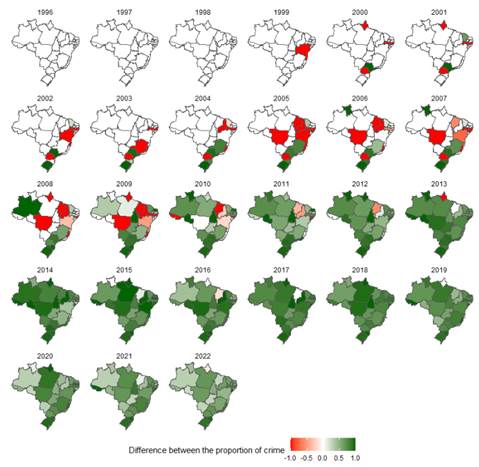 Source: Elaborated by the authors.
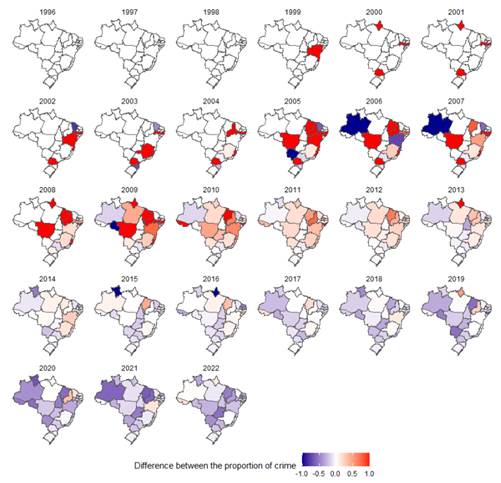 Source: Elaborated by the authors.
 Source: Elaborated by the authors.
 Source: Extracted from MPF’s statistics panel (
 Source: Extracted from MPF’s statistics panel (