 Corruption in public service: factors related to moral disengagement and organizational ethical culture
Abstract
This study aims to investigate intrinsic and extrinsic factors associated with moral disengagement and organizational ethical culture among public servants. Intrinsic motivation, such as cognitive and personal factors, and extrinsic motivation, such as environmental and organizational factors, were considered potential factors associated with corrupt behavior. A quantitative survey was conducted with 529 employees from two public institutions, both benchmarks in the fight against corruption in Brazil. The analysis included multiple linear regression models to explore the interrelationships among the surveyed variables. The study’s originality lies in integrating intrinsic and extrinsic variables to understand the factors associated with corruption in the public sector. The results show that low self-control is the main factor associated with moral disengagement, while ethical leadership, risk perception, and perceptions of salaries and benefits are positively related to organizational ethical culture. These findings have important implications for public management, offering insights into the psychological and organizational mechanisms associated with corrupt behavior in the public sector.
Keywords:
strategy; decision-making; corruption; behavior; public sector.
 Thumbnail
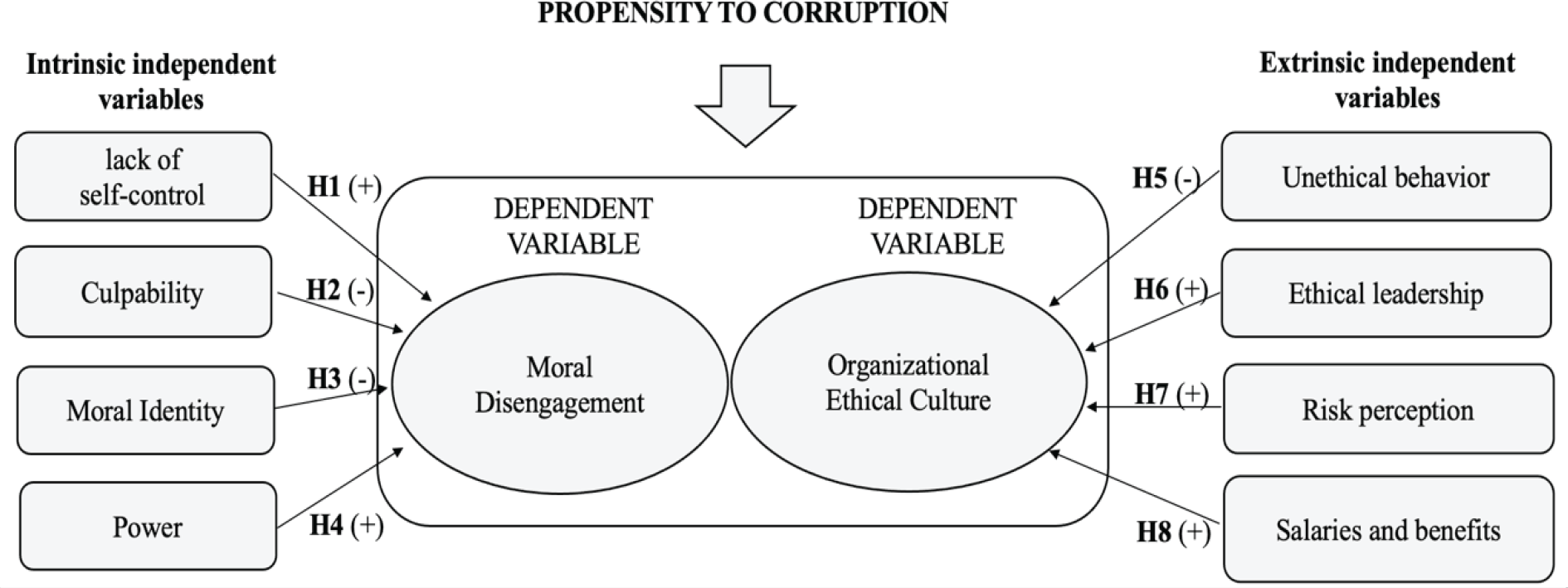 Source: Elaborated by the authors.