
 Decision support systems in defense innovation management in developing countries: a case study of the Brazilian Army
Abstract
Innovation management in the defense sector is a strategic and challenging process, especially in developing countries, where technological dependence and structural deficiencies impose additional barriers. This article presents the implementation and validation of a decision support system (DSS) aimed at innovation management in the Brazilian Army (Exército Brasileiro - EB) - InovaEB. Based on the “InovaDefesa” ontology, the system underpins the discussion on the benefits of using a DSS in the initial phase of the military innovation process in developing countries. The case study focuses on the activities of the Department of Science and Technology (DCT) of the Brazilian Army, with emphasis on the technological mapping of the Field Artillery System (Sistema de Artilharia de Campanha - SAC). The proposed solution is replicable in other projects of the Armed Forces or in nations with a similar context. The main results include: (i) the creation of an integrated platform to align technological demands and capabilities of the defense industrial base (DIB); (ii) the adoption of technology readiness assessment (TRA) based on the technology readiness levels (TRL) scale, minimizing ambiguities in defining stages of technological maturity and promoting better communication among involved actors; (iii) the development of action plans based on a combined analysis of criticality and readiness aspects; (iv) the incorporation of the technological duality aspect in attracting extra-budgetary resources for research and development; and (v) technology roadmapping to maximize the national content of projects over time. The DSS InovaEB was validated by 225 specialists, showing a high level of agreement regarding the completeness, comprehensiveness, utility, consistency, and understandability of the tool.
Keywords:
innovation management; decision support system; defense; developing countries; Brazilian Army
Resumo
A gestão da inovação no setor de defesa é um processo estratégico e desafiador, sobretudo em países em desenvolvimento, onde a dependência tecnológica e deficiências estruturais impõem barreiras adicionais. Este artigo apresenta a implementação e validação de um Sistema de Apoio à Decisão (SAD) voltado à gestão da inovação no Exército Brasileiro (EB) - o InovaEB. Baseado na ontologia InovaDefesa, o sistema fundamenta a discussão sobre benefícios do uso de um SAD na fase inicial do processo de inovação militar em países em desenvolvimento. O estudo de caso foca na atuação do Departamento de Ciência e Tecnologia do EB, com ênfase no mapeamento tecnológico do Sistema de Artilharia de Campanha. A solução proposta é replicável em outros projetos das Forças Armadas ou de nações com contexto semelhante. Os principais resultados incluem: (i) criação de plataforma integrada para alinhar demandas tecnológicas e capacidades da Base Industrial de Defesa; (ii) adoção da avaliação de prontidão tecnológica baseada na escala TRL (Technology Readiness Levels), minimizando ambiguidades na definição de estágios de maturação tecnológica e promovendo melhor comunicação entre atores envolvidos; (iii) elaboração de planos de ação com base na análise combinada dos aspectos criticidade e prontidão; (iv) incorporação do aspecto dualidade tecnológica na captação de recursos extraorçamentários para Pesquisa e Desenvolvimento (P&D); e (v) roteirização tecnológica para maximizar o conteúdo nacional dos projetos ao longo do tempo. O SAD InovaEB foi validado por 225 especialistas, apresentando alto nível de concordância quanto à completude, abrangência, utilidade, consistência e compreensibilidade da ferramenta.
Palavras-chave:
gestão da inovação; sistema de apoio à decisão; defesa; países em desenvolvimento; Exército Brasileiro
Resumen
La gestión de la innovación en el sector de defensa es un proceso estratégico y complejo, especialmente en los países en desarrollo, donde la dependencia tecnológica y las deficiencias estructurales imponen barreras adicionales. Este artículo presenta la implementación y validación de un Sistema de Soporte a la Toma de Decisiones (SSTD) orientado a la gestión de la innovación en el Ejército brasileño (EB): InovaEB. Basado en la ontología InovaDefesa, el sistema respalda el análisis de los beneficios del uso de un SSTD en la fase inicial del proceso de innovación militar en países en desarrollo. El estudio de caso se centra en las actividades del Departamento de Ciencia y Tecnología (DCT) del Ejército brasileño, con énfasis en el mapeo tecnológico del Sistema de Artillería de Campaña (SAC). La solución propuesta es replicable en otros proyectos de las Fuerzas Armadas o en naciones con un contexto similar. Los principales resultados incluyen: (i) creación de una plataforma integrada para alinear las demandas tecnológicas y capacidades de la Base Industrial de Defensa (BID); (ii) adopción de la Evaluación de Madurez Tecnológica (EMT) basada en la escala TRL (Niveles de Madurez Tecnológica), minimizando las ambigüedades en la definición de las etapas de madurez tecnológica y promoviendo una mejor comunicación entre los actores involucrados; (iii) desarrollo de planes de acción basados en un análisis combinado de los aspectos de criticidad y madurez; (iv) incorporación del aspecto de dualidad tecnológica en la captación de recursos extrapresupuestarios para Investigación y Desarrollo (I+D); y (v) elaboración de hojas de ruta tecnológicas para maximizar el contenido nacional de los proyectos a lo largo del tiempo. El sistema SSTD InovaEB fue validado por 225 especialistas, quienes mostraron un alto nivel de acuerdo con respecto a la exhaustividad, amplitud, utilidad, coherencia y comprensibilidad de la herramienta.
Palabras clave:
gestión de la innovación; sistema de soporte a la toma de decisiones; defensa; países en desarrollo; Ejército Brasileño
1. INTRODUCTION
Innovation management is a complex and structured process that encompasses the identification of opportunities and ideas through the implementation of new products and processes (Tidd & Bessant, 2020). In the military sector, it demands constant adaptation and capability accumulation in response to technological advancements and the pursuit of strategic advantage (Figueiredo, 2009; Girardi et al., 2024b). In developing countries such as Brazil, dependence on imported technologies and the fragility of the sectoral defense innovation system aggravate this scenario (Schons et al., 2022).
The identification, prioritization, and incorporation of critical technologies into strategic defense projects present complex challenges, particularly in contexts constrained by organizational, budgetary, and informational limitations (Irfan et al., 2023). These factors compromise the ability to transform operational needs into viable technological solutions, demanding tools that support the systematization and integration of these dimensions at the beginning of the innovation process - a phase characterized by high uncertainty, informational ambiguity, and strong influence on subsequent outcomes (Oliveira et al., 2024).
From this perspective, Decision Support Systems (DSS) have proven useful in enhancing innovation management. Their application in this context enables the systematic integration of fragmented and dispersed data and the adoption of robust mechanisms for identifying and prioritizing technological demands and offerings (Havins, 2020). This systemic support fosters a more structured decision-making process, reducing uncertainties and guiding the balance between indigenous Research and Development (R&D) and the importation of available technologies (Girardi et al., 2024a).
In sensitive sectors such as defense, there is increasing adoption of theory-driven solutions that combine structured knowledge representation with computational decision support (Guizzardi et al., 2023; Stanford University, 2025). Ontologies stand out in this context, formalizing complex domains and integrating multiple perspectives - technical, operational, institutional, and strategic - into verifiable and reusable representation models (Guizzardi & Guarino, 2024; Noy & McGuinness, 2001), with growing application in the early stages of the innovation process (Castro & Ferreira, 2023; Pereira et al., 2020).
Despite the growing importance of innovation and national defense, the literature on defense innovation management in developing countries is notably limited. While some studies address innovation in general contexts (Schilling, 2013; Tidd & Bessant, 2020; Trott, 2021) and defense innovation in developed nations (Briones-Peñalver et al., 2020; Van Lamoen et al., 2024), there remains a significant gap regarding how developing countries - such as Brazil - can effectively manage defense innovation, overcoming budgetary constraints, lack of articulation, and technological dependence. In this endeavor, the choice of DSS approaches based on ontological models is justified by their ability to integrate multiple data sources and fragmented knowledge, ensuring semantic consistency and facilitating the retrieval and inference of relevant information.
Within this context, the main objective of this article is to present the development and evaluation process of an ontology-based DSS to support decisions on defense innovation management in developing countries. In other words, the article seeks to answer the following research question: how can a DSS based on an ontological model enhance innovation management in the early stages of technological development in defense organizations in developing countries?
Guided by this objective, the research aims to achieve the following specific goals: (i) present the implementation phases of the InovaEB DSS, which instantiates the InovaDefesa ontology model and its analytical methods; (ii) apply the system to a real case study to demonstrate its practical feasibility; (iii) demonstrate the practical value of the DSS by comparing its recommendations to real actions taken by the organization; and (iv) validate the tool with a sample of experts.
The implementation of the DSS discussed in this study - the InovaEB DSS - is grounded in the InovaDefesa ontology, a model designed to represent the initial phase of the military innovation process by integrating concepts and adapting methods to the particularities of developing countries (Girardi et al., in press). InovaEB uses this model to instantiate a DSS for the Brazilian Army (EB), supporting the mapping, analysis, and roadmapping of technologies in projects for the acquisition of Military Employment Systems and Materials (SMEM).
Accordingly, the research uses as a case study the process of the Brazilian Army’s Department of Science and Technology (DCT) in acquiring SMEMs for that Armed Force, focusing on the conceptual phase of technology mapping. Specifically, it explores the technology map of the Field Artillery System (SAC), a complex physical architecture that combines components from different technological domains. As the basis for this investigation, the case study presents an original solution that can be replicated in other projects of the Armed Forces or nations with similar contexts. This solution was validated through a survey involving 225 experts, showing a high level of agreement in terms of the tool’s completeness, comprehensiveness, utility, consistency, and understandability.
The remainder of the article is organized as follows. Section 2 presents the theoretical framework, discussing key concepts in public administration and defense innovation management. Section 3 describes the methodological procedures adopted, detailing the instantiation of the InovaDefesa ontology in the InovaEB DSS and the combined use of Design Science Research (DSR), case study, and survey approaches. Section 4 presents and analyzes the case study results, showing how the system operates, how its outputs compare with observed practices, and how its utility was empirically validated. Section 5 discusses these findings in light of the public administration literature, examining their implications and limitations. Finally, Section 6 summarizes the main conclusions and outlines directions for future research.
2. THEORETICAL FRAMEWORK
2.1 Public administration
Management in the public sector exhibits specific characteristics that substantially differentiate it from the private context, particularly with regard to decision-making rationality, mechanisms of organizational coordination, the nature of the knowledge mobilized, and the institutional conditions for innovation. In complex public organizations - such as the Armed Forces - these challenges are amplified by rigid hierarchical structures, multiple stakeholders, and a strong reliance on specialized tacit knowledge. In this context, formal systems of Knowledge Management (KM), decision support, and organizational integration become critical elements for enabling innovative processes in a consistent and transparent manner.
2.1.1 Knowledge management in public organizations
KM refers to the systematic processes of creating, capturing, organizing, sharing, and applying organizational knowledge. In public organizations, KM assumes a strategic role by mitigating the loss of institutional knowledge, reducing informational asymmetries, and supporting administrative continuity in the face of personnel turnover and political changes.
Nonaka and Takeuchi (1996) distinguish tacit knowledge - embedded in individual experience - from explicit knowledge - formalized in documents, models, or systems. The SECI model (Socialization, Externalization, Combination, and Internalization) highlights externalization as a critical stage for transforming tacit knowledge into shareable artifacts (Nonaka & Takeuchi, 1996). In public organizations, this stage faces additional barriers, such as bureaucratic culture, organizational silos, and a low propensity for intersectoral knowledge sharing (Lemmettylä & Kinnunen, 2025).
Davenport and Prusak (1998) emphasize that organizational knowledge generates value only when it is integrated into decision-making processes and information systems that enable its reuse. In the public sector, this implies adopting formal mechanisms capable of capturing operational experiences, lessons learned, and technical assessments, transforming them into structured inputs for future policies and decisions (Wiig, 2002).
In the defense context, much of the knowledge relevant to innovation - such as assessments of technology readiness, operational risks, and criticality criteria - remains dispersed among specialists. The formalization of this knowledge into structured models and decision support systems therefore constitutes a KM strategy aimed at reducing dependence on specific individuals and strengthening long-term organizational capability (Girardi, 2024; Van Lamoen et al., 2024).
2.1.2 Decision support in public administration
Decision-making in public organizations occurs under conditions of high complexity, uncertainty, and institutional constraints. Simon (1956) introduced the concept of bounded rationality, according to which decision-makers do not possess complete information or full cognitive capacity to evaluate all possible alternatives, instead relying on heuristics and satisficing solutions.
In this scenario, DSS emerge as fundamental instruments for improving the quality of public decisions without replacing human judgment. Keen and Morton (1978) conceptualize DSS as interactive systems that combine data, analytical models, and user-friendly interfaces to support structured decisions. Sprague and Carlson (1982) reinforce that the value of DSS lies in their ability to integrate multiple perspectives, make decision criteria explicit, and reduce informational ambiguities.
In public administration, the use of DSS contributes to greater transparency, traceability, and decisional coherence - particularly relevant in contexts subject to external oversight and accountability. In addition, DSS enable the management of conflicts among strategic objectives, budgetary constraints, and political risks by providing analytical support for decisions involving complex trade-offs (Goyal et al., 2025).
In the defense sector, decisions related to technological innovation involve high costs, long time horizons, and significant strategic impacts (Girardi et al., 2024b). The adoption of DSS makes it possible to structure criteria-based analyses, reducing reliance on decentralized decisions and strengthening innovation governance (Saratikyan, 2025).
2.1.3 Organizational integration
Organizational integration refers to the ability to coordinate activities, information flows, and decisions among differentiated units within an organization. Lawrence and Lorsch (1967) demonstrate that complex environments require simultaneously high levels of differentiation - functional specialization - and integration - coordination mechanisms among specialties.
Thompson (1967) complements this approach by highlighting that organizations operate under different types of interdependence (pooled, sequential, and reciprocal), requiring structures and systems capable of articulating these relationships efficiently (Thompson, 1967). In complex public organizations, the absence of integrative mechanisms tends to generate redundancies, priority conflicts, and a loss of strategic coherence (Pudjono et al., 2025).
In the public sector, integration is often hindered by fragmented hierarchical structures, rigid regulatory frameworks, and the absence of transversal information systems. Systems based on shared conceptual models - such as ontologies - can act as integrative artifacts, aligning languages, criteria, and processes across different organizational areas (Guizzardi & Guarino, 2024).
In the context of defense innovation, integration among operational, technical, industrial, and strategic areas is essential to align military demands, technological capabilities, and long-term public policies (Azevedo et al., 2021). Decision support systems based on structured knowledge representation provide a formal means to integrate these multiple perspectives within a single decision-making environment (Guizzardi & Guarino, 2024).
2.1.4 Innovation in public administration
Innovation in the public sector differs substantially from innovation in the private sector, both in its objectives and in its incentive mechanisms. Mulgan (2014) defines public innovation as the creation and implementation of new processes, services, or organizational forms that generate public value, even when they do not produce direct financial returns.
Windrum (2008) notes that public innovation occurs in dense institutional environments characterized by multiple stakeholders, formal rules, and political pressures. Osborne and Brown (2011) emphasize that innovation in public services is often incremental, oriented toward capacity improvement, and highly dependent on interorganizational coordination.
In the defense sector, these characteristics are even more pronounced. Innovation takes place under strong state regulation, involves sensitive technologies, and shows a high dependence on national industrial and scientific policies (Schons et al., 2020). Defense innovation is directly associated with the construction of technological autonomy, the strengthening of the defense industrial base, and the overcoming of external dependencies (Azevedo et al., 2021).
In this context, public innovation management requires instruments capable of dealing with technological uncertainties, strategic risks, and extended time horizons. Decision support systems, integrated with knowledge management practices and organizational coordination mechanisms, become essential for structuring the early stages of the innovation process and guiding technological choices consistent with long-term public policies (U.S. Government Accountability Office, 2020; U.S. Joint Chiefs of Staff, 2018).
2.2 Defense innovation management in developing countries
Innovation management is an organizational process that encompasses activities ranging from the identification of opportunities and ideas to the implementation of new products and processes (Tidd & Bessant, 2020). Among its phases, particular emphasis is placed on the Front End of Innovation (FEI), which comprises activities preceding the formal structuring of technological development (Koen et al., 2002, 2011) and is characterized by high uncertainty and a strong influence on subsequent stages (Oliveira et al., 2024).
In the military sector, the FEI becomes even more complex as it operates under state regulation, public budgeting, geopolitical influence, high industrial concentration, and sensitive dual-use technologies (Girardi et al., 2024b). Moreover, innovation management in this sector requires the pursuit of a balance between indigenous R&D and the importation of available technologies (Girardi et al., 2024a). Accordingly, within the scope of defense technology management, concepts such as technology duality, technology containment, technology criticality, and technology readiness stand out.
Technology duality refers to the possibility that a technology may simultaneously have civilian and military applications (Amarante, 2013; Brustolin, 2014; Orlikowski, 1992) and is frequently employed by developing countries as a strategy to enable investments, partnerships, and access to funding (Girardi & Galdino, 2024). Technology containment encompasses formal and informal practices - such as export controls, restrictive contractual clauses, and diplomatic pressures - that limit access to sensitive technologies and directly affect national strategic autonomy (Moreira, 2013). Technology criticality, in turn, expresses the degree of strategic relevance of a technology within a specific national context, considering criteria such as strategic alignment and the degree of novelty and technological autonomy (Girardi et al., 2024a). Finally, technology readiness, commonly measured using the TRL (Technology Readiness Levels) scale, indicates the maturity level of a technology in the context of a target product and constitutes a central element for assessing risks, costs, and timelines in highly complex technological projects (Girardi et al., 2022a; Mankins, 1995; Phaal et al., 2004).
National approaches to defense innovation management are heterogeneous, with their own structures and terminologies (Australian Department of Defence, 2022; Exército Brasileiro, 2024a; Indian Ministry of Defence, 2020; South African Department of Defence, 2015; U.K. Ministry of Defence, 2019; U.S. Department of Defense, 2020). Standardization initiatives are largely concentrated within military alliances, such as the NATO Architecture Framework (NAF) (NATO, 2025), derived from the Department of Defense Architecture Framework (DODAF) (U.S. Department of Defense, 2010) and focused on system interoperability, without encompassing the management of technological opportunities within the innovation process.
Despite this heterogeneity, in major powers the development of defense technological capabilities is conducted through consolidated industrial bases and structured innovation systems (Caverley, 2023; Liwång et al., 2023). In developing countries, however, a persistent gap in technical knowledge to reach the technological frontier remains (Figueiredo et al., 2021), compounded by a modest industrial base and dependence on imported military systems (Galdino & Schons, 2022). This dependence represents a risk to national security in light of potential technology containment actions (Moreira, 2013).
From this perspective, in the defense domain the term “developing countries” goes beyond traditional macroeconomic classifications and should incorporate variables such as technological capability, industrial autonomy, and the robustness of the defense industrial base. Countries such as China and India, although historically classified as “developing countries” (United Nations, 2022), have made continuous and strategic investments in military R&D, consolidating national innovation ecosystems, active industrial policies, and long-term technological learning mechanisms (Barton, 2021; Indian Ministry of Defence, 2020; Liang et al., 2025). In contrast, countries such as Brazil exhibit more intermittent investments, institutional discontinuities, and greater dependence on external suppliers in critical sectors, which limits the consolidation of consistent and sustainable technological trajectories (Azevedo et al., 2021).
This internal heterogeneity among developing countries is central to understanding the different challenges faced in defense innovation management. In this sense, within the context of the Armed Forces of developing countries, there is an urgent need to understand the early stages of the military innovation process, with a view to reconciling short-, medium-, and long-term strategies in the development and accumulation of defense technological capabilities (Figueiredo, 2009; França & Galdino, 2022).
Finally, it should be noted that recent conflicts have highlighted the structural limits of traditional models of military innovation based on long acquisition cycles, centralized planning, and strategic predictability (U.S. Department of Defense, 2020; U.S. Joint Chiefs of Staff, 2018). The war in Ukraine has demonstrated the importance of rapid adaptation capabilities, the integration of commercial technologies - such as drones, sensors, and communications - and continuous organizational learning (Minculete, 2025). Similarly, the Israel-Palestine conflict has underscored the centrality of integrated intelligence, command, and control systems, as well as the limits of technological superiority when dissociated from organizational coordination (Rawat & Pandey, 2025). Tensions between India and Pakistan, in turn, reveal how countries with different levels of industrial maturity face asymmetric challenges related to technological autonomy and the management of strategic risks (Javed & Altaf, 2024). These conflicts have driven a transition toward more systemic, modular, and data-oriented models of military innovation, in which the prioritization of critical technologies, continuous readiness assessment, and vulnerability mitigation become central elements of the decision-making process.
2.3 Ontology-based decision support systems
DSS are interactive computational systems designed to support managers in semi-structured or unstructured problems, enhancing the quality, consistency, and transparency of organizational decisions (Sprague & Carlson, 1982). Unlike transactional systems, DSS integrate data, analytical models, and specialized knowledge, enabling scenario exploration, uncertainty reduction, and support for judgment under bounded rationality (Keen & Morton, 1978; Power, 2002). In public administration, these systems are particularly relevant in contexts characterized by multiple objectives, budgetary constraints, high technological uncertainty, and strong information asymmetries among institutional actors (Arnott & Pervan, 2005).
Within DSS research, different typologies have been proposed to classify these systems according to their predominant operating logic. Power (2002) distinguishes, among others, data-driven, model-driven, and knowledge-driven DSS. Ontology-based DSS fall primarily into this latter category, as they use formal knowledge representations to support inference, automated reasoning, and semantic integration among heterogeneous information sources (Guizzardi et al., 2023).
This characteristic differentiates them from traditional Business Intelligence (BI) tools - a set of methods and tools aimed at collecting, integrating, and visualizing structured historical data, with a focus on descriptive and diagnostic analyses to support organizational monitoring and managerial control (Sharda et al., 2020) - or Analytics - an analytical approach that expands the scope of BI by employing statistical, mathematical, and computational models for predictive and prescriptive analyses, supporting more complex and future-oriented decisions (Sharda et al., 2020). These approaches focus on historical data analysis but do not explicitly incorporate the meaning, relationships, and conceptual constraints of the decision domain.
An ontology can be understood as a formal, explicit, and shared representation of a knowledge domain, defining: (i) the relevant concepts, (ii) their properties, and (iii) the relationships among them (Gruber, 1995; Noy & McGuinness, 2001). Unlike a database, which stores data without explicit semantics, or a taxonomy, which merely organizes concepts hierarchically, an ontology enables computational systems to perform automated reasoning about the domain, inferring relationships, identifying inconsistencies, and supporting complex decisions (Guizzardi & Guarino, 2024). This capability is central in organizational contexts in which decisions depend on the articulation of multiple criteria, perspectives, and levels of analysis.
From a knowledge management perspective, ontologies play a fundamental role by supporting the externalization and combination of organizational knowledge, as described in the SECI model (Nonaka, 1994; Nonaka & Takeuchi, 1996). By formalizing concepts, relationships, and rules that were previously dispersed across documents, practices, or the tacit knowledge of experts, ontologies help reduce ambiguities, preserve organizational memory, and facilitate knowledge sharing across different units and generations of decision-makers (Davenport & Prusak, 1998). In public organizations, this feature is particularly relevant given personnel turnover, institutional fragmentation, and the need for justifiable and auditable decisions.
In the defense sector, the application of ontology-based DSS offers additional advantages. Military innovation management involves complex technologies, long development cycles, multiple actors, and a strong reliance on specialized judgments, often subject to restrictions on information access and technology containment (Girardi et al., 2024b). Ontologies make it possible to integrate technical data, strategic criteria, risk assessments, and technology readiness levels into a coherent semantic structure, facilitating comparative analyses, the prioritization of critical technologies, and consistent support for decision-making (Guizzardi & Guarino, 2024).
Despite these potential benefits, applications of ontology-based DSS in the military context remain underexplored in the academic literature, especially in the context of developing countries. This gap reinforces the relevance of approaches that combine conceptual rigor, grounding in public administration, and adherence to the specificities of the defense sector. In this sense, ontology-based DSS proposals seek to structure the knowledge required for strategic decisions, enabling automated reasoning, uncertainty reduction, and greater alignment between technological decisions and institutional objectives.
3. METHODOLOGY
3.1 Methodological research approach
This study adopts Design Science Research (DSR) as its central methodological approach, which is appropriate for investigations whose objective is to design, develop, and evaluate artifacts capable of addressing real organizational problems while combining scientific rigor with practical relevance (Gregor & Hevner, 2013; Vaishnavi et al., 2021). Unlike purely explanatory or descriptive approaches, DSR starts from a concrete problem and seeks to generate knowledge through the construction and validation of artifacts in the form of constructs, models, methods, or instantiations (Hevner et al., 2004; March & Smith, 1995).
In the context of this study, the research problem concerns defense innovation management in developing countries, which is characterized by high organizational complexity, dispersed knowledge, technological uncertainty, and institutional constraints. The objective of the research is therefore to develop and evaluate a DSS capable of structuring the knowledge associated with the early phases of the military innovation process, supporting decisions related to technology prioritization, maturation, and roadmapping.
The overall research design articulates three methodological components in a complementary manner:
-
DSR as the overarching methodological approach to support the development of the artifacts - the model (the InovaDefesa ontology) and its instantiation (the InovaEB DSS).
-
A case study to support the development of the InovaEB DSS applied to a real organizational context.
-
A survey to evaluate the InovaEB DSS with a sample of experts.
This combination is consistent with established practices in DSR studies applied to management and information systems (Hevner et al., 2004; Peffers et al., 2007).
3.2 Application of the DSR cycle
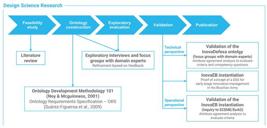
The development of the InovaDefesa ontology and its instantiation in the InovaEB DSS followed a structured and iterative methodological process, inspired by consolidated approaches in ontological engineering and DSR, as illustrated in Figure 1. The adopted strategy was similar to that used in integrative FEI ontologies, seeking to ensure conceptual coherence, adherence to the domain, and practical applicability (Noy & McGuinness, 2001; Pereira et al., 2020; Suárez-Figueroa et al., 2009).
Initially, a feasibility study was conducted based on a literature review, which highlighted the relevance of a common representation of the knowledge associated with the early stage of the military innovation process, especially considering the specificities of developing countries. This stage made it possible to identify seminal FEI models, existing ontologies, defense sector references, and conceptual gaps that guided the definition of the ontology’s scope (Girardi et al., 2024b; Girardi et al., in press).
Subsequently, the construction of the InovaDefesa ontology took place, preceded by the development of the Ontology Requirements Specification (ORS), encompassing purpose, scope, users, intended uses, and functional and non-functional requirements (Suárez-Figueroa et al., 2009). The ontology was developed based on Methodology 101, resulting in an integrative model for representing the knowledge associated with the FEI in the defense sector of developing countries (Noy & McGuinness, 2001).
The model structure is organized into three macro-levels inspired by the New Concept Development (NCD) model (Koen et al., 2002) - influencing factors, the FEI engine, and controllable activities - connecting concepts through relationships, with embedded methods for technology criticality analysis and criticality vs. readiness mapping (Girardi et al., in press). Modeling was carried out with the support of the Unified Modeling Language (UML) - a standardized modeling language used to specify, visualize, and document the structure and behavior of systems, allowing the objective representation of concepts, relationships, and processes in software projects and organizational modeling - ensuring conceptual objectivity, semantic consistency, and a structuring basis for the instantiation of the decision support system (Object Management Group, 2015).
After the initial construction, an exploratory evaluation was conducted through interviews and focus groups with academic experts and professionals from the defense sector, with the aim of refining concepts, relationships, and the model structure. This process enabled the refinement of the ontology based on complementary academic and practical perspectives, strengthening its semantic validity and organizational utility (Girardi et al., in press).
The validation stage comprised three complementary fronts: (i) technical validation of the InovaDefesa ontology, based on structured consultations with experts; (ii) instantiation of the ontology model in the InovaEB DSS, as a proof of concept applied to real projects of the Brazilian Army; and (iii) operational validation of the tool, carried out through a survey with 225 participants.
Finally, the communication stage consolidated the DSR cycle through the dissemination of the developed results and artifacts (Gregor & Hevner, 2013). It should be noted, however, that the focus of this article is on the development, application, and evaluation of the InovaEB DSS, while the process of development and validation of the InovaDefesa ontological model - which constitutes the structural foundation of the system - is detailed in a specific article (Girardi et al., in press), to which the present manuscript is complementarily connected.
3.3 Instantiation of the InovaDefesa ontology in the InovaEB DSS
The objective of the research is to develop and evaluate a DSS capable of structuring the early stages of the military innovation process, supporting decisions related to technology prioritization, maturation, and roadmapping. To this end, a case study was conducted based on the execution of this process within the scope of the DCT/EB, more specifically in the conceptual phase of technology mapping for the SAC.
A case study consists of the description and analysis of a particular phenomenon, such as an institution, an individual, a process, a program, or a social unit (Merriam, 1998). As a qualitative methodology, the case study follows a process according to the stages of planning, design, data collection, and data analysis, with the objective of investigating a contemporary phenomenon in its real-life context (Cauchick-Miguel et al., 2018; Yin, 2017).
It is important to emphasize that this is a relevant and representative case study, since it:
-
Falls within the innovation management process of the Army Science, Technology, and Innovation System (SCTIEx), a network that encompasses a wide range of products of interest and involves a diversity of actors, such as universities, companies of different sizes, funding agencies, research institutes, and the end users of the products developed within the network (França & Galdino, 2019).
-
The SAC project is an initiative of the Brazilian Army aimed at restructuring its Field Artillery, initially inserted into the strategic program Full Operational Capability Acquisition (OCOP). As such, SAC promotes complex integration among SMEMs of several subsystems, such as weaponry, observation, topography, target acquisition, meteorology, logistics, communications, fire direction, and fire coordination (Alves et al., 2018).
-
SAC was the first Brazilian Army project to follow the phases specified in the 1st edition of the General Instructions for the Management of the SMEMs Life Cycle (EB10-IG-01.018) (Exército Brasileiro, 2016). For this reason, the preparation of its requirements and technology map (MAPATEC) involved the collaboration of several operational and technical specialists (Alves et al., 2018). MAPATEC is a document prepared by the Army’s Technological Management and Innovation Agency (AGITEC) that indicates the technologies required to obtain an SMEM, as well as identifies companies, universities, and research institutes at the national and international levels that may be capable of supplying the identified technologies (Exército Brasileiro, 2016).
Figure 2 details the implementation of the InovaEB system. Based on secondary data - SAC MAPATEC spreadsheets provided by AGITEC - an Extract, Transform, and Load (ETL) process was carried out into a structured database using the pandas library of the Python programming language. The ETL process is responsible for extracting data from different sources, transforming them to ensure consistency, quality, and standardization, and loading them into structured databases for subsequent analysis in decision support systems (Sharda et al., 2020).
It should be noted that the database structure was grounded in the InovaDefesa ontology model. After the ETL process, a web application was implemented with the support of the Streamlit library, also in Python. The application reads the database and presents the information, metrics, and charts required to support decision-makers at the early stages of the Brazilian Army’s innovation process.

As MAPATEC is a restricted-access document within the Army, the case study presents SAC data without detailing non-public information. In addition to MAPATEC data, the research collected other secondary data - academic literature, technical reports, government documents, and news records - to construct a comparative analysis between the possible scenario (if a decision support tool were available in SAC technology management) and the actual observed scenario. Thus, despite restrictions on the disclosure of MAPATEC data, it was possible to analyze and discuss the implementation and potential benefits of using a DSS at the early stages of the defense innovation process in the Brazilian Army.
Finally, a validation stage of the InovaEB system was conducted. This validation phase took place from March 13 to April 4, 2025, through a survey administered to 225 students of the Military Combat Education Track (LEMB) enrolled in courses at the Army Command and General Staff School (ECEME) and the Officers’ Advanced School (EsAO). The choice of the target audience was based on purposive sampling (Krueger & Casey, 2014), as it comprises future decision-makers in Brazilian Army SMEM acquisition processes.
Interactions with participants occurred asynchronously (Stewart & Shamdasani, 2014), through the distribution of a system presentation document and the completion of an evaluation questionnaire. The final sample of 225 evaluations provided results that were processed using quantitative attribute agreement analysis (Likert, 1932; Pereira et al., 2020) to assess the InovaEB DSS according to the criteria of completeness, comprehensiveness, utility, consistency, and understandability (Holsapple & Joshi, 2002).
4. RESULTS
4.1 Analysis of SAC in the InovaEB system
In addition to the system overview page, the InovaEB DSS includes two main pages: the global dashboard and the project-level dashboard. The global dashboard presents consolidated data on the registered programs/projects, while the project-level dashboard details each project across the following sections: guiding documents, metrics, component technologies mapping, technology criticality analysis, criticality vs. readiness mapping, action plan, and technology roadmapping.
4.1.1 Guiding documents
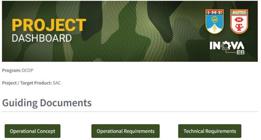
As illustrated in Figure 3, this section centralizes access to three sets of documents that guide the Brazilian Army SMEM acquisition processes:
-
Operational concept: a formal description of what is expected from the SMEM in the operational context (Exército Brasileiro, 2016, 2024a).
-
Operational requirements: a document describing the functional characteristics of the SMEM, prepared based on doctrinal aspects, which identifies its functional characteristics or constraints in an unequivocal, consistent, individualized, and verifiable manner, as deemed adequate by the requester for its acceptance (Exército Brasileiro, 2016, 2024a).
-
Technical requirements: an objective and verifiable specification defining the technical, logistical, and industrial characteristics that the SMEM must possess in order to meet the established operational requirements (Exército Brasileiro, 2016, 2024a).
Thus, the centralization of guiding documents within InovaEB helps reduce ambiguities and inconsistencies commonly observed in the early stages of defense innovation by aligning the operational concept, operational requirements, and technical requirements within a single decision-making environment. This integration fosters greater coherence between strategic objectives and technological choices, reducing the risks of misalignment and rework. From a managerial perspective, these documents move beyond a purely normative role to function as structured inputs for access and decision support.
4.1.2 Metrics
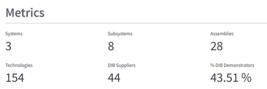
The metrics section presents global indicators related to the project. As shown in Figure 4, MAPATEC defined an initial SAC architecture composed of 3 systems, 8 subsystems, 28 assemblies, and 154 component technologies. In addition, 44 companies from the Defense Industrial Base (DIB) were identified as potential suppliers of the mapped technologies, of which only 67 out of the 154 technological components (approximately 43.51%) would be available nationally at the demonstration level, that is, with a TRL equal to or greater than 6. A technology demonstrator can be seen as an evolution of an engineering model and is used to demonstrate its technical feasibility in a relevant environment (a minimal subset of the operational environment for evaluating critical functions), including performance parameters, dimensions, and weight. The validation of a technology demonstrator formalizes the achievement of TRL 6 (Girardi et al., 2022a).
In this way, the metrics consolidated by the system allow for a synthetic reading of the project’s technological complexity and external dependence, highlighting limitations of the DIB with regard to the national maturity of the SMEM’s component technologies. The finding of low national readiness for a significant share of technologies - nearly 60% - reinforces the need for selective prioritization and medium- and long-term technological planning.
4.1.3 Component technologies mapping
This section presents a dynamic table containing all SAC component technologies, accompanied by the following associated data: system, subsystem, and assembly classification; technological theme; national TRL; and national suppliers. National TRL is defined as the highest readiness level identified among national suppliers of the technology under analysis (Girardi et al., 2024a). As shown in Figure 5, the table can be filtered by system, subsystem, assembly, technological theme, national supplier, and technology name, and it also allows visualization exclusively of components with dual-use potential.
Thus, component technologies mapping transforms a technical inventory into an analytical decision support instrument by making explicit the relationships among systems, technological themes, suppliers, and readiness levels. This functionality reduces information asymmetries between technical actors and decision-makers, facilitating the identification of bottlenecks and critical dependencies. For innovation management, the mapping contributes to more transparent decisions that are less dependent on unstructured individual judgments.

4.1.4 Technology criticality analysis
Based on the structure of the InovaDefesa ontology, Figure 6 presents the method employed in the instantiation of the InovaEB system for technology criticality analysis in the context of the Brazilian Army.
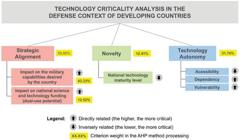
Figure 6 shows the weights of the criteria and subcriteria defined through the application of the Analytic Hierarchy Process (AHP) (Saaty, 1980), a multicriteria approach selected based on a bibliometric study that found AHP to be the most widely used method in the context of defense systems life cycle management (Girardi et al., 2022b). The weighting of criteria was obtained through pairwise comparisons with experts from the focus groups that validated the InovaDefesa ontology (Girardi et al., in press). Within the technology autonomy criterion, the subcriteria accessibility, dependence, and vulnerability exhibit interdependence modeled through a flowchart (Girardi et al., 2024a).
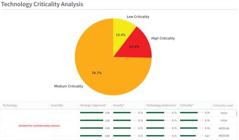
Based on this model, the technology criticality analysis of SAC (Figure 7) shows the distribution of technologies across low (10.4%), medium (74.7%), and high criticality (14.9%). The section also includes a table listing all prioritized technologies in descending order of criticality, accompanied by normalized values (between 0 and 1) for the criteria of strategic alignment, novelty, and technology autonomy, according to the AHP application.
Thus, technology criticality analysis introduces a structured multicriteria approach to prioritization, combining strategic alignment, novelty, and technology autonomy. The predominance of technologies with medium criticality indicates that prioritization decisions in complex domains are subtle and may generate significant systemic impacts, requiring explicit and comparable criteria. In this sense, the method contributes to making decisions more traceable and consistent, reducing arbitrariness in the decision-making process.
4.1.5 Criticality vs. readiness mapping
The InovaDefesa ontology proposes the criticality vs. readiness mapping method presented in Figure 8, which aims to outline strategies for obtaining technology demonstrators by balancing indigenous R&D and the importation of available technologies.
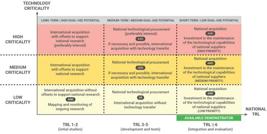
In this mapping, the vertical axis represents the level of criticality of the technology of interest. The axis gradations are based on the normalized values from the technology criticality analysis presented in Section 4.1.4. The horizontal axis represents the national TRL. From this perspective, the regions in the chart establish strategies for obtaining technology demonstrators.
-
Available demonstrator (national TRL ≥ 6): national acquisition is recommended, as there is at least one validated option within the DIB. It is essential to invest in maintaining the technological capabilities of national suppliers to avoid risks such as bankruptcy or external acquisition, prioritizing more critical technologies (Girardi & Galdino, 2024). Dual-use potential is low, given the already consolidated scope of these technologies.
-
Intermediate readiness (3 ≤ national TRL < 6): national technological procurement is recommended, as there are DIB options with an intermediate level of maturity. For critical technologies, priority should be given to development with the direct participation of Armed Forces actors. In parallel, international acquisition with technology transfer may be pursued, which can accelerate the maturation of national procurements (Wilhelm et al., 2020). Dual-use potential is medium, as requirements remain flexible, favoring partnerships and access to funding from development agencies.
-
Low readiness (national TRL < 3): international acquisition is recommended. For critical technologies, the inclusion of offset clauses in contracts is advisable in order to foster national academic research (Brustolin et al., 2016). It is crucial to train PhDs in centers of excellence abroad, given that these technologies lie at the national technological frontier. Considering the long timeframe for nationalization, knowledge management practices are fundamental to preserving and explicating the tacit knowledge involved (Nonaka, 1994). Dual-use potential is high, with emphasis on interinstitutional partnerships and the sharing of expertise in complex challenges.
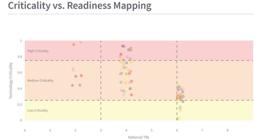
Based on this InovaDefesa ontology method, the criticality vs. readiness mapping section plots all SAC component technologies within the chart regions (Figure 9). It should be noted that, to improve visualization, the mapping omits MAPATEC redundancies, that is, technologies that appear more than once in the technology map.
Thus, criticality vs. readiness mapping integrates two central dimensions of technological decision-making, enabling the association of strategic risk levels with differentiated acquisition strategies. By making explicit the trade-offs among nationalization, importation, and incremental development, the method provides analytical support for choices compatible with institutional and budgetary constraints. For developing countries, this approach favors gradual and well-grounded decisions that support the technological learning process in a realistic and sustainable manner.
4.1.6 Action plan
As anticipated in the previous section, each region of the InovaDefesa ontology mapping is associated with a specific strategy. Figure 10 shows the action plan section, in which SAC component technologies are distributed into subsections according to the strategies corresponding to their mapping regions.

As the first two strategies in the action plan focus on international acquisition combined with initiatives to foster research and advance the national technological frontier, each technology classified under these strategies is accompanied by the following supporting data:
-
Three national Higher Education Institutions (HEIs) with the highest associated scientific output over the last five years (Scopus database): indication of the most suitable Brazilian universities to be included in the project’s Specific Knowledge Needs (NCEs) (Exército Brasileiro, 2012).
-
Three international HEIs with the highest associated scientific output over the last five years (Scopus database): indication of the most suitable foreign universities to be included in the project’s NCEs (Exército Brasileiro, 2012).
-
Potential sectoral funding instruments: indication of sectoral funds from the National Fund for Scientific and Technological Development (FNDCT) with dual-use potential for obtaining funding. The 14 sectoral funds considered were: Agribusiness, Civil Aeronautics, Amazon, Waterborne Transport, Biotechnology, Energy, Space, Water Resources, Laboratory Infrastructure, Mining, Oil, Health, Information Technology, and Transportation (Exército Brasileiro, 2024b).
-
Potential national destination companies: indication of DIB organizations capable of continuing the technology maturation process in the next TRL range, mitigating the risks of the “valley of death” (Belz et al., 2021).
The strategies associated with the medium TRL range focus on national technological procurement and the exploitation of dual-use potential through partnerships and extra-budgetary funding. Accordingly, each technology classified under these strategies is accompanied by the following supporting data:
-
Potential sectoral funding instruments: indication of FNDCT funds with dual-use potential for obtaining funding.
-
Potential suppliers: indication of national suppliers capable of receiving the technological procurement.
Finally, as strategies associated with the high TRL range focus on national acquisition, each technology classified under these strategies is accompanied by the identification of the DIB suppliers.
Thus, the action plan translates the system’s analytical results into operational guidance, connecting critical technologies to funding instruments, academic actors, and DIB companies. This structure reduces the distance between diagnosis and implementation, fostering greater coordination between innovation policies and acquisition decisions. From a managerial perspective, the action plan reinforces the role of the DSS as a tool for execution support, not merely for analysis.
4.1.7 Technology roadmapping
The technology roadmapping implemented in InovaEB aims to offer decision-makers different temporal trajectories for incorporating critical technologies into defense product development. This functionality enables the estimation of technological maturity evolution over time based on the TRL scale and guides the progressive transition toward versions with higher national content. According to Weck (2022), technology roadmaps are strategic instruments for structuring development timelines and investment decisions.
Given the lack of structured historical data on the evolution of TRL levels in Brazilian Army projects, the study by Terrile et al. (2015), which analyzed maturation time windows in 14 National Aeronautics and Space Administration (NASA) projects, was adopted as an initial reference. Although limited by the distinct context, this choice was justified by the absence of closer alternatives and by the methodological robustness of the study, which allowed proportional relationships to be extracted between TRL evolution stages in complex endeavors.
Table 1 presents the adaptation of NASA TRL windows to the Brazilian Army context. It should be noted that the window from TRL 8 to TRL 9 is undefined in the original study, as TRL 9 depends on the successful execution of a space mission with the final product, an event conditioned by external factors such as orbital constraints (Terrile et al., 2015).
Based on the adjusted TRL windows in Table 1, InovaEB organizes technology roadmaps into three lines of action, representing complementary and successive strategies for the technological evolution of the same product across different versions. Each line considers distinct levels of national content and time horizons:
-
Line of action 1: aims at obtaining the first product version through the immediate integration of available components (national or imported). The existence of validated demonstrators for all critical technologies is essential. For SAC, 2018 was adopted as the starting point, considering the integrated conception carried out in 2017. The estimated window for prototype integration and evaluation spans from 2018 to 2028 (Figure 11).
-
Line of action 2: provides for the incorporation of national technological procurements in a subsequent version. The maturation of SAC procurements is estimated for 2024, with integration and evaluation from 2024 to 2034 (Figure 11). As anticipated in Section 4.1.5, technology transfers associated with international acquisitions in the first line of action may accelerate the technological maturation of national procurements (Wilhelm et al., 2020). To illustrate this approach with an example discussed in Section 4.2, SAC’s initial communications infrastructure, based on American Harris radios, may be replaced in the medium term by commissioned Mallet radios from Indústria de Material Bélico do Brasil (IMBEL) (Exército Brasileiro, 2024c).
-
Line of action 3: aims to maximize national content through the incorporation of technologies that have been maturing since the earliest TRL range (TRL < 3). The technological maturation range is projected until 2027, with integration and evaluation from 2027 to 2037 (Figure 11). As anticipated in Section 4.1.5, offset funds (Brustolin et al., 2016) associated with acquisitions under the first line of action can foster international exchanges and accelerate the maturation of technologies still at the research level. To illustrate this approach with an example discussed in Section 4.2, Chemical, Biological, Radiological, and Nuclear (CBRN) defense sensors for SAC subsystems may, in the long term, incorporate products matured from ongoing research initiatives at the Military Institute of Engineering (IME) (Girardi & Galdino, 2024).
As illustrated in Figure 11, the three lines of action do not represent distinct products, but successive versions of the same SMEM, enabling the progressive nationalization of component technologies, with flexibility to prioritize those of high criticality (Section 4.1.4).
Thus, technology roadmapping incorporates the temporal dimension into innovation decisions, allowing the evaluation of progressive trajectories of technological maturation and nationalization. The combination of multiple lines of action highlights the need to reconcile short-term solutions with the technological learning process and the development and accumulation of national capabilities.
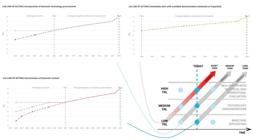
COMBINATION OF THE THREE LINES OF ACTION TO PHASE THE VERSIONS OF THE TARGET PRODUCT, INCREASING ITS NATIONAL CONTENT OVER TIME
4.2 Possible vs. observed comparison
The analysis conducted with the InovaEB DSS made it possible to project plausible scenarios for SAC technological development after its integrated conception in 2017. This section compares that ideal scenario with the observed one, segmenting the findings according to TRL ranges: low (1-3), medium (3-6), and high (≥ 6).
4.2.1 Low TRL
With respect to the possible scenario, InovaEB identified eight technologies in this range (two with high and six with medium technology criticality), recommending the opening of NCEs aligned with SAC demands - indicating HEIs, funding instruments, and partnerships within the DIB - and seeking to mitigate “valley of death” risks (Belz et al., 2021).
With respect to the observed scenario, the analysis of NCEs published by DCT between 2017 and 2025, as well as other related documents, identified the following positive aspects and opportunities for improvement.
Positive aspects:
-
o All eight technologies were addressed in NCEs.
-
o HEIs were indicated in the NCEs for the provision of graduate education programs.
-
o Particular emphasis was placed on IME, which in 2022 obtained FNDCT resources for strategic areas such as artificial intelligence, cyber, and CBRN defense (Girardi & Galdino, 2024).
Opportunities for improvement:
-
o Only three technologies were covered by NCEs shortly after MAPATEC. The others experienced delays of 2-3 years.
-
o Lack of formal linkage between NCEs and Brazilian Army projects.
-
o Limited exploitation of offsets in international acquisitions. For example, the Indian approach uses the Indigenous Content (IC) percentage factor in its acquisition contracts. Funding derived from the IC factor is mandatorily reinvested in R&D initiatives within the Indian DIB (Indian Ministry of Defence, 2020).
4.2.2 Medium TRL
With respect to the possible scenario, InovaEB identified 36 technologies (11 with high and 25 with medium technology criticality), recommending national technological procurements based on SAC requirements, as well as potential funding instruments and DIB companies as candidates to receive the procurement.
With respect to the observed scenario, based on the analysis of news records and related documents published between 2017 and 2025, the following positive examples and opportunities for improvement were identified.
Positive examples:
-
o Procurement of the Gênesis system adapted to the M109A5+BR howitzer (Alves et al., 2018).
-
o Procurement of Mallet digital radios from IMBEL as a potential replacement for equipment from the U.S. company Harris (Exército Brasileiro, 2024c).
-
o Possible procurement of a Guarani vehicle version with a 120 mm mortar (Associação Brasileira das Indústrias de Materiais de Defesa e Segurança, 2017).
Opportunities for improvement:
-
o Additional procurements to nationalize platform and ammunition items for the M109A5+BR.
-
o Greater use of dual-use potential to attract resources through funding instruments such as the FNDCT.
4.2.3 High TRL
With respect to the possible scenario, InovaEB identified 49 technologies in this range (42 with medium and 7 with low technology criticality), recommending national acquisitions based on SAC requirements, as well as potential DIB suppliers.
With respect to the observed scenario, based on the analysis of news records and related documents published between 2017 and 2025, the following positive examples and opportunities for improvement were identified.
Positive examples:
-
o Acquisition of Atlas Gun Laying System (AGLS) equipment from AEL Sistemas (Alves et al., 2018).
-
o Acquisition of artillery ammunition from IMBEL and Empresa Gerencial de Projetos Navais (Emgepron) (Fan, 2022).
-
o Acquisition of the Gênesis system from IMBEL (Fan, 2023).
Opportunities for improvement:
-
o Investments to maintain the technological capabilities of DIB suppliers, as in the case of Avibras, which has been under judicial reorganization since 2022 and has been the target of foreign proposals (Girardi & Galdino, 2024).
4.3 Results of the InovaEB system validation
Using as a reference the criteria of completeness, comprehensiveness, utility, consistency, and understandability from the validation methodology of the InovaDefesa ontology (Holsapple & Joshi, 2002; Pereira et al., 2020), the InovaEB system was evaluated based on the following questions: “Is it complete?”, “Is it comprehensive?”, “Is it useful?”, “Is it consistent?”, and “Is it understandable?”. The assessment of the criteria followed an attribute agreement analysis, in which participants rated each question using a five-point Likert agreement scale (Likert, 1932). The Likert scale was then transformed into a binary scale according to the following rule:
-
“Strongly agree” = 1;
-
“Agree” = 1;
-
“Neither agree nor disagree” = 0;
-
“Disagree” = 0;
-
“Strongly disagree” = 0.
For the evaluation of the criteria, the validation benchmark was defined as achieving mean agreement levels equal to or greater than 70% for all criteria (Pereira et al., 2020). Table 2 presents the consolidated means, all of which exceed the reference threshold (70%).
The questionnaire also included an optional field for justifications or observations from the experts. Based on the responses provided, they were grouped into three categories:
-
1. Disregardable responses: two experts stated that they did not have sufficient knowledge or time to adequately assess the system. Their responses were excluded from the final sample of 223 evaluations used in Table 2.
-
2. Clarifying responses: in cases of disagreement, particularly regarding the criteria of completeness and understandability, some respondents attributed their hesitation to limited familiarity with topics related to Science, Technology, and Innovation (ST&I) management. This point revealed an opportunity for improvement in the training of decision-makers within the Brazilian Army, an issue discussed in greater depth in Section 4.4.
-
3. Enriching responses: several experts acknowledged the value of the tool and offered relevant suggestions for improvement, which informed the formulation of proposals for future work in Section 6.
4.4 Integrative synthesis of results
The integrated analysis of the results from Sections 4.1, 4.2, and 4.3 makes it possible to assess, in an articulated manner, what the InovaEB DSS does, how its results compare with practices currently adopted, and how its utility was empirically validated.
With regard to system functionality (Section 4.1), the results show that InovaEB structures, within a single platform, information traditionally dispersed throughout the early stages of the defense innovation process, integrating guiding documents, global metrics, technology mapping, technology criticality analysis, acquisition strategies, action plans, and technology roadmapping. This integration transforms heterogeneous data into decision-oriented analytical information, reducing information asymmetries, increasing the traceability of technological choices, and providing explicit criteria for prioritization and planning - critical aspects in complex, long-term public projects.
When comparing the system’s outputs with the practices observed in the real management of the SAC acquisition process (Section 4.2), it becomes evident that InovaEB introduces significant gains in coherence and systematization. The comparative analysis highlights, in particular, delays in the opening of NCEs for technologies with low technology readiness, the absence of formal linkage between NCEs and specific projects, limited use of offset mechanisms in international acquisitions, underexploitation of technology duality and funding instruments for technologies with low or intermediate readiness, and weaknesses in maintaining the technological capabilities of national suppliers for already mature technologies. These findings indicate that, although there are isolated successful initiatives, the observed process lacks an integrated perspective that connects technology criticality, technology readiness, and acquisition strategies over time.
The operational validation of the system (Section 4.3), conducted with 225 participants, reinforces this interpretation by indicating high levels of agreement regarding the system’s completeness, comprehensiveness, utility, consistency, and understandability. Although the sample consists of future decision-makers, the results suggest that the system is perceived as a tool capable of supporting decisions in contexts characterized by technological uncertainty, multiple actors, and institutional constraints.
Taken together, the findings indicate that the InovaEB system contributes to improving defense innovation management by promoting stronger articulation among strategy, technology, and implementation, without prescribing decisions or eliminating the role of the public decision-maker. The system’s value lies less in automating decisions and more in enhancing the decision-making process by structuring knowledge, making criteria explicit, and expanding managers’ analytical capacity. In summary, the use of a DSS to support the management of the early stages of the defense innovation process may yield the following potential benefits:
-
Structured mapping between project technological demands and the capabilities of the DIB.
-
Adoption of Technology Readiness Assessment (TRA) based on the TRL scale, minimizing ambiguities in defining stages of technological maturity and promoting improved communication among involved actors.
-
Joint analysis of technology criticality and technology readiness to establish an action plan with realistic strategies that guide the balance between indigenous R&D and the importation of available technologies.
-
Incorporation of technology duality to seek extra-budgetary funding for R&D initiatives in defense projects, particularly in low or medium TRL ranges.
-
Technology roadmapping with combined lines of action that allow the phasing of SMEM versions, progressively increasing their national content over time.
From the perspective of defense innovation management within the Brazilian Army, the analysis of InovaEB DSS results revealed three main opportunities for improvement: enhancement of NCEs, systematic mapping between projects and the DIB, and the training of future decision-makers.
First, there is a need to reformulate the process for preparing NCEs. The publication of generic NCEs, disconnected from real demands, undermines the effectiveness of innovation within the Brazilian Army. It is essential to align NCEs with concrete operational and technological challenges of ongoing projects, involving the DIB in subsequent stages of technological maturation, strengthening the national defense triple helix (Etzkowitz & Zhou, 2017), fostering open innovation (Chesbrough, 2003), and mitigating the “valley of death” (Belz et al., 2021).
Second, the absence of systematic mapping between defense projects and DIB capabilities was observed, hindering the articulation between technological demand and supply (Schons et al., 2022). Stronger linkages with national suppliers are crucial for strengthening technology autonomy and ensuring greater budgetary stability and sustainability of the DIB (Barbosa, 2018; U.S. Department of Defense, 2017).
Finally, the validation process of the InovaEB DSS identified a gap in the training of future decision-makers in topics related to defense ST&I management. Incorporating content on innovation, technology management, and systems engineering into courses of ECEME and EsAO - as previously indicated by Castro et al. (2022) - may enhance decision-makers’ capacity to operate in complex acquisition processes involving multiple domains and diverse institutional relationships.
5. DISCUSSION
5.1 Discussion of results in light of central concepts in the public administration literature
The results obtained from the development, application, and validation of the InovaEB DSS allow its contributions to be discussed in light of central concepts in the public administration literature, particularly with regard to knowledge management, decision support under bounded rationality, and organizational integration in complex contexts - topics addressed in the article’s theoretical framework (Section 2).
In the domain of knowledge management, the InovaDefesa ontology functions as a formal mechanism for the externalization and structuring of tacit knowledge associated with defense innovation. Assessments of technology criticality; judgments regarding technology readiness; and relationships among technologies, projects, and institutional actors - traditionally dispersed across specialists and heterogeneous documents - are encoded in a shared conceptual model. This process is consistent with the SECI model proposed by Nonaka and Takeuchi (1996), as it transforms individual tacit knowledge into explicit organizational knowledge that can be combined, reused, and internalized by different decision-makers. When instantiated in the InovaEB DSS, this knowledge base ceases to be merely descriptive and becomes directly integrated into the decision-making process, reducing dependence on specific individuals and strengthening organizational memory - an aspect that is particularly relevant in public organizations subject to personnel turnover and institutional fragmentation.
From a decision support perspective, the InovaEB system contributes to mitigating the effects of bounded rationality as described by Simon (1956). Decisions related to defense innovation involve multiple criteria, long time horizons, and high levels of technological uncertainty, making purely intuitive or informal assessments unfeasible. By integrating data, analytical models - such as AHP and TRL - and structured knowledge representation, the system expands decision-makers’ analytical capacity without replacing their judgment. In this sense, InovaEB aligns with the classical conception of decision support systems as instruments that reduce ambiguity, make criteria explicit, and enable the systematic exploration of alternatives, thereby increasing the coherence, transparency, and traceability of choices in the public sector (Keen & Morton, 1978; Sprague & Carlson, 1982).
With respect to organizational integration, the findings indicate that the InovaDefesa ontology model and its instantiation in the InovaEB DSS act as an integrative link among areas that are traditionally fragmented - operational, technical, industrial, and strategic. As argued by Lawrence and Lorsch (1967), complex environments require both specialization and effective integration mechanisms. InovaEB contributes to this balance by offering a common language and shared criteria for actors with different backgrounds and interests, reducing organizational silos and facilitating coordination among projects, innovation policies, and DIB capabilities. The comparison between the possible and observed scenarios (Section 4.2) reinforces this point by showing that many of the identified gaps stem less from the absence of initiatives and more from the lack of integrative mechanisms capable of connecting criticality analysis, readiness assessment, and acquisition strategies over time.
Taken together, the results suggest that the value of the InovaEB DSS for public administration lies less in automating decisions and more in enhancing the quality of the decision-making process. By structuring knowledge, making trade-offs explicit, and integrating multiple organizational perspectives, the system contributes to more informed, coherent, and strategically aligned decisions. This contribution speaks directly to the public administration literature by demonstrating how ontology-based artifacts and DSS can support innovation management in complex, sensitive public contexts that are strongly conditioned by institutional constraints, such as the defense sector.
5.2 Implications for public administration
The results indicate that the InovaEB DSS can be used by public managers as a tool to support defense innovation management by structuring dispersed information, making prioritization criteria explicit, and reducing uncertainty in the early stages of the innovation process. Its use is expected to contribute to more coherent and traceable decisions, with positive effects on the allocation of R&D resources and on the definition of gradual strategies for technology nationalization, without replacing the judgment of decision-makers.
At the policy formulation level, the findings suggest that the system can support greater alignment among strategic projects, funding instruments, DIB capabilities, and defense innovation policy objectives. By highlighting gaps between real technological demands and existing instruments, InovaEB provides analytical inputs for less fragmented and more long-term-oriented policies, in line with the guidelines of the National Defense Policy and the National Defense Strategy.
Although applied to the defense sector, the study presents transferable implications for other public administration contexts characterized by high complexity and uncertainty, such as health, infrastructure, and energy. The ontology- and DSS-based approach can be adapted to structure knowledge, integrate multiple organizational perspectives, and enhance strategic decision-making in different technology-intensive public policy domains.
From an implementation standpoint, the InovaEB DSS was developed as a low-cost proof of concept using open technologies and with an implementation timeline compatible with incremental cycles. The main challenges for organizational adoption are concentrated in technical aspects - such as software evolution and data loading from other programs/projects - and institutional factors, including user training, integration into existing processes, and support from senior management, which are critical elements for the effective incorporation of analytical tools in the public sector.
5.3 Limitations
A first limitation of this study concerns the inability to disclose sensitive data, as MAPATEC is a restricted-access document within the Brazilian Army. This restriction required presenting the SAC case study without detailing non-public information, which limits the external reproducibility of the study and the in-depth analysis of certain technological decisions. However, this limitation does not compromise the analytical logic of the system or the validity of the proposed methods, since the decision-making structure, the criteria used, and the DSS functionalities could be fully presented. As a future improvement, applying the approach in contexts with greater transparency - including other areas of public administration - may enable more detailed comparative analyses and greater openness of the data used.
A second limitation is associated with the adaptation of TRL time windows, which was based on a single empirical reference from the literature, derived from a NASA study with data from 14 projects (Terrile et al., 2015). Although this choice was justified by the study’s methodological robustness and the absence of alternatives closer to the context under analysis, it restricts the generalization of the estimated values, particularly given the institutional, budgetary, and operational differences between the U.S. space sector and the Brazilian defense sector. This limitation primarily affects the temporal precision of technology roadmapping, without invalidating its utility as a comparative and exploratory instrument. Future research may mitigate this limitation by incorporating broader national or international historical series, as well as by progressively calibrating TRL windows using empirical data from projects conducted within the country itself.
The third limitation arises from the profile of the sample used in the system’s operational validation, which consisted of future decision-makers - students from ECEME and EsAO - rather than current decision-makers responsible for acquisition projects. This characteristic directs the validation toward aspects such as understandability, perceived utility, and application potential, rather than an evaluation based on real decisions and concrete organizational outcomes. Even so, the choice of sample is consistent with the exploratory objective of the research and with the nature of the system as a decision support tool, whose future adoption largely depends on the training and qualification of these same actors. As a natural extension, future studies may broaden validation to include managers currently in office, allowing the assessment of direct impacts of InovaEB DSS use on decisions that are actually taken.
Finally, a further limitation is that InovaEB is at a proof-of-concept stage, which means that the system is not yet integrated into the formal institutional flows of innovation management within the Brazilian Army. This condition restricts the evaluation of impacts on organizational performance, R&D efficiency, or the effective reduction of technological dependence. On the other hand, the proof of concept adequately fulfilled its role by demonstrating the system’s technical feasibility, conceptual coherence, and decision-making utility. The evolution toward operational versions, with integration into institutional databases and continued use in real projects, represents a natural continuation of the research and is proposed as a future research agenda.
Despite these limitations, the results presented allow for a consistent discussion of the potential benefits of using an ontology-based DSS at the early stages of the defense innovation process, while objectively delimiting the scope and conditions of validity of the conclusions reached.
6. CONCLUSION
This article aimed to develop and evaluate an ontology-based DSS to support defense innovation management in developing countries, using the Brazilian Army as a case study. The research was grounded in the recognition that decisions in the early stages of defense innovation are marked by high complexity, dispersed knowledge, technological uncertainty, and institutional constraints, which hinder coordination among projects, actors, and public policy instruments.
With regard to the main findings, the potential benefits of employing a DSS in this context include: (i) the creation of an integrated platform to align technological demands with the capabilities of the DIB; (ii) the adoption of TRA based on the TRL scale to minimize ambiguities regarding technological maturation and improve communication among involved actors; (iii) the development of action plans based on the combined analysis of technology criticality and technology readiness; (iv) the incorporation of technology duality in the mobilization of extra-budgetary resources for R&D; and (v) technology roadmapping to maximize the national content of projects over time. The system was validated with 225 experts, showing high levels of agreement in terms of completeness, comprehensiveness, utility, consistency, and understandability. Thus, it can be stated that the general objective of the research was achieved, as the InovaEB DSS was conceived, applied in a real context, and empirically validated.
Regarding the implications of the study, the results indicate that this systemic approach can be used by public managers as an instrument to enhance strategic decisions related to defense innovation, by making explicit the criteria, alternatives, and consequences associated with different technological choices. Its evolution and use are expected to contribute to more coherent, transparent, and long-term-oriented decisions, with positive impacts on the allocation of R&D resources and on the definition of gradual trajectories of technology nationalization. For policymakers, the solution provides analytical inputs to align strategic projects, funding instruments, DIB capabilities, and the guidelines of the National Defense Policy and National Defense Strategy, thereby reducing the fragmentation of initiatives. Moreover, although developed in the defense context, the study demonstrates the potential transferability of the approach to other technology- and innovation-intensive domains of public administration, such as health, infrastructure, and energy.
In summary, the main contribution of the article lies in demonstrating that an ontology-based DSS can go beyond data organization and act as an integrative mechanism that structures knowledge, reduces uncertainty, and enhances the decision-making process in complex public contexts. By articulating theoretical foundations of public administration with an empirical application in the defense sector, the study broadens the dialogue between innovation management, information systems, and public policy, offering both scientific contributions and practical insights for managers and policymakers.
The limitations of the study include the inability to disclose sensitive data, the construction of TRL time windows based on a single reference from the literature, the profile of the expert sample, and the still experimental nature of the solution.
For future research, it is suggested to expand the system to other Brazilian Army projects; integrate artificial intelligence technologies; incorporate additional decision support methods; continuously record TRL levels to calibrate roadmaps and enhance data-driven management; and replicate or adapt the solution for sister Armed Forces, other national public sectors, or countries with similar contexts.
ACKNOWLEDGMENTS
The authors thank Professor João José Pinto Ferreira, from the Faculty of Engineering of the University of Porto (FEUP), for his valuable contribution to the methodological design of the development of the InovaDefesa ontology, the model that underpinned the development of the InovaEB decision support system. They also thank Colonel José Adalberto França Junior, from the Technological Management and Innovation Agency (AGITEC), for his significant contribution to the work, stemming from his extensive expertise in defense innovation management, as well as for his role as the focal point with the Agency. The authors further acknowledge Major Bruno Salerno Chaves for serving as a valuable point of contact with the Army Project Office (EPEx). Finally, the authors express their gratitude to the Commanders of the Army Command and General Staff School (ECEME), Brigadier General Mario Eduardo Moura Sassone, and of the Officers’ Advanced School (EsAO), Brigadier General Marcello Yoshida, for enabling the process of evaluation and validation of the tool with the sample of 225 future decision-makers of the Brazilian Army.
References
- Alves, Â. de O., Ferreira, F. G., & Dias, M. de S. (2018). A reestruturação do Sistema de Artilharia de Campanha (SAC): implantação das VBCOAP M109 A5 e M109 A5+ BR. Revista do Exército Brasileiro, 154(3), 17-28.
-
Amarante, J. C. A. (2013). Processos de obtenção de tecnologia militar (Texto para Discussão nº 1877). Instituto de Pesquisa Econômica Aplicada. http://repositorio.ipea.gov.br/handle/11058/2032
» http://repositorio.ipea.gov.br/handle/11058/2032 -
Arnott, D., & Pervan, G.(2005). A critical analysis of decision support systems research. Journal of Information Technology, 20(2), 67-87. https://doi.org/10.1057/palgrave.jit.2000035
» https://doi.org/10.1057/palgrave.jit.2000035 -
Associação Brasileira das Indústrias de Materiais de Defesa e Segurança. (2017). Exército vai abrir processo para compra de Morteiro 120 mm para viatura Guarani https://abimde.org.br/pt-br/noticias/exercito-vai-abrir-processo-para-compra-de-morteiro-120-mm-para-viatura-guarani/
» https://abimde.org.br/pt-br/noticias/exercito-vai-abrir-processo-para-compra-de-morteiro-120-mm-para-viatura-guarani/ -
Australian Department of Defence. (2022). Defence capability manual https://www.defence.gov.au/about/publications/defence-capability-manual
» https://www.defence.gov.au/about/publications/defence-capability-manual -
Azevedo, C. E. F., Borba, G. A. de, & Araújo, L. E. (2021). Desafios para a política de inovação no setor de defesa brasileiro: óbices e barreiras culturais e estruturais. Revista da Escola de Guerra Naval, 27(1), 121-160. https://doi.org/10.21544/1809-3791.v27n1.p121-160
» https://doi.org/10.21544/1809-3791.v27n1.p121-160 -
Barbosa, M. S. M. (2018). Os principais óbices da relação defesa, indústria e academia que impactam no desenvolvimento da base industrial de defesa [Monografia, Escola Superior de Guerra]. Repositório Institucional da Escola Superior de Guerra. https://repositorio.esg.br/handle/123456789/913
» https://repositorio.esg.br/handle/123456789/913 -
Barton, J. (2021). China’s PLA Modernization through the DOTMLPF-P Lens Mad Scientist Laboratory. https://madsciblog.tradoc.army.mil/330-chinas-pla-modernization-through-the-dotmlpf-p-lens/
» https://madsciblog.tradoc.army.mil/330-chinas-pla-modernization-through-the-dotmlpf-p-lens/ -
Belz, A., Terrile, R. J., Zapatero, F., Kawas, M., & Giga, A. (2021). Mapping the “Valley of Death”: managing selection and technology advancement in NASA’s small business innovation research program. IEEE Transactions on Engineering Management, 68(5), 1476-1485. https://doi.org/10.1109/TEM.2019.2904441
» https://doi.org/10.1109/TEM.2019.2904441 -
Briones-Peñalver, A. J., Bernal-Conesa, J. A., & Nieves-Nieto, C. (2020). Knowledge and innovation management model: its influence on technology transfer and performance in Spanish Defence industry. International Entrepreneurship and Management Journal, 16(2), 595-615. https://doi.org/10.1007/s11365-019-00577-6
» https://doi.org/10.1007/s11365-019-00577-6 -
Brustolin, V. M. (2014). Inovação e desenvolvimento via Defesa Nacional nos EUA e no Brasil [Tese de doutorado, Universidade Federal do Rio de Janeiro]. Instituto de Economia da UFRJ. https://www.ie.ufrj.br/images/IE/PPED/Teses/2014/VITELIO%20MARCOS%20BRUSTOLIN.pdf
» https://www.ie.ufrj.br/images/IE/PPED/Teses/2014/VITELIO%20MARCOS%20BRUSTOLIN.pdf -
Brustolin, V. M., Oliveira, C. A. de, & Senna, C. J. D. (2016). Análise das práticas de offset nos contratos de defesa no Brasil. Revista da Escola de Guerra Naval, 22(1), 169-196. https://doi.org/10.21544/1809-3191/regn.v22n1p169-196
» https://doi.org/10.21544/1809-3191/regn.v22n1p169-196 - Castro, L. A. S. Jr, Ferreira, R. T., Passos, A. C., & Bandeira, A. de P. F. (2022). Reflexões preliminares sobre a capacitação do oficial de estado-maior, da linha bélica, em Gestão da Inovação Tecnológica. In B. C. Marinho, E. de A. Cadorin, & J. A França Junior(Eds.), Coletânea de trabalhos do Curso Executivo de Gestão da Inovação da AGITEC (pp. 78-103). BIBLIEx.
-
Castro, R. N., & Ferreira, J. J. P. (2023). The front-end of R&D at non-profit research centers: how does research produce impact? International Journal of Innovation and Technology Management, 20(3), 1-22. https://doi.org/10.1142/S0219877023500141
» https://doi.org/10.1142/S0219877023500141 - Cauchick-Miguel, P. A., Fleury, A., Mello, C. H. P., Nakano, D. N., Lima, E. P., Turrioni, J. B., Ho, L. L., Morabito, R., Costa, S. E. G., Martins, R. A., Sousa, R., & Pureza, V. (2018). Metodologia de pesquisa em Engenharia de Produção e Gestão de Operações (3rd ed.). LTC.
-
Caverley, J. D. (2023). Horses, nails, and messages: three defense industries of the Ukraine war. Contemporary Security Policy, 44(4), 606-623. https://doi.org/10.1080/13523260.2023.2257965
» https://doi.org/10.1080/13523260.2023.2257965 - Chesbrough, H. W. (2003). Open innovation: the new imperative for creating and profiting from technology Harvard Business School Press.
- Davenport, T. H., & Prusak, L. (1998). Working knowledge: how organizations manage what they know Harvard Business Press.
-
Etzkowitz, H., & Zhou, C. (2017). Hélice tríplice: inovação e empreendedorismo universidade-indústria-governo. Estudos Avançados, 31(90), 23-48. https://doi.org/10.1590/s0103-40142017.3190003
» https://doi.org/10.1590/s0103-40142017.3190003 -
Exército Brasileiro. (2012). Portaria n.º 058-DCT, de 19 de dezembro de 2012 https://www.sgex.eb.mil.br/sg8/002_instrucoes_gerais_reguladoras/02_reguladoras/08_departamento_de_ciencia_e_tecnologia/port_n_058_dct_19dez2012.html
» https://www.sgex.eb.mil.br/sg8/002_instrucoes_gerais_reguladoras/02_reguladoras/08_departamento_de_ciencia_e_tecnologia/port_n_058_dct_19dez2012.html -
Exército Brasileiro. (2016). Instruções gerais para a gestão do ciclo de vida dos sistemas e materiais de emprego militar (EB10-IG-01.018). https://www.eme.eb.mil.br/acesso-a-informacao/eb10-ig-01-018
» https://www.eme.eb.mil.br/acesso-a-informacao/eb10-ig-01-018 -
Exército Brasileiro. (2024a). Instruções gerais para a gestão do ciclo de vida dos sistemas e materiais de emprego militar (EB10-IG-01.018). https://www.eme.eb.mil.br/acesso-a-informacao/eb10-ig-01-018
» https://www.eme.eb.mil.br/acesso-a-informacao/eb10-ig-01-018 -
Exército Brasileiro. (2024b). Metodologia de Avaliação e Análise Tecnológica - Avantec V2 https://avantec.eb.mil.br/
» https://avantec.eb.mil.br/ -
Exército Brasileiro. (2024c). Programa Estratégico do Exército avança na aquisição de viaturas blindadas https://www.eb.mil.br/web/noticias/w/exercito-assina-contrato-para-aquisicao-de-viaturas-blindadas
» https://www.eb.mil.br/web/noticias/w/exercito-assina-contrato-para-aquisicao-de-viaturas-blindadas -
Fan, R. (2022). IMBEL entrega munição de artilharia 100% nacional ao exército Defesanet. https://www.defesanet.com.br/terrestre/imbel-entrega-municao-de-artilharia-100-nacional-ao-exercito/
» https://www.defesanet.com.br/terrestre/imbel-entrega-municao-de-artilharia-100-nacional-ao-exercito/ -
Fan, R. (2023). IMBEL entrega Sistema Gênesis de Coordenação de Fogos de Artilharia ao exército brasileiro Defesanet. https://www.defesanet.com.br/terrestre/imbel-entrega-sistema-genesis-de-coordenacao-de-fogos-de-artilharia-ao-exercito-brasileiro/
» https://www.defesanet.com.br/terrestre/imbel-entrega-sistema-genesis-de-coordenacao-de-fogos-de-artilharia-ao-exercito-brasileiro/ -
Figueiredo, P. N. (2009). Aprendizagem tecnológica e inovação industrial em economias emergentes: uma breve contribuição para o desenho e implementação de estudos empíricos e estratégias no Brasil. Revista Brasileira de Inovação, 3(2), 323-361. https://doi.org/10.20396/rbi.v3i2.8648901
» https://doi.org/10.20396/rbi.v3i2.8648901 -
Figueiredo, P. N., Cabral, B. P., & Silva, F. Q. (2021). Intricacies of firm-level innovation performance: an empirical analysis of latecomer process industries. Technovation, 105, 102302. https://doi.org/10.1016/j.technovation.2021.102302
» https://doi.org/10.1016/j.technovation.2021.102302 -
França, J. A. Jr, & Galdino, J. F. (2019). Gestão de sistemas de material de emprego militar: o papel dos níveis de prontidão tecnológica. Coleção Meira Mattos, 13(47), 155-176. https://decex.nucleoead.net/ebrevistas/RMM/article/view/1910
» https://decex.nucleoead.net/ebrevistas/RMM/article/view/1910 - França, J. A. Jr, & Galdino, J. F. (2022). Aquisição de sistemas e produtos de defesa: conciliando objetivos de curto e longo prazo. In C. E. F. Azevedo & C. E. D. F. Ramos(Eds.), Estudos de defesa: inovação, estratégia e desenvolvimento industrial(pp. 42-71). Fundação Getulio Vargas.
-
Galdino, J. F., & Schons, D. L. (2022). Maquiavel e a importância do poder militar nacional. Coleção Meira Mattos, 16(56), 369-384. https://decex.nucleoead.net/ebrevistas/RMM/article/view/10070
» https://decex.nucleoead.net/ebrevistas/RMM/article/view/10070 -
Girardi, R. (2024). Innovation management in the defense sector: a systematic literature review focusing on developing countries. Journal of Infrastructure, Policy and Development, 8(11), 1-22. https://doi.org/10.24294/jipd.v8i11.6065
» https://doi.org/10.24294/jipd.v8i11.6065 -
Girardi, R., & Galdino, J. F. (2024). A “dualidade” da dualidade tecnológica: implicações para países em desenvolvimento. Coleção Meira Mattos, 18(62), 189-216. https://doi.org/10.52781/cmm.a130
» https://doi.org/10.52781/cmm.a130 -
Girardi, R., França, J. A. Jr, & Galdino, J. F. (2022a). A customização de processos de avaliação de prontidão tecnológica baseados na escala TRL: desenvolvimento de uma metodologia para o Exército Brasileiro. Coleção Meira Mattos, 16(57), 491-527. https://doi.org/10.52781/cmm.a084
» https://doi.org/10.52781/cmm.a084 -
Girardi, R., Galdino, J. F., Pellanda, P. C., França, J. A. Jr, & Santos, M. (2022b). Bibliometric study on multi-criteria decision-making methods applied to life cycle management of defense systems. Procedia Computer Science, 214, 236-247. https://doi.org/10.1016/j.procs.2022.11.171
» https://doi.org/10.1016/j.procs.2022.11.171 -
Girardi, R., França, J. A. Jr, & Galdino, J. F. (2024a). Criticidade tecnológica na área de defesa em países em desenvolvimento: conceitos e critérios. Revista de Gestão e Secretariado, 15(4), e3618. https://doi.org/10.7769/gesec.v15i4.3618
» https://doi.org/10.7769/gesec.v15i4.3618 -
Girardi, R., Galdino, J. F., & Pellanda, P. C. (2024b). The front end of innovation in defense: a comprehensive literature review. In S. Burt(Ed.), National security in the digital and information age(pp. 37-61). IntechOpen. https://doi.org/10.5772/intechopen.1005191
» https://doi.org/10.5772/intechopen.1005191 -
Girardi, R., França, J. A. Jr, & Galdino, J. F. (2026). Gestão da inovação de defesa no Brasil: Estudo de caso do Exército Brasileiro. Revista Brasileira de Inovação, 25. https://periodicos.sbu.unicamp.br/ojs/index.php/rbi
» https://periodicos.sbu.unicamp.br/ojs/index.php/rbi -
Girardi, R., Galdino, J. F., Pellanda, P. C., & Ferreira, J. J. P. (no prelo). A knowledge representation for the front end of innovation in the defense sector of developing countries. International Journal of Innovation Management https://www.worldscientific.com/worldscinet/ijim
» https://www.worldscientific.com/worldscinet/ijim -
Goyal, R., Deshmukh, S. G., & Bolia, N. B.(2025). Impact of decision support systems on public administration: a systematic literature review and future research agenda. Journal of Advances in Management Research https://doi.org/10.1108/JAMR-01-2025-0040
» https://doi.org/10.1108/JAMR-01-2025-0040 -
Gregor, S., & Hevner, A. R. (2013). Positioning and presenting design science research for maximum impact. MIS Quarterly, 37(2), 337-355. https://doi.org/10.25300/MISQ/2013/37.2.01
» https://doi.org/10.25300/MISQ/2013/37.2.01 -
Gruber, T. R. (1995). Toward principles for the design of ontologies used for knowledge sharing?International Journal of Human-Computer Studies, 43(5), 907-928. https://doi.org/https://doi.org/10.1006/ijhc.1995.1081
» https://doi.org/10.1006/ijhc.1995.1081 -
Guizzardi, G., & Guarino, N. (2024). Explanation, semantics, and ontology. Data & Knowledge Engineering, 153, 102325. https://doi.org/10.1016/j.datak.2024.102325
» https://doi.org/10.1016/j.datak.2024.102325 -
Guizzardi, G., Pastor, O., & Storey, V. C. (2023). Thinking fast and slow in software engineering. IEEE Software, 40(6), 139-142. https://doi.org/10.1109/MS.2023.3306132
» https://doi.org/10.1109/MS.2023.3306132 -
Havins, S. R. (2020). Decision support systems for managing innovation through project selection in public sector R&D Environments. IEEE Engineering Management Review, 48(4), 28-31. https://doi.org/10.1109/EMR.2020.3007748
» https://doi.org/10.1109/EMR.2020.3007748 -
Hevner, A. R., March, S. T., Park, J., & Ram, S. (2004). Design science in information systems research. MIS Quarterly, 28(1), 75-106. https://doi.org/10.2307/25148625
» https://doi.org/10.2307/25148625 -
Holsapple, C. W., & Joshi, K. D. (2002). A collaborative approach to ontology design. Communications of the ACM, 45(2), 42-47. https://doi.org/10.1145/503124.503147
» https://doi.org/10.1145/503124.503147 -
Indian Ministry of Defence. (2020). Defence acquisition procedure 2020 https://www.mod.gov.in/sites/default/files/DAP2020.pdf
» https://www.mod.gov.in/sites/default/files/DAP2020.pdf -
Irfan, M., Rahman, S., Azis, Y., & Widianto, S. (2023). Defense industry business performance model in developing countries. Problems and Perspectives in Management, 21(2), 172-186. https://doi.org/10.21511/ppm.21(2).2023.20
» https://doi.org/10.21511/ppm.21(2).2023.20 -
Javed, N., & Altaf, Z. (2024). India-Pakistan development of drones: implications for strategic stability. Strategic Studies, 44(2), 44-66. https://www.jstor.org/stable/48829157
» https://www.jstor.org/stable/48829157 - Keen, P. G. W., & Morton, M. S. S. (1978). Decision support systems: an organizational perspective Addison-Wesley.
- Koen, P., Ajamian, G., Boyce, S., Clamen, A., Fisher, E., Fountoulakis, S., Johnson, A., Puri, P., & Seibert, R. (2002). Fuzzy front end: effective methods, tools, and techniques. In S. Somermeyer, A. Griffin& P. Belliveau (Eds.), The PDMA ToolBook for New Product Development(pp. 5-36). Wiley.
-
Koen, P., Bertels, H. M. J., & Elsum, I. R. (2011). The three faces of business model innovation: challenges for established firms. Research-Technology Management, 54(3), 52-59. https://doi.org/10.5437/08953608X5403009
» https://doi.org/10.5437/08953608X5403009 - Krueger, R. A., & Casey, M. A. (2014). Focus groups: a practical guide for applied research (5th ed.). Sage.
-
Lawrence, P. R., & Lorsch, J. W. (1967). Differentiation and integration in complex organizations. Administrative Science Quarterly, 12(1), 1-47. https://doi.org/10.2307/2391211
» https://doi.org/10.2307/2391211 -
Lemmettylä, A., & Kinnunen, U.-M. (2025). Driving and restraining forces in the implementation of information systems in the public sector: scoping review. JMIR Human Factors, 12, e71575. https://doi.org/10.2196/71575
» https://doi.org/10.2196/71575 -
Liang, X., Tian, N., Silva, D. L., Scarazzato, L., Karim, Z. A., & Ricard, J. G. (2025). Trends in world military expenditure 2024 Stockholm International Peace Research Institute. https://doi.org/10.55163/AVEC8366
» https://doi.org/10.55163/AVEC8366 - Likert, R. (1932). A technique for the measurement of attitudes. Archives of Psychology, 22(140), 5-55. https://legacy.voteview.com/pdf/Likert_1932.pdf
-
Liwång, H., Andersson, K. E., Bang, M., Malmio, I., & Tärnholm, T. (2023). How can systemic perspectives on defence capability development be strengthened? Defence Studies, 23(3), 399-420. https://doi.org/10.1080/14702436.2023.2239722
» https://doi.org/10.1080/14702436.2023.2239722 -
Mankins, J. C. (1995). Technology readiness levels: A white paper NASA, Office of Space Access and Technology, Advanced Concepts Office. http://www.artemisinnovation.com/images/TRL_White_Paper_2004-Edited.pdf
» http://www.artemisinnovation.com/images/TRL_White_Paper_2004-Edited.pdf -
March, S. T., & Smith, G. F. (1995). Design and natural science research on information technology. Decision Support Systems, 15(4), 251-266. https://doi.org/10.1016/0167-9236(94)00041-2
» https://doi.org/10.1016/0167-9236(94)00041-2 - Merriam, S. B. (1998). Qualitative research and case study applications in education (2nd ed.). Jossey-Bass.
-
Minculete, G. (2025). Enhancing operational logistics in response to ukraine war impacts: a relational analysis. Journal of Defense Resources Management, 16(1), 209-254. https://doi.org/10.64404/JoDRM.2025.1.11
» https://doi.org/10.64404/JoDRM.2025.1.11 -
Moreira, W. S. (2013). Ciência e poder: O cerceamento tecnológico e as implicações para a Defesa Nacional [Tese de doutorado, Universidade Federal Fluminense]. Repositório Institucional da UFF. https://app.uff.br/riuff/handle/1/4130
» https://app.uff.br/riuff/handle/1/4130 -
Mulgan, G. (2014). Innovation in the public sector: How can public organisations better create, improve and adapt? Nesta. https://media.nesta.org.uk/documents/innovation_in_the_public_sector-_how_can_public_organisations_better_create_improve_and_adapt_0.pdf
» https://media.nesta.org.uk/documents/innovation_in_the_public_sector-_how_can_public_organisations_better_create_improve_and_adapt_0.pdf -
Nonaka, I. (1994). A dynamic theory knowledge of organizational creation. Organization Science, 5(1), 14-37. https://doi.org/10.1287/orsc.5.1.14
» https://doi.org/10.1287/orsc.5.1.14 -
Nonaka, I., & Takeuchi, H. (1996). The knowledge-creating company: how japanese companies create the dynamics of innovation. Long Range Planning, 29(4), 592. https://doi.org/10.1016/0024-6301(96)81509-3
» https://doi.org/10.1016/0024-6301(96)81509-3 -
North Atlantic Treaty Organization. (2025). NATO architecture framework version 4 https://www.nato.int/en/about-us/organization/nato-structure/digital-policy-committee-dpc/nato-architecture-framework-version-4
» https://www.nato.int/en/about-us/organization/nato-structure/digital-policy-committee-dpc/nato-architecture-framework-version-4 -
Noy, N. F., & McGuinness, D. L. (2001). Ontology development 101: a guide to creating your first ontology. Stanford Knowledge Systems Laboratory https://protege.stanford.edu/publications/ontology_development/ontology101.pdf
» https://protege.stanford.edu/publications/ontology_development/ontology101.pdf -
Object Management Group. (2015). Unified Modeling Language (UML) (Version 2.5). https://www.omg.org/spec/UML/2.5/
» https://www.omg.org/spec/UML/2.5/ -
Oliveira, M. G. de, Mendes, G. H. de S., & Serrano, K. M. (2024). Front-end of innovation: a systematic review and lifecycle analysis. European Journal of Innovation Management, 27(2), 474-500. https://doi.org/10.1108/EJIM-01-2022-0047
» https://doi.org/10.1108/EJIM-01-2022-0047 -
Orlikowski, W. J. (1992). The duality of technology: rethinking the concept of technology in organizations. Organization Science, 3(3), 398-427. https://doi.org/10.1287/orsc.3.3.398
» https://doi.org/10.1287/orsc.3.3.398 -
Osborne, S. P., & Brown, L. (2011). Innovation, public policy and public services delivery in the UK. The word that would be king? Public Administration, 89(4), 1335-1350. https://doi.org/10.1111/j.1467-9299.2011.01932.x
» https://doi.org/10.1111/j.1467-9299.2011.01932.x -
Peffers, K., Tuunanen, T., Rothenberger, M. A., & Chatterjee, S. (2007). A design science research methodology for information systems research. Journal of Management Information Systems, 24(3), 45-77. https://doi.org/10.2753/MIS0742-1222240302
» https://doi.org/10.2753/MIS0742-1222240302 -
Pereira, A. R., Ferreira, J. J. P., & Lopes, A. (2020). A knowledge representation of the beginning of the innovation process: The Front End of Innovation Integrative Ontology (FEI2O). Data and Knowledge Engineering, 125, 101760. https://doi.org/10.1016/j.datak.2019.101760
» https://doi.org/10.1016/j.datak.2019.101760 -
Phaal, R., Farrukh, C. J. P., & Probert, D. R. (2004). Technology roadmapping - A planning framework for evolution and revolution. Technological Forecasting and Social Change, 71(1/2), 5-26. https://doi.org/10.1016/S0040-1625(03)00072-6
» https://doi.org/10.1016/S0040-1625(03)00072-6 - Power, D. J. (2002). Categorizing decision support systems: a multidimensional approach. In G. Forgionne, M. Mora& J. N. D. Gupta (Eds.), Decision making support systems: achievements, trends and challenges for(pp. 20-27). IGI Global.
-
Pudjono, A. N. S., Wibisono, D., & Fatima, I. (2025). Enhancing public sector performance management in Indonesia: the role of soft systems methodology in addressing local government challenges. Systems Research and Behavioral Science https://doi.org/10.1002/sres.3166
» https://doi.org/10.1002/sres.3166 -
Rawat, U., & Pandey, A. (2025). Israel-Palestine border: historical conflicts, geopolitical tensions, and security implications. International Journal For Multidisciplinary Research, 7(2), 1-14. https://doi.org/10.36948/ijfmr.2025.v07i02.39958
» https://doi.org/10.36948/ijfmr.2025.v07i02.39958 - Saaty, T. L. (1980). The analytic hierarchy process McGraw-Hill.
-
Saratikyan, N. (2025). Governance of regional innovation systems through key performance indicators. Economics, Finance and Accounting, 1(15), 154. https://doi.org/10.59503/29538009-2025.1.15-154
» https://doi.org/10.59503/29538009-2025.1.15-154 - Schilling, M. A. (2013). Strategic management of technological innovation (4th ed.). McGraw-Hill.
-
Schons, D. L., Prado, H. V. Filho, & Galdino, J. F. (2020). Política Nacional de Inovação: uma questão de crescimento econômico, desenvolvimento e soberania nacional. Coleção Meira Mattos, 14(49), 27-50. https://doi.org/10.22491/cmm.a021
» https://doi.org/10.22491/cmm.a021 - Schons, D. L., Prado, H. V Filho, & Galdino, J. F. (2022). Estudo comparado de sistemas setoriais de inovação: petróleo e gás, agronegócio e do exército. In C. E. F. Azevedo & C. E. de F. Ramos (Eds.), Estudos de defesa: inovação, estratégia e desenvolvimento industrial(pp. 210-239). Fundação Getulio Vargas.
- Sharda, R., Delen, D., & Turban, E. (2020). Analytics, data science, & artificial intelligence: systems for decision support (11th ed.). Pearson.
-
Simon, H. A. (1956). Rational choice and the structure of the environment. Psychological Review, 63(2), 129-138. https://doi.org/10.1037/h0042769
» https://doi.org/10.1037/h0042769 -
South African Department of Defence. (2015). South African defence review https://static.pmg.org.za/191016defencereview.pdf
» https://static.pmg.org.za/191016defencereview.pdf - Sprague, R. H., & Carlson, E. D. Jr. (1982). Building effective decision support systems Prentice Hall.
-
Stanford University. (2025). Artificial Intelligence Index Report 2025 https://hai.stanford.edu/assets/files/hai_ai_index_report_2025.pdf
» https://hai.stanford.edu/assets/files/hai_ai_index_report_2025.pdf - Stewart, D. W., & Shamdasani, P. N. (2014). Focus groups: theory and practice(3rd ed.). Sage.
-
Suárez-Figueroa, M. C., Gómez-Pérez, A., & Villazón-Terrazas, B. (2009). How to write and use the ontology requirements specification document. In R. Meersman, T. Dillon, & P. Herrero (Eds.), On the move to meaningful internet systems: OTM 2009(pp. 966-982). Springer. https://doi.org/https://doi.org/10.1007/978-3-642-05151-7_16
» https://doi.org/10.1007/978-3-642-05151-7_16 -
Terrile, R. J., Doumani, F. G., Ho, G. Y., & Jackson, B. L. (2015). Calibrating the Technology Readiness Level (TRL) scale using NASA mission data. Proceedings of the IEEE Aerospace Conference, Big Sky, MT, USA. https://doi.org/10.1109/AERO.2015.7119313
» https://doi.org/10.1109/AERO.2015.7119313 - Thompson, J. D. (1967). Organizations in action: social science bases of administrative theory Transaction.
- Tidd, J., & Bessant, J. (2020). Managing innovation: integrating technological, market and organizational change (7th ed.). Wiley.
- Trott, P. (2021). Innovation management and new product development (7th ed.). Pearson.
-
U.K. Ministry of Defence. (2019). Knowledge in defence (KiD). https://www.gov.uk/guidance/knowledge-in-defence-kid
» https://www.gov.uk/guidance/knowledge-in-defence-kid -
United Nations. (2022). Methodology: standard country or area codes for statistical use (M49). https://unstats.un.org/unsd/methodology/m49
» https://unstats.un.org/unsd/methodology/m49 -
U.S. Department of Defense. (2010). DoDAF Architecture Framework Version 2.02 https://dodcio.defense.gov/Library/DoD-Architecture-Framework/dodaf20_logical_1_1/
» https://dodcio.defense.gov/Library/DoD-Architecture-Framework/dodaf20_logical_1_1/ -
U.S. Department of Defense. (2017). The Planning, Programming, Budgeting, and Execution (PPBE) process (DoDD 7045.14). https://www.esd.whs.mil/Portals/54/Documents/DD/issuances/dodd/704514p.pdf
» https://www.esd.whs.mil/Portals/54/Documents/DD/issuances/dodd/704514p.pdf -
U.S. Department of Defense. (2020). Major capability acquisition (DoDI 5000.85). https://www.esd.whs.mil/Portals/54/Documents/DD/issuances/dodi/500085p.pdf
» https://www.esd.whs.mil/Portals/54/Documents/DD/issuances/dodi/500085p.pdf -
U.S. Government Accountability Office. (2020). Technology readiness assessment guide: Best practices for evaluating the readiness of technology for use in acquisition programs and projects (GAO-20-48G). https://www.gao.gov/products/gao-20-48g
» https://www.gao.gov/products/gao-20-48g -
U.S. Joint Chiefs of Staff. (2018). Charter of the Joint Requirements Oversight Council (JROC) and implementation of the Joint Capabilities Integration and Development System (JCIDS) (CJCSI 5123.01H). https://acqnotes.com/wp-content/uploads/2018/11/CJCSI-5123.01H-Charter-of-the-Joint-Requirements-Oversight-Council-JROC-and-Implementation-of-the-JCIDS-31-Aug-2018.pdf
» https://acqnotes.com/wp-content/uploads/2018/11/CJCSI-5123.01H-Charter-of-the-Joint-Requirements-Oversight-Council-JROC-and-Implementation-of-the-JCIDS-31-Aug-2018.pdf -
Vaishnavi, V., Kuechler, B., & Stacey, P. (2021). Design science research in information systems DESRIST. https://desrist.org/design-research-in-information-systems
» https://desrist.org/design-research-in-information-systems -
Van Lamoen, M. A. S., Cloodt, M., & Alblas, A. A. (2024). Collaborative innovation in a military organization: the importance of transactive memory, knowledge sharing, and learning from failure. IEEE Transactions on Engineering Management, 71, 11965-11988. https://doi.org/10.1109/TEM.2023.3269851
» https://doi.org/10.1109/TEM.2023.3269851 -
Weck, O. L. (2022). Technology roadmapping and development: a quantitative approach to the management of technology Springer. https://doi.org/10.1007/978-3-030-88346-1
» https://doi.org/10.1007/978-3-030-88346-1 -
Wiig, K. M. (2002). Knowledge management in public administration. Journal of Knowledge Management, 6(3), 224-239. https://doi.org/10.1108/13673270210434331
» https://doi.org/10.1108/13673270210434331 -
Wilhelm, C., Thompson, E., Giammarco, K., & Whitcomb, C. (2020). System architecture practices to facilitate Department of Defense technology transfer. Journal of Technology Transfer, 45, 705-717. https://doi.org/10.1007/s10961-019-09722-3
» https://doi.org/10.1007/s10961-019-09722-3 - Windrum, P. (2008). Innovation and entrepreneurship in public services. In P. Windrum & P. Koch (Eds.), Innovation in Public Sector Services(pp. 3-20). Edward Elgar.
- Yin, R. K. (2017). Case study research and applications: design and methods (6th ed.). Sage.
-
DATA AVAILABILITY
The dataset supporting the findings of this study is not publicly available, as it is subject to restricted access within the Brazilian Army.
-
12
[Translated version] Note: All English quotes were translated by this article’s translator.
-
Reviewers:
Taciana Jerônimo (Universidade Federal de Pernambuco, Recife / PE - Brazil)
-
Reviewers:
Carlos Eduardo Franco Azevedo (Escola de Comando e Estado-Maior do Exército, Rio de Janeiro/ RJ - Brazil)
-
Reviewers:
One reviewer did not authorize the disclosure of their identity.
-
Peer review report:
The peer review report is available at this link https://periodicos.fgv.br/rap/article/view/97069/90457
The dataset supporting the findings of this study is not publicly available, as it is subject to restricted access within the Brazilian Army.

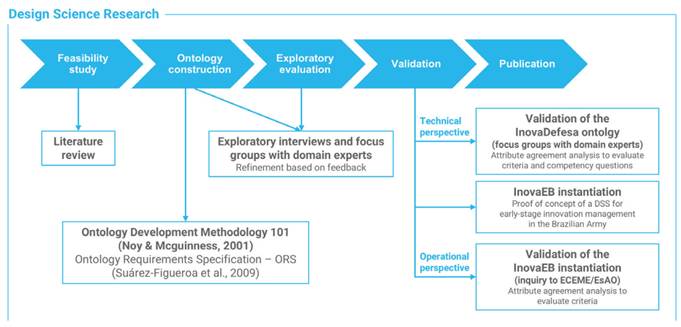 Source: Girardi et al. (in press).
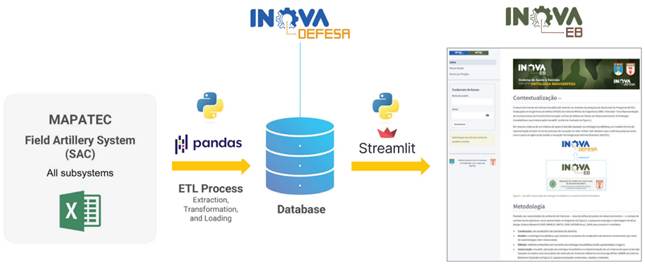 Source: Elaborated by the authors.
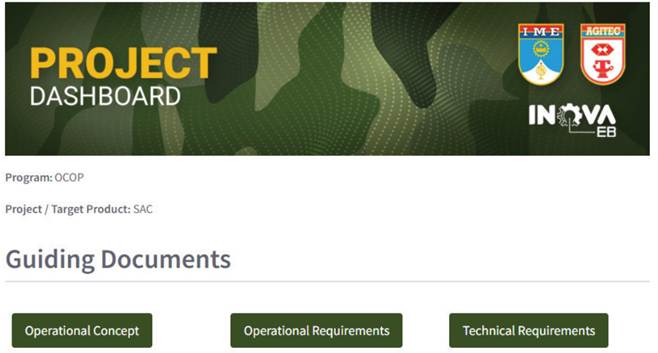
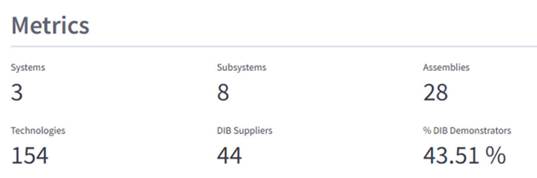 Source: Elaborated by the authors.
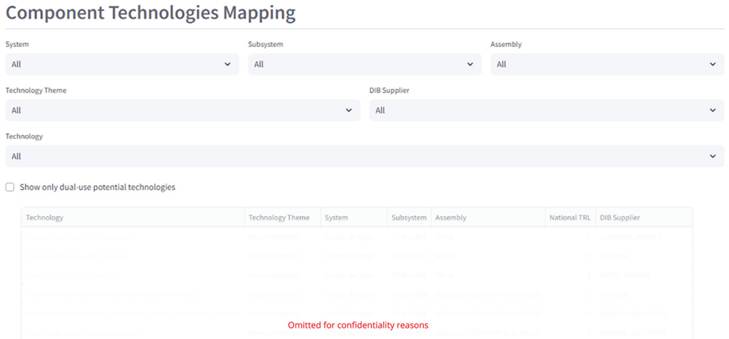 Source: Elaborated by the authors.
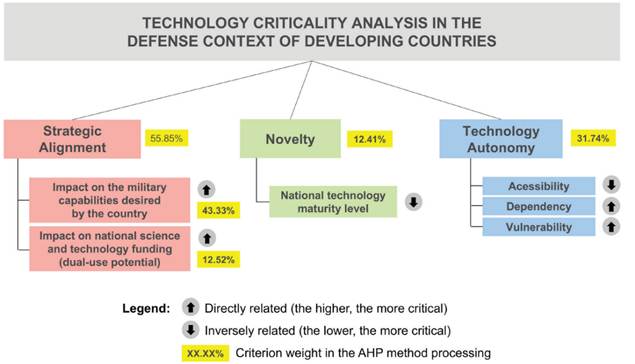 Source: Adapted from
 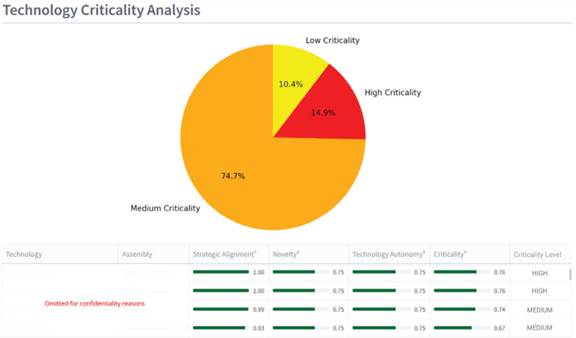 Source: Elaborated by the authors.
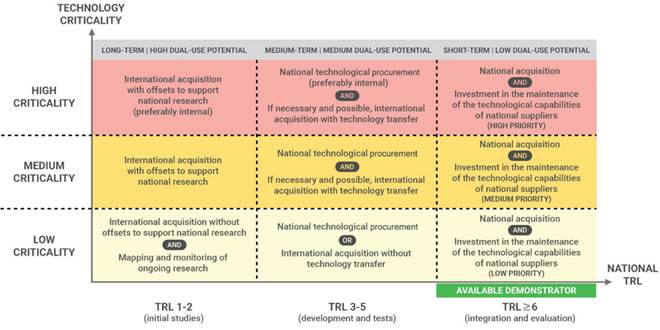 Source:
 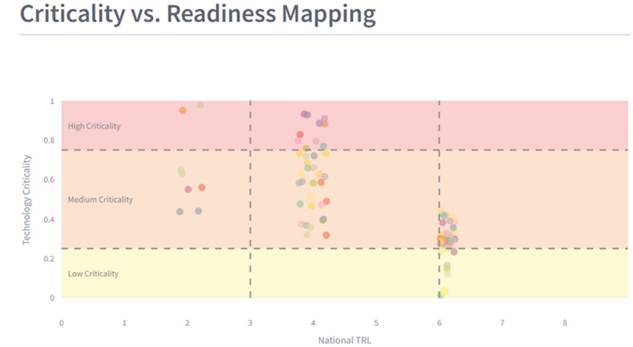 Source: Elaborated by the authors.
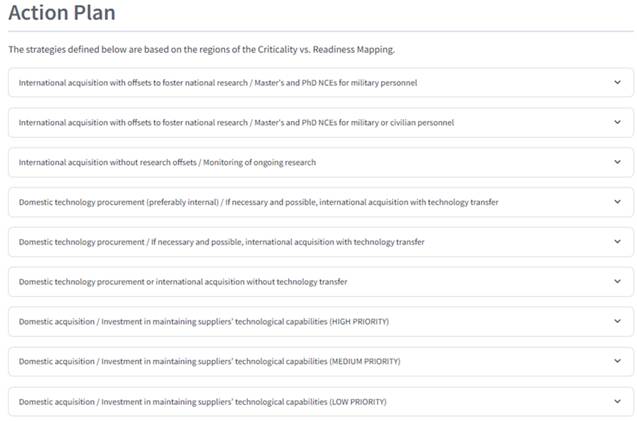 Source: Elaborated by the authors.
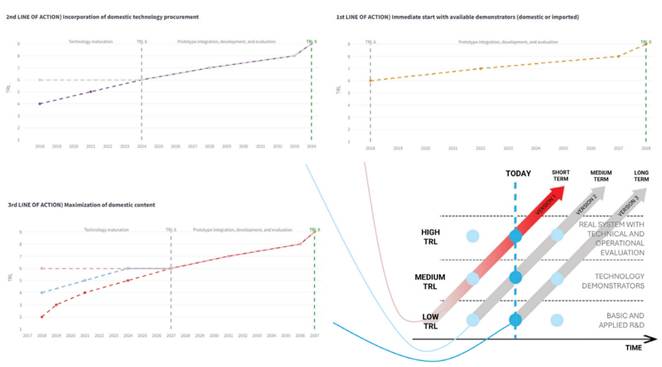 Source: Adapted from