 The relationship between the Environmental Agenda in Public Administration (A3P) and the environmental awareness of civil servants
Abstract
This article aimed to identify the perceived influences of the thematic axes of the Environmental Agenda in Public Administration (A3P) on the environmental awareness of public servants. Structural equation modeling was used to analyze the 414 responses from public servants from an entity in the justice sector that adhered to the A3P agenda. The results show that only the axes of awareness and training of employees and sustainable bidding at A3P were not statistically significant. On the other hand, the axes of rational use of natural resources and public goods, adequate management of waste generated, quality of life in the work environment, and sustainable constructions positively and statistically significantly affect the environmental awareness of employees. Additionally, it was found that when the control variables (age, type of activity, and time of organization) were inserted into the model, there were some significant changes, proving that the older the age and the longer the organization, the greater the perceptions of the importance of A3P practices and actions. This study concludes that it is important that individuals at the organizational level are also imbued with actions and practices aimed at achieving the objectives of the 2030 Agenda.
Keywords:
2030 agenda; public management; sustainable development goals
Abstract
Este artigo teve por objetivo identificar as influências percebidas dos eixos temáticos da Agenda Ambiental na Administração Pública (A3P) na consciência ambiental dos servidores públicos. Para analisar as 414 respostas de servidores públicos de uma entidade do setor de justiça que aderiu à agenda A3P, aplicou-se a técnica de modelagem de equações estruturais. Os resultados evidenciaram que somente os eixos “sensibilização e capacitação dos servidores” e “licitações sustentáveis” da A3P não foram estatisticamente significantes. Em contrapartida, ficou claro que os eixos “uso racional dos recursos naturais e bens públicos”, “gestão adequada dos resíduos gerados”, “qualidade de vida no ambiente de trabalho” e “construções sustentáveis” afetam, de forma positiva e estatisticamente significativa, a consciência ambiental dos servidores. Adicionalmente, verificou-se que, quando inseridas as variáveis de controle (idade, tipo de atividade e tempo de organização) no modelo, houve algumas alterações significativas, comprovando que, quanto maior a idade e o tempo de organização, maior é a percepção da importância das práticas e ações da A3P. Conclui-se, com este estudo, que é importante que os indivíduos, em âmbito organizacional, também estejam imbuídos de ações e práticas voltadas para o atingimento dos objetivos da Agenda 2030.
Palavras-chave:
agenda 2030; gestão pública; objetivos de desenvolvimento sustentável
Resumen
Este artículo tuvo como objetivo identificar las influencias percibidas de los ejes temáticos de la Agenda Ambiental en la Administración Pública (A3P) en la conciencia ambiental de los servidores públicos. Para analizar las 414 respuestas de servidores públicos de una entidad del sector justicia que adhirieron a la agenda A3P, se aplicó la técnica de modelación de ecuaciones estructurales. Los resultados muestran que solo los ejes de sensibilización y formación de los empleados y licitación sostenible de la A3P no fueron estadísticamente significativos. Por otro lado, los ejes de uso racional de los recursos naturales y bienes públicos, manejo adecuado de los residuos generados, calidad de vida en el ambiente laboral y construcciones sustentables inciden positiva y estadísticamente de forma significativa en la conciencia ambiental de los empleados. Además, se encontró que, cuando se insertaron en el modelo las variables de control (edad, tipo de actividad y tiempo de organización), hubo algunos cambios significativos, demostrando que cuanto mayor es la edad y antigüedad en la organización, mayores son las percepciones de la importancia de las prácticas y acciones de la A3P. Este estudio concluye que es importante que los individuos a nivel organizacional también estén imbuidos de acciones y prácticas encaminadas a alcanzar los objetivos de la Agenda 2030.
Palabras clave:
agenda 2030; gestión pública; metas de desarrollo sostenible
1. INTRODUCTION
Global concerns about the use and scarcity of natural resources and the intergenerational effects of climate change over time (Bithas, 2011) highlight the importance of discussions around strategies for sustainable development (Olsson & Kruger, 2021). Within organizations, actions and practices must also be aligned with sustainability (Kuzma et al., 2017), encompassing social, environmental, and economic-financial premises (Elkington, 2012).
An important mechanism to assist society in general is the 2030 Agenda, planned by the United Nations (UN), considered a civilizational project that brings together global, public, and private actors to enable the future of humanity (Olsson & Kruger, 2021). Furthermore, it addresses the challenges of human rights in reducing poverty, misery, and hunger, as well as covering other aspects such as reducing social inequalities, gender equality, sustainable agriculture, and sustainable cities and communities (Nações Unidas, 2023).
In addition to the goals established by the 2030 Agenda, there are the Sustainable Development Goals (SDGs), which are reflected in the context of organizations, especially in public administration (Souza et al., 2021), which has the responsibility to induce social behavior.
The implementation of socio-environmental practices aimed at achieving sustainable development by public sector institutions is the focus of the Environmental Agenda in Public Administration (A3P), created by the Ministry of the Environment (Ministério do Meio Ambiente [MMA], 2023), which is the guiding mechanism for promoting sustainability in the use of resources by government managers (Zanini et al., 2023). The necessity of reducing public resource expenditures and waste makes A3P a model of support and guidance for public management, which includes hiring processes, renovations, efficient use of water and energy, proper waste disposal, and more, prioritizing actions and practices geared towards long-term sustainability (Santos et al., 2017).
The current need to reduce the impact of economic activities on natural resources highlights that the goals of the 2030 Agenda are one of humanity’s greatest challenges (Zemanová & Druláková, 2020). However, other criticisms focus on analyzing the adequacy of the SDGs, the lack of specificity regarding the role of nations, and the consideration of unattainable goals (Telleria & Garcia-Arias, 2022). Organizations can contribute with sustainable practices and SDGs, emphasizing individuals’ environmental awareness regarding the use of natural resources (Dalla Porta et al., 2023; Olsson & Kruger, 2021). This environmental awareness is multidimensional and can be identified from various perspectives involving social, economic, political, psychological, and technological aspects (Ticlla et al., 2021).
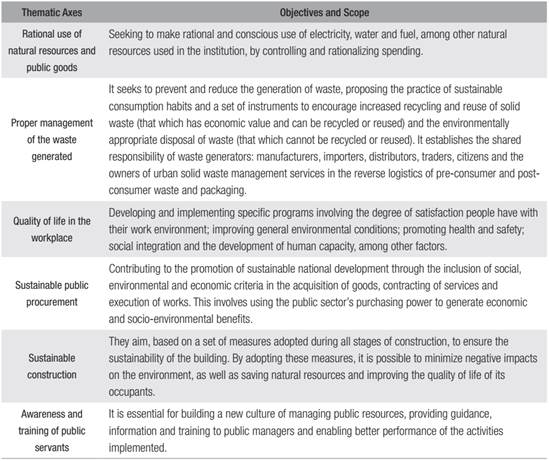
In this sense, A3P is one of the main governmental management mechanisms to institute socio-environmental action in public entities (Oliveira et al., 2021). Its thematic axes are “rational use of natural resources and public goods,” “proper management of generated waste,” “quality of life in the work environment,” “awareness and training of public servants,” and “sustainable procurement and construction.”
For A3P to succeed, it is essential to raise awareness and train public servants, aiming to adapt the processes and performance of governmental activities (Portaria nº 326/2020), as well as its implementation (Afonso et al., 2023). Thus, the rational use of resources can contribute to raising awareness about the relevance of eco-efficient practices and combating waste in the public sector (Santos et al., 2017).
In this context, the guiding problem of this research is to verify the perceived influences of the thematic axes of the Environmental Agenda in Public Administration (A3P) on public servants’ environmental awareness. To identify such influences, a questionnaire was applied and answered by 414 public servants of a Brazilian justice sector entity. Based on the obtained responses, it was observed that only the A3P axes of “awareness and training of public servants” and “sustainable procurement” were not statistically significant. Additionally, it was found that control variables (age, type of activity, and time in the organization) also influence each individual’s awareness.
This research is relevant from both theoretical-social and empirical aspects. From the theoretical-social perspective, it is important to consider that the SDGs and their corresponding targets must be prioritized by different organizations to achieve sustainability (Van Der Waal & Thijssens, 2020). Thus, public organizations must promote and disseminate sustainability initiatives, serving as an example and influence for other entities (Ferreira & Paes-de-Souza, 2019). From an empirical perspective, it is crucial that individuals within organizations also be engaged in actions and practices aimed at achieving the SDGs. Therefore, understanding the influence of A3P objectives on public servants’ environmental awareness is essential. This objective is aligned with the recommendations of Afonso et al. (2023), who suggest investigations into public servants’ perceptions to assess whether institutional actions produce effects on their professional and personal behavior.
2. THEORETICAL FRAMEWORK
2.1. Scope of the Environmental Agenda in Public Administration (A3P)
The A3P is a governmental initiative aimed at promoting sustainability in the use of resources by government agencies (Zanini et al., 2023) and was created in 1999 by the Ministry of the Environment (MMA, 2023). In 2020, through Ordinance No. 326/2020 (Portaria nº 326/2020), the A3P Program had its guidelines established, being made available to public agencies across the three levels of government (federal, state, and municipal) (Portaria nº 326/2020). According to Article 2 of this Ordinance No. 326/2020 (Portaria nº 326/2020, p. 1), “the A3P Program aims to promote socio-environmental responsibility, the adoption of sustainability procedures, and socio-environmental criteria in the activities of the public sector.” Thus, the consolidation of A3P in public organizations becomes essential in light of the challenges set forth by the 2030 Agenda (Pacheco & Silva, 2021; Zanini et al., 2023).
Regarding aspects related to the management of environmental resources, A3P defines the following thematic axes: (i) “rational use of natural resources and public goods”; (ii) “proper management of the waste generated”; (iii) “sustainable public procurement”; and (iv) “sustainable construction.” For social aspects, the pillars include: (v) “quality of life in the workplace” and (vi) “awareness and training of public servants” (MMA, 2023; Portaria nº 326/2020).
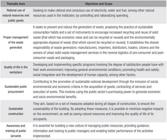
The implementation of A3P by public organizations aims to incorporate socio-environmental responsibility practices that strengthen long-term strategic planning, seeking to promote actions and practices aligned with the initiatives proposed by the agenda (Santos et al., 2017).
The guidelines of the A3P Program (Portaria nº 326/2020) include the following objectives: (i) to support public agencies in creating and implementing socio-environmental actions; (ii) to raise awareness among public servants about the preservation of natural resources; (iii) to foster the construction of an institutional culture that incorporates values, attitudes, and behaviors focused on socio-environmental responsibility; (iv) to encourage public agencies to adopt measures aimed at reducing socio-environmental impacts; (v) to increase management efficiency by promoting the conservation of natural resources and the reduction of institutional expenses; (vi) to promote the systematic updating of knowledge and the modernization of concepts, tools, technologies, and methodologies related to sustainability; (vii) to encourage transparency in public service; (viii) to ensure accessibility for individuals with disabilities or reduced mobility to public agencies; (ix) to promote environmental protection actions; (x) to facilitate access to the A3P Program for organizations; (xi) to promote actions of cooperation, solidarity, respect, professional and ethical commitment; (xii) to train and raise awareness among public managers about socio-environmental responsibility; (xiii) to contribute to improving the quality of life of public servants; (xiv) to encourage collective actions and democratic decision-making; and (xv) to promote sustainable production and consumption.
According to available data from the Ministry of the Environment (MMA, 2023), a total of 593 public institutions had joined the A3P by December 2022, through the program’s adhesion agreement. These include 311 federal institutions, 182 state institutions, and 200 municipal institutions, representing a 21% increase compared to the number of participating institutions in 2019, before the publication of Ordinance No. 326/2020 (Portaria nº 326/2020), which updated the government program. In this context, the agency where this research was conducted already has A3P partner units, making it relevant and suitable due to its ability to identify the sustainability axes and their variability.
In this regard, the implementation of A3P in various public administration environments directly and indirectly impacts society, considering that the requirements of the public sector will entail adjustments for companies participating in bids, contracts, projects, etc. (Ferreira & Paes-de-Souza, 2019; Kruger et al., 2011). Thus, the A3P program facilitates the implementation of sustainability practices, highlighting the concern of public agencies/entities with the preservation of natural resources (Afonso et al., 2023).
2.2. The importance of environmental awareness in individuals
Environmental awareness is an element associated with the information and knowledge that individuals possess about environmental principles (Severo et al., 2021). Awareness of the rational use of resources is a way to combat waste and promote eco-efficient practices in the context of public administration (Santos et al., 2017).
Government agents play a relevant role in the context of sustainable development and the initiatives of the 2030 Agenda, whether in the development, execution, or dissemination of actions and attitudes that lead to advances in better sustainability practices (Kruger et al., 2011). In this sense, the adoption and implementation of A3P becomes a support mechanism for the socio-environmental management of public entities (Oliveira et al., 2021). Among the challenges of A3P implementation is raising awareness among public servants and managers, aiming to make the socio-environmental agenda a recurring and relevant topic for various government institutions (Afonso et al., 2023), including promoting the exchange of experiences between public entities, as established in the program’s objectives (MMA, 2023).
Some studies on the subject, such as that of Santos et al. (2017), indicate that, although public managers are aware of the importance of A3P, there is a lack of responsibility and interest in the program, with cases of failure to implement measures to prevent environmental damage, even when municipalities have the socioeconomic capacity. The debate on sustainability highlights the need for actions and practices that minimize the negative impacts of productive activities across all sectors and institutions (Dalla Porta et al., 2023).
Oliveira, Santos, and Cabral (2021) point out that federal higher education institutions in Ceará have sought to meet A3P guidelines, and several aspects, such as energy, water, paper, and disposable cups, are controlled, as well as initiatives for the rationalization of these resources. However, the authors note that budget cuts and resource limitations hinder the implementation of socio-environmental actions and make it difficult for staff to commit to expanding socio-environmental initiatives. From this perspective, Almeida et al. (2022) argue that partnerships between public agencies and private companies can strengthen individual awareness of sustainability actions, especially in public institutions, as a way to overcome budgetary difficulties and make progress in implementing socio-environmental practices.
Education can be the path to building awareness of sustainable actions, supporting the process of natural resource degradation (Pérez-Rodríguez et al., 2017). In other words, through the training and/or qualification of individuals, it is possible to advance their awareness and theoretical-practical knowledge (Luzuriaga et al., 2022). It is worth noting, however, that the way organizations act and communicate in the environment also depends on how managers interpret that environment (Peng & Liu, 2016). Leaders who support sustainability strategies and initiatives encourage employees to adopt environmentally friendly behaviors. Thus, leaders who support environmental protection, through sustainability strategies and initiatives, are likely to formalize standards of conduct and, consequently, raise environmental awareness among teams and institutions (Ojo & Fauzi, 2020).
For this, government structures need to innovate and incorporate contemporary challenges related to socio-environmental management, standing out from the old paradigms of public governance (Souza et al., 2021). This challenge calls for training and raising awareness among public managers and servants about the urgency of implementing the A3P agenda (Afonso et al., 2023).
Individuals typically develop environmental awareness through two approaches (Ticlla et al., 2021). The first is based on a set of attitudes with emotional, verbal, and real commitment, as well as knowledge of the problem. The second is founded on a worldview that includes human-nature relationships, forming an ecological paradigm (Ticlla et al., 2021).
It is noted that discussions around environmental awareness and conscious behavior involve an individualistic (selfish) or collectivist (altruistic) scenario, reflecting in individuals’ decisions and attitudes as well as in their social relationships (Arruda Filho et al., 2019). Therefore, the level of environmental awareness, defined as the degree of theoretical-practical knowledge a person has regarding the environment, including aspects such as protection, contamination, and initiatives to mitigate environmental risks or damage (Ticlla et al., 2021), is crucial. Accordingly, the following hypothesis is proposed:
H1: The set of organizational actions related to A3P’s thematic axes positively influences individuals’ environmental awareness.
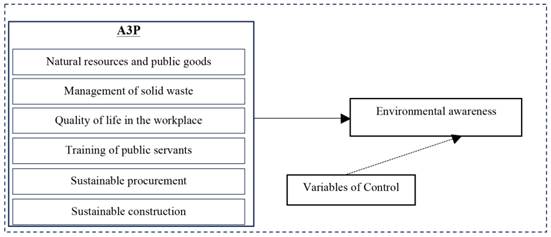
The conceptual research model presented in Figure 1 shows the proposed relationships of each A3P dimension associated with environmental awareness, as well as the relationship of control variables related to individual and organizational characteristics.
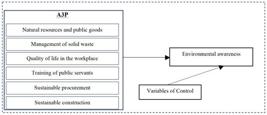
It is assumed that the attitudes directed toward A3P are related to the rational use of natural resources and public goods; the proper management of generated waste; quality of life in the workplace; the awareness and training of public servants; sustainable procurement, and sustainable construction. It is also proposed that some control variables may influence the relationships between the thematic axes and individuals’ awareness, such as the type of activity, gender, management position, age, working remotely, and length of time with the organization.
3. METHODOLOGY
3.1. Research sample
The research sample consisted of 414 Federal Public Prosecutor’s Office employees, volunteers from a sample of 7,500 employees who were randomly invited from a population of approximately 12,000 employees. To validate the sample size and statistical power, the total effect of the six thematic axes of A3P (“natural resources and public goods”; “solid waste management”; “quality of life in the workplace”; “training of public servants”; “sustainable procurement and sustainable construction”) and six control variables (age; time with the organization; age; gender; job role; and telework) on the dependent variable (environmental awareness) was considered. It is worth noting that the sample size, previously calculated using statistics generated by the G*Power software, indicated a minimum sample of 184 individuals, considering the criteria of medium effects of 0.15 (F²) and a test power of 95%, with a significance level of 5% (F test, LMR, SD 0, a priori) (Faul et al., 2009; Hair et al., 2017).
3.2. Research constructs
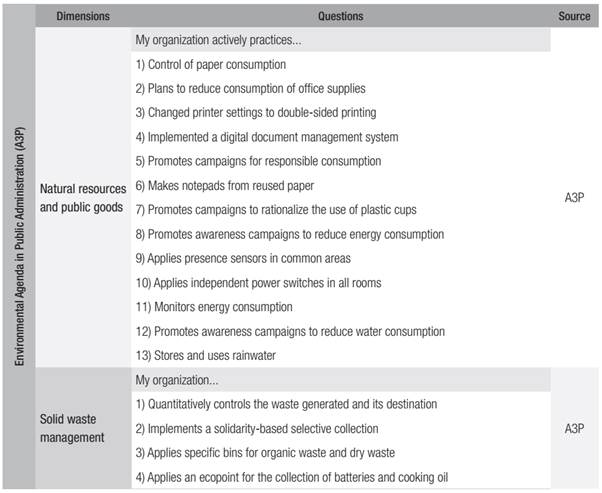
Box2presents the research constructs (A3P and environmental awareness), their dimensions, and the indicators of the instrument applied to respondents during the first half of December 2023 through the SurveyMonkey platform. The questions were measured using a 5-point Likert Scale, ranging from 1 (strongly disagree) to 5 (strongly agree). Additionally, demographic profile questions were asked to better understand the sample and apply them as control variables.
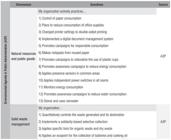
Prior to data collection, the instrument was reviewed by the ethics committee of the institution of one of the authors of this research, and a pre-test was conducted with researchers in the field to gather contributions for validation. After these procedures, the questionnaire link was sent to potential respondents via the institutional email of the employees, with the aim of identifying their perception of environmental awareness as well as their understanding of the organizational practices at their workplace, considering the sustainability initiatives of the A3P.
3.3. Data collection and analysis procedures
The responses were organized into spreadsheets using Microsoft Excel, and subsequently, descriptive statistics were applied, along with the Structured Equation Modeling (SEM) technique, estimated using Partial Least Squares (PLS), through the SmartPLS3 software. SEM is a statistical technique that aims to demonstrate the multiple effects that independent variables have on dependent variables, analyzing both the validity of the construct measurement model in terms of reliability (individual and composite) and validity (convergent and discriminant), as well as the validity of the structural model, using the bootstrapping technique to verify the regression coefficients and the statistical significance of the theoretical relationships (Hair et al., 2017).
It is important to highlight the application of the non-response bias check through a comparative procedure of the respondents, to verify if there are statistical differences between the initial and late responses obtained through the t-test. Additionally, common method bias was tested, since both the dependent and independent variables were answered by the same sample (Podsakoff et al., 2003), using Harman’s single-factor test.
It is emphasized that, although some units of the aforementioned organization were already aligned with A3P, the study was limited to identifying the perceived influences of the different levels of adoption of A3P’s thematic axes on environmental awareness, based on the collection and analysis of responses from the questionnaire administered to public employees, without any organizational action implemented afterward as a result of the perceptions and results obtained.
4. DESCRIPTION AND ANALYSIS OF RESULTS
4.1. Respondents’ profile
Table 1 presents the descriptions of the respondent profile in the research.
The sample of 414 public servants is predominantly composed of women (59.42%), differing from other studies with samples in the justice sector, where male respondents prevail, which could indicate a greater concern with the theme in this sample segment.
The public servants are, on average, 41 years and 3 months old, with an average tenure of 9 years and 5 months in the organization. The sample is mainly located in the Midwest, specifically in Brasília, where the superior agencies of the federal public administration are situated, with over 83% of the servants having experience in working remotely.
4.2. Structural equations
Based on the measurement model, the reliability (individual and composite) and the validity (convergent and discriminant) of the research variables were evaluated to see if they met the coefficients recommended by the literature (Hair et al., 2017). The convergent validity of the model was confirmed according to the Average Variance Extracted (AVE) values, all of which are above 0.50 (Hair et al., 2017). For internal consistency, Cronbach’s alpha and Composite Reliability (above 0.7) were used as measures, with all variables meeting the criteria after the exclusion of 7 indicators related to natural resources (3, 4, 9, 10, and 13), quality of life (5), and sustainable constructions (7). Finally, the discriminant validity, which evaluates whether the latent variables are independent from each other (Hair et al., 2017), was verified using the Fornell-Larcker criterion, showing the highest loadings on the corresponding variables (main diagonal).
The adjusted R² coefficient represents the percentage of explanation of the dependent variables in the model. Although there is no critical threshold, it is desirable for it to reach the highest possible value. In this study, the model demonstrated the ability to explain 40% of environmental awareness, which is considered a high explanatory capacity.
Next, the structural model (Table 3) was evaluated to verify the relationship between the variables and its predictive capacity. Hair et al. (2017) recommend evaluating the structural coefficient (β), the t-value (β/standard deviation), and the p-value for each relationship.
The hypothesis proposed for this research was that the set of actions related to the thematic axes of A3P (“rational use of natural resources and public goods”; “proper management of generated waste”; “quality of life in the workplace”; “awareness and training of public servants”; “sustainable procurement and sustainable construction”) positively influences individuals’ increased environmental awareness.
In this context, the hypothesis was not fully confirmed, as the axes “awareness and training of public servants” and “sustainable procurement” were not statistically significant. These findings highlight gaps that public organizations need to address by putting more effort into training and raising awareness among public servants to generate greater attention and knowledge about the A3P.
Sequentially, the control variables included in the model (type of activity - administrative or final; gender of the respondent; management position; age; intensity of work execution - measured by the number of days the function is performed remotely - and time in the organization) showed that the older the individual, the more they perceive the institution’s practices aimed at A3P differently and their influence on environmental awareness. In the workplace, it is worth noting that public servants involved in final activities and with more time in the organization demonstrate a higher perception of environmental awareness, with a statistical significance level of 10%.
4.3. Discussion
Environmental awareness consists of understanding the various environmental issues and the measures that need to be taken to foster good practices that help preserve the environment, in addition to incorporating opinions, concerns, and different points of view on environmental issues, as well as thoughts and approaches on how to resolve these issues and strengthen the relationships between individuals and the environment (Mkumbachi et al., 2020). Based on this, a hypothesis was proposed to verify whether the set of attitudes related to A3P’s thematic axes positively influence individuals to have greater environmental awareness, and it was found that only “training of public servants” and “public procurement” were not confirmed.
“Awareness and training of public servants” is an essential axis for building a new culture of public resource management, as it provides guidance, information, and qualification to public managers, enabling better performance of implemented activities (Almeida et al., 2020; Portaria nº 326/2020). This axis did not have a statistically significant influence on the environmental awareness of public servants, possibly because they do not perceive its importance or disagree about its impacts. However, it is worth noting that environmental awareness is indeed an element associated with the information and knowledge an individual possesses regarding environmental principles (Severo et al., 2021), making it relevant to understand why the training axis, in particular, was not significant. Additionally, there is a need to design actions to promote awareness of public servants’ daily actions, from the simplest to the most robust, regardless of whether they perform their duties on-site at the organization’s physical locations or remotely.
The axis “sustainable procurement,” which contributes to promoting national sustainable development by incorporating social, environmental, and economic criteria in the procurement of goods, services, and the execution of works (Almeida et al., 2020; Portaria nº 326/2020), also did not have a statistically significant impact on respondents’ environmental awareness. Possible reasons for this finding include the limited perception of specific actions in certain sectors and the fact that sustainable public procurement still has weaknesses and limitations, being a field that requires further changes, as it is occurring gradually. This process may take time due to either the lack of products with such specifications or the absence of sustainability criteria in procurement processes (Paes et al., 2019). Therefore, potential impacts may be observed in the long term, as the cost of sustainable products and the lack of awareness or interest in the subject by the organizations involved may also limit such purchases (Paes et al., 2019).
Sustainable construction, in the context of A3P, refers to measures adopted during public works to ensure the sustainability of buildings, aiming to minimize negative environmental impacts while promoting natural resource conservation and improving the quality of life for occupants (Almeida et al., 2020; Portaria nº 326/2020). This axis has a positive influence on environmental awareness. Based on this result, it can be inferred that respondents recognize that, for any stage of a work (including after its completion), the institution, public servants, and society, in general, need to use materials and technology that reduce negative environmental impacts.
“Proper waste management” by public institutions is an axis that promotes sustainable consumption habits and a set of tools to increase recycling and reuse of solid waste, as well as the environmentally appropriate disposal of waste (Almeida et al., 2020; Portaria nº 326/2020). This axis was statistically confirmed with a positive impact on individuals’ environmental awareness. This result suggests that, possibly, public servants perceive that the institution determines the shared responsibility of the different waste generators, such as manufacturers, importers, distributors, retailers, citizens, and urban solid waste management service providers, within reverse logistics and pre-consumption and post-consumption packaging.
The “quality of life in the workplace” is another axis that public servants perceive as positively affecting environmental awareness. Through this axis, public administration should develop and implement programs that involve employee satisfaction with the work environment, aiming to improve environmental conditions, promote health and safety, encourage social integration, and foster the development of human capacities etc. (Almeida et al., 2020; Portaria nº 326/2020). This result is particularly interesting in periods when working remotely is becoming more common in most public organizations, especially after the COVID-19 pandemic (Santos et al., 2022).
The last axis, “rational use of natural resources and public goods”, was statistically shown to have the greatest positive impact on environmental awareness. Public servants likely perceive that their organization is concerned with the rational and conscious use of electricity, water, fuel, and other natural resources used within the institution, through cost control and rationalization (Almeida et al., 2020; Portaria nº 326/2020). This suggests that respondents recognize that their organization is notably concerned with the actions related to this axis, such as encouraging attitude and behavioral changes in paper usage, ensuring its rational use, reducing excessive consumption of materials and resources, and appropriately disposing of produced waste etc.
Overall, the results align with public organizations that promote and publicize initiatives aimed at sustainability (Ferreira & Paes-de-Souza, 2019), as well as actions that foster awareness and consciousness among public servants regarding the objectives of the A3P and the SDGs. In this sense, the findings highlight the need for actions and training that impact the professional and personal behavior of public servants, as the adoption of A3P depends on individuals.
5. CONCLUSION
This article evaluated the influences of the thematic axes of the Environmental Agenda in Public Administration (A3P) on the environmental awareness of public servants in a Brazilian justice sector entity.
The results revealed that the hypothesis proposed for the study could not be fully confirmed, as the axes “awareness and training of public servants” and “sustainable procurement” were not statistically significant. It also showed that control variables in the model, related to the individual’s age, type of activity, and time in the organization, cause them to perceive the institution’s A3P-oriented practices and their influence on environmental awareness differently.
Regarding the non-significance of the “awareness and training of public servants” axis, it was possible to verify that the actions and projects related to social and environmental awareness perceived by respondents in their units may be scarce, highlighting the need for institutional programs that aim to instill social and environmental awareness among the individuals involved.
As for the “sustainable procurement” axis, which also showed no significance, although it is a viable and legal means to reduce environmental impact through the acquisition of goods and services by public entities, the perception of its actual situation may have been influenced by respondents not directly involved with the sectors/positions responsible for and/or overseeing this axis.
This study makes several contributions to the literature. First, it presents new evidence related to the influence of A3P’s thematic axes or institutional actions focused on sustainability on individuals’ environmental awareness within the organization. Environmental awareness represents the level of individuals’ understanding of how their actions affect the environment (Ramsey et al., 1992), a key factor in developing environmentally responsible behaviors and lifestyle changes that make individuals more mindful of the environment. It also contributes to the literature by considering the role of demographic characteristics in environmental awareness, with positive results regarding age, type of activity, and time in the organization.
The results also contribute to organizational practice by providing information on how the A3P’s thematic axes can affect individuals and, consequently, the environment. Thus, it is possible to recommend that organizations that have already adopted A3P continue to highlight their objectives, encourage the sharing of information on the progress of items based on their structure and organizational culture, promote initiatives through awareness campaigns, and continuously encourage changes in public servants’ attitudes and behavior to support the adoption and implementation of A3P and new pro-environmental behaviors that foster long-term sustainable practices. In this regard, the findings underscore the importance of linking organizational practices to individuals’ environmental awareness.
Among the limitations of this study, it is important to note that the data analyzed refers to a specific segment of the public sector, meaning that the results cannot be generalized to all entities that have adopted A3P. Additionally, no actions were implemented based on the perceptions and results obtained.
Future research is recommended to expand the sample to various entities to compare how these objectives are disseminated. Furthermore, the study employed a cross-sectional approach to data collection.
Future research may use other data collection methods (e.g., interviews, archival data) to broaden the understanding of the phenomenon, as well as test possible mediating and/or moderating variables that could enhance the perceived effects of A3P’s thematic axes.
ACKNOWLEDGMENTS
The authors thank all the respondents who contributed their answers to the research, making the analysis and construction of the results possible. We also thank the editorial team and anonymous reviewers for their valuable contributions, which positively impacted the quality of this article.
References
- Afonso, D. L. V., Pacheco, I. B. G., & Braga, I. L. (2023). Agenda Ambiental na Administração Pública (A3P) aliada à gestão do conhecimento: caso prático da Ecoligo-RO. Revista Gestão Organizacional, 16(3), 216-233.
- Almeida, V. F., Simão, M. O. D. A. R., Limont, M., Sabino, A. R., Martins, E. K., & Almeida, G. B. (2022). Agenda Ambiental da Administração Pública: A3P como instrumento de educação ambiental no Instituto Federal do Amazonas. Revista Brasileira de Educação Ambiental (RevBEA), 17(2), 452-473.
-
Almeida, V. F., Yunes, C., Vidal Neto, T. C. S., Damasceno, L. A., Souza, A. L. C., & Simão, M. O. D. A. R. (2020). Agenda Ambiental da Administração Pública (A3P) e sua aderência: o caso do Instituto Federal do Amazonas. Revista Ibero-Americana de Ciências Ambientais, 11(5), 677-693. https://doi.org/10.6008/CBPC2179-6858.2020.005.0060
» https://doi.org/10.6008/CBPC2179-6858.2020.005.0060 - Arruda, E. J. M. Filho, Cardoso, B. L., & Barboza, M. N. L. (2019). Intenção de consumo verde no contexto das características egoístas ou altruístas do produto versus a consciência ambiental do usuário. Cadernos EBAPE.BR, 17(2), 414-434. https://doi.org/10.1590/1679-395171699
-
Bithas, K. (2011). Sustainability and externalities: is the internalization of externalities a sufficient condition for sustainability? Ecological Economics, 70(10), 1703-1706. https://doi.org/10.1016/j.ecolecon.2011.05.014
» https://doi.org/10.1016/j.ecolecon.2011.05.014 - Dalla Porta, C., Kruger, S. D., & Mazzioni, S. (2023). Comprometimento das empresas signatárias com os princípios do Pacto Global. Revista de Administração Contabilidade e Sustentabilidade (REUNIR), 13(1), 56-76.
- Elkington, J. (2012). Canibais com garfo e faca M. Books.
- Faul, F., Erdfelder, E., Buchner, A., & Lang, A. G. (2009). Statistical power analyses using G* Power 3.1: Tests for correlation and regression analyses. Behavior Research Methods, 41(4), 1149-1160.
- Ferreira, R. G., & Paes-de-Souza, M. (2019). Adesão das instituições públicas da Amazônia Legal à Agenda Ambiental da Administração Pública (A3P). Revista de Administração e Negócios da Amazônia, 11(3), 223-240.
- Hair, J. F. Jr., Hult, G. T.M., Ringle, C. M. & Sarstedt, M. (2017). A primer on Partial Least Squares Structural Equation Modeling (PLS-SEM) (2a ed). Sage Publications Inc.
- Kruger, S. D., Pfitscher, E. D., Freitas, C. L., & Petri, S. M. (2011). Gestão ambiental em instituição de ensino superior: uma análise da aderência de uma instituição de ensino superior comunitária aos objetivos da Agenda Ambiental na Administração Pública (A3P). Revista Gestão Universitária na América Latina (GUAL), 4(3), 44-62.
- Kuzma, E. L., Doliveira, S. L. D., & Silva, A. Q. (2017). Competências para a sustentabilidade organizacional: uma revisão sistemática. Cadernos EBAPE.BR, 15(Especial), 428-444.
- Luzuriaga, E. J. N., Mayorga, B. C. P., & Guevara, J. A. U. (2022). Conciencia ambiental, derechos del buen vivir y la eliminación de productos plásticos aproximación desde la enseñanza universitaria. Conrado, 18(85), 412-423.
-
Ministério de Meio Ambiente. (2023). Agenda Ambiental na Administração Pública (A3P) http://a3p.mma.gov.br/
» http://a3p.mma.gov.br/ - Mkumbachi, R. L., Astina, I. K., & Handoyo, B. (2020). Environmental awareness and pro-environmental behavior: a case of university students in Malang city. Jurnal Pendidikan Geografi, 25(2), 161-169.
-
Nações Unidas. (2023). Agenda 2030 https://nacoesunidas.org/pos2015/agenda2030/
» https://nacoesunidas.org/pos2015/agenda2030/ - Pacheco, I. B. G., & Silva, R. M. P. (2021). Agenda Ambiental na Administração Pública: aplicação e contribuições socioambientais em universidades federais. ID on-line Revista de Psicologia, 15(57), 297-317.
- Paes, C. O., Zucoloto, I. E., Rosa, M., & Costa, L. (2019). Práticas, benefícios e obstáculos nas compras públicas sustentáveis: uma revisão sistemática de literatura. Revista de Gestão Social e Ambiental, 13(2), 21-39.
-
Peng, X., & Liu, Y. (2016). Behind eco-innovation: Managerial environmental awareness and external resource acquisition. Journal of cleaner production, 139, 347-360. https://doi.org/10.1016/j.jclepro.2016.08.051
» https://doi.org/10.1016/j.jclepro.2016.08.051 - Pérez-Rodríguez, U., Varela-Losada, M., Lorenzo-Rial, M. A., & Vega-Marcote, P. (2017). Tendencias actitudinales del profesorado en formación hacia una educación ambiental transformadora. Revista de Psicodidáctica, 22(1), 60-68.
-
Portaria nº 326, de 23 de julho de 2020 (2020). Institui o Programa Agenda Ambiental na Administração Pública - Programa A3P e estabelece suas diretrizes. https://www.in.gov.br/web/dou/-/portaria-n-326-de-23-de-julho-de-2020-268439696
» https://www.in.gov.br/web/dou/-/portaria-n-326-de-23-de-julho-de-2020-268439696 -
Ojo, A. O., & Fauzi, M. A. (2020). Environmental awareness and leadership commitment as determinants of IT professionals’ engagement in Green IT practices for environmental performance. Sustainable Production and Consumption, 24, 298-307. https://doi.org/10.1016/j.spc.2020.07.017
» https://doi.org/10.1016/j.spc.2020.07.017 - Oliveira, L. M. S., Santos, S. M. D., & Cabral, A. C. A. (2021). Gestão socioambiental: adesão à agenda ambiental da administração pública em instituições federais de ensino superior. Gestão e Sociedade, 15(41), 3984-4012.
- Olsson, G., & Kruger, S. D. (2021). Governança corporativa e externalidades: um olhar sobre o desenvolvimento pluridimensional na Agenda 2030. Revista Eletrônica do Curso de Direito da UFSM, 16(2), e39752.
- Podsakoff, P. M., Mackenzie, S. B., Lee, J. Y., & Podsakoff, N. P. (2003). Common method biases in behavioral research: a critical review of the literature and recommended remedies. Journal of Applied Psychology, 88(5), 879.
- Ramsey, J. M., Hungerford, H. R., & Volk, T. L. (1992). Environmental education in the K-12 curriculum: finding a niche. The Journal of Environmental Education, 23(2), 35-45.
- Santos, E. A., Sallaberry, J. D., & Mendes, A. C. A. (2022). The influence of telework and management controls on the congruence of civil servant objectives. Revista de Gestão, 29(3), 287-299.
- Santos, F. L., Carneiro, A. F., Souza, J. A., & Souza, R. M. S. (2017). Análise da adesão à Agenda Ambiental na Administração Pública (A3P) pela cidade Portal da Amazônia. Gestão e Sociedade, 11(28), 1583-1610.
-
Severo, E. A., Guimarães, J. C. F., & Dellarmelin, M. L. (2021). Impact of the Covid-19 pandemic on environmental awareness, sustainable consumption and social responsibility: Evidence from generations in Brazil and Portugal. Journal of cleaner production, 286, 124947. https://doi.org/10.1016/j.jclepro.2020.124947
» https://doi.org/10.1016/j.jclepro.2020.124947 - Severo, E. A., Medeiros, A. M. T. V., Luna, T. B., Moraes, M. C., & de Guimarães, J. C. F. (2021). Consciência ambiental, consumo sustentável e intenção de compra de smartphones remanufaturados: uma survey no Nordeste do Brasil. Desenvolvimento em Questão, 19(56), 301-321.
- Souza, L. C., Lopes, I. B. M., Kohnert, R. F., & Batista, P. L. (2021). Gestão pública e Agenda 2030: o impasse na ratificação do acordo Mercosul-União Europeia. Ciências Sociais Aplicadas em Revista, 21(41), 276-294.
- Telleria, J., & Garcia-Arias, J. (2022). The fantasmatic narrative of “sustainable development”. A political analysis of the 2030 Global Development Agenda.Environment and Planning C: Politics and Space,40(1), 241-259.
-
Ticlla, M. E. R., Caballero, J. E. A. P., & Cárdenas, M. C. G. (2021). Conciencia ambiental desde la educación: Estado del Arte. Revista Iberoamericana de la Educación, 1, 1-28. https://doi.org/10.31876/ie.vi.117
» https://doi.org/10.31876/ie.vi.117 -
Van der Waal, J. W., & Thijssens, T. (2020). Corporate involvement in sustainable development goals: Exploring the territory. Journal of Cleaner Production, 252, 119625. https://doi.org/10.1016/j.jclepro.2019.119625
» https://doi.org/10.1016/j.jclepro.2019.119625 - Zanini, P. H. F., Pereira, A. W., & Pereira, R. S. (2023). Cidades sustentáveis e a agenda ambiental na administração pública brasileira. Journal on Innovation and Sustainability RISUS, 14(2), 4-19.
- Zemanová, Š., & Druláková, R. (2020). Mainstreaming global sustainable development goals through the un global compact: the case of visegrad countries. Journal of Risk and Financial Management, 13(3), 41.
FUNDING
-
FUNDING
Author Silvana Dalmutt Kruger thanks the Federal University of Mato Grosso do Sul (UFMS) for financial support through the “Women in Science” Project (2024). This work was carried out with the support of the Coordination for the Improvement of Higher Education Personnel (CAPES), Brazil - Funding Code 001.
Reviewers:
Edited by
All the data supporting the results of this study are available upon request to the authors. The dataset is not publicly available as it was obtained through questionnaires applied solely for academic purposes.

 Source: Adapted from
  Source: Elaborated by the authors.
 Source: Elaborated by the authors.
