 Subnational governments, populism, and public health policy: The role of Brazilian states during the COVID-19 pandemic
Abstract
This study examines the influence of political alignment between state governors and President Jair Bolsonaro on public health spending regulations during the COVID-19 pandemic in Brazil. Using an original dataset of executive orders issued by state governments from February 2020 to October 2021, we analyze spending-related health regulations and their variation according to governors’ political affiliations. The results indicate that governors aligned with the federal government issued significantly fewer spending regulations, particularly in 2021, compared to their non-aligned counterparts. This pattern suggests that normative inaction was not a consequence of institutional constraints but a deliberate political strategy to avoid contradicting the federal government’s denialist stance. Negative binomial regression and mixed-effects models confirm that political incentives rather than health-related needs shaped regulation production. These findings support the theory of “policy non-design” and the broader literature on democratic backsliding, demonstrating how populist leaders and their allies use inaction as a strategic tool to evade accountability. The study contributes to the understanding of competitive federalism under populist governments and its implications for policymaking in times of crisis.
Keywords:
COVID-19; subnational governments; federalism; populist; health policies.
 Thumbnail
 Thumbnail
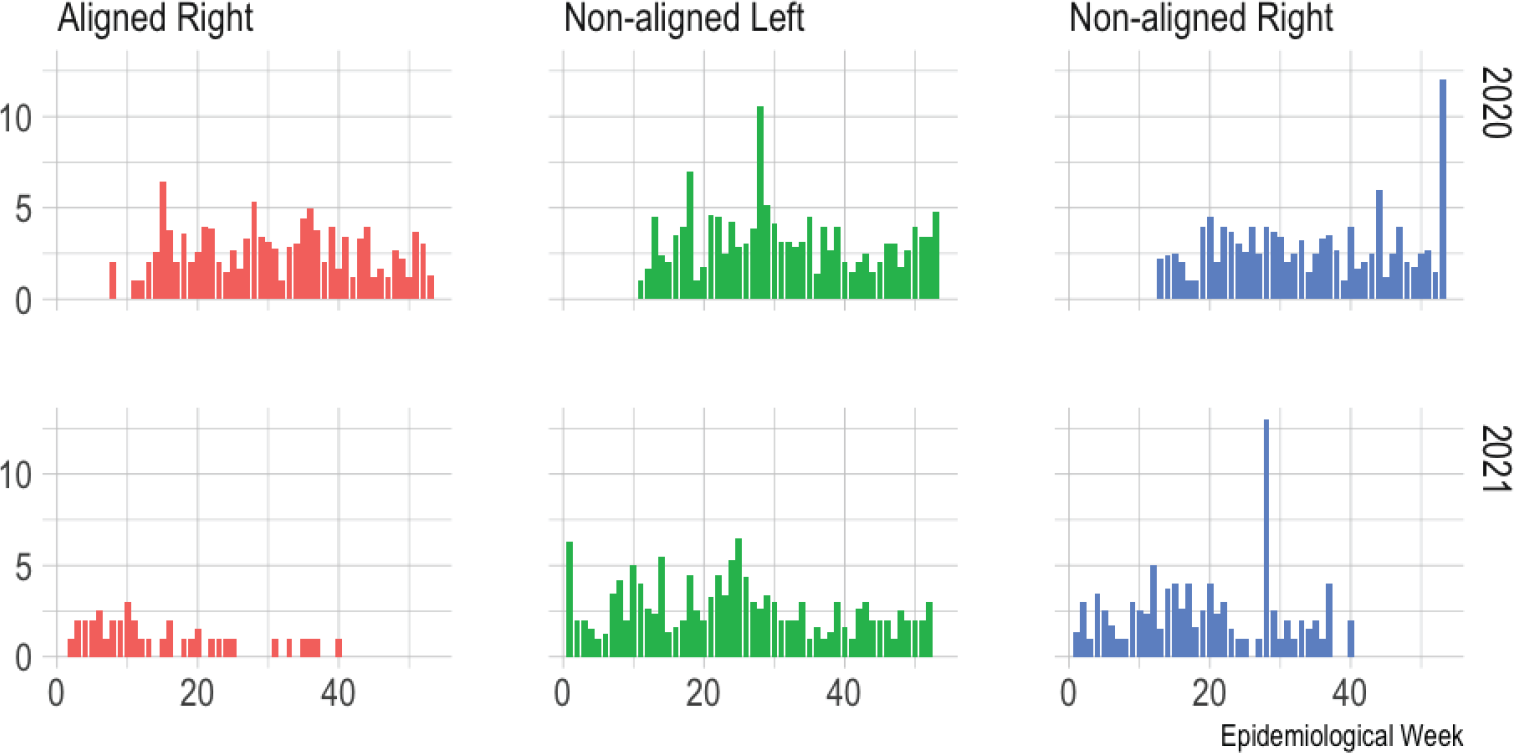 Source: Elaborated by the authors.
 Source: Elaborated by the authors.