
 Digital transformation in the public sector: user resistance to the federal procurement management system
Abstract
The use of technology has driven a revolution in public organizations, requiring a shift in mindset regarding service delivery. Despite the benefits of digital transformation, user resistance to information systems has been an ongoing challenge. This article investigates the sources of user resistance and how they can hinder the implementation of information systems within the context of digital transformation in public organizations. This is an exploratory study that examines the sources of resistance from the theoretical dimensions of “personal factors,” “system design,” and “interaction.” The results show that even systems evaluated as intelligent, intuitive, and interactive may face resistance, which typically arises from internal factors (personal factors), with a lesser influence from external factors (system design). This article makes a theoretical contribution to the fields of digital transformation and user resistance, deepening its application in the public sector. Empirically, the contributions help identify the main sources of resistance, providing support to managers and decision-makers in the process of implementing information systems.
Keywords:
digital transformation; public sector; resistance to information systems.
Resumo
O uso de tecnologia tem promovido uma revolução nas organizações públicas, exigindo uma mudança de mentalidade sobre a prestação de serviços. Apesar dos benefícios da transformação digital, a resistência dos usuários aos sistemas de informação tem sido um desafio constante. Este artigo investiga as fontes de resistência do usuário e como elas podem dificultar a implementação de sistemas de informação no contexto da transformação digital em organizações públicas. A presente pesquisa é exploratória, uma vez que examina as fontes de resistência sob as dimensões teóricas “fatores pessoais”, “design do sistema” e “interação”. Os resultados mostram que mesmo sistemas avaliados como inteligentes, intuitivos e interativos podem enfrentar resistência. Os motivos para isso decorrem de fatores internos - de natureza pessoal -, com influência menor de fatores externos, como o design do sistema. Este artigo contribui teoricamente para os campos de transformação digital e da resistência do usuário, aprofundando sua aplicação no setor público. Empiricamente, as contribuições ajudam a identificar as principais fontes de resistência ao sistema de informação, oferecendo suporte a gestores e tomadores de decisão no processo de sua implementação.
Palavras-chave:
transformação digital; setor público; resistência a sistemas de informação.
Resumen
El uso de la tecnología ha promovido una revolución en las organizaciones públicas, exigiendo un cambio de mentalidad en la prestación de servicios. A pesar de los beneficios de la transformación digital, la resistencia de los usuarios a los sistemas de información ha constituido un desafío constante. Este artículo investiga las fuentes de resistencia del usuario y cómo estas pueden dificultar la implementación de sistemas de información en el contexto de la transformación digital en las organizaciones públicas. Se trata de una investigación exploratoria que examina las fuentes de resistencia a partir de las dimensiones teóricas “Factores personales”, “Diseño del sistema” e “Interacción”. Los resultados muestran que incluso los sistemas evaluados como inteligentes, intuitivos e interactivos pueden enfrentar resistencia, la cual generalmente se origina en factores internos (factores personales), con menor influencia de factores externos (diseño del sistema). Este artículo contribuye teóricamente a los campos de transformación digital y resistencia del usuario, profundizando su aplicación en el sector público. Empíricamente, las contribuciones ayudan a identificar las principales fuentes de resistencia, ofreciendo apoyo a los gestores y tomadores de decisiones en el proceso de implementación de sistemas de información.
Palabras clave:
transformación digital; sector público; resistencia a los sistemas de información.
1. INTRODUCTION
Digital transformation has become a key topic on the global arena, both for organizations and governments (Lafioune et al., 2023). The initiatives they have undertaken increasingly involve the exploration of new digital technologies, contributing to their business operations (Matt et al., 2015). However, the integration and use of these technologies pose one of the greatest challenges facing organizations today (Hess et al., 2016).
In the public sector, institutions have come under growing pressure from citizens to provide modernized services that emphasize efficiency, effectiveness, and transparency in the availability and accessibility of public data (Alvarenga, 2019). In this context, it can be assumed that the many challenges facing these organizations may encourage the adoption of strategies for improving performance and enhancing the quality of service delivery. Among such challenges, resistance to the implementation of information systems (Markus, 1983; Pardo & Martínez-Fuentes, 2003; Rumelt, 1995) remains a major obstacle for organizations, including those in the public sector.
In this context, the purpose of this article is to investigate the sources of resistance and to analyze how user resistance may hinder the implementation of information systems within the context of digital transformation in public sector organizations.
The analysis was conducted using the dimensions proposed by Interaction Theory as the theoretical lens (Markus, 1983; Pardo & Martínez-Fuentes, 2003; Rumelt, 1995), whose core premise is that resistance to information systems can be determined by personal factors, by system design, or by the interaction between people and the context in which the system is used. The scope of this article is limited to the Brazilian public sector, represented by the Ministry of the Economy (ME), a body of the direct public administration, and by the Federal University of Espírito Santo (Ufes), an autonomous institution with a leading role in higher education, research, and outreach.
To achieve the proposed objective, this study investigates the main sources of user resistance to information systems in public sector institutions; analyzes and relates these sources of resistance based on the dimensions formulated by interaction theory; and, finally, presents inferences on how such resistance may hinder the implementation of the Procurement Planning and Management System (PGC System).
The findings of this study contribute to the theoretical debate not only on digital transformation related to the implementation of information systems in the public sector, but also on user resistance to such implementation, offering suggestions for future research.
2. DIGITAL TRANSFORMATION: CENTRAL CONCEPTS
Although there is no consensus on the definition of digital transformation, the literature often focuses on the use of digital technologies in its approach (e.g., Fitzgerald et al., 2014; Singh & Hess, 2019). Vial (2019) describes it as a continuous process aimed at improving an organization by combining information, computing, communication, and connectivity technologies. Abdelaal et al. (2018) point out that the phenomenon has been explored across several fields, from a “digital era” perspective to individual, socioeconomic, industrial, and institutional levels.
Digital transformation is widely defined as a complex, multifaceted organizational process that enables improvements within organizations through significant changes driven by digital technologies such as artificial intelligence, big data, blockchain, the internet of things, and others (Cieslak & Valor, 2025; Trenerry et al., 2021; Vial, 2019). This change goes beyond the digitalization of processes; it involves reconfiguring business models, organizational culture, professional competencies, and institutional structures (Benavides et al., 2020; Hanelt et al., 2021).
In this context, digital transformation is seen as a change enabled by digital technologies, aimed at radically improving the institution (Gong & Ribiere, 2021). According to Rogers (2017), it is not just about technology but also about a shift in strategies and mindset, where renewing strategy is more important than updating information technology infrastructure. Evolution in the use of information technology stands out: previously focused solely on optimization and risk reduction, it is now used to reinvent businesses and the delivery of products and services.
Still lacking a precise definition, several authors (e.g., Gong & Ribiere, 2021; Mergel et al., 2019; Vial, 2019) discuss the concept of digital transformation. The absence of a unified definition, as noted by Stock and Boyer (2009), may hinder the advancement of both practice and theory in the field. Nevertheless, digital transformation has become established as a concept that signals changes in the scope and direction of digital government management (Mergel et al., 2019).
In this context, Edelmann et al. (2023) argue that digital transformation in the public sector constitutes an evolutionary and continuous process that drives a comprehensive restructuring of policies, institutional practices, and user-oriented priorities. This process results both in a thorough review of existing services and in the design of new digital services that efficiently respond to contemporary societal demands.
2.1 Digital transformation in the public sector
In the public sector, digital transformation has entailed reinterpretations of the terms electronic government, e-government, or digital government. This transformation has occurred through maturity stages with distinct characteristics. The first stage consisted of the mere electronic enablement of public services. The second focused on a deeper transformation within public organizations. Referred to as transformational government or t-government (Weerakkody et al., 2011), this stage of transformation - made possible by digital technologies - encompasses organizational and sociotechnical aspects, including changes in governmental structures, operations, and culture (Omar et al., 2020).
As a result of the changes driven by technological development, public organizations have sought new ways to interact with citizens. To this end, they have been automating both routine transactional processes and more complex services through digital technologies (Omar et al., 2017). In this context, it becomes important to leverage the potential of digital technologies so that the institutional assets of traditional governmental structure can be rethought (Nograšek & Vintar, 2014) and properly organized with a view to better operational performance (Ashaye & Irani, 2019).
In the public sector, digital transformation takes on specific characteristics due to hierarchical rigidity, bureaucracy, and limitations in resources and capabilities (Kusmaryanto & Santoso, 2025; Venson et al., 2024). While the public sector’s digital agenda may be advancing, it still faces challenges, such as low digital maturity and institutional resistance (Figueiredo et al., 2022; Sarwar et al., 2023).
The inclusion of activities related to digital transformation has yielded positive results for the public sector. The adoption of digital platforms, for instance, has proven to be a viable strategy for transformation in the sector (Janssen & Estevez, 2013), as it enables interactions among multiple stakeholders (Bygstad & Hanseth, 2018).
In Brazil, gov.br stands out as a citizen-oriented digital platform designed to integrate a wide range of public services and information across multiple areas. Another noteworthy initiative is the Federal Government Procurement Portal - accessible through Compras.gov.br - an ecosystem dedicated to managing and overseeing the stages of public procurement. This platform allows public servants, government managers, suppliers, oversight bodies, and citizens to interact both among themselves and with the system (Portal de Compras, n.d.).
According to Escobar et al. (2023), digital transformation in the Brazilian public sector, while essential for modernizing services and increasing efficiency and citizen trust, faces significant challenges related to infrastructure, interinstitutional coordination, and cultural barriers. As a result, this new approach to public management has not achieved its intended goals, primarily due to resistance from values deeply rooted within organizational cultures (Rose et al., 2015).
In addition to recurring barriers such as bureaucratic rigidity, lack of resources, low digital proficiency among public servants, and organizational resistance to change (Kusmaryanto & Santoso, 2025; Venson et al., 2024), the gap between university training and the requirements of civil service entrance examinations regarding digital competencies limits the updating of professional profiles (Paletta & Moreiro-González, 2020). Initiatives such as the Digital Citizenship Platform and the Startup Gov.br program indicate progress in the digital agenda, but they face obstacles arising from the lack of dedicated leadership, high staff turnover, and political - institutional interference that undermines the continuity of actions (Figueiredo et al., 2022; Venson et al., 2024).
Mendonça et al. (2023), in their discussion of digital transformation in governments, warn of the tendency to adopt isomorphic patterns - that is, practices and technologies often replicated in similar ways across different contexts and institutions - resulting in the standardization of implemented solutions. In this scenario, the challenge lies in balancing the promise of modernization and efficiency with the preservation of individual rights, universal access to services, and the construction of a more transparent and inclusive government.
2.2 User resistance to information systems and digital transformation
User resistance can be defined according to the field in which the phenomenon is discussed or the perspective from which it is observed. Ali et al. (2016, p. 36) describe it as a “complex kaleidoscope of interrelated factors.” When examining this type of resistance, Markus (1983) - a pioneer in the interactionist approach to resistance - along with other authors (AlMaazmi et al., 2024; Kusmaryanto & Santoso, 2025), argues that the development of information technology can be regarded simultaneously as a political beast and a technological animal. From this perspective, resistance should not be seen merely as a problem to be solved, but as something meaningful for uncovering failures in the process.
In the field of Organizational Studies, resistance is defined as a multifaceted phenomenon capable of generating delays, costs, and unpredictable instabilities throughout the strategic change process (Ansoff, 1988). According to Zaltman (1977), such behavior leads to the maintenance of status quo in the face of pressure to change it. It can also be understood as a reaction to situations perceived as negative or stressful (Marakas & Hornik, 1996), or as a set of user behaviors that reflect dissatisfaction with the implementation of a new system (Rivard & Lapointe, 2012). As Kim and Kankanhalli (2009) point out, resistance consists of opposition to changes brought about by the introduction of new information technologies.
In the field of Information Technology, user resistance represents a behavior aimed at preventing the implementation and use of new systems or the achievement of project goals (Markus, 1983). Such resistance involves an adverse reaction that may manifest itself visibly and openly, such as through sabotage or direct opposition. More often, however, it occurs covertly, seeking to undermine or obstruct the fundamental objectives of a project (Ali et al., 2016).
According to Scott (1990), resistance consists of subtle practices expressed in what he calls hidden transcripts, which allow subordinate groups to silently challenge their leadership. The author argues that user resistance in information system projects can be interpreted as everyday resistance operating under power asymmetries. While the “public transcript” displays formal compliance - participation in training sessions, meeting deadlines, and superficial adherence to procedures - the “hidden transcript” harbors backstage criticism and counter-behaviors. This underground dimension - the infrapolitics - manifests itself through discreet, low-risk practices such as foot-dragging, maintaining parallel spreadsheets and communication channels (shadow IT), bypassing official workflows, and recoding data.
The arts of disguise described by Scott (1990) help explain why apparent adoption indicators may coexist with low actual use and skeptical peer narratives, particularly in environments characterized by surveillance and the possibility of sanction. Under this logic, the focus shifts from open confrontation to micro-practices of resistance that quietly shape the performance and social meaning of organizational technologies.
Resistance to information systems has been studied from various theoretical perspectives, notably the Technology Acceptance Model (TAM), the Unified Theory of Acceptance and Use of Technology (UTAUT), the Coping Model of User Adaptation (CMUA), and the Theory of Social Resistance to Technology (Cieslak & Valor, 2025; Kusmaryanto & Santoso, 2025; Trenerry et al., 2021). Such resistance may be cognitive (deeming a system useless), affective (eliciting fear or frustration), or behavioral (refusing or sabotaging its use).
Among the factors that trigger resistance are technostress, job insecurity, perceived loss of autonomy and status, and lack of technical support and training (AlMaazmi et al., 2024; Joia et al., 2014). In the public sector, there is an aggravating factor: a conservative organizational culture and low levels of digital proficiency increase resistance and reduce the effectiveness of digitalization policies (Paletta & Moreiro-González, 2020; Sarwar et al., 2023).
As for resistance to digital transformation itself, it can be seen as an extension of resistance to information systems, although it takes on greater complexity by involving issues of professional identity, the loss of human protagonism as automation advances, and the erosion of social interactions in the workplace (Cieslak & Valor, 2025). Models such as the Intergroup Threat Theory (ITT) and emotional approaches indicate that perceptions of threats to material (employment) and symbolic (identity) resources can trigger negative emotions, which, in turn, translate into resistance behaviors.
According to Escobar et al. (2023), resistance to digital transformation in the public sector arises from the complex interaction between technology and existing cultural and/or institutional structures. It is driven by factors such as inadequate governance, lack of leadership, low engagement, and fear of change. Mitigation efforts include integrated change management strategies, capacity building, and citizen participation - elements intrinsically linked to resistance to information systems due to the need for both cultural and technical readiness within organizations.
In the public sector, the critical factors perceived in resistance include uncommitted leadership, lack of clear governance, strategic misalignment, communication failures, and a shortage of incentives for change (AlMaazmi et al., 2024). Brazilian experiences also reveal that the absence of digital language in civil service entrance examinations, the technical unpreparedness of managers, and outdated curricula reinforce systemic resistance to digital transformation (Paletta & Moreiro-González, 2020).
In Brazil, such resistance requires integrated training, communication, and cultural change strategies to be overcome. Santos (2023) emphasizes that structural and cultural barriers hinder the advancement of digital transformation in the public sector, limiting its ability to innovate and adapt to new technological and social demands. Excessive centralization and a lack of integration among ministries and agencies lead to ineffective decision-making processes, while the absence of technical and managerial training prevents civil servants and leaders from mobilizing the necessary dynamic capabilities.
The literature further shows that overcoming resistance to digital transformation requires integrated approaches that involve transformational leadership, technical training, transparent communication, and a culture of innovation (Benavides et al., 2020; Venson et al., 2024). The 70% to 95% failure rate of digital transformation initiatives (Cieslak & Valor, 2025) underscores the urgency of incorporating strategies that account for the human and social factors in the change process. Finally, the authors converge on the view that successful digital transformation depends not only on technology, but on deep alignment among people, processes, culture, and organizational structure.
It can therefore be stated that the issues related to user resistance are broad and diffuse, such that the phenomenon cannot be fully described by a single characteristic (Jiang et al., 2000). This reinforces the need to understand this resistance, its sources, and other aspects related to the difficulties it may entail.
2.3 Sources of user resistance to information systems
Gravenhorst and In’t Veld (2004) argue that change and resistance are interconnected: change generates resistance, and resistance, in turn, drives new change processes. From this perspective, Doppler (2004) suggests that identifying the sources of user resistance enables the adoption of measures specifically aimed at reducing problems.
In their analysis of the sources of user resistance, Pardo and Martínez-Fuentes (2003) expanded on the study by Rumelt (1995), dividing these sources into five groups related to formulation and implementation. The first three groups address formulation sources, while the last two concern implementation, as shown in Box 1.
In the first group presented in Box 1 - “distorted perception, interpretation barriers, and vague strategic priorities” - the key aspect highlighted is “myopia, or the organization’s inability to envision the future clearly.” In such an organizational context, those within it fail to consider the future consequences of their actions or inactions (Rumelt, 1995). Thus, when a new information system is implemented, users tend not to expect future results attributable to their actions, which leads to resistance to the system, as they do not perceive its long-term benefits.
In Group 3 - “lack of creative response” - the key aspect highlighted is the “reactive mindset, resignation, or a tendency to believe that obstacles are inevitable.” This occurs when users believe that problems are natural and unavoidable, or that existing difficulties stem from the sector rather than the organization itself (Rumelt, 1995). In other words, users of a new system tend to view its implementation as a source of inevitable problems, believing that the difficulties arise from the technology rather than from a lack of knowledge or a proactive attitude.
Group 5 - “other sources of resistance” - includes, among other elements, “embedded routines,” referring to established work processes that create habits and generate resistance stronger than practical incentives (Rumelt, 1995). This inertia phenomenon caused by embedded routines, described by Rumelt (1995), was corroborated by Cieslak and Valor (2025), who described how technostress and the feeling of inadequacy toward new technologies intensify resistance to digital transformation, particularly in public organizations. User resistance to the implementation of a new system due to the incorporation of routines reflects both the existing habitual pattern and the performance of new tasks the user is unfamiliar with.
This study adopts the interaction theory (Markus, 1983), based on Kling’s (1980) perspectives on resistance to information systems. The author interprets resistance by means of three dimensions: “personal factors,” “system design,” and “interaction,” as presented in Box 2.
From this theoretical perspective, interaction indicates that the sources of user resistance may stem from the values perceived by users, such as the gain or loss of social content before and after the implementation of a new system (Markus, 1983). This hybrid approach to resistance reflects the possibility of different outcomes from the same system in different contexts, or of different responses from the same users in different systems (Ali et al., 2016).
Under the first dimension, personal factors, the cause of resistance to systems is attributed to internal factors within users - such as beliefs, values, and individual characteristics (Jiang et al., 2000; Joia, 2006; Mumford & Banks, 1967) - which shape users’ attitudes toward new systems, as observed by Sacks et al. (1993). According to Markus (1983), resistance is related to cognitive style, personality traits, and human nature. Studies such as that of Rahman et al. (2024) identify fear of job loss, technological self-efficacy, and concerns about work disruptions as determining factors in resistance to technology adoption. Lee (2020) emphasizes elements such as concerns about vulnerability and privacy, while Kim et al. (2023) show that self-efficacy, anxiety, and perceptions of usefulness and ease of use lead to resistance to changes in information systems.
Under the second dimension, system design, resistance arises from external factors related to the design and introduction of the new system, such as technical excellence, ergonomics, ease of use, and human characteristics (Markus, 1983). Zheng (2023) emphasizes that, in this case, a well-planned design - with appropriate network architecture and robust security measures - is essential. Daud (2023) reinforces the importance of design in the adoption of new technologies. Yang (2023) notes that design, especially in automated workflow systems, is crucial to overcoming resistance in organizations in developing countries and must take into account both insecurity and the preference for familiar processes.
Under the third dimension, interaction, it is understood that, in the relationship between users and systems, new systems can alter social and political perceptions, reshaping power relations within organizations (Joshi, 1991; Kling, 1980). Ali et al. (2016) indicate that the fear of losing power within the organization may lead users to resist new systems. Almatrodi et al. reveal that interaction with familiar processes and distrust influence resistance in public organizations. R. H. Hussan and N. H. Hussan (2023) highlight that effective interaction with systems is crucial to overcoming resistance, improving efficiency, and applying knowledge across government departments. Vargas Pinto et al. (2023) suggest that interaction and autonomy in the use of IT are essential to enhancing individual performance and facilitating adaptation to new systems.
3. METHODOLOGICAL PROCEDURES
This study adopts a single-case approach (Yin, 2014), suitable for the theoretical development of contextually rich phenomena (Eisenhardt, 1989). It employs the abductive method, which allows for the extension of existing theories through insights generated from the case context (Eisenhardt, 1989).
The abductive logic - understood as an iterative movement between data and theory that begins with “surprising findings” - was used to formulate and refine plausible explanations. Unlike deduction (testing prior hypotheses) and induction (generalizing from regularities), abduction seeks to reconfigure the theoretical framework in light of empirical material, through cycles of confrontation between conjectures and evidence. Operationally, this involved progressively layering data collection and analysis, writing theoretical memos, constant comparison, searching for negative cases, and successive revisions of codes and/or categories - a process of systematic combination aimed at aligning theory with reality. The abductive method is well suited to qualitative and mixed-method research, as it enables the formulation of explanatory hypotheses that emerge from the dialogue between existing theoretical frameworks and empirical evidence (Timmermans & Tavory, 2012). In addition, abductive analysis is an important theorizing tool, as it allows for new insights and conceptual revisions to emerge from the empirical material (Hulst & Visser, 2025).
This case study focuses on the PGC system of the Ministry of Economy (ME), used at Ufes, and investigates user resistance to its use. It is an electronic tool designed to consolidate planned procurements by the federal public administration, encompassing the preparation of annual procurement plans, preliminary studies, and risk management (Portal de Compras, n.d.).
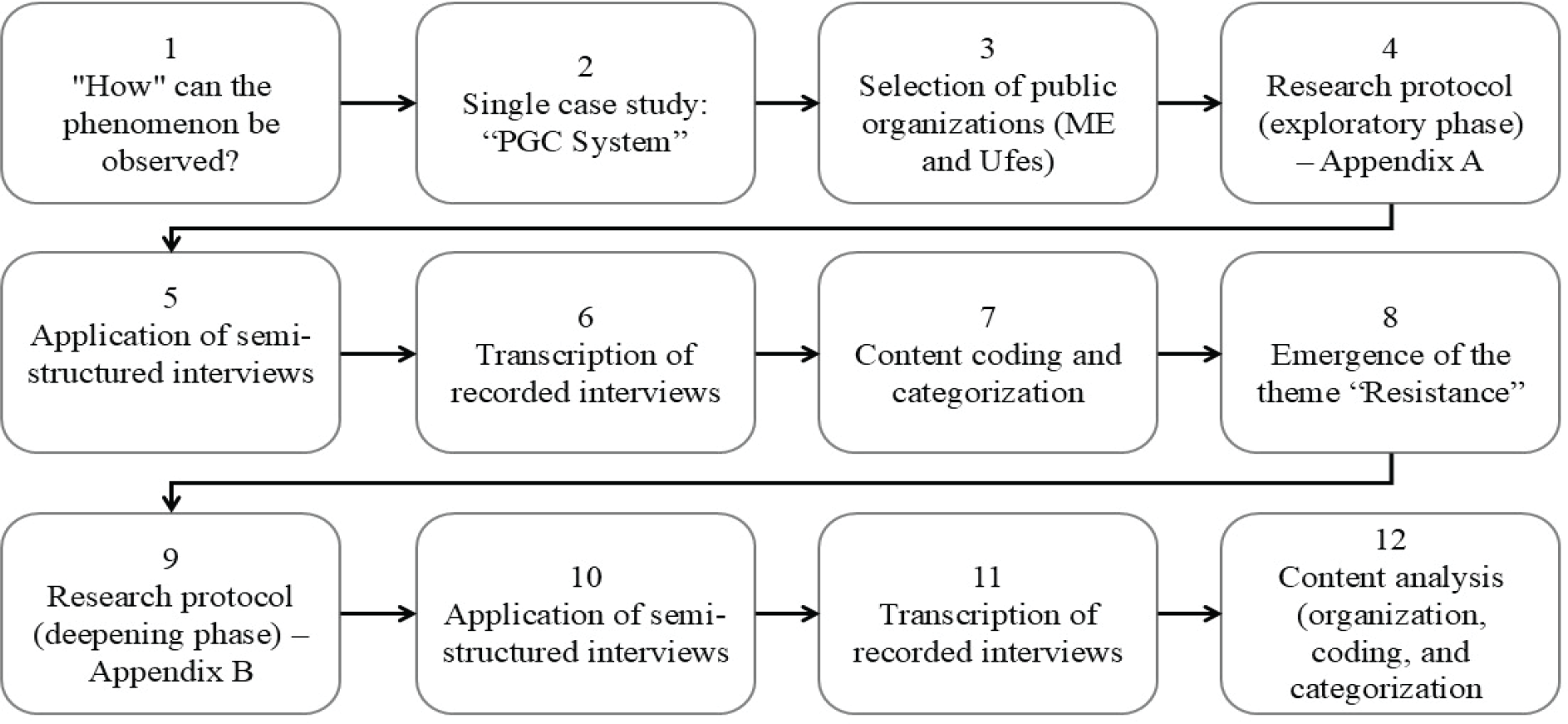
In Figure 1, the study’s methodological framework summarizes all stages of the methodological procedures.

The public institutions were selected through theoretical sampling based on four criteria (Eisenhardt, 1989; Miles & Huberman, 1994): (1) belonging to the Brazilian public sector; (2) developing and/or using digital transformation programs whose implementation has met with user resistance; (3) having technological systems under implementation in federal public administration bodies, including a central agency and a subordinate one; and (4) reflecting the influence of cultural values on system implementation and representing diverse cultural contexts and information about the national public sector.
After the institutions were selected, the managers of the agencies involved agreed to take part in the study.
Data collection consisted of eight interviews with five public servants, forming the main source of investigation (Barratt et al., 2011), as shown in Box 3. Conducted in two stages, between April and May 2022, the first included interviews with the project coordinator at the ME, the procurement coordinator and an economist from Ufes, using a semi-structured protocol. The interviews were held by videoconference, as the interviewees lived in different cities.
In the exploratory phase, difficulties and benefits associated with the implementation of the PGC system were identified, considering the context of digital transformation. Resistance to the new system emerged as a significant organizational challenge in the first three interviews. Based on this finding, the questionnaires were reformulated to focus more deeply on user resistance. In the in-depth phase, five interviews were conducted between May and June 2022 with the same participants from the previous phase, using a protocol centered on user resistance. The interviews, which averaged 32 minutes in duration, were conducted by videoconference - due to the interviewees’ geographic locations - recorded, and transcribed for analysis.
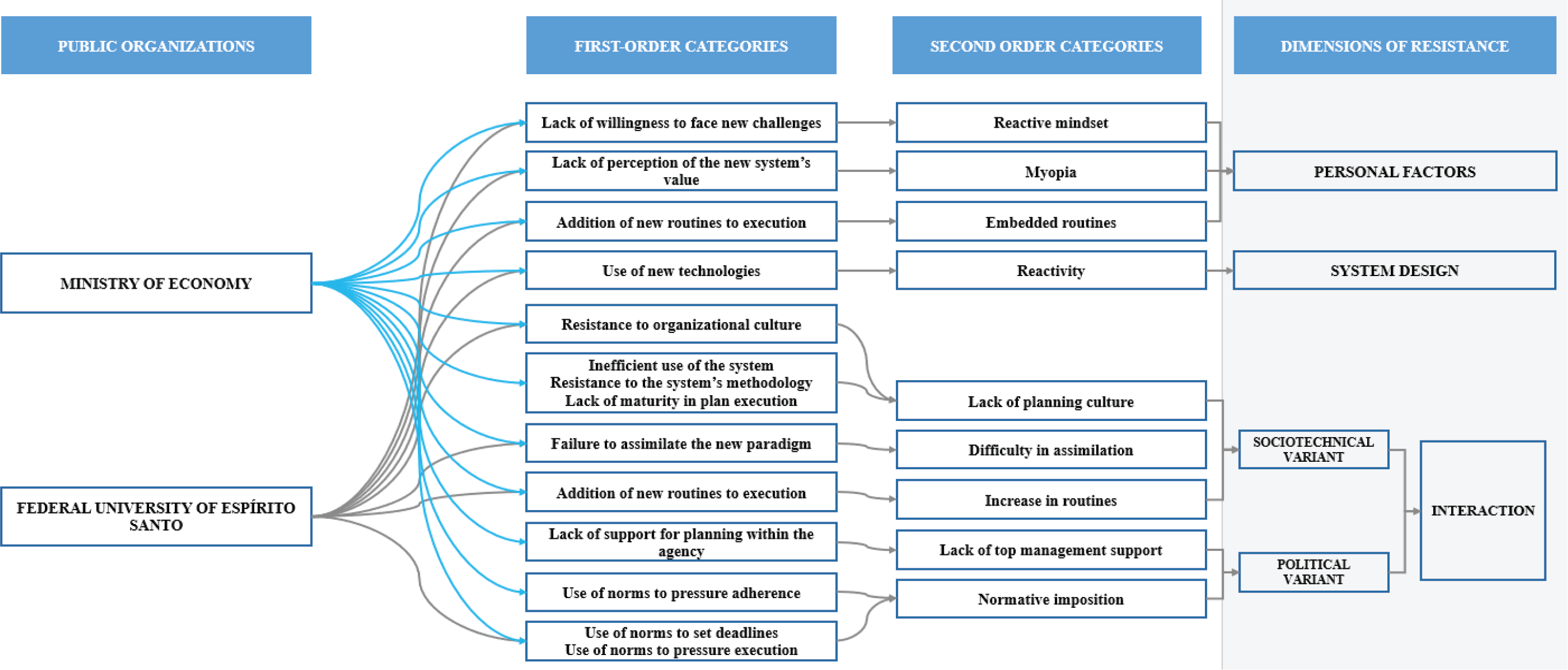
Data analysis followed the inductive approach proposed by Gioia et al. (2013) and, complementarily, the open coding method of Corbin and Strauss (2014). Through the interviews, sources of user resistance were identified (Ali et al., 2016), along with new sources not previously considered. Based on the informants’ language, a model was developed that resulted in 16 first-order categories and seven second-order categories, which in turn unfolded into three dimensions. Three of the second-order categories constitute the study’s inferences.
To ensure methodological rigor, the study followed criteria for internal validity (selection of public officials from the agencies involved), external validity (a single-case study with clear selection criteria), reliability (use of replicable documentary procedures), and objectivity (guaranteeing the interviewees’ anonymity).
4. RESEARCH RESULTS
The results of the PGC System case study, conducted at the Ministry of Economy (ME) and at Ufes, were analyzed based on three main dimensions: personal factors, system design, and interaction. The analysis of the coded data produced firstand second-order categories aligned with the theoretical model adopted, as illustrated in Figure 2. This model, developed through the initial coding process, includes the selected public organizations, the resistance categories identified (Corbin & Strauss, 2014), and the theoretical dimensions that guided the research, as detailed in Box 2.

4.1 Dimensions of resistance
4.1.1 Personal factors
The personal factors dimension refers to resistance to information systems arising from users’ internal factors, whether individual or group-related. The study revealed that a reactive mindset - characterized by an unwillingness to face new challenges - was one of the main sources of resistance to the PGC system.
Users initially rejected the system because they believed it would require significant changes in the way activities were carried out and would force them to rethink processes that had previously been routine within the organization. This resistance to technological innovation and to the changes resulting from the implementation of the new system reflects discomfort with the unfamiliar and rejection of novelty.
Resistance was also associated with myopia - that is, a lack of perception of the new system’s value on the part of users. Although the system represented an improvement in the performance of activities, users found it difficult to identify its long-term benefits.
In addition, embedded routines were observed as an important source of resistance, particularly in the two organizations analyzed. Preexisting work routines create a force of habit that tends to prompt a resistance stronger than any practical incentive (Rumelt, 1995). Users’ difficulty in accepting new routines was not necessarily related to an increase in tasks, but rather to the possible changes these routines introduced in the execution of daily activities.
The resistance observed in these two organizations stemmed primarily from concerns about increased workload and the incorporation of new routines - users showed little focus on the system’s potential benefits. Therefore, resistance is associated with personal factors such as a reactive mindset, myopia, and embedded routines. This indicates that resistance does not arise merely from the introduction of a technological system, but from the organizational change it entails. In other words, these factors reveal that resistance is not simply irrational or hostile to innovation, but rather an adaptive response to perceived risks and to the dissonance between the stability desired and the uncertainty introduced by systemic change.
4.1.2 System design
The system design dimension addresses resistance arising from the system’s own characteristics, such as interface, performance, and requirements. The data indicated that the use of new technologies gave rise to resistance to the system, since many users initially rejected it as they considered its design unappealing. Even after training and with the system available, some preferred to continue using an electronica spreadsheet instead of the new software.
Although design-related resistance was more subtle, it was observed that even with systems considered successful, easy, and intuitive, some users chose to use other software rather than adopt the new system. This demonstrates that adopting a system does not depend solely on its functional efficiency or objective technical quality, as this adoption is strongly tied to users’ subjective experience, their prior familiarity with other tools, and the trust built over time with older systems.
4.1.3 Interaction
The interaction dimension addresses user resistance by considering the interplay between system characteristics and the organizational context through two variants: sociotechnical and political (Markus, 1983). In the sociotechnical variant, resistance may arise from the interaction between people and the organizational changes resulting from the implementation of a new system. At the ME, for example, the lack of a planning culture prompted resistance, which became evident in the inefficient use of the system: resistant users employed it improperly instead of using it to facilitate their activities. Something similar was seen at Ufes, where the absence of such a culture hindered the adoption of the PGC system, as its design assumed the existence of planning within the organization.
Another factor identified was the difficulty in assimilating a new governance paradigm. Although the PGC system was considered essential for integrating departments, many users were unable to grasp its significance as a new governance model. In addition, the increase in routines, with new tasks added to daily activities, led to changes in previously established roles and responsibilities.
In the political variant, resistance stems from new power distributions introduced into the system by the organizations themselves (Markus, 1983). Two sources of resistance were identified: the absence of support from top management and regulatory imposition. In the case of the ME, it was observed that, despite the central requirement for system implementation, the lack of local support from top management prompted resistance. Regulatory imposition - a characteristic inherent to public administration - also proved to be a source of resistance, since system implementation was driven by legal instruments. The pressure to meet deadlines and execute the system within public organizations created difficulties, highlighting resistance to the imposition of legal rules, even though this is common practice in the public sector.
The research findings confirmed the relevance and adequacy of the theoretical model adopted, grounded in the basic dimensions of resistance described by authors such as Barr et al. (1992) and Rumelt (1995). The results indicate that personal factors can hinder the implementation of information systems. However, it was not clear whether the resistance observed is limited to the implementation of the information system or simply to the use of technology.
Although there was alignment between the research results and the identified sources of resistance - such as a reactive mindset (Rumelt, 1995; Venson et al., 2024), myopia (Barr et al., 1992; Escobar et al., 2023; Hanelt et al., 2021; Krüger, 1996; Rumelt, 1995; Santos, 2023; Vial, 2019), and embedded routines (Barr et al., 1992; Escobar et al., 2023; Hanelt et al., 2021; Krüger, 1996; Rumelt, 1995; Santos, 2023; Vial, 2019) - some sources, such as the lack of support from top management and regulatory imposition, were not clearly addressed by the theoretical contributions.
The data revealed that users initially rejected the system because they believed the technological tool would bring significant changes, requiring a restructuring of their activities - a finding that suggests a reactive mindset (Rumelt, 1995; Venson et al., 2024). Another source of resistance identified was myopia (Barr et al., 1992; Escobar et al., 2023; Hanelt et al., 2021; Krüger, 1996; Rumelt, 1995; Santos, 2023; Vial, 2019), as many users failed to recognize the technological tool’s value, even though it represented an improvement in the performance of their activities. Importantly, this lack of recognition doesn’t mean users perceived no improvement in their work, but rather that they were unable to identify the value expected by management.
The findings also revealed resistance to the incorporation of routines (Hannan & Freeman, 1984; Rumelt, 1995; Starbuck et al., 1978), indicating that this resistance was not limited to the addition of routines but to the changes they represented in the execution of activities. Moreover, opposition was not confined to the system itself, but to the organizational transformation it entailed. This result suggests that the personal factors observed in this study could also be identified in other contexts of organizational change implementation that do not involve technology, since these factors are centered on the user rather than on the technological system.
Figure 3 illustrates the research findings, the theories discussed, and summarizes the propositions presented in this section.
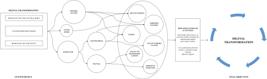
The findings related to system design revealed that users initially resisted adopting the new system, preferring to continue using previously established tools. However, as the system was implemented, resistance decreased and became almost imperceptible at more advanced stages. Interestingly, even when the system was considered successful, easy, and intuitive, some users still preferred other software. This confirms Lapointe and Rivard’s (2005) view that the object of resistance can shift as implementation progresses - from an initial focus on technical issues to a later emphasis on more politicized concerns. The analysis of system design and the reactive mindset (Rumelt, 1995; Venson et al., 2024) suggests that resistance to the system may not lie solely in its design, but also in users’ personal factors.
The study also examined the interaction dimension from both sociotechnical and political perspectives. The findings confirmed that, in the sociotechnical variant, resistance manifested through the lack of a planning culture and through myopia. The former was frequently mentioned as one of the main sources of resistance, emphasizing that the obstacle lay not in the software itself but in the lack of organizational culture. The latter was identified particularly in the perception of the system as an important tool for integrating the procurement sector and requesters, whose relevance to the new governance paradigm had not yet been fully understood.
The findings related to the redistribution of responsibilities indicated that the implementation of the new system prompted resistance among users due to the assignment of tasks that had previously been considered operational. This reveals a negative perception of the new roles, linked to a reaction to changes in work routines, which were perceived as a threat to the status quo of organizational responsibilities.
In the political dimension, resistance was observed as a reaction to regulatory imposition. The data suggest that the legal norm mandating the implementation of the new system compelled users to meet deadlines without offering them alternatives, due to the regulatory structure of public administration. Resistance to regulatory imposition, therefore, although typical of the public sector, proved significant in the research context given the mandatory nature of the new system’s implementation.
The findings also indicated that the system’s implementation brought about a shift in power relations within the organization, particularly in the procurement sectors. Previously viewed as responsible for operational functions, these sectors came to be perceived as more strategic as the new system positioned them as planners, expanding their influence over organizational decision-making.
As argued by Markus (1983), resistance need not be understood as something negative; on the contrary, it can serve as a warning sign, indicating that changes in the system may generate organizational dysfunctions. The study confirms this view by showing that the implementation of an information system can indeed alter power relations within the organization (Scott, 1990).
It is also important to emphasize that resistance should not be interpreted as a mere obstacle to be removed, but as an indicator of organizational tensions that need to be understood and managed. Digital transformation programs often fail less due to technological shortcomings and more because of underestimation of the cultural and subjective impacts that accompany change.
Therefore, the successful implementation of new systems depends not only on their technical feasibility but also on the organization’s ability to conduct structured change processes with active listening, ongoing training, and alignment between the system’s objectives and the realities of everyday work.
5. DISCUSSION OF RESULTS
The analysis of resistance to digital transformation in the public sector, through the study of the PGC System at the Ministry of Economy (ME) and Ufes, reveals that personal factors were decisive in the initial rejection of the new system. This type of resistance, far from being irrational, manifests as an adaptive response to the dissonance generated by organizational change (Maurer, 1996; Rumelt, 1995). The reactive mindset, for example, stemmed from the perception that the system would disrupt established practices and require restructurings that civil servants were unwilling to undertake. This conservative stance aligns with the literature, which highlights individuals’ tendency to preserve already consolidated cognitive structures, even in the face of innovations that promise objective gains (Barr et al., 1992; Krüger, 1996; Zeffane, 1996). In addition, strategic myopia - understood as the inability to envision the future benefits of structural change - also stood out as a significant barrier (Paletta & Moreiro-González, 2020).
Regarding system design, although the PGC System was technically considered intuitive and functional, resistance to its adoption was observed among users who preferred to continue using older tools. This shows that even when a technology demonstrates technical quality, its acceptance depends on a range of symbolic, emotional, and relational elements (Figueiredo et al., 2022; Lapointe & Rivard, 2005). Prior familiarity with legacy systems and the trust built over time in these tools can hinder migration to new platforms, prompting a form of resistance that, although subtle, is structural. Rumelt (1995) had already warned that change, even when necessary, entails subjective costs that cannot be ignored - especially when future gains are not perceived as tangible by users in the present. In addition, as Kusmaryanto and Santoso (2025) suggest, resistance may also intensify in response to usability issues and barriers arising from system architecture.
Another critical point concerns how users interpreted the mandatory nature of the implementation. Regulatory imposition - a common practice in public administration - elicited adverse reactions from civil servants, who viewed the measure as a form of control rather than an opportunity for innovation (Figueiredo et al., 2022; Paletta & Moreiro-González, 2020). This reinforces the idea that institutionalized resistance arises not only from the technology itself but also from how it is communicated, implemented, and incorporated into organizational routines. The absence of local support and of channels for active listening exacerbates this situation, turning the regulation into yet another factor widening the gap between top management’s objectives and operational reality. As emphasized by Strebel (1994) and Nemeth (1997), deeply rooted values and collective beliefs can act as effective barriers to change, requiring coordinated mediation and leadership efforts.
Finally, the results indicate that digital transformation in the Brazilian public sector requires far more than well-designed systems. It calls for a profound organizational change process involving the reconfiguration of values, practices, and mindsets (Kusmaryanto & Santoso, 2025; Venson et al., 2024). The resistance observed in the analyzed cases reflects a broader context of low digital maturity in public organizations, associated with a shortage of strategic leadership, high team turnover, and inflexible regulatory structures. Digital transformation, therefore, is not merely a technical matter but also a political and symbolic one - requiring integration between technological objectives and human capabilities, as well as governance committed to ensuring continuity of action even amid the tensions that can naturally emerge in contexts of change (Figueiredo et al., 2022). Markus (1983) warns that understanding and managing resistance are fundamental elements for the success of any institutional digitalization process.
6. FINAL CONSIDERATIONS
This study has shown that resistance to digital transformation in the public sector does not stem solely from the introduction of new technologies but materializes as a multidimensional phenomenon deeply rooted in personal, structural, and institutional factors. Although the PGC System was designed with a focus on usability and process integration, the resistance observed in the agencies analyzed - ME and Ufes - proved to reflect deeper tensions between the logic of digital innovation and the historical operating patterns of public bureaucracy. Such tensions manifested in the form of a reactive mindset, strategic myopia, attachment to embedded routines, absence of a planning culture, and resistance to the redistribution of power, as discussed by both classical and recent authors (Figueiredo et al., 2022; Klein & Sorra, 1996; Markus, 1983; Rumelt, 1995; Scott, 1990; Venson et al., 2024).
Among the main conclusions of this research, three stand out. The first is that even when an information system is evaluated as intuitive and interactive, it may still face user resistance. In the case of the PGC System, although it was considered intuitive, there was rejection, especially during the initial implementation phase. The second conclusion indicates that resistance was predominantly related to internal factors (personal factors), with little influence from external ones (system design). Resistance was associated with personal and interactive characteristics and, more subtly, with design. The third conclusion reinforces that digital transformation is more closely linked to a shift in strategic mindset than to technology itself, indicating that a mere technological update is not sufficient for digital transformation, which involves new ways of thinking about how products and services are delivered.
The study makes a theoretical contribution by demonstrating that resistance is not a passive obstacle but an active signal of misalignment between the objectives of digital transformation and the institutional reality in which it unfolds. The analysis revealed that even systems evaluated as intuitive and technically efficient may face rejection if not accompanied by active listening, conflict mediation, and continuing education processes, as well as support from top management. Furthermore, the analytical model adopted - based on the dimensions “personal factors,” “system design,” and “interaction” - proved useful not only for mapping categories of resistance but also for understanding how these factors interrelate at different stages of technological implementation.
Resistance can therefore be interpreted less as an individual “failure to adhere” and more as an expression of the cultural and political dimensions of digital transformation: it entails organizational reconfigurations (structures, processes, roles, and competencies) and does not generate public value until it achieves alignment among rationales, objects, processes, and results within cycles of experimentation and co-production. Such an approach, however, tends to clash with bureaucratic routines, risk norms, and deeply rooted professional identities (Mergel et al., 2019). In this context, it is worth recalling Wilson and Mergel’s (2022) argument that digital transformation is not limited to technology but involves cultural and political aspects, such as building legitimacy, overcoming resistance, and creating narratives that can give meaning to the changes implemented within the organization.
From a practical standpoint, the findings suggest that digital transformation programs in public organizations should be planned with a more systemic approach, taking into account not only the technical infrastructure but also the cultural, political, and emotional elements that shape user behavior. Regulatory imposition, for instance, though necessary in certain administrative contexts, must be accompanied by participatory processes and context-sensitive communication strategies. Otherwise, there is a risk of reinforcing patterns of silent resistance and low user engagement, as demonstrated in the cases analyzed.
As a limitation of this study, it should be noted that the data were obtained from only two public institutions, which restricts the generalization of the results. In addition, predominantly focusing on the perspective of managers may have limited the analysis’s ability to capture the nuances of end users’ experiences. Therefore, future research is recommended to deepen the analysis of resistance from the viewpoint of public servants themselves, taking into account regional, organizational, and functional differences.
Finally, it is proposed that future studies investigate: (i) how different governance models influence the adoption of information systems in the public sector; (ii) which training and engagement strategies are most effective in overcoming structural resistance; and (iii) how the digital maturity of public institutions can be assessed and strengthened over time.
Digital transformation in the Brazilian public sector ultimately depends on organizations’ ability to foster not only technical innovation but also a genuine cultural and strategic change.
-
Peer review report:
Reviewers:The reviewers did not authorize the disclosure of their identities.The peer review report is available at this link Publons
-
[Translated version] Note: All quotes in English translated by this article’s translator.
ACKNOWLEDGMENT
The authors thank Professor Kenyth Alves de Freitas, Ph.D., for the valuable methodological contributions that made this work possible.
DATA AVAILABILITY
All data supporting the findings of this study are available from the corresponding author, Elivaldo Filho Godinho Cavalcante, upon request. The dataset is not publicly available because it contains information that could compromise the privacy of research participants.
References
-
Abdelaal, M. H. I., Khater, M., & Zaki, M. (2018). Digital business transformation and strategy: what do we know so far (Working Paper). University of Cambridge. https://doi.org/10.13140/RG.2.2.36492.62086
» https://doi.org/10.13140/RG.2.2.36492.62086 -
AlMaazmi, A., Piya, S., & Araci, Z. C. (2024). Exploring the critical success factors influencing the outcome of digital transformation initiatives in government organizations. Systems, 12(12), 524. https://doi.org/10.3390/systems12120524
» https://doi.org/10.3390/systems12120524 -
Ali, M., Zhou, L., Miller, L., & Ieromonachou, P. (2016). User resistance in IT: a literature review. International Journal of Information Management, 36(1), 35-43. https://doi.org/10.1016/j.ijinfomgt.2015.09.007
» https://doi.org/10.1016/j.ijinfomgt.2015.09.007 -
Almatrodi, I., Li, F., & Alojail, M. (2023). Organizational resistance to automation success: how status quo bias influences organizational resistance to an automated workflow system in a public organization. Systems, 11(4), 191. https://doi.org/10.3390/systems11040191
» https://doi.org/10.3390/systems11040191 -
Alvarenga, A. R. C. F. (2019). Transformação digital na administração pública: estudo de caso [Dissertação de Mestrado. Instituto Universitário de Lisboa]. Repositório do Iscte. https://repositorio.iscte-iul.pt/handle/10071/20205
» https://repositorio.iscte-iul.pt/handle/10071/20205 - Ansoff, H. I. (1988). The new corporate strategy John Wiley & Sons.
-
Ashaye, O. R., & Irani, Z. (2019). The role of stakeholders in the effective use of e-government resources in public services. International Journal of Information Management, 49, 253-270. https://doi.org/10.1016/j.ijinfomgt.2019.05.016
» https://doi.org/10.1016/j.ijinfomgt.2019.05.016 -
Barr, P. S., Stimpert, J. L., & Huff, A. S. (1992). Cognitive change, strategic action and organizational renewal. Strategic Management Journal, 13, 15-36. https://www.jstor.org/stable/2486350
» https://www.jstor.org/stable/2486350 -
Barratt, M., Choi, T. Y., & Li, M. (2011). Qualitative case studies in operations management: trends, research outcomes, and future research implications. Journal of Operations Management, 29(4), 329-342. https://doi.org/10.1016/j.jom.2010.06.002
» https://doi.org/10.1016/j.jom.2010.06.002 -
Beer, M., & Eisenstat, R. A. (1996). Developing an organization capable of implementing strategy and learning. Human Relations, 49(5), 597-617. https://doi.org/10.1177/001872679604900504
» https://doi.org/10.1177/001872679604900504 -
Benavides, L. M. C., Arias, J. A. T., Serna, M. D. A., Bedoya, J. W. B., & Burgos, D. (2020). Digital Transformation in Higher Education Institutions: A Systematic Literature Review. Sensors, 20(11), 3291. https://doi.org/10.3390/s20113291
» https://doi.org/10.3390/s20113291 -
Bygstad, B., & Hanseth, O. (2018). Transforming digital infrastructures through platformization (Research Papers, n. 74). Association for Information Systems. https://aisel.aisnet.org/ecis2018_rp/74
» https://aisel.aisnet.org/ecis2018_rp/74 -
Cieslak, V., & Valor, C. (2025). Moving beyond conventional resistance and resistors: An integrative review of employee resistance to digital transformation. Cogent Business & Management, 12(1), 2442550. https://doi.org/10.1080/23311975.2024.2442550
» https://doi.org/10.1080/23311975.2024.2442550 - Corbin, J. M., & Strauss, A. C. (2014). Basics of qualitative research: techniques and procedures for developing grounded theory (4th ed.). Sage Publications.
-
Daud, N. M. (2023). The impact of transformation in higher education: introductory of new technology, is it good or bad? Journal of Information and Organizational Sciences, 47(2), 355-373. https://doi.org/10.31341/jios.47.2.6
» https://doi.org/10.31341/jios.47.2.6 -
Decreto nº 10.947, de 25 de janeiro de 2022 (2022). Regulamenta o inciso VII do caput do art. 12 da Lei nº 14.133, de 1º de abril de 2021, para dispor sobre o plano de contratações anual e instituir o Sistema de Planejamento e Gerenciamento de Contratações no âmbito da administração pública federal direta, autárquica e fundacional. https://in.gov.br/en/web/dou/-/decreto-n-10.947-de-25-de-janeiro-de-2022-376059032
» https://in.gov.br/en/web/dou/-/decreto-n-10.947-de-25-de-janeiro-de-2022-376059032 -
Doppler, K. (2004). Managing change successfully: core questions, issues, and strategies. In J. Boonstra (Ed.), Dynamics of organizational change and learning John Wiley & Sons. https://doi.org/10.1002/9780470753408.ch1
» https://doi.org/10.1002/9780470753408.ch1 - Edelmann, N., Haug, N., & Mergel, I. (2023). Digital transformation in the public sector. In F. Gallouj, C. Gallouj, M.-C. Monnoyer, L. Rubalcaba & M. Scheuer (Eds.), Elgar Encyclopedia of Services Edward Elgar Publishing.
-
Eisenhardt, K. M. (1989). Building theories from case study research. The Academy of Management Review, 14(4), 532-550. https://doi.org/10.2307/258557
» https://doi.org/10.2307/258557 -
Escobar, F., Almeida, W. H. C., & Varajão, J. (2023). Digital transformation success in the public sector: A systematic literature review of cases, processes, and success factors. Information Polity, 28(1), 61-81. https://doi.org/10.3233/IP-211518
» https://doi.org/10.3233/IP-211518 -
Figueiredo, R. M. D. C., Gardenghi, J. L. C., Santos, L. D. S., Furtado, R. A., Barbosa, R. F. P., Boaventura, L. U., Modesto, A. S. C., & Martins, L. B. (2022). The design of a public service cost model tool to evaluate digital transformation in Brazilian government. In Proceedings of the 24º International Conference on Enterprise Information Systems, Setúbal, Portugal. https://doi.org/10.5220/0011108900003179
» https://doi.org/10.5220/0011108900003179 -
Fitzgerald, M., Kruschwitz, N., Bonnet, D., & Welch, M. (2014). Embracing digital technology: a new strategic imperative. MIT Sloan Management Review, 55(2), 1-12. https://emergenceweb.com/blog/wp-content/uploads/2013/10/embracing-digital-technology.pdf
» https://emergenceweb.com/blog/wp-content/uploads/2013/10/embracing-digital-technology.pdf -
Gioia, D. A., Corley, K. G., & Hamilton, A. L. (2013). Seeking qualitative rigor in inductive research: notes on the Gioia methodology. Organizational Research Methods, 16(1), 15-31. https://doi.org/10.1177/1094428112452151
» https://doi.org/10.1177/1094428112452151 -
Gong, C., & Ribiere, V. (2021). Developing a unified definition of digital transformation. Technovation, 102, 102217. https://doi.org/10.1016/j.technovation.2020.102217
» https://doi.org/10.1016/j.technovation.2020.102217 - Gravenhorst, K. B., & In’tVeld, R. (2004). Power and collaboration: methodologies for working together in change. In J. Boonstra (Ed.), Dynamics of organizational change and learning (pp. 317-342). John Wiley & Sons.
-
Hanelt, A., Bohnsack, R., Marz, D., & Marante, C. A. (2021). A systematic review of the literature on digital transformation: Insights and implications for strategy and organizational change. Journal of Management Studies, 58(5), 1159-1197. https://doi.org/10.1111/joms.12639
» https://doi.org/10.1111/joms.12639 -
Hannan, M. T., & Freeman, J. (1984). Structural inertia and organizational change. American Sociological Review, 49(2), 149-164. https://doi.org/10.2307/2095567
» https://doi.org/10.2307/2095567 - Hess, T., Matt, C., Benlian, A., & Wiesböck, F. (2016). Options for formulating a digital transformation strategy. MIS Quarterly Executive, 15(2), 123-139.
-
Hulst, M. van, & Visser, E. L. (2025). Abductive analysis in qualitative research. Public Administration Review, 85(2), 567-580. https://doi.org/10.1111/puar.13856
» https://doi.org/10.1111/puar.13856 -
Hussan, R. H., & Hussan, N. H. (2023). A review of enhancing government offices experience and operational efficiency of knowledge management systems depending on information technologies. Mustansiriyah Journal of Pure and Applied Sciences, 1(3), 134-147. https://doi.org/10.47831/mjpas.v1i3.56
» https://doi.org/10.47831/mjpas.v1i3.56 -
Janssen, M., & Estevez, E. (2013). Lean government and platform-based governance - doing more with less. Government Information Quarterly, 30(Suppl. 1), S1-S8. https://doi.org/10.1016/j.giq.2012.11.003
» https://doi.org/10.1016/j.giq.2012.11.003 -
Jiang, J. J., Muhanna, W. A., & Klein, G. (2000). User resistance and strategies for promoting acceptance across system types. Information Management, 37(1), 25-36. https://doi.org/10.1016/S0378-7206(99)00032-4
» https://doi.org/10.1016/S0378-7206(99)00032-4 - Joia, L. A. (2006, August). Lessons learnt from an unsuccessful G2G endeavor in Brazil. In Anales de la 12º Conferencia de las Américas sobre Sistemas de la Información, Acapulco, México.
-
Joia, L. A., Macêdo, D. G., & Oliveira, L. G. (2014). Antecedents of resistance to enterprise systems: The IT leadership perspective. Journal of High Technology Management Research, 25(2), 188-200. https://doi.org/10.1016/j.hitech.2014.07.007
» https://doi.org/10.1016/j.hitech.2014.07.007 -
Joshi, K. (1991). A model of users’ perspective on change: the case of information system technology implementation. MIS Quarterly, 15(2), 229-242. https://doi.org/10.2307/249384
» https://doi.org/10.2307/249384 -
Kim, H.-W., & Kankanhalli, A. (2009). Investigating user resistance to information system implementation: status quo bias perspective. MIS Quarterly, 33(3), 567-582. https://doi.org/10.2307/20650309
» https://doi.org/10.2307/20650309 -
Kim, J. S., Hardin, A., & Lee, S. (2023). Factors influencing resistance to hospitality information system change. Journal of Hospitality and Tourism Insights, 6(5), 1926-1945. https://doi.org/10.1108/JHTI-04-2022-0129
» https://doi.org/10.1108/JHTI-04-2022-0129 -
Klein, K. J., & Sorra, J. S. (1996). The challenge of innovation implementation. Academy of Management Review, 21(4), 1055-1080. https://doi.org/10.2307/259164
» https://doi.org/10.2307/259164 -
Kling, R. (1980). Social analyses of computing: theoretical perspective in recent empirical research. ACM Computing Surveys (CSUR), 12(1), 61-110. https://doi.org/10.1145/356802.356806
» https://doi.org/10.1145/356802.356806 - Krüger, W. (1996). Implementation: the core task of change management. CEMS Business Review, 1, 77-96.
-
Kusmaryanto, S., & Santoso, C. B. (2025). A scoping review of middle managers in the digital transformation era in public sector organizations: Are they still needed? Cogent Business & Management, 12(1), 2461734. https://doi.org/10.1080/23311975.2025.2461734
» https://doi.org/10.1080/23311975.2025.2461734 -
Lafioune, N., Desmarest, A., Poirier, E. A., & St-Jacques, M. (2023). Digital transformation in municipalities for the planning, delivery, use and management of infrastructure assets: strategic and organizational framework. Sustainable Futures, 6, 100119. https://doi.org/10.1016/j.sftr.2023.100119
» https://doi.org/10.1016/j.sftr.2023.100119 -
Lapointe, L., & Rivard, S. (2005). A multilevel model of resistance to information technology implementation. MIS Quarterly, 29(3), 461-491. https://doi.org/10.2307/25148692
» https://doi.org/10.2307/25148692 -
Lee, H. (2020). Home IoT resistance: extended privacy and vulnerability perspective. Telematics and Informatics, 49, 101377. https://doi.org/10.1016/j.tele.2020.101377
» https://doi.org/10.1016/j.tele.2020.101377 -
Marakas, G. M., & Hornik, S. (1996). Passive resistance misuse overt support and covert recalcitrance in IS implementation. European Journal of Information System, 5(3), 208-219, 1996. https://doi.org/10.1057/ejis.1996.26
» https://doi.org/10.1057/ejis.1996.26 -
Markus, M. L. (1983). Power, politics, and MIS implementation. Communication of ACM, 26(6), 430-444. https://doi.org/10.1145/358141.358148
» https://doi.org/10.1145/358141.358148 -
Matt, C., Hess, T., & Benlian, A. (2015). Digital transformation strategies. Business & Information Systems Engineering, 57(5), 339-343. https://doi.org/10.1007/s12599-015-0401-5
» https://doi.org/10.1007/s12599-015-0401-5 -
Maurer, R. (1996). Transforming resistance. Training & Development, 50(12), 20-23. https://assets.td.org/m/7773e318b788cddd/original/Transforming-resistance.pdf
» https://assets.td.org/m/7773e318b788cddd/original/Transforming-resistance.pdf -
Mergel, I., Edelmann, N., & Haug, N. (2019). Defining digital transformation: results from expert interviews. Government Information Quarterly, 36(4), 101385. https://doi.org/10.1016/j.giq.2019.06.002
» https://doi.org/10.1016/j.giq.2019.06.002 - Miles, M., & Huberman, M. (1994). Qualitative data analysis: an expanded source book Sage Publications.
-
Moraes, G. H. S. M. de, Pelegrini, G. C., Marchi, L. P. de, Pinheiro, G. T., & Cappellozza, A. (2022). Antecedents of big data analytics adoption: An analysis with future managers in a developing country. The Bottom Line, 35(2/3), 73-89. https://doi.org/10.1108/BL-06-2021-0068
» https://doi.org/10.1108/BL-06-2021-0068 - Mumford, E., & Banks, O. (1967). The computer and the clerk Routledge.
-
Nemeth, C. J. (1997). Managing innovation: When less is more. California Management Review, 40(1), 59-74. https://doi.org/10.2307/41165922
» https://doi.org/10.2307/41165922 -
Nograšek, J., & Vintar, M. (2014). E-government and organisational transformation of government: black box revisited? Government Information Quarterly, 31(1), 108-118. https://doi.org/10.1016/j.giq.2013.07.006
» https://doi.org/10.1016/j.giq.2013.07.006 -
Omar, A., Weerakkody, V., & Daowd, A. (2020). Studying transformational government: a review of the existing methodological approaches and future outlook. Government Information Quarterly, 37(2), 101458. https://doi.org/10.1016/j.giq.2020.101458
» https://doi.org/10.1016/j.giq.2020.101458 -
Omar, A., Weerakkody, V., & Sivarajah, U. (2017). Digitally enabled service transformation in UK public sector: a case analysis of universal credit. International Journal of Information Management, 37(4), 350-356. https://doi.org/10.1016/j.ijinfomgt.2017.04.001
» https://doi.org/10.1016/j.ijinfomgt.2017.04.001 -
Paletta, F. C., & Moreiro-González, J. A. (2020). O reflexo da transformação digital nas atividades e conhecimentos requeridos nos concursos públicos para profissionais da Informação no Brasil. Informação & Sociedade: Estudos, 30(2), 1-30. https://doi.org/10.22478/ufpb.1809-4783.2020v30n2.50460
» https://doi.org/10.22478/ufpb.1809-4783.2020v30n2.50460 -
Pardo del Val, M., & Martínez Fuentes, C. (2003). Resistance to change: a literature review and empirical study. Management Decision, 41(2), 148-155. https://doi.org/10.1108/00251740310457597
» https://doi.org/10.1108/00251740310457597 -
Portal de Compras do Governo Federal. (n.d.). Conheça o Compras.gov.br https://www.gov.br/compras/pt-br/sistemas/conheca-o-compras
» https://www.gov.br/compras/pt-br/sistemas/conheca-o-compras -
Rahman, Md. H., Ahmad, A. B., & Sawal, M. Z. H. B. M. (2024). The influence of personal factors on resistance to technology adoption in university libraries in Bangladesh. Information Development https://doi.org/10.1177/02666669241257196
» https://doi.org/10.1177/02666669241257196 -
Reichers, A. E., Wanous, J. P., & Austin, J. T. (1997). Understanding and managing cynicism about organizational change. Academy of Management Executive, 11(1), 48-59. https://doi.org/10.5465/ame.1997.9707100659
» https://doi.org/10.5465/ame.1997.9707100659 -
Rivard, S., & Lapointe, L. (2012). Information technology implementers’ responses to user resistance: nature and effects. MIS Quarterly, 36(3), 897-920. https://doi.org/10.2307/41703485
» https://doi.org/10.2307/41703485 - Rogers, D. L. (2017). Transformação digital: repensando o seu negócio para a era digital Autêntica Business.
-
Rose, J., Persson, J. S., & Heeager, L. T. (2015). How e-Government managers prioritise rival value positions: The efficiency imperative. Information Polity, 20(1), 35-59. https://doi.org/10.3233/IP-150353
» https://doi.org/10.3233/IP-150353 - Rumelt, R. P. (1995). Inertia and transformation. In C. A. Montgomery (Ed.), Resource-based and evolutionary theories of the firm: towards a synthesis (pp. 101-132). Springer Science Business.
-
Sacks, C. H., Bellisimo, Y., & Mergendoller, J. (1993). Attitudes toward computers and computer use: the issue of gender. Journal of Research on Computing Education, 26(2), 257-269. https://doi.org/10.1080/08886504.1993.10782090
» https://doi.org/10.1080/08886504.1993.10782090 -
Santos, L. G. M. (2023, Springer). Dynamic capabilities and digital transformation in public sector: Evidence from Brazilian case study. In I. Lindgren, C. G. Alonso, M. Janssen, H. J. Scholl, E. Tambouris & G. Viale (Eds.), Procedings of 22nd IFIP WG 8.5 International Conference, EGOV 2023 (Lecture Notes in Computer Science, vol.14130, pp. 365-380). Springer Nature Switzerland. https://doi.org/10.1007/978-3-031-41138-0_23
» https://doi.org/10.1007/978-3-031-41138-0_23 -
Sarwar, M. I., Abbas, Q., Alyas, T., Alzahrani, A., Alghamdi, T., & Alsaawy, Y. (2023). Digital transformation of public sector governance with IT service management: A pilot study. IEEE Access, 11, 6489-6510. https://doi.org/10.1109/ACCESS.2023.3237550
» https://doi.org/10.1109/ACCESS.2023.3237550 - Scott, J. C. (1990). Domination and the arts of resistance: Hidden transcripts Yale University Press.
- Singh, A., & Hess, T. (2019). How chief digital officers promote the digital transformation of their companies. In K. Hedges (Ed.), Strategic information management (pp. 202-220). Clanrye International.
-
Starbuck, W. H., Greve, A., & Hedberg, B. L. T. (1978). Responding to crisis. Journal of Business Administration, 9(2), 111-137.https://ssrn.com/abstract=2708264
» https://ssrn.com/abstract=2708264 -
Stock, J. R., & Boyer, S. L. (2009). Developing a consensus definition of supply chain management: a qualitative study. International Journal of Physical Distribution & Logistics Management, 39(8), 690-711. https://doi.org/10.1108/09600030910996323
» https://doi.org/10.1108/09600030910996323 -
Strebel, P. (1994). Choosing the right change path. California Management Review, 36(2), 29-51. https://doi.org/10.2307/41165743
» https://doi.org/10.2307/41165743 -
Timmermans, S., & Tavory, I. (2012). Theory construction in qualitative research: From grounded theory to abductive analysis. Sociological Theory, 30(3), 167-186. https://doi.org/10.1177/0735275112457914
» https://doi.org/10.1177/0735275112457914 -
Trenerry, B., Chng, S., Wang, Y., Suhaila, Z. S., Lim, S. S., Lu, H. Y., & Oh, P. H. (2021). Preparing workplaces for digital transformation: An integrative review and framework of multi-level factors. Frontiers in Psychology, 12, Article 620766. https://doi.org/10.3389/fpsyg.2021.620766
» https://doi.org/10.3389/fpsyg.2021.620766 -
Venson, E., Figueiredo, R. M. da C., & Canedo, E. D. (2024). Leveraging a startup-based approach for digital transformation in the public sector: A case study of Brazil’s startup gov.br program. Government Information Quarterly, 41(3), 101943. https://doi.org/10.1016/j.giq.2024.101943
» https://doi.org/10.1016/j.giq.2024.101943 -
Vial, G. (2019). Understanding digital transformation: a review and a research agenda. Journal of Strategic Information Systems, 28(2), 118-144. https://doi.org/10.1016/j.jsis.2019.01.003
» https://doi.org/10.1016/j.jsis.2019.01.003 -
Waddell, D., & Sohal, A. S. (1998). Resistance: A constructive tool for change management. Management Decision, 36(8), 543-548. https://doi.org/10.1108/00251749810232628
» https://doi.org/10.1108/00251749810232628 - Weerakkody, V., Janssen, M., & Dwivedi, Y. K. (2011). Transformational change and business process reengineering (BPR): lessons from the British and Dutch public sector. Government Information Quarterly, 28(3), 320-328.
-
Wilson, C., & Mergel, I. (2022). Overcoming barriers to digital government: Mapping the strategies of digital champions. Government Information Quarterly, 39(2), 101681. https://doi.org/10.1016/j.giq.2022.101681
» https://doi.org/10.1016/j.giq.2022.101681 - Yang, J. (2023). Design mechanism of precision marketing planning platform based on user data mining. In Proceedings of the 5º Eurasia Conference on IOT, Communication and Engineering, Yunlin, Taiwan.
- Yin, R. K. (2014). Estudo de caso: planejamento e métodos (5a ed.). Bookman.
- Zaltman, G. (1977). Strategies for planned change Wiley.
-
Zeffane, R. (1996). Dynamics of strategic change: Critical issues in fostering positive organizational change. Leadership & Organization Development Journal, 17(7), 36-43. https://doi.org/10.1108/01437739610148376
» https://doi.org/10.1108/01437739610148376 - Zheng, Z. (2023, September). Exploration of computer information management system design and application. In Proceedings of the 3º Guangdong-Hong Kong-Macao Greater Bay Area Artificial Intelligence and Big Data Forum, Guangzhou, China.
-
Editor-in-chief:
Alketa Peci (Fundação Getulio Vargas, Rio de Janeiro / RJ - Brazil) https://orcid.org/0000-0002-0488-1744
-
Associate editor:
Gabriela Spanghero Lotta (Fundação Getulio Vargas, São Paulo / SP - Brazil) https://orcid.org/0000-0003-2801-1628

 Source: Elaborated by the authors.
 Source: Elaborated by the authors.
 Source: Elaborated by the authors.