 Environmental dismantling in Brazil: advances and knowledge gaps
Abstract
Scientific literature demonstrates that a process of dismantling environmental policy was observed in Brazil during the period from 2016 to 2022. This scenario involved the reduction of state capacities, public participation and transparency, political control and militarization of environmental institutions, an increase in land grabbing, and illegal mining and violence in rural territories, among other changes. This article aims to map the advances, limitations, and demands of scientific knowledge concerning this political phenomenon. It consists of a scope review of environmental dismantling in Brazil. Thus, we analyzed 83 scientific papers that address the theme, published between 2016 and 2022. The study identified the most investigated topics regarding environmental dismantling, the theoretical and methodological approaches used by research, and the areas of progress and debate that persist for public administration and investigators of the political phenomenon. This scope review has a critical feature, covering some recommendations for scientific literature. For example, we highly suggest the theoretical improvement of environmental policy dismantling as a phenomenon, considering the Brazilian experience and the development of strategies for protecting and enforcing public institutions in case of future dismantling scenarios.
Keywords:
backsliding; environment; policy; scope review
Resumo
A literatura científica demonstra que, durante a conjuntura de 2016 a 2022, constatou-se um processo de desmonte da política ambiental no Brasil. Nesse cenário, verificou-se o esvaziamento das capacidades estatais; a redução da participação e transparência pública; o aparelhamento e militarização de órgãos ambientais; o aumento da invasão de terras, mineração ilegal e violência no campo, dentre outras mudanças. Com o objetivo de mapear os avanços, as limitações e demandas no conhecimento acerca desse fenômeno político, este artigo consiste em uma revisão de escopo sobre o desmonte ambiental brasileiro, fundamentado na análise de 83 artigos científicos que tratam dessa temática, publicados entre 2016 e 2022. Ao final da pesquisa, foi possível constatar: os tópicos mais investigados sobre desmonte ambiental; as abordagens teóricas e metodológicas adotadas pelas pesquisas; os eixos de avanço e os questionamentos que persistem para administração pública e estudiosos do fenômeno político. Esta revisão de escopo tem caráter crítico e destaca como principais recomendações à produção acadêmica o amadurecimento teórico do desmonte ambiental enquanto fenômeno, considerando a experiência brasileira; e a elaboração de estratégias de proteção e fortalecimento das instituições públicas face a possíveis futuros cenários de desmantelamento.
Palavras-chave:
retrocesso; meio ambiente; política; revisão de escopo
Resumen
La literatura científica demuestra que se observó un proceso de desmantelamiento de la política ambiental en Brasil durante la coyuntura 2016-2022. En ese escenario se observó la reducción de las capacidades del Estado, de la participación y de la transparencia pública; el control político y la militarización de las instituciones ambientales; el aumento de la invasión de tierras, la minería ilegal y la violencia en los territorios rurales, entre otros cambios. Este artículo tiene como objetivo mapear los avances, limitaciones y demandas del conocimiento científico sobre ese fenómeno político. Consiste en una revisión de alcance sobre el desmantelamiento ambiental en Brasil. Así, se analizaron 83 artículos científicos que abordan el tema, publicados entre 2016 y 2022. Al final, este estudio identificó los temas más investigados relacionados con el desmantelamiento ambiental, los aspectos teóricos y metodológicos de análisis utilizados por la investigación, y las áreas de avance y debate que persisten para la administración pública y los investigadores del fenómeno político. Esta revisión de alcance tiene un carácter crítico, y destaca como principales recomendaciones para la producción académica la mejora teórica del desmantelamiento ambiental como fenómeno, considerando la experiencia brasileña; y el desarrollo de estrategias de protección y fortalecimiento de las instituciones públicas, ante posibles futuros escenarios de desmantelamiento.
Palabras clave:
desregulación; medio ambiente; política; revisión de alcance
1. INTRODUCTION
Dismantling corresponds to a process of continuous and wide-ranging changes in the spaces of public policies implementation. In Brazil, there is evidence that this phenomenon occurred in the areas of health, education, social assistance, food security and culture (Guenzburger, 2017; Macedo, 2022; Machado, França & Rangel, 2021). In the environmental realm, dismantling gained power and expressiveness during the administration of President Jair Bolsonaro, although a series of socio-environmental setbacks had been observed in prior years.
One of the characteristics of environmental dismantling is that it took place in a context of democratic regression. Between 2016 and 2022, there was an extinction or weakening of social participation in public institutions, persecution of opposition leaders, changes in electoral rules, reduction of the bureaucratic workforce, rigging of bodies, administrative paralysis, and simplification of procedures and rules (Gomide, Silva & Leopoldi, 2023; Milhorance, 2022).
In response to such changes, a new object of study has emerged in the Brazilian scientific literature. The topic of “dismantling” has appeared with increasing frequency in scientific articles, reports and studies by civil society organizations. However, it seems to differ from other setbacks previously experienced by the environmental agenda, which is characterized by advances, but also by obstacles and contradictions throughout its institutionalization (Lima, 2011). Since the political changes termed “dismantling” have revealed peculiarities that distinguish them from previous setbacks in environmental management, it is believed to be essential to understand what dismantling appears to be, after all, in the Brazilian case; and how it has been analyzed as a political phenomenon and object of study.
In order to answer these questions, in addition to identifying the advances, challenges and research demands on the subject, a mapping of the literature on the dismantling of environmental policy in Brazil was carried out through a scoping review. The article is organized as follows, in addition to the introduction: 1) a theoretical discussion, aiming to justify this study and point out the limitations of Bauer, Jordan, Green-Pederson & Héritier (2012) on the dismantling of public policies; 2) the methodological path chosen to analyze scientific articles; 3) discussion of the advances, limitations and perspectives for future research on environmental dismantling; and 4) final considerations.
2. DISMANTLING BEYOND BAUER’S PERSPECTIVE
The dismantling of public policies has been investigated in response to a specific conjuncture, but its theoretical framework demonstrates that it is still under construction, given the peculiarities of the Brazilian context. One evidence of this is the lack of consensus regarding when the environmental dismantling process began. Scholars point to some inflection points, such as: the Growth Acceleration Program (PAC) (Barretto Filho, 2021; Layrargues, 2018); the signing of the 2012 Forest Code (Fonseca, Lindoso & Bursztyn, 2022); and, finally, the outset of the Temer and Bolsonaro governments (Sabourin, Grisa, Niederle & Andrigueto-Filho, 2020; Santos, Menezes, Leite & Sauer, 2021). In the related literature, a question emerges: How to frame what is or is not ‘dismantling’?
In delimiting this object, some Brazilian researchers take as a starting point the definition of dismantling public policies elaborated by Bauer et al. (2012):
A change of a direct, indirect, covert or symbolic nature that decreases the number of policies operative in a given area, reducing the number of policy instruments used and/or decreasing their intensity. It may involve changes to these core elements of the policy and/or may be achieved by manipulating the capacities to implement and supervise them (p. 35).
The theoretical lens of Bauer et al. (2012), regarding policy dismantling, is supported by the theory of rational choice. In this approach, the following factors are indicated as influencing decision-making by policy makers: the socioeconomic conditions, ideologies and preferences of the actors, in addition to the reception of the dismantling by public institutions and civil society. This last aspect could potentially interfere in the strategies of elected officials, who seek to ensure their reelection (Korte & Jörgens, 2012).
Despite reflecting some elements of the Brazilian political conjuncture, there are limitations in the theoretical lens of policy dismantling. First, the resistance of bureaucrats and non-governmental actors against the dismantling of public policies in Brazil was not a decisive factor in its adjustment, in most cases. The administrative acts that made up environmental dismantling were conducted regardless of their acceptability to the Brazilian population. Secondly, an authoritarian character and the strong incidence of a neoliberal policy were already characteristic to Brazil, which is not portrayed by the aforementioned authors.
Researchers indicate other elements that typified the Brazilian dismantling, though they escape the framework of Bauer et al. (2012), such as disputes over ideas and paradigms in tenure relations (Lima, Waisbich & Serafim, 2022); violence against social movement leaders; the extinction of policies as strategies to demonstrate the power of a coalition (Niederle et al., 2022b); dominant ideologies in the political arena (Sabourin et al., 2020); and coalition politics and narratives (Milhorance, 2022). Furthermore, the analytical perspective of Bauer et al. (2012) is based on European and American experiences, without exploring the reality of Brazil. Therefore, we defend the adoption of other references to understand the context of a Latin American country, with its own social, political and economic configurations.
Furthermore, when we analyze other authors who make up the literature on public policies, we find a certain theoretical insufficiency to explain the dismantling in the Brazilian environmental agenda. For example, among Thomas Dye’s (2017) models, possibly the most appropriate to understand dismantling is the elite theory, since it served the interests of a dominant coalition. However, contrary to what the author points out in this model, the changes incorporated by the elite are not incremental when considering the case of Brazil. Environmental policies were virtually emptied or extinguished, with no reconfiguration or redirection. Thus, neither incremental modifications nor a new rationality were adopted in the administrative-operational processes, with a view to meeting the demands of society or to optimize the use of public money.
On the other hand, if we check Paul Sabatier’s (1988) Defense Coalition Model (DCM), which seeks to explain changes in public policies, we observe that it also has its limitations, when applied to environmental dismantling. Although there is a sharing of beliefs among the actors who propose the setbacks, there is not - when we study Brazil - a dynamic driven by the evolution of technical-scientific knowledge of public problems. Therefore, the policy-oriented learning of Sabatier’s (1988) model also does not apply to the Brazilian environmental dismantling.
By exploring the peculiarities of the 2016-2022 scenario, we apprehend such theoretical insufficiency on the part of authors of Political Science and Public Policy, including Bauer et al. (2012). Thus, in this scoping review, we seek to verify the adoption of other analytical approaches, in addition to the Bauerian perspective, by research on the dismantling of environmental policy in Brazil.
3. METHODOLOGY
As previously stated, the main objective of this study is to map the knowledge regarding the dismantling of Brazilian environmental policy. Thus, the research strategy was to conduct a scoping review, which follows the guidelines of the Preferred Reporting Items for Systematic Reviews and Meta-Analyses (Prisma, 2019).
The scoping review is characterized by analyzing the extent, breadth and nature of the scientific knowledge available on a given topic, identifying the findings and gaps present in the literature (Arksey & O’Malley, 2005).
The focus of the present research is scientific articles. Its survey included the Web of Science, Scopus, Google Scholar, Scientific Electronic Library Online (SciELO), Network of Scientific Journals of Latin America and the Caribbean, Spain and Portugal (Redalyc) and Capes Journal. Keywords in English and Portuguese were used, as shown in Table 1. This only represents the strategic model employed, which has been adapted in some cases. For example, the use of intersections and truncations were used only in the Web of Science, Redalyc and Google Scholar platforms, due to the high number of entries generated. In addition, synonyms for dismantling were adopted, such as “dismounting”, “flexibilization”, “deregulation” and “retrogression” in Portuguese. These terms were added to the keywords indicated in box 1: political, public, environment, environmental.

It is emphasized that the time frame used was from 2016 to 2022, as this period corresponds to a specific conjuncture of dismantling public policies in the country (Gomide et al., 2023). Thus, it is intended to know how this phenomenon was analyzed by the scientific community while it was still being experienced.
It is noteworthy that the articles were pre-selected and submitted to a strategic reading, during which it was possible to verify their relationship with the theme of environmental dismantling. The reading of the articles sought to identify, mainly, the following aspects: 1) the theoretical and methodological frameworks adopted; 2) the territorial approach; 3) the main results and arguments exposed; and 4) the gaps and demands in knowledge pointed out.
The elaboration of the literature map went through three stages: the collection of articles; their analysis, focusing on specific elements; and the evaluation of their contribution to scientific knowledge on the subject. The literature map was elaborated based on the recommendations of Creswell (2007) and was accomplished through the Illustrator program.
4. RESULTS AND DISCUSSIONS
4.1 Early characteristics
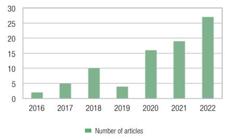
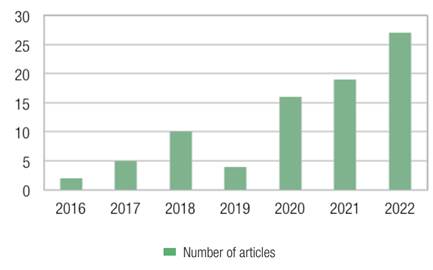
Initially, 130 scientific articles were pre-selected. However, upon in-depth reading, it was found that many treated the dismantling as a secondary object of research, that is, as a “context” for the discussion of another problem. In other cases, the occurrence of this phenomenon in the country was indicated, but without analyzing it. Thus, only 83 articles were recognized as, in fact, referring to studies on Brazilian environmental dismantling. Over the years that make up the time frame of this review, a concentration of publications was found during the Covid-19 pandemic (2020-2022), which can be explained by the intensity of the changes made in the environmental policy agenda during the Bolsonaro government. In response, the scientific community began to investigate such worsening environmental setbacks. Graph 1 shows this temporal distribution.
Most of the reviewed articles were published by Brazilian journals (44 of the 64 journals counted); collected in journals evaluated by the Coordination for the Improvement of Higher Education Personnel (Capes) with Qualis A (43 articles) and B (22 articles); or by foreign journals not evaluated by the institution, but with a JCR impact factor greater than 1.5. Regarding language, it was found that 62 articles were written in Portuguese; 20, in English; and one was written in French.
The territorial approach of the research reveals the predominance of studies on federal policy. However, two studies on environmental dismantling were identified in Minas Gerais and Goiás (Borinelli, Gallassi, Mostagi, Almeida & Costa, 2019; Ferreira, Perillo, Drumond & Rodrigues, 2020). Although they were based on the national situation, some articles emphasized the effects of dismantling in the Legal Amazon, portraying deforestation; the permissiveness of land invasion and mining; the paralysis of the Amazon Fund and the Action Plan for the Prevention and Control of Deforestation in the Legal Amazon (PPCDAm). When it comes to environmental dismantling, the Amazon was the biome most addressed by the research.
4.2 Theoretical and methodological approaches
To investigate environmental dismantling, the selected articles employed different theoretical lenses of analysis, for example, the policy dismantling of Bauer et al. (2012), which was used as a reference by 7 of the 83 articles. They aimed to explore the definition of dismantling public policies; expose the strategies of political actors, according to this approach; and, in some cases, question its limitations.
The other studies adopted different disciplines to analyze the dismantling, mainly Environmental Law, Political Ecology and Political Science, observing the integration between more than one of them. It is noteworthy that, in some research, the authors have deeply explored concepts from specific areas, such as neoliberalism and biopolitics. In these cases, it is not a question of “disciplines”, nor of “theoretical lenses”. Therefore, in this review, it was decided to call as “theoretical approaches”: the disciplines; the theoretical lens (ways of analyzing a phenomenon); and specific concepts. Thus, figure 1shows the theoretical approaches used by the Brazilian scientific community to describe and interpret the dismantling.

As shown in Figure 1, most of the selected articles did not use policy dismantling. Some, in turn, adopted it, even in conjunction with other approaches (it is interesting to observe the intersection between them). In addition, it was verified as a strategy commonly adopted by the authors the exposition of timelines of environmental legal frameworks, which allow contrasting the process of institutionalization of the environmental issue with its deconstruction. In some cases, contextualization was also employed from the perspective of Brazilian Economic History, often integrated with Political Ecology, subsidizing discussions on the relationship between dismantling and capitalist expansion; the coloniality of power; neo-extractivism and the commodification of land; environmental injustice; interaction between the State and social movements; and violence in the countryside (Castro & Castro, 2022; Rolemberg, 2022; Valencia, Moreira, Ilha & Moreira-de-Souza, 2022).
As for the methodology, it is common for a single article to employ more than one method, technique or tool. Documentary research was the technique most used by the research (71 of 83 articles), especially in the consultation of laws, decrees and resolutions. Bibliographic research was the second most adopted technique (52 articles), followed by interviews with bureaucrats, managers and decision-makers in the environmental sphere; in addition to leaders of social movements and researchers (9 articles). In the end, the predominance of qualitative research was noticed.
4.3 Main themes on environmental dismantling
Before pointing out the themes that make up the object of research, it is important to frame what this political agenda covers. To this end, we assume the following concept of environmental policy:
The set of coordinated government initiatives, involving different agencies and sectors of public intervention, in articulation with non-governmental and productive actors, aimed at the protection, conservation, sustainable use and restoration of environmental resources. The focus is not only on the biophysical environment, but also on the way populations and productive activities interact with different ecosystems (Bursztyn & Bursztyn, 2013, p. 182).
When discussing environmental dismantling, therefore, disruptive changes involving the legal framework and the management of: water resources and sanitation; forests; protected areas; environmental pollutants and contaminants; environmental licensing; land and traditional peoples; environmental public agencies and institutions; and climate change were given attention.
The scoping review allowed the identification of the following themes that make up the object and political phenomenon of environmental dismantling: Agrarian, indigenist policies and effects on traditional peoples (AgPov); Changes in environmental legislation (Leg); Amazon Policy and Governance (GovAm); Authoritarian populism and democratic regression (PopAut); Foreign policy and climate (PolEx); State Institutions, Budget and Capacities (IOCe).
In some cases, the research brought together more than one theme or a large part of them, being named “Cross-Sectional” (represented as “T”, in table 2). These took stock of what had been dismantled in the environmental agenda, adopting, mainly, a more descriptive perspective of the phenomenon. The recognized themes are described below with their quantitative distribution.
Agrarian and indigenist policies and effects on traditional peoples
Most of the articles were classified as part of this theme (30 of 83 articles), which also includes discussions on changes in the Forest Code, land issues and their impacts on traditional communities, agrarian development agendas, food security and rural workers. These topics demonstrated a strong intersection with environmental policy.
According to the research, the dismantling of agrarian and rural development policies began in 2016, mainly through institutional changes and budget cuts (Sabourin et al., 2020; Santos et al., 2021). Other milestones of the dismantling in this area include: reforms in the Program for the Sustainable Development of Rural Territories (Pronat) and in the National Policy for Technical Assistance and Rural Extension for Family Farming and Agrarian Reform (Pnater); the enactment of the Land Regularization Law (13,465/2017); Provisional Measures 884, 901 and 910 of 2019, among others (Coelho-de-Souza, Teixeira & Steenbock, 2022; Diesel, Neumann & Dias, 2021; Niederle, Grisa, Picolotto & Soldera, 2022a; Sauer, Leite & Tubino, 2020).
Changes in environmental legislation
The surveys also discuss propositions of the Legislative Branch and acts of the Executive that are configured as setbacks in environmental policy, which are not specifically part of agrarian policy. These are articles on the licensing Bill (PL), the “Poison Package”; Law No. 14,026/2020 (New Sanitation Framework); and CONAMA Resolution No. 500/2020, which, despite being barred by the Federal Supreme Court (STF), intended to change the definition of Permanent Preservation Areas and the licensing of irrigation projects. There were 19 articles on this theme, which, in fact, is an amalgam of specific legal transformations.
Amazon Policy and Governance
Six articles were identified with a more ecological focus on dismantling, emphasizing the degradation of the Amazon biome as well as the emptying of governance institutions and policies aimed at its conservation. The following points are highlighted: the weakening of the PPCDAm (Castelo, Adami, Almeida & Almeida, 2018); the suspension of the Amazon Fund in 2019 (Marcovitch & Pinsky, 2020); the government’s omission regarding the list of priority municipalities in the fight against deforestation and the reduction of inspection by the Brazilian Institute of the Environment and Renewable Natural Resources (Ibama) (Cunha, Lima, Bittencourt Júnior & Checco, 2022); the PAC, the Plan for the Sustainable Amazon and the MacroZEE (Castro & Castro, 2022; Fonseca et al., 2022).
Authoritarian populism and democratic backsliding
Some themes that make up environmental dismantling are less studied. This is the case of the polls that relate to democratic regression and authoritarian populism in Brazil. They point to strategies of centralization of power employed during the Bolsonaro government, such as: the reduction of spaces for public participation; the delegitimization of opponents; attacks on environmental groups; populist discourses; denialism and falsification of information (Deutsch, 2021; Menezes & Barbosa Júnior, 2021; Milhorance, 2022).
Foreign policy and climate
There is research that highlights the dismantling of climate policy and how it has affected Brazil’s international relations, with emphasis on the weakening of Brazil’s performance in international environmental agreements, such as the Paris Agreement and the 2030 Agenda; the loss of the country’s international credibility and its effects on international partnerships; and the dismantling of the Climate Fund (Fante, Paim & Moraes, 2022; Oliveira Neto, 2022; Souza & Marques, 2021).
State institutions, budget, and capacities
Finally, part of the studies investigated dismantling, with an emphasis on institutional changes, budget cuts, and the deconstruction of state capacities. This is the case of the analysis by Euclydes et al. (2021) regarding the organizational weakening of the National Mining Agency (ANM), the body responsible for regulating Brazilian mineral policy. Also noteworthy is the investigation by Ferreira et al. (2020) about the budget deficit in Conservation Units (UCs) in Minas Gerais; and the weakening of environmental agencies in Goiás (Borinelli et al., 2019).
4.4 Advances in knowledge
From the main results and arguments exposed by the reviewed literature, the evolution of scientific knowledge on Brazilian environmental dismantling was observed along six axes, detailed below.
Factual milestones of the dismantling of environmental policy
The indication of policy changes - what was dismantled and in what form - is characteristic, if not necessary, of publications on environmental dismantling, and this content is the most consolidated. “Factual milestones” of the dismantling are understood: the budget cuts made in the environmental agenda; the paralysis or extinction of instances and programs; the reduction of environmental control and monitoring activities; potential or actual changes in environmental legislation that represent a setback in policy; changes in the governmental scope, which promoted centralization of power or decreased participation of civil society; permissiveness to illegality in environmental matters; and non-compliance with international environmental commitments.
Despite the progress in identifying and recording these political changes, there is a lack of consensus on the beginning of the dismantling of federal environmental policy. Legislative proposals, such as the Licensing Bill and the Poison Package, predate the 2016 situation and the Forest Code. However, they are cited by some authors as part of a context of dismantling.
Strategies, motivations and political coalitions
Scientific knowledge has also shown advances in the recognition of environmental dismantling strategies, including the delegitimization of socio-environmental agendas through discourses (Niederle et al., 2022b); the manipulation of the production and publication of environmental information (Oliveira & Siqueira, 2022); the discrediting of environmental agencies (Fante, 2020); changes in the constitutional text (Araújo & Sauer, 2022); tax incentives and agribusiness financing (Castro & Castro, 2022); the action of armed militias to intimidate movements and social groups in the countryside; acceptance of racism (Anaya et al., 2020); and reduction of spaces for participatory decision-making (Menezes & Barbosa Júnior, 2021).
Compared to the strategies, the motivations of the actors proposing the dismantling are less discussed. However, there are notes regarding the maintenance of the triad of large estates, monoculture, and labor exploitation (Pereira, Caetano, Anacleto & Ferraz, 2021); conception of the Amazon under the logic of property, influenced by a colonialist vision (Castro, 2020); safeguarding Brazil’s role as an exporter of commodities; and the expansion of the interests of capital and favoring a neoliberal agenda, to the detriment of environmental causes (Fonseca et al., 2022).
In this theme, few studies were identified on the role of political coalitions that carried out the dismantling of environmental policy. It is believed that the research by Capelari, Araújo, Calmon & Borinelli (2020), which employs the Advocacy Coalition Framework (ACF) method, has the potential to expand, as it points to a series of demands. For example, the need to improve knowledge about the impacts of a dominant coalition that denies the legitimacy of the public policy system itself, in addition to the effects of climate denialism and the exclusion of civil society; and the challenges of implementing the ACF in a developing country like Brazil.
Social and environmental impacts
There is research that indicates the potential effects of the dismantling of environmental policy, however, they are still poorly measured. The following problems are pointed out as consequences of the dismantling: worsening inequalities in the countryside; increased ecological degradation and consequent biodiversity losses; reduced commitment to climate goals; worsening of the population’s quality of life; social vulnerability of traditional peoples (Pereira et al., 2021); invasion of public lands (Barbosa, Alves & Grelle, 2021; Sauer, 2022); reduction in the capacity of popular mobilizations to make demands (Rolemberg, 2022); increased violence in the countryside and against environmental leaders (Cordeiro et al., 2022; Layrargues, 2018); damage to human health - from rural workers to consumers of agricultural products - due to environmental contamination caused by the release of certain pesticides (Bortoncello & Brasil, 2020; Gurgel, Guedes & Friedrich, 2021; Sales, 2022).
Despite the reconstruction of the federal environmental agenda, as of 2023, there are still unmeasured impacts from the dismantling. In addition, there is continuity in the promotion of socio-environmental setbacks by actors in the Legislature, such as the proposal of the Temporal Framework for indigenous territories to be demarcated. In addition, the governance exercised by subnational entities cannot be disregarded. In May 2024, the state of Rio Grande do Sul (RS) was devastated by intense rainfall, causing social and economic damage. It should be noted that the governor of the state had promoted the amendment of 480 rules of the state’s Environmental Code (Abreu, 2024).
Dismantling and democratic backsliding
Due to its breadth, which goes beyond the environmental field, the theme of democratic backsliding is not the central object of this review. However, it is considered essential, at least, to recognize its link with the dismantling. The reviewed articles point to the weakening of democratic instruments based on the decrease in the participation of civil society, the extinction of democratic arenas, and the adoption of authoritarian strategies (Adams, Borges, Moretto & Futemma, 2020; Milhorance, 2022) and decreased transparency and accountability (Cunha et al., 2022; Marcovitch & Pinsky, 2020).
It is believed that the theme of democratic backsliding tends to be increasingly investigated, considering the rise of political leaders in the international context who defend the deconstruction of the State and exercise autocratic management.
Legal perspectives
In research on environmental dismantling, there were also advances in discussions on the (il)legality of the acts of the Public Power. According to Mattos Neto (2021), the weakening of agri-environmental public policies was due to the attack on the Democratic Rule of Law, the contravention of constitutional principles and the possibility of criminal actions. The character of unconstitutionality is mainly attributed to measures that impede the rights of indigenous peoples, such as MP 886/2019, which transferred the legal attribution of land demarcation from the National Foundation of Indigenous Peoples (Funai) to the Ministry of Agriculture and Livestock (MAPA); and Normative Instruction No. 9/2020, which allowed the overlapping of the legitimation of private land claims with that of traditional indigenous lands in the process of demarcation.
Unconstitutionality was also pointed out as a characteristic of CONAMA Resolution 500/2020 regarding dissolution of permanent protection areas and the Poison Package regarding approval of toxic pesticides, as they violate the principles of prevention and prohibition of retrogression (Bortoncello & Brasil, 2020; Vilani, 2022). On the other hand, legal changes such as the 2012 Forest Code and the New Sanitation Framework are questioned by researchers, but, because they have been accepted by the STF, they are not considered illegal or unconstitutional.
Economic policy and international relations
Scientific knowledge on environmental dismantling also encompasses the interactions between this phenomenon and the conduct of Brazilian economic policy in the national and international spheres. In this area, neoliberalism is pointed out as characteristic of the Brazilian environmental policy conducted between 2016 and 2022. Evidence of this includes: the removal of private environmental costs for certain economic sectors (Freitas, Clark & Corrêa, 2022); the liberalization of pesticides with minimal state interference (Gurgel et al., 2021); fiscal adjustment with a reduction in public spending; and political and legal mechanisms of permissiveness and encouragement of irregular land occupation, to the detriment of the rights of settled families, which regulates a market for the commercialization of public lands (Leite, Castro & Sauer, 2018).
At the international level, the following stand out: the Bolsonaro government’s lack of commitment to the climate agenda, verified by the increase in ecological degradation and the extinction of the National Commission on the Sustainable Development Goals (SDGs); the divestment of agencies and sectors linked to the climate agenda; and the withdrawal of the pursuit of the SDGs in the 2020-2023 Pluriannual Plan (Oliveira Neto, 2022; Souza & Marques, 2021). Finally, Layrargues (2018) points out some setbacks prior to the 2016-2022 conjuncture, such as the PAC and the construction of the Belo Monte Dam.
4.5 What is still necessary to study
Considering the previous identification of the main themes and the advances that make up the scientific knowledge on environmental dismantling in Brazil, some topics that require future research in the area are indicated.
First, it is necessary to develop the concept of environmental dismantling as a political phenomenon based on the Brazilian experience. This demand is justified by some of our findings. First, it was noticed that the dismantling of the environmental agenda is much more described than analyzed by Brazilian authors. Evidence of this is that most studies (48 out of 83), when adopting Environmental Law as an approach, explore the theme based on what has been deconstructed in the institutional and legal frameworks. For example, authors such as Athayde et al. (2022); Castro and Castro (2022); and Soares, Barros & Guerra (2022) indicate the occurrence of a “dismantling” in the licensing system. However, although they employ this terminology, they do not define it conceptually; they only list the changes made in “dismantling”.
In other words, it is common for literature to deal with this theme, without delimiting what it consists of beyond a list of changes in policies motivated by the rationality of the actors, which, by converging with the perspective of Bauer et al. (2012), presented itself as the most appropriate approach to frame this object of study.
However, as previously pointed out, the perspective of policy dismantling does not cover some peculiarities of the disruptive phenomenon to which the Brazilian environmental agenda has been subject since 2016 and, especially, between 2019-2022. To avoid that this terminology be reduced to the governmental practices of opposition groups, we defend the theoretical improvement of the concept of environmental dismantling as a political phenomenon in Brazil, considering the peculiarities of the country.
How can we disseminate, among all spheres of civil society, that there is, in fact, an intentional and systematic process of deconstruction of socio-environmental rights? It is a challenging task that requires a consensus in the literature on what is considered to be the dismantling of public policies and democratic backsliding.
The theoretical consolidation of Brazilian environmental dismantling could contribute to the elaboration of indicators of the phenomenon, which would allow the public administration and civil society to monitor and evaluate the performance of government officials, as well as support legal discussions for the possible framing of dismantling as a criminal practice, provided by law.
A second research demand consists of deepening the understanding of how political coalitions influence environmental governance. The literature analyzed reveals that the ideologies of the actors motivated the deconstruction of state capacities and environmental policy. This led to an emergency to comprehend their tactics and modes of organization. On the other hand, it is necessary to identify the political-economic agents that show themselves to be pro-environmental conservation, so that civil society and more progressive governments can build cooperation strategies with them.
The above recommendations aim to protect public institutions from future dismantling, given that Bolsonaro - whose government accumulated most setbacks in environmental agenda - lost the 2022 elections by only a narrow margin of votes. In addition, despite Lula’s proposition of “rebuilding” public institutions that were dismantled, environmental policy continues to be the target of setbacks.
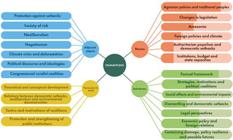
In view of the information gathered about the dismantling of environmental policy, the Literature Map brings together the themes and advances in knowledge on this broad issue area.
5. FINAL CONSIDERATIONS
The scoping review conducted permitted us to draw some conclusions. The first is that environmental dismantling is a highly interdisciplinary theme, which is proven by verifying the intersection between different areas of knowledge, theoretical approaches to analysis and themes portrayed by the studies. Thus, due to its complexity, the theoretical framework of this object of study can be challenging. Probably for this reason, in general, the scientific community was timid in qualifying the Brazilian environmental dismantling, resorting to a definition elaborated by researchers who did not study the country.
However, the analyzed research allowed us to identify some characteristics of the environmental dismantling that occurred in Brazil, that is, what types of political changes qualify this phenomenon. Considering what was experienced between 2016 and 2022, environmental dismantling can be understood as the result of a political conjuncture in which the Government brings together two main elements: the discourse of delegitimization and denial of socio-environmental agendas; and conducting changes that involve: divestment of state capacities; budget cuts and restrictions; promotion of socio-environmental legal setbacks; paralysis or extinction of instances and programs linked to the National Environmental Policy; reduction of environmental control and monitoring; permissiveness to environmental crimes and violence against indigenous peoples and traditional communities, environmentalists and leaders of social movements; militarization and centralization of power in strategic bodies; decreased transparency and public participation; institutional harassment and intimidation of people who report impacts on the environment and health, such as the indiscriminate use of pesticides on Brazilian agribusiness farms.
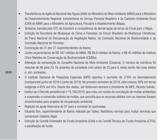
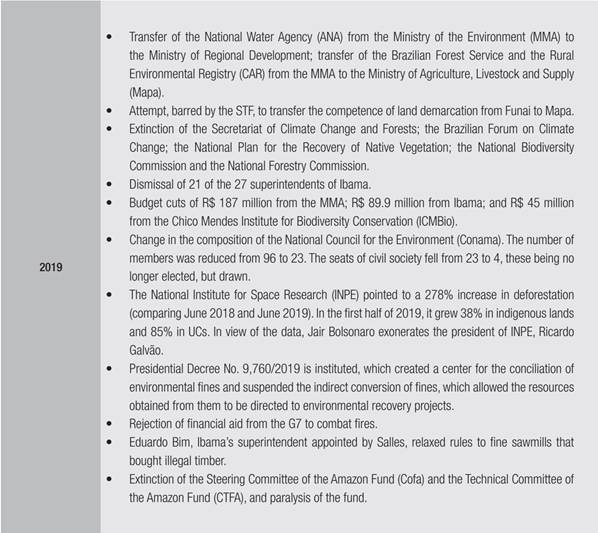
The analysis of the literature also indicates that this process of dismantling was intensified in 2016, with a series of changes in agrarian policy. However, as of 2019, the changes were expanded to other areas of the policy agenda, particularly socioenvironmental - these factual milestones are portrayed in Appendix A.
What seems to differentiate the setbacks observed between 2016 and 2022 from those that preceded the presidency of Michel Temer is the weight of the influence of the Executive and Legislative Branches. Its composition at the federal level was decisive for the implementation measures flexibilizing the rigor of control, some of which had been proposed since the beginning of the 2000s. In the Legislative Branch, coalitions such as the “plunder coalition” have demonstrated their interest in environmental deregulation for decades (Fonseca, Bursztyn, Lindoso & Daugeard, 2023). However, the term “dismantling” only began to be used in a significant way during the government of Jair Bolsonaro. Previously, “setbacks” or “flexibilizations” of environmental policy were discussed. Finally, Bolsonaro’s administration also stood out for the denialist and anti-environmentalist speeches by the former president and authorities appointed by him, such as Ricardo Salles (Araújo & Campos, 2022).
Another point is the lack of consensus among researchers regarding the inclusion of some measures as part of the dismantling, such as the New Sanitation Framework and the 2012 Forest Code. Therefore, the theoretical consolidation of what is called dismantling is considered urgent. Otherwise, the term may be met with resistance by a large part of civil society and, thus, be ignored or unknown by voters.
A central question raised by this research consists of: How to make the dismantling of public policies a topic of scientific and public interest? This research sought to demonstrate that, despite the advances in knowledge about environmental dismantling, the problem does not belong exclusively to past administrations. Gaps remain for those who study this type of political change, which go beyond the reconstruction of an agenda. Therefore, it is essential to deepen and continue investigations on this object of study.
References
-
Abreu, J. (2024). Leite mudou quase 500 normas ambientais em 2019 Folha de São Paulo. Recuperado de https://www1.folha.uol.com.br/ambiente/2024/05/leite-mudou-quase-500-normas-ambientais-em-2019-especialistas-criticam-gestao.shtml
» https://www1.folha.uol.com.br/ambiente/2024/05/leite-mudou-quase-500-normas-ambientais-em-2019-especialistas-criticam-gestao.shtml -
Adams, C., Borges, Z., Moretto, E. M., & Futemma, C. (2020). Governança ambiental no Brasil: acelerando em direção aos objetivos de desenvolvimento sustentável ou olhando pelo retrovisor? Cadernos Gestão Pública e Cidadania, 25(81), 1-13. https://doi.org/10.12660/cgpc.v25n81.81403
» https://doi.org/10.12660/cgpc.v25n81.81403 -
Anaya, F. C., Oliveira, C. L., Ribeiro, L. M. M.; Araújo, E. C., & Thé, A. P. G. (2020). Desregulamentação ambiental e territorial em um contexto de antiambientalismo racializado: o caso das terras da União no médio Rio São Francisco. Antropolítica: Revista Contemporânea de Antropologia, 49(1), 189-215. https://doi.org/10.22409/antropolitica2020.i49.a42130
» https://doi.org/10.22409/antropolitica2020.i49.a42130 -
Araújo, B., & Campos, F. S. S. (2022). Populismo autoritário e meio ambiente no Brasil: Enquadramento do discurso antiambiental de Jair Bolsonaro em editoriais nacionais e internacionais. Revista Media & Jornalismo, 22(40), 141-159. https://doi.org/10.14195/2183-5462_40_7
» https://doi.org/10.14195/2183-5462_40_7 -
Araújo, C. V. G., & Sauer, S. (2022). Mudanças legais recentes favorecendo a grilagem e o descumprimento da função socioambiental da terra no Brasil. Revista Campo-Território, 17(44), 170-203. https://doi.org/10.14393/RCT174408
» https://doi.org/10.14393/RCT174408 -
Arksey, H., & O’Malley, L. (2005). Scoping studies: towards a methodological framework. International Journal of Social Research Methodology, 8(1), 19-32. https://doi.org/10.1080/1364557032000119616
» https://doi.org/10.1080/1364557032000119616 -
Ascema Nacional. (2020). Cronologia de um desastre anunciado: ações do governo Bolsonaro para desmontar as políticas de meio ambiente no Brasil. Recuperado dehttps://ascemanacional.org.br/2020/09/09/dossie-sobre-desmonte-ambiental-brasileiro-chega-ao-papa-francisco/
» https://ascemanacional.org.br/2020/09/09/dossie-sobre-desmonte-ambiental-brasileiro-chega-ao-papa-francisco/ -
Athayde, S., Fonseca, A., Araújo, S. M. V. G., Gallard, A. L. C. F., Moretto, E. M., & Sánchez, L. E. (2022). Viewpoint: The far-reaching dangers of rolling back environmental licensing and impact assessment legislation in Brazil. Environmental Impact Assessment Review, 94(1), 1-7. https://doi.org/10.1016/j.eiar.2022.106742
» https://doi.org/10.1016/j.eiar.2022.106742 -
Barbosa, L. G., Alves, M. A. S., & Grelle, C. E. V. (2021). Actions against sustainability: dismantling of the environmental policies in Brazil. Land Use Policy, 104(1), 1-4. doi:10.1016/j.landusepol.2021.105384
» https://doi.org/10.1016/j.landusepol.2021.105384 -
Barretto Filho, H. T. (2021). Desenvolvimento, meio ambiente, povos indígenas e comunidades tradicionais no Brasil de hoje: uma mirada a partir da Antropologia pública. Aisthesis, 70(1), 263-286. http://dx.doi.org/10.7764/aisth.70.12
» https://doi.org/10.7764/aisth.70.12 - Bauer, M. W., Jordan, A., Green-Pederson, C., & Héritier, A. (2012). Dismantling public policy: preferences, strategies, and effects Oxford, England: Oxford University Press.
-
Borinelli, B., Gallassi, J., Mostagi, N., Almeida, D., & Costa, R. (2019). (Des)ordem institucional e ordenamento territorial: considerações sobre a política ambiental de Goiás. Geografia e Ordenamento do Território, 8(16), 5-27. http://dx.doi.org/10.17127/got/2019.16.001
» https://doi.org/10.17127/got/2019.16.001 -
Bortoncello, L. G. P., & Brasil, D. R. (2020). O agro não é pop, não é tech, não é tudo: o PL nº 6.299/2002 do veneno e o retrocesso socioambiental. Revista Catalena de Dret Ambiental, 11(1), 1-25. https://doi.org/10.17345/rcda2632
» https://doi.org/10.17345/rcda2632 - Bursztyn, M. A., & Bursztyn, M. (2013). Fundamentos de política e gestão ambiental: Caminhos para a sustentabilidade Rio de Janeiro: Garamond.
-
Capelari, M. G. M., Araújo, S. M. V. G., Calmon, P. C. D. P., & Borinelli, B. (2020). Mudança de larga escala na política ambiental: análise da realidade brasileira. Revista de Administração Pública, 54(6), 1691-1710. https://doi.org/10.1590/0034-761220190445
» https://doi.org/10.1590/0034-761220190445 -
Castelo, T. B., Adami, M., Almeida, C. A., & Almeida, O. (2018). Governos e mudanças nas políticas de combate ao desmatamento na Amazônia. Revista de la Red Iberoamericana de Economia Ecológica, 28(1), 125-148. Recuperado dehttps://redibec.org/ojs/index.php/revibec/article/view/161
» https://redibec.org/ojs/index.php/revibec/article/view/161 -
Castro, B. T. C. (2020). A Amazônia sem futuro ou o futuro sem a Amazônia. Monções: Revista de Relações Internacionais da UFGD, 9(18), 69-101. https://doi.org/10.30612/rmufgd.v9i18.12149
» https://doi.org/10.30612/rmufgd.v9i18.12149 -
Castro, E. M. R., & Castro, C. P. (2022). Desmatamento na Amazônia, desregulação socioambiental e financeirização do mercado de terras e de commodities. Novos Cadernos NAEA, 25(1), 11-36. https://doi.org/10.18542/ncn.v25i1.12189
» https://doi.org/10.18542/ncn.v25i1.12189 -
Coelho-de-Souza, G., Teixeira, A. R., & Steenbock, W. (2022). Dinâmicas territoriais no sul do Brasil: desmantelamento da política de desenvolvimento rural e a emergência de uma política territorial de conservação da biodiversidade. Desenvolvimento e meio ambiente, 60(1), 67-95. https://doi.org/10.5380/dma.v60i0.80043
» https://doi.org/10.5380/dma.v60i0.80043 -
Cordeiro, M. S. S., Novaes, R. B., & Barcellos, S. B. (2022). A questão ambiental e o governo Bolsonaro: entre conflitos ambientais e ideias conspiratórias. Revista Raízes, 42(2), 263-276. https://doi.org/10.37370/raizes.2022.v42.799
» https://doi.org/10.37370/raizes.2022.v42.799 - Creswell, J. W. (2007). Revisão da literatura. In: J. W. Creswell. Projeto de pesquisa: métodos qualitativo, quantitativo e misto (Cap. 2, pp. 43-63). Porto Alegre: Artmed.
-
Cunha, P. R., Lima, A., Bittencourt Júnior, C., & Checco, G. B. (2022). O desmonte das ações de prevenção e controle de desmatamento na Amazônia (2019-2021) - um estudo sobre os municípios prioritários. Problèmes d’Amérique Latine, (119-120), 125-158. Recuperado dehttps://shs.cairn.info/revue-problemes-d-amerique-latine-2022-1-page-125?lang=fr&contenu=resume
» https://shs.cairn.info/revue-problemes-d-amerique-latine-2022-1-page-125?lang=fr&contenu=resume -
Deutsch, S. (2021). Populist authoritarian neoliberalism in Brazil: making sense of Bolsonaro’s anti-environment agenda. Journal of Political Ecology, 28(1), 823-844. https://doi.org/10.2458/jpe.2994
» https://doi.org/10.2458/jpe.2994 -
Diesel, V., Neumann, P. S., & Dias, M. M. (2021). Política de Assistência Técnica e Extensão Rural no Brasil: um caso de desmantelamento? Estudos, Sociedades e Agricultura, 29(3), 597-634. https://doi.org/10.36920/esa-v29n3-5
» https://doi.org/10.36920/esa-v29n3-5 - Dye, T. (2017). Understanding Public Policy(15a ed). Londres: Pearson.
-
Euclydes, F. M., Macedo, A. S., Macedo, S. V., & Valadares, J. L. (2021). Capacidades estatais e mineração: uma análise da agência nacional de regulação. Revista de Administração Pública, 56(1), 163-175. http://dx.doi.org/10.1590/0034-761220210203
» https://doi.org/10.1590/0034-761220210203 - Fante, E. M. (2020). O jornalismo do Correio do Povo e o discurso do desmonte da política ambiental do Rio Grande do Sul [Tese de Doutorado]. Universidade Federal do Rio Grande do Sul.
-
Fante, E. M., Paim, E. S., & Moraes, C. H. (2022). Bioeconomia como referência para a reativação do Fundo Clima: análise discursiva a partir da audiência do STF. Desenvolvimento e Meio Ambiente, 60(1), 96-115. http://dx.doi.org/10.5380/dma.v60i0.80049
» https://doi.org/10.5380/dma.v60i0.80049 -
Ferreira, M., Perillo, L., Drumond, M. A., & Rodrigues, F. H. G. (2020). Collapse of national protected areas in Brazil: the example of Minas Gerais State. Parks, 26(2), 59-66. https://doi.org/10.2305/IUCN.CH.2020.PARKS-26-2MCF.en
» https://doi.org/10.2305/IUCN.CH.2020.PARKS-26-2MCF.en - Fonseca, I., Bursztyn, M., Lindoso, D. P., & Daugeard, M. (2023). A desconstrução organizada da política florestal no Brasil: estratégias de desmantelamento e de resistência. In: A A. Gomide, M. M. S. Silva, & M. A. Leopoldi. Desmonte e reconfiguração de políticas públicas (2016-2022) (Cap. 5, pp. 125-156). Brasília: IPEA, INCT/PPED.
-
Fonseca, I. F., Lindoso, D. P., & Bursztyn, M. (2022). Deforestation (lack of) control in the Brazilian Amazon: from strengthening to dismantling governmental authority (1999-2020). Sustentabilidade em Debate, 13(2), 12-31. https://doi.org/10.18472/SustDeb.v13n2.2022.44532
» https://doi.org/10.18472/SustDeb.v13n2.2022.44532 -
Freitas, R. D., Clark, G., & Corrêa, L. A. (2022). Passando a boiada: a pandemia de Covid-19, a desestruturação das políticas ambientais e o neoliberalismo de austeridade. Revista Direito em Debate, 31(58), 1-15. https://doi.org/10.21527/2176-6622.2022.58.12096
» https://doi.org/10.21527/2176-6622.2022.58.12096 - Gomide, A. A., Silva, M. M. S., & Leopoldi, M. A. (2023). Políticas Públicas em contexto de retrocesso democrático e populismo reacionário: desmontes e reconfigurações. In: A. A. Gomide, M. M. S. Silva, & M. A . Leopoldi. Desmonte e reconfiguração de políticas públicas (2016-2022) (Cap. 1, pp. 13-44). Rio de Janeiro: IPEA, INCT/PPED.
-
Guenzburger, G. (2017). Teatro carioca sob a crise do fomento: do empreendedorismo ao ativismo cultural. Políticas Culturais em Revista, 10(2), 148-166. https://doi.org/10.9771/pcr.v10i2.24293
» https://doi.org/10.9771/pcr.v10i2.24293 -
Gurgel, A. M., Guedes, C. A., & Friedrich, K. (2021). Flexibilização da regulação de agrotóxicos enquanto oportunidade para a (necro)política brasileira: avanços do agronegócio e retrocessos para a saúde e o ambiente. Desenvolvimento e Meio Ambiente, 57(1), 135-159. https://doi.org/10.5380/dma.v56i0.76158
» https://doi.org/10.5380/dma.v56i0.76158 -
Imaflora, Instituto Socioambiental. (2021). Mapeamento dos retrocessos de transparência e participação social na política ambiental brasileira - 2019 e 2020 Article 19. Recuperado dehttps://acervo.socioambiental.org/sites/default/files/documents/t3d00040.pdf
» https://acervo.socioambiental.org/sites/default/files/documents/t3d00040.pdf - Korte, S., & Jörgens, H. (2012). Active Dismantling Under High Institutional Constraints? Explaining the Bush Administration’s Attempts to Weaken US Air Pollution Control Policy. In: M. W. Bauer, A. Jordan, C. Green-Pederson, & A. Héritier. Dismantling public policy: preferences, strategies, and effects (pp. 81-104). Oxford, England: Oxford University Press .
-
Layrargues P. P. (2018). Quando os ecologistas incomodam: a desregulação ambiental pública no Brasil sob o signo do anti-ecologismo. Revista de Pesquisa em Políticas Públicas, 6(2), 1-30. https://doi.org/10.18829/rp3.v0i12.26952
» https://doi.org/10.18829/rp3.v0i12.26952 -
Leite, A. Z., Castro, L. F. P., & Sauer, S. (2018). A questão agrária no momento político brasileiro: liberalização e mercantilização da terra no estado mínimo de Temer. Revista OKARA: Geografia em Debate, 12(2), 247-274. https://doi.org/10.22478/ufpb.1982-3878.2018v12n2.41316
» https://doi.org/10.22478/ufpb.1982-3878.2018v12n2.41316 -
Lima, G. F. C. (2011). A institucionalização das políticas e da gestão ambiental no Brasil: avanços, obstáculos e contradições. Desenvolvimento e Meio ambiente, 23(1), 121-132. http://dx.doi.org/10.5380/dma.v23i0.20948
» https://doi.org/10.5380/dma.v23i0.20948 -
Lima, T., Waisbich, L. T., & Serafim, L. (2022). “One single agriculture”: dismantling policies and silencing peasant family farmers in Brazilian foreign policy (2016-2022). Revista Brasileira de Política Internacional, 65(2), 1-22. https://doi.org/10.1590/0034-7329202200218
» https://doi.org/10.1590/0034-7329202200218 - Macedo, J. M. (2022). Sem políticas públicas, o que será dos órfãos da COVID? In: Associação Nacional dos Especialistas em Políticas Públicas e Gestão Governamental. Desmonte de políticas públicas no Brasil: contribuições técnicas para o debate (pp. 64-69). Brasília: ANESP.
-
Machado, A. L., França A. B., & Rangel, T. L. V. (2021). Carestia, mapa da fome e o agravamento da insegurança alimentar e nutricional em tempos de pandemia: o retrocesso brasileiro na política de combate à fome. Boletim de Conjuntura(BOCA), 8(24), 87-101. https://doi.org/10.5281/zenodo.5764610
» https://doi.org/10.5281/zenodo.5764610 -
Marcovitch, J., & Pinsky, V. (2020). Bioma Amazônia: atos e fatos. Estudos Avançados, 34(100), 83-106. https://doi.org/10.1590/s0103-4014.2020.34100.007
» https://doi.org/10.1590/s0103-4014.2020.34100.007 -
Mattos Neto, A. J. (2021). Atentados ao Estado democrático de direito agroambiental brasileiro por escolhas trágicas. Veredas do Direito, 19(43), 249-286. https://doi.org/10.18623/rvd.v19i43.2168
» https://doi.org/10.18623/rvd.v19i43.2168 -
Menezes, R. G., & Barbosa Júnior, R. (2021). Environmental governance under Bolsonaro: dismantling institutions, curtailing participation, delegitimizing opposition. Zeitschrift für Vergleichende Politikwissenschaft, 15(1), 229-247. https://doi.org/10.1007/s12286-021-00491-8
» https://doi.org/10.1007/s12286-021-00491-8 -
Milhorance, C. (2022). Policy dismantling and democratic regression in Brazil under Bolsonaro: Coalition politics, ideas, and underlying discourses. Review of Policy Research, 39(1), 753-770. https://doi.org/10.1111/ropr.12502
» https://doi.org/10.1111/ropr.12502 -
Niederle, P., Grisa, C., Picolotto, E. L., & Soldera, D. (2022a). Narrative disputes over family-farming public policies in Brazil: conservative attacks and restricted countermovements. Latin American Research review, 54(3), 707-720. https://doi.org/10.25222/larr.366
» https://doi.org/10.25222/larr.366 -
Niederle, P., Petersen, P., Coudel, E., Grisa, C., Schmitt, C., Sabourin, E., & Lamine, C. (2022b). Ruptures in the agroecological transitions: institutional change and policy dismantling in Brazil. The Journal of Peasant Studies, 50(3), 931-953. https://doi.org/10.1080/03066150.2022.2055468
» https://doi.org/10.1080/03066150.2022.2055468 -
Observatório do Clima. (2021). Passando a boiada: o segundo ano de desmonte ambiental sob Jair Bolsonaro Recuperado dehttps://www.oc.eco.br/passando-boiada-o-segundo-ano-de-desmonte-ambiental-sob-jair-bolsonaro/
» https://www.oc.eco.br/passando-boiada-o-segundo-ano-de-desmonte-ambiental-sob-jair-bolsonaro/ -
Observatório do Clima. (2022). A conta chegou: o terceiro ano de destruição ambiental sob Jair Bolsonaro Recuperado dehttps://www.oc.eco.br/a-conta-chegou-o-terceiro-ano-de-destruicao-ambiental-sob-jair-bolsonaro/
» https://www.oc.eco.br/a-conta-chegou-o-terceiro-ano-de-destruicao-ambiental-sob-jair-bolsonaro/ -
Oliveira, M. C., & Siqueira, L. (2022). Digitalization between environmental activism and counter-activism: The case of satellite data on deforestation in the Brazilian Amazon. Earth System Governance, 12(1), 1-10. https://doi.org/10.1016/j.esg.2022.100135
» https://doi.org/10.1016/j.esg.2022.100135 -
Oliveira Neto, B. L. (2022). Da lama ao caos: o retrocesso da política e liderança ambiental do Brasil sob o governo Bolsonaro. Novos Cadernos NAEA, 25(2), 59-80. http://dx.doi.org/10.18542/ncn.v25i2.9937.
» https://doi.org/10.18542/ncn.v25i2.9937. -
Pereira, O. A. V., Caetano, J. A., Anacleto, J. V., & Ferraz, P. M. (2021). Políticas ambientais do Governo Federal e sua relação com o bioma Amazônico. Revista Mediação, 11(1), 28-42. Recuperado dehttps://revista.uemg.br/index.php/mediacao/article/view/5467
» https://revista.uemg.br/index.php/mediacao/article/view/5467 -
Prisma. (2019). Preferred Reporting Items for Systematic reviews and Meta-Analyses extension for Scoping Reviews (PRISMA-ScR) Checklist. Recuperado dehttps://www.europeanreview.org/wp/wp-content/uploads/230203_040011_annex-1.pdf
» https://www.europeanreview.org/wp/wp-content/uploads/230203_040011_annex-1.pdf -
Rolemberg, I. (2022). Terra, Estado e movimentos: declínio da reforma agrária a partir de uma 101 etnografia na Amazônia Oriental. Estudos Sociedade e Agricultura, 30(2), 1-27. https://doi.org/10.36920/esa-v30-2_01
» https://doi.org/10.36920/esa-v30-2_01 -
Sabatier, P. (1988). An advocacy coallition framework of policy change and the role of policy-oriented learning therein. Policy Sciences, 21(1), 129-168. https://doi.org/10.1007/BF00136406
» https://doi.org/10.1007/BF00136406 -
Sabourin, E. P., Grisa, C., Niederle, P., & Andrigueto-Filho, J. M. (2020). The dismantling of the rural and environmental public policies in Brazil. Cahiers Agricultures, 29(31), 1-8. https://doi.org/10.1051/cagri/2020029
» https://doi.org/10.1051/cagri/2020029 -
Sales, M. G. R. P. A proposta de flexibilização da legislação sobre agrotóxicos (projeto de lei nº 6.299/2002): análise à luz do direito fundamental à sadia condição de vida e ao meio ambiente equilibrado 2002. Revista de Direito e Sustentabilidade, 6(1), 55-75. https://doi.org/10.26668/IndexLawJournals/2525-9687/2020.v6i1.6403
» https://doi.org/10.26668/IndexLawJournals/2525-9687/2020.v6i1.6403 -
Santos, A. A., Menezes, M., Leite, A. Z., & Sauer, S. (2021). Ameaças, fragilização e desmonte de políticas e instituições indigenistas, quilombolas e ambientais no Bras. Estudos Sociedade e Agricultura, 29(3), 669-698. https://doi.org/10.36920/esa-v29n3-7
» https://doi.org/10.36920/esa-v29n3-7 -
Sauer, S. (2022). Populismo autoritário, neofascismo e eleições nacionais de 2022: implicações agrárias em consequência do avanço da extrema direita no Brasil. Revista Nera, 25(63), 26-48. https://doi.org/10.47946/rnera.v25i63.9519.
» https://doi.org/10.47946/rnera.v25i63.9519. -
Sauer, S., Leite, A. Z., & Tubino, N. L. G. (2020). Agenda política da Terra no governo Bolsonaro. Revista da ANPEGE, 16(29), 285-318. https://doi.org/10.5418/ra2020.v16i29.12518
» https://doi.org/10.5418/ra2020.v16i29.12518 -
Soares, M. O., Barros, E. L., & Guerra, R. G. P. (2022). Not just sand: The folly of dismantling the environmental protection of dunes in Brazil. Land Use Policy, 112(1), 1-5. https://doi.org/10.1016/j.landusepol.2021.105803
» https://doi.org/10.1016/j.landusepol.2021.105803 -
Sousa, A. V. Q., & Marques, S. D. (2021). A Agenda 2030 no Brasil e o desmonte de políticas públicas como meta. Revista do Centro de Estudos Avançados Multidisciplinares, 7(2), 35-55. https://doi.org/10.5281/zenodo.5984726
» https://doi.org/10.5281/zenodo.5984726 -
Valencia, J. M., Moreira, A. W., Ilha, E. B., & Coelho-de-Souza, G. (2022). O desmonte das políticas hídricas brasileiras no contexto sul-americano: privatizações, ecologia-política e memórias vivas Mbya Guarani. Desenvolvimento e Meio Ambiente, 60(1), 43-66. https://doi.org/10.5380/dma.v60i0.80041
» https://doi.org/10.5380/dma.v60i0.80041 -
Vilani, R. M. (2022). Avanço técnico-científico na jurisprudência do STF: reflexões a partir das ADPFs 747, 748 e 749. Sequência, 43(90), 1-33. https://doi.org/10.5007/2177-7055.2022.e80705
» https://doi.org/10.5007/2177-7055.2022.e80705
ACKNOWLEDGMENT
-
We thank the Coordination Foundation for the Improvement of Higher Education Personnel (CAPES) for the Graduate Scholarship (2022-2024) that enabled the development and execution of the research. We would also like to thank Estela Maria Souza Costa Neves of the National Institute of Science and Technology on Public Policies and Development (INCT/PPED) for her valuable guidance during the literature mapping.
Pareceristas:
-
Pareceristas
Rafael Kruter Flores (Universidade Federal do Rio Grande do Sul, Porto Alegre / RS - Brazil) https://orcid.org/0000-0003-4280-2231
-
Pareceristas
Marina Lazarotto (Universidade de Brasília, Brasília / DF - Brazil) https://orcid.org/0000-0002-9958-6851
-
Pareceristas
Carolina Stange Moulin (Universidade de São Paulo, São Paulo / SP - Brazil)
-
Peer Review Report:
The peer review report is available at https:URL. https://periodicos.fgv.br/rap/article/view/93177/87262


Edited by
The dataset that supports the results of this study is partially available through bibliographic references.

 Thumbnail
 Thumbnail
 Source: Elaborated by the authors.
 Source: Elaborated by the authors.
 Source: Elaborated by the authors.
 Legend: The inner coloration of the shapes indicates the level of progress of the research. The number of scientific articles selected was used as a scale.Source: Elaborated by the authors.
 Source: Elaborated by the authors, based on Climate Observatory (
 Fonte:Elaborado pelas autoras a partir de Observatório do Clima (