 Strategic planning: unraveling civil servants’ autonomy and motivation through social representations of organizational goals
Abstract
This study aims to examine the effects of organizational goal-setting through strategic planning on the motivation of civil servants. Grounded in the social representation theory, the research explores both the core and peripheral systems that shape the social representation of these goals. Data were collected from 324 civil servants through a word recall test, revealing that organizational goal-setting is positively linked to high-quality motivation and the high-performance cycle. The study identifies key elements - such as goals, efficiency, outcomes, planning, and organization - as central to the social representation of organizational objectives. These elements are closely associated with motivation, suggesting that clear organizational goals contribute to employee engagement and performance. The findings also highlight the role of peripheral factors, like transparency, alignment, and well-being, which further influence the perception and implementation of strategic planning. The research concludes that strategic planning, whether based on rational or emergent approaches, positively impacts employee motivation, thereby supporting the effective execution of public sector strategies.
Keywords:
strategic planning; public administration; management by objectives; public service motivation; theory of social representations
Resumo
Este estudo tem como objetivo examinar os efeitos do estabelecimento de metas organizacionais por meio do planejamento estratégico na motivação dos servidores públicos. Fundamentada na teoria das representações sociais, a pesquisa explora os sistemas centrais e periféricos que moldam a representação social desses objetivos. Os dados foram coletados de 324 funcionários públicos por meio de um teste de evocação de palavras, revelando que o estabelecimento de metas organizacionais está positivamente ligado à motivação de alta qualidade e ao ciclo de alto desempenho. O estudo identifica elementos-chave - como metas, eficiência, resultados, planejamento e organização - como centrais para a representação social dos objetivos organizacionais. Estes elementos estão intimamente associados à motivação, sugerindo que objetivos organizacionais claros contribuem para o envolvimento e desempenho dos funcionários. As conclusões também destacam o papel de fatores periféricos, como transparência, alinhamento e bem-estar, que influenciam ainda mais a percepção e implementação do planeamento estratégico. A pesquisa conclui que o planejamento estratégico, seja baseado em abordagens racionais ou emergentes, impacta positivamente a motivação dos funcionários, apoiando assim a execução eficaz das estratégias do sector público.
Palavras-chave:
planejamento estratégico; administração pública; gestão por objetivos; motivação do serviço público; teoria das representações sociais
Resumen
Este estudio se propone examinar los efectos del establecimiento de objetivos organizacionales a través de la planificación estratégica sobre la motivación de los servidores públicos. Basada en la teoría de la representación social, la investigación explora tanto los sistemas centrales como los periféricos que dan forma a la representación social de estos objetivos. Se recopilaron datos de 324 funcionarios mediante una prueba de recuerdo de palabras, lo que reveló que el establecimiento de objetivos organizacionales está positivamente relacionado con la motivación de alta calidad y el ciclo de alto desempeño. El estudio identifica elementos clave - como metas, eficiencia, resultados, planificación y organización - como centrales para la representación social de los objetivos organizacionales. Estos elementos están estrechamente asociados con la motivación, lo que sugiere que los objetivos organizacionales claros contribuyen al compromiso y desempeño de los funcionarios. Los hallazgos también resaltan el papel de factores periféricos, como la transparencia, la alineación y el bienestar, que influyen aún más en la percepción y la implementación de la planificación estratégica. La investigación concluye que la planificación estratégica, ya sea basada en enfoques racionales o emergentes, impacta positivamente en la motivación de los funcionarios apoyando, así, la ejecución efectiva de las estrategias del sector público.
Palabras clave:
planificación estratégica; administración pública; gestión por objetivos; motivación del servicio público; teoría de las representaciones sociales
1. INTRODUCTION
The establishment of organizational goals to guide managerial activities has been a fundamental recommendation in management literature since Fayol and Drucker’s (1954) discussions on Management By Objectives (MBO). This teleological perspective assumes that organizations are purposeful and adaptive entities that can achieve their socially constructed objectives through various paths converging toward the same final state (Van De Ven, 1992). However, alternative perspectives challenge this view, proposing emergent or procedural development of objectives, such as Lindblom’s (1959) “muddling through” approach, Mintzberg and Waters’ (1985) emergent strategy formation. These perspectives emphasize continuous, incremental changes and consider strategy as an evolving process rather than a rigid, predetermined plan. In addition to these perspectives, the concept of strategizing emphasizes the micro-level processes and practices that shape the daily operations of organizations and influence strategic outcomes (Johnson et al., 2003). Similarly, the strategy-as-practice approach (Whittington, 1996) addresses critiques of traditional strategic planning as rigid and inflexible. More recently, the notion of open strategy (Hautz et al., 2017) has emerged, advocating for increased transparency and the inclusion of both internal and external stakeholders in the strategic decision-making process.
The emerging strategy has been explored in the public sector, particularly since Lindblom’s (1959) criticism of a rationalist approach to governmental decision-making. He argued that a purely rational approach, involving the identification of all possible objectives and alternatives, is impractical and proposed an incrementalist method based on successive adjustments and the decision-makers’ experience.
Despite the prevalence of the orthodox view of planning and an emphasis on goal-setting for effective management (Neugebauer et al., 2016), strict adherence to predefined strategic objectives may limit managerial autonomy and reducing the latitude performance. This restriction can negatively influence the motivation of managers and their teams (Hambrick & Finkelstein, 1987). Moreover, the imposition of rigid goals may reduce the range of strategic actions available, potentially impacting the motivation of employees, particularly in environments where autonomy and discretion are valued.
Strategic Planning (SP) has evolved from a top-down, goal-setting, rational design activity, labeled as rational planning, to a more managerial and dynamic approach, connecting routine work practices and processes across different levels of organizations to objectives and outlining strategies for adapting to changes in context, negotiation and building relationships aligned with the interests of all social partners and implementers of the strategy (Klijn & Koppenjan, 2020). For more than two decades, it has been among the five most widely used tools and methodologies in management (Rigby & Bilodeau, 2018).
SP remains a highly popular tool for the public sector, either mandatory or encouraged in various contexts (Vandersmissen & George, 2024). Its core function is organizational goal-setting (Bryson et al., 2022). However, SP can limit managerial autonomy by setting strategic objectives and guiding organizational actions, potentially reducing discretion and exacerbating agency problems and conflicts across hierarchical levels (Eisenhardt, 1989; Shen & Cho, 2005). In public agencies, SP’s alignment efforts may lead government employees, particularly those in leadership roles, to perceive it as a restriction on their freedom and autonomy - key elements of civil servants’ autonomous motivation (Ryan & Deci, 2020). Furthermore, the implementation of the strategy involves the development of action, control, and monitoring plans (Elbanna et al., 2016), which can heighten agency conflicts and agents’ indisposition or even promote alienation and disengagement from work (Blom et al., 2021; Campos & Cavazotte, 2023).
The misalignment of objectives and information asymmetry between organizations and agents necessitates the use of monitoring and incentive mechanisms to steer behaviors, potentially affecting employee motivation as predicted by agency theory (Eisenhardt, 1989). From the perspective of Public Service Motivation (PSM) and the Self-Determination Theory (SDT), extrinsic rewards can diminish civil servants’ motivation (Klein & Mascarenhas, 2016; Lira & V. P. G. Silva, 2015), which is reflected in the importance and desirability of the strategic plan and objectives. If agents perceive incentives as controlling their behavior through contingent rewards or threats, external regulation can motivate the adoption of desired behaviors and impact, in the long term, autonomous motivation, characterized by intrinsically motivated behavior, with a total sense of will, volition, and choice (Deci et al., 2017).
This article is based on the social representation theory (Moscovici, 1988, 2007). and examines whether the establishment of organizational objectives through strategic planning influences the motivation of government employees. It seeks to verify whether setting organizational objectives through strategic planning affects the motivation of government employees, which can contribute to a better understanding of potential limitations to the effective and efficient implementation of the strategy (Andrews et al., 2017). This study posits that restricting choices and managerial latitude may negatively affect individuals’ motivation and behavior in organizations. Consequently, goal and target-setting, fundamental to strategic planning, may be perceived as limiting managerial action and adversely impacting motivation.
The following section presents the theoretical framework, discussing strategic planning and employees’ motivation in the public sector. This is followed by an explanation of the social representation theory methodology, the study’s results, and its practical implications.
2. THEORETICAL FRAMEWORK
2.1 Strategic planning and goal-setting
Strategic planning is an effective tool for strategic management in the public sector, especially strategy formulation and development (or strategizing) (Bryson & George, 2020; Ugboro et al., 2011). In the classic view, strategic planning must induce the entire organization to commit to the objectives, favoring the understanding of approaches and methods, as well as actions leading to achieving the organizational goals (Johnson et al., 2011).
In a meta-analysis, George et al. (2019) identified that strategic planning has a positive, moderate, and significant impact on organizational performance, with evidence that adopting the strategic plan strongly impacts performance when the plan is formally put into practice, and there is a concern with monitoring the development of the strategic objectives.
Clearly defined objectives with an appropriate level of complexity strengthen the organization’s performance. These objectives direct individuals’ attention and actions to activities that should help achieve them and mobilize efforts and behaviors toward relevant actions (Gkizani & Galanakis 2022; Locke & Lathan, 2002, 2006). According to Bryson et al. (2022), based on strategic management theory, goals are desired results for the future. They are connected to multiple objectives that must be aligned to provide the best environmental adaptation. From the perspective of the behavioral theory of the firm, objectives are the product of bargaining and negotiation between members of a “dominant coalition” or with other coalitions in a context of limited rationality.
Commitment to goals and self-efficacy - the perception of competence to achieve goals - are often the most immediate and conscious motivational determinants of action and can mediate other potentially motivating variables, such as personality traits and work autonomy (Locke & Lathan, 2006). The objectives must be challenging but achievable, as the individual will direct their efforts toward what they believe they can achieve, in addition to being accepted, precisely to promote commitment to the proposed objective (Lunenburg, 2011).
Having goals directs attention and action to achieve them, and from the multiplicity of stimuli that individuals encounter daily, those indicating something valuable are activated to guide behavior (Chen et al., 2021). However, objectives cannot be conflicting to elicit the desired behavior, as they may motivate incompatible actions and harm performance (Locke & Lathan, 2002). Pursuing organizational goals and values that are personally meaningful promotes high-quality motivation, as the activity is seen as important and valued. On the contrary, goals not recognized as important to the individual can induce behaviors activated only by external pressures, such as punishment or reward, or internal pressures, such as concerns about social approval, image, or the maintenance of self-esteem. This motivation is considered low quality as it is only related to short-term effectiveness (Rigby & Ryan, 2018).
Organizational objectives that are acceptable to employees, convergent and aligned with their own values, proportional to individuals’ skills and abilities, and that reflect a high degree of self-efficacy and self-sufficiency influence performance improvement in the organization (Gkizani & Galanakis, 2022). As proposed by agency theory, control mechanisms pressure individuals to follow established norms under external pressure while offering a structure to facilitate alignment, defining clear objectives consistent with the adopted guidelines, and supporting the development of autonomy that leads to reducing controls and monitoring, as they are associated with the activation of the agents’ motivation (Ryan & Deci, 2020).
Considering the principal-agent relationship within the organization-server dyad, goal-setting in the strategic plan is essential to reduce information asymmetries (Jensen & Meckling, 1976) and improve alignment between stakeholders (Oliveira & Fontes, 2017). This fosters understanding and alignment between objectives during the implementation of the strategy, facilitating the development of institutional skills along the way (Hendry, 2002). However, the rational, selfish (Davis et al., 1997), and minimalist (Perrow, 1986) vision associated with the individual by agency theory can stimulate opportunistic behavior and dependence on external stimuli, viewing organizational objectives as non-shared external interests.
For Torfing and Bentzen (2020), the last decades of influence of new public management have brought the primacy of the logic of extrinsic motivation, based on premises of distrust and control, and supported by a combination of management by objectives, performance measurement, and transactional leadership based on conditional rewards and punishments. As proposed by stewardship theory, introducing a premise of intrinsic motivation based on self-realization and pro-social orientation means that individuals left to their own devices act as responsible stewards of the assets they control, given the strong relationship between satisfaction and organizational success. Thus, while agency theory considers control based on results necessary for greater autonomy of the agency, the human nature considered by stewardship theory understands that this control is not necessary, given the reduced conflict of objectives between employees and the political system and the low risk of opportunistic behaviors (Yu, 2023).
2.2 Autonomy and motivation
If Strategic Planning (SP) tools can contribute to alignment and compliance around organizational objectives, the motivation of agents executing the strategy must be associated with engagement, persistence, and performance (Pedersen, 2015).
Previous studies have emphasized the importance of setting clear and specific goals in relation to public employees’ motivation and commitment to the organization (Caillier, 2016). This approach enhances the meaningfulness of work and its alignment with the organizational mission (Wright, 2007). Conversely, goal ambiguity can reduce motivation, leading to conflicting objectives and hindering efficiency in the public sector (Danaeefard et al., 2022). However, the source of these goals can also have a detrimental effect on motivation. Goals that are self-imposed by employees tend to result in higher levels of enthusiasm, whereas goals imposed by the organization may induce anxiety, thereby affecting motivation differently (Welsh et al., 2020).
Self-Determination Theory (SDT) (Deci et al., 2017) suggests that employees’ performance and well-being are affected by their motivation for their work activities. Motivation can be qualified as autonomous or controlled and intrinsic or extrinsic. When employees understand the purpose of their activities, have autonomy and competence to carry them out, and receive clear support and feedback, the theory suggests that these employees become more motivated in a self-determined way and perform better. In another sense, when behavioral incentives and/or outcomes control motivation, the focus shifts to obtaining the result, which can reduce the employees’ effort by understanding that the objectives are unattainable or easy to achieve, producing gains in the short term and negative effects on subsequent performance and work engagement.
Lira and V. P. G. Silva (2015) present the same idea in another way: the need for competence and a sense of autonomy makes the agent feel more satisfied if they perceive they are carrying out an activity for their own reasons rather than being externally controlled for its achievement. In this sense, bureaucratic control reduces engagement because it diminishes the employee’s sense of empowerment (Campos & Cavazotte, 2023).
Mussagulova (2021) observed that autonomy, competence, and perceived social impact are positively associated with work engagement. For the author, when Public Service Motivation (PSM) is high, the moderating and positive effect of perceived social impact on work engagement is more significant and stronger, compensating for the negative consequences of work demands.
Following similar assumptions and based on a set of attributes according to a scale developed by Perry (1996), the theory of PSM suggests that civil servants with a high degree of PSM have the propensity to serve the public interest and dedicate themselves to collective causes that go beyond their individual interests. Corduneanu et al. (2020) start from the premise that preserving PSM in civil servants is crucial so they can internalize the external factors that motivate performance without harming existing beliefs and values in achieving the public interest.
Studies indicate that prosocial motivation, defined as the desire to positively impact other individuals (Bakker, 2015), strongly correlates with global PSM measures. It also shows significant correlations with mission valence, value congruence, job satisfaction, and a preference for the public sector (Wright et al., 2013). Factors associated with the SP process, such as the valence of the mission, instrumentality, and self-efficacy, play a more significant role in motivating public servants when there are goals and rewards for performance (Rodrigues et al., 2014). Additionally, Yu (2023) observed that employees approach the ideal type of stewards as motivation for public service increases. Therefore, the autonomy of the public organization is expected to have a greater impact on organizational performance.
In any case, there seems to be an element of complementarity between the two theories (SDT and PSM), highlighting the importance of civil servants’ autonomous performance, whether regarding their satisfaction with the activity itself or its outcomes, as a source of motivation (Breaugh et al., 2018).
3. METHODOLOGY
3.1 Social representations
The methodology adopted was based on the Social Representation Theory (SRT). The study sought to identify how public servants perceive and guide their practices when the organization sets goals for their performance and the institution’s objectives and values are internalized in the individual’s identity (Pedersen, 2015).
As proposed by Sérge Moscovici (1988, 2007), Social Representations (SRs) are devices constructed from the subjectivity of a certain social group, supporting relationships between individuals and the object in the context in which they are inserted. As collective practices, SRs capture the objects, attribute meanings, and pressure groups to establish common identity characteristics for understanding and relating to the object (Marchisotti et al., 2022). They act as a system of collective construction about how individuals understand the world through exchanges that communication, argumentation, and persuasion give rise to, adding to specific groups’ values and interests (C. R. Castro & M. R. Castro, 2018). They are, therefore, constructed in a shared way and function as a system of interpretation of reality, regulating relationships between individuals in their social environment and guiding behaviors and practices (Ferreira et al., 2005).
For the analyses, the complementary structural approach of the central core - the Central Nucleus Theory - was used (Abric, 1993). This theory, with its structural approach, identifies certain aspects of the representation as central, by generating the meaning of all the elements of the representational field (Flament, 1981). SRs are governed by an internal system comprising two complementary parts (Sá, 1996): a central core and a peripheral system. The central core reflects the social and historical conditions and the group values, translating into the collective memory about the object. It is shared homogeneously within the group, having a common and consensual basis (Abric, 2001). Therefore, it becomes insensitive to the immediate social context, showing a stable and coherent core of meanings, resistant to change (Mazzotti, 2002). The peripheral system is sensitive to the immediate context, supporting the group’s heterogeneity and allowing the integration of individual experiences and stories, resulting in an evolutionary process with mobility, flexibility, and individualization of SRs (Sant’anna, 2012).
While the central core constitutes the common basis of representations, being stable and resistant to changing contexts and therefore critical to the meaning of an object for the group, the peripheral system absorbs the specific and individualized vision of group members. This condition allows for divergences and processes context shifts to be processed without altering the central core and meaning of the social representations (Joia & Michelotto, 2020).
SRs have a transversal nature, as they relate to different fields of research, articulating different points of view as they emerge from a social and a psychic dynamic, coordinating processes such as language and the psychosociological treatment of the object (Jodelet, 2003). The method of the SRT provides a conceptual framework for investigating durable representations rather than those in the formation process. Furthermore, it offers an analytical ground for examining the interaction between individuals’ actions and the social context in which they operate (Rateau & Lo Monaco, 2013).
After assembling the Vergès’ quadrants, one carried out the implicative statistics using the similarity analysis. This technique allows researchers to illustrate the structural linkages among elements, measuring associations and the degree of connectivity between them (Marchand & Ratinaud, 2012).
Thus, by understanding the social representation of goal setting and the role that motivation plays in this relationship, the organization can build management policies that effectively contribute to increasing motivation and, consequently, job satisfaction and improved performance.
3.2 Research subjects
The research was conducted with civil servants working at the Brazilian federal government, focusing on professionals with tenure hired through competitive selection processes and allocated to the Attorney General For the National treasury (or PGFN) and the federal attorney’s offices related to the Attorney General’s Office (AGU), legal consulting departments of the ministries and federal and state agencies, government agencies that use strategic planning as recommended by the Federal Court of Accounts (Tribunal de Contas da União [TCU], 2020), and the Attorney General’s Office of the State São Paulo (PGE/SP). The sample of respondents was obtained through accessibility or convenience, utilizing contacts on institutional electronic lists and social media. The questionnaire, distributed via email, remained available for responses from February 06 to 23, 2023. A total of 324 respondents were considered, with 37.04% occupying management positions. After debugging errors or duplications, 310 responses were included in the analysis.
3.3 Word recall test and data processing
The word recall test was employed to describe the social representation (SR) of organizational goals. Participants were asked to write five words or expressions in the order they immediately came to mind, inspired by the inductive term “ORGANIZATIONAL GOALS.” Additionally, participants provided justifications for their answers and submitted sociodemographic data.
The dataset related to the recall of words/expressions was used to construct the Vergès Quadrant. This process involved determining the central core and the peripheral system of a social representation based on the intersection between the frequency of word recall (quantitative aspect) and the order in which they were recalled (qualitative aspect) (Marchisotti et al., 2019; Sá, 1996).
Data processing followed several steps, including word categorization, reduction of grammatical derivations (gender, number, and cognates), grouping of similar words/expressions, calculation of the average frequency of the categories, and computation of the average order of evocation (Joia & Torres 2022; Sá, 1996; Vergara & Ferreira 2005). The justifications provided for the recalls contributed to determining the meaning and subsequent semantic grouping in the classified category.
The frequency of each category was calculated by adding the frequencies in which the category was recalled first, second, and so on. The Average Frequency of Evocation (AFE) was determined by dividing the total number of recalls of a given word by the total number of distinct words (Marchisotti et al., 2019).
To obtain the Average Order of Evocation (AOE), the number of times the word was recalled was multiplied by its order (first by 1, second by 2, third by 3, and so on). The AOE was obtained by averaging the recall of words, resulting from dividing the sum of all AOEs by the total number of distinct words (Vergara & Ferreira, 2005).
Categories with fewer than 10 recalls were disregarded as they fell below the average frequency (Marchisotti, Joia and Carvalho 2019). This procedure was justified since the almost insignificant frequency does not influence the constitution of the central core of social representation (Ferreira et al., 2005). Moreover, as the social group does not share them, it mischaracterizes the social construction of representation (Moller, 1996).
Additionally, a similarity analysis was performed using the Iramuteq software, enabling a graphical visualization of the similarity tree to validate the associative power of the central core (Sá, 1996). This associative power is crucial, with central elements typically associating and relating intensely. These strong connections form a cohesive and stable system, regardless of changing circumstances. Similarity analysis identifies these connections or co-occurrences, considering the associated values represented by edges (lines) and frequencies (vertices/sizes of circles). Elements close to many others are considered central, while those close to a few are deemed peripheral (Wolter et al., 2016).
3.4 Results
The categorization process resulted in grouping 1422 words into 91 categories, recalled at least three times. Because of low frequency, 98 words were eliminated (Ferreira et al., 2005).
Box 1summarizes the data set extracted from the word recall test:

The Vergès quadrant was constructed by extracting three parameters (Joia & Torres, 2022; Marchisotti et al., 2022): the first was the minimum recall frequency considered, which is the cumulative total of words that, on average, were the most cited by around 50% of respondents - in this study, 54.5% of the accumulated frequency corresponded to a minimum frequency of 21 recalls; the second, the average order of word recalls, calculated at 3.11; and, finally, the intermediate frequency of recalls was considered as the third parameter, representing the central value of the 12 categories selected by the minimum frequency, which in this study was calculated by the median of 43.5. Table 1 shows the quantities used to obtain these parameters:
The illustration of the Vergès Quadrant in terms of the social representation of organizational goals can be seen in Figure 1.

Figure 2 represents the similarity analysis, conducted with the elements of the Vergès quadrant. The similarity analysis, a quantitative technique that evaluates the co-occurrence connections between segments (Flament 1981), was employed to verify the associations among the evoked words. The edges indicate the connections (co-occurrences) between the words recalled, signifying that when a person thinks of one word, it links to the others. The numbers refer to the number of co-occurrences between words (frequency), and the vertices denote the central words, i.e., words with the highest frequency and co-occurrences.
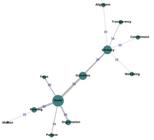
From the comparative analysis of the Vergès quadrant and the similarity tree, it appears that the central elements of the quadrant - goals, efficiency, outcomes, planning, and organization - have co-occurrences (connections), edges (association values), and frequencies (vertices, circle size) that are significant and compatible with the ARF and ARO, suggesting their confirmation in the central core of the representation. The commitment element was allocated to the first periphery of the Quadrant, and the transparency, alignment, and well-being elements were designated to the second periphery. The elements of the contrast zone, which were difficult to interpret individually, were disregarded (Joia & Michelotto, 2020; Joia & Torres, 2022; Vergara, 2015).
4. DISCUSSION
In this study, the central core of the Social Representation (SR) of organizational goals comprises the following terms: goals, efficiency, outcomes, planning, and organization.
The element “goals” presented the highest frequency and the lowest recall average, meaning it was consistently remembered and considered very important. As an element of the central core, it suggests that the social group, consensually and coherently, accepts the direction of its behavior, attention, and individual efforts toward activities most relevant to the development of the organization (Chen et al., 2021; Gkizani & Galanakis, 2022). Organizational goal-setting activates the social group’s behavior. The group’s behavior associated with other central core elements (such as efficiency, outcomes, and planning) indicates that the social group is motivated by organizational goal-setting. The social group perceives organizational goals as a collective enterprise, choosing the element “goals” in the construction of SR, directing the focus to their achievement, and utilizing knowledge, skills, and experiences emerging from other contexts as a new strategy to achieve the objective (Rego et al., 2018).
Commitment to goals and the perception of competence to achieve them (self-efficacy) are often observed as more immediate and conscious motivational determinants of action (Locke & Lathan, 2006). In this sense, it is important to note that “Commitment” appeared in the first periphery of the Vergès quadrant, indicating that it is frequently remembered and associated with organizational goals in close relationship with the central core but not recalled in the first positions by the individuals, behaving as a moderator between the extreme quadrants (Joia et al., 2022).
The meaning the social group gave to commitment was aligned with the literature. Commitment was considered the bond between the employee and the organization, resulting from emotional involvement (affective dimension), normative adherence (to the organization’s goals and interests), and the desire to remain (Pinho et al., 2020; C. R. M. Silva et al., 2020). It is perceived as a factor influenced by the immediate context, revealing the social group’s heterogeneity (Abric, 1993). When the social group infers that the goals set by the organization are personally meaningful and relevant, commitment and, consequently, high-quality motivation can be activated (Rigby & Ryan, 2018).
“Efficiency”, understood as “[…] doing what needs to be done with adequate quality at the lowest possible cost” (TCU, 2014, p. 34.), was positioned as the second element of the central core. In the similarity analysis (Figure 2), its co-occurrences with “efficiency” and other peripheral system components - transparency, alignment, and well-being - suggest, due to the strength of the connections, that the perception of efficiency matters for satisfaction and employee well-being.
Transparency should be understood as a tool that can improve the management and performance of governments and organizations (Cremer, 2016). However, it should not be an end in itself or the only objective to be achieved. In this case, the fact that transparency was allocated to the peripheral system of the SR of organizational objectives suggests that the social group uses this construction without altering the meanings constructed by the central core - its importance is relative and secondary to the central elements (Conceição et al., 2020). The meanings adopted by the social group indicate that transparency is related to decision-making in management and individual ethics as a set of values that guide actions (Marchisotti et al., 2022).
The “outcomes” category was positioned as the third element of the central core. According to the perception of the social group of employees, outcomes pertain to the consequences that must be achieved by setting goals after a planning process and serve as a measure of efficiency. The central core, consisting of elements such as “goals,” “efficiency,” and “outcomes,” implies the alignment between the goal and the desired result. This is consistent with the theory of Locke and Latham (2019): objectives are inherently something to be valued. Accomplishing an objective entails the affection, emotions, and satisfaction the individual experiences upon reaching the established goal.
The effective combination of an extrinsic factor and its association with the challenges of achieving goals and attaining high performance can generate a feeling of accomplishment, thus promoting intrinsic motivation (Klein & Mascarenhas, 2016). Therefore, organizational goal-setting, combined with effort and attention to achieving such goals, promotes motivation to remain in the high-performance cycle, job satisfaction, and well-being.
Finally, it should be noted that the similarity analysis indicated that the vertex of the outcomes constitutes a bridge between efficiency and goals, with strong co-occurrences in both directions (Figure 2), which is why it is possible to associate the correspondence between the goals and outcomes achieved; and consequently, the high-performance cycle for motivation (Locke & Lathan, 2002).
“Planning” was also assigned to the central core, indicating that the social group of civil servants has developed shared knowledge about organizational objectives. They link these objectives to some form of planning in which the organization deliberately and intentionally proposes setting goals and formulating strategies. This process involves the deliberate use of strategic planning concepts, processes, procedures, tools, techniques, and practices (Bryson & George, 2020).
The category included words such as “planning”, “to plan” and expressions such as “strategic planning” and “tactical plans”. It is important to note that the methodology used allows words to be generated spontaneously and with a meaning determined by the subject, since the degree of subjectivity is a latent premise of social representations, which are constructed from a set of perceptions in the context of social relations (Ferreira et al., 2005). However, the word recall test allows the combined analysis of data of a collective nature - the frequency of evocations - with data of an individual nature - the order of evocation (Vergara, 2015), allowing the description of the fundamental meanings that identify the social representation shared by the group (Joia et al., 2022).
Organizational goal-setting is identified as a stage in a planning process to achieve goals and obtain outcomes, corroborating the assumption by George et al. (2020) that even if it is not fully successful in achieving all established goals, strategic planning fulfills a substantial part of them, generating satisfaction with the objectives and outcomes achieved.
It is also observed that the inclusion of the “planning” element in the collective construction of the meaning of organizational goals is not limited to formal strategic planning, even though the expression has been recalled within the semantic grouping. Poister (2010) already indicated that formal strategic planning could evolve into strategic management, which is more comprehensive than strategic planning, working with management levers to ensure the implementation of strategic initiatives and encourage strategic and continuous organizational learning (Bryson & George, 2020).
Integrating the idea of planning, the peripheral system encompassed the category “alignment,” understood in the textual corpus as the congruence between the organization and its agents. This can be interpreted as a sensitive response to the immediate context because, for the social group, goal-setting, in addition to indicating planning, also allows the alignment of intentions between organizations and individuals. Ryan and Deci (2020) presented evidence that offering an alignment structure involving a clear goal-setting, the perception of the guidelines adopted in planning, and support for autonomy and self-efficacy can promote engagement and autonomous motivation. This is because it satisfies basic needs related to the importance of work and self-confidence, especially if experienced with the meaning of promoting the development of their skills.
Such a positive perception of the planning and alignment elements suggests that the social group assimilates organizational goal-setting as a behavior that converges with the organization’s interests. They are motivated by the importance of achieving objectives in which the activity itself stimulates and motivates behavior because they are personally significant, generating high-quality volitional motivation (Rigby & Ryan, 2018). The use of information derived from planning practices also reflects on the individual’s self-efficacy, feeding the perception of being in control of their actions, with competence and skills to exchange strategic ideas with the social group (Meyfroodt & Desmidt, 2021). This motivates the behavior for the successful implementation of the strategic plan.
The “organization” category was also assigned to the central core. The social group’s perception of organizational objectives stems from the notion of organizing work to achieve those goals. Goals provide a direction for efforts, and activities that do not contribute to their attainment are discarded (Rego et al., 2018). For the social group, objectives are seen as a guide for their actions, enabling structuring the activities that must be performed.
Thus, after examining the elements of the Vergès Quadrant and conducting the similarity analysis, we conclude that the SR of organizational objectives is centered on the perception of civil servants regarding goals, efficiency, outcomes, planning, and organization.
SR suggests that the social group feels motivated by organizational goal-setting as they are positively linked to goals (Chen et al., 2021; Locke & Lathan, 2006; Pedersen, 2015; Rigby & Ryan 2018), efficiency (Andrews et al., 2017), outcomes (Latham & Locke, 2006; Locke & Latham, 2019), and planning (George et al., 2020; Rigby & Ryan, 2018; Ryan & Deci, 2020).
5. CONCLUSION
The results indicate that, through collective construction, civil servants attribute meanings to organizational objectives that permeate perceptions of goals, efficiency, outcomes, planning, and organization. Such perceptions reveal that organizational goal-setting positively influences motivation since Social Representation (SR) elements are associated with high-quality motivation and the high-performance cycle (Locke & Lathan, 2002; Lunenburg, 2011). Additionally, they are linked to some form of strategic planning, whether with its essentially rational or logical-incremental approach (George et al., 2020; Rigby & Ryan, 2018; Ryan & Deci, 2020).
This study addresses debates about formal versus emergent strategies, particularly about the impact of predetermined objectives on the autonomy and motivation of employees. Despite the initial question guiding this study, the results suggest that organizational goal setting is not viewed as a form of restriction, control, or limitation on managerial actions. It is seen as beneficial in guiding individual and organizational behavior. Goal setting allows employees to understand their expected outcomes clearly, what they are working towards, and how their work contributes to the organization’s broader goals, as suggested by George et al. (2022). It is possible that, due to the multiplicity of stakeholders with different demands and characteristics of an increasingly unstable environment, a formal planning approach is better accepted in traditional bureaucratic public organizations, which tend to operate according to restrictions and short-term political guidance, as verified by Elbanna et al. (2016).
The use of the Theory of Social Representations (TSR) to investigate how civil servants perceive organizational goal-setting can also be listed as the study’s academic contribution. It provided consistent elements for the interpretation of results, allowing the construction of common knowledge about organizational objectives and factors that positively influence high-quality motivation and the high-performance cycle.
Based on these findings, the study suggests that senior leadership involved in strategic planning should focus on fostering transparency in decision-making and alignment between organizational levels. Promoting the importance of work and achieving objectives, supporting self-efficacy, and developing skills can lead to commitment to organizational goals and promote motivation. The peripheral system of SR, which supports the heterogeneity of the social group, can be explored to build new practices and innovations sensitive to the immediate context. By relating PSM research to the organizational context, this study makes it possible to associate elements that have emerged in the peripheral zone of social representation, such as commitment, transparency, alignment, and well-being, with the determination of organizational goals through strategic planning, as a more functional interface between reality and the central core (Abric, 1993).
When social groups perceive that there is a social exchange with the organization through the adoption of human resource activities strategically oriented toward improving organizational performance, such as training and development, autonomy at work, and communication (initiatives immediately following the definition of goals and objectives), individuals respond to the stimulus by becoming more empathetic to the organization’s mission, with positive effects on Public Service Motivation (PSM) and commitment (Mostafa et al., 2015).
The peripheral system of social representations, which supports the heterogeneity of the social group and is evolutionary, can be used to construct new practices and innovations because it is sensitive to the immediate context. In the context of social representations, innovation relies on already established ways of thinking to incorporate novelty into the already known framework (Jodelet, 2003).
The organization and categorization of the recalled words present some limitations worth mentioning. The semantic grouping may have been subjected to inference errors, even with care taken to adopt the meanings from bibliographical references and supplementary analyses, such as similarity. Future research could advance the understanding of how civil servants perceive organizational goal-setting when no strategic planning is formally instituted by the government agency. Future research should examine other governance instruments within different organizational contexts, such as internal regulations and accountability actions, which may cause some change in high-quality motivation or the high-performance cycle.
In the same sense, to explore whether occupying management positions can change this social group’s perception of organizational goals, whether or not this causes changes in the central and peripheral core elements described in this study.
REFERENCES
- Abric, J.-C. (1993). Central system, peripheral system: their functions and roles in the dynamics of social representations. Papers on Social Representations, 2(2), 75-78.
- Abric, J.-C. (2001). A structural approach to social representations. In K. Deaux, & G. Philogène (Eds.), Representations of the social: Bridging theoretical traditions (pp. 42-47). Blackwell.
-
Andrews, R., Beynon, M. J., & Genc, E. (2017). Strategy implementation style and public service effectiveness, efficiency, and equity. Administrative Sciences, 7(1), 4. https://doi.org/10.3390/admsci7010004
» https://doi.org/10.3390/admsci7010004 -
Bakker, A. B. (2015). A job demands-resources approach to public service motivation. Public Administration Review, 75(5), 723-732. https://doi.org/10.1111/puar.12388
» https://doi.org/10.1111/puar.12388 -
Blom, R., Borst, R. T., & Voorn, B. (2021). Pathology or inconvenience? A meta-analysis of the impact of red tape on people and organizations. Review of Public Personnel Administration, 41(4), 623-650. https://doi.org/10.1177/0734371X20924117
» https://doi.org/10.1177/0734371X20924117 -
Breaugh, J., Ritz, A., & Alfes, K. (2018). Work motivation and public service motivation: disentangling varieties of motivation and job satisfaction. Public Management Review, 20(10), 1423-1443. https://doi.org/10.1080/14719037.2017.1400580
» https://doi.org/10.1080/14719037.2017.1400580 -
Bryson, J. M., & George, B. (2020, March 31). Strategic management in public administration. Oxford Research Encyclopedia of Politics https://doi.org/10.1093/acrefore/9780190228637.013.1396
» https://doi.org/10.1093/acrefore/9780190228637.013.1396 -
Bryson, J. M., George, B., & Seo, D. (2022). Understanding goal formation in strategic public management: a proposed theoretical framework. Public Management Review, 26(2), 539-564. https://doi.org/10.1080/14719037.2022.2103173
» https://doi.org/10.1080/14719037.2022.2103173 -
Caillier, J. G. (2016). Does public service motivation mediate the relationship between goal clarity and both organizational commitment and extra-role behaviours? Public Management Review, 18(2), 300-318. https://doi.org/10.1080/14719037.2014.984625
» https://doi.org/10.1080/14719037.2014.984625 -
Campos, W. Y. Y. Z., & Cavazotte, F. de S. C. N. (2023). Controle burocrático e suporte organizacional no setor público: efeitos mediados pelo empoderamento psicológico no engajamento. Revista de Administração Pública, 57(4), e2022-0301. https://doi.org/10.1590/0034-761220220301
» https://doi.org/10.1590/0034-761220220301 -
Castro, C. R. de, & Castro, M. R. de. (2018). Metáforas no processo de objetivação de representações sociais. Psicologia & Sociedade, 30, e159429. https://doi.org/10.1590/1807-0310/2018v30159429
» https://doi.org/10.1590/1807-0310/2018v30159429 -
Chen, X., Latham, G. P., Piccolo, R. F., & Itzchakov, G. (2021). An enumerative review and a meta‐analysis of primed goal effects on organizational behavior. Applied Psychology, 70(1), 216-253. https://doi.org/10.1111/apps.12239
» https://doi.org/10.1111/apps.12239 -
Corduneanu, R., Dudau, A., & Kominis, G. (2020). Crowding-in or crowding-out: the contribution of self-determination theory to public service motivation. Public Management Review, 22(7), 1070-1089. https://doi.org/10.1080/14719037.2020.1740303
» https://doi.org/10.1080/14719037.2020.1740303 -
Conceição, E. R. da, Silva, A. P. B. da, & Campos, R. P. de. (2020). A representação social do gestor sobre o processo de internacionalização de PMEs brasileiras da área de TI. Brazilian Journal of Development, 6(7), 48130-48147. https://doi.org/10.34117/bjdv6n7-454
» https://doi.org/10.34117/bjdv6n7-454 -
Cremer, D. D. (2016, July 21). When transparency backfires, and how to prevent it. Harvard Business Review https://hbr.org/2016/07/when-transparency-backfires-and-how-to-prevent-it
» https://hbr.org/2016/07/when-transparency-backfires-and-how-to-prevent-it -
Danaeefard, H., Torshab, A. A., Mostafazadeh, M., Delkhah, J., & Imanikhah, F. (2022). Organizational goal ambiguity and public service motivation: evidence from Iran. Personnel Review, 51(9), 2103-2128. https://doi.org/10.1108/PR-07-2020-0523
» https://doi.org/10.1108/PR-07-2020-0523 -
Davis, J. H., Schoorman, F. D., & Donaldson, L. (1997). Toward a stewardship theory of management. Academy of Management Review, 22(1), 20-47. https://doi.org/10.5465/amr.1997.9707180258
» https://doi.org/10.5465/amr.1997.9707180258 -
Deci, E. L., Olafsen, A. H., & Ryan, R. M. (2017). Self-determination theory in work organizations: The state of a science. Annual Review of Organizational Psychology and Organizational Behavior, 4, 19-43. https://doi.org/10.1146/annurev-orgpsych-032516-113108
» https://doi.org/10.1146/annurev-orgpsych-032516-113108 - Drucker, P. F. (1954). The practice of management: a study of the most important function in America society Harper & Brothers.
-
Eisenhardt, K. M. (1989). Agency theory: an assessment and review. Academy of management review, 14(1), 57-74. https://doi.org/10.2307/258191
» https://doi.org/10.2307/258191 -
Elbanna, S., Andrews, R., & Pollanen, R. (2016). Strategic planning and implementation success in public service organizations: evidence from Canada. Public Management Review, 18(7), 1017-1042. https://doi.org/10.1080/14719037.2015.1051576
» https://doi.org/10.1080/14719037.2015.1051576 - Ferreira, V. C. P, Santos, A. F. dos, Jr., Azevedo, R. C. de, & Valverde, G. (2005). A representação social do trabalho: uma contribuição para o estudo da motivação. Estação Científica, 1, 1-13.
- Flament, C. (1981). L’analyse de similitude: une technique pour les recherches sur les représentations sociales. Current Psychology of Cognition, 1(4), 375-395.
-
George, B., Drumaux, A., Joyce, P., & Longo, F. (2020). Editorial. Public Money & Management, 40(4), 255-259. https://doi.org/10.1080/09540962.2020.1728055
» https://doi.org/10.1080/09540962.2020.1728055 -
George, B., Desmidt, S., Cools, E., & Prinzie, A. (2022). Cognitive styles, user acceptance and commitment to strategic plans in public organizations: an empirical analysis. In J. M. Bryson, L. H. Edwards, & D. M. Van Slyke(Eds.), Toward a more strategic view of strategic planning research(pp. 31-50). Routledge. https://doi.org/10.4324/9781003295495
» https://doi.org/10.4324/9781003295495 -
George, B., Walker, R. M., & Monster, J. (2019). Does strategic planning improve organizational performance? A meta‐analysis. Public Administration Review, 79(6), 810-819. https://doi.org/10.1111/puar.13104
» https://doi.org/10.1111/puar.13104 -
Gkizani, A. M., & Galanakis, M. (2022). Goal setting theory in contemporary businesses: a systematic review. Psychology, 13(3), 420-426. https://doi.org/10.4236/psych.2022.133028
» https://doi.org/10.4236/psych.2022.133028 - Hambrick, D. C., & Finkelstein, S. (1987). Managerial discretion: a bridge between polar views of organizational outcomes. Research in Organizational Behavior, 9, 369-406.
-
Hautz, J., Seidl, D., & Whittington, R. (2017). Open strategy: dimensions, dilemmas, dynamics. Long Range Planning, 50(3), 298-309. https://doi.org/10.1016/j.lrp.2016.12.001
» https://doi.org/10.1016/j.lrp.2016.12.001 -
Hendry, J. (2002). The principal’s other problems: Honest incompetence and the specification of objectives. Academy of Management Review, 27(1), 98-113. https://doi.org/10.5465/amr.2002.5922406
» https://doi.org/10.5465/amr.2002.5922406 -
Jensen, M. C., & Meckling, W. H. (1976). Theory of the firm: managerial behavior, agency costs and ownership structure. Journal of Financial Economics, 3(4), 305-360. https://doi.org/10.1016/0304-405X(76)90026-X
» https://doi.org/10.1016/0304-405X(76)90026-X -
Jodelet, D. (2003). Représentations sociales: un domaine en expansion. In D. Jodelet(Ed.), Les représentations sociales (pp. 31-61). Presses Universitaires de France. https://doi.org/10.3917/puf.jodel.2003.01.0045
» https://doi.org/10.3917/puf.jodel.2003.01.0045 -
Johnson, G., Melin, L., & Whittington, R. (2003). Micro strategy and strategizing: towards an activity‐based view. Journal of Management Studies, 40(1), 3-22. https://doi.org/10.1111/1467-6486.t01-2-00002
» https://doi.org/10.1111/1467-6486.t01-2-00002 - Johnson, G., Scholes, K., & Whittington, R. (2011). Exploring strategy: text and case studies (7a ed.). Pearson Education Limited.
-
Joia, L. A., & Michelotto, F. (2020). Universalists or utilitarianists? The social representation of COVID-19 pandemic in Brazil. Sustainability, 12(24), 10434. https://doi.org/10.3390/su122410434
» https://doi.org/10.3390/su122410434 -
Joia, L. A., Michelotto, F., & Lorenzo, M. (2022). Sustainability and the social representation of the COVID-19 pandemic: a missing link. Sustainability, 14(17), 10527. https://doi.org/10.3390/su141710527
» https://doi.org/10.3390/su141710527 -
Joia, L. A., & Torres, V. C. S. (2022). The social representation of IT governance: The standpoint of IT professionals. BAR Brazilian Administration Review, 19(2), e210044. https://doi.org/10.1590/1807-7692bar2022210044
» https://doi.org/10.1590/1807-7692bar2022210044 -
Klein, F. A., & Mascarenhas, A. O. (2016). Motivação, satisfação profissional e evasão no serviço público: o caso da carreira de especialistas em Políticas Públicas e Gestão Governamental. Revista de Administração Pública, 50(1), 17-39. https://doi.org/10.1590/0034-7612146562
» https://doi.org/10.1590/0034-7612146562 -
Klijn, E. H., & Koppenjan, J. (2020). Debate: strategic planning after the governance revolution. Public Money & Management, 40(4), 260-261. https://doi.org/10.1080/09540962.2020.1715097
» https://doi.org/10.1080/09540962.2020.1715097 -
Latham, G. P., & Locke, E. A. (2006). Enhancing the benefits and overcoming the pitfalls of goal setting. Organizational Dynamics, 35(4), 332-340. https://doi.org/10.1016/j.orgdyn.2006.08.008
» https://doi.org/10.1016/j.orgdyn.2006.08.008 -
Lindblom, C. E. (1959). The Science of “Mudling Through”. Public Administration Review, 19(2), 79-88. https://doi.org/10.2307/973677
» https://doi.org/10.2307/973677 -
Lira, M., & Silva, V. P. G. da. (2015). Motivação intrínseca vs. motivação extrínseca: a aplicação da Escala WPI no contexto do setor público português. Revista de Gestão, Finanças e Contabilidade, 5(4), 171-195. https://doi.org/10.18028/rgfc.v5i4.1126
» https://doi.org/10.18028/rgfc.v5i4.1126 -
Locke, E. A., & Latham, G. P. (2002). Building a practically useful theory of goal setting and task motivation: a 35-year odyssey. American Psychologist, 57(9), 705-717. https://doi.org/10.1037/0003-066X.57.9.705
» https://doi.org/10.1037/0003-066X.57.9.705 -
Locke, E. A., & Latham, G. P. (2006). New directions in goal-setting theory. Current Directions in Psychological Science, 15(5), 265-268. https://doi.org/10.1111/j.1467-8721.2006.00449.x
» https://doi.org/10.1111/j.1467-8721.2006.00449.x -
Locke, E. A., & Latham, G. P. (2019). The development of goal setting theory: A half century retrospective. Motivation Science, 5(2), 93-105. https://doi.org/10.1037/mot0000127
» https://doi.org/10.1037/mot0000127 - Lunenburg, F. C. (2011). Goal-setting theory of motivation. International Journal of Management, Business, and Administration, 15(1), 1-6.
- Marchand, P., & Ratinaud, P. (2012). L’analyse de similitude appliquée aux corpus textuels: les primaires socialistes pour l’élection présidentielle française (septembre-octobre 2011). In Actes des 11 eme Journées internationales d’Analyse statistique des Données Textuelles, Brussels, Belgium.
-
Marchisotti, G., Filho, J., Franca, S., Domingos, M., Junior, V., Toledo, R., Alves, C., Castro, H., & Putnik, G. (2022). The social representation of the governance system through key descriptors: mute zone? International Journal for Quality Research, 16(2), 595-612. https://doi.org/10.24874/IJQR16.02-16
» https://doi.org/10.24874/IJQR16.02-16 -
Marchisotti, G. G., Joia, L. A., & Carvalho, R. B. de. (2019). A representação social de cloud computing pela percepção dos profissionais brasileiros de tecnologia da informação. Revista de Administração de Empresas, 59(1), 16-28. https://doi.org/10.1590/S0034-759020190103
» https://doi.org/10.1590/S0034-759020190103 - Mazzotti, A. J. A. (2002). A abordagem estrutural das representações sociais. Psicologia da Educação, 14-15, 17-37.
-
Meyfroodt, K., & Desmidt, S. (2021). Can rational planning stimulate cooperative behaviour? How perceived self-efficacy mediates the relationship between strategic plan use, performance information use and strategic voice by local councillors. Public Management Review, 23(6), 818-842. https://doi.org/10.1080/14719037.2019.1699949
» https://doi.org/10.1080/14719037.2019.1699949 -
Mintzberg, H., & Waters, J. A. (1985). Of strategies, deliberate and emergent. Strategic Management Journal, 6(3), 257-272. https://doi.org/10.1002/smj.4250060306
» https://doi.org/10.1002/smj.4250060306 - Moller, R. C. (1996). A representação social do fenômeno participativo em organizações públicas do Rio de Janeiro. Política e Administração, 3(1), 43-51.
-
Moscovici, S. (1988). Notes towards a description of social representations. European Journal of Social Psychology, 18(3), 211-250. https://doi.org/10.1002/ejsp.2420180303
» https://doi.org/10.1002/ejsp.2420180303 - Moscovici, S. (2007). Representações sociais: investigações em psicologia social(5a ed.). Ed. Vozes.
-
Mostafa, A. M. S., Gould‐Williams, J. S., & Bottomley, P. (2015). High‐performance human resource practices and employee outcomes: the mediating role of public service motivation. Public Administration Review, 75(5), 747-757. https://doi.org/10.1111/puar.12354
» https://doi.org/10.1111/puar.12354 -
Mussagulova, A. (2021). Predictors of work engagement: drawing on job demands -resources theory and public service motivation. Australian Journal of Public Administration, 80(2), 217-238. https://doi.org/10.1111/1467-8500.12449
» https://doi.org/10.1111/1467-8500.12449 -
Neugebauer, F., Figge, F., & Hahn, T. (2016). Planned or emergent strategy making? Exploring the formation of corporate sustainability strategies. Business Strategy and the Environment, 25(5), 323-336. https://doi.org/10.1002/bse.1875
» https://doi.org/10.1002/bse.1875 -
Oliveira, C. B. de, & Fontes, J. R. Filho. (2017). Problemas de agência no setor público: o papel dos intermediadores da relação entre poder central e unidades executoras. Revista de Administração Pública, 51(4), 596-615. https://doi.org/10.1590/0034-7612171397
» https://doi.org/10.1590/0034-7612171397 -
Pedersen, M. J. (2015). Activating the forces of public service motivation: Evidence from a low‐intensity randomized survey experiment. Public Administration Review, 75(5), 734-746. https://doi.org/10.1111/puar.12325
» https://doi.org/10.1111/puar.12325 - Perrow, C. (1986). Complex organizations: a critical essay(3a ed.). McGraw-Hill.
-
Perry, J. L. (1996). Measuring public service motivation: An assessment of construct reliability and validity. Journal of Public Administration Research and Theory, 6(1), 5-22. https://doi.org/10.1093/oxfordjournals.jpart.a024303
» https://doi.org/10.1093/oxfordjournals.jpart.a024303 -
Pinho, A. P. M., Oliveira, E. R. da S. de, & Silva, C. R. M. da. (2020). Comprometimento Organizacional no Setor Público: um olhar sobre três décadas de produção científica brasileira (1989-2019). Revista do Serviço Público, 71(3), 504-539. https://doi.org/10.21874/rsp.v71i3.3507
» https://doi.org/10.21874/rsp.v71i3.3507 -
Poister, T. H. (2010). The future of strategic planning in the public sector: Linking strategic management and performance. Public Administration Review, 70(s1), s246-s254. https://doi.org/10.1111/j.1540-6210.2010.02284.x
» https://doi.org/10.1111/j.1540-6210.2010.02284.x - Rateau, P., & Lo Monaco, G. (2013). La théorie des représentations sociales: Orientations conceptuelles, champs d’applications et méthodes. CES Psicología, 6(1), 1-21.
- Rego, A., Valverde, C., Oliveira, E., Cunha, M. P. e. (2018). Gestão por objetivos: guias para reflexão e ação Edições Sílabo Ltda.
-
Rigby, C. S., & Ryan, R. M. (2018). Self-determination theory in human resource development: New directions and practical considerations. Advances in Developing Human Resources, 20(2), 133-147. https://doi.org/10.1177/1523422318756954
» https://doi.org/10.1177/1523422318756954 - Rigby, D., & Bilodeau, B. (2018). Management tools & trends Bain & Company.
-
Rodrigues, W. A., Reis, M. T Neto., & Gonçalves, C. Filho . (2014). As influências na motivação para o trabalho em ambientes com metas e recompensas: um estudo no setor público. Revista de Administração Pública, 48(1), 253-274. https://doi.org/10.1590/S0034-76122014000100011
» https://doi.org/10.1590/S0034-76122014000100011 -
Ryan, R. M., & Deci, E. L. (2020). Intrinsic and extrinsic motivation from a self-determination theory perspective: definitions, theory, practices, and future directions. Contemporary Educational Psychology, 61, 101860. https://doi.org/10.1016/j.cedpsych.2020.101860
» https://doi.org/10.1016/j.cedpsych.2020.101860 - Sá, C. P. de. (1996). Representações sociais: teoria e pesquisa do núcleo central. Temas em Psicologia, 4(3), 19-33.
- Sant’Anna, H. C. (2012). OpenEvoc: um programa de apoio à pesquisa em Representações Sociais. In Anais do 7º Encontro Regional da ABRAPSO, Vitória, ES, Brasil.
-
Shen, W., & Cho, T. S. (2005). Exploring involuntary executive turnover through a managerial discretion framework. Academy of Management Review, 30(4), 843-854. https://doi.org/10.5465/AMR.2005.18378881
» https://doi.org/10.5465/AMR.2005.18378881 -
Silva, C. R. M. da, Oliveira, L. V. C., Bona, D. O., Oliveira, J. A. do N., & Pinheiro, T. C. de A. (2020). Comprometimento organizacional e comportamento sustentável no trabalho: evidências do setor público. Revista de Carreiras e Pessoas, 10(2), 279-296. https://doi.org/10.20503/recape.v10i2.44550
» https://doi.org/10.20503/recape.v10i2.44550 -
Torfing, J., & Bentzen, T. (2020). Does stewardship theory provide a viable alternative to control-fixated performance management? Administrative Sciences, 10(4), 86. https://doi.org/10.3390/admsci10040086
» https://doi.org/10.3390/admsci10040086 -
Tribunal de Contas da União. (2014). Referencial básico de governança aplicável a órgãos e entidades da administração pública (2a ed.). https://portal.tcu.gov.br/referencial-basico-de-governanca-organizacional.htm
» https://portal.tcu.gov.br/referencial-basico-de-governanca-organizacional.htm - Tribunal de Contas da União. (2020). Referencial básico de governança organizacional para organizações públicas e outros entes jurisdicionados ao TCU (3a ed.). https://portal.tcu.gov.br/referencial-basico-de-governanca-organizacional.htm
-
Ugboro, I. O., Obeng, K., & Spann, O. (2011). Strategic planning as an effective tool of strategic management in public sector organizations: Evidence from public transit organizations. Administration & Society, 43(1), 87-123. https://doi.org/10.1177/0095399710386315
» https://doi.org/10.1177/0095399710386315 -
Van de Ven, A. H. (1992). Suggestions for studying strategy process: a research note. Strategic Management Journal, 13(S1), 169-188. https://doi.org/10.1002/smj.4250131013
» https://doi.org/10.1002/smj.4250131013 -
Vandersmissen, L., & George, B. (2024). Strategic planning in public organizations: reviewing 35 years of research. International Public Management Journal, 27(4), 663-658. https://doi.org/10.1080/10967494.2023.2271901
» https://doi.org/10.1080/10967494.2023.2271901 - Vergara, S. C. (2015). Métodos de pesquisa em administração(6a ed.). Ed. Atlas.
- Vergara, S. C., & Ferreira, V. C. P. (2005). A representação social de ONGs segundo formadores de opinião do município do Rio de Janeiro. Revista de Administração Pública, 39(5), 1137-1159. https://periodicos.fgv.br/rap/article/view/6582
-
Welsh, D. T., Baer, M. D., & Sessions, H. (2020). Hot pursuit: the affective consequences of organization-set versus self-set goals for emotional exhaustion and citizenship behavior. Journal of Applied Psychology, 105(2), 166-185. https://doi.org/10.1037/apl0000429
» https://doi.org/10.1037/apl0000429 -
Whittington, R. (1996). Strategy as practice. Long Range Planning, 29(5), 731-735. https://doi.org/10.1016/0024-6301(96)00068-4
» https://doi.org/10.1016/0024-6301(96)00068-4 -
Wolter, R. P., Wachelke, J., & Naiff, D. (2016). A abordagem estrutural das representações sociais e o modelo dos esquemas cognitivos de base: perspectivas teóricas e utilização empírica. Temas em Psicologia, 24(3), 1139-1152 . https://doi.org/ 10.9788/TP2016.3-18
» https://doi.org/10.9788/TP2016.3-18 -
Wright, B. E. (2007). Public service and motivation: does mission matter? Public Administration Review, 67(1), 54-64. https://doi.org/10.1111/j.1540-6210.2006.00696.x
» https://doi.org/10.1111/j.1540-6210.2006.00696.x -
Wright, B. E., Christensen, R. K., & Pandey, S. K. (2013). Measuring public service motivation: exploring the equivalence of existing global measures. International Public Management Journal, 16(2), 197-223. https://doi.org/10.1080/10967494.2013.817242
» https://doi.org/10.1080/10967494.2013.817242 -
Yu, J. (2023). Agency autonomy, public service motivation, and organizational performance. Public Management Review, 25(3), 522-548. https://doi.org/10.1080/14719037.2021.1980290
» https://doi.org/10.1080/14719037.2021.1980290
Reviewers:
-
Reviewers
Clovis Bueno de Azevedo (Fundação Getulio Vargas, São Paulo / SP - Brazil) https://orcid.org/0000-0003-4569-8302
-
Reviewers
Roberto Falcão (Universidade do Grande Rio, Rio de Janeiro / RJ - Brazil) https://orcid.org/0000-0002-8125-0938
-
Reviewers
Ronaldo Alves Nogueira (Controladoria-Geral da União, Brasília / DF- Brazil)
Edited by
The dataset supporting the results of this study is not publicly available.

 Source: Elaborated by the authors.
 Source: Elaborated by the authors.
 Source: Elabotated by the authors in the IraMuTeQ 0.7 alpha 2.