
 The payment system for social organizations managing state-owned hospitals in São Paulo
Abstract:
Contracting private providers in public health systems poses regulatory challenges, especially regarding the design of the payment model for services. This article examines the payment system for social organizations contracted to run state-owned hospitals (Organizações Sociais de Saúde - OSS) in the Brazilian State of São Paulo. The research is based on the literature on hospital care financing in public health systems and examined contracts between the government and OSS, as well as semi-structured interviews with managers and technicians from the State Health Department. The aim was to understand the rationale of the payment system and the basis for decisions to transfer resources to the OSSs. The research indicates that the arrangement designed for the economic and financial regulation of OSS has significant flaws due to the lack of consistent references regarding the cost and complexity of the care provided by the hospitals. The absence of parameters results in weaknesses in the criteria guiding the transfer of resources to OSS, impairing the effectiveness of monitoring and control of the provision of services by the state.
Keywords:
Health Service Social Organization; public-private partnerships in health; health regulation; hospital management in the National Health System (SUS)
Resumo
A contratação de provedores privados em sistemas públicos de saúde envolve consideráveis desafios regulatórios, particularmente com relação ao desenho do modelo de pagamento dos serviços. Neste artigo, examina-se a sistemática de remuneração de hospitais geridos por Organizações Sociais de Saúde (OSS) sob contratos de gestão firmados com o governo do estado de São Paulo à luz da literatura que trata do financiamento do cuidado hospitalar em sistemas públicos de saúde. Foram analisados contratos de gestão de hospitais administrados por OSS e realizadas entrevistas semiestruturadas com gestores e técnicos da Secretaria Estadual da Saúde (SES). Buscou-se compreender a lógica do modelo de remuneração e a base das decisões de repasse de recursos às entidades gerenciadoras. A pesquisa indicou que o arranjo elaborado para a regulação econômico-financeira das OSS apresenta falhas importantes devido à falta de referências consistentes acerca do custo e da complexidade do cuidado prestado pelos hospitais. A ausência de parâmetros resulta em fragilidade dos critérios norteadores das transferências de recursos às OSS, prejudicando a efetividade do monitoramento e do controle da provisão de serviços pela gestão estadual.
Palavras-chave:
Organizações Sociais de Saúde; parcerias público-privadas em saúde; regulação em saúde; gestão hospitalar no SUS
Resumen
La contratación de proveedores privados en los sistemas públicos de salud implica importantes desafíos regulatorios, particularmente en lo que se refiere al diseño del modelo de pago por servicios. Este artículo examina el sistema de remuneración de los hospitales gestionados por organizaciones sociales de salud (OSS) bajo contratos de gestión firmados con el gobierno del estado de São Paulo a la luz de la literatura que aborda el financiamiento de la atención hospitalaria en los sistemas públicos de salud. Se analizaron los contratos de gestión de los hospitales administrados por OSS y se realizaron entrevistas semiestructuradas a gerentes y técnicos de la Secretaría de Salud del Estado (SES). El objetivo fue comprender la lógica del modelo de remuneración y la base de las decisiones de transferencia de recursos a las entidades gestoras. La investigación indica que el esquema diseñado para la regulación económica y financiera de las OSS presenta fallas importantes debido a la falta de referencias consistentes respecto al costo y la complejidad de la atención prestada por los hospitales. La ausencia de parámetros genera debilidades en los criterios que orientan la transferencia de recursos a las OSS, comprometiendo la efectividad del seguimiento y control de la prestación de los servicios por parte de la gestión estatal.
Palabras clave:
organizaciones sociales de salud; asociaciones público-privadas en salud; regulación sanitaria; gestión hospitalaria en el Sistema Único de Salud (SUS)
1. INTRODUCTION
Discussions on healthcare financing models have gained prominence in recent decades, driven by reforms in various public health systems that introduced market-oriented practices and expanded private sector participation in service delivery.
In Brazil, this topic became more relevant with the emergence of Social Health Organizations (Organizações Sociais de Saúde [OSS]) in the second half of the 1990s, as part of the administrative reform carried out under the Directive Plan for State Reform (Plano Diretor da Reforma do Estado [PDRAE]), which proposed transferring activities not exclusive to the State to third-sector organizations. Initially adopted in the State of São Paulo for managing hospitals in the Unified Health System (Sistema Único de Saúde - SUS) through management contracts with private entities, this model has spread in recent years, covering more than a thousand healthcare facilities across 25 federative units, according to a recent survey (Barcelos et al., 2022).
This article analyzes the remuneration model used to cover hospital costs in establishments managed by OSS in the State of São Paulo based on literature discussing the financing of hospital care in public health systems. The study aims to examine the criteria guiding the payment system implemented by the São Paulo government and to discuss the arrangement constructed for the economic and financial regulation of the model, considering the management responsibilities of the State as a contractor for services offered by SUS.
Although the experience of OSS in São Paulo has been investigated in several studies, a more detailed understanding of the elements that guide decision-making regarding financial transfers to cover the costs of these facilities is still a relatively unexplored topic. To examine this issue, the study begins by exploring various hospital care financing models and their impact on health system management. It then introduces the analytical framework guiding the research, followed by a description of the methodology. An overview of the OSS model in the State of São Paulo is provided, contextualized within the chosen framework. Next, the study analyzes the functioning and reach of the model’s regulatory arrangement, incorporating insights from the literature. Finally, the conclusions summarize the key findings.
2. HOSPITAL CARE FINANCING METHODS AND IMPACT ON HEALTH SYSTEM MANAGEMENT
In recent decades, many countries have implemented reforms inspired by New Public Management (NPM) theories, aiming to increase the efficiency of their health systems by adopting market-driven mechanisms into their operations. These changes granted service providers greater autonomy, fostered competitive environments, and introduced performance-based incentive and penalty mechanisms.
This trend occurred alongside the process of segmentation of provision and financing functions in health systems, known as “purchaser-provider split” (Maarse, 2006). The public sector assumed the role of financing healthcare and started operating as a purchaser of services. In turn, provision activities were transferred to private entities (both for-profit and non-profit) and to previously state-owned institutions that gained autonomy by acquiring their own legal status (Robinson et al., 2005).
The purchaser-provider split has created institutional environments subject to agency problems (Khaleghian & Gupta, 2005). Delegating responsibility for providing healthcare implies autonomy for providers (agents) in the use of inputs, equipment, and human resources. In contrast, the State, as principal, lacks complete information about actual use of resources in care provided and true costs incurred in delivering the services it finances. This context leads to distorted behaviors on the part of providers, which vary according to the remuneration system for care and the regulatory framework that guides the relationship between financing/purchasing and provision (Major, 2019).
In the specific case of hospital care, designing a financing model is a complex task due to the wide range of activities and services involved in patient treatment, especially in general hospitals. The lack of specialization in these facilities results in care with varying complexity, combining high fixed costs and variable costs that can fluctuate significantly depending on the patient’s profile (Sutherland, 2011).
Models for financing hospital care are essentially based on two approaches: one that focuses the remuneration of hospital operations and the other centered on the services provided by these health units - that is, the hospital’s output, or activities
In cases where hospital operations are the focus, the most commonly used method is global budgeting, in which the amount allocated to each unit is set annually, typically based on historical spending records. Studies on this topic indicate that remuneration systems based on global budgeting are associated with greater expense control, as they establish a spending cap and provide cost predictability for both funders and providers (Forder et al., 2005). On the other hand, in its pure form, this method does not specify the types of care the hospital should deliver, creating an incentive for providers to manage care in ways that maximize profit (or minimize losses), potentially compromising the effectiveness of healthcare (Sutherland et al., 2013). This approach may involve selecting patient admission through queue management and/or care provision that falls short of health needs.
On the other hand, remuneration models focused on hospital activities, transfers vary according to the services provided. In these arrangements, the focus of remuneration is on the procedures performed during the care process, or the episode of care itself, which encompasses the set of procedures to which a patient undergoes during hospitalization - consultation, exams, surgery, therapies and medications - Struijs, de Vries, Baan, van Gils and Rosenthal (2020).
Several countries have adopted a specific method for measuring hospital care products based on the Diagnosis Related Groups (DRG) classification and valuation system. This methodology was developed in the United States by Yale University and adopted by Medicare in 1983 (Milsten & Schreyoegg, 2022).
The widespread dissemination of this model is based on its ability to specify the demand for services per episode of care. In short, the DRG model consists of a system designed to rank cases (or patients treated) according to their level of complexity. A US Department of Health document (Office of Inspector General, 2001) illustrates the model with the case of a diabetic patient over 70 who fractures a femur and develops pneumonia during hospitalization. The classification of this episode uses an algorithm that begins with a score assigned to the primary procedure (fracture treatment) and adds points based on a series of patient characteristics related to previous health conditions and possible complications: elderly patient (70 years old); previous condition (diabetes); complication (pneumonia). The extra points aim to reflect the increased complexity of fracture treatment, considering the need for additional procedures, medications, and/or therapies associated with these factors. According to Sutherland (2011), the DRG system successfully addressed the complex issue of hospital product classification by grouping a variety of possibilities associated with patient treatment into a manageable set of categories.
The original model, designed for the remuneration of hospital admissions under Medicare, known as the Health Care Financing Administration (HCFA-DRG), was developed into different versions: the All Patient DRG (AP-DRG), aimed at non-Medicare patients; and its refined variant, the All Patient Refined DRG (APR-DRG), which incorporated criteria for severity of illness and risk of death (Bredenkamp et al., 2020).
Subsequently, the system was adopted by several European and Asian countries, including the United Kingdom, France, Portugal, Germany, the Netherlands, Nordic countries, Japan, Korea, China, and the Russian Federation, among others (Organization for Economic Cooperation and Development [OECD], 2016). In this process, some nations adopted existing versions of the DRG, while others developed their own alternatives, adapting the original model to their health systems by introducing additional diagnostic groups based on length of stay or the use of certain technologies or types of professional services, for example (Klein et al., 2020).
In the 1980s, Brazil created a variant of the DRG system known as the Hospital Admission Authorization (Autorização de Internação Hospitalar [AIH]), designed to guide payments on behalf of the National Institute of Social Security Medical Assistance (Instituto Nacional de Assistência Médica da Previdência Social [INAMPS]) to its network of partner hospitals. The AIH consists of a set of procedures whose values are determined by the SUS Table of Procedures, Medications, Orthoses, Prostheses, and Special Materials (SUS Table). This system currently regulates part of the federal funding for hospital care within the SUS. However, while the AIH incorporates elements similar to those used by DRG - such as tables of procedures and diagnoses classified according to the ICD -it does not adequately capture the complexity of care episodes, as it is not based on predefined groupings. In practice, the AIH represents a post-event evaluation of procedures based on the SUS Table, rather than a classification of care episodes defined by specific criteria. As a result, it does not provide a comprehensive view of the hospital’s casemix.
The literature identifies potential undesirable effects associated with activity-based remuneration based on the DRG. First, such arrangements tend to increase expenses, since activity-based payment encourages increased care provision by the hospital, potentially including unnecessary treatments, in addition to increasing readmission rates (Lindner & Lorenzoni, 2023). According to Brick et al. (2010), providers may also engage in harmful practices, such as premature discharges - commonly referred to as ‘bloody discharges’ - to increase patient turnover per bed. The authors also highlight distorted practices like manipulating case record information (upcoding), selecting patients with higher profit potential (cream-skimming), and providing care that falls short of the level required by the patient’s complexity classification (treatment skimping effect).
In this scenario, the regulatory framework surrounding the remuneration system plays a central role, as it establishes the “rules of the game” between the funder and the provider and aims to minimize distorted behaviors resulting from information asymmetry (Khaleghian & Gupta, 2005). It involves a set of procedures including rules on resource usage, contractual incentives and penalties, and systems for monitoring and auditing the care provided (Hassenteufel et al., 2008). From an economic and financial perspective, this system ultimately determines the extent to which the state can ensure that the amounts paid are reasonable and the models financially sustainable, i.e., capable of ensuring effective access to healthcare at reasonable costs.
This study proposes an analytical model aimed at characterizing the logic of the remuneration system for OSS in the State of São Paulo and examining the regulatory mechanisms designed to address potential distorted behaviors by hospital management entities, given the information asymmetry inherent in the separation between provision and financing/purchase. To this end, three dimensions of the OSS model are analyzed: (i) the process of selecting the entity responsible for hospital administration and determining the value of the management contract for its funding; (ii) the degree of autonomy of the OSS in utilizing the transferred resources; (iii) how the OSS model addresses variability in the hospital product.
Regarding the first dimension, the aim is to identify potential elements of price competition in the selection of the managing entity and the determination of funds to be transferred, which, in principle, would ensure economically reasonable or advantageous values for the government as the contracting entity. Additionally, the goal is to uncover the criteria used by the State administration in selecting the winning proposal in the context of insufficient information about the actual costs of providing the contracted care.
In the second dimension, the focus is on examining whether the model includes mechanisms for controlling the costs incurred in providing services. The analysis of the third dimension aims to determine whether the regulatory framework includes information related to the complexity of hospital care, either during the initial contracting of the OSS or in monitoring services throughout the execution of the contract. The goal is to investigate whether the model provides adequate criteria for differentiating hospital facilities based on their care profiles for the purposes of remuneration.
3. METHODOLOGY
This qualitative study involved a bibliographic review, documentary analysis, and semi-structured interviews with key informants. The research was approved by the Research Ethics Committee on September 25, 2020, under report number 4,299,688 and identification CAAE 30965720.4.0000.5594.
The starting point for this investigation was a review of documents related to the selection process, management contracts, and amendments for thirteen hospitals located in the Metropolitan Region of São Paulo from 2013 to 2018. These were the first units to be managed under the OSS model, establishing a group where it has since become consolidated. The analysis begins in 2013, as that was the year when the management contract model started defining healthcare goals with greater specificity. The period examined extends until 2018, allowing for a sufficiently long timeframe to track contractual changes throughout the duration of the agreements, which were valid for five years, including renewals. The documents examined are publicly accessible and can be found on the Transparency Portal (n.d.) linked to São Paulo State Health Department (Secretaria Estadual da Saúde de São Paulo [SES/SP]).
This documentary study provided insights into the evolution of contracted services and their respective values, as well as an understanding of how the remuneration system operates. The analysis raised questions regarding the criteria used by the government in selecting hospital management entities, as well as determining and renegotiating the values of contracts. It also highlighted the need to understand how contractual clauses related to personnel expenses were monitored, raising inquiries about the potential for comparing hospitals.
This set of questions guided the development of a semi-structured interview script applied to four informants who, at the time of the research, were responsible for the management and operation of the Social Health Organization model at SES/SP (two managers, one advisor, and one technician). The research was conducted between the end of 2020 and 2022.
Although the study focuses on a specific case, and the conclusions are limited to the São Paulo State model, the issues raised are highly relevant to the broader question of contracting management and the private provision of hospital services within the scope of SUS.
4. STATE OF SÃO PAULO OSS MODEL: CONFIGURATION AND MANAGEMENT TOOLS1
The State of São Paulo manages over 130 units through OSS or similar institutions, according to information collected from the SES/SP website in November 2024. Of these, more than 45 are hospitals, most of which are general hospitals (Transparency Portal of the São Paulo State Health Secretariat, n.d.). According to interview respondents, all health units established by the state of São Paulo since the model’s implementation in 1998 have been transferred to the management of private entities under the OSS model. Budget execution data provided by the São Paulo State Finance Department website indicate that in 2022, R$7.1 billion (settled expenses) were spent on the costs of health units managed under this model, with the majority allocated to hospitals. This amount accounted for nearly a quarter of the total expenditure of SES/SP for the year.
4.1 Basic outlines of the OSS model and characterization of the remuneration system
In the OSS model, private non-profit entities with at least five years of proven experience in managing their own health services may apply for qualification as OSS from the State government and participate in public tenders to manage units under this framework.
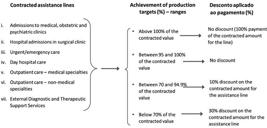
The management contract signed with the winning entity is a standardized instrument that establishes the facility’s monthly cost and outlines service delivery targets by care category (or contracted assistance line). The contract includes variable payments for non-compliance with these targets, with discounts ranging from 10% to 30%, depending on the category of care, as illustrated in Figure 1.
Quality indicator targets are also established, with quarterly monitoring. Failing to meet these targets leads to additional discounts of up to 10% of the total monthly funding. Examples of quality indicators provided by the interviewees include the percentage of maternal deaths reported, hospital infection control measures, hospital information quality metrics, and targets for performing specific surgeries.
The management contract also establishes that the cost value must be redefined annually. According to the interviews, the budget allocated to the management contracts is distributed annually for the following financial year and there may be increases (or reductions) in the cost value of the hospitals, depending on the overall financial amount and the quantity of services contracted by SES/SP in each of the facilities.
Based on these elements, it is possible to state that, although the arrangement created by the São Paulo government incorporates aspects of both logics discussed in the literature review, its core rationale is global budgeting. While the instrument outlines the expected hospital production, which is characteristic of activity-based payment, the interviewees emphasized that the OSS model is fundamentally a contract for the management and operation of the hospital, rather than a service purchase agreement. The management contract defines the terms for the operation of the unit, ensuring that the hospital does not interrupt services or request additional transfers if the contracted monthly quantities are reached before the end of the month. Furthermore, no additional financial transfers are made if the provision of services exceeds the contracted quantity.
Another important aspect that distinguishes the OSS model from activity-based contracts is that the expected hospital product is not valued within the contractual instrument. Instead, each line of contracted assistance is assigned a percentage of the total contract. According to the interviews, this percentage is determined by SES/SP during the initial drafting of the contract and serves as a basis for applying discounts to monthly transfers when the agreed production targets are not met. Therefore, while the hospital’s expected production is quantified through assistance targets, these targets serve only as a reference for discounts and not as the guideline for a contract tied to variations in assistance activity.
4.2 Analysis of the regulatory arrangement of the OSS model
The following examines the design of the regulatory framework for São Paulo State OSS model based on the three dimensions of the proposed analytic model.
Selection of managing entities and determination of contractual value
According to the interviews, the cost value for the hospital in the management contract is determined during the selection process for the entity that will manage the facility. The primary factor SES/SP considers when choosing the managing entity is the funding amount requested by the organizations participating in the call for proposals. However, this evaluation is always weighted by other factors. Based on interviewees information, the State administration uses a set of criteria to analyze proposals including, other than the most advantageous value, factors such as the entity’s previous experience in managing similar units in terms of size and complexity, involving expertise in implementing new units, as well as any accreditations held by the management company (certifications by evaluating entities based on predefined standards to measure quality, transparency, and “best practices”; evidence of the adoption of compliance mechanisms and corporate governance; quality of the work plan proposed by the entity, which indicates to what extent characteristic elements of the territory and the local health system are considered) (SES/SP, 2022).
Additionally, proposals with values substantially below those submitted by other competitors or considerably lower than the current contract, or even far from what was indicated by the interviewees as ‘analogous units’ (a reference to a hospital not yet in operation), tend to be viewed as potentially unsustainable in the medium term. Proposals exceeding such standards resulted in the cancellation and rescheduling of the public call.
It was also reported that the presence of multiple competitors in public calls for proposals is a relatively recent phenomenon (last ten years). Although the entry of new participants is viewed as beneficial, as it broadens the State government’s options in terms of price proposals and management plans, it is understood that this is a restricted market, meaning that the pool of entities with the operational and management capacity to handle a hospital with regional coverage is limited.
Thus, according to the interviews, while efforts are made to secure economically advantageous values in the call, the primary reference for selecting entities and determining funding for the management contract is the value already applied to the hospital under tender or to similar units of comparable size and profile.
Furthermore, as mentioned, the management contract itself establishes an annual review of the value, based on new service targets. Thus, once the initial contract amount is defined, the subsequent process for determining values considers the overall budget available for hospital care in general and the specific service goals agreed upon for each facility, with increases (or reductions) applied within the margin of the established historical value.
Expense parameters and spending monitoring
The interviews revealed that the OSS model includes certain guidelines designed to regulate specific expenses incurred by the managing entities.
A first sets of instruments establishes predefined parameters regarding personnel expenses. As mentioned, the management contract determines that total expenditure on salaries is limited to 70% of the cost value. The management contract also stipulates that the remuneration must be in accordance with the salary levels observed in private health sector, considering units of similar size and complexity. The reference for this comparison is the data provided by specialized salary research entities in the market. According to the interviewees, these standards serve as essential benchmarks, as they form the basis for determining the hospitals’ cost value, considering the significant proportion of personnel expenses in overall expenditures.
The second group of instruments involves monitoring actions carried out by SES/SP on two fronts. First, the Health Department’s team monitors the prices of medical supplies and medicines purchased by the OSS, comparing this data with values obtained in public tenders for similar items conducted by the State government.
The second front requires OSS to maintain cost accounting systems, with information that must be periodically submitted to the Health Department.
However, the interviewees pointed out limitations regarding the effectiveness of monitoring these elements due to the difficulty in utilizing the information “from a managerial perspective.” Their perception is that the volume and diversity of collected data, and especially the lack of reference models to guide comparisons in a complex environment, hinder the establishment of systematic monitoring. From this perspective, such measures could identify potential outliers and serve to signal to the managing entities that expenses are being watched by the government, but would be of limited effectiveness as a routine economic-financial monitoring tool for cost controls.
Specification and monitoring of the complexity of hospital care
Regarding the mechanisms for differentiating complexity levels, Box 1 highlights the level of detail in the contracted hospital care and its variation according to the type of service (care category).
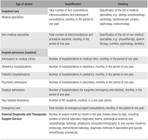
EXPECTED HOSPITAL PRODUCTION BY TYPE OF SERVICE IN THE MANAGEMENT CONTRACT FOR HOSPITALS ADMINISTERED BY OSS
It is observed that the level of detail of service contracted is greater for the care lines related to consultations and diagnostic and therapeutic support services. It should be noted that only in the case of the latter is there a quantification of the expected volume by type of exam, on a monthly basis.
In the description of inpatient care, only quantities related to large groups are identified, meaning there is no differentiation between types of hospital admissions within the clinical, obstetric, psychiatric, pediatric, and surgical categories. This is important, as these services can vary considerably in terms of resource consumption, in addition to the fact that inpatient care typically represent a substantial portion of the services provided in hospital facilities. In fact, a survey of the management contracts in force as of July 2023 for the administration of general hospitals, available on the Transparency Portal of the Health Department (n.d.), revealed that in only four of the 38 hospitals analyzed, hospitalizations represented less than 60% of the overall contract value. In the other 34 units, hospitalizations accounted for between 63% and 85% of the contract value.
The interviewees reported that the State administration has been working on developing mechanisms to address the gap in the model regarding the differentiation of hospital services. The first measure involved separating surgical admissions from other types of admissions for the biannual assessment of contracted hospital production. from other types for the purpose of the semiannual evaluation of contracted hospital output. This decision was based on the understanding that setting a single target for all hospitalization types allowed compliance to be achieved through lower-cost admissions. An analysis of the management contracts available on the SES/SP website indicates that this approach has been adopted in contracts in effect since 2013.
The second measure was to include quantitative targets for specific surgeries as part of the quality indicators in the management contract. Although these targets do not cover all hospitalizations, including surgical ones, this measure is considered a key element, as it directs hospital care according to the specific needs of the region where hospitals managed by OSS operate.
Finally, a more recent focus has been monitoring the complexity of hospitalizations through the analysis of care records in SUS systems through the AIH. According to the interviewees, reviewing the procedures recorded in the AIH allows identifying elements of the complexity profile of care, highlighting potentially inappropriate situations. While hospitalization complexity is not explicitly addressed in the management contract, the interviews show that this type of analysis supports the SES/SP’s positions in meetings with contracted entities where the fulfillment of goals and management contract values are discussed.
When asked about the possibility of adopting the DRG system to classify episodes by complexity, the interviews revealed not only that the team is familiar with this model, albeit to varying extents, but also that there is a consensus that its adoption would be the ideal approach to address the issue of variability in hospital products. The statements did not provide specific reasons why the DRG system has not been adopted by the State government. They only indicated that it represents a significant step that would require a comprehensive review of the current arrangement.
5. DISCUSSION
The purpose of this section is to analyze the economic-financial regulation of the OSS model, based on the framework discussed in the previous section.
Regarding the process of defining the initial value of the management contract, during which the hospital’s managing entity is also selected, both document analysis and interviews indicated that, although the selection contest includes elements of price competition, they play a limited role in the process. This can be explained by either the lack of a significant number of participants in the selection processes or by the State management’s belief that it would not be appropriate to prioritize only the most cost-effective proposal in the public call.
This approach appears justifiable, considering that accepting a contract with imbalanced values and quantities could require future revisions, which would undermine the continuity of service provision. However, from an economic and financial standpoint, this reinforces the need for other measures that can underpin the remuneration for hospital funding, as it cannot be claimed that the value of the management contract results from a typical market competition process.
The interviewees mentioned the use of values charged by units of similar size and profile as parameters, indicating that SES/SP conducts comparative analyses involving existing management contracts. Therefore, a key issue for this discussion is to determine whether there are elements that ensure comparability conditions for hospital facilities. We will return to this point later.
Regarding the spending guidelines for units managed by OSS, the limitation of personnel expenses to 70% of the total and the requirement that salaries be aligned with market values should, in theory, control a significant portion of expenditures. However, some considerations need to be addressed. First, some OSS are managed by organizations with a certificate of charitable social assistance entity (philanthropy certificate). This status exempts entities from paying social security taxes on their employees’ salaries, which significantly impacts payroll costs and the share of personnel expenses in the hospital’s total expenditures. Consequently, the 70% cap on personnel expenses has a much smaller impact on certified entities compared to those without this certification.
Another key point concerns the approach taken by managing entities toward outsourcing healthcare professionals in hospitals, particularly doctors. Studies indicate that hiring doctors and other professionals as service providers - through outsourced companies, contracts with other entities, or as legal entities (Pessoa Jurídica [PJ]) - is becoming increasingly common (Scheffer et al., 2020), as this method considerably lowers employer costs. The OSS model does not impose regulations on this practice, allowing managing entities to independently decide how to hire personnel. As a result, the portion of human resources expenses related to hiring companies is not accounted for under the guidelines, as it involves service contracts rather than salaries.
These factors add considerable complexity to monitoring personnel expenses, since each entity has its own human resources policy. This not only limits the effectiveness of guidelines in regulating personnel costs but also hinders the State Health Department’s ability to oversee expenditures, as the significant weight of personnel expenses within a hospital’s budget often obscures differences in management efficiency.
Monitoring spending on medicines and medical supplies, along with cost tracking, were mentioned by interviewees as mechanisms that do not allow for systematic controls, only the occasional identification of anomalous situations.
In summary, the mechanisms guiding and monitoring expenditure in the OSS model have limited reach and appear insufficient to ensure that key components of hospital costs align with acceptable margins.
Regarding the specification of hospital care complexity in the OSS model, the documentary analysis and interviews reveal that there is minimal detail about what is expected in terms of care for the most significant component: hospital admissions. As discussed in the second section, the variability of hospital activities is the core challenge of remuneration models, especially in general hospitals, where hospitalizations for the same diagnosis can incur vastly different costs.
The interviews indicated that the SES/SP team has been working to address the issue and that the reported measures could reduce information asymmetry and, to some extent, limit the OSSs’ discretion in selecting lower-cost hospitalizations. However, from a regulatory standpoint, such mechanisms have notable limitations. While the inclusion of targets for specific surgeries is valuable in ensuring care in strategic areas, their economic impact tends to be minimal. Attempts to measure the complexity of hospital activity based on AIH value references face a structural challenge, as the pricing system of the SUS Table, which determines the value of hospitalizations measured by AIH, does not follow objective complexity and cost criteria. This causes significant discrepancies not only due to inflation but also because of discrepancies between different procedures (Clark et al., 2022).
These findings suggest that the regulatory framework of the São Paulo OSS model has considerable gaps in its ability to address the distorting effects resulting from the incomplete information that characterizes the relationship between the State Department and hospital management entities. The regulatory measures carried out by SES/SP combine control of means (rules regarding expenditures and cost monitoring) and ends (monitoring the complexity of care), but both present loopholes that allow hospital management entities to focus on lower-cost niches. This arrangement leads to distortions typical of agency problems, as those responsible for delivering services can meet targets by focusing on more financially advantageous services. This can undermine access and quality of care for SUS patients.
“It was also evident that the comparisons between facilities managed by OSS, cited by the SES/SP team as a key element in decision-making regarding management contract values, lack benchmarks that reflect the distinct care profiles of the hospitals. Without a system designed to assess complexity, the idea that hospital cost values can be analyzed by comparing units of similar size and profile becomes inconsistent. Furthermore, the lack of comparability indicates that the annual renegotiation process of contract values and the allocation of resources among various hospital units lacks economic and financial grounding.
These findings align with other studies that have analyzed the São Paulo model from different perspectives. In a study based on documentary analysis, Pahim (2009) identified regulatory gaps while examining the funding transfers of a group of general hospitals compared to the average value of their AIH. Pinto and Amaral (2018, p. 152), in an article that systematizes questions raised within the Public Prosecutor’s Office of the State of São Paulo regarding OSS in São Paulo (state and municipal), highlighted the widespread lack of elements indicating the “advantageousness” and “cost-effectiveness” of contracting private entities to manage public health facilities. The authors also questioned the remuneration rule of the management contract currently used by the São Paulo State government and some municipalities that follow a similar system, which, by establishing payments based on service quantity ranges, allows, in practice, transfers without the necessary consideration for actual care. This results in payment by estimate, with tolerance for services not provided.
Some research works, however, highlight the superior performance of the OSS model in specific indicators, such as average length of stay, discharge volume per bed, cesarean section rate, and hospital infections (Costa & Ribeiro, 2005; Rodrigues et al., 2014). The authors suggest that the better performance of hospitals managed by OSS is due to the model’s combination of management autonomy with reduced procedural control, which is typical of public administration. This creates “governance advantages” in managing human resources (selection, compensation, and dismissal of employees), financial means (freedom to manage the budget), and the acquisition of supplies, goods, and services.
These considerations underscore the need for a robust reference system to guide the allocation of resources for hospital care financing. Such a system would help ensure that the potential advantages of the arrangement can be utilized in the public interest. Although the management entities are characterized as non-profit organizations, in a study on the private sector’s presence in the management of São Paulo’s municipal health system, Contreiras and Matta (2015) noted that, among twenty OSS analyzed, five belonged to the ten largest healthcare service groups in the country. This underscores the need to recognize OSS management entities as organizations with their own interests, driven by goals of expansion and surplus generation, even if the surplus cannot be appropriated as profit.
6. CONCLUSION
The principles of NPM inspired the creation of OSS as an arrangement that balances operational and administrative flexibility with performance-based oversight. This study showed that the model effectively implemented by the São Paulo State government for general hospitals through OSS has considerable weaknesses concerning the remuneration system for the managing entities. These limitations stem from the lack of cost and complexity references for hospital care, which limits the specification of service demand and compromises the performance of the State in its role as a service purchaser. Furthermore, they prevent objective evaluations of whether the amounts transferred to OSS are appropriate, given the absence of criteria that would inform whether the allocation of financial resources among hospitals is compatible with the care provided by each facility. The mechanisms for differentiating the complexity of treatments are also fragile, reinforcing the model’s limitations in aligning resources with the provision of hospital services.
This study suggests that the São Paulo State could achieve substantial gains in terms of regulatory capacity in the OSS model by adopting a classification system based on the DRG logic. The specific use of DRG offers a range of possibilities, but it would certainly provide more consistent references for monitoring hospital care.
In this regard, previous studies (Zanetta, 2003, Noronha et al., 2004) indicated that the mandatory data sent to the Ministry of Health for the registration of hospital admissions through AIH are sufficient to produce care episode groupings following the DRG model. This suggests that a significant portion of the institutional cost associated with its implementation would already be absorbed. Additionally, any potential adoption of the DRG by the São Paulo government would bring substantial gains if aligned with the federal government, as the absence of clear benchmarks for valuing hospital activity remains a systemic challenge for SUS. Even the health insurance industry could benefit from SUS’s adoption of the DRG model, as it would provide a comparison base for hospital care financing by the private sector.
These observations, however, should not overshadow the fact that adopting the DRG system presents considerable challenges, “not only in defining diagnostic groups but, more critically, in establishing a systematic approach to their monetary valuation within the model. The latter is particularly complex because the SUS Table cannot be used as a reference for valuing diagnostic groups, as they are not based on the actual cost of these services. Consequently, pricing hospital activity would be necessary to create DRGs with values that reflect their complexity, which would require substantial institutional efforts to standardize inputs and services, identify costs, and regularly update these values. Some health systems address this issue by using pre-established DRG bases (Geissler et al., 2011), significantly simplifying the process. However, this approach makes the model dependent on technological standards and relative costs from other health systems, potentially leading to substantial distortions and undermining its credibility and acceptance.
Finally, it is important to emphasize that transitioning to a DRG-based model would require a complete redesign of the contracting and monitoring process for hospitals managed by OSS. It would also need a system to update value references in response to technological change and its impact on care and costs. This complexity, however, does not stem from the DRG classification, itself but from the broader challenge of adequately regulating the private provision of hospital care within a public health system, precisely the purpose OSS model’s purpose.
References
-
Barcelos, C. O. G., Andrade, M. V., Botega, L. A., & Malik, A. M. (2022). Censo das organizações sociais de saúde brasileiras: levantamento e caracterização. Jornal Brasileiro de Economia da Saúde, 14(1) (Supl.1), 77-85. Recuperado de https://eaesp.fgv.br/sites/eaesp.fgv.br/files/pesquisa-eaesp-files/arquivos/barcelos_jbes-especialportugues-15-30.pdf
» https://eaesp.fgv.br/sites/eaesp.fgv.br/files/pesquisa-eaesp-files/arquivos/barcelos_jbes-especialportugues-15-30.pdf -
Bredenkamp, C., Bales, S., & Kahur, K. (Eds.) (2020). Transition to Diagnosis-Related Group (DRG) Payments for Health: lessons from case studies. International Development in Focus World Bank. Recuperado de https://documents1.worldbank.org/curated/ar/895741576646353914/pdf/Transition-to-Diagnosis-Related-Group-Payments-for-Health-Lessons-from-Case-Studies.pdf
» https://documents1.worldbank.org/curated/ar/895741576646353914/pdf/Transition-to-Diagnosis-Related-Group-Payments-for-Health-Lessons-from-Case-Studies.pdf - Brick, A., Nolan, A, O’Reilly, J, & Smith, S. (2010). Evidence for the expert group on resource allocation and financing in the health sector, 1. The Economic and Social Research Institute.
- Clark, G., De Lelis, D. A. S, & Machado, D. S. (2022, setembro-dezembro). Tabela de procedimentos do SUS à luz da ordem econômica: a ausência de correção inflacionária da remuneração das Santas Casas no âmbito da saúde pública. Revista Estudos Institucionais, 8(3), 481-506.
-
Contreiras, H., & Matta, G. C. (2015). Privatização da gestão do sistema municipal de saúde por meio de Organizações Sociais na cidade de São Paulo, Brasil: caracterização e análise da regulação. Cadernos de Saúde Pública, 31(2), 285-297. https://doi.org/10.1590/0102-311X00015914
» https://doi.org/10.1590/0102-311X00015914 - Costa, N., & Ribeiro, J. M. (2005). Estudo comparativo do desempenho de hospitais em regime de organização social In: Programa de Pesquisas Hospitalares: em Busca de Excelência: fortalecendo o desempenho hospitalar em Brasil. Ministério da Saúde, Banco Mundial, Fundação Oswaldo Cruz.
- Forder, J., Robinson, R., & Hardy, B. (2005). Theories of purchasing. In: J. Figueras, R. Robinson, & E. Jakubowski (Eds.), Purchasing to improve health systems performance (Cap. 4, pp. 83-101). Open University Press.
- Geissler, A., Quentin, W., Scheller-Kreinsen, D., & Busse, R. (2011). Introduction to DRGs in Europe: common objectives across different hospital systems. In: R. Busse, A. Geissler, W. Quentin, & M. Wiley (Eds.), Diagnosis-related groups in Europe: moving towards transparency, efficiency and quality in hospitals (Cap. 2, pp. 9-22). Open University Press.
-
Hassenteufel, P., Genyeis, W., & Smyrl, M. (2008). Reforming european health care states: programmatic actors and policy change. Pôle Sud, 1(28), 87-107. https://doi.org/10.3917/psud.028.0087
» https://doi.org/10.3917/psud.028.0087 -
Khaleghian, P., & das Gupta, M. (2005). Public management and the essential public health functions. World Development, 33(7), 1083-1099. https://doi.org/10.1016/j.worlddev.2005.04.001
» https://doi.org/10.1016/j.worlddev.2005.04.001 -
Klein, A, Mathauer, I., Stenberg, K., & Habicht, T. (Eds.). (2020). Diagnosis-related groups: a question and answer guide on case-based classification and payment systems. Health Financing Guidance, 10 Geneva: World Health Organization. Recuperado de https://iris.who.int/bitstream/handle/10665/333717/9789240006713-eng.pdf
» https://iris.who.int/bitstream/handle/10665/333717/9789240006713-eng.pdf -
Lindner, L., & Lorenzoni, L. (2023). Innovative providers’ payment models for promoting value-based health systems: start small, prove value, and scale up [OECD Health Working Papers n. 154]. Recuperado de https://www.oecd-ilibrary.org/docserver/627fe490-en.pdf?expires=1719492459&id=id&accname=guest&checksum=4AEF66147619A9DEC85C40CB65E87EA2
» https://www.oecd-ilibrary.org/docserver/627fe490-en.pdf?expires=1719492459&id=id&accname=guest&checksum=4AEF66147619A9DEC85C40CB65E87EA2 -
Maarse, H. (2006). The privatization of healthcare in Europe: an eight-country analysis. Journal of Health Policits, Policies and Law, 31(5), 981-1014. https://doi.org/10.1215/03616878-2006-014
» https://doi.org/10.1215/03616878-2006-014 -
Major, I. (2019). Two-Sided Information Asymmetry in the Healthcare Industry. International Advances in Economic Research, 25, 177-193. https://doi.org/10.1007/s11294-019-09732-9
» https://doi.org/10.1007/s11294-019-09732-9 - Milsten, R., & Schreyoegg, J. (2022, setembro). Activity-based funding based on diagnosis-related groups, the end of an era? A review of payment reforms in the inpatient sector in ten high-income countries [HCHE Research Paper n. 28].
-
Noronha, M. F., Portela, M. C., & Lebrão, M. L. (2004). Potenciais usos dos AP-DRG para discriminar o perfil da assistência de unidades hospitalares. Cadernos de Saúde Pública, 20(2), 242-255. Recuperado de https://www.scielo.br/j/csp/a/SwZqXfRYj6GZPzVYdz3wWtt/?format=pdf⟨=pt
» https://www.scielo.br/j/csp/a/SwZqXfRYj6GZPzVYdz3wWtt/?format=pdf⟨=pt -
Office of the Inspector General. (2001). Medicare hospital prospective payment system: how DRG rates are calculated and updated. Centers for Medicare & Medicaid Services, Central Office (White paper). Recuperado de https://oig.hhs.gov/oei/reports/oei-09-00-00200.pdf
» https://oig.hhs.gov/oei/reports/oei-09-00-00200.pdf -
Organização para Cooperação e Desenvolvimento Econômico. (2016). Better Ways to Pay for Health Care. Health Policy Studies OECD Publishing. https://doi.org/10.1787/9789264258211-en
» https://doi.org/10.1787/9789264258211-en - Pahim, M. L. L. (2009). Organizações Sociais de Saúde do Estado de São Paulo: inserção privada no SUS e gestão financeira do modelo pela Secretaria de Estado da Saúde (Tese de Doutorado), Faculdade de Medicina da Universidade de São Paulo, São Paulo.
- Pinto, E. G., & Amaral, D. J. (2018). Controle de custos e resultados nos contratos de gestão da saúde: alguns apontamentos sobre prestações de contas. In: F. Sodré, E. C. A. Bussinguer, & L. Bahia (Orgs.), Organizações sociais: agenda política e os custos para o setor público da saúde Hucitec.
-
Portal da Transparência da Secretaria Estadual da Saúde de São Paulo. (n.d.). Recuperado de http://portaldatransparencia.saude.sp.gov.br/
» http://portaldatransparencia.saude.sp.gov.br/ - Robinson, R., Jakubowski, E., & Figueras, J. (2005). Theories of purchasing. In: J. Figueras, R. Robinson, & E. Jakubowski (Eds.), Purchasing to improve health systems performance (Cap. 2, pp. 11-43). Open University Press.
- Rodrigues, R. C., Bittar, O. J. N. V., Magalhães, A., & Mendes, J. D. V. (2014, outubro-dezembro). Rede hospitalar estadual: resultados da administração direta e das organizações sociais. Revista de Administração em Saúde 16(65), 112-122.
- Scheffer, M. C., Guerra, A., Cassenote, A., Guilloux, A. G. A., Brandão, A. P. D., Miotto, B. A., Almeida, C. J., Gomes, J. O., & Miotto, R. A. (2020). Demografia médica no Brasil 2020 FMUSP; CFM.
- Secretaria Estadual da Saúde de São Paulo. (2022). Critérios de avaliação (Manuscrito não publicado). [s.l.]: [s.n.].
-
Sutherland, J. M. (2011). Hospital payment mechanisms: an overview and options for Canada. CHSRF Series on cost drivers and health systems efficiency, 4 Center for Health Services and Policy Research. Recuperado de https://healthcarefunding2.sites.olt.ubc.ca/files/2011/12/Mar11-Hospital-Payment-Mechanisms.pdf
» https://healthcarefunding2.sites.olt.ubc.ca/files/2011/12/Mar11-Hospital-Payment-Mechanisms.pdf - Sutherland, J. M., Crump, R. T., Repin, N., & Hellsten, E. (2013, abril). Paying for Hospital Services: a hard Look at the Options [Commentary n. 378]. C.D. Howe Institute.
- Zanetta, S. F. R. (2003) Morbidade no Hospital das Clínicas: identificação de perfis e desenvolvimento de instrumento de monitoramento (Dissertação de Mestrado), Faculdade de Medicina da Universidade de São Paulo, São Paulo.
Editor-in-chief:
Associate editor:
Reviewers:
-
Peer Review Report:
The peer review report is available at https:URL. https://periodicos.fgv.br/rap/article/view/93177/87262
The dataset supporting the results of this study is not publicly available.

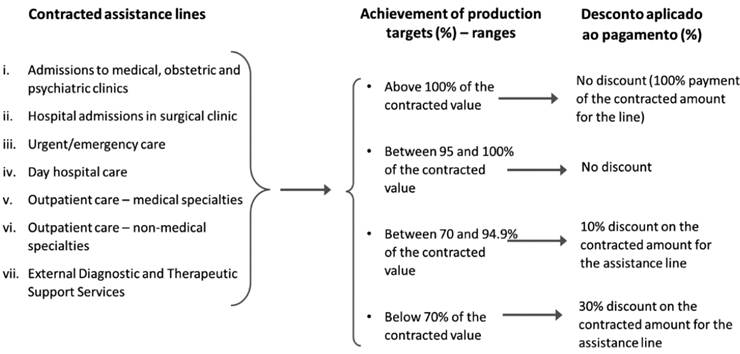 Source: Transparency Portal of the São Paulo State Health Department (n.d.).
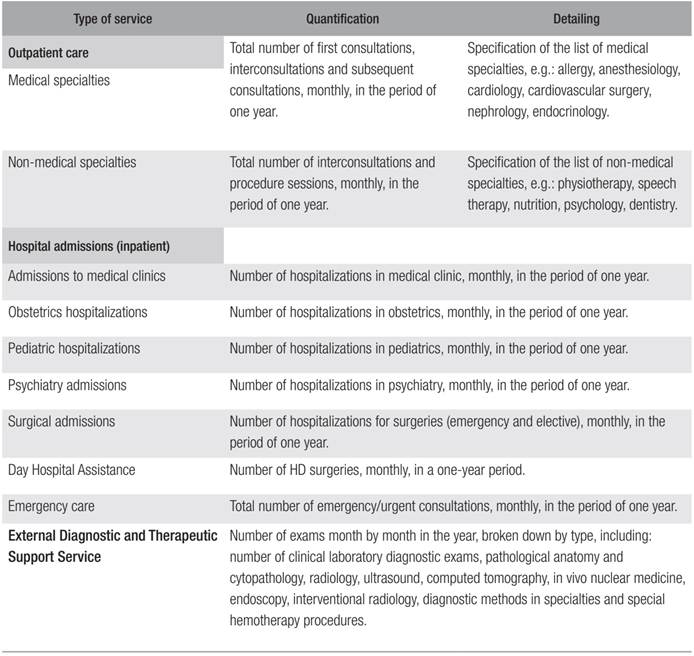 Source: Transparency Portal of the São Paulo State Health Department (n.d.).