 SUCCESSFUL FACTORS FOR INDUSTRY 4.0 CIRCULARITY IN AGRI-FOOD COMPANIES
ABSTRACT
Despite the growing interest in Industry 4.0 technologies, the managerial perspective and its integration with circular economy principles remain underexplored, particularly within the agri-food sector. This study addresses this gap by employing a scoping review (PRISMA-ScR) combined with content analysis to examine how Industry 4.0 facilitates agri-food companies’ transition to the circular economy. Findings reveal that Industry 4.0 can transform product development, production, and sales by enhancing resource efficiency and supply chain resilience. Addressing social impacts - such as job displacement and workforce retraining – is essential. This research synthesizes critical success factors for Industry 4.0 implementation, including strong leadership, adaptive organizational culture, and robust cybersecurity infrastructure, proposing a comprehensive framework to guide agri-food firms in aligning digital transformation with the circular economy goals. The review contributes to the literature by elucidating the interplay between these factors and offers actionable insights for policymakers and managers striving to enhance sustainability and competitiveness within the agri-food sector.
Keywords:
Industry 4.0; agri-food sector; circular economy; critical success factors; social innovation
RESUMO
Apesar do crescente interesse pelas tecnologias da Indústria 4.0, a perspectiva gerencial e sua integração com os princípios da economia circular ainda são pouco exploradas, especialmente no setor agroalimentar. Este estudo utiliza Scoping Review (PRISMA-ScR) combinada com análise de conteúdo para examinar como a Indústria 4.0 facilita a transição das empresas agroalimentares para a economia circular. Os resultados indicam que essa indústria pode transformar o desenvolvimento de produtos, a produção e as vendas, ao melhorar a eficiência dos recursos e a resiliência da cadeia de suprimentos. Abordar impactos sociais — como substituição de empregos e requalificação da força de trabalho — é fundamental. Ao sintetizar fatores críticos de sucesso, incluindo liderança forte, cultura organizacional adaptativa e infraestrutura robusta de cibersegurança, propõe-se um framework para orientar empresas na transformação digital alinhada à sustentabilidade. Este estudo oferece insights práticos para gestores e formuladores de políticas que buscam promover sustentabilidade e competitividade no setor agroalimentar.
Palavras-chaves:
Indústria 4.0; setor agroalimentar; economia circular; fatores críticos de sucesso; inovação social
RESUMEN
A pesar del creciente interés en las tecnologías de la industria 4.0, la perspectiva de gestión y su integración con los principios de la economía circular aún están poco exploradas, especialmente en el sector agroalimentario. Este estudio utiliza el método Scoping Review (PRISMA-ScR) combinado con análisis de contenido para examinar cómo la industria 4.0 facilita la transición de las empresas agroalimentarias a la economía circular. Los resultados indican que esta industria puede transformar el desarrollo de productos, la producción y las ventas al mejorar la eficiencia de los recursos y la resiliencia de la cadena de suministro. Abordar los impactos sociales ‒como la sustitución de empleos y la recualificación de la fuerza laboral‒ es fundamental. Al sintetizar factores críticos de éxito, como un liderazgo sólido, una cultura organizacional adaptable y una infraestructura robusta de ciberseguridad, se propone un marco para guiar a las empresas en su transformación digital orientada a la sostenibilidad. Este estudio ofrece insights prácticos para gestores y formuladores de políticas que buscan promover la sostenibilidad y la competitividad en el sector agroalimentario.
Palabras clave:
Industria 4.0; sector agroalimentario; economía circular; factores críticos de éxito; innovación social
INTRODUCTION
Considering recent geopolitical and health crises, it is more urgent than ever for the world’s economies to become more sustainable and environmentally friendly (Rajput & Singh, 2019) while advancing technologically. In response, policymakers and companies around the world are striving to reduce greenhouse gas emissions and global warming, address resource scarcity, manage waste disposal and recycling (Dantas et al., 2021; Nerini et al., 2019), and implement clean technologies and sustainable practices more efficiently (Ambekar et al., 2019).
Against this backdrop, the Fourth Industrial Revolution, or Industry 4.0 (I4.0), has emerged as a transformative force characterized by advances in sensor technologies, interconnectivity, and data analytics that drive digital manufacturing and mass customization (Piccarozzi et al., 2018). Kerin and Pham (2019) summarized the literature on I4.0, highlighting benefits such as improved stakeholder cooperation, the use of artificial intelligence in decision making, and the expansion of product-service systems for developing new services or products (Awan et al., 2021). This revolution began in 2011 with the German government’s High-Tech Strategy 2020, and represented the first significant transformation toward the anticipated future economic model.
I4.0 refers to the rapid changes in the development, manufacture, operation, and service of production systems and products. It involves the digital networking of the entire supply chain, creating a highly integrated value chain (Davies, 2015). Technologies such as robotics, virtual and augmented reality, big data, blockchain, and cloud computing are driving the digital transformation of manufacturing companies worldwide (Kashyap et al., 2023).
The EU aims for 80% of SMEs to adopt I4.0 by 2040. The transition toward digitalization of European manufacturing companies is considered to bring positive effects toward improved consumer experience, product quality, and innovation potential (Moeuf et al., 2018); increased profitability, reduction of defects, and rework (Yilmaz et al., 2022). By implementing the concepts of I4.0, enterprises report better management performance and higher outcomes while realizing economic, social, and environmental benefits (Sommer, 2015). Digitized manufacturing also increases resilience, as some of the I4.0 technologies (such as “big data analytics”) have been reported to increase supply chain innovation during the COVID-19 crisis (Hopkins, 2021). Smart organizations are increasingly recognized as key drivers of competitive advantage (Cefis et al., 2023), circular economy (CE)-based production (Adamik et al., 2018), and green innovation (Wang, 2024).
In Europe, the strategic alignment of digital and green transitions – often referred to as the twin transition – is central to achieving the European Union’s target of climate neutrality by 2050 (Jesus et al., 2019; Rashed & Shah, 2021). This policy direction is particularly relevant to sectors with high environmental footprints, including energy, transportation, and agriculture, where the integration of advanced technologies and CE principles can yield substantial sustainability gains. The European Commission’s initiatives, such as the European Green Deal, the Circular Economy Action Plan, and the Farm to Fork Strategy, embed sustainability, traceability, and resource efficiency within agri-food systems, while programs like the Digital Europe Programme support technological adoption and capacity building across regions (European Commission, 2022, 2023).
The European agri-food sector emerges as a particularly strategic context for studying the intersection of I4.0 and CE for several reasons. First, Europe has one of the world’s most comprehensive regulatory frameworks promoting both digitalization and environmental sustainability, creating a unique environment where policy coherence drives innovation. Second, over 99% of European agri-food enterprises are small and medium-sized enterprises (SMEs) (FarmEurope, 2023), which face specific structural challenges in digital transformation, such as limited technical capacity and investment barriers. Understanding how I4.0 can support CE implementation in this sector is thus crucial for designing scalable, inclusive policy interventions. Third, despite being one of the least digitized sectors, agriculture holds significant potential to benefit from the twin transition through improvements in resource efficiency, supply chain transparency, and closed-loop production systems (Quiroz-Flores et al., 2023; Stefanini & Vignali, 2023).
Furthermore, Europe’s leadership in sustainability and digital innovation makes it an ideal setting to generate insights with broader relevance. While CE frameworks often require adaptation to sector-specific realities, the European experience offers lessons for other regions seeking to balance economic competitiveness with environmental stewardship (Jabbour et al., 2023; Padilla-Rivera et al., 2020; Zhang et al., 2022). However, despite increasing scholarly interest, there remains a limited understanding of how I4.0 technologies can be effectively leveraged to operationalize CE strategies within organizational and agri-food contexts (Awan et al., 2021).
This study, therefore, aims to fill this gap by empirically examining the integration of I4.0 technologies and CE principles in the European agri-food sector, offering insights into how targeted technological and policy interventions can foster sustainable and resilient food systems both within Europe and globally.
This study is guided by two research questions:
-
What are the most important success factors for the digitalization of industrial companies that contribute to the CE?
-
Do these success factors differ in the context of the agri-food sector, which faces distinct constraints and opportunities in its transition toward I4.0 and CE?
Adopting a scoping review approach, the study offers a structured synthesis of the literature on I4.0-CE integration, with specific attention to the agri-food sector. It highlights how digital enablers can support circularity goals and identifies both organizational and policy-relevant implications for improving sustainability, competitiveness, and systemic resilience.
THE IMPACT OF AGRICULTURE 4.0 ADOPTION ON THE PERFORMANCE OF COMPANIES IN THE CIRCULAR ECONOMY
Agriculture 4.0 technologies can drive innovation in areas such as product development, production, data management, consumer engagement, strategy, and organizational competitiveness (Abbasi et al., 2022). Though still evolving, Agriculture 4.0 is widely acknowledged for its potential to boost productivity, enhance food quality, minimize waste, and support sustainable resource use (Satyro et al., 2023).
Advanced digital technologies like IoT, AI, and big data analytics are increasingly used in modern farms and agri-food factories to manage inputs efficiently, support real-time decisions, and reduce environmental impacts. Lezoche et al. (2020) emphasize how smart farming and sensor technologies enhance agricultural resilience, especially amid climate variability and supply chain disruptions.
The digital transformation associated with Agriculture 4.0 also aligns with broader sustainability goals, offering industries the tools to simultaneously pursue economic growth, social inclusion, and environmental protection (Jafari-Sadeghi et al., 2021; Saad et al., 2019). It can enable agri-food firms to implement system-level innovations that reduce emissions, improve circularity, and lower the resource intensity of industrial systems (Tseng et al., 2018).
Importantly, the goals of Agriculture 4.0 are closely aligned with the principles of the circular economy (CE). The CE model — defined by the European Environment Agency (2016) as encompassing “eco-design, repair, reuse, refurbishment, remanufacturing, product sharing, waste prevention, and waste recycling” (p. 9) — offers a strategic framework for sustainable production and consumption. In this context, Agriculture 4.0 can act as a key enabler, facilitating circular practices across the agri-food value chain (Jabbour et al., 2022).
By integrating CE principles with smart agricultural technologies, agri-food companies are rethinking their production and supply chain models to optimize resource efficiency, extend product life cycles, and minimize waste (Quiroz-Flores et al., 2023). This convergence of digital and circular strategies represents a new frontier for organizational performance, sustainability, and innovation in the agri-food sector.
UNEQUAL ACCESS TO DIGITAL TRANSFORMATION FOR CIRCULAR ECONOMY IN THE EU
While Industry 4.0 (I4.0) has been extensively explored from technological and operational angles, its managerial dimension is less developed (Strange & Zucchella, 2017). Although scholars like Piccarozzi et al. (2018) have examined management topics such as strategy and business transformation, there remains a lack of systematic frameworks to guide managerial implementation of I4.0 in line with circular economy (CE) goals (Ahmad et al., 2023). This gap is critical amid the rising demand for strategic direction in sustainable digital transitions.
Digital transformation opportunities remain uneven across the EU, with Western European countries enjoying better infrastructure and institutional support, while Central and Eastern regions face structural challenges (Buglea et al., 2025). These disparities affect the agri-food sector, which, despite employing over 44 million people - 20 million in agriculture - remains the EU’s least digitalized industry (European Commission, 2023).
In response, the European Commission has launched multiple initiatives and funding schemes to reduce the environmental footprint of agri-food production and promote its digitalization. However, barriers such as limited rural infrastructure, high technology costs, resistance to organizational change, and low digital literacy continue to hamper progress (Annosi et al., 2020). As such, there is an urgent need for both theoretical and practical insights that can support agri-food companies in strategically implementing I4.0 technologies to advance CE outcomes.
CONNECTING INDUSTRY 4.0 TO THE CIRCULAR ECONOMY
Strengthening the link between Industry 4.0 (I4.0) and the Circular Economy (CE) involves examining how digital technologies support sustainable practices. Tools like automation, real-time analytics, and AI can boost supply chain resilience, cut waste, and improve resource efficiency (Stefanini & Vignali, 2022; 2023), aligning with CE principles of reuse, recycling, and waste reduction (Quiroz-Flores et al., 2023).
Integrating I4.0 and CE frameworks provides a powerful strategy for agri-food companies seeking to redesign operations toward greater sustainability, circularity, and resilience. This integration is not only critical for business competitiveness but also provides a conceptual foundation to advance theory on the sustainable digital transformation of industrial sectors.
This manuscript contributes by examining how I4.0 technologies can be strategically leveraged to support CE practices, particularly within the agri-food sector. In doing so, it responds to calls for more detailed analyses of how key enabling factors—technological, organizational, and systemic—interact to shape CE outcomes. Ultimately, we aim to identify the critical elements required for successful implementation and to propose a conceptual framework that supports both researchers and practitioners in aligning digital transformation with sustainability goals.
Due to a limited understanding of how I4.0 supports CE implementation, there is a need to systematically map and synthesize critical success factors enabling this transformation, especially from managerial and sector-specific angles. To address this gap and our research questions, we conduct a scoping review to examine the literature at the intersection of I4.0 and CE, with emphasis on strategic applications in the agri-food sector. The next section details the methodological steps used to identify, select, and analyze the relevant academic work.
METHODOLOGY
The research design consists of two parts: the methodology to assess the critical success factors for Industry 4.0 (I4.0), through a Scoping Review protocol, and qualitative data analysis to assess how these factors differ in the agri-food sector. The study was conducted from March 2022 to September 2023.
The methodology was guided by the Preferred Reporting Items for Systematic Reviews and Meta-Analyses—Extension for Scoping Reviews (PRISMA- ScR) checklist and guidelines (Tricco et al., 2018) to ensure a robust and replicable process. The study followed the methodological framework proposed by Arksey and O’Malley (2005), further developed by Levac et al. (2010) and Degieter et al. (2022), and integrated aspects of a full scoping review to improve replicability and completeness.
Identification of relevant studies
A review protocol was defined to analyze the bibliography. The review included studies from peer-reviewed journals using qualitative, quantitative, and mixed methods. The search terms were entered into the Web of Science database. A broad list of keywords was selected based on previous reviews and articles (Kashyap et al., 2023; Naveed et al., 2019; Sony et al., 2021; Tseng et al., 2018), including: (“Critical Success Factors” OR “Key Success Factors” OR “Success Drivers” OR “Key Enablers”) AND (“Industry 4.0” OR “Fourth Industrial Revolution” OR “I4.0” OR “4IR” OR “Digital Transformation” OR “Smart Manufacturing” OR “Agriculture 4.0” OR “Agri-food 4.0”) AND (“Circular Economy” OR ”Sustainable Production” OR “Sustainability” OR ”Green Manufacturing” OR “Resource Efficiency”) AND (“European Union” OR “EU” OR “Europe”).
Criteria for including and excluding studies
The analysis considered peer-reviewed papers only. It involved identifying relevant records and screening articles from business and management literature that contain specific keywords published within a timeframe. The study analyzed similarities and differences between I4.0 and Agri-food 4.0 within the CE context. Finally, duplicates were removed, eligible studies were included, and answers to research questions were formulated.
Study selection
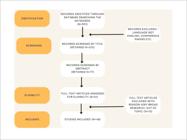
The literature search process was conducted systematically in four stages—identification, screening, eligibility, and inclusion—guided by the PRISMA methodology to ensure transparency and rigor. The identification stage began with a comprehensive search in the Web of Science database using the specific keywords and Boolean operators described above. This search yielded 301 articles. During the screening stage, duplicate entries were removed, and titles were reviewed for relevance, narrowing the list to 210 articles.
In the eligibility stage, abstracts were carefully analyzed to assess alignment with the research objectives, further reducing the pool to 77 articles. At this stage, two articles were excluded because they were not published in English, which was a predefined eligibility criterion. The full-text review was then conducted to evaluate whether the articles met additional criteria, such as methodological rigor and relevance to I4.0 implementation.
Ultimately, 61 articles were found eligible based on their methodological soundness and thematic relevance. However, applying our final inclusion criteria—which emphasized recency (publications from 2015 onward), specific focus on I4.0, and the identification of critical success factors—resulted in a final selection of 48 articles for detailed analysis, as presented in Figure 1. These articles form the foundation of our systematic review, ensuring a focused and contemporary understanding of the critical success factors for I4.0 implementation.
Data extraction and charting
A standardized Excel form was used to extract data from the studies during full-text review. The extracted information included lead author, year, title, publication type, journal, geography, population, specific food/outlet, data collection, and analysis methods. The study reviewed 48 publications published in English from January 1, 2015, to September 1, 2024, and the year-wise distribution is shown in Figure 2.

The bar chart shows the evolution of research publications on “Industry 4.0 and Circular Economy” and “Agriculture 4.0 and Circular Economy” from 2015 to 2024. Both topics experienced steady growth in publications, peaking in 2020, reflecting heightened interest in sustainable practices during this period. While “Industry 4.0” consistently dominates in volume, “Agriculture 4.0” has shown steady contributions, highlighting its emerging relevance. However, a decline in publications is observed post-2020, possibly indicating a shift in research focus or a transition from conceptual exploration to implementation. This trend underscores the need for renewed emphasis, particularly on Agriculture 4.0, to address sustainability challenges in food systems.
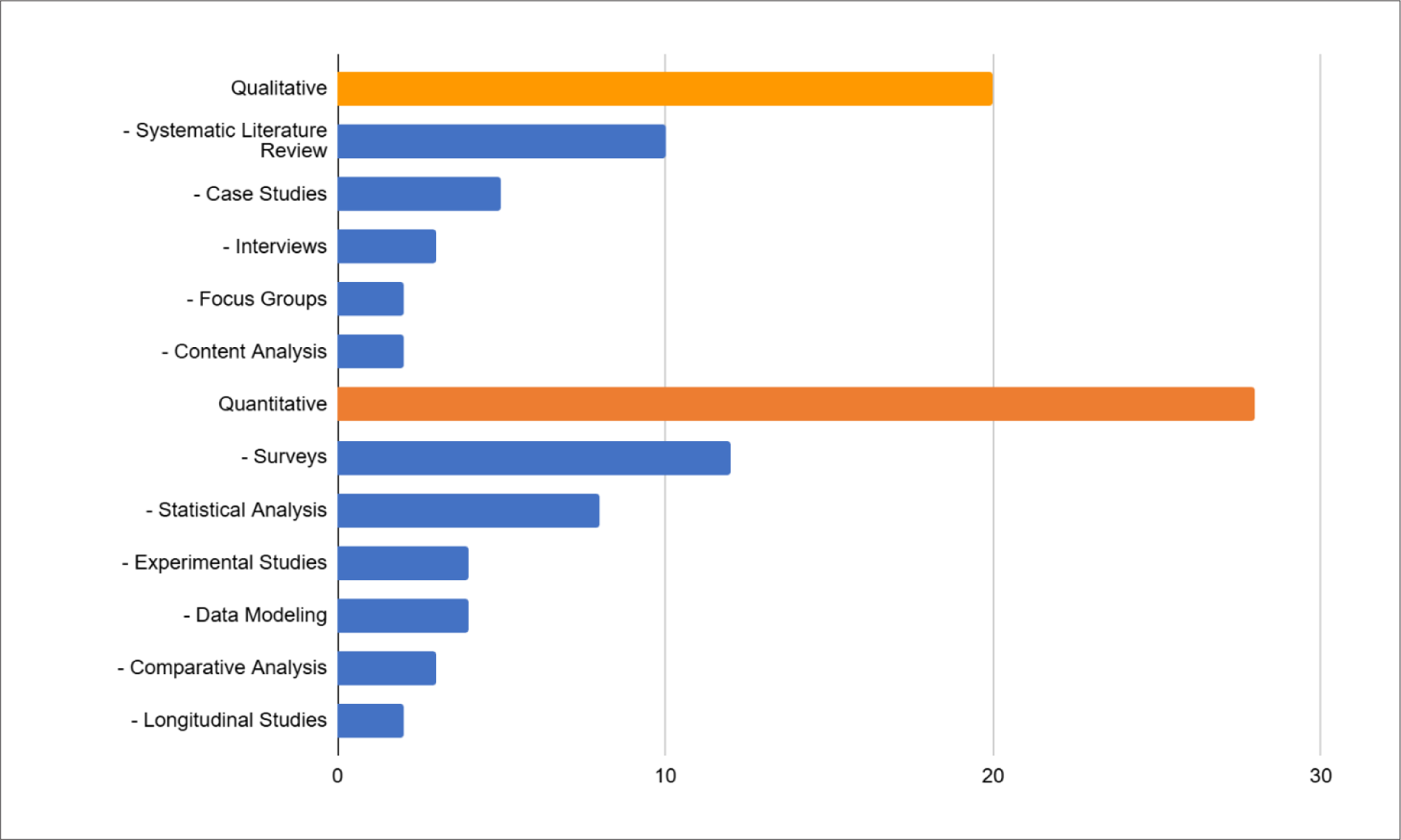
Figure 3 shows the emphasis on quantitative methods, particularly surveys and statistical analysis, indicating a focus on generalizable findings and stakeholder behavior. Systematic literature reviews are the most frequently employed qualitative method, indicating a significant focus on synthesizing and analyzing existing knowledge. This trend highlights the foundational role of literature consolidation in shaping research directions and identifying gaps in the field. However, the relatively limited use of other qualitative methods, such as focus groups or interviews, may point to gaps in contextual understanding and in-depth exploration, highlighting potential areas for future research to enrich the field.

The top journals in the dataset with the highest number of publications include Computers in Industry, Journal of Cleaner Production, and International Journal of Production Economics, each featuring three publications. Additionally, Sustainability, Procedia Manufacturing, Technological Forecasting and Social Change, and Sustainable Production and Consumption stand out with two publications.
These journals highlight the prominence of sustainability, technological advancements, and production efficiency within the context of I4.0 and circular economy research. Table 1 presents the extensive list of publications extracted from the PRISMA.
This study employed content analysis using NVivo software to systematically organize and analyze qualitative data. Following Gibbs’ (2007) guidelines, an iterative and structured approach ensured transparency and depth in identifying patterns. Articles were coded along two main axes: Axis 01 captured key factors for I4.0 implementation—definitions, technologies, benefits, challenges, and systemic changes—while Axis 02 identified research trends across I4.0, CE, and agriculture, revealing thematic intersections. To enhance reliability and reduce bias, a manual second screening of all articles was conducted, as recommended by Felsberger et al. (2020). Figure 4 presents a word cloud of the 50 most frequent terms.

The analysis revealed that 70% of the research in this field focuses on the manufacturing industry, while only 30% addresses the agri-food sector. Key trends identified include the emphasis on sustainable I4.0 technologies for manufacturing, advancements in supply chain innovations like blockchain and cloud-based solutions, and the transformative impact of digitalization on CE practices.
This approach ensures a rigorous and comprehensive exploration of the data while systematically uncovering critical patterns, addressing potential researcher bias, and connecting theoretical insights to practical applications.
RESULTS
Key factors for Industry 4.0 implementation in the EU
Top management commitment and its initialization, monitoring, and evaluation of performance, competitive advantages, communication channels, trialability, observability, and usability were summarized by Benzidia et al. (2021) as factors for sustainable digital transformation. A well-defined management strategy is more likely to provide context for the successful adoption of sustainable Industry 4.0 (I4.0) technologies (Pagliosa et al., 2021). Some authors suggest that modern management in digital enterprises is realized through the adaptation of new information systems. Management information systems (MIS) use new data processing solutions to define strategy and build highly integrative enterprise-wide systems, such as CRM, ERP, and others, to manage processes (Davenport, 1998) and create new business models (Johnson, 2008).
However, although the implementation of MIS promises greater organizational efficiency and strategic effectiveness due to data analytics (with implications for growth related to increased flexibility, productivity, cybersecurity, and quality of products and services), companies often fail to expand their product or market potential or reduce their costs using decision support systems (Dalmarco et al., 2017).
Others, such as Sony et al. (2021), consider other management aspects, such as leadership and experience, people, and flexibility, as key factors for project management success. A clear strategy for the operational, economic, environmental, and social sustainability of I4.0 must be defined in the mission and vision. In addition, accounting for corporate social responsibility (which is also part of the EU initiatives) needs to be developed, which includes minimal waste, reusable new material, and no surplus.
To fully evolve, corporate structures need advanced computing solutions (Göelzer & Fritzsche, 2017) and an organizational culture aligned with digital strategy (Martínez-Caro et al., 2020). Decentralization and involving knowledgeable decision-makers are key to success (Sony et al., 2021). For SMEs, the initial level of digitization is especially important due to the complexity and cost of I4.0 (Ghobakhloo et al., 2021). Achieving a circular economy (CE) requires a strategic roadmap with time-bound actions (Horváth & Szabó, 2019) and advanced IT systems to support real-time operations and automation (Sony et al., 2021).
Scholz et al. (2020) describe how new business models are emerging around shifts in product lifecycles and consumer relationships, embedded within value networks that connect equipment, processes, people, and products. Disruptive technologies and digital innovations are transforming business practices and consumer behavior, prompting companies to adapt quickly to changing preferences and value creation demands (Psarommatis et al., 2022). In this context, manufacturing firms seeking a sustainable transition to I4.0 focus on building strong partnerships, understanding competitors, and aligning with both EU legislation and regional specificities (Sony et al., 2021).
Smart management and automated manufacturing, driven by big data and cyber-physical systems, introduce challenges in data integrity, privacy, and security (Rajput & Singh, 2019). Cyber-attacks can lead to equipment damage and disruptions that may risk system integrity and availability (Abbasi et al., 2022), while blockchain offers protection against data manipulation (Song & Moon, 2020), reinforcing cybersecurity as a key enabler of sustainable digital transformation (Ghobakhloo et al., 2021).
Therefore, successful I4.0 implementation in the EU relies on several critical factors aligned with CE goals. Strong leadership ensures strategic direction toward waste reduction and resource efficiency (Sony et al., 2021), while a proactive organizational culture supports CE practices like recycling and remanufacturing (Martínez-Caro et al., 2020). The initial level of digitalization influences the feasibility of adopting smart, resource-efficient systems (Ghobakhloo et al., 2021), and flexibility helps firms adapt to evolving technologies and consumer needs (Psarommatis et al., 2022). External factors, including regulatory compliance and partnerships, are also vital (Sony et al., 2021). Cybersecurity safeguards the integrity of digital systems, ensuring sustainable and resilient operations (Ghobakhloo et al., 2021). Collectively, these elements enhance efficiency, reduce waste, and support CE-aligned transformation (Benzidia et al., 2021; Pagliosa et al., 2021).
Following the theoretical review and the authors’ analysis, those six factors might have the greatest impact on the sustainable implementation of I4.0 in companies, according to the research (see Table 2).
These factors collectively enable companies to navigate the complexities of digital transformation, enhance operational efficiency, and ensure sustainable growth. By integrating advanced technologies like cyber-physical systems, IoT, and blockchain within a well-defined management framework, businesses can drive innovation while meeting CE goals. However, the implementation challenges, particularly for SMEs, highlight the need for clear roadmaps, targeted investments, and collaborative efforts to bridge gaps in digital maturity. As companies continue to adapt to the dynamic landscape of I4.0, these factors will remain pivotal in ensuring both competitiveness and sustainability in a rapidly evolving global economy.
Key factors for I4.0 in the agri-food sector
The agri-food industry represents a large percentage of the total manufacturing value-added, provides many jobs, and accounts for a significant share of the gross domestic product (GDP) of most countries (Food and Agriculture Organization of the United Nations [FAO], 2023). Meanwhile, the sector also faces challenges related to growing demand for food, food safety and insecurity, disrupted supply chains, environmental externalities and sustainability, competitiveness, and technological adoption of SMEs (Stillitano et al., 2021), and some of the challenges related to recent geopolitical, health, and economic shocks.
The term “Agri-Food 4.0” draws a direct analogy to “Industry 4.0” and originates from the broader evolution of “Agriculture 4.0.” This evolution reflects how the agri-food sector has progressed alongside industrial technological shifts—beginning with “Agriculture 1.0,” marked by mechanized equipment; moving to “Agriculture 2.0,” with the introduction of electricity and intensive production; followed by “Agriculture 3.0,” featuring robotics and specialized machines capable of completing entire fieldwork cycles. Today, the sector enters a new phase influenced by I4.0 technologies, embracing tools, methods, and strategies such as autonomous agriculture (Miranda et al., 2019).
According to the European I4.0 strategy, Agriculture 5.0 envisions digitally integrated companies using robotics and AI to manage production, supported by technologies like IoT, big data, blockchain, and practices such as collaboration and open innovation (Abbasi et al., 2022). This shift transforms production infrastructure—networked farms, smart machinery, and advanced facilities—enhancing productivity, quality, and environmental protection. It also reshapes value chains and business models, emphasizing knowledge management (European Commission, 2023), intelligent control of agri-food subsystems (Miranda et al., 2019), and the adoption of Farm Management Information Systems (FMIS) to reduce costs, ensure compliance, and maintain high standards (Fountas et al., 2015).
Smart agri-food companies are constantly adapting their product life cycles to meet rapidly changing consumer preferences, placing more emphasis on environmentally friendly production (Veza et al., 2015). One of the most important requirements to meet is to be constantly competitive in the market, but also to respond appropriately to unexpected supply chain disruptions due to pandemics, the war in Ukraine, or other external factors (Miranda et al., 2019).
Previous research has identified the following relevant factors for the digital transformation of small and medium enterprises in the agri-food sector: management support for the adoption of technologies, the presence of leaders, strategic management, organizational culture, and resources. Other authors have focused on the size of the company (Grau & Reig, 2021). Despite the challenges faced by some companies and sectors, I4.0 in agri-food encompasses “networked manufacturing,” “self-organizing adaptive logistics” and “customer-integrated engineering” (Prause, 2017) and contributes to better management performance and higher outcomes in the industrial enterprise, while realizing sustainable industrial value creation in all three sustainability dimensions - economic, environmental, and social. Sustainability in digitized agri-food enterprises, as described by Albiero et al. (2020) and Moldavska and Welo (2017), could be related to energy and resource efficiency, increased productivity, shortening innovation time, etc. Other authors suggest product traceability and transparency throughout the life cycle of the product, as well as operational strategies (Gunasekaran et al., 2013) to achieve sustainable goals. Popular CE-based approaches to solving the problems facing the food sector consist of technology-based solutions, social and behavioral changes, and policy recommendations.
However, the existing academic literature on Agri-food 4.0 lacks a consistent focus on CE. A few studies have analyzed the performance of different geographical regions, supply chains, and waste management systems to CE (Padilla-Rivera et al., 2020). Zeller et al. (2020) compared the environmental impacts of diverting material flows from linear to circular systems and recognized the environmental performance of each. Although CE has the potential to help the agri-food sector transition to an equitable and sustainable perspective, the challenges and limitations of applying CE to the food sector remain unclear (Friant et al., 2020; Zhang et al., 2022). Based on Friant et al. (2020), we divide the timeline of CE concepts into three phases: the preamble period (1945–1980), dealing with resource limits and waste (i.e., CE 1.0), the excitement period (1980–2010), dealing with eco-efficiency and techno-fixes (i.e., CE 2.0), and the challenge period (2010-present), which is concerned with integrated approaches to resources, consumption, and waste (i.e., CE 3.0), where various inconsistencies and theoretical conceptual disputes of CE need to be resolved.
Some studies have enumerated the factors behind the agri-food sector’s transition to CE and digitized production (Borrello et al., 2017). Padilla-Rivera et al. (2020) proposed a holistic framework and used it as an evaluation criterion to identify social indicators for assessing the performance of CE strategies. Most notably, social challenges include the immense risk of cybercrime due to increasing connectivity and job losses (Stoycheva & Antonova, 2018), resulting from the automation of large parts of workflows in many industries. Although new opportunities for highly skilled categories are emerging, the volume of these jobs is declining. SME managers’ intentions to use digital models in the agri-food sector depend mainly on the performance expectations of the technologies, the complexity of the technologies, and the social influence exerted on them (Psarommatis et al., 2022).
From a management perspective, sustainability in the agri-food sector encompasses the innovation, technological, and social dimensions of I4.0. A key aspect of this is social innovation (Al-Obadi et al., 2022; Piccarozzi et al., 2018), which involves creating and implementing effective solutions to complex and often systemic social and environmental challenges, thereby supporting social progress (European Commission, 2023). In the agri-food context, the concept of social innovation is complex and multidimensional, often referred to as the social mechanisms of innovation, social responsibility of innovation, and innovation of society (Bock, 2016). It also includes challenges, such as data sharing and communication standards, as well as the ability of farmers to invest and modernize their production practices, which vary across regions and societies. Therefore, social innovation can be defined as a success factor with a high impact on the sustainable implementation of I4.0 in the agri-food sector (Table 3).
The successful implementation of I4.0 in the agri-food sector hinges on several critical factors that integrate technological, organizational, and social dimensions. Strong leadership and strategic management are essential to navigating the complexities of digital transformation, with technologies such as MIS and cloud computing playing pivotal roles in enhancing productivity and sustainability. An adaptive organizational culture that fosters motivation and readiness for change is equally vital. The initial level of digitalization, including wireless communication networks and advanced IT equipment, determines the feasibility and scope of implementing smart agricultural systems. Consumerization, focusing on precision farming and customer-integrated production, ensures environmentally sustainable practices and aligns with rapidly evolving consumer preferences. Furthermore, external factors, such as adherence to government regulations and regional adaptations, must be carefully managed to facilitate a smooth transition. Data management and cybersecurity remain central to protecting valuable information and boosting operational efficiency, while social innovation addresses systemic challenges, ensuring equitable and sustainable progress.
In the agri-food sector, Agriculture 4.0 shares key implementation factors with I4.0, adapted to its context. These include: management support for aligning with CE goals (Albiero et al., 2020); leadership to steer sustainable strategies (Grau & Reig, 2021); an adaptive organizational culture to encourage the adoption of eco-innovations and CE practices (Martínez-Caro et al., 2020); sufficient resources and infrastructure to implement smart agricultural systems (Fountas et al., 2015); technological adoption to boost innovation and sustainability (Abbasi et al., 2022); and social innovation to address systemic challenges, ensuring equitable and sustainable progress (Piccarozzi et al., 2018). Together, these factors advance CE by enabling precision farming, lowering resource use, and enhancing traceability (Gunasekaran et al., 2013).
The factors outlined in Figure 5, along with their original academic sources, form the basis for developing a grounded theory. Following Gibbs (2007), this theory may emerge from examining the interconnected elements shaping I4.0 implementation in the EU agri-food sector. Through a systematic analysis, this theory could explain how agri-food firms can navigate technological, social, and sustainability challenges while advancing CE goals.

Interrelation between critical factors for I4.0 / Agriculture 4.0 and CE
Figure 5 shows the integration of I4.0 and Agriculture 4.0 within a CE framework, emphasizing the interconnection of key factors. Leadership plays a vital role in aligning strategies with CE goals, focusing on waste reduction and resource efficiency (Sony et al., 2021), while management support enables the adoption of technologies like IoT and blockchain to improve transparency and traceability (Gunasekaran et al., 2013). Together, these elements drive sustainability and operational efficiency.
The interplay between organizational culture and technological adoption is also critical. A proactive organizational culture fosters readiness for change, supporting CE practices like recycling and remanufacturing (Martínez-Caro et al., 2020). In turn, adopting I4.0 technologies enhances production efficiency, reduces environmental impact, and maintains competitiveness (Prause & Atari, 2017). This synergy is essential for sustainable value creation across economic, environmental, and social domains.
Finally, the availability of resources and competitive advantages plays a significant role in the successful implementation of CE principles. Sufficient resources enable scalable initiatives like eco-design and waste prevention (European Environment Agency, 2016), while CE-driven advantages strengthen market positioning and sustainability compliance (Padilla-Rivera et al., 2020). Leveraging these assets allows firms to boost sustainability performance and remain competitive. This highlights the need for a holistic approach that integrates technological, organizational, and social dimensions to build a resilient CE.
This holistic framework emphasizes the need to balance technological advancements with sustainability goals, reflecting the unique dynamics of the agri-food sector within the broader industrial landscape. Additionally, it highlights the importance of social change as a critical driver, ensuring that the transition to I4.0 aligns with societal expectations for sustainable and equitable development. By integrating these diverse elements, we provide actionable insights for both researchers and practitioners working to enhance resilience and innovation in the agri-food sector. Prioritizing these interconnected factors enables the agri-food sector to effectively harness the potential of I4.0 to meet global food demands, enhance competitiveness, and transition toward CE.
CONCLUSIONS
The rapid pace of digital transformation underscores the necessity for organizations to adapt swiftly to remain competitive in local and global markets. Recent disruptions, such as the COVID-19 pandemic and supply chain challenges, have highlighted the urgency for reassessing business strategies to enhance flexibility, mass customization, and high-quality production. European policies—such as technology roadmaps and innovation hubs—support SMEs in transitioning to smart and sustainable technologies. However, many still face challenges due to resource constraints, risk aversion, and limited technical expertise.
Therefore, the study identifies six critical success factors for I4.0 implementation: (1) strong leadership, (2) an adaptive organizational culture, (3) alignment with initial digitalization levels, (4) a focus on product life cycles and consumer relations, (5) consideration of external environments, and (6) robust cybersecurity measures. These factors provide a comprehensive framework for organizations to navigate digital transformation effectively while aligning with sustainability principles and circular economy (CE) goals.
It is crucial to align digital transformation strategies with key success factors to achieve sustainable growth and competitiveness in I4.0 and Agri-food 4.0. By addressing the unique challenges faced by SMEs and emphasizing the integration of CE and social innovation principles, organizations can effectively navigate the complexities of digitalization. The proposed framework provides a roadmap for global managers to foster innovation, enhance resilience, and contribute to a more sustainable and equitable future across industrial and agricultural systems.
Theoretical contributions
This study contributes to the growing literature on I4.0 and Agri-Food 4.0 by offering an integrated framework that combines digital transformation, CE, and social innovation theories. It advances understanding by identifying critical factors that enable sustainable digital transformation across diverse sectors. By emphasizing the intersection of agriculture, technology, environmental science, and economics, the study highlights the interdisciplinary nature of this field and the importance of addressing social dimensions, such as job displacement and equitable access to technology.
The integration of I4.0 and Agriculture 4.0 with CE involves addressing social challenges such as job displacement and cybersecurity risks (Stoycheva & Antonova, 2018). Social innovation plays a critical role in creating solutions to these systemic challenges, supporting social progress and sustainable practices (Al-Obadi et al., 2022; Piccarozzi et al., 2018). By emphasizing social innovation, companies can enhance their sustainability performance and adapt to changing consumer preferences while maintaining competitiveness (Psarommatis et al., 2022).
Managerial implications
For managers, the findings offer actionable insights into navigating I4.0 transitions. Strong leadership and a supportive organizational culture are pivotal for fostering adaptability and resilience. Managers are encouraged to evaluate existing business models, ensuring investments in digital technologies are complemented by robust infrastructure and employee training. Collaboration with technology providers and adherence to regulatory frameworks are essential for aligning with CE principles and achieving sustainability goals. In the agri-food sector, social innovation should be integrated into strategic planning to access premium markets that value sustainability and ethical practices, while addressing systemic challenges such as data sharing and workforce modernization.
The successful adoption of I4.0 in the agri-food sector depends on the integration of technological, organizational, and social dimensions. Strong leadership and strategic management are vital for managing digital transformation, with tools like MIS and cloud computing boosting both productivity and sustainability (Davenport, 1998). An adaptive organizational culture that embraces change is key to effectively implementing CE practices (Martínez-Caro et al., 2020). By addressing these interconnected factors, agri-food firms can align with CE goals, achieving sustainable growth and long-term competitiveness in a fast-changing global market.
Limitations and future research
This study is subject to limitations common to systematic reviews, such as subjective inclusion criteria and potential publication bias. The focus on Europe may restrict the generalizability of findings to regions with different economic and technological contexts, and the reliance on secondary data limits empirical validation of the proposed framework.
Future research should empirically test the identified success factors across sectors and geographies, especially in underrepresented regions like Latin America, where infrastructure and workforce readiness remain barriers. Longitudinal studies could track evolving challenges to I4.0 adoption, while quantitative research might assess the role of social innovation in agri-food SMEs across Europe. Additionally, exploring emerging paradigms such as Agriculture 5.0 and 6.0—and their societal and environmental impacts—would enrich the discourse (Neves et al., 2023).
ACKNOWLEDGEMENTS
Marcia Dutra de Barcellos acknowledges the support provided by the Brazilian National Council for Scientific and Technological Development (CNPq) through her Productivity Grant. She also gratefully acknowledges the support received from national funds through FCT (Fundação para a Ciência e a Tecnologia), under the CEEC Program Contract [2023.09134.CEECIND/CP2836/CT0020, https://doi.org/10.54499/2023.09134.CEECIND/CP2836/CT0020], and under the project UIDB/04152 – Centro de Investigação em Gestão de Informação (MagIC)/NOVA IMS.
DATA AVAILABILITY
The dataset supporting the findings of this study is not publicly available (data confidentiality).
References
-
Abbasi, R., Martinez, P., & Ahmad, R. (2022). The digitization of agricultural industry: A systematic literature review on agriculture 4.0. Smart Agricultural Technology, 2, 100042. https://doi.org/10.1016/j.atech.2022.100042
» https://doi.org/10.1016/j.atech.2022.100042 -
Acerbi, F., & Taisch, M. (2020). A literature review on circular economy adoption in the manufacturing sector. Journal of Cleaner Production, 273, 123086. https://doi.org/10.1016/j.jclepro.2020.123086
» https://doi.org/10.1016/j.jclepro.2020.123086 -
Adamik, A., Nowicki, M., & Szymańska, K. (2018). Openness to co-creation as a method of reducing the complexity of the environment and dynamizing companies' competitive advantages. Management & Marketing: Challenges for the Knowledge Society, 13(2), 880–896. https://doi.org/10.2478/mmcks-2018-0011
» https://doi.org/10.2478/mmcks-2018-0011 -
Ahmad, F., Bask, A., Laari, S., & Robinson, C. V. (2023). Business management perspectives on the circular economy: Present state and future directions. Technological Forecasting and Social Change, 187, 122182. https://doi.org/10.1016/j.techfore.2022.122182
» https://doi.org/10.1016/j.techfore.2022.122182 -
Alam, M. F. B., Tushar, S. R., Zaman, S. M., Santibanez Gonzalez, E. D. R., Bari, A. B. M. M., & Karmaker, C. L. (2023). Analysis of the drivers of Agriculture 4.0 implementation in the emerging economies: Implications towards sustainability and food security. Green Technologies and Sustainability, 1(2), 100021. https://doi.org/10.1016/j.grets.2023.100021
» https://doi.org/10.1016/j.grets.2023.100021 -
Albiero, D., Paulo, R. L. de, Félix, J. C., Jr, Santos, J. da S. G., & Melo, R. P. (2020). Agriculture 4.0: A terminological introduction. Revista Ciência Agronômica, 51(5), e20200083. https://doi.org/10.5935/1806-6690.20200083
» https://doi.org/10.5935/1806-6690.20200083 -
Almada-Lobo, F. (2016). The Industry 4.0 revolution and the future of manufacturing execution systems (MES). Journal of Innovation Management, 3(4), 16–21. https://doi.org/10.24840/2183-0606_003.004_0003
» https://doi.org/10.24840/2183-0606_003.004_0003 -
Al-Obadi, M., Ayad, H., Pokharel, S., & Ayari, M. A. (2022). Perspectives on food waste management: Prevention and social innovations. Sustainable Production and Consumption, 31, 190-208. https://doi.org/10.1016/j.spc.2022.02.012
» https://doi.org/10.1016/j.spc.2022.02.012 -
Ambekar, S., Kapoor, R., Prakash, A., & Patyal, V. S. (2019). Motives, processes, and practices of sustainable sourcing: A literature review. Journal of Global Operations and Strategic Sourcing, 12(1), 2-41. https://doi.org/10.1108/JGOSS-11-2017-0046
» https://doi.org/10.1108/JGOSS-11-2017-0046 -
Annosi, M. C., Brunetta, F., Capo, F., & Heideveld, L. (2020). Digitalization in the agri-food industry: The relationship between technology and sustainable development. Management Decision, 58(8), 1737-1757. https://doi.org/10.1108/MD-09-2019-1328
» https://doi.org/10.1108/MD-09-2019-1328 -
Arksey, H., & O’Malley, L. (2005). Scoping studies: Towards a methodological framework. International Journal of Social Research Methodology, 8(1), 19-32. https://doi.org/10.1080/1364557032000119616
» https://doi.org/10.1080/1364557032000119616 -
Arora, C., Kamat, A., Shanker, S., & Barve, A. (2022). Integrating agriculture and Industry 4.0 under “agri-food 4.0” to analyze suitable technologies to overcome agronomical barriers. British Food Journal, 124(7), 2061–2095. https://doi.org/10.1108/BFJ-08-2021-0934
» https://doi.org/10.1108/BFJ-08-2021-0934 -
Awan, U., Sroufe, R., & Shahbaz, M. (2021). Industry 4.0 and the circular economy: A literature review and recommendations for future research. Business Strategy and the Environment, 30(4), 2038-2060. https://doi.org/10.1002/bse.2731
» https://doi.org/10.1002/bse.2731 -
Benzidia, S., Makaoui, N., & Subramanian, N. (2021). Impact of ambidexterity of blockchain technology and social factors on new product development: A supply chain and Industry 4.0 perspective. Technological Forecasting and Social Change, 169, 120819. https://doi.org/10.1016/j.techfore.2021.120819
» https://doi.org/10.1016/j.techfore.2021.120819 -
Bilgen, H. (2021). A global comparison methodology to determine critical requirements for achieving Industry 4.0. Technological Forecasting and Social Change, 172, 121036. https://doi.org/10.1016/j.techfore.2021.121036
» https://doi.org/10.1016/j.techfore.2021.121036 -
Bock, B. B. (2016). Rural marginalisation and the role of social innovation: A turn towards nexogenous development and rural reconnection. Sociologia Ruralis, 56(4), 552-573. https://doi.org/10.1111/soru.12119
» https://doi.org/10.1111/soru.12119 -
Bongomin, O., Nganyi, E. O., Abswaidi, M. R., Hitiyise, E., & Tumusiime, G. (2020). Sustainable and dynamic competitiveness towards technological leadership of Industry 4.0: Implications for East African Community. Journal of Engineering, 2020, 8545281. https://doi.org/10.1155/2020/8545281
» https://doi.org/10.1155/2020/8545281 -
Borrello, M., Caracciolo, F., Lombardi, A., Pascucci, S., & Cembalo, L. (2017). Consumers’ perspective on circular economy strategy for reducing food waste. Sustainability, 9(1), 141. https://doi.org/10.3390/su9010141
» https://doi.org/10.3390/su9010141 -
Buglea, A., Cișmașu, I. D., Gligor, D. A. G., & Jurcuț, C. N. (2025). Exploring the Impact of Digital Transformation on Non-Financial Performance in Central and Eastern European Countries. Electronics, 14(6), 1226. https://doi.org/10.3390/electronics14061226
» https://doi.org/10.3390/electronics14061226 -
Cefis, E., Leoncini, R., Marengo, L., & Montresor, S. (2023). Firms and innovation in the new industrial paradigm of the digital transformation. Industry and Innovation, 30(1), 1-16. https://doi.org/10.1080/13662716.2022.2161875
» https://doi.org/10.1080/13662716.2022.2161875 -
Dalmarco, G., Maehler, A. E., Trevisan, M., & Schiavini, J. M. (2017). The use of knowledge management practices by Brazilian startup companies. RAI Revista de Administração e Inovação, 14(3), 226-234. https://doi.org/10.1016/j.rai.2017.05.005
» https://doi.org/10.1016/j.rai.2017.05.005 -
Dantas, T. E. T., de-Souza, E. D., Destro, I. R., Hammes, G., Rodriguez, C. M. T., & Soares, S. R. (2021). How the combination of circular economy and Industry 4.0 can contribute towards achieving the Sustainable Development Goals. Sustainable Production and Consumption, 26, 213-227. https://doi.org/10.1016/j.spc.2020.10.005
» https://doi.org/10.1016/j.spc.2020.10.005 -
Davenport, T. H. (1998, Julho-Agosto). Putting the enterprise into the enterprise system. Harvard Business Review https://hbr.org/1998/07/putting-the-enterprise-into-the-enterprise-system
» https://hbr.org/1998/07/putting-the-enterprise-into-the-enterprise-system -
Davies, R. (2015). Industry 4.0: Digitalisation for productivity and growth. European Parliamentary Research Service https://policycommons.net/artifacts/1335939/industry-40/1942749/
» https://policycommons.net/artifacts/1335939/industry-40/1942749/ -
Degieter, M., Gellynck, X., Goyal, S., Ott, D., & Steur, H. De. (2022). Life cycle cost analysis of agri-food products: A systematic review. Science of the Total Environment, 850(1), 158012. https://doi.org/10.1016/j.scitotenv.2022.158012
» https://doi.org/10.1016/j.scitotenv.2022.158012 -
Elhabashy, A. E., Wells, L. J., & Camelio, J. A. (2019). Cyber-physical security research efforts in manufacturing – A literature review. Procedia Manufacturing, 34, 921–931. https://doi.org/10.1016/j.promfg.2019.06.115
» https://doi.org/10.1016/j.promfg.2019.06.115 -
European Commission. (2022). Strategic foresight report: Twinning the green and digital transitions in the new geopolitical context. https://eur-lex.europa.eu/legal-content/EN/TXT/?uri=CELEX%3A52022DC0289
» https://eur-lex.europa.eu/legal-content/EN/TXT/?uri=CELEX%3A52022DC0289 -
European Commission. (2023). DESI report. https://digital-strategy.ec.europa.eu/en/policies/desi
» https://digital-strategy.ec.europa.eu/en/policies/desi -
European Environment Agency. (2016). Circular economy in Europe: Developing the knowledge base (EEA Report No. 2/2016). https://www.eea.europa.eu/publications/circular-economy-in-europe
» https://www.eea.europa.eu/publications/circular-economy-in-europe -
Farm Europe. (2023). The keys to continuous and sustainable growth of the EU food chain [Policy briefing]. Farm Europe. Retrieved from https://www.farm-europe.eu/travaux/food-chain/
» https://www.farm-europe.eu/travaux/food-chain/ -
Felsberger, A., Qaiser, F. H., Choudhary, A., & Reiner, G. (2020). The impact of Industry 4.0 on the reconciliation of dynamic capabilities: evidence from the European manufacturing industries. Production Planning & Control, 33(2–3), 277–300. https://doi.org/10.1080/09537287.2020.1810765
» https://doi.org/10.1080/09537287.2020.1810765 -
Fielke, S. J., Garrard, R., Jakku, E., Fleming, A., Wiseman, L., & Taylor, B. M. (2019). Conceptualising the DAIS: Implications of the ‘digitalisation of agricultural innovation systems’ on technology and policy at multiple levels. NJAS - Wageningen Journal of Life Sciences, 90–91, 100296. https://doi.org/10.1016/j.njas.2019.04.002
» https://doi.org/10.1016/j.njas.2019.04.002 -
Food and Agriculture Organization of the United Nations. (2023). Digital agriculture https://www.fao.org/digital-agriculture/en/
» https://www.fao.org/digital-agriculture/en/ -
Fountas, S., Carli, G., Sørensen, C. G., Tsiropoulos, Z., Cavalaris, C., Vatsanidou, A., Liakos, B., Canavari, M., Wiebensohn, J., & Tisserye, B. (2015). Farm management information systems: Current situation and future perspectives. Computers and Electronics in Agriculture, 115, 40-50. https://doi.org/10.1016/j.compag.2015.05.011
» https://doi.org/10.1016/j.compag.2015.05.011 -
Frank, A. G., Dalenogare, L. S., & Ayala, N. F. (2019). Industry 4.0 technologies: Implementation patterns in manufacturing companies. International Journal of Production Economics, 210, 15-26. https://doi.org/10.1016/j.ijpe.2019.01.004
» https://doi.org/10.1016/j.ijpe.2019.01.004 -
Friant, M. C., Vermeulen, W. J. V., & Salomone, R. (2020). A typology of circular economy discourses: Navigating the diverse visions of a contested paradigm. Resources, Conservation and Recycling, 161, 104917. https://doi.org/10.1016/j.resconrec.2020.104917
» https://doi.org/10.1016/j.resconrec.2020.104917 -
Ghobakhloo, M., Fathi, M., Iranmanesh, M., Maroufkhani, P., & Morales, M. E. (2021). Industry 4.0 ten years on: A bibliometric and systematic review of concepts, sustainability value drivers, and success determinants. Journal of Cleaner Production, 302, 127052. https://doi.org/10.1016/j.jclepro.2021.127052
» https://doi.org/10.1016/j.jclepro.2021.127052 - Gibbs, G. R. (2007). Analyzing qualitative data SAGE Publications.
-
Glover, D., Sumberg, J., & Badstue, L. (2019). Rethinking technological change in smallholder agriculture. Outlook on Agriculture, 48(3), 169–180. https://doi.org/10.1177/0030727019864978
» https://doi.org/10.1177/0030727019864978 -
Gölzer, P., & Fritzsche, A. (2017). Data-driven operations management: Organizational implications of the digital transformation in industrial practice. Production Planning & Control, 28(16), 1332-1343. https://doi.org/10.1080/09537287.2017.1375148
» https://doi.org/10.1080/09537287.2017.1375148 -
Grau, A., & Reig, A. (2021). Operating leverage and profitability of SMEs: Agri-food industry in Europe. Small Business Economics, 57, 221-242. https://doi.org/10.1007/s11187-019-00294-y
» https://doi.org/10.1007/s11187-019-00294-y -
Gunasekaran, A., Irani, Z., & Papadopoulos, T. (2013). Modelling and analysis of sustainable operations management: Certain investigations for research and applications. Journal of the Operational Research Society, 65(6), 806-823. https://doi.org/10.1057/jors.2013.171
» https://doi.org/10.1057/jors.2013.171 -
Hopkins, J. L. (2021). An investigation into emerging Industry 4.0 technologies as drivers of supply chain innovation in Australia. Computers in Industry, 125, 103323. https://doi.org/10.1016/j.compind.2020.103323
» https://doi.org/10.1016/j.compind.2020.103323 -
Horváth, D., & Szabó, R. Z. (2019). Driving forces and barriers of Industry 4.0: Do multinational and small and medium-sized companies have equal opportunities? Technological Forecasting and Social Change, 146, 119-132. https://doi.org/10.1016/j.techfore.2019.05.021
» https://doi.org/10.1016/j.techfore.2019.05.021 -
Jabbour, A. B. L. de S., Frascareli, F. C. de O., Gonzalez, E. D. R. S., & Jabbour, C. J. C. (2023). Are food supply chains taking advantage of the circular economy? A research agenda on tackling food waste based on Industry 4.0 technologies. Production Planning & Control, 34(10), 967-983. https://doi.org/10.1080/09537287.2021.1980903
» https://doi.org/10.1080/09537287.2021.1980903 -
Jabbour, A. B. L. de S., Jabbour, C. J. C., Choi, T. M., & Lata, H. (2022). Better together: Evidence on the joint adoption of circular economy and Industry 4.0 technologies. International Journal of Production Economics, 252, 108581. https://doi.org/10.1016/j.ijpe.2022.108581
» https://doi.org/10.1016/j.ijpe.2022.108581 -
Jabbour, A. B. L. de S., Jabbour, C. J. C., Filho, M. G., & Roubaud, D. (2018). Industry 4.0 and the circular economy: A proposed research agenda and original roadmap for sustainable operations. Annals of Operations Research, 270(1/2), 273-286. https://doi.org/10.1007/s10479-018-2772-8
» https://doi.org/10.1007/s10479-018-2772-8 -
Jabbour, A. B. L. de S., Luiz, J. V. R., Luiz, O. R., Jabbour, C. J. C., Ndubisi, N. O., Oliveira, J. H. C. de, & Junior, F. H. (2019). Circular economy business models and operations management. Journal of Cleaner Production, 235, 1525-1539. https://doi.org/10.1016/j.jclepro.2019.06.349
» https://doi.org/10.1016/j.jclepro.2019.06.349 -
Jafari-Sadeghi, V., Garcia-Perez, A., Candelo, E., & Couturier, J. (2021). Exploring the impact of digital transformation on technology entrepreneurship and technological market expansion: The role of technology readiness, exploration, and exploitation. Journal of Business Research, 124, 100-111. https://doi.org/10.1016/j.jbusres.2020.11.020
» https://doi.org/10.1016/j.jbusres.2020.11.020 -
Jesus, A. De, Antunes, P., Santos, R., & Mendonça, S. (2019). Eco-innovation pathways to a circular economy: Envisioning priorities through a Delphi approach. Journal of Cleaner Production, 228, 1494-1513. https://doi.org/10.1016/j.jclepro.2019.04.049
» https://doi.org/10.1016/j.jclepro.2019.04.049 - Johnson, M. W., Christensen, C. M., & Kagermann, H. (2008). Reinventing your business model. Harvard Business Review, 86(12), 50-59.
-
Kashyap, A., Yadav, A. K., Vatsa, O. N., Chandaka, T. N., & Shukla, O. J. (2023). Investigation of the critical success factors in the implementation of the lean Industry 4.0 in manufacturing supply chain: An ISM approach. Management of Environmental Quality, 34(4), 981-996. https://doi.org/10.1108/MEQ-05-2021-0092
» https://doi.org/10.1108/MEQ-05-2021-0092 -
Kerin, M., & Pham, D. T. (2020). Smart remanufacturing: A review and research framework. Journal of Manufacturing Technology Management, 31(6), 1205–1235. https://doi.org/10.1108/JMTM-06-2019-0205
» https://doi.org/10.1108/JMTM-06-2019-0205 -
Levac, D., Colquhoun, H., & O’Brien, K. K. (2010). Scoping studies: Advancing the methodology. Implementation Science, 5, 69. https://doi.org/10.1186/1748-5908-5-69
» https://doi.org/10.1186/1748-5908-5-69 -
Lezoche, M., Hernandez, J. E., Mar, E. A. D. del, Panetto, H., & Kacprzyk, J. (2020). Agri-food 4.0: A survey of the supply chains and technologies for the future agriculture. Computers in Industry, 117, 103187. https://doi.org/10.1016/j.compind.2020.103187
» https://doi.org/10.1016/j.compind.2020.103187 -
Martínez-Caro, E., Cegarra-Navarro, J. G., & Alfonso-Rui, F. J. (2020). Digital technologies and firm performance: The role of digital organizational culture. Technological Forecasting and Social Change, 154, 119962. https://doi.org/10.1016/j.techfore.2020.119962
» https://doi.org/10.1016/j.techfore.2020.119962 -
Masood, T., & Sonntag, P. (2020). Industry 4.0: Adoption challenges and benefits for SMEs. Computers in Industry, 121, 103261. https://doi.org/10.1016/j.compind.2020.103261
» https://doi.org/10.1016/j.compind.2020.103261 -
Miranda, J., Ponce, P., Molina, A., & Wright, P. (2019). Sensing, smart and sustainable technologies for Agri-Food 4.0. Computers in Industry, 108, 21-36. https://doi.org/10.1016/j.compind.2019.02.002
» https://doi.org/10.1016/j.compind.2019.02.002 -
Moeuf, A., Pellerin, R., Lamouri, S., Tamayo-Giraldo, S., & Barbaray, R. (2018). The industrial management of SMEs in the era of Industry 4.0. International Journal of Production Research, 56(3), 1118-1136. https://doi.org/10.1080/00207543.2017.1392591
» https://doi.org/10.1080/00207543.2017.1392591 -
Moldavska, A., & Welo, T. (2017). The concept of sustainable manufacturing and its definitions: A content-analysis based literature review. Journal of Cleaner Production, 166, 744-755. https://doi.org/10.1016/j.jclepro.2017.08.006
» https://doi.org/10.1016/j.jclepro.2017.08.006 -
Naveed, Q. N., Mohamed, R. N., Qureshi, M., Shaikh, A., Alsayed, A. O., Sanober, S., & Mohiuddin, K. (2019). Evaluating and ranking cloud-based e-learning critical success factors (CSFs) using combinatorial approach. IEEE Access, 7, 157145-157157. https://doi.org/10.1109/ACCESS.2019.2949955
» https://doi.org/10.1109/ACCESS.2019.2949955 -
Nerini, F. F., Sovacool, B., Hughes, N., Cozzi, L., Cosgrave, E., Howells, M., Tavoni, M., Tomei, J., Zerriffi, H., & Milligan, B. (2019). Connecting climate action with other Sustainable Development Goals. Nature Sustainability, 2(8), 674-680. https://doi.org/10.1038/s41893-019-0334-y
» https://doi.org/10.1038/s41893-019-0334-y -
Neves, M., Casagrande, B., Cambaúva, V., de Oliveira Teixeira, G., & Toledo, P. (2023). Agriculture 6.0: A new proposal for the future of agribusiness. Revista de Gestão Social e Ambiental, 17(9), e04004. https://doi.org/10.24857/rgsa.v17n9-021
» https://doi.org/10.24857/rgsa.v17n9-021 -
Padilla-Rivera, A., Russo-Garrido, S., & Merveille, N. (2020). Addressing the social aspects of a circular economy: A systematic literature review. Sustainability, 12(19), 7912. https://doi.org/10.3390/su12197912
» https://doi.org/10.3390/su12197912 -
Pagliosa, M., Tortorella, G., & Ferreira, J. C. E. (2021). Industry 4.0 and lean manufacturing: A systematic literature review and future research directions. Journal of Manufacturing Technology Management, 32(3), 543-569. https://doi.org/10.1108/JMTM-12-2018-0446
» https://doi.org/10.1108/JMTM-12-2018-0446 -
Piccarozzi, M., Aquilani, B., & Gatti, C. (2018). Industry 4.0 in management studies: A systematic literature review. Sustainability, 10(10), 3821. https://doi.org/10.3390/su10103821
» https://doi.org/10.3390/su10103821 -
Prause, G., & Atari, S. (2017). Sustainable production networks for Industry 4.0. Entrepreneurship and Sustainability Issues, 4(4), 421-431. https://doi.org/10.9770/jesi.2017.4.4(2)
» https://doi.org/10.9770/jesi.2017.4.4(2) -
Psarommatis, F., Sousa, J., Mendonça, J. P., & Kiritsis, D. (2022). Zero-defect manufacturing: The approach for higher manufacturing sustainability in the era of Industry 4.0 – A position paper. International Journal of Production Research, 60(1), 73-91. https://doi.org/10.1080/00207543.2021.1987551
» https://doi.org/10.1080/00207543.2021.1987551 -
Quiroz-Flores, J. C., Acuña-Cervantes, F., Quicaña-Arbieto, A., & Nallusamy, S. (2023). Lean operations management model to increase on-time project delivery in a construction company. SSRG International Journal of Civil Engineering, 10(4), 22–28. https://doi.org/10.14445/23488352/IJCE-V10I4P104
» https://doi.org/10.14445/23488352/IJCE-V10I4P104 -
Raj, A., Dwivedi, G., Sharma, A., Jabbour, A. B. L. de S., & Rajak, S. (2020). Barriers to the adoption of Industry 4.0 technologies in the manufacturing sector: An inter-country comparative perspective. International Journal of Production Economics, 224, 107546. https://doi.org/10.1016/j.ijpe.2019.107546
» https://doi.org/10.1016/j.ijpe.2019.107546 -
Rajput, S., & Singh, S. P. (2019). Connecting circular economy and Industry 4.0. International Journal of Information Management, 49, 98-113. https://doi.org/10.1016/j.ijinfomgt.2019.03.002
» https://doi.org/10.1016/j.ijinfomgt.2019.03.002 -
Rashed, A. H., & Shah, A. (2021). The role of private sector in the implementation of sustainable development goals. Environment, Development and Sustainability, 23, 2931-2948. https://doi.org/10.1007/s10668-020-00718-w
» https://doi.org/10.1007/s10668-020-00718-w -
Saad, M. H., Nazzal, M. A., & Darras, B. M. (2019). A general framework for sustainability assessment of manufacturing processes. Ecological Indicators, 97, 211-224. https://doi.org/10.1016/j.ecolind.2018.09.062
» https://doi.org/10.1016/j.ecolind.2018.09.062 -
Satyro, W. C., Contador, J. C., Monken, S. F. P., Lima, A. F., Soares, G. G., Jr, Gomes, J. A., & Zanette, A. (2023). Industry 4.0 implementation projects: The cleaner production strategy – A literature review. Sustainability, 15(3), 2161. https://doi.org/10.3390/su15032161
» https://doi.org/10.3390/su15032161 -
Scholz, J. A., Sieckmann, F., & Kohl, H. (2020). Implementation with agile project management approaches: Case study of an Industry 4.0 Learning Factory in China. Procedia Manufacturing, 45, 234-239. https://doi.org/10.1016/j.promfg.2020.04.100
» https://doi.org/10.1016/j.promfg.2020.04.100 -
Sommer, L. (2015). Industrial revolution – Industry 4.0: Are German manufacturing SMEs the first victims of this revolution? Journal of Industrial Engineering and Management, 8(5), 1512-1532. https://doi.org/10.3926/jiem.1470
» https://doi.org/10.3926/jiem.1470 -
Song, J., & Moon, Y. (2020). Security enhancement against insiders in cyber-manufacturing systems. Procedia Manufacturing, 48, 864-872. https://doi.org/10.1016/j.promfg.2020.05.124
» https://doi.org/10.1016/j.promfg.2020.05.124 -
Sony, M., Antony, J., McDermott, O., & Garza-Reyes, J. A. (2021). An empirical examination of benefits, challenges, and critical success factors of Industry 4.0 in the manufacturing and service sector. Technology in Society, 67, 101754. https://doi.org/10.1016/j.techsoc.2021.101754
» https://doi.org/10.1016/j.techsoc.2021.101754 -
Stefanini, R., & Vignali, G. (2023). The influence of Industry 4.0 enabling technologies on social, economic and environmental sustainability of the food sector. International Journal of Production Research, 62(10), 3800–3817. https://doi.org/10.1080/00207543.2023.2248523
» https://doi.org/10.1080/00207543.2023.2248523 -
Stillitano, T., Spada, E., Iofrida, N., Falcone, G., & Luca, A. I. De. (2021). Sustainable agri-food processes and circular economy pathways. Sustainability, 13(5), 2472. https://doi.org/10.3390/su13052472
» https://doi.org/10.3390/su13052472 -
Stoycheva, B. Y., & Antonova, D. (2018). Investigating factor interactions in formalizing the process of developing new products. Serbian Journal of Management, 13(1), 173-184. https://doi.org/10.5937/sjm13-16409
» https://doi.org/10.5937/sjm13-16409 -
Strange, R., & Zucchella, A. (2017). Industry 4.0, global value chains, and international business. Multinational Business Review, 25(3), 174-184. https://doi.org/10.1108/MBR-05-2017-0028
» https://doi.org/10.1108/MBR-05-2017-0028 -
Tricco, A. C., Lillie, E., Zarin, W., O’Brien, K. K., Colquhoun, H., Levac, D., Moher, D., Peters, M. D. J., Horsley, T., Weeks, L., Hempel, S., Akl, E. A., Chang, C., McGowan, J., Stewart, L., Hartling, L., Aldcroft, A., Wilson, M. G., Garritty, C., Lewin, S., Godfrey, C. M., Macdonald, M. T., Langlois, E. V., Soares-Weiser, K., Moriarty, J., Clifford, T., Tunçalp, Ö., & Straus, S. E. (2018). PRISMA extension for scoping reviews (PRISMA-ScR): Checklist and explanation. Annals of Internal Medicine, 169(7), 467-473. https://doi.org/10.7326/M18-0850
» https://doi.org/10.7326/M18-0850 -
Tseng, M. L., Tan, R. R., Chiu, A. S. F., Chien, C. F., & Kuo, T. C. K. (2018). Circular economy meets Industry 4.0: Can big data drive industrial symbiosis? Resources, Conservation and Recycling, 131, 146-147. https://doi.org/10.1016/j.resconrec.2017.12.028
» https://doi.org/10.1016/j.resconrec.2017.12.028 -
Veza, I., Mladineo, M., & Gjeldum, N. (2015). Managing innovative production network of smart factories. IFAC-PapersOnLine, 48(3), 555-560. https://doi.org/10.1016/j.ifacol.2015.06.139
» https://doi.org/10.1016/j.ifacol.2015.06.139 -
Waibel, M. W., Steenkamp, L. P., Moloko, N., & Oosthuizen, G. A. (2017). Investigating the effects of smart production systems on sustainability elements. Procedia Manufacturing, 8, 731–737. https://doi.org/10.1016/j.promfg.2017.02.094
» https://doi.org/10.1016/j.promfg.2017.02.094 -
Wang, X., Yao, Z., Ma, C., & Wang, C. (2024). Does digital economy policy benefit green innovation? Evidence from heavily polluting industries in China. Industry and Innovation Advance online publication. https://doi.org/10.1080/13662716.2024.2304745
» https://doi.org/10.1080/13662716.2024.2304745 -
Yaqot, M., Menezes, B. C., & Al-Ansari, T. (2023). Roadmap to precision agriculture under circular economy constraints. Journal of Information & Knowledge Management, 22(5), 2250092. https://doi.org/10.1142/S0219649222500927
» https://doi.org/10.1142/S0219649222500927 -
Yilmaz, A., Dora, M., Hezarkhani, B., & Kumar, M. (2022). Lean and Industry 4.0: Mapping determinants and barriers from a social, environmental, and operational perspective. Technological Forecasting and Social Change, 175, 121320. https://doi.org/10.1016/j.techfore.2021.121320
» https://doi.org/10.1016/j.techfore.2021.121320 -
Zeller, V., Lavigne, C., D’Ans, P., Towa, E., & Achten, W. M. J. (2020). Assessing the environmental performance for more local and more circular biowaste management options at the city-region level. Science of the Total Environment, 745, 140690. https://doi.org/10.1016/j.scitotenv.2020.140690
» https://doi.org/10.1016/j.scitotenv.2020.140690 -
Zhang, Q., Dhir, A., & Kaur, P. (2022). Circular economy and the food sector: A systematic literature review. Sustainable Production and Consumption, 32, 655-668. https://doi.org/10.1016/j.spc.2022.05.010
» https://doi.org/10.1016/j.spc.2022.05.010
Edited by
-
Evaluated through a double-anonymized peer review. Guest Editors: Susana Carla Farias Pereira, Simone Sehnem, Ana Beatriz Lopes de Sousa Jabbour, Valentina Gomes Haensel Schmitt and Fanny SarucheraReviewers: Vilmar Antonio Gonçalves Tondo https://orcid.org/0000-0002-3116-2585, Universidade Federal de Pelotas, Faculdade de Administração e de Turismo, Pelotas, RS, BrazilThe second and third reviewers did not authorize disclosure of their identity and peer review report.The Peer Review Report is available at this link