
 Sustainable Development and the Women’s Movement of the Belém Islands
ABSTRACT
Objective: the debate surrounding the topic of sustainable development has been shaping the agendas of governments, universities, the market, and non-state organizations, among others, for quite some time. However, its effects have yet to achieve the expected outcomes in promoting quality of life, social inclusion, ensuring decent working conditions, and reducing inequalities, especially for historically marginalized and vulnerable groups, such as women. This study aims to identify whether the MMIB is relevant and aligned with sustainable development for its participating members.
Theoretical approach: to achieve these objectives, concepts of sustainable development and bioeconomy were employed.
Method: using exploratory descriptive research and a qualitative approach, supported by interviews and questionnaires.
Result: the results indicate that the movement is composed mainly of women and entrepreneurs who utilize natural resources and dynamic capabilities in their income-generating activities. Within the MMIB, there is an initial stage of a small bioeconomy chain.
Conclusions: the contribution of this study lies in identifying a movement in the Amazon that, in a simple manner, applies the concepts of sustainable development and bioeconomy, earning recognition from its peers.
Keywords:
bioeconomy; sustainable development; entrepreneurship; natural resources
RESUMO
Objetivo: o debate em torno do tema do desenvolvimento sustentável tem pautado a agenda de governos, universidades, mercado e organizações não estatais, entre outros, há bastante tempo. Contudo, seus efeitos ainda não alcançaram os resultados esperados na promoção da qualidade de vida, com inclusão social, garantia de condições dignas de trabalho e redução das desigualdades, em especial de grupos historicamente marginalizados e vulneráveis, como as mulheres. Este estudo tem como objetivo geral identificar se o MMIB tem relevância e alinhamento com o desenvolvimento sustentável por seus membros participantes.
Marco teórico: para a consecução dos objetivos, fez-se uso dos conceitos de desenvolvimento sustentável e bioeconomia.
Método: com uma pesquisa exploratória descritiva e uma abordagem qualitativa, apoiada na técnica de entrevista e aplicação de questionário.
Resultado: os resultados apontam que o movimento é constituído majoritariamente por mulheres e empreendedoras, fazendo uso dos recursos naturais e das capacidades dinâmicas em suas atividades de renda. No MMIB, tem-se em estágio inicial uma pequena cadeia de bioeconomia.
Conclusões: a contribuição deste trabalho é que se identificou um movimento na Amazônia que, de forma simples, aplica os conceitos de desenvolvimento sustentável e bioeconomia, sendo reconhecido por seus pares.
Palavras-chave:
bioeconomia; desenvolvimento sustentável; empreendedorismo; recursos naturais
INTRODUCTION
The Amazon’s natural resources, particularly forest resources, provide vital survival and employment opportunities. Among the activities leveraging the forest’s natural resources is the production of biocrafts and biojewelry - an economic endeavor that fosters female entrepreneurship in the region, particularly on the Belém Islands in Brazil.
According to Martins et al. (2023), female entrepreneurs in the Marajó region (islands belonging to the Brazilian state of Pará) view their businesses as financial emancipation and personal empowerment tools. However, they face challenges such as overcoming social prejudices, enhancing management expertise, and securing greater financial and institutional support, which are necessary for effective management and sustainable growth.
The Women’s Movement of the Belém Islands (MMIB) was founded in 2002 on Cotijuba Island and includes members from other islands - Nova, Jutuba, Paquetá, and Urubuoca. These territories are located in the region of Belém, the capital of Pará, and are legally designated as areas of environmental protection (APAs). According to data from the Brazilian Institute of Geography and Statistics (IBGE, 2022), Cotijuba is the third-largest island in the region, spanning 15.8071 km² with a population of 6,500 inhabitants.
Guerra and Mesquita (2020), highlight that MMIB emerged from dissatisfaction among women who were part of the Group of Women of the Cotijuba Island Producers Association (GM-APIC), established in 1998. This dissatisfaction stemmed from discriminatory attitudes exhibited by male directors.
Through MMIB, women from Cotijuba and nearby islands organized into an association to support their entrepreneurial activities of transforming forest products into bioeconomic goods. These activities provided them income, fostered social inclusion, empowered women, and strengthened the local market.
Marques (2019), notes that MMIB faced challenges such as enhancing associative production and addressing the invisibility of women’s domestic and productive work. The organization expanded to include women, men, and young people from various islands near Belém, emphasizing gender equality and sustainable development. Marques (2019), reports that the movement successfully implemented several projects, including an initiative promoting digital inclusion, a school to support businesses led by the riverside population, and a campaign to empower young people.
The decision to study MMIB was motivated by its role as a movement that promotes gender justice and socio-environmental responsibility in the Amazon. This choice also reflects the importance of its activities, which attempt to encourage women’s participation in economic and social dynamics, amplifying their voices and addressing their demands.
This article explores the question: Is MMIB a relevant movement for women entrepreneurs when considering the lens of sustainable development and the bioeconomy in the region of the Belém Islands?
The main objective is to evaluate the movement’s relevance for the associated members (specially with women involved), with specific goals of identifying their profiles and analyzing the movement’s alignment with sustainable development and the bioeconomy.
A descriptive qualitative approach was adopted, using data collection techniques such as interviews, surveys, and descriptive statistical analysis.
The article is organized into an introduction, a theoretical framework addressing sustainable development, the bioeconomy, and the resource-based view, followed by the methodology. The fourth section presents the results, while the fifth concludes the study.
THEORETICAL FRAMEWORK
The study is grounded in the theoretical intersection of sustainable development, the bioeconomy, and the resource-based view (RBV).
Sustainable development
The concept of sustainable development has gained prominence in recent decades as the world faces increasingly complex environmental and social challenges. This concept has emerged through numerous efforts by the United Nations and countries committed to an agenda of environmental protection.
According to the ONU (2023), sustainable development refers to development that meets the needs of the present generation without compromising the ability of future generations to meet their own needs.
It is a holistic approach that promotes economic, social, and environmental progress to address current needs while safeguarding resources for the future (Brundtland, 1987).
Sustainable development is founded on three interconnected pillars, as highlighted in the Brundtland (1987) and the UN 2030 Agenda (ONU, 2023): (1) economic development, (2) social equity, and (3) environmental protection.
Feil and Schreiber (2017), describe sustainable development as a long-term approach to improving society’s quality of life. This approach requires the integrated consideration of environmental, social, and economic factors, particularly in light of the environmental constraints resulting from the continuous exploitation of natural resources.
Similarly, Medaglia et al. (2021), emphasize that sustainable development goals encompass the environmental, economic, social, and institutional dimensions. According to Jayabalasingham et al. (2019) these goals address global demands for sustainability across varying scales and contexts.
Martins et al. (2024) contribute to this perspective by highlighting the need for a multidisciplinary and analytical approach to sustainable development. They argue for an understanding of the natural cycle and time to prevent the depletion of natural resources.
Sachs (2008) highlights the importance of inclusive development and the promotion of decent work for all. For the author, sustainable development cannot be achieved without addressing social inclusion and ensuring equitable working conditions. Economic development must be accompanied by policies that promote social inclusion, reduce inequalities, and ensure that all population segments benefit from economic growth.
Sachs (2008), also emphasizes the need to create opportunities for marginalized groups, including women, youth, and rural communities.
Sachs (2008) advocates for the sustainable use of natural resources and the provision of education and training to build an inclusive workforce. According to Sachs, decent work is vital to eradicating poverty and promoting social justice, achievable through well-designed public policies and collaborative efforts that address obstacles and foster opportunities for social inclusion.
Canto et al. (2020), highlight the socio-environmental challenges in the Amazon, which involve conflicts among different social groups with competing perspectives on using and appropriating natural resources. These conflicts threaten the preservation and sustainability of the region and stress the complexity of managing its territories. Diverse interests surrounding the use of forests, rivers, and other natural resources often compromise socio-environmental balance and conservation efforts (Canto et al., 2020).
This study shows an example of how communities in the Amazon come together and use natural resources. It explores the possibility that the communities under the influence of MMIB are progressing toward the sustainable development principles advocated by the UN (ONU, 2023), and observed by Sachs (2008), Feil and Schreiber (2017), Medaglia et al. (2021) e Martins et al. (2024), which emphasize the integration of environmental, social, and economic dimensions.
The subsection below discusses the bioeconomy concept and its environmental, social, and economic impact.
Bioeconomy
The bioeconomy is understood as a new paradigm of sustainable development, integrating the use of renewable biological resources with technological innovations to promote resource efficiency while minimizing environmental harm.
It represents a science that seeks economic development in a manner that is as sustainable and compatible as possible with economic growth.Nicholas Georgescu-Roegen was among the first to highlight the relationship between economics and biology, drawing attention to the unsustainability of unchecked growth. He observed that the natural resources available for exploitation on Earth were incompatible with the prevailing growth patterns (Georgescu-Roegen, 1971).
Georgescu-Roegen (1971) vision may have underpinned the concept of the Global Bioeconomy Summit (2015), where it is understood that the bioeconomy is “… the production, utilization, conservation, and regeneration of biological resources, including related knowledge, science, technology, and innovation, to provide information, sustainable solutions (information, products, processes, and services) within and across all economic sectors and enable a transformation to a sustainable economy.”
According to Dias and Carvalho (2017), the global growth of the bioeconomy and its associated opportunities are linked to population increases, aging demographics, rising per capita income, and the growing need to expand the supply of food, health services, energy, and drinking water, as well as to address climate change. Dias and Carvalho (2017) emphasize the bioeconomy’s connection to the three dimensions of sustainability: environmental, social, and economic.
Mejias (2019) and Dias and Carvalho (2017), argue that Brazil is a key player in this emerging field, owing to its dominance in agro-industrial processes related to bioenergy, its agricultural expertise, its vast territory, and its technological advancements suited to tropical conditions.
While Willerding et al. (2020), focus on the bioeconomy in the Brazilian state of Amazonas, they highlight the importance of sustainably using the forest’s natural resources, aligning them with market demands and technological advancements. The bioeconomy is presented as a promising pathway to diversify the state’s economy and ensure its resilience in the future.
Homma (2022) highlights the existence of two types of bioeconomies: the ‘old’ and the ‘new.’ The ‘old’ bioeconomy is well-established and has made significant contributions to humanity, continuing to do so through products such as fuel alcohol, wine, brandy, cheeses, yogurts, rubber, and chocolate.
In contrast, creating a ‘new’ bioeconomy based on extractive collection presents significant challenges. These include limited and dispersed resource stocks, low labor and land productivity, and inherent product-specific issues related to collection, processing, and transportation (Homma, 2022).
Homma (2022) also emphasizes the issue of scale, which adds to these limitations. Production in the ‘new’ bioeconomy often fails to meet market demands in terms of price and quality. Communities and societies, therefore, must remain aware of the factors that influence how the bioeconomy is practice.
Homma (2022) further discusses cases like guaraná and other crops, whose production has declined over the years. Despite the attention given to the bioeconomy, most extractive collection activities provide low income and are often seasonal, lasting only a few months each year. To ensure a stable monthly income, it is crucial to diversify activities, cultivate crops, and reduce dependence on government assistance.
Homma (2022) critique of restrictions on the use of natural resources is also reflected in the work of Vivien et al. (2019). Through its activities, MMIB incorporates the concept of bioeconomy by producing finished consumer goods - such as biocrafts and biojewelry - from natural resources.
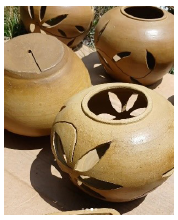
For this study, biocrafts are defined as products resulting from manual craftsmanship using natural resources to create items for decoration, such as home décor, pen decorations, perfume bottle embellishments, and similar objects. (Brasil, 2012).
Biocrafts can be made from various materials, including clay, cardboard, wood, seeds, and forest leaves. Figure 1 provides an example of a biocraft: a treated cardboard vase.

A biojoia é um produto oriundo da atividade manual com recursos naturais que tem como produto final um bem que serve para ser usado pelo homem, como um adereço ou adorno no corpo, como. por exemplo: colar, pulseira, brincos etc. (Brasil, 2012).
It can be made from a variety of materials, including fruit seeds, leaves, fish scales, plant roots, and other components that ensure the safety and functionality of the accessory, such as the wire clasps of necklaces or earrings. Figure 2 illustrates an example of biojewelry: a necklace and earrings featuring dried açaí seeds as part of the design.

The discussion on the bioeconomy emerging from the forest resources is complemented by the resource-based view, presented in the following subsection.
Resource-based view
The resource-based view (RBV) has emerged as one of the key frameworks to explain persistent differences in firm performance within the field of strategic management.
Like any theory, the RBV builds on prior theoretical work to formulate its predictions and recommendations. According to Barney & Arikan, 2001 the RBV is shaped by at least four key intellectual traditions: (1) the traditional study of distinctive competencies, (2) Ricardian economics, (3) Penrosian economics, and (4) the study of the antitrust implications of economics.
publication is considered one of the earliest contributions to the RBV in strategic management Wernerfelt (1984).
In this work Wernerfelt (1984) sought to develop a theory of competitive advantage based on the resources a firm develops or acquires to implement its product-market strategy.
This approach assumes that a firm’s portfolio of product-market positions reflects the resources it controls. Therefore, competition between firms’ product-market positions can also be understood as competition between their resource positions (Barney & Arikan, 2001).
Building on this foundation, Barney and Hesterly (2007) propose the VRIO framework, which evaluates a firm’s resources and their competitive potential based on four dimensions: value, rarity, imitability, and organization. Resources must present four characteristics to generate a competitive advantage: they must be valuable (enabling the firm to exploit opportunities or neutralize threats), rare (scarce among current and potential competitors), imperfectly imitable or costly to imitate, and irreplaceable or without equivalent strategic substitutes).
However, the ability of agents - people and organizations - to manage and deploy resources is crucial. This leads to the question: Do these agents possess the capabilities required to leverage resources for competitive advantage? Addressing this question requires examining dynamic capabilities.
Dynamic capabilities refer to the behaviors, skills, routines, processes, and learning and governance mechanisms focused on change and innovation. Since the seminal work of Teece et al. (1997), the concept of dynamic capabilities has evolved significantly, with various definitions and debates emerging about their components and conditions.
Dynamic capabilities rely on learning mechanisms that support the continuous evolution of organizational knowledge and a systematic commitment to improvement processes (Teece et al., 1997). Helfat et al. (2007), define dynamic capability as an organization’s ability to purposefully create, extend, or modify its resource base.
According to Helfat et al. (2007), dynamic capabilities encompass three functions: (a) identifying needs or opportunities for change, (b) formulating appropriate responses to these needs or opportunities, and (c) implementing courses of action.
Not all dynamic capabilities serve these three functions universally; some serve specific purposes Helfat et al. (2007), identify two main roles of dynamic capabilities in relation to an organization’s resource base: (a) searching for, selecting, and creating resources, and (b) appropriately deploying these resources.
This study adopts the concept of dynamic capabilities as defined by Helfat et al. (2007), Some dynamic capabilities allow firms to enter new markets, expand their business bases, and develop new products and production processes. Others relate to managerial abilities to ensure consistent growth and profitability.
In the context of the Women’s Movement of the Belém Islands (MMIB) and its members, their use of natural resources, coupled with their dynamic capabilities, is understood to contribute to promoting a competitive advantage in the region
METODOLOGY
Interpretative Scheme
This research has a deductive interpretative scheme, starting from a theoretical basis that dialogues with the study object.
Research approach
It is a qualitative, exploratory, and descriptive study. According to Miguel et al. (2012), a qualitative approach emphasizes the subjective reality of the individuals involved in the research. Thus, it is a form of investigation focused on obtaining information about the individuals’ perspectives and interpreting the environment in which the problem occurs.
Rudio (1986), understands descriptive research as a set of concepts to describe a given phenomenon. Its goal is to unveil the phenomenon’s nature, composition, and processes.
Descriptive research aims to discover and observe existing phenomena, current situations, and events, seeking to describe, classify, compare, interpret, and evaluate them to subsidize plans and decision-making processes (Martins, 2012).
Research method
This research adopted the field study, which is, according to Miguel et al. (2012) the most appropriate research method for qualitative research.
Research techniques
The data was collected through an unstructured interview and a questionnaire composed of open-ended and closed-ended questions. The analysis was conducted using descriptive statistics with the support of Microsoft Excel. Details about the application of the research instruments are presented below.
The study’s environment, population, and sample
The environment of the study was represented by the Women’s Movement of the Belém Islands (MMIB). According to the movement’s coordinator, 131 members were registered at the time of the research, and this was considered the study’s population. Four directors of the movement were selected for the interview.
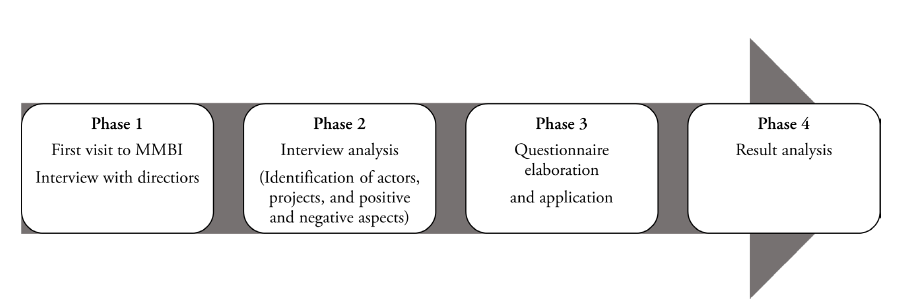
The research was carried out in four phases, as shown in Figure 3.
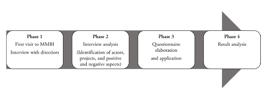
In Phase 1, a visit was conducted in February 2024 to the MMIB headquarters on Cotijuba Island. This exploratory visit aimed to gather inputs to define the data collection methods.
During the visit, a meeting was held with four women serving as MMIB directors to interview them while examining the physical structure of the headquarters. No script or questionnaire was prepared in advance for the interview. Instead, the interviewees were free to share their thoughts, and the interviewers posed questions as they arose naturally from the discussion.
The interview with the four directors was analyzed in Phase 2, offering insights into how the MMIB was structured, the current projects, and the products generated by the movement. These findings identified variables that could be studied, forming the basis for the research questionnaire to be applied to MMIB members.
In Phase 3, the questionnaire was developed and became the primary data collection instrument for the movement participants. The questionnaire consisted of 24 questions, including 8 open-ended and 16 closed-ended questions. Of the 16 closed-ended questions, 4 employed a Likert scale with the following options: 1 (not at all important), 2 (sometimes important), 3 (moderately important), 4 (important), and 5 (very important). This scale was designed to measure MMIB’s importance for its members and its perceived contributions to environmental, social, and economic sustainability.
The questionnaire was created using Google Forms, a free and accessible platform. A link to the form was generated and shared in the MMIB WhatsApp group. The form was available for two weeks, from late May to early June 2024, to allow MMIB members to respond. Out of 131 MMIB members (residents of Cotijuba Island and nearby islands), 47 responses were successfully collected, representing 35.87% of the population.
In Phase 4, the collected data were analyzed using descriptive statistics and supported by the theoretical framework. Microsoft Excel was used to process the statistics and create visual representations of the data.
RESULTS
This section presents the analysis results in two parts. The first part outlines the main findings from the interview with the MMIB directors, while the second part highlights the descriptive statistical results related to the MMIB members.
Analysis of the interview with the MMIB directors
During the interview with the MMIB directors in February 2024, the origin and duration of the MMIB’s existence were clarified, corroborating the findings of Marques (2019) and Guerra and Mesquita (2020). The movement originated in 2002 due to a split from the Cotijuba Island Producers Association (APIC).
The movement currently has 131 members, most of whom are from Cotijuba Island. However, participants from other islands rarely attend MMIB meetings in person due to challenges related to distance and transportation.
The primary means of communication among members is a WhatsApp group, which facilitates the dissemination of information about events, meeting agendas, decisions made during meetings, and other updates.
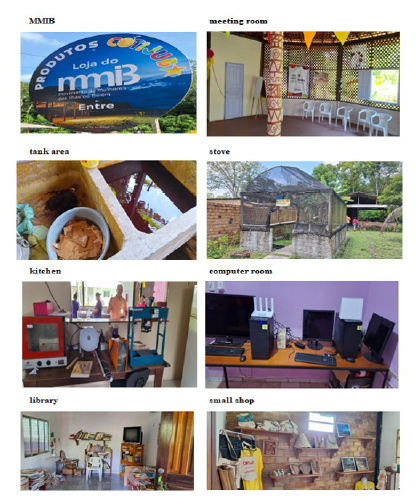
Figure 4 illustrates the MMIB’s infrastructure, which includes a meeting room; an area for transforming natural resources into biocraft materials (with washing tanks, ovens, drying facilities, etc.); a nursery; a kitchen; a library; a computer room; and a small shop for selling products created by the MMIB and its associates.
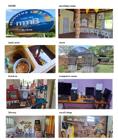
Water comes from an artesian well, and electricity on the island is supplied by Equatorial Energia, which has a thermoelectric station connected to the National Energy System via submarine cable starting in November 2024.
Marques (2019) identified the main actors involved in projects with the MMIB between 1998 and 2018 (Table 1).
During the period in which this research was conducted (February to June 2024), the directors reported the following ongoing projects at MMIB:
-
(a) The Flour Project, supported by the state-owned company Brazilian Agricultural Research Corporation (EMBRAPA).
-
(b) The Tourism Trail Project, supported by the Federal Institute of Pará (IFPA).
-
(c) The Beekeeping Project, supported by the National Rural Learning Service (SENAR).
-
(d) Project for processing coconut, palm heart pupunha, tucumã, and banana, as well as oil extraction, in collaboration with the Pará Higher Education Center (CESUPA), which disseminates research and techniques.
-
(e) MMIB sells oils, seeds, and nuts, such as chestnut, tucumã, and andiroba, through a partnership with the company Natura.
-
(f) The Biocraft Creation Project, an independent MMIB initiative that currently lacks external support.
The Biocraft Creation Project, fully integrated with the bioeconomy, is particularly noteworthy as it is a project created and run by the movement alone.
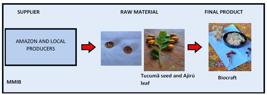
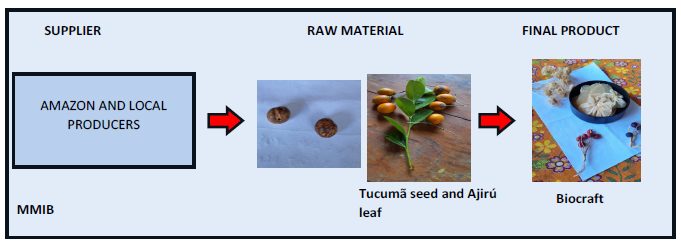
Figure 6 illustrates the biocraft production chain at MMIB, which begins with the supply of raw materials provided by MMIB members themselves or their relatives. These materials include açaí seeds, ajirú leaves, tucumã seeds, and other natural resources, many of which are native to the state of Amazonas.
Once the raw materials are delivered to the MMIB facilities, they undergo a transformation process carried out by the members. For instance, açaí seeds are dried, drilled, and polished, while ajirú leaves are washed, dried, and cut. Each type of raw material undergoes distinct processing stages, which may include sun drying, washing in tanks, and natural dyeing, until the materials are transformed into finished products, known as biocrafts and biojewelry.
Depending on the raw material, there are different transformation processes - use of sunlight, washing in large tanks, natural leaf dyeing - until reaching the final or finished product, which is called biocrafts and biojewelry.Such differentiated processes are in line with the proposal of Barney and Arikan (2021) and can generate a competitive advantage in terms of local products
Figure 5 shows the concept of Georgescu-Roegen (1971) of bioeconomy, social inclusion with the use of the members’ labor (these workers are mostly women), and the application of sustainable development generating income, defended by Sachs (2008) to reduce inequalities.
The transformation processes also involve unique methods, such as natural leaf dyeing, that are specific to this community. These practices strengthen the resource-based view (RBV), as outlined by Helfat et al. (2007).
MMIB, because of its characteristic as a membership organization, fits the model proposed by Barney and Hesterly (2007), The movement use the scarce natural resources, which are valuable both economically and in terms of competitiveness, with processes that are difficult to imitate (artisanal), and have finished products of differentiated natural origin.
Therefore, based on RBV, MMIB has a sustainable competitive advantage in the region. However, its competitive edge is constrained by its limited production scale, a limitation noted in the studies by Homma (2022).
The main results obtained from the responses of MMIB members are presented in the following section.
Analysis of MMIB members
Of the 131 MMIB members, 47 responses were successfully obtained, corresponding to 35.87% of the population considered for the study. Among these 47 respondents, 78.72% were female, and 21.28% were male. This result aligns with the findings of Marques (2019). and reinforces the focus of the movement on women, justifying its name as a women’s movement. The average length of membership for women was 12.27 years, while for men, it was 17.40 years.
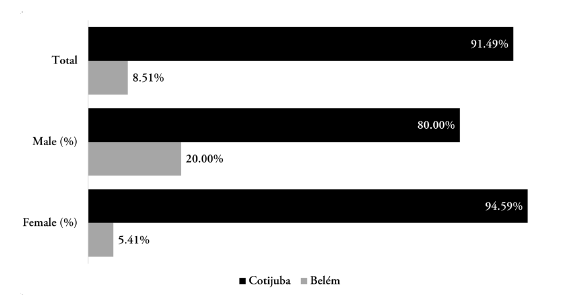
Figure 6 shows that 91.49% of the responding members live on Cotijuba Island, while 8.51% reside in the city of Belém. Among the participating women, 94.59% live in Cotijuba, compared to 80% of the participating men. It is worth noting that some members living on other islands near Cotijuba are also part of the MMIB but did not respond to the questionnaire.

These figures suggest that a significant portion of MMIB members live near the headquarters, which likely facilitates management and operational activities.
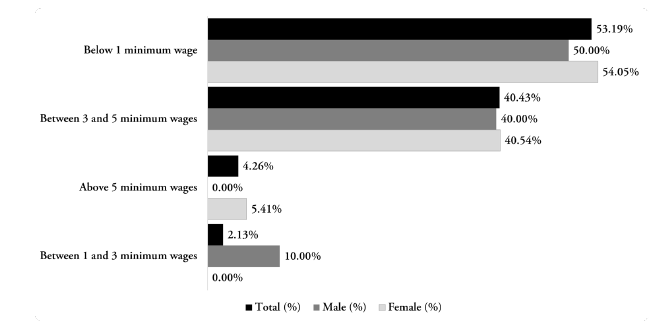
Figure 7 shows that 53.19% of respondents make less than one minimum wage. A total of 50% of men and 54.05% of women are in this income group. Additionally, Figure 8 highlights that 40.43% of respondents make between three and five minimum wages. In terms of gender, 40% of both men and women are in this income group.
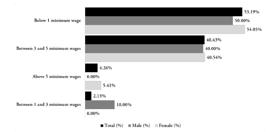
Additionally, Figure 7 highlights that 40.43% of respondents make between three and five minimum wages. In terms of gender, 40% of both men and women are in this income group.
Figure 7 also highlights that only 4.26% of the respondents earn more than five minimum wages, all of whom are women (5.41% of the women surveyed). Conversely, among the 2.13% of respondents who earn between one and three minimum wages, all are men (10% of the men surveyed).
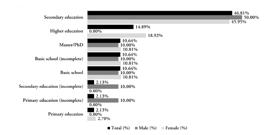
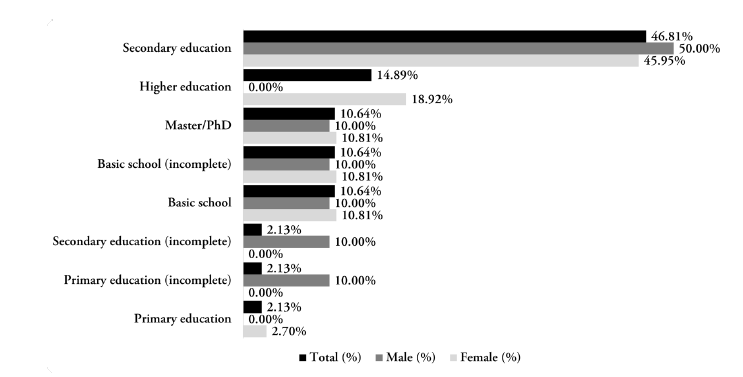
Regarding the education level of the survey participants, Figure 8 reveals that 46.81% of respondents have secondary education, and 14.89% hold a higher education degree. When comparing the education levels of women and men, women stand out, particularly in the category of higher education, where 18.92% of women have completed a higher education degree, while none of the male participants fall into this category.
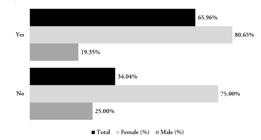
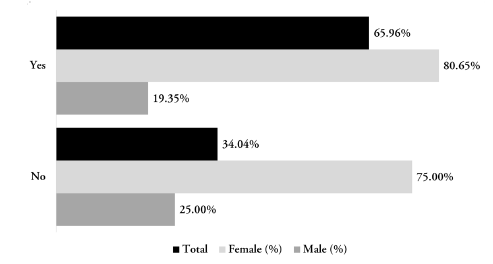
Of the 47 members who participated in the survey, 65.96% responded that they were entrepreneurs. Of these entrepreneurs, 80.65% were women, and 19.35% were men (Figure 9).
As Sachs (2008), highlighted, sustainable development has a crucial role in creating opportunities for marginalized groups, including women, youth, and rural communities. These groups benefit from using natural resources and education and training processes.
Table 2 shows that the largest share of entrepreneurs is in the range of those with secondary education (41.94%) and those with higher education (16.13%). However, there are entrepreneurs at all levels of education, which again reinforces Sachs (2008), discourse, where social inclusion through decent work is an achievable and necessary goal for sustainable development and that through collaborative efforts, it is possible to overcome obstacles and create opportunities that guarantee decent work and social inclusion for all.
The 31 respondents who identified as entrepreneurs were asked to specify the activities they practiced. After compiling the data, 14 distinct activities were identified, as listed in Table 2.
Some activities, such as agriculture and tourism, represented 19.35%, followed by bars, restaurants, and inns, each at 12.90%. Among female entrepreneurs, the majority work in the bar and restaurant industry (16%), the inn industry (16%), and biojewelry crafts (12%). For male entrepreneurs, the majority are engaged in agriculture and tourism, with 50% participation in these sectors (Table 3).
The data confirm that MMIB fosters entrepreneurship, although the bioeconomy appears to be in its early stages. The research results support the findings of Homma (2022), which highlight that scaling the bioeconomy from extractive products faces market restrictions due to limitations in raw material supply, production processes, or labor availability.
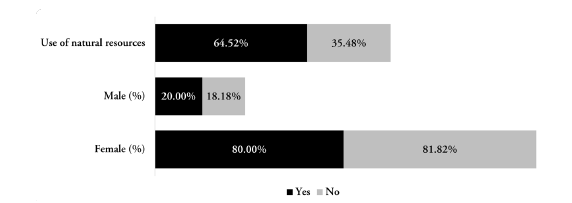
Among the members who declared to be engaged in entrepreneurial activities (31 respondents), 64.52% reported using natural resources, while 35.48% said they did not (see Figure 10).
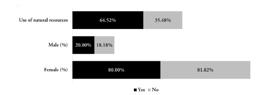
Figure 10 reveals that most members who declare to use natural resources (64.52%) are women (80%). This demonstrates that women represent the largest entrepreneurial participation within the MMIB, particularly in activities aligned with bioeconomy.
The MMIB, in collaboration with its partners (institutions), as mentioned earlier in this section, provides its members with a variety of courses, lectures, and meetings covering diverse areas such as education, professional development, and leisure.
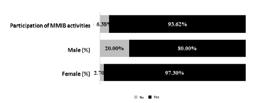
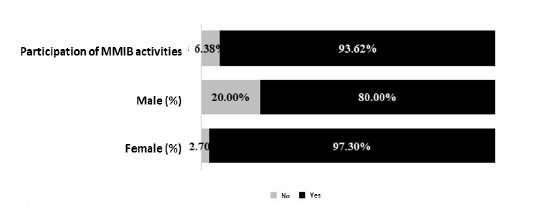
Figure 11 illustrates the degree of member participation in events organized by the MMIB. Among respondents, 93.62% indicated that they attend MMIB events. Participation among men is 80%, while women’s participation reaches 97.30%.
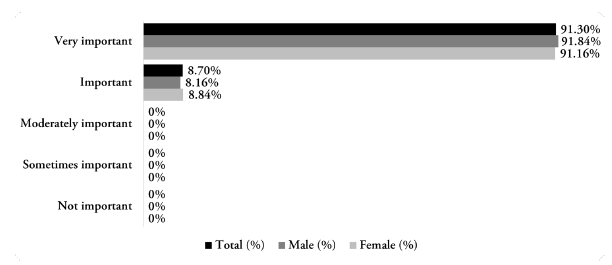
When asked about the degree of importance of the MMIB for society or the islands covered by the movement, 91.30% of respondents attributed a high degree of relevance, as shown in Figure 12.

In addition to the degree of importance, 100% of members responded that there had been some improvement in their personal lives or income-generating activities. Thus, when members, most of whom are women, present a high level of participation in events organized by MMIB, show improvements in their lives or their entrepreneurial activities, and point out great importance to their respective movement, it is believed that MMIB represents female empowerment, and serves as a means of local, sustainable development.
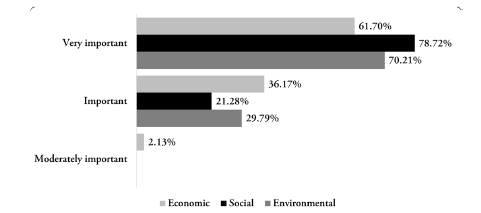
Members were asked whether MMIB’s activities are environmentally, socially, and economically sustainable. The answers obtained were: 100% of respondents believe that MMIB has environmentally sustainable practices; 100% of respondents believe that MMIB has socially responsible practices; and 95.74% believe that MMIB has economically effective practices. Therefore, from the members’ perception, MMIB has environmental, social, and economic practices aligned with sustainable development.
Regarding the perceived degree of sustainability practiced by MMIB in terms of the environmental, social, and economic dimensions, Figure 14 shows that members consider the MMIB practices in the three dimensions as very important, with emphasis on the social and environmental dimension, with 78.72% and 70.21% respectively.
In the environmental dimension, MMIB members converge with the approaches of the (ONU, 2023), Feil and Schreiber (2017) and Sachs (2008), seeking to preserve the environment, not from an individualistic perspective, but collectively, ensuring the creation of conditions that make life on planet Earth viable, in this case, in the region of the Belém Islands.
In the social dimension, MMIB seeks greater equity in income distribution so that members’ rights and conditions can improve (Sachs, 2008) Consequently, there is an increase in social homogeneity and the creation of job opportunities that guarantee the quality of life and equal access to resources, in line with the sustainable development approach of the UN (ONU, 2023), Sachs (2008), Feil and Schreiber (2017), Medaglia et al. (2021) and Martins et al. (2024).
In the economic dimension, it facilitates more efficient allocation and management of natural resources, which can assert the finiteness of natural resources implemented by the resource-based view by Helfat et al. (2007) and seek their preservation to provide present and future generations with the ideal conditions for their survival implemented by the UN (ONU, 2023).
Based on the results in Figure 13, it is believed that the MMIB is in line with the thinking of Sachs (2008), where the social dimension can be the strongest pillar among the other dimensions since it promotes inclusive development, decent work for all, sustainability policies, income, education, and training.
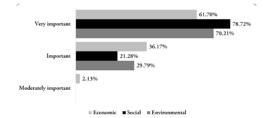
Table 4 shows the main types of courses that members would like to take if they had the opportunity. Respondents could choose more than one course.
The highlights in Table 4 are the courses in gastronomy, computing, and administration, which together represent 67.74% of the demand. Gastronomy comes first, perhaps because it is an activity that complements the activities of bars, restaurants, and inns, which together represent 35.48% of the activities carried out by members (see Table 3).
The courses in computing, administration, and accounting appear next, perhaps due to the need or desire of members to improve the management of their businesses. In other words, these results are consistent with the study by Martins et al. (2023) carried out on the Marajó Island, in which the authors state that there are barriers to be overcome by female entrepreneurs, such as business management, in this case, the management of the movement itself, and of the members’ enterprises.
Members could leave a comment regarding the MMIB at the end of the questionnaire. Of the 47 respondents, 35 or 74.47% of the members left comments. Here are some of them:
“MMIB adds a lot to my life, not only by helping me break out of my routine, but also as a person. I have a lot of affection for it.”
“MMIB is a very important group due to its capacity for mobilization and democratic management involving the residents of the Belém Islands, and therefore deserves all our support!”
“MMIB has brought me to many things and broadened my horizons.”
“Thank you, MMIB, for being so necessary for the community.”
“MMIB is of great importance to our community, a reference for many students, and makes us women proud to be MMIB residents, generating income and training women, men, young people, and children to be part of society.”
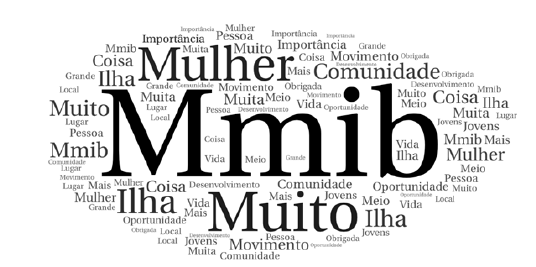
After processing the comments and using the Iramuteq software, a set of 181 words was obtained, with a total of 306 occurrences and their respective frequencies. Some highlights include the MMIB, which had 8.50% frequency; muito (a lot), with 3.93% frequency; and mulher (woman), with 3.59% frequency. After this data collection, Figure 14 was generated, in which the main words can be seen in general, with the largest words having the highest frequencies.
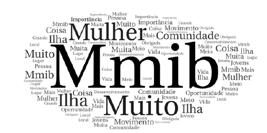
The members reaffirm the previous results obtained through their comments, considering MMIB an important source of associative activities on Cotijuba and other nearby islands.
CONCLUSION
The interview with the MMIB directors was important to identify the movement’s new projects and partners and confirm findings previously highlighted in the works of Marques (2019) and Guerra and Mesquita (2020). A key finding is the bioeconomy process initiated by the movement. Although still in its early stages, this initiative represents a small global step but a significant local one, incorporating natural resources and dynamic capabilities as unique elements in their work, whether through biocrafts or biojewelry.
However, MMIB directors recognize the need to strengthen the movement’s management, particularly in administrative functions and the development of new activities or income-generating projects that engage the broader membership. The inclusion of new public policies for Cotijuba Island and other islands within the movement’s scope could further facilitate or enhance its efforts.
The results that emerged from the questionnaire revealed certain maturity regarding the sustainable development practices implemented by MMIB. A high degree of awareness was observed across the environmental, social, and economic dimensions. The social dimension stood out, showcasing achievements in female entrepreneurship, inclusion, decent work, and the reduction of inequalities, aligning with the discourse of Sachs (2008).
One notable characteristic of the members who declared to be engaged in entrepreneurial activities is their use of natural resources to leverage the Cotijuba Island’s biodiversity. Additionally, members expressed a strong interest in participating in training courses, particularly in administrative and gastronomy-related fields. These aspirations indicate intellectual growth among members. MMIB, despite its challenges, seeks to address these needs by forming partnerships with educational institutions or nonprofits to offer short courses.
Qualitative findings indicate that MMIB members perceive the movement as closely aligned with sustainable development and as being of vital importance to the Cotijuba Island community.
Regarding the research problem, because most MMIB members are women, the movement inspires sustainable female entrepreneurship. The analysis of the data and the testimonials collected for the research demonstrated that the movement is relevant for its members.
It can be inferred that the MMIB has been instrumental in promoting female empowerment across the islands, fostering practices and experiences that enable collective learning in the Amazon. While often invisible, these efforts contribute significantly to women’s social and economic inclusion and overall well-being.
The research faced certain limitations, such as limited interaction time with the MMIB directors and the short availability of the questionnaire for members due to unstable internet access on the islands.
As for the study’s contributions, it identifies a movement in the Amazon that effectively applies the concepts of sustainable development and bioeconomy that is recognized by its members. It also offers a valuable opportunity for future research seeking to monitor or compare other regional movements or associations.
As this was an exploratory and descriptive study, the results highlighted the presence of a bioeconomy chain. Future research could explore details of this chain, focusing on specific links and measuring production or transaction costs.
REFERENCES
- Barney, J. B., & Arikan, A. M. (2001). The resource-based view: Origins and implications. In M. A. Hitt, R. E. Freeman, & J. S. Harrison (Eds.), The Blackwell handbook of strategic management (pp. 124-188). Blackwell Publishers.
- Barney, J. B., & Hesterly, W. S. (2007). Administração estratégica e vantagem competitiva (M. Rosemberg, Trans.; P. Zanni, Tech. Rev.). Pearson Prentice Hall.
-
Brasil. (2012). Programa do artesanato brasileiro. Base conceitual do artesanato brasileiro. https://rondonia.ro.gov.br/wp-content/uploads/2021/03/BASE-CONCEITUAL-DO-ARTESANATO-BRASILEIRO-PDF-Download-gra%CC%81tis-1.pdf
» https://rondonia.ro.gov.br/wp-content/uploads/2021/03/BASE-CONCEITUAL-DO-ARTESANATO-BRASILEIRO-PDF-Download-gra%CC%81tis-1.pdf -
Brundtland, G. H. (1987). Report of the World Commission on Environment and Development: Our Common Future. https://sustainabledevelopment.un.org/content/documents/5987our-common-future.pdf
» https://sustainabledevelopment.un.org/content/documents/5987our-common-future.pdf - Canto, O., Vasconcellos Sobrinho, M., Vasconcellos, A. M. A., Fenzl, N., Bastos, R. Z., Tupiassu, L., Abreu, A., & Santos, M. (2020). Uso de redes na análise de conflito socioambiental e de gestão do território, na RESEX Marinha “Mestre Lucindo”, Marapanim/PA. In C. N. Silva, G. M. Rocha, & J. M. P. Silva (Eds.), O Espaço geográfico amazônico em debate: dinâmicas territoriais e ambientais. GAPTA/UFPA.
-
Dias, R. F., & de Carvalho, C. A. A. (2017). Bioeconomia no Brasil e no mundo: Panorama atual e perspectivas. Revista Virtual de Química, 9(1), 410-430. https://doi.org/10.21577/1984-6835.20170024
» https://doi.org/10.21577/1984-6835.20170024 -
Feil, A. A., & Schreiber, D. (2017). Sustentabilidade e desenvolvimento sustentável: Desvendando as sobreposições e alcances de seus significados. Cadernos EBAPE.BR, 15, 667-681. https://doi.org/10.1590/1679-395157473
» https://doi.org/10.1590/1679-395157473 - Georgescu-Roegen, N. (1971). The entropy law and the economic process. Harvard University Press.
-
Global Bioeconomy Summit (2015). Communiqué Global Bioeconomy Summit 2015: Making bioeconomy work for sustainable development. Birch, 2015. https://gbs2020.net/wp-content/uploads/2021/10/Communique_final_neu.pdf
» https://gbs2020.net/wp-content/uploads/2021/10/Communique_final_neu.pdf -
Guerra, G. A. D., & Mesquita, O. (2020). Imersão virtual no movimento de mulheres das ilhas de Belém, Pará, Brasil. Nova Revista Amazônica, 8(2). https://periodicos.ufpa.br/index.php/nra/issue/view/433/showToc
» https://periodicos.ufpa.br/index.php/nra/issue/view/433/showToc - Helfat, C. E., Finkelstein, S., Mitchell, W., Peteraf, M., Singh, H., Teece, D., & Winter, S. G. (Eds.). (2007). Dynamic capabilities: Understanding strategic change in organizations. Blackwell Publishing.
-
Homma, A. K. O. (2022). The dialogue with the forest: What is the limit of the bioeconomy in the Amazon? Research, Society and Development, 11(4), e53011427555. https://doi.org/10.33448/rsd-v11i4.27555
» https://doi.org/10.33448/rsd-v11i4.27555 -
Instituto Brasileiro de Geografia e Estatística. (2022). Censo 2022. https://censo2022.ibge.gov.br/sobre/conhecendo-o-brasil.html
» https://censo2022.ibge.gov.br/sobre/conhecendo-o-brasil.html -
Jayabalasingham, B., Boverhof, R., Agnew, K., & Klein, L. (2019). Identifying research supporting the United Nations Sustainable Development Goals (Version 1.0) [Data set]. Mendeley. https:// doi.org/10.17632/87txkw7khs.1
» https:// doi.org/10.17632/87txkw7khs.1 -
Kashnitsky Y., Roberge G., Mu J., Kang K, Wang W., Vanderfeesten M., Rivest M., Chamezopoulos S., Jaworek R., Vignes M., Jayabalasingham B., Boonen J., James C., Doornenbal M., Labrosse I. (2022). Evaluating approaches to identifying research supporting the United Nations Sustainable Development Goals. Cornell University. https://doi.org/10.48550/arxiv.2209.07285
» https://doi.org/10.48550/arxiv.2209.07285 -
Marques, B. M. (2019). Entre o movimento das mulheres das ilhas de Belém e as agendas de desenvolvimento das nações unidas: Discussões sobre gender mainstreaming. Revista Spirales, 3(2), 74-94. https://revistas.unila.edu.br/espirales/article/view/1478
» https://revistas.unila.edu.br/espirales/article/view/1478 -
Martins, C. M., Lima, R. S., Monteiro, L. F., & Silva, P. (2024). Objetivos do desenvolvimento sustentável: Análise entre a vinculação e prática aplicada a mineradora Hydro no município de Barcarena-PA. Cuadernos de Educación y Desarrollo, 16(1), 1882-1901. https://doi.org/10.55905/cuadv16n1-098
» https://doi.org/10.55905/cuadv16n1-098 - Martins, J., Jr. (2012). Como escrever trabalhos de conclusão de curso: Instruções para planejar e montar, desenvolver, concluir, redigir e apresentar trabalhos monográficos e artigos (6th ed.). Vozes.
-
Martins, R. D. S., Gonçalves, W. S., & Albuquerque, F. dos S. (2023). Estratégias de sobrevivência e crescimento de negócios femininos na região do Marajó - Pará. Revista Paraense de Contabilidade (RPC), 8(2), e141. https://crcpa.org.br/revistaparaense/index.php/crcpa
» https://crcpa.org.br/revistaparaense/index.php/crcpa -
MMIB Instagram (2024). Movimento das Mulheres das Ilhas de Belém. https://www.instagram.com/mmib.21/
» https://www.instagram.com/mmib.21/ -
Medaglia, R., Misuraca, G., & Aquaro, V. (2021). Digital Government and the United Nations’ sustainable development goals: Towards an analytical framework. https://doi.org/10.1145/3463677.3463736
» https://doi.org/10.1145/3463677.3463736 -
Mejias, R. G. (2019). Bioeconomia e suas aplicações. ÎANDÉ: Ciências e Humanidades, 2(3), 105-121. https://doi.org/10.36942/iande.v2i3.87
» https://doi.org/10.36942/iande.v2i3.87 - Miguel, P. A. C. (Coord.), & Colaboradores. (2012). Metodologia de pesquisa em engenharia de produção e gestão de operações (2nd ed.). ABEPRO/Elsevier.
-
Organização das Nações Unidas. (2023). Agenda 2030 (Traduzido por ONU BR). https://nacoesunidas.org/pos2015/agenda2030/
» https://nacoesunidas.org/pos2015/agenda2030/ - Porter, M. E. (1980). Competitive strategy. Free Press.
- Rudio, F. V. (1986). Introdução ao projeto de pesquisa científica (43rd ed.). Vozes.
- Sachs, I. (2008). Desenvolvimento: Includente, sustentável, sustentado. Garamond.
-
Teece, D. J., Pisano, G., & Shuen, A. (1997). Dynamic capabilities and strategic management. Strategic Management Journal, 18(7), 509-533. https://doi.org/10.1002/(SICI)1097-0266(199708)18:7%3C509::AID-SMJ882%3E3.0.CO;2-Z
» https://doi.org/10.1002/(SICI)1097-0266(199708)18:7%3C509::AID-SMJ882%3E3.0.CO;2-Z -
Vivien, F. D., Nieddu, M., Befort, N., Debrefa, R., & Giampietro, M. (2019). The Hijacking of the Bioeconomy. Ecological Economics, 159, 189-197. https://doi.org/10.1016/j.ecolecon.2019.01.027
» https://doi.org/10.1016/j.ecolecon.2019.01.027 -
Wernerfelt, B. (1984). A resource-based view of the firm. Strategic Management Journal, 5, 171-180. https://doi.org/10.1002/smj.4250050207
» https://doi.org/10.1002/smj.4250050207 -
Willerding, A. L., Silva, A. M. da, Silva, A. M., Oliveira, J. M. de, & Cruz, M. S. (2020). Estratégias para o desenvolvimento da bioeconomia no estado do Amazonas. Estudos Avançados, 34(98), 145-166. https://doi.org/10.1590/s0103-4014.2020.3498.010
» https://doi.org/10.1590/s0103-4014.2020.3498.010
-
Funding
The authors reported that there was no funding for the research in this article.
-
Plagiarism Check
RAC maintains the practice of submitting all documents approved for publication to the plagiarism check, using specific tools, e.g.: iThenticate.
-
Peer Review Method
This content was evaluated using the double-blind peer review process. The disclosure of the reviewers’ information on the first page, as well as the Peer Review Report, is made only after concluding the evaluation process, and with the voluntary consent of the respective reviewers and authors.
-
Data Availability
The authors claim that all data used in the research have been made publicly available, and can be accessed via the Harvard Dataverse platform:Araujo, Dinaldo Nascimento; Barros, Jones Nogueira, 2025, "Replication Data for: Sustainable Development and the Women’s Movement of the Belém Islands published by RAC-Revista de Administração Contemporânea", Harvard Dataverse, V1. https://doi.org/10.7910/DVN/UAPIQIRAC encourages data sharing but, in compliance with ethical principles, it does not demand the disclosure of any means of identifying research subjects, preserving the privacy of research subjects. The practice of open data is to enable the reproducibility of results, and to ensure the unrestricted transparency of the results of the published research, without requiring the identity of research subjects.
-
Cite as:
Araujo, D. N., & Barros, J. N. (2024). Sustainable development and the Women’s Movement of the Belém Islands. Revista de Administração Contemporânea, 28(6), e240175. https://doi.org/10.1590/1982-7849rac2024240175.en
-
JEL Code:
Q, Q01
-
Peer Review Report:
The disclosure of the Peer Review Report was not authorized by its reviewers.

Edited by
-
Editor-in-chief:
Paula Chimenti (Universidade Federal do Rio de Janeiro, COPPEAD, Brazil) https://orcid.org/0000-0002-6492-4072
-
Guest Editors:
Mário Vasconcellos Sobrinho (Universidade Federal do Pará, Brazil) https://orcid.org/0000-0001-6489-219XMariluce Paes-de-Souza (Universidade Federal de Rondônia, Brazil https://orcid.org/0000-0002-4202-0769Ana Maria de Albuquerque Vasconcellos (Universidade da Amazônia, Brazil) https://orcid.org/0000-0002-7594-3578Irma Garcia-Serrano (Universidad Central Del Ecuador, Ecuador) https://orcid.org/0000-0002-3907-9540Emilio F. Moran (Michigan State University, United States of America; Universidade de Campinas, Brazil) https://orcid.org/0000-0001-5153-545X
The authors claim that all data used in the research have been made publicly available, and can be accessed via the Harvard Dataverse platform:
Araujo, Dinaldo Nascimento; Barros, Jones Nogueira, 2025, "Replication Data for: Sustainable Development and the Women’s Movement of the Belém Islands published by RAC-Revista de Administração Contemporânea", Harvard Dataverse, V1. https://doi.org/10.7910/DVN/UAPIQI
RAC encourages data sharing but, in compliance with ethical principles, it does not demand the disclosure of any means of identifying research subjects, preserving the privacy of research subjects. The practice of open data is to enable the reproducibility of results, and to ensure the unrestricted transparency of the results of the published research, without requiring the identity of research subjects.

 Source: Photos taken from the official MMIB Instagram (2024). Movimento das Mulheres das Ilhas de Belém. https://www.instagram.com/mmib.21/
 Source: Photos taken from the official MMIB Instagram (2024). Movimento das Mulheres das Ilhas de Belém. https://www.instagram.com/mmib.21/
 Source: By the Authors.
 Source: Photos taken from the official MMIB Instagram (2024). Movimento das Mulheres das Ilhas de Belém. https://www.instagram.com/mmib.21/
 Source: Photo taken from the official MMIB Instagram (2024). Movimento das Mulheres das Ilhas de Belém. https://www.instagram.com/mmib.21/
 Source: Research data.
 Source: Research data.
 Source: Research data.
 Source: Research data.
 Source: Research data
 Source: Research data.
 Source: Research data.
 Source: Research data.
 Source: Research data.


