
 “The South is My Country”: White Supremacy in Graduate Business Programs in Santa Catarina
ABSTRACT
Objective: this study aims to identify and analyze the factors contributing to the perpetuation of white supremacy in graduate business programs in the state of Santa Catarina, Brazil. In this context, the underrepresentation of black individuals and the predominance of white individuals, accentuated by the historical identity of whiteness and the presence of regionalist movements in Santa Catarina, signal the presence of white supremacy that warrants investigation.
Theoretical approach: the theoretical framework is grounded in critical race theory, addressing concepts such as white supremacy, whiteness, racism, and its various manifestations. In general, this study analyzed how the discourses present in graduate business programs are articulated and how they sustain white supremacy in these spaces.
Method: this qualitative study collected data through semi-structured interviews with coordinators, faculty members, and students from graduate programs in Santa Catarina. Subsequently, the data were analyzed using the Gioia methodology.
Results: the findings indicate three primary factors that contribute to the perpetuation of white supremacy in the graduate programs in Santa Catarina: (1) the normalization of white supremacy in society; (2) the institutional normalization of racism and epistemic injustice; and (3) obstacles and deficiencies in the implementation of Affirmative Action Policies.
Conclusions: racial inequality emerges as a critical construct for understanding the dynamics of organizations and institutions. The study reveals that white supremacy is not merely a phenomenon restricted to radical groups; instead, it operates as a structural mechanism that determines who has access to the creation and appropriation of knowledge and which voices are recognized and legitimized within academic environments.
Keywords:
white supremacy; graduate study; business administration; public university; research methodology
RESUMO
Objetivo: este estudo tem como objetivo identificar e analisar os fatores que contribuem para a perpetuação da supremacia branca nos programas de pós-graduação stricto sensu em administração (PPGAs) de Santa Catarina. Nesse contexto, a sub-representação negra e a predominância de indivíduos brancos, acentuadas pela identidade histórica da branquitude e pela presença de movimentos regionalistas em Santa Catarina, sinalizam a atuação de uma supremacia branca que merece investigação.
Marco teórico: o arcabouço teórico contemplou a teoria crítica da raça (supremacia branca, branquitude, racismo e suas manifestações). De modo geral, articularam-se os discursos presentes na pós-graduação em administração e a forma como mantêm a supremacia branca nesses espaços.
Método: nesta pesquisa qualitativa, coletaram-se dados por meio de entrevistas semiestruturadas junto a coordenadores, docentes e alunos vinculados a PPGAs do estado de Santa Catarina. Na sequência, os dados foram analisados seguindo a metodologia Gioia.
Resultados: os achados da pesquisa indicam três fatores que contribuem para a perpetuação da supremacia branca nos PPGAs em Santa Catarina: (1) normalização da supremacia branca na sociedade; (2) normalização institucional do racismo e da injustiça epistêmica; e (3) obstáculos e deficiências na implementação das Políticas de Ações Afirmativas.
Conclusões: a desigualdade racial apresenta-se como um construto essencial para compreender a dinâmica das organizações e instituições, evidenciando que a supremacia branca vai além de um fenômeno restrito a grupos radicais, operando como um mecanismo estrutural que determina quem tem acesso à criação e apropriação do conhecimento, bem como quais vozes são reconhecidas e legitimadas nos ambientes acadêmicos.
Palavras-chave:
supremacia branca; estudos de pós-graduação; administração; universidade pública; metodologia de pesquisa
INTRODUCTION
Research on White supremacy in organizations has intensified, exploring how Whiteness operates as a hegemonic force that perpetuates racial inequalities (Araújo et al., 2023; Proudford & Nkomo, 2006; Southern, 2024). This debate gained momentum with movements such as Black Lives Matter and the exposure of social inequalities during the COVID-19 pandemic (Adams, 2020; Horowitz et al., 2023), which highlighted and worsened the impacts of racism on the Black population across economic, social, and educational dimensions (Martin, 2021; Ruggs et al., 2023; Starks, 2021). In parallel, the rise of the far-right and global conservatism seeks to silence inclusive agendas, as evidenced by the Trump administration’s (2025-2028) proposal to ban diversity policies and the termination of diversity, equity, and inclusion (DEI) programs and hate speech mitigation processes at Meta Platforms Inc. (CNN Brasil, 2025; Forbes Brasil, 2025).
In Brazil, the debate on racism and the perpetuation of White supremacy manifests in a complex manner. These phenomena are reinforced by the discourse of racial democracy, which masks the racial and social inequality present in Brazilian society (Almeida, 2019; Conceição, 2009; Munanga, 2019). In this scenario, institutions such as universities are spaces that, through mechanisms that are often implicit, systematically deny opportunities while privileging Whiteness (Nascimento et al., 2014; Sansone, 1996). Such dynamics are replicated in graduate programs, which continue to be predominantly White spaces.
Data from CAPES (Sander, 2021) reveal that only 27% of graduate students are Black. In the field of business administration, this representation is even lower, dropping to 27.5% (Associação Nacional de Pós-Graduação e Pesquisa em Administração [ANPAD], 2024). This reality contrasts with the composition of the Brazilian population, in which 55.5% of individuals self-identify as Black (Instituto Brasileiro de Geografia e Estatística [IBGE], 2022). The underrepresentation of Black people in academic institutions, including business schools and graduate business programs (GBPs), is attributed to institutional, cultural, and organizational factors that perpetuate structural racism (Dar et al., 2021; Grier & Poole, 2020; Nkomo, 2021).
The predominance of Whiteness in these programs is a point of concern for Brazilian researchers, who for years have questioned the denial of race in organizational studies within the country (Bispo, 2022; Conceição, 2009; Rosa, 2014; Teixeira et al., 2020). The scarce academic production in this area (Araújo et al., 2023; Misoczky et al., 2008; Teixeira et al., 2020), combined with the fact that business administration journals are mostly conservative and rarely publish articles on social equity (Fraga et al., 2022; Grier & Poole, 2020; Oldfield et al., 2006), leads to questions about the type of space the business administration academy reproduces by remaining so white in the face of such a diverse society.
Understanding these factors becomes essential for transforming this landscape (Grier & Poole, 2020) because, by investigating the mechanisms that sustain White supremacy in graduate business programs, this study expands the debate on teaching and research in the field, which has been historically marked by instrumental rationality and the neglect of power, race, and exclusion dynamics (Bispo, 2022; Conceição, 2009; Rosa, 2014; Teixeira et al., 2020).
Business administration tends to treat organizations as racially neutral spaces, ignoring how privileges and disadvantages are racially structured (Ray, 2019; Rezende & Pereira, 2023). This apparent neutrality, frequently manifested as racial colorblindness (Mills, 2007) and sustained by White ignorance (Bento, 2022; Mills, 2007), will be analyzed in detail in the theoretical framework. By centering the racial issue, this work tensions the boundaries of the field and proposes an opening to critical and transformative perspectives committed to overcoming this logic (Bispo, 2022; Jaime & Santos-Souza, 2025; Muzanenhamo & Chowdhury, 2021; Rosa, 2014).
Given this scenario, the following question arises: what factors contribute to the perpetuation of White supremacy in graduate business programs in Santa Catarina? In answering this question, this study aims to identify and analyze the factors that contribute to the perpetuation of White supremacy in these programs.
This study offers theoretical contributions by mobilizing critical race theory (CRT) to analyze the field of business administration, expanding the understanding of White supremacy by providing empirical evidence on how GBPs function as racialized organizations. In practice, this study provides insights for reorienting affirmative action policies (AAPs), focusing on mechanisms for student retention, institutional support, and the urgent need for racial literacy processes for managers and faculty, aiming to overcome the exclusionary logic in graduate studies.
The research focuses on graduate business programs at public universities located in Santa Catarina (SC), based on interviews conducted with coordinators, faculty, and students linked to these programs. Despite advances in discussions on racial relations in organizational studies, a gap remains in the literature regarding the discussion of White supremacy in graduate business programs, especially in regional contexts such as Santa Catarina. To achieve these objectives, the study relies on theoretical contributions from critical race theory, which addresses racism in its structural and institutional manifestations. In particular, the theoretical framework delves into the mechanisms and ideologies that perpetuate White supremacy in this academic context, such as the Whiteness pact, the myth of racial democracy, and meritocratic ideology.
Understanding the social and cultural context of Santa Catarina is fundamental, as these issues are closely linked to the historical and ideological structures that shape institutions (Almeida, 2019; Araújo et al., 2023). The South region presents a distinct demographic composition, with 72.6% of the population being White and 26.7% Black (IBGE, 2022), with SC being the state with the second-highest proportion of White people. Historically, Santa Catarina’s identity is marked by Whiteness, the valorization of European ancestry, and the erasure of the Black presence (Dias, 2007; Leite, 1996; Veiga, 2020).
This context is evident in the state, which leads in records of racial injury (Anuário Brasileiro de Segurança Pública, 2022) and presents a high concentration of far-right and neo-Nazi cells (Dias, 2007). Structural racism manifests in everyday violence, the continuous targeting by police forces of Black bodies, and the subtlety of exclusion in the employment search. White supremacy deeply affects the existence of Black people (Tenório, 2020).
The existence of a separatist movement called “The South is my country” (“O Sul é meu país”), which historically seeks the independence of the states of Rio Grande do Sul, Santa Catarina, and Paraná, relies on exacerbated regionalism, defending the premise of a supposed economic and cultural superiority of the region, frequently associated with the strong presence of descendants of European immigrants. By advocating for a singular Southern identity, this ideology strengthens narratives of White identity and European heritage, which ultimately disregards and marginalizes the rich ethnic and cultural diversity present in the region, including the Black population. Such identity construction, by reinforcing a hegemonic White imaginary, paves the way for the manifestation of White supremacy projects, which translate into the quest for maintaining privileges and dominant power structures (Cardoso, 2000; Dias, 2007; Leite, 1996; Maia, 2018; Tenório, 2020; Veiga, 2020).
Within the scope of graduate business programs in Santa Catarina, the influence of this regionalist and White ideology entails symbolic and political implications (ANPAD, 2024; Costa, 2022; Hooks, 2013; Schucman, 2018; Vanali & Silva, 2019). Beyond the statistical data on Black underrepresentation (ANPAD, 2024), it is observed that the academic culture itself and internal power dynamics reflect an environment where Whiteness operates as the norm (Melo & Ribeiro, 2019; Rosa, 2014). This translates, for example, into the still incipient discussion on race and racism within curricula and research agendas, and the low representation of Black faculty and students (Conceição, 2009; Rosa, 2014; Teixeira et al., 2020).
The perception of a tacit silencing regarding racial issues and the reproduction of patterns that favor White normativity - often in an unintentional yet structurally rooted manner - indicate that White supremacy perpetuates itself within these spaces (Conceição, 2009; Rosa, 2014). Analyzing the case of Santa Catarina, where Whiteness is naturalized, reveals how racial exclusion is reproduced in the academic experience, in development opportunities, and in the training of researchers and managers (Conceição, 2009; Teixeira et al., 2020). This naturalization reflects an academic culture that silences structural racism and reinforces White supremacy (Muzanenhamo & Chowdhury, 2021; Rosa, 2014). Given these particularities, graduate studies in Santa Catarina serve as a promising context for achieving the objective of the present study.
INTRODUCTION OF THE THEORETICAL FRAMEWORK
Critical race theory (CRT), which grounds this study, starts from the principle that racism is a systemic and structuring element of social organizations rather than an individual behavioral deviation. Originating in the United States between the 1970s and 1980s under the influence of civil rights movements, CRT critically analyzes how the intersection of race, law, and power sustains oppression across various social structures, from the legal system to education and health (Hatch & Khan, 2024; Reece, 2024; Waldron & Krane, 2024).
The theory also explores the dynamics of intersectionality, recognizing how the interaction of race with other identities, such as gender and class, produces and deepens inequalities (Hatch & Khan, 2024; Marcelino & Moraes, 2025; Waldron & Krane, 2024). Thus, CRT argues that ignoring race in social and political analyses ultimately perpetuates structural and institutional inequalities, reinforcing the need for inclusive policies and practices (Hatch & Khan, 2024; Marcelino & Moraes, 2025; Reece, 2024).
White supremacy, Whiteness, and racism
'White supremacy' is characterized as an ideology that sustains the false belief in the superiority of White people, attributed to misleading scientific evidence. It serves as an argument for systems of government that, while securing privileges for the White population, do not recognize themselves as racist, as they operate on the principle that White superiority is an incontestable fact (Melo & Schucman, 2022).
Although historically associated with groups such as the Ku Klux Klan in the U.S., White supremacy transcends regulatory or segregationist models, applying also to nations that adopted population-whitening policies, such as selective European immigration (Melo & Schucman, 2022; Mills, 2003). Thus, it constitutes a global system of domination grounded in Whiteness, stemming from European colonization, which maintains political, economic, and legal control under White dominance (Mills, 2003; Melo & Schucman, 2022, pp. 18-19).
‘Whiteness’, in turn, manifests as a position of racial privilege and structural advantage. It functions as a point of reference from which White people perceive themselves and society, involving a set of cultural practices that result in the oppression and domination of non-White bodies (Bento, 2022; Frankenberg, 2004), whether consciously or unconsciously.
It is from this power perspective that the logic of racism is structured: a power system that generates privileges and disadvantages (Almeida, 2019), based on the idea of race - a sociocultural construction with no biological basis that links physical traits to moral and intellectual capacities (Garcia, 2018; Munanga, 2019; Soares, 2014). Therefore, discussing racial relations necessarily implies addressing power relations and the legacy of slavery (Nascimento et al., 2014; Ribeiro, 2019), as racism emerges from discrimination and is perpetuated through the exercise of power, both individual and institutional (Jones, 1973).
The gears of white supremacy
The whiteness pact
The Whiteness pact is one of the primary gears of White supremacy and structural racism, characterized as a tacit agreement that secures privileges for White groups at the expense of others (Bento, 2022; Mills, 2022; Silva, 2023; Sow, 2021). Through intergroup alliances - whether conscious or not - White individuals protect the interests of Whiteness, resulting in the silencing of the racial problem, the barring of Black people from spaces of power, and the maintenance of exclusionary practices within various institutions, such as universities (Bento, 2022; Silva, 2023).
According to Bento (2022), this pact perpetuates itself because the forms of exclusion and the maintenance of privileges within institutions are systematically denied or concealed. The privileges inherent in this dynamic are both symbolic - associating Whiteness with standards of beauty, progress, and intelligence - and material, such as facilitated access to education, housing, employment, and inherited wealth (Bento, 2022).
The scope of the pact is such that it benefits even those White individuals who do not consider themselves signatories, given that racial privileges are inherited and socially reproduced (Carneiro, 2011). Consequently, the structures of power and domination remain intact, and the effective transformation of racial relations is constantly postponed (Bento, 2022; Frankenberg, 2004; Schucman, 2014; Silva, 2023; Steyn, 2004).
However, the advantages of Whiteness are not experienced uniformly, as they vary according to different social markers such as gender, class, and nationality, constituting intersectionality (Corossacz, 2014; Marcelino & Moraes, 2025). This nuance is illustrated in the research by Schucman (2012), in which one of the interviewees, a White homeless man, stated that he earned more money than his Black peers (Paiva, 2015), emphasizing the symbolic and material privilege associated with Whiteness (Bento, 2022).
Epistemology of ignorance, White ignorance, and racial colorblindness
The epistemology of ignorance seeks to understand how ignorance is not merely an absence of knowledge but an active epistemic practice, produced and sustained by social structures (Moretti, 2022). It investigates how dominant groups develop specific forms of ‘not knowing’ - that is, selective ignorance that operates as an instrument for the maintenance of injustices (Sullivan & Tuana, 2007). This ignorance can be systematic, expressed through a disinterest in understanding the realities of subordinated groups, an absence of direct experiences, or a lack of motivation to break with the status quo (Alcoff, 2007; Kassar, 2018).
A specific manifestation of this phenomenon is White ignorance, a state of “not knowing that is not contingent, but in which race, White racism, and/or White racial domination and its ramifications play a crucial causal role” (Mills, 2007, p. 20). Predominant among White people, this ignorance reveals a collective cognitive bias that makes them oblivious to the situations experienced by the Black population (Fricker, 2016; Mills, 2007). One of its primary discursive strategies is racial colorblindness, through which White individuals claim ‘not to see color,’ denying the relevance of race in social relations. This supposedly neutral stance is, in fact, a conscious effort to avoid acknowledging a past of discrimination, thereby avoiding the admission of privileges inherited from those very structures (Mills, 2007). In practice, the situation of marginalized groups is doubly ignored - either through the denial of inequality or through the imposition of ‘racial neutrality’ rules that disregard the adverse impacts on them (Almeida, 2019).
Both White ignorance and the Whiteness pact work to preserve privileges by presenting them as individual merit (Bento, 2022; Mills, 2007). The pact, guided by a logic of narcissistic self-preservation, fuels fear and reinforces prejudice (Bento, 2022). To justify inequalities, it mobilizes a supposedly rational and objective perspective. However, as Bento (2022, p. 697), “states, “neutrality and objectivity are not characteristics of societies marked by prejudice and discrimination,” exposing how this alleged neutrality is, in fact, the very tool that sustains White privilege.
Structural and institutional racism
Structural racism is the system that organizes society in a way that produces and reproduces systematic racial inequalities, being an integral part of political, economic, and social structures (Almeida, 2019; Rezende & Pereira, 2023). For Almeida (2019), it is not a social pathology or an institutional derangement, but rather the natural way in which political, economic, and social relations are constituted. From this perspective, racism is the rule, not the exception, functioning as the starting point from which both individual behaviors and institutional processes derive.
Institutional racism, in turn, manifests in the everyday functioning of organizations. It shows itself through norms, policies, and practices that, even when apparently neutral, unequally distribute opportunities, services, and benefits among different racial groups (Almeida, 2019; Bento, 2022; Conceição, 2009). Institutional policies that reflect historical prejudices (Egede et al., 2023) allow Whiteness to consolidate itself as the norm, shaping spaces that marginalize other experiences and perspectives (Polos et al., 2023). In universities, for example, this is revealed through the devaluation of non-hegemonic knowledge, low representation, and the denial of inequalities.
Racism in the brazilian context
The myth of racial democracy
During the first half of the 20th century, Brazil constructed an image of itself as a nation without racism or discrimination, in contrast to what was occurring in the rest of the world (Ferreira & Camargo, 2013). This narrative gained momentum with the publication of Casa-Grande & Senzala (1933), by Gilberto Freyre. In this work, Freyre (2001) romanticized racial relations, describing miscegenation as a harmonious, advantageous, and consensual process between the White master and the enslaved Black woman (Mendonça, 2017; Soares, 2014). Based on this historical-social construction, sustained by the scientific discourse of the social sciences, Brazilian miscegenation began to be valorized as a symbol of national identity (França, 2018).
The ‘myth of racial democracy’, therefore, began to guide how Brazilian society deals with its conflicts, minimizing or ignoring existing inequalities. This ideology fuels the belief that racial conflicts in Brazil are ‘milder’ than those in other countries, such as the violent and segregationist model of the United States (Mendonça, 2017). While it makes the recognition of discrimination difficult, this perspective also blocks the progress of public policies for the Black population. Consequently, a veiled pact of silence is consolidated, which operates by framing the denunciation of racism not as an act of justice, but as the very cause of conflict (Furtado, 2018; Soares, 2014). It is within this scenario, marked by the denial of inequalities, that meritocracy emerges as a social, political, and economic system that claims to distribute privileges based on individual capacities, talents, and aptitudes (Vieira et al., 2013).
Ambiguity of racial terminology
Brazilian racial terminology carries a historical ambiguity, especially regarding the category of pardo. (mixed-race/brown). While public policies define the Black population (negros) as the sum of pretos (Black) and pardos, in practice, pardo individuals are not always perceived as legitimate beneficiaries of these actions (Guimarães, 2024). Public debates, social media, and identity-based mobilizations have fueled new claims regarding the political standing of pardos - sometimes as racialized subjects with their own distinct experiences, and at other times as an expression of national mestiçagem (Moura, 2024; Rios, 2024). This ambiguity generates conflicts within racial verification committees and paves the way for allegations of fraud in racial self-identification, which are particularly intense in regions such as the South and Southeast (Guimarães, 2024).
Historical-cultural context of Santa Catarina
The regional identity of Santa Catarina was historically constructed based on a White-European ideal that valorizes Whiteness as a reference for social and symbolic belonging. As a result of a Whitening process that erased the Black presence and rejected non-Eurocentric identities, this identity construction operates by valorizing a supposed White cultural purity, linked to European immigration and the denial of the marks of slavery (Dias, 2007; Veiga, 2020). As Leite (1996), points out, the Black person in Santa Catarina “is seen as non-existent” (p. 15) - an uncomfortable presence that, although real, is systematically made invisible.
This conservative and exclusionary identity model creates fertile ground for extremism. It is no coincidence that Santa Catarina concentrates an alarming number of far-right and neo-Nazi cells, leading the national ranking with more than 100 active groups, as pointed out by Veiga (2020). Such a phenomenon finds support in a local culture that silences diversity and mythologizes Whiteness as a civilizing heritage (Dias, 2007; Veiga, 2020). In this sense, Santa Catarina constitutes an emblematic context for understanding how White supremacy is articulated socially and institutionally, including within academic spaces.
GBPs as racialized spaces and reproducers of epistemic injustice
Under the lens of ‘racialized organizations theory’ (Bonilla-Silva, 1997; Ray, 2019), it is evident that universities and GBPs are not neutral spaces, but structures that sustain racial hierarchies through symbolic and material means (Conceição, 2009; Rosa, 2014). Norms of excellence, productivity, and authority, although appearing neutral, are racially coded, establishing White trajectories as the model for belonging and legitimacy (Rezende & Pereira, 2023; Teixeira et al., 2020). Consequently, Black bodies and knowledge are actively marginalized, while racial agendas remain invisible and organizational studies distance themselves from critical production (Rosa, 2014; Rezende & Pereira, 2023; Teixeira et al., 2020).
This scenario of exclusion and/or marginalization results in ‘epistemic injustice’, a concept that describes how Black subjects are perceived as unreliable producers of knowledge (Muzanenhamo & Chowdhury, 2021). The critique deepens with the notion of ‘epistemic racism’: a logic that actively invalidates repertoires, methods, and references that fall outside the Western canon, marginalizing both Black bodies and Black epistemologies (Nogueira, 2015; Santos & Meneses, 2010). In practice, this dynamic translates into a continuous process of ‘epistemic exclusion’, in which Black researchers face institutional resistance, restrictions on academic freedom, and barriers to resource access - often imposed by White agents in positions of power (Muzanenhamo & Chowdhury, 2021).
Affirmative action policies (AAPs) in higher education
Affirmative action policies (AAPs) in Brazilian higher education are instruments of historical reparation and a response to structural racism. Grounded in the idea of substantive equality, they aim to correct an educational system shaped for White elites, accelerating the inclusion of groups made vulnerable by processes of discrimination (Gemaa, 2021; Jenkins & Moses, 2014; Piovesan, 2005; Venturini, 2019). In this sense, quotas do not represent privileges, but rather social justice mechanisms essential for the democratization of the university space.
Despite their importance, AAPs face significant resistance. Sustained by meritocratic logic, whose discourse conceals social reproduction and legitimizes inequality (Bourdieu, 1996), and by the myth of racial democracy, opposing arguments delegitimize the need for these policies by mistakenly asserting that all individuals start from the same point (Moraes & Leal, 2021; Vieira & Vieira, 2014). This distancing from debates on racial inequality, observed in various contexts, including graduate business programs (GBPs), fosters a hostile or indifferent reception to these policies (Furtado, 2018).
Beyond resistance, one of the primary challenges of affirmative action lies in its structural limitations. Although the Quotas Act (Law nº 12.711/2012 / Lei nº 12.711, 2012) represented a breakthrough in access, policies still concentrate efforts on entry, neglecting the retention and academic success of Black students (Isaacsson et al., 2020; Nery & Costa, 2009). This gap creates what has been termed ‘exclusionary inclusion’ (Figueiredo, 2011), in which students enter the university but encounter barriers regarding adaptation, financial support, and institutional belonging. This reality is evidenced by the tacit and occasional recognition that even when public university is ‘free,’ it is still ‘expensive.’
In GBPs, where racial diversity is even more restricted, these deficiencies are amplified, revealing a model that was not designed to include, but rather to preserve its own power structures. As Schwartzman (2022), points out, graduate studies do not only train specialists but also function as a social group with an interest in maintaining its conditions and influence. Therefore, for AAPs to fulfill their transformative role, they must be linked to a profound change in the institutional practices and cultures that have historically legitimized exclusion.
METHODOLOGICAL PROCEDURES
This is an exploratory research study with a qualitative approach, anchored in the interpretivist paradigm, as we understand that racism is collectively perceived and constructed. Thus, the research sought to understand how the phenomenon is observed in practice, considering the subject-object interaction (Saccol, 2009). The objective was to understand the meanings and significance attributed by participants to the social, organizational, and institutional dynamics related to the phenomenon of White supremacy in the GBPs of Santa Catarina (Denzin & Lincoln, 2011).
In this sense, to enable data collection, we chose to develop and conduct a series of interviews, whose script was constructed based on the literature and organized into thematic axes. The first axis addressed general concepts, such as racial self-identification, conceptions of race and ethnicity, and the understanding of the myth of racial democracy in Brazil. The second axis focused on perceptions of racism, investigating its structural, institutional, and epistemic manifestations. Finally, the third axis addressed the academic context, comprising inclusion and retention policies, racial discussions and racist acts in the GBPs, as well as knowledge of social movements and reporting channels.
Therefore, 22 in-depth interviews were conducted with professors, students, and coordinators of GBPs from three different public universities: a state university (UPE), a municipal university (UPM), and a federal university (UPF). The selection of the units of analysis is due to the fact that, at the time of the interviews, these were the only public universities in the state of Santa Catarina that had active and CAPES-recognized graduate business programs (CAPES, 2022). The focus on these programs is justified by their high social prestige and the strategic role they play in scientific production and in the training of professors and researchers in the field of business administration.
The study also sought to include gender and racial diversity (White and Black), using self-identification by participants according to the classification of the Brazilian Institute of Geography and Statistics (IBGE). As the research target population was limited, we adopted the snowball sampling technique, which consists of using referrals from already interviewed participants to reach new respondents (Biernacki & Waldorf, 1981; Heckathorn, 1997).
Table 1 describes the profiles of the interviewees. It is worth noting that, to identify the authors of the excerpts cited throughout the analysis and discussion of the results, a code composed of three letters and a number was used. The first letter denotes the interviewee’s role/position: ‘C’ for coordinator, ‘P’ for professor, and ‘S’ for student; the second letter denotes gender: ‘M’ for man and ‘W’ for woman; and the third letter denotes race: ‘W’ for White and ‘B’ for Black.
The interviews were conducted based on a semi-structured script, which allowed for capturing different interpretations and obtaining a contextualized understanding of the phenomenon (Boyce & Neale, 2006). They lasted between 60 and 90 minutes and were conducted in person or, when necessary, via web conferencing (Microsoft Teams® ou Google Meet®). All interviews were recorded and transcribed with the support of the Reshape platform. The research was approved by the Research Ethics Committee Involving Human Beings (CEP), linked to the responsible university.
Considering the exploratory and qualitative nature of this research, the chosen procedure was to combine content analysis (Bardin, 2016; Flick, 2009; Gibbs, 2009) with the Gioia methodology (Gioia et al., 2013). This approach is especially suitable for studies that seek not only to map perceptions but also to build an in-depth understanding of phenomena, as it systematically and rigorously combines an inductive analysis - preserving the participants’ perspective, with a deductive interpretation, relating the findings to theoretical constructs (Gioia et al., 2013).
For the organization and analysis of the data, ATLAS.ti®. software was used. The transcripts were imported into the platform, where they were coded, grouped, and categorized. The software enabled a more systematic analysis and facilitated the transition between levels of coding, from first-order concepts to aggregate dimensions, as proposed by the Gioia methodology (Gioia et al., 2013).
The analysis was conducted in different stages: (1) initial coding, in which the emerging concepts from the interviewees’ responses were mapped; (2) the codes were grouped into first-order concepts, named so as to preserve the participants’ terms; (3) the first-order concepts were classified into second-order themes, relating them to theory, a process carried out in two rounds of collaborative review, in which the researchers met to evaluate and refine the organization of the data; (4) the themes were organized into aggregate dimensions; and finally, (5) the comparison and interpretation of the data were performed in light of the theoretical framework.
RESULT ANALYSIS
The research findings indicate three factors that contribute to the perpetuation of White supremacy in the GBPs in Santa Catarina: (1) normalization of White supremacy in society, (2) institutional normalization of racism and epistemic injustice, and (3) obstacles and deficiencies in the implementation of affirmative action policies (AAPs). These factors emerged from the aggregate dimensions present in the analytical structure illustrated in Figure 1.
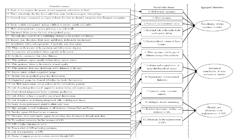
Table 2 presents the representative data that support the aggregate dimensions, second-order themes, and first-order concepts.
In the following sections, we describe the relationship between the factors and the representative data presented in Table 2.
Normalization of White supremacy in society
The analysis of the interviews reveals how the myth of racial democracy, as discussed by Mendonça (2017), shapes the social perception of ethnic conflicts in Brazil. The accounts confirm a tendency to minimize inequalities and to believe that their effects are less violent and segregationist compared to those in the United States, as evidenced by the statement of SWW3: “it would be something more subtle ... you don’t necessarily make this separation in a physical way, for example”.
Another factor that contributes to the normalization of White supremacy is White ignorance (Fricker, 2016; Mills, 2007), a concept that proved predominant among White interviewees. Although they recognize the historical origin of racism and its negative impacts on the Black population, paradoxically, they do not consider race a predominant factor in how they perceive themselves and others. This is evident in the statement of PMW1: “there is no White race, Black race. What exists is the human race. So, race for me is this. It is the fact of being human. That is my race. I understand it that way.” This stance aligns with what critical race theory (CRT) defines as ‘strategic colorblindness,’ a fundamental mechanism for denying historical inequalities (Mills, 2007).
Added to this are the effects of structural and institutional racism, widely noted in CRT as crucial elements for the perpetuation of inequalities (Almeida, 2019; Conceição, 2009). A clear reflection of this appears in the statements of Black interviewees, who, by stating a preference for individual action over participation in collectives - “I’m not a big fan of participating in social movements, no” (SMB2) - point to a fragmentation of mobilization as a consequence of this structure.
The interviewees also recognize that the historical educational deficit of the Black population, a structural barrier already reported by Almeida (2019) and Picanço (2024), hinders access to courses with higher social prestige, such as graduate business programs.
Additionally, the accounts expose the paradoxical role of the media. On the one hand, it seems to broaden the debate on racial equality; on the other, it reinforces Whiteness as the standard of reference (“In Brazil, soap operas… all White!” - CMW2). This dynamic fuels the ‘narcissistic pact of Whiteness’ (Bento, 2022) eand sustains the belief in racial democracy, which, in turn, inhibits the reporting of racism (Furtado, 2018; Soares, 2014). This paradox is manifested in statements that sometimes criticize White hegemony in the media and sometimes highlight the increased visibility of debates on diversity and inclusion.
Finally, the historical-cultural context of Santa Catarina emerged as a central theme. The interview data corroborate the analyses of Dias (2007) and Veiga (2020), which describe Santa Catarina as a space shaped by an exclusivist regional identity built upon a White-European ideal that has historically marginalized the Black presence. This symbolic structure is echoed in statements that mention cultural prejudice, resistance to diversity, and even xenophobic comments: “the people who, for example, during the pandemic, blamed everything on the Chinese, that the Chinese, that they eat dogs, you know?” (SWW3). The perception of White hegemony is reinforced by accounts that ironically describe the racial landscape of the capital - “It’s as if I were walking in the Florianópolis shopping mall, something like that: here and there a touch of Brown, of Black, of dark-skinned people, you know” (SMB2) - and by others that show a lack of knowledge about the history of the Black population in the state and the conservative culture of the countryside. All these elements together sustain a power structure that protects the interests of Whiteness (Bento, 2022; Mills, 2022) and blocks the presence of Black people in spaces of power, including universities (Silva, 2023).
Institutional normalization of racism and epistemic injustice
The epistemology of ignorance, as proposed by Alcoff (2007) and Kassar (2018), reveals that this is not simply a lack of knowledge, but a position sustained by active disinterest and a lack of effort to transform the status quo.
This White ignorance, evident in the words of PMW3 - “This [racial] topic and several other topics, especially the most current ones, I see difficulty, not only among professors but also among students” - when expressed by White professors, who are the majority and occupy strategic positions in the GBPs, contributes to the normalization of racial silencing and, consequently, to the perpetuation of institutional exclusion practices (Silva, 2023).
Such selective ignorance is manifested in the pact of Whiteness (Bento, 2022; Mills, 2007) through the distancing and difficulty of engagement of these professors. The statements described in categories C13, C14, and C15 in Table 2 provide clear examples of merely declared empathy, not accompanied by concrete actions, as well as the perception that racial equality has already evolved, a view that directly contrasts with the experience of Black students and denotes possible strategic colorblindness and silencing (Bento, 2022; Mills, 2007).
In addition to the stance of White professors, the normalization of White supremacy in the GBPs is sustained by rules and structures that maintain racial hierarchy (Conceição, 2009; Ray, 2019). The reports indicated that selection criteria, such as the requirement of proficiency in a foreign language and the ANPAD test, as reported by CWW1 - “It starts like this, the person... The language issue, sometimes the person did not have the opportunity. This ANPAD test, it is expensive. There are a number of things, like that” - act as exclusionary barriers, as they disregard structural socioeconomic inequalities. Added to these are financial difficulties and discrimination, which further marginalize minority groups. As a direct consequence, there is low representation of Black people in these spaces - “A person does not see themselves represented. Not even in the faculty itself” (CWW1) - which confirms their status as ‘hard areas’ of racial relations in Brazil, as described by Sansone (1996), and reinforces the perception of exclusion (Brissett, 2024; Polos et al., 2023).
Findings also reveal a scenario of institutional racism (Almeida, 2019), understood as a set of organizational practices and omissions that reproduce inequalities. The evidence for this is multiple. First, the absence of psychological and emotional support for students in an environment perceived as hostile and competitive. Second, the work overload and pressure for productivity that limit faculty engagement in inclusion actions. Finally, the lack of clear institutional protocols to deal with racial discrimination, which generates a widespread feeling of helplessness and inaction.
Finally, the accounts point to the manifestation of racism and epistemic injustice (Muzanenhamo & Chowdhury, 2021). This phenomenon is observed in two main ways: in the refusal or lack of interest of professors to supervise research on ethnic-racial issues (category C24), and in the absence of training focused on essential interpersonal skills, such as racial literacy, in the curricula (category C23). Both practices result in the exclusion of knowledge and topics of interest to underrepresented groups, perpetuating a cycle of academic invisibility.
Obstacles and deficiencies in the implementation of affirmative action policies (AAPs)
A recurring element in the statements of Black interviewees was the ambiguity of racial terminology, especially in self-identification between the categories ‘Black’ and ‘Brown’ - as reported by a Black student, “the first institutional question I got from the program and from people was, ‘but you’re not Black, your skin is very light, right?’” - a factor that proves to be an obstacle to the advancement of affirmative action policies (AAPs) (Guimarães, 2024). Some participants expressed discomfort with the rigidity or complexity of these categories, which makes their own self-identification difficult. This finding corroborates studies that highlight the disputes surrounding racial classification in Brazil (Bento, 2022; Munanga, 2019), in a context marked by debates about ‘brownness,’ racial legitimacy, and allegations of fraud in quotas (Rios, 2024).
Another central point identified was the strong ideological resistance to AAPs, as illustrated by PWW1’s statement: “I don’t think a fixed quota law is very appropriate, no, because Brazil is very large and there are many regional differences.” Among White interviewees, this resistance manifests itself in the refusal to recognize race as part of individual identity, a characteristic in line with studies on the epistemology of ignorance and racial colorblindness (Mills, 2007; Moretti, 2022). More broadly, the discussion on racial inclusion collides with the prevailing value of advancing on one’s own merit. The strength of this meritocratic ideology is so present that even a Black interviewee vehemently positioned himself against quotas, claiming that they would call into question the capacity of the beneficiaries: “Why do you think we [the Black population] need quotas to enter a doctorate? That’s a shame for me, a shame for you, a shame for us!” (PMB2). This internalization of meritocracy, even by Black people, reveals its power as an instrument for maintaining White supremacy, as it mobilizes merit as a supposedly neutral criterion to delegitimize reparatory policies and perpetuate the pact of Whiteness (Bento, 2022; Vieira et al., 2013).
In addition to ideological resistance, the reports pointed to deficiencies in the implementation of AAPs. First, there was found to be little awareness of existing policies within the academic community, as indicated by a program coordinator’s statement: “I’ll tell you that I don’t know if there are specific policies for Black people” (CWW1), indicating failures in institutional communication. Additionally, the recent implementation of these policies in higher education limits their consolidation. Other structural obstacles include the lack of affirmative actions in funding agencies (category C30), which restricts Black students’ access to funding, and the absence of support groups (category C32) that assist quota students in remaining in the programs. Taken together, the lack of systematization and integration (category C31) compromises the effectiveness and continuity of the AAPs. These findings demonstrate how institutional racism operates subtly, through the disarticulation between policies and practices (Almeida, 2019) and an ‘excluding inclusion’ (Figueiredo, 2011), which maintains symbolic and operational barriers to the permanence of Black students.
DISCUSSION
White supremacy as a naturalized system
The first aggregate dimension shows that White supremacy does not manifest itself only in explicit forms of prejudice, but operates in a diffuse and naturalized manner through ideologies such as the myth of racial democracy, racial colorblindness, and White ignorance. These discourses obscure the existence of racism, prevent the accountability of White individuals, and contribute to the reproduction of the racialized status quo. In this sense, White ignorance is revealed as active and functional, sustaining racial privileges while simultaneously absolving White of responsibility for their social position. This logic is anchored in a liberal rationality that insists on formal equality, disregarding historical and material inequalities (Bento, 2022; Mills, 2007).
The refusal to recognize racism as structural is also linked to specific cultural traits of southern Brazil, such as the Eurocentric ideal of identity and belonging in Santa Catarina, where Whiteness is associated with respectability, competence, and social legitimacy. As noted by Dias (2007) and Veiga (2020), the policy of Whitening still shapes local perceptions, denying the Black presence and rejecting people of non-European origin. This exclusionary regionalism, with a strong conservative bias, legitimizes racial inequalities and limits the access of Black people to positions of leadership and prestige.
These factors hinder collective mobilization against racism. Brazilian Sebastianism, which shifts the responsibility for change to others (Jaime & Lucio, 2017), the historical delegitimization of Black movements (Almeida, 2019) and internal divisions (Pereira, 2024) contribute to the low adherence of Black students to anti-racist struggle and collective action in academic spaces.
Epistemic injustice as an institutional effect of Whiteness
The second dimension shows that GBPs function as racialized institutions (Bonilla-Silva, 1997; Ray, 2019), shaped by a pact of Whiteness that manifests itself not only in explicitly exclusionary rules and processes, but also in subtle forms of exclusion, such as emotional distancing, disinterest, and a belief in the ‘natural progress’ of racial equality.
Although GBPs are spaces for knowledge production, the findings reinforce that they also act as reproducers and legitimizers of social and racial inequalities (Schwartzman, 2022). Thus, Black students face multiple obstacles to accessing and building knowledge within the GBPs. The absence of references, institutional support, and spaces of belonging reveals the epistemological dimension of racism, deepening the concept of epistemic racism (Almeida, 2019). Epistemic exclusion, reflected in the exclusion of repertoires, topics, and racialized subjects, compromises not only the diversity of perspectives in scientific production, but also the right of such subjects to fully exist in academia.
This study advances by demonstrating how this logic is articulated with epistemic injustice (Fricker, 2016; Muzanenhamo & Chowdhury, 2021), producing institutional silencing, the absence of racially sensitive academic guidance, and the delegitimization of Black knowledge. The combination of traditional selection criteria, high costs, demands for productivity, and lack of support negatively impacts students from minority groups. Added to this are the underrepresentation of Black people among faculty and students, and the lack of preparation or willingness of the predominantly White faculty to address ethno-racial issues in their practices and research (Carvalho, 2003; Dar et al., 2021; Grier & Poole, 2020; Nkomo, 2021).
These findings also directly resonate with our own experiences as Black researchers in GBPs. As some participants reported, we have experienced looks of distrust, isolation in academic activities, and a lack of encouragement to address racial relations in our research. This path shows that the researcher is not an external and neutral observer; they are also shaped by the structures they analyze. The statements of White participants further reinforce the tendency to reduce racism to individual behaviors, ignoring its structural character and the privileges associated with Whiteness. This perception, recurrent in the interviews, precisely illustrates the mechanisms of White ignorance that sustain the racial status quo in GBPs. Thus, critically reflecting on these experiences helps to expand the institutional understanding of the phenomenon and strengthen the role of research in transforming academic power relations.
Limits of affirmative actions in the face of racialized structures
The third aggregate dimension illustrates that, although the AAPs have been fundamental in democratizing access to graduate education, there are structural deficiencies in their implementation. The analysis indicates that meritocratic ideology continues to be mobilized as a symbolic resistance to the effectiveness of these policies (Bento, 2022; Vieira et al., 2013). The research also shows that, even after years of institutionalizing the AAPs, there remains a lack of systematization, support, and academic assistance, creating a scenario of ‘excluding inclusion’ (Figueiredo, 2011).
Additionally, the findings reveal significant ideological resistance to affirmative actions, even among Black individuals. Reports indicate that the belief in individual merit and the appreciation of self-sufficiency are frequently mobilized to reject quotas, which are seen by some as a threat to the legitimacy and competence of the beneficiaries. This refusal highlights the strength of racial liberalism and the pact of Whiteness, which operate both through the explicit delegitimization of the AAPs and their moral problematization, as if they were undue concessions (Mills, 2003; Muzanenhamo & Chowdhury, 2021).
The results indicate that the effectiveness of the AAPs depends not only on their formalization but also on the institutional willingness to review practices, structures, and senses of belonging. As pointed out by Farias (2019) and Nery and Costa (2009), it is essential that these policies include mechanisms that ensure retention, well-being, and academic progression. In addition, the lack of effective channels for reporting and punishing discrimination, combined with the lack of knowledge about the AAPs among institutional actors themselves, compromises their reach and perpetuates inequalities.
There is also a need to create specific AAPs within funding agencies, ensuring financial and academic support throughout the entire educational journey. Finally, addressing racial inequalities in graduate education requires a commitment to broader public policy that guarantees access to quality basic education and tackles the cumulative effects of educational inequality (Picanço, 2024).
THEORETICAL AND PRACTICAL CONTRIBUTIONS
Theoretical Innovation
This study offers relevant theoretical contributions by mobilizing critical race theory (CRT) to analyze how White supremacy operates within academic training spaces at the graduate level in Southern Brazil. Consequently, the study advances the debate in the field of business administration by empirically demonstrating how racial relations structure academic institutions - a topic still underexplored in the area. At the same time, it distinguishes itself from previous research by investigating GBPs based on empirical evidence and critical frameworks that remain marginalized within management studies. The research shifts the focus from traditional administration - often guided by an instrumental, universalizing, and supposedly neutral rationality - toward a perspective that recognizes the centrality of race in the constitution of institutions and power dynamics. In this sense, it contributes to the advancement of critical contemporary business administration, as proposed by the Journal of Contemporary Administration (Bispo, 2022), by treating racial diversity not as an add-on, but as an analytical lens capable of revealing structural, epistemological, and institutional exclusions.
By highlighting White supremacy as a naturalized system that regulates belonging, legitimacy, and access to knowledge production within GBPs, this research broadens the understanding of the Whiteness pact and epistemic injustice in the field of business administration. Furthermore, by providing empirical evidence on the functioning of academic institutions as racialized organizations (Ray, 2019), this study contributes to the decolonization agenda of management studies by offering a perspective situated in the Global South, outside the Global North axis frequently mentioned in similar studies. Dialoguing with authors such as Dar et al. (2021) and Nkomo (2021), it demonstrates that business schools and graduate programs operate as exclusionary environments, even when disguised as meritocracy and rationality, thereby reinforcing racial and epistemological hierarchies.
Practical contributions to academic policies
In the practical field, the findings suggest that mere access provided by AAPs is not sufficient. It is necessary to broaden the focus toward institutional mechanisms for the retention, well-being, and sense of belonging of Black students, as well as toward racial literacy processes aimed at faculty and managers. The ideological resistance to AAPs, anchored in meritocratic and biologizing discourses, reveals the urgency of intervening in the institutional culture through educational actions, curriculum revision, and the strengthening of support structures. This involves the rehumanization of management education and a break from logics that marginalize dissenting voices in the name of productivity or neutrality (Araújo et al., 2023; Faria, 2025).
FINAL CONSIDERATIONS
The objective of this study was to identify and analyze the factors that contribute to the perpetuation of White supremacy within GBPs in Santa Catarina. The findings indicate that the perpetuation of White supremacy is sustained by an interconnected triad: (1) social ideologies that normalize racism; (2) institutional culture that reproduces epistemic injustice; and (3) structural obstacles and deficiencies in the implementation of AAPs.
We recognize, however, some limitations arising from the adopted scope. The first refers to the depth of the analysis: although the focus was on the perpetuation of White supremacy and the identification of practical evidence of structural racism, it was not possible to exhaustively explore all its complex intersections with the multiple manifestations of racism (institutional, structural, epistemic, among others). The second limitation concerns the research universe, which was concentrated on subjects from graduate business programs in business administration at public universities in Santa Catarina; this may lead to selection bias and hinder the generalization of the results to other institutional or regional contexts.
Despite these limitations, the results obtained allow for the delivery of the theoretical and practical contributions announced in the introduction and developed throughout this article. The findings provide a foundation for theoretical innovation, the improvement of academic policies, and point toward directions for a future research agenda. Among these, we highlight the need to include subjects from other levels of education, such as undergraduate programs, and from other regions of the country, enabling comparative analyses of the ways in which White supremacy operates across different academic tiers and contexts. Additionally, we suggest expanding the investigation to organizational environments outside the university, such as public and private organizations, in order to understand how racial ideologies are reproduced, managed, or contested in corporate contexts. These developments will enrich the understanding of the dynamics that sustain White supremacy across different social and institutional spaces.
We conclude by emphasizing that confronting racism in graduate studies requires going beyond the mere expansion of access: it implies transforming cultures, practices, and criteria for academic legitimacy. Advancing toward a truly diverse and inclusive graduate environment demands intentional and continuous institutional action, capable of confronting historically consolidated privileges and ensuring the full participation of all subjects in the production and dissemination of knowledge.
REFERENCES
-
Adams, C. (2020). A movement, a slogan, a rallying cry: How Black Lives Matter changed America’s view on race. NBC News. https://www.nbcnews.com/news/nbcblk/movement-slogan-rallying-cry-how-black lives-matter-changed-america-n1252434
» https://www.nbcnews.com/news/nbcblk/movement-slogan-rallying-cry-how-black lives-matter-changed-america-n1252434 - Alcoff, L. M. (2007). Epistemologies of Ignorance Three Types. In Sullivan, S., & Tuana, N. (Ed.), Race and Epistemologies of Ignorance (pp. 39-57). State University of New York Press.
- Almeida, S. L. (2019). Racismo estrutural. Sueli Carneiro, Jandaíra. (Feminismos plurais).
-
Associação Nacional de Pós-Graduação e Pesquisa em Administração. (2024). Anpad Inclusiva. https://inclusiva.anpad.org.br/
» https://inclusiva.anpad.org.br/ -
Anuário Brasileiro de Segurança Pública. (2022). Lutas por reconhecimento e os indicadores de racismo e lgbtfobia no Brasil em 2021. FBSP. https://forumseguranca.org.br/wp-content/uploads/2022/07/08-anuario-2022-lutas-por-reconhecimento-e-os-indicadores-de-racismo-e-lgbtfobia-no-brasil-de-2021.pdf
» https://forumseguranca.org.br/wp-content/uploads/2022/07/08-anuario-2022-lutas-por-reconhecimento-e-os-indicadores-de-racismo-e-lgbtfobia-no-brasil-de-2021.pdf -
Araújo, C. C. S., Faria, A., Santos, J. N., & Srinivas, N. (2023). Debatendo a escravidão negra nos estudos em gestão e organização a partir de perspectivas decoloniais e afrodiaspóricas. Cadernos EBAPE.BR, 21(3), e2023-0100. https://doi.org/10.1590/1679-395120230100
» https://doi.org/10.1590/1679-395120230100 - Bardin, L. (2016). Análise de conteúdo. (Ed. rev. e ampl.). Ed. 70.
- Bento, C. (2022). O pacto da branquitude. Companhia das Letras.
-
Biernacki, P., & Waldorf, D. (1981). Snowball sampling: Problems and techniques of chain referral sampling. Sociological Methods & Research, 10(2), 141-163. https://doi.org/10.1177/004912418101000205
» https://doi.org/10.1177/004912418101000205 -
Bispo, M. S. (2022). Reflecting on contemporary administration. Revista de Administração Contemporânea, 26(1), e210203. https://doi.org/10.1590/1982-7849rac2022210203.en
» https://doi.org/10.1590/1982-7849rac2022210203.en -
Bonilla-Silva, E. (1997). Rethinking racism: Toward a structural interpretation. American Sociological Review 62(3):465-480. https://www.jstor.org/stable/2657316
» https://www.jstor.org/stable/2657316 - Bourdieu, P. (1996). La reproducción. Fontamara.
-
Boyce, C. & Neale, P. (2006) Conducting in-depth interview: A guide for designing and conducting in-depth interviews for evaluation input. Pathfinder International Tool Series, Monitoring and Evaluation-2. https://nyhealthfoundation.org/wp-content/uploads/2019/02/m_e_tool_series_indepth_interviews-1.pdf
» https://nyhealthfoundation.org/wp-content/uploads/2019/02/m_e_tool_series_indepth_interviews-1.pdf -
Brissett, N. O. (2024). Connections Between Faculty Experience and Systemic Racism. In Minority Voices From the Academic Superstructure (pp. 111-144). IGI Global. https://www.igi-global.com/chapter/connections-between-faculty-experience-and-systemic-racism/358345
» https://www.igi-global.com/chapter/connections-between-faculty-experience-and-systemic-racism/358345 - Cardoso, F. H. (2000). Negros em Florianópolis: relações sociais e econômicas. Insular.
- Carneiro, S. (2011). Racismo, sexismo e desigualdade no Brasil. Selo Negro.
-
Carvalho, J. J. (2003). Pós-Graduação está esclerosada. Folha de São Paulo, São Paulo, p. 10, 21 Jul. 2003. https://www1.folha.uol.com.br/fsp/brasil/fc2107200316.htm
» https://www1.folha.uol.com.br/fsp/brasil/fc2107200316.htm -
CNN Brasil. (2025, 22 de janeiro). O que é DEI, programa de diversidade que Trump pôs fim nos EUA? https://www.cnnbrasil.com.br/internacional/o-que-e-dei-programa-de-diversidade-que-trump-pos-fim-nos-eua/
» https://www.cnnbrasil.com.br/internacional/o-que-e-dei-programa-de-diversidade-que-trump-pos-fim-nos-eua/ - Conceição, E. B. (2009). A negação da raça nos estudos organizacionais. Trabalho apresentado no 33º Encontro Nacional da Associação Nacional de Pós-Graduação e Pesquisa em Administração, Brasil
-
Coordenação de Aperfeiçoamento de Pessoal de Nível Superior (2022). Plataforma Sucupira. CAPES. https://sucupira.capes.gov.br/sucupira/public/consultas/coleta/programa/listaPrograma.jsf
» https://sucupira.capes.gov.br/sucupira/public/consultas/coleta/programa/listaPrograma.jsf -
Corossacz, V. R. (2014). Relatos de branquitude entre um grupo de homens brancos do Rio de Janeiro. Revista Crítica de Ciências Sociais, 105, 43-64. https://doi.org/10.4000/rccs.5790
» https://doi.org/10.4000/rccs.5790 -
Costa, E. G. (2022). Ações afirmativas na pós-graduação brasileira: O caso da UFRGS. Revista Brasileira de Sociologia, 10(26), 104-123. https://rbs.sbsociologia.com.br/rbs/article/view/898
» https://rbs.sbsociologia.com.br/rbs/article/view/898 -
Dar, S., Liu, H., Martinez Dy, A., & Brewis, D. N. (2021). The business school is racist: Act up!. Organization, 28(4), 695-706. https://doi.org/10.1177/1350508420928521
» https://doi.org/10.1177/1350508420928521 - Denzin, N. K., & Lincoln, Y. S. (Eds.). (2011). The SAGE Handbook of Qualitative Research (4th ed.). SAGE Publications.
- Dias, A. A. M. (2007). Anacronautas do teutonismo virtual: uma etnografia do neonazismo na Internet. 2007 (Dissertação de Mestrado em Antropologia Social). Universidade Estadual de Campinas, Campinas, SP, Brasil.
-
Egede, L. E., Walker, R. J., & Williams, J. S. (2023). Addressing structural inequalities, structural racism, and social determinants of health: A vision for the future. Journal of General Internal Medicine, 39(3), 487-491. https://doi.org/10.1007/s11606-023-08426-7?urlappend=%3Futm_source%3Dresearchgate.net%26utm_medium%3Darticle
» https://doi.org/10.1007/s11606-023-08426-7?urlappend=%3Futm_source%3Dresearchgate.net%26utm_medium%3Darticle -
Faria, A. (2025). A decolonizing historicization of our pedagogy as a possibility for rehumanizing management education and educators. Journal of Management History, 31(3), 562-581. https://doi.org/10.1108/JMH-02-2025-0032
» https://doi.org/10.1108/JMH-02-2025-0032 -
Farias, S. R. (2019). As cotas raciais como política de ação afirmativa para a equidade de acesso ao ensino superior. Research, Society and Development, 8(12), e388121762. https://doi.org/10.33448/rsd-v8i12.1762
» https://doi.org/10.33448/rsd-v8i12.1762 - Ferreira, R. F., & Camargo, A. C. (2013). Preconceito, exclusão e identidade do afrodescendente. In R. F. Ferreira & I. S. Carvalho (Eds.), Processos de exclusão na sociedade contemporânea (pp. 173-197). EDUFMA.
- Figueiredo, E. S. A. (2011). As ações afirmativas na educação superior: Política de inclusão ou exclusão? UEFS Editora.
- Flick, U. (2009). Desenho da pesquisa qualitativa. Artmed.
-
Forbes Brasil. (2025, 1 de janeiro). Meta e Amazon reduzem programa de diversidade. https://forbes.com.br/carreira/2025/01/meta-e-amazon-reduzem-programa-de-diversidade/
» https://forbes.com.br/carreira/2025/01/meta-e-amazon-reduzem-programa-de-diversidade/ -
Fraga, A. M., Colomby, R. K., Gemelli, C. E., & Prestes, V. A. (2022). As diversidades da diversidade: Revisão sistemática da produção científica brasileira sobre diversidade na administração (2001-2019). Cadernos EBAPE.BR, 20(1), 1-19. https://doi.org/10.1590/1679-395120200155
» https://doi.org/10.1590/1679-395120200155 - França, F. F. D. (2018). As Políticas de ações afirmativas e as trajetórias de alunos indígenas no Centro De Estudos Superiores de Tefé da Universidade do Estado do Amazonas (2005-2018) (Dissertação de Mestrado em Ciências Humanas Instituição de Ensino). Universidade do Estado do Amazonas, Manaus, AM, Brasil.
- Frankenberg, R. (2004). A miragem de uma branquitude não marcada. In V. Ware (Org.), Branquidade, identidade branca e multiculturalismo (V. Ribeiro, Trad., pp. 307-338). Garamond.
- Freyre, G. (2001). Casa-grande & senzala (42. ed.). Record.
- Fricker, M. (2016). Epistemic injustice and the preservation of ignorance. In R. R. Peels & M. Blaauw (Eds.), The epistemic dimensions of ignorance (pp. 1-217). Cambridge University Press.
-
Furtado, T. T. G. (2018). A Política de Cotas Raciais na Universidade Federal do Maranhão: Subjetividade e identidade de estudantes negros cotistas como perspectivas de análise. (Dissertação de Mestrado em Psicologia). Universidade Federal do Maranhão, São Luís, Brasil. https://tedebc.ufma.br/jspui/handle/tede/tede/1330
» https://tedebc.ufma.br/jspui/handle/tede/tede/1330 - Garcia, P. C. A. (2018). Representações sociais sobre o racismo no discurso de discentes moçambicanos na Unilab/CE: Vozes, imagens e trajetórias coletivas (Mestrado em Interdisciplinar em Humanidades). Universidade da Integração Internacional da Lusofonia Afro-brasileira, Redenção, Brasil.
-
Gemaa. (2021). O que são ações afirmativas? http://gemaa.iesp.uerj.br/o-que-sao-acoes-afirmativas/
» http://gemaa.iesp.uerj.br/o-que-sao-acoes-afirmativas/ - Gibbs, G. (2009). Análise de dados qualitativos. Artmed.
-
Gioia, D. A., Corley, K. G., & Hamilton, A. L. (2013). Seeking qualitative rigor in inductive research: Notes on the Gioia methodology. Organizational Research Methods, 16(1), 15-31. https://doi.org/10.1177/1094428112452151
» https://doi.org/10.1177/1094428112452151 -
Grier, S. A., & Poole, S. M. (2020). Reproducing inequity: The role of race in the business school faculty search. Journal of Marketing Management, 36(13-14), 1190-1222. https://doi.org/10.1080/0267257X.2020.1800796
» https://doi.org/10.1080/0267257X.2020.1800796 -
Guimarães, A. S. A. (2024, July). Pardos no Brasil e os desafios para as políticas públicas. Revista Cult, 12-18. https://revistacult.uol.com.br/home/preto-e-cor/
» https://revistacult.uol.com.br/home/preto-e-cor/ -
Hatch, A., & Khan, N. (2024). Critical race theory. The Blackwell Encyclopedia of Sociology, 1-5. https://doi.org/10.1002/9781405165518.wbeosc206
» https://doi.org/10.1002/9781405165518.wbeosc206 -
Heckathorn, D. D. (1997). Respondent-driven sampling: A new approach to the study of hidden populations. Social Problems, 44(2), 174-199. https://doi.org/10.2307/3096941
» https://doi.org/10.2307/3096941 - Hooks, B. (2013). Ensinando a transgredir: A educação como prática da liberdade. WMF Martins FontesWMF Martins Fontes.
-
Horowitz, J., Hurst, K., & Braga, D. (2023). Support for the Black Lives Matter movement has dropped significantly since its peak in 2020. Pew Research Center. https://www.pewresearch.org/social-trends/2023/06/14/support-for-the-black-lives-matter-movement-has-dropped-considerably-from-its-peak-in-2020/
» https://www.pewresearch.org/social-trends/2023/06/14/support-for-the-black-lives-matter-movement-has-dropped-considerably-from-its-peak-in-2020/ -
Instituto Brasileiro de Geografia e Estatística. (2022). Censo 2022: Pela primeira vez, desde 1991, a maior parte da população do Brasil se declara parda. https://agenciadenoticias.ibge.gov.br/agencia-noticias/2012-agencia-de-noticias/noticias/38719-censo-2022-pela-primeira-vez-desde-1991-a-maior-parte-da-populacao-do-brasil-se-declara-parda#:~:text=Em%20rela%C3%A7%C3%A3o%20a%202010%2C%20a,%25%20para%2045%2C3%25
» https://agenciadenoticias.ibge.gov.br/agencia-noticias/2012-agencia-de-noticias/noticias/38719-censo-2022-pela-primeira-vez-desde-1991-a-maior-parte-da-populacao-do-brasil-se-declara-parda#:~:text=Em%20rela%C3%A7%C3%A3o%20a%202010%2C%20a,%25%20para%2045%2C3%25 -
Isaacsson, M. C. P., Rostas, G. R., & Pontes, F. (2020). Ações afirmativas em foco: Acesso e permanência de alunos cotistas - discussões / Affirmative actions in focus: access and stay of quota students - discussions. Brazilian Journal of Development, 6(10), 77081-77089. https://doi.org/10.34117/bjdv6n10-219
» https://doi.org/10.34117/bjdv6n10-219 - Jaime, P., & Lucio, F. (2017). Sociologia das Organizações. Cenage.
-
Jaime, P., & Santos-Souza, H. R. (2025). Por uma racialização antirracista: Controvérsias em torno da inclusão racial nas empresas. Revista de Administração Contemporânea, 29(1), e240032. https://doi.org/10.1590/1982-7849rac2025240032.por
» https://doi.org/10.1590/1982-7849rac2025240032.por - Jenkins, L. D., & Moses, M. S. (2014). Affirmative Action Matters. Routledge.
- Jones, J. M. (1973). Racismo e Preconceito. Editora da USP.
-
Kassar, N. El. (2018). What ignorance really is. Examining the foundations of epistemology of ignorance. Sociological Epistemology, 32(5), 300-310. https://doi.org/10.1080/02691728.2018.1518498
» https://doi.org/10.1080/02691728.2018.1518498 -
Lei nº 12.711, de 29 de agosto de 2012. (2012). Dispõe sobre o ingresso nas universidades federais e nas instituições federais de ensino técnico de nível médio e dá outras providências. http://planalto.gov.br/ccivil_03/_ato2011-2014/2012/lei/l12711.htm
» http://planalto.gov.br/ccivil_03/_ato2011-2014/2012/lei/l12711.htm -
Leite, I. B. (1996). Descendentes de africanos em Santa Catarina: Invisibilidade histórica e segregação. In Negros no sul do Brasil: invisibilidade e territorialidade. Florianópolis: Letras Contemporâneas, 33-53. https://repositorio.ufsc.br/bitstream/handle/123456789/126236/Textos%20e%20Debates%20No%201.pdf
» https://repositorio.ufsc.br/bitstream/handle/123456789/126236/Textos%20e%20Debates%20No%201.pdf - Maia, C. G. A. (2018). “A revolução vem do pastinho”: Escrevivências antropológicas sobre vozes negras em Florianópolis-SC. [Dissertação de Mestrado]. Universidade Federal de Santa Catarina, Floprianópolis, SC, Brasil.
-
Marcelino, K. F., & Moraes, M. C. B. (2025). Interseccionalidade nas Organizações: um Estudo pelas lentes da redução sociológica. Revista Em Favor de Igualdade Racial, 8(1), 120-134. https://periodicos.ufac.br/index.php/RFIR/article/view/7657
» https://periodicos.ufac.br/index.php/RFIR/article/view/7657 -
Martin, N. (2021). Bad apples or a rotten tree: Ameliorating the double pandemic of COVID-19 and racial economic inequality. Montana Law Review, 82, 105. https://digitalrepository.unm.edu/law_facultyscholarship/881
» https://digitalrepository.unm.edu/law_facultyscholarship/881 -
Melo, A., & Ribeiro, D. (2019). Eurocentrismo e currículo: apontamentos para uma construção curricular não eurocêntrica e decolonial. Revista e-Curriculum, 17(4), 1781-1807. https://doi.org/10.23925/1809-3876.2019v17i4p1781-1807
» https://doi.org/10.23925/1809-3876.2019v17i4p1781-1807 - Melo, W. C., & Schucman, L. V. (2022). Mérito e mito da democracia racial: Uma condição de (sobre)vivência da supremacia branca à brasileira. Revista Espaço Acadêmico, Edição Especial, 21, 1-12.
- Mendonça, F. W. O. (2017). Implicações psicossociais do preconceito e do racismo em estudantes africanos da Universidade da Integração Internacional da Lusofonia Afro-Brasileira (Dissertação de mestrado). Universidade Federal do Ceará, Fortaleza, CE, Brasil.
- Mills, C. (2022). The Racial Contract. Cornell University Press.
- Mills, C. W. (2003). White supremacy as sociopolitical system: A philosophical perspective. In E. Bonilla-Silva & A. Doane (Eds.), White out: The continuing significance of racism (pp. 35-48). Routledge.
- Mills, C. W. (2007). White ignorance. In S. Silliman & N. Tuana (Eds.), Race and epistemologies of ignorance (pp. 11-38). State University of New York Press.
-
Misoczky, M. C., Flores, R. K., & Böhm, S. (2008). A práxis da resistência e a hegemonia da organização. Organizações & Sociedade, 15(45). https://periodicos.ufba.br/index.php/revistaoes/article/view/10958
» https://periodicos.ufba.br/index.php/revistaoes/article/view/10958 -
Moraes, M. C. B., & Leal, F. G. (2021). Globalização, (de) colonialidade e (contra) hegemonia no contexto da internacionalização da educação superior: o grito surdo da academia. REAd. Revista Eletrônica de Administração, 27(2), 313-342. https://doi.org/10.1590/1413-2311.316.103166
» https://doi.org/10.1590/1413-2311.316.103166 - Moretti, A. (2022). Epistemologia da ignorância nas práticas da diversidade sob a perspectiva de pretos em contextos organizacionais (Dissertação de Mestrado em Administração), Escola Brasileira de Administração Pública e de Empresas da Fundação Getulio Vargas do Rio de Janeiro, Rio de Janeiro, RJ, Brasil.
-
Moura, M. (2024, July). Entre preto e o branco: As partitudes como ode à mestiçagem. Revista Cult, 33-39. https://revistacult.uol.com.br/home/preto-e-cor/
» https://revistacult.uol.com.br/home/preto-e-cor/ - Munanga, K. (2019). Rediscutindo a mestiçagem no Brasil: identidade nacional versus identidade negra. Autêntica Editora.
-
Muzanenhamo, P., & Chowdhury, R. (2021). Epistemic injustice and hegemonic ordeal in management and organization studies: Advancing black scholarship. Human Relations, 76(1), 3-26. https://doi.org/10.1177/00187267211014802
» https://doi.org/10.1177/00187267211014802 -
Nascimento, M. C. R., Oliveira, J. S. de ., Teixeira, J. C., & Carrieri, A. de P.. (2014). Com que Cor Eu Vou pro Shopping que Você me Convidou? Revista De Administração Contemporânea, 19(spe3), 245-268. https://doi.org/10.1590/1982-7849rac20151510
» https://doi.org/10.1590/1982-7849rac20151510 -
Nery, M. D. P., & Costa, L. F. (2009). Afetividade entre estudantes e sistema de cotas para negros. Paidéia (Ribeirão Preto), 19, 257-266. https://doi.org/10.1590/S0103-863X2009000200014
» https://doi.org/10.1590/S0103-863X2009000200014 -
Nkomo, S. M. (2021). Reflections on the continuing denial of the centrality of “race” in management and organization studies. Equality, Diversity and Inclusion: An International Journal, 40(2), 212-224. https://doi.org/10.1108/EDI-01-2021-0011
» https://doi.org/10.1108/EDI-01-2021-0011 -
Nogueira, R. (2015). Afroperspectividade: Por uma filosofia que descoloniza. Geledés: Instituto da Mulher Negra. https://www.geledes.org.br/afroperspectividade-por-uma-filosofia-que-descoloniza/
» https://www.geledes.org.br/afroperspectividade-por-uma-filosofia-que-descoloniza/ -
Oldfield, K., Candler, G., & Johnson, R. G. (2006). Social class, sexual orientation, and toward proactive social equity scholarship. The American Review of Public Administration, 36(2), 156-172. https://doi.org/10.1177/0275074005281387
» https://doi.org/10.1177/0275074005281387 -
Paiva, T. (2015, August). “O branco não precisa responder pela sua raça”. Carta Capital. https://www.cartacapital.com.br/educacao/o-branco-nao-precisa-responder-pela-sua-raca
» https://www.cartacapital.com.br/educacao/o-branco-nao-precisa-responder-pela-sua-raca -
Pereira, A. M. (2024, July). Preto é cor, negro é raça depoimento de um militante do movimento negro. Revista Cult, 8-10. https://revistacult.uol.com.br/home/preto-e-cor/
» https://revistacult.uol.com.br/home/preto-e-cor/ -
Picanço, F. (2024, July). As desigualdades raciais na educação na educação dos jovens brasileiros. Revista Cult , 16-18. https://revistacult.uol.com.br/home/desigualdades-raciais-na-educacao/
» https://revistacult.uol.com.br/home/desigualdades-raciais-na-educacao/ -
Piovesan, F. (2005). Ações afirmativas da perspectiva dos direitos humanos. Cadernos de Pesquisa, 35, 43-55. https://doi.org/10.1590/S0100-15742005000100004
» https://doi.org/10.1590/S0100-15742005000100004 -
Polos, J., Harris, T., & Keller, A. (2023). Structural racism. Encyclopedia of Adolescence (2nd ed, pp. 606-617). Academic Press. https://doi.org/10.1016/B978-0-323-96023-6.00063-4
» https://doi.org/10.1016/B978-0-323-96023-6.00063-4 -
Proudford, K. L., & Nkomo, S. (2006). Race and ethnicity in organizations. In A. M. Konrad, P. Prasad, & J. K. Pringle (Eds.), Handbook of workplace diversity (pp. 323-344). Sage Publications.https://doi.org/10.4135/9781848608092.n14
» https://doi.org/10.4135/9781848608092.n14 -
Ray, V. (2019). A theory of racialized organizations. American Sociological Review, 84(1), 26-53. https://doi.org/10.1177/0003122418822335
» https://doi.org/10.1177/0003122418822335 -
Reece, R. (2024). Critical race theory: A multicultural disrupter. Genealogy, 8(3), 103. https://doi.org/10.3390/genealogy8030103
» https://doi.org/10.3390/genealogy8030103 -
Rezende, A. F., & Pereira, J. J. (2023). Kandandu: Identidade da mulher negra, racismo e o carnaval de rua. Revista de Administração Contemporânea, 27(6), e220341. https://doi.org/10.1590/1982-7849rac2023220341.por
» https://doi.org/10.1590/1982-7849rac2023220341.por - Ribeiro, D. (2019). Pequeno Manual Antirracista. Companhia das Letras.
- Rios, F. (2024). Apresentação - Dossiê A Questão do Pardo no Brasil. Revista Cult, 8-10.
-
Rosa, A. R. (2014). Relações raciais e estudos organizacionais no Brasil. Revista de Administração Contemporânea, 18(3), 240-260. https://doi.org/10.1590/1982-7849rac20141085
» https://doi.org/10.1590/1982-7849rac20141085 -
Ruggs, E. N., Hebl, M., & Shockley, K. M. (2023). Fighting the 400-year pandemic: Racism against black people in organizations. Journal of Business and Psychology, 38(1), 1-5. https://doi.org/10.1007/s10869-022-09855-7
» https://doi.org/10.1007/s10869-022-09855-7 -
Saccol, A. Z. (2009). Um retorno ao básico: Compreendendo os paradigmas de pesquisa e sua aplicação na pesquisa em administração. Revista de Administração da Universidade Federal de Santa Maria, 2(2), 250-269. https://doi.org/10.5902/198346591555
» https://doi.org/10.5902/198346591555 -
Sander, I. (2021). Diversidade racial aumenta nas universidades, mas ampliação da presença de negros na pós-graduação ainda é um desafio. https://gauchazh.clicrbs.com.br/comportamento/noticia/2021/11/diversidade-racial-aumenta-nas-universidades-mas-ampliacao-da-presenca-de-negros-na-pos-graduacao-ainda-e-um-desafio-ckw6fll6f002w014ci3t8y6e8.html
» https://gauchazh.clicrbs.com.br/comportamento/noticia/2021/11/diversidade-racial-aumenta-nas-universidades-mas-ampliacao-da-presenca-de-negros-na-pos-graduacao-ainda-e-um-desafio-ckw6fll6f002w014ci3t8y6e8.html - Santos, B. S., & Meneses, M. P. (Orgs.). (2010). Epistemologias do sul. Cortez.
- Sansone, L. (1996). Nem somente preto ou negro: O sistema de classificação racial no Brasil que muda. Afro-Ásia, 18(1), 165-187.
- Schucman, L. (2018). Entre o encardido, o branco e o branquíssimo: branquitude, hierarquia e poder na sociedade brasileira. Editora Contracorrente.
-
Schucman, L. V. (2012). Entre o “encardido”, o “branco” e o “branquíssimo”: Raça, hierarquia e poder na construção da branquitude paulistana (Tese de Doutorado). Universidade de São Paulo, São Paulo, SP, Brasil. https://doi.org/10.11606/T.47.2012.tde-21052012-154521
» https://doi.org/10.11606/T.47.2012.tde-21052012-154521 - Vainer, L. (2016). Entre o branco e o encardido: Branquitude, hierarquia e poder na cidade de São Paulo. Veneta.
-
Schucman, L. V. (2014). Sim, nós somos racistas: Estudo psicossocial da branquitude paulistana. Psicologia & Sociedade, 26(1), 83-94. https://doi.org/10.1590/S0102-71822014000100010
» https://doi.org/10.1590/S0102-71822014000100010 -
Schwartzman, S. (2022). Pesquisa e Pós-Graduação no Brasil: Duas faces da mesma moeda?. Estudos Avançados, 36, 227-254. https://doi.org/10.1590/s0103-4014.2022.36104.011
» https://doi.org/10.1590/s0103-4014.2022.36104.011 -
Silva, K. D. S. (2023). Critical whiteness studies and international relations: Disputing narratives and challenging epidermalized structures of power in teaching, research and extension. Sequência (Florianópolis), 44(93), e92064. https://doi.org/10.5007/2177-7055.2023.e92064
» https://doi.org/10.5007/2177-7055.2023.e92064 - Soares, L. M. S. (2014). População negra e ensino superior: debates sobre o sistema de cotas raciais nas universidades (Dissertação de Mestrado em Relações Étnico-Raciais). Centro Federal de Educação Tecnológica Celso Suckow da Fonseca, Rio de Janeiro, RJ, Brasil.
-
Southern, D. E. (2024). Redressing a gap in higher education and whiteness literature: Conceptualizing the pervasiveness of whiteness in higher education organizations. Review of Educational Research, 00346543241287234. https://doi.org/10.3102/00346543241287234
» https://doi.org/10.3102/00346543241287234 - Sow, M. J. (2021). Whiteness as contract. Wash. & Lee Law Review., 78, 1803.
-
Starks, B. (2021). The double pandemic: Covid-19 and white supremacy. Qualitative Social Work, 20(1-2), 222-224.4. http://dx.doi.org/10.1177/1473325020986011
» http://dx.doi.org/10.1177/1473325020986011 - Steyn, M. (2004). Novos matizes da “branquidade”: a identidade branca numa África do Sul multicultural e democrática. In V. Ware, Branquidade: Identidade branca e multiculturalismo (pp. 115-138). Garamond.
- Sullivan, S., & Tuana, N. (2007). Introduction. In S. Sullivan & N. Tuana (Eds.), Race and Epistemologies of Ignorance (pp. 1-13). State University of New York Press.
-
Teixeira, J. C., Oliveira, J. S., & Carrieri, A. P. (2020). Por que falar sobre raça nos estudos organizacionais no brasil? Da discussão biológica à dimensão política. Perspectivas Contemporâneas, 15(1), 46-70. https://revista2.grupointegrado.br/revista/index.php/perspectivascontemporaneas/article/view/2958
» https://revista2.grupointegrado.br/revista/index.php/perspectivascontemporaneas/article/view/2958 - Tenório, J. (2020). O avesso da pele. Companhia das letras.
-
Vanali, A. C., & Silva, P. V. B. (2019). Ações afirmativas na pós-graduação stricto sensu: Análise da Universidade Federal do Paraná. Cadernos de Pesquisa, 49(171), 86-108. http://educa.fcc.org.br/scielo.php?script=sci_arttext&pid=S0100-15742019000100086&lng=pt&nrm=iso
» http://educa.fcc.org.br/scielo.php?script=sci_arttext&pid=S0100-15742019000100086&lng=pt&nrm=iso -
Veiga, E. (2020, 1 de novembro). Por que há tantos grupos neonazistas em Santa Catarina? Made for Minds. https://www.dw.com/pt-br/por-que-h%C3%A1-tantos-grupos-neonazistas-em-santa-catarina/a-55471079
» https://www.dw.com/pt-br/por-que-h%C3%A1-tantos-grupos-neonazistas-em-santa-catarina/a-55471079 - Venturini, A. C. (2019). Ação afirmativa na pós-graduação: Os desafios da expansão de uma política de inclusão. (Tese de Doutorado em Ciência Política). Universidade do Estado do Rio de Janeiro, Rio de Janeiro, RJ, Brasil.
-
Vieira, A. L. C., & Vieira, J. J. (2014). O cenário de ação afirmativa e a desconstrução da elitização no Ensino Superior: Notas para uma agenda de ação. O social em questão, 17(32), 39-58. https://osocialemquestao.ser.puc-rio.br/media/OSQ_32_2_Vieira_Vieira_WEB.pdf
» https://osocialemquestao.ser.puc-rio.br/media/OSQ_32_2_Vieira_Vieira_WEB.pdf -
Vieira, C. M., Borges, K. P., Gonzaga, L. P., & Oliveira, N. D. G. L. (2013). Reflexões sobre a meritocracia na educação brasileira. Reflexão e Ação, 21(n. esp.), 315-334. https://doi.org/10.17058/rea.v0i0.3525
» https://doi.org/10.17058/rea.v0i0.3525 - Waldron, J., & Krane, V. (2024). Critical theory: Social justice approaches to coaching research and practice. In Research Methods in Sports Coaching (pp. 76-85). Routledge.
-
Funding
The authors thank the Coordenação de Aperfeiçoamento de Pessoal de Nível Superior (Capes, Brasil) - Financial Code 001 and the Fundação de Amparo à Pesquisa e Inovação do Estado de Santa Catarina (Fapesc, Brasil) - CP nº 25/2025 and CP nº 48/2021.
-
Plagiarism Check
RAC maintains the practice of submitting all documents approved for publication to the plagiarism check, using specific tools, e.g.: iThenticate.
-
Peer Review Method
This content was evaluated using the double-blind peer review process. The disclosure of the reviewers’ information on the first page, as well as the Peer Review Report, is made only after concluding the evaluation process, and with the voluntary consent of the respective reviewers and authors.
-
Data Availability
The authors claim that all data used in the research have been made publicly available through the Harvard Dataverse platform and can be accessed at:Marcelino, Karina Francine; Araújo, Cíntia; Moraes, Mario; Nascimento Santos, Jair, 2026, "Replication Data for: “The South is My Country”: White Supremacy in Graduate Business Programs in Santa Catarina published by Revista de Administração Contemporânea", Harvard Dataverse, V1. https://doi.org/10.7910/DVN/R4BVI3RAC encourages data sharing but, in compliance with ethical principles, it does not demand th disclosure of any means of identifying research subjects, preserving the privacy of research subjects. The practice of open data is to enable the reproducibility of results, and to ensure the unrestricted transparency of the results of the published research, without requiring the identity of research subjects.
-
Cite as:
Marcelino, K. F., Araújo, C., Moraes, M. C. B., & Santos, J. N. (2026). “The South is my country”: White supremacy in graduate business programs in Santa Catarina. Revista de Administração Contemporânea, 30(2), e250077. https://doi.org/10.1590/1982-7849rac2026250077.en
-
JEL Code:
J15, I24, B54.
-
Relatório de Revisão por Pares:
The Peer Review Report is available at this external URL.

Edited by
-
Editor-in-chief:
Paula Chimenti (Universidade Federal do Rio de Janeiro, COPPEAD, Brazil) https://orcid.org/0000-0002-6492-4072
-
Associate Editor:
Marcelo Bispo (Universidade Federal da Paraíba, Brazil) https://orcid.org/0000-0002-5817-8907
The authors claim that all data used in the research have been made publicly available through the Harvard Dataverse platform and can be accessed at:
Marcelino, Karina Francine; Araújo, Cíntia; Moraes, Mario; Nascimento Santos, Jair, 2026, "Replication Data for: “The South is My Country”: White Supremacy in Graduate Business Programs in Santa Catarina published by Revista de Administração Contemporânea", Harvard Dataverse, V1. https://doi.org/10.7910/DVN/R4BVI3
RAC encourages data sharing but, in compliance with ethical principles, it does not demand th disclosure of any means of identifying research subjects, preserving the privacy of research subjects. The practice of open data is to enable the reproducibility of results, and to ensure the unrestricted transparency of the results of the published research, without requiring the identity of research subjects.

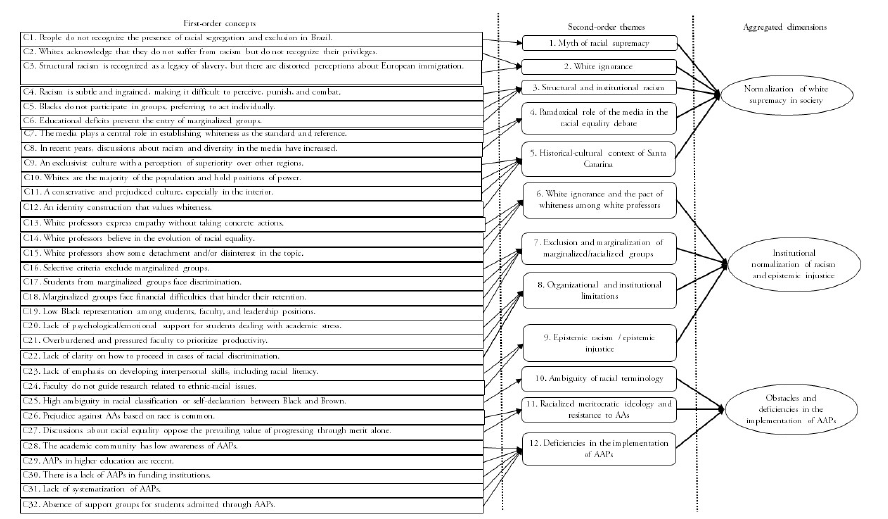 Source: Elaborated by the authors.