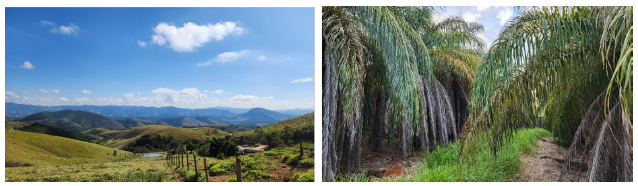
| ▪ It benefits the livestock by providing plant-based protein and shade during the summer. |
▪ The cost of doing business is high. CAPEX is 90% of gross revenues. |
| ▪ Green confined cattle breeding is viable because NPV is US$ 522,385 with an IRR of 16%. |
▪Green certification entails additional costs for infrastructure, technologies, and management, impacting financial feasibility. |
| ▪ Jules personally finances all Capex expenses. |
▪ The demand and willingness to pay premium prices for green-labeled cattle products may vary in the growing market for sustainable products. |
| ▪ Premium with green cattle is an increase of 15% on sales. |
|
| ▪ Selling green cattle allows for market differentiation, attracting consumers. |
| Riparian forest - Existing |
| Viable |
Not Viable |
| ▪ Investing in riparian forest restoration offers environmental benefits, improving water quality, reducing erosion, enhancing biodiversity, and contributing to carbon sequestration. |
▪ Restoring and maintaining riparian forests can be costly, potentially outweighing the revenue potential from carbon credits and making the investment financially unviable. |
| ▪ Investing in these ecosystems benefits cattle breeding and reduces cattle deaths from snake bites, among other advantages. |
▪ Technical expertise and adherence to certification standards are necessary for successful riparian forest restoration and carbon credit projects. |
| ▪ Riparian forest is viable because NPV is US$ 14,978 with an IRR of 32%. |
▪ Carbon credit prices are subject to market volatility, and demand for credits can fluctuate, impacting the financial feasibility of the investment. |
| ▪ The majority of the Capex is funded by TNC. |
|
| ▪ Adheres to international governance standards. |
| Eco-Bungalow - New |
| Viable |
Not Viable |
| ▪ Proximity to a national preservation area and close nature experiences can attract buyers for eco-bungalows. |
▪ Developments close to a national preservation area is challenging due to strict regulations and permits, making the investment process complex and time-consuming. |
| ▪ Eco-bungalows provide additional income and diversify revenue, reducing dependency on confined cattle breeding. |
▪ Requires careful consideration of environmental impacts and adherence to construction restrictions and waste management requirements. |
| ▪ Eco-Bungalows are viable because NPV is US$ 32,005 with an IRR of 20%. |
▪ Building and maintaining bungalows involve significant upfront and ongoing expenses, including infrastructure development and utilities. |
| ▪ Jules will personally finance all the capital expenditure expenses. |
|
| Oil processing of Macaúba palm - New |
| Viable |
Not Viable |
| ▪ Jules has abundant Macaúba palm tree resources, providing a sustainable and easily accessible raw material for Macaúba oil processing. |
▪ Establishing a Macaúba oil processing facility requires a high initial investment. |
| ▪ Market demand for Macaúba oil is growing in industries such as cosmetics, food, and biofuels, presenting an opportunity for investors in Macaúba oil processing. |
▪ Additional investors may be necessary due to the substantial investment required, which can be time-consuming and challenging to secure. |
| ▪ Investing in Macaúba oil processing allows income diversification, reducing reliance on a single investment and potentially increasing profitability. |
▪ The Macaúba oil market may face competition from other vegetable oils, requiring a careful assessment of the competitive landscape and the certain demand level. |
| ▪ Oil processing of Macaúba is viable because NPV is US$ 286,937 with an IRR of 24%. |
▪ Macaúba oil prices can be volatile, impacting the profitability of the business. |
| ▪ Jules seeks financial support from partners to invest in this new business venture. |
▪ Jules needs to consider the risks of a monoculture. |
| Carbon Credit - New |
| Viable |
Not Viable |
| ▪ Jules already has a significant number of established Macaúba palm trees that can be utilized for the immediate sale of carbon credits. |
▪ The process of selling carbon credits in the international market requires the expertise of experienced consultants. |
| ▪ The farm has ample land available for further tree planting, creating additional opportunities for selling carbon credits. |
▪ Obtaining certification for carbon credits can be costly and complex. |
| ▪ Jules incurs minimal costs as Reflora is funding all expenses associated with the model farm process. |
▪ Generating revenue from selling carbon credits takes time as it relies on the growth of plants, posing challenges for smaller producers. |
| ▪ The sale of carbon credits through Macaúba palm reforestation has a positive impact on profitability, complementing cattle production, which already adheres to green cattle seal standards. |
▪ It is important to note that the model for selling carbon credits implemented on Jules’ farm is a pilot project. Without assistance from Reflora or similar organizations, smaller producers may encounter difficulties in replicating the model successfully. |
| ▪ Carbon offsets are viable because NPV is US$ 644,281 with an IRR of 36%. |
▪ The time it takes for plants to grow during reforestation poses challenges for farmers who are unable to utilize the space until carbon credits are sold. Providing financial support during this transition period is crucial for reforestation project success. |
| ▪ The majority of the Capex is funded by the Reflora company. |
|
| ▪ Adheres to international governance standards. |
|

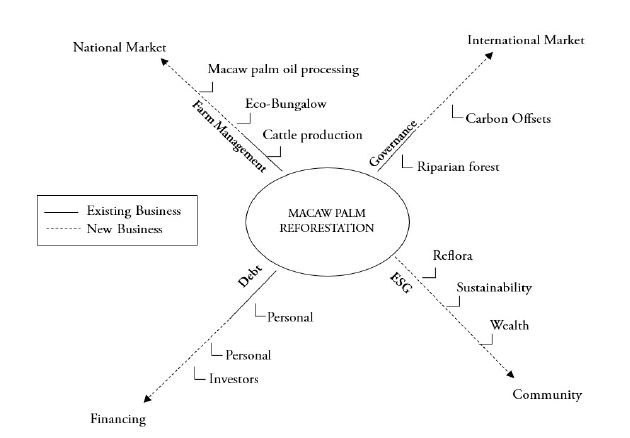
 Crédito de Carbono e Macaúba: Avançando ESG na Produção de Gado Verde
 Thumbnail
 Thumbnail
 Thumbnail