 ANALYZING PRODUCTION SCHEDULING RESEARCH: INSIGHTS FROM THE SCOPUS DATABASE ON BRAZILIAN ACADEMIA
ABSTRACT
This paper aims to provide a comprehensive overview of the research developed in production scheduling by researchers affiliated with Brazilian institutions. A total of 863 articles indexed in the Scopus database over the past four decades were collected. This comprehensive dataset enabled the identification of the most prolific authors, the most prominent institutions, and the most frequently studied production environments. Additionally, various quantitative indicators were examined to discern trends within this field. This study uniquely identifies critical gaps in Brazilian production scheduling research, emphasizing areas for international collaboration and practical applications. A higher concentration of studies was observed in the Southeast region, particularly at the University of São Paulo. The flow shop production environment emerged as the most studied topic, garnering a significantly higher number of citations than other production environments.
Keywords:
production scheduling; quantitative trends; operations research
1 INTRODUCTION
Production planning and control plays a crucial role for organizations as it aims to determine what, how much, and when to produce, purchase, and deliver. At a more operational level of decision-making, shop floor control encompasses three main activities: release of purchase orders, scheduling of operations, and performance evaluation (Fernandes & Godinho Filho, 2010).
At a global level, there has been a substantial increase in the use of computers to support decisionmaking in production scheduling over the last decades. Initially, researchers in this field focused heavily on the use of heuristics (Prata et al., 2023). More recently, other solution approaches, such as metaheuristics (Xhafa & Abraham, 2008), mathematical programming, constraint programming (Prata et al., 2024), and matheuristics (Maniezzo et al., 2021), have also been extensively adopted. Despite significant advancements, the limited adoption of research outcomes in industrial contexts underscores a critical need for bridging theoretical models with practical implementations.
Brazil has continental dimensions, a large population, and a lot of resources, thus making it an important country in terms of industrial relevance. Although it experienced delayed industrial development, a substantial growth in research in production scheduling could be observed in the last years of the 20th century. Nowadays, Brazil is one of the most relevant countries in this field, highlighting its prominence in the Latin American region.
The significant progress in production scheduling research in Brazil has positioned the country as the most prominent in Latin America and among the top 20 worldwide in published research. However, a significant gap becomes apparent compared to other countries such as China, the United States, France, and Germany. While the research conducted in Brazil primarily focuses on theoretical aspects, the research carried out in more developed countries can often be integrated into real-world industrial environments.
In this context, the development of studies and research that measure the impact of the research conducted in this country in this field has great value. Furthermore, it is of great importance to identify the most relevant institutions, the most prolific authors, the most studied production environments, and the main gaps in the field of study.
This paper aims to provide a comprehensive overview of the research developed in production scheduling by researchers affiliated with Brazilian institutions. To collect the inherent information, we used the Scopus database. Our survey allows us to determine the most relevant research developed in this area, considering the most influential institutions, articles, and authors.
This study provides an overview of production scheduling research within Brazilian institutions, emphasizing key trends and notable contributions. For researchers and professionals from other countries, this paper offers a deep comprehension of the state of the art and future directions of the research in this field in Brazil, one of the most relevant countries in the world in this area. Analyzing production environments and quantitative indicators could provide new perspectives and opportunities for international collaboration, enriching global knowledge and promoting technological advances.
The structure of the article is as follows. Section 2 describes the research methodology. Section 3 provides a historical analysis of the evolution of production scheduling research in Brazil. Section 4 presents the main insights obtained. Finally, Section 5 summarizes the main results, conclusions, challenges, and research avenues.
2 RESEARCH METHODOLOGY
We examine the literature with a systematic, transparent, and repeatable method to identify, analyze, and interpret the current collection of documents from a methodological perspective (Villegas et al., 2023; Prata et al., 2024). The choice of research questions (RQs) plays a key role to the quantitative and qualitative analysis in a literture survey. In our review, we address the following RQs:
-
What has been the evolution over time of production scheduling research in Brazil?
-
What is the importance of Brazil and Latin America in the production scheduling field on a global scale?
-
What are the most influential authors and institutions in Brazil?
-
What are the most studied production environments?
-
What are the main gaps and research trends in this field in Brazil?
To establish an effective search query string, we conducted multiple simulations incorporating terms related to the production environment and objective functions. As a result, we formulated the following search string without restricting the date range: “production scheduling” OR “production sequencing” OR “flow shop” OR “flowshop” OR “single machine” OR “single-machine” OR “parallel machines” OR “job shop” OR “jobshop” OR “open shop” OR “openshop” OR “batch scheduling” OR “assembly scheduling” OR “cellular manufacturing scheduling” OR “order scheduling”. Our search, conducted on 14/11/2024 in the Scopus database, returned 863 documents.
Based on the previous search string, all articles published in sources indexed in the Scopus database - including journals, conference papers, books, and book chapters - were considered. No language constraints were applied. Following the search process, only articles in English and Portuguese were included, as no documents in other languages were identified in the research methodology.
The choice of Scopus for the research methodology was based on its extensive coverage of highquality scientific publications, including journals, conferences, and books. Scopus is renowned as a prestigious database that indexes high-impact journals, providing theoretical and practical contributions. Additionally, it offers advanced tools for bibliometric analysis, making it superior to other available databases. Moreover, Scopus is widely used to evaluate graduate programs in Industrial Engineering in Brazil, ensuring alignment with quality standards and national relevance.
The decision not to consider other databases, such as Web of Science, Google Scholar, IEEE Xplore, or EBSCOhost, was based on specific reasons. The Web of Science database, although equally prestigious, has considerable overlap with Scopus and, in some cases, offers less coverage in some fields of Industrial Engineering. Although Google Scholar is a broad research repository, lacks rigorous indexing criteria and includes documents of varying quality, making it difficult to ensure the reliability and reproducibility of results. The IEEE Xplore and EBSCOhost databases are highly specialized and do not provide comprehensive coverage for the scope of this research.
To provide a qualitative analysis, we excluded articles containing the keywords but not closely related to the field. Contributions to parallel computing, image processing, control theory, power systems, and chemical engineering were not considered.
3 A HISTORICAL ANALYSIS OF THE EVOLUTION OF PRODUCTION SCHEDULING RESEARCH IN BRAZIL
The history of Brazilian universities dates to the period when the country was a colony of Portugal. Notably, the Jesuit College in Bahia was the first Brazilian higher education institution, operating from 1553 to 1759. However, in legal terms, the Portuguese crown prohibited Brazil from establishing legally recognized universities during the colonial period, and the establishment of higher education institutions in the country only began with the transfer of the Portuguese royal family in 1808.
With the elevation of the Brazilian territory to the status of a member of the United Kingdom of Portugal, Brazil, and Algarves in 1815, the State of Brazil underwent a process of invigorating its economic activity, tied to the creation of a still quite limited set of infrastructures. While Northern countries were already experiencing the Industrial Revolution, Brazil was still laying the groundwork for its industrialization.
Brazil experienced a delayed industrialization process. Until the early 1930s, Brazil was an agrarian country with poor educational and general infrastructure conditions. It was under the government of Getúlio Vargas that significant changes began. Initially, between 1930 and 1945, Vargas came to power through a revolution and then consolidated his position autocratically. Between 1951 and 1954, Vargas returned to power democratically. The policies initiated by Vargas during this period, and continued by some subsequent presidents, led Brazil through an intense process of economic growth. In the period between 1930 and 1980, Brazil was one of the countries that most increased its gross domestic product worldwide.
Although some higher education institutions existed in isolation, they did not yet achieve university status. Only in the 20th century were the first Brazilian universities created, as well as federal institutions for vocational-technical education. The Federal University of Rio de Janeiro was established in 1920, and the University of São Paulo was established in 1934. In the subsequent decades, several state-owned companies were created that boosted Brazilian industrial development, such as PETROBRAS, Companhia Vale do Rio Doce, ELETROBRAS, EMBRAER, and the National Motor Factory, among other state-owned technology companies.
In 1951, the National Campaign for the Improvement of Higher Education Personnel - today called the Coordination for the Improvement of Higher Education Personnel (CAPES) - was created to ensure the existence of specialized personnel in sufficient quantity and quality to meet the needs of public and private enterprises aiming at the country’s development. From 1953 onwards, CAPES began to offer training and improvement scholarships in Brazil and abroad. The National Council for Scientific and Technological Development (CNPq) was also created in 1951 to promote research and development projects, formulate its policies, and contribute to the advancement of the frontiers of knowledge, economic development, and national sovereignty. In turn, the Funding Authority for Studies and Projects (FINEP) was created in 1967 to promote innovation in the country and finance the implementation of postgraduate programs in Brazilian universities. CAPES, CNPq, and FINEP played a strategic role in the scientific and technological development of Brazil.
The Brazilian Society of Operational Research (SOBRAPO) was founded in 1969. In the same year, the Brazilian Symposium of Operational Research (SBPO) occurred in Rio de Janeiro. This event marked the consolidation of Operational Research in Brazil as a structured field. In 1981, the first National Meeting of Production Engineering (ENEGEP) occurred in São Carlos, São Paulo. This event was fundamental in consolidating the idea of an entity representing the field of Production Engineering in Brazil. Two years later, the Brazilian Association of Production Engineering (ABEPRO) was founded to promote the development and dissemination of knowledge in the field of Production Engineering in Brazil.
The process of creating universities (amalgamating existing colleges and faculties), public agencies for promoting research and technological development, state-owned high-tech companies, industrialization of the country, creation of postgraduate programs, and scientific societies created the necessary conditions for the development of research in production scheduling in Brazil. Although scientific articles had been presented at national conferences, there was not yet a culture of publishing in international journals or indexed conferences. The delayed industrialization in Brazil continues to influence the limited application of advanced scheduling techniques in its industries. It was only in the late 1980s that the first works in this context began to appear. Table 1 lists the first ten articles published by researchers affiliated with Brazilian institutions in journals indexed in the Scopus database.
Jayme Luiz Szwarcfiter was a professor at the Federal University of Rio de Janeiro from 1968 to 2002. He was the first Brazilian researcher to publish indexed articles in the field of Production Scheduling. Szwarcfiter (1987) addressed the job shop scheduling problem with unit-time operations under resource constraints and release dates. Algorithms were proposed to solve objectives related to makespan and mean completion time. Błażewicz et al. (1988) considered a flow shop scheduling problem with unit-time operations under resource constraints. Two objective functions were analyzed: the minimization of makespan and maximum lateness. The variant for minimizing makespan is NP-hard, and a dynamic programming algorithm is proposed to solve it. On the other hand, the maximum lateness objective can be solved using a polynomial-time algorithm.
Hill et al. (1992) developed an information system that considers several decisions in production planning and control: process modeling, bills of materials, process routing, inventory and shop-floor control, production scheduling, order release, and follow-up. The decision support system uses discrete event simulation to aid planners in managing the production processes. Nascimento (1993) adapted Giffler and Thompson’s algorithm for the job shop scheduling problem in a flexible manufacturing environment, with makespan minimization as the performance measure. Ribeiro & Pradin (1993) proposed a two-stage approach to design a cellular manufacturing system in a job shop production environment. The first stage comprises the assignment of parts to the previously selected machines. The second stage splits the parts into the corresponding cells. Perkins et al. (1994) provided several theoretical results for manufacturing systems with multiple parts to be processed in multiple machines. The parts arrive dynamically in the shop, and intermediate buffers are placed between the machines. A setup operation is required to process the parts in the buffers.
França et al. (1994) proposed composite heuristics for the identical parallel machines scheduling problem with makespan minimization. This heuristic is composed of three phases. In the first stage, the jobs are assigned to the machines. In the second stage, the jobs are reassigned to improve the initial solution. Finally, in the third stage, an interchange of the jobs among the machines is performed to find a better balance of the jobs across the machines. Nascimento & Armentano (1994) developed a two-phase algorithm for scheduling jobs in a flexible manufacturing system. In the first phase, each job is scheduled independently to minimize completion time. In the second phase, the conflicts are corrected concomitantly with the makespan minimization. Furthermore, the upper bounds are improved with a branch-and-bound algorithm. Moccellin (1995) proposed a heuristic procedure for the permutation flow shop scheduling problem with makespan minimization. Aiming to generate feasible initial solutions, a distance position-based matrix between the jobs in the sequence is obtained using the well-known Farthest Insertion Procedure. Next, this solution is improved by a Tabu Search algorithm. Mello et al. (1995) addressed the requirements of production scheduling and control systems concerning the problem domain of production planning and control in manufacturing enterprises and the characteristics of information technology that the system should present. This is the first article published in this field in a Brazilian-indexed journal.
In this first phase of Brazilian research in this field, we can observe that the contributions addressed constructive heuristics, theoretical analysis, or discrete event simulation. The application of mixed-integer linear programming, exact approaches, or more sophisticated metaheuristics was still limited.
4 RESULTS AND DISCUSSION
Table 2 describes published documents indexed in Scopus related to production scheduling by country. In this analysis, the twenty most prolific countries have been considered. In this ranking, Brazil occupies the 13th position, with 863 published documents. It can be observed that the variation between South Korea, Turkey, Brazil, Spain, Poland, and Australia is not significant. Despite the late start of production scheduling research in Brazil, this country is one of the most productive worldwide.
Table 3 presents the publications indexed in the Scopus database by Latin American countries. It can be observed that only the countries with published documents in the field were considered in this table; countries not listed had not yet published articles at the time of the search. Brazil stands out as the leading country in scientific production in this field within Latin America.
Published documents indexed in Scopus related to production scheduling by Latin America countries.
Table 4 describes the twenty authors filiated to Brazilian universities with a greater number of published documents. When classifying authors by their institutions, a few points warrant emphasis. Only the researchers’ current institutions are considered, disregarding any previous affiliations. Notably, some researchers contributed articles to this field during their postgraduate studies at institutions different from their current positions. Several of the publications by the most prolific authors are shared by multiple authors.
The considered articles have at least one author affiliated with a Brazilian educational or research institution, and foreign authors who meet these requirements may also be considered. For an article to be counted, the author does not need to be the first author; it is sufficient for them to be listed among the authors of the article.
Furthermore, the following comments can be highlighted:
-
Professor Vinicius Armentano was a Full Professor at the Faculty of Electrical Engineering at the State University of Campinas from 1984 until 2019 (the year of his retirement). He passed away in 2024.
-
Professor João Vitor Moccellin was a Full Professor at the School of Engineering of São Carlos at the University of São Paulo from 1975 until 2011, the year of his retirement from the institution. In 2011, he joined the Department of Production Engineering at the Federal University of Ceará, where he worked until his passing in 2021.
-
Professor Paulo Morelato França was a Full Professor in the Department of Systems Engineering at the Faculty of Electrical and Computer Engineering at University of Campinas from 1973 until 2005, the year of his retirement. Between 2007 and 2009, he was affiliated with State University Julio Mesquita Filho (São Paulo).
Based on Table 4, the following comments can be emphasized.
-
Professor Marcelo Seido Nagano is the most prolific author in production scheduling in Brazil, reaching the mark of 77 documents published in journals, book chapters, and conferences indexed in the Scopus database. On a worldwide level, he is one of the most relevant authors on the flow shop scheduling problem.
-
The researchers are distributed across various institutions in different states of Brazil, highlighting a broad national contribution.
-
The institutions with the highest number of publications include the University of São Paulo, the Federal University of Ceará, and the Federal University of São Carlos.
-
Publications are highly concentrated in Brazil’s southeastern region, particularly in São Paulo state, home to institutions such as the University of São Paulo, State University of Campinas, State University Júlio Mesquita Filho, and the Federal Institute of São Paulo.
-
In the Northeast region, the Federal University of Ceará and the Federal University of Paráıba had the most publications.
-
In this ranking, no institutions were observed in the North and Central-West regions of Brazil.
Table 5 illustrates the authors filiated to Brazilian universities with more cited documents indexed in Scopus related to Production Scheduling. Based on the results found, the following aspects can be highlighted.
-
M.S. Nagano is the most cited author among researchers affiliated with Brazilian institutions. Considering only his articles related to the Production Scheduling domain, he has received 1325 citations. Additionally, D.P. Ronconi and V.A. Armentano are also notable as highly cited authors, highlighting their impact on the development of Brazilian research.
-
The University of São Paulo is the most prominent Brazilian institution in the Production Scheduling field, as it is represented by several of the most cited authors. Furthermore, other authors in this ranking have studied or currently work at this institution.
-
The variety of state and federal institutions located across different regions of Brazil indicates a growing diversification in research development at the regional level. This institutional diversity suggests a robust and collaborative research ecosystem in the country.
-
A heterogeneity in the experience levels of researchers can also be highlighted. On one hand, several highly experienced researchers, such as M.S. Nagano, D.P. Ronconi, G.R. Mateus, and R. Morabito. On the other hand, some young researchers, such as B.A. Prata, H.H. Miyata, A. Subramanian, and L.R. Abreu are in this list.
In addition to the quantitative data illustrated in Tables 4 and 5, several aspects of the research developed by the analyzed researchers can also be highlighted:
-
Some researchers also regularly contribute to other Operational Research or Industrial Engineering problems. For example, M.S. Nagano focuses on Knowledge Management and Innovation Management; D.P. Ronconi works on Cutting and Packing; R. Morabito specializes in Cutting and Packing and Lot Sizing; and A. Subramanian concentrates on Vehicle Routing.
-
Most ranked researchers focus their studies on production sequencing problems, such as M.S. Nagano, D.P. Ronconi, and J.E.C. Arroyo. On the other hand, some researchers direct their investigations towards production planning and control problems, which interface with scheduling issues, such as E.M. Frazzon, M. Godinho Filho, and R. Morabito.
-
Most ranked researchers have used approximate algorithms (heuristics and metaheuristics) to solve scheduling problems. However, some researchers have also employed integer linear programming (for example, M.G. Ravetti, G.R. Mateus, and E. Birgin) or discrete event system simulation (for example, E.M. Frazzon) for this purpose.
-
There is a balance between researchers from the field of Production Engineering (for example, M.S. Nagano, D.P. Ronconi, B.A. Prata, and E.M. Frazzon) and those from the field of Computer Science or Applied Mathematics (for instance, J.E.C. Arroyo, M.J.F. Souza, V. Armentano, and P.M. França).
One notable issue identified in the analysis of the results is the uneven distribution of publications across Brazilian regions. The following discussion delves into this significant topic. First, the economic development of the Southeast region, mainly after the latter half of the 19th century, created a more suitable environment for industrial and research activities. In this context, the Southeast region has the most developed infrastructure in Brazil, including graduate programs, laboratories, and research groups. Given these conditions, the institutions in this region have attracted more researchers and students from all other Brazilian areas and other South American countries. Finally, Southeast funding agencies can provide a high level of resources. Additionally, national funding resources are highly concentrated in the aforementioned region.
This unbalanced distribution of research development throughout the Brazilian territory suggests that national research funding agencies should provide a more equitable distribution of resources across all regions. In addition, specific policies can accelerate the development of less-developed areas. Promoting collaborative research projects involving institutions from different regions and encouraging the interchange of researchers and experiences could be encouraged. Finally, establishing partnerships with public and private companies involving institutions in less developed regions could be enlarged.
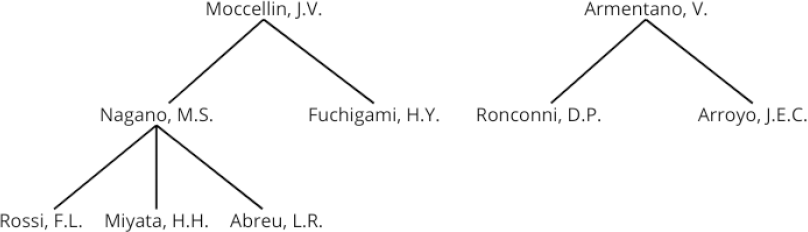
Figure 1 illustrates the genealogy involving the most prolific authors. It can be observed that Professors J.V. Moccellin and V. Armentano played a significant role in the development of Production Scheduling research in Brazil. Professor J.M. Moccellin was the advisor of M.S. Nagano and H.Y. Fuchigami and collaborated intensively with B.A. Prata. In turn, M.S. Nagano advised three of the most prolific authors in this field. On the other hand, V. Armentano was the advisor of D.P. Ronconni and J.E.C. Arroyo, two of the most prominent researchers in this area.

Table 6 describes the ten most cited documents. Such contributions correspond to the following production environments: flow shop (5 articles), parallel machines (2 articles), single-machine (1 article), and job shop (1 article). Furthermore, one article is dedicated to a literature review in the production planning and control domain.
Concerning approximate solution algorithms, the following contributions can be presented. Aiex et al. (2003) published the most cited document related to Production Scheduling by researchers affiliated with Brazilian institutions. The article was published in the Parallel Computing Journal in 2003. Parallel GRASP with path-relinking was developed to solve the job shop scheduling problem with makespan minimization. Ronconi (2004) developed a new constructive heuristic for the blocking flow shop to minimize the makespan. Arroyo & Armentano (2005) proposed a genetic local search algorithm for the multiobjective permutation flow shop. Two pairs of objectives were considered: makespan and maximum tardiness, as well as total tardiness. França et al. (2001) addressed the single-machine scheduling problem with sequence-dependent setup times and total tardiness minimization. A memetic algorithm was proposed as the solution procedure. França et al. (2005) considered a new variant for the permutation flow shop scheduling problem with sequence-dependent family setup times with makespan minimization. This environment arises in the manufacturing cell scheduling. Given the NP-hardness of the problem under study, two evolutionary algorithms were proposed: a genetic algorithm and a memetic algorithm. Rocha et al. (2008) studied the unrelated parallel machines scheduling problem with sequence and machine-dependent setup times, due dates, and weighted jobs. The performance measure is the minimization of the makespan added to the weighted tardiness. Exact and approximate methods are proposed to solve this problem, as follows: branch-and-bound, mixed-integer linear programming, and a GRASP metaheuristic. Armentano & Ronconi (1999) addressed the permutation flow shop to minimize total tardiness. In view of the NP-hardness of this problem, a Tabu Search was proposed as the solution procedure.
Regarding exact solution approaches, the following contributions can be highlighted. Ronconi (2005) proposed a branch-and-bound algorithm for the permutation flow shop with blocking constraints and makespan minimization. Pessoa et al. (2010) addressed the identical parallel machines scheduling problem with weighted total tardiness minimization. An arc-time-indexed formulation is presented. Besides, a branch-and-cut-and-price algorithm is developed to solve this problem.
Among the top ten most cited documents, only one is a literature review. Junior & Filho (2012) presented a literature review and analysis of production planning and control in remanufacturing. Based on the results, one of the more complicated characteristics of production planning and control activity in this field is the shop scheduling floor.
Based on the above considerations, the following issues can be highlighted:
-
The ten most cited articles were published between 25 and 12 years ago. The most cited articles were published about 20 years ago.
-
An increased occurrence of studies related to the flow shop production environment was noted. This class of problems has garnered greater attention from researchers during this period, resulting in frequent citations in recent years.
-
Professor DP Ronconni has three articles among the ten most cited, emerging as one of the most impactful researchers in the field.
-
Although a prevalence of the application of heuristics and meta-heuristics in solving the addressed problems can be observed, it was also noted that the use of mathematical programming and exact methods has gained greater prominence.
-
Studies in the area generally focused on classic and theoretical problems. Issues arising from industrial environments did not gain significant prominence among researchers in the field.
Considering that the ten most cited articles were generally published more than 15 years ago, it is pertinent to analyze the trend among the more recent publications. Therefore, the ten most cited publications in the last 5 years were analyzed, as described in Table 7. Such contributions correspond to the following production environments: job shop (3 articles), open shop (2 articles), literature review (2 articles), parallel machines (1 article), flow shop (1 article), and flexible job shop (1 article).
Concerning the articles that proposed heuristics and metaheuristics as solution approaches, the following contributions can be highlighted. Abreu et al. (2020) proposed a hybrid genetic algorithm for the open shop scheduling problem with sequence-dependent setup times and makespan minimization. Viana et al. (2020) proposed a hybrid genetic algorithm with local search and multiple crossover operators for the job shop scheduling problem to minimize the makespan. de Fátima Morais et al. (2022) developed three variants of the discrete differential evolution algorithm for the permutation flow shop minimizing the makespan. Abreu et al. (2021) considered a open shop scheduling with routing by capacitated single vehicle and makespan minimization. As the solution approaches, a mixed-integer linear programming model and a biased random key genetic algorithm were developed. Soares & Carvalho (2020) studied an identical parallel machine scheduling problem with tooling constraints. A biased random key genetic algorithm is presented as the solution method.
Regarding discrete-event simulation as a modeling approach, Baumer-Cardoso et al. (2020) addressed a job shop scheduling problem of a company that produces PVC pipes. The proposed model simultaneously analyzes lean production and environmental variables. Computational results indicated a positive correlation between lean and green production indicators. Furthermore, Pergher et al. (2020) integrated discrete-event simulation and multicriteria decision-making to solve the job shop scheduling problem. The simulation model evaluates several performance measures (total cost, production quantity, total throughput time, and tardiness). By this turn, the Flexible and Interactive Tradeoff (FITradeoff) method identifies the best combination of due date assignment, order release, and shop dispatching rules.
Concerning the application of exact methods, Lunardi et al. (2020) addressed a flexible job shop scheduling problem that arises in the printing industry. The objective function is the minimization of the makespan. A mixed-integer linear programming formulation and a constraint programming model were presented as solution approaches.
Two survey papers have been among the most cited documents. Rolim & Nagano (2020) explored structural properties and solution approaches for earliness and tardiness scheduling problems with common due dates and due windows. They proposed a novel notation to represent problems related to common due dates. At this point, Tomazella & Nagano (2020) presented a literature review focusing on branch-and-bound algorithms for the permutation flow shop scheduling problem. The review detailed studies involving 2, 3, and m machines with various performance measures and additional constraints.
Regarding the most cited documents in the last five years, the following points can be highlighted:
-
The prevalence of studies focused on the job shop production environment was observed. Consequently, open shop scheduling problems have garnered increased attention from researchers during this period.
-
M.S. Nagano has three documents among the ten most cited in the last five years.
-
Exact methods have also received significant attention, especially mixed-integer linear programming models. Constraint programming has started to be more explored by researchers in this field.
We can observe that the most impactful works concerning citations are related to applying approximate algorithms (heuristics and metaheuristics) for solving production sequencing problems. However, it is important to recognize the significance of contributions related to exact methods, although they may eventually attract fewer citations. The work of Pessoa et al. (2010) constitutes one of the first approaches based on branch-cut-and-price for scheduling problems. Other works by members of this group have presented relevant theoretical contributions to this field (Silva et al., 2018; Bougeret et al., 2019; Oliveira & Pessoa, 2020).
Table 8 presents the leading journals in the Scopus database for Brazilian authors in the production scheduling domain. Computers and Operations Research was the journal with more published documents, followed by Computers and Industrial Engineering, International Journal of Production Research, and European Journal of Operational Research. This last journal attracted the largest number of citations among all the journals selected by researchers affiliated with Brazilian institutions in this field. Three Brazilian journals appeared in the Top 20 leading journals: Gestão e Produção, Produção, and Pesquisa Operacional. Such results highlight the importance of supporting national titles in developing national research.
Table 9 presents the number of published documents for the most studied production environments. A higher interest in the flow shop scheduling problem can be observed, followed by the single-machine and job shop production environments. Parallel machine variants appear in fourth place, with a significant margin separating them from the top three most addressed problems. Recently, the open shop scheduling environment has been studied more extensively.
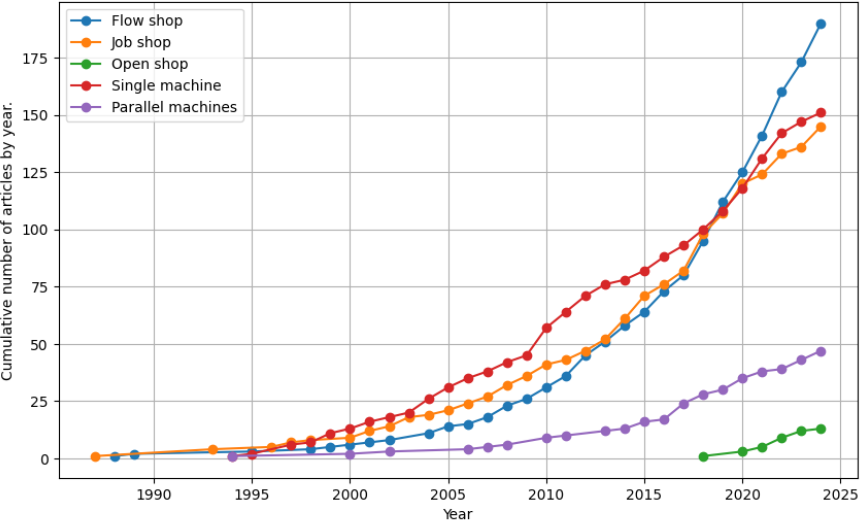
Figure 2 shows the cumulative number of articles published for the most studied production environments. The flow shop, job shop, and single-machine environments experienced heightened interest from researchers between 1995 and 2005, maintaining a steady growth trend in the following years. In contrast, the parallel machines environment exhibited slower growth in the subsequent years. The open shop scheduling problem remained unaddressed by researchers affiliated with Brazilian institutions until 2019. However, after that year, interest in this problem has gradually increased.

Figure 3 illustrates the citation distribution for the five most studied production environments. The flow shop and parallel machine problems exhibit higher medians, suggesting that these production environments have a higher impact or attract more interest among researchers in this field. Outliers are present in all the studied production environments, indicating that some articles stand out significantly compared to the overall group of publications.

Figure 4 illustrates the cumulative number of citations by year for the most investigated production environments. A trend similar to the number of documents published, described in Figure 2, can be observed. Nevertheless, the difference in the number of accumulated citations between the flow shop and the other production environments is more pronounced, highlighting the prevalence of this problem in comparison with the others.

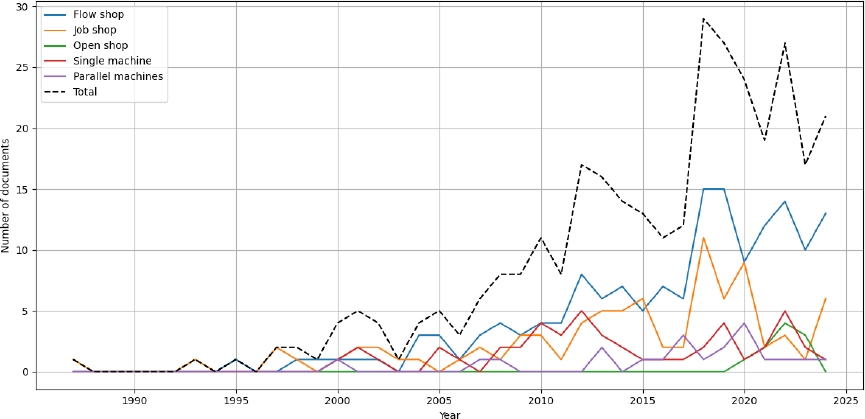
Figure 5 describes the distribution of the published documents per year for the most investigated production environments. Furthermore, this figure also depicts the total annual number of published documents. Based on the above, the following comments can be highlighted:
-
After 2007, a clear growth trend in the total number of published documents can be observed.
-
The flow shop scheduling problem consistently occupied the top position in terms of the number of published documents.
-
Both job shop and single-machine environments presented a growth trend after 2010, but the interest in such scheduling problems has decreased in recent years.
-
The parallel machines scheduling problem has not presented a growth trend, and the number of published documents is sparse.
-
The open shop did not receive attention until 2019. A peak in the number of publications was observed, but interest from researchers in this area has diminished.

5 CONCLUSIONS
This study analyzes the research trajectory in the production scheduling field conducted by researchers affiliated with Brazilian higher education institutions. To this end, a documentary analysis was performed on articles indexed in the Scopus database. Globally, Brazil ranks in the top decile among countries with the highest scientific output in production scheduling. In the Latin American context, Brazil stands out as the most influential country in this field.
Although there is regional diversity regarding the institutions to which researchers are affiliated, there is a higher concentration of research on production scheduling in the Southeast region, particularly in the State of São Paulo. Although the North and Midwest regions have recognized researchers in this field, they are not listed among the most prolific authors. Besides, there is also potential for greater institutional diversity in the South and Northeast regions. Therefore, it is essential to establish policies to encourage increasing production scheduling studies across other institutions.
The flow shop production environment is the most extensively studied by researchers from Brazilian institutions, with works on this topic receiving the highest number of citations. Although the open shop production environment is significantly less explored when compared to more traditional environments, there has been a recent and notable upward trend in publications and citations related to this class of problems.
A predominance of studies using heuristics and metaheuristics as solution approaches was observed. More recently, techniques such as Integer Linear and Constraint Programming have gained prominence in scheduling studies. Additionally, the use of matheuristics has emerged as a promising approach. The application of these techniques is expected to continue increasing in the coming years.
Regarding the assumptions adopted by researchers, most studies analyzed employed theoretical variants and randomly generated synthetic instances. Considering recent advancements in hardware, software, and solution methods, this is an ideal time to shift the focus of scientific investigation.
An important research direction would be addressing problems arising from real-world production environments. Practical problems often involve additional constraints and the consideration of multiple criteria, making them more challenging to solve. It is worth noting that, in its origins, Operations Research primarily aimed to solve real-world problems. However, there has been a shift toward a greater focus on solution method development. There is still a gap between using quantitative methods in production scheduling and the reality of Brazilian companies (Giacon & Mesquita, 2011).
One challenge is to develop structured methods to support decision-making that can be employed in the daily operations of public and private companies. Creating a production scheduling working group could bring together researchers from Brazilian institutions and include members from other countries. Such an initiative could help establish new directions for research in this field in Brazil.
References
- ABREU LR, CUNHA JO, PRATA BA & FRAMINAN JM. 2020. A genetic algorithm for scheduling open shops with sequence-dependent setup times. Computers & Operations Research, 113: 104793.
- ABREU LR, TAVARES-NETO RF & NAGANO MS. 2021. A new efficient biased random key genetic algorithm for open shop scheduling with routing by capacitated single vehicle and makespan minimization. Engineering Applications of Artificial Intelligence, 104: 104373.
- AIEX RM, BINATO S & RESENDE MG. 2003. Parallel GRASP with path-relinking for job shop scheduling. Parallel Computing, 29(4): 393-430.
- ARMENTANO VA & RONCONI DP. 1999. Tabu search for total tardiness minimization in flowshop scheduling problems. Computers & Operations Research , 26(3): 219-235.
- ARROYO JEC & ARMENTANO VA. 2005. Genetic local search for multi-objective flowshop scheduling problems. European journal of operational research, 167(3): 717-738.
- BAUMER-CARDOSO MI, CAMPOS LM, SANTOS PPP & FRAZZON EM. 2020. Simulation-based analysis of catalyzers and trade-offs in Lean & Green manufacturing. Journal of Cleaner Production, 242: 118411.
- BŁAŻEWICZ J, KUBIAK W & SZWARCFITER J. 1988. Scheduling unit-time tasks on flow-shops under resource constraints. Annals of Operations Research, 16: 255-266.
- BOUGERET M, PESSOA AA & POSS M. 2019. Robust scheduling with budgeted uncertainty. Discrete applied mathematics, 261: 93-107.
- DE FÁTIMA MORAIS M, RIBEIRO MHDM, DA SILVA RG, MARIANI VC & DOS SANTOS COELHO L. 2022. Discrete differential evolution metaheuristics for permutation flow shop scheduling problems. Computers & Industrial Engineering, 166: 107956.
- FERNANDES F & GODINHO FILHO M. 2010. Planejamento e Controle da Produção: dos Fundamentos ao Essencial. São Paulo: Atlas.
- FRANÇA PM, GENDREAU M, LAPORTE G & MÜLLER FM. 1994. A composite heuristic for the identical parallel machine scheduling problem with minimum makespan objective. Computers & Operations Research , 21(2): 205-210.
- FRANÇA PM, GUPTA JN, MENDES AS, MOSCATO P & VELTINK KJ. 2005. Evolutionary algorithms for scheduling a flowshop manufacturing cell with sequence dependent family setups. Computers & Industrial Engineering , 48(3): 491-506.
- FRANÇA PM, MENDES A & MOSCATO P. 2001. A memetic algorithm for the total tardiness single machine scheduling problem. European journal of operational research , 132(1): 224-242.
- GIACON E & MESQUITA MAD. 2011. Levantamento das práticas de programação detalhada da produção: um survey na indústria paulista. Gestão & Produção, 18: 487-498.
- HILL J, COSTA R & JARDIM E. 1992. Strategic Capacity Planning and Production Scheduling in Jobbing Systems. Integrated Manufacturing Systems, 3(3): 22-26.
- JUNIOR ML & FILHO MG. 2012. Production planning and control for remanufacturing: literature review and analysis. Production Planning & Control, 23(6): 419-435.
- LUNARDI WT, BIRGIN EG, LABORIE P, RONCONI DP & VOOS H. 2020. Mixed integer linear programming and constraint programming models for the online printing shop scheduling problem. Computers & Operations Research , 123: 105020.
- MANIEZZO V, STÜTZLE T & VOSS S. 2021. Matheuristics. Springer.
- MELLO M, BREMER CF & ROZENFELD H. 1995. Computer aided solution for production scheduling and control in an integrated environment. Revista Brasileira de Ciencias Mecanicas, 17(2): 219-31.
- MOCCELLIN JV. 1995. A new heuristic method for the permutation flow shop scheduling problem. Journal of the Operational research Society, 46(7): 883-886.
- NASCIMENTO MA. 1993. Giffler and Thompson’s algorithm for job shop scheduling is still good for flexible manufacturing systems. Journal of the Operational research Society , 44(5): 521-524.
- NASCIMENTO MA & ARMENTANO VA. 1994. Two-stage heuristic for scheduling in flexible manufacturing systems. American Society of Mechanical Engineers, Petroleum Division (Publication) PD, 59: 137-143.
- OLIVEIRA D & PESSOA A. 2020. An improved branch-cut-and-price algorithm for parallel machine scheduling problems. INFORMS Journal on Computing, 32(1): 90-100.
- PERGHER I, FREJ EA, ROSELLI LRP & DE ALMEIDA AT. 2020. Integrating simulation and FITradeoff method for scheduling rules selection in job-shop production systems. International Journal of Production Economics, 227: 107669.
- PERKINS JR, HUMES C & KUMAR P. 1994. Distributed scheduling of flexible manufacturing systems: Stability and performance. IEEE Transactions on Robotics and Automation, 10(2): 133-141.
- PESSOA A, UCHOA E, DE ARAGÃO MP & RODRIGUES R. 2010. Exact algorithm over an arc-time-indexed formulation for parallel machine scheduling problems. Mathematical Programming Computation, 2: 259-290.
- PRATA BA, ABREU LR & NAGANO MS. 2024. Applications of constraint programming in production scheduling problems: A descriptive bibliometric analysis. Results in Control and Optimization, 14: 100350.
- PRATA BA, NAGANO MS, MARTARELLI FRÓES NJ & DE ABREU LR. 2023. The seeds of the neh algorithm: an overview using bibliometric analysis. In: Operations Research Forum, vol. 4. p. 98. Springer.
- RIBEIRO JF & PRADIN B. 1993. A methodology for cellular manufacturing design. The International Journal of Production Research, 31(1): 235-250.
- ROCHA PL, RAVETTI MG, MATEUS GR & PARDALOS PM. 2008. Exact algorithms for a scheduling problem with unrelated parallel machines and sequence and machine-dependent setup times. Computers & Operations Research , 35(4): 1250-1264.
- ROLIM GA & NAGANO MS. 2020. Structural properties and algorithms for earliness and tardiness scheduling against common due dates and windows: A review. Computers & Industrial Engineering , 149: 106803.
- RONCONI DP. 2004. A note on constructive heuristics for the flowshop problem with blocking. International Journal of Production Economics , 87(1): 39-48.
- RONCONI DP. 2005. A branch-and-bound algorithm to minimize the makespan in a flowshop with blocking. Annals of Operations Research , 138: 53-65.
- SILVA YLT, SUBRAMANIAN A & PESSOA AA. 2018. Exact and heuristic algorithms for order acceptance and scheduling with sequence-dependent setup times. Computers & Operations Research , 90: 142-160.
- SOARES LCR & CARVALHO MAM. 2020. Biased random-key genetic algorithm for scheduling identical parallel machines with tooling constraints. European journal of operational research , 285(3): 955-964.
- SZWARCFITER JL. 1987. Job shop scheduling with unit time operations under resource constraints and release dates. Discrete applied mathematics , 18(2): 227-233.
- TOMAZELLA CP & NAGANO MS. 2020. A comprehensive review of Branch-and-Bound algorithms: Guidelines and directions for further research on the flowshop scheduling problem. Expert Systems with Applications, 158: 113556.
- VIANA MS, MORANDIN JUNIOR O & CONTRERAS RC. 2020. A modified genetic algorithm with local search strategies and multi-crossover operator for job shop scheduling problem. Sensors, 20(18): 5440.
- VILLEGAS JG, MONTOYA-TORRES JR & GUERRERO WJ. 2023. An Overview of Operations Research/Management Science in Latin America. In: Operations Research and Analytics in Latin America: Proceedings of ASOCIO/IISE Region 16 Joint Conference 2022. pp. 1-19. Springer.
- XHAFA F & ABRAHAM A. 2008. Metaheuristics for scheduling in industrial and manufacturing applications. vol. 128. Springer.
Data is available upon request.