
 Perception of the terms “homemade” and “handmade” in relation to the front-of-pack nutritional labeling of industrialized products: a qualitative-quantitative study with adults and elderly people
The study evaluated consumer perceptions of processed food labels with the terms "homemade" and "handmade", with and without front-of-pack nutrition labeling. Seven focus groups (n=71) were conducted with participants of different age groups. Qualitative and quantitative analyses of the discourse content were performed using Iramuteq software to analyze the results. The sample consisted of 69% adults, of whom 81.6% were women and 59.2% had incomplete higher education. Among the elderly, 100% were women, and 63.6% reported having incomplete secondary education. Overall, a more positive perception was observed regarding foods associated with these terms, which were interpreted as more natural. However, elderly participants reported being willing to pay more for these foods. Furthermore, the presence of front-of-pack nutrition labeling did not influence purchase intention, and more elderly participants reported not observing this information on labels than adults. These findings suggest that the use of terms related to the production method (homemade and handmade terms) can positively influence the purchase and consumption of these foods, especially among older consumers, constituting a possible marketing instrument for the food industry.
Keywords:
Focus groups; Perceptions; Marketing; Food labeling; Front-of-pack nutrition labeling.
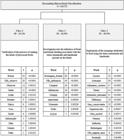 Thumbnail
 Thumbnail
 Thumbnail
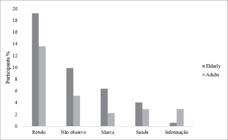 Thumbnail
 *All selected words are significant per the chi-square test at a 5% significance levelLegend: TS: text segments; F: frequency; p: p valuesSource: prepared by the author
 *All selected words are significant per the chi-square test at a 5% significance levelSource: prepared by the author
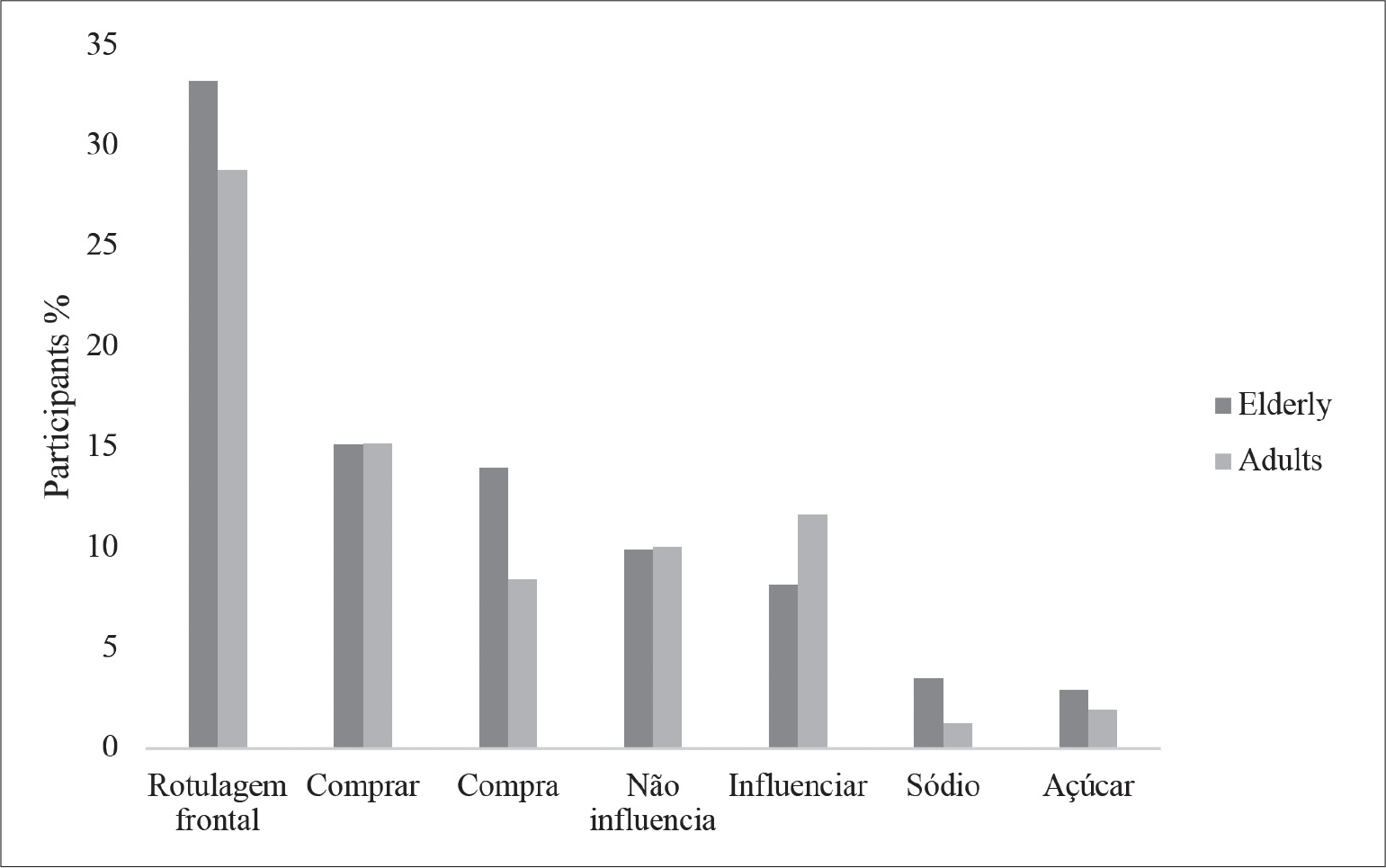 *All selected words are significant per the chi-square test at a 5% significance levelSource: prepared by the authors
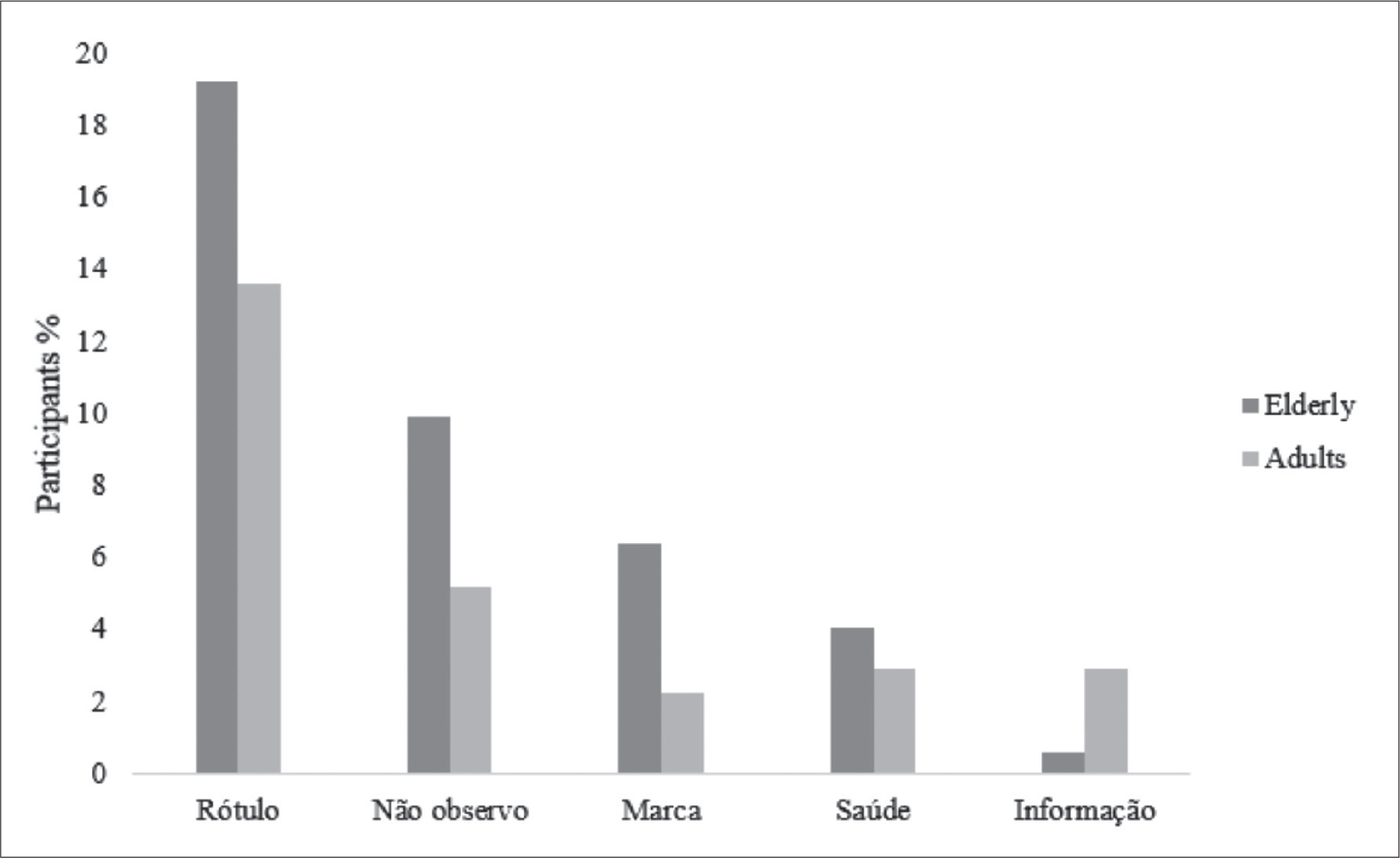 *All selected words are significant per the chi-square test at a 5% significance levelSource: prepared by the authors