
 Perception of the terms “homemade” and “handmade” in relation to the front-of-pack nutritional labeling of industrialized products: a qualitative-quantitative study with adults and elderly people
Abstract
The study evaluated consumer perceptions of processed food labels with the terms "homemade" and "handmade", with and without front-of-pack nutrition labeling. Seven focus groups (n=71) were conducted with participants of different age groups. Qualitative and quantitative analyses of the discourse content were performed using Iramuteq software to analyze the results. The sample consisted of 69% adults, of whom 81.6% were women and 59.2% had incomplete higher education. Among the elderly, 100% were women, and 63.6% reported having incomplete secondary education. Overall, a more positive perception was observed regarding foods associated with these terms, which were interpreted as more natural. However, elderly participants reported being willing to pay more for these foods. Furthermore, the presence of front-of-pack nutrition labeling did not influence purchase intention, and more elderly participants reported not observing this information on labels than adults. These findings suggest that the use of terms related to the production method (homemade and handmade terms) can positively influence the purchase and consumption of these foods, especially among older consumers, constituting a possible marketing instrument for the food industry.
Keywords:
Focus groups; Perceptions; Marketing; Food labeling; Front-of-pack nutrition labeling.
Resumo
O estudo avaliou a percepção de consumidores sobre rótulos de alimentos industrializados com os termos "caseiro" e "artesanal", com e sem a rotulagem nutricional frontal. Foram conduzidos sete grupos focais (n=71) com participantes de diferentes faixas etárias. Para as análises dos resultados, realizaram-se análises quali-quantitativas com o conteúdo dos discursos por meio do software Iramuteq. A amostra apresentou 69% de adultos, dos quais 81,6% eram mulheres e 59,2% apresentavam ensino superior incompleto. Entre os idosos, 100% eram mulheres e 63,6% declararam ter cursado fundamental II incompleto. De forma geral, observou-se percepção mais positiva em relação aos alimentos associados aos termos em questão, sendo interpretados como mais naturais. No entanto, os participantes idosos referiram ter disponibilidade em pagar mais por esses alimentos. Além disso, a presença da rotulagem nutricional frontal não influenciou a intenção de compra, e mais participantes idosos referiram não observar essas informações nos rótulos se comparados ao público adulto. Tais achados sugerem que o uso de termos relacionados ao modo de produção (termo caseiro e artesanal) pode influenciar positivamente a compra e o consumo desses alimentos, principalmente em consumidores com idade mais avançada, constituindo um possível instrumento de marketing para a indústria alimentícia.
Palavras-chave:
Grupos focais; Percepções; Marketing; Rotulagem de alimentos; Rotulagem nutricional frontal.
Introdution
Chronic noncommunicable diseases-a primary modifiable risk factor for which is diet, are highly prevalent (Brazil, 2018). Consequently, a significant movement has occurred toward changing consumer behavior, as consumers tend to become increasingly concerned about their health and adopt healthier lifestyles (Bandeira et al., 2021; Martinho, 2020; Feldmann; Hamm, 2014). Therefore, there are numerous initiatives, including food labeling, which has been used as a public health policy in more than 40 countries, such as Peru, Chile, Argentina, and Mexico (Brazil, 2018).
Thus, in 2020, Brazil implemented front-of-pack nutrition (FPN) labeling for processed foods because research has indicated that the Brazilian labeling system is incompatible with the population’s understanding (Sousa et al., 2020; Brazil, 2018; IDEC, 2014). The FPN is an informative symbol of the presence of critical nutrients, such as saturated fat, added sugar, and sodium, on the front panel of the packaging (Brazil, 2020).
The FPN system acts in response to the potentially negative impact of food industry marketing on the population’s diet and health and aims to inform consumers clearly and objectively regarding the content of health-relevant nutrients (Brazil, 2020). Regulations aimed at processed foods with high levels of nutrients considered critical to health aim to provide consumers with a visual appeal and, consequently, a more informed choice concerning the food’s attributes (Garcia et al., 2022; Brazil, 2018).
Considering this global scenario, wherein diet is a primary modifiable risk factor for the onset of chronic noncommunicable diseases (NCD), consumers worldwide have sought foods produced using traditional and natural methods. A 2015 study of consumers from more than 60 countries revealed that minimal processing and naturalness are essential requirements that foods should incorporate (Nielsen, 2015). This behavior, in the context of intense modernization and mechanization of food processes, has been identified in studies correlating consumer behavior with the use of terms that lend a greater naturalness to foods, such as “handmade,” “homemade,” and “natural” (Frizzo et al., 2020; Benson et al., 2019; Abouab; Gomez, 2015).
Changes in marketing standards for processed foods are transforming labels into sales-boosting instruments (Elliott; Truman, 2020; Pereira et al., 2019; Machado et al., 2018). Some tools stand out, including the use of health and nutrition claims (Tolessen et al., 2022; Benson et al., 2019) and terms related to the production method, such as “natural,” “homemade,” “handmade” and “organic” (Frizzo et al., 2020), which signal to consumers that the processing of a product is relatively natural. Thus, they create a halo effect, specifically, a bias of positive or health perception in these foods (Stoltze et al., 2021; Dominick et al., 2018). The influence exerted by these terms on labels is therefore understood as the impact that such perceptions have on food choice decisions, consumption intentions, and willingness to pay (Machado et al., 2018; Garcia et al., 2022).
Furthermore, studies have demonstrated that the concomitant use of nutritional claims or terms on FPN labels minimizes the warning effect of excessive critical nutrients (Garcia et al., 2022; Prates et al., 2022; Arellano et al., 2020). Nevertheless, few studies in Brazil have assessed consumer perceptions of foods using terms related to the production process, including their intentions to purchase these foods, especially when associated with FPN.
From a theoretical perspective, the present study is grounded in the understanding that perception is a cognitive and sensory construction shaped by individuals in response to external stimuli-here, the information displayed on food labels-mediated by sociocultural factors, prior experiences, and individual values (Schiffman & Wisenblit, 2015). The meanings attributed to the terms “homemade” and “handmade,” in turn, reflect symbolic constructions that convey values associated with naturalness, authenticity, tradition, and quality, as discussed by Frizzo et al. (2020), Benson et al. (2019), and Abouab and Gomez (2015).
Perceptions are understood to directly influence purchase intentions, as consumers tend to assign greater value to products that evoke positive-even if subjective-attributes, a phenomenon known as the halo effect (Stoltze et al., 2021; Dominick et al., 2018). The influence exerted by these terms on labels is therefore understood as the impact that such perceptions have on food choice decisions, consumption intentions, and willingness to pay (Machado et al., 2018; Garcia et al., 2022).
Given that the terms “homemade” and “handmade” lack clear regulatory definitions, they can often be used as ambiguous marketing strategies. In this study, both the meanings attributed by consumers themselves and those commonly associated with these terms in the literature are considered, such as products perceived as less industrialized, more natural, fresher, or made using traditional recipes (Frizzo et al., 2020; Pereira et al., 2019; Benson et al., 2019).
Accordingly, the main objective of the present study was to evaluate consumer perceptions, through qualitative analysis of focus groups with different age groups, regarding industrialized foods labeled with the terms “homemade” and/or “handmade” and, concomitantly, with the presence of FPN. In addition, the study examined whether consumers notice the terms “homemade” and/or “handmade” on food labels and investigated the meanings and expectations that consumers from different age groups attribute to these terms when combined with the presence of FPN on industrialized foods.
Metodology
Study characterization
This cross-sectional qualitative-quantitative study, which employed the focus group (FG) technique (Krueger; Casey, 2014), was conducted from October 2023 to June 2024 in Ouro Preto, MG. Before commencing data collection, this study was approved by the Ethics and Research Committee of the Federal University of Ouro Preto (UFOP), protocol no.: 69612423.9.0000.5150.
Participant recruitment
Seven FGs were conducted, each lasting approximately 60 minutes, where in participants of both biological sexes were organized according to age group: 1) adults, aged 18-59 years and 2) older adults, aged over 60 years. Such segmentation was adopted because older adult participants were more likely to have lived in a more traditional food culture with a diet primarily comprising homemade and handmade foods (Quevedo et al., 2018). The opposite was expected among younger participants. Furthermore, individuals of different ages in the same FG could hinder the interaction between them and, consequently, reduce the richness of the FG’s findings.
The adults were recruited from among incoming students of the Nutrition, Food Science and Technology, and Pharmacy courses at the UFOP through invitations by professors of the introductory courses. Despite being students in these fields, they had limited knowledge regarding food labeling as they had not yet attended courses on this topic. Regarding older adults, invitations were sent to their associations in Ouro Preto, of which three agreed to participate. Before commencing the FG sessions, participants were instructed to sign a free and informed consent form. Subsequently, they completed a questionnaire comprising questions regarding their socioeconomic information based on the Surveillance System for Risk and Protection Factors for Chronic Diseases by Telephone Survey (VIGITEL, 2021) and questions concerning food acquisition-derived from the model for assessing the perceived domestic food environment proposed by Alvadia (2021).
Instruments and techniques for collecting and conducting FGs
A semi-structured script was used to conduct the FGs (Table 1), which was constructed using the technique proposed by Krueger and Casey (2014). In addition to the moderator, observer researchers were present at all focus group sessions. This material was prepared to guide the discussion with questions regarding the food labels displayed during each session. This methodology was tested and adapted per the needs assessed during the pilot tests and was conducted in places with adequate infrastructure and quiet and that were easily accessible to the participants. For adult participants, discussions were held in the meeting room of the UFOP School of Nutrition. For older adults, the FGs were held at the participating associations’ headquarters to ensure greater participation and avoid displacement.
The FGs began with an icebreaker question asking participants what their favorite food was, adapted from Benson et al.’s (2019) study. Subsequently, six labels of processed foods constituting the food bank available for purchase containing the terms in question and without the presence of FPN were presented, namely, sliced bread (handmade), tomato sauce (homemade), granola (homemade), guava paste (homemade), farofa (handmade), and Italian salami (handmade). Thereafter, the researcher began discussions using the scripted questions (Table 1) addressing the meanings attributed to the terms “homemade” and “handmade,” the differences between them, and their influence at the time of purchase. Finally, in a second phase, the labels were replaced with identical labels, but with the FPN symbol, indicating the presence of a critical nutrient (CN) (added sugar, saturated fat, or sodium). The final questions (questions 8, 9, and 10), described in Table 1, addressed the effects of the concomitant use of front-of-pack nutrition warnings and the presence of the terms “homemade” and “handmade.”
Data analysis
Data regarding participant characteristics were tabulated, and their results were expressed as absolute and relative frequencies using Microsoft Excel.
The verbatim audios, collected using cell phone and computer recordings, were transcribed in their entirety using the Google Cloud software. Subsequently, several careful readings of the transcriptions were conducted by listening to the audio verbatims to check for possible errors in the process performed by the software.
Each FG produced a textual corpus, with the command line containing the following variables: name code, gender, question, and age group. Anonymity was guaranteed by coding the participants using letters and numbers throughout the textual corpus. Additionally, a line related to the study topic was added before each answer, specifically, the terms “homemade” and “handmade” (questions 2-7) and frontal labeling (questions 8 and 9).
The corpus was constructed following the formatting criteria proposed by Salviati (2017), wherein some words are underlined. The author suggests combining the related terms and adverbs of negation (não) and intensity (mais and menos), followed by words with context. The first question (Table 1) was separated from the remainder of the corpus as it was an introductory question. The final corpus was constructed following the methodology proposed by Camargo and Justo (2013), whereby the responses of all groups are combined and sequenced into a single textual corpus for each of the nine questions in the script.
The textual corpus was analyzed using the software Interface de R pour les Analyses Multidimensionnelles (IRAMUTEQ) version 0.7 through descending hierarchical classification (DHC) and by assessing the frequency of significant words with the chi-square test at a 5% significance level. Finally, it is important to highlight that the research was conducted in Brazil, in Portuguese, and both the Iramuteq results and the analyses considered exclusively the terms of this language. Maintaining the results in Portuguese is justified by the preservation of contextual specificities and the social representation of the language. Even so, this work presents the English translation of the main findings, which are available in the images originally in Portuguese.
Results
Participant’s characteristics
Seven FGs were conducted with 4-15 participants in each, with four and three groups comprising adults and older adults, respectively. Of the 71 participants, 69% were adults (n = 49) and the remainder were older adults (n = 22; Table 2). Regarding biological sex, 81.6% and 100% of the participants in the adult and older adult groups, respectively, were females. Further, 46.9% of the adults reported a family income between R$2,000.00 and R$5,000.00, while 50.4% of the older adults reported an income between R$1,000.00 and R$2,000.00. None of the older adult participants reported having received higher education (Table 2). The questionnaire also included a question regarding the prevalence of diseases and food intolerances; notably, 16% of the adult participants reported a health problem, such as prediabetes and high blood pressure.
Regarding the primary shopping locations, 92% of adults and 72.25% of older adults reported purchasing food predominantly from supermarkets (Table 3). Regarding the frequency of reading food labels, 46.9% of adults responded “sometimes,” while only 20.4% responded “frequently.” By comparison, fewer older adults responded “sometimes” or “frequently” (27.30% and 13.60 %, respectively). The questionnaire included a question regarding which information on food labels caught their attention the most; regardless of age group, the information on the expiration date was the most prevalent among participants, with 45% of them responding “none.”
Analysis of textual corpus
Initially, the main panels of food labels without the presence of FPN containing the terms “homemade” or “handmade” were presented individually to the participants, who were asked to select one of them and explain the reasons for their selection. Thereby, the study theme was introduced to the FG participants. The selection was predominantly based on their personal preferences and the label’s attractiveness, and only some participants justified their selection based on the presence of the terms under study.
The lexical analysis of the responses to the first question in Table 1 using the relative frequency of mentions of the words “handmade” in the two age groups revealed that the frequency in the adult group (23.53%) was higher than that in the older adult group (18.18%). As it was an introductory question, the participants had limited time to analyze the labels and, therefore, provided a simplified answer of their judgment as being based on their personal tastes or perception of the packaging.
The textual corpus comprised an aggregate of seven transcriptions from each FG, presenting the variables described in the command line. The final corpus comprised 342 text segments. The lexicographic analysis produced 6,704 occurrences, of which 197 were considered active forms. The most frequent terms were front-of-pack labeling (n = 146), homemade food (n = 136), and handmade food (n = 121). Therefore, the DHC was generated, producing three lexical classes, as presented in Figure 1. Class 2 totaled 39.3% of the text segments, was the most representative grouping, and contained the study’s main theme-specifically, “exploration of the meanings related to foods containing the terms ‘homemade’ and/or ‘handmade’.” Therefore, this class was linked to the other two classes. Class 1 presented 35.5% of the text segments indicating the “influence of FPN on foods with the terms in question” as the main theme; finally, class 3 presented 25.2%, whose main theme was the “habit of consumers observing food labels.”
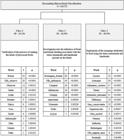
Dendrogram of the descending hierarchical classification presenting the classes, the most frequent words, and their frequency and p values (p)
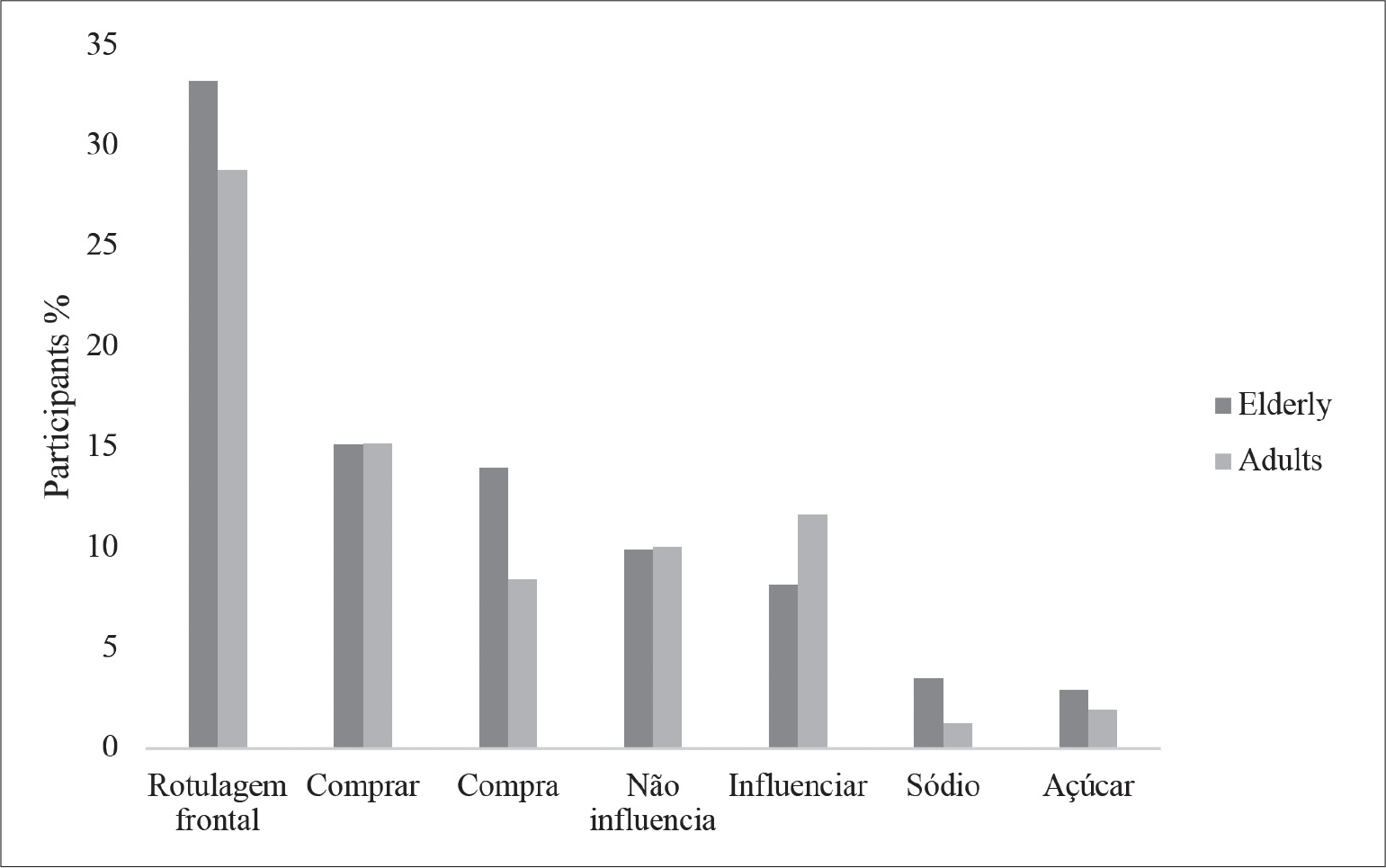
Regarding Class 2 of the DHC (Figure 1), whose central theme of the text segments was the “exploration of the meanings attributed to foods containing the terms ‘homemade’ and/or ‘handmade’,” the participants predominantly attributed meanings to the ingredients (such as the absence of preservatives and being more natural) and the production process. Nevertheless, they reported that despite considering these foods healthier, they would not pay more for them.
To elucidate the comparison between the age groups constituting the FG, Graph 1 expresses the relative frequency of mentions of the significant words mentioned in the DHC-segmented according to the participants’ age groups and supported by the text segments extracted from the participants’ speeches, as presented in Table 4. A higher frequency of mentions of homemade foods was observed among older adults, as well as the terms “more natural” and “without preservatives.” However, adult participants emphasized handmade foods more.

Relative frequency of mentions of significant words by focus group participants divided by age group (adults and older adults) in Class 2 of the descending hierarchical classification
Per the DHC, class 1 (35.5%) represents the text segments related to the “influence of the presence of FPN associated with the terms ‘homemade’ or ‘handmade’ on food labels,” indicating that some participants are influenced by FPN when purchasing food, while others are not. Some also attributed the presence of sodium and sugar to FPN. Furthermore, its presence on the labels did not reduce the desire to purchase homemade or handmade foods.
Regarding the frequency of mentions of significant words, as presented in Graph 2, older adults mentioned FPN and the presence of sodium and sugar in these foods than adults. Among participants not influenced by the FPN, both adults and older adults exhibited a highly similar percentage; among those influenced by the FPN, adults exhibited a higher percentage than older adults. Table 5 presents the text segments containing the significant words retrieved from the participant verbatims from both age groups.

Relative frequency of mentions of significant words by focus group participants divided by age group (adults and older adults) in Class 1 of the descending hierarchical classification
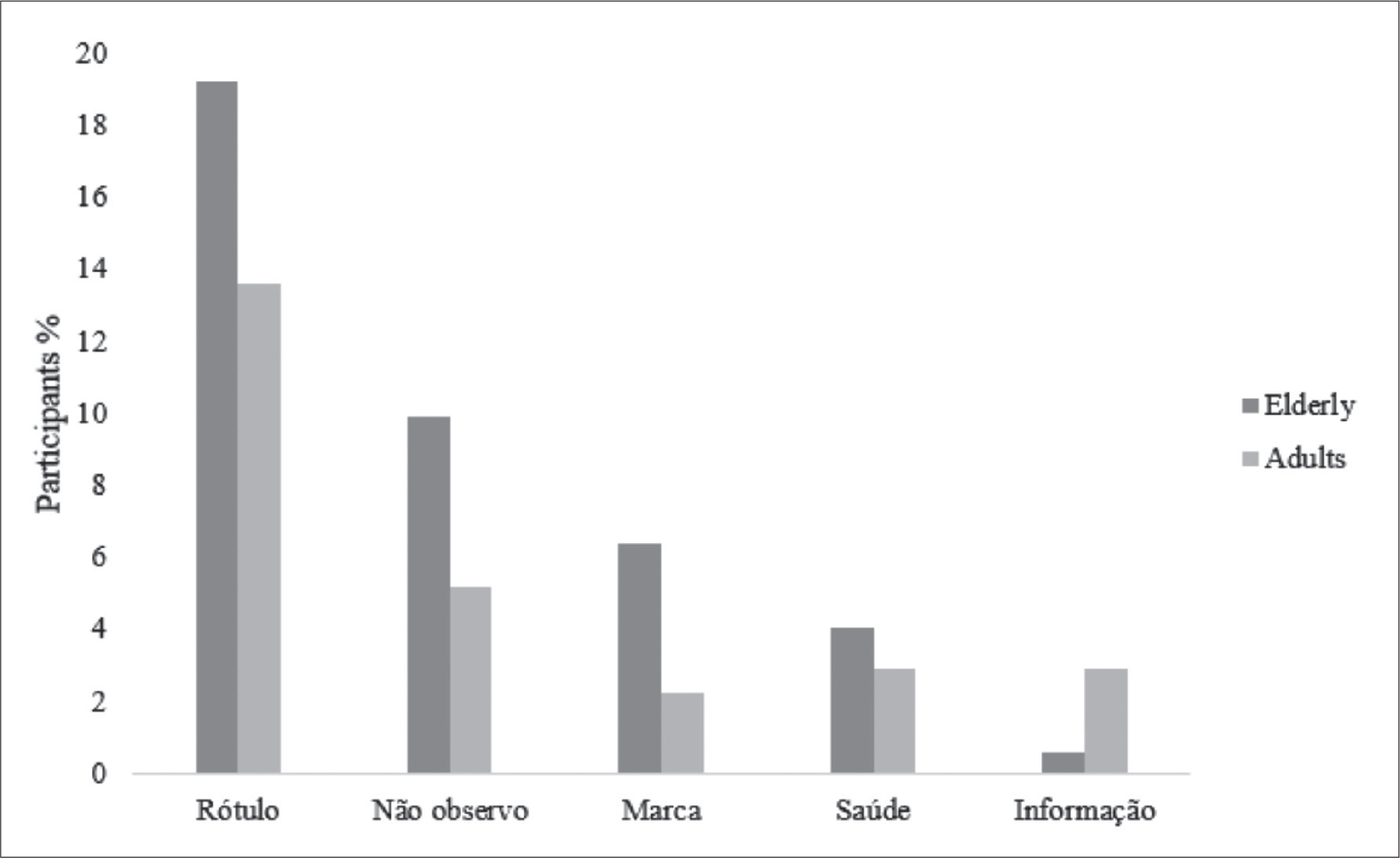
Along with class 1 of the DHC (Figure 1), class 3 presents an analysis pertaining to the discussion on “the habit of reading and observing food labels” focusing on the theme of FPN. Noteworthily, in this group, some participants reported not observing the labels of processed foods, mentioning specific conditions for observing the same, such as the presence of some chronic NCDs.
In Graph 3, most terms are more frequent among older adults than among adults, especially “label,” “I do not observe,” “brand,” and “health.” This is evidenced by analyzing the significant text segments extracted from the discourse (Table 6), whereby some participants reported not observing food labels in general, with the brand being the most relevant item.
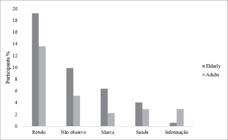
Relative frequency of mentions of significant words by focus group participants divided by age group (adults and older adults) in Class 3 of the descending hierarchical classification
Discussion
This study’s results revealed how consumers of different age groups behave in response to the terms “homemade” and “handmade” on the front panel of food labels. A predominance of female participants was observed, especially in the older adult group, who also had lower income and educational levels. Only some participants reported a habit of observing labels, and those who observed labels reported being concerned only with the information related to the product’s expiration date; prior studies have reported similar results (Otieno and Nyikal, 2017; Gomes et al., 2016; IDEC, 2014). Gomes et al.’s (2016) cross-sectional study with consumers from northeastern Brazil reported that 66.25% of respondents over 45 years of age reported a habit of checking the expiration dates of industrialized products.
Although the participants reported a positive perception and naturalness in the production process overall, some stated that they would not pay more for foods containing the terms in question. These findings contradict those of Otieno and Nyikal (2017), who observed that consumers are willing to pay more for handmade juices without additives, recognizing naturalness as a fundamental attribute of handmade products. This finding was verified by other studies wherein consumers reported that they would pay more for these foods if words related to the production process were added (Soares; Nunes., 2021; Chambers et al., 2018; Liu et al., 2017).
Analyses of the textual corpus revealed that some participants, particularly older adult participants, attributed a more natural production process to foods labeled as homemade or handmade and even stated that these foods were more natural or had no preservatives. Rahman et al. (2020) evaluated consumer perceptions of terms that referred to naturalness (“no preservatives,” “homemade,” “natural,” and “organic”) on food labels. Their results revealed that old age and low income positively influenced the choice of food labeled as “preservative-free”-consistent with this study’s findings. Silva et al. (2014) conducted FGs to analyze factors (e.g., education and age) that make understanding information on food labels difficult; they opined that one possibility is that low educational levels directly influence knowledge regarding nutrition and health and that age further predicts low understanding. This argument was substantiated by Bryla (2020), who found strong relationships between sociodemographic variables and the habit of reading labels among Polish consumers of different age groups, including those over 65 years. Although age seemingly predicts food choices, education seems to play an important role in knowledge regarding labeling. Some studies have reported that higher educational and schooling levels are correlated with better food choices because higher purchasing power results in the purchase of healthy foods (Bueno et al., 2022; Carfora et al., 2021). These findings substantiate the discourse of this study’s participants, especially adults, who were not as influenced by the terms “homemade” and “handmade” as older adults. This is consistent with Frizzo et al.’s (2020) study on predominantly male Brazilian university students, which tested purchase intention using questions related to the higher price of products that presented handmade production methods, emphasizing manual contact in their production compared to the same product (burger) manufactured by machines. Their results revealed that handmade products demonstrated a more positive perception than products with automated production methods.
These results demonstrate that consumers attribute naturalness and authenticity to products that refer to the idea of a natural production method. Therefore, they stated that they would pay higher prices for this type of product. These results justify the marketing mechanisms implemented by large multinationals. This discrepancy in this study’s results can be explained by the fact that the participants were students in health courses and may have had basic knowledge about nutrition and food. This was verified in Barqi et al.’s (2020) study, which evaluated the knowledge level and habit of reading food labels among university students in Saudi Arabia and found that knowledge about nutrition strongly predicts-while taste and lack of time are potential barriers to-the habit of reading and observing labels.
Regarding FPN, the verbatims indicated that the participants, especially older adults, were not influenced by FPN when selecting foods labeled “homemade” or “handmade”. However, numerous studies have reported opposite results regarding the presence of FPN for foods (Prates et al., 2022; Bueno et al., 2022; Bandeira et al., 2021).
Croker et al.’s (2020) review analyzing several studies found that FPN influences the purchase of healthier foods. Ikonen et al.’s (2020) meta-analysis investigated the FPN’s impact on adult consumer choices; consequently, they stated that the presence of FPN promotes healthier choices but may be limited by other components present on the labels. The authors cited some moderators of the FPN’s effectiveness, such as female sex and familiarity with the product brand.
However, some studies have reported that certain types of information on labels, such as nutritional and health claims, minimize the FPN’s effects (Prates et al., 2022; Breen et al., 2020; Benson et al., 2019). This effect was demonstrated by Prates et al. (2022), who found that using claims simultaneously with the FPN reduces the effectiveness of the health perception of products containing critical nutrients in different NFR models, including the model adopted by Brazil.
Although the terms in question are not considered nutritional or health claims, they seem to affect consumer perceptions and desires to purchase. Additionally, this effect has been confirmed by previous research, which indicates a strong association between foods labeled as “homemade” and/or “handmade” in Brazilian supermarkets (Kanematsu et al., 2020; Machado et al., 2018).
Thus, a growing concern exists regarding the phenomenon of “craftwashing,” which involves large industries using misleading marketing practices by introducing terms that refer to the production process, such as those linked to the terms “homemade” or “handmade” (Rivaroli et al., 2020). This concern is particularly relevant because although regulations exist for the use of these terms in a small portion of foods of animal origin, the high incidence of their use suggests that industries are exploiting a loophole in the legislation that regulates the term “handmade” on food labels.
However, such an association contradicts the recommendations of Resolution No. 727 of July 2022 (Brazil, 2022a), which regulates the labeling of packaged foods and establishes, in its general principles, that packaged foods must not contain any representations that may mislead consumers at the time of purchase. Therefore, like in other countries, foods with the terms “homemade” or “handmade” should follow a series of guidelines (FSA, 2015), to prevent the use of such terms on front panels from becoming widespread and, consequently, these products being purchased by consumers motivated to purchase owing to these terms’ health halo effect.
Final considerations
One of the objectives of the present study was to compare the presence of terms referring to more natural production methods and front-of-pack nutrition labeling (FPN) on the packaging of industrialized foods through focus groups. It was found that adults were more influenced by FPN, whereas older adults were more positively influenced by the presence of the terms “homemade” and “handmade.” In addition to attributing beneficial effects to foods containing such terms, older participants were also willing to pay more for them. In this context, FPN appears to have little influence on this population when associated with more prominent marketing strategies.
Although this study included a significant number of participants and seven FGs, some limitations exist related to the sample’s characteristics. Although an objective of the FG stratification into adults and older adults was to include participants of different age groups, providing a space for greater freedom to express themselves, the issue of low educational and income levels was observed among most participants. We emphasize the need for future research to identify participants with greater purchasing power, higher educational levels, and diversity in terms of biological sex to complement this study’s results and fill the gaps identified herein.
Finally, in recent years, the demand for handmade and homemade foods has increased; however, these terms have been misused for ultra-processed products. Public policies in Brazil-like those in other countries-must regulate the use of these terms and link them to handmade production methods. Such regulation would highlight truly handmade foods in the market, value food culture, and avoid unfair competition between small producers and large industries.
Acknowledgements
The authors would like to thank the Coordination for the Improvement of Higher Education Personnel - Brazil (CAPES) for the financial support by granting master's scholarships.
-
Reviewers:
Flavia Demonte and Jonas Guimarães
-
All research data are available in this text.
References
- ABOUAB, N., GOMEZ, P. Human contact imagined during the production process increases food naturalness perceptions. Appetite, v. 91, p. 273-277, 2015.
- ARELLANO B. F. et al Influence of front-of-pack labelling and regulated nutrition claims on consumers’ perceptions of product healthfulness and purchase intentions: A randomized controlled trial. Appetite, v. 149, n. 1, p. 1-10, 2020.
- ALVADIA, L. H. C. Desenvolvimento de um instrumento para avaliação da percepção do ambiente alimentar doméstico 2021.Tese de doutorado - Programa de Pós-graduação em Epidemiologia em Saúde Pública, Escola Nacional de Saúde Pública Sergio Arouca, Rio de Janeiro, 2021.
- ARGIN, S., ESKINAZI, B., TAVLIN, D. A Consumer Perception Study on Functional Dairy Products Among Consumers in Istanbul, Turkey. Turkish Journal of Agriculture - Food Science and Technology, v. 7, p. 963-970, 2019.
- BANDEIRA, L. M. et al. Desempenho e percepção de modelos de rotulagem nutricional de frente de embalagem no Brasil. Revista de Saúde Pública, v. 55, p. 1-12, 2021.
- BARQI A. et al Understanding barriers towards the use of food labels among Saudi female college students. Malaysian Journal of Nutrition, v. 26, n.1, p. 19-30, 2020.
- BENSON, T. et al. Are the Claims to Blame? A Qualitative Study to Understand the Effects of Nutrition and Health Claims on Perceptions and Consumption of Food. Nutrients, v.11, n. 9, p. 1 - 14, 2019.
-
BRASIL. Ministério da Saúde. Secretaria de Atenção à Saúde. Departamento de Atenção Básica. Guia alimentar para a população brasileira. 2. ed., 1. reimpr. - Brasília: Ministério da Saúde, 2014. 156 p. Disponível em: https://bvsms.saude.gov.br/bvs/publicacoes/guia_alimentar_populacao_brasileira_2ed.pdf Acesso em: dezembro de 2022.
» https://bvsms.saude.gov.br/bvs/publicacoes/guia_alimentar_populacao_brasileira_2ed.pdf - BRASIL. ANVISA. Relatório Preliminar de Análise de Impacto Regulatório sobre Rotulagem Nutricional. Gerência Geral de Alimentos. 2018.
-
BRASIL. Agência Nacional de Vigilância Sanitária (ANVISA). Instrução Normativa - IN n° 75, de 8 de outubro de 2020. Requisitos técnicos para declaração da rotulagem nutricional nos alimentos embalados. Brasília-DF: ANVISA, 2020a. Disponível em: <http://antigo.anvisa.gov.br/documents/10181/3882585/IN+75_2020_.pdf/7d74fe2d-e187-4136-9fa2-36a8dcfc0f8f> Acesso em: nov. 2022.
» http://antigo.anvisa.gov.br/documents/10181/3882585/IN+75_2020_.pdf/7d74fe2d-e187-4136-9fa2-36a8dcfc0f8f - BRASIL. Ministério da Saúde. Secretaria de Vigilância em Saúde. Departamento de Análise em Saúde e Vigilância de Doenças Não Transmissíveis. Vigitel Brasil 2021. Brasília: Ministério da Saúde, 2021.
-
BRASILa. ANVISA. Resolução da Diretoria Colegida - RDC nº 727, de 1° de julho de 2022. Dispõe sobre a rotulagem dos alimentos embalados. Disponível em:< https://antigo.anvisa.gov.br/documents/10181/2718376/RDC_727_2022_.pdf/5dda644d-a6ac-428e-bb08-203e2c43ccab>. Acesso em: agosto de 2024.
» https://antigo.anvisa.gov.br/documents/10181/2718376/RDC_727_2022_.pdf/5dda644d-a6ac-428e-bb08-203e2c43ccab -
BRASILb. ANVISA. Decreto nº 11.099, de 21 de junho de 2022. Disponível em: <https://www.gov.br/agricultura/pt-br/assuntos/producao-animal/selo-arte-selo-queijo-artesanal/legislacao/decreto-no-11-099-de-21-de-junho-de-2022-decreto-no-11-099-de-21-de-junho-de-2022-dou-imprensa-nacional.pdf/view>. Acesso em: dez. 2022.
» https://www.gov.br/agricultura/pt-br/assuntos/producao-animal/selo-arte-selo-queijo-artesanal/legislacao/decreto-no-11-099-de-21-de-junho-de-2022-decreto-no-11-099-de-21-de-junho-de-2022-dou-imprensa-nacional.pdf/view - BREEN, M. et al. Prevalence of Product Claims and Marketing Buzzwords Found on Health Food Snack Products Does Not Relate to Nutrient Profile. Nutrients, v. 12, n. 1513, p. 1-13, 2020.
- BRYLA P. Who Reads Food Labels? Selected Predictors of Consumer Interest in Front of-Package and Back-of-Package Labels during and after the Purchase. Nutrients, v. 12, n.1, p. 1-20, 2020.
- BUENO, L. A influência dos rótulos nutricionais no cuidado em saúde: uma revisão integrativa. Research, Society and Development, v. 11, n. 6, p. 1-13, 2022.
- CARFORA, V. et al. Why Do Consumers Intend to Purchase Natural Food? Integrating Theory of Planned Behavior, Value-Belief-Norm Theory, and Trust. Nutrients, v. 13, p. 1-14, 2021.
- CAMARGO, B. V.; JUSTO, A. M. IRAMUTEQ: um software gratuito para análise de dados textuais. Temas em Psicologia, v. 21, n. 2, p.513-518, 2013.
- CHAMBERS, E. V.; CHAMBERS, E. I.; CASTRO, M. What is “Natural”? Consumer responses to selected ingredients. Foods, v. 7, p. 65, 2018.
- CROKER H. et al Front of Pack Nutritional Labelling Schemes: A Systematic Review and Meta-Analysis of Recent Evidence Relating to Objectively Measured Consumption and Purchasing. Journal of Human Nutrition and Dietetics, v. 33, p. 518-537, 2020.
- DOMINICK, S. R.; FULLERTON, S.; BRUNNER, J. The impact of food labeling claims on consumer perception and intention to buy: A study of ‘all-natural’ snack foods. Journal of Food Products Marketing, v. 24, n. 5, p. 569-588, 2018.
- DURAN, A. C. et al. Conflicting Messages on Food and Beverage Packages: Front-of-Package Nutritional Labeling, Health and Nutrition Claims in Brazil. Nutrients, v.11, p. 1-16, 2019.
- ELLIOTT C., TRUMAN, E. The Power of Packaging: A Scoping Review and Assessment of Child-Targeted Food Packaging. Nutrients, v. 12, n. 958, p. 1-17, 2020.
- FELDMAN, C., HAMM, U. Consumers’ perceptions and preferences for local food: A review. Food Quality and Preference, v. 40, p. 152-164, 2015.
- FOOD STANDARDS AGENCY. The Use of Food Marketing Terms. 2015.
- FRIZZO F. et al. The Genuine Handmade: How the Production Method Influences Consumers’ Behavioral Intentions through Naturalness and Authenticity. Journal of Food Products Marketing, v. 1, p. 1-18, 2020.
- GARCIA, A. M.; FISZMAN, S.; TARREGA, A. How visual cues affect consumers’ perception of food healthiness and willingness to pay: A review. Trends in Food Science & Technology, v. 119, p. 261-267, 2022.
- GIACALONE, D. et al. Health and quality of life in an aging population - Food and beyond. Food Quality and Preference, v. 47, p.166-170, 2016.
- IDEC. Rotulagem de alimentos e doenças crônicas: percepção do consumidor no Brasil. Cadernos Idec -Série Alimentos. Volume 3, 2014.
- IKONEN L. et al Consumer effects of front-of-package nutrition labeling: an interdisciplinary meta-analysis. Journal of the Academy of Marketing Science, v. 48, n. 1, p. 360-383, 2020.
- KANEMATSU, L. R. A. et al Do foods products labeled “home-made” contain fewer additives? A Brazilian survey. Journal of Food Products Marketing, v. 18, n. 5, p. 486-498, 2020.
- KRUEGER, R. A.; CASEY, M. A. Focus Groups: a practical guide for applied research. 4 ed. Thousand Oaks, CA: Sage Publications, 2009. 217 p.
- LANGIANO, E. et al. Food safety at home: knowledge and practices of consumers. Journal of Public Health, v. 20, n. 1, p. 47-57, 2012.
- LIU, R.; HOOKER, N. H.; PARASIDIS, E.; SIMONS, C. T. A natural experiment: using immersive technologies to study the impact of “All-Natural” labeling on perceived food quality, nutritional content, and liking. Journal of Food Science, v. 82, n. 3, p. 825-833, 2017.
- MACHADO, P. C. I. et al Labeling of packaged foods in Brazil: Use of terms such as homemade, traditional, and the like. Revista de Nutrição, v. 31, n. 1, p. 83-96, 2018.
-
NIELSEN. Global health and wellness report: we are what we eat. New York: Nielsen, 2015. Disponível em: https://content.money.com/wp-content/uploads/2015/05/nielsen_global_health_and_wellness_report_-_january_2015.pdf Acesso em: 20 jan. 2026.
» https://content.money.com/wp-content/uploads/2015/05/nielsen_global_health_and_wellness_report_-_january_2015.pdf - MARINS, B. R; JACOB, S. C. Avaliação do hábito de leitura e da compreensão da rotulagem por consumidores de Niterói, RJ. Revista Visão e Debate, v. 3, n. 3, p. 122-129, 2015.
- MARTINHO, V. J. P. D. Food Marketing as a Special Ingredient in Consumer Choices: The Main Insights from Existing Literature. Foods, v. 9, n. 1651, p. 1-21, 2020.
- PEREIRA, R. C.; DE ANGELIS-PEREIRA, M. C.; CARNEIRO, J. D. S. Exploring claims and marketing techniques in Brazilian food labels. British Food Journal, v. 121, n. 7, p. 1550-1564, 2019.
- PLASEK, B., LAKNER Z., TEMESI, A. Factors that Influence the Perceived Healthiness of Food: Review. Nutrients, v.12, p. 1-20, 2020.
- PRATES, S. M. S. et al. Influence of nutrition claims on different models of front-of-package nutritional labeling in supposedly healthy foods: Impact on the understanding of nutritional information, healthfulness perception, and purchase intention of Brazilian consumers. Frontiers in Nutrition, v. 9, p. 1-18, 2022.
- QUEVEDO, F. S. et al. Dimensions of food choice process of older consumers in Brazil. British Food Journal, v. 1, p. 1-35, 2018.
- RAHMAN, S. et al. Assessing consumers’ understanding of the term “Natural” on food labeling. Journal of Food Science, v. 0, n. 0, p. 1-6, 2020.
- RIVAROLI, S.; BALDI, B.; SPADONI, R. Consumers’ perception of food product craftsmanship: A review of evidence. Food and Quality Preference, v. 79, n. 1, p. 1-11, 2019.
- OTIENO, D. J., NYIKAL, R. A. Analysis of Consumer Preferences for Quality and Safety Attributes in Artisanal Fruit Juices in Kenya. Journal of Food Products Marketing, v. 23, n. 7, p. 817-834.
- SALVIATI, M. E. Manual do aplicativo do Iramuteq (versão 0,7 Alpha 2 e R versão 3.2.3). Platina, 2017.
- SCHIFFMAN, L. G.; WISENBLIT, J. L. Comportamento do consumidor 11. ed. São Paulo: Pearson Education do Brasil, 2015.
- SILVA, A.; SENGER M. H. A informação nutricional na rotulagem obrigatória dos alimentos no Brasil: percepções sobre fatores motivadores e dificultadores de sua leitura e compreensão. Resultados de um estudo exploratório com grupos focais. Nutrire, v. 39, n. 3, p. 327-337, 2014.
- SILVA, F. Q., FILHO D. O., FAGUNDES, M. B. Dimensions of food choice process of older consumers in Brazil. British Food Journal, v. 120, n. 5, p. 984-998, 2018.
- SOARES, N. R., NUNES, T. P. Avaliação da conformidade dos rótulos de produtos lácteos frente a legislação vigente e a percepção do consumidor sobre rotulagem. Research, Society and Development, v. 10, n. 3, p. 2-20, 2021.
- SOUSA I. C. et al. Do Brazilian consumers intend to use food labels to make healthy food choices? An assessment before the front-of-package labelling policy. Food Research International, v. 172, n. 1, p. 1-10, 2023.
- SOUSA, L. M. L. de et al. Use of nutritional food labels and consumers’ confidence in label information. Revista de Nutrição, v. 33, n. 1, p. 1-18, 2020.
- SOUZA L. M. Recomendações para a Realização de Grupos Focais na Pesquisa Qualitativa. PSI UNISC, v. 4, n. 1, p. 52-66, 2020.
- STOLTZE, F. M. et al Impact of warning labels on reducing health halo effects of nutrient content claims on breakfast cereal packages: A mixed-measures experiment. Appetite, v. 163, n. 2, p. 1-11, 2021.
- TONNESEN, M. T. et al. The impact of positive and reduction health claims on consumers’ food choices. Food Quality and Preference, v. 98, p. 1-15, 2022.
-
Editor:
Fabiana Kraemer
All research data are available in this text.

 *All selected words are significant per the chi-square test at a 5% significance levelLegend: TS: text segments; F: frequency; p: p valuesSource: prepared by the author
 *All selected words are significant per the chi-square test at a 5% significance levelSource: prepared by the author
 *All selected words are significant per the chi-square test at a 5% significance levelSource: prepared by the authors
 *All selected words are significant per the chi-square test at a 5% significance levelSource: prepared by the authors