 REASONS FOR EVASION AMONG UNIVERSITY STUDENTS: INTEGRATIVE REVIEW
ABSTRACT
Higher education has expanded in recent years. Along with this progress, there has been a notable increase in dropout rates at universities, which has been detrimental to students and society. This study sought to identify the main reasons for dropout rates among university students, based on publications published between 2012 and 2024. The searches were conducted in the Virtual Health Library (BVS), the Online Scientific Electronic Library (SciELO), PSYCNET, and PUBMED. A total of 147 studies were obtained, of which 12 were included. Empirical, peer-reviewed studies that discussed the reasons for dropout were included, among other inclusion and exclusion criteria. It was found that the reasons for university dropout occur through the interrelation of socioeconomic, personal, academic, and institutional factors. Most of the studies analyzed were conducted in Latin America (n=8) and in nursing courses (n=4). Financial issues (n=10) and personal expectations (n=9) were the most frequently mentioned issues among students who dropped out. As a means of prevention and assistance, it is necessary to implement educational policies that aim to reduce dropout rates in higher education, encouraging students to remain in universities through strategies that guarantee access to housing, food, transportation, health, digital inclusion, culture, sports, pedagogical support and access for students with disabilities. In these strategies, monitoring the dropout rate in Higher Education is considered an urgent demand for the work of school psychologists.
Keywords:
school dropout; academic failure; student dropout; university; higher education; university student
RESUMO
O Ensino Superior expandiu nos últimos anos. Junto ao avanço, se destaca o crescimento da evasão escolar nas universidades, trazendo prejuízos aos estudantes e à sociedade. O presente trabalho buscou identificar os principais motivos relacionados à evasão escolar em estudantes universitários, a partir de publicações entre 2012 e 2024. Foram realizadas buscas na Biblioteca Virtual de Saúde (BVS), Biblioteca Eletrônica Científica Online (SciELO), PSYCNET e PUBMED. Obtiveram-se 147 estudos, dos quais 12 foram incluídos. Foram incluídos estudos empíricos, revisados por pares e que discorriam sobre os motivos para evasão, entre outros critérios de inclusão e exclusão. Constatou-se que os motivos para evasão universitária ocorrem através da inter-relação de fatores socioeconômicos, pessoais, acadêmicos e institucionais. A maioria dos estudos analisados foi realizada na América-Latina (n=8) e no curso de enfermagem (n=4). Questões financeiras (n=10) e de expectativas pessoais (n=9) foram as mais apontadas entre os alunos evadidos. Como maneiras de prevenção e assistência se observa a necessidade de implementação de políticas educacionais que visem reduzir a evasão no Ensino Superior, incentivando a permanência de estudantes nas universidades por meio de estratégias que garantam o acesso à moradia, alimentação, transporte, saúde, inclusão digital, cultura, esporte, apoio pedagógico e acesso de estudantes com deficiência. Nessas estratégias, se considera o acompanhamento ao processo de evasão no Ensino Superior como uma demanda urgente para atuação de psicólogos escolares.
Palavras-chave:
evasão escolar; fracasso escolar; abandono estudantil; universidade; ensino superior; estudante universitário
RESUMEN
La enseñanza universitaria se expandió en los últimos años. Junto al avance, se destaca el crecimiento de la evasión escolar en las universidades, trayendo perjuicios a los estudiantes y la sociedad. En el presente estudio se buscó identificar los principales motivos relacionados a la evasión escolar en estudiantes universitarios, a partir de publicaciones entre 2012 y 2024. Se realizaron búsquedas en la Biblioteca Virtual de Salud (BVS), Biblioteca Electrónica Científica Online (SciELO), PSYCNET y PUBMED. Se obtuvo 147 estudios, de los cuales se incluyeron 12. Se incluyeron estudios empíricos, revisados por pares y que discurrían sobre los motivos para evasión, entre otros criterios de inclusión y exclusión. Se analizó que los motivos para evasión universitaria suceden por intermedio de la interrelación de factores socioeconómicos, personales, académicos e institucionales. Gran parte de los estudios analizados se realizaron en América-Latina (n=8) y en el curso de enfermería (n=4). Cuestiones financieras (n=10) y de expectativas personales (n=9) fueron las más apuntadas entre los alumnos evadidos. Como maneras de prevención y asistencia se observa la necesidad de implementación de políticas educacionales que visen reducir la evasión en la enseñanza universitaria, incentivando la permanencia de estudiantes en las universidades por intermedio de estrategias que garanticen el acceso a vivienda, alimentación, transporte, salud, inclusión digital, cultura, deporte, apoyo pedagógico y acceso de estudiantes con deficiencia. Es estas estrategias, se considera el acompañamiento al proceso de evasión en la enseñanza universitaria como una demanda urgente para actuación de psicólogos escolares.
Palabras clave:
evasión escolar; fracaso escolar; abandono estudiantil; universidad; enseñanza universitaria; estudiante universitario
INTRODUCTION
In the past few years, Higher Education went through a significant expansion, amplifying the access to education and, consequently, to professionalization (Saviani, 2010). In Brazil, between 2011 and 2021, the number of enrollments at universities rose 32.8%, surpassing 8.9 million in 2021 (Instituto Nacional de Estudos e Pesquisas Educacionais Anísio Teixeira - National Institute [INEP], 2022). Between 2021 and 2022, there was an additional rise of 5.1%, especially propelled by the growth of enrollments in private networks of Higher Education (Semesp, 2024). This expansion was also observed in other countries such as Peru and Uruguay (Bassis, Madeira, & Baldasso, 2021).
The increase in the number of enrollments in Higher Education and the amplification of opportunities for schooling and professionalization lead to significant changes in the lives of students. This experience might promote personal development, improve the quality of life and potentialize individual growth (Saviani, 2010). However, the university environment also presents daily challenges, such as the management of new responsibilities, the establishment of interpersonal relations and the preparation for the desired professionalization (Bardagi & Albanaes, 2015).
The experience in Higher Education is not always satisfactory for all students, and it might lead to emotional overload, low social adaptability, difficulty to reach personal realization and a feeling of satisfaction in the academic environment. These factors might contribute to psychological problems, reduction in the quality of life and dissatisfaction with institutional and infrastructural matters. Such conditions might compromise the permanence of students at the university, corroborating the rates of school evasion (Ariño & Bardagi, 2018; Bardagi & Albanaes, 2015; Sahão & Kienen, 2021).
Evasion from Higher Education is a phenomenon that has caused preoccupation among educators and researchers all over the world (Carmo Filho et al., 2023; Silva-Filho, Motejunas, Hipólito, & Lobo, 2007). Barroso et al. (2022) highlight that there are theoretical definitions for school evasion, which generally refer to quitting the course before its conclusion, motivated by different factors (Bueno, 1993; Carmo Filho et al., 2023; Castro & Teixeira, 2014). According to the Ministry of Education, the evasion can be classified into three types: from the course when students change courses in the same institution; from the institution, when students go to another institution but do not change courses; from the system when they completely give up Higher Education (Brasil, 1996).
The map of Higher Education in Brazil 2024 (SEMESP, 2024) demonstrates that the evasion rate reaches 57.2% in the public, private, and distance education (EaD), emphasizing that only 18.1% of young people aged from 18 to 24 years are enrolled in universities, which demonstrates that there are few young people in Higher Education and the high evasion rates are a great challenge for different levels of educational management. These figures are not distant from the international scenario, such as in Portugal, where the rate was 29% in 2018 (General Administration of Statistics for Education and Science [DGEEC], 2018).
Evasion might represent loss for some students and institutions. For students, the literature points at consequences related to emotional matters, social inequality, unemployability, and material loss. For institutions, it is possible to observe that financial investment, by the state or by the private sector, sustainability of institutions, deficits in the scientific and technological advances and management of community resources (Castro & Teixeira, 2014; Silva-Filho et al., 2007; Sosu & Pheunpha, 2019).
The literature presents studies that investigate school evasion in Higher Education and propose strategies to promote adaptation and permanence of the students (Campos & Bardagi, 2020; Maluenda-Albornoz, Zamorano-Veragua, & Berríos-Riquelme, 2023; Sahão & Kienen, 2021). In this context, it is essential to understand the factors that lead students to quit higher education.
The literature identifies four major factors that are associated to evasion from Higher Education. They are socioeconomic, personal, institutional, and academic. Socioeconomic factors, the most mentioned ones include financial difficulties, family or group values, ethnic-racial matters and ways to go into Higher Education. Personal factors that involve adaptation difficulties, lack of identification with the course and frustration with career expectations. Institutional factors are related to quality of education and to interaction with teachers. Finally, academic factors refer to learning difficulties, frequently caused by fragilities in previous knowledge, which negatively impact academic performance (Casanova, Vasconcelos, Bernardo, & Almeida, 2021; Magalhães, 2013, Respondek, Seufert, Hamm, & Nett, 2020; Roos, Fichard, Mackenzie, & Raubenheimer, 2016; Vargas-Porras, Parra, & Roa-Diáz, 2019; Zamora-Araya & Villalobos-Madrigal, 2018)./
In addition, it gets increasingly urgent to promote the production of knowledge in school psychology that contribute to development of higher education institutions. School psychology, with its theoretical and practical repertoire, might have an impact not only on specific contingents, but also on the whole institution. Thus, the present study might also point at trends and routes for the practice and research of psychologies in higher education. According to what has been exposed, the objective of this study was to realize an integrative review aiming at producing a survey on the most important reasons that are related to school evasion among university students.
METHOD
The present review took the following steps: elaboration of the research question, definition of the descriptors, search in the data bases, critical assessment of the abstracts, analysis of the complete texts, final selections of the articles and interpretation of results (Souza, Silva, & Carvalho, 2010).
The bibliographical search was conducted in national and international databases and libraries: Virtual Health Library (BVS), Scientific Electronic Library Online (SciELO), PSYCNET and PUBMED. For the search, the boolean terms AND and OR, and the following describers were indexed: “Evasão escolar OR Abandono estudantil AND Universidade”; and in English: “School Dropouts OR Student Dropouts AND Universities”.
Researchers included: (a) empirical studies, (b) reviewed by peers, (c) with complete text available, (d) containing information on graduates from public and private universities, (e) published between January 2012 and December 2024, (f) in Portuguese, English, and Spanish, and (g) studies that discuss the reasons and factors that lead to school evasion.
The exclusion criteria were: (a) studies of evidence validity for psychometric tools, (b) studies related to distance higher education, (c) studies that described academic programs to combat school evasion, (d) theoretical studies, (e) studies with secondary data, and (f) languages other than Portuguese, English, and Spanish.
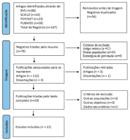
The bibliographical survey was realized in January 2025. 147 publications were found. 54 were copies. At the end of the analysis, 12 articles were included in the corpus of the study. The studies were selected by means of a critical reading of the abstracts by two researchers separately and by the Rayyan software; a third researcher participated in the final assessment of the abstracts. After these procedures, a critical reading of the complete texts was realized by the two researchers (Illustration 1).
By means of the theme analysis of Braun and Clarke (2006) it became possible to identify, analyze, interpret, and report patterns (themes) in the obtained articles. Since there is an expressive number of research works that argue that higher education evasion can be seen from a multifactorial perspective, the most important reasons that were listed in the literature are: socioeconomic, personal, institutional and academic (Casanova et al., 2021; Magalhães, 2013; Respondek et al., 2020; Roos et al., 2016; Vargas-Porras et al., 2019; Zamora-Araya & Villalobos-Madrigal, 2018). The distinction between them is merely for the purpose of operationalizing the theme; in the publications - as well as in the flows of interactions in university life - they are complex and imbricated.
Finally, it is possible to emphasize that because it is a research based on data from the unrestricted access, the present study does not disagree with the ethical principles that deal with studies involving human beings, dispensing with the institutionalized ethical procedure.
RESULTS
According to what was described in Illustration 1, the searches resulted in 147 articles; this qualitative comes from the following databases: Virtual Health Library (BVS) (n=86), Online Scientific Electronic Library (SciELO) (n=10), PSYCNET (n=23) and PUBMED (n=28). Among the included studies, one result comes from the search at the PUBMED (Matz et al., 2023); two results come from the search at the SciELO (Hinojosa et al., 2022; Zamora-Araya & Villalobos-Madrigal, 2018); nine studies were found at the BVS. Among these, five are indexed by the LILACS base (Bardagi & Hutz, 2012; Magalhães, 2013; Maluenda-Albornoz et al., 2023; Schneider, Ramírez, Martínez, & Villanueva, 2013; Vargas-Porras et al., 2019), three at MEDLINE (Barlem et al., 2012; Casanova et al., 2021; Roos et al., 2016) and one at dentistry BBO (Carmo Filho et al., 2023). With the support of the Rayyan software, it was possible to observe the time cutouts and the variability of publications. In the last five years, 2013 stood out with 14 publications. In the subsequent years, 2018 represents a landmark, because there were 20 publications, a considerable number for the used time cutout (2012 a 2024), followed by 2019 with 19 publications, and 2020 with 16 studies on school evasion.
In this time period, the software demonstrates that the scientific magazine with the greatest number of publications on school evasion at the university (n = 7) was the School Psychology Quartely, connected to the American Psychological Association (APA). The English language was predominant, followed by Spanish and Portuguese, with the smallest number.
After the identification steps, screening, and inclusion, 19 studies were selected for the complete reading. In this analysis, 7 were excluded. Therefore, 12 articles were left for analysis and discussion (Illustration 1).
Regarding the selected articles, it is possible to observe the same number of articles in English and Portuguese (n = 4, total n = 8), followed by Spanish (n = 4). Studies involving specifically the nursery course predominated (n = 4). According to Bruit (2000), Latin America comprehends the territorial space between Mexico and Chile. Thus, it is possible to verify that the Latin American countries (Brazil, Chile, Colombia and Costa Rica) stood out in the investigation of reasons for evasion among university students (n = 8) and, among them, Brazil stands out (n = 4).
Regarding outline, the highlight is on quantitative transversal, descriptive, or exploratory, followed by qualitative studies. The most often used instruments were structured questionnaires and semi-structured interviews.
Table 1 included reasons that were listed for school evasion at the university and the frequency at which they are repeated among the analyzed studies. The analysis, the identification, and division among socioeconomic, personal, academic and institutional factors took place orientation by the literature (Casanova et al., 2021; Magalhães, 2013; Respondek et al., 2020; Roos et al., 2016; Vargas-Porras et al., 2019; Zamora-Araya & Villalobos-Madrigal, 2018).
Socioeconomic and personal factors are frequently highlighted in the analyzed studies. The socioeconomic factors were classified into three major spheres: financial, which includes factors that range from resources for fees to the maintenance and subsistence; schooling historical, related to educational conditions that are previous to entrance at the university; and parents’ schooling, which influences the children’s orientation and is frequently mentioned by students such as a factors in the decision to quit (Bardagi & Albanaes, 2015; Hinojosa et al., 2022; Magalhães, 2013; Martz et al., 2023).
The personal factors involve diverse issues, and the most recurrent one is the frustration with the choice of course, which interact with aspects such as the desire to change careers and the difficulties of social interaction, including adaptation and the construction of relations during the course. In this context, there is also a highlight on the different study techniques that are adopted by the students, as well as aspects related to mental and emotional health (Barlem et al., 2012; Magalhães, 2013; Maluenda-Albornoz et al., 2023; Zamora-Araya & Villalobos-Madrigal, 2018).
Another relevant factor that is the academic context, which includes matters that are related to the process of teaching-learning context, influenced by the interaction between teachers and students, poor performance and learning difficulties. The literature suggests that these factors are connected to the transition to university, which involves new responsibility, overload and low levels of personal satisfaction (Ariño & Bardagi, 2018; Bardagi & Albanaes, 2015; Hinojosa et al., 2022; Matz et al., 2023; Sahão & Kienen, 2021).
Finally, the institutional aspects related to school evasion include communication between the institution and the students, especially concerning the lack of orientations and information on the courses such as curricular program and areas of professional practice. In addition, infrastructure matters such as physical space and access to higher education, along with education quality were also mentioned as factors that contribute to evasion (Barlem et al., 2012; Magalhães, 2013; Carmo Filho et al., 2023; Zamora-Araya & Villalobos-Madrigal, 2018).
DISCUSSION
School evasion in higher education is recognized as a global problem (Maluenda-Albornoz et al., 2023). Diverse theoretical models approach this issue (Barroso et al., 2022; Silva-Filho et al., 2007). This study analyzed the phenomenon by means of references selected and than we will discuss the comprehension of the theme, which is described as the quitting of higher education for different reasons (Bueno, 1993; Castro & Teixeira, 2014).
The analyzed data corroborated the comprehension of reasons related to evasion from a multifactorial point of view (Barroso et al., 2022; Carmo Filho et al., 2023; Vargas-Porras, 2019). It was possible to observe that matters related to socioeconomic, personal, academic, and institutional factors that are pillars in the decision making that leads to evasion (Castro & Teixeira, 2014; Hinojosa et al., 2022; Martz et al., 2023; Silva-Filho et al., 2007; Sosu & Pheunpha, 2019).
Vargas-Porras et al. (2019) demonstrate in their study the harmful aspects at personal and social levels, drawing attention to these problems especially in Latin countries, which stood out in the present review. The rates of evasion at university, in general, present alarming statistics in Latin America, ranging from 40% to 75% (Maluenda-Albornoz et al., 2023; Vásquez, 2010).
The Latin American countries have similar educational realities (Bassis et al., 2021), especially by the ascension of higher education in the last few decades, a fact that corroborated by the Brazilian university annual census (INEP, 2022). The factors that stand out in the decision to quit also resemble each other in the articles analyzed in this review and point at financial, adaptative, and emotional health matters, as symptoms of anxiety and depression, among the ones that belong to more vulnerable social classes with a highlight on women and students who do not have scholarships (Barlem et al., 2012; Hinojosa et al., 2022; Martz et al., 2023; Schneider et al., 2013; Valerga & Trombetta, 2019; Zamora-Araya & Villalobos-Madrigal, 2018).
Literature reports that students in vulnerability quit university to go for financial independence and improve quality of life (Bardagi e Hutz, 2012; Carmo-Filho et. al., 2023; Valerga & Trombetta, 2019). In view of these data, it becomes necessary to reflect on interventive actions that aim at preventing evasion, which consider incentive to peer support, in addition to family, financial, and institutional support because they are crucial in this process (Carmo-Filho et al., 2023; Schneider et al., 2013; Maluenda-Albornoz et al., 2023).
The study by Roos et al. (2016) was realized in South Africa and produced data that were similar to the data from Latin countries, so that the evasion rate surpassed the average figure suggested by the country’s higher education department, ranging from 39.28% to 58.69%. the authors suggest that in order to guarantee the permanence of students in the university space, better selection criteria for the course, monitoring of student in vulnerability and the elaboration of strategies for improvement in academic performance.
Concerning the other evasion factors, Bardagi and Hutz (2012) present emphatically the influences of the teacher-student relation, as well as the students’ interest to develop in the disciplines. To the authors, the impact that this construction might produce is significant towards a better general preparation for the school-university transition. Zamora-Araya and Villalobos-Madrigal (2018) ratify these data by suggesting as protective factors for the evasion professional orientation that was previous to the entrance into university and institutional support.
Other studies demonstrate that it is possible to realize the prevision of student evasion by means of data at the macro level (i.e. socio demographic data, or initial performance metrics) and micro level (i.e., logins in learning management systems) (Matz et al., 2023), as well as by means of the harvesting of data (Hinojosa et al., 2022).
The studies by Matz et al. (2022) and Hinojosa et al. (2022) analyzed the combination of sociodemographic and behavioral data, while statistically demonstrating that this combination might prevent evasion with high levels of predictive performance. According to the authors, the findings demonstrate that evasion takes place by means of the analysis of multiple factors, and strategies such as the use of applications to duly monitor and assist students with profiles that are prone to evasion might be adopted.
Among the personal factors, it is possible to emphasize the expressive and frustrations that are related to career whether it regards the choice of course or regarding the unmet expectations in the curricular program and the future job market, reasons that lead to evasion still in the first year of course (Carmo-Filho et al., 2023; Maluenda-Albornoz et al., 2023; Matz et al., 2023). On the other hand, it is observed that most of the students who quit university courses in Brazil between 2009 and 2017, returned to university to courses in the same areas as the course they had left (Marques, 2020). However, it is difficult to track precise data on the ones that do not return to university.
The Nursery course stood out among the other courses in this review. In the study by Barlem et al. (2012), the students who quit the nursery course classified as most important reasons socioeconomic and personal aspects. They were: unmet expectations, financial problems, interpersonal relationships, underappreciation of the professional, feelings of frustration and dissatisfaction. These factors were also observed in the other studies with this population (Roos et al., 2016; Schneider et al., 2013; Vargas-Porras, 2019).
As strategies for permanence in the nursery course, there was a classification of possibilities for institutional support in order to strengthen the network of support among the students, health care, debates on professional practice and precocious contact with the area and with society, so that students engage and understand the nursery work and possible areas for practice (Barlem et al., 2012; Roos et al., 2016; Schneider et al., 2013; Vargas-Porras, 2019).
The analysis of the articles that were selected for this review points at the need for educational policies that aim at reducing evasion in higher education, encouraging the permanence of students at the universities (Carmo Filho et al., 2023). Education is a mechanism for social transformation, as well as sustainable and economic development (Silva & Sampaio, 2022).
Among the policies of student assistance, there is a highlight on the Política Nacional de Assistência Estudantil (PNAES), or National Policy for Student Assistance, Law no. 14.914/2024, with the objective to contribute to the permanence of low income students in the universities and federal institutes and facilitate the conclusion of courses, avoiding evasion. The PNAES provides assistance based on criteria of socioeconomic vulnerability of students such as the Programa de Assistência Estudantil (PAE), or Student Assistance Program, made up of direct benefits for students for habitation, nutrition, transportation, health, digital inclusion, culture, sports, pedagogical support and access for students with disabilities (Brasil, 2024).
Student programs might benefit permanence in higher education but they are programs that target public institutions, and they do not provide assistance for private education, which depends on policies created by the institutions themselves and other governmental initiatives, such as the student financing program named FIES, a program by the Ministry of Education which was instituted by Law no. 10.260, from July 12th, 2001, and that aims at granting financial solutions for students in university course that are not free from charge, with positive ratings in the Sistema Nacional de Avaliação da Educação Superior (Sinaes), or National System for Assessment of Higher Education (Brasil, 2024).
Beyond these governmental policies, it was possible to observe that the need for higher education institution, public and private as well, to plan psycho-pedagogical actions that aim at the permanence in higher education that promote health care, learning, quality of living, and quality formation. In this context, the practice by school psychologists might include individual and collective actions that approach the mapping of institutions, active counseling, the management of educational programs and policies, in addition to the pedagogical proposals and the operation of courses in a critical and contextualized way.
The work of psychologists in the higher education field mostly tends to approach traditional strategies that focus on individual clinical assistance. Although they are important, they do not include global and structural needs, such as evasion. In addition, it is urgent to rethink formation in psychology while guaranteeing deep theoretical-practical experiences in school psychology (Moura & Facci, 2016; Santos et al., 2015).
These professionals might help higher education institutions implement policies for student assistance because one of the objectives of School Psychology is to dialogically collaborate with educational professionals, and that are conducted in interface with factors of pedagogical, subjective and organizational order (Martinez, 2010), and to promote workshops to provide assistance for new students and career counseling. It is also up to these professionals to constantly reflect on their practice while keeping dialogue among peers and guaranteeing ethical-political commitment with institutional and collective proposals (Pott & Campos, 2021, Moura & Facci, 2016).
FINAL CONSIDERATIONS
School evasion among university students is considered a multifaceted phenomenon that is present all over the world. In this review, it was possible to understand that the reasons for evasion at university exist by means of the interrelation of socioeconomic, personal, academic and institutional factors. Socioeconomic and personal factors stood out in the analyzed literature, especially in Latin American countries and among students in the nursery course.
The limitations in this integrative review are related to the number of selected students, since the search was restricted to the last ten years, including only articles in three idioms and four databases. We recommend that future reviews amplify the time scope, the number of idioms and the sources of data, which might contribute to a comprehension that is more comprehensive and for intervention in school evasion among university students.
It is also suggested that new studies be realized in order to investigate different types of courses and levels of education. Data such as these can be useful when it comes to amplifying the comprehension of the school evasion phenomenon and, thus, strengthen the debate on prevention measures and provide subsidies for the creation and development of educational and curricular programs, actions and polices, and consider the observation of the process of evasion in higher education as an urgent demand for the practice of school psychologists.
References
-
Ariño, D. O., & Bardagi, M. P. (2018). Relação entre fatores acadêmicos e a saúde mental de estudantes universitários. Psicologia em Pesquisa, 12(3), 44-52. http://dx.doi.org/10.24879/2018001200300544
» https://doi.org/10.24879/2018001200300544 -
Bardagi, M. P., & Albanaes, P. (2015). Relações entre adaptabilidade de carreira e personalidade: Um estudo com universitários ingressantes brasileiros. Psicologia, 29(1), 35-44. https://doi.org/10.17575/rpsicol.v29i1.989
» https://doi.org/10.17575/rpsicol.v29i1.989 -
Bardagi, M. P., & Hutz, C. S. (2012). Rotina acadêmica e relação com colegas e professores: impacto na evasão universitária. Psico, 43(2). https://revistaseletronicas.pucrs.br/ojs/index.php/revistapsico/article/view/7870/8034
» https://revistaseletronicas.pucrs.br/ojs/index.php/revistapsico/article/view/7870/8034 -
Barlem, J. G. T., Lunardi, V. L., Bordignon, S. S., Barlem, E. L. D., Lunardi Filho, W. D., Silveira, R. S. D., & Zacarias, C. C. (2012). Opção e evasão de um curso de graduação em enfermagem: percepção de estudantes evadidos. Revista Gaúcha de Enfermagem, 33, 132-138. https://doi.org/10.1590/S1983-14472012000200019
» https://doi.org/10.1590/S1983-14472012000200019 -
Barroso, P. C. F., Oliveira, Í. M., Noronha-Sousa, D., Noronha, A., Mateus, C. C., Vázquez-Justo, E., & Costa-Lobo, C. (2022). Fatores de Evasão no Ensino Superior: uma Revisão de Literatura. Psicologia Escolar e Educacional, 26 https://doi.org/10.1590/2175-35392022228736
» https://doi.org/10.1590/2175-35392022228736 -
Bassis, A. B., Madeira, F., & Baldasso, J. C. (2021). Educação Superior Comparada: desigualdades em Brasil, Peru e Uruguai (2000-2018). Políticas Educativas-PolEd, 15(1). https://www.seer.ufrgs.br/index.php/Poled/article/view/119955/65290
» https://www.seer.ufrgs.br/index.php/Poled/article/view/119955/65290 - Brasil. (1996). Ministério da Educação. Comissão Especial de Estudos sobre Evasão. Diplomação, retenção e evasão nos cursos de graduação em IES públicas. Avaliação, 1(2), 55-65. https://periodicos.uniso.br/avaliacao/article/view/739
-
Brasil (2024). Ministério da Educação. Política Nacional de Assistência Estudantil https://www.gov.br/mec/pt-br/pnaes
» https://www.gov.br/mec/pt-br/pnaes -
Brasil. (2024). Ministério da Educação. Portal Único de Acesso ao Ensino Superior. FIES. https://acessounico.mec.gov.br/
» https://acessounico.mec.gov.br/ -
Braun, V., & Clarke, V. (2006). Using thematic analysis in psychology. Qualitative Research in Psychology, 3(2), 77-101. https://doi.org/10.1191/1478088706qp063oa.
» https://doi.org/10.1191/1478088706qp063oa -
Bruit, H. H. (2000). A invenção da América Latina. Artigo completo de evento científico. Anais Eletrônicos do V Encontro da ANPHLAC http://antigo.anphlac.org/sites/default/files/hector_bruit.pdf
» http://antigo.anphlac.org/sites/default/files/hector_bruit.pdf -
Bueno, J. L. O. (1993). A evasão de alunos. Paidéia (Ribeirão Preto), 9-16. https://doi.org/10.1590/S0103-863X1993000200002
» https://doi.org/10.1590/S0103-863X1993000200002 -
Campos, C. A., & Bardagi, M. P. (2020). A Evasão nos Cursos de Psicologia no Brasil: uma revisão da literatura. Psicologia: Ciência e Profissão, 40 https://doi.org/10.1590/1982-3703003212214
» https://doi.org/10.1590/1982-3703003212214 -
Carmo Filho, J. R. L., Estellita, M. C. A., Oliveira, V. G. B., Marques, V. M., Dantas, T. F., Ribeiro, I. F. B., Mesquita, J. R. P. de., Babosa, A. C. S., Almeida, M. E. L. de, & Mota, M. R. L. (2023). Evasão acadêmica no curso de Odontologia de uma instituição pública e ações voltadas para mitigar o abandono discente. Revista da ABENO, 23(1), 1824-1824. https://doi.org/10.30979/revabeno.v23i1.1824
» https://doi.org/10.30979/revabeno.v23i1.1824 -
Casanova, J. R., Vasconcelos, R., Bernardo, A. B., & Almeida, L. S. (2021). University Dropout in Engineering: Motives and Student Trajectories. Psicothema, 33(4). https://doi.org/10.7334/psicothema2020.363
» https://doi.org/10.7334/psicothema2020.363 -
Castro, A. K. S. S.; & Teixeira, M. A. P. (2014). Evasão universitária: modelos teóricos internacionais e o panorama das pesquisas no Brasil. Psicologia Argumento, 32 https://doi.org/10.7213/psicol.argum.32.s02.AO01
» https://doi.org/10.7213/psicol.argum.32.s02.AO01 -
Direção-Geral de Estatísticas da Educação e Ciência (2018). Taxas de transição/conclusão e Taxas de retenção e desistência - Portugal. https://www.dgeec.mec.pt/np4/96/
» https://www.dgeec.mec.pt/np4/96/ -
Hinojosa, M.; Derpich, I.; Alfaro, M.; Ruete, D.; Caroca, A.; & Gatica, G. (2022). Procedimiento de agrupación de estudiantes según riesgo de abandono para mejorar la gestión estudiantil en educación superior. Texto livre, 15, e37275. https://doi.org/10.35699/1983-3652.2022.37275
» https://doi.org/10.35699/1983-3652.2022.37275 -
Instituto Nacional de Estudos e Pesquisas Educacionais Anísio Teixeira. (2022). Censo da Educação Superior 2021: Notas estatísticas Brasília, DF: Ministério da Educação. https://www.gov.br/inep/pt-br/areas-de-atuacao/pesquisas-estatisticas-e-indicadores/censo-da-educacao-superior/resultados/2021
» https://www.gov.br/inep/pt-br/areas-de-atuacao/pesquisas-estatisticas-e-indicadores/censo-da-educacao-superior/resultados/2021 -
Instituto Semesp. (2020). Mapa do Ensino Superior https://www.semesp.org.br/mapa/edicao-11/brasil/evasao/
» https://www.semesp.org.br/mapa/edicao-11/brasil/evasao/ -
Instituto Semesp. (2024). Mapa do Ensino Superior https://www.semesp.org.br/mapa/edicao-14/
» https://www.semesp.org.br/mapa/edicao-14/ -
Magalhães, M. O. (2013). Sucesso e fracasso na integração do estudante à universidade: um estudo comparativo. Revista brasileira de orientação profissional, 14(2), 215-226. http://pepsic.bvsalud.org/scielo.php?script=sci_arttext&pid=S1679-33902013000200007
» http://pepsic.bvsalud.org/scielo.php?script=sci_arttext&pid=S1679-33902013000200007 -
Maluenda-Albornoz, J., Zamorano-Veragua, M., & Berríos-Riquelme, J. (2023). Abandono universitario: predictores y mediadores en estudiantes universitarios chilenos de primer año. Revista Costarricense de Psicología, 42(1), 45-64. http://dx.doi.org/10.22544/rcps.v42i01.03
» https://doi.org/10.22544/rcps.v42i01.03 -
Marques, F. T. (2020). A volta aos estudos dos alunos evadidos do ensino superior brasileiro. Cadernos de Pesquisa, 50(178), 1061-1077. https://doi.org/10.1590/198053147158
» https://doi.org/10.1590/198053147158 -
Martinez, A. M. (2010). O que pode fazer o psicólogo na escola?. Em Aberto, 23(83), 39-56. https://doi.org/10.24109/2176-6673.emaberto.23i83.%25p
» https://doi.org/10.24109/2176-6673.emaberto.23i83.%25p -
Matz, S. C., Bukow, C. S., Peters, H., Deacons, C., Dinu, A., & Stachl C. . (2023). Using machine learning to predict student retention from socio-demographic characteristics and app-based engagement metrics. Scientific Reports, 13(1). https://doi.org/10.1038/s41598-023-32484-w
» https://doi.org/10.1038/s41598-023-32484-w -
Moura, F. R. D., & Facci, M. G. D. (2016). A atuação do psicólogo escolar no ensino superior: configurações, desafios e proposições sobre o fracasso escolar. Psicologia Escolar e Educacional, 20(3), 503-514. https://doi.org/10.1590/2175-3539201502031036
» https://doi.org/10.1590/2175-3539201502031036 -
Pott, E. T. B., & Campos, D. A. de. (2021). A psicologia escolar na educação superior: uma revisão da literatura. Boletim - Academia Paulista de Psicologia, 41(101), 193-204. Recuperado em 12 de janeiro de 2025, de Recuperado em 12 de janeiro de 2025, de http://pepsic.bvsalud.org/scielo.php?script=sci_arttext&pid=S1415-711X2021000200006&lng=pt&tlng=pt
» http://pepsic.bvsalud.org/scielo.php?script=sci_arttext&pid=S1415-711X2021000200006&lng=pt&tlng=pt -
Respondek, L., Seufert, T., Hamm, J. M., & Nett, U. E. (2020). Vinculando mudanças no controle acadêmico percebido ao abandono universitário e notas universitárias: Uma abordagem longitudinal. Journal of Educational Psychology, 112(5), 987-1002. https://doi.org/10.1037/edu0000388
» https://doi.org/10.1037/edu0000388 -
Roos, E., Fichardt, A. E., MacKenzie, M. J., & Raubenheimer, J. (2016). Attrition of undergraduate nursing students at selected South African universities. Curationis, 39(1), 1-8. https://hdl.handle.net/10520/EJC195857
» https://hdl.handle.net/10520/EJC195857 -
Sahão, F. T., & Kienen, N. (2021). Adaptação e saúde mental do estudante universitário: Revisão sistemática da literatura. Psicologia Escolar e Educacional, 25(e224238), 1-13. https://doi.org/10.1590/2175-35392021224238
» https://doi.org/10.1590/2175-35392021224238 -
Santos, A. S. D., Souto, D. D. C., Silveira, K. S. D. S., Perrone, C. M., & Dias, A. C. G. (2015). Atuação do Psicólogo Escolar e Educacional no ensino superior: reflexões sobre práticas. Psicologia escolar e educacional, 19, 515-524. https://doi.org/10.1590/198053147158
» https://doi.org/10.1590/198053147158 -
Saviani, D. (2010). Sistema nacional de educação articulado ao plano nacional de educação. Revista Brasileira de Educação, 15, 380-392. https://doi.org/10.1590/S1413-24782010000200013
» https://doi.org/10.1590/S1413-24782010000200013 -
Schneider, R. C., Ramírez, C. L. F, Martínez, M. C. R., & Villanueva, H. V. (2013). Factores de riesgo de deserción presentes en alumnos repitentes de las carreras de enfermería y kinesiología en una universidad chilena. Ciencia y enfermería, 19(3), 63-71. http://dx.doi.org/10.4067/S0717-95532013000300007
» https://doi.org/10.4067/S0717-95532013000300007 -
Silva, P. T. de F. e., & Sampaio, L. M. B. (2022). Políticas de permanência estudantil na educação superior: reflexões de uma revisão da literatura para o contexto brasileiro. Revista De Administração Pública, 56(5), 603-631. https://doi.org/10.1590/0034-761220220034
» https://doi.org/10.1590/0034-761220220034 -
Silva-Filho, R. L. L., Motejunas, P. R., Hipólito, O., & Lobo, M. B. C. M. (2007). A evasão no ensino superior brasileiro. Cadernos de Pesquisa, 37(132), 641-659. https://doi.org/10.1590/S0100-15742007000300007
» https://doi.org/10.1590/S0100-15742007000300007 -
Sosu, E. M., & Pheunpha, P. (2019). Trajectory of university dropout: Investigating the cumulative effect of academic vulnerability and proximity to family support. Frontiers in Education, 12(4). https://doi.org/10.3389/feduc.2019.00006
» https://doi.org/10.3389/feduc.2019.00006 -
Souza, M. T., Silva, M. D., & Carvalho, R. (2010). Integrative review: what is it? How to do it?. Einstein (São Paulo) [online], 8(1), 102-106. https://doi.org/10.1590/S1679-45082010RW1134
» https://doi.org/10.1590/S1679-45082010RW1134 -
Valerga, D. M., & Trombetta, L. (2019). Deserción Universitaria en la Facultad de Medicina de la Universidad de Buenos Aires. Revista de la Asociación Médica Argentina, 132(2). https://www.ama-med.org.ar/uploads_archivos/1719/Rev-2-2019-Pag-32-35_Trombeta-Valerga.pdf
» https://www.ama-med.org.ar/uploads_archivos/1719/Rev-2-2019-Pag-32-35_Trombeta-Valerga.pdf -
Vargas-Porras, C., Parra, D. I., & Roa-Díaz, Z. M. (2019). Factores relacionados con la intención de desertar en estudiantes de enfermería. Revista Ciencia y Cuidado, 16(1), 86-97. https://doi.org/10.22463/17949831.1545
» https://doi.org/10.22463/17949831.1545 -
Vásquez, A. R. (2010). Factores relacionados con la deserción estudiantil en el programa de enfermería de la Universidad Libre de Pereira. Cultura del Cuidado Enfermería, 7(2), 5-14. https://dialnet.unirioja.es/servlet/articulo?codigo=3717015
» https://dialnet.unirioja.es/servlet/articulo?codigo=3717015 -
Zamora-Araya, J. A., & Villalobos-Madrigal, F. J. (2018). Factors associated with dropping out of the program for Bachelor’s and Licentiate’s Degrees in Mathematics Teaching at the Universidad Nacional de Costa Rica (UNA): Evidence from the 2016 Student Cohort. Uniciencia, 32(2), 111-126. http://dx.doi.org/10.15359/ru.32-2.8
» https://doi.org/10.15359/ru.32-2.8

 Identificação: identificationTriagem: screeningIncluídos: IncludedArtigos identificados através de: articles identified by means ofTotal de registros: total number of registrationsRemovidos antes da triagem: removed before the screeningRegistros duplicados: dulicated registrationsRegistros triados pelo resumo: abstract- screened registrationsCritérios de exclusão: exclusion criteriaArtigo teórico: Theoretical articleOutras populações: other populationsEstratégias de prevenção: prevention stragetiesPublicações pesquisadas para se manterem: researched publications to be keptPublicações triadas pelo texto completo: publications that were screened by the complete textCritérios de exclusão: exclusion criteriaOutras populações: other populationsOutros objetivos: other objectivesDados secundários: secondary dataArtigos: articlesDissertações: dissertationsPublicações retiradas: removed publicationsEstudos incluídos: included studiesSource: the authors