
 Development and Testing of a Cognitive Behavioral Therapy Resource to Reduce Dental Anxiety in Brazilian Children
ABSTRACT
Objective: To develop a self-help resource based on Cognitive Behavioral Therapy, investigate the approval of the material by participants, and evaluate its feasibility for clinical use.
Material and Methods: The resource was developed through a person-centered qualitative approach and applied in a test with adolescents aged 10 to 16 who presented dental anxiety identified through the Dental Question Anxiety (DAQ). The level of anxiety was measured before and after the end of the treatment, using the Modified Child Dental Anxiety Scale - Faces. Oral health teams answered structured questionnaires about the resource, while the parents' assessment was carried out based on the interpretation of the dialogue with the dentist.
Results: In total, 10 adolescent/parent dyads and 13 oral health teams participated. The average score for initial anxiety was 23.0 and 19.33 for follow-up assessments. A reduction in dental anxiety was observed, in addition to good acceptance of the material.
Conclusion: The results demonstrate the effectiveness and acceptability of the resource and reinforce the need for a Randomized Clinical Trial.
Keywords:
Child; Dental Care; Dental Anxiety; Cognitive Behavioral Therapy.
Introduction
Many common dental procedures are associated with discomfort. In some patients, these can lead to symptoms such as tachycardia, psychomotor agitation, restlessness, and intense sweating [1]. This condition is characteristic of dental anxiety and is related to age, educational level, gender, and socioeconomic factors [2]. According to Mayer et al. [3], in addition, the prevalence of dental anxiety in adolescents ranges from 6.5 to 25.6%.
The approach to the medical care of anxious children and adolescents is challenging and costly, since the behavioral management techniques normally employed - tell-show-do, distraction, modeling - are effective methods in preventing anxiety, though not in treating and controlling the condition [4]. In addition, anxious patients are often referred to specialists who use strategies such as sedation and medication [5-7].
It is important to note that referring patients may result in prolonged treatment, which may contribute to anxiety. On the other hand, the pharmacological approach only allows carrying out a specific medical procedure, while not impacting anxiety levels. Therefore, it is important to be aware of strategies that offer long-term benefits, such as psychological interventions [8].
Among them, studies indicate that Cognitive Behavioral Therapy (CBT) is effective in controlling anxiety, mainly in terms of its efficacy, acceptability, and long-term benefits [7,9-11]. CBT consists of a short-term therapy, directly focused on the problem at stake and considers that thoughts are directly related to emotions and behavior. Thus, psychopathologies originate from the individual's cognitions, considering their specific perception of facts. In this sense, its objective is to correct the cognitive distortions an individual presents about themselves, the world, and the future [12].
The therapy works by combining cognitive and behavioral techniques, aiming to modify dysfunctional thought patterns and beliefs, since thoughts and expectations favor feelings and physiological reactions. Modifying thoughts helps patients to focus on the present, which leads to behavioral changes [12,13]. In addition, CBT allows new skills to be learned and guided by anxious people, which favors better management of the signs and symptoms of anxiety in situations.
Over time, several approaches derived from CBT have emerged [14]. Both the “pure self-help” format, in which an individual relies on unsupervised intervention, and the “guided self-help” format, which relies on professional assistance during the use of the intervention, are alternatives to traditional CBT applied and monitored by psychological professionals [15].
Despite the evidence surrounding CBT and anxiety, access to therapy is still very limited, especially among children and adolescents with dental anxiety [16]. Such a preconception reinforces the need for understanding alternative options that favor this access. According to Williams and Garland [17], the Five Areas of the CBT model - patient's life situation, altered thoughts, behaviors and emotions, as well as physical symptoms associated with anxiety - stand out as an accessible model in terms of its easy application in a clinical setting, since it presents a series of self-help resources that can support the approach of anxious patients.
Therefore, the objective of this study was to develop a dentist-guided self-help resource, based on Cognitive Behavioral Therapy, which aims to reduce dental anxiety levels in the adolescent population, besides verifying the acceptance and feasibility of the material used.
Material and Methods
Study Design and Ethical Clearance
This study was developed in two stages. The first aimed to develop an approach focused on adolescents, through a self-help resource based on CBT, with the assistance of adolescents, parents/guardians, and the oral health team. The second stage aimed to investigate the acceptance and approval of the developed resource from the perspective of patients, parents/guardians, and the oral health team. In addition, the latter stage assessed the feasibility of the resource in clinical practice applications.
The research was approved by a Brazilian research ethics committee, under Opinion number 5,982,815. The Informed Consent and Assent Forms were signed by the children and their parents/guardians, and by the oral health team.
Study Phase 1: Development of the CBT Resource
The resource was developed based on the guides from the “Your Teeth, You Are In Control” Program, developed by a group of researchers from the Universities of Sheffield, Cardiff, Leeds, Newcastle, London, and York, led by Professor Zoe Marshman. Initially, the guides underwent translation and adaptation for use with Brazilian adolescents.
The Portuguese version was initially applied with adolescents treated at the Comprehensive Adolescent Care Clinic of the Federal University of Pernambuco (UFPE) under a pilot phase. Anxious patients were identified through the application of the Dental Anxiety Question (DAQ) and the Modified Dental Anxiety Scale (MCDAS).
Low adherence to the viability and applicability of the material was observed among patients with lower socioeconomic status treated at a public clinic in northeastern Brazil. Patients reported that the text was very long, while parents and guardians reported that it was a challenge to read it at home. It was also observed that patients had difficulty expressing their emotions and feelings through writing to send the message to the dentist. In particular, one child showed a drawing of the dental treatment to the dentist, instead of the written message.
Based on this experience, a resource was developed that could be better adapted to the profile of Brazilian teenagers, with greater use of visual and audio resources (voice messages) and short texts, through the adoption of a messaging application.
A resource similar to “Your Teeth, You Are in Control”, “Your Smile. You Take Care” was developed based on the Five Areas of CBT’s care model [17]. This alternative intervention was developed to help patients to cope with anxiety, through cognitive and behavioral techniques.
As a guide for the development of the intervention, a “person-centered” approach was used, thus taking into account the observations, perspectives, and needs reported by users [18]. Therefore, adolescents, their parents/guardians, and the oral health teams actively participated in the construction of the new material through their observations that were described by the research group.
The layout was created with the participation of a graphic designer, guided by researchers, who developed the intervention's visual identity and the illustrations for the material. After that, the material was evaluated by 3 specialists, who suggested some changes; the highlighted considerations were incorporated into the guide. The resource “Your Smile. You Care” aims to facilitate dentist-patient communication, using everyday communication resources - videos, text, and voice messages, as well as group chats.
According to Meirelles et al. [19], WhatsApp Messenger® is an excellent tool for health education actions. It presents fundamental features of new technologies such as connectivity, portability, interactivity, and multifunctionality. In addition, WhatsApp Messenger® is widely used throughout Brazil, reaching around 120 million Brazilians [20].
The guide provides information about dental anxiety and some common practices in dental care, including real images, aiming to provide realistic information about the subject addressed, therefore deconstructing altered cognitions. Strategies for controlling dental anxiety were also described and illustrated.
In the clinical routine, before each appointment, the material prepared can be sent in a digital format to the patient and their guardians, enabling feedback in a virtual format. One positive factor of the digital guide is the rapid transmission of information about the procedure to be performed in-between appointments.
Thus, at each appointment and in accordance with the treatment plan, a dentist can send cards outlining the procedure to be performed, clarifying any doubts the adolescent may have. In this way, authors hope to promote communication via messaging apps, especially regarding the patient's impressions, concerns, and fears about dental treatment. In addition, the professional can also get in touch at any time, aiming to create a bond with the adolescent.
Study Phase 1: Feasibility Study
Following the development of the CBT-based self-help resource, a pilot feasibility study was conducted to assess the acceptance and understanding of the proposed CBT resource by adolescents, parents/guardians, and oral health teams. All participants were informed about the research objectives and methodology and signed informed consent forms before inclusion in the study.
Participants were recruited from the Comprehensive Adolescent Health Care Clinic of the Dentistry course at the Federal University of Pernambuco (UFPE), in the city of Recife, northeastern Brazil. Through the waiting list of the aforementioned clinic, and when contacting the patient by telephone to schedule an appointment, the patient/guardian was asked about their fear of the dentist, through the application of the DAQ.
On the day of the appointment, while still in the waiting room, the DAQ was again administered to confirm or deny the answer given over the phone. If the adolescent responded positively to the question, the adolescent and his/her guardian were invited to participate in the study. After identifying anxious individuals, already within the dental setting, participants were submitted to the Modified Child Dental Anxiety Scale - Faces MCDASF, aiming to define the level of anxiety they presented. This scale is one of the questionnaires commonly used in studies on anxiety related to dental treatment and has already proven to be reliable and valid in several languages, including Portuguese.
In addition, at every appointment, the adolescent was assessed regarding his/her behavior using the Frankl Scale. This was developed to assess the cooperation of children/adolescents undergoing dental treatment and has good reliability, in addition to correlating well with instruments that assess dental anxiety.
The sample consisted of adolescents aged 10 to 16 years, literate in Brazilian Portuguese, who did not require emergency care, had a treatment plan consisting of more than one consultation and were identified as anxious through the application of the DAQ, regardless of the level of anxiety. Adolescents who were undergoing treatment for anxiety or who had any limitation that made it difficult to apply the questionnaires used in this study were excluded from the study. After the adolescent was included in the study, his/her parents/guardians were also automatically included, as well as the oral health team that would treat that patient. The oral health team was composed of two fourth-year dentistry students.
Before the start of each clinical care session, the dental students participated in a lecture on the CBT resource to be adopted. The researchers remained available to the oral health team throughout the intervention to clarify the methodology used. The students were instructed to create a WhatsApp group chat called "DENTIST" that included adolescents and their guardians to facilitate communication and share the material as part of the resource developed (Figure 1).
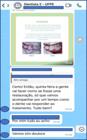
The parents/guardians were instructed weekly on the importance of reading and discussing the content sent through the messaging app with their adolescents. In addition, at each consultation, the oral health team asked the parents how the adolescents were understanding and accepting the resource. Figure 2 presents a flowchart from the adolescent's inclusion in the study to the implementation of the intervention.

Acceptance of the CBT Resource
To assess the acceptability of the resource, questionnaires were distributed via Google Forms so that participants from the oral health teams could share their perspectives and opinions, as well as suggestions for its improvement. The questionnaire was organized into six themes: general assessment of the adopted strategy, communication with the patient, fostering the relationship with the patient, fostering cooperation, difficulties in using the material, and suggestions for improving the technique.
Impressions from adolescents and their parents/guardians were obtained through conversations on the messaging app. In this space, communication occurred among the oral health team, the adolescent, and their parents, as well as the application of the CBT resource.
Results
Appeal Drawn Up
As previously stated, the resource was developed based on the Five Areas of the CBT model. Therefore, for the areas “Disruptive cognitions’’ and “Altered feelings’’, the description of thoughts common to anxious people was carried out, followed by the presentation of cognitive alternatives to distance themselves from altered thoughts. Besides, an approach was designed to tackle anxiety as a common feeling, also consisting of a description of procedures common to the dental environment, and encouragement for the adolescent to reflect on the dental experience and their anxiety.
The strategy used to reach the areas “Altered behaviors’’ and “Physical symptoms’’ was the description of cognitive alternatives capable of dispelling altered thoughts. Finally, the area "Situations that stimulate dental anxiety" was considered by encouraging joint participation in the therapy, with attention to interactions among the adolescent, parents/guardians, and the oral health team. Part of the child's guide - “Your teeth. You care’’ - is shown in Figure 3.

Use of the Resource in a Pilot Study
In total, 10 adolescents were treated with the proposed resource, with 3 to 6 consultations per dental treatment. The sample size was determined by the number of adolescents who were screened as anxious in the waiting room. During the collection period, all anxious patients agreed to participate in the study. It is worth noting that a power analysis was performed based on a pilot sample of 10 respondents, using the bivariate, bilateral Wilcoxon test for paired data ("Wilcoxon-signed rank test (matched pairs)"), with an error of 5.0%. Therefore, the ARE distribution was 0.833. Table 1 describes characteristics such as age, sex, initial anxiety level, dental treatment needs, and follow-up time (in number of consultations) of each adolescent. It is worth mentioning that the consultations occurred weekly.
Details such as age, sex, initial anxiety level, dental treatment needs, and follow-up time (in consultations) of each adolescent.
Anxiety Assessment
Paired t-tests were used to compare the total MCDAS populations at baseline and follow-up. The average score for initial anxiety was 23.0 (range 16-32), and of 19.33 in for follow-up assessments (range 8-28). A reduction in dental anxiety was observed throughout the application of the CBT-based resource.
By individually assessing some items that make up the MCDASF, it is possible to observe a reduction in the level of anxiety, besides changes in the smiley face scale. Table 2 describes the changes in the responses to certain items after using the material, as well as the changes perceived in the smiley face scale.
Distribution of participants by median score of anxiety assessment throughout dental treatment.
Table 3 shows the initial and final averages of anxiety according to the procedures performed. It is noteworthy that, regardless of the procedure, there was a reduction in anxiety levels after the application of the resource.
Behavioral Assessment
Despite the improvement shown in anxiety levels described by the MCDASF, behavioral levels, assessed using the Frankl Scale, did not show different results during the follow-up period in which the resource was applied, regardless of the procedure performed. It is noteworthy that regardless of the level of anxiety, adolescents’ behavior was overall positive.
Adherence to Treatment
Patients' absences (with or without justification) were recorded, with 3 participants absent, two of whom missed 1 appointment (patients no. 3 and 9), another missed 2 appointments (patient no. 7) and a third missed 3 (patient no. 5).
Acceptance of the Self-Help Resource by Adolescents
The adolescents in the sample accepted well the resources. Besides, all participants exchanged messages with the oral health team. Follow example:
“Good!!! I would like to thank you for your attention and for taking care of me and my mother in each procedure [...]”
[...] “I am very lucky to have a team like yours, so special and spectacular, on my Thursday afternoon”
[...] “You were not just a dentist, but my friend on the journey to a healthier smile” [...]
Regarding oral health care, a 13-year-old teenager was interested in finding out about the most efficient ways to maintain oral hygiene, as demonstrated in the excerpt below:
“Good evening, could you please advise me on what would be the most suitable toothbrush and dental floss to use?”
Regarding the procedures performed, not many questions were asked by the teenagers. Only one of them asked, through voice messages, how the stitches would be removed after the surgical procedure. Regarding dental anxiety, no comments were made by adolescents in the group chats.
Evaluation of the Self-Help Resource by Parents/Guardians
In the dialogues held between parents/guardians and oral health teams, good acceptance of the resource was observed, especially with regard to the use of the messaging app, since all guardians accepted setting-up group chats, in addition to using the tool to communicate with the oral health team.
Despite this overall level of acceptance, parents/guardians often only used the digital tool as a means of confirming or canceling appointments, without actively applying the proposed resource, as requested by the oral health teams. Such observations can be made from the analysis of the speeches below:
“Good afternoon. Confirmed. Same time?”
“Good afternoon, he will not go, because I’m not at home to take him. Unfortunately.”
“Yes, good afternoon. What is the last time?”
The group chat was also used as a means of clarifying doubts about the procedure to be performed. This is, for instance, shown in the case of a teenager who underwent tooth extraction and the guardian contacted the dentist, via voice messages, on how to proceed with suture removal.
“Good morning! I’m letting you know that she won’t be able to come today because I had to go on a trip. [...] What should I do? Can she have those stitches removed at a medical center? She’ll take them off on Monday, correct?”
Furthermore, those responsible used the group chat to send preoperative exams, which facilitated surgical planning by the oral health team.
Regarding the adolescents' dental anxiety, their parents/guardians did not make any direct observations or ask any questions in the group chats created for communication with the oral health team. However, one guardian indicated that, given the impossibility of attending the appointment that week, their child did not feel comfortable in going to the health center alone to remove the stitches from the surgery performed the previous week.
“Doctor, if she gets these stitches in her mouth, will it fall out on its own? Because she's afraid of going to the appointment. [...] If not, I'll go with her today from eight o’clock.”
Resource’s Self-Assessment by the Oral Health Team
In total, 13 oral health teams (composed of two or three students) responded to the assessment proposed in Google Forms. The students were asked objective and subjective questions about the benefits of the TCC resource in communication, relationships, and cooperation with the adolescent patient. They were also asked for suggestions on how to improve the material.
Regarding the overall evaluation of the resource, the oral health teams considered it excellent (85.0%) and good (15.0%). For all the items analyzed (communication, relationships, and cooperation), the majority considered that the resource “was very useful” (53.8%, 61.5% and 66.6%, respectively). Likewise, the majority (84.6%) indicated that they had no difficulty in using the material.
The oral health team was asked about how the resource favored the relationship with the patient. They reported greater interaction, trust and support. The following reports were provided:
“Increased patient interaction and trust.”
“The patient showed increased trust towards the dentists, which made the treatment process easier for both parties.”
“We created a bond. The patient saw a welcoming environment during the consultations and said that her anxiety turned into eagerness for the service.”
Regarding the encouragement of adolescent cooperation, they reported greater security and reduced anxiety, resulting in greater confidence, as in the reports below:
“It increased their comfort and courage during consultations.”
“The patient became more willing to carry out the proposed procedures as the meetings took place, as with each appointment he appeared to be less anxious about the treatment.”
“It helped to create trust and interest in knowing what was being done with the patient and so she was able to work on planning the day more easily, achieving her goals.”
When asking students for feedback on the impact of the resource on communication, they identified a more humanized approach, making it easier to approach the teenager.
“Getting closer to the patient, in addition to providing the patient with a more humanized approach.”
“Our patient had a level of anxiety that made it difficult for her to communicate with us. As we implemented the intervention, speaking in advance in the group chat, sending explanations of the procedures and creating a bond, we changed the relationship and, consequently, the process of facilitating care.”
Regarding how the material used could be improved, the oral health teams mentioned some suggestions, such as the use of short videos and the creation of a page on a social network, such as Instagram, a website to present the material in a more playful and accessible way, since the target audience is a large consumer of this type of social media.
Discussion
The methods for controlling dental anxiety have been the focus of many studies. Besides, the literature on the effectiveness of CBT in controlling the condition is vast. However, there is not much scientific evidence regarding the preferences of adolescents, parents/guardians, and oral health teams regarding the management of dental anxiety [8].
In this sense, for an intervention to be relevant and used in practice, the users' perspective must be analyzed and considered during its design phase. Therefore, in this study, adolescents, parents/guardians, and oral health teams participated in the development and testing of the material, in accordance with the recommendations of Yardley et al. [18], following a "person-centered" approach that considered users' observations, perspectives, and needs.
Although it was developed in a public dental service, the material can be used in clinical practice in any dental service that serves the age group addressed, since the resource was developed based on the participants' impressions. It is also important to emphasize training professionals in the use of the material so they can adequately approach anxious patients. This training can be provided through an ebook that concentrates on a set of information about CBT, its concept and its application through “You Take Care of Your Smile”. Some barriers to implementing the resource in daily clinical practice stand out, such as, for example, the interest of the adolescent and their parents/guardians in CBT and the availability of the professional to develop a closer relationship and greater communication with the patient. In addition, access to the Internet can also limit the use of the material.
The analysis of the results obtained through subjective questions conducted with the oral health teams highlighted the importance of effective communication and the creation of a bond between patient and professional, since the data demonstrate an improvement in communication and in the other parameters evaluated. This fact can also be verified by observing the dialogues maintained between the oral health team and the adolescents, since the feedback given by patients in the WhatsApp group chats demonstrates a better response and communication with the dentist.
Success in improving communication can be explained through person-centered care. According to Yuan et al. [24], this care includes all aspects involved in the interaction between the individual and the health professional. Therefore, qualified listening helps in the identification of factors that generate dental fear and anxiety by the oral health team. This, in turn, allows the use of CBT, given that the gold standard of therapy consists of exposure to the problem so that a targeted approach can be carried out [4].
Nonetheless, the data obtained with the Frankl Scale indicate that not all adolescents adapt well to self-help therapy. As described in the results section, even after the therapy was applied, one of the adolescents showed low adherence to the treatment, represented by the number of absences, often unjustified. According to Porritt et al. [8], this can be explained by several factors involved in the individual's desire to engage in CBT, such as the motivation to change, the complexity of the life situation, and the patient's mindset.
It is important to note that to be included in this study, the adolescent had to show credibility towards the therapy. This can be explained by the fact that the success of a given treatment, whether physical or mental, relies on the user’s availability and confidence.
Regarding anxiety control, a reduction in the levels presented by adolescents was observed after the application of the resource, as in the work of Porritt et al. [8]. However, as this is an acceptance and test study, it is not possible to confirm the effectiveness of the material for this purpose. Therefore, it is necessary to conduct a Randomized Clinical Trial (RCT) to determine the significance of this relationship.
Regarding the parameters of dental anxiety according to the procedures performed, it was found that, despite the improvement in anxiety levels during the anesthesia procedure, this was small compared to other procedures. According to the literature, anesthesia is a procedure with a high capacity to increase dental anxiety [25], which draws attention to the need for further studies aimed at understanding the impact of the intervention on anxiety levels related to anesthesia.
Regarding the perspectives of oral health teams, the present study showcases promising results, given that participants reported improvements in all aspects evaluated. This result is in line with the study by Porritt et al. [8], who also found positive results regarding the effectiveness of CBT in controlling dental anxiety.
Furthermore, the authors reinforce that the development of a CBT self-help approach offers several benefits for both the dentist and the patient, since it favors the reduction of dental anxiety levels and the need for pharmacological approaches to control the condition, besides helping professionals to manage anxiety [8].
The principles of CBT, applied through the resource, were also highlighted by the oral health teams. According to the students, information about dental care, specifically procedures, increased patients' confidence and interest, which facilitated the approach in the dental environment. According to Shahnavaz et al. [16], the main characteristics of CBT include the development of coping techniques and cognitive restructuring to improve behavior. It is worth noting that after informing undergraduates about the CBT and asking volunteers to take part, all candidates came forward, making it necessary to draw groups for the CBT application.
Another point mentioned by the oral health teams was the use of group chats. According to participants, the tool facilitated the development of a bond with the patient, thereby improving communication between the parties. The work by Schibbye et al. [4], who also used an internet-based CBT resource, found positive results in both the acceptance of the material and the way it was accessed, as well as in reduced anxiety levels. In fact, messaging apps have been used in health education initiatives due to their features, with their use widespread throughout Brazil [20].
Studies show that social media can be used as a tool to improve health conditions. According to a meta-analysis by Petkovic et al. [26], social media can improve well-being through health interventions. In the child and adolescent population, the effectiveness of these tools in supporting health may be even greater, since this is a population that was born into the context of the Internet, apps, and social media.
For example, the study by Mayer et al. [27] aimed to investigate the effects of an application on dental anxiety, communication, cooperation and satisfaction among adolescent patients. The study considered the app to be an alternative to effectively reduce dental anxiety, in addition to favoring adolescents' satisfaction with dental care. The authors emphasize that these results come from the familiarization of this population group with applications and smartphones.
Regarding acceptance by parents/guardians, it can be inferred that the resource and its digital form of application were approved, since none of the parents were against the material sent in the WhatsApp group chats. Porritt et al. [8] also found approval of a resource based on CBT for controlling dental anxiety, although its application was different from that used in the present study.
The active participation of parents/guardians in the application of the resource is of utmost importance to ensure that adolescents will have access to and will read and reflect on the information provided by the material. In addition, parents who understand their children's feelings regarding dental care can contribute to a more reassuring attitude towards adolescents. According to Uziel et al. [28], the family is essential in the development of defense mechanisms to deal with stressful situations.
Some limitations were identified in this study, including the challenge of identifying anxious patients, as the number of patients treated at UFPE fell considerably after the COVID-19 pandemic. Therefore, considering the prevalence of anxiety related to dental treatment, a large number of patients in the age group studied is necessary to have a significant sample of anxious adolescents. Furthermore, adjustments based on social profiles are necessary, as adolescents without regular internet access will have difficulty accessing digital resources.
The development of a self-help resource based on Cognitive Behavioral Therapy has proven to be viable to help reduce dental anxiety in the age group studied. The results obtained in this study indicate the need to conduct an RCT to determine the effectiveness and cost-benefit of the intervention.
Conclusion
The "Your Smile, You Take Care" study demonstrated that it is a well-accepted and viable intervention for reducing anxiety related to dental treatment in adolescents aged 10 to 16. The results of this study are encouraging and reinforce the importance of a more in-depth evaluation of the resource, thus making it necessary to conduct a Randomized Clinical Trial (RCT) to determine the cost-benefit of the self-help intervention.
If the effectiveness of the intervention is confirmed through an RCT, it will become a viable strategy for managing anxiety related to dental treatment in the population studied.
Financial Support
Data Availability
The data used to support the findings of this study can be made available upon request to the corresponding author.
References
-
[1] Rangel CRG, Pinheiro SL. Laser acupuncture and intravascular laser irradiation of blood for management of pediatric dental anxiety. J Oral Sci 2021; 163(4):355-357. https://doi.org/10.2334/josnusd.21-0025
» https://doi.org/10.2334/josnusd.21-0025 -
[2] Yildirim TT. Evaluating the relationship of dental fear with dental health status and awareness. J Clin Diagn Res 2016; 10(7):105-109. https://doi.org/10.7860/JCDR/2016/19303.8214
» https://doi.org/10.7860/JCDR/2016/19303.8214 -
[3] Mayer TMAS, Assis PD, Nascimento MG, Barreto KA, Silva CMMP, Colares V. Prevalence of dental anxiety in adolescents: Integrative review. Arch Health Invest 2019; 8(3):145-149. https://doi.org/10.21270/archi.v8i3.3178
» https://doi.org/10.21270/archi.v8i3.3178 -
[4] Schibbye R, Hedman-Lagerlöf E, Kaldo V, Dahllöf G, Shahnavaz S. Internet-based cognitive behavioral therapy for children and adolescents with dental or injection phobia: Randomized controlled trial. J Med Internet Res 2024; 26:e42322. https://doi.org/10.2196/42322
» https://doi.org/10.2196/42322 -
[5] Moore R, Brødsgaard I. Dentists’ perceived stress and its relation to perceptions about anxious patients. Community Dent Oral Epidemiol 2001; 29(1):73-80. https://doi.org/10.1034/j.1600-0528.2001.00011.x
» https://doi.org/10.1034/j.1600-0528.2001.00011.x -
[6] Porritt J, Marshman Z, Rodd HD. Understanding children’s dental anxiety and psychological approaches to its reduction. Int J Paediatr Dent 2012; 22(6):397-405. https://doi.org/10.1111/j.1365-263X.2011.01208.x
» https://doi.org/10.1111/j.1365-263X.2011.01208.x -
[7] Marshman Z, Rodd H, Fairhurst C, Porritt J, Dawett B, Day P, et al. The CALM trial protocol: A randomised controlled trial of a guided self-help cognitive behavioural therapy intervention to reduce dental anxiety in children. Trials 2023; 24(1):15. https://doi.org/10.1186/s13063-022-07046-6
» https://doi.org/10.1186/s13063-022-07046-6 -
[8] Porritt J, Rodd H, Morgan A, Williams C, Gupta E, Kirby J, et al. Development and testing of a cognitive behavioral therapy resource for children's dental anxiety. JDR Clin Trans Res 2017; 2(1):23-37. https://doi.org/10.1177/2380084416673798
» https://doi.org/10.1177/2380084416673798 -
[9] Armfield J, Heaton L. Management of fear and anxiety in the dental clinic: A review. Aus Dental J 2013; 58(4):390-407. https://doi.org/10.1111/adj.12118
» https://doi.org/10.1111/adj.12118 -
[10] Gordon D, Heimberg RG, Tellez M, Ismail AI. A critical review of approaches to the treatment of dental anxiety in adults. J Anxiety Disord 2013; 27(4):365-378. https://doi.org/10.1016/j.janxdis.2013.04.002
» https://doi.org/10.1016/j.janxdis.2013.04.002 -
[11] James AC, Reardon T, Soler A, James G, Creswell C. Cognitive behavioural therapy for anxiety disorders in children and adolescents. Cochrane Database Syst Rev 2020; 11(11):CD013162. https://doi.org/10.1002/14651858.CD013162.pub2
» https://doi.org/10.1002/14651858.CD013162.pub2 -
[12] Zisopoulou T, Varvogli L. Stress management methods in children and adolescents: Past, present, and future. Horm Res Paediatr 2023; 96(1):97-107. https://doi.org/10.1159/000526946
» https://doi.org/10.1159/000526946 -
[13] Shahnavaz S, Rutley S, Larsson K, Dahllöf G. Children and parents' experiences of cognitive behavioral therapy for dental anxiety--A qualitative study. Int J Paediatr Dent 2015; 25(5):317-326. https://doi.org/10.1111/ipd.12181
» https://doi.org/10.1111/ipd.12181 -
[14] Peron NB, Sartes LMA. Cognitive-behavioral therapy in the general hospital: Review of Brazilian literature. Rev Bras Ter Cogn 2015; 11(1):42-49. https://doi.org/10.5935/1808-5687.20150006
» https://doi.org/10.5935/1808-5687.20150006 -
[15] Bower P, Gilbody S. Stepped care in psychological therapies: Access, effectiveness and efficiency. Brit J Psychiat 2005; 186:11-17. https://doi.org/10.1192/bjp.186.1.11
» https://doi.org/10.1192/bjp.186.1.11 -
[16] Shahnavaz S, Hedman-Lagerlöf E, Hasselblad T, Reuterskiöld L, Kaldo V, Dahllöf G. Internet-based cognitive behavioral therapy for children and adolescents with dental anxiety: Open trial. J Med Internet Res 2018; 20(1):e12. https://doi.org/10.2196/jmir.7803
» https://doi.org/10.2196/jmir.7803 -
[17] Williams C, Garland A. A cognitive behavioural therapy assessment model for use in everyday clinical practice. Adv Psychiatr Treat 2002; 8(3):172-179. https://doi.org/10.1192/apt.8.3.172
» https://doi.org/10.1192/apt.8.3.172 -
[18] Yardley L, Morrison L, Bradbury K, Muller I. The person-based approach to intervention development: Application to digital health-related behavior change interventions. J Med Internet Res 2015; 17(1):e30. https://doi.org/10.2196/jmir.4055
» https://doi.org/10.2196/jmir.4055 -
[19] Meirelles F, Teixeira VMF, França T. Use of WhatsApp to support health education actions. Saúde Debate 2022; 46(133):432-446. https://doi.org/10.1590/0103-1104202213313
» https://doi.org/10.1590/0103-1104202213313 -
[20] Vieira CC, Freitas PM, Melo POV, Benevenuto F. O paradoxo da viralização de informação criptografada no whatsapp. In: Anais do XXXVII Simpósio Brasileiro de Redes de Computadores e Sistemas Distribuídos 2019; 403-416. https://doi.org/10.5753/sbrc.2019.7375 [In Portuguese].
» https://doi.org/10.5753/sbrc.2019.7375 -
[21] Appukuttan DP. Strategies to manage patients with dental anxiety and dental phobia: Literature review. Clin Cosmet Investig Dent 2016; 10(8):35-50. https://doi.org/10.2147/CCIDE.S63626
» https://doi.org/10.2147/CCIDE.S63626 -
[22] Barbosa TDS, Azevedo MS, Vidal GL, D’Almeida PVB, Bruzamolin C, et al. Translation and cultural adaptation of the Modified Child Dental Anxiety Scale-Faces (MCDASf) into Brazilian Portuguese. Pesqui Bras Odontopediatria Clín Integr 2022; 22:e200255. https://doi.org/10.1590/pboci.2022.046
» https://doi.org/10.1590/pboci.2022.046 - [23] Frankl SN, Shiere FR, Fogels HR. Should the parent remain with the child in the dental operatory? Journal of Dent Child 1962; 29:150-163.
-
[24] Yuan S, Freeman R, Hill K, Newton T, Humphris G. Communication, trust and dental anxiety: A person-centred approach for dental attendance behaviours. Dent J 2020; 8(4):118. https://doi.org/10.3390/dj8040118
» https://doi.org/10.3390/dj8040118 -
[25] Wu L, Gao X. Children's dental fear and anxiety: exploring family related factors. BMC Oral Health 2018; 18(1):100. https://doi.org/10.1186/s12903-018-0553-z
» https://doi.org/10.1186/s12903-018-0553-z -
[26] Petkovic J, Duench S, Trawin J, Dewidar O, Pardo J, Simeon R, et al. Behavioural interventions delivered through interactive social media for health behaviour change, health outcomes, and health equity in the adult population. Cochrane Database Syst Rev 2021; 5(5):CD012932. https://doi.org/10.1002/14651858.CD012932.pub2
» https://doi.org/10.1002/14651858.CD012932.pub2 -
[27] Mayer TMAS, Maior GBS, da Costa NP, do Nascimento MG, Colares V. Effectiveness of a smartphone application on dental anxiety in adolescents: A randomized controlled trial. Int J Paediatr Dent 2023; 33(4):409-417. https://doi.org/10.1111/ipd.13064
» https://doi.org/10.1111/ipd.13064 -
[28] Uziel N, Meyerson J, Kuskasy M, Gilon E, Eli I. The influence of family Milieu on dental anxiety in adolescents - A cross-sectional study. J Clin Med 2023; 12(6):2174. https://doi.org/10.3390/jcm12062174
» https://doi.org/10.3390/jcm12062174


