Description of a new alpheid shrimp from the tropical western Atlantic (Decapoda: Caridea: Alpheus)
Abstract
A new shallow-water species of the alpheid shrimp genus AlpheusFabricius, 1798 is described based on five specimens from Maceió, Alagoas, northeastern Brazil. Alpheus schubarti sp. nov., belongs to the A. paracrinitusMiers, 1881 species complex and is most closely related to the eastern Pacific A. rostratusKim & Abele, 1988, from which it can be separated by several morphological differences and the colour pattern of the major and minor chelae.
Keywords
Decapod crustaceans; Alpheidae; Snapping shrimp; Transisthmian speciation; New taxon; West Atlantic
INTRODUCTION
Alpheus paracrinitusMiers, 1881 is a taxonomically challenging species complex with a worldwide distribution (e.g., Holthuis, 1951; Banner, 1953; Chace Jr., 1972, 1988; Crosnier & Forest, 1966; Banner & Banner, 1982; Kim & Abele, 1988; Manning & Chace Jr., 1990; Anker & De Grave, 2016; De Grave & Anker, 2017). The species was originally described from Gorée Island, Senegal, based on two ovigerous females (Miers, 1881). The original description of A. paracrinitus by Miers (1881) is inadequate, omitting most taxonomically important details and containing only one illustration (frontal region), whereas the type-material of the species, deposited in the Natural History Museum, London (NHM), is in poor condition (Crosnier & Forest, 1966; A. Anker, pers. obs.). Holthuis (1951) placed A. ascensionis Ortmann, 1893 in the synonymy of A. paracrinitus, whereas Crosnier & Forest (1966) did the same with A. togatus (Armstrong, 1940) and A. paracrinutus var. bengalensis Coutière, 1905. Kim & Abele (1988) described the eastern Pacific A. rostratus Kim & Abele, 1988, comparing it with the eastern Pacific material identified as A. paracrinitus.
Although the concept of a pantropical A. paracrinitus (= A. paracrinitus sensu lato) was followed by most subsequent workers (e.g., Banner & Banner, 1982; Chace Jr., 1988; Manning & Chace Jr., 1990), Anker (2001), Anker & De Grave (2016) and Anker (2020) pointed to the unsatisfactory taxonomy of this species complex. In addition, pioneering studies on reproductive isolation, colour patterns and molecular divergence in transisthmian species of Alpheus demonstrated the presence of several species closely related to A. paracrinitus and A. rostratus in Panama (Knowlton & Mills, 1992; Knowlton et al., 1993; Williams et al., 2001), or in Panama and Cape Verde (Williams et al., 2001). According to the preliminary molecular analyses of Williams et al. (2001: fig. 3, COI based tree), the A. paracrinitus complex is comprised of two clades, the “non-spotted” clade with at least three species, one of them presumably being A. paracrinitus sensu Miers (1881), and the “spotted” clade with at least three species, one of them being the eastern Pacific A. rostratus.
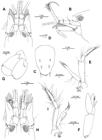
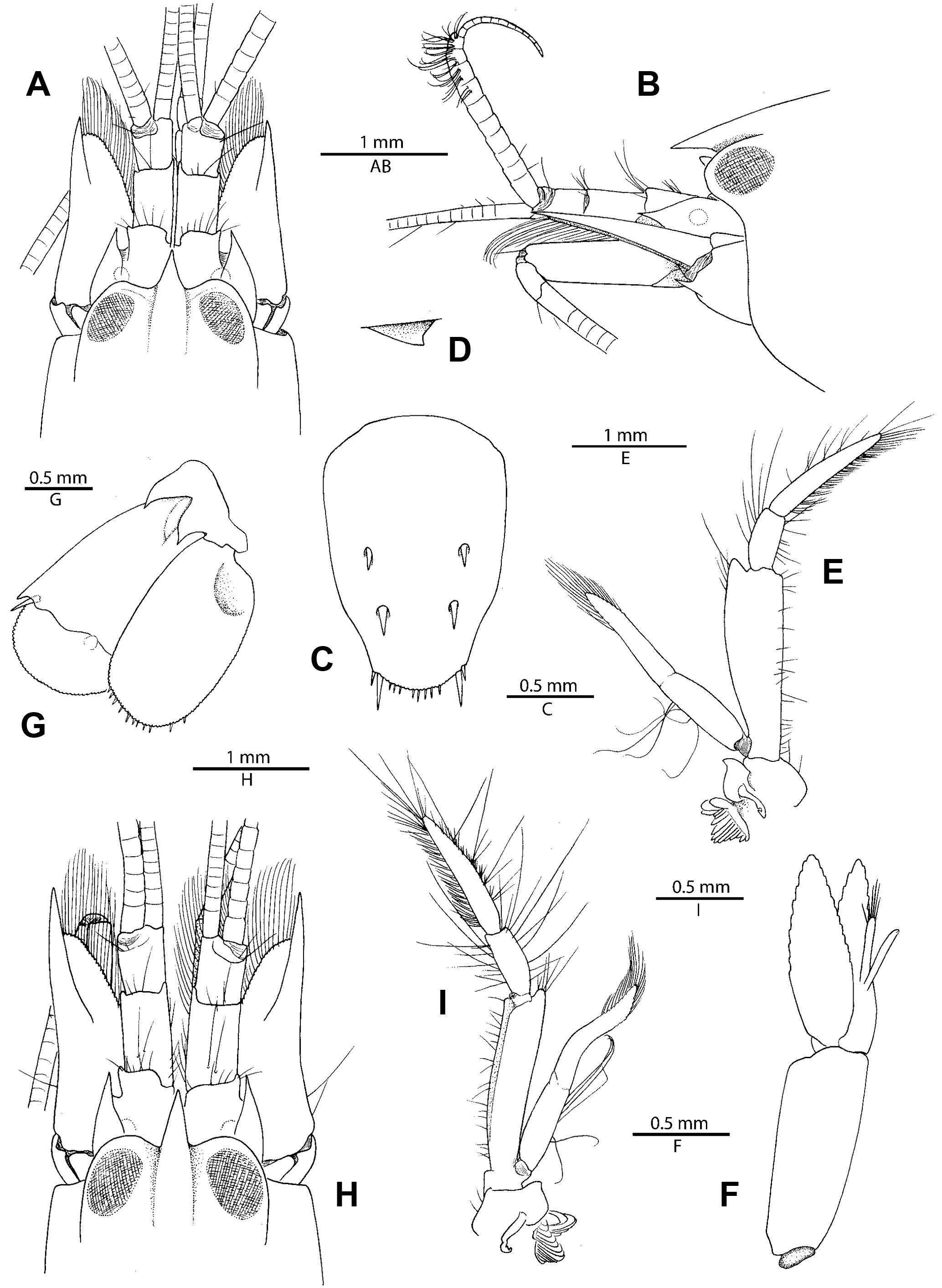
Alpheus schubartisp. nov.: holotype male (cl 4.45 mm) from Maceió, Alagoas, Brazil, MZUSP 45945 [A G]; (A) frontal region, dorsal; (B) same, lateral; (C) telson, dorsal; (D) tooth on ventromesial carina of first article of antennular peduncle, lateral; (E) third maxilliped, lateral; (F) second pleopod, lateral; (G) uropod, dorsal. Alpheus rostratus Kim & Abele, 1988: male (cl 6.15 mm) from Las Perlas Islands, Panama, MZUSP 45952 [H, I]; (H) frontal region, dorsal; (I) third maxilliped, lateral.
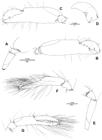
Alpheus schubartisp. nov.: holotype male (cl 4.45 mm) from Maceió, Alagoas, Brazil, MZUSP 45945; (A) major (left) cheliped, ischium, merus and carpus, mesial; (B) same, chela and carpus, mesial; (C) same, chela and carpus, lateral; (D) same, dactylus, lateral; (E) minor (right) cheliped, ischium, merus and carpus, mesial; (F) same, chela and carpus, mesial; (G) same, chela and carpus, lateral.
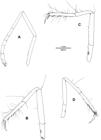
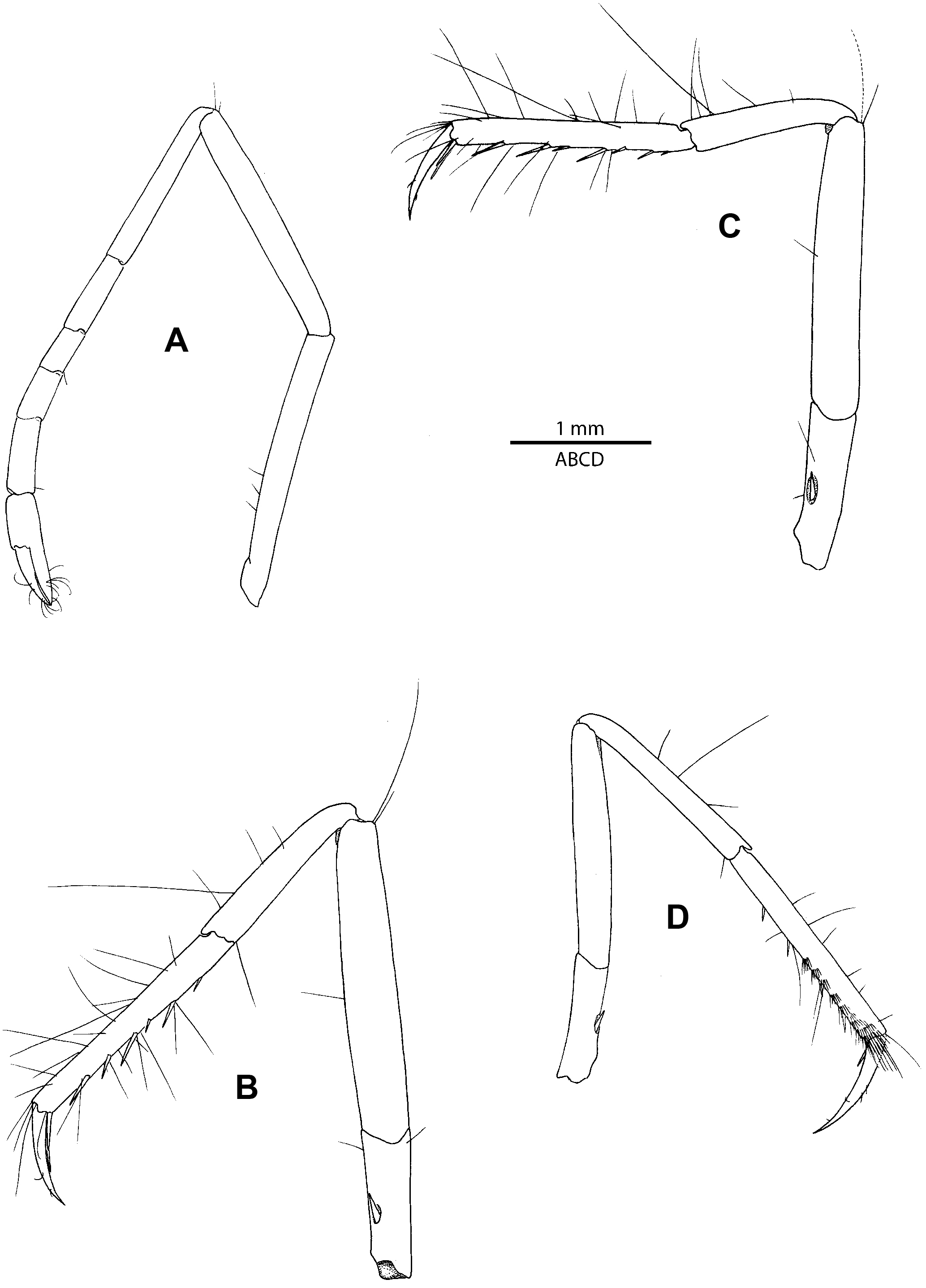
Alpheus schubartisp. nov.: holotype male (cl 4.45 mm) from Maceió, Alagoas, Brazil, MZUSP 45945; (A) second pereiopod, lateral; (B) third pereiopod, lateral; (C) fourth pereiopod, lateral; (D) fifth pereiopod, lateral.
The eastern Pacific A. rostratus was separated from A. paracrinitus by three morphological differences (Kim & Abele, 1988; see also below). In addition, A. rostratus and the two other putative species assigned to the A. rostratus clade by Williams et al. (2001) exhibit a striking feature in the colour pattern, namely the presence of two dark spots on dorsal surface of the third pleonite, hence the name “A. paracrinitus spot”; these spots are absent in the members of the A. paracrinitus clade, hence the name “A. paracrinitus no spot” (Williams et al., 2001: figs. 3, 6).
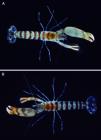
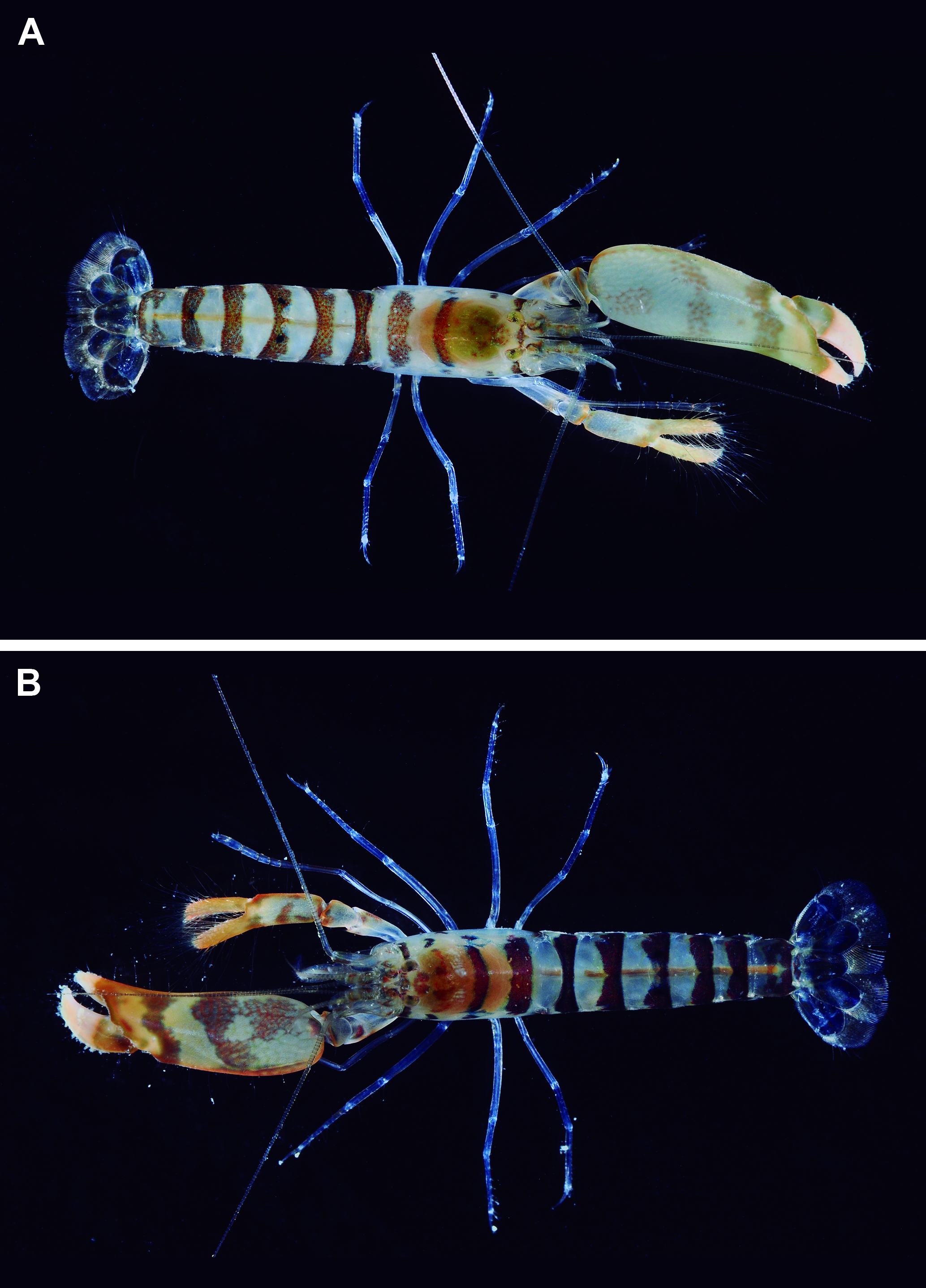
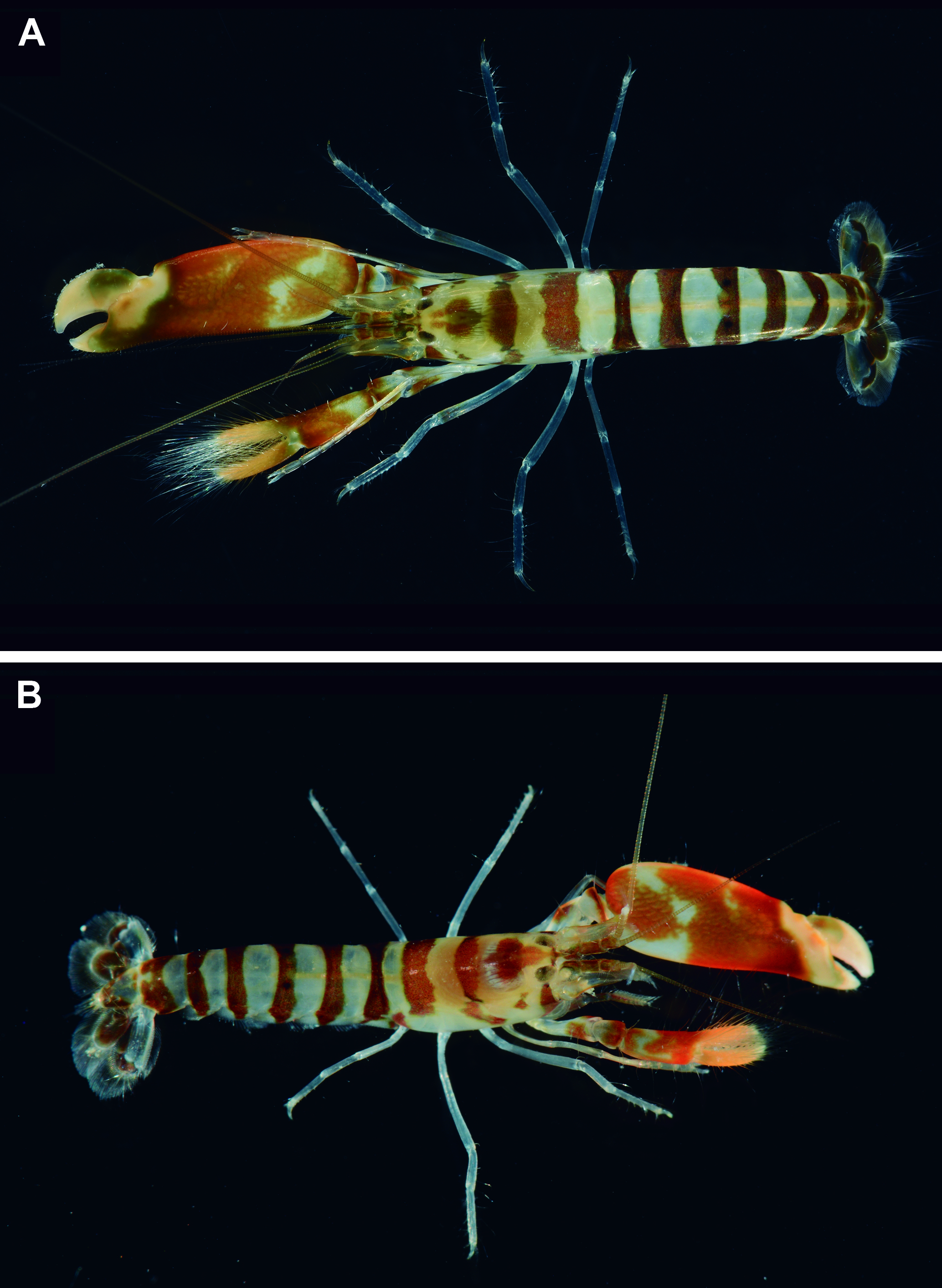
Alpheus schubartisp. nov.: holotype male (cl 4.45 mm) from Maceió, Alagoas, Brazil, MZUSP 45945, in dorsal view (A); paratype male (cl 4.50 mm) from the same locality, MZUSP 45946, dorsal view (B). Photographs by the author.
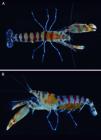
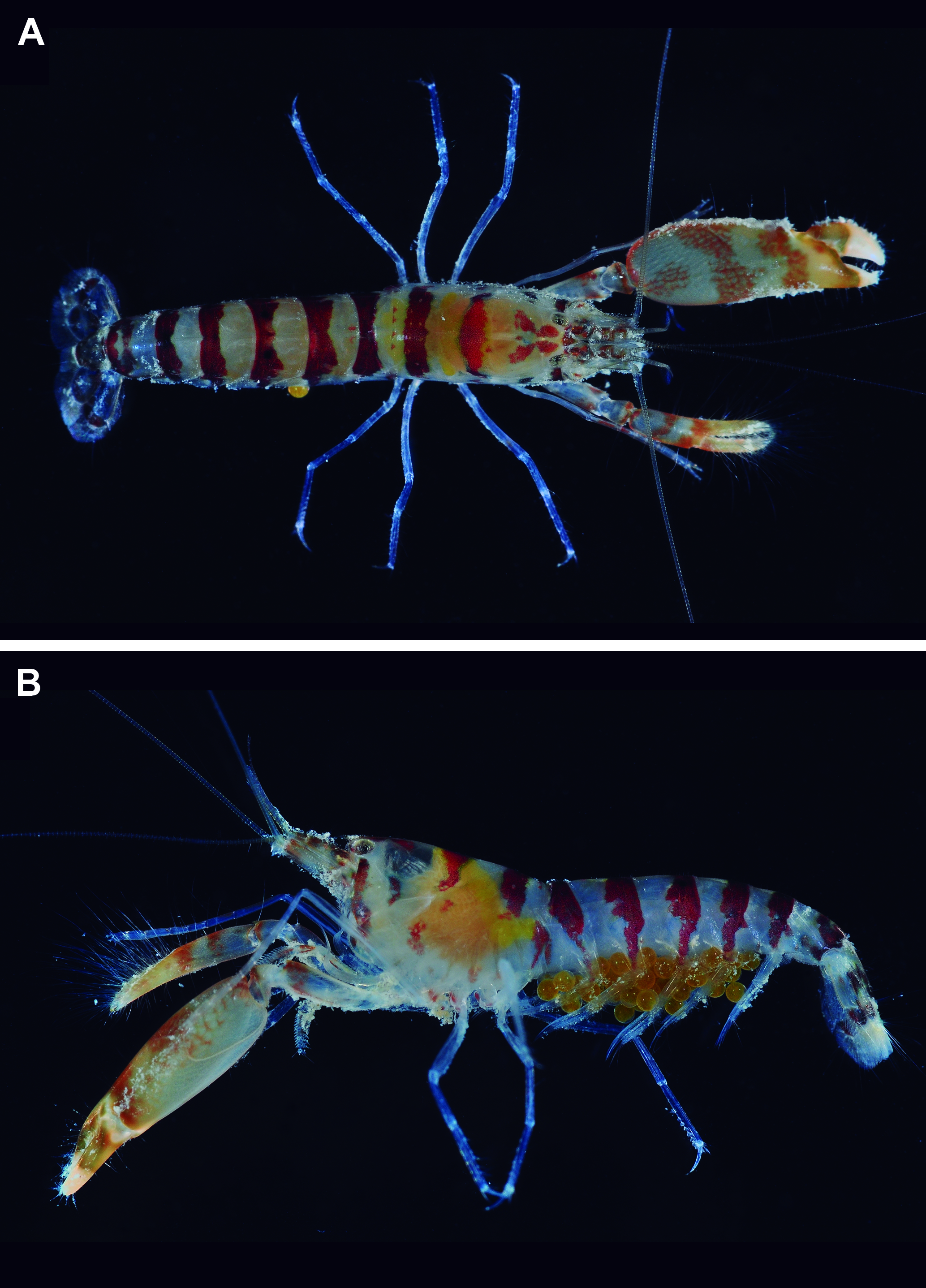
Alpheus schubartisp. nov.: paratype ovigerous female (cl 4.95 mm) from Maceió, Alagoas, Brazil, MZUSP 45947, in dorsal (A) and lateral (B) views. Photographs by the author.
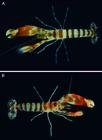
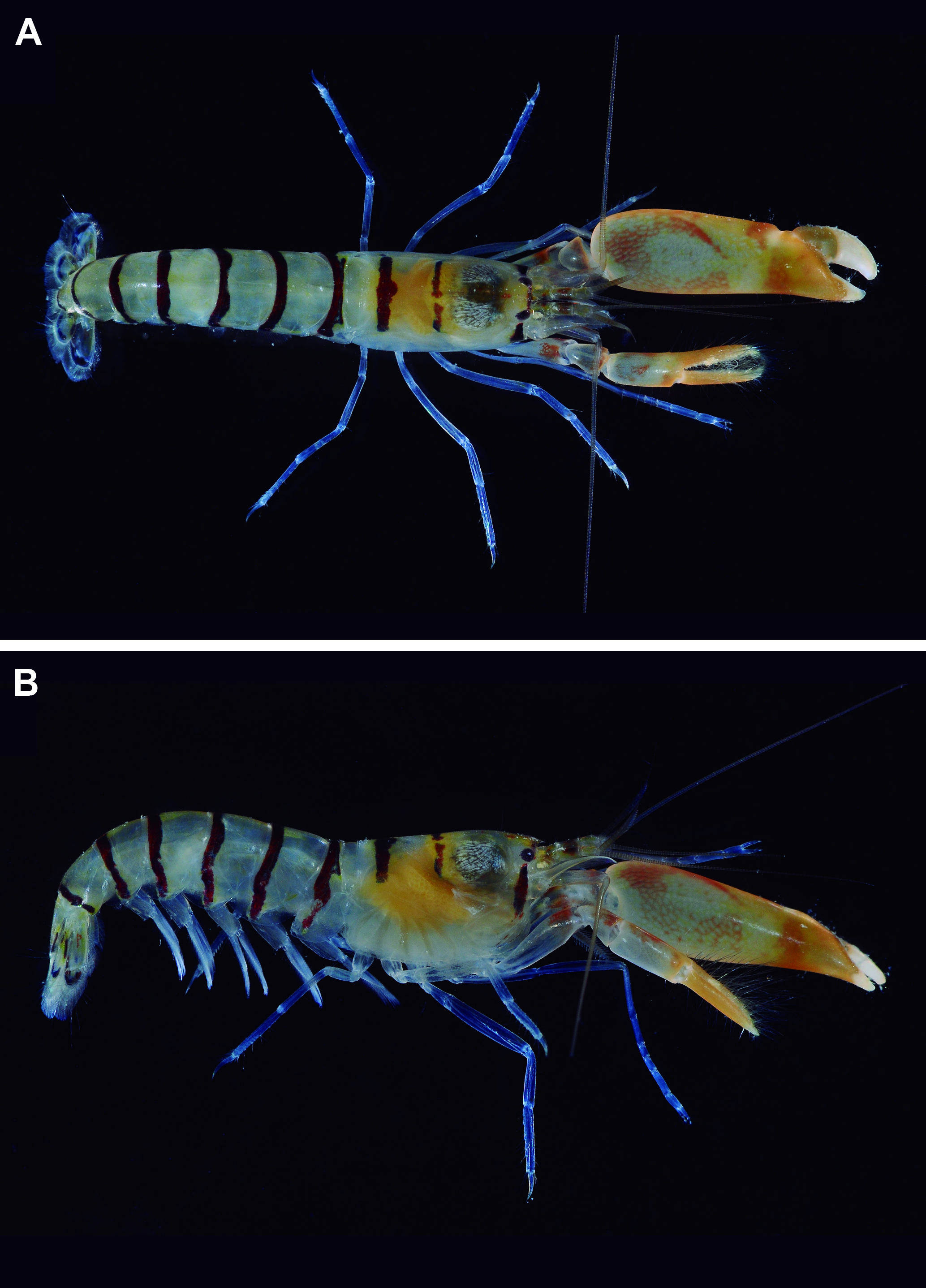
Alpheus rostratusKim & Abele, 1988: male (cl 6.15 mm) from Contadora, Las Perlas Islands, Panama, MZUSP 45952, in dorsal view (A); male (cl indet.) from Coiba Island, Panama, not deposited (entire specimen used for analysis of associated microbiota), in dorsolateral view (B). Photographs by P.P.G. Pachelle (A) and by the author (B).
In the present study, a new species from the A. rostratus clade of the A. paracrinitus complex is described on the basis of five specimens, four males and one ovigerous female collected near Maceió, Alagoas, northeastern Brazil, in July-August 2012. An exhaustive revision of the A. paracrinitus complex and a molecular phylogeny of the A. paracrinitus group sensu Anker (2020), including western Atlantic, eastern Atlantic, eastern Pacific and Indo-West Pacific taxa, will be provided elsewhere (Pachelle et al., in prep.).
MATERIAL AND METHODS
All material, including type material of the new species and comparative material of A. rostratus and A. cf. paracrinitus (see below), is deposited in the crustacean collection of the Museu de Zoologia, Universidade de São Paulo, São Paulo, Brazil (MZUSP). Carapace length (cl in mm) was measured along the carapace midline from the tip of the rostrum to the posterior margin of the carapace. All line-drawings of the new species are based on the dissected male holotype.
Comparative material:Alpheus rostratusKim & Abele, 1988: 1 male (cl 6.15 mm), MZUSP 45952, Panama, Pacific coast, Las Perlas Archipelago, Isla Contadora, rocky reef on northern end of Playa Larga, under intertidal rocks, leg. P.P.G. Pachelle, 22.03.2019 (photographic voucher PP 19-065); 1 ovigerous female (cl 5.50 mm), MZUSP 45951, Panama, Pacific coast, Río Mar, rocky shore exposed at low tide, under rocks, leg. A. Anker, E. Gómez & J. Jara, 03.03.2006 (photographic voucher AA 06-263); 1 male (cl 5.6 mm), 1 ovigerous female (cl 6.4 mm), Panama, Pacific coast, Ciudad de Panamá, off Casco Viejo, rocky shore exposed at low tide, under rocks, leg. A. Anker, E. Tóth, J. Jara & C. Hurt, 30.03.2006 (photographic voucher AA 06-327).
Alpheus cf. paracrinitus Miers, 1881: 2 males (cl 5.30, 4.15 mm), MZUSP 45949, Brazil, Alagoas, Maceió, Ponta Verde, fossilised coral platform with deep pools, partly exposed at low tide, depth: 0-2 m, in crevices of fossilised corals and coral rubble, leg. A. Anker & P.P.G. Pachelle, 02.08.2012 (photographic vouchers AA 12-314, AA 12-315, respectively); 2 ovigerous females (cl 6.65 mm, 6.90 mm), MZUSP 45950, Brazil, Atol das Rocas, near Barretão, in concretions of calcareous algae and tide pools, leg. P.S. Young, P.C. Paiva & A.A. Aguiar, 27.10.2000.
Systematics
AlpheusFabricius 1798Alpheus schubarti sp. nov. (Figs. 1A-G, 2-5)
(?) Alpheus paracrinitus “spot” - Williams et al., 2001: 377 (part.?) [not A. paracrinitusMiers, 1881].
(?) Alpheus paracrinitus - De Grave & Anker, 2017: 7 (part.?).
(?) Alpheus cf. rostratus - Almeida et al., 2012: 13, fig. 2E; Soledade & Almeida, 2013: 104, fig. 6E [not A. rostratusKim & Abele, 1988].
Type material: Holotype: male (cl 4.45 mm), MZUSP 45945, Brazil, Alagoas, Maceió, Ponta Verde, fossilised coral platform with deep pools, partly exposed at low tide, depth: 0-2 m, in crevices of fossilised corals and coral rubble, leg. A. Anker & P.P.G. Pachelle, 01.08.2012 (photographic voucher AA 12-263). Paratypes: 2 males (cl 4.55 mm, 4.50 mm), MZUSP 45946, same collection data as for holotype (photographic vouchers AA 12-262, AA 12-264, respectively); 1 ovigerous female (cl 4.95 mm), MZUSP 45947, Brazil, Alagoas, Maceió, Ponta Verde, fossilised coral platform with deep pools, partly exposed at low tide, depth: 0-2 m, in crevices of fossilised corals and coral rubble, leg. A. Anker & P.P.G. Pachelle, 02.08.2012 (photographic voucher AA 12-313); 1 male (cl 4.45 mm), MZUSP 45948, Brazil, Alagoas, Maceió, Ponta Verde, fossilised coral platform with deep pools, partly exposed at low tide, depth: 0-2 m, in crevices of fossilised corals and coral rubble, leg. A. Anker & P.P.G. Pachelle, 31.07.2012 (photographic voucher AA 12-246).
Description: Small-sized species of Alpheus (present material: cl 4.45-4.95 mm). Carapace glabrous. Rostrum short, subtriangular, about 1.4 times as long as wide at base, subacute distally, not reaching distal margin of first article of antennular peduncle, pointing straight forward in lateral view; rostral carina low, rounded, not extending past level of eyes (Fig. 1A, B). Orbital hoods rounded, slightly projecting anteriorly in dorsal view; frontal margin between rostrum and orbital hood shallowly concave; adrostral furrows distinct in anterior half of orbital hoods, relatively shallow (Fig. 1A). Rostro-orbital process present, low. Pterygostomial angle broadly rounded (Fig. 1B); cardiac notch well developed, deep. Telson broad, subrectangular, more noticeably tapering in distal third, about 1.8 times as long as maximal width; dorsal surface with two pairs of stout spiniform setae, both inserted at some distance from lateral margin, first pair at about telson mid-length, second pair at about 0.7 of telson length; posterior margin broadly rounded, with several small slender spiniform setae; posterolateral angles each with one pair of slender spiniform setae, mesial stouter and more than twice as long as lateral (Fig. 1C).
Eyes well developed, with large, normally pigmented corneas; ocellar beak (= bec ocellaire) protruding between eyes, visible in lateral view (Fig. 1A, B). Each epistomial sclerite with strong sharp process.
Antennular peduncle rather stout; stylocerite slightly swollen laterally, ending in sharp point, latter reaching, but not exceeding distal margin of first article; ventromesial carina with subtriangular, anteriorly directed tooth; second article about 1.4 times as long as wide; lateral antennular flagellum with secondary ramus fused to main ramus over most of its length, distally recognisable as short stump, with at least seven groups of aesthetascs (Fig. 1A, B, D). Antenna with basicerite moderately stout, armed with sharp tooth on distoventral margin; scaphocerite well developed, lateral margin almost straight, blade moderately broad, distolateral tooth strong, reaching well beyond distal margin of blade, reaching or slightly overreaching end of antennular peduncle; carpocerite reaching slightly beyond both scaphocerite and end of antennular peduncle (Fig. 1A, B).
Mouthparts not dissected, typical for genus in external observation. Third maxilliped relatively stout proximally, slender distally; coxa with subacutely projecting lateral plate; antepenultimate article somewhat broadened, flattened ventrolaterally, distodorsal margin bluntly projecting; penultimate article relatively short, about 2.3 times as long as maximal width, with long setae on dorsal margin; ultimate article tapering distally, with numerous rows of serrulate setae on ventromesial surface and long stiff setae, especially on dorsal surface; exopod noticeably thickened, somewhat hinged, reaching beyond distal margin of antepenultimate article (Fig. 1E).
Major cheliped not markedly sexually dimorphic (except for larger size in males), much more robust than minor cheliped; ischium short, stout, smooth; merus stout, about 2.2 times as long as distal width, smooth, distodorsal margin ending bluntly, ventromesial margin smooth, with sharp distal tooth; carpus short, much wider than long, cup-shaped; chela moderately elongate, not particularly swollen; palm not noticeably compressed, subcylindrical in cross-section, smooth, without grooves, notches or sinuses, length / height ratio around 2.0; fingers subequal in length (dactylus sometimes slightly longer), 0.5-0.6 length of palm; dactylus distally rounded or with curved apex, plunger prominent, moderately stout, with distal bulge; adhesive disks rather small (Fig. 2A-D). Minor cheliped not markedly sexually dimorphic; ischium short, smooth; merus moderately slender, slightly convex dorsally, about 3.5 times as long as wide, smooth, distodorsal margin blunt, ventromesial margin smooth, with small sharp distal tooth; carpus longer than that of major cheliped, cup-shaped; chela moderately slender, not particularly swollen; palm subcylindrical in cross-section, smooth, without grooves or notches, length / height ratio subequal to 2.5; fingers slightly longer than palm, not gaping and distally crossing when closed, extremely setose, especially on mesial surface, without balaeniceps ridges and setae in both sexes (Fig. 2E-G).
Second pereiopod slender; ischium and merus subequal in length; carpus with five subarticles, first by far longest, ratio of carpal subdivisions: 3.0/1.7/1/1/1.6; chela longer than distal-most carpal subarticle (Fig. 3A). Third pereiopod slender; ischium with stout spiniform seta on ventrolateral surface; merus about 6.2 times as long as maximal width, unarmed distoventrally; carpus about half-length of merus, noticeably more slender than merus; propodus much longer than carpus, more setose, ventral margin with six slender spiniform setae, in addition to pair of longer spiniform setae near propodo-dactylar articulation; dactylus slightly less than half-length of propodus, faintly curving distally, subconical (Fig. 3B). Fourth pereiopod generally similar to third, somewhat more slender (Fig. 3C). Fifth pereiopod more slender than fourth pereiopod; ischium armed with spiniform seta on ventrolateral surface; merus almost seven times as long as wide; carpus slightly more slender than merus, about 0.7 length of merus; propodus somewhat longer than carpus, distal half with at least eight rows of microserrulate setae on ventrolateral surface (grooming brush), ventromesial margin with four slender spiniform setae, in addition to one longer spiniform seta near propodo-dactylar articulation; dactylus similar to that of third and fourth pereiopods, about half as long as propodus (Fig. 3D).
Male second pleopod with appendix masculina slightly longer than appendix interna, with long stiff setae on apical part (Fig. 1F). Uropod with both mesial and lateral lobes of protopod ending in sharp tooth; exopod broad, with stout triangular distolateral tooth and slender distolateral spiniform seta, diaeresis sinuous, with two broadly rounded lobes in its lateral section; endopod noticeably narrower and shorter than exopod, ovate, distal margin armed with small spiniform setae (Fig. 1G).
Colour pattern: Background translucent whitish; posterior half of carapace with two broad, transverse, dark brown bands, not extending to branchiostegial margin, one short brown band or patch on each flank at about one-fourth of carapace length, and one narrow brown band along each anterolateral margin; rostral area with greenish brown patch; pleon with six transverse, dark brown bands, forming incomplete rings; third band with two widely separated black spots dorsally; sixth band broadest, with irregularly shaped, whitish window; telson whitish anteriorly (except for two brown patches near anterior margin), mostly brown in posterior two-thirds; antennules and antennae whitish with some olive brown patches or marbling, flagella pale yellowish or colourless; cheliped merus and carpus largely whitish with some brown patches; mesial face of major chela marbled with white, pale yellow and brown, distal half of palm with broad, obliquely transverse, white band, followed more distally by narrower brown band; base of pollex with smaller, oblique white band, rest of pollex orange-brown, calcified portion pale pinkish; dactylus brown grey proximally, calcified portion pale pinkish; second to fifth pereiopods largely translucent; uropods whitish with brown patches; ovigerous females with yolk yellow eggs (Figs. 4, 5).
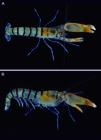
Alpheus cf. paracrinitus Miers, 1881: male (cl 5.30 mm) from Maceió, Alagoas, Brazil, MZUSP 45949, in dorsal (A) and lateral (B) views. Photographs by the author.
Etymology: The new species is named after the author’s late friend and colleague, Christoph D. Schubart (1966-2023), for his significant contributions to decapod systematics.
Distribution: Presently known with certainty only from the type locality in Alagoas, Brazil (present study); possibly also present in Bahia (Almeida et al., 2012; Soledade & Almeida, 2013; both as A. cf. rostratus). The Panamanian material, including A. paracrinitus “spot” in Williams et al., (2001) and A. paracrinitus in De Grave & Anker (2017, in part), as well as material personally collected in Panama and Costa Rica between 2005 and 2019, most likely represents A. schubarti sp. nov., at least judging from the nearly identical colour pattern; however, its identity needs to be confirmed by morphological and molecular analyses (Pachelle et al., in prep.).
Ecology: All type specimens of A. schubarti sp. nov., were extracted from crevices in fossilised coral rocks or large pieces of coral rubble, from the low tide mark to about 2 m.
Remarks: Within the A. paracrinitus complex, A. schubarti sp. nov., is most closely related to A. rostratus, from which it is distinguishable by (1) the rostrum subtriangular, about 1.5 times as long as wide at base vs. almost twice as long as wide at base in A. rostratus; (2) the distolateral tooth of the scaphocerite not as strongly developed as in A. rostratus, more precisely, reaching only slightly beyond the end of the antennular peduncle vs. reaching far beyond it in A. rostratus; and (3) the antepenultimate article of the third maxilliped being more expanded, and with a more prominent distodorsal projection than in A. rostratus (cf., Fig. 1A, E, H, I; see also Kim & Abele, 1988: fig. 21a, b). The two species also differ in the colour pattern of the major and minor chelae. In A. schubarti sp. nov., the distal half of the major chela palm has a broad, white, oblique somewhat irregularly shaped band, crossing the full width of the palm (Figs. 4, 5). In contrast, in A. rostratus, the distal half of the major chela palm is largely brown, except for a small white patch continuing onto the pollex (Fig. 6). The same colour difference between the two species can be observed on the minor chela (cf.,Fig. 4-6).
The real identity of A. paracrinitus presently remains unknown, due to the superficial description of Miers (1881) and the poor condition of the type specimens. The presence of at least two genetically distinct lineages (Williams et al., 2001) and two junior synonyms (A. ascensionis, A. togatus) in the Atlantic Ocean further complicates this issue. Herein the author tentatively follows Crosnier & Forest (1966), who, after having examined several specimens from Cape Verde and a specimen from Ghana reported by Holthuis (1951), did not find any significant differences with the type specimens of Miers (1881) from Senegal. Alpheus schubarti sp. nov., can be separated from A. paracrinitus sensu Crosnier & Forest (1966) by (1) the more prominent rostrum; (2) the dactylus of the major chela close to half-length of the palm vs. slightly more than 0.3 times as long as the palm in A. paracrinitus; and (3) the propodus of the third pereiopod armed with six spiniform setae vs. four in A. paracrinitus (cf., Figs. 1A, 2B, C, 3B; Crosnier & Forest, 1966: fig. 15).
At the author’s request, Paul F. Clark (pers. comm., June 2024) briefly examined Miers’ (1881) type specimens of A. paracrinitus (NHM 1881.24) and confirmed that the the smaller, more damaged specimen has three longer setae and one smaller seta on the left side of the rostral area, but no setae on the right side, whereas the larger specimen has three setae on the right side of the rostrum and no setae on the left side. The absence of setae on one side is most probably due to their fragility, i.e., they may have simply broken off. This important observation adds an important diagnostic character for A. paracrinitus sensu Miers (1881), i.e., the presence of erect setae on the rostrum or rostro-orbital area. These setae were neither described nor illustrated by Crosnier & Forest, 1966) for the Cape Verdean material, although in their illustration of the frontal area (idem: fig. 15a), all setae have been omitted. Thus, A. schubarti sp. nov., can be additionally separated from A. paracrinitus by the absence of erect setae on or near the rostrum.
Furthermore, A. schubarti sp. nov., can be easily separated from the species herein tentatively identified as A. cf. paracrinitus from Alagoas and Atol das Rocas, Brazil (see comparative material), by (1) the longer and more prominent rostrum, with a more developed rostral carina; (2) the more distinct adrostral furrows, which are very shallow in A. cf. paracrinitus; and (3) the absence of erect setae on the rostrum and sometimes also on the orbital hoods; these setae are present in all four herein examined specimens of A. cf. paracrinitus (see also below). In addition, the colour pattern of A. schubarti sp. nov., markedly differs from that of A. cf. paracrinitus from Maceió by the presence of two dark (often black) spots on the third pleonite, as well as by the bands on the pleon being noticeably broader (cf., Figs. 4, 5, 7). Whether the Brazilian A. cf. paracrinitus and the eastern Atlantic A. paracrinitus sensu Miers (1881) represent the same species remains to be shown.
The western Atlantic taxon described as A. togatus by Armstrong (1940, as Crangon togatus) was placed in the synonymy of A. paracrinitus by Crosnier & Forest (1966). However, A. togatus differs from A. paracrinitus sensu Crosnier & Forest (1966) in the more numerous spiniform setae on the third pereiopod propodus, more precisely seven vs. four (cf., Armstrong, 1940: fig. 1C; Crosnier & Forest, 1966: fig. 15f). Miers (1881) did not describe in detail the walking legs of A. paracrinitus, most of which are missing in the type specimens. In all other morphological characteristics, A. togatus is identical to A. paracrinitus in Crosnier & Forest (1966). Whatever its taxonomic status might be, A. schubarti sp. nov., can still be separated from A. togatus by (1) the more prominent rostrum (1.4 times as long as wide in the new species vs. as long as wide in A. togatus); (2) the presence of a blunt rostral carina, which was not shown by Armstrong (1940: fig. 1A), whilst the rostrum was described as “not continued back on the carapace as a carina” in A. togatus; and (3) the minor chela fingers being about 1.2 times as long as palm vs. almost 1.5 times as long as palm in A. togatus (cf.,Figs. 1A, 2F, G; Armstrong 1940: fig. 1).
The taxonomic status of the vaguely described A. ascensionis (Ortmann 1893), as well as the identity of the material from Ascension Island reported as A. paracrinitus by Manning & Chace Jr. (1990) and De Grave et al. (2017), require a reassessment. Nevertheless, two facts strongly suggest that A. ascensionis is closer to A. cf. paracrinitus than to A. schubarti sp. nov. Firstly, the afore-mentioned rostral setae are present in five specimens from Ascension Island reported by Manning & Chace Jr. (1990) and deposited in the National Museum of Natural History, Smithsonian Institution, Washington D.C. (USNM 256769, 256770) (M. Tavares, pers. comm., May 2024). Noteworthy, these setae are also present in the eastern Pacific material reported as A. paracrinitus (Kim & Abele, 1988: fig. 20a, b), but are absent in A. rostratus (idem: fig. 21a, b; see also Fig. 1H), just like in A. schubarti sp. nov. (Fig. 1A, B; see also above). Secondly, the colour pattern of the specimens from Ascension Island reported by De Grave et al. (2017) is nearly identical to that of A. cf. paracrinitus from Brazil (S. De Grave, pers. comm., May 2024) and some specimens identified as A. paracrinitus from São Tomé (pers. obs.).
ACKNOWLEDGEMENTS:
The author is grateful to Paulo P.G. Pachelle (Universidade Federal do Ceará, Fortaleza, Brazil) for assistance in the field in 2012 and for providing one of the colour photographs of A. rostratus. Marcos D.S. Tavares (Museu de Zoologia, Universidade de São Paulo, São Paulo, Brazil, MZUSP) examined several specimens of A. paracrinitus from Ascension Island deposited in the National Museum of Natural History, Smithsonian Institution, Washington D.C., whereas Paul F. Clark (Natural History Museum, London, UK) kindly checked Miers’ (1881) type specimens of A. paracrinitus. Sammy De Grave (Oxford University Museum of Natural History, Oxford, UK) provided information on the colour pattern of A. paracrinitus collected by him in Ascension Island in 2008. Matthieu Leray (Smithsonian Tropical Research Institute, Ciudad de Panamá, Panama) facilitated sampling of alpheid shrimps in Panama in 2018-2019. Joana D’Arc (MZUSP) helped locating and registering specimens. Hossein Ashrafi (University of Ostrava, Ostrava, Czech Republic) and Justin Scioli (Smithsonian Marine Station, Fort Pierce, USA) thoroughly reviewed the originally submitted manuscript.
-
FUNDING INFORMATION:
The present study was supported by the Coordenação de Aperfeiçoamento de Pessoal de Nível Superior (CAPES) of the Brazilian Government in 2011-2012.
-
Published with the financial support of the “Programa de Apoio às Publicações Científicas Periódicas da Universidade de São Paulo”
REFERENCES
-
Almeida, A.O.; Boehs, G.; Araújo-Silva, C.L. & Bezerra, L.E.A. 2012. Shallow-water caridean shrimps from southern Bahia, Brazil, including the first record of Synalpheus ul (Ríos & Duffy, 2007) (Alpheidae) in the southwestern Atlantic Ocean. Zootaxa, 3347: 1-35. https://doi.org/10.11646/zootaxa.3347.1.1
» https://doi.org/10.11646/zootaxa.3347.1.1 -
Anker, A. 2001. Two new species of snapping shrimps from the Indo-Pacific, with remarks on colour patterns and sibling species in Alpheidae (Crustacea: Caridea). Raffles Bulletin of Zoology, 49: 57-72. https://lkcnhm.nus.edu.sg/wp-content/uploads/sites/10/app/uploads/2017/04/49rbz057-072.pdf
» https://lkcnhm.nus.edu.sg/wp-content/uploads/sites/10/app/uploads/2017/04/49rbz057-072.pdf -
Anker, A. 2020. On two new deep-water snapping shrimps from the Indo-West Pacific (Decapoda: Alpheidae: Alpheus). Zootaxa, 4845: 393-409. https://doi.org/10.11646/zootaxa.4845.3.5
» https://doi.org/10.11646/zootaxa.4845.3.5 -
Anker, A. & De Grave, S. 2016. An updated and annotated checklist of marine and brackish caridean shrimps of Singapore (Crustacea, Decapoda). Raffles Bulletin of Zoology, 34: 343-454. https://lkcnhm.nus.edu.sg/wp-content/uploads/sites/10/app/uploads/2017/06/S34rbz343-454.pdf
» https://lkcnhm.nus.edu.sg/wp-content/uploads/sites/10/app/uploads/2017/06/S34rbz343-454.pdf - Armstrong, J.C. 1940. New species of Caridea from the Bermudas. American Museum Novitates, 1096: 1-10.
- Banner, A.H. 1953. The Crangonidae, or snapping shrimp, of Hawaii. Pacific Science, 7: 3-147.
-
Banner, D.M. & Banner, A.H. 1982. The alpheid shrimp of Australia, part III: the remaining alpheids, principally the genus Alpheus, and the family Ogyrididae. Records of the Australian Museum, 34: 1-357. https://doi.org/10.3853/j.0067-1975.34.1982.434
» https://doi.org/10.3853/j.0067-1975.34.1982.434 -
Chace Jr., F.A. 1972. The shrimps of the Smithsonian-Bredin Caribbean expeditions with a summary of the West Indian shallow-water species (Crustacea: Decapoda: Natantia). Smithsonian Contributions to Zoology, 98: i x + 1-179. https://doi.org/10.5479/si.00810282.98
» https://doi.org/10.5479/si.00810282.98 -
Chace Jr., F.A. 1988. The caridean shrimps (Crustacea: Decapoda) of the Albatross Philippine Expedition, 1907-1910, Part 5: Family Alpheidae. Smithsonian Contributions to Zoology, 466: 1-99. https://doi.org/10.5479/si.19436696.391.1
» https://doi.org/10.5479/si.19436696.391.1 - Coutière, H. 1905. Les Alpheidae. In: Gardiner, J.S. (Ed.). The fauna and geography of the Maldive and Laccadive Archipelagoes. Being the account of the work carried on and of the collections made by, an expedition during the years 1899 and 1900, pp. 852-921, pls. 70-87. Cambridge, University Press.
- Crosnier, A. & Forest, J. 1966. Crustacés Décapodes: Alpheidae. Campagnes de la Calypso dans le Golfe de Guinée et aux Iles Principe, São Tomé et Annobon (1956), et Campagne aux Iles du Cap Vert (1959). Part 19. Résultats Scientifiques des Campagnes de la Calypso 7 (27). Annales de l’Institut Océanographique, Paris, 44: 199-314.
-
De Grave, S. & Anker, A. 2017. An annotated checklist of marine caridean and stenopodidean shrimps (Malacostraca: Decapoda) of the Caribbean coast of Panama. Nauplius, 25: 1-40, e2017015. https://doi.org/10.1590/2358-2936e2017015
» https://doi.org/10.1590/2358-2936e2017015 -
De Grave, S.; Anker, A.; Dworschak, P.C.; Clark, P.F. & Wirtz, P. 2017. An updated checklist of the marine Decapoda of Ascension Island, central Atlantic Ocean. Journal of the Marine Biological Association of the United Kingdom, 97(4): 759-770. https://doi.org/10.1017/S0025315414001295
» https://doi.org/10.1017/S0025315414001295 -
Fabricius, J.C. 1798. Supplementum Entomologiae Systematicae. Hafniae, Impensis C.G. Proft. v. 5, 572 p. https://www.biodiversitylibrary.org/item/132638#page/5/mode/1up
» https://www.biodiversitylibrary.org/item/132638#page/5/mode/1up - Holthuis, L.B. 1951. The caridean Crustacea of tropical West Africa. Atlantide Report, 2: 7-187.
-
Kim, W. & Abele, L.G. 1988. The snapping shrimp genus Alpheus from the eastern Pacific (Decapoda: Caridea: Alpheidae). Smithsonian Contributions to Zoology, 454: 1-119. https://doi.org/10.5479/si.00810282.454
» https://doi.org/10.5479/si.00810282.454 -
Knowlton, N. & Mills, D.K. 1992. The systematic importance of color and color pattern: evidence for complexes of sibling species of snapping shrimp (Caridea: Alpheidae: Alpheus) from the Caribbean and Pacific coasts of Panama. Proceedings of the San Diego Society of Natural History, 18: 1-5. https://doi.org/10.1126/science.8503007
» https://doi.org/10.1126/science.8503007 -
Knowlton, N.; Weigt, L.A.; Solorzano, L.A.; Mills, D.K. & Bermingham, E. 1993. Divergence in proteins, mitochondrial DNA, and reproductive compatibility across the Isthmus of Panama. Science, 260(5114): 1629-1632. https://doi.org/10.1126/science.85030
» https://doi.org/10.1126/science.85030 -
Manning, R.B. & Chace Jr., F.A. 1990. Decapod and stomatopod Crustacea from Ascension Island, South Atlantic Ocean. Smithsonian Contributions to Zoology, 503: 1-91. https://doi.org/10.5479/si.00810282.503
» https://doi.org/10.5479/si.00810282.503 -
Miers, E.J. 1881. On a collection of Crustacea made by Baron Hermann-Maltzan at Goree island, Senegambia. The Annals and Magazine of Natural History, Series 5, 8: 204-220 + 259-281 + 364-377, pls. 13-16. https://www.biodiversitylibrary.org/page/30038132#page/226/mode/1up
» https://www.biodiversitylibrary.org/page/30038132#page/226/mode/1up -
Ortmann, A. 1893. Decapoden und Schizopoden. Ergebnisse der Plankton-Expedition der Humboldt-Stiftung, 2. Kiel, Lipsus & Tischer. 120p., pls. 1-10. https://doi.org/10.5962/bhl.title.10258
» https://doi.org/10.5962/bhl.title.10258 -
Soledade, G.O. & Almeida, A.O. 2013. Snapping shrimps of the genus Alpheus Fabricius, 1798 from Brazil (Caridea: Alpheidae): updated checklist and key for identification. Nauplius, 21(1): 89-122. https://doi.org/10.1590/S0104-64972013000100010
» https://doi.org/10.1590/S0104-64972013000100010 -
Williams, S.T.; Knowlton, N.; Weigt, L.A. & Jara, J.A. 2001. Evidence for three major clades within the snapping shrimp genus Alpheus inferred from nuclear and mitochondrial gene sequence data. Molecular Phylogenetics and Evolution, 20(3): 375-389. https://doi.org/10.1006/mpev.2001.0976
» https://doi.org/10.1006/mpev.2001.0976
-
Edited by:
Marcos Domingos Siqueira Tavares