 Bone meal and hydrogel enhance soil fertility with cashew farming in semi-arid areas
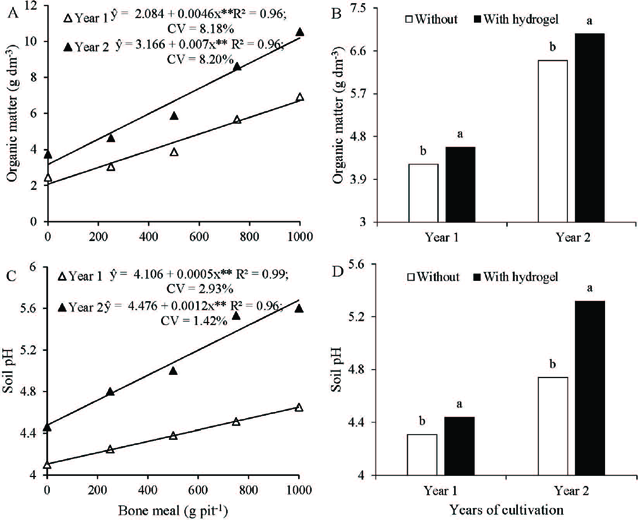
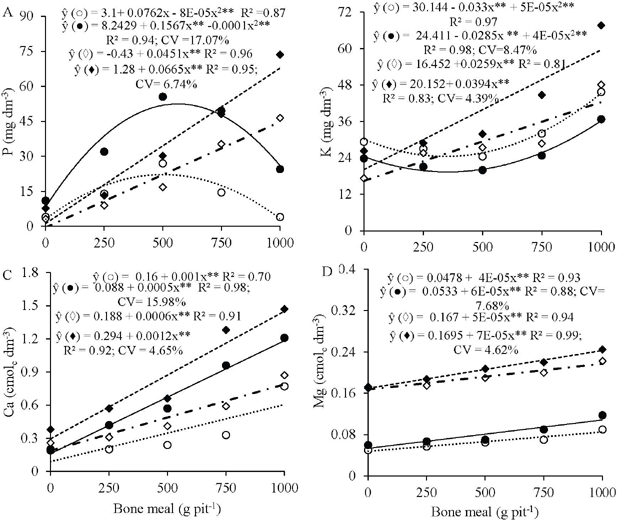
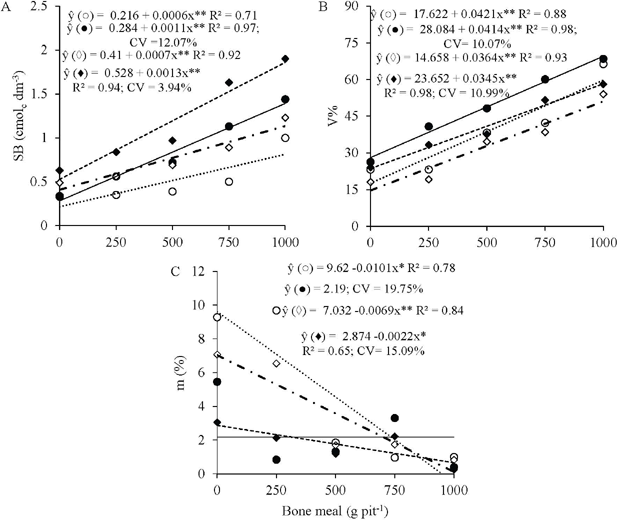
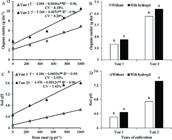
Cashew trees are often cultivated in semi-arid regions with poor soil and limited rainfall, presenting significant challenges for soil management. This study aimed to evaluate soil fertility based on varying doses of bone meal (0, 250, 500, 750 and 1,000 g pit−1), mixed into the planting pit with or without moisture-retaining hydrogel (0 and 5 g pit−1), in dwarf cashew ‘BRS 226’ cultivation. The soil chemical attributes were monitored over two growing seasons. The bone meal application increased the soil pH by 221 % along the two years and boosted the organic matter by 13 % in the first year and 28 % in the second one. The use of 5 g of hydrogel per pit, combined with 1,000 g of bone meal per pit, is recommended to improve the soil fertility in semi-arid cashew-growing areas over a two-year period. The bone meal fertilization in cashew planting promotes beneficial changes in the soil, and the hydrogel has a great potential in cashew farming, offering an alternative for expanding the fruit production in regions with low rainfall and sandy soils.
KEYWORDS
Anacardium occidentale ; soil nutrient availability; soil conditioner
 Thumbnail
 Thumbnail
 Thumbnail