 Selectivity of herbicides applied at planting of hybrid forage grasses seedlings
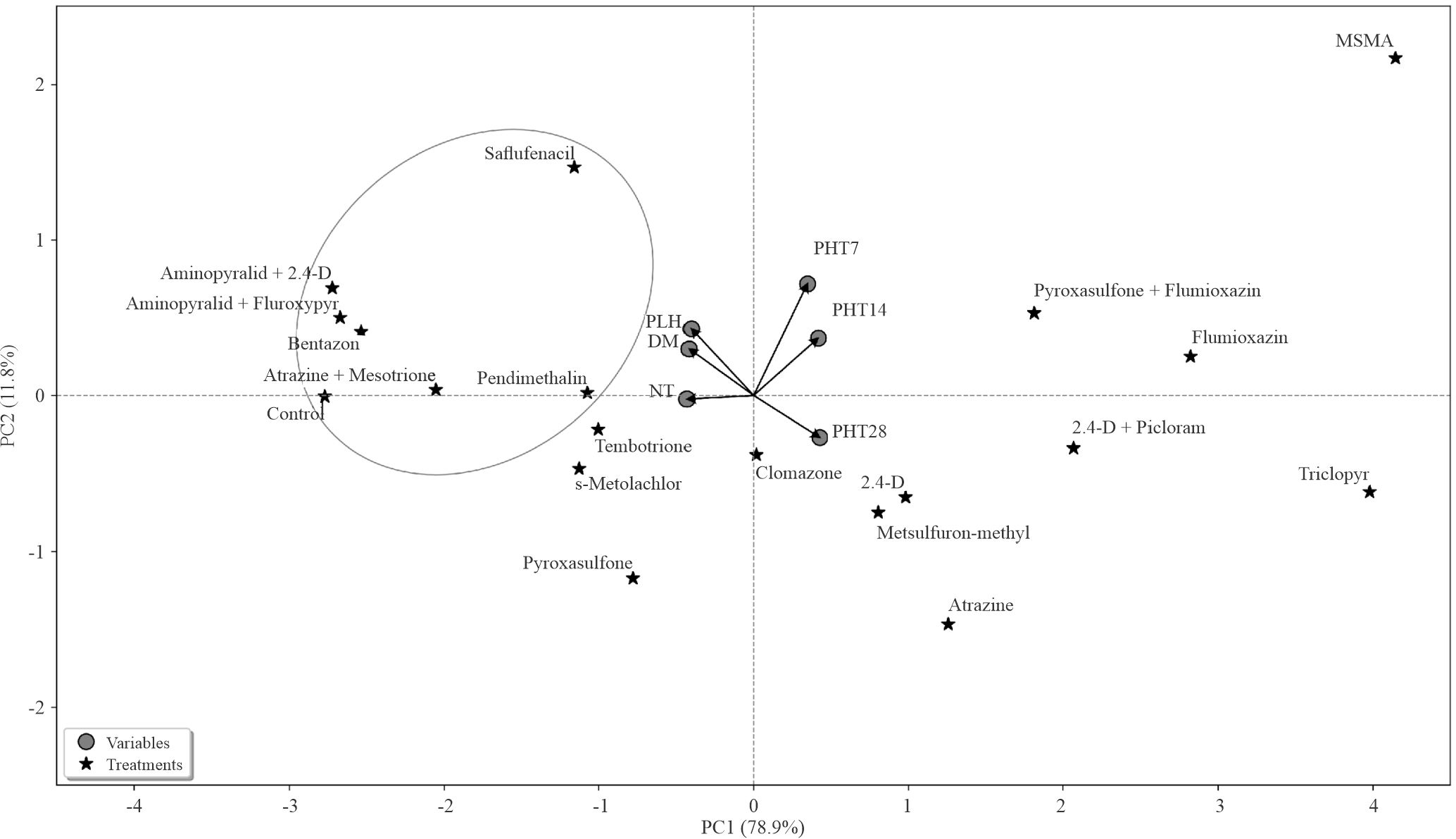
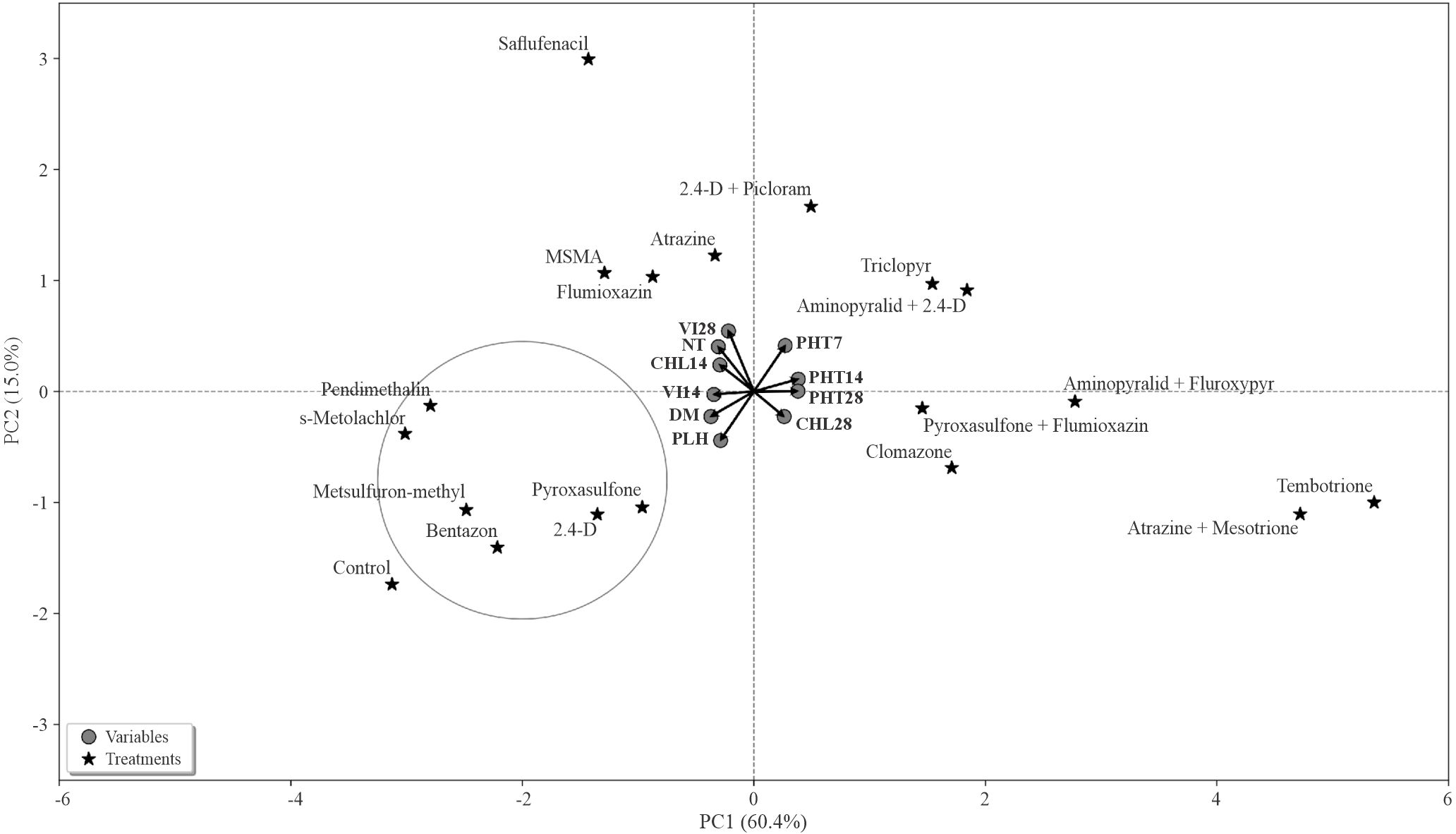
The objective of this work was to evaluate the selectivity of herbicides applied during planting of seedlings of SCS315 giant missionary grass (Axonopus catharinensis) and Tifton-85 bermudagrass (Cynodon spp.) cultivars. The study was carried out in a greenhouse with 18 preand post-emergence herbicides. Phytotoxicity, the normalized difference vegetation index (NDVI), the chlorophyll index, plant height, tiller number, and forage yield were evaluated. The treatments that showed a low phytotoxicity, similarly to the control, were selected for the field trials. The field experiments were arranged in a randomized complete block design with six selected treatments and a control without herbicide application, with four replicates. After cutting to simulate grazing, the evaluations of phytotoxicity, NDVI, plant height, tiller density, solar radiation interception, sward height, and forage yield were repeated. Dunnett’s test was used to compare the means of the treatments with those of the control. Despite their visible phytotoxicity, none of the field treatments caused reductions in the productive parameters of both grasses. Pendimethalin, mesotrione + atrazine, bentazon, saflufenacil, aminopyralid + 2,4-D, and aminopyralid + fluroxypyr show potential for application on 'SCS315' giant missionary grass, and pendimethalin, s-metolachlor, pyroxasulfone, bentazon, metsulfuron-methyl, and 2,4-D, on 'Tifton 85' bermudagrass.
Index terms:
Axonopus catharinensis; Cynodon spp.; phytotoxicity; weed control.
 Thumbnail
 Thumbnail
 Thumbnail