 Iodine biofortification of baby leaf lettuce grown in hydroponic system
Abstract
The objective of this work was to evaluate various iodine doses supplied via nutrient solution to achieve biofortification of baby leaf lettuce. Doses of potassium iodate (KIO3) were applied to the nutrient solution to provide iodine in quantities of 0, 20, 40, and 80 µmol L-1. The 20 µmol L-1 iodate dose resulted in an increase in leaf concentrations of iodine, nitrogen, potassium, and manganese. In phenological terms, the 20 µmol L-1 iodate dose enhances the antioxidant activity of the baby leaf lettuce. The consumption of 50 g of fresh baby leaf lettuce biofortified with 20 µmol L-1 of iodate in the nutrient solution is sufficient to meet 100% of the daily iodine intake requirements for an adult.
Index terms:
Lactuca sativa
; food fortification; iodine compounds; hypothyroidism; hydroponics
Resumo
O objetivo deste trabalho foi avaliar diversas doses de iodo fornecidas via solução nutritiva para a biofortificação de alface baby leaf. Doses de iodato de potássio (KIO3) foram aplicadas à solução nutritiva para fornecer iodo nas concentrações de 0, 20, 40 e 80 µmol L-1. A dose de 20 µmol L-1 de iodato resultou em um aumento nas concentrações foliares de iodo, nitrogênio, potássio e manganês. Em termos fenológicos, a dose de 20 µmol L-1 de iodato intensificou a atividade antioxidante da alface baby leaf. O consumo de 50 g de folhas frescas de alface baby leaf biofortificada com 20 µmol L-1 de iodato na solução nutritiva é suficiente para suprir 100% dos requisitos de ingestão diária de iodo para um adulto.
Termos para indexação:
Lactuca sativa
; alimento enriquecido; compostos de iodo; hipotireoidismo; hidroponia
Introduction
Iodine is a critical micronutrient for human health, playing a central role in several biological processes. Its functions include the biosynthesis of thyroid hormones and proteins, participation in the metabolism of nucleic acids and fats, and support for cellular development and the functioning of the nervous system and other organs (Krzepiłko et al., 2019). The recommended daily intake of iodine for the population varies significantly across groups, ranging from 90 µg per day for children aged 1 to 8 years up to 270 µg per day for lactating women (Krzepiłko et al., 2019). Deficiency in iodine can lead to serious public health issues, such as goiter, thyroid cancer, permanent fetal developmental disorders, and retardation of both mental and physical development in children (Doggui & Atia, 2015).
While iodized table salt remains the primary global source of iodine (Pearce et al., 2020), supplementation for the broader population can occur through other means, notably consumption of fruits, and vegetables. The iodine found in plants offers better absorption and is considered more satisfactory for human health benefit, as excessive salt consumption is known to increase the risk of high blood pressure (Krzepiłko et al., 2019).
Since plant foods are naturally low in iodine content (Ershow et al., 2018), biofortification emerges as a promising strategy. It is defined as the process of increasing the content of a specific element within the edible parts of a plant (Oliveira et al., 2018). This method has been widely adopted to combat some of the world’s most common deficiencies of iron (affecting about 60% of the world population), zinc (affecting about 30%), selenium (affecting about 15%), and iodine (Cakmak et al., 2017; Oliveira et al., 2018).
Leafy vegetables are key candidates for biofortification programs because they are capable of storing iodine in their edible tissues (Zhu et al., 2003; Dai et al., 2006; Voogt et al., 2010; Puccinelli et al., 2020). The most common methods used in agronomic biofortification of iodine include leaf spraying, fertigation, direct application of iodine compost to the soil, and alteration of the nutrient solution in soilless cultures. The most used inorganic forms supplied are iodide (I-) and iodate (IO3-), delivered in the form of potassium iodide (KI) and potassium iodate (KIO3) (Krzepiłko et al., 2019).
The inclusion of iodine salts within hydroponic systems increases the biomass of leafy vegetables such as cabbage, spinach, and lettuce (Molina et al., 2024). Other observed beneficial effects include enhanced nitrogen absorption in hardwood species (Gonzali et al., 2017) and an increased antioxidant capacity due to detoxifying enzymes of reactive oxygen species (Leyva et al., 2011). According to Küpper & Carrano (2019), the exogenous application of iodine promotes benefits in antioxidant activity through two functional hypotheses: iodine in its reduced form may directly react with reactive oxygen species, acting as an inorganic antioxidant; and the element may function as a pro-oxidant, stimulating the plant’s synthesis of antioxidants.
Despite the promising results related to biofortification, studies are typically conducted over a complete vegetative cycle, using the continuous flow hydroponic system known as nutrient film technique (NFT) (Zimmermann & Herrell, 2007; Liu et al., 2021). However, plants cultivated through whole process may yield lower concentrations of nutrients, phenolic compounds, and carotenoids when compared to baby leaf production (Vasconcelos et al., 2011). Baby leaf is defined as plants harvested when the leaves are not fully expanded, that is, before completing their full development cycle.
The objective of this work was to evaluate various iodine doses supplied via the nutrient solution to achieve biofortification of baby leaf lettuce.
Materials and Methods
The experiment was conducted in a greenhouse at the Universidade Federal do Paraná, in the municipality of Curitiba, Paraná (25°24’46.89’’ S and 49°14’52.82’’ W, 915 m of altitude), from July 25 to August 11, 2019. According to the Koppen classification system, the climate is Cfb, that is, mesothermal humid subtropical (Alvares et al., 2014). Environmental conditions within the greenhouse were monitored by sensors that recorded air temperature and relative humidity. During the experimental period, the maximum temperatures varied between 15°C and 35°C, and minimum temperatures ranged from 10°C to 18°C, and the average relative humidity was between 20% and 55%.
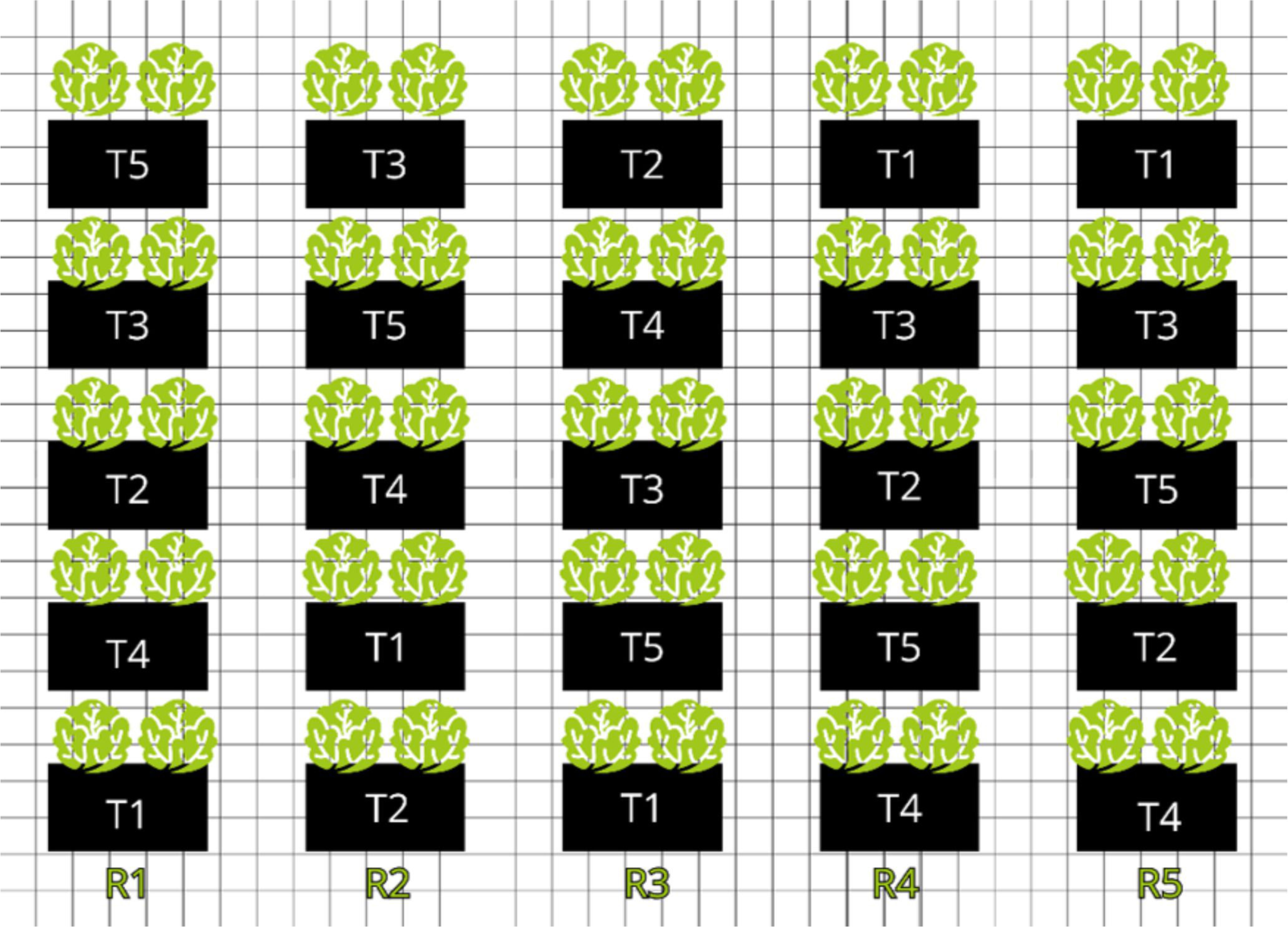
The experiment utilized a floating hydroponic system with a static, continuously aerated solution. Aeration was maintained 24 hours a day throughout the experiment by connecting one-quarter transparent polyethylene hoses to an air compressor, providing aeration to each pot. The plants were grown in black plastic pots with a 2 L capacity and dimensions of 12.0 cm (hight) x 13.4 cm (width) x 18.0 cm (length). Each repetition consisted of two pots placed side by side, with two plants each. The experiment was a completely randomized design, with five treatments and six repetitions (Figure 1). The treatments evaluated doses of iodate in the nutrient solution of: 0, 20, 40, 60, 80 µmol L -1. These doses were obtained diluting 0.0000, 0.1027, 0.2054, 0.3082, and 0.4709 g of KIO3 (59.29% of I) in 1 L of deionized water, respectively.

Arrangement of treatments (T1 to T5) and repetitions (R1 to R5) within the greenhouse, with two lettuces (Lactuca sativa) per pot (duplicate). Each treatment corresponds to a specific iodate dose.
Seeds of the Natalia lettuce cultivar were sowed on July 5 into plastic trays with 288 cells containing only vermiculite. The trays remained in the greenhouse for 19 days under fertigation. On day 20, the resulting seedlings were transferred to the experimental cultivation pots, where they were maintained until August 11.
The nutrient solution used for the experiment was formulated based on the recommendations of Furlani (1999) and contained the following concentrations of nutrients: 87 mg L-1 of N-NO3, 12 mg L-1 of N-NH4, 19 mg L-1 of P, 91 mg L-1 of K, 71 mg L-1 of Ca, 19 mg L-1 of Mg, 26 mg L-1 of S, 0.15 mg L-1 of B, 0.01 mg L-1 of Cu, 1.0 mg L-1 of Fe, 0.2 mg L-1 of Mn, 0.03 mg L-1 of Mo, and 0.03 mg L-1 of Zn. The reagents calcium nitrate, potassium nitrate, mono ammonium phosphate, magnesium sulfate, boric acid, copper sulfate, manganese sulfate, sodium molybdate, zinc sulfate, and iron EDDHA were used. The pH and electrical conductivity of the nutrient solution were measured daily. The mean pH was 5.8, and the mean conductivity was 1.09 dS m-1. There was no need to replace the nutrient solution throughout the duration of the experiment.
The phenological evaluations were performed once 70% of the leaves reached 10 cm in length. The following traits were measured: length of the largest leaf (LLF) in cm, measured using a ruler; number of leaves per plant (LN), determined by counting all the leaves; width of the largest leaf (WLL) in cm, measured using a ruler; shoot fresh mass (SFM) and root fresh mass (RFM) were measured in g, by weigthing the fresh shoot and root after cutting the plant just below the oldest leaf, using an analytical balance; and shoot dry mass (SDM) in g was determined after removing the roots, drying the shoot in an oven at 60°C until constant weight was achieved, and weighing it on an analytical balance.
In order to determine the nutrient content, the previously dried plant material was ground in a coffee bean grinder and subjected to digestion following the methodology described by Martins & Reissmann (2007). Approximately 0.5 g of ground plant material was placed in a porcelain crucible and incinerated in a muffle furnace at 500°C for 3 hours. After crucible cooled, three drops of 3 mol L-1 hydrochloric acid (HCl) were added. The crucible was then placed back into the muffle furnace at 500°C for an additional 3 hours. Once cooled, 5 mL of 3 mol L-1 HCl were added, and crucible was placed on a heated plate at 75°C for 10 min to solubilize the inorganic material. Finally, the resulting solution was cooled, filtered, and transferred to a 50 mL volumetric flask to subsequently determine the nutrient contents.
The determination of Mg, Ca, P, S, Fe, B, Cu, Mo, Mn, and Zn was performed using an inductively coupled plasma optical emission spectrometry, model 720 ICP-OES (Agilent Technologies, Santa Clara, CA, USA). The K content, however, was determined using a flame photometer, model DM-62 (Digimed, São Paulo, SP, Brazil). For N analysis, the plant material was ground to a particle size of 2 mm or smaller using a mortar grinder, model Pulverisette 2 (Fritsch, Idar-Oberstein, Germany). An amount of 0.015 g of plant material was encapsulated in tin foil and submitted to combustion in a CHONS analyzer, model Vario EL III (Elementar, Langenselbold, Germany). All resulting data were expressed in g kg-1 for macronutrients and mg kg-1 for micronutrients.
Fresh material of lettuce leaves was used to determine iodine content. First, alkaline extraction of the samples was carried out using tetramethylammonium hydroxide (TMAH) and microwaves (Smoleń et al., 2019). An amount of 0.2 g of plant material was placed into a Teflon tube and 5 mL of 5% TMAH was added. The material was heated up gradually up to 110°C along 30 min in a microwave oven, and then cooled to 50°C. After extraction, 10 mL of ultrapure water was pipetted into the tube. The content was then transferred to a 50 mL disposable blue-capped centrifuge tube and a second aliquot of 10 mL of ultrapure water was used to rinse any residue of extract in the Teflon tube. The final volume of 25 mL was centrifugated at 3,000 rpm for 30 min. After centrifugation, filtration was performed using Millipore filters and the extract put into an ICP-MS tube. An aliquot of 5 mL of 1% TMAH was added without further dilution. The final three-gas channel ICP-MS analysis setup employed nebulizer gas at 1.059 L min-1, auxiliary gas at 0.798 L min-1, cooling gas at 14.02 L min-1, and radiofrequency power of 1,150 W.
The analysis of the lettuce’s human nutritional components included total phenolic content (TPC), total flavonoid content (TFC), and antioxidant activity (ABTS, DPPH, and FRAP assays). For antioxidant activity determination, it was used an adapted extraction of the methodology proposed by Corrêa et al. (2004) that uses methanol. One gram of dry sample was diluted in 20 mL of methanol 40% and kept in a water bath at 60°C for 1 hour, under stirring. After this period, the mixture was centrifuged at 3,000 rpm for 20 min, and the supernatant transferred to a 25 mL volumetric flask. The volume of the flask was completed with distilled water, and this solution (phenolic extract) used for the analysis.
Antioxidant capacity was determined using the method described by Kuskoski et al. (2006), which utilizes the DPPH (2,2-diphenyl-1-picrylhydrazyl) radical. For the assay, a 100 μL aliquot of the phenolic extract, diluted in distilled water (1:1 v/v), was pipetted into test tubes, followed by the addition of 3.9 mL of DPPH solution (100 μM). After 30 min, the absorbance was measured at 517 nm using a spectrophotometer, model Multiskan FC (Thermo Fischer Scientific, Waltham, MA, USA). The result was expressed as the percentage inhibition of the DPPH radical, in which a high percentage indicates greater antioxidant activity. This percentage was calculated as follows: DPPH = [(ADPPH - Asample)/ ADPPH] × 100, where: ADPPH is the absorbance of the pure DPPH solution, and Asample is the absorbance of each sample 30 min after the addition of the DPPH solution.
A modified extraction methodology, based on procedures proposed by several authors (Pantelić et al., 2016; Garcia-Mendoza et al., 2017; Popović et al., 2020), was used to obtain extracts from lyophilized lettuce (lettuce powder). Two samples of 0.5 g of the extract were placed into separate Falcon tubes, and then 2.5 mL of methanol 80% were added to each. The tubes were mixed using a vortex and kept in an ultrasonic bath for 30 min. The tubes were centrifuged at 3,000 rpm for 10 min at 25°C. After removing the supernatant, the solid phase was subjected to a second, similar extraction. The resulting supernatants were combined, filtered, and stored at -20°C ± 2°C.
Total phenolic content (TPC), total flavonoid content (TFC), and antioxidant capacity assays were performed using 96-well microplates, in eight replicates. The antioxidant capacity was evaluated through three reaction methodologies, each based on a different chemical reagent: DPPH (2,2-diphenyl-1-picrylhydrazyl), ABTS (2,2′-azino-bis(3-ethylbenzothiazoline-6-sulfonic acid)), and FRAP (ferric ion reducing antioxidant potential). Absorbance was measured using a spectrophotometer, model Multiskan FC (Thermo Fischer Scientific, Waltham, MA, USA).
The total phenolic content (TPC) of the samples was determined using a modified colorimetric method based on the procedure described by Singleton & Rossi (1965). Aliquots of 10 μL of each diluted sample were pipetted with 240 μL of distilled water, 15 μL of Folin-Ciocalteu reagent, and 15 μL of 20% (w/v) sodium carbonate. After 60 min in the dark, the absorbance was measured at 690 nm. The final results were expressed as milligrams of gallic acid equivalent (GAE g-1) of lettuce powder.
Total flavonoid content (TFC) was quantified using an aluminum chloride colorimetric assay (Zhishen et al., 1999). An aliquot of 10 μL of diluted sample was pipetted into 90 μL of sodium nitrite, mixed well, and allowed to react for 5 min. Subsequently, 10 μL of a 10% aluminum chloride solution was added to the microplates, and the solution was allowed to react for an additional 5 min. After reaction period, 90 μL of 1 mol L-1 NaOH solution was added, and absorbance was measured at 540 nm. The measurement was compared to a calibration curve of catechin (C), and the results were expressed as milligrams of catechin equivalent (CE) per gram of lettuce powder.
DPPH radical scavenging activity of the samples was determined using the method of Brand-Williams et al. (1995). A DPPH solution of 0.12 mmol mL-1 was prepared. An aliquot of 10 μL of diluted sample was pipetted into 190 μL of DPPH solution. After 30 min in the dark, the absorbance was measured at 540 nm. Furthermore, the ABTS radical scavenging activity of the samples was determined using the method reported by Re et al. (1999).
The ABTS radical was generated by reacting 5 mL of the ABTS + 7 mM solution with 88 μL of 140 mM potassium persulfate solution, followed by incubation at 25°C in the dark for 16 hours. In the microplate, 300 μL of ABTS solution and 10 μL of each sample were added. After 30 min in the dark, the absorbance was measured at 690 nm.
For the FRAP assay, described by Benzie & Strain (1996), a working reagent was prepared by mixing 100 mL of 300 mM acetate buffer at pH 3.63, 10 mL of 20 mM ferric chloride, and 10 mL of TPTZ (2,4,6-tripyridyl-s-triazine) previously dissolved in 40 mM hydrochloric acid. In the microplate, 300 μL of FRAP solution and 10 μL of each sample were pipetted. After 30-min period in the dark, absorbance was measured at 620 nm. The antioxidant activity was expressed as micromoles of Trolox equivalent (TE) per g of lettuce powder.
The safety of human consumption of the lettuces was assessed using the risk quotient (RQ) methodology elaborated by Sularz et al. (2020). The assessment considered a recommendation of 150 μg of iodine per day for individuals over 14 years old (Krzepiłko et al., 2019), following established limits (Krzepiłko et al., 2019; Buturi et al., 2021). To calculate the risk quotient (RQ), the following equation was used: RQ = ADD/ TIL → ADD = (ICL×CF×DI)/ BW → CF = SDM/ SFM, where: RQ is risk quotient; ADD is average daily dose of iodine, according to recommendations; TIL is tolerable intake level of iodine; ICL is iodine concentration in the leaves (mg kg-1); CF is conversion factor from fresh weight to dry weight; DI is daily iodine intake (50 g); BW is average body weight (70 kg); SDM is dry weight of the aerial biomass (g); and SFM is fresh weight of the aerial biomass (g).
Before statistical analysis, the assumptions of normality and homoscedasticity were evaluated. Normality was assessed using the Shapiro-Wilk’s test, and homoscedasticity was evaluated using the O’Neil-Matthews’ method, both at a 5% significance level. Linearity and independence of errors were not verified. The experiment was conducted in a completely randomized block design. When necessary, the Box-Cox’s transformation was applied to the data. An analysis of variance (ANOVA) was performed at a 5% significance level, considering differences between treatments when the p>0.05. Tukey’s test was used for pairwise comparisons between treatments, at a 5% probability level.
For variables that did not meet the assumptions, even after the Box-Cox transformation, an analysis of variance was performed using the Kruskal-Wallis’ method, also at a 5% significance level. Scott-Knott’s test was used for treatment comparison, with a 5% significance level. All statistical analyses were performed using R software version 4.1.3 (R Core Team, 2024), with the ExpDes (Ferreira et al., 2021) and ggplot2 (Wickham et al., 2022) packages installed.
Results and Discussion
Most variables met the assumptions of normality and homoscedasticity. However, for the nutrients, only P and Ca failed to satisfy the assumptions simultaneously. For the human nutrition analyses, the variables TFC and DPPH also did not meet the assumptions. Figure 2 presents the results of the ANOVA Tukey’s test of the iodine levels. In general, the most significant plant development was recorded with the application of 20 µmol L-1 iodate in the nutrient solution. At this optimal concentration, all the phenological characteristics evaluated (LLL, LN, WLL, SFM, RFM, and SDM) exhibited the highest values. Statistically significant differences were observed for NL, SFM, SDM, and RFM.
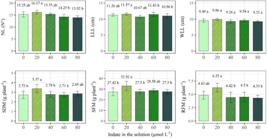
Growth and biomass parameters of baby leaf lettuce (Lactuca sativa) as a function of iodate concentration in the hydroponic nutrient solution. The graph presents: leaf number per plant (LN), length of the largest leaf (LLL) in cm, width of the largest leaf (WLL) in cm, shoot dry mass (SDM) in g plant-1, shoot fresh mass (SFM) in g plant-1, and root fresh mass (RFM) in g plant-1. Values followed by the same letter do not differ according to Tukey’s test (α = 0.05).
The improved phenological characteristics observed in baby leaf lettuce at 20 µmol L-1 (Figure 2) are consistent with prior studies (Blasco et al., 2011b, 2013). Blasco et al. (2011b) attributed these effects to the KIO3 applied, since K supply promotes nitrate reductase activity (Soares et al., 2020) by influencing the expression of K-responsive genes, thereby enhancing the uptake and transport of nitrate to the aerial part of the plant through the high-affinity uptake pathway, NRT2 (Hu et al., 2017). Other authors identified a greater nitrate reductase activity with the application of doses of KIO3, as it acted as an alternative substrate for the enzyme (Blasco et al., 2011a). In addition, IO3- can also act as an electron acceptor of the enzyme nitrate reductase (Smoleń et al., 2015). This higher nitrate reductase activity resulting from KIO3 application favors the reduction of NO3- to NH4+, which is subsequently incorporated into organic compounds, such as amino acids, increasing plant biomass.
In general, doses greater than 20 µmol L-1 of iodate did not favor the development of the plants and instead caused toxicity (Figure 3). This aligns with some studies reporting that high concentrations of iodate (>100 µmol L-1) and accumulation of iodine in leaves are toxic to plants due to the antagonism between nitrate and iodate ions (Sularz et al., 2020). High doses of IO3- decrease the rate of nitrate reduction, as nitrate reductase acts in the process of reducing IO3- to I- (Smoleń et al., 2016). This hypothesis is strongly supported because nitrate reductase can catalyze the reduction of IO3- to I-, that is, instead of promoting the reduction of nitrate to nitrite, there is a direct interference in the metabolism of the nitrate.
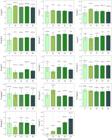
Concentrations of iodine, and macronutrients and micronutrients in baby leaf lettuce (Lactuca sativa) as a function of iodate concentrations in the hydroponic nutrient solution. For the nutrients I, N, K, Mg, S, Al, Na, Cu, Fe, Mn, Zn, and B, values followed by the same letter do not differ according to Tukey’s test (α = 0.05). For the nutrientes P and Ca, values followed by the same letter do not differ according to the Scott-Knott’s test (α = 0.05).
As demonstrated in Figure 3, the iodine concentration showed significant variation across all tested iodate levels. The iodate level at 20 µmol L-1 significantly increased the levels of N, K, and Mg; however, the same dose reduced Mn concentration and did not influence other assessed nutrients or the element Al.
The increase in nutrient concentration in lettuce leaves following the application of IO3- was also observed in experiments conducted with strawberries and lettuce (Blasco et al., 2011b; Sularz et al., 2020; Medrano-Macías et al., 2021). This effect is partly attributed to the dissociation of the salt into K and iodate, leading to an increase in K availability, while simultaneously inhibiting or impairing the absorption of Mg and Na (Senbayram et al., 2015).
In the present study, the impairing effect on Mg absorption was observed only at the 20 µmol L-1 dose iodate, as Mg absorption increased at the 60 µmol L-1 dose iodate. It suggests the higher root fresh mass (Figure 2) may have favored the absorption of K, and thus reduced of Mg, to maintain the number of positive charges within the cells. Regarding N, the application of 20 µmol L-1 (Figure 1) hypothetically promoted a cooperative effect, improving N transport and absorption (Medrano-Macías et al., 2016). Crucially, the iodate effect of increasing nitrate reductase enzyme activity likely promotes the increase of assimilated N in the lettuce leaves, since the total amount of N absorbed depends on the enzyme activity in the nitrogen cycle (Bredemeier and Mundstock, 2000).
The highest content of total phenolic was at 80 µmol L-1 iodate dose. In general, total flavonoid content (TFC) and antioxidant capacity, measured by DPPH, ABTS, and FRAP, also peaked at 80 µmol L-1 iodate dose (Figure 4). The observed increase in antioxidant activity may partially explain the increase of plant growth observed in the present study. According to Blasco et al. (2013), the application of low doses of iodine promotes the activity of enzymes involved in the biosynthesis of phenolic compounds, SKDH and PAL. This compounds play a protective role against stress, which justifies the more significant plant development. Antioxidant activity fostered an imminent effect on free radical scavenging and synthesis of phenolic compounds at the applied iodine doses, which characterized an improved ability to scavenge free radicals.

Total phenolic content (TPC), total flavonoid content (TFC), and antioxidant activity (ABTS, DPPH, and FRAP assays) of baby leaf lettuce (Lactuca sativa) as a function of iodate concentration in the hydroponic solution. ABTS = 2.2-Azinobis 3-Ethylbenzothiazoline-6-Sulfonic acid; DPPH = 1.1-Diphenyl-2-Picrylhydrazyl; FRAP = iron reduction method. For variables TPC, ABTS, and FRAP, values followed by the same letter do not differ according to Tukey’s test (α = 0.05). For variables TFC and FRAP, values followed by the same letter do not differ according to the Scott-Knott’s test (α = 0.05).
Some studies (Blasco et al., 2011b; Medrano-Macias et al., 2016) have reported the positive effect of iodate on plants’ antioxidant capacity. This mechanism involves a pro-oxidant action of iodate that triggers a more remarkable synthesis of antioxidant compounds (Medrano-Macías et al., 2021). This production of phenolic compounds occurs due to a possible enhancement of the main enzymes of the shikimate and phenylpropanoid pathways, SKDH and PAL (Blasco et al., 2013).
A direct correlation was observed between the higher the dose of iodate (KIO3) in the nutrient solution and a proportionally higher iodine content in the tissues of lettuce leaves (Figure 3). This finding is consistent with results observed by other authors (Gonzali et al., 2017; Smoleń et al., 2019). This increase seems to be related to the efficient transport of iodine via the xylem, which is abundant throughout the plant’s shoot. Although the arrival of iodine in the roots’ xylem can occur via both apoplastic and symplastic routes (Gonzali et al., 2017), it is predominantly conducted by the apoplast (Humphrey et al., 2019).
Finally, a risk quotient (RQ) was calculated to assess the potential risk to consumer health, with RQ values greater than 1.0 indicating risk (Smoleń et al., 2019). Considering the lowest iodine dose of 20 µmol L-1, the lettuce provided an average iodine content in the leaves of 65.5 mg kg-1. Based on a 92% water content, a consumption of 50 g of such leaves represents a 262 µg of iodine and an RQ of 0.007.
According to Krzepiłko et al. (2019), the daily iodine requirements are 150 μg day-1 for adults and 270 μg day-1 for breastfeeding women. Therefore, the daily intake of 50 g of biofortified lettuce would supply 174% of the daily intake requirement of iodine for an adult and 97% for a breastfeeding woman. Considering 1,000 µg the maximum limit of iodine per day (Buturi et al., 2021), the consumption of the extra dose of 112 µg of iodine in the daily intake is tolerable for adults. Consequently, the 20 µmol L-1 dose of iodine does not pose a risk to human health. Similarly, the higher iodate doses also demonstrated safety, resulting in RQ values of: 0.016 (40 µmol L-1), 0.028 (60 µmol L-1), and 0.037 (80 µmol L-1). Since the RQ of the treatments was below 1, none of the evaluated doses poses any health risk according to the established safety parameters.
Conclusions
-
The 20 µmol L-1 iodate dose results in an increase in baby leaf lettuce (Lactuca sativa) concentrations of iodine, nitrogen, potassium, and manganese.
-
In phenological terms, the 20 µmol L-1 iodate dose enhances the antioxidant activity of the baby leaf lettuce.
-
The consumption of 50 g of fresh baby lettuce leaves biofortified with 20 µmol L-1 of iodate in the nutrient solution is sufficient to meet 100% of the daily iodine intake requirements for an adult.
Data availability statement
Data available upon request: research data are only available upon reasonable request to the corresponding author.
Declaration of use of AI technologies
Disclaimer/Publisher’s note:
References
-
ALVARES, C.A.; STAPE, J.L.; SENTELHAS, P.C.; GONÇALVES, J.L.M.; SPAROVEK, G. Koppen’s climate classification map for Brazil. Meteorologische Zeitschrift, v.22, p.711-728, 2014. DOI: https://doi.org/10.1127/0941-2948/2013/0507
» https://doi.org/10.1127/0941-2948/2013/0507 -
BENZIE, I.F.F., STRAIN, J.J. The ferric reducing ability of plasma (FRAP) as a measure of “antioxidant power”: The FRAP assay. Analytical Biochemistry, v.239, p.70-76, 1996. DOI: https://doi.org/10.1006/abio.1996.0292
» https://doi.org/10.1006/abio.1996.0292 -
BLASCO, B.; LEYVA, R.; ROMERO, L.; RUIZ, J.M. Iodine effects on phenolic metabolism in lettuce plants under salt stress. Journal of Agricultural and Food Chemistry, v.61, p.2591-2596, 2013. DOI: https://doi.org/10.1021/jf303917n
» https://doi.org/10.1021/jf303917n -
Blasco, B.; Rios, J.J.; Cervilla, L.M.; Sánchez-Rodríguez, E.; Rubio-Wilhelmi, M.M.; Rosales, M.A.; Romero, L.; Ruiz, J.M. Iodine application affects nitrogen-use efficiency of lettuce plants (Lactuca sativa L.). Acta Agriculturae Scandinavica, Section B — Soil & Plant Science, v.61, p.378-383, 2011a. DOI: https://doi.org/10.1080/09064710.2010.492782
» https://doi.org/10.1080/09064710.2010.492782 -
BLASCO, B.; RÍOS, J.J.; LEYVA, R.; CERVILLA, L.M.; SÁNCHEZ-RODRÍGUEZ, E.; RUBIO-WILHELMI, M.M.; ROSALES, M.A.; RUIZ, J.M.; ROMERO, L. Does iodine biofortification affect oxidative metabolism in lettuce plants? Biological Trace Element Research, v.142, p.831-842, 2011b. DOI: https://doi.org/10.1007/s12011-010-8816-9
» https://doi.org/10.1007/s12011-010-8816-9 -
BRAND-WILLIAMS, W.; CUVELIER, M.E.; BERSET, C. Use of a free radical method to evaluate antioxidant activity. LWT - Food Science and Technology, v.28, p.25-30, 1995. DOI: https://doi.org/10.1016/S0023-6438(95)80008-5
» https://doi.org/10.1016/S0023-6438(95)80008-5 - BREDEMEIER, C.; MUNDSTOCK, C.M. Regulação da absorção e assimilação do nitrogênio nas plantas. Ciência Rural, v.30, p.365-372, 2000.
-
BUTURI, C.M.; MAURO, R.P.; FOGLIANO, V.; LEONARDI, C.; GIUFFRIDA, F. Mineral biofortification of vegetables as a tool to improve human diet. Foods, v.10, art.223, 2021. DOI: https://doi.org/10.3390/foods10020223
» https://doi.org/10.3390/foods10020223 -
CAKMAK, I.; MCLAUGHLIN, M. J.; WHITE, P. Zinc for better crop production and human health. Plant and Soil, v.411, p1-4, 2017. DOI: https://doi.org/10.1007/s11104-016-3166-9
» https://doi.org/10.1007/s11104-016-3166-9 - CORRÊA, A.D.; SANTOS, S.R.; ABREU, C.M.P.; JOKL, L.; SANTOS, C.D. Remoção de polifenóis da farinha de folhas de mandioca. Ciência e Tecnologia de Alimentos, v.24, p.159-164, 2004.
-
DAI, J.L.; ZHU, Y.G.; HUANG, Y.Z.; ZHANG, M.; SONG, J.L. Availability of iodide and iodate to spinach (Spinacia oleracea L.) in relation to total iodine in soil solution. Plant and Soil, v.289, p.301-308, 2006. DOI: https://doi.org/10.1007/s11104-006-9139-7
» https://doi.org/10.1007/s11104-006-9139-7 -
DOGGUI, R.; ATIA, E.L. Iodine deficiency: Physiological, clinical and epidemiological features, and pre-analytical considerations. Annales d’Endocrinologie, v.76, p.59-66, 2015. DOI: https://doi.org/10.1016/j.ando.2014.12.002
» https://doi.org/10.1016/j.ando.2014.12.002 -
ERSHOW, A.G.; SKEAFF, S.A.; MERKEL, J.M.; PEHRSSON, P.R. Development of databases on iodine in foods and dietary supplements. Nutrients, v.10, art.100, 2018. DOI: https://doi.org/10.3390/nu10010100
» https://doi.org/10.3390/nu10010100 - FURLANI, P.R. Cultivo hidropônico de Plantas Campinas: Instituto Agronômico, 1999. 52p. (Instituto Agronômico. Boletim Técnico, 180).
-
FERREIRA, D.F.; CAVALCANTI, P.P.; NOGUEIRA, D.A. ExpDes: Experimental Designs. R package version 1.1.0. 2021. Available at: <https://cran.r-project.org/package=ExpDes>. Accessed on: Jun. 17, 2025.
» https://cran.r-project.org/package=ExpDes -
GARCIA-MENDOZA, M. del P.; ESPINOSA-PARDO, F.A.; BASEGGIO, A.M.; BARBERO, G.F.; MARÓSTICA JUNIOR, M.R.; ROSTAGNO, M.A.; MARTÍNEZ, J. Extraction of phenolic compounds and anthocyanins from juçara (Euterpe edulis Mart.) residues using pressurized liquids and supercritical fluids. Journal of Supercritical Fluids, v.119, p.9-16, 2017. DOI: https://doi.org/10.1016/j.supflu.2016.08.014
» https://doi.org/10.1016/j.supflu.2016.08.014 -
GONZALI, S.; KIFERLE, C.; PERATA, P. Iodine biofortification of crops: agronomic biofortification, metabolic engineering and iodine bioavailability. Current Opinion in Biotechnology, v.44, p.16-26, 2017. DOI: https://doi.org/10.1016/j.copbio.2016.10.004
» https://doi.org/10.1016/j.copbio.2016.10.004 -
HU, W.; COOMER, T.D.; LOKA, D.A.; OOSTERHUIS, D.M.; ZHOU, Z. Potassium deficiency affects the carbon-nitrogen balance in cotton leaves. Plant Physiology and Biochemistry, v.115, p.408-417, 2017. DOI: https://doi.org/10.1016/j.plaphy.2017.04.005
» https://doi.org/10.1016/j.plaphy.2017.04.005 -
HUMPHREY, O.S.; YOUNG, S.D.; BAILEY, E.H. Iodine uptake, storage and translocation mechanisms in spinach (Spinacia oleracea L.). Environmental Geochemistry and Health, v.41, p.2145-2156, 2019. DOI: https://doi.org/10.1007/s10653-019-00272-z
» https://doi.org/10.1007/s10653-019-00272-z -
KRZEPIŁKO, A.; PRAŻAK, R.; SKWARYŁO-BEDNARZ, B.; MOLAS, J. Agronomic biofortification as a means of enriching plant foodstuffs with iodine. Acta Agrobotanica, v.72, p.1-10, 2019. DOI: https://doi.org/10.5586/aa.1766
» https://doi.org/10.5586/aa.1766 -
KÜPPER, F.C.; CARRANO, C.J. Key aspects of the iodine metabolism in brown algae: A brief critical review. Metallomic, v.11, p.756-764, 2019. DOI: https://doi.org/10.1039/c8mt00327k
» https://doi.org/10.1039/c8mt00327k -
KUSKOSKI, E.M.; ASUERO, A.G.; MORALES, M.T.; FETT, R. Frutos tropicais silvestres e polpas de frutas congeladas: atividade antioxidante, polifenóis e antocianinas. Ciência Rural, v.36, p.1283-1287, 2006. DOI: https://doi.org/10.1590/S0103-84782006000400037
» https://doi.org/10.1590/S0103-84782006000400037 -
LEYVA, R.; SÁNCHEZ-RODRÍGUEZ, E.; RÍOS, J.J.; RUBIO-WILHELMI, M.M.; ROMERO, L.; RUIZ, J.M.; BLASCO, B. Beneficial effects of exogenous iodine in lettuce plants subjected to salinity stress. Plant Science, v.181, p.195-202, 2011. DOI: https://doi.org/10.1016/j.plantsci.2011.05.007
» https://doi.org/10.1016/j.plantsci.2011.05.007 -
Liu, Y.; Huang, S.; Jiang, Z.; Wang, Y.; Zhang, Z. Selenium biofortification modulates plant growth, microelement and heavy metal concentrations, selenium uptake, and accumulation in black-grained wheat. Frontiers in Plant Science v.12, art.748523, 2021. doi: https://doi.org/10.3389/fpls.2021.748523
» https://doi.org/10.3389/fpls.2021.748523 -
MARTINS, A.P.L.; REISSMANN, C. Laboratory routine for chemical and analytical procedures on plant tissues. Scientia Agraria, v.8, p.1-17, 2007. DOI: https://doi.org/10.5380/rsa.v8i1.8336
» https://doi.org/10.5380/rsa.v8i1.8336 -
MEDRANO-MACÍAS, J.; LÓPEZ-CALTZONTZIT, M.G.; RIVAS-MART|ÍNEZ, E.N.; NARVÁEZ-ORTIZ, W.A.; BENAVIDES-MENDOZA, A.; MARTÍNEZ-LAGUNES, P. Enhancement to salt stress tolerance in strawberry plants by iodine products application. Agronomy, v.11, art.602, 2021. DOI: https://doi.org/10.3390/agronomy11030602
» https://doi.org/10.3390/agronomy11030602 -
MEDRANO-MACÍAS, J.; LEIJA-MARTÍNEZ, P.; GONZÁLEZ-MORALES, S.; JUÁREZ-MALDONADO, A.; BENAVIDES-MENDOZA, A. Use of iodine to biofortify and promote growth and stress tolerance in crops. Frontiers in Plant Science, v.7, art.1146, 2016. DOI: https://doi.org/10.3389/fpls.2016.01146
» https://doi.org/10.3389/fpls.2016.01146 -
Molina, A.; Vanacker, V.; Chadwick, O.; Zhiminaicela, S.; Corre, M.; Veldkamp, E. Vegetation patterns associated with nutrient availability and supply in high-elevation tropical Andean ecosystems. Biogeosciences, 21, 3075–3091, 2024. DOI: https://doi.org/10.5194/bg-21-3075-2024
» https://doi.org/10.5194/bg-21-3075-2024 -
OLIVEIRA, OLIVEIRA, V.C. de; FAQUIN, V.; GUIMARÃES, K.C.; ANDRADE, F.R.; PEREIRA, J.; GUILHERME, L.R.G. Agronomic biofortification of carrot with selenium. Ciência e Agrotecnologia, v.42, p.138-147, 2018. DOI: https://doi.org/10.1590/1413-70542018422031217
» https://doi.org/10.1590/1413-70542018422031217 -
PANTELIĆ, M.M.; DABIĆ ZAGORAC, D.; DAVIDOVIĆ, S.M.; TODIĆ, S.R.; BEŠLIĆ, Z.S.; GAŠIĆ, U.M.; TEŠIĆ, Ž.L.; NATIĆ, M.M. Identification and quantification of phenolic compounds in berry skin, pulp, and seeds in 13 grapevine varieties grown in Serbia. Food Chemistry, v.211, p.243-252, 2016. DOI: https://doi.org/10.1016/j.foodchem.2016.05.051
» https://doi.org/10.1016/j.foodchem.2016.05.051 -
POPOVIĆ, B.M.; BLAGOJEVIĆ, B.; ŽDERO PAVLOVIĆ, R.; MIĆIĆ, N.; BIJELIĆ, S.; BOGDANOVIĆ, B.; MIŠAN, A.; DUARTE, C.M.M., SERRA, A.T. Comparison between polyphenol profile and bioactive response in blackthorn (Prunus spinosa L.) genotypes from north Serbia-from raw data to PCA analysis. Food Chemistry, v.302, p.125373, 2020. DOI: https://doi.org/10.1016/j.foodchem.2019.125373
» https://doi.org/10.1016/j.foodchem.2019.125373 -
PUCCINELLI, M.; LANDI, M.; MAGGINI, R.; PARDOSSI, A.; INCROCCI, L. Iodine biofortification of sweet basil and lettuce grown in two hydroponic systems. Scientia Horticulturae, v.276, art.109783, 2020. DOI: https://doi.org/10.1016/j.scienta.2020.109783
» https://doi.org/10.1016/j.scienta.2020.109783 -
R CORE TEAM. R: A language and environment for statistical computing. Vienna: R Foundation for Statistical Computing. 2024. Available at: <https://www.R-project.org/>. Accessed on: June 17, 2025.
» https://www.R-project.org/ -
RE, R.; PELLEGRINI, N.; PROTEGGENTE, A.; PANNALA, A.; YANG, M.; Rice-Evans, C. Antioxidant activity applying an improved ABTS radical cation decolorization assay. Free Radical Biology and Medicine, v.26, p.1231-1237, 1999. DOI: https://doi.org/10.1016/s0891-5849(98)00315-3
» https://doi.org/10.1016/s0891-5849(98)00315-3 -
SENBAYRAM, M.; GRANSEE, A.; WAHLE, V.; THIEL, H. Role of magnesium fertilisers in agriculture: Plant-soil continuum. Crop and Pasture Science, v.66, p.1219-1229, 2015. DOI: https://doi.org/10.1071/CP15104
» https://doi.org/10.1071/CP15104 -
SINGLETON, V.L.; ROSSI, J.A. Colorimetry of total phenolics with Phosphomolybdic-Phosphotungstic acid reagents. American Journal of Enology and Viticulture, v.16, p.144-158, 1965. DOI: https://doi.org/10.5344/ajev.1965.16.3.144
» https://doi.org/10.5344/ajev.1965.16.3.144 -
SMOLEŃ, S.; BARANSKI, R.; LEDWOŻYW-SMOLEŃ, I.; SKOCZYLAS, L.; SADY, W. Combined biofortification of carrot with iodine and selenium. Food Chemistry, v.300, art.125202, 2019. DOI: https://doi.org/10.1016/j.foodchem.2019.125202
» https://doi.org/10.1016/j.foodchem.2019.125202 -
SMOLEŃ, S.; KOWALSKA, I.; CZERNICKA, M.; HALKA, M.;KĘSKA, K.; SADY, W. Iodine and selenium biofortification with additional application of salicylic acid affects yield, selected molecular parameters and chemical composition of lettuce plants (Lactuca sativa L. var. capitata). Frontiers in Plant Science, v.7, p.1553. 2016. DOI: https://doi.org/10.3389/fpls.2016.01553
» https://doi.org/10.3389/fpls.2016.01553 -
SMOLEŃ, S.; WIERZBIŃSKA, J.; SADY, W.; KOŁTON, A.; WISZNIEWSKA, A.; LISZKA-SKOCZYLAS, M. Iodine biofortification with additional application of salicylic acid affects yield and selected parameters of chemical composition of tomato fruits (Solanum lycopersicum L.). Scientia Horticulturae, v.188, p.89-96, 2015. DOI: https://doi.org/10.1016/j.scienta.2015.03.023
» https://doi.org/10.1016/j.scienta.2015.03.023 -
SOARES, P.P.S.; MESQUITA, N.L.S.; ALMEIDA, J.R.; COUTRIM, R.L.; CAIRO, P.A.R.; SILVA, L.D. Crescimento, qualidade de raízes e atividade da redutase do nitrato em plantas de rabanete submetidas a doses de potássio e fontes de nitrogênio. Scientia Plena, v.16, art.060205, 2020. DOI: https://doi.org/10.14808/sci.plena.2020.060205
» https://doi.org/10.14808/sci.plena.2020.060205 -
SULARZ, O.; SMOLEŃ, S.; KORONOWICZ, A.; KOWALSKA, I.; LESZCZYŃSKA, T. Chemical composition of lettuce (Lactuca sativa L.) biofortified with iodine by KIO3, 5-iodo, and 3.5-diiodosalicylic acid in a hydroponic cultivation. Agronomy, v.10, p.1022, 2020. DOI: https://doi.org/10.3390/agronomy10071022
» https://doi.org/10.3390/agronomy10071022 - VASCONCELOS, R.L.; FREITAS, M.P.N.; BRUNINI, M.A. Características físico-químicas da rúcula cv. cultivada produzida no sistema convencional e no baby leaf Nucleus, v.8, p.7-14, 2011.
-
VOOGT, W.; HOLWERDA, H.T. ; KHODABAKS, R. Biofortification of lettuce (Lactuca sativa L.) with iodine: the effect of iodine form and concentration in the nutrient solution on growth, development and iodine uptake of lettuce grown in water culture. Journal of the Science of Food and Agriculture, v.90, p.906-913, 2010. DOI: https://doi.org/10.1002/jsfa.3902
» https://doi.org/10.1002/jsfa.3902 -
WICKHAM, H.; CHANG, W.; HENRY, L. ggplot2: elegant graphics for data analysis. R package version 3.3.6. 2022. Available at: <https://cran.r-project.org/package=ggplot2>. Accessed on: June 6, 2025.
» https://cran.r-project.org/package=ggplot2 -
ZHISHEN, J.; MENGCHENG, T.; JIANMING, W. The determination of flavonoid contents in mulberry and their scavenging effects on superoxide radicals. Food Chemistry, v.64, p.555-559, 1999. DOI: https://doi.org/10.1016/S0308-8146(98)00102-2
» https://doi.org/10.1016/S0308-8146(98)00102-2 -
ZHU, Y.G.; HUANG, Y.Z.; HU, Y.; LIU, Y.X. Iodine uptake by spinach (Spinacia oleracea L.) plants grown in solution culture: Effects of iodine species and solution concentrations. Environment International, v.29, p.33-37, 2003. DOI: https://doi.org/10.1016/s0160-4120(02)00129-0
» https://doi.org/10.1016/s0160-4120(02)00129-0 -
Zimmermann, M.B.; Hurrell, R.F. Nutritional iron deficiency. Lancet, v.370, p.511-520, 2007. DOI: https://doi.org/10.1016/S0140-6736(07)61235-5
» https://doi.org/10.1016/S0140-6736(07)61235-5