 Agricultural diversification as a strategy for drought resilience in Brazil
Abstract
The objective of this work was to evaluate the impact of extreme and exceptional droughts, classified by Agência Nacional de Águas e Saneamento Básico (ANA), on agricultural production diversity, measured by the Shannon index, from 2014 to 2023. Data from the drought monitor of ANA and from Instituto Brasileiro de Geografia e Estatística were used to calculate diversity indices at the municipal level in Brazil. The unconditional quantile regression was applied to evaluate the effects of droughts on diversified systems, considering the production value of temporary and permanent crops, as well as livestock inventory. The obtained results reveal that less diversified municipalities are more vulnerable, particularly in the Northeastern region. Permanent crops show a higher resilience, while temporary crops sustain losses even in diversified systems. Livestock exhibits adaptive responses, with an increased diversity in some cases. Although diversification reduces vulnerabilities, it requires complementary policies for annual crops and targeted support to the Northeast.
Index terms:
climate resilience; food security; quantile model; sustainable agriculture.
Resumo
O objetivo deste trabalho foi avaliar o impacto das secas extremas e excepcionais, classificadas pela Agência Nacional de Águas e Saneamento Básico (ANA), sobre a diversidade da produção agrícola, medida pelo índice de Shannon, de 2014 a 2023. Dados do Monitor de Secas da ANA e do Instituto Brasileiro de Geografia e Estatística foram utilizados para calcular índices de diversidade, em nível municipal, no Brasil. Aplicou-se regressão quantílica incondicional para avaliar os efeitos das secas sobre sistemas diversificados, tendo-se considerado o valor da produção de culturas temporárias e permanentes, assim como o efetivo de animais. Os resultados mostram que municípios com menor diversidade são mais vulneráveis, especialmente na região Nordeste. Culturas permanentes exibem maior resiliência, enquanto as temporárias mantêm perdas mesmo em sistemas diversificados. O efetivo animal apresenta respostas adaptativas, com aumento de diversidade em alguns casos. Embora a diversificação reduza vulnerabilidades, requer políticas complementares para culturas anuais e apoio regionalizado ao Nordeste.
Termos para indexação:
resiliência climática; segurança alimentar; modelo quantílico; agricultura sustentável.
Introduction
Agriculture faces unprecedented challenges due to climate change, with extreme events such as droughts and heat waves becoming more frequent and intense (Renard et al., 2023). These phenomena threaten food security and the economic stability of small and medium-sized producers, particularly in regions reliant on climate-sensitive production systems (Birthal et al., 2015; Birthal & Hazrana, 2019; Zilli et al., 2020). In this context, agricultural diversification emerges as a key strategy to enhance the resilience of production systems, mitigating the negative impacts of droughts and ensuring long-term sustainability (Gaudin et al., 2015; Renwick et al., 2021; Leguizamón et al., 2025).
Resilience, in a regional economy, can be defined as the capacity of a socioeconomic system to return to its initial state, maintain its structure and identity, or adapt in terms of structure and functionality after a climate shock, for example (Martin & Sunley, 2015). For the present study, resilience is considered the capacity of a municipality to maintain its agricultural production diversity after extreme or exceptional drought events in the occurring region in the previous or current year.
Notably, a reduced resilience has been linked to agricultural specialization in production systems due to disruptions such as pests, diseases, economic crises, and, mainly, climate variability (Nelson et al., 2022). This loss of resilience is associated with a declining agroecosystem diversity and the degradation of ecosystem functions responsible for resistance (DiFalco & Chavas, 2008). Given this scenario, adaptation and mitigation strategies to counteract climate change effects have become essential. Among these strategies, regional and farm-level production diversification stand out as a key driver of resilience (FAO, 2017; Nelson et al., 2022).
At farm level, particularly in small and medium-sized properties, agricultural diversification has proven beneficial for income stability and food security. Several authors have concluded that production systems that adopt diversified practices - such as cultivation of multiple crop varieties, integrated systems, intercropping, crop rotation, and cover cropping - tend to be more resilient to climate variability (Mekonnen et al., 2020; Piedra-Bonilla et al., 2020; Vernooy, 2022; Dardonville et al., 2023).
In the case of Brazil, diversity is illustrated by a rural landscape with a firm heterogeneity, shaped by diverse biomes, varying climatic regimes, and distinct historical land-use patterns (Belik, 2015). In agriculture, this diversity persists, though there is a growing trend toward specialization in commodity production, such as soybean, corn, and cattle ranching (Caldeira & Parré, 2020; Nelson et al., 2022). However, studies indicate that, at a regional scale, specialization correlates with native vegetation loss, biodiversity decline, and an increased vulnerability to droughts and heatwaves (Mekonnen et al., 2020; Pattanayak et al., 2023; Renard et al., 2023).
Despite these findings, research on the effects of diversity in mitigating climate variability (such as droughts and heatwaves) and extreme events (as floods) still remains scarce at the regional level (DiFalco & Chavas, 2008; Auffhammer & Carleton, 2018; Birthal & Hazrana, 2019; Nelson et al., 2022; Renard et al., 2023). The available works assume that, much like at the farm level, regional crop diversity positively influences local ecosystem functions, enhancing aggregated yield resilience.
Regional crop diversification has been shown to reduce yield variability and improve resistance to environmental stresses (Auffhammer & Carleton, 2018). DiFalco & Chavas (2008), for example, observed that agricultural systems with a greater crop diversity exhibit a higher resilience to extreme rainfall variations, maintaining productivity even under adverse climatic conditions. Similarly, Birthal et al. (2015) found that diversification in Indian rice systems reduced yield losses during drought years, highlighting its role as a mitigation mechanism.
The diversity in regional production can be measured using indices based on the proportion of land allocated to different crops in specific areas, such as municipalities, states, and countries. Among the most applied indices those of Simpson (Birthal & Hazrana, 2019; Nelson et al., 2022), Herfindahl-Hirschman (Auffhammer & Carleton, 2018; Pattanayak et al., 2023), and Shannon (DiFalco & Chavas, 2008; Parré et al., 2024) stand out. While the Simpson and Herfindahl-Hirschman indices are sensitive to the dominance of certain crops, the Shannon index captures the number of crops and their distribution parity, making it more comprehensive (Shannon, 1948; Simpson, 1949; Hirschmann, 1964).
Since the effect of diversity on productivity is most pronounced during severe droughts or extreme events (DiFalco & Chavas, 2008; Birthal & Hazrana, 2019; and Pattanayak et al., 2023), the present study focuses on the most critical drought categories. In addition, agricultural diversity is segmented by activity type (temporary crops, permanent crops, and livestock), using production value and livestock inventory data as references.
The objective of this work was to evaluate the impact of extreme and exceptional droughts, classified by Agência Nacional de Águas e Saneamento Básico (ANA), on agricultural production diversity, measured by the Shannon index, from 2014 to 2023.
Materials and Methods
Agricultural production diversity index
To measure the diversity of agricultural production, the annual estimates used were those from Instituto Brasileiro de Geografia e Estatística (IBGE), calculated for the three following categories: production value of temporary crops, production value of permanent crops, and livestock inventory. This division into categories aims to help identify the sources of municipal-level diversity.
In line with DiFalco & Chavas (2008), the Shannon entropy-based diversity index was selected, as it captures the variety of agricultural activities and the intensity of production values or livestock inventory. The following normalized equation was used to ensure comparability across categories, scaled between zero and one:
where zi represents the production value or livestock count of items i from category l, which contains m items. The items used to calculate each diversity variable were (Table 1): the Shannon diversity index for livestock inventory (divlivestock), for the production value of permanent crops (divvlp), and for the production value of temporary crops (divvlt).
Items considered for the calculation of the Shannon diversity index for the following three categories: livestock inventory, production value of permanent crops, and production value of temporary crops.
Drought maps between 2014 and 2023
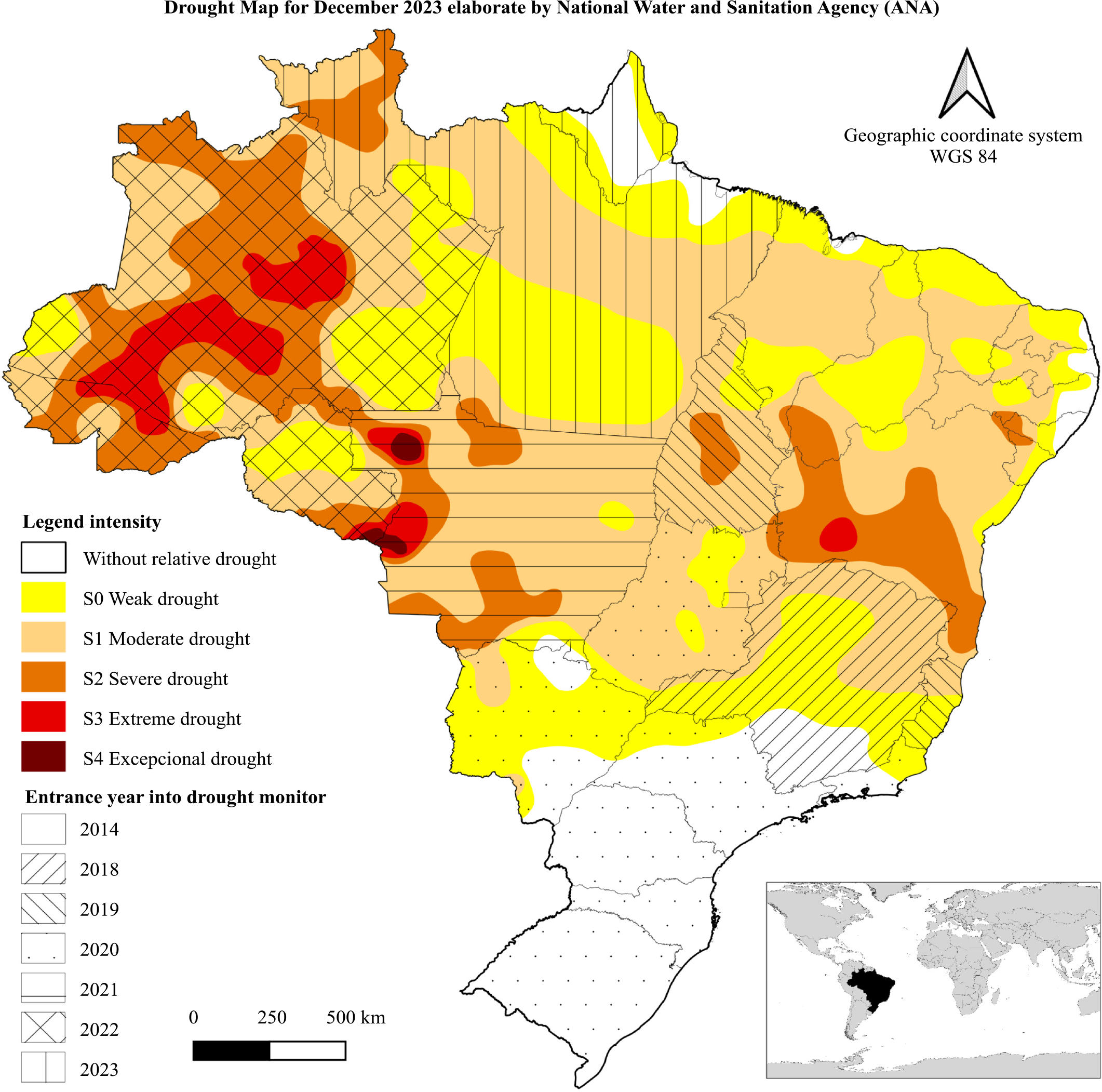
The drought monitor map, Monitor de Secas, published monthly by ANA since August 2014, identifies drought-affected areas in the Northeast and other Brazilian regions starting in 2018 (ANA, 2024), as shown in Figure 1. This monitoring system relies on a comprehensive dataset of meteorological, hydrological, and agricultural observations. Key parameters include precipitation, soil moisture, temperature, drought indices, vegetation indices, and reservoir levels. All data undergo validation by state-level experts (ANA, 2024).
Drought monitor map for Brazil in December 2023. The map indicates the year each state was incorporated into the monitoring system, now coordinated by Agência Nacional de Águas e Saneamento Básico (ANA). Source: ANA (2024).
The drought monitor map classifies the study region into six categories (ANA, 2024), as follows:
-
No drought (without relative drought), baseline conditions with relative dryness.
-
Weak drought (S0), areas entering drought (short-term dry spells affecting planting, crop growth, or pasture) or recovering from drought (lingering water deficits with pastures or crops not fully recovered).
-
Moderate drought (S1), including some crop/pasture damage, low stream/reservoir/well levels, emerging water shortages, and requested voluntary water-use restrictions.
-
Severe drought (S2), characterized by likely crop/pasture losses, frequent water shortages, and imposition of mandatory water restrictions.
-
Extreme drought (S3), major crop/pasture losses and widespread water shortages/restrictions.
-
Exceptional drought (S4), exceptional and widespread crop/pasture losses, as well as emergency-level water shortages in reservoirs, streams, and wells.
S3 and S4 represent extreme events with documented impacts on agricultural production. As shown by DiFalco & Chavas (2008), Birthal & Hazrana (2019), and Pattanayak et al. (2023), the effect of diversity on productivity is most pronounced during severe droughts or extreme events. Therefore, this study focuses on the mean annual percentage of municipal areas experiencing S3 and S4 conditions.
Quantile model for establishing the diversity-drought relationship
To evaluate whether drought events negatively affect livestock inventory, temporary crop, and permanent crop diversity across Brazilian municipalities, the unconditional quantile regression estimator was used (Rios-Avila, 2020).
The adoption of the unconditional quantile regression model is justified by its ability to estimate the direct marginal effects of drought variables across different quantiles of the agricultural diversity distribution, without the need to condition the model to a specific set of explanatory variables. This approach is particularly suitable for analyzing how climate shocks affect production systems with varying levels of diversity, as discussed by Rios-Avila (2020) and Rios-Avila & Maroto (2024). In addition, it is based on the recentered influence function (RIF), which estimates the marginal effects of explanatory variables across different quantiles of the unconditional distribution of the dependent variable, i.e., the agricultural diversity indices calculated using the Shannon index.
The RIF for an unconditional quantile of diversity is defined as:
where yi is the observed diversity index for municipality i, Qτ(y) represents the τ-th unconditional quantile of the distribution of variable y, τ ϵ (0.1) is the quantile index, 1(·) is the indicator function that equals 1 when the condition is satisfied, and fy(Qτ(y)) is the density function of y evaluated at the specified quantile.
Under the linearity assumption, the RIF can be employed as the dependent variable in models estimated via ordinary least squares, as proposed by Rios-Avila (2020).
Considering RIF(yi; Qτ(y), Fγ) represents the RIF estimated as a linear function of explanatory covariates Xi, the observed structural relationship can be expressed as follows:
where Xi represents the vector of observed covariates for municipality i, β is the parameter vector associated with each explanatory variable, and ɛi is the random error. This equation enables estimating the RIF via linear regression.
To determine the unconditional expectation operator E[·] of the previous equation yields, the used formula was:
where represents the vector of covariate means. Under the assumption that E(ɛi) = 0, the expectation of the RIF coincides with the unconditional quantile of the dependent variable.
Considering xk to be a specific covariate contained in Xi, the unconditional marginal effect of xk on the τ-th quantile of distribution y is given by the following equation:
This allows for a direct interpretation of parameter βκ as the unconditional marginal effect of xκ on the target quantile, since the model is estimated using the RIF of yi.
The empirical model based on the RIF, used to measure drought effects on agricultural diversity, is specified through the following functional equations:
where yi,tdivvlt, yi,tdivvlp, and yi,tdivlivestock represent the diversity indices for temporary crops, permanent crops, and livestock, respectively, observed in municipality i in year t; mps3 and mps4 are indicators of the mean annual proportion of municipal area affected by extreme and exceptional droughts according to the drought monitor classification; ci are the municipal fixed effects; λt are the time fixed effects; and ɛi,t is the error.
These specifications incorporate both the contempo-raneous and lagged effects of drought on diversity, enabling the capture of shortand medium-term impacts. To explore potential spatial heterogeneity in drought effects, the regressions were initially estimated for all Brazilian municipalities covered by the drought monitor map between 2014 and 2023, and, subsequently, for municipalities in the Northeastern region.
To guide the empirical interpretation of the coefficients estimated through unconditional quantile regressions, theoretical expectations were attributed to the sign of the variables associated with extreme and exceptional drought occurrences (Table 2). These variables were incorporated into the model with lags to capture not only contemporaneous effects but also persistent impacts of the studied events on municipal agricultural diversity. Generally, droughts are expected to negatively affect diversity, with a greater intensity associated with extreme droughts and municipalities in the lower quantiles of the distribution, where they tend to be more vulnerable to climate fluctuations.
The γ(τ) from the unconditional quantile regressions (RIF regression) was estimated in panel data. The expected signs varied across quantiles, with more pronounced effects being observed in the lower quantiles of the agricultural diversity distribution, reflecting a greater sensitivity of municipalities with lower diversity levels to adverse climate conditions.
Results and Discussion
Agricultural diversity
The basic statistics of the agricultural diversity indices are shown in Table 3, according to production category for the Brazilian municipalities covered in this study (2014-2023) and, specifically, for the Northeastern region. Key findings for the panel data include: a significantly higher livestock diversity in the Northeast (0.57) compared with the overall study area (0.49); a higher diversity of livestock in the Northeast in comparison with that of temporary crops (0.26) and permanent crops (0.17), underscoring the relative importance of livestock farming in the region compared with other agricultural activities; and a high coefficient of variation for the production value of permanent crop diversity, both nationally (81.14%) and in the Northeast (86.61%), indicating a substantial inter-municipal inequality. This variability is likely to affect local capacities to adapt to and mitigate extreme and exceptional droughts.
When comparing the values for 2014 and 2023 (Table 3), the livestock diversity index showed a decline for both Brazil and the Northeastern region, a trend also reported by Piedra-Bonilla et al. (2020) and Parré et al. (2024). For the diversity of the production value of permanent crops, between 2014 and 2023, there was an increase in diversity for Brazil (municipalities covered by the drought map during the period), but a decrease in the Northeast accompanied by an increase in inequality between municipalities. For the diversity of the production value of temporary crops, a slight increase was observed with a reduction in variation.
Agricultural diversity and drought
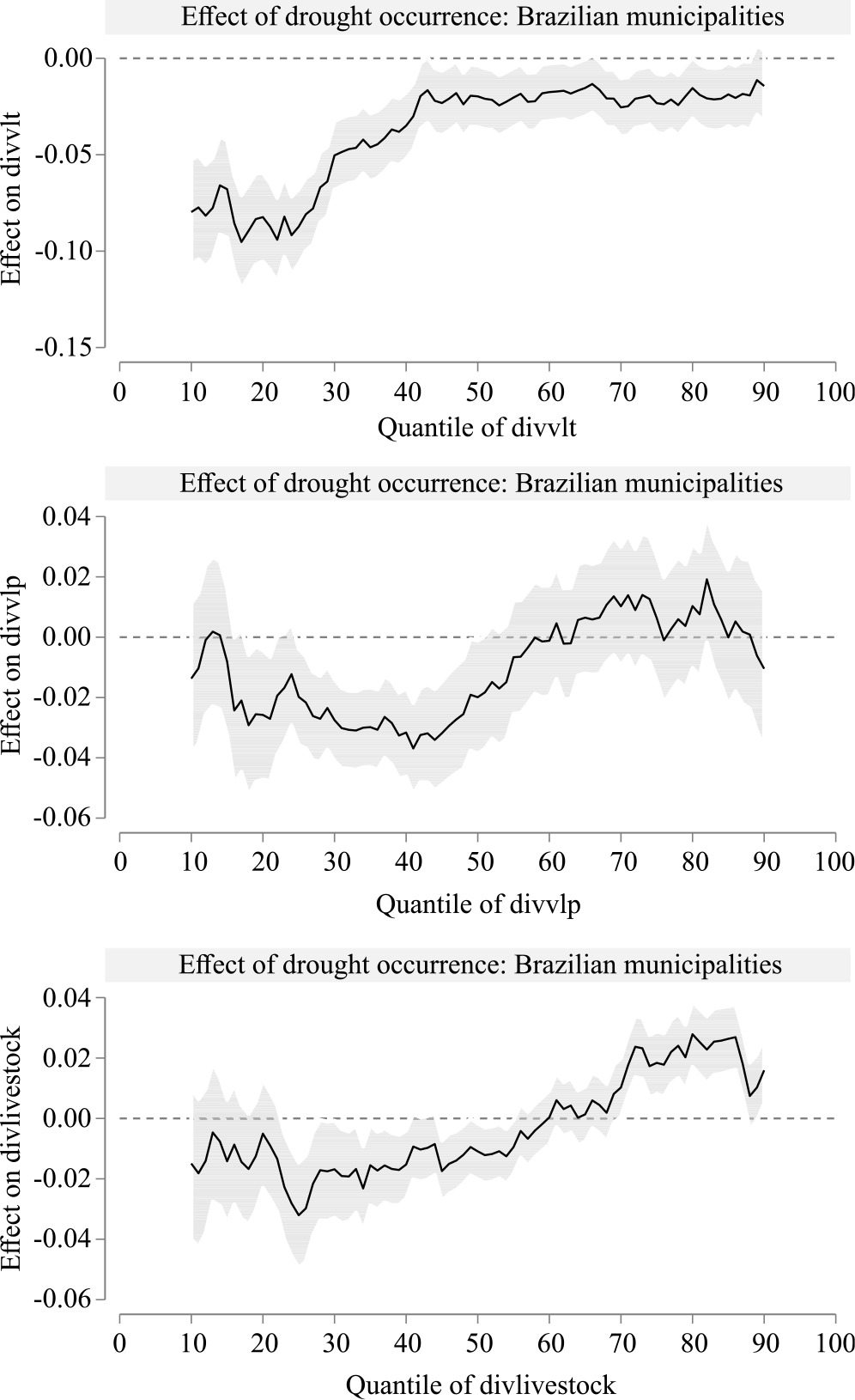
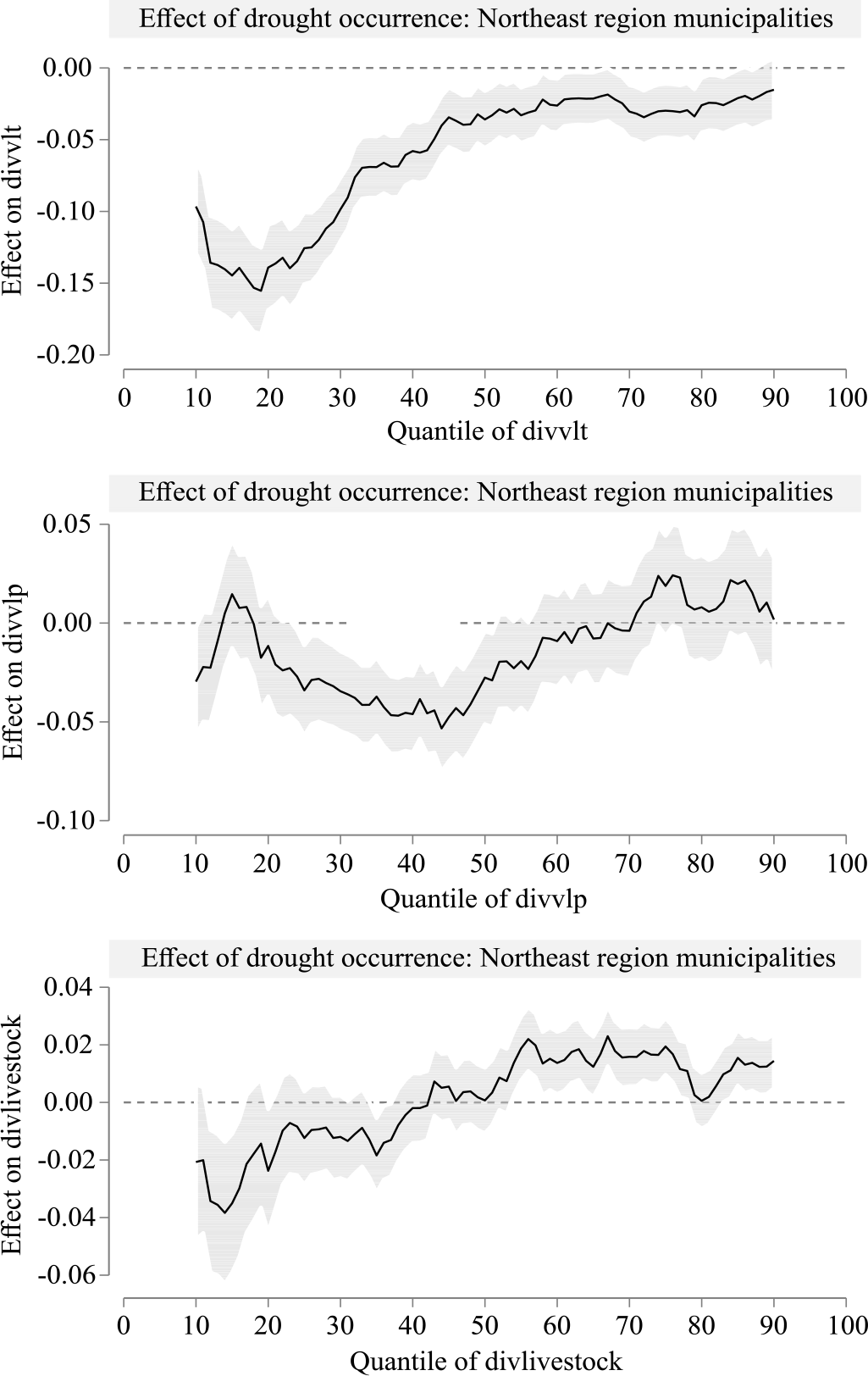
The qualitative analysis of the empirical results revealed a distinct pattern in the distribution of drought effects across different quantiles of the agricultural diversity indices (Figures 2 and 3). The key findings showed that drought events significantly impacted municipalities with less diversified production systems, i.e., located in the lower quantiles. Toward the higher quantiles, the magnitude of effects tends to decrease, indicating a greater resilience in municipalities with more diversified agricultural systems.
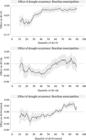
Effects of drought occurrence on agricultural diversity indices across quantiles in Brazilian municipalities. divvlt, divvlp, and divlivestock, Shannon diversity index for the production value of temporary crops, for the production value of permanent crops, and for livestock inventory, respectively.
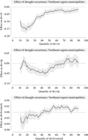
Effects of drought occurrence on agricultural diversity indices across quantiles in municipalities of the Northeastern region of Brazil. divvlt, divvlp, and divlivestock, Shannon diversity index for the production value of temporary crops, for the production value of permanent crops, and for livestock inventory, respectively.
The graphical evidence (Figure 2 and 3) was complemented with coefficients estimated for the effects of extreme (mps3) and exceptional (mps4) droughts - both contemporaneous and lagged - on the agricultural diversity indices for temporary crops, permanent crops, and livestock (Tables 4 and 5). These estimates were obtained for the selected quantiles of the unconditional distribution (10th, 25th, 50th, 75th, and 90th percentiles) for both the national sample and the subset of municipalities in the Northeastern region, providing a concise yet representative overview of the heterogeneity of drought impacts across the diversity spectrum and between areas.
Estimation results of drought occurence for Brazilian municipalities for selected quantiles (Q) of the unconditional distribution (10th, 25th, 50th, and 90th percentiles) for each diversity index(1).
Estimation results of drought occurence for municipalities of the Northeastern region of Brazil for selected quantiles (Q) of the unconditional distribution (10th, 25th, 50th, and 90th percentiles) for each diversity index(1).
The estimates confirm that drought impacts are not homogeneous across the distribution of agricultural diversity, a pattern that aligns closely with the visual evidence shown in Figure 2 and 3. For temporary crops, negative and statistically significant effects were observed across all quantiles, with larger magnitudes in the lower percentiles - particularly in the Northeast -, indicating a greater vulnerability in less diversified systems. For permanent crops, adverse effects were concentrated in the lower quantiles and became statistically insignificant in the upper quantiles, suggesting a greater adaptive capacity in highly diversified perennial systems. Livestock diversity displayed a mixed pattern: while lower quantiles presented negative impacts, the upper quantiles exhibited positive and significant coefficients, potentially reflecting adaptive management strategies in municipalities with already high diversity levels. Overall, these results reinforce the protective role of diversification, especially in perennial crops and diversified livestock systems, highlighting the need for targeted policies aimed at strengthening the resilience of more vulnerable agricultural structures.
Temporary crops
Negative drought effects persisted across the entire distribution of temporary crop diversity, although their intensity declined progressively toward higher quantiles. Since confidence intervals do not cross zero, these impacts remained statistically significant even in municipalities with high levels of temporary crop diversity. The coefficients in the lower percentiles, such as -0.15 in Q25 in the Northeast, are notably higher than the national average of -0.10, showing the disproportionate vulnerability of less diversified systems in semiarid regions.
These findings are in alignment with those of Renard et al. (2023) and Pattanayak et al. (2023), who stressed that diversification alone does not eliminate the sensitivity of annual crops, as maize and soybean, to extreme water shortages. The persistence of losses even in highly diversified municipalities underscores the need to complement diversification with additional adaptation strategies - such as supplemental irrigation, drought-tolerant cultivars, and improved soil management practices -, as recommended by Birthal et al. (2015) in their analysis of Indian agriculture.
Permanent crops
Permanent crop diversity exhibited a distinct pattern. While lower quantiles (Q10-Q50) were negatively and significantly affected, with magnitudes between -0.05 and -0.08, effects became statistically insignificant or even marginally positive at the upper end of the distribution. This suggests that highly diversified perennial systems, such as fruit orchards and coffee plantations, present structural attributes that buffer against drought stress, including deep root systems and longer phenological cycles. These results corroborate the evidence presented by DiFalco & Chavas (2008) in Italy and by Birthal et al. (2015) in India, countries where a greater resilience of perennial systems was documented under prolonged drought conditions. In Brazil, particularly in the Northeast, this finding highlights the relevance of policies integrating perennial species into agricultural systems as a climate adaptation strategy.
Livestock
The results of livestock inventory diversity showed a more complex dynamic. In the lower quantiles, drought exerted a negative and significant effect, indicating that specialized herds are more vulnerable to water scarcity. In contrast, municipalities in the upper quantiles exhibited positive and significant coefficients, as 0.0194 in Q75 in the Northeast, suggesting that more diversified herds (such as combinations of cattle, goats, poultry, and other species) can leverage adaptive management strategies, market flexibility, and resource complementarities to maintain or even expand diversity during drought events. This adaptive capacity reflects the role of local knowledge and institutional learning, consistent with Koffi et al. (2017), who identified livestock diversification as a form of “natural insurance” in drought-prone Burkina Faso.
Regional analysis
The observed empirical patterns (Figure 2 and 3), reinforced by the obtained estimates (Tables 4 and 5), revealed that drought effects on agricultural diversity are both heterogeneous and strongly conditioned by baseline diversification levels. The most severe proportional losses occurred in the lower quantiles, where productive structures were less resilient. In the Northeast, these negative effects were both more intense and more widespread, reflecting the intersection of climatic exposure with structural constraints such as limited irrigation coverage, restricted credit access, and weaker extension services. This dual vulnerability magnifies the benefits of diversification but also exposes its limitations when implemented in isolation.
As Gaudin et al. (2015) emphasized, diversification reaches its full resilience potential only when combined with complementary investments in infrastructure, market access, and capacity building. In this line, Marengo et al. (2022) argued that climate adaptation policies must go beyond promoting diversification to address the socioeconomic and institutional gaps that shape regional vulnerability. These obtained results underscore the need for territorially focused strategies that integrate diversification with broader adaptation frameworks, particularly in Brazil’s semiarid zones.
Among the Brazilian regions, the Northeast stands out as it endures more severe and widespread drought effects due to the confluence of climatic exposure and structural constraints, including limited irrigation coverage, restricted credit access, and weaker extension services, which highlights the need of territorially-focused policies to address these vulnerabilities by integrating diversification with infrastructural and institutional strengthening.
Regarding policies, since the effectiveness of diversification is conditional, there is a need for integrated adaptation strategies tailored to crop type, production system, and regional context, while future research should incorporate micro-level data, spatial dependence, and dynamic modelling to better capture long-term adaptation processes and household-level decision-making under climatic stress.
Conclusions
-
1. Agricultural diversification shows heterogeneous protective effects, mitigating the adverse impacts of extreme and exceptional droughts, although the degree of protection varies markedly across diversity distribution, production activity, and region, with the municipalities in the lower quantiles - representing less diversified systems - consistently incurring the most considerable proportional losses.
-
2. A persistent vulnerability is observed in temporary crops, since even municipalities with a high baseline crop diversity experience significant drought-induced losses, particularly in semiarid contexts such as the Northeast, underscoring that diversification alone cannot ensure resilience for annual crops, requiring complementary strategies, such as drought-tolerant cultivars, expanded irrigation infrastructure, and improved soil management.
-
3. Perennial systems show a stronger adaptive resilience, with drought impacts concentrated in the lower quantiles and largely absent in highly diversified systems, which is likely due to structural attributes such as deep root systems and extended production cycles, supporting the promotion of permanent species in drought-prone regions.
-
4. There is a complex dynamics in livestock systems, with inventory diversity revealing a dual pattern - negative effects in less diversified systems, but positive effects in highly diversified herds -, with broader species portfolios apparently enhancing adaptive management capacity, functioning as a form of “natural insurance” against climate shocks.
Declaration of use of AI technologies
No generative artificial intelligence (AI) was used in this study.
Acknowledgments
To Empresa Brasileira de Pesquisa Agropecuária (Embrapa), for funding and to Conselho Nacional de Desenvolvimento Científico e Tecnológico (CNPq), for the institutional scientific initiation scholarship program.
Disclaimer/Publisher’s note:
The statements, opinions, and data contained in all publications are solely those of the individual author(s) and not of Pesquisa Agropecuária Brasileira (PAB) and its editorial team. PAB and its editorial team disclaim responsibility for any injury to people or property resulting from any ideas, methods, instructions, or products referred to in the article.
Data availability statement
Data available upon request: research data are only available upon reasonable request to the corresponding author.
References
-
ANA. Agência Nacional de Águas e Saneamento Básico. Monitor de Secas: [acompanhamento das condições de seca no Brasil]. 2024. Available at: <https://monitordesecas.ana.gov.br/>. Accessed on: Aug. 8 2025.
» https://monitordesecas.ana.gov.br/ -
AUFFHAMMER, M.; CARLETON, T.A. Regional crop diversity and weather shocks in India. Asian Development Review, v.35, p.113-130, 2018. DOI: https://doi.org/10.1162/adev_a_00116
» https://doi.org/10.1162/adev_a_00116 -
BELIK, W. A heterogeneidade e suas implicações para as políticas públicas no rural brasileiro. Revista de Economia e Sociologia Rural, v.53, p.9-30, 2015. DOI: https://doi.org/10.1590/1234-56781806-9479005301001
» https://doi.org/10.1590/1234-56781806-9479005301001 -
BIRTHAL, P.S.; HAZRANA, J. Crop diversification and resilience of agriculture to climatic shocks: evidence from India. Agricultural Systems, v.173, p.345-354, 2019. DOI: https://doi.org/10.1016/j.agsy.2019.03.005
» https://doi.org/10.1016/j.agsy.2019.03.005 -
BIRTHAL, P.S.; NEGI, D.S.; KHAN, M.T.; AGARWAL, S. Is Indian agriculture becoming resilient to droughts? Evidence from rice production systems. Food Policy, v.56, p.1-12, 2015. DOI: https://doi.org/10.1016/j.foodpol.2015.07.005
» https://doi.org/10.1016/j.foodpol.2015.07.005 -
CALDEIRA, C.; PARRÉ, J.L. Diversificação agropecuária e desenvolvimento rural no bioma Cerrado. Revista Americana de Empreendedorismo e Inovação, v.2, p.344-359, 2020. DOI: https://doi.org/10.33871/26747170.2020.2.1.3356
» https://doi.org/10.33871/26747170.2020.2.1.3356 -
DARDONVILLE, M.; CATARINO, R.; THEROND, O. Sustainability and resilience against climate change provided by a territorial crop-livestock system. Journal of Cleaner Production, v.432, art.139646, 2023. DOI: https://doi.org/10.1016/j.jclepro.2023.139646
» https://doi.org/10.1016/j.jclepro.2023.139646 -
DIFALCO, S.; CHAVAS, J.-P. Rainfall shocks, resilience, and the effects of crop biodiversity on agroecosystem productivity. Land Economics, v.84, p.83-96, 2008. DOI: https://doi.org/10.3368/le.84.1.83
» https://doi.org/10.3368/le.84.1.83 - FAO. Food and Agriculture Organization of the United Nations. Climate-Smart Agriculture Sourcebook 2nd ed. Rome, 2017.
-
GAUDIN, A.C.M.; TOLHURST, T.N.; KER, A.P.; JANOVICEK, K.; TORTORA, C.; MARTIN, R.C.; DEEN, W. Increasing crop diversity mitigates weather variations and improves yield stability. PLOS ONE, v.10, e0113261, 2015. DOI: https://doi.org/10.1371/journal.pone.0113261
» https://doi.org/10.1371/journal.pone.0113261 - HIRSCHMANN, A. The paternity of an index. American Economic Review, v.54, p.761-762, 1964.
-
IBGE. Instituto Brasileiro de Geografia e Estatística. Pesquisa da Pecuária Municipal: tabela 94: vacas ordenhadas: cabeças. Rio de Janeiro, 2023a. Available at: <https://sidra.ibge.gov.br/tabela/94>. Accessed on: Feb. 10 2025.
» https://sidra.ibge.gov.br/tabela/94 -
IBGE. Instituto Brasileiro de Geografia e Estatística. Pesquisa da Pecuária Municipal: tabela 3939: efetivo dos rebanhos, por tipo de rebanho: cabeças. Rio de Janeiro, 2023b. Available at: <https://sidra.ibge.gov.br/tabela/3939>. Accessed on: Feb. 10 2025.
» https://sidra.ibge.gov.br/tabela/3939 -
IBGE. Instituto Brasileiro de Geografia e Estatística. Produção Agrícola Municipal: tabela 1613: área destinada à colheita, área colhida, quantidade produzida, rendimento médio e valor da produção das lavouras permanentes: valor da produção (Mil Reais). Rio de Janeiro, 2023c. Available at: <https://sidra.ibge.gov.br/tabela/1613>. Accessed on: Feb. 10 2025.
» https://sidra.ibge.gov.br/tabela/1613 -
IBGE. Instituto Brasileiro de Geografia e Estatística. Produção Agrícola Municipal: tabela 1612: área plantada, área colhida, quantidade produzida, rendimento médio e valor da produção das lavouras temporárias: valor da produção (Mil Reais). Rio de Janeiro, 2023d. Available at: <https://sidra.ibge.gov.br/tabela/1612>. Accessed on: Feb. 10 2025.
» https://sidra.ibge.gov.br/tabela/1612 -
KOFFI, C.K.; DJOUDI, H.; GAUTIER, D. Landscape diversity and associated coping strategies during food shortage periods: evidence from the Sudano-Sahelian region of Burkina Faso. Regional Environmental Change, v.17, p.1369-1380, 2017. DOI: https://doi.org/10.1007/s10113-016-0945-z
» https://doi.org/10.1007/s10113-016-0945-z -
LEGUIZAMÓN, Y.; GOLDENBERG, M.G.; JOBBÁGY, E.; WHITWORTH-HULSE, J.I.; SATORRE, E.; PAOLINI, M.; MARTINI, G.; MICHELOUD, J.R.; GARIBALDI, L.A. Crop diversity enhances drought tolerance and reduces environmental impact in commodity crops. Agriculture, Ecosystems & Environment, v.385, art.109585, 2025. DOI: https://doi.org/10.1016/j.agee.2025.109585
» https://doi.org/10.1016/j.agee.2025.109585 -
MARENGO, J.A.; GALDOS, M.V.; CHALLINOR, A.; CUNHA, A.P.; MARIN, F.R.; VIANNA, M. dos S.; ALVALA, R.C.S.; ALVES, L.M.; MORAES, O.L.; BENDER, F. Drought in Northeast Brazil: a review of agricultural and policy adaptation options for food security. Climate Resilience and Sustainability, v.1, e17, 2022. DOI: https://doi.org/10.1002/cli2.17
» https://doi.org/10.1002/cli2.17 -
MARTIN, R.; SUNLEY, P. On the notion of regional economic resilience: conceptualization and explanation. Journal of Economic Geography, v.15, p.1-42, 2015. DOI: https://doi.org/10.1093/jeg/lbu015
» https://doi.org/10.1093/jeg/lbu015 -
MEKONNEN, M.M.; HOEKSTRA, A.Y.; NEALE, C.M.U.; RAY, C.; YANG, H.S. Water productivity benchmarks: the case of maize and soybean in Nebraska. Agricultural Water Management, v.234, art.106122, 2020. DOI: https://doi.org/10.1016/j.agwat.2020.106122
» https://doi.org/10.1016/j.agwat.2020.106122 -
NELSON, K.S.; PATALEE, B.; YAO, B. Higher landscape diversity associated with improved crop production resilience in Kansas-USA. Environmental Research Letters, v.17, art.084011, 2022. DOI: https://doi.org/10.1088/1748-9326/ac7e5f
» https://doi.org/10.1088/1748-9326/ac7e5f -
PARRÉ, J.L.; CHAGAS, A.L.S.; ARENDS-KUENNING, M.P. The effect of farm size and farmland use on agricultural diversification: a spatial analysis of Brazilian municipalities. Agricultural and Food Economics, v.12, art.27, 2024. DOI: https://doi.org/10.1186/s40100-024-00323-9
» https://doi.org/10.1186/s40100-024-00323-9 -
PATTANAYAK, A.; SRINIVASAN, M.; KUMAR, K.S.K. Crop diversity and resilience to droughts: evidence from Indian agriculture. Review of Development and Change, v.28, p.166-188, 2023. DOI: https://doi.org/10.1177/09722661231215450
» https://doi.org/10.1177/09722661231215450 -
PIEDRA-BONILLA, E.B.; CUNHA, D.A. da; BRAGA, M.J. Climate variability and crop diversification in Brazil: an ordered probit analysis. Journal of Cleaner Production, v.256, art.120252, 2020. DOI: https://doi.org/10.1016/j.jclepro.2020.120252
» https://doi.org/10.1016/j.jclepro.2020.120252 -
RENARD, D.; MAHAUT, L.; NOACK, F. Crop diversity buffers the impact of droughts and high temperatures on food production. Environmental Research Letters, v.18, art.045002, 2023. DOI: https://doi.org/10.1088/1748-9326/acc2d6
» https://doi.org/10.1088/1748-9326/acc2d6 -
RENWICK, L.L.R.; DEEN, W.; SILVA, L.; GILBERT, M.E.; MAXWELL, T.; BOWLES, T.M.; GAUDIN, A.C.M. Long-term crop rotation diversification enhances maize drought resistance through soil organic matter. Environmental Research Letters, v.16, art.084067, 2021. DOI: https://doi.org/10.1088/1748-9326/ac1468
» https://doi.org/10.1088/1748-9326/ac1468 -
RIOS-AVILA, F. Recentered influence functions (RIFs) in Stata: RIF regression and RIF decomposition. The Stata Journal: Promoting communications on statistics and Stata, v.20, p.51-94, 2020. DOI: https://doi.org/10.1177/1536867X20909690
» https://doi.org/10.1177/1536867X20909690 -
RIOS-AVILA, F.; MAROTO, M.L. Moving beyond linear regression: implementing and interpreting quantile regression models with fixed effects. Sociological Methods & Research, v.53, p.639-682, 2024. DOI: https://doi.org/10.1177/00491241211036165
» https://doi.org/10.1177/00491241211036165 -
SHANNON, E. Mathematical theory of communication. The Bell System Technical Journal, v.27, p.379-423, 1948. DOI: https://doi.org/10.1002/j.1538-7305.1948.tb01338.x
» https://doi.org/10.1002/j.1538-7305.1948.tb01338.x -
SIMPSON, E.H. Measurement of diversity. Nature, v.163, art.688, 1949. DOI: https://doi.org/10.1038/163688a0
» https://doi.org/10.1038/163688a0 -
VERNOOY, R. Does crop diversification lead to climate-related resilience? Improving the theory through insights on practice. Agroecology and Sustainable Food Systems, v.46, p.877-901, 2022. DOI: https://doi.org/10.1080/21683565.2022.2076184
» https://doi.org/10.1080/21683565.2022.2076184 -
ZILLI, M.; SCARABELLO, M.; SOTERRONI, A.C.; VALIN, H.; MOSNIER, A.; LECLÈRE, D.; HAVLÍK, P.; KRAXNER, F.; LOPES, M.A.; RAMOS, F.M. The impact of climate change on Brazil’s agriculture. Science of the Total Environment, v.740, art.139384, 2020. DOI: https://doi.org/10.1016/j.scitotenv.2020.139384
» https://doi.org/10.1016/j.scitotenv.2020.139384
-
Chief editor:
Edemar Corazza
-
Edited by:
Daniel Kinpara