
 Development Administration and the Expansion of Management Education in the Brazilian Context: a Study Based on the Trajectory of UESB's Administration Course
Abstract
The historical process of implementation, diffusion, and transformation of Administration courses in Brazil is a subject that still deserves attention. The teaching of management is an academic and professional field in constant evolution, influenced by global trends, local challenges, and economic and geopolitical dynamics. One example is the (re)emergence of Development Administration (DA), a subfield of Administration that aims to study the management of social relations of production, distribution, and consumption in countries, regions, places and/or organizations, in order to ensure the well-being of society (Santos et al., 2018). This article aims to establish the connection between Development Administration and the expansion of management education in the Brazilian context, based on a decolonial analysis of administrative thought, with emphasis on the trajectory of the Administration Course at UESB. This is a qualitative study applied to the trajectory of an Administration Course in the interior of the State of Bahia. The research relies on semi-structured interviews, documentary records, and content analysis, supported by Atlas.ti 23 software. Finally, the results reveal that DA continues to promote the expansion of management ideology, reinforcing a discourse that contrasts "us" – developed, civilized, and administrators – with "them" – underdeveloped and administered.
Keywords
development administration; epistemic colonialism; administration curriculum; management education; decolonial studies
Resumo
O processo histórico de implantação, difusão e transformações dos cursos de Administração no Brasil é uma temática que ainda merece destaque. O ensino do management (gestão) é um campo acadêmico e profissional em constante evolução, influenciado por tendências globais, por desafios locais e por dinâmicas econômicas e geopolíticas. Um dos exemplos é o (re)surgimento da Administração do Desenvolvimento (AD), um subcampo da Administração que tem por finalidade estudar a gestão das relações sociais de produção, distribuição e consumo, em países, regiões, lugares e/ou organizações, de modo a garantir o bem-estar da sociedade (Santos et al., 2018). Este artigo tem como objetivo estabelecer o nexo entre a Administração do Desenvolvimento e a expansão do ensino do management no contexto brasileiro, a partir de uma análise decolonial do pensamento administrativo, com ênfase na trajetória do Curso de Administração da UESB. Trata-se de um estudo qualitativo aplicado à trajetória de um Curso de Administração no interior do Estado da Bahia. A pesquisa apoia-se em entrevistas semiestruturadas, registros documentais e análise de conteúdo, com suporte do software Atlas.ti 23. Por fim, os resultados revelam que a AD continua a promover a expansão da ideologia do management, reforçando um discurso que contrapõe “nós” – desenvolvidos, civilizados e administradores – a “eles” – subdesenvolvidos e administrados.
Palavras-chave
administração do desenvolvimento; colonialismo epistêmico; currículo de administração; ensino do management; estudos decoloniais
Introduction
Administration is a recent science, established from American Frederick Winslow Taylor's 1911 book, entitled Principles of Scientific Management. The work portrays the phase of monopolistic industrial capitalism and focuses on management problems aimed at increasing productivity, minimizing costs, and raising the profit rate (Bispo, 2024; Catani, 1985). The ideas presented by Taylor, associated with the contributions of Henri Fayol, Max Weber, and others, strengthened the thesis of management as a technique that could be observed, investigated, transmitted, and taught—in other words, a new field of knowledge to be practiced (Fischer et al., 2011; Santos, 2017).
In Brazil, the teaching of Administration gained prominence in the post-war context, with the United States of America (USA) playing a leading role in structuring the new world order. This leadership was projected in mutual aid and technical assistance for so-called third world countries, such as Brazil and many others. In the Brazilian case, the American diplomatic representation, Michigan State University (MSU), and the Ford Foundation (FF) formed a government-university-foundation network to export management education, with the aim of disseminating American values and strengthening relations between the two countries (Alcadipani & Bertero, 2018).
During the 1950s and, more frequently, during the Juscelino Kubitschek government, several mutual cooperation agreements were signed between the United States and Brazil. Attached to one of the points of these agreements was a specific term, called IAAc-45, which was represented by the Institute of Inter-American Affairs and Michigan State University (MSU), for the purpose of disseminating administration education and American culture in the country, initiating the spread of management in countries designated as underdeveloped or developing in Latin America (Alcadipani & Bertero, 2018).
The reproduction of the American managerial model in the Brazilian context would occur through the thought and practice of Development Administration (DA), a disciplinary field that emerged from the need to equip the bureaucratic/business elite of underdeveloped or developing countries, with the intention of remedying the problems that existed between the elaboration of development plans and the managerial capacity of nations in implementing such plans (Motta & Schmitt, 1972; Santos et al., 2018; Cristaldo, 2022). In the American ideology, management could be taught and replicated in any political, economic, and/or social context.
The export of the American management model was consolidated from the cities of São Paulo and Rio de Janeiro, as they already had full economic and industrial growth. Hence the justification for implementing the first administration schools in Brazil, provided for in the specific agreement IAAc-45 and in the Point IV Program, signed between the Brazilian and American governments, through the intermediation of the Getúlio Vargas Foundation (FGV), Faculty of Economic Sciences of the Federal University of Minas Gerais (Face-UFMG), and Michigan State University (MSU). In Rio de Janeiro, the Brazilian School of Public Administration (EBAP) was installed, in São Paulo the School of Business Administration (EAESP), and at UFMG, due to institutional resistance, the action did not materialize in the initial phase. In the second phase of the work plan of the aforementioned agreement, new schools were installed, this time in the Southern (Rio Grande do Sul) and Northeastern (Bahia) regions of the country. It is estimated, in today's equivalent values, a contribution of 10 million dollars, financed by the United States Agency for International Development (USAID), with matching funds from the Brazilian government (Alcadipani & Bertero, 2018).
In Bahia, the State's industrialization process led to the creation of the School of Administration at the Federal University of Bahia (EA-UFBA) in 1959. This was the pioneer in management education in the State, also being the first institution of its kind in the entire Brazilian Northeast (Fischer et al., 2011). Just like other national institutions, it also received incentives and visits from instructors from Michigan State University (MSU) (Alcadipani & Bertero, 2018), as well as the University of Southern California (USC) (Fischer et al., 2011), to introduce the teaching of administration at that University.
In southwestern Bahia, the teaching of Administration was introduced through the policy of expanding higher education into the interior promoted by the state government in the early 1970s. This process culminated in the creation of the State University of Southwest Bahia in 1980, becoming an educational and developmental landmark throughout the Sertão da Ressaca1 region. The initiative occurred in a context of significant demographic growth and urban expansion of the city, almost thirty years after the first treaties and agreements aimed at implementing Administration courses in Brazil.
Given this, this study seeks to establish the connection between Development Administration and the expansion of management education in the Brazilian context, based on a decolonial analysis of administrative thought (Abdalla & Faria, 2017; Cooke & Faria, 2013; Faria, 2023; Sauerbronn et al., 2023). Although there is extensive discussion about the influence of the North American model of administration in developing countries, this article highlights the strategy used by Global North thinkers to propagate management ideology in Global South territories. By establishing the connection between the power strategy (administration for development) and the expansion of management education (managerialist ideology), it helps explain how the geopolitical game influences the culture, values, and practices of nations, organizations, and individuals. To this end, we analyze the trajectory of an Administration Course established in the interior of the State of Bahia, in a region historically (since Colonial Brazil) known as Sertão da Ressaca, today called Vitória da Conquista. This research expands the theoretical debate by integrating the critical decolonial perspective into the analysis of DA, responding to gaps in the literature—which little examines the relationship between development strategy, management, and geopolitical control. In view of this, we propose three specific objectives: (a) to recover the trajectory and identify the ideological and technical foundations present in the pedagogical project of the course; (b) to analyze the repercussions of the course on the managerial practices of organizations; and (c) to verify the effects of the course on local development.
This text is structured, in addition to this introduction, in four parts: the first refers to the literature review, with emphasis on the theoretical-empirical foundations of DA, as well as the expansion of management education in Brazil and Bahia; the second addresses the methodological aspects used in the development of the research; the third describes the results of the study, considering the specific objectives projected for the investigation; finally, the fourth part of the article deals with the final considerations of the study, pointing out the connection between DA and the expansion of management in the Brazilian context.
On the foundations of development administration
Development Administration (DA) has its origins in the government program of US President Harry Truman (1949), specifically in US foreign policy for allied countries. This policy had as its primary strategy to combat the expansion of "communism" and ensure the functioning of capitalism in the world-system. It is based on this doctrine and the actions planned in Point IV Program of this policy that we demarcate the emergence of the discipline of Administration for Development, a set of managerial tools aimed at assisting the bureaucratic and business elite of underdeveloped countries in implementing development plans, conceived from and with the theoretical foundations of the Global North (Caiden & Caravantes, 1982; Motta & Schmitt, 1972; Santos & Santana, 2010; Santos et al., 2018).
It is in this context and with theoretical support from development economics, development sociology, anthropology, and development geography that DA expands and gains strategic relevance in American and European geopolitical practice. Several authors, at that time, sought to understand the reasons for non-development and present solutions. One of these solutions, besides monetary aid, was the export of the management model adopted in the USA, management. In reality, although development economics theorists presented ideas on how to promote development, there is a question of how to put these ideas into practice. It is in this intertwining of theory and practice that Administration is found and, concomitantly, DA (Bispo, 2022; Cooke & Faria, 2013). In this phase, DA was influenced by the managerialism of administration and by the assumptions of neoclassical and Keynesian economics.
Today, DA, epistemologically, is organized into three theoretical matrices (Santos et al., 2016): (a) Modernizing (1940-1950) - focuses on industrialization and economic progress; (b) Structuralist (1950-1960) - targets the causes of inequalities; (c) Post-structuralist (1980-1990) - introduces critical perspectives to management thought and practice and visualizes the social and human emancipation of thinking and acting, of individuals, organizations, and societies.
The modernizing approach to Development Administration concentrates authors linked to the neoclassical school of economics and orthodox studies of administration (Santos et al., 2016). Among the main exponents of this perspective are Joseph Schumpeter, Rosenstein-Rodan, Arthur Lewis, W. Rostow, François Perroux, Peter Drucker, Michael Porter, and Sérgio Boisier. For these theorists, the development of underdeveloped countries depended on the adoption of successful institutional practices and models in developed countries, based on the logic of imitation as a central path to economic and social progress (Faria, 2023; Faria et al., 2021; Santos et al., 2016).
On the other hand, the structuralist approach, predominantly associated with authors from the Global South, shifts the focus from technical and financial limitations to the power and exploitation superstructures that perpetuate conditions of underdevelopment. In this context, the dynamics of dependence and systemic inequality are central. Some of the main theorists of this current are the authors linked to the Economic Commission for Latin America and the Caribbean (ECLAC), they are: Raúl Prebisch, Celso Furtado, Fernando Henrique Cardoso, Ruy Mauro Marini, André Gunder Frank, Theotônio dos Santos, and Vânia Bambirra (Santos et al., 2016).
The post-structuralist approach, under the decolonial logic, seeks to (re)view the epistemological bases that sustain the dominant discourses of development and management, questioning their universality and their connection with the hegemonic interests of the Global North. Escobar (1995) argues that development, historically, functioned as a colonizing narrative, designed to shape the Global South according to the values and structures of Eurocentric capitalism. In this line, Development Administration (DA), often served as an instrument for perpetuating these dynamics, by importing managerial models and practices that disregard local knowledge and realities (Cooke & Faria, 2013).
Dussel (1998) reinforces this criticism by highlighting the centrality of the excluded and the need for an ethical praxis that prioritizes marginalized peoples in the construction of alternatives to the dominant system. For him, development should not be defined based on the demands of the "center," but rather co-constructed by the "peripheries," respecting their singularities and strengthening their autonomies. This thinking connects with authors such as Faria (2022) and Gulrajani (2009), who highlight the importance of integrating critical perspectives and ethical practices in the field of Administration, going beyond neoliberal logics (Silva & Marques, 2020) and hegemonic managerialism.
In this perspective, DA ceases to be a tool of imposition and becomes a disciplinary and practical field for strengthening local knowledge and the pursuit of social justice. For Abdalla and Faria (2019) and Motta and Schmitt (2013), this includes the reassessment of the role of the State, which, even marked by contradictions and exclusions (Pimentel et al., 2012), should act as a mediator of participatory and redistributive processes, expanding inclusion and reducing structural inequalities (Oliveira et al., 2010). The concept of countermovement, introduced by Abdalla and Faria (2019), highlights this resistance to market logics, proposing social protection mechanisms that preserve cohesion and promote collective well-being.
On the other hand, Guerreiro Ramos (1981), by proposing sociological reduction, highlights the need to transcend the instrumental and replicating vision of administration, connecting it to broader social issues rooted in local contexts (Bariani, 2010; Santos et al., 2015). Similarly, Bispo (2022) and Cristaldo (2022) question the efficiency of the field of Administration in generating positive impact for society, arguing that managerial practice be informed by critical perspectives committed to social transformation (Cristaldo, 2022). In this sense, Critical Organizational Studies (Paes de Paula, 2015; Paes de Paula et al., 2010) and curricular decolonization (Sauerbronn et al., 2023) emerge as fundamental movements to break with epistemic colonialism and propose alternatives engaged with pluralism and social emancipation.
Still in this context, Gulrajani (2009) problematizes management/managerialism by highlighting its inability to deal with the inequalities and power dynamics that characterize the Global South, suggesting ethical and politically engaged practices as a counterpoint. These criticisms are echoed by Faria (2022), who proposes a decolonial DA that breaks with neoliberal and colonial structures, promoting a new practical and theoretical configuration guided by contestation and the valorization of local knowledge.
Thus, the decolonial perspective applied to DA reframes development as a plural, inclusive, and collectively committed process. It challenges neoliberal and re-Westernizing narratives, proposing practices that privilege self-determination, social justice, and that question the management education models that perpetuate inequalities. It is a rupture with dominant epistemologies, aimed at building alternatives that promote collective well-being and the emancipation of historically subjugated populations.
On management education in Brazil and Bahia
Regarding the history of administration education in Brazil (Alcadipani & Bertero, 2014; Alcadipani & Bertero, 2018; Barros et al., 2018; Santos et al., 2009; Wanderley et al., 2018), its trajectory begins in the mid-1930s, a time when some higher education institutions were already debating the need to implement higher education courses in administration to contribute to the country's development process. In addition, the idea of a minimum curriculum for the Administration course was already circulating. But it is only during the 1950s and 1960s that Administration education begins to take on greater dimension in the Brazilian context, modulated by the American style of administration known as management (Barros et al., 2018).
Barros et al. (2018) point out that in the full context of post-World War II and, then, the Cold War, the USA sought various ways to expand its influence in the global sphere. To this end, they provided financial, technological, and managerial support to various countries, with the purpose of establishing diplomatic relations and deterring the possible action of the Soviet Union and its communist thinking in these countries. Wanderley et al. (2016, p. 915) report that such treaties and agreements began from the moment of "signing of the PBA-1 agreement between the Brazilian and US governments for support in the creation and expansion of schools of Administration, and the launch of the aid program for Latin America, called Alliance for Progress, promoted by President Kennedy". Developing countries, such as Brazil and others, agreed to such agreements in the desire to become modern, industrial, and developed.
One of the means of strengthening relations between these nations (and, in this case, Brazil) was the implementation of higher education courses in the area of Administration in various national institutions. This strategy would facilitate the expansion of capitalist ideological thinking in the American model. Alcadipani and Bertero (2018) delved into documents exchanged between American and Brazilian powers to understand the historical process of this implementation. Cavalcanti and Alcadipani (2016) analyze this process of implementation of management through the postcolonial lens, in which developed countries make the conquest of new domains and influences in international dynamics, as was pointed out by the theory proposed by Guerreiro Ramos (1981).
It is important to note that in 1952 the first higher course in Administration, established with the support of the USA and through the United Nations (UN), was that of the Brazilian School of Public Administration (EBAP), in Rio de Janeiro, and the course of the School of Business Administration of São Paulo (EAESP) in 1954. Soon after, in 1955, the higher course of Business Administration is implemented at Face-UFMG, which should have been installed together with EBAP and EAESP, however, due to political issues, its creation was delayed (Barros, 2014; Barros et al., 2018), also, in the same year, the Superior Institute of Brazilian Studies (ISEB) is created, a kind of branch of the Economic Commission for Latin America and the Caribbean (ECLAC) of the UN in Brazilian territory, operating in political, economic, and social studies at the post-university level, applied to the national reality (Wanderley, 2016; Wanderley et al., 2018).
Still in an attempt to spread the teaching of management in various regions of the country, the American mission made technical visits to the Federal University of Rio Grande do Sul (UFRGS) and the Federal University of Pernambuco (UFPE). However, the idea of implementing a higher course under American domain was not well received in Pernambuco, thus opening the opportunity for the state of Bahia. On the occasion, by chance, the Rector of the Federal University of Bahia (UFBA), Edgar Santos, met the members of the American mission at Salvador Airport, the State capital, and learned of the reason for the mission's stay in the Northeast, making UFBA available for the implementation of the project (Santos et al., 2009).
Although there were numerous difficulties in applying American management in Bahian lands, they continued the challenge, since the State represented an important region in the national plan (Alcadipani & Bertero, 2018). Added to this, the "communist threat" feared by the USA was very close to Brazil, with the Cuban Revolution in 1959. This made it strictly necessary to maintain the agreements between Brazil-USA for the implementation of the course, promoting greater US influence in most of the Brazilian territory. On September 14, 1959, Rector Edgar Santos decided to call the candidates for the first entrance exams for the Business Administration and Public Administration courses, implemented the following year. The implementation of the Business Administration Course was coordinated by Dr. Dole Anderson, representative of Michigan State University (center for advanced studies in business management), and the Public Administration course by Dr. Dean Cresp, representative of the University of Southern California (center for advanced training in government). In this way, even with great difficulty, the School of Administration of UFBA was successfully implemented and from then on the courses became instruments for the diffusion of management beyond the Bahian capital (Santos et al., 2009).
The diffusion of management education from the capital to the interior of the state refers to the memorable Development Plan of the State of Bahia (PLANDEB), elaborated in the 1950s, in the developmentalist context of Juscelino Kubitschek's Goal Plan (1955-1960). PLANDEB was a planning instrument that aimed to integrate Bahia into the development project of the Brazilian State. Based on situational diagnoses and 11 (eleven) action programs, including education and culture, with the goal of expansion and interiorization of secondary and higher education within the state, PLANDEB signals two purposes: (a) to qualify human resources for the productive sectors, through the expansion of professional education; (b) to train teachers at a higher level, to qualify the education of the Bahian population (Saavedra Castro, 2010).
It is based on these guidelines that, in the 1970s, the implementation of the State System of Higher Education begins, today, composed of four educational institutions: the State University of Feira de Santana (UEFS), created in 1970; the State University of Southwest Bahia (UESB), created in 1980; the State University of Bahia (UNEB), created in 1983; and the State University of Santa Cruz (UESC), created only in 1991, and from these higher education institutions, other Administration courses were implemented in the interior of the state. In the specific case of UESB, its history is found in the old teacher training colleges of Vitória da Conquista (1969) and Jequié (1970) and in the schools of Administration, Agronomy, Nursing, and Animal Science of the 1980s (Mendes, 2018; Boaventura, 2009).
At that time, Vitória da Conquista was already standing out as a city with great potential for economic growth. Alves (2019) highlights two specific events that drove this development: the first was the construction of highways, such as BR-116, begun in the 1950s and completed in the early 1960s. In addition to this, several other important state highways made the city a major road junction. The other relevant factor was the implementation of coffee farming in the 1970s and 1980s, through investments from the federal government, under the National Program for the Recovery and Renewal of Coffee Plantations (PRRC). Lopes (2013) adds another point: the creation of the Industrial District of Imborés, also in the early 1970s, with the purpose of interiorizing industrialization. However, even with the implementation of the district, he comes to the conclusion that the city failed to consolidate itself as an industrial hub. Such advances fostered the migration of residents from rural areas and neighboring municipalities to the city, generating a population increase that, in turn, intensified the demand for various urban services. According to IBGE data, the population of Vitória da Conquista increased from 18,017 inhabitants in 1950 to 125,573 in 1970, reaching 143,486 thousand inhabitants in 1980.
In this way, in response to the demands of various sectors in the region, in November 1980 the functioning of the School of Administration of Vitória da Conquista is authorized by opinion nº 156/80, one month later the autarchy of the State University of Southwest Bahia is created, on December 30, 1980. The creation of UESB and the School of Administration, at that time, became a milestone in the history of the development of southwestern Bahia, since both the business sphere and the public sphere lacked qualified professionals to leverage their development.
As observed in the documentary analysis, the pedagogical scope of the course, in the 1980s, was based on Law 4769 of 1965, which dealt with the profession of administration in Brazil and had a curricular matrix still influenced by the Americans, aimed at training business analysts, senior executives, and good managers of public bureaucracy. At the end of 1987, the course is recognized by ministerial ordinance nº 139 and is published in the Official Gazette of the Union (UESB, 2022).
In the 1990s, due to transformations in the global scenario, marked by economic liberalism, globalization, productive restructuring, and reduction of state bureaucracy, the course turns to studying ways to stay updated with the trends and demands of what was expected of an administration professional in relation to these changes. With this, a new pedagogical project is approved, oriented towards a more neoliberal and entrepreneurial perspective (Pedagogical Project, 1995). Since then, this has been the current curriculum for the training of UESB administrators.
Currently, there are five face-to-face undergraduate courses in Administration in the city of Vitória da Conquista, one bachelor's degree in the public network (UESB), which was the inspiration base for implementing the other courses in the region, three bachelor's degrees, and one technologist course in the private network. The Administration Course of UESB has almost five decades of existence and more than one thousand two hundred trained administrators. Its faculty (of the specific area) consists of nineteen professors, twelve of whom are doctors, three masters, and four specialists. Today, it has six research groups, six ongoing research projects, and one extension program in activity, the Marketing Observatory. The course is in the process of curricular reformulation, going to its second reform since its implementation.
Based on the literature on the evolution of the expansion of management, with its administrative/organizational thinking and Development Administration, we understand that there is a gap in explaining the expansion of management education and in the development narrative. Although there are historical analyses about the emergence and consolidation of Administration courses, there are few investigations on how curricula have incorporated approaches from both DA and a neoliberal perspective. To this end, we adopt as a theoretical position the post-structuralist approach, aligned with critical and decolonial perspectives, both in the field of Administration and in studies on development. Based on this framework, we analyze the case of the Administration Course at the State University of Southwest Bahia (UESB), seeking to understand how these dimensions manifest themselves and contribute to the need for a reconceptualization of the teaching and practice of administration.
On the methodological aspects of the study
This study is characterized as exploratory and empirical research, since it was dedicated to investigating the trajectory of an Administration course and its implications for the development of a municipality. According to Marconi and Lakatos (2005, p. 188), such a research method aims to achieve three objectives intrinsic to exploration, which are: "developing hypotheses, increasing the researcher's familiarity with an environment, fact, or phenomenon, for conducting more precise future research or modifying and clarifying concepts." It uses a qualitative approach with a single case study (Stake, 2005), since a cross-analysis of data and information was conducted in documents, interviews, photographs, and memory records with the purpose of understanding the effects of an ideology (management) in the development process of a municipality (Vitória da Conquista).
The interviews were conducted with two groups: founding faculty and current faculty who are alumni of UESB's Administration Course, chosen by sampling according to non-probabilistic criteria (Patton, 1990). This criterion considered the relevance of the participants to the historical construction of the course and its impact on local development. The initial idea was to interview five founding faculty members and five faculty members who are alumni of the Administration Course. However, one of the founding faculty members could not participate in the interview, effectively leaving four founding faculty members and five faculty members who are alumni of the course. The group of interviewees was distributed over a time interval between 1980 (the year the course began) and 1995 (the year the current curriculum was implemented). To maintain anonymity, they were identified in alphabetical order, with the first interview receiving the identification letter A and the last I (figure 1).

In addition, documentary research was conducted with the Administration Course Collegiate, analyzing pedagogical projects, curricular matrices, and historical records between the years 1980 and 1995. Data collection occurred between December 2022 and January 2023, through the Google Meet platform. The interviews were recorded, transcribed, and organized for later analysis.
As a data collection instrument, a semi-structured interview with subjective questions was applied and distributed in three blocks, in order to achieve the research objectives. The first block refers to the trajectory of the Administration Course; the second block to the effects of the course on managerial practices; and the third encompasses the effects of the course on local development. These arrangements were executed with the intention of responding to the main objectives in a more assertive manner. The collection of information was carried out on different days in December 2022 and early January 2023, with Google Meet as the intermediary means. Regarding the interviewees, the average age of the founding faculty is 73 years, while for the alumni faculty it is 54 years. Six of the interviewees are male and three are female. Regarding qualifications, there are four doctors, four master's professors, and one specialist.
A documentary research was also carried out, investigating data and information about the trajectory of the course, whose documents were collected from the Collegiate of the Administration Course of UESB, among them: the pedagogical project and the curricular matrix of the course in 1980, as well as the pedagogical project of 1995 and its new curricular matrix. Such information was used for the purpose of associating them with the explanations described in the theoretical framework and the findings found throughout the research, providing a basis for understanding the historical context of the course's trajectory and the connection between DA and the expansion of management.
Data analysis was performed based on the basic content analysis technique, from the perspective of Miles et al. (2014). The analytical categories and their respective codes were defined based on the research objectives and are indicated in figure 2:

The interviews and documents were coded using the support of Atlas.ti 23 software. In addition, complementary analyses were carried out in Microsoft Excel for the systematization of other information.
The quality criteria for research follow those adopted by Pozzebon (2018) and Pozzebon & Petrini (2013), prioritizing authenticity, plausibility, criticality, and reflexivity. Authenticity was guaranteed by the active presence of researchers during data collection and analysis. Plausibility was sought by presenting clear and relevant findings. Criticality encouraged reflections on the relationship between the Administration Course and development conceptions. Reflexivity was evidenced in the explanation of methodological choices and in the positioning of researchers throughout the study.
Development administration and management in the Sertão da Ressaca: trajectory and implications
Our first objective in this study is to trace the trajectory of the Administration Course at UESB and identify its ideological and technical foundations, in order to verify the relationship between Development Administration (AD) and the expansion of management education in the Brazilian context. Specifically for this objective, we organized the analytical category that unfolds into the following codes: justifications, purposes and objectives of the course; university and course infrastructure; curricular proposals and influences; and theoretical foundations used (Figure 2).
We can perceive, from the perspective of the interviewees, that the city of Vitória da Conquista possessed principles of certain economic vigor, mainly in the tertiary sector (business and public services). This assertion converges with Alves (2019) and Lopes (2013), who point to a time when the city was undergoing profound transformations in its urban network, following the construction of important road access routes and federal investments in coffee production. In order to manage and better prepare for the city's growth, the municipal public administration needed administrators to occupy positions within its administrative units and promote more efficient public service, as well as a technical body that could contribute to the development of the city's business segments. In the words of one of the founding professors of the Administration Course at UESB, he understands this need in the following way:
First, because Vitória da Conquista has always been vibrant, both in the commercial sector and in the part that was just beginning, industrialization. Second, due to the need to train entrepreneurs. This vibrancy demanded improvements in other areas, such as health and education. All of this made the Administration Course become the initial driving force of the city. So this was fundamental for the University to develop and subsequently create other courses (founding teacher E, 2022).
Thus, at first, it is evident that a developmentalist approach was adopted. The vision of the administration course as an engine of economic and social progress is still broadly aligned with the modernizing perspective, as pointed out by Santos et al. (2016). Additionally, the interviewee's statement corroborates the connections between "administration" and "development," highlighted by Cooke and Faria (2013). In this scenario, the administration course would integrate theory and practice, configuring itself as a link that establishes causality between development and management.
Still in this context, as mentioned by founding professor C (2022), the creation of the Administration Course in Vitória da Conquista was fundamental to meet the academic and productive demands of the region. He states that: "It was necessary to have citizens trained with a more refined academic and scientific vision [...]. So, they needed to move beyond technical courses and into higher administration [...]." This transition was essential to expand the possibilities for regional development and consolidate academic presence in the Bahian interior.
The interviewee elucidates an educational and academic objective, recalling the government's proposal to expand higher education throughout the state of Bahia, as evidenced by Boaventura (2009) and Mendes (2018). The concentration of education in the capital limited access to higher education in the interior, restricting human development and the development of these regions. Saavedra Castro (2010) reveals that the government's response, at the time, was to include in PLANDEB goals aimed at qualifying human resources in productive sectors and training teachers at the higher education level, aiming to improve the quality of education. As a result, four public universities were created in the interior of the state, the State Universities of Bahia (UEBAs), including the State University of Southwest Bahia (UESB). In this sense, a congruence is also perceived in the relationship between the interviewees' approaches to aspects that the presence of higher education in the region was important both for educational matters and for promoting development.
The structural and institutional challenges faced by UESB's Administration Course reveal a context of precariousness that directly impacted both student education and faculty consolidation. Several interviewees mentioned that the location distant from the urban center, the lack of basic infrastructure, such as paving and public transportation, and the absence of essential collective facilities, such as laboratories and university restaurants, made academic daily life challenging. Additionally, the difficulty in attracting trained administrators to teach in the region overburdened pioneering professors from the capital, who often accumulated subjects, compromising the depth of content in specific areas. In the same vein, founding teacher B highlights that "The city was very distant from the capital and the presence of the professor was required here. So, it was a difficult situation [...] to find professors. So, we subjected ourselves to accepting that the professor resided in Salvador and worked at UESB."
This situation ended up fostering a process of endogeny, in which the faculty was gradually formed by graduates of the course itself, which, although ensuring continuity, also limited the diversity of academic perspectives. Added to this were the lack of internship fields and the absence of practice and extension centers, which weakened practical training, as reported by graduate professor D (2022): "UESB, in practice, seemed more like a college than a university. It was very precarious indeed. In terms of support for internships, it was weak for the training."
Therefore, the mismatch between the proposal to expand management education in the Sertão da Ressaca and the practical limitations faced highlights the inherent challenges in implementing an educational project of a developmentalist nature in a region with limited infrastructure. While the course sought to train professionals with the capacity to contribute to regional development, the structural difficulties and the fragility of internship and extension activities partially compromised this objective, highlighting the need for joint public policies to strengthen higher education in peripheral regions. These difficulties were overcome over time, with new professors trained as masters and doctors and the creation of research and extension groups that increased the course's contributions to research and teaching of Administration in the city.
In this way, together with the emergence of UESB in Vitória da Conquista, the Administration Course was born. The course was initially authorized to operate by Opinion 156/80, of November 5, 1980, from the State Council of Education, and later by Federal Decree No. 85,363, of November 17, 1980. Formal recognition came with Ministerial Ordinance No. 139, of March 10, 1987, published in the Official Gazette of the Union on March 11 of the same year. The pedagogical proposal of the course, developed in 1980, reflected the national guidelines for the training of administrators, as regulated by Opinion 307/66 of the Federal Council of Administration and by Law No. 4,764, of September 9, 1965. Another aspect identified was the focus on a more comprehensive education, which stimulated broader thinking about the political-economic context of the country and the local territory, although limited to a foreign bias of what the national reality was. In this sense, disciplines such as the study of Brazilian problems (EPB I and II), regional economics, economic geography, economic theory, and Brazilian economy stand out. The EPB discipline, imposed during the military dictatorship, aimed to instill in higher education students the vision of the nation project defended by the regime, addressing topics such as national politics, ideological issues, civics, and national security (Figure 3).

The emphasis of the other disciplines is on deepening the economic education of the administrator. The emphasis on economics aimed to provide a more robust understanding of the economic assumptions necessary for promoting development, in line with the approach of Motta and Schmitt (2013) and Santos and Santana (2010), in which Development Administration (AD), in its modernizing proposal, sought industrialization and economic growth. This perspective also aligns with the genesis of the AD field, as pointed out by Santos et al. (2018). Therefore, it is observed that this pedagogical configuration reflected an alignment of the course with the political and economic demands of the time, while providing training that aimed to meet both regional and national development plans.
The interviewees' narratives reveal that UESB's Administration Course was strongly influenced by the School of Administration at UFBA (EA-UFBA). This influence manifested itself in various ways in the interviewees' statements: in the organization of the first curriculum, which mirrored EA-UFBA's curricular matrix; in the faculty training process, with the initial offering of specialization courses in public budgeting and teaching methodology; in the agreements established for interinstitutional master's courses and doctoral training of faculty; and in the research/extension partnerships developed throughout the four decades of the course's existence.
The process of disseminating management ideology acquires specific characteristics upon reaching the Sertão da Ressaca, the region where UESB is located. It is relevant to highlight that institutions such as UFBA and UFMG received support from the North American government in a context of strategic expansion of management education (Barros, 2014; Alcadipani & Bertero, 2018). In this sense, this process is directly related to what was pointed out by authors such as Alcadipani and Bertero (2018), Barros (2014), Guerreiro Ramos (1981), and Santos et al. (2009), who indicated the USA's intention to disseminate results-oriented, technically-based administrative principles, in line with the ideals of the capitalist development model (Escobar, 1995). This movement was also linked to fears that the persistence of underdevelopment in Latin American countries could lead to adherence to "communism."
Although there were already academic movements in Brazil that sought to break with the replication of social science originating in the American context and applied in Latin American countries (Caiden & Caravantes, 1982; Guerreiro Ramos, 1981), the teaching of Administration in Brazilian universities still reflected the foundations of this model. This paradigm sustained a developmentalist vision centered on economic growth, capital surplus, and the consolidation of a consumer and industrialized society. This approach was criticized by Guerreiro Ramos (1981), who, in proposing the concept of "sociological reduction," warned of the risk of limiting administrative theory to a technical model replicable in any context, without considering local specificities. In practice, the administrative training of the time consisted of directly applying these theories as a sufficient mechanism to promote economic development in countries. However, this lack of a critical and contextualized view of the local reality generated contradictions between theory and practice.
Although UESB's Administration Course curriculum presented a proposal for generalist training aligned, to some extent, with the local reality, it remained limited to a predominantly American AD logic. This was evidenced by the composition of the curriculum and the authors and books used in the course. According to interviewees' reports, Idalberto Chiavenato's manuals – although he is a Brazilian author – are based on foreign theories. Additionally, authors such as Philip Kotler, Peter Drucker, Michael Porter, and Lawrence Gitman were widely used, as graduate professor D (2022) points out: "It was a manual. We used it in all periods, including, I think there were two volumes, one volume for TGA I and one volume for TGA II. So this was the great theoretical base that we had access to."
The predominance of American references in UESB's Administration teaching is not an isolated case. As Alcadipani and Bertero (2014) point out, this influence stems from the historical relationship between the United States and Brazil in the field of management education. During the agreements signed between Brazilian and American institutions, there was an effort to consolidate an administration model aligned with US logic and values. Even after the end of these agreements, this model was replicated in the curricular matrices of Administration schools in different institutions, perpetuating the dynamics of American influence in teaching in the area.
In UESB's case, this replication was evident in the similarity of the curricular matrix with that of other Brazilian institutions, as one of the interviewees points out: "The curricular matrix of UESB's Administration Course was basically the same used by UFBA's Administration Course" (founding professor E, 2022). This continuity illustrates a larger problem: the reproduction of an educational model focused on an American bias that largely disregards local specificities and demands.
Thus, UESB's Administration Course reflects both the advances and contradictions of the expansion of management education in Brazil. On one hand, it promotes local development and professional qualification; on the other, it perpetuates values and practices aligned with a hegemonic economic model that does not always dialogue with local realities. Instead of addressing the social and economic needs of the region more broadly, the course reproduces a limited administrative vision, predominantly focused on economic aspects, while social issues remain in the background.
Almost fifteen years after the emergence of the Administration Course at UESB, the first curricular reform occurred, excluding disciplines from other areas of knowledge from the matrix and bringing new disciplines more specific to the area, but more technical, directed to the teaching of entrepreneurial practices, information technologies, and market issues. This period was marked by profound transformations in Brazil, driven by redemocratization, globalization, productive restructuring, privatization, reengineering, trade liberalization, and the hegemony of neoliberal thought (Silva & Marques, 2020). These changes had a direct impact on the labor market and, consequently, on the pedagogical planning of Administration courses.
This becomes explicit in the statement of graduate professor D: "you also see the structural change in policies [...], the structure of the government [...] and another [...] trying to take managerial administration to administration. And this will culminate in 1994, with the reform of the Brazilian state by Bresser-Pereira." Aligned with this panorama and discussions that had been occurring in the academic world, the Course Collegiate identified the need to reformulate the pedagogical project, which resulted in the elaboration of a new curricular proposal presented in 1994. In 1993, resolution No. 2, of October 4, established a new basic workload for administrator training, as recommended by the Federal Council of Administration (CFA). This moment of reviewing the workloads was also used to reassess the curricular components of the matrix, which dated from 1980.
As declared in the 1995 Pedagogical Project, several seminars were held, with extensive debates between professors, students, and representatives of institutions such as UFBA, UFMG, National Association of Undergraduate Students in Administration (ANGRAD), and Brazilian Support Service for Micro and Small Enterprises (SEBRAE). The central argument was the need for education more focused on the use of technology and its applications in the daily life of organizations, as well as a greater focus on entrepreneurship. This movement marked the end of the pedagogical project based on modernizing developmentalism and consolidated a curriculum aligned with neoliberal logic. In this direction, one of the founding professors points out that the "objective was to make the course more current. We came from an initial formulation based on generalist administration, now we hope to have the course's own identity" (Founding professor E, 2022). In other words, this means that it was necessary to eliminate the content (curricular components) from other areas of knowledge to privilege the technical base of management, according to the report of founding professor H (2022):
[...] the inclusion of the Brazilian administration discipline contributed to streamlining the areas of economics, accounting, sociology, and law in the course, suggesting the reduction of some disciplines and the inclusion of new ones related to the changes that were occurring in the country and in the socioeconomic world.
In this way, it is noted that the curricular reform approved in 1995 promoted substantial changes in the curricular matrix (figure 4): it suppressed ten disciplines from the old matrix, eliminated twenty-one disciplines and created twenty-three new ones, redefining the profile of the administrator trained by UESB. Disciplines such as Economic Geography, Regional Economics, Rural Sociology, Political Sociology, and Studies of Brazilian Problems were removed, while new disciplines, such as Total Quality Management, Strategic Management, Market Research, and Business Development, were introduced. These changes evidence a shift from a developmentalist administrator to the formation of entrepreneurial managers shaped for a globalized market.

However, these pedagogical transformations, although innovative, reinforced the ideology of management. The curricular matrix came to reflect less the developmentalist perspective of the previous period and more the principles of neoliberal thought. This focus promoted entrepreneurship as a central solution, while prioritizing market efficiency at the expense of a critical and systemic view of administration, aligning itself with the deconstruction of the welfare state and the mercantilist logic of the period.
Repercussions of management on the managerial practices in the Sertão da Ressaca
The second objective of the study is to analyze the repercussions of UESB's Administration Course on the managerial practices of organizations. To this end, we analyzed the profile of incoming students over time and the repercussions of the assimilated managerial practices in the development of organizations.
The profile of incoming students in UESB's Administration Course resembles the profile conceived in the AD proposal – serving a bureaucratic elite of the local society. As founding professor B (2022) emphasizes, "The profile of incoming students, from the socioeconomic point of view, was a very diversified profile, [...] children of local entrepreneurs, people connected to the coffee farming segment, and public servants." In turn, founding professor C (2022) describes the presence of a portion of students with higher age, probably because they did not have the opportunity for higher education at the appropriate time.
We had a great damming up of intellectual development. So, the first classes were even funny, [...] they had [...] students, many of them were older than me. They were bank managers nearing retirement [...] (founding professor C, 2022).
This analysis corroborates the observations of Alves (2019) and Lopes (2013), who highlight the economic growth of Vitória da Conquista between the 1960s and 1980s. This growth was driven by the construction of the city's road junction, the consolidation of the coffee and commercial center, and the beginning of the municipality's industrialization. This scenario is connected with the justification for implementing the course, as founding professor E addressed when justifying the creation of the Administration Course as a response to the signs of economic development in the city during that period.
In this context, the profile of students who entered the course met the interests of the productive sectors of the region, that is, to qualify managers who already occupied management positions in local organizations. Most students had direct links with economic sectors (primary, secondary, and tertiary), acting as managers or heirs to local businesses. The training offered in the course, therefore, was predominantly technical, shaped by the demands of these economic sectors.
Additionally, founding professor E mentions the presence of entrants from the banking segment, which broadens the vision of the relationship between the course and the prevailing developmentalist model. This model, aligned with the nexus between development and administration described by Cook and Faria (2013), understood development — strictly economic — as a direct result of the application of administrative techniques and tools. The professor also reports that over the years, this scenario of "damming up" was dissolving, with the profile of entrants gradually becoming increasingly younger. This change in characteristics may have been provided by the improvement in educational policies and access to higher education that occurred in the decades following the emergence of the course.
It is relevant to highlight the impact of the Administration course on the managerial practices of the region, as pointed out by various professors. In this regard, founding professor B states:
[...] at that time, it was difficult to find an administrator occupying a public position in Vitória da Conquista. This scenario changes after the creation of the course and the training of new classes. [Today], you find many administration graduates in the municipality, which gives a new aspect to public and private administration.
In this way, he observes an expansion of more professionalized and technical activities, both in the public and private spheres, occupying spaces that were previously filled by professionals from other backgrounds or without specific training. Founding professor E complements this perception by stating that:
In the past, there were many people working in the administration area, but not as professionals trained in the field [...]. Basic training in Administration allows for developing more competence to act in the market. [...] From this, we had companies operating more effectively, formulating policies to improve the quality of life of employees and the efficiency of their operations (founding professor E, 2022).
These reflections highlight how administrative training contributed to the qualification of local management, promoting more structured practices aligned with technical principles of the developmentalist management model. This occurred in an environment where the administrator's role was essential for promoting development, and the availability of work positions and employment was more comprehensive. However, with changes in the geopolitical context, labor relations, and the shift from the developmentalist management model to the neoliberal model, the socioeconomic-professional scenario changed, creating situations of unemployment or underemployment. Regarding this, graduate professor A considers this situation of underemployment as follows: "[...] I was in a supermarket and there was a young woman who was my student working at the butcher counter of this supermarket, I think [...] a professional waste. And the young woman was very upset, there are several who are in this situation, it's not just her [...]."
This scenario raises important reflections on the role of the administrator in society. If, at an earlier time, they occupied a central position in the construction of a national developmentalist project (Cristaldo, 2022), the curricular reform and the strengthening of the neoliberal model in the market and in academic training contributed to the devaluation of this strategic role. This dialogues with Escobar's proposition (1995), that is, that development, at its core, is merely a colonial narrative to shape Global South countries to the criteria of the North. This dynamic highlights the urgency of revisiting and adapting the pedagogical proposal of Administration courses, with a view to facing contemporary challenges through their own episteme, detached from colonial and recolonial adaptations that historically disadvantage and subordinate the role of Administration as something central to the promotion of development (Dussel, 1998; Faria et al., 2021).
When reflecting on the export of the management model from the United States to Brazil, we observe that, initially, it aimed at technical training, however, aligned with the national development project. Nevertheless, with the neoliberal management model, the teaching of Administration became predominantly technical, structured in processes of optimization of productive factors, organizational reengineering, outsourcing, entrepreneurship, detached from the debate on national projects, prioritizing objectives internal to organizations.
Given this, it becomes essential to recover the centrality of administration in promoting development, but not restricted to the geopolitical economic sphere of the Global North. It is necessary to advance towards an administration education that contemplates the demands and problems of the Global South, associating the economic, social, and sustainable dimensions of development, or of another development. For this, a dialogical episteme is essential (South-South, North-South, and South-North), which meets local demands, maintaining the commitment to the development of social welfare, through the distribution of socially constructed wealth (Santos et al., 2018).
Effects of management on local development
This section aims to understand the effects of the course on local development. For this, we analyzed the interviews based on three main codes: the institutions that most hired administration professionals trained by UESB; the contribution of the course in addressing socioeconomic inequalities; and, finally, the direct effects on local development.
During the interviews, we identified a diversity of public and private organizations that demand administration professionals trained by UESB. Organizations belonging to the three sectors of the local economy (primary, secondary, and tertiary), represented here in the image of the linkage effect of Albert Hirschman's economic development, described by Santos et al. (2018). The model (figure 5) is based on the assumption that an action promoted in one sector of the economy tends to promote chain movements in the local economy. This can be observed in the interviewees' reports, when they point out the segments/organizations that demand administrators from UESB.

Network Map of institutions that employed graduates from the Administration Program at UESB5
This situation directly impacts the proposal and objectives of the course which, at its beginning, sought to supply public and private administration with trained professionals, by serving, beyond these, other areas of society, contributing to improve local development. In line with Mendes (2018), the initiative of state authorities to expand higher education to the interior and promote the development of the Bahian hinterland, added to other factors, culminated in positive results, especially in the Sertão da Ressaca. This perspective is also corroborated by the testimony of founding professor B, who mentioned the significant increase of administration professionals occupying administrative functions in public bodies, assuming management positions previously performed by professionals from other areas.
Regarding the segments of the private sphere that most absorb administrators trained by UESB's course, the commerce segment, retail, banks, and business services of public interest such as clinics, hospitals, schools, as well as business services of private interest such as consultancies, event venues, hotels, among others, stand out. In the field of the public sphere, through the statements of the interviewees, the insertion of these graduates took place a lot in institutions such as city halls, National Institute of Social Security (INSS), mixed-economy banks, Federal Revenue Service, Treasury Department, Public Prosecutor's Office, among others. Regarding institutions in the societal sphere, during the interviews, only one graduate professor mentions the principle of credit cooperativism, which only consolidated around the 2000s, and some NGOs that minimally operated in the region.
This phenomenon is intrinsically linked to the theoretical discussions that permeate both the field of management and that of Development Administration (AD). In this context, management, besides acting as an expression of epistemological and cultural colonialism, had as a secondary objective the training of qualified professional administrators to meet the demands of all productive spheres (Santos et al., 2016).
The positive impacts of UESB's Administration Course on local development and the reduction of socioeconomic inequalities are recognized by the interviewees. Founding professor E (2022) recalls that, at that time (1980s), "their own performance [graduates], due to their competence, made other administrators be hired by these companies, by these institutes and by institutions." Graduate professor G (2022) reinforces: "I had several colleagues who somehow stood out. They went to the Ministry of Labor, Treasury Department, Federal Revenue Service, so always exercising leadership positions [...]." Graduate professor I (2022) synthesizes the positive effects of the course in different sectors of society:
The Administration Course was responsible for leveraging the process of qualification and professionalization of the management of our companies, with emphasis on micro, small, and medium enterprises, most of them family businesses, as it has, throughout its existence, enabled professionals for the exercise of managerial and entrepreneurial activities in public, private, and third sector institutions, being responsible for the insertion of modern administration techniques, which concretely enable improvement in the management of organizations, aiming to create better living conditions for society in general (graduate professor I, 2022).
Additionally, the course also played a central role in the professional qualification of entrepreneurs, public managers, and managers, as well as in the formation of other Administration courses in the region. Graduate professor G (2022) states that "Vitória da Conquista has also become an attractive hub for education and health. We have other administration courses that were implemented in private institutions, they had the UESB Administration Course as their point of origin." This context reflects the relevance of the course as a foundation for the training of administrators and for local development.
A problem in this debate about UESB's Administration Course having served as a basis for other programs is curricular replication, a phenomenon observed during the expansion of management in Brazil (Ramos, 1981; Cavalcanti & Alcadipani, 2016; Alcadipani & Bertero, 2018). Other authors highlight that, to overcome this, an effort is necessary in order to identify and value what is essential for our local context. Therefore, this issue also converges with the concept of "sociological reduction," inspired by the term "reduction" in culinary arts, as a metaphor for adapting and concentrating elements relevant to reality (Guerreiro Ramos, 1981). The idea of curricular replication generated profiles of administrators with homogeneous characteristics, regardless of the institution of origin, in the region. In the neoliberal phase, it generated issues such as underemployment and unemployment that worsened in this scenario, as discussed previously. This occurs because the labor market has progressively minimized the centrality of the administrator's role, reducing opportunities for these professionals to act in a significant and strategic manner.
Another perception of the professors is that administrators trained by UESB play a fundamental role in reducing inequalities. Graduate professor I (2022) emphasizes that fair and inclusive management practices, such as not discriminating by gender or race and implementing equitable reward systems, contribute to minimizing inequalities. Graduate professor G reinforces the importance of professional qualification and public policies:
[...] when you qualify students who, in turn, will qualify the people they interact with so that they can set up their own business and have better conditions to maintain them [...] make them grow, because when a small business grows and maintains itself, it generates employment and income. So people who are sometimes outside the market, enter the market. This is one of the ways it can be done. But I think one of the actions, one of the main actions is with regard to public policies that must be established. Since the administration course has a very important role in this (graduate professor G, 2022).
It is observed that the interviewees predominantly adopted a modernizing perspective or, in some cases, a structuralist one, when addressing ways to mitigate inequalities and promote development. None of them mentioned post-structuralist perspectives as alternatives to address inequalities.
Despite the advances, some weaknesses in the course were highlighted by the interviewees. For graduate professor G (2022),
[...] there is a lack of interrelation with external environments. I think the Administration Course is still inside itself, isn't it? I think we have to intensify relations with the community, with society. Not only through extension, which is a way for you to strengthen the relationship with the community. But this strengthening, it needs to be done and initiated with extension. But I think it should go a little beyond that (graduate professor G, 2022).
Graduate professor I (2022) points to the need for pedagogical updating, including the use of new technologies and the reformulation of the curricular matrix, in effect since 1995. She also suggests the creation of a graduate program in Administration (master's). Graduate professor F (2022) highlights the fact of new entrants' unpreparedness, suggesting greater investment in basic training in areas such as language, mathematics, and economics, in order to strengthen more critical teaching. Graduate professor A (2022) calls attention to the lack of appreciation for the profession by the university and Administration councils. She states that:
[...] [UESB should] give more quality, [...] give more value to their training. One is this, another is the role of the Regional Council of Administration, which I think there should be a greater partnership between the Council and the institutions. Everyone today is an administrator, [...] even those who are not administrators by training, claim to be administrators. And sometimes, a person prefers to hire an engineer to manage, rather than hire an administrator. (graduate professor A, 2022)
This perspective of the interviewees reflects a vision of developmental management ideology in administration, in which the power of applying techniques can generate the expected positive effects for development. However, it is important to recognize that neoliberalism, as a multifaceted process of precarization, frequently hinders development in peripheral regions — whether countries, states, cities, or neighborhoods. In this aspect, Cooke and Faria (2013) highlight the relationship between development/administration. For them, besides applying practical techniques, administrators should identify and act upon the gaps left by these applications, which converge with Dussel's (1998) approach regarding the need for ethical praxis, giving priority to marginalized peoples. The absence of this connection, often attributed to the fact that theories have been developed in Global North contexts, results in a lack of adherence to local realities. This compromises the productive interaction between theory and practice in our own context.
Another problematic aspect pointed out by the interviewees is the lack of effective dialogue with society. Under the neoliberal logic, interactions have largely concentrated on the private sector, relegating the public sector, the third sector, and civil society to a secondary role. In this scenario, the idea of countermovement, proposed by Abdalla and Faria (2019), emerges as a relevant alternative. This approach proposes the expansion of communication channels with society, seeking to mitigate the negative effects of neoliberal logic and promote a more inclusive development model, capable of meeting the demands of all social segments, not just a restricted group. Additionally, Faria (2022) highlights the need for a (co)production of management knowledge that is based on the logic of emerging countries, dispensing with the dependence on hegemonic managerialism pointed out by Gulrajani (2009). This perspective proposes a break with traditional paradigms, valuing local practices and knowledge to build solutions more aligned with the realities of these contexts.
Finally, the interviewees reveal that the effects of UESB's Administration Course go beyond organizations, directly reaching regional development. On this point, founding professor E (2022) asserts the role of the course in the formulation of public policies aimed at reducing inequalities: "we work the course showing the student what are the deficiencies and inequalities that exist so that he can improve, through the formulation of public policies that will contribute to the reduction of these inequalities." Thus, it becomes evident that the Administration education at UESB transcends preparation for the market, assuming a transformative role in regional development and the promotion of equity. By stimulating management based on expanded dialogue with society, the valorization of local knowledge, and the construction of public policies aimed at reducing inequalities, the course contributes to a more inclusive management model connected to the realities of emerging countries. Thus, a promising path is articulated to face the challenges imposed by neoliberal logic, reinforcing the potential of academic institutions as agents of social change.
Conclusion
This article sought to establish the nexus between Development Administration and the expansion of management education in the Brazilian context, based on a decolonial analysis of administrative thought (Cooke & Faria, 2013; Abdalla et al., 2017; Faria, 2023; Sauerbronn et al., 2023), with emphasis on the trajectory of UESB's Administration Course. To this end, the main objective was unfolded into three specific objectives: (a) to recover the trajectory and identify the ideological and technical foundations of the course; (b) to analyze the repercussions of the course on the managerial practices of organizations; (c) to elucidate the effects of the course on local development.
Regarding the theoretical part, at first, we conducted an epistemological tracing of Development Administration, exploring its emergence, consolidation, and evolution. This analysis passed through modernizing and structuralist perspectives and reached critical and post-colonial approaches. Then, we historically mapped how the management ideology expanded from the United States to Brazil, initially through agreements with the Brazilian government, which introduced managerial practices in educational institutions in Rio de Janeiro, Rio Grande do Sul, Bahia, Minas Gerais, and São Paulo.
As part of this process of expanding higher education to the interior, the Bahian government, in partnership with the federal government, created the State University of Southwest Bahia (UESB) in the Sertão da Ressaca. Vitória da Conquista, the city of UESB's main campus, is now a center of regional development. This development was driven by policies of access to federal and state highways, in addition to the promotion of coffee farming, adapted to the local climate. In this context, in 1980, along with UESB, its Administration Course was created.
In the 1990s, the global scenario, marked by the adoption of neoliberal policies, promoted various changes for Brazil. In the private sector, practices focused on entrepreneurship and the loosening of labor laws gained strength; while in the public sector, reforms based on New Public Management introduced business techniques into public management. Aligned with these transformations, UESB's Administration Course reformulated its pedagogical project in 1995, seeking to train administrators prepared to meet the demands of a neoliberal market.
To meet the proposed objectives, we conducted interviews with nine professors from UESB's Administration Course, divided into two groups: five graduates who completed the course in the 1990s and now work as professors, and four professors who participated in the creation of the course in the 1980s, some of them currently retired.
Regarding the recovery of the course's trajectory and the identification of the ideological and technical basis of its pedagogical project, the results indicated a causal relationship between development and administration, based on modernizing perspectives. This vision reflects the academic training of the interviewees, who highlighted the role of higher education as a foundation for regional development. However, some pointed out that the transformative potential of the course was initially limited by factors such as precarious infrastructure and insufficient articulation with other public policies. Over time, these limitations were gradually overcome, driven by the increase in the number of masters and doctors trained at other institutions and integrated into the faculty of the course. In addition, there was the consolidation of research and extension groups, contributing to academic and institutional strengthening. Despite these advances, some reports highlighted the need for greater openness and articulation of the course with society, evidencing challenges still present.
The analysis of the initial pedagogical project revealed a robust foundation in economics and politics, aligned with ideas of economic development. However, this conception was restricted to a conception of development as growth, focused on industrialization and consumption, without fully considering collective well-being. The 1995 curricular reform, aligned with the absence of a national development project, redirected the course to meet the demands of the neoliberal market, prioritizing the training of entrepreneurial and "updated" administrators. In the 1980s, the administrator was widely recognized as a central figure in fostering development, playing an essential role in organizations in the three productive spheres. However, with the movements of neoliberalization and changes in the market scenario from the 1990s, this centrality was progressively devalued. This process culminated in the subordination of the profession, leading to the weakening of the category and the precarization of labor relations.
Another relevant aspect was the curricular influence of universities such as UFBA and UFMG on UESB's Administration Course, which replicated matrices corresponding to American management. This was reflected both in the theoretical framework — with a predominance of foreign authors — and in pedagogical practices, often disconnected from the local context.
Regarding the effects of the course on the managerial practices of organizations, the results revealed that the course contributed positively to technical training, both in the public and private sectors. Initially, it catered to an audience predominantly composed of children of merchants and mature farmers. Over time, the profile of entrants became younger and socioeconomically more diverse. This audience was trained, at first, to contribute to the development of productive sectors and, later, to meet the demands of the neoliberal market.
Finally, regarding the elucidation of the course's impacts on regional development, the interviewees presented heterogeneous insertion in the three productive spheres (public, private, and third sector). The course played an important role in reducing regional inequalities by improving professional qualifications and highlighting its graduates in the market. Vitória da Conquista established itself as a center for public and business services, and UESB's Administration Course became a reference for the creation of similar courses in private institutions. However, this replication also perpetuated curricular limitations, such as dependence on foreign models poorly adapted to local reality. The interviewees also pointed out weaknesses, such as the disconnection between the course and the demands of society, the unpreparedness of entrants, the lack of professional appreciation, and the need to update the pedagogical project, which has remained unchanged since 1995.
In this sense, we highlight that Development Administration, although initially influenced by management practices, maintained as its central objective the promotion of development under the aegis of a national project. However, with the rise of neoliberalism, the role of the administrator as a central agent of development promotion was progressively displaced. The logic came to privilege individual and business development, while the country ceased to establish national development projects, fragmenting the guidelines aimed at collective growth.
From a geopolitical point of view, the effectiveness of neoliberalism as a model for managing production, distribution, and consumption relations is questioned, given the increase in inequality, income concentration, poverty, labor precarization, and climate issues worldwide. If developmentalism was not able to guarantee well-being, neoliberalism even less so. Given this, we ask: what administration do we want? What project of administration education should we build? What administrator is necessary? It is necessary to think of a course closer to the Brazilian reality, far from the neoliberal dictates and American management.
Therefore, the results of this work contribute to the debate on the expansion of management in Brazil, showing how Administration courses, such as UESB's, continue to reproduce the epistemic demands of the Global North, perpetuating an intellectual colonialism. However, the study focused on a specific group of professors and in the specific context of the interior of Bahia. Future studies should consider the perspective of other educational institutions, adding the vision of students who are currently studying Administration and those graduates already inserted in the labor market. In addition, it would be relevant to investigate how curricular updating can promote training more aligned with local realities and social demands, going beyond the bias of models coming from epistemic and hegemonic colonizers.
Acknowledgments
We thank the State University of Southwest Bahia (UESB), which generously opened its doors and continues to welcome those who embrace it. Reflecting on the historical process of construction and consolidation of its trajectory and of UESB's Administration Course was a special and profoundly important experience for us.
References
-
Abdalla, M. M., & Faria, A. (2017). Em defesa da opção decolonial em Administração/Gestão. Cadernos EBAPE.BR, 15 (4), 914-929. doi:10.1590/1679-395155249
» https://doi.org/10.1590/1679-395155249 -
Abdalla, M. M., & Faria, A. (2019). Desenvolvimento local versus projeto de globalização neoliberal: refletindo sobre cidades orientadas ao mercado. Revista de Administração Pública, 53, 84-100. doi:10.1590/0034-761220170088
» https://doi.org/10.1590/0034-761220170088 -
Alcadipani, R., & Bertero, C. O. (2018). Os EUA, a exportação e a expansão do ensino de Management no Brasil nas décadas de 1950 e 1960. Cadernos EBAPE.BR, 16 (1), 50-63. doi:10.1590/1679-395131512
» https://doi.org/10.1590/1679-395131512 -
Alcadipani, R., & Bertero, C. O. (2014). Uma escola norte-americana no Ultramar? Uma historiografia da EAESP. Revista de Administração de Empresas, 54 (2), 154-169. doi:10.1590/S0034-759020180102
» https://doi.org/10.1590/S0034-759020180102 - Alves, R. C. O. L. (2019). Do uno ao múltiplo: Desafios. Perspectivas de uma cidade média. Curitiba: CRV.
-
Bariani, E. (2010). O longo caminho: Guerreiro Ramos e a Sociologia da Administração antes de a Nova Ciência das Organizações. Organizações & Sociedade, 17, 17-28. doi:10.1590/S1984-92302010000100001
» https://doi.org/10.1590/S1984-92302010000100001 -
Barros, A. (2014). Uma narrativa sobre os cursos superiores em Administração da FACE/UFMG: dos primeiros anos à sua unificação em 1968. Cadernos EBAPE.BR, 1, 7-25. doi:10.1590/S1679-39512014000100003
» https://doi.org/10.1590/S1679-39512014000100003 -
Barros, A., Alcadipani, R., & Bertero, C. O. (2018). A criação do curso superior em Administração na UFRGS em 1963: Uma análise histórica. Revista de Administração de Empresas, 58 (1), 3-15. doi:10.1590/S0034-759020180102
» https://doi.org/10.1590/S0034-759020180102 - Bispo, M. S. (2024). Sociologia da Administração: o conflito moral diante dos grandes desafios societais. Curitiba: Appris.
-
Bispo, M. S. (2022). Em defesa da teoria e da contribuição teórica original em Administração. Revista de Administração Contemporânea, 26, e220158. doi:10.1590/1982-7849rac2022220158
» https://doi.org/10.1590/1982-7849rac2022220158 -
Boaventura, E. M. (2009). A construção da universidade baiana: origens, missões e afrodescendência Salvador: Eaufba. doi:10.7476/9788523208936
» https://doi.org/10.7476/9788523208936 -
Caiden, G., & Caravantes, G. (1982). Reconsideração do conceito de desenvolvimento. Revista de Administração Pública, 16 (1), 4-16. Recuperado de https://hml-bibliotecadigital.fgv.br/ojs/index.php/rap/article/view/11454
» https://hml-bibliotecadigital.fgv.br/ojs/index.php/rap/article/view/11454 -
Camac. O Curso de Administração da UESB. Recuperado de http://www2.uesb.br/cursos/administracao/camac/?page_id=230
» http://www2.uesb.br/cursos/administracao/camac/?page_id=230 -
Catani, A. M. (1985). "RAGO, O que é taylorismo". Revista de Administração de Empresas, 81-82 doi:10.1590/S0034-75901985000400012
» https://doi.org/10.1590/S0034-75901985000400012 -
Cavalcanti, M. F. R., & Alcadipani, R. (2016). International Development in the Brazilian Context in the 1950s and 1960s: A postcolonial reading of Guerreiro Ramos. Cadernos EBAPE.BR, 14 (1), 12-23. doi:10.1590/1679-395131550
» https://doi.org/10.1590/1679-395131550 -
Cooke, B., & Faria, A. (2013). Desenvolvimento, administração e imperialismo do Atlântico Norte: para Eduardo Ibarra Colado. Cadernos EBAPE.BR, 11, I-XV doi:10.1590/S1679-39512013000200001
» https://doi.org/10.1590/S1679-39512013000200001 -
Cristaldo, R. C. (2022). Sobre o campo de saber da administração: gestão, organizações e divisão do trabalho. Revista Gestão & Conexões, 11 (1), 104-124. doi:10.47456/regec.2317-5087.2022.11.1.36090.104-124
» https://doi.org/10.47456/regec.2317-5087.2022.11.1.36090.104-124 - Dussel, E. D. (1998). Ética de la liberación en la edad de la globalización y de la exclusión (Vol. 2). Madrid: Trotta.
- Escobar, A. (1995). Encountering development: The making and unmaking of the Third World (Vol. 1). Princeton University Press.
-
Faria, A. (2022). Recuperando e reaprendendo Administração do Desenvolvimento por meio da práxis da decolonização/recolonização. Artigo apresentado no XLVI Encontro da ANPAD - EnANPAD 2022: "Enfrentando os grandes desafios da sociedade - O papel da Gestão, dos gestores e das organizações. Maringá, PR. Recuperado de https://anpad.com.br/uploads/articles/120/approved/65586803f1435736f42a541d3a924595.pdf
» https://anpad.com.br/uploads/articles/120/approved/65586803f1435736f42a541d3a924595.pdf -
Faria, A. (2023). Coprodução de conhecimento em gestão em (a partir de) países e sociedades emergentes. Revista de Administração de Empresas, 63 (1), 1-34. doi:10.1590/S0034-759020230108
» https://doi.org/10.1590/S0034-759020230108 -
Faria, A., Abdalla, M. M., & Guedes, A. L. (2021). Podemos co-construir um campo de gestão/administração engajado com a maioria?. Organizações & Sociedade, 28, 549-581. doi:10.1590/1984-92302021v289804PT
» https://doi.org/10.1590/1984-92302021v289804PT -
Fischer, T., Waiandt, C., & Fonseca, R. L. (2011). A história do ensino em administração: contribuições teórico-metodológicas e uma proposta de agenda de pesquisa. Revista de Administração Pública, 45 (4), 911-939. doi:10.1590/S0034-76122011000400002
» https://doi.org/10.1590/S0034-76122011000400002 - Guerreiro Ramos, A. (1981). A nova ciência das organizações: uma reconceituação da riqueza das nações. Rio de Janeiro: FGV.
-
Gulrajani, N. (2009). The future of Development Management: examining possibilities and potential. Destin Working Paper Series, 99 (09-99). Recuperado de https://eprints.lse.ac.uk/24206/
» https://eprints.lse.ac.uk/24206/ -
IBGE. IBGE Cidades - Vitória da Conquista. Recuperado de https://www.ibge.gov.br/cidades-e-estados/ba/vitoria-da-conquista.html
» https://www.ibge.gov.br/cidades-e-estados/ba/vitoria-da-conquista.html -
IBGE. Dados demográficos no século XX. Recuperado de https://seculoxx.ibge.gov.br/images/seculoxx/arquivos_download/populacao/1973/populacao_m_1973aeb_061_a_063.pdf
» https://seculoxx.ibge.gov.br/images/seculoxx/arquivos_download/populacao/1973/populacao_m_1973aeb_061_a_063.pdf -
Lopes, R. P. M. (2013). Universidade, externalidades e desenvolvimento regional: As dimensões socioeconômicas da expansão do ensino superior em Vitória da Conquista (Tese de doutorado). Recuperado de https://diposit.ub.edu/dspace/handle/2445/42000
» https://diposit.ub.edu/dspace/handle/2445/42000 - Marconi, M. D. A., & Lakatos, E. M. (2005). Técnicas de pesquisa (Vol. 2). São Paulo: Atlas.
-
Mendes, L. C. (2018). História e memória da interiorização do ensino superior na Bahia: A Faculdade de Sociologia e Política de Vitória da Conquista/FSPVC (Tese de Doutorado). Universidade Estadual do Sudoeste da Bahia, Vitória da Conquista, BA. Recuperado de http://www2.uesb.br/ppg/ppgmls/wp-content/uploads/2019/03/Tese-de-Luciana-Canário-Mendes.pdf
» http://www2.uesb.br/ppg/ppgmls/wp-content/uploads/2019/03/Tese-de-Luciana-Canário-Mendes.pdf - Miles, M., Huberman, A. M., & Saldana, J. (2014). Qualitative Data Analysis, a Methods Sourcebook (3a ed.). Capítulo 4 - Fundamentals of Qualitative Analysis.
-
Motta, P. R., & Schmitt, V. G. H. (2013). Administração para o desenvolvimento: a ideia e a renovação. Cadernos EBAPE.BR, 11 (2), 197-206. doi:10.1590/S1679-39512013000200002
» https://doi.org/10.1590/S1679-39512013000200002 -
Motta, P. R., & Schmitt, V. G. H. (1972). Administração para o desenvolvimento: a disciplina em busca da relevância. Revista de Administração Pública, 6 (3), 39-a. Recuperado de https://periodicos.fgv.br/rap/article/download/5869/4563
» https://periodicos.fgv.br/rap/article/download/5869/4563 -
Oliveira, V. A. R. D., Cançado, A. C., & Pereira, J. R. (2010). Gestão social e esfera pública: aproximações teórico-conceituais. Cadernos EBAPE.BR, 8, 613-626. doi:10.1590/S1679-39512010000400004
» https://doi.org/10.1590/S1679-39512010000400004 -
Paes de Paula, A. P. (2015). Repensando os estudos organizacionais: por uma nova teoria do conhecimento. Rio de Janeiro: FGV. doi:10.1590/1679-395167097
» https://doi.org/doi:10.1590/1679-395167097 -
Paes de Paula, A. P., Maranhão, C. M. S. D. A., Barreto, R. D. O., & Klechen, C. F. (2010). A tradição e a autonomia dos Estudos Organizacionais Críticos no Brasil. Revista de Administração de Empresas, 50 (1), 10-23. doi:10.1590/S0034-75902010000100002
» https://doi.org/10.1590/S0034-75902010000100002 - Patton, M. (1990). Qualitative evaluation and research methods (pp. 169-186). Beverly Hills, CA: Sage.
-
Pimentel, M. P. C., Pimentel, T. D., & Pereira, J. R. (2012). Em busca das relações possíveis entre desenvolvimento e esfera pública. Desenvolvimento em Questão, 10 (19), 43-77. Recuperado de https://www.redalyc.org/pdf/752/75223533002.pdf
» https://www.redalyc.org/pdf/752/75223533002.pdf - Pozzebon, M., & Petrini, M. (2013). Critérios para condução e avaliação de pesquisas qualitativas de natureza crítico-interpretativa. In A. R. W. Takahashi (Org.), Pesquisa qualitativa em Administração: fundamentos, métodos e usos no Brasil (pp. 51-72). São Paulo: Atlas.
-
Pozzebon, M. (2018). From aseptic distance to passionate engagement: reflections about the place and value of participatory inquiry. RAUSP Management Journal, 53 (2), 280-284. doi:10.1016/j.rauspm.2018.02.002
» https://doi.org/10.1016/j.rauspm.2018.02.002 - Saavedra Castro, M. H. (2010). Rômulo Almeida e a problemática do planejamento: o planejamento econômico na Bahia (1955-1961) (Dissertação de Mestrado). Universidade Federal da Bahia, Salvador.
-
Santos, E. L. (2017). O campo científico da administração: uma análise a partir do círculo das matrizes teóricas. Cadernos EBAPE.BR, 15 (2), 209-228. doi:10.1590/1679-395152841
» https://doi.org/10.1590/1679-395152841 -
Santos, E. L., & Santana, W. G. P. (2010). Administração do Desenvolvimento: contexto, desafios e perspectivas. Revista Brasileira de Administração Política, 3 (2), 45-45. Recuperado de https://periodicos.ufba.br/index.php/rebap/article/view/15541
» https://periodicos.ufba.br/index.php/rebap/article/view/15541 - Santos, R. S., Barreto, M. G. P., & Barreto, E. F. (2009). Escola de Administração da Universidade Federal da Bahia - Meio século de história (1959-2009) Salvador: EA-UFBA.
-
Santos, E. L., Santos, R. S., & Braga, V. (2015). Administração do Desenvolvimento na perspectiva Guerreirista: conceitos, contribuições e implicações. Cadernos EBAPE.BR, 13 (3), 462-477. doi:10.1590/1679-395115511
» https://doi.org/10.1590/1679-395115511 -
Santos, E. L., Santos, R. S., & Braga, V. (2016). Administração do desenvolvimento: percepções e perspectivas da comunidade científica da AnPAD. Organizações e Sociedade, 23, 263-284. doi:10.1590/1984-9230775
» https://doi.org/10.1590/1984-9230775 - Santos, E. L., Santos, R. S., & Braga, V. (2018). Administração do Desenvolvimento: história, teorias e perspectivas Curitiba: Appris.
-
Sauerbronn, F. F., Lima, J. P. R., & Faria, A. (2023). Decolonizing-Recolonizing Curriculum in Management and Accounting. Revista de Administração Contemporânea, 27 (6), 0-0. doi:10.1590/1982-7849rac2023230050.en
» https://doi.org/10.1590/1982-7849rac2023230050.en -
Silva, R. O., & Marques, M. D. (2020). Neoliberalismo e desenvolvimento regional: obstáculos da política regional no Brasil. DRd - Desenvolvimento Regional em debate, 10, 348-369. doi:10.24302/drd.v10i0.2686
» https://doi.org/10.24302/drd.v10i0.2686 - Stake, R. E. (2005). Case Studies. In N. K. Denzin & Y. S. Lincoln (Eds.), Strategies of Qualitative Inquiry (pp. 134-164). California: Sage Publications.
-
UESB. Revista Eletrônica - Apresentação. Recuperado de http://www2.uesb.br/revistaeletronica/apresentacao/
» http://www2.uesb.br/revistaeletronica/apresentacao/ -
Wanderley, S. (2016). Iseb, uma escola de governo: desenvolvimentismo e a formação de técnicos e dirigentes. Revista de Administração Pública, 50 (6), 913-936. doi:10.1590/0034-7612150061
» https://doi.org/10.1590/0034-7612150061 -
Wanderley, S., Celano, A., & Oliveira, F. B. (2018). EBAP e ISEB na busca por uma Administração Brasileira: Uma imersão nos anos 1950 para iluminar o século XXI. Cadernos EBAPE.BR, 16 (1), 64-80. doi:10.1590/1679-395161917
» https://doi.org/10.1590/1679-395161917
Notes
-
1
. Area of southwestern Bahia located between the Pardo River and the Contas River, where the city of Vitória da Conquista is situated, known by this nomenclature since colonial times.
-
2
. Vitória da Conquista is the third largest city in the State of Bahia and a regional center for an area that encompasses eighty municipalities in Bahia and sixteen in northern Minas Gerais. This area has approximately two million inhabitants, while the city, according to the partial 2022 IBGE Census, has 387,524 thousand inhabitants and a floating population of 40 thousand people per day. In terms of primary products, the local economy is represented by coffee cultivation, with a potential of 1 million bags per year, in addition to emerging eucalyptus crops, livestock, and subsistence agriculture. Services, with a focus on business, health, and education, account for more than 60% of the GDP per capita, which is about R$ 13 thousand reais. The city also has an industrial hub that has developed over the years, although its representation in the state GDP is still small.
-
3
. Since the original matrix was created in Portuguese and this version has been translated, the names were translated to their closest corresponding versions in English.
-
4
. Since the original matrix was created in Portuguese and this version has been translated, the names were translated to their closest corresponding versions in English.
-
5
. Since the original matrix was created in Portuguese and this version has been translated, the names were translated to their closest corresponding versions in English.
-
Inclusive Language:
The authors use inclusive language that recognizes diversity, demonstrates respect for all people, is sensitive to differences, and promotes equal opportunities.
-
Plagiarism Check:
O&S submits all documents approved for publication to plagiarism verification, using a specific tool.
-
Data Availability:
O&S encourages data sharing. However, out of respect for ethical dictates, it does not require the disclosure of any means of identification of research participants, fully preserving their privacy. The practice of open data seeks to ensure the transparency of research results without revealing the identity of research participants.
-
Associate Editor:
Marcelo de Souza Bispo
O&S encourages data sharing. However, out of respect for ethical dictates, it does not require the disclosure of any means of identification of research participants, fully preserving their privacy. The practice of open data seeks to ensure the transparency of research results without revealing the identity of research participants.

 Source: Prepared by the authors (2023).
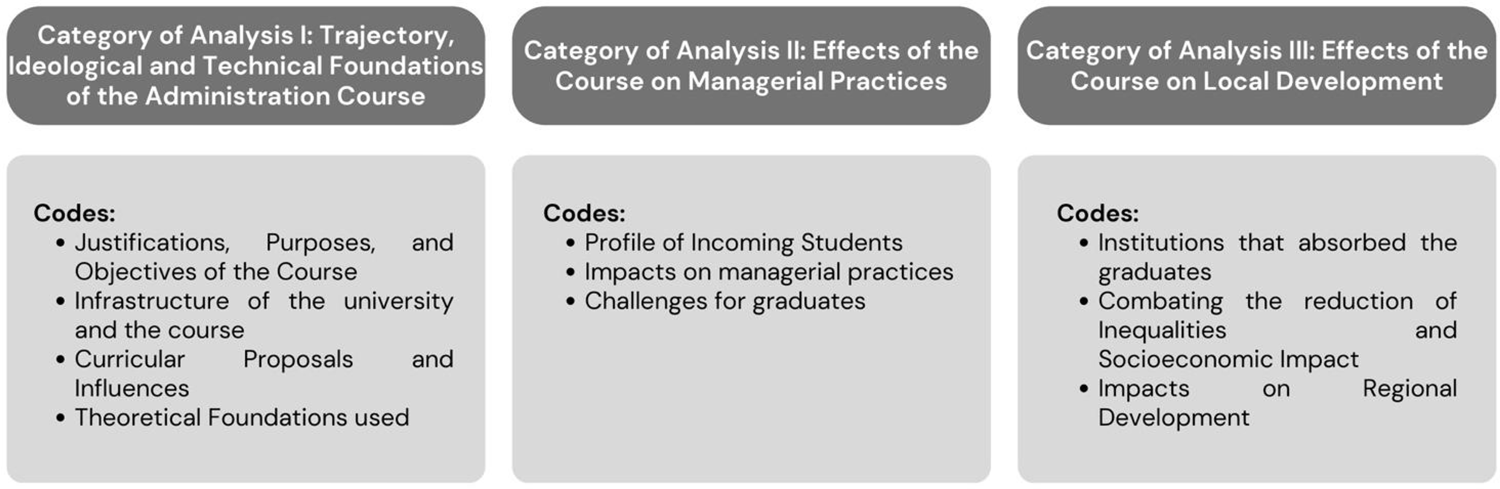 Source: Prepared by the authors (2023).
 Source: Prepared by the authors, adapted from the Pedagogical Project (1980).
 Fonte: Elaborada pelos autores, adaptada do Projeto Pedagógico (1995).
 Source: Research data.