
 Cultural Entrepreneurship in Cinema in the Discourse of Film Producers in the Brazilian State of Pernambuco
Abstract
Cultural entrepreneurship is a phenomenon that manifests itself in the cultural peculiarities of the activities of producers that have an impact on the creation of symbolic artifacts of an artistic nature with repercussions that go beyond those of the kind of production envisioned by the classical model of entrepreneurship. The current study aims to comprehend the dynamics of cultural entrepreneurship in the Pernambuco film production environment in accordance with the circuit of culture. It was conducted semi-structured interviews with Pernambuco audiovisual producers and created an explanation framework based on the circuit of culture. The corpus comprises a series of interviews with six local filmmakers, analyzed using French discourse analysis. Symbolic artifacts are configured by the representation of emerging identities related to hubs that lie outside of the mainstream of mass-media production in Brazil. Filmmaking in Pernambuco involves cultural entrepreneurship, and it is indicative of the importance of the film production output of this region. The generation of social capital by cultural entrepreneurship is bolstered by human capital and opposition to the prevailing economistic bias according to which the role of a cultural producer is confined to the actual making of films.
cultural entrepreneurship; film producer; discourse; cinema
Resumo
O empreendedorismo cultural é um fenômeno que se manifesta nas peculiaridades culturais das atividades de produtores que impactam a criação de artefatos simbólicos de natureza artística, com repercussões que transcendem o tipo de produção previsto pelo modelo clássico de empreendedorismo. O presente estudo tem como objetivo compreender as dinâmicas do empreendedorismo cultural no ambiente de produção cinematográfica de Pernambuco, em conformidade com o circuito da cultura. Foram realizadas entrevistas semiestruturadas com produtores audiovisuais pernambucanos, e um marco explicativo foi criado com base no circuito da cultura. O corpus compreende uma série de entrevistas com seis cineastas locais, analisadas à luz da análise do discurso francesa. Os artefatos simbólicos configuram-se por meio da representação de identidades emergentes relacionadas a pólos que se situam fora do mainstream da produção de mídia de massa no Brasil. A produção cinematográfica em Pernambuco envolve empreendedorismo cultural, evidenciando a relevância da produção fílmica dessa região. A geração de capital social pelo empreendedorismo cultural é fortalecida pelo capital humano e pela oposição ao viés economicista predominante, que restringe o papel de um produtor cultural à mera realização de filmes.
empreendedorismo cultural; produção fílmica; discurso; cinema
Introduction
Cultural, economic, political, and social changes in the contemporary world have led to a deviation from the original form of the capitalist system of production, in so far as this produces a system whereby aesthetic and artistic features are applied to capitalist merchandise in an attempt to create symbolic value (Ravasi & Rindova, 2013). Structural changes that altered the direction of the economy in the final decades of the 20th century have aroused interest in entrepreneurship among organizations in the public, private and third sectors, as well as quasi-autonomous organizations and the academic world. The attempt to provide a precise scientific definition of the term entrepreneurship based on the activities of the entrepreneur has proved problematic in so far as development of a plausible theory is concerned (Julien, 2010; Guerra & Paiva Júnior, 2014; Orihuela-Gallardo, Fernández-Alles, & Ruiz-Navarro, 2018).
Calás, Smircich, and Bourne (2009) note the possibility of expanding the focus of discussion of entrepreneurship and conducting more critical studies of this issue – Critical Entrepreneurship Studies (CES). Davel and Cora (2017) remark on the increasing use of the concept for analysis of the creation of social, cultural, and artistic value. A study conducted by Ellmeier (2007) also draws attention to increasing use of the term entrepreneurship in the field of culture, as seen in examination of new forms of labor contracts and the organization of professionals working in the arts around new management practices. These approaches have helped to broaden the discussion of the field of cultural entrepreneurship, seen essentially as an interactive process that mediates the exchange of resources, enables capital to be acquired, and promotes the generation of wealth (Smits, 2016).
The theoretical and analytical position adopted by the ‘establishment’ in the field of entrepreneurship requires a more plausible definition of the phenomenon of cultural entrepreneurship (Banks Lovatt, O’Connor, & Raffo, 2000). For these authors, an entrepreneur is someone “directly involved in the production of cultural goods and services: products whose principal value is symbolic, derived from their function as carriers of meaning – in images, symbols, signs and sounds” (Banks et al., 2000, p, p. 453). This definition approximates to the way the term entrepreneurship is used in concepts deriving from cultural studies, especially those that center around symbols and signs. Cultural entrepreneurship is also commonly seen as an innovative, flexible core of activities, oriented towards the production of creative ideas and the confluence of local and global (Beltrán & Miguel, 2014; Gundolf, Joauen & Gast, 2018; Sung, 2015).
Cultural entrepreneurs share certain characteristics with entrepreneurs as understood by the classic theories, such as those of Schumpeter (1982) and Drucker (2008). These studies acknowledge that entrepreneurs promote innovative practices, creating new products and generating new markets. However, they put forward significantly different views of the entrepreneur, as, for example, in their arguments as to the reduced economic risk that incur such individuals. In the case of cultural entrepreneurship, investment in this field is centered on realizing the potential of the symbolic capital of artistic projects (Peltoniemi, 2015) or supported by policies designed to support the arts (Bertelli, Connolly, Mason, & Conover, 2014).
The state of Pernambuco has recently acquired relevance in the Brazilian audiovisual landscape (Martins & Mayor, 2022). There are successful film productions in the Pernambuco scene that have gained recognition critics from the public, including O Som ao Redor (2013), Aquarius (2016), Boi Neon (2016), Tatuagem (2013), Bacurau (2019) and recently Retratos Fantasmas (2023). These films combine regional and universal aspects of symbolic representation. As a result, the current study aims to shed light on the comprehension of interactional practices by recognizing distinctive characteristics and the potential of actors placed in the Pernambuco environment through discursive elements. Thus, this study can also be used to understand how Pernambuco audiovisual producers fit into the Brazilian and global audiovisual markets, as well as the wherewithal they use to make their products profitable.
The current study aims to comprehend the dynamics of cultural entrepreneurship in the Pernambuco film production environment, with the premise that such production deviates from dominant formats in the capitalist production system by incorporating aesthetic and artistic attributes with the goal of conferring symbolic value (Philip, Newman, Bifelt, Brooks, & Rivkin, 2022). In this approach, we hope to shed light on the phenomena of cultural entrepreneurship, focusing on the entrepreneur's activities in the production of cultural goods and services. Using its discursive aspects, the French discursive approach aids in understanding interactional behaviors, distinguishing qualities, and the potential of agents in the Pernambuco setting. The study will also investigate the mechanisms by which Pernambuco's audiovisual creators have entered national and worldwide markets.
Recent studies employed the Cultural Circuit as a theoretical-methodological approach to understand contemporary cultural processes, particularly those in audiovisual industry (Capalbi, Fabbri, & Iervese, 2021; Dalbello & Silva, 2023). This approach suggests a viewpoint that considers the connections among agents involved in creation, dissemination, and consumption of culture (Du gay, . By using the Cultural Circuit as a theoretical and methodological framework, we aim to shed light on the creation of content, modes of distribution, consumer behavior, and the regulation of cultural industries, as well as their implications for the development of a distinctive cultural identity with aspects of regionality, allowing us to understand the audiovisual production located in Pernambuco.
Klamer (2011) presents the cultural entrepreneur as someone who directs their efforts towards the production of goods of high cultural value and who directly confronts the prevailing economic structure by adopting a project-based form of management. Such entrepreneurs perform tasks that emphasize the production of cultural value for producers and consumers (Lampel & Germain, 2016), in a manner oriented towards strategies relating to his or her identity as an artist, producer and creative reputation (Scott, 2012). The central research objective of the study is shed light on the comprehension of cultural entrepreneurship take in the field of film production in Pernambuco.
Agency in cultural entrepreneurship
In an organizational setting in which activities related to creativity have come to be included in regional development policies (Kemeny, Nathan, O’Brien, 2019), cultural entrepreneurship has emerged in a manner characterized by the production of non-utilitarian value with a high level of aesthetic significance (Peltoniemi, 2015). This phenomenon goes hand-in-hand with a post-industrial economy based on acceptance of risk and social networks driven by the confidence and cooperation of their members, according to a post-Fordist mode of production (Julien, 2010). Agents and agencies thus join forces to seek out new ideas relating to cultural artifacts (Rocha, Bonfim, Citadin, & Gimenez, 2018) and entrepreneurial activity is thus associated with a reflective kind of behavior on the part of entrepreneurs, who are equipped with the capacity to rapidly build up a context, identify opportunities in the external environment, and optimize the use of the resources available within his or her organization (Fletcher, 2006). Such individuals obviate the conventional stages in decision-making and develop action in an intuitive and innovative manner, thereby engendering new forms of organization related to specific circumstances related to the act of being an entrepreneur (personal trajectory) and the characteristics of his or her macro- or micro-environment (the socio-historical context) (Guerra & Paiva Júnior, 2011, 2014).
The undertakings developed by cultural entrepreneurs are immersed in milieux, networks, and clusters the promote the exchange of knowledge and experience (Julien, 2010; Bertelli et al., 2014; Whitson, Simon, & Parker, 2021). Klamer (2011) defines the cultural entrepreneur as an agent who faces the economic structure head-on and uses the project management format as a tool for creating value (Moon & Song, 2015), in so far as they are oriented towards an undertaking related to their identification as an artist/producer and the building of an artistic reputation (Orihuela-Gallardo et al., 2018; Scott, 2012).
The assimilation of technological innovations in an inclusive manner is one manifestation of a social technology that avoids certain undesirable consequences of capitalism. Cultural production thus manifests itself as a quest for entrepreneurial agency through a form of production that involves the inclusion of peripheral groups of professionals and favors the continuous (re)construction of identity by way of peer-to-peer collaboration (Yaren & Hazir, 2018).
The historical context of film production in Pernambuco
Film production in Pernambuco has been through a number of cycles that have led to it becoming one of the most important States in the country in this field. In the 1920s, the “Recife Cycle” provided visibility for local productions and, “as well as being the first great film movement in the history of cinema in Pernambuco, was also the most productive of the regional cycles that occurred in the early 20th century in Brazil” (Cunha Filho, 2006, p. 7). This period saw the production of a total of 33 films, and these helped to drive a geographically decentralized cycle of production (Cunha Filho, 2010; Teixeira Neto, 2019). During the “Recife Cycle”, many movie theaters were constructed in this city.
The audience for these films took pride in seeing local ‘home-grown’ productions. Despite the technical and economic difficulties of the time, films such as Aitaré da Praia [Aitaré of the Beach] (1925, directed by Gentil Roiz) garnered a huge local following. The cycle was aligned stylistically with the international film industry and Recife came to be regarded as the Hollywood of the Northeast Region of Brazil. In addition to this, films on Super 8 produced in the 1970s and 1980s achieved great success at short-film festivals in Brazil (Figueirôa, 2000).
This latter generation of filmmakers shared a "structure of cooperation" that brought people together around their interest in producing films (Nogueira, 2009). During this period, around 200 cult and feature films were produced (Figueirôa, 2000). Titles such as Valente é o Galo [Mighty is the Cockerel] (1974, directed by Fernando Spencer), O Palhaço Degolado [The Beheaded Clown] (1976, directed by Jomar Muniz de Brito) and Esses Onze Aí [Those Eleven There] (1978, directed by Geneton Moraes Neto and Paulo Cunha) were the most important of this era. Cunha Filho (2010) says that Recife discovered its screen identity in this period.
In the 1990s, the manguebeat/mangue bit movement [re]connected the artistic production of Pernambuco with the mass media. The trailblazer for Pernambucan feature films of the time was Baile Perfumado [Perfumed Ball] (1996, directed by Lírio Ferreira and Paulo Caldas). Árido Movie, which formed part of this new movement, was influenced musically by the manguebeat movement (Figueirôa, 2006) and the production of films marked by “brodagem” – brotherhood (Guerra & Paiva Júnior, 2011).
This contemporary movement comprises a group of filmmakers whose work reflects on national identity (Nogueira, 2009). While Baile Perfumado was the flagship film, in the late 1990s, for the Cinema da Retomada [Cinema Revival] movement. Films such as Amarelo Manga [Mango Yellow] (2002, directed by Cláudio Assis) and Cinema, Aspirinas e Urubus [Cinema, Aspirins and Vultures] (2005, directed by Marcelo Gomes) number among the best Brazilian films of that period. Marcelo Gomes’s film won the French government’s National Education Prize at the Cannes Festival in 2005. Recent productions such as Aquarius (2016), nominated for the Palme d’Or at Cannes and Bacurau (2019), winner of the Jury Prize at the same festival, have garnered international acclaim.
The methodological approach
The premises of the study
The epistemological basis of the present study lies in Cultural Studies (CS), with examination of the social and historical context and the development of a constructionist approach, emphasizing the central role of language in constructing the social world. We thus use the concept of the ‘circuit of culture’ developed by Du Gay, Hall, Janes, Mackay, & Negus (2013) as a theoretical and methodological framework. The field of CS is thus regarded “…not only as a theoretical construction, but as a method for adequate analysis for research into media culture, which sees the circuit of culture as an analytical protocol” (Lisboa Filho & Moraes, 2014, p. 83).
Foucauldian discourse analysis was employed, since Du Gay (1996, 2000, 2004) incorporates the concept of discursivity present in the works of Michel Foucault into the debate surrounding organizations that produce meanings and subjectivities. Du Gay (1996) thus underlines the structures of power and the role of discourse as a “space” for the formation of subjects (Foucault, 2005, 2012). Maingueneau (2020, 2022) and Charaudeau and Maingueneau (2004) identified problems whose analysis requires the use of the following categories: positioning and the discursive field.
Positioning is related to the use of words, vocabulary, and constructions, through which a subject indicates how he or she is located in a discursive space, marking and demarcating his or her identity in relation to the positions of other subjects operating within a given discursive field. The notion of discursive field shares the principle of the importance of the influence of inter-discourse on discourse. “The discursive field is not a static structure, but an interplay in unstable equilibrium” (Charaudeau & Maingueneau, 2004, p. 92). This means that the discursive field represents a set of discourses that interact in a given context, within which discursive formations and/or positionings coexist in a relation of constant interplay (Du Gay & Vikkelsø, 2018; Livingstone, 2018).
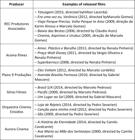
Data was collected using six semi-structured interviews with film producers based in the city of Recife. The choice of cultural entrepreneurs was based on an exploratory study and mapping of 54 producers of audiovisual materials from Pernambuco, focusing on the production of films. The final number of interview subjects was smaller, owing to difficulty accessing participants in the field. The semi-structured interviews were subsequently transcribed and prepared for data analysis (see Figure 1). About two hours and twenty minutes were spent on each interview, then the interview subject was identified by their initials JJ, RP, MC, MP, PS and CC, and all were cultural entrepreneurs in the field of film production.
Analysis of data
The analysis of data was organized around the two spheres that guide the action of a cultural entrepreneur: the public and the private. During the analysis, it was possible to group the two analytical categories of discourse – positioning and the discursive field – in accordance with each sphere. The private sphere and discursive positioning are thus related to the points in the circuit of culture that relate sometimes to the agency of the subject, sometimes to the power of the structures that restrict his or her scope for action. Secondly, we discuss the results for the points in the circuit relating to regulation and representation in the public sphere and the formation of a discursive field.
The private sphere and discursive positioning
Here we discuss the points on the circuit of culture relating to production, consumption, and identity, which occur in the private sphere and are related to discursive positioning.
Production
The point on the circuit relating to production involves discourse relating to professionalization – the strengthening of the arts sector, job creation and the restructuring of the market around sustainable projects (Moon & Song, 2015; Rodrigues, 2024). The main effect of this discourse in the field of production concerns the development of the organizational apparatus of production companies to address contractual issues relating to accounts and the marketing of films, as illustrated in the following statements:
Our management model involves the three partners. Each one of them specializes in a particular field... there is also the collegiate body, which involves six people interacting in a more horizontal fashion, discussing the company’s projects and decisions. (JJ)
We have an assistant who works on a day-to-day basis selling films, and, leaving aside the legal aspects of the business... signing up for festivals, sending films. This is the day-to-day business. (RP)
The second effect found was that of broadening the operation of the production companies, demonstrating the fact that their managers not only assume the role of creators of films, but also other audiovisual products, such as TV shows (Ravasi; Rindova, 2013; Smits, 2016).
Access to the mechanisms of production indicates the positioning of a generation of established entrepreneurs in the creation and production of films by way of ongoing mobilization of capital (Scott, 2012), thereby transforming film production into an end-product type activity. In addition, the centralization of decision-making is seen in terms of a tendency for the producer not to participate in all stages of the company process to ensure high levels of project quality. This is the reason why producers tend to assume project-leadership positions (Fletcher, 2006). This tendency towards centralization is referenced in the following statements:
Relatively highly centralized. Because we end up sharing decisions with the people we work with. (MC)
When I receive a script or some other material, I present it to the group... But it ends up, like, it’s part of capitalist culture for the partners to have greater autonomy. (JJ)
The two of us are in control of the whole company, because we are the ones who make the big decisions. (RP)
The purpose/function concerns the fact that each member of the team or stage in the production process is related to an aspect that is logically necessary for the development of the films produced. A results-oriented approach and optimization of efforts to some extent determine the composition of teams. The artistic component of a project is thus a hallmark of excellence in management on the part of these entrepreneurs (Ellmeier, 2007; Gundolf, Jaouen & Gast, 2018). The following statements illustrate this point.
We hire professional staff as and when we need them [in the case of an executive producer] ... These people are not artists; they are real businesspeople... And they join the team as such. (RP)
Sometimes, I look for a financial partner or one who has more of a technical capacity. (JJ)
Adapted control mechanisms concern the need to organize and make use of the resources needed to produce a film and achieve effective results, in an organic manner, well-suited to the context in which this cultural artifact is produced (Klamer, 2011; Peltoniemi, 2015). However, the quantity of resources and accounting tools required means that films need to meet certain agreed requirements before they can be produced.
It depends on the decision, it depends on what people are saying, a project decision must be focused on the project and on formal controls, although I think that all such decisions are influenced by informal controls. (MC)
The way production companies are organized depends on the relation between projects and resources as an indicator of survival. This is a recurrent discourse when producers talk about the functioning of their companies and is connected to the growing success of alternative models of organizational management, such as project-based management (Moon & Song, 2015).
The challenge of the commercial viability of films is related to the sustainability of production companies beyond audiovisual projects per se and/or reliance on public funding. This is imperative given the competition for the resources needed to make a film viable, as illustrated in the following statements:
In relation to finances and the funding structures that make it possible to move on to the next stage of being self-sustaining, having enough capital to sustain ourselves... this is a difficulty, getting people to understand that production companies should be guided by the logic of sustainability. (MC)
This means that this generates greater demand in the market, it is something that fuels itself, isn’t it? It’s a feedback cycle. What’s the point of a degree in filmmaking if there’s no work when you graduate? (CC)
Public agency is a concept that undertake the debate regarding the promotion of film production. This discourse also concerns the sphere of regulation and will be returned to below in this context (Section 5.2.1). A perspective based on financial results is seen to be necessary by the cultural entrepreneur, in contrast to a perspective confined solely to aesthetic and artistic qualities seen as being typical of the world of culture (Lampel & Germain, 2016; Orihuela-Gallardo et al., 2018).
Consumption
Examination of the consumption of films produced in Pernambuco reveals the difficulty experienced when filmmakers attempt to broaden the audience for films and gain access to the screening circuit. Three types of discourse are worth highlighting here: the formation of the audience, inclusion in alternative circuits, and opposition to the predominance of a televisual language.
In terms of the discourse related to formation of the audience, the effect achieved at this point concerns the endeavor to broaden the audience for local films. This challenge can be understood to be a consequence of the difficulty "non-commercial" films experience in gaining access to the screening market and achieving a greater audience share, as illustrated by the following statement:
…before 'Neighboring Sounds,' so far as I can remember, 'Cinema, Aspirins and Vultures' was the last film to achieve 200 - 250 thousand paying viewers …[T]he reality for films is that 300,000 paying viewers is paradise. You normally get 5,000, sometimes 1,000. (MP)
…there is a project involving screening short films in the Sertão region. It is called 'Cinema Volante: luar do sertão' [Mobile Cinema: Moonlight in the Sertão], and we show films in the Sertão. This time we’re going to Sertão do Pajeú. We are already on the third edition of the project. (CC)
These extracts clearly show that reaching a wider audience requires efforts to be made to seek out different methods and channels for screening films and enabling audiences to consume films. One of these is to broaden access to films produced in Pernambuco by way of greater inclusion in alternative circuits (Dalbello & Silva, 2023). In the effort to broaden the concept of film consumption beyond the typical movie theater, film club practices and online platforms are frequently highlighted. Detailed information about the hunt for these alternate circuits is revealed in the snippets from the producers' interviews that are displayed below, as illustrated in the following statements searching for alternative circuits.
When I went about setting up a home page, I chose the simplest possible format on a free video sharing site... (PS)
This film was also distributed in Continente Magazine, which has a print run of 5,000. It is only sold in Pernambuco, but we included the film and three shorts as a supplement. The magazine has a section on film, and this was a way of getting the film directly into people’s homes. (MP)
Consumption is related to opposition to the predominance of a televisual language. In Brazilian cinema, the influence of the visual aesthetics of television is a problem for authorial films that do not adopt a style that can be described as comedy or drama. The influence of television aesthetics on authorial films that don't have a language typically associated with comedies or even dramas that work from the perspective of schematic scripts and appeal to actors emerges as a problem in the context of the cinema produced in Pernambuco. This film turns out to be typical of cinema made in Brazil since the resumption in the 1990s, featuring well-known names from television programs (Martins & Mayor, 2022).
... the films from Rio and São Paulo, most of them 95% - 98% are films that have a television language, the guy is not doing it in films, in cinemas, he is not transporting it from the TV and taking it to a theater movie screening, right? (CC).
nothing differentiates the big blockbusters of Brazilian cinema from this model that television imposes (MP).
The counter-hegemonic stance taken by Pernambuco audiovisual producers helps to position these producers against the advancement of television aesthetics in movie theaters, occupying space that could be shared with films that have other narrative characteristics that deviate from the standards imposed by this type of production.
Identity
The attempt to establish a fixed identity for local film producers generates discourse related to different views of narration, partnerships, and professionalization. The idea of different views of narration involves opposing the predominance of yet another televisual language (Figueirôa, 2006). The situation at the current point in time eschews this in so far as it has to deal with generational differences with regard to narrative styles and types of film, as the remarks below make clear:
…we propose a style that is different from that of a blockbuster or a typical Brazilian narrative film, which end up excluding other possibilities, other ways of seeing, other styles, other ways of making a film that do not involve creating a spectacle or a form of entertainment. (MP)
The discourse relating to partnerships concerns the establishment of networks to execute producers’ projects as are typical in the creative industries (Gundolf, Joauen & Gast, 2018; Rocha et al., 2018) and the affective ties between producers and other filmmakers and/or team members (Nogueira, 2009; Pearlman & Sutton, 2022). The following statements illustrate the effect of establishing formal and informal networks:
I sort of have one. You could say that I have an informal network that I myself, or rather the company itself, created. (PS)
We go around meeting people and people get interested in our work and like the film. That’s how a network builds up. (RP)
The discourse relating to identity among these producers relates to professionalization, which is also discussed by Hausmann (2010). The formation of a specific professional profile strengthens and legitimizes the position of the film producer as an agent involved in the production of films and as a cultural entrepreneur who produces projects:
The executive producer is not an accountant, neither are they responsible for filing accounts. They may do this, if there is no-one else to do it, but it is not their main function... The executive producer is the project manager, a strategist, who plans and looks for the best options, determining or foreseeing the life cycle of a project or of a product based on formal and informal information. (MC).
The tension between identity and difference sheds light on the fact that individual talent involves the development of artistic projects but depends on collective efforts to ensure that such projects are in fact put into effect and the films are, as a result, viable.
The public sphere and the discursive field
The second part of this section addresses the points on the circuit of culture relating to regulation and representation, in combination with the construction of the emerging discursive field in the field of operation of the producers interviewed. The discursive field is related to the public dimension that guides the action of a cultural entrepreneur.
Regulation
The dimension of regulation on the circuit of culture involves interaction with public agency, or rather the effects of bureaucratization and dependency. Adjustment of the mechanisms and processes related to increased state funding cause the sector to be structured around compliance with the "rules of the game" imposed by the public authorities in relation to cultural policy in Brazil (Arruda, 2003). The effects of bureaucratization of funding come into play when producers build up an organizational structure geared towards complying with the norms imposed by the state (Bolaño, 2003). The following extracts touch concerning to bureaucratization.
The executive producer needs to know about audiovisual legislation, because we work a lot with tax incentives and the producer has to know a lot about the law surrounding this... However, if you work with tax incentives, you can’t mess with the law. Otherwise, you will never get a second project... because the rules for using funds deriving from tax waivers are very strict. (JJ)
The dependency effect involves the adoption of a position that favors public funding, either through mechanisms related to oversight and governance or through lack of private sector interest in investing in such projects. The statements cited below shed light on this:
Because, even when it is a private company, this company is usually providing funding by way of tax break. It’s very unusual for them to do direct marketing, so it ends up being public. (JJ)
And applications for funding are 100% public. (PS)
But without this [public funding] the work of the production company would half what it is now. (CC)
The market imperative associated with the rise of media conglomerates in the screening and television sectors means that products have to be distributed through movie theaters and it requires the producer to develop strategies for overcoming such barriers, in which artistic talent and the rules of the market come together (Lampel & Germain, 2016).
There are few distributors in Brazil and all of them are pretty much multinational and focus on films that have a US format, which is not the case with our work... This is practically a requirement of the market. (RP)
The cinema-screening market is increasingly market oriented... it is an opportunity that is open only for films that are commercially profitable. (MP)
There is a discourse concerning the difficulty negotiating the circulation bottlenecks, both in terms of the size of the audience and the difficulty some production companies experience in generating a sustainable production cycle involving ticked sales and the distribution of films:
...distribution and the fact that people can’t see the films are both a source of great torment for Brazilian filmmakers nowadays. (MP)
The discourse relating to the impact of technology suggests that producers can get together to drive the production and circulation of films and help to regroup forces in terms of organization of the sector, attempting to incorporate creative and innovative techniques to spur the production of cultural products (Sung, 2015):
First, you had migration from celluloid to digital... digital filmmaking is a reality that has significantly lowered production costs... We have been using the Internet a lot. The five or so short films that we have made were all made available on the Internet as soon as they had done the rounds of the festivals. (MP)
Representation
The way producers are represented helps us to understand how they view their work, especially in terms of different styles of production. There is a natural tendency to adopt a plurality of styles and conditions of production and a desire for the same kind of status as producers located in other more illustrious centers of film production, such as the Rio-São Paulo axis. This determines the specific characteristics of this group of producers (Beltrán & Miguel, 2014), as the following statements demonstrate:
There are lots of filmmakers in Brazil, smart people who want to make a popular film, but not according to the US model. (RP)
Tax incentives are not enough for everyone, especially since most companies in the Northeast already have a string of discounts and exemptions simply because they are located in the Northeast. So, it is difficult to raise funds through tax incentives here in the Northeast. If you look at the percentage of Rouanet Law fundraising in the audiovisual sector, around 80% of it is in the South or Southeast. This is another problem. (MC)
Representation also involves a discourse that emphasizes a distinction between artist and producer. This representation concerns aspects of the position occupied by the producer that go beyond the need for up-to-date training (Laghmam, 2024). Representation is thus one of the primary links in the chain of film production, as expressed in the following statement:
We put together the applications, we deal with the budget and all that, but we are first and foremost artists and someone with a background in administration may be able to think of other ways of obtaining these resources. (RP)
The third discourse to emerge concerns the formation of the audience, a discourse that has much in common with that related to consumption. The effects of this discourse about representation concern the need for re-education of the audience and the difficulty reaching out to the general public, which require producers, as cultural entrepreneurs, to develop creative ways of finding market opportunities (Guerra & Paiva Júnior, 2011), as outlined in the following statement:
In my opinion, for the public to develop a renewed interest in films, viewers need to be trained, the audience needs to be re-educated, and the public needs to be encouraged to look for a style of cinema that is not just market oriented, that does not understand film only in terms of entertainment... There is therefore a need to train people to view images critically, because we live in a world full of images. (MP)
The emergence of a certain difficulty reaching out to the public indicates that the discursive field is formed of discourses and inter-discourses that see films produced in Pernambuco as products that it is difficult for the public to assimilate. Such films come up against critical barriers to access to the screening circuit and a broader audience and they thus end up being treated as niche films even in the state and the city in which many of them were produced, as shown in the study by Dalbello e Silva (2023). The following statements would seem to corroborate this impression:
There is no place for independent films with no famous actors, by directors who are not famous either and who propose a style different from the blockbuster or national-type cinema. (MP)
They (the major distributors) do not accept our work and we are like orphans… This is the reason why our company now acts as its own distribution company: we can now apply for distribution without depending on anyone and we create our own mechanisms. (RP)
The effects of the discourse relating to audience formation are also expressed in the discourse concerning lack of market visibility, since films that rarely meet with much success at the box-office nevertheless gain sponsors and investors. Possible partnerships and ways of gaining market access for local products and companies are ways of activating the brand and present new opportunities for inclusion in the market (Ellmeier, 2007). This lack of visibility perpetuates the dependency of producers on public funding:
It is a shame that businesses are still not aware of the great power of cinema, isn’t it? (RP)
So long as we do not have more extensive public policies that make it possible to turn things round and regain the ground that we have lost to commercial cinema, we are forced to operate like this. (MP)
Third, I think that there is a lack of understanding on the part of private agencies and funding organizations regarding to the advantages of investing in this area, because these are highly durable media products. (MC)
One of the most common ways of representing the production of films produced by cultural entrepreneurs operating in Pernambuco lies in highlighting recognition of the merit of these works by national and international festivals and specialist critics. The discourse relating to award-winning films feted by specialist critics has helped local films to garner media coverage, even in the mass media, but this is not sufficient to win over the public. The discourse relating to recognition/merit could therefore be articulated better in such a way as to help create a broader audience and/or achieve broader distribution of these films, as well as generating added value for the film (Ravasi & Rindova, 2013). The following statements highlight the importance of such awards:
Because we are taking the cinema of Pernambuco much further afield... and the Governor [Eduardo Campos, Governor of the State of Pernambuco at the time] knows this and this is the reason why he invests so much in it. Because Pernambuco is being talked about outside of Brazil, at festivals such as Rotterdam and Cannes, where I have already shown one of my own films …. Films are launched at festivals all over the world. Our films have been shown in Egypt, the United States, lots of different places. (RP)
...this is because the film was Brazil’s entry for nomination for the Academy Award, so, on its first showing, it got around 100,000, and when it was nominated for the Academy Award, it returned to the cinemas and that’s when it really took off. (MP)
Finally, there is the discourse concerning the type of sector, the construction of the representation of the fact that the field of film production possesses certain specific characteristics that culminate in the existence and perpetuation of organizational practices associated with "the way things are done". This typing has an impact on the emergence of discourses that position the action of the cultural entrepreneur, such as professionalization (the specific professional profile), the control mechanisms adopted, and new possibilities for the distribution of films. Analysis of cultural entrepreneurship in the field of cinema thus produces understanding of the way the cultural producer mobilizes his or her know-how around making films, overcoming obstacles to access to the market and adapting to opportunities in their working environment (Rocha et al., 2018). The following statements address some of these elements that promote entrepreneurship:
Everything comes together in the economics of culture. It is never one thing at a time. It is always a series of factors. (MC)
[a film producer] is also a creator, he or she has able to create mechanisms for generating possibilities. (RP)
These are mechanisms that we are trying to develop to break through this barrier and try to get a clearer look. (MP)
The circuit of culture, therefore, in its epistemological condition as a theoretical and methodological framework makes it possible to analyze the action of the entrepreneur from a wide variety of perspectives, laying special emphasis on the fact that orientation of entrepreneurial action in the field of cultural production is not restricted to aspects related to management alone, as in the studies of Lima (2014) and Lisboa Filho and Moraes (2014). The phenomenon thus requires that the entrepreneur develop a certain kind of reflective action as a way of ensuring their inclusion in a profession in which they are obliged to work together with a variety of other actors performing a diverse range of functions.
Figure 2 highlights the fact that the discursive connections that guide the action of film producers active in Pernambuco incorporate in their own way the circular, overdetermined logic found in the circuit of culture model. We find discourses and effects that are shared by different stages and the construction of a field of discourse that underpins the positioning of cultural entrepreneurs in relation to the quest for new ways of producing their work and enabling it to circulate freely. The stages of production, consumption and identity are marked in gray, as they indicate the influence of discursive positioning in relation to the action and agency of subjects during these stages. Along with regulation and representation, these make up the broader discursive field that has been revealed by the analysis conducted in the present study. The straight dotted lines separate the discourses and the effects emerging during each stage, but do not suggest any strict boundary between these stages. We thus conclude our analysis by discussing the circularity of the circuit of culture used as a theoretical and methodological framework for examining cultural entrepreneurship.
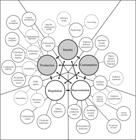
The use of the circuit of culture thus makes it possible to examine the action of entrepreneurs from a multifaceted point of view, highlighting the fact that the orientation of entrepreneurial action in the field of cultural production should not remain restricted to aspects related to management alone, as laid out in the discussion developed in the studies conducted by Lima (2014) and Lisboa Filho and Moraes (2014). The emphasis on cultural entrepreneurship thus requires that the entrepreneur engage in wide-ranging action and learning so as to fulfill a professional role in which he or she will work with an array of different individuals and perform a wide variety of different functions.
Conclusions
By way of conclusion, we return to the initial research objective: shed light on the comprehension of cultural entrepreneurship taken in the field of film production in Pernambuco.
It is important to bear in mind the connection between the cultural product and the subjectivity of the actor who creates and develops symbolic artifacts as part of their everyday working life, seen here as the agency of a cultural entrepreneur. The actions of such an entrepreneur in the field of film production are related to attempts to emancipate groups of professionals who work intensively as creators and to improve the conditions for obtaining resources by forging links with strategic partners. The profile of the cultural entrepreneur’s work thus necessitates a (re)examination of the concepts of competition and organizational strategy from the point of view of a sector of production which characteristically brings people together around an innovative project that expresses subjective aspect of agents fully engaged in the process of creating symbolic and artistic artifacts.
The creation of a symbolic artifact conflicts with the reactive one-way approach of traditional market-oriented strategies. This also destabilizes the prevailing utilitarian rationale of the entrepreneur as classically conceived and suggests an openness to an understanding of the work of entrepreneurs that favors a multi sided dialogical approach. The present study has thus aimed to shed light on cultural entrepreneurship in the field of film production in relation to the means of distribution and screening of films, the aesthetic elements of film production and the management practices necessary to achieve success for films in terms of access to an audience.
The work of the cultural producers analyzed suggests that the individual operates within the institutional apparatus of the sector and that this affects the generation and distribution of capital by strengthening relationships and mobilizing the agents involved in the production of cultural artifacts. We thus moved on to discuss cultural production and shed light on central emerging aspects of this in the field of film production, such as the aim to professionalize this kind of entrepreneur and his or her team and to construct networks and partnerships based on relations of trust and cooperation.
It is crucial that producers think in terms of enhancing their professional performance in a way that goes beyond the process of production, by, for example, acknowledging the growing need to look for alternative ways of distributing films. For makers of policy relating to cinema, we have noted the need to broaden the scope of such policies in such a way as to fund new ways of distributing and exhibiting films. We also note the need to ensure that cinema production funding policies remain in place, including the promotion of film production entrepreneurship projects that aim to find other outlets for film, such as the Internet and television. Furthermore, we offer an analytic framework based on the cultural circuit to comprehend the discursive practices of audiovisual producers in the state of Pernambuco, future research can use this framework to contribute to the field of cultural studies.
Our study was limited in so far as it focused empirically on local independent films produced in the State of Pernambuco. Future studies could investigate different hubs of non-mainstream production of audiovisual material in Brazil as a way of broadening the academic debate regarding entrepreneurial practices that non-hegemonic cultural production in the creative industries. French discourse analysis provides a theoretical and methodology framework suitable for fruitful construction of knowledge regarding cultural entrepreneurship. This further opens up the possibility of investigating the internal dynamics of the work of the cultural entrepreneur in relation to aspects of the circuit of culture related to the specific characteristics of consumption, identity, representation and regulation. Another challenge faced by investigators in this field concerns the need to broaden and diversify the number of individuals covered by the research as a way of providing a larger body of data for analysis of the experience of being a cultural entrepreneur.
Collectively, the action of cultural entrepreneurs mediates the process of reflexive [re]appropriation of the use of new management tools and organizational techniques that enable these individuals to participate more in the cultural production of artifacts of great symbolic value. This value can be built upon the identities of producers and creators and by working together to create a process capable of breaking with the normal modus operandi in the sphere of the production, distribution and consumption of symbolic artifacts.
References
-
Arruda, M. A. do N. (2003). A política cultural: regulação estatal e mecenato privado. Tempo Social, 15 (2), 177-193. https://doi.org/10.1590/S0103-20702003000200007
» https://doi.org/10.1590/S0103-20702003000200007 -
Banks, M., Lovatt, A., O'Connor, J., & Raffo, C. (2000). Risk and Trust in the Cultural Industries. Geoforum, 31 (4), 453-464. https://doi.org/10.1016/S0016-7185 (00)00008-7
» https://doi.org/10.1016/S0016-7185 (00)00008-7 -
Beltrán, G. J., Miguel, P. (2014). Doing culture, doing business: A new entrepreneurial spirit in the Argentine creative industries. International Journal of Cultural Studies, 17(1), 39–54. https://doi.org/10.1177/1367877912461906
» https://doi.org/10.1177/1367877912461906 -
Bertelli, A. M., Connolly, J. M., Mason, D. P., & Conover, L. C. (2014). Politics, management, and the allocation of arts funding: Evidence from public support for the arts in the UK. International Journal of Cultural Policy, 20 (3), 341-359. https://doi.org/10.1080/10286632.2013.786057
» https://doi.org/10.1080/10286632.2013.786057 - Bolaño, C. (2003). Da derivação à regulação: para uma abordagem da Indústria Cultural. Revista de Economía Política de las Tecnologías de la Información y Comunicación, 5 (3), 60-96.
-
Calás, M., Smircich, L., Bourne, K. (2009) Extending the boundaries: Reframing “Entrepreneurship as Social Change” through feminist perspectives. Academy of Management Review, 34(3), 552–569. https://doi.org/10.5465/amr.2009.40633597
» https://doi.org/10.5465/amr.2009.40633597 -
Capalbi, A., Fabbri, T., Iervese, V. (2021). New Digital Cinema: How Platforms Are Changing the Audiovisual Industry. Acta Universitatis Sapientiae, Communicatio, 8(1), 22–35. https://doi.org/10.2478/auscom-2021-0002
» https://doi.org/10.2478/auscom-2021-0002 - Charaudeau, P., Maingueneau, D. (2004). Dicionário de análise do discurso. São Paulo, SP: Contexto.
- Cunha Filho, P. C. (2006). Apresentação. In P. C. Cunha Filho (Ed.). Relembrando o cinema Pernambucano: dos arquivos de Jota Soares (pp. 7-13). Recife, PE: Massangana.
- Cunha Filho, P. C. (2010). A utopia provinciana: Recife, cinema, melancolia Recife, PE: Editora Universitária da UFPE.
-
Dalbello, L., Silva, N. L. S. (2023). Do circuito de cultura para o circuito multidimensional: uma adaptação para alçar variáveis significativas para o desenvolvimento sustentável. Research, Society and Development, 12(3), 1–12. https://doi.org/10.33448/rsd-v12i3.40498
» https://doi.org/10.33448/rsd-v12i3.40498 -
Davel, E., Cora, M. A. J. (2017). Empreendedorismo cultural: cultura como discurso, criação e consumo simbólico. Políticas Culturais em Revista, 9(1), 363-397. https://doi.org/10.9771/pcr.v9i1.10035
» https://doi.org/10.9771/pcr.v9i1.10035 - Drucker, P. F. (2008). Inovação e espírito empreendedor: práticas e princípios (7th ed.). São Paulo, SP: Cengage Learning.
-
Du Gay, P. (2004). Against "Enterprise" (but not against "enterprise", for that would make no sense). Organization, 11 (1), 37-57. https://doi.org/10.1177/1350508404039777
» https://doi.org/10.1177/1350508404039777 - Du Gay, P. (1996). Consumption and identity at work London: Sage.
- Du Gay, P., Hall, S., Janes, L., Mackay, H., &Negus, K. (2013). Doing Cultural Studies: The story of the Sony Walkman (2nd ed.). London: Sage.
- Du Gay, P. (2000). In praise of bureaucracy: Weber, organization, ethics. London: Sage.
-
Du Gay, P., & Vikkelsø, S. (2018). The sun also rises. Journal of Cultural Economy, 11(6), 602–607. doi: 10.1080/17530350.2018.1528474
» https://doi.org/10.1080/17530350.2018.1528474 -
Ellmeier, A. (2007). Cultural entrepreneurialism: On the changing relationship between the arts, culture and employment. International Journal of Cultural Policy, 9 (1), 3-16. https://doi.org/10.1080/1028663032000069158a
» https://doi.org/10.1080/1028663032000069158a - Fletcher, D. E. (2006). Entrepreneurial processes and the social construction of opportunity. Entrepreneurship & Regional Development, 18 (5), 421-440. Fletcher, D. E. (2006). Entrepreneurial processes and the social construction of opportunity. Entrepreneurship & Regional Development, 18 (5), 421-440.
- Figueirôa, A. (2000). Cinema Pernambucano: uma história em ciclos Recife, PE: Fundação de Cultura da Cidade do Recife.
- Figueirôa, A. (2006). O manguebeat cinematográfico de Amarelo Manga: energia e lama nas telas. [Apresentação de trabalho]. 6º Encontro dos núcleos de pesquisa da intercom, São Paulo.
- Foucault, M. (2012). A arqueologia do saber. (8th ed.). Rio de Janeiro, RJ: Forense Universitária.
- Foucault, M. (2005). A ordem do discurso. (9th ed.). São Paulo: Edições Loyola.
-
Guerra, J. R. F., Paiva Júnior, F. G. (2011). Empreendedorismo Cultural na produção cinematográfica: A ação empreendedora de realizadores de filmes pernambucanos. Revista de Administração e Inovação 8(3), 78–99. https://doi.org/10.5773/rai.v8i3.792
» https://doi.org/10.5773/rai.v8i3.792 -
Gundolf, K., Jaouen, A., Gast, J. (2018). Motives for strategic alliances in cultural and creative industries. Creativity and Innovation Management, 27(2), 148–160. https://doi.org/10.1111/caim.12255
» https://doi.org/10.1111/caim.12255 - Hausmann, A. (2010). German artists between bohemian idealism and entrepreneurial dynamics: Reflections on cultural entrepreneurship and the need for start-up management. International Journal of Arts Management, 12(2), 17-29.
- Julien, P. A. (2010). Empreendedorismo regional e economia do conhecimento São Paulo: Saraiva.
-
Kemeny, T., Nathan, M., O’Brien, D. (2019). Creative differences? Measuring creative economy employment in the United States and the UK. Regional Studies, 1–11. https://doi.org/10.1080/00343404.2019.1625484
» https://doi.org/10.1080/00343404.2019.1625484 -
Klamer, A. (2011). Cultural entrepreneurship. The Review of Austrian Economics, 24(2), 141-156. https://doi.org/10.1007/s11138-011-0144-6
» https://doi.org/10.1007/s11138-011-0144-6 -
Laghmam, M. Z. (2024). Documentary Film and the Politics of Representation. The International Journal of Cross-cultural Communication and Media Studies, 1(2), 10-20. https://doi.org/10.34874/PRSM.cms-vol1iss2.1093
» https://doi.org/10.34874/PRSM.cms-vol1iss2.1093 -
Lampel, J., Germain, O. (2016). Creative industries as hubs of new organizational and business practices. Journal of Business Research, 69(7), 2327–2333. https://doi.org/10.1016/j.jbusres.2015.10.001
» https://doi.org/10.1016/j.jbusres.2015.10.001 - Lima, L. P. B. (2014). As políticas culturais como espaço de intervenção crítica dos estudos culturais. Intervenciones en estudios culturales, (1): 85-104.
- Lisboa Filho, F. F., Moraes, A. L. C. (2014) Estudos Culturais aplicados a pesquisas em mídias audiovisuais: O circuito da cultura como instrumento analítico. Significação: Revista de Cultura Audiovisual, 41(42), 67-86.
-
Livingstone, S. (2018). Audiences in an Age of Datafication: Critical Questions for Media Research. Television & New Media, 20(2), 170-183. doi:10.1177/1527476418811118
» https://doi.org/10.1177/1527476418811118 - Maingueneau, D. (2020). Faire entendre les sans-voix. Argumentation et Analyse du Discours,(24), 1-21.
- Maingueneau, D. (2022). Responding to the pandemic: A discourse analysis approach. In COVID-19, Communication and Culture (pp. 21-36). London: Routledge.
-
Martins, C. M., Mayor, A. L. D. A. S. (2022). “BACURAU”: No futuro, só resistência?. Novos Estudos CEBRAP, 41(3), 489–505. https://doi.org/10.25091/S01013300202200030003
» https://doi.org/10.25091/S01013300202200030003 -
Moon, S., Song, R. (2015). The roles of cultural elements in international retailing of cultural products: an application to the motion picture industry. Journal of Retailing, 91(1), 154–170. https://doi.org/10.1016/j.jretai.2014.12.002
» https://doi.org/10.1016/j.jretai.2014.12.002 - Nogueira, A. M. C. (2009). O novo ciclo de cinema em Pernambuco: a questão do estilo Recife, PE: Editora da UFPE.
-
Orihuela-Gallardo, F., Fernández-Alles, M., Ruiz-Navarro, J. (2018). The influence of the cultural entrepreneur on the performance of cultural and creative firms. Academia Revista Latinoamericana de Administracion, 31(2), 392–409. https://doi.org/10.1108/ARLA-11-2015-0295
» https://doi.org/10.1108/ARLA-11-2015-0295 - Pearlman, K., & Sutton, J. (2022). Reframing the director: distributed creativity in filmmaking practice. In T. Nannicelli & M. Hjort (Eds.), A Companion to Motion Pictures and Public Value Hoboken: John Wiley & Sons, 86-105.
-
Peltoniemi, M. (2015). Cultural industries: Product-market characteristics, management challenges and industry dynamics. International Journal of Management Reviews, 17 (1), 41-68. https://doi.org/10.1111/ijmr.12036
» https://doi.org/10.1111/ijmr.12036 -
Philip, J., Newman, J., Bifelt, J., Brooks, C., & Rivkin, I. (2022). Role of social, cultural and symbolic capital for youth and community wellbeing in a rural Alaska Native community. Children and Youth Services Review, 137, 1-10. https://doi.org/10.1016/j.childyouth.2022.106459
» https://doi.org/10.1016/j.childyouth.2022.106459 - Ravasi, D., Rindova, V. (2013). Criação de valor simbólico. Revisa Interdisciplinar de Gestão Social, 2(2), 13–35.
-
Rocha, D. T., Bonfim, L. R. C., Citadin, M. W., Gimenez, F. A. P. (2018) Mapeando as relações de coprodução e codistribuição no cinema brasileiro: Uma análise pela ótica da teoria de redes. Intercom: Revista Brasileira de Ciências da Comunicação, 41(1), 41–61. https://doi.org/10.1590/1809-5844201812
» https://doi.org/10.1590/1809-5844201812 - Rodrigues, V. (2024). Creative Production and Management in the Performing Arts: Modus Operandi. Abingdon: Routledge.
- Schumpeter, J. A. (1982). A teoria do desenvolvimento econômico São Paulo: Abril Cultural.
-
Scott, M. (2012). Cultural entrepreneurs, cultural entrepreneurship: music producers mobilizing and converting Bourdieu's alternative capitals. Poetics, 40 (3), 237-255. https://doi.org/10.1016/j.poetic.2012.03.002
» https://doi.org/10.1016/j.poetic.2012.03.002 -
Smits, R. (2016). Gatekeeping and networking arrangements: Dutch distributors in the film distribution business. Poetics, 58, 29-42. https://doi.org/10.1016/j.poetic.2016.08.002
» https://doi.org/10.1016/j.poetic.2016.08.002 -
Sung, T. K. (2015). Application of information technology in creative economy: Manufacturing vs. creative industries. Technological Forecasting and Social Change, 96, 111-120. http://dx.doi.org/10.1016/j.techfore.2015.04.002
» http://dx.doi.org/10.1016/j.techfore.2015.04.002 - Teixeira Neto, W. D. M. (2018). Kleber Mendonça Filho, O Som ao Redor e a construção de uma ideia sobre o cinema pernambucano. Aniki: Revista Portuguesa da Imagem em Movimento, 5 (2), 419-436.
-
Whitson, J. R., Simon, B., & Parker, F. (2021). The Missing Producer: Rethinking indie cultural production in terms of entrepreneurship, relational labour, and sustainability. European Journal of Cultural Studies, 24 (2), 606-627. https://doi.org/10.1177/1367549418810082
» https://doi.org/10.1177/1367549418810082 -
Yaren, Ö; Hazir, I. K. (2018). Critics, politics and cultural legitimation: An exploratory analysis of the Turkish film field. European Journal of Cultural Studies, 23 (4), 611-629. doi:10.1177/1367549418810079
» https://doi.org/10.1177/1367549418810079
Notes
-
1
. “Brodagem”, a neologism demonstrating the spirit of collectivism that pervades this group of filmmakers, “is a form of management that uses social technology based on cooperation and trust” (Guerra, Paiva Júnior, 2011, p. 89).
-
Inclusive language
The authors use inclusive language that acknowledges diversity, conveys respect to all people, is sensitive to differences, and promotes equal opportunities.
-
Plagiarism check
O&S submit all documents approved for publication to the plagiarism check, using specific tools.
-
Data availability
O&S encourages data sharing. However, in compliance with ethical principles, it does not demand the disclosure of any means of identifying research participants, preserving fully their privacy. The practice of open data seeks to ensure the transparency of the research results, without requiring the identity of research participants.
-
Associate Editor:
Letícia Dias Fantinel
O&S encourages data sharing. However, in compliance with ethical principles, it does not demand the disclosure of any means of identifying research participants, preserving fully their privacy. The practice of open data seeks to ensure the transparency of the research results, without requiring the identity of research participants.

 Sources: elaborated by the authors.
 Sources: elaborated by the authors.