
 The Discursive Formation of Hair Product Consumption Practices among Brazilian Women with Curly or Coiled Hair
Abstract
This study analyzed how the discursive formation of hair product consumption practices of Brazilian women with curly or coiled hair occurs, identifying statements that support the discourse on the use of straight hair as a standard and that, consequently, guide these women choices. To this end, genealogy was used as a research method, through documentary research, participant observation and semi-structured interviews. In the documentary research, data were collected on Instagram and YouTube from four digital influencers. Participant observation was carried out based on the life experience and work of one of the researchers as a curl consultant, while the interviews were conducted and recorded via the Google Meet platform, with 10 women from all five regions of Brazil, with the enunciative analysis being carried out based on Michel Foucault. The results indicate the discourse on hair product consumption practices is formed through seven statements. The first three statements – the statement of social bond, the statement of availability and the statement of maintenance – are focused on the use of straight hair, thus supporting the standard consumption of this type of hair. In parallel, bringing another discursive position, the following statements emerge: multiplicity, diversity, representation and personalization, which reinforce the use of hair in various ways – that is, straight, brushed, straightened or natural. From these statements, discursive practices of resistance are formed that guide changes in the hegemonic discourse, such as, for example, hair transition, the big chop, and changes in hair consumption.
hair product consumption; curly or coiled hair; resistance practices; enunciative analysis, discourse
Resumo
Este estudo teve como objetivo analisar como ocorre a formação discursiva das práticas de consumo capilar das mulheres brasileiras com cabelos crespos ou cacheados, identificando enunciados que sustentam o discurso sobre o uso do cabelo liso como padrão e que, consequentemente, orientam o consumo capilar feminino. Para tanto, foi realizada uma genealogia, por meio de pesquisa documental, observação participante e entrevista semiestruturada. Na pesquisa documental, os dados foram coletados no Instagram e YouTube de quatro influenciadoras digitais. A observação participante foi realizada a partir da experiência de vida e do trabalho de uma das pesquisadoras como consultora de cachos, enquanto as entrevistas foram realizadas e gravadas via plataforma Google Meet, com 10 mulheres das cinco regiões do Brasil, sendo a análise enunciativa realizada com base em Michel Foucault. Os resultados apontam que o discurso sobre as práticas de consumo capilar se forma por meio de sete enunciados. Os três primeiros – enunciado do vínculo social, enunciado da disponibilidade e enunciado da manutenção – são voltados para o uso do cabelo liso, sustentando assim o consumo padrão desse tipo de cabelo. Em paralelo, trazendo outra posição discursiva, emergem os seguintes enunciados: da multiplicidade, da diversidade, da representatividade, e da personalização, que reforçam o uso do cabelo de vários jeitos – isto é, liso, escovado, com chapinha, ou natural. A partir desses enunciados, formam-se práticas discursivas de resistência que orientam mudanças no discurso hegemônico, como, por exemplo, a transição capilar, o big chop, e alterações no consumo capilar.
consumo capilar; cabelos crespos ou cacheados; práticas de resistência; análise enunciativa, discurso
Introduction
A typical scene seen in traditional beauty salons is that of a woman with curly or coiled hair, hair that falls between 2A and 4B in the classification of curl types, coming in complaining about damaged hair due to the use of chemicals to straighten or relax it. This woman asks or almost begs for help to deal with her natural hair. However, the majority of salon professionals, without being surprised by the situation, always repeat that “there’s nothing you can do with your hair, just another chemical treatment”. These women with curly, coiled or wavy hair, that is, hair that forms some type of curl – and who represent a large part of the Brazilian population – when facing this frequent embarrassment, accept that there is no other solution for taking care of their hair other than the use of chemicals. In this scenario, the dream of wearing natural hair becomes increasingly distant.
Thus, beauty problems and standards remain and continue to influence women's choices when consuming cosmetics in general. In this sense, Godoi, Mastella and Uchôa (2018) highlight that in order to solve these problems and modify standards, it is necessary to analyze the vision of contemporary society and understand the individual who lives in it, so that it is possible to better understand the consumption pattern of female beauty.
This author’s statement concurs with what the CMO of a multinational company in the cosmetics sector says about beauty being related to confidence, but also about the standardized vision (Samuel, 2020) of beauty that still exists in Brazil: the young, blonde, white and straight hair woman (Goia; Lima, & Barros, 2018). Therefore, it is seen that the European beauty standard remains in Brazilian society, acting through forms of oppression, values said to be universal and the imposition of the Western profile, which causes problems and dysfunctions in the aesthetic routine of Brazilian women (Goia et al., 2018; Samuel, 2020).
Regarding hair care, Silva, Sousa and Farias (2020) point out that, despite the acceptance of curly and coiled hair on a greater scale in recent years, women who occupy important roles in society still prefer to straighten their hair – practice that demonstrates the relation between self-image and established standards. This need imposed on women reinforces the dominant logic that emerging countries should only appear as consumers of content and reproducers of discourses produced by Eurocentrism (Abdalla & Faria, 2017, pp. 926-929). In this case, the consumed content is practices for wearing straight or straightened hair, and the discourse is that straight hair is the best hair for all women.
In this context, female consumption of beauty products and services is a type of consumption that is directly linked to women's self-esteem and the will to achieve the desired appearance to feel beautiful in society (Wolf, 1992). Therefore, women are willing to consume all products and services available on the market, especially chemical straightening, which despite posing health risks, is considered an act of care for the beauty of the hair (Silva et al., 2020).
However, we know that there are more factors that influence female hair product consumption. Thus, together with the already mentioned factors, we highlight the importance of analyzing the discourse which permeates women's decisions in relation to their hair, that discourse known and replicated from generation to generation, which shapes opinions and women's hair preferences. To carry out this analysis, we propose to observe how the discursive formation of hair product consumption practices occurs among Brazilian women with curly or coiled hair. In other words, we seek to identify which statements support the discourse about the use of straight hair as a standard, and which consequently guide the hair product consumption of the respective women. We sought as specific goals: (a) identifying the references that influence female consumption of curly or coiled hair in Brazil; (b) describing how women with curly or coiled hair position themselves in relation to hair product consumption patterns; (c) understanding how these women appropriate this discourse by guiding their consumption practices.
To enable a better understanding of the topic in question, the theoretical basis of the study was organized with theories by Michel Foucault on the aesthetics of existence, self-care and resistance practices, as well as by contemporary authors, which allows for analogy and the relationship between the different thoughts.
The discourse of standard hair beauty aesthetics
Rosenfield (2006) defines aesthetics, a word that comes from the Greek aísthesis, as sensation and feeling. Aesthetics analyzes sensations, feelings, and investigates their integration based on physical and mental activities, with the aim of solving the problem of taste, to which the term proposes. Furthermore, aesthetics establishes the concept of beauty, a subjective and conceptual idea in which each person has responsibility for their physical state (Suenaga; Lisboa; Silva; & Paula, 2012).
Resulting from aesthetics comes the beauty standard, which means the desires, practices and images reinforced by the media with the intention of standardizing ideals of what is beautiful (Mota, 2008). However, based on Foucault (2012), it is worth highlighting that the media can reinforce hegemonic standards, but it is a vehicle of information that acts as a discursive field in which clashes and disputes between social forces take place. Bearing in mind that beauty can be considered a cultural duty, Mota (2008) reinforces this statement by saying that, in the contemporary era, aesthetic beauty is directly related to social recognition, that is, the fact that to reach this level the only possible path is to be part of the beauty standard stipulated by society (Suenaga et al., 2012). However, in 1984, philosopher Michel Foucault reinforces these impositions that society has always placed on subjects:
in most of the analyzes, people were not suggested what they should be, what they should do, what they should believe and think. Rather, it was about making it clear how, until today, social mechanisms had worked, how forms of repression and imposition had worked and, from this, it seems to me that people were being allowed the possibility of determining themselves, of making – knowing all this – the choice of your existence (Foucault, 2006b, p. 290).
Therefore, this exercise aims to experience a certain autonomy for people to choose their own existence. When the focus of this choice is how to use your hair, straight hair is still chosen by most women. In this case, we can say, through the interpretation of Foucault (2006b), that these women are not free, but rather subjected, because they resort to the available procedures and products to straighten their hair, without considering other possibilities.
This practice of subjection, as Foucault (2006b) names it, is reinforced by the colonial standard of beauty, which, in part, gets help from the media for its consolidation (Samuel, 2020). This happens because in a given historical period, this is the discursive position that gains strength and visibility in the media. In this way, the discourse that any other type of hair is seen as bad is reinforced, based on negative aesthetics (Silva et al., 2020). This thought, originated in the European beauty standard, primarily worships straight hair. Therefore, wearing straight hair is synonymous with having presentable and good-looking hair, which refers to the feeling of beauty among women (Xavier-Zeca, 2020). Foucault (2001b) calls this practice a process of standardization that directs women to this practice.
Thompson (2009) highlights that the hegemonic discursive position in validity in the media is the one that reinforces the use of straight hair and Caucasian features. In this context, Brazilian women report that hair straightening provides self-esteem, practicality and tidy hair, in addition to following fashion and achieving aesthetic standards (Silva et al., 2020). Oliveira and Christino (2021) analyze this social practice of hair manipulation as an intrinsic daily activity incorporated into the set of objects and artifacts that enable its maintenance.
Women's constant adherence to chemical processes influenced the growth of investments in the straight hair industry, with the aim of developing products that cause less damage1 to the health of users and beauty professionals. However, despite the different names (Brazilian Blowout, Japanese Blowout or Smart Blowout), the main function of these procedures is to straighten the hair (Silva et al., 2020). These beauty practices that are part of the system that praises straight hair make women slaves of their own hair (Costa, 2018). As Félix (2010, p, p. 6) also exemplifies:
It is through these concepts of beauty that good hair is straight hair; Individuals give in to this manipulation in an attempt to fit into the profile dictated by society as the ideal one, using various means for this framing, such as using hair straightener, relaxing or chemical straightening, among other processes of modifying the hair strand.
Malachias (2007, p. 39) highlights that “the exaltation of beauty standard and the devaluation of others has transformed straight hair into the ultimate reference”. Rocha and Casotti (2018) complement this by saying that these practices mainly teach black women that they do not belong to the current beauty standard. Therefore, these women are directed towards transforming their aesthetic characteristics, that is, black women are brought closer to white aesthetics. However, “this is not acceptable because it does not correspond to the Brazilian reality, as ethnic diversity in Brazil provides different styles of beauty” (Malachias, 2007, p. 39).
But, despite this condition, we still have a larger beauty market focused on straight hair (Arango, 2016). This marketing action, known as selective demarketing, purposely directs the demand towards the use of straight or straightened hair, and consequently towards the white female population (Rocha & Casotti, 2018). On the other hand, this market is already analyzing the effects of selective demarketing and is also improving and developing products and services for other types of hair – in the case of this study, wavy, curly and coiled hair, thus valuing the beauty of other types of hair, in its different forms and textures, and also the use of natural hair (Eugênia, 2021; Vieira & Bittencourt, 2019).
Since the beginning of the current 21st century, these attempts to reconstruct, strengthen and empower Brazilian women through hair beauty aesthetics have aimed to give new meaning to the use of natural hair and also promote the rise of this hair aesthetic that is repressed by the hegemonic standard, that is, straight hair (Eugênia, 2021; Mesquita; Teixeira; & Silva, 2020). Costa (2018) brings in his study the relation between the search for “perfect hair”, that is, the use of straight hair and the negative consequences that this hair choice brings to women’s lives and self-esteem. Therefore, empowering yourself aesthetically through your hair is not only synonymous with self-love, but also with political and social positioning.
Souza, Durães and Costa (2020) highlight this in their analysis of the appreciation of black people's hair and the transformations it undergoes, that is, chemical straightening procedures. The authors observed that the appreciation of natural hair and respect for society meant that “many black people began to better accept their natural hair, going through the hair transition period, and using specific products for hair care and recovery treatments for the natural hair” (Souza et al., 2020, p. 12). Oliveira and Christino (2021) present the 2020 Euromonitor survey that confirms this change, highlighting the drop in sales of straightening products in the Brazilian market.
Given this scenario that presents changes in the use and care of women's hair, different types of hair cosmetics appear every day, with new formulas, new functions and new promises (Santos & Benevides, 2019). An example is the Lola Cosmetics brand, which has become known for formulating products without harmful agents, such as: insoluble silicones, mineral oil, sulfates and paraffin. These products are released for low poo and no poo2 hair care techniques (Dantas & Monte, 2017). The category of natural products, made with botanical extracts, is also growing, because this type of product provides conditioning benefits, a feeling of softness and shine to the hair (Simmonds & Marsh, 2020). Matos (2016) highlights that these changes in the way we wear our hair require new types of hair products, cosmetics that meet the needs of all hair types.
Self-care as a practice of resistance based on the relationship with hair
Self-care is the art of taking care of yourself, that is, knowledge about yourself. This practice, which gained strength during Christianity, was the basis for the conduct of freedom among the Greeks and Romans – especially the Greeks, who considered individual freedom to be of paramount importance. In the work The Care of the Self (1984), Foucault states that the intensification of this relationship with oneself constitutes the subject as the subject of his or her acts, characterizing the so-called culture of the self. Therefore, taking care of yourself should be a daily exercise in self-knowledge and reflection. However, it is necessary to take care of yourself as a whole, that is, take care of your body and soul to have a happy and fulfilling life. Foucault (1985) says that the principle of self-care can be understood as an attitude, a way of behaving or a way of living, thus, constituting a social practice.
In this sense, Santos and Benevides (2019) identify self-care in women who are little by little occupying their rightful space, learning and relearning about their own hair, encouraging and influencing other women who are also in this process. In other words, Rosa and Alcadipani (2013, p. 187) state that this is the exercise of thinking about “local reality from its own bases and its own history, and thus breaking with the colonial pattern that tries to equate people”. We can say that this is yet another way of thinking, which aims to overcome European and North American ethnocentrism in Brazil. In the words of Foucault (1985), these ideas concern people who practiced a culture of self in Antiquity, being social groups that were carriers of knowledge, illustrious citizens of the Greek Paideia. In the case of hair care, most women currently do not take care of themselves, they simply follow the treatment imposed and determined by society. This happens because these women sometimes do not have access to hair knowledge and sometimes do not care about the exercise of looking at their own hair and seeing its beauty without influences and standards (Dantas & Florencio, 2018).
Therefore, these considerations reinforce the importance of social practice as the principle of self-care. In this exercise, each individual should take care of themselves according to their preferences, however, some of these preferences are already predetermined and established by certain privileged groups that have greater power of influence, mainly in relation to the discursive position disseminated by the mainstream media to the population. Regarding hair care, personal preferences would be the possibility of using natural hair, without straightening and/or with volume. However, imposed preferences prefer straightened hair. In this context, women who are happy and at peace with themselves are those who take care of themselves through hair care, who avoid procedures that affect physical, mental and hair health and who are aware of themselves and their choices concerning their hair, that is, these women are protagonists of their own existence (Foucault, 1985; Correa; Rezende; & Batinga, 2016; Dantas & Florencio, 2018).
In the book The Use of Pleasure (1984), Foucault brings the concept of enkrateia as the active form of developing this mastery over oneself. When it comes to hair care, practicing enkrateia would be going against the dictatorship of straight hair: it means women who want to wear their hair natural and want to be respected and accepted in society (Passos, 2019). On the other hand, Foucault (1985) draws attention to the importance of these practices of the self, and reinforces that they must begin before the evils of the body communicate with the evils of the soul and exchange these evils with each other.
Concerning self-care based on your relationship with your hair, the evils of the soul that harm the body are mainly the dependence on straightening and the feeling of inferiority for not having natural straight hair. While the excesses of the body maintain and deepen the flaws of the soul, it is the frequent procedures and the use of chemical products that can cause problems with the hair and the body in general (Silva et al., 2020; Souza et al., 2020). However, Silva et al. (2020) highlight that even at this stage of alertness and need for self-care, some women do not perform these practices, and Foucault (1985, p. 63) explains that this happens because this is a personal action, that is, “each person must discover that he is in a state of need, and that he needs to receive medication and help”.
The women mentioned above are intemperate, as Foucault (1984) explains, they are those who allow themselves to be drifted by pleasures. They have already heard about the hair transition, they have already noticed the lack of health in their hair due to excessive chemicals, but, despite all this information and findings, they continue to carry out procedures to keep their hair straight. Foucault (1984) says that these women are still in the state of enkrateia, that is, developing mastery over pleasures, but have not yet conquered them. Some factors that influence whether women remain in this state are doubts about whether it is really worth wearing their natural hair, whether it is possible to accept themselves and feel beautiful, especially in the hair transition phase, when the hair undergoes transformations, presents two textures and it doesn’t look aesthetically beautiful (Silva, 2018; Lindoso, 2017). Given this scenario, the main pleasure is still having hair that meets the standards that they believe to be the ideal of beauty (Silva et al., 2020).
At this level, we can relate Foucauldian thought to the practice of women who do everything to have perfect hair in accordance with socially established standards, even without questioning hairdressers about the procedures and products used in the salon. These are passive and subject women who seek standard beauty. On the other hand, when these women realize that these hair care practices can be harmful to the body and soul, when they think about the possibility of changing their hair care practices, they move from the state of enkrateia to that of sophrosune, because enkrateia leads to sophrosune. This highest state of self-mastery, which Foucault (1984) calls sophrosune, is the state in which women are active, that is, they practice reflection on self-care with the aim of moderating the search for pleasures (Foucault, 1984). In this way, it is seen that resistance practices can free women from these social practices that establish the use of straight hair at any cost (Silva, 2018), and for this reason they exert influences mainly on psychological level (Moura; Sarriera, 2016).
Therefore, Foucault (1985) says that it would be necessary for these women to prove the possibility of taking care of their hair in a different way, because the probations measure and confirm independence over everything that is not indispensable and essential. Therefore, the exercise of trying new hair care practices allows women to realize that straightening their hair should not be an obligation or a necessity, but just an aesthetic hair care choice for self-care.
Self-care is not just a simple act, but a lifestyle built daily that requires occasional trials and deprivations. We emphasize that the exercise of self-care aims at the incessant search for sovereignty over oneself. Therefore, the self-sovereign woman is the one who dominates herself and, consequently, the relationship of care with her hair. However, to acquire full sovereignty it is necessary to enjoy it free from desires and disturbances (Foucault, 1985). This liberation occurs when women are removed from the situation of dependence on straightening, self-deprecation because of the characteristics of their hair and shame for wanting to wear their hair natural, loose and without straightening (Moura & Sarriera, 2016; Silva, 2018).
Methodological path
To understand how the discourse formation process of Brazilian women's hair product consumption practices occurs, it is necessary to investigate the statements that make up this discourse and, consequently, legitimize the actions based on it. For this reason, the most appropriate method is genealogy, which, according to Foucault (2001a), is the detailed study of knowledge, the gathering of diverse materials that are constructed through the search for small truths, which at first may go unnoticed, establishing knowledge-power relations that constitute subjectivities. Thus, genealogy as the chosen research method aimed to understand the knowledge that guides these women's hair practices, analyzing the formation of the discourse on hair use in the social environment, with the conditions, characteristics and needs that exist there, and that allow this discursive practice to act as a power device in the historical construction (Faé, 2004) of the beauty standard.
Thiry-Cherques (2010) highlights that, in the case of Foucault's thought, the study of discourse in society involves an analysis of both the collective and the individual, based on their constitution as subject and object, given the fact that the author's analysis focuses on the practices and discourses promoted by subjects based on knowledge that is sometimes hegemonic and sometimes local (Foucault, 2001b). Thus, unlike other methodological approaches that study discourse, whether from a linguistic or a historical materialist perspective, discourse analysis in Foucault is not something textualized, in the sense that it seeks meanings for associations of words and things or facts in the text or in intertextuality, but rather something that is pre-linguistical.
This is clear in the way Foucault (2008) understands a statement – that element that is pre-discursive, which is part of the genesis of every discourse. Each discourse is formed by the conjunction of different and multiple statements that in a given historical period align and help to sustain a discursive position, eventually becoming hegemonic and constituting the regime of truth of an era (Foucault, 2001a). Genealogy becomes interesting because it enters Foucault's work in the 1970s as a bridge to understand the relationship between discourses and the considered true knowledge of an era with the production of subjectivity, that is, how subjects constitute themselves based on the knowledge-power relations that configure the hegemonic truths of their time. It is up to the researcher, then, with this analytical lens, to identify the statements that sustain the discourses considered true and how subjects appropriate them as they constitute themselves.
Therefore, three data collection techniques were used to carry out this genealogy: documentary research, participant observation and semi-structured interviews. The documentary research was conducted on the social networks (Instagram and YouTube) of four digital influencers, content creators on the topics of “curly or coiled hair” and “hair products”, who teach and influence women. These profiles were chosen by the first author of this study who has been following them for over 5 years, as she is a professional in the hair area, noting that these influencers grew professionally and gained space in the media since 2016.
The documentary research began on April 18, 2022 and ended on May 17, 2022. It contains 47 pages of content collected (information about biography, follower comments, captions and content of photos, videos and reels on Instagram and YouTube) between the years 2012 and 2022, due to the start date of each digital influencer on each social network. On YouTube, the first to join was Rayza Nicácio, she has been on the platform since 2009. Then, in 2011, it was Steffany Borges' turn, and in 2012, Ana Lídia Lopes. Vandressa Ribeiro joined this social network in 2014. Rayza Nicácio and Ana Lídia Lopes have been on Instagram since 2013. Meanwhile, Steffany Borges created an account in 2014 and Vandressa Ribeiro only in 2016. The information (name, number of followers and occupation area) about the digital influencers was taken from each of their social networks, while the classification regarding hair type was made based on the professional experience of the first author of this paper, who is a curl consultant. The digital influencers chosen for this first data collection technique for the study are shown in Table 1.
In parallel with the documentary research, participant observation was carried out. This observation was made based on the first author and researcher's life experience and work as a curl consultant. The observation notes were described and detailed in a diary. Immediately afterwards, the online interview was conducted. Ten Brazilian women from all five regions of the country, with curly or coiled hair from curl types 2A to 4B, were chosen. The limit of ten women is justified by theoretical saturation. Falqueto, Hoffmann, & Farias (2018) explain that saturation in data collection occurs when the data begins to repeat itself; in the case of this research, this happened when the speech became repetitive.
To conduct this conversation, we used semi-structured interviews to deepen our understanding of documentary research, participant observation, and issues related to the object of study. The research interviews were conducted and recorded using the Google Meet platform. The meetings were unique and individual with each interviewee. In Table 2, we can see the profile of the women participating in the research, based on the specific characteristics of each one. This sociodemographic information was taken from the interviews through self-declaration by each interviewee.
Regarding education, interviewees 1 and 2 have postgraduate degrees, interviewees 3, 4 and 5 have incomplete higher education, interviewees 6 and 10 have completed higher education and interviewees 7, 8 and 9 have high school education. Regarding income, only interviewees 1 receives four minimum wages, interviewees 2 and 6 receive two minimum wages, interviewees 5 and 8 receive one and a half minimum wages, interviewees 3 receives one minimum wage, interviewees 4 and 7 earn less than one minimum wage and interviewees 9 and 10 have no income.
The research used enunciative analysis, which is described by Foucault (2008) as the restitution of statements to their own origin. Fischer (2001) explains that these statements together, when supported by the same discursive formation, define what discourse is. Therefore, to build an enunciative analysis, the researcher must dismember the discourse, with the aim of accessing the untouched truths, which are within each discourse or in a time prior to it (Foucault, 2008).
Furthermore, to use this data analysis technique, it is necessary to first understand the concept of statement, because, as Foucault (2008, p. 90) states, it is necessary to “return to the root of the definition of statement, and see if it is really the statement that is being discussed in the analysis of discursive formation”. For the author, the statement is this recursive element in time that can be reactivated at any historical period, constructing such positivity that, combined with other statements, can generate a discursive formation. In other words, the statement is a reference, like a formula that leads subjects to speak, act and position themselves in a certain way.
The action of enunciating has the intention of motivating the subject to speak or do something. In this way, it is seen that the statement is the expression prior to what people say, considering that we enunciate something even before we speak. Therefore, the enunciative analysis in this research sought to access the set of statements that compose and shape the discourse of these women on hair consumption and the relationship with hair, as we will see in the analysis of results that follow.
The formation of the standard discourse of female hair and its references
Based on the collected content and the women's statements, we will analyze which statements gain strength to support the discourse on the use of straight hair as a standard, and which, consequently, guide the hair consumption of women with curly or coiled hair. The first identified statement is the statement about social bonds. It is possible to notice the existence of three referential elements in its formation: school, family and friendships.
In the documentary research carried out on the YouTube channel of influencer Steffany Borges, a comment from a follower in 2018, in a 2016 video about hairstyles for school, highlights the element of school as a reference environment for the statement of social bond. She says the following: “It's easy for you who are pretty, I don't even have the courage to do ANYTHING different with my hair to go to school, I'll be bullied to death”. In this same video, two other comments made in 2017 about this element also appear. The first one says: “I won't even say I loved it, because I always love it :p I miss school days too, I didn't know how to dress up, I had straightened hair... Anyway, hush up, lol”. Then, the other one points out:
I always used gel when I was going to do a ponytail. I'm learning how to take care of my hair now so at least I can get volume, and also when I bun some of the younger curls grow loose and people at school look at me as if I had two heads (comment on YouTube, 2017, emphasis added by the authors).
Meanwhile, in the interviews, school is an element highlighted by four women. We noticed that the speech of people in this environment disseminates the discourse that it is better to wear straight hair, supporting the statement of social bond. Interviewee 2 is the one who best describes this when asked about her relationship with hair during childhood and adolescence: “During childhood, until about 10 years old, I had no idea what it was, after a while people really started talking about it, that's when it started to influence me, that's when I started to be excluded at school, that's when I started to be bullied.” (Interviewee 2, 2022)
Then, in the researcher's participant observation, these complaints are also mentioned. During the beauty salon appointments, several clients talk about their relationship with their hair when they were in school. They say, "My hair was a problem at school," "I was the only one with curly hair," "Everyone else had straight hair," "I didn't know how to style my hair to go to school." It is clear that these women demonstrate that they had no problem with their hair type. However, the relationship with the school element was a subjectivation device, as a constituent of the subjectivity of these women, which led to the strengthening of this social bond to the detriment of natural hair use. Therefore, we can say school was a reference element for these women, in terms of changing their opinion, questioning the beauty of their own hair, and accepting the use of straight hair.
In this scenario, it is important to remember that straightening their hair was a practice of hair consumption for these women, guided by standard discourse. This practice is related to what Foucault (2006b) says about the practices of subjection, that is, these women were subjected to this choice because they were not born with straight hair. Samuel (2020) adds that this was the colonial standard of beauty introduced in Brazil and that it worships the use of hair like this.
It was also possible to identify the strength of this beauty standard and the influence of the school element in the documentary research. In an Instagram post by influencer Ana Lídia Lopes, a follower asks for help in dealing with judgment about her hair at school. She comments: “Ana, tell me how you dealt with your curly hair at school because I get bullied a lot and I wanted to know if you struggled too.” According to Souza et al. (2020), the big chop, also known as BC, is exemplified in Figure 1 with a picture from the internet.

Next, we have the family as another element that maintains the statement of the social bond. In the documentary research done on the Instagram of the influencer Ana Lídia Lopes, a comment on a post from 2016 evidences this, the follower asks: “Make a video on how to talk about transition with the family. (In my case, I don't have support from my mother when it comes to my hair, I wanted a video that would help me talk about it with her)”, we emphasize here that this woman wants to wear her natural hair, wants to stop straightening it, but also wants her mother's support, because it is important to her.
In participant observation, the researcher's clients also talk about the difficulty in accepting the hair transition by people close to them (friends, boyfriends, husbands, mothers, relatives, coworkers). They repeat phrases they have heard: “Why is your hair like that?”, “Your hair looks better straight!” and “What are you doing to your hair? It looks ugly!” After hearing these stories, the professional researcher in the area reminds them that the hair transition is an internal and external process, and that support from close people is very important, but sometimes this support can take a while and in these cases the process must be started alone. These observations also agree with the findings of Lindoso (2017).
In the interviews, two women mention their relationship with their hair during childhood and adolescence based on their family. Interviewee 8 says: “... my family was white, my mother didn’t know how to take care of my hair, and when my grandmother did take care of it, she hurt me a lot, because she would pull it dry, fix it dry, it hurt, I would cry ...”, and then reinforces that to this day her grandmother still wants her to straighten her hair: “... especially my grandmother who always wants me to straighten my hair, to straighten my hair, to straighten my hair, and not to let me, and wants me to tie it up because it’s frizzy, she doesn’t understand that my hair is frizzy”.
This behavior shows that these women's families straightened their curly or coiled hair. Through practices such as: “... but always with a brush, I slept with a cap and everything”, and arguments such as: “... and I was the only friend of my friends who had curly hair, I had some who had very frizzy hair and these ones, even today, they don't straighten it, it's really straight, they straighten it” (Interviewee 10, 2022). All this to keep their hair this way, and also in an attempt to change the hair structure of this strand, making it straight for good. In participant observation, this situation is also revealed, the clients say that since they were a child, they straightened their hair because their mother always straightened it, that is, wearing straight hair was simply a family habit.
In a social context like this, in which this statement is reinforced by the family, women lose this reference, which is one of the main ones in the construction of identity. This is in line with Malachias's (2007) idea about the exaltation of only one standard of beauty, straight hair, which is considered the most suitable hair in our society, and the disregard of other types of hair.
On the other hand, there have always been families that have refused the standard discourse. Documentary research demonstrates this, through comments from followers on YouTube videos from 2013, 2016 and 2020 by influencer Ana Lídia Lopes: “I spent 18 years wanting to straighten my hair (thanks mom... for not letting me lol)”, “... I wanted to change too, but my mom never let me (and I thank her for that to this day)”, “anaaaaaaa I went through a year of transition and got my first baby on Friday and you were my inspiration, even with the support of just one aunt and your videos, I managed it”.
In the interviews, this is the case of the family of interviewee 5, who always supported and encouraged their daughter not to straighten her hair. She states: “... I wanted to straighten it too, but my family, my parents, never let me, and for that I thank them to this day, because maybe if I had straightened it, I would be suffering today.” In the participant observation, this is the report of many mothers who seek out the professional researcher to learn how to care for their daughters’ natural hair, with the intention of not resorting to straightening and not repeating what their family did to them. This is a significant change in the behavior of families regarding hair care for their children.
Next to family are friends, people who have influenced these women's decisions about hair care, self-esteem and social recognition. The friendship element is another component of the statement of social bonds that supports the standard discourse. The professional researcher in the area observed that this element plays an important role in women's decision about whether or not to stop straightening their hair. Given the fact that a woman may have encouraging friends, with or without curly hair, who will motivate her and help her see the beauty in her natural hair. However, according to the observations made at the salon, there are also friends who are considered toxic and who will always defend the use of straight hair.
In the documentary research, in 2020, a comment on a YouTube video by influencer Ana Lídia Lopes relates the lack of friends with the same hair type and the desire to straighten her hair to look like them. On the other hand, interviewee 10 mentions that her friends helped her take care of her natural hair. She recalls: “... some of my closest friends would tell me, because I combed my hair dry, ... and my friends would say: ‘Viviane, wash your hair and don’t brush it, let it dry and I don’t know what’” (Interviewee 10, 2022). Mesquita et al. (2020) draw attention to this practice of the friendship element, which aims to promote the rise of other types of hair aesthetics, repressed until then by the hegemonic standard. In the sense that these friends with straight hair, considered to be encouragers, wanted to help the friend who had curly hair and didn’t know how to take care of it.
We observed that the statement of social bonds, whether at school, in the family or among friends, plays an essential discursive role that directs these women's hair care choices, which in this study we denominate "hair consumption". According to Silva et al. (2020), these practices are as follows: purchasing hair products, using services in beauty salons and the daily hair care routine.
Next, the statement about availability was the second one identified. This statement is configured in the sense of highlighting that these women have difficulty finding products for their hair type, which leads them to straighten their hair. This happens because, as Arango (2016) states, the beauty market is still larger when it comes to the use of straight hair. Rocha and Casotti (2018) call this marketing action selective demarketing, considering that the demand is directed towards the use of straight or straightened hair.
We can understand how demarketing is the main agent in this sense of availability regarding the discursive practices of hair product consumption, that is, in terms of supply: the product or service for curly or coiled hair exists, but women do not know that this product exists, as it is not the focus of the main promotional campaigns; when they become aware of its existence, they do not have access to it, and when they do have access, it is expensive. In this context, we see product, price, place and promotion marketing strategies being triggered for the availability of products and services that aim to keep straight hair as hegemonic, which makes the hair routine difficult for women with curly or coiled hair, reinforcing this statement.
The discourse of the majority of the professional researcher's clients shows that women with hair ranging from wavy to coiled have few options when it comes to hair care products according to their curl type. They complain: “I can't find any product for curly hair here!”, “I wanted a good product for curls!”, “I went to the drugstore, but they didn't have anything for curls!”, and they are surprised when she explains the different types of shampoo: “Fernanda, I've never seen shampoo for wavy hair here in the countryside!”.
In the documentary research, several comments appear that confirm the unavailability or limited quantity of products for this audience. As an example, we have the comments on posts on Instagram by influencer Rayza Nicácio, in the years 2016 and 2022: “Raay, how do you treat dry hair? What moisturizers do you recommend?”; “I have never straightened my hair. I have always been looking for a way to tame it. With the evolution of cosmetics and with the help of girls like you, influencers, I have been picking up tips and combining them with what I had already discovered...”.
Also, a 2016 comment on an Instagram post by influencer Vandressa Ribeiro says: “It’s a shame that it’s hard to find these products in my city, but I’m going to buy them in Salvador to test them out.” Then, a 2019 comment on a 2018 video on influencer Steffany Borges’ YouTube channel: “Show more reviews of moisturizing and styling creams, I miss that,” and another follower reports in 2022: “I’m dying to try this Mavie cream, but it’s not available in Recife yet…”, in a video on influencer Ana Lídia Lopes’ YouTube channel, from 2020.
The interviews then show this statement about hair during childhood and adolescence, in the words of interviewee 10: “... but she grew up ironing her hair, right? My mother is 70 years old, so for her, there was no longer the option of leaving her hair curly”; and interviewee 8: “at the time, a professional product was very expensive and there wasn’t much access, I didn’t know what was good, we used what the professionals gave us”. These sentences remind the researcher once again of the importance of her consulting service for curls, which has the main objective of helping these women who have suffered in silence since childhood, simply because they were not born with straight hair. This is in line with the findings of Leite, Rodrigues and Batista (2010) on the formation of hair stereotypes that are disseminated in the media from an early age, showing the disservice that many advertisements do to the hair identity formation of girls with curly hair.
However, the change is already happening and we can see this in the speeches of these women, because there has been an increase in product supply. Examples of practices in this sense include the use of a variety of moisturizers, tutorials on how to use them and new techniques that teach how to care for hair in a different way to define curls. Vieira and Bittencourt (2019) complement this discourse of the interviewees, highlighting that this market is already analyzing the effects of selective demarketing, and for this reason it is improving and developing products and services for other types of hair as well – wavy, curly or coiled, thus valuing the beauty of other types of hair, in their different shapes and textures, and also the use of natural hair.
The mention of hair services in the paragraph above leads to the third statement that makes up the standard discourse of these women, the statement of maintenance. In the documentary research, the comments are as follows: in 2020, a follower of influencer Ana Lídia Lopes reports her dissatisfaction with beauty salons in a 2018 YouTube video. “Every salon, everywhere I went, my hair could look like it needed something, the professional or someone would say (your hair needs hydration)”. In 2022, on influencer Rayza Nicácio's Instagram, the follower says: “I've used henna, straightening with hydroxide, progressive brushing, relaxing in a salon, relaxing at home ...”. Another follower reports a similar situation in a 2017 video on influencer Steffany Borges' YouTube channel: “No matter what I do, my hair never looks good, I'm about to give up on continuing with my natural hair and start straightening it”.
In participant observation, in the work of the researcher as a curl consultant for, she has heard many times, and continues to hear, women describing the speech of hairdressers as: “there is nothing we can do with your hair, it is too frizzy, just another chemical”, “get botox to take away the volume”, “botox will hydrate your hair, take away the volume and loosen the curls, it will look beautiful”, “let's do a straightening treatment, it will straighten it really well”, and the classic phrase, “curly hair is difficult to care for, it costs a lot”. This type of statement has a great impact on the self-esteem and perception of hair beauty for these women since it determines how their hair should look. In other words, it seems that if the hair is not straight, completely aligned and without volume, it is not “done”. In fact, it is clear that in this environment the maintenance of curly or coiled hair has practically no place or importance, because women are influenced, at all costs, to keep their hair straight.
In the interviews, when asked about hair maintenance, four women highlighted the above-mentioned statement. They said that to take care of their hair, they treated it with straightening, flat ironing, brushing, or relaxing procedures. This standard hair consumption practice confirms the relationship between hair straightening and self-esteem proposed by Silva et al. (2020). It also highlights the thinking of Rocha and Casotti (2018) about these exclusionary practices that affect women who do not have straight hair.
Therefore, these women are directed to transform their aesthetic characteristics, in this case their hair structure. However, these same women reported that they sought help to recover hair damaged by these procedures, in salons specialized in curls. We emphasize here that this new type of salon aims to weaken the standard discourse and consequently this statement.
This movement to spread a different discourse began in mid-2012, with the revolution in the aesthetic standard of hair beauty, as digital influencer Rayza Nicácio points out in her documentary research. Before that, as noted in the statements, it was very difficult to have curly or coiled hair, it was difficult to be alone and not have support or references, as the interviewees and followers affirm through comments on the social networks. In addition, they were joined by the researcher who is a curl consultant and has curly hair. In this context, this other practice of hair consumption requires the analysis of the statements that form the positioning of women with curly or coiled hair in relation to the standard discourse of hair consumption, which is the next analytical topic.
Positioning of women with curly and coiled hair in relation to the standard discourse of consumption
From 2012 onwards, another discourse on hair style gained strength in the media. In this way, women who do not have naturally straight hair and who do not want to straighten their hair frequently started questioning the standard discourse. This parallel discourse that has always existed is formed by the following statements: the statement of multiplicity, the statement of diversity and the statement of representation, which we will explore below.
Initially, we identified the statement of multiplicity. From documentary research, we realized that influencer Rayza Nicácio addresses this statement when talking about the hair revolution and the importance of hair in women's lives, in a video posted in 2022 on Instagram, with the following caption:
I know that many women who have been following me for a while now clearly understand that talking about hair is not frivolous. Hair is a significant part of our self-confidence. And believing in women's freedom to use their hair however they want, SEDA and I created two lines, Seda by Rayza Babosa + Oils and Seda by Rayza Post Damage, to support women in exploring their hair in different ways. And that is the message and discussion that I want to bring to you today: use your hair however you want, without judgment or worries. We are free and we must always exalt the beauty of our hair, however it is... (Rayza Nicácio, 2022)


This statement directed at followers is shared by all influencers. Steffany Borges wrote in a caption:
And why not? It's okay to try! There shouldn't be a competition between straight and curly hair, each with its own beauty. What do you think about me brushing my own hair? 👀 It's been a long time since I brushed it, I'm cuuurious. (Steffany Borges, 2021)
Vandressa adds in a 2020 post with the caption: “LOOK AT HER HAIR ALL STRAIGHT Ps: I did it myself, check out my channel”! And again in 2022: “Being several versions in one and still being yourself in each phase. 1, 2, 3 or 4 which of the pictures most resembles your hair today”? In the photos she has her hair naturally curly, with a brush, with a wavy brush and short natural curly.
This multiplicity of hair use also appears in the positioning of their followers. Some comments clearly demonstrate this:
Perfect clarification, I went through the transition and the focus was always on being happy with my looks, nowadays I wear my natural wavy 2b and 2c hair much more but I also straighten it when I want because you were one of the people who said the obvious that others try to imprison us: we can use our hair however we want! Phew, thank goodness! that's freedom. (YouTube comment, 2021)
In the interviews, this statement appears in the speech of 3 women. In phrases such as: “learn to respect your time, but if you want to straighten it too, you can straighten it”; “So, there are days when I feel like ‘Oh my God, I want to...’ It’s because, like, sometimes I want to wear it straight, but I’m too lazy to straighten it”; and “I think everyone has to accept themselves the way they are, right? There shouldn’t be a standard for straight hair, there shouldn’t be one for curly hair either, everyone wears the hair they think is best…”.
Furthermore, in the researcher's life experience and work, which are part of her participant observation, the statement of multiplicity is also valid. Friends and clients with curly or coiled hair say that they like to straighten their hair with a brush or flat iron, some more frequently and others occasionally; this is a self-care practice that these women consider positive. However, the researcher always warns that it is necessary to be careful with these temporary straightening and wearing the hair in different ways, because these frequent changes can in fact straighten and/or damage the hair, even if it is not the intention. For this reason, the curl consultant researcher advocates wearing the hair in different ways, as long as these habits do not remove the curls or affect the health and natural beauty of the hair.
Foucault (1985) explains that this statement is a practice of self-care, when the choice about how to use their hair is made in a freer and more conscious way, opening up to multiple possibilities, since this exercise aims to awaken the autonomy of these women to choose their own existence. In other words, multiplicity from the perspective of self-care does not damage these women's hair, it only allows them to use it in different ways, such as straightening the hair with a brush or flat iron (mechanical straightening), although the latter practice is not so recommended in the experience of the curl consultant researcher, although Souza et al. (2020) clarify that this type of straightening does not easily alter the hair structure, because when washing the hair it returns to its natural state again.
Thus, we can say that this practice of self-care, belonging to this statement, is part of the daily lives of women who practice sophrosune.Foucault (1984) says that in this state, women are active, that is, they reflect and consciously position themselves in relation to self-care, with the aim of moderating the search for pleasures in hair practices. This is different from women who still seek chemical procedures to straighten their hair (permanent straightening). Souza et al. (2020) explain that this type of straightening leaves the hair straight for longer, however, it is harmful to both the hair and health, as it can cause irritation and burning during application, generate seborrheic dermatitis, traction alopecia, and leave the hair brittle, dull, without movement and without hair mass.
The curl consultant researcher often sees women with hair in this state, due to years of chemical treatments. She always says: “This is hair that is crying out for help, it is not healthy at all!” Analyzing this with Foucault’s (1984) thinking, we emphasize that these women continue in a state of enkrateia, that is, they are developing control over the pleasures of hair, but have not yet overcome them. This happens because they have doubts about whether it is really worth wearing their hair naturally, whether it is possible to accept themselves and feel beautiful in another way, especially in the hair transition phase, in which the hair goes through transformations and has two textures.
Furthermore, these women have already heard about hair transition and have noticed that their hair is unhealthy due to the excess of chemicals, but even with all this information and findings, they continue to perform these procedures to keep their hair straight. In this scenario, these women will only move from the state of enkrateia to sophrosune when they change these hair care practices that are harmful to the body and also to the soul. Harmful to the soul in the sense of denying their truth, the truth of their hair, by not wearing it naturally.
Soon after, another statement that surrounds the positioning of these women in relation to the standard discourse is the statement of diversity. This statement is directly related to what Malachias (2007) says about ethnic diversity in Brazil and the existence of different styles of beauty. Therefore, the statement of diversity draws attention to the respect and acceptance of all types of hair, and not just straight hair.
In documentary research, this statement is the subject of many comments in various posts and videos on this subject. Women and influencers talk, for example, about voluminous hair, freedom and acceptance to wear natural hair, beauty of each hair type, love for hair, respect between straight and curly hair, and hair transition. They use phrases and excerpts such as: “After years I started to accept it as it is. And I have never felt so happy with it, I feel so free”.
Ray, I saw your first video two years ago, at the time I was relaxing my hair and hated it, with your videos, I discovered that I had curly hair, I realized that volume is indeed a good thing and that I am beautiful with my black features.
... You showed, among other things, what respect for each person's choice is. Beautiful. I love yours, mine and all curls! And like you, I respect those who choose other options such as: having hair with another texture, another color, another cut and so on.
It is clear that the statement about diversity is one of the pillars of this parallel discourse, which aims to question and reformulate the position of these women in relation to the standard discourse. Among the interviewees' reports, the use of loose and natural hair was mentioned by all of them as a practice of self-care that represents identification, tranquility, comfort and acceptance of hair. Next, another practice mentioned by 9 women was the change in hair care. That is, at some point in their lives, these women were interested in taking care of their hair differently. As can be seen in the statement of interviewee 8: “It was at the time that I actually went through the hair transition twice” and of interviewee 2:
I straightened it, right? I don't think there's a bigger change than that. I decided to straighten it, but it was more because of other people's opinions than because I really wanted to straighten it, and when I really started to care about how I look, when I started working, after I had already gone back to having curly hair, I really started to take care of it. (Interviewee 2)
In participant observation, women say they are tired of straightening their hair and now want to try wearing their hair natural. Some explain that they only want to wear their hair straight once in a while. To do this, these women seek help on social media and in beauty salons. They want to understand how to maintain their natural hair, without using a brush or flat iron. They also want to learn how to deal with criticism that comes from all sides because of the change, considering that straight or straightened hair behaves differently than natural hair, with various textures.
In this context, we present the statement of representation. With it, we identify that women with curly and coiled hair have begun to feel represented in society, they identify with and see themselves in other women. In this way, the thought they begin to share is that there are women in the media now with hair like theirs, legitimizing the use of natural hair. As Thompson (2009) states, the media, as a discursive field, can influence the choices of these women, and consequently can also be one of the main elements of hair representation for these women, depending on the discursive position that is appropriated.
The content of the documentary research conducted on social media shows this. Women make comments such as: “Steffany, help me, my hair is exactly the same as yours and I use the same cream”, “My hair is the same as yours but I’m embarrassed to show my curls, it gives too much volume and I’m embarrassed to be bullied”. This behavior shows that these women feel represented by the influencers, because they have hair that is similar to theirs, and they also teach how to take care of this type of hair. The phrases that are most repeated in the comments confirm this: “you are my inspiration”, “you helped me with my hair”, “I want my hair to be like yours”, “thank you for helping me accept myself”.
In the interviews, influencers are also cited as a reference for these women. As are the products, services and professionals specialized in curls that have emerged in recent years. The researcher, who is a curl consultant, also plays an important role in her field, because when clients see her hair, they are inspired, surprised and motivated to invest in, care for and, above all, accept their natural hair. As the researcher and consultant likes to say: “it is possible to have beautiful natural hair, you just need to know your curl type”.
According to Dantas and Monte (2017), this trend in the hair beauty market highlights the importance of inclusion and representation of all Brazilian women. In other words, Foucault (1984) explains that society has always imposed on individuals. In the case of these women, the imposition was hair-related, that is, wearing straight hair because that was the norm. Unlike this regime of truths, the practice of self-care reinforces the power of the statement of representation, as a means of reducing the impositions of standard discourse and enhancing parallel discourses, thus promoting a discursive dispute that we observe occurring today in the daily consumption of hair products by these women.
In this scenario, hair consumption occupies a place of resistance in the routine of these women, given the fact that they now want hair freedom. Therefore, the third topic of analysis seeks to investigate which practices direct this consumption.
Resistance practices of women with curly and coiled hair
One of the main practices of resistance against the standard discourse of using straight hair is the strengthening of the practice of hair transition, which is now supported by the statement of representation, as we have already seen. In the documentary research, the topic of hair transition appears 62 times among comments and captions of videos or posts. Followers reveal that they are in this process to see their curls and because they want to get rid of chemicals.
In addition, they give reasons such as: encouragement from family and influencers, being an inspiration for their daughters, having healthy hair, self-esteem and acceptance. As seen in the following comments, one of Ana Lídia's followers says: “I just started following you and it's helping me a lot with my self-esteem, I just started a transition process and it's been a bit difficult”! While another adds: “I went through the transition by watching your videos @analidialopess. It was essential for me not to give up”! Then, one of Rayza's followers’ comments: “Hi Ray, after I showed your videos to my sister, she has been able to deal with her self-esteem better. She's going through the transition; she's trying to get her curls back”.
This is related to what Samuel (2020) says about the use of natural hair being a practice of resistance for these women, given that many of them have already experienced hair manipulation. Furthermore, Oliveira and Christino (2021) clarify that these manipulative actions of the standard discourse were done to adapt curly or coiled hair to the colonial standardization of beauty established in Brazil.
Soon after, the researcher's participant observation highlights that women are demanding respect and acceptance of their natural hair, wherever it may be. We are increasingly observing women who are in the state of enkrateia, that is, going against the dictatorship of straight hair. In addition, they want products and services specific to their hair type and needs. This highlights what Miller (2002) states about these women's right to choose how to wear their hair, leading to the consumption of only certain products or services. When they reach this point, they reach the state of sophrosune, having a high level of control over themselves.
Silva (2018) says that this condition was possible because these women used resistance practices in taking care of their hair, and it was these practices that brought more freedom in the face of social practices that establish the use of straight hair at any cost. The curl consultant researcher adds that, in addition to the freedom brought, the resistance practices also brought important benefits to these women, namely: physical health and hair health, the possibility of identifying with themselves, empowerment and a healthy relationship with hair care.
Subsequently, we identified the statement of personalization as a constituent of the discourse that supports the resistance practices of women with curly and coiled hair. This statement is corroborated by the participant observation of the consultant researcher for curly hair when she revealed that women are preparing to begin the hair transition, are in the process of hair transition, or have already completed this process. Relating these practices to the states of enkrateia and sophrosune, those who are preparing for the transition and those who are in this process are part of the state of enkrateia, because, as we have seen, this is the state of development of self-control, that is, this control is not yet absolute.
Silva et al. (2020) highlight that even in stages of alertness and need for self-care, some women still do not perform care practices, such as hair transition, which is the practice under analysis. On the other hand, women who have already completed hair transition and are free from straightening, self-confident and aware of the changes in their hair, have moved from the state of enkrateia to that of sophrosune. Given the fact that they did not give up and, as Foucault (1985) says, they took personal action, that is, they discovered that they were in a state of need, and that they needed attention and care.
In the interviews, 8 of the 10 women went through hair transition and now wear their hair naturally, whether curly or coiled. They said that this practice of self-care was important for self-knowledge, self-esteem, freedom and acceptance of their hair. In this context, Souza, Durães and Costa (2020, p. 6) explain that “this aesthetic process of accepting natural hair is considered a practice of resistance”.
During this period, the need to cut the straightened hair to keep only the natural hair arises. This is another practice of self-care seen as a resistance practice that would configure a state of enkrateia for these women. The documentary research brings followers of Ana Lídia who say: “So, I come here to see if I have the courage to do a BC or something similar. Something that gives me the power of freedom, to free myself from the straightener, the chemicals, from everything that denies my roots”, and “It's been exactly five days since my BC and I feel like the happiest girl in the world”.
This behavior is similar to what was observed in participant observation. In other words, these women will no longer go to salons that only want to straighten their hair, whether temporarily or permanently. They want more, and are now looking for products and services that restore hair that has been subjected to aggressive chemical procedures for a long time. All of this is because these women are increasingly learning about hair care without using straighteners or relaxers. In fact, based on the experience of the curl consultant researcher, it is worth noting that this personalization motivates and helps women a lot because it aims to take care of each of their hair while respecting its natural shape and texture.
Therefore, these changes in the hair routine lead to another resistance practice, which is the change in the consumption of hair products. Souza et al. (2020) emphasize that this practice is important, because from the beginning of the hair transition, women already need to use products according to their hair type, in order to recover their natural hair more quickly.
In the interviews, when asked where they look for information to treat damaged hair, if this has already happened, the answers highlight the statements cited throughout this analysis: on the internet, the statement of representation (YouTube videos of digital influencers with the same hair type and Instagram pages), in the family, the statement of social bond, and with professionals or in specialized salons, the statement of personalization. In the participant observation, it is seen that this trend of using natural hair is gaining strength and followers every day. The researcher and curl consultant says that she maintains a daily relationship with her followers and clients through Instagram, receiving messages about hair transition, the difference between types of curls, suitable products, and the right way to care for hair, as they do not want to know more about chemicals to care for their curls. Here, together with the participant observation, we notice how much the statements reinforce and combine to give visibility to the discursive practices of self-care.
Thus, we can identify as practices of resistance to standard discourse: representation of women in the media (digital influencers, journalists, athletes, actresses, singers, etc.), demand for expansion of the beauty market for curly and coiled hair, combating hair damaged by straightening, desire to know and wear natural hair, and redefining hair identity. From a Foucauldian perspective, these practices lead women with curly and coiled hair to a condition of self-care understood as sophrosune, as this state of complete control over oneself allows women to be active and protagonists of their own existence, not subjected. In this sense, Foucault (2006a) reinforces that self-care should be seen as a practice of freedom, considering that the more the subject takes care of themselves, the freer they are. Finally, the type of self-care practice that each woman has with herself, and in this case with her own hair, reflects and guides the power relationship that women exercise among themselves.
Conclusions
With this study, we seek to analyze how the discursive formation of hair consumption practices of Brazilian women with curly or coiled hair occurs. Based on Foucauldian analysis, we observe that for these women, discourse is formed through seven statements, namely: statements of social bond, availability, maintenance, multiplicity, diversity, representation and personalization, whether to wear straight hair or not.
Documentary research, combined with participant observation and interviews, allowed us to achieve the specific objectives proposed. The first of these was to identify the references that influence women's consumption of curly or coiled hair in Brazil. We found that for these women, the references that guide hair consumption are found in three of the seven statements cited: the statement of social bonds, which has three elements (school, family, and friends), the statement of availability, and the statement of maintenance. It can be seen that these statements support the standard discourse on the use of straight hair, whether through the social sphere disseminating phrases, sayings, opinions, or usual care practices that straighten hair; or through the lack of products and services to maintain and care for this type of hair, which leads these women to seek straightening.
Secondly, we describe how women with curly or coiled hair position themselves in relation to the consumption pattern for hair. This positioning is guided by the following statements present in the discourse parallel to the hegemonic one: statement of multiplicity, statement of diversity and statement of representativeness. These statements emerged in the discursive formation with the revolution of the aesthetic standard of hair beauty, a movement that gained strength and space in the media from 2012 onwards, reminding us that women with curly or coiled hair do not need to straighten their hair all the time. That is, they can wear it natural, because every type of hair also has its own beauty.
In this context, multiplicity reinforces the use of hair in various ways: straight, brushed, straightened, natural, braided or with another type of hair extension. Meanwhile, diversity draws attention to the respect and acceptance of all hair types, and not just straight hair. In terms of representation, the positioning of these women with curly and coiled hair is now that of women who are beginning to feel represented in society, and for this reason they identify with and see themselves in other women.
Next, we understand how these women appropriate this discourse, in this case the parallel discourse, guiding their hair consumption practices. This happens through two statements, that of representation again and that of personalization. This discourse leads to practices of resistance in hair consumption and also against the discourse on the use of straight hair as a standard. Examples of resistance practices in consumption are: hair transition, big chop (big cut) and change in product consumption. Regarding resistance to the standard discourse, the practices identified were: representation of women in the media, demand for expansion of the beauty market for curly and coiled hair, combating hair damaged by straightening, desire to know and use natural hair and redefinition of hair identity.
Therefore, the main contribution of these findings to the field of Organizational Studies is the possibility of looking at consumption and the dimension of consumerist practices from other angles, seeking to problematize what forms these consumption practices rather than provide enlightening answers. We believe that this study opens up ways to research consumption from a post-structuralist perspective, bringing new ideas to think about research in the area of consumption with a critical-analytical perspective. Most studies in this area are largely focused on foreign positivist theories, or on the anthropology of consumption, with a more interpretative lens. Thus, investigating consumption from a post-structuralist perspective, mainly with Foucauldian theorizations, such as the concepts of enkrateia and sophrosune, contributes to the advancement of theoretical-methodological and epistemological discussions in consumer studies.
Furthermore, this theoretical-methodological perspective enables studies on consumption to bring other analyses to the practices that involve subjectivity production of consumers who are embedded in discourses (i.e. discursive practices) that are often hegemonic in their social contexts. Furthermore, this study is an example of genealogical research that can contribute to forming a research agenda in the area, considering the difficulty that researchers in the field of Organizational Studies have in working with post-structuralist methodological approaches, especially in researching Foucault in a theoretical-methodological way. As a classic author that he is who has been used partialized in theoretical references of studies with random citations. Thus, the field grows with more genealogical research based on Foucauldian theorizing, experimenting with critical analyses of what leads subjects to consume what they consume. Moreover, this type of analysis can be used as a starting point for other studies on consumption that wish to adopt genealogy as a method.
The limitations of the research are that the interviews were conducted online, and some interviewees did not open webcam, which reduced the possibility of seeing the interviewee to analyze facial and body expressions that could help in the analysis, unlike in-person interviews, which allow, in our experience, greater interaction to capture unspoken expressions. As suggestions for future research, it would be important to focus on the racialization process in Brazilian society, with black feminism or decolonial theorizing, choosing a specific group such as black women, to check whether the statements analyzed here remain the same.
Acknowledgement
The authors would like to thank the interviewees, women who participated in this research, without whom the analyses would not have achieved the same power.
References
-
Abdalla, M. M., Faria, A. (2017). Em defesa da opção decolonial em administração/ gestão. Cadernos EBAPE.BR, 15(4), 914–929. doi:10.1590/1679-395155249
» https://doi.org/10.1590/1679-395155249 -
Aragão, L. (2016). Big chop. In Leya Aragão. Blog Beleza Retro. Maranhão, 26 jun. 2016. Recuperado de https://blogbelezaretro.wordpress.com/wp-content/uploads/2016/06/38186-o-corte-big-chop-elimina-toda-a-parte-co-article_gallery_landscape-2.jpg
» https://blogbelezaretro.wordpress.com/wp-content/uploads/2016/06/38186-o-corte-big-chop-elimina-toda-a-parte-co-article_gallery_landscape-2.jpg - Arango, L. (2016). Cuidado, emoções e condições de trabalho nos serviços estéticos do Brasil. In A. de P. A., H. Hirata, & M. R. Lombardi (Org.), Gênero e trabalho no Brasil e na França (pp. 223-232). São Paulo, SP: Boitempo.
-
Correa, R. S., de Rezende Pinto, M., & Batinga, G. L. (2016). A beleza na escuridão: um “olhar” sobre a experiência de consumo por mulheres deficientes visuais em serviços de beleza e estética (Beauty in darkness: a “look” on the consumer experience of visually impaired women in beauty and aesthetic services). Revista Ciências Administrativas, 22(2), 371–395. doi: 10.5020/2318-0722.22.2.371-395
» https://doi.org/10.5020/2318-0722.22.2.371-395 - Costa, C. A. A. (2018). O cabelo natural como uma ferramenta de empoderamento feminino: uma análise do filme felicidade por um fio (Trabalho de conclusão de curso). Centro Universitário do Sul de Minas, Minas Gerais, MG.
-
Cristina, D. (2018). Seda by Rayza Nicácio. In Dandara Cristina. Os Papos Femininos. Rio de Janeiro, 2018. Recuperado de: https://blogger.googleusercontent.com/img/b/R29vZ2xl/AVvXsEiCt_2gQDik72SYVAT7tsPqFJ-SwYG3-0JvIw9q2fdPAqcy7d57BoDPlB6osYCLL1uwNfv1K5ha9PwS1chM2UttwG3TlxWpLfpGKvCJbTnzLOkJFF5Iamr_riJvD6Mw8QWm-Ngg-EZomcow/s1600/Rayza-blog.jpg
» https://blogger.googleusercontent.com/img/b/R29vZ2xl/AVvXsEiCt_2gQDik72SYVAT7tsPqFJ-SwYG3-0JvIw9q2fdPAqcy7d57BoDPlB6osYCLL1uwNfv1K5ha9PwS1chM2UttwG3TlxWpLfpGKvCJbTnzLOkJFF5Iamr_riJvD6Mw8QWm-Ngg-EZomcow/s1600/Rayza-blog.jpg - Dantas, C., & Florencio, A. (2018). Racismo institucional midiático: a representação das mulheres afrodescendentes na mídia televisiva pernambucana. Trabalho apresentado no 41º Congresso Brasileiro de Ciências da Comunicação, Joinville, SC.
-
Dantas, A. P., Monte, W. S. do (2017). Empoderamento e posicionamento de marca: se da marca Lola Cosmetics. Revista de Administração Contabilidade e Sustentabilidade, 7(3), 18-35. doi:10.18696/reunir.v7i3.548
» https://doi.org/10.18696/reunir.v7i3.548 -
Donna. (2021). Sete famosas que abandonaram o alisamento e assumiram seus cabelos naturais: Juliana Paes tem recebido elogios sobre seus cachos. Donna Gente. Recuperado de htpp://o-alisamento-e-assumiram-seus-cabelos-naturais-ckae30vro009i015n6rn7vplu.html
» o-alisamento-e-assumiram-seus-cabelos-naturais-ckae30vro009i015n6rn7vplu.html - Eugênia, S. F. (2021). É proibido alisar? A aceitação do cabelo natural e o empoderamento de mulheres negras. Revista Inclusiones, 8, 214-223.
-
Faé, R. (2004). A genealogia em Foucault. Psicologia em estudo, 9 (3), 409-416. doi:10.1590/S1413-73722004000300009
» https://doi.org/10.1590/S1413-73722004000300009 -
Falqueto, J. M. Z., Hoffmann, V. E., Farias, J. S. (2018). Saturação Teórica em Pesquisas Qualitativas: Relato de uma Experiência de Aplicação em Estudo na Área de Administração. Revista de Ciências da Administração, 20(52), 40–53. doi:10.5007/2175- 8077.2018V20n52p40
» https://doi.org/10.5007/2175- 8077.2018V20n52p40 - Félix, S. B. (2010). Cabelo bom. Cabelo ruim: a construção da identidade afrodescendente na sala de aula. Revista África e Africanidades, 3 (11).
-
Ferreira, L. A., Braga, D. C. (2016). Substâncias ativas do alisamento capilar e seus mecanismos de ação. Revista Eletrônica De Farmácia, 13(2), 56–63. doi:10.5216/ref.v13i2.36292
» https://doi.org/10.5216/ref.v13i2.36292 -
Fischer, R. M. B. (2001). Foucault e a análise do discurso em educação. Cadernos de Pesquisa, (114), 197-223. doi:10.1590/S0100-15742001000300009
» https://doi.org/10.1590/S0100-15742001000300009 - Foucault, M. (2001a). 'Nietzsche, a genealogia e a história.' In Foucault. M, Microfísica do poder Rio de Janeiro, RJ: Graal.
- Foucault, M. (2001b). 'Genealogia e poder.' In Foucault. M, Microfísica do poder Rio de Janeiro, RJ: Graal.
- Foucault, M. (2008). A arqueologia do saber Rio de Janeiro, RJ: Forense Universitária.
- Foucault, M. (2006a). A ética do cuidado de si como prática da liberdade. In M. Foucault. Ética, sexualidade e política Rio de Janeiro, RJ: Forense Universitária.
- Foucault, M. (2012). A ordem do discurso: aula inaugural no Collège de France, pronunciada em 2 de dezembro de 1970 (22a ed.). São Paulo, SP: Edições Loyola.
- Foucault, M. (1983). Sobre a genealogia da ética: um resumo do trabalho em curso. In Foucault. M, Genealogia da ética, subjetividade e sexualidade (2014). Rio de Janeiro, RJ: Forense Universitária.
- Foucault, M. (2006b). Uma estética da existência. In Foucault. M, Ditos e Escritos V. Ética, sexualidade e política. Rio de Janeiro, RJ: Forense Universitária.
- Foucault, M. (1985). O cuidado de si: história da sexualidade (8a ed.). Rio de Janeiro, RJ: Graal.
- Foucault, M. (1984). O uso dos prazeres: história da sexualidade 2 (8a ed.). Rio de Janeiro, RJ: Graal.
-
Godoi, C. K., Mastella, A. S., Uchôa, A. G. F. (2018). Integração metodológica entre grupo de discussão e análise sociológica do discurso: um caso exemplificador sobre consumo da beleza no discurso feminino. Revista Eletrônica de Administração, 24(1), 30–60. doi: 10.1590/1413-2311.180.69478
» https://doi.org/10.1590/1413-2311.180.69478 -
Goia, M. R., Lima, M. B. de, & Barros, L. S. G. (2018). The deviation game: Can deviation from standard beauty become appealing? An age perspective. Revista Brasileira de Marketing, 17(4), 459–471. doi: 10.5585/remark.v17i4.3754
» https://doi.org/10.5585/remark.v17i4.3754 -
Leite, F., Rodrigues, C. D. R., Batista, L. L. (2010). Cabelos cacheados: infância, estereótipos e propaganda contraintuitiva. Pensamento & Realidade, 25(2). Recuperado de https://revistas.pucsp.br/index.php/pensamentorealidade/article/view/7236/5228
» https://revistas.pucsp.br/index.php/pensamentorealidade/article/view/7236/5228 - Lindoso, B. A. (2017). Transição capilar e identidade: o cabelo como um demarcador de fronteiras sociais entre estudantes de design-moda em Fortaleza. (Trabalho de conclusão de curso). Universidade Federal do Ceará, Ceará, CE.
- Malachias, R. (2007). Cabelo bom. Cabelo ruim!: coleção percepções da diferença: negros e brancos na escola. São Paulo, SP: NEINB.
- Matos, L. (2016). Transição capilar como movimento estético e político. Trabalho apresentado no I Seminário Nacional de Sociologia da UFS, São Cristóvão, SE.
-
Mesquita, J. S., Teixeira, J. C., Silva, C. R. (2020). “Cabelo (crespo e cacheado) pro alto, me levando a saltos” em meio à ressignificação das identidades de mulheres negras em contextos sociais e organizacionais. Revista Eletrônica de Ciência Administrativa, 19(2), 227- 256. doi: 10.21529/RECADM.2020010
» https://doi.org/10.21529/RECADM.2020010 - Miller, D. (2002). Teoria das compras: o que orienta as escolhas dos consumidores São Paulo, SP: Nobel.
-
Mota, M. D. B. (2008). De Vênus a Kate Moss: reflexões sobre corpo, beleza e relações de gênero. Actas de Diseño, 5, 100-104. Doi: 10.18682/add.vi5.3140
» https://doi.org/10.18682/add.vi5.3140 - Moura J. F., Jr, Sarriera, J. C. (2016). Práticas de resistência à estigmatização da pobreza: caminhos possíveis. In M. V. Ximenes, B. B. Nepomuceno, E. C. Cidade, & J. F. Moura, Jr. (Orgs.), Implicações psicossociais da pobreza: diversidades e resistência (pp. 263-287). Fortaleza, CE: Expressão Gráfica e Editora.
-
Oliveira, A. C. S., Christino, J. M. M. (2021). As práticas de Consumo no processo de transição capilar das mulheres brasileiras com cabelos crespos e cacheados. ReMark-Revista Brasileira de Marketing, 20(4), 325–361. doi:10.5585/remark.v20i4.15828
» https://doi.org/10.5585/remark.v20i4.15828 -
Oliveira, J. S. (2011). Representações das relações entre cultura, consumo e etnia: as representações culturais das mulheres negras no mercado consumidor brasileiro. Revista de Administração da UNIMEP, 9 (2), 108-130. doi: 10.15600/1679-5350/rau.v9n2p108-130
» https://doi.org/10.15600/1679-5350/rau.v9n2p108-130 - Passos, G. P. (2019). Abaixo a ditadura dos lisos: uma análise da marca Lola Cosmetics no processo de aceitação dos cabelos crespos e cacheados na sociedade brasileira (Trabalho de conclusão de curso) Universidade de Brasília, Brasília, DF.
-
Rocha, A. R. C., Casotti, L. M. (2018). Selective and 'Veiled' Demarketing from the Perspective of Black Female Consumers. Organizações & Sociedade, 25(87), 610–631. doi: 10.1590/1984-9250874
» https://doi.org/10.1590/1984-9250874 - Rosa, A. R., Alcadipani, R. (2013). A terceira margem do rio dos estudos críticos sobre administração e organizações no Brasil: (re)pensando a crítica a partir do pós- colonialismo. Revista de Administração Mackenzie, 14(6), 185–215.
- Rosenfield, K. (2006). Estética Rio de Janeiro, RJ: Schwarcz.
-
Samuel, E. (2020). Os dreadlocks na mira da modernidade: discriminação e resistência. Olhar crítico a partir das teorias pós-coloniais e decoloniais. RELACult - Revista Latino-Americana de Estudos em Cultura e Sociedade, 6 (3). doi: 10.23899/relacult.v6i2.1931
» https://doi.org/10.23899/relacult.v6i2.1931 -
Santos, N. C. dos, & Pereira, S. J. N. (2019). Barba, cabelo e bigode: consumo e masculinidades em barbearias. RAE-Revista de Administração de Empresas, 59 (3), 183-194. doi: 10.1590/S0034-759020190304
» https://doi.org/10.1590/S0034-759020190304 - Santos, T. F. C., Benevides, T. M. (2019). Um cabelo, mil possibilidades: um estudo com os consumidores de cosméticos que assumem os cabelos naturais pertencentes ao grupo do facebook no/low Poo–sem xampu/pouco xampu. Revista Formadores, 12(7), 85–107.
- Santos, A. C. S., Silva, A. H., Moreira, M. G., Araújo, C. de S. (2018). Comportamento de compra de cosméticos na melhor idade: diferenças ou similaridades entre os gêneros?. International Journal of Business Marketing, 3(2), 88–97.
-
Silva, B. G. F., Sousa Júnior, J. H., Farias, S. A. (2020). O significado do sacrifício nos rituais de alisamento capilar e autoimagem feminina. Revista de Ciências da Administração, 22(58), 8–21. doi: 10.5007/2175-8077.2020.e70165
» https://doi.org/10.5007/2175-8077.2020.e70165 - Silva, L. K. S. (2018). Comportamento de compra de cosméticos para cabelos: um estudo do processo de transição capilar (Trabalho de conclusão de curso). Universidade Federal do Ceará - Faculdade de Economia, Administração, Atuária e Contabilidade, Ceará, CE.
-
Simmonds, M. S., Marsh, J. M. (2020). Produtos de Origem Vegetal para os cabelos. Cosmetics & Toiletries, 32 Recuperado de https://www.cosmeticsonline.com.br/ct/painel/class/artigos/uploads/b7ec5-Artigo-pag-20.pdf
» https://www.cosmeticsonline.com.br/ct/painel/class/artigos/uploads/b7ec5-Artigo-pag-20.pdf - Souza, A. X. da S.; Durães, L. M. M.; Costa, M. M. (2020). A Valorização do Cabelo Afrodescendente: características estruturais, técnicas e cuidados com cabelo natural (Trabalho de Conclusão de Curso). Faculdade Evangélica de Ceres, Ceres, GO.
- Souza, N. S. (1983). Tornar-se negro Rio de Janeiro, RJ: Graal.
- Suenaga, C.; Lisboa, C. D.; Silva, S. M. da; Paula, B. A. de (2012). Conceito, beleza e contemporaneidade: fragmentos históricos no decorrer da evolução estética (Trabalho de conclusão de curso). Universidade do Vale do Itajaí, Florianópolis, SC.
-
Thiry-Cherques, H. R. (2010). À moda de Foucault: um exame das estratégias arqueológica e genealógica de investigação. Lua Nova: revista de cultura e política, 215-248. doi:10.1590/S0102-64452010000300009
» https://doi.org/10.1590/S0102-64452010000300009 -
Thompson, C. (2009). Black women, beauty, and hair as a matter of being. Women's Studies, 38 (8), 831-856. doi: 10.1080/00497870903238463
» https://doi.org/10.1080/00497870903238463 -
Vieira, B. B., Bittencourt, K. R. (2019). Cabelo, cabeleira, cabeluda, descabelada: o poder do cabelo afro na história e sua segmentação no mercado. Revista Innovare Recuperado de https://1library.org/document/qogojm7z-cabelo-cabeleira-cabeluda-descabelada-cabelo- historia-segmentacao-mercado.html
» https://1library.org/document/qogojm7z-cabelo-cabeleira-cabeluda-descabelada-cabelo- - Wolf, N. (1992). O mito da beleza: como as imagens da beleza são usadas contra as mulheres Rio de Janeiro, RJ: Rocco.
-
Xavier-Zeca, K. S. H. (2020). Narrativas de mulheres negras e aceitação do cabelo natural como criação de uma identidade. Movendo Ideias, 25 (2), 68-74. doi:10.17648/movideias- v25n2-2062
» https://doi.org/10.17648/movideias- v25n2-2062
Notes
-
1
. The progressive treatment only straightens hair if it contains formaldehyde, a substance that is harmful to health and can be carcinogenic, and in addition, this procedure needs to be done, on average, every 4 months, due to root growth.
-
2
. “No-Poo” (meaning “no-shampoo”) and “Low-Poo” (“little-shampoo”): these hair cleaning techniques use only shampoos with mild sulfates or without sulfates, that is, they replace sulfate with other detergent agents that also clean the hair, thus bringing hydration and health to all hair types.
-
Inclusive Language
The authors use inclusive language that recognizes diversity, demonstrates respect for all people, is sensitive to differences, and promotes equal opportunities.
-
Plagiarism Verification
O&S submits all documents approved for publication to plagiarism verification, using a specific tool.
-
Data Sharing
O&S encourages data sharing. However, out of respect for ethical principles, it does not require the disclosure of any means of identifying research participants, fully preserving their privacy. The practice of open data seeks to ensure the transparency of research results, without revealing the identity of research participants.
-
Fundings:
The author(s) received no financial support for the research, authorship, or publication of this paper.
-
Editora Associada:
Josiane Silva de Oliveira
O&S encourages data sharing. However, out of respect for ethical principles, it does not require the disclosure of any means of identifying research participants, fully preserving their privacy. The practice of open data seeks to ensure the transparency of research results, without revealing the identity of research participants.

 Source: Beleza Retro blog (2016) by Leya Aragão.
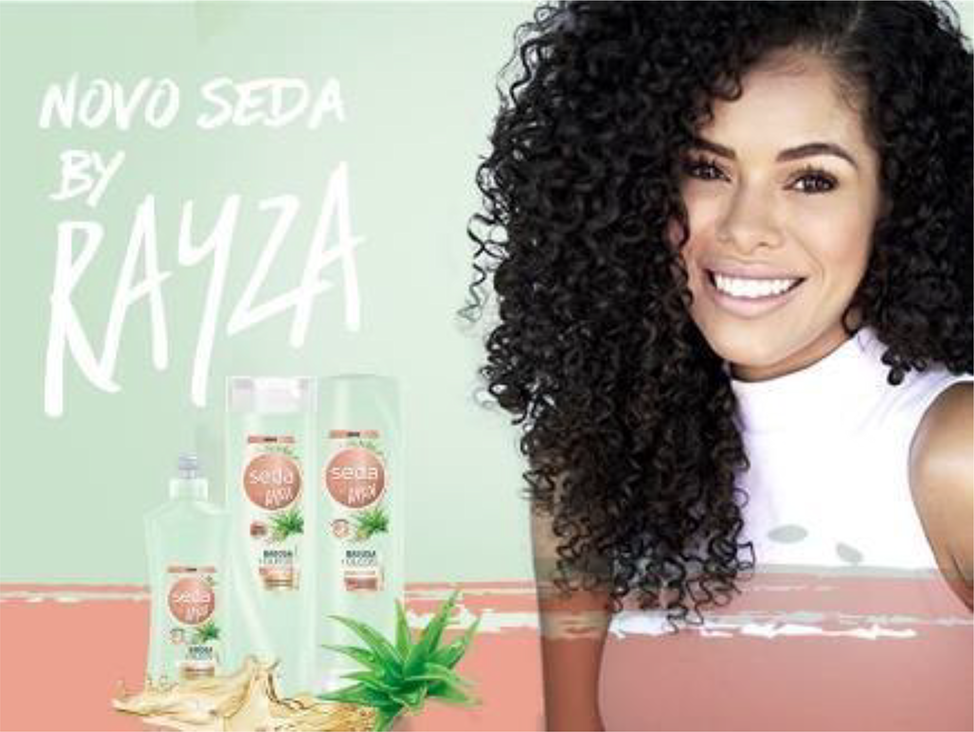 Souce: Os Papos Femininos (2024) by Dandara Cristina.
 Source: Google Images.